News

EAEU, Mongolia Trade Can Grow 25%

Published on May 25, 2024

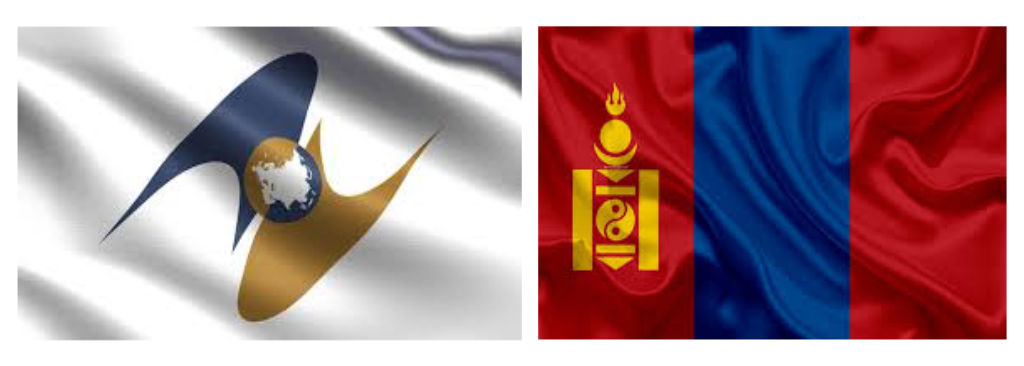
EAEU and Mongolia Flag

Maxim Vasiliev, Russia’s Trade Representative with Mongolia has suggested that the Mongolian government has linked its future economic growth to the successful signing of a Free Trade Agreement with the Eurasian Economic Union (EAEU). He was speaking at the economic conference “Prospects for the development of trade, economic and investment cooperation between Mongolia and the EAEU countries” being held in Moscow.

Vasiliev said that “In 2023, Mongolia’s economy grew by 7%, and in the next two years, the country’s government forecasts growth of 6.5%. The Mongolian government associates the sustainable growth of the country’s economy with trade agreements with partner countries, primarily with the EAEU.”

The EAEU includes Armenia, Belarus, Kazakhstan, Kyrgyzstan and Russia. It fills the geographic space between Eastern Europe and Western Russia.

Vasiliev added that Mongolia’s trade turnover with Russia and the EAEU could grow by almost a quarter. This forecast is based on such large system-forming projects as the Power of Siberia 2 gas pipeline, the design work of which has now been fully completed, and the upgrading of the Trans-Mongolian Railway, the main transport artery of Mongolia.

Russia Map

The conference also discussed industrial cooperation between Russia and Mongolia, highlighted energy, including the modernisation of the Ulaanbaatar thermal power plant, built in Soviet times. Another promising area for Russian-Mongolian cooperation is infrastructure. This includes construction of an underground metro system in Ulaanbaatar, a circular railway and the development of free trade zones.

Vasiliev also stated that “In the agricultural sector, we expect supplies of agricultural machinery, primarily from Rosselkhozmash. Mongolia’s proposal to create a spinning production jointly with Russia and Kyrgyzstan deserves attention. This can be discussed at the agricultural forum in early August in Ulaanbaatar.”

He recalled that within the framework of Russia-Mongolia-China economic corridor program, 44 projects are at the discussion stage. The decision on a temporary trade agreement, within the framework of which duties in mutual trade will be eliminated or reduced on a limited range of goods, was made following a meeting of the Supreme Eurasian Economic Council. That deal is expected to be completed before year end when tariff reductions will kick in and spur proposed new investments. 

Further Reading

Russia-Mongolia 2024 Trade & Development

Russia’s trade and development with Mongolia is extensively covered in our 2024 Russia’s Pivot To Asia Guide, which is a complimentary download and can be accessed in English here and Russian here.

Russia To Open Embassies in Sierra Leone, Niger, & South Sudan: The Implications

Published on May 24, 2024

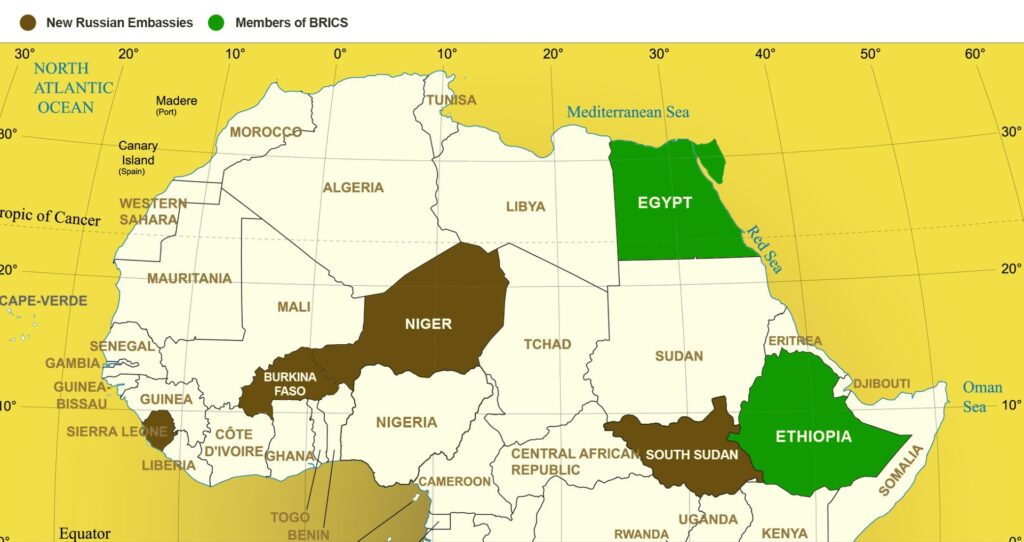
Russia plans to open embassies in Sierra Leone, Niger, and South Sudan soon, Russian Foreign Minister Sergei Lavrov said at a reception of the upcoming Africa Day at the Russian Foreign Ministry on Thursday (May 23). The Russian embassy to Burkina Faso resumed its operations last December.

We describe the basic economic and demographic situation in each of these countries as follows: 

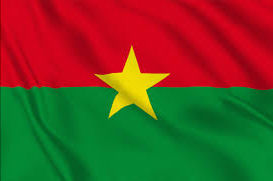
Burkino Faso

Burkino Faso

Burkina Faso is a landlocked country in West Africa and is one of the least developed countries in the world. The country has a strong culture and is geographically biodiverse, with plentiful reserves of gold, manganese, copper, and limestone. It was a French colony, but more recently has faced Islamic insurgency problems.  It underwent a military coup in late 2022. Burkino Faso’s population is about 22.5 million and it has a GDP (PPP) of about US$63 billion. Russia-Burkino Faso bilateral trade is about US$1 million.

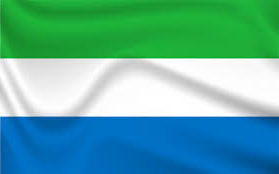
Sierra Leone

Sierra Leone

Sierra Leone is on the West African coast and is rich with natural resources, notably diamonds, gold, bauxite and aluminium. Previously a British colony, Sierra Leone maintains membership in several international organizations, including the United Nations, African Union, Economic Community of West African States (ECOWAS), and the Commonwealth of Nations, as well as strong relations with China, Russia, Libya, Iran, and Cuba. It has a population of 9 million and a GDP (PPP) of US$17.8 billion. Current Russia-Sierra Leone bilateral trade is about US$3 million.

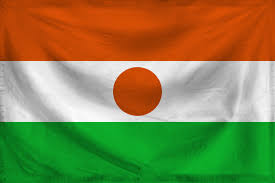
Niger

Niger

Niger is a landlocked country and borders Burkino Faso. It is one of the poorest countries in the world, and Africa’s largest landlocked nation after Chad. Some non-desert portions of the country undergo periodic drought and desertification. It was previously a French colony. The economy is concentrated around subsistence agriculture, with some export agriculture in the less arid south, and the export of raw materials, including uranium ore. It faces challenges to development due to its landlocked position, desert terrain, low literacy rate, and jihadist insurgencies. It is run by a military junta who came to power in 2023. Niger has a population of about 25.5 million and a GDP (PPP) of US$43 billion. Current Russia-Niger bilateral trade is about US$17 million.   

South Sudan

South Sudan

South Sudan is also landlocked and one of the least developed countries in the world, ranking second to last in the Human Development Index, and also one of the poorest countries by GDP per capita. It was previously administered by a joint Egyptian-British colonial administration. It is a member of the East African Community.   The oilfields in South Sudan have been significant to the economy since the latter part of the 20th century. In 2023, oil constitutes more than 90% of state revenues, with the third-largest oil reserves in Sub-Saharan Africa. However, after South Sudan became an independent nation in July 2011, southern and northern negotiators have not been able to reach an agreement on how to split the revenue from these oilfields. However, with Sudan also being close to Russia, agreements may be revived and with this oil production increased. South Sudan also contains many natural resources such as petroleum, iron ore, copper, chromium ore, zinc, tungsten, mica, silver, gold, diamonds, hardwoods, limestone and hydropower. The country’s economy, as in many other developing countries, is heavily dependent on agriculture. South Sudan has a population of about 12 million and a GDP (PPP) of about US$13.6 billion. Russia-South Sudan bilateral trade was about US$8 million.

Member of BRICS

Comments

Russia’s diplomatic reach into Africa has been expanding in recent years, as both British and French unwillingness to provide security against Islamic insurgencies, coupled with local views that their colonial eras were unfair, has resulted in a growing dissatisfaction with their former partners. Today, the only significant African country of note that does not have diplomatic relations with Russia is Chad.
While Russian involvement in the African continent will be led by providing security and military assistance, a medium-longer term eye will be on trade and development. This is especially true in Russia’s energy sector, both carbo-hydrons and nuclear, while the entire African continent is being looked at as a significant market for Russian products in agriculture, auto, and connectivity infrastructure, some of which will be coordinated with Chinese investments. In short, what is happening in Africa is a devolution from the European colonial era, and a realignment towards the Global South – with Moscow and Beijing now the primary drivers.

Further Reading

Russia-Africa 2024 Trade & Development   

Russia’s trade with Africa is extensively covered in our 2024 Russia’s Pivot To Asia guide, which contains descriptions of Russia’s involvement with 26 African countries. It is a complimentary download and can be accessed in English here and in Russian here.

Russia, India Discuss Nuclear Power Projects

Published on May 24, 2024

Aleksey Likhachev, the Director-General of Russia’s Rosatom State Atomic Energy Corporation, and Ajit Kumar Mohanty, the Chairman of the Atomic Energy Commission of India, have discussed expanding cooperation in nuclear energy in India, according to Rosatom. Likhachev and Mohanty, held talks during a Russian nuclear site visit in Seversk, Tomsk Region on Thursday (May 23).

During the visit, Rosatom showcased the Pilot Demonstration Energy Complex to its Indian partners. This complex is being developed under the ‘Proryv’ (Breakthrough) project, which aims to establish a new technological platform for a closed nuclear fuel cycle and address the challenges of spent nuclear fuel and radioactive waste.

The goal is to create a competitive product that will ensure the leadership of Russian technologies in the global nuclear power industry, according to Rosatom. “We are ready for serious expansion of the cooperation with India in the field of using nuclear energy for peaceful purposes,” Likhachev said.

According to him, this includes the construction of Russian-designed high-capacity nuclear power units at a new site in India, as well as implementing land-based and floating low-power generation projects.

The two countries are also discussing cooperation in nuclear fuel cycles, as well as the non-power applications of nuclear technologies, the Rosatom chief said.

The officials also discussed the progress of the Kudankulam Nuclear Power Plant (KNPP), which is being built in Tamil Nadu, southern India. The KNPP is India’s largest nuclear power plant, and includes six power units equipped with light-water reactors, each with a capacity of 1,000 MW.

The first two units were connected to the national grid in 2013 and 2016 respectively, and currently supply power to the southern Indian region. The four remaining units are at different stages of construction and equipment fitting.

In December last year, during a visit of Indian Foreign Minister Subrahmanyam Jaishankar to Moscow, the countries signed agreements to move forward on implementing the fifth and sixth reactors for the Kudankulam project. Jaishankar recently noted at a press conference in Mumbai that India is looking at “additional sites for Russian reactors.”

Likhachev said Russia has been extensively sharing the latest technological advancements in the nuclear field with India. The two nations are also working together on projects in third countries – Rosatom and Indian companies have been engaged in the construction of the Rooppur Nuclear Power Plant in Bangladesh.

The plant, which is around 140km west of Dhaka, is Bangladesh’s biggest infrastructure project to date and a vital part of plans to move away from coal and other fossil fuels. Moscow and Dhaka have signed several intergovernmental credit agreements worth around US$12 billion for financing the project.

Further Reading

Russia-India 2024 Trade & Development

Russia’s trade and development with India is extensively covered in our 2024 Russia’s Pivot To Asia Guide, which is a complimentary download and can be accessed in English here and Russian here.
Russia’s Trade Turnover With Central Asia Reached US$44 billion In 2023

Published on May 23, 2024

Mikhail Galuzin, Russia’s Deputy Foreign Minister, has stated that the total volume of trade turnover with Central Asia in 2023 exceeded US$44 billion, representing 33% of all foreign trade of the Central Asian states.

Meanwhile, the use of mutual currency settlements in this trade in national currencies of Russia with Kazakhstan, Kyrgyzstan and Tajikistan has now reached 80%. Galuzin was speaking at the 4th Central Asian Conference of the Valdai International Discussion Club.

Galuzin said that Russia is aiming at consistent cooperation in the Central Asian region, as the region is experiencing very positive prospects for economic growth. “Over the past 20 years, Central Asia’s  economic growth has exceeded the world average by approximately 2.5 times” he said.

Central Asia 2023 GDP Growth Rates          

Kazakhstan5.1%                                   
Kyrgyzstan6.2%
Tajikistan8.3%
Turkmenistan 6.3%
Uzbekistan 5.6%
(Source: World Bank)

In transitioning away from the low-growth Eurozone markets, Russia has effectively invested instead in higher growth markets. China’s GDP growth rate in 2023 for example was 5.2%, India’s 6.7% while Eurozone growth receded by 0.4%. Russia’s 2023 GDP growth was 3.6%, and was achieved despite Western sanctions.

Algeria Applies To Join The Shanghai Cooperation Organization

Published on May 23, 2024

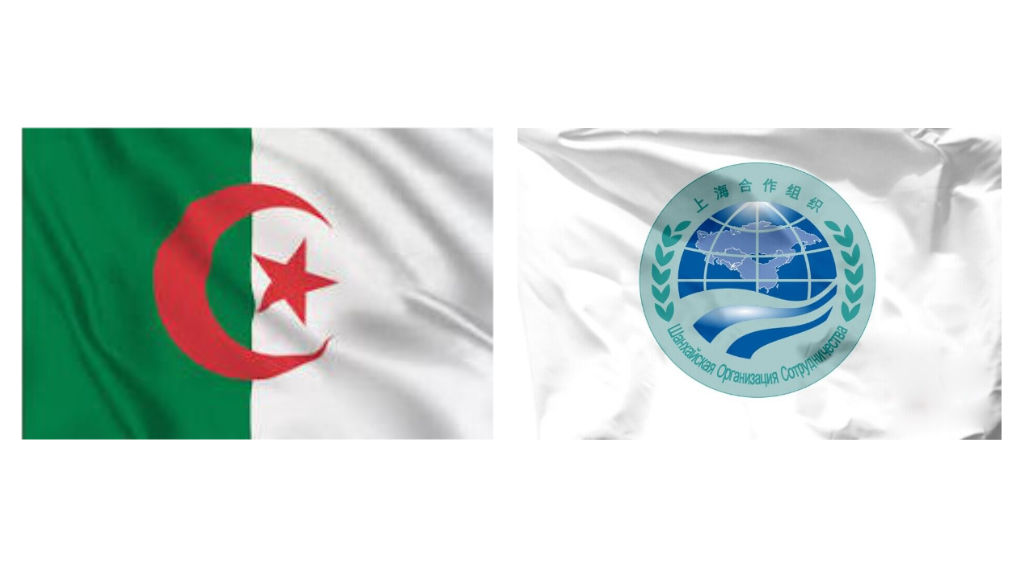
Algeria and SCO

Russian Foreign Minister Sergey Lavrov says Algeria will become a member of the Shanghai Cooperation Organisation (SCO) after obtaining dialogue partner and subsequent observer status, after Algiers applied to become a dialogue partner of the SCO on Tuesday (May 21).

The SCO, which accounts for some 20% of global GDP, was founded in 2001 by China, Kyrgyzstan, Kazakhstan, Russia, Tajikistan, and Uzbekistan. Iran became the newest member of the organization last year, after India and Pakistan had joined in 2017.

Currently, 14 countries, with Egypt being the only African state, hold SCO dialogue partner status, allowing them to participate in the organization’s specialized events at the invitation of its members.

Algeria is one of Russia’s long-standing African partners and has been working to diversify its economy while also strengthening ties with countries such as China.

The oil-rich north African country is among several that South African Foreign Affairs Minister Naledi Pandor said last summer had also formally applied to join BRICS – a bloc consisting of Brazil, Russia, India, China, South Africa, Egypt, Ethiopia, Iran, Saudi Arabia, and the United Arab Emirates.

Last month, Algiers and Moscow signed a cooperation agreement to combat transnational organized crime, terrorism, extremism, and corruption. Both governments have also committed to strengthening cooperation in areas such as trade, energy, investment, culture, and humanitarian aid.

Algeria is one of the world’s top importers of wheat (US$2.7 billion in 2022), and relies on Russian grains. While France used to be Algeria’s main supplier, Russia has now overtaken it. In 2022, Algeria quadrupled its imports of Russian wheat.

Russian-Algerian cooperation in the agricultural sector has also increased considerably, including sales of beef and dairy products. Algeria is currently working to expand economic cooperation with Russia, as it did with Turkey, China, and Italy, to other sectors as part of its efforts to reform its economy and attract investment.

Growing Russian investment has flowed into sectors including energy, pharmaceuticals, transport, logistics and infrastructure. The volume of bilateral trade increased by almost 70% in 2022, according to the Russian Minister of Economic Development, Maxim Reshetnikov.

Both Algeria and Russia are working to expand bilateral investment flows, aspiring to do so within the framework of BRICS, which Algeria has applied to join.

Current Russia-Algeria bilateral trade is worth about US$1.65 billion with the vast majority of that being Russian exports to Algeria, although that, in light of enhanced energy cooperation, may change. Currently, Russian exports have focused on Navigation Equipment, Soybean Oil and Broadcasting Accessories. Algerian exports to Russia are commonly Fruits and Dried Fruits. The country is also likely to see an expanded volume of Russian tourists. This current industrial make- up though can be expected to change significantly due to the energy sectoral commonalities. 

Further Reading

Russia-Algeria 2024 Trade & Development Dynamics

Russia’s trade with Algeria is extensively covered in our 2024 Russia’s Pivot To Asia guide, which is a complimentary download. It can be accessed in English here and in Russian here.

Laos Applies To Join The Shanghai Cooperation Organization

Published on May 22, 2024

Update – August 14: Sergei Shoigu, Russia’s Security Council Secretary has reaffirmed Russia’s readiness to continue development and interaction between the Security Council of the Russian Federation and the Public Security Ministry of Laos, in meetings with Chansamone Chanyalath, the National Defense Minister of Laos, in Moscow.

Laos, a member of the southeast ASEAN bloc, will become a member of the Shanghai Cooperation Organisation (SCO) after obtaining dialogue partner and subsequent observer status. Vientiane applied to become a dialogue partner of the SCO on Tuesday (May 21).

The SCO, which accounts for some 20% of global GDP, was founded in 2001 by China, Kyrgyzstan, Kazakhstan, Russia, Tajikistan, and Uzbekistan. Iran became the newest member of the organization last year, after India and Pakistan had joined in 2017.

Currently, 14 countries hold SCO dialogue partner status, allowing them to participate in the organization’s specialized events at the invitation of its members.

Laos is one of Russia’s long-standing ASEAN partners and has been working to diversify its economy while also strengthening ties with countries such as China, with whom it shares a common border. Laos also shares a long border with Vietnam, which has a Free Trade Agreement with Russia via the Eurasian Economic Union.

Russian investors may take advantage of Laos improving transport infrastructure and Laos significantly lower manufacturing costs if they can manage the productivity gap – it may take longer to get things made, but this can be measured against a lower cost base. For example, the average annual wage of a factory worker in Vietnam is US$2,600, in Laos, it is half the cost.

Russia’s exports to Laos generally consist of wood, pulp, and paper products, machinery, equipment, vehicles, and chemical industry products. Laos, on the other hand, exports to Russia mostly textiles, food, and agricultural raw materials. Despite a quite limited scope of products, the parties’ interest in developing cooperation is significant; the issue of concluding a free trade agreement with the countries of the Eurasian Economic Union is being worked out.

Russia-Laos bilateral trade turnover is still small. In 2022 trade turnover between Russia and Laos amounted to just US$12.9 million, including Russian exports of US$8.3 million, and Russian imports from Laos at US$4.6 million. There are natural trade barriers, not least being that Laos in landlocked, and a relatively small market, making the country less of a priority for Russia as it re-engineers supply chains to Asia. Larger markets such as China, India, and Vietnam have taken priority. For example, the population of Laos is just 7.5 million. It borders China’s Yunnan Province to the north, with Yunnan alone having a population of about 47 million. Laos’ GDP is US$20 billion, and Yunnan’s is US$398 billion, meaning Laos suffers somewhat as it is a minor market.

However, an upward trend is likely to occur. Russia’s exports to China have grown substantially over the past 18 months, and China is a major trade route into Laos. The opening of the China-Laos railway will have a positive effect on Russia-Laos trade. Also, Russia’s trade with Vietnam is expanding. Its economy is also growing, as are Vietnamese production costs. Some businesses that supply the Russian market from Vietnam may soon be looking to neighbouring Laos for more cost-effective production.

Further Reading

Russia-Laos 2024 Trade & Development Dynamics

Russia’s trade with Laos is extensively covered in our 2024 Russia’s Pivot To Asia guide, which is a complimentary download. It can be accessed in English here and in Russian here.

Krasnoyarsk To Become Asian Airfreight Transit Hub

Published on May 22, 2024

A new storage warehouse has opened in the cargo terminal at Krasnoyarsk Airport in southern Siberia, which will provide new logistical networks for the shipments of goods from the airport to Asia.

The opening of the new warehouse at the cargo terminal took place on Tuesday (May 21), the airport said on social media. The opening was preceded by the airport signing a cooperation agreement with international logistics operator Pony Express.

The airports press release stated that “The initial task for the airport related to the opening of the temporary storage warehouse is to establish and work out a plan for processing customs cargo of various categories at its cargo terminal. The second task is to increase the flow of cargo from the Asian region and the CIS countries.”

Meanwhile, an airport employee said that it is too early to talk about a significant 2024 increase in cargo traffic, since work must first be done to create new routes and cargo delivery networks. The airport’s total cargo flow reached 15,300 tonnes in 2023. Since commercial cargo is also delivered by passenger flights, the cargo transportation geography covers all routes serviced by the airport.

According to the airport, the cargo terminal itself was built and put into operation in 2022 as part of the development of the airline’s cargo business. The facility is used by more than 200 shippers. Until now, there has been no temporary storage warehouse in the terminal.

Krasnoyarsk[a] is the largest city and administrative center of Krasnoyarsk Krai, (Province) in Russia. It is situated along the Yenisey River, and is the second-largest city in Siberia after Novosibirsk, with a population of over 1.1 million. Krasnoyarsk is also an important junction of the Trans-Siberian Railway meaning multi-modal distribution can be utilised from rail to air and vice-versa. 

Krasnoyarsk’s airport is an operational base for the NordStar, KrasAvia, Ikar and Aeroflot airlines . Over 20 airlines operate flights from Krasnoyarsk to more than 50 Russian destinations, as well as numerous direct flights to several cities in China, Kazakhstan, Kyrgyzstan, Tajikistan, and Uzbekistan.

Vietnam Dairy To Invest In Livestock Farming & Milk Production In Primorsky Krai

Published on May 22, 2024

Vietnam’s TH Group has begun construction of a livestock complex for a total population of 10,000 cows in the Yakovlevsky district of Primorsky Krai (Province) with commissioning scheduled for 2027, the Russian Far East and Arctic Development Corporation has reported.

The project is being implemented by TH Rus Primorsky LLC, a resident of the Mikhailovsky Priority Development Territory – a type of Special Economic Zone. Under its contract with the Far East and Arctic Development Corporation, TH Rus Primorsky will invest over ₽20 billion (US$221 million) in the creation of a livestock complex and a dairy plant with a processing capacity of 60,000 tonnes of milk per year.

After the project is fully implemented, a closed chain of high-tech production “from pasture to table” will be created. At the first stage, the plan is to sell dairy products on the Russian market; in the future, the possibility of exporting to the markets in the Asia-Pacific region will be considered.

In addition, TH Rus Primorsky plans to grow feed for cattle, as well as legumes for sale on the domestic market and for export to Asia-Pacific countries.

Ngo Minh Hai, Chairman of the Board of Directors of TH Group, said that “We have been successful in implementing dairy farming projects in the Moscow and Kaluga regions, and today we continue our journey to Russia with the laying of the first stone for a dairy farming and milk processing project in Primorsky Krai.”

TH Rus Primorsky LLC was registered in 2017 in the village of Varfolomeevka, Primorsky Territory. The official main shareholder is TH – Rus Milk Food (Volokolamsk). TH Group was founded in 2009 and is one of the leading dairy products manufacturers in Vietnam.

Vietnam has a Free Trade Agreement with Russia via the Eurasian Economic Union.

Further Reading

Russia – Vietnam 2024 Trade & Development

Russia’s trade and development with Vietnam is comprehensively discussed in our 2024 Russia’s Pivot to Asia guide. This is a complimentary download and may be accessed in English here and in Russian here.

Russia Looking To Revive South African Gas Refinery

Published on May 22, 2024

South Africa’s PetroSA and Russia’s Gazprombank are currently investigating the feasibility of restarting operations at South Africa’s gas-to-liquid (GTL) fuel plant in Mossel Bay in South Africa’s Western Cape.

PetroSA spokeswoman Nonny Mashika-Dennison has said that all factors affecting the viability of restarting operations at the refinery were being considered as part of a comprehensive assessment. The Mossel Bay plant, which is capable of processing up to 45,000 barrels per day, halted production in 2020 due to depleted domestic offshore gas reserves, and has been under maintenance ever since. Following the closure of South Africa’s two largest refineries, Sapref and Enref, PetroSA is eager to secure investment to restart operations at the Mossel Bay facility.  

In December, PetroSA selected Gazprombank Africa as its preferred investment partner for the project – a decision endorsed by the South African government despite potential issues involving Western sanctions. Gazprombank, Russia’s third-largest bank and a crucial institution in Moscow’s energy trade, has been the target of sanctions by the US and other Western nations due to the ongoing Ukraine conflict.

South Africa and Russia are members of the BRICS alliance that also includes Brazil, India, China, Egypt, Ethiopia, Iran, Saudi Arabia, and the United Arab Emirates. Facing pressure from the US and its allies following the Russia-Ukraine conflict, Pretoria has opted for a neutral position. This nonalignment poses a potential risk of secondary sanctions if the African country engages in agreements with any sanctioned Russian entities.

However, PetroSA officials have taken legal advise to minimize the risk of secondary sanctions, with PetroSA’s acting chief operations officer, Sesakho Magadla, saying that “these sanctions are not applicable to South Africa.”

The Mossel Bay GTL revival project is estimated to cost approximately US$200 million.

Further Reading

Russia-South Africa 2024 Trade

Russia’s 2024 trade and development dynamics with South Africa are comprehensively featured in our Russia’s Pivot To Asia 2024 Guide. This is a complimentary download and can be accessed in English here and Russian here.
Russia, Vietnam, Launch Direct Rail Service Via China

Published on May 21, 2024

FESCO, Russia’s largest transport company , and Vietnam’s Ratraco have signed a cooperation agreement that will introduce the launch of regular direct railway services between Russia and Vietnam through China.

FESCO stated in a press release that “We signed a cooperation agreement in Hanoi with the Vietnamese logistics operator Ratraco, within the framework of which we plan to launch a direct rail container service from Russia to Vietnam through China.”

The new service is expected to provide an overland route crossing from Russia into China at Tongjiang, bisect China north to south and enter Vietnam at the Dong Dang railway border.

The agreement also provides for the development of maritime transport with FESCO’s Vietnam Direct Line (FVDL) service between the Vietnamese ports of Ho Chi Minh City and Haiphong and Russia’s Far Eastern port of Vladivostok. Ratraco will help attract additional cargo flows from Vietnam for this service.

At present, freight transportation between Russia and Vietnam is carried out mainly along a multimodal route by sea through Russia’s Far Eastern ports. Delivery of goods to or from ports in Russian regions is carried out by rail. Vietnam has a Free Trade Agreement with Russia via the Eurasian Economic Union. 

Further Reading

Russia – Vietnam 2024 Trade & Development

Russia’s trade and development with Vietnam is comprehensively discussed in our 2024 Russia’s Pivot to Asia guide. This is a complimentary download and may be accessed in English here and in Russian here. 

Russia’s Trade With Islamic Countries Up 30%

Published on May 20, 2024

Russian Deputy Prime Minister Marat Khusnullin has stated that Russia’s trade turnover with the member countries of the Organization of Islamic Cooperation (OIC) in 2023 increased by 30% in 2023. He was speaking at the 2024 KazanForum “Russia & the Islamic World.”

“Thanks to this event, we have become even closer with our colleagues – Muslim countries. Our trade turnover is increasing. I can say that over the past year our trade turnover with the countries of OIC increased by 30%.” Khusnullin told reporters.

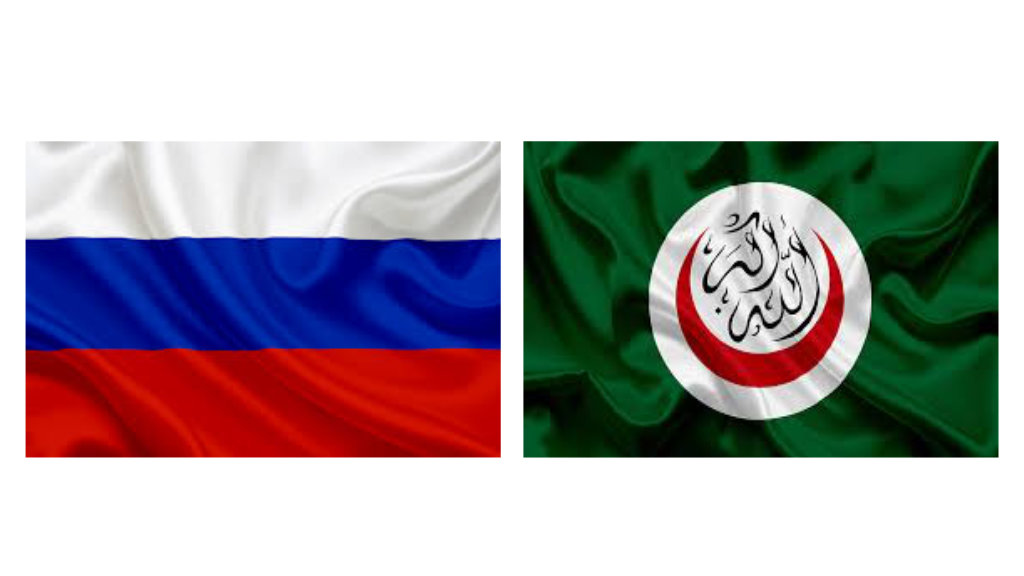
The OIC includes 57 member states, 48 of which are Muslim-majority. The organisation claims to be “the collective voice of the Muslim world” and works to “safeguard and protect the interests of the Muslim world in the spirit of promoting international peace and harmony”. Russia has observer status.

Knusnullin said there have been more tourist exchanges between Russia and OIC states, and that the volume of exports and imports of products between Russia and OIC members have increased.

The Organisation of Islamic Cooperation

The OIC has a combined population of about 2 billion and a collective GDP (PPP) of US$27.949 trillion. It is headquartered in Jeddah, Saudi Arabia.

KazanForum is a platform for strengthening trade, economic, scientific, technical, social and cultural ties between Russia and OIC countries. The forum received federal status by a presidential decree in 2023.  The event took place in Kazan, the capital of Russia’s Tatarstan region, often referred to as a third capital of the country. Kazan will also be the venue for the 2024 BRICS summit. 

Rustam Minnikhanov, the head of Russia’s Tatarstan Republic and Chairman of the forum said that Islamic countries will make an important contribution to the safe development in the multi-polar world order. “When it comes to key spiritual and moral values, Orthodox Christianity and Islam are similar and close,” Minnikhanov told the conference. “This applies, in particular, to human rights and family fundamentals. I am sure that positive interaction and partnership between Russia and the Islamic world will make an important contribution to secure development in a fair multipolar world order.”

The Russia-Islamic World group includes former high-level leaders, representatives of science and the public, business circles and religious figures representing both Islam and Orthodox Christianity.

Further Reading                    

2024 Russia and Islamic Trade 

Our 2024 Russia’s Pivot to Asia guide contains comprehensive details of Russia’s trade with OIC members including major players such as Algeria, Azerbaijan, Bangladesh, Cameroon, Egypt, Gambia, Indonesia, Iran, Kazakhstan, Libya, Malaysia, Morocco, Nigeria, Pakistan, Saudi Arabia, Senegal, Turkiye, Turkmenistan, Tunisia, UAE, Uganda amongst others. It is a complimentary download and can be accessed in English here and in Russian here.