Vladivostok Port, in the Russian Far East, is attracting new international shipping partners, according to Nikolai Yermolayev, the Ports operating Managing Director. He was speaking at the Maritime Congress of the Russian Far East, and said that another four major international carriers are negotiating the organization of shipping lines through the port.
Vladivostok Port currently works with 11 shipping companies from Russia, China and South Korea. Chinese ports currently account for about 66% of VMTP’s cargo turnover, while cargo traffic between Vladivostok and Chinese ports grew by 30% to almost 462,000 TEU in 2023.
The Port plans to boost cargo handling to 1.2 million TEU by 2028, which would be a 40% increase over 2023. VMTP’s operations extend over 15 docks at the Port of Vladivostok.
FESCO, the Ports main operator, in one of Russia’s largest transport groups, and has port, railway and integrated logistics businesses. The group includes the Commercial Port of Vladivostok, intermodal operator FESCO Integrated Transport, the refrigerated container operator Dalreftrans, as well as Transgarant and FESCO Trans. The company also operates terminals in Novosibirsk, Khabarovsk, Tomsk and Vladivostok, more than 170,000 TEU of containers and a fleet of over 11,000 well cars. Its fleet of 30 vessels operate primarily on the group’s own marine lines.
Vladivostok Port provides access to Asia for companies across Russia as it is also the Far Eastern terminus of the Trans-Siberian Railway, with the Western terminus in Moscow. It has eighteen major junctions with other Russian city hubs, leading to other sections of Russia, and two additional main lines, the Trans-Mongolian to Beijing, and the Trans-Manchurian to Harbin.
Vladivostok Port has numerous direct shipping connections, including numerous Chinese Ports as well as Hong Kong, in addition to routes to Vietnam and India.
The Foreign Ministry of the Taliban movement (which is currently banned in Russia as a terrorist organization), which controls Afghanistan, has welcomed Russia’s declared intention to build bilateral relations.
Abdul Qahar Balkhi, spokesperson for the Taliban Foreign Ministry, said that “The Ministry of Foreign Affairs of the Islamic Emirate of Afghanistan welcomes comments by the leadership of the Russian Federation, the Minister of Foreign Affairs and other officials expressing their political determination to broaden relations with the Islamic Emirate of Afghanistan. Following decades of conflict and instability in the country, the past three years have demonstrated that Afghanistan currently has a responsible government that has created an opportune environment for all regional countries to work towards further developing positive relations while taking into consideration bilateral priorities. Significant progress has already been made with numerous countries.”
The Taliban took control of Afghanistan virtually without a fight in August 2021, after the United States, its allies, and a local government it supported left the country in a hurry after staying there for 20 years. However, no countries, including Russia have recognised the Taliban as a legitimate Government, with recognition mainly being dependent on the Taliban permitting other Afghani political factions to contest government positions. About 45% of Afghani’s are not affiliated with the Taliban. However, some countries do maintain cordial relations with the Taliban, including Russia, China, and Iran.
Russian President Vladimir Putin said on Tuesday (May 29) that the Taliban de facto govern Afghanistan now, and relations with them should be built based upon realities. Russian Foreign Minister Sergei Lavrov said on Monday that the real situation in Afghanistan governed by the Taliban should be taken into consideration, as that country is of interest to Russia. The United States has said it does not plan to recognize the Taliban as Afghanistan’s legal government.
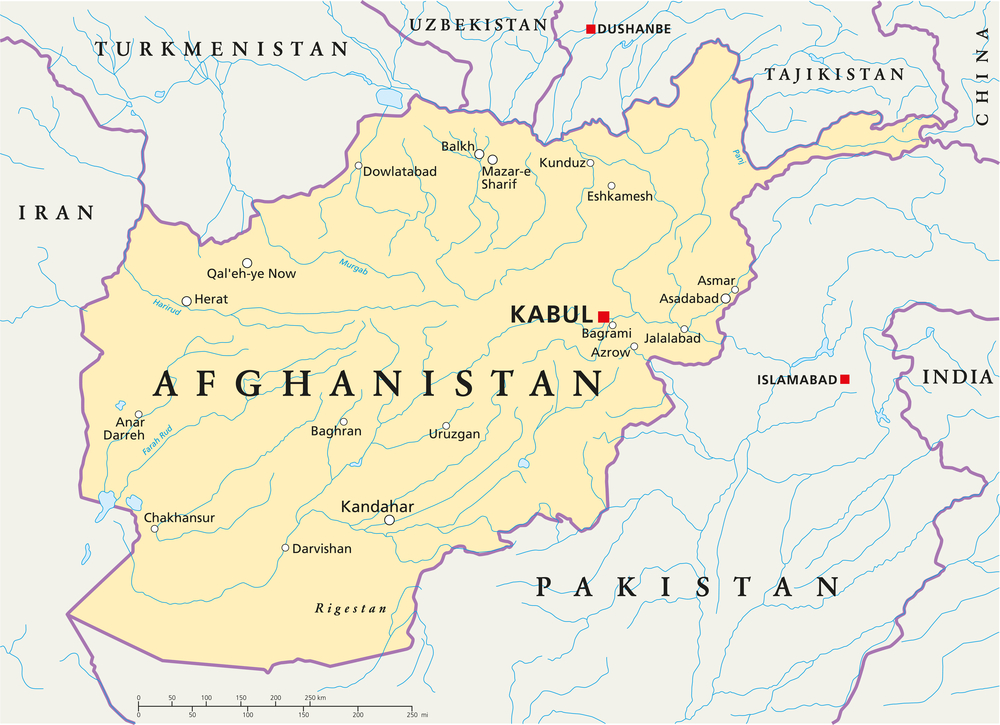
Recognition would assist in legitimate bilateral agreements being put in place between Afghanistan and any country that recognises the Taliban as its legitimate government. That can extent to trade development as well as other development financing projects to help the country recover after decades of war. Afghanistan is landlocked and has borders with Pakistan to the east and south, Iran to the west, Turkmenistan to the northwest, Uzbekistan to the north, Tajikistan to the northeast, and China to the northeast and east.
At present, the Taliban government is especially interested in exporting minerals and fruits, which the current government wishes to export to Russia while importing Russian gas, oil, and wheat. Before the Taliban takeover in 2021, Afghanistan bought oil products from Russia in the amount of 600-800 thousand tons per year. That looks set to continue and increase.
In 2022 Russia and Afghanistan approved a deal on the supply of fuel and grain, under which, Russia will supplid about a million tons of gasoline, a million tons of diesel fuel, 500,000 tons of liquefied natural gas, and 2 million tons of wheat per year. The agreement is to remain in effect for an indefinite period.
In early 2022 Afghan media sources claimed that Russian entrepreneurs were contemplating investing in the oil and gas industries of Afghanistan, which included establishing oil and natural gas refineries, as well as facilities for the production of LNG. Establishing a cement production company was also discussed between the two sides.
The trade and investment position between Russia and Afghanistan therefore remains somewhat ambiguous, with the main efforts being put in by Russia relating to Afghanistan’s internal, and regional security. Yet progress is slowly being made. The country has joined China’s Belt & Road Initiative with the potential for Chinese and possibly joint Russian-built infrastructure projects. Rail connectivity north-south from Uzbekistan-Afghanistan-Pakistan to the Persian Gulf is at advanced stages of discussion, while a proposed West-East link from Iran via Afghanistan to Pakistan is also being considered. China has tentatively agreed to assist with the funding of both these projects. Iran, Turkmenistan, and Pakistan (the latter with Chinese investment) are building Free Trade Zones and Industrial Parks on their borders with Afghanistan.
Kabul has also made an official request to join the BRICS grouping although accession would seem some time away. Progress, although slow and minimal, is however being made, while the potential for joint Russian-Chinese projects to minimize the investment risk in Afghanistan appears likely to emerge over time.
Should Moscow recognise the Taliban, a Chinese decision to do the same may be in place shortly afterwards allowing both sides to boost security and trade in order to promote regional peace.
Further Reading
Russia-Afghanistan 2024 Trade & Development
Russia’s trade and development with Afghanistan is extensively covered in our 2024 Russia’s Pivot To Asia Guide, which is a complimentary download and can be accessed in English here and Russian here.
India imported almost US$353 million worth of sunflower oil from Russia in the first quarter of 2024, 17% more than in the same period last year, the Agriculture Ministry’s Agroexport Center reported, citing data from Indian customs. Sunflower oil is a key consumer commodity in India and is used widely in preparing vegetarian food.
Russia’s share in the total volume of sunflower oil shipments to India increased from 27% in Q1 2023 to 39% for the same period of this year.
Agroexport stated that shipments of 6,000 or 12,000 tonnes of products are sent to the Indian market every month. “24,000 tonnes have already been exported, not including the May shipment. We plan to maintain this pace in the future. The geographical remoteness of India forces us to adjust product logistics; shipments can only be done in large quantities. We needed to create the required volume of products using the capacities of three factories, and then carry out multimodal shipment, which includes offshore transshipment.”
India increased imports of Russian overall agricultural products 1.8% in the first quarter to US$572 million, meaning that Russia’s share in India’s total imports increased from 4.2% to 7.1%. At the end of the quarter, Russia rose to fourth place among the largest suppliers of agricultural products to the Indian market. India has a population of 1.42 billion, meaning sustainable food security is a key issue for Delhi. In addition to vegetable oil, India’s main agricultural purchases from Russia are peas and lentils.
Further Reading
Russia-India 2024 Trade & Development
Russia’s trade and development with India is extensively covered in our 2024 Russia’s Pivot To Asia Guide, which is a complimentary download and can be accessed in English here and Russian here.
October 25 Update: Thailand has now been granted ‘BRICS Partner’ status. See more here.
Thailand will apply to become a member of the BRICS economic bloc, the Thai government in Bangkok announced on Tuesday (May 28). Government spokesman Chai Wacharonke said that the Thai cabinet has approved the text of the official letter expressing Thailand’s intent to join the group.
According to Chai, the letter declares that Thailand understands the importance of multipolarity and the increasing role of developing countries in international affairs.
Thailand’s vision for the future is in line with BRICS principles and joining would benefit the country in many ways, including enhancing its role in the international arena and providing opportunities to take part in shaping a new world order, the letter apparently says.
BRICS has invited non-member countries aspiring to join, to take part in the next BRICS summit, scheduled to be held in late October in Kazan, Russia. Attending the summit would be an opportunity for Thailand to accelerate the application process, Chai said.
Originally composed of Brazil, Russia, India, China and South Africa, BRICS added Egypt, Ethiopia, Iran and the United Arab Emirates at the beginning of 2024. Since then, 15 more countries have signalled an intent to join, including Bahrain, Belarus, Cuba, Kazakhstan, Pakistan, Senegal and Venezuela.
The expanded BRICS makes up about 30% of the global economy and a population of around 3.5 billion, or 45% of the world’s total. It also accounts for over 40% of the world’s oil production.
According to the International Monetary Fund, BRICS currently accounts for as much as 36% of global GDP in terms of purchasing power parity (PPP), compared to just over 30% for the G7. BRICS aims to overtake the G7 in nominal global GDP over the next four years, Dilma Rousseff, the head of the BRICS New Development Bank (NDB) said in February. Russia’s bilateral trade with Thailand is currently running at about US$1.8 billion, with Russia exporting mixed mineral and chemical fertilizers, crude petroleum and gold, while Thailand exports mainly rubber and ethylene to Russia.
Further Reading
Russia-Thailand 2024 Trade & Development
BRICS 2024 Trade & Development Comprehensive details both of the BRICS and Russia’s trade and development with Thailand can be read in our 2024 Russia’s Pivot To Asia guide. This is a complimentary download and can be accessed in English here and in Russian here.
Russia’s FinInvest, which recently became a resident of the Mikhailovsky Priority Development Territory (ASEZ), will build the largest dry port in the Far East, which will be able to handle up to 1 million containers per year. The ASEZ includes land plots totaling more than 822 hectares in Artyom and Arsenyev cities, as well as the Yakovlevsky municipal district in Primorsky.
The first stage of the transport and logistics centre (TLC), which is being built in Artyom, is planned to be launched next year will an initial capacity of 500,000 TEU, increasing to 1 million TEU by 2027. It will primarily serve export-import flows with China, as well as further delivery of goods to Russian regions. Artyom will become the largest dry port in the Far East.
The Artyom transport and logistics centre will include railway, terminal, warehouse and customs infrastructure. Container cargo arriving by rail and road from the ports of Primorye will be stored there, while transhipment will be carried out and container trains will be formed to the regions of Siberia, the Urals and the European part of Russia. It is expected that the main supplier of imported cargo will be Southeast Asia, mainly China.
The total cost of the project is estimated at ₽13.5 billion (US$152 million). It will be implemented in two stages: the first stage of the transport and logistics centre is expected to be launched in 2025, and the second by the end of 2027. The Artyom TLC will be part of a core network of 11 dry ports created by FinInvest in various regions of Russia.
Vladivostok’s International Airport is located near Artyom, while the largest Primorsky Krai railway junction is also located in the city.
Alexander Kakhidze, the General Director of FinInvest, stated that “Artyom TLC will become one of the key objects of the backbone network of multimodal transport and logistics centres in Russia, which is being created by our Group of Companies in order to increase the speed of delivery of cargo in containers along the Russian railway network and reduce logistics costs. The core network will include 11 dry ports located in various regions of our country, with a total capacity of more than 5.6 million TEU per year.”
According to him, the development of a dry port in Artyom will help resolve issues regarding export and import container transportation in the context of the infrastructural limitations of the Eastern range. For example, the Artyom TLC will conduct accelerated processing of container trains, including through the use of technology for loading containers into gondola cars that are released from under coal.
Russia’s Far East and Arctic Development Corporation (KRDV) expects that the launch of the transport and logistics centre will help optimise the work of the Vladivostok and Nakhodka ports, increase the capacity of the Trans-Siberian Railway and, in general, the competitiveness of the transport system of the entire Russian Far East. In the first four months of this year, the trade volume between China and Russia grew by 4.7% year-on-year to reach US$76.58 billion.
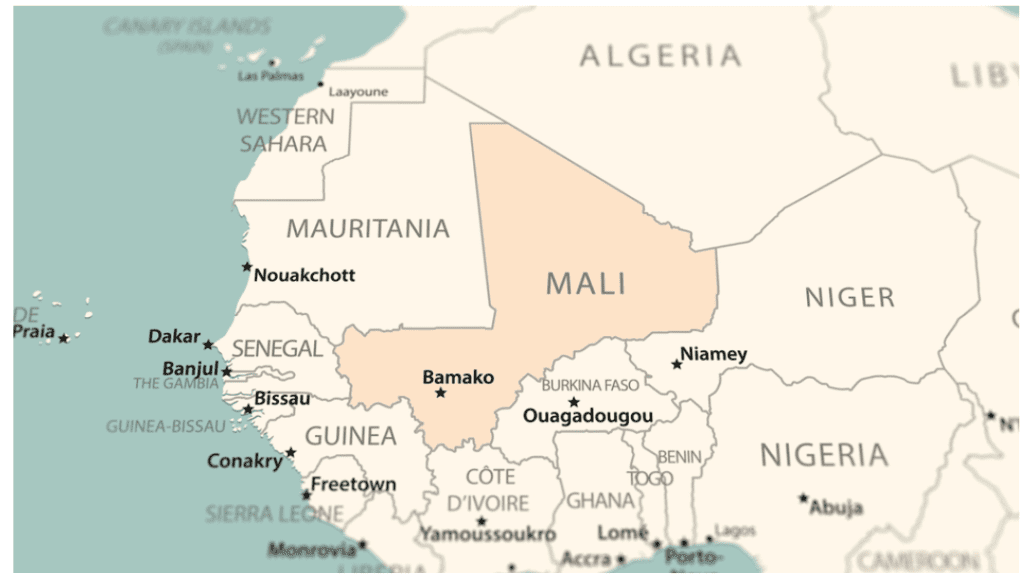
The wind energy division of Russia’s energy giant Rosatom, NovaWind, has begun construction of a 200 megawatt (MW) solar power plant in Mali, according to Bintu Kamara, Mali’s Energy and Water Resources Minister. The US$217 million project will increase electricity production in Mali by 10%.
The facility, which will extend over 314 hectares of land in Sanankoroba, near the capital, Bamako, is the largest in West Africa, and will significantly reduce Mali’s electricity shortages. At present, 70% of Mali’s electricity is produced from thermal plants.
According to latest World Bank data, approximately half of the country’s 21.9 million people have access to electricity. The former French colony’s authorities have committed to increase access to 90% by 2036, with urban access at 100% and rural access at 55%.
During the signing of the agreement with NovaWind for the photovoltaic solar power plant in March, Malian Minister of Economy Alousseni Sano said that relying on thermal power was costly and has weighed heavily on the country’s finances.
Construction work will take a year; the station is expected to operate for two decades. It will be under the full control of Mali’s Ministry of Energy ten years after it is inaugurated for operation.
The Malian government has said the collaboration with Russia on the solar project “represents a significant step towards diversifying the Malian energy mix and reducing its dependence on fossil fuels.” Mali’s military government has called Russia a “strategic and sincere partner” after severing ties last year with the country’s former colonizer, France. Last October, Mali also signed an agreement with Moscow to develop civil nuclear power.
In March, Mali, Burkina Faso, and Algeria, signed several agreements for developing nuclear energy cooperation with Rosatom.
The Russian Ministry of Industry and Trade is preparing updates for what will be a national directive under the banner “International Cooperation and Export” where the main emphasis will be on the reorientation of non-resource, non-energy exports to countries in Africa, Southeast Asia, and Latin America. The updated national project will be operational until 2030 when it will be reviewed.
This effectively means that Moscow believes the current situation, and the reorientation of logistics flows to the Global South and away from Europe will continue for at least another six years.
The Ministry has emphasised that the new version of its national project provides for the reorientation of non-resource, non-energy exports to new “friendly markets.” The previous version of the directive concentrated on increasing trade volumes with the Eurasian Economic Union. Now the Global South – Africa, Southeast Asia and Latin America are being targeted as a national development priority.
In order to reorient exports, the Ministry intends to focus on rolling out pertinent transport corridors, primarily the North-South corridor, and launching regular container services to countries in Africa and Latin America. The North-South corridor exits Russia via the Caspian Sea, and heads south by shipping to Iran’s Caspian Sea ports, travelling further south to its Ports on the Persian Gulf. From there, goods can be shipped throughout the Middle East, South to Eastern Africa, West to Latin America and East to South Asia.
The Ministry intends to introduce a special subsidy mechanism that will partially compensate Russian logistics operators for organising freight transportation to priority areas. Secondly, Russia will finance the creation of the necessary logistics infrastructure at the support points of transport corridors in other countries. Funding will come from the Federal Treasury.
It is expected that by 2030, Russia’s non-resource, non-energy exports should grow to US$248.1 billion, of which US$192.9 billion will be for industrial products, and US$55.2 billion will be for agricultural products.
Since the introduction of Western sanctions in 2022, export-import flows between Russia and the EU, USA, UK, Japan, Australia, and so on were severely limited. In response, Russia was forced to actively develop trade with other countries. China, rather than the EU became Russia’s main trading partner; while at the same time, cargo turnover with Turkiye, the UAE, India and other countries in Asia and the Middle East began to grow.
Russia’s decision to prioritise trade with the Global South rather than the West has economic impacts on the West too, and especially Europe. Russia has successfully managed to replace direct imports from Europe through three main routes: Purchasing the same products via third party countries such as Armenia, Kazakhstan and Turkiye; Purchasing similar products made elsewhere, and primarily in Asia, and by developing its own manufacturing industry to produce domestic replacements. This policy has succeeded in most areas.
In contrast, Europe’s main imports from Russia were cheap energy. That benefit has now disappeared with energy being sourced at higher prices elsewhere, including the United States. This has eaten into European manufacturing competitiveness and appears likely to continue to do so while Russia continues to prioritize and fund trade expansion and development in non-European markets.
To illustrate the impact of this, the Purchasing Managers Index is a standard created by Institute of Supply Management to assess demand for manufactured products on a country by country basis, and therefore its productivity and development. A figure above 50 represents growth, figures below 50 a recession. The Eurozone is currently at 47.4, while Russia’s PMI is at 54.3, nearly seven points higher.
Further Reading
Russia and the North-South Corridor
The development of the North-South Corridor and the related International North-South Transportation Corridor and the Middle Corridor (Europe-Asia) are extensively discussed in our 2024 Russia’s Pivot To Asia guide. This is a complimentary download and may be accessed in English here and in Russian here.
Russia and Uzbekistan have agreed to triple their bilateral trade volumes with a goal of reaching US$30 billion by 2030. In addition, Russia’s Atomstroyexport JSC has signed a contract with the Uzbekistan Directorate for Nuclear Power Plant Construction to build a low-capacity nuclear power plant in Uzbekistan’s Jizzakh region. The decisions follow meetings in Tashkent between Russian President Putin and Uzbek President Shavkat Mirziyoyev.
Bilateral Trade
The Russian and Uzbek trade delegations accompanying both Presidents discussed their rapidly growing mutual trade and plans to increase its volume to US$30 billion during top-level negotiations in an expanded format in Tashkent. To help attain this goal, the delegations agreed that Uzbekistan would set up a full-fledged trade mission in Russia. 2023 bilateral trade was US$10 billion.
Uzbekistan and Russia reviewed new industrial cooperation projects in the energy, metallurgy, petrochemicals, engineering, mineral extraction, agriculture, logistics, pharmaceuticals, artificial intelligence, and other sectors. A joint investment platform will be launched to promote such projects.
In the energy sector, agreements were made to upgrade the gas transport system, increase shipments of gas, oil, and petroleum products, and pursue projects for processing fossil fuels. Uzbekistan is the world’s 18th largest producer of natural gas and 2nd largest in Central Asia after Turkmenistan. Gazprom Neft and Uzbekneftegaz signed an agreement in which the Russian company will assist in optimizing the processes to drill wells at Uzbekistan’s fields.
In the tourism sector, Russia and Uzbekistan signed a joint tourism action plan, with the mutual flow of tourists targeted to increase by 40% by 2027. The number of trips will approach 2 million per year.
A number of large-scale bilateral infrastructure projects are also being discussed in order to build a metallurgical cluster, a gas chemical plant, and a copper concentrator in Uzbekistan.
Nuclear Power
The Jizzakh nuclear power project includes the construction of a Russian-designed 330 MW low-capacity nuclear power plant, containing six reactors with a capacity of 55 MW each. Rosatom will act as a general contractor for building the plant, while local Uzbeki companies will also be involved in the construction, which is expected to begin this summer. The plant will be commissioned from 2029 to 2033 in stages, module by module.
The Commonwealth of Independent States (CIS) held Ministerial-level meetings last week, followed by Russian President Vladimir Putin flying to Tashkent, Uzbekistan on Sunday (May 26) for talks with Uzbekistan’s President, Shavkat Mirziyoyev. The CIS includes Armenia, Azerbaijan, Belarus, Kazakhstan, Kyrgyzstan, Russia, Tajikistan, and Uzbekistan.
CIS members are set to enter a new agreement on free trade in services and investments from June 5th, although at present only Belarus, Kyrgyzstan and Tajikistan have ratified this. Putin’s visit to Tashkent will be to gain support from Uzbekistan concerning the development of CIS and Central Asian free trade and supply chains. CIS meetings last week also discussed cooperation in the energy sector, the development of transport corridors and protection against intellectual property violations. The CIS differs in structure from the Eurasian Economic Union (EAEU) in that the CIS countries engage with each other in bilateral agreements, although there is a trend to unify these. There have been discussions concerning merging the CIS and the EAEU. Uzbekistan is an observer state, but not a full member of the EAEU. Changing that status to full EAEU membership will also be on Putin’s agenda for discussions.
Last year, trade with the CIS countries grew by 5.8%, in the three months of this year — by another 6.5%, the share of these countries in Russia’s foreign trade increased to 14.5%, and is now close to 16%, reflecting Russia’s supply chains moves to the East.
Putin’s meeting with Mirziyoyev will focus on strengthening economic ties in food security, technological and energy security, in addition to industrial cooperation, logistics, ecology and digitalization. The CIS last week had also discussed increased cooperation in customs, pursuing a coordinated antitrust policy and the creation of a mutual payments architecture.
Energy sector cooperation requires adapting the regional energy supply and transition with a simultaneous increase in the CIS manufacturing share of pertinent equipment. These requirements will see them produced in the CIS countries as part of a drive to limit reliance on Western imports.
The development of transport corridors requires the harmonization of national legislation and non-discriminatory access to routes, as well as the introduction of digital customs infrastructure. Uzbekistan, which is double land-locked, has a special geographic interest in making this happen. It is also well positioned in the heart of Central Asia.
Part of Putin’s goals in Tashkent will be to secure Uzbekistan’s ratification of the CIS free trade agreement. Part of the original goals in this were that its signing would provide access to investors from the CIS countries to the markets in Uzbekistan and Tajikistan by providing them with a national regime. The agreement is also considered as a tool to protect the growing volume of capital investments in the CIS. There are differences due to the differing nature of the CIS and EAEU operating structures. For Russian companies, the Uzbek market is considered as a platform for industrial assembly, while in contrast working conditions in the Kazakh market are determined by agreements within the framework of the EAEU. The proposed CIS FTA provides for dispute resolution on a wider scale and guarantees less Moscow legal arbitration influence. Readers can therefore appreciate that having two differing trade structures – the CIS and the EAEU – can create additional legal and administrative problems.
Meanwhile, Moscow will also be looking for guarantees in order to secure supplies. These will centre around the most sensitive industries — mining and nuclear energy, precious metals and rare earths, the production of general and special-purpose machinery and equipment, electric vehicles, and other transport equipment in Uzbekistan. Russia will be looking to retain the right to apply existing legislation to limit certain foreign investment in strategic CIS companies in order to protect itself from additional Western pressures. Uzbekistan has a fairly close relationship with the European Union and Putin will be looking to limit that. Other events are also planned. Both Mirziyoyev and Putin will speak at the first meeting of the Council of Regions of Russia and Uzbekistan, while 18 Russian Governors and their respective business delegations have flown to Tashkent to participate in this forum. How far this will go in persuading Tashkent its future lies with Russia and the CIS as opposed to Brussels will be a key issue.
Further Reading
Russia-Uzbekistan 2024 Trade & Development
Russia’s trade and development with Uzbekistan is extensively covered in our 2024 Russia’s Pivot To Asia Guide, which is a complimentary download and can be accessed in English here and Russian here.
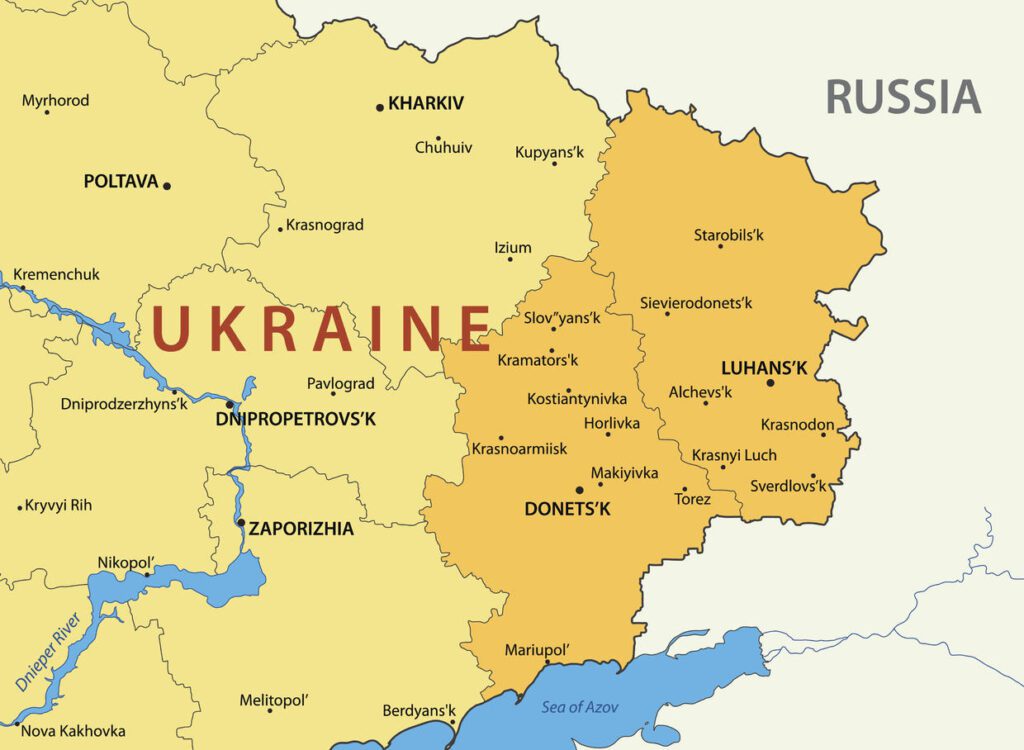
Russia is now planning reconstruction of industrial sites in the Donbass following moves into the area after previous heavy fighting. These plans are rarely, if ever, reported in Western media. However, assessments and reconstruction plans are being carried out throughout the Donbass region, according to Denis Pushilin, the Head of the Donetsk People’s Republic.
In Mariupol, which was the scene of heavy fighting in 2022, the city had been extensively damaged, with the Ukrainian military forces surrendering at the Azovstal metallurgical plant, one of the cities largest employers. The second-largest city in the Donbass, Mariupol had a pre-conflict population of over half a million people and is situated on the Kalmius and Kalchik rivers, just 10km from the Azov Sea.
However, the plant had numerous problems. Underinvested, and using old technologies, the plant had seriously damaged not just the surrounding area but the Azov Sea itself. Now, the Azovstal plant is being demolished, the site cleaned up, and will be converted to a business park, catering specifically for SME investors. Similar plans are being created for other sites throughout the Russian Donbass.
Background
There is significance in these moves as typical business parks in Russia provide business incentives, such as reduced profits and other operational taxes as well as discounts on utility bills. Focusing on SMEs helps recreate a positive manufacturing business environment, with the commercial capability to supply the domestic Russian market.
This is also significant as Ukraine had previously been a member of the Commonwealth of Independent States (CIS) and had free trade agreements with Russia and other CIS markets – a combined market now worth US$5.5 trillion in GDP per annum, and a consumer base of 280 million people. Kiev effectively pulled out of the CIS in 2014 and in doing so, largely cut off the eastern Oblasts (provinces) – including the entire Donbass region – from its export markets. As a result, local economies, including Mariupol’s went into significant decline.
Ukraine’s economy shrank by 6.8% in 2014 following the cancellation of trade with Russia and the CIS. During 2015, Ukraine’s economy shrank by another 10.4%, with a 30.9% decline in exports mainly because of a sharp decline in production output in Donetsk Oblast and in Luhansk Oblast (the two regions of the Donbas). These two regions had been responsible for 40.6% of Ukraine’s total exports. The IMF then agreed to a four-year loan programme worth about US$17.5 billion in eight tranches between 2015 and 2016, subject to conditions which involved economic reforms.
However, due to lack of progress on reforms, only two tranches, worth US$6.7 billion were paid in 2015, while a third tranche of US$1.7 billion was provisionally scheduled in June 2016 subject to the bringing into law of 19 further reform measures. Some western analysts believed that these large loans – which included Russian financing – were not encouraging reform but enabling the corrupt extraction of funds out of the country. Since December 2015, Ukraine has refused to pay these loans back, resulting in defaults to the IMF as well as a US$3 billion debt payment to Russia that had formed part of a December 2013 Ukrainian–Russian action plan.
Recovery of the regions economy therefore depends largely on the restoration of trade with Russia, and to some extent the CIS, although Kiev also has outstanding trade debts with some CIS member states. Whether Moscow takes these over as part of any future settlement with Kiev remains to be seen, as does the future of its pre-existing debts to the IMF, who will not be keen to be re-exposed to any Ukrainian debt.
Reconstruction Under Russia
According to Pushilin, all the cities in the Donbass industrial region, will establish business and industrial parks to help reestablish local industries. These will take into account revisions of the previous reliance of old technologies, the financing of updated equipment, while taking into account the sanctions component, and the needs within the Donbass region.
Pushilin stated concerning Mariupol that “We have come to the decision that the Azovstal plant is not needed, whatever it was like before. This site will be prepared, reclaimed, and cleaned up for an industrial park for small industrial enterprises.”
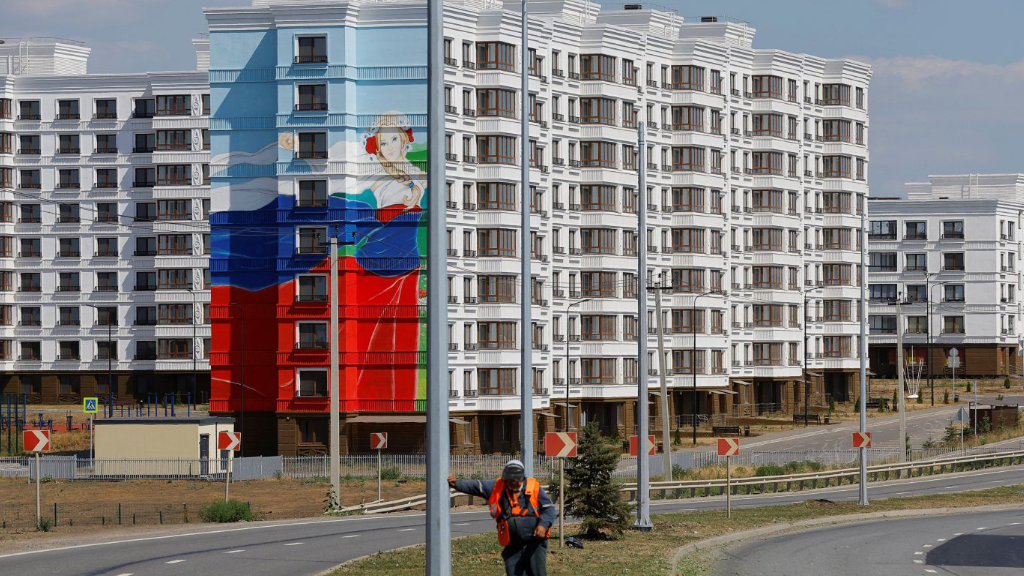
Reconstructed Apartment Blocks in Mariupol
Meanwhile, on May 17, Russian Deputy Prime Minister Marat Husnullin said that over the past two years, Russia has reconstructed 19,000 projects in eastern Ukraine. According to him, the first task of the authorities was the restoration of destroyed or antiquated infrastructure. When discussing Mariupol, he said that the river embankments and park will soon reopen, the restoration of damaged apartment buildings has been completed, and the construction of new housing is to be completed by 2025.
There has been Western commentary describing these as ‘Potemkin’ rebuilds, that they do not really exist. The evidence is somewhat scant and somewhat unverifiable in terms of the images used and the text, although they do appear to acknowledge progress is underway. The main criticism seems to have been about standards. There is no doubt that many of the units built where done so in haste – with winter approaching. However, the Russian regional government plans appear to make practical common economic and redevelopment sense.
These developments will almost certainly be carried out across other newly Russian territories. That has to be some relief to the IMF, with fingers both already burned by Kiev and in any event prevented by sanctions from providing finance to Moscow. Russia, it seems, is quite capable of refinancing, rebuilding and reconstructing the Donbass regions industrial base by itself, a large part of which will be funded by the private sector keen to take advantage of reestablished supply chains from the Donbass into Russia and the CIS. Future stages will probably involve Chinese businesses investing in manufacturing projects for the same reason, in addition to investing in and building infrastructure projects that can generate longer-term returns, such as ticket sales from highways, railways and other cash-flow rich services.
Russian Prime Minister Mikhail Mishustin has stated that trade turnover in the Commonwealth of Independent States(CIS) gained two thirds over the past four years. This year Russia chairs the CIS, he noted, adding that Moscow considers completion of the plan of action to implement the first stage of the Commonwealth’s economic development strategy through the end of the decade one of the prior tasks.
“Trade turnover in the CIS gained more than two thirds over the past four years, with 6% due to implementation of decisions suggested by the plan of action, which added 7% to growth of mutual trade in services,” Mishustin said.
Moreover, the implementation of the plan ensured an increase in accumulated direct foreign investment by 2%, he added. “We will continue deepening cooperation in various sectors in the long term,” he stressed. The CIS differs from the Eurasian Economic Union in that the CIS member countries have bilateral trade agreements with each other rather than a unifying multilateral agreement. It has a total population of about 250 million and a combined GDP (PPP) of US$5.5 trillion. There has been talk of merging the two blocs. Moldova has signalled its intent to withdraw from the bloc, while Turkmenistan is an observer.
The CIS includes the current participating countries:
Country
2023 GDP Growth %
Armenia
6.0
Azerbaijan
4.6
Belarus
3.9
Kazakhstan
5.1
Kyrgyzstan
6.2
Russia
3.6
Tajikistan
8.3
Uzbekistan
6.0
(source: World Bank)
Further Reading
Commonwealth of Independent States 2024 Trade & Development
Our 2024 Russia’s Pivot to Asia PDF Guide contains a complete analysis of the CIS trade performance and statistical data. It is a complimentary download and can be accessed in English here and in Russian here.

 Русский