News

Putin To Meet President Of BRICS New Development Bank

Published on June 5, 2024

Russian President Vladimir Putin is set to hold discussions with Dilma Rousseff, the President of the New Development Bank (NDB) at the Konstantinovsky Palace in St. Petersburg on Thursday (June 6). The NDB is the multi-lateral financing vehicle for the BRICS group. While Russia is a major shareholder, it has not been able to participate since 2022 due to concerns over the NDB attracting Western sanctions.

Putin and Rousseff will discuss the bank’s development strategy, and its participation in the financing of various projects, including on the territory of Russia. Kremlin aide Yury Ushakov said that “We have, diplomatically speaking, questions about the activities of this bank, in the creation of which we were directly involved, and these issues will naturally be discussed with the New Development Bank president, including in view of the fact that next year, in July, the rotating presidency in this bank will go to Russia.”

The NDB is a multilateral development bank established by the BRICS states (Brazil, Russia, India, China, and South Africa). According to the Agreement on the NDB, “the Bank shall support public or private projects through loans, guarantees, equity participation and other financial instruments.” Moreover, the NDB “shall cooperate with international organizations and other financial entities, and provide technical assistance for projects to be supported by the Bank.”

To date, the NDB has tended to concentrate on infrastructure and green financing. For example, during 2024, it has financed sanitation and wind power projects in Brazil, clean energy infrastructure in Bangladesh, road projects in India and rail infrastructure in South Africa. A complete overview of the bank’s projects can be seen here.

In January this year the NDB issued AA+ rated Panda Bonds, worth RMB 6 billion (US$828 million) for five years priced at 2.66% in the China Interbank Bond Market. This transaction has become not only the largest ever five year Panda bond issuance, but it also marked the first issuance of a Panda bond this year in the China Interbank Bond Market by a multilateral development bank.

The initial authorized capital of the bank is US$100 billion, divided into 1 million shares having a par value of US$100,000 each. The initial subscribed capital of the NDB is US$50 billion, divided into paid-in shares (US$10 billion) and callable shares (US$40 billion). The initial subscribed capital of the bank was equally distributed among the founding members (Brazil, Russia, India, China, South Africa). The Agreement on the NDB specifies that every member will have one vote and that no member would have any veto powers.

The bank is headquartered in Shanghai, with regional offices in Johannesburg, São Paulo, Gujarat and Moscow.

Further Reading

Russia & BRICS 2024

Our 2024 Russia’s Pivot To Asia Guide features comprehensive discussions on Russia’s relationship with the BRICS and BRICS plus. It is a complimentary download and can be accessed in English here and Russian here.

Russia – Zimbabwe 2024 Bilateral Trade & Development

Published on June 5, 2024

Russia and Zimbabwe Flag

Russian President Vladimir Putin will meet with his Zimbabwean counterpart Emmerson Mnangagwa on Thursday (June 6) in St. Petersburg. The meeting will include one-on-one talks, followed by talks with an expanded circle of delegates. The Russian side will be represented by top diplomat Sergey Lavrov, Natural Resources and Environment Minister Alexander Kozlov, and Economic Development Ministers Maxim Reshetnikov, Shugayev and Likhachev. It is the fourth time since 2019 that Mnangagwa has visited Russia.

Russia-Zimbabwe relations date back to the Soviet era, while more recently, Zimbabwe was one of the few countries that voted with Russia on United Nations General Assembly Resolution 68/262 concerning the annexation of Crimea. Russia maintains strong economic and political ties with Zimbabwe and maintains an embassy in Harare.

Zimbabwe Map

Zimbabwe is landlocked, and bordered by BRICS member South Africa to the south, Botswana to the southwest, Zambia to the north, and Mozambique to the east. The capital and largest city is Harare, and the second largest is Bulawayo. It has a population of about 17 million and a GDP (PPP) of about US$45 billion.

It was previously a British colony, however, has been under Western sanctions since the mid-2000’s concerning differing democratic and human rights values. 

The main foreign exports of Zimbabwe are minerals, gold, and agriculture, and it currently enjoys rapid growth and development – it has the fastest growing mobile communications market in Africa.

The mining sector is also lucrative, with some of the world’s largest platinum reserves being mined by Anglo American plc, Zimplats, and Impala Platinum. Zimplats, the nation’s largest platinum company, has proceeded with US$500 million in expansions. The Marange diamond fields, discovered in 2006, are considered the biggest diamond find in over a century. They have the potential to improve the fiscal situation of the country. In terms of carats produced, the Marange field is one of the largest diamond-producing projects in the world. Metallon Corporation is Zimbabwe’s largest gold miner.

Russia’s bilateral trade with Zimbabwe is worth about US$80 million, with Russian exports including fertilizers, chemical products, transportation and vegetable products. Zimbabwe’s exports include root vegetables, other vegetable products and fruits.

Zimbabwe is a member of the United Nations, the Southern African Development Community, the African Union, and the Common Market for Eastern and Southern Africa.

Further Reading

Russia & Africa 2024

Our 2024 Russia’s Pivot To Asia Guide features comprehensive discussions on Russia’s relationship with numerous African nations. It is a complimentary download and can be accessed in English here and Russian here.

Russia – Burkina Faso 2024 Bilateral Trade & Development

Published on June 5, 2024

Russia and Burkina Faso Falg

Sergey Lavrov, the Russian Foreign Minister, has been in discussions with Captain Ibrahim Traore, the Burkina Faso leader who took power in the country following a 2022 military coup. Meetings took place in the Burkina Faso capital Ouagadougou late on Tuesday (June 4).

Diplomatic relations were established between the two countries in 1967, but Russia closed its embassy in 1992. Russia reopened its embassy in Burkina Faso after a gap of more than 31 years in 2023. The Burkina Faso government sees the resumption as an important moment in cooperation, completing a cycle of rapprochement and a new era of cooperation.

Apart from the presence of Russian military personnel, Moscow has promised to send grain. Russia gave a 25,000-ton shipment of wheat to Burkina Faso in January 2024.

Having natural resources of gold, manganese, zinc, and phosphate, Burkina Faso is an important target for Russian companies. Burkina Faso imports from Russia reached US$437.73 Million in 2022. Burkina Faso imports included mineral fuels, oils, distillation products, explosives, pyrotechnics, matches, pyrophorics, iron and steel, fertilizers, cereals, and pharmaceutical products.

Burkina Faso’s exports to Russia reached US$204,000 in 2022, according to the United Nations COMTRADE database on international trade. Burkina Faso exports to Russia were aircraft components, mineral fuels, oils, distillation products, machinery, and boilers.

Burkina Faso Map

Russia will be looking to provide security services to the country, as well as increase overall trade ties. Burkina Faso has been severely affected by the rise of Insurgencies in the Sahel since the mid-2010s. Several militias, partly allied with the Islamic State or al-Qaeda, operate in Burkina Faso and across the border in Mali and Niger.

Burkina Faso was a French colony but like much of the Sahel region has undergone a ‘divorce’ from Paris amid accusations of unfair trade practices, unreasonable political demands and inadequate security.

Burkina Faso is landlocked, and covers an area of 274,223 km2, bordered by Mali to the northwest, Niger to the northeast, Benin to the southeast, Togo and Ghana to the south, and Ivory Coast to the southwest. The country has an estimated population of about 25 million.

Burkina Faso is one of the least developed countries in the world, with a GDP (PPP) of just US$63 billion. However, natural resources include gold, manganese, limestone, marble, phosphates, pumice, and salt.  Agriculture represents 32% of its gross domestic product and occupies 80% of the working population. This consists mostly of rearing livestock. Especially in the south and southwest, the people grow crops of sorghum, pearl millet, maize (corn), peanuts, rice and cotton, with surpluses to be sold. A large part of the economic activity of the country is funded by international aid, despite having gold ores in abundance. Russia will be looking at mining opportunities.

Further Reading

Russia & Africa 2024

Our 2024 Russia’s Pivot To Asia Guide features comprehensive discussions on Russia’s relationship with numerous African nations. It is a complimentary download and can be accessed in English here and Russian here.

Turkiye’s Trade With The BRICS As It Looks To Join  

Published on June 5, 2024

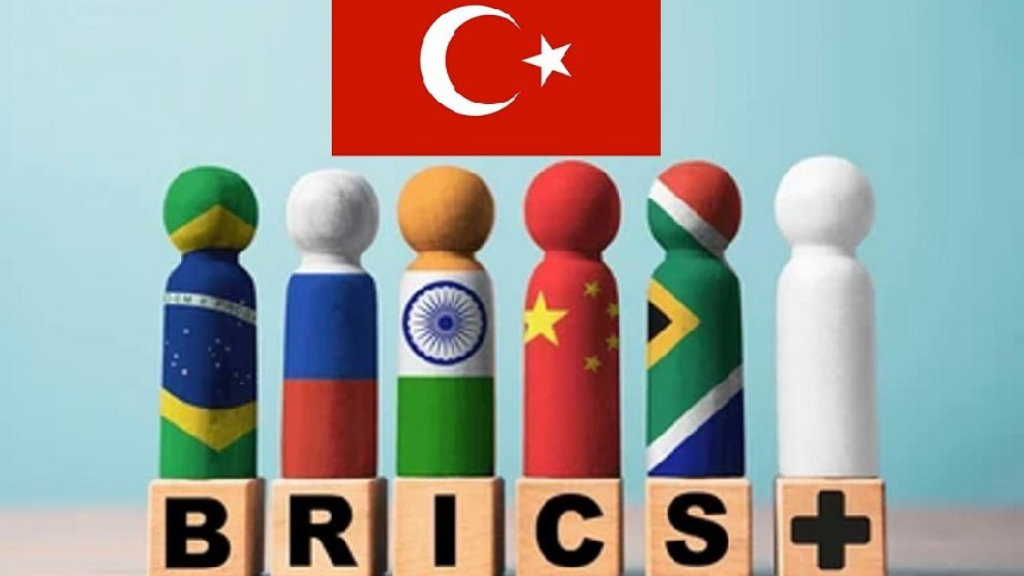
Turkiye is to discuss BRICS membership next week. We detail Turkiye’s trade with the bloc.

October 25 Update: Turkiye has now been granted ‘BRICS Partner’ status. See more here.

Over the past two years, Turkiye’s trade figures with most of the eleven BRICS members have shown significant growth. Now, Turkish Foreign Minister Hakan Fidan has stated that Ankara intends to discuss the issue during the upcoming Ministerial level BRICS meeting next week in Nizhny Novgorod. 

Getting access to the BRICS New Development Bank (NDB) funding may also prove attractive for Ankara. The Turkish President Recep Erdogan expressed interest in the BRICS group back in July 2018, when he surprised Turkiye’s Western allies by attending a summit of BRICS, which took place at the time in Johannesburg. Since then, the space has been quiet, with no further Turkish officials being seen at BRICS events. However, this may mask real intent – the COVID pandemic disrupted global meetings while Erdogan himself had serious economic issues – and still does – to contend with back home. Then there has been the Ukraine conflict, while Erdogan also had to fight a tough Presidential election campaign in 2023.

Nevertheless, a Turkish element to the BRICS potentially appears on the cards. A strong Islamic bloc within BRICS is beginning to emerge, with Egypt, Ethiopia and the UAE all taking up membership in January 2024. Erdogan will not want Turkiye left out of that influential group.

Meanwhile, with Turkiye’s economy needing export assistance and investment, he agreed a US$5 billion deposit into Turkiye’s Central bank with Saudi Arabia – another BRICS candidate – in March 2023, and undertook a mini-Middle Eastern fund-raising tour in July last year to seek capital financing for a variety of projects. It worked – he signed over US$50 billion worth of agreements with the UAE, and a further US$9.9 billion worth of investments with Qatar. Erdogan therefore is on the lookout for financing – and access to the BRICS New Development Bank could well be on the agenda.

Turkiye has also made it clear it wants to boost its exports – it introduced significant export promotional incentives for Turkish exporters earlier this year. With the new BRICS having considerable influence over their respective regional free trade agreements, Turkiye will be eyeing those as potential new development markets.

We can take a quick look at Turkiye’s trade with each of the BRICS countries as follows (2022 data is the latest currently available):

Turkiye – Brazil
2022 bilateral trade reached a record high of US$6 billion, up from US$4.6 billion in 2021.

Turkiye – China
2022 bilateral trade reached US$38.55 billion, up from US$31.6 billion in 2021. 85% of this trade is Chinese exports. China has pledged to increase Turkish imports and to allow import payments from China in Turkish lira.

Turkiye – Egypt
Bilateral trade reached US$7.7 billion in 2022, a 14% increase from the year before.

Turkiye – Ethiopia
Trade has remained static at about the US$400 million level the past three years. 2/3 of this are Turkish exports.

Turkiye – India
Bilateral trade grew to US$10.71 billion in 2022 from US$7.08 billion in 2021.

Turkiye – Iran
Bilateral trade with Iran rose 19% in 2022 to reach US$12.7 billion.

Turkiye – Russia
In 2022, trade between Turkiye and Russia reached US$62 billion, an increase from US$33 billion in 2021.

Turkiye – South Africa
Bilateral trade with South Africa reached US$1.837 billion in 2022, an increase from US$1.404 billion in 2021. Turkiye’s overall trade with the African continent increased from US$25 billion in 2020 to US$34 billion in 2021.

Turkiye – United Arab Emirates
In 2022, Turkiye was the fastest-growing of the UAE’s trading partners, with non-oil trade climbing 40% to US$18.9 billion. With the implementation of the mutual CEPA trade agreement, bilateral trade is expected to reach US$40 billion by 2027.

As can be seen, Turkiye’s trade dynamics with each of the BRICS countries (with the sole exception of Ethiopia) is highly positive. It would appear to be a commonsense trade and investment move to cement that by becoming an official BRICS member state – something that could be announced at this year’s BRICS summit in October.

This would, as mentioned, also potentially free up investment capital into Turkiye via the New Development Bank – another much-needed boost for its economic and foreign investment needs. There are other subtle pointers ahead. With the 2024 BRICS summit being held in Kazan, the capital of Russia’s Tatarstan republic, there are underlying implications.

About 50% of Kazan’s population are ethnically Turkic, with Tatarstan attracting about 25% of all Turkish investment into Russia. At that event, Putin will also be unveiling the new high-speed Moscow-Kazan railway – which travels at 400kph and reduces the travelling time between the cities from 12 to 3.5 hours. That was built in conjunction with Chinese investment and technologies. Ankara is likely to want to increase all these trade and investment ties, and adds the interesting component point of a NATO member joining the BRICS instead of the European Union. 

Further Reading

Russia-Turkiye 2024 Trade & Development

This subject is extensively discussed in our 2024 Russia’s Pivot To Asia guide. That is a complimentary download and can be accessed in English here and in Russian here.

Russia’s 2024 Trade & Development With Chad

Published on June 4, 2024

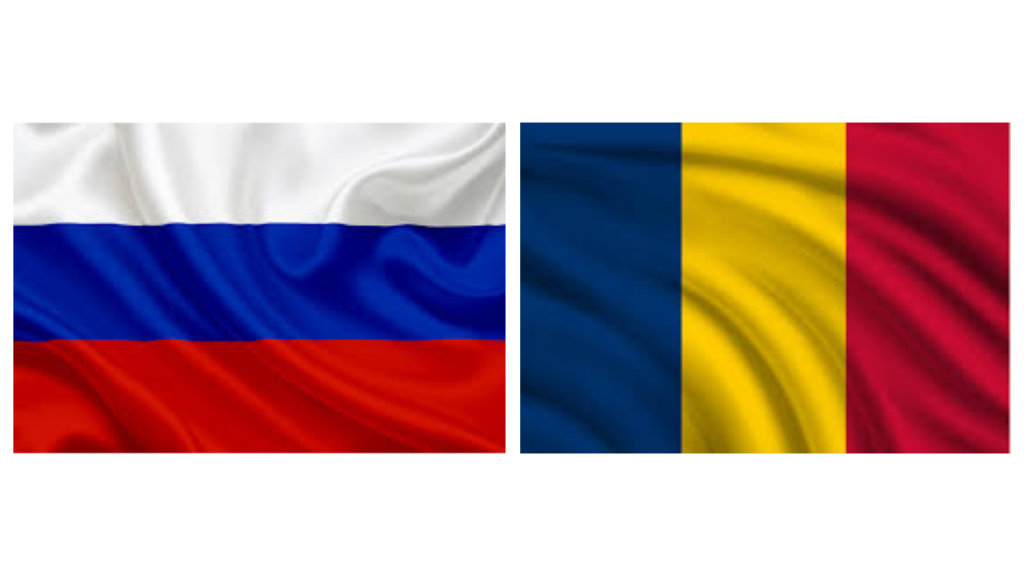
Russia and Chad Flag

The Russian Foreign Minister, Sergey Lavrov is expected in Chad this week as part of a 2024 African diplomatic tour. Lavrov is scheduled to meet with Mahamat Idriss Deby, the new President, who was sworn in on May 23 following his victory in the May 6 elections. This moment marked the country’s formal return to constitutional rule after three years of transitional military government. He is also expected to meet with Prime Minister Allamaye Halina.

Chad sits at the crossroads of North and Central Africa. The landlocked country is bordered by Libya to the north, with Sudan to the east, the Central African Republic to the south, Cameroon to the southwest, Nigeria to the southwest (at Lake Chad), and Niger to the west.

The country is a former French colony and has undergone problems with terrorism in its recent past, including Muslim insurgency under the Boko Haram militants. Lavrov’s visit will be to discuss military and security support, as Russia is doing with several African states as Russia inherits a region now distrustful of its previous colonial masters. 

North Africa Map

Russia’s foreign trade with Chad is small and only about US$3 million. However, Chad has a population of 16 million, of which 1.6 million live in the capital and largest city of N’Djamena. With a total area of around 1,284,000 km2, Chad is the fifth-largest country in Africa and the twentieth largest nation by area in the world.

With Chad being landlocked, Lavrov will be looking for opportunities not just in security and military support, but also to look at reviving Chad’s oil industry, with its proven reserves of 1.5 billion barrels. That energy and potential income will be needed to develop Chad’s agricultural industry, which has been decimated by poor management, war, and desertification. Russian fertilizer and grain exports are also likely to be discussed.

Chad also has a significant cotton industry although again this will need infrastructural development. Cattle farming and gum arabic production are also significant industries. Mobile phone and internet usage are also well below normal African penetration rates and there are likely to be opportunities in communications infrastructure. 

However – getting much needed development into the country is highly dependent on maintaining domestic security.

Chad is a member of the African Union, the Bank of Central African States, the Customs and Economic Union of Central Africa (UDEAC) and the Organization for the Harmonization of Business Law in Africa (OHADA).

Further Reading

Russia-Africa 2024 Trade & Development

Russia’s trade and investments in Africa are extensively discussed in our 2024 Russia’s Pivot To Asia guide. This is a complimentary download and can be accessed in English here and Russian here. 

Russia – Republic of Congo 2024 Trade & Development

Published on June 4, 2024

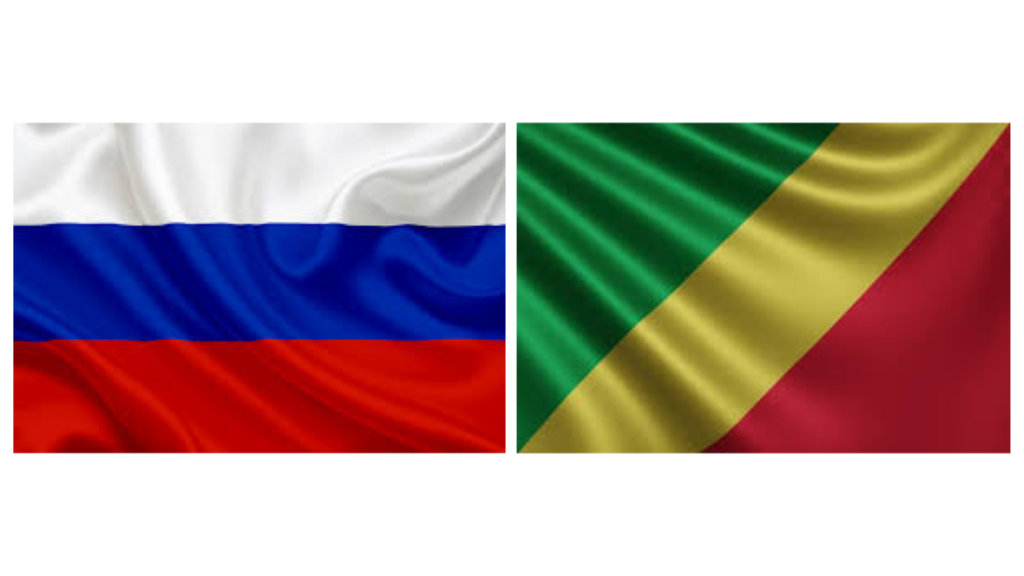
Russia and Republic of Congo

The Russian Foreign Minister Sergey Lavrov has arrived in the Republic of Congo, where he will hold meetings with Sassou Nguessou, the President along with other leaders. Discussions are being held in Oyo city.

This year marks the 60th anniversary since the establishment of diplomatic relations between Russia and the Republic of Congo, while Nguessou attended last years Russia-Africa Summit in St.Petersburg. He met with Russian President Vladimir Putin last July, who noted that “leading Russian companies, including Lukoil, Yandex, and Rosatom, are working effectively in Congo.”

Discussions are likely to focus on further promotion of trade and economic ties. According to data provided by Putin at the negotiations in July 2023, trade turnover between Russia and the Republic of Congo soared by 85% in January-April 2023. Overall bilateral trade however is relatively small at about US$250 million. Russia exports wheat and petroleum products, while the Congo exports mainly fruits.

The Congolese energy sector will be high on the agenda, as Republic of Congo proven reserves of crude oil are estimated at 1.6 billion barrels, while earlier this year, Congo announced plans to start exporting liquefied natural gas, producing the first batch at the Marine 12 project of the joint venture between Italy’s Eni and Russia’s Lukoil. The reserves of natural and associated gas in the country were estimated at 90.6 million cubic meters.

Military-technical cooperation will also be among the topics of negotiations between the head of Russian diplomacy in the Congo. In 2019, a contract was signed to send Russian military specialists to this African state. Also, at that time, negotiations were held on the supply of new Russian military equipment to the Republic of Congo.

As noted at the Russian Embassy in Brazzaville, an important area of bilateral relations is also humanitarian cooperation, “interaction in the training of Congolese personnel in Russian universities is intensively developing.” In the 2023-2024 academic year, the number of government scholarships for the Republic of Congo was increased to 250. The Russian Center for Science and Culture operates in Brazzaville.

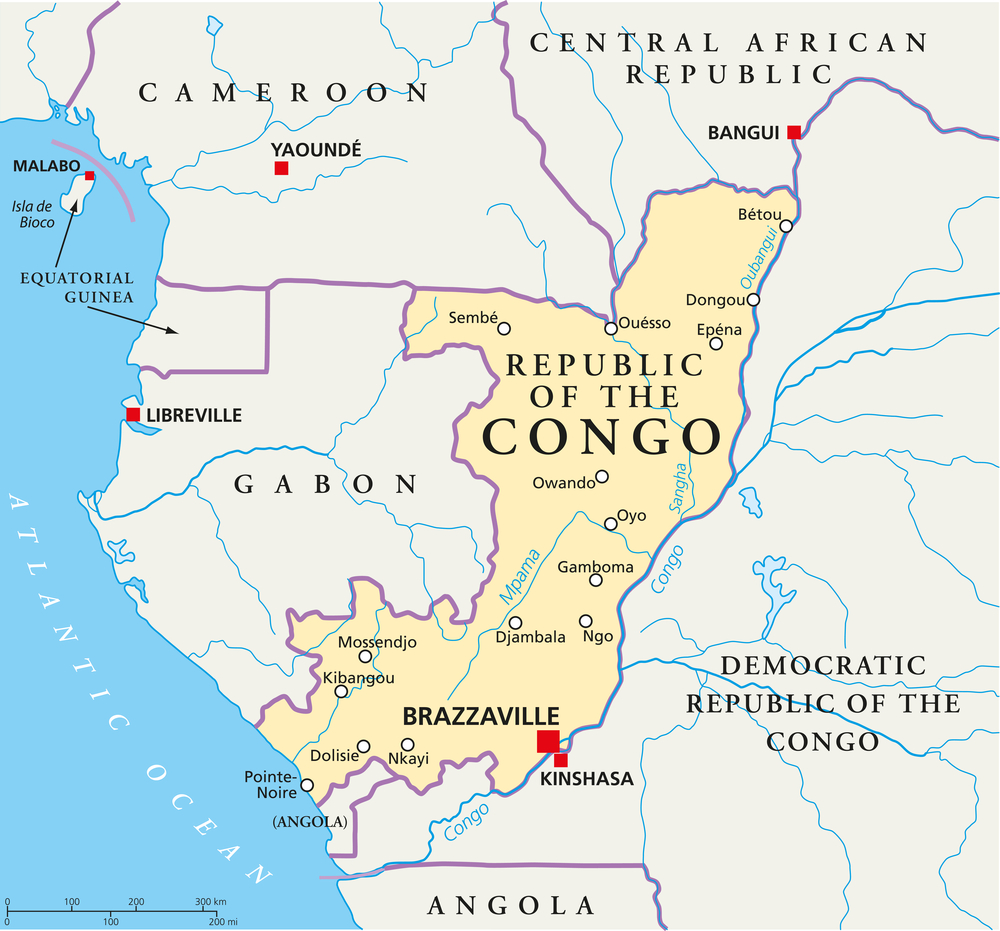
The Republic of Congo, also known as Congo-Brazzaville, West Congo, the Congo Republic, ROC, or simply either Congo or the Congo, is located on the western coast of Central Africa to the west of the Congo River. It is bordered to the west by Gabon, to the northwest by Cameroon, to the northeast by the Central African Republic, to the southeast by the Democratic Republic of the Congo, to the south by the Angolan exclave of Cabinda, and to the southwest by the Atlantic Ocean.

Republic of Congo Map

The Republic of the Congo is a member of the African Union, the United Nations, La Francophonie, the Economic Community of Central African States, and the Non-Aligned Movement. It has become the 4th-largest oil producer in the Gulf of Guinea, providing the country with a degree of prosperity. Its economy is largely dependent on the oil sector.

Like several countries in Africa, The Congo was a French colony. Russian assistance is now preferred, with ties dating back to the Soviet era.

The economy is a mixture of village agriculture and handicrafts, an industrial sector based mainly on petroleum, and related support services. Petroleum extraction has supplanted forestry as the mainstay of the economy, accounting for about 65% of the GDP, 85% of government revenue, and 92% of exports. The country has relatively untapped mineral wealth including base metal, gold, iron, and phosphate deposits along with diamonds. It has a GDP (PPP) of about US$28 billion and a total population of about 6.5 million.

Further Reading

Russia-Africa 2024 Trade & Development

Russia’s trade and investments in Africa are extensively discussed in our 2024 Russia’s Pivot To Asia guide. This is a complimentary download and can be accessed in English here and Russian here.

Russia – Guinea 2024 Trade & Development

Published on June 3, 2024

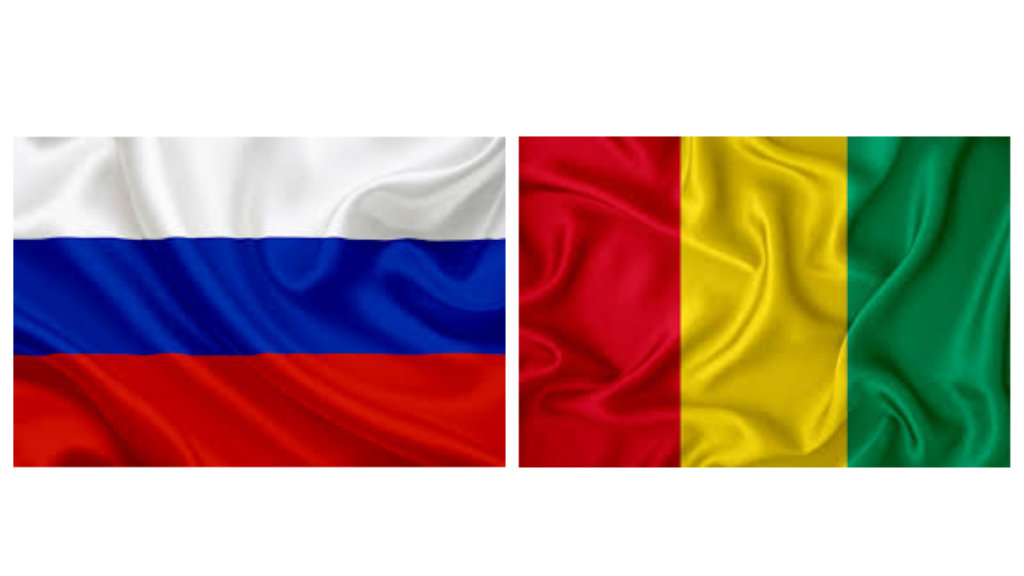
Russia and Guinea Flag

Russia’s Foreign Minister Sergey Lavrov has arrived in Guinea, West Africa, where he will begin a new African tour. Lavrov is scheduled to meet with Mamady Doumbouya, the interim President since 2021. He came to power after a military coup, in similar circumstances to other recent activities in what were previously French colonies. Meetings will take palace in the capital, Conakry.

Several African nations, including Niger and Mali have expressed dissatisfaction with trade agreements reached with Paris. All are seeking security and military assistance from Russia.  

The Russian Foreign Ministry issued a statement on the visit, saying that “Russian-Guinean relations are friendly. There is an active political dialogue.” On July 27, 2001, a declaration on the principles of friendly relations and partnership between Russia and Guinea was signed in Moscow. Since 2002, the Russian-Guinean intergovernmental commission on economic, scientific, technical and trade cooperation has been working. In 2017, during a meeting between Russian State Duma Chairman Vyacheslav Volodin and Guinea’s President Alpha Conde, a Russian-Guinea interparliamentary commission was established.

Russia’s foreign trade with Guinea is small and has reached about US$200 million. However, Guinea has a population of 14 million and an area of 245,857 square kilometres, including Atlantic Ocean access. Lavrov will be looking to boost commercial fishing as Russia looks to replace European Atlantic Ocean supplies.  It is primarily an agricultural economy, with Russian fertilizer imports also being a potential trade win. Guinea also has about 25% the world’s known bauxite reserves, a major source of aluminium. It also has diamonds, gold, and other metals. Bauxite and alumina are the major exports.

Guinea is a member of the African Union, Agency for the French-Speaking Community, African Development Bank, Economic Community of West African States, World Bank, Islamic Development Bank, IMF, and the United Nations.

Further Reading

Russia-Africa 2024 Trade & Development

Russia’s trade and investments in Africa are extensively discussed in our 2024 Russia’s Pivot To Asia guide. This is a complimentary download and can be accessed in English here and Russian here. 
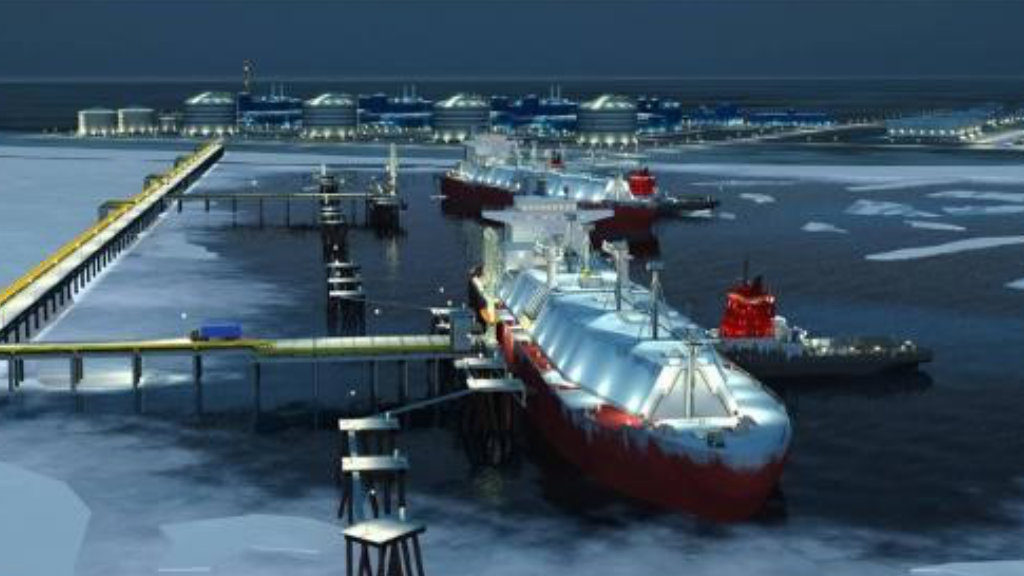
Sabetta Seaport To Expand Cargo Terminal Due To NSR Demands

Published on June 3, 2024

The Russian government is to expand the Arctic Sabetta seaport in the Yamalo-Nenets Autonomous Okrug (Yamalo-Nenets Autonomous Okrug) for the construction of a cargo terminal. The new terminal will be able to receive 1.6 million tonnes of various cargo per annum and contribute to the development of the Northern Sea Route.

Sabetta seaport will include an artificial land plot that will be adjacent to the Gydan Peninsula. Plans include a cargo terminal, which will mainly be used to develop the nearby oil and gas condensate field. However the terminal will be able to accept a wide variety of cargo. Ships with the necessary conditions for handling Arctic seas will use the port.

At the moment, the project to create an artificial land plot and build a cargo terminal on it is at the development stage. Direct work on the site should begin in mid-2026.

The construction of a new cargo terminal will contribute to the development of the seaport of Sabetta and will increase cargo turnover along the Northern Sea Route, the shortest water route between the European part of Russia and the Far East.

Sabetta Map

Under the current sanctions, the Northern Sea Route is becoming a priority transport corridor for Russia, since it passes entirely within its waters and, as a result, is little dependent on logistics restrictions imposed by other countries. However, use is limited by other factors such as a short navigation period and the need to use a special icebreaker fleet.

At the end of last year, 36 million tonnes of cargo were transported along the Northern Sea Route. By the end of 2024, cargo flows on the transport corridor should increase to 80 million tonnes, with Sabetta developed as a key cargo hub.

Further Reading

Russia and the Northern Sea Route

The Northern Sea Route development plans are extensively discussed in our 2024 Russia’s Pivot to Asia guide. This is a complimentary download and can be accessed in English here and Russian here.
The Alternative Olympics – The 2024 BRICS Games  

Published on June 2, 2024

The 2024 BRICS Games are to be held in Kazan, Russia from June 12-23, with 5,000 participants from 97 countries expected to participate, according to the BRICS Games Organizing Committee.

Russian Deputy Prime Minister Dmitry Chernyshenko said that “Russia chairs the BRICS in 2024, and this site has priority importance to our country under the current conditions. The BRICS Games, held on the orders of President Vladimir Putin, are an important component of our country’s BRICS chairmanship plan, and 97 countries have already confirmed participation.”

The Russian Sports Ministry has finalised the sports program on the orders of the Organizing Committee. The BRICS Games 2024 comprises 27 sporting events.

Comparisons are bound to be made with the 2024 Paris Olympics, which are due to be held from July 26-August 11. While the Olympics is a far larger event, with 10,500 athletes competing, the event has become politicized with significant restrictions placed on competing teams from Belarus and Russia, neither of which are allowed to participate in any team events nor under their national flag.

The BRICS games originally began from a 2016 football tournament that took place in Goa, India. It was then expanded to three sports in 2017, where in was held in Guangzhou, China. In 2028 it took place in Johannesburg, South Africa, and was then suspended due to Covid. An online version was held again in China in 2022, including events such as chess and dancing, while the 2023 BRICS games were held in Durban, South Africa and featured events in swimming, badminton, table tennis, tennis, and beach volleyball. The Kazan 2024 games has been significantly upgraded to 27 events and is the first to be held in Russia.

The event has significance for Russian athletes as many are barred from Olympics participation. It also allows the current BRICS members – Brazil, Russia, India, China and South Africa, along with new members Egypt, Ethiopia, Iran, and the UAE to showcase the development of the BRICS bloc in a soft power sporting exercise to a further 88 participating countries. Many of the 88 other countries have expressed interest in joining the BRICS group as an economic bloc, and most will send, along with athletes, low key government delegations to discuss the development of the bloc. The games form part of the lead-up to the annual BRICS Summit that will also be held in Kazan in October, and is likely to generate participational interest in the main economic development of the BRICS.

The effective exclusion of Russia, traditionally one of the strongest Olympic Games participants from the 2024 Paris Olympics, and the sanctions and restrictions placed upon Russia by the West has increased global political interest in what Russia and China term a ‘multi-polar’ global society – one not ruled exclusively by the United States. The 2024 BRICS Games therefore are an early key to what could yet develop into an alternative global event, especially as the previous Olympics alternative, games held by the British Commonwealth of Nations, have been discontinued due to lack of interest and soaring costs.           

The 2024 Kazan BRICS games includes events in athletics, gymnastics, swimming, synchronised swimming, diving, kayaking, rowing, fencing, judo, sambo, ushu, karate, koresh, wrestling, belt wrestling, weightlifting, boxing, skateboarding, breakdancing, table tennis, badminton, tennis, basketball, football, horseriding and chess. Several of these events are not included in the standard Olympics. Gold, Silver and Bronze medals will be awarded in each category.

The BRICS 2024 official website is here.

China, Eurasian Economic Union Discuss Regional Belt and Road Initiative Investments

Published on June 1, 2024

Sergei Glazyev, the Minister for Integration and Macroeconomics of the Eurasian Economic Commission, the directing head of the Eurasian Economic Union (EAEU) has been attending the China Overseas Investment Fair, which was held on May 27-28 in Beijing.

China has a non-preferential trade agreement with the EAEU, which means that tariff and duty rates between China and the EAEU members can be manipulated on an ‘as need’ basis as opposed to being set in stone as would be the case in a full Free Trade Agreement. The EAEU also includes Armenia, Belarus, Kazakhstan, Kyrgyzstan and Russia, filling a geographic area between Eastern Europe and Western China. Discussions between China and the EAEU therefore have a significant impact on trade.

Glazyev spoke about the performance of the EAEU, highlighting that by the end of 2023, its GDP growth rate for the year reached 3.7% – higher than the global average. In terms of the EAEU and China, he stated that “In the context of an unprecedented transformation of the architecture of the world economy and the formation of a new technological and world economic structure, cooperation between the countries of the Eurasian Economic Union and China is acquiring a strategic character and has great prospects. In essence, the EAEU and China are forming a new contour of regional economic development.”

During the thematic round table “The Eurasian Region Presents New Economic Opportunities,” the issues of linking the Eurasian Economic Union and China’s Belt and Road initiative were discussed in detail. According to Glazyev, the trade turnover between the EAEU and China has become sustainable, but to maintain this requires the development of cooperation and joint investments. The economic growth potential of the EAEU exceeds 25% and is especially high in the fuel and energy complex, agro-industrial and forestry complexes, and high-tech industry. Issues of trade and economic cooperation, technological innovation and green development were also discussed.

China’s Belt and Road Initiative (BRI) is essentially the outbound investment programme that Beijing carries out, with particular emphasis on developing supply chains in energy, food security and other essentials, along with consumer-based trade. There has also been an increasing tendency for Chinese investors, both SOEs and privately held companies, to invest in infrastructure projects, complete them, and then see them IPO. That provides significant return on the initial investment and also allows a full or partial exit. Partial exits mean the Chinese investor can continue to reap annual dividends. Glazyev is suggesting more of these types of investments should be directed towards the Eurasian Economic Union.      

Cooperation between the EAEU and China is carried out within the framework of the Agreement on Trade and Economic Cooperation between the Eurasian Economic Union and its member states, on the one hand, and the People’s Republic of China, on the other.

The China Foreign Investment and Cooperation Fair is approved by the State Development and Reform Committee of the People’s Republic of China. Representatives from more than 100 countries and thousands of entrepreneurs traditionally take part in the Fair’s sessions; exhibitions are organised on the sidelines of the event and contractual documents are signed. The fair has become an effective way for participants to obtain information about international investment, trade and economic projects, and an important platform for the development of international cooperation in the joint construction of the Belt and Road Initiative: and dividend returns from projects within the EAEU.

Russia, EAEU Discuss Priority Trade Developments

Putin Planning To Visit Vietnam

Published on May 31, 2024

The Russian President, Vladimir Putin, is currently planning a trip to Vietnam, with dates expected to be confirmed by the Kremlin shortly. The trip will likely occur in mid-late summer.

Russia has a Free Trade Agreement with Vietnam via the Eurasian Economic Union (EAEU). Current bilateral trade is running at about US$3 billion.   

Bilateral trade between Russia and Vietnam reached a record high of US$7.1 billion in 2021, an increase of 25.91% (US$1.46 billion) compared to 2020. However, due to sanctions imposed on Russia as a result of the Ukraine conflict, the bilateral trade volume has halved. Both sides will be looking to get mutual trade and investment ties back on track.

A comprehensive analysis of Russia/Vietnam trade can be seen in our 2024 Russia’s Pivot To Asia guide, which is a complimentary download and can be accessed in English here and Russian here.  read

Further Reading 

Russia, Vietnam, Launch Direct Rail Service Via China