News

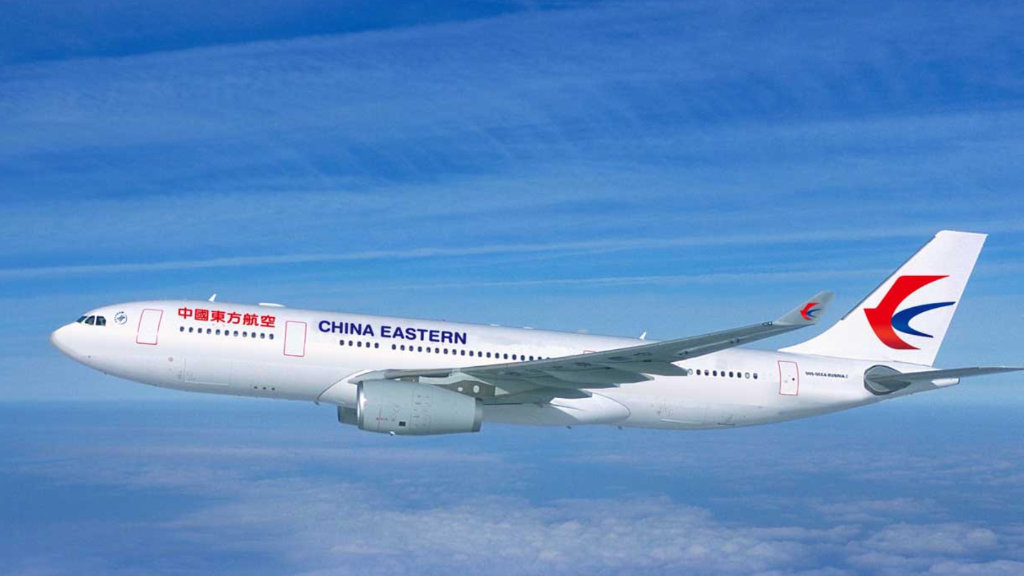
Kaliningrad Airport Becomes A Chinese Aviation Hub

Published on June 11, 2024

Alexander Korytny, the CEO of Kaliningrad’s Khrabrovo Airport has stated that the airport is actively working with Chinese airlines as a service hub for Western Europe. Korytny said that “We are actively cooperating with Chinese airlines, having made a pivot to the East. We are working with five leading Chinese airlines through the government of Kaliningrad Region and the office of Chinese president. A number of documents have been worked out that could help us establish closer cooperation with partners through China’s leadership.”

The Russian side sees Khrabrovo more as a transit hub for Chinese airlines on the way to Western Europe and other destinations, for both passenger and cargo traffic. Kaliningrad could also become a layover point for Chinese tourists on their journey to other countries, Korytny said.

Korytny said that in mid-2023, the Russian Federal Air Transport Agency had established an open skies regime at Khrabrovo, making it simpler for airlines to secure approval and permission for flights regardless of the number of designated flights as part of frequency parity between countries.

“We want to insert Kaliningrad into the already established air route between China, Moscow and St. Petersburg that operated before the covid pandemic. Some Chinese airliners made up to 60 flights per week. There is hope that the flow of Chinese tourists to the country will recover – it hasn’t reached pre-pandemic figures yet,” Korytny said. Khrabrovo is one of Russia’s 20 largest airports by passenger traffic, handled 4.3 million passengers in 2023. Kaliningrad borders Poland and Lithuania. 

Future BRICS Currency To Combine A Gold Standard & Sovereign Currency Mix

Published on June 11, 2024

As we reported last week, Russian President Vladimir Putin has held meetings with Dilma Rousseff, the Head of the BRICS New Development Bank (NDB).

A new priority for the NDB, as directed by its shareholders, is the development of a new digital currency to facilitate direct trade between members and bypass sanctions imposed on Russia and the threat of sanctions upon third party countries. These sanctions, imposed by the West, are usually actioned by terminating SWIFT connectivity to the global financial system. A common BRICS currency would evade these threats and facilitate direct trade.

However, there are limitations in this as trade volumes amongst certain members are one-sided. For example, Russia’s trade with India is greatly affected by India’s purchases of Russian energy such as oil and gas, however Russia then finds itself with an excessive amount of Indian rupees, which it can find difficult to offload.      

To deal with these trade practicalities, discussions between Putin and Rousseff have apparently reached a consensus, along with other NDB members, that the future BRICS currency would be based upon a basket including 60% of BRICS sovereign nation currencies, and 40% upon gold reserves. Such a structure provides asset-backed stability, in addition to catering for exchange rate fluctuations.  Unlike the US dollar, it is also an apolitical, transactional form of cross-border payments. Also unlike the US dollar, a BRICS currency can operate externally from the SWIFT payment network.

The NDB might find itself sanctioned, but as the bank isn’t used for trading with the West, such a move would be largely symbolic. The only way the West would be able to hinder this arrangement would be to sanction other currencies, such as the Chinese RMB and the Indian Rupee. However, such a dramatic move would curtail trade between China, India and the West. Combined trade between these two countries with the United States and EU last year reached US$1.56 trillion. Sanctioning their currencies would seriously damage global trade flows and spark huge shortages, inflationary pressures and a strong recession upon the West, rendering such a drastic move rather unlikely.      

Meanwhile, NDB shareholders currently include Russia in addition to Brazil, India, China, South Africa, whose original combined shareholding must be maintained at a minimum 55% of the total equity. Over the past two years, the original five have been joined by Bangladesh, Egypt, the UAE and Uruguay. A further 30 countries, including Turkiye, Thailand and several African, Middle Eastern and LatAm countries have also expressed interest in joining the BRICS group. Some of these may also become NDB members, thereby expanding the groups reach – and adding to its overall future currency stability.

On top of this, should the proposal come to fruition, a BRICS trading bourse would also likely come into existence. We discussed the potential for a BRICS Commodities Trading Bourse last week here.

Further Reading

Russia To Invite BRICS Countries To Form An Independent Financial System

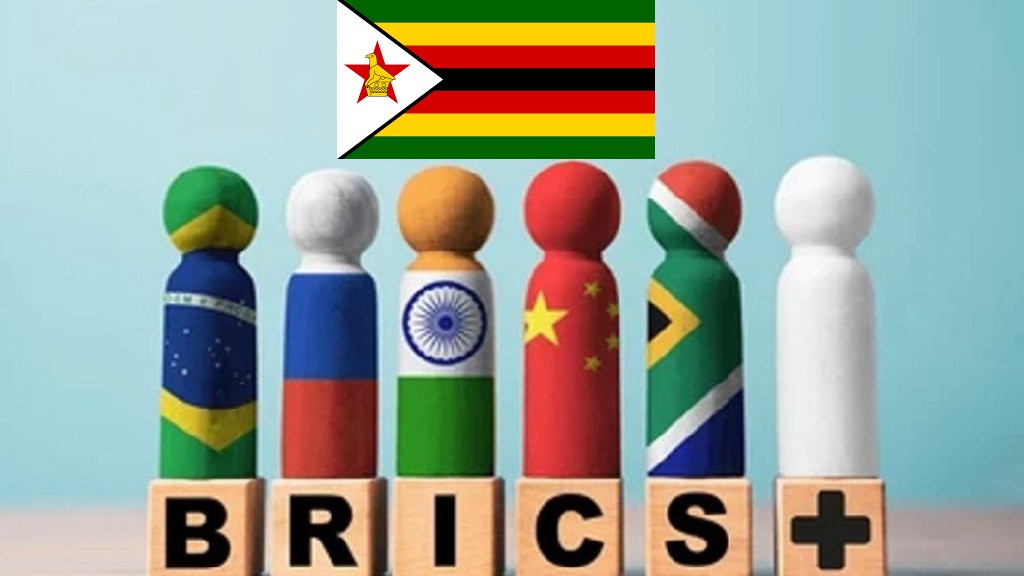
Zimbabwe – BRICS Multilateral Trade Shoots Up as Harare Looks To Join  

Published on June 10, 2024

Zimbabwe maintains good relations with all BRICS member countries and it is edging closer to joining the grouping, Zimbabwean President Emmerson Mnangagwa said as he returned home from the St. Petersburg International Economic Forum (SPIEF).

Mnangagwa said that “Zimbabwe is edging closer to joining the BRICS economic bloc. Our good relations with members will enhance chances of being admitted into the emerging global financial order. On joining BRICS, I discussed that issue with President Putin, telling him that it is our desire to join the bloc. I also had earlier on discussed it with our neighbor, President Cyril Ramaphosa of South Africa. The prospects are good because none of the BRICS members are anti-Zimbabwe.” Mnangagwa also described relations with China and Brazil as excellent.

According to Mnangagwa, BRICS membership could provide the landlocked South African country with access to new markets, investment and technology. At their meeting, the presidents of Russia and Zimbabwe discussed enhancing cooperation and trade.

We discussed Russia-Zimbabwe 2024 trade and development in this article here.

Zimbabwe has a population of about 17 million and a GDP (PPP) of about US$45 billion. Its economy is based on a gold standard, with agriculture and mining the main exports. The country has reserves of metallurgical-grade chromite, as well as commercial mineral deposits such as coal, asbestos, copper, nickel, gold, platinum and iron ore. Russia’s trade interests lie in fertilizers, with Mnangagwa stating that Zimbabwe’s 2024 crops were expected to reach record highs due to imports from Russia. The two sides are also collaborating in nuclear energy developments for the Zimbabwean national grid.

In terms of the BRICS group, Zimbabwe’s trade with the other members is as follows:

CountryTrade Agreement 2023 Bilateral Trade (USD millions) Growth Rate
BrazilYes 10.2 18%
ChinaYes  3,120.0   29.9%
EgyptYes15.1 10%
EthiopiaYes1.35%
IndiaMOU2507%
IranMOU  5.2 5%
RussiaYes 80.3320%*
South Africa Yes 3,620.0 13.4%**
UAEYes650300%
(Sources: National media, OEC)

*Russia’s bilateral trade with Zimbabwe in 2022 was just US$24.5 million in 2022.
** South Africa is Zimbabwe’s largest trade partner, followed by China.         

Related Reading

Russia & Africa 2024

Our 2024 Russia’s Pivot To Asia Guide features comprehensive discussions on Russia’s relationship with numerous African nations. It is a complimentary download and can be accessed in English here and Russian here.

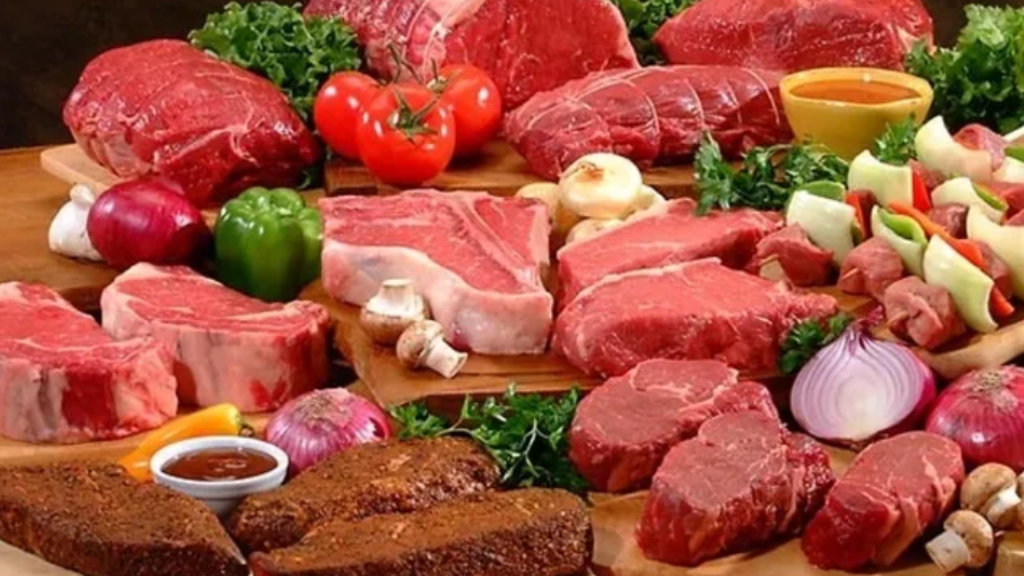
Russia Now The World’s Fourth Largest Meat Producer 

Published on June 10, 2024

Russia has in recent years succeeded in creating a modern meat industry and now ranks fourth in the world by meat production, President Vladimir Putin said at the St. Petersburg International Economic Forum on Friday (June 7).

“We have created a modern meat industry in the agro-industrial complex. Its capacity has almost doubled in 15 years. Today, Russia ranks fourth in the world in meat production and is increasing the supply of this product to foreign markets,” Putin said. Domestic meat consumption in Russia broke a new record in 2023 and exceeds 80 kg per person. By comparison, the world average is 42-43 kg per person,” the president said, meaning that Russia is also now totally self-sufficient in meat products.

Major exports markets exist with China and Vietnam for pork and chicken, while Russia’s halal meat exports are also increasing to Muslim markets.

The world’s largest meat producers (in order) are China, the United States and Brazil. The top ten are rounded out by India, Mexico, Argentina, Spain, Germany and Pakistan.

Further Reading

Russia’s Trade With Islamic Countries Up 30%

Russian Investors – Infrastructure Projects Signed At SPIEF

Published on June 9, 2024

The St.Petersburg International Economic Forum (SPIEF) 2024 has now finished, attracting guests from 139 countries. Investment deals worth US$71 billion were signed, as Russian companies look to invest in alternative markets as its economy moves away from Europe. 

In this article we highlight some of the larger investment deals that Russian investors made to instigate improved infrastructure, largely within Russia itself, but executed in order to further prepare for increasing trade with the international, but non-Western business community.   

Russian Railways

Infrastructure

Russian Railways, VTB and the GK National Project signed an agreement according to which the South-West detour of St. Petersburg becomes a pilot project within the framework of the interaction of the parties in the implementation of large-scale infrastructure lines. This ultimately facilitates improved Russian rail transit to markets in West Africa and Latin America. The project cost is ₽170 billion (US$1.9 billion).

Black Sea Rail Infrastructure

A third High Speed Railway south, from Moscow to Adler, on the Black Sea coast will pass through Voronezh, Krasnodar, Tuapse, Stavropol and Sochi. The travel time on the full route from Moscow to Adler will be reduced by three times and will be 7 hours 50 minutes, from Moscow to Lugansk and Donetsk — a little more than 12 hours. This improves direct connectivity between Moscow, Crimea and Black Sea ports with specific maritime benefits to Georgia and Turkiye.

Air Connectivity

New Omsk Airport

Financing and contracts have been signed to construct a new Omsk-Fedorovka airport, to be completed in late 2028. The total cost of the airport construction project is over ₽43 billion (US$480 million. Omsk is a key Siberian transit hub with links to the Trans-Siberian railway, Kazakhstan and China trade routes.

New Direct International Flights 

Russia is exploring the possibility of resuming direct flights with South Korea, Indonesia and Saudi Arabia in the near future. In addition, Russian airlines plan to start flights to Jordan and Kuwait.

Emerging Markets Finance

Mutual Investment Fund

The Russian State Corporation WEB.RF and Sberbank announced on the creation of a new closed combined mutual investment fund “The Fund of the First” with ₽50 billion rubles (US$560 million). The fund was created to participate in the capital of investment projects, including within the framework of Project Finance Factories in new emerging markets.

Energy

Central Asian Gas Transit

Russia’s Gazprom signed 15 year contracts with Kazakhstan for gas supply transit to Uzbekistan and Kyrgyzstan.

Hydro Electric

WEB will finance the RusHydro projects for the construction and modernization of hydro-electric stations in the Russian Far East within the framework of Project finance factories. The total amount of funds raised from VEB.RF and partner banks is estimated at ₽650 billion (US$7.3 billion). The additional power will help to redevelop the Far East and Arctic regions and assist support for the Northern Sea Route. 

Nuclear Power  

VTB and Atomenergoprom signed a loan agreement for ₽50 billion (US$560 million) for the development of the Northern Sea Route and the construction of supporting nuclear power plants.

Northern Sea Route

Vladivostok Satellite City & Lena River Bridge

Indian and Chinese companies are investing in the construction of a new city – satellite Vladivostok, which will be called Satellite City, according to Alexey Chekunkov, Minister for the Development of the Far East and the Arctic. In China, an overabundance of construction facilities and construction personnel can now be redeployed to Satellite City. The bridge over the Lena River in Yakutia is officially included in the master plan for the development of the region. The Lena Bridge will be the first in the Republic of Sakha (Yakutia) and will connect the Trans-Siberian and Baikal-Amur railways with the Northern Sea Route. Construction will begin in 2025. In September 2023, the Lena River Bridge budget estimate of ₽122 billion (US$1.36 billion) was approved.

Middle East

UAE Logistics

Wildberries, Russia’s equivalent to Amazon, has signed contracts with numerous economic free zones and ports in Abu Dhabi to build a logistics center for entering the UAE and Middle Eastern regional markets.

Ulyanovsk to Persian Gulf Block Train Services To Begin

Published on June 8, 2024

The Ulyanosk regional government has said that negotiations are currently underway to launch a regular block train service from Ulyanovsk-Baku-Astara to deliver goods to Iran and other Gulf countries. Agreements have been made with both domestic and foreign companies and signed with individual logistics partners. The implementation of the project will contribute not only to the growth of trade turnover of the Ulyanovsk region with the Middle East, but also in general the development of the North-South International Transport Corridor (INSTC).

Ulyanovsk is on the Volga River about 500km east of Moscow. It is well known as the birthplace of Lenin. Block trains are digitally secured freight cargo railway trains that allows the fast processing of contents through different borders without the need to examine the cargo.

Alexey Russkikh, the Ulyanovsk governor, visited Baku (Azerbaijan), recently, during which agreements were signed with individual logistics partners providing for the Ulyanovsk-Baku-Astara service. Astara is Iran’s Caspian Sea Port.

Goods from Ulyanovsk will transit through Baku with the possibility of redistribution and further shipment to neighbouring regions. The final destination of the train will be Astara in Iran, although further ongoing transit supplies to Iraq, Afghanistan and other countries are also being planned.

Caspian Sea Map

At the moment, the development of technology, loading stations and other issues are being coordinated with Russian Railways, while work on designing the block train route is being carried out jointly with Azerbaijan Railways.

Russkikh said that “The economy of the Ulyanovsk region needs regular routes to increase trade turnover with friendly countries. The launch of the train will reduce delivery times and transportation costs, as well as create a stable rolling stock. We systematize supplies to Azerbaijan and the Persian Gulf countries. We will involve new shippers from the Ulyanovsk region and neighbouring regions in export deliveries.”

The basis of the export flow will be grains, flour, auto components, building materials, woodworking products and furniture.

In general, the launch of the project will also contribute to the development of the western branch of the international North-South transport corridor, which passes through the territory of Azerbaijan and Iran. At the same time, it is worth noting that at the moment work on the construction of the Rasht-Astara railway section, which should connect Azerbaijan and Iran, is just beginning. The 162 km line should be operational by 2027.

Further Reading

Trans-Caspian International Transport Route Bottlenecks Discussed

India’s Cadila Pharma Agrees US$113 million JV Manufacturing Plant in Russia 

Published on June 7, 2024

India’s Cadila Pharmaceuticals, one of the countries largest, together with the Russian Direct Investment Fund (RDIF) have agreed to jointly finance a new manufacturing facility in Russia, with a total investment of ₽10 billion (US$113 million).

The agreement comes after numerous Western pharmaceutical companies withdrew from Russia under their governments pressure.

Russia’s civilian pharmaceutical needs were hit especially with the withdrawal of Denmark’s Novo Nordisk, who terminated supplies of its popular Ozempic diabetes drug to Russia at the end of 2023. Russia has strikingly higher diabetes rates compared with Western countries with the disease affecting about 19% of the adult population, or about 20 million people. Other European pharma companies who exited or scaled down in Russia include 3Shape, Acino, Allergan, Adamed, Bionorica, Bristol Myers Squib, Demant, Eppendorf, Essity, Orion, Ovaca Bio, Smartway, Steda, along with 14 American pharma companies.       

This has created some difficulties for ordinary Russian citizens requiring specific treatments only available from the West. However, like Chinese auto manufacturers have replaced European brands in Russia, the decision has boosted India’s role in supplying medicines to the country. India is the largest generic drug manufacturer in the world.

According to the agreement signed on the sidelines of the St. Petersburg International Economic Forum (SPIEF), Cadila will provide an investment of ₽8.5 billion with the RDIF providing ₽1.5 billion in equity.

The launch of the new pharmaceutical complex, which is expected to manufacture gastroenterological drugs, as well as medicines for the treatment of cardiovascular diseases and diabetes, is scheduled for 2027. The plant’s annual production capacity is projected to amount to more than a billion of units of drugs and about 1,500 tons of active pharmaceutical ingredients, with the potential to increase the volumes.  

Cadila currently supplies pain relief and antispasmodic drugs and eye drops used for treating glaucoma, among other products. The RDIF said production of medicines for the Russian market would be local. Some of the drugs planned for production at the new facility have not previously been produced in Russia.  

Cadila also produces high-tech pharmaceutical equipment that is expected to allow the Russian plant to be provided with “advanced innovations in the industry.”  

Cadila is focused on manufacturing active pharmaceutical intermediates, finished formulations, food supplements, biotechnology products, and pharmaceutical machinery, and currently operates production facilities in India and Ethiopia.  

Earlier this year, Indian pharmaceutical firm PSK Biotech Private and authorities from Russia’s Sakhalin Region announced plans to set up production facilities in the Russian Far East. The company is expected to begin manufacturing of personal hygiene products, diapers, and medical supplies in the city of Yuzhno-Sakhalinsk as soon as November.  

Businesses from India have been exploring opportunities in the pharmaceutical, diamond, and hydrocarbon sectors in Russia’s Far East. The regions trade with India increased by 40% last year’, while Russia-India bilateral trade hit US$65 billion, a 33% jump over 2022. New Delhi is also looking to make progress on an investment treaty with Russia as well as signing a free trade agreement with the Eurasian Economic Union, which also includes Russia along with Armenia, Belarus, Kazakhstan and Kyrgyzstan.

Further Reading

Russia-India 2024 Trade & Development

Our 2024 Russia’s Pivot To Asia Guide features comprehensive discussions on Russia’s relationship with India. It is a complimentary download and can be accessed in English here and Russian here.

Sanctions Lose Their Bite Upon Russian Businesses, But High Interest Rates Remain Problematic

Published on June 7, 2024

New survey suggests Russian businesses are mainly bullish and sanctions are being overcome 

A new report by Yakov & Partners (previously McKinsey Russia) has stated that Russian businesses have successfully adapted to operating under Western sanctions, with 50% of Russian entrepreneurs noting an improvement in their business over the past six months. Looking ahead, 87% were expecting an improvement or at least, a continuation of the current state of doing business in Russia.

The data was collected from surveys of Russian enterprises and presented by experts from Yakov and Partners. They show that for the first time since 2022, foreign trade barriers have ceased to be the main problem of Russian companies.

Although foreign trade bans and sanctions continue to influence the position of Russian companies, they are no longer the main barrier to trade. Instead, an increase in capital costs, due to high interest rates (currently 16%) were among the main risks for Russian businesses. Even more problematic however is Russia’s high employment data – a shortage of labour is pushing wages up. 

However, more than half of respondents expect their company’s position to improve in the next six months. The positive outlook of business leaders on the prospects for the next six months is confirmed by the priorities identified by Russian business owners. Employee attraction and retention will remain a top development priority for business leaders in the coming months. Respondents ranked growth in the output of products and services in second place, and entry into new customer segments and diversification of the product portfolio in third and fourth place.

Elena Kuznetsova, director of the Yakov and Partners Institute and co-author of the study, said that  “These results indicate the adaptation of Russian business to restrictions caused by geopolitical factors. The list of company priorities speaks about development and growth. However, the main constraint is the labour market. The share of leaders who have identified personnel issues as a priority is growing and has reached a record 43%.” 

Part of the answer to the personnel question is the development of automation, including the use of artificial intelligence. 70% of Russian corporate executives believe that artificial intelligence (AI) will impact their companies over the coming twelve months, and are convinced that in the near term, artificial intelligence will primarily help reduce costs, increase revenue and increase the degree of personalisation of products.

About 150 company executives from all major sectors of the Russian economy took part in the survey, including banking, IT and telecoms, metallurgy, oil and gas and mining, retail trade and e-commerce, agriculture, chemical industry, mechanical engineering and energy, transport and logistics, medicine, pharmaceuticals. The surveys involved heads of organisations with an annual turnover of more than ₽5 billion (US$56.5 million).

Optimism prevails in all major industries, except construction where views were mixed – 30% of businesses in this sector said that the market situation had deteriorated over the past 6 months, while 33% responded that their production had improved. Another third reported that the market conditions had not changed.

In comparison: in retail trade, e-commerce and production of consumer goods, just 20% of respondents reported a deterioration in the state of their production, while 50% reported an improvement in the condition of their companies, and 30% said there had been no change.

In the mining and metals industries, 22% of respondents reported business improvement, while 28% of executives reported a deterioration in business conditions. The mining and metallurgy industry is the only sector of the Russian economy where negative assessments of changes over the last six months significantly exceed the share of positive assessments.

The best ratio of positive and negative assessments of changes over the past six months is observed in the field of financial and banking activities, as well as in the field of technology and IT. When asked, CEOs of Russian technology enterprises and IT companies did not have any negative assessments of changes over the past six months, while positive assessments of the industry reached 85%.

In Russian financial and banking activities, the share of negative assessments of changes over the past six months was just 4%, and the share of positive assessments 57%.

A shortage of skilled labour, foreign trade bans, as well as rising costs of capital are the main challenges for companies, as related by the responding CEOs. Central Bank Chairman Elvira Nabiullina has argued that her policy of continuing high rates does little to slow down economic growth. However, the Yakov and Partners data does not confirm this thesis, since the high cost of raising capital is called by entrepreneurs the third most important obstacle, comparable in negative impact to Western sanctions.

“In the fall, there were many fears that raising the key rate would put an end to the economy. But we see that this is not so,” Nabiullina said.

Economic growth slowed slightly in the fourth quarter but remained strong. At the end of the year, GDP grew by 3.6. Now operational indicators show that in the first quarter of this year the economy continues to grow at a high rate,” said Elvira Nabiullina during her report to the State Duma in April 2024.

In December 2022, only 11 CEOs cited rising costs of capital as a significant risk to their businesses. By May 2024, this had more than tripled and reached 38% of the total. To compare, just 42% of all respondents mentioned foreign trade bans or sanctions as problematic.

BRICS, EAEU Could Be Part Of A New Unified Eurasian Commodities Exchange

Published on June 7, 2024

The St. Petersburg International Commodity and Raw Materials Exchange (SPIMEX) will create a new, common EAEU commodity exchange market and then intends to integrate this to include commodities trading within the BRICS, according to SPIMEX President Igor Artemyev, speaking on the sidelines of the St. Petersburg International Economic Forum (SPIEF).

Artemyev stated that “A large number of spot exchanges were closed in the United States and Europe after World War II, and a transition was made to futures trading. In recent years, a number of ‘bubbles’ have appeared in the global economy, leading to financial, mortgage and other crises. Now, geopolitics are shaping a completely new world order. The world economy and stock markets are divided, and futures trading on Western exchanges is no longer a universal reference point and has become unreliable. It is now apparent that it is more practical to have cash and physical goods and to conduct transactions with them.”

Russian legislation, as well as the laws of former Soviet Union countries and others, such as China and India, are similar in that priority is given to cash in trade goods.

“This is our advantage,” Artemyev said “Large spot exchanges are also located in Belarus, Kazakhstan, Uzbekistan, Kyrgyzstan, China, Indonesia, Iran, Turkey, and the United Arab Emirates. SPIMEX is one of the three leading global spot exchanges in terms of trading volume and can serve Russia well in the international arena. This is indicated in our strategy. To begin with, we will build a common EAEU commodity exchange market.”

An important step in this direction will be taken at SPIEF. A cooperation agreement will be signed by SPIMEX, the Belarusian Universal Commodity Exchange (BUCE), the Eurasian Trading System (ETS) The Commodity Exchange (Kazakhstan), the Uzbek Commodity and Raw Materials Exchange (UzRTSB) and the Kyrgyz Stock Exchange in the presence of representatives of EAEU state governments, Artemyev said.

“The essence is that the exchanges of the EAEU countries will begin to publish their indices and price indicators on the SPIMEX SPX platform. Therefore, we will get cross-country- though not indicators yet – but at least benchmarks. We will see the differences across countries, for example, in the price of diesel. This information will tell the buyer and seller a lot and will become an important guide,” he said.

As for what these countries can trade with each other, he said, “A single exchange is a rather complicated story, and at this stage there is no need for one to appear. However, it is necessary to conduct joint trading, create a single interface, and simplify mutual trading in general as a way to unite our entire exchange space. In this regard, we see the Moscow Stock Exchange (MOEX) as a partner with its commodity segments. Regarding potential exchange goods, the President has given instructions to prepare proposals for trading in agricultural products. World hunger is a pressing issue, and solving it is the right thing to start with.”

“Then we will look at the unification of exchange trading within BRICS and other countries. Here, it depends on them deciding to join in single exchange trading. SPIMEX can become one of the organizers of this process.”

The emergence of such an exchange would elevate St.Petersburg and Moscow to important trade and financial services hubs for the entire Eurasian region, and possibly for Africa too, given that Russian interest is emerging in African commodities. Such a facility would act in a similar manner to the Chicago and New York Mercantile Exchanges. These work to provide market security. A new Russian based commodities exchange would determine and enforce rules and procedures for trading standardized commodity contracts and related investment products, and especially across Eurasia.

Traders rarely deliver any physical commodities through a commodities exchange. Instead, they trade futures contracts, where the parties agree to buy or sell a specific amount of the commodity at an agreed-upon price, regardless of what it currently trades at in the market at a predetermined expiration date. The most traded commodity futures contract is crude oil, but this could be expanded to include metals, and agricultural commodities exchanges. The global commodities market is massive, with a nominal value of approximately US$131 trillion in 2024.

Russia – Africa 2024 Trade & Development – The Latest Updates

Published on June 6, 2024

Russian Foreign Minister Sergei Lavrov has been on a four-country tour on Africa this past few days, visiting Guinea, The Republic of Congo, Burkina Faso and Chad. Russia has also announced it is to open Embassies in Sierra Leone, Niger and South Sudan.

We covered Lavrov’s visit and discussed Russia’s trade with each of these countries in the following articles:

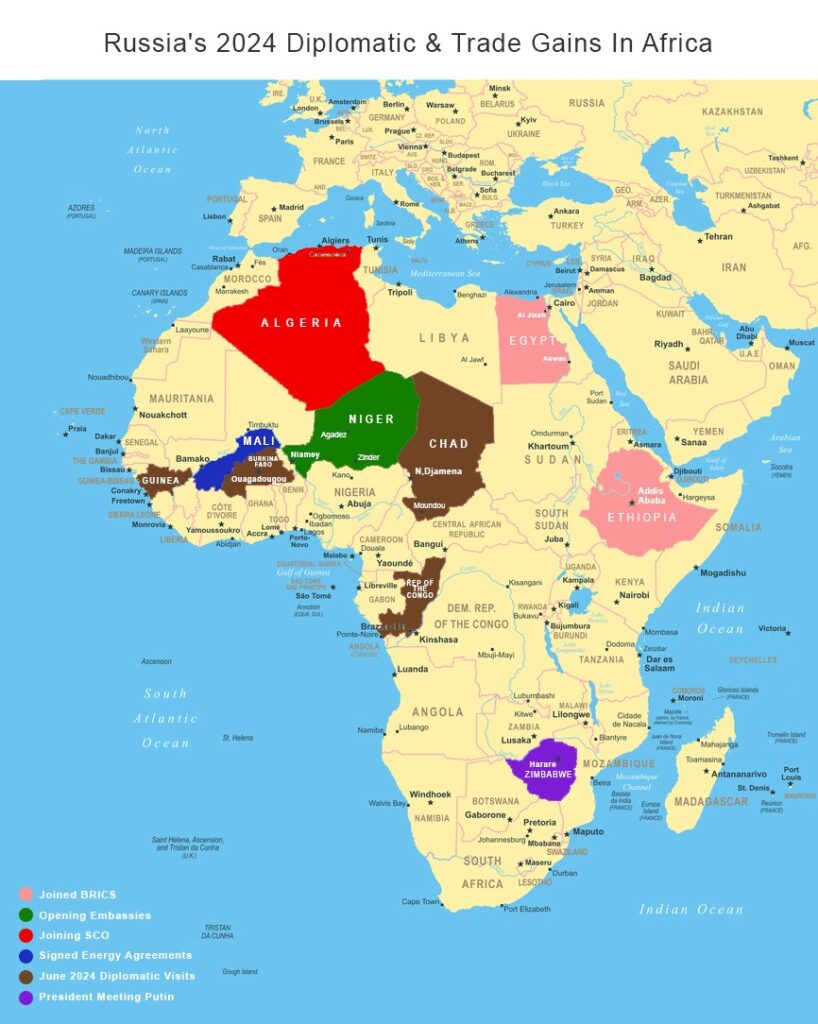
In addition to these countries, Egypt and Ethiopia joined the BRICS in January, while Algeria has stated it intends to join the Shanghai Cooperation Organisation, and Mali has committed to solar and nuclear power projects with Rostacom. Zimbabwe’s President is meeting with Russian President Vladimir Putin in St.Petersburg, while the current SPIEF conference includes for the first time Russia-Africa Projects as part of the Russia–Africa Partnership Forum – illustrating the importance Russia has placed on developing diplomatic and trade ties with Africa during 2024.

Algeria, Niger, Chad map

Of note is that of these countries, Algeria, Burkina Faso, Chad, Guinea, Mali and Niger were ex-French colonies and Sierra Leone, South Sudan, and Zimbabwe were British. Egypt was jointly French and British administered. Although the height of the colonial era disappeared upon independence in the 1960’s and 1970’s, trade and development with these countries remained heavily influenced by Paris and London. However, increasing unhappiness with what has often been regarded as exploitative contracts and political interference coupled with a lack of actual investment and overall neglect have paved the way for Moscow to make significant inroads.

Several of these countries have undergone recent military coups amid regional violence, caused in part by Islamic insurgents. Many remain very poor despite their colonial legacies and two hundred years of trade with Europe.

Russia’s immediate role will be to provide security in many of these countries, and to instil sustainable peace – which can then lead to development. Russia will take the lead in energy cooperation, as well as the provision of fertilizers and cheaper grain than is available from Europe. Other industries such as fishing – especially in West Africa and the Atlantic Ocean stocks may also be of interest, especially as Russia needs to replace its previous European suppliers.

Of interest to note will be China’s involvement. It too has been making inroads into Africa, and especially as part of its Belt & Road Initiative. China is adept at building infrastructure, with its ability to lend money and to recoup those investments via regional IPOs and retaining equity investments in cash-flow generating projects such as railways. But doing this requires longer-term security – Russia’s forte.

There seems to be no doubt that a future trend may well be joint Chinese-Russian projects in Africa. What is also apparent is that Africa is in the process of shaking off its British and French colonial legacy – and that one of the main beneficiaries will be Russia.

Further Reading

Russia-Africa 2024 Trade & Development

Russia’s trade and investments in Africa are extensively discussed in our 2024 Russia’s Pivot To Asia guide. This is a complimentary download and can be accessed in English here and Russian here.

Russia – Bolivia 2024 Bilateral Trade & Development

Published on June 5, 2024

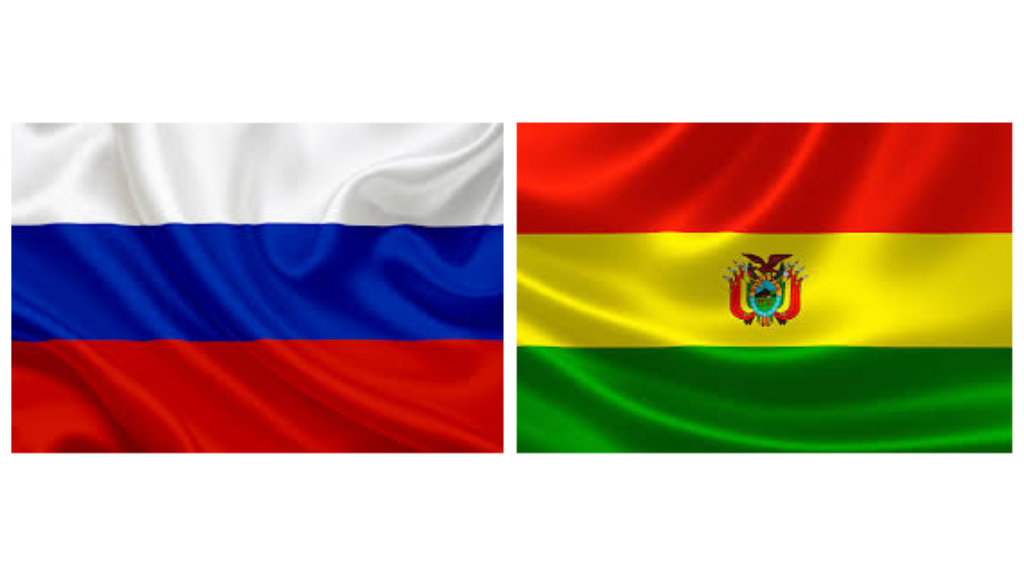
Russia and Bolivia Flag

The Russian President, Vladimir Putin is set to hold talks with the Bolivian President, Luis Arce on Thursday (June 6) in St. Petersburg. This will be the first direct meeting between the two. They will discuss various issues of further development of bilateral cooperation in all areas, including the economy, and foreign policy.

The Kremlin stated that “the sides will also discuss Bolivia’s proposal to consider the country’s accession to BRICS, which has a special significance in view of Russia’s 2024 chairmanship.” The Presidents will first hold one-on-one talks, and then enjoy a working breakfast with respective delegations, with the Russian side represented by Foreign Minister Sergey Lavrov, Finance Minister Anton Siluanov, Energy Minister Sergey Tsivilev, Director of the Federal Service for Military-Technical Cooperation Dmitry Shugayev and Rosatom CEO Alexey Likhachev.

The Russian Foreign Minister, Sergey Lavrov undertook a Latin American tour in mid-2023 and met with Bolivian counterpart Rogelio Mayta in the Venezuelan capital Caracas. They introduced a new trade transaction system to drop the US dollar and Euro and carry out international commercial transactions using the Russian Ruble and the Bolivian Boliviano instead.

Mikhail Ledenyov, the Russian ambassador to Bolivia, stated that “Financial operations can now be carried out using national currencies. Direct correspondent accounts in Rubles and Bolivianos were opened between Gazprombank and Union, the largest Bolivian state-owned bank.” This modality of international trade is possible thanks to agreements that monetary authorities reached after holding several virtual meetings last year.

Map of Bolivia

Lendenyov said that this facilitates the work of Russian companies in the Andean market. The diplomat also mentioned that Bolivian companies are interested in exporting tropical fruits, soybeans, wine, alcoholic beverages, coffee, lithium, tin, gold, and silver to Russia. To achieve this goal, they are intensifying consultations with the embassy to establish direct contacts with Russian companies.

Current bilateral trade is running at about US$120 million per annum with Russia exporting the bulk of this. However, Moscow is on the lookout for new agricultural partners meaning Bolivian exporters now have the opportunity to increase their share. Another key trade area likely to receive a boost is lithium carbonate, a critical component in the growing electric vehicle and renewable energy sectors. Chile, together with Argentina, last year halted lithium carbonate shipments to Russia, a move that now places Bolivia as a key supplier for Russia’s lithium needs. Bolivia has the world’s largest lithium reserves, a key component in battery manufacturing. China’s EV auto industry is already active in Bolivian lithium mining.

The main products that Russia exports to Bolivia are Vaccines, blood, antisera, toxins and cultures, Refined Petroleum, and Packaged Medicaments. The main products that Bolivia traditionally exports to Russia are Carbonates, Inorganic Salts, Coconuts, Brazil Nuts, and Cashews.

The two countries have previously stated their commitment to “upholding the central role of the UN and the principles of international law,” noting that they also touched upon issues related to the current development of integration processes in Latin America and the Caribbean. Russia’s 2023 Foreign Policy Concept, which came into immediate effect earlier this month, makes specific reference to the Latin American regions as an area to be targeted. Moscow has been quick to follow this through. Bolivia’s 2023 GDP growth rate was 4.86%. The country is an associate of the Mercosur regional free trade bloc, which also includes Brazil, the leading BRICS member in Latin America and its largest economy.

Further Reading

Russia & Latin America 2024

Our 2024 Russia’s Pivot To Asia Guide features comprehensive discussions on Russia’s relationship with Latin America, including with Argentina, Brazil, Chile, Ecuador, Nicaragua, and Venezuela. It is a complimentary download and can be accessed in English here and Russian here.