New conflicts change many aspects of life in many ways, often violent but sometimes in soft power ways as well. This was recognised by George Orwell, the British novelist and poet, who lived between 1903 and 1950 and was versed in experiencing World Wars One and Two, as well as the early stages of the Cold War. His classic novel, “Animal Farm” envisaged a world where base human traits are exhibited by a class structure of animals, with the Pigs at the top. The justification for unfair treatment by the Pigs over lesser creatures is the chilling phrase “All animals are equal, but some are more equal than others.” That was thought at the time to be a reference to communism, although the book never expressly states this. Orwell almost certainly recognised that fascism also contained the same traits – he had witnessed the horrors of the Nazis during WWII. He recognised that the traits could exist in both the Far Right and the Far Left of social politics.
His other famous work “1984” continues the totalitarian theme, where an oppressive government, overseen by the ruling political party Ingsoc (English Socialism) rules a totalitarian superstate and distorts the truth to its citizens through what we now today call ‘disinformation’. Orwell termed it ‘Newspeak’.
Newspeak is a controlled language of simplified grammar and limited vocabulary designed to limit a person’s ability for critical thinking. The Newspeak language deliberately limits the ability to articulate and communicate abstract concepts, such as personal identity, self-expression, and free will, which are designated as thoughtcrimes – acts of personal independence that contradict the ideological orthodoxy of Ingsoc collectivism. Newspeak entailed the construction of new words to reduce the ability of dissent to be articulated or even thought.
This is exactly what has been occurring in Western media, with a rise in new terms and words over the past two years. Here we identify some of the common newspeak words – and their actual meanings:
“Democratic Revolution” – Coup
“Humanitarian intervention” – Invasion
“Promoting Democracy” – Interference in domestic affairs
“Enhanced interrogation techniques” – Torture
“More Europe” – Centralising power
“European integration” – Redividing Europe by expanding its military bloc
“Public Diplomacy” – Our propaganda
“Content moderation” or “Pre-bunking” – Censorship
“Rules-based international order” – Sovereign inequality
“Support the troops” – Perpetual war & occupation
“Well-governed states” – Sphere of influence
“Freedom of navigation” – Gunboat diplomacy
“Extraordinary rendition” – Kidnapping
“Homeland security” – Domestic surveillance
“Appeasement” – Negotiations
“Principled” – Uncompromising
“Moral support” – Different opinion
“Off topic” – Discussion forbidden
“Position of strength” – Dominance
“Regime” – Adversarial government
“International community” – The West
“Whataboutism” – Comparison
Shill – (derogatory) paid opinion from adversary
What is remarkable about these new terms is that normal people tend not to use them, although some such as “Homeland security” are now the names of actual government institutions. For much of the rest, their usage effectively means they have been inserted into media by very specific sources and with very specific political intent to obscure, obfuscate or redefine what is actually meant. Readers can make up their own minds whether to trust any article that uses this type of terminology. Meanwhile, if you have seen these terms used in media – then congratulations, someone has attempted to manipulate you.
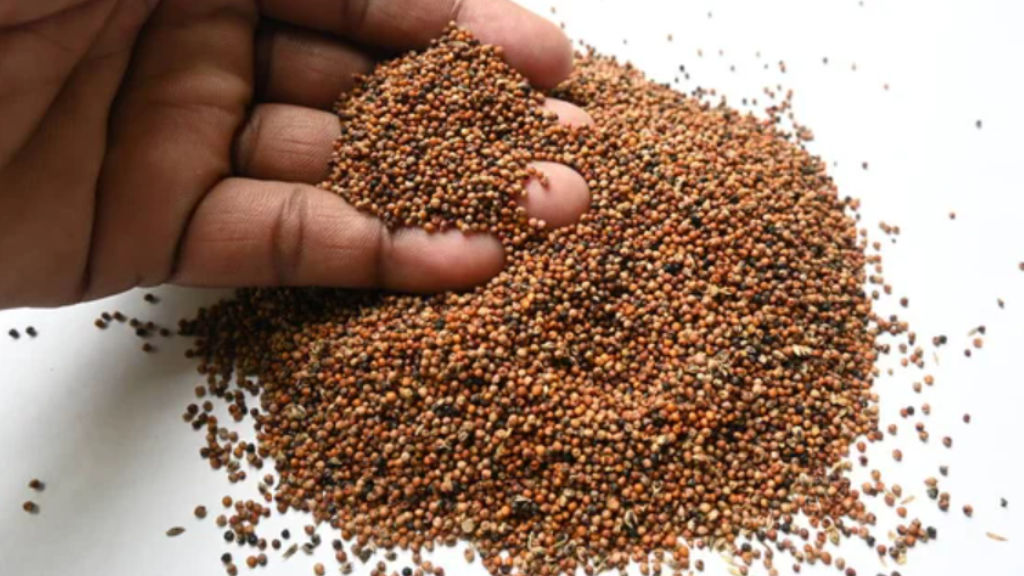
Russia has become the primary wheat supplier to several African countries, Denis Ternovsky, a leading researcher at the Center for Agricultural Policy of the Institute for Applied Economic Research (IPEI) RANEPA, said on Tuesday (June 11). He was speaking after the Russian Ministry of Agriculture announced that domestic grain exporters would be turning their focus to key markets in North Africa.
Russian grain has traditionally been sold in North African markets due to competitive pricing and logistical convenience.
In 2023, Russia became the primary wheat supplier to Morocco, overtaking France, which had held the position since 2019. Moroccan news agencies reported that in May this year, Morocco imported over 61,800 tons of wheat from Russia, accounting for about 26% of all wheat imports. Poland became the second-largest supplier after Russia, while France dropped to third place.
Omar Al-Yaqoubi, president of the Moroccan National Federation of Cereals and Legumes Traders (FNCL) was quoted as saying “We always prefer value for money. It turned out that, during May, Russian prices were more competitive than those offered by other suppliers. Hence the preference of Moroccan operators for Russian wheat.”
Speaking at the ‘Russia-Africa’ conference during the St. Petersburg International Economic Forum (SPIEF), Russian Deputy Minister for Agriculture Sergey Levin noted that Russian agricultural exports to Africa had risen by 25% in 2023 compared to the previous year. He said the upward trend is continuing.
“Over the past year, Russian exports to Africa have increased by a quarter, nearly reaching US$6 billion, with 80% of that being wheat,” Levin stated.
In February this year, Moscow completed the delivery of 200,000 tons of free wheat to Burkina Faso, Zimbabwe, Mali, Somalia, Chad, and Eritrea as part of a humanitarian initiative announced by Russian President Vladimir Putin during the second Russia-Africa summit in St. Petersburg in July 2023.
Russia & Africa 2024 Our 2024 Russia’s Pivot To Asia Guide features comprehensive discussions on Russia’s relationship with numerous African nations. It is a complimentary download and can be accessed in English here and Russian here.
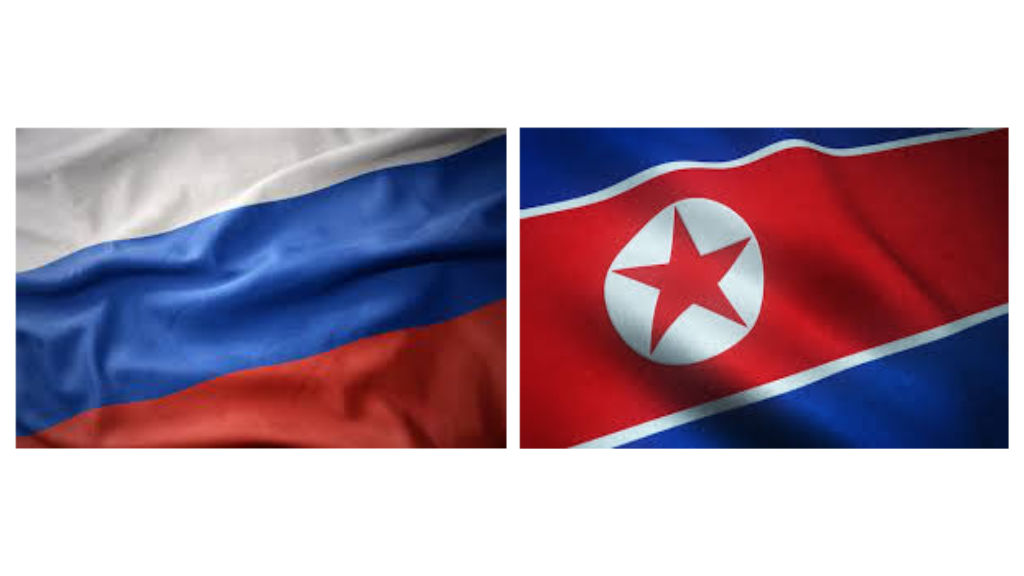
Update June 18: As we predicted, Russian President Vladimir Putin will meet Kim Jong-Un, the President of North Korea, with the dates now confirmed for June 18th/19 in Pyongyang.
According to the Kremlin, the Russian delegation will also include Foreign Minister Sergey Lavrov, First Deputy Prime Minister Denis Manturov, Defense Minister Andrey Belousov, Health Minister Mikhail Murashko, Transport Minister Roman Starovoyt, space agency Roscosmos chief Yuri Borisov, and Russian Railway head Oleg Belozyorov. This suggests discussions will not just concentrate on weapons manufacturing and North Korea’s space programme, but be extended to improve logistics and transport connectivity between the two countries.
With Russian President Vladimir Putin on the cusp of a visit to meet Kim Jong-Un, the President of North Korea, we provide an overview of the relations between the two counties and the regional security implications of Putin’s meetings with Kim.
Introduction
North Korea (DPRK) holds unique geopolitical importance for Russia, considering its pivotal position in North-East Asia and its small yet strategic shared border. Not only does it serve as a buffer between Russia and influential South Korea, but it also lies in proximity to Japan and China, all three pivotal players in the region. For many years, trade between Russia and the DPRK was subdued due to international sanctions and North Korea’s domestic policies.
However, recent years have witnessed a shift in dynamics, highlighting North Korea’s evolving international economic strategy and Russia’s pursuit of alternative trade partners in Asia, paving the way for increased bilateral cooperation. Vladimir Putin, Foreign Minister Sergey Lavrov, and Sergei Shoigu, the Defence Minister, have all met with North Korean leader Kim Jong-Un and/or other senior DPRK officials over the past few months.
Geopolitical Backdrop
While both nations have maintained cordial relations, the evolving geopolitical landscape is pushing them to explore deeper trade and strategic partnerships. In in the face of Western sanctions, both nations are seeking to diversify their economic relations. The past two years have shown a clear upward trend. While exact figures remain hard to obtain, bilateral trade last year reportedly reached US$120 million, marking a substantial increase from the past years. Yet, when contrasted with North Korea’s trade volumes with China, this figure might seem modest. Nevertheless, the growing trajectory is undeniable and given military-grade barter trade between them, can probably be valued in the billions of dollars today.
Composition of Bilateral Trade
Historically, Russia has exported crude oil, petroleum products, coal, machinery, and logging products to North Korea. In return, the DPRK has primarily exported raw materials such as labour (North Korean workers abroad). Thousands of North Korean workers, known for their discipline and work ethic, have found employment in Russia’s timber and construction sectors. This not only serves as a vital source of revenue for Pyongyang but also acts as a diplomatic bridge, further solidifying ties between the two nations. There have been at least discussions, and probably deployment concerning utilizing North Korean workers in the Donbass region, currently under Russian administration following years of fighting with Ukraine.
Russian firms have shown interest in North Korea’s mining sector, particularly its vast reserves of rare earth metals. Simultaneously, DPRK products, including agricultural produce and traditional medicines, have found a growing market in Russia.
Investment Landscape
Beyond trade, investment dynamics are gradually evolving. Investment between the two nations, while limited, shows signs of potential growth. Russia’s investment in North Korea’s Special Economic Zones, particularly in the Rason Economic Zone, stands testament to its long-term
vision for the relationship. These zones, designed to attract foreign investments, offer lucrative opportunities for r Russian enterprises, from manufacturing to logistics. Key areas of interest include energy, infrastructure, and mining. Russia, with its rich experience in infrastructure development in challenging terrains, sees North Korea’s need for rail, road, and port development as a significant opportunity. North Korea’s infrastructure needs are vast. The country’s rail, road, and port development necessities align well with Russia’s capabilities in infrastructure development, and Russian corporations have expressed interest in these sectors, sensing the immense growth potential.
Aid
In terms of aid, Russia has always provided North Korea with humanitarian assistance, especially during periods when North Korea faced food shortages. This “aid” has often taken the form of discounted essential goods, primarily energy resources like coal and oil. Additionally, there have been instances of debt relief and restructuring by Russia for North Korea, reflecting the economic dependency and political closeness of the two nations.
Strategic and Political Interplay
The economic narrative is closely intertwined with the strategic. The DPRK’s recent emphasis on modernizing its economy and focus on scientific advancements, coupled with Russia’s “Look East” policy, might pave the way for strengthened ties and herald promising prospects.
North Korea, in Russia’s view, serves as a counter to the expanding US influence in the region. Russia has been advocating for North Korea’s voice in multilateral Asian forums, sensing a convergence of strategic interests. With the DPRK’s increasing involvement in regional multilateral forums and Russia’s willingness to engage, the upcoming years might witness a more robust economic and strategic partnership between these two historically linked nations. Moreover, North Korea’s military capabilities, particularly its nuclear program, while a concern for many, are seen by some in Russia as a strategic counterbalance in the region. Moscow, while advocating for denuclearization, understands the security concerns that drive Pyongyang’s nuclear ambitions.
Regional Forums and Cooperation Platforms
Both nations cooperate in several regional platforms and forums to discuss and further their economic, political, and strategic interests. The Six-Party Talks Initiated to address North Korea’s nuclear program, these talks involve North Korea, South Korea, Japan, Russia, China, and the United States. Although they have been stalled for several years, Russia and North Korea have historically used this platform to further their bilateral and multilateral interests.
The Shanghai Cooperation Organization (SCO)
While North Korea is not a member, Russia has often used the SCO as a platform to discuss Northeast Asian security, including issues on the Korean Peninsula.
ASEAN Regional Forum (ARF)
North Korea and Russia both participate in the ARF which addresses security issues in the Asia-Pacific region. East Asia Summit (EAS) This is a regional forum held annually by leaders of 18 countries in the East Asian, Southeast Asian, and South Asian regions. Russia is a member, and while North Korea isn’t, discussions often revolve around the Korean Peninsula’s stability.
Northeast Asia Cooperation Dialogue (NEACD)
This unofficial multilateral dialogue, sometimes termed a “Track II” diplomatic initiative, involves scholars and occasionally government officials in an unofficial capacity. Subjects include political, security, and economic issues, with the North Korean situation often at the forefront.
The United Nations (UN) Both countries are members of the UN, and its associated forums and bodies offer numerous opportunities for interaction, negotiation, and cooperation, particularly in committees or discussions focused on regional peace, security, and development.
Other Platforms
North Korea has at times participated in the UNDP Greater Tumen Initiative, which also included Russia’s Primorskie Krai region, China’s Jilin Province, and Mongolia. Beyond multilateral forums, there are numerous official and unofficial bilateral meetings, delegations, and working groups where the two countries interact. In these forums and others, Russia and North Korea often find themselves aligned against what they perceive as Western or US hegemony, further fostering cooperation and mutual understanding. In a display of solidarity and support, both Russia and China have further extended their diplomatic gestures towards North Korea. They have sent high-profile delegations to Pyongyang, aiming to commemorate specific anniversaries, signalling their unwavering support for Kim’s leadership.
The Road Ahead
The road to robust bilateral cooperation isn’t free of obstacles. International sanctions on North Korea have complicated the banking and transaction processes, making business ventures challenging. Additionally, the lack of transparent, detailed data from North Korea makes it tough for potential Russian investors to make informed decisions. Despite challenges posed by sanctions and North Korea’s traditional isolationism, which may hinder swift progress, the foundation for future growth has been laid.
There is potential for more student exchange programs, cultural interactions, and scientific collaborations, as both nations have a rich history of academic and scientific prowess. Joint ventures in technology and innovation could be the next frontier. The Ukraine conflict, while a pivotal event in its own right, catalyzed larger shifts in the global order. As Russia reoriented its strategies and priorities, its relationship with North Korea emerged as a partial silver lining amidst the clouds of geopolitical uncertainty. An example of this was the DPRK recently opening six trade offices in Russia and the weapons trade: North Korea is thought to be supplying drones to Russia while Russia is assisting with North Korea’s missile technology. The growing collaboration between Russia and the DPRK reflects a strategic adjustment to the realities of Northeast Asian geopolitics. Both nations are clearly navigating their interests based on current regional and global circumstances.
It is interesting to note that massive sanctions imposed by the United States upon the DPRK both failed to prevent it from becoming a nuclear power and failed to instigate a change of regime. Russia and China both have vested interests in this – while the nuclear issue is unnerving for both Beijing and Moscow, neither additionally views the potential of a US-backed, unified Korea, with US soldiers up against their common borders as agreeable either.
North Korea doesn’t release official data relating to its economy, although it is believed to have contracted for the past three years to 2023. That may now be given a boost as Russia appears to be sourcing materials and weapons from the country. North Korea’s productivity is largely geared to self-sufficiency via the ‘Juche’ ideology; yet remains significantly hampered by sanctions in achieving this. In times of famine, China and Russia typically step in to alleviate the worst and prevent mass migration of North Koreans crossing the borders. The economy is based almost permanently on a war footing, to support a military of 950,000 active troops and a reserve of a further 500,000. Consequently, Pyongyang has been able to divert the production of military items such as ammunition and ballistic missiles to Russia. Supply chains are either via local ports, across the Russia-DPRK border railway, or by air.
In February 2024, the North Korean leader Kim Jong-Un received a gift from President Putin of a Russian Aurus, Russia’s top luxury sedan.
Summary
At this new meeting of the two countries, considered important enough for both Presidents to meet in person, it can be expected that the two sides will continue their resolve to support each other. That probably means increased weapons supplies and rocketry operating systems technology transfer, in addition to issues concerning food security. With the West having just agreed to utilise US$50 billion of Russian assets in Ukraine, part of Russia’s response will be to ramp up North Korean military productivity – bad news for Japan and South Korea, both of whom are supportive of Washington. A question for Western analysts to ask is how far they are prepared to support Seoul and Tokyo as North Korea has the potential, with backing from Russia and China, to create serious regional security headaches – if the Ukraine issue is not resolved.
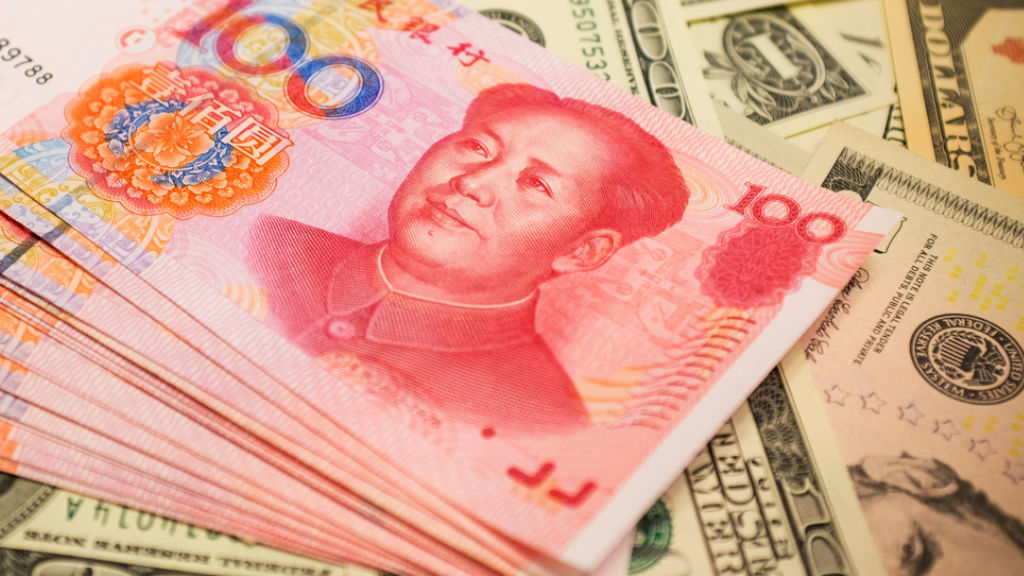
In response to Wednesday’s (June 12) US sanctions concerning the provision of services to Russia for trading US dollars or Euros, the Bank of Russia has stated that the Chinese RMB Yuan / Russian Ruble exchange rate will now be the baseline from which other currency pairs, including for the euro and the dollar, will be calculated on the Moscow Exchange (MOEX).
The bank stated that “The Yuan/Ruble exchange rate will become a reference point for market participants. The share of the yuan in Moscow Exchange trading in May was 54%. The RMB Yuan has already become the main currency in exchange trading.”
This provides some clarity over valuing the Ruble, which the latest sanctions had attempted to obscure, raising the costs of cross-border transactions and intended to damage the Rubles credibility.
The Bank of Russia’s statement comes as the latest round of US sanctions prompted the MOEX on Wednesday to suspend trading in dollars and euros. The UK followed Washington’s lead on Thursday, introducing restrictions against the Russian financial system. Transactions in US dollars and euro will continue on the over-the-counter (OTC) market.
Russia had actively begun to replace the dollar and euro in foreign trade from 2022 amid Western sanctions imposed over the Ukraine conflict. It has since dramatically reduced the number of bank accounts and transactions between companies and financial institutions involving Western currencies. Prior to the conflict, the share of the US dollar and euro in Russia’s settlements was around 90%. Now at 45% of the total, it can be expected to drop significantly further.
Russian President Vladimir Putin said last week that the share of payments for Russian exports in the dollars and euros has decreased by 50%. Meanwhile, the share of the Ruble in Russia’s foreign-trade operations continues to grow.
MOEX said on Thursday that the suspension of trading in dollar and euro affects foreign and precious metals trade as well as stock and money trading on Russia’s largest public trading markets. Except for dollars and euros, all other financial instruments remain operational. The derivatives market has also been unaffected by the changes, with trade going on as usual, it said.
The longer-term impact of the US sanctions – which are entirely experimental – are difficult to assess. The US economy is largely supported by US dollar debt, currently standing at just under US$35 trillion, the highest it has ever been. That debt has been purchased by other counties in the form of government bonds and must over time be repaid. However, the amount owed has become so large there are doubts about the ability to continue to make such repayments. In 2023, general government gross debt (public debt) is now 111% of the United States annual GDP.
Country
Debt (USD billions)
Debt vs GDP
United States
35,000
111%
China
12,800
250%
EU
13,087
81.7%
Russia
284
18.9%
Russia is in fact one of the least indebted countries in the world and has close to zero US dollar holdings in any event. This means that Russia’s domestic wealth lies in self-sufficiency, where it’s national reserves in multiple commodities – oil, gas, minerals, and items such as fresh water and timber amongst several others, are consistently within the top three globally. As long as it can continue to export its surpluses, its economy remains healthy. This is why Western sanctions have targeted financial transfers as a key to raise the transactional cost. However, over the long term, Russia still retains the same assets. They do not just disappear.
Most of the impact on the new Western sanctions will actually fall upon China, whose economy is showing some signs of stress. Beijing will be far from happy with the US latest sanctions as it places additional costs on its transactional relationship with Russia. However, there is an upside: Beijing has long wanted the RMB Yuan to possess a larger share of global trade – and now it appears this will happen. Doing so reduces volatility between the RMB Yuan, the US dollar and the euro and further stabilizes the Chinese economy and the costs of doing business with the West.
However, last month China sold off a record $53.3 billion in US bonds, sounding alarm bells for observers who fear the consequences of countries divesting from US treasuries. The trend has forced the US Federal Reserve to take on unprecedented powers in purchasing US treasury bonds when there is a shortage of foreign buyers, which some believe drives US inflationary pressures.
The US dollar is under additional strain elsewhere. A “petrodollar agreement” concluded between the US and Saudi Arabia in 1974, expired on June 9 this year, and has been replaced by Saudi Arabia signing an agreement with the Bank for International Settlements’ (BIS) central bank digital currency (CBDC) project, mBridge, to enable instant cross-border payments. That gives Saudi Arabia more flexibility in its future dollar-based oil trade transactions, and would for example enable Saudi Arabia to accept the Petro Yuan as payment for its oil exports to China. That is significant in terms of easing Riyadh’s oil relations with Beijing as its oil exports to China far outstrip those to the United States at US$ 56.1 billion against oil exports to the United States at US$16.6 billion. Whatever Saudi Arabia does the Gulf Cooperation Council (GCC) tends to do as well. The combined GCC currently account for 25% of global oil exports and 45% of global oil reserves. If they move towards favouring a Petro Yuan as China is their biggest single client, as opposed to the Petro dollar the implications for the US dollar will be significant in aiding its global decline.
Saudi Arabia also sells nearly double the amount of oil it does to the United States to India, who purchased US$32.7 billion of Saudi oil last year. India of course is a member of BRICS, along with China and Russia – while Saudi Arabia is expected to ratify its membership later in the year.
What the United States has actually done is to impose sanctions upon global trade and to curtail reliance on the US dollar. It is less an attempt to hurt Russia (although it does create inconveniences) as it is an assault on global trade flows. It illustrates that Washington is prepared to isolate any country it chooses from existing trade flows and supply chains that are US dollar trade reliant. This will be of significant concern to countries elsewhere, who will now be quietly looking at alternatives in case they too, fall foul of Washington.
That can lead to additional implications. In effectively de-dollarising and de-euroing Russian trade, and keeping the dollar and euro for increasingly Western consumption, the US desire to create a de facto Western trade bloc without Russian commodities may lead to a path where the West wishes to cut China out of the trade picture as well. That would destroy China’s export markets to the West, and leave the EU and United States, with a handful of other allies, dependent upon each other. Such policies could easily be targeted at other countries too. The world trade picture would be split in two.
The way ahead for the remaining countries – Russia, China and their ‘friendly country’ allies – is to develop their own tradeable currency. This is why the proposal last week that a BRICS currency, based partially on gold and partially on regional currency values, has considerable merit.
Although the US sanctions do seem to point to a desire to introduce a mechanism where countries can be isolated from global trade, there is a significant remaining caveat that this experiment fails to address. In the event of the US dollar and euro declining in global trade, and alternative currency trading such as the introduction of a BRICS token providing an alternative – what will happen to the US debt? Washington’s actions this week are not just aimed at Moscow. They have just placed the entire global economy into a state of nervous alert and have substantially damaged existing global trade certainties. The issue of what happens next is one of global concern.
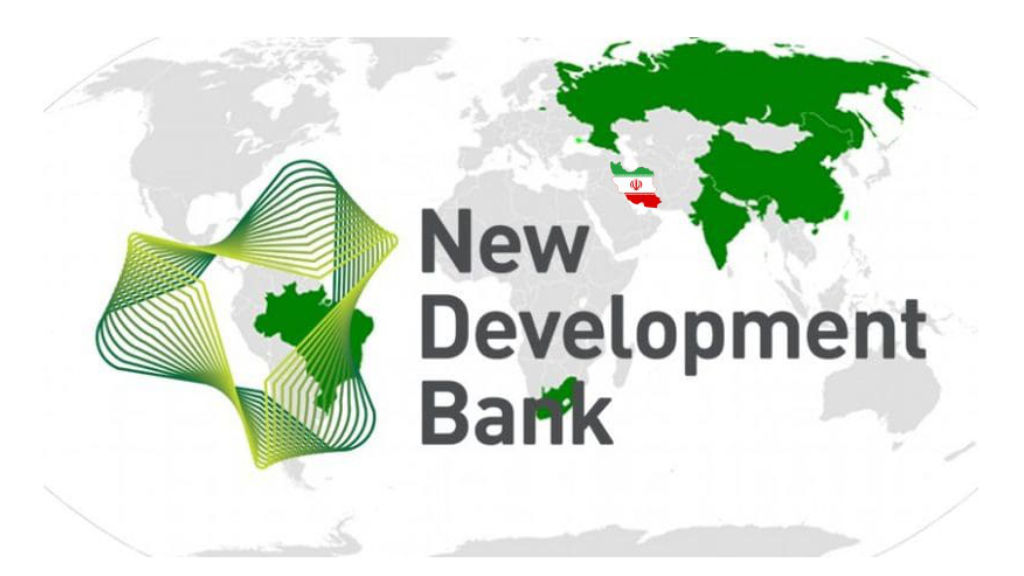
Sergey Ryabkov, Russia’s Deputy Foreign Minister has said that Iran would benefit if it joined New Development Bank established by the BRICS countries. Speaking at the BRICS foreign ministers meeting in Nizhny Novgorod, he said that “In order for Iran’s entry into BRICS to face the least difficulties, it is necessary to take a number of measures, including the issue of Iran’s membership in the New Development Bank. The New Development Bank finances infrastructure projects at reasonable interest rates. I am confident that over time Iran would derive practical benefits from this.”
The New Development Bank was established by Brazil, Russia, India, China and South Africa on the basis of an intergovernmental agreement in 2014. The bank’s goal is to mobilize resources for the implementation of investment projects in the BRICS countries and developing countries. Over the years of its operation, the bank has approved more than 90 projects for a total of US$32 billion.
Bangladesh, the UAE and Uruguay joined as shareholders last year. Any decision on Iranian membership of the NDB will not take place until later in the year, following local elections to be held in the country after the recent death of President Raisi.
Iran has a population of 90 million, and despite Western sanctions, has a GDP (PPP) of US$1.85 trillion, making it the worlds 17th largest economy. It is a gateway between the Global North and Global South through the North-South Transportation Corridor which runs from Russia to India, bisecting Iran from its Caspian Sea to its Persian Gulf Ports. It needs infrastructure funding to speed up the progress of some of its infrastructure capacity requirements.
Sanctions Issues
Iran is also sanctioned and has largely been cut off from Western finance and development. Although the NDB could also face sanctions if it engaged in financial support and loans for either Russia or Iran, the bank also has no connections with the West, meaning any damage would be minimal. Sanctioning well regarded international bankers such as the NDB bank Chairman, Dilma Rousseff, would also be seen as an unnecessarily antagonistic move and would seriously damage US diplomatic relations with Brazil. Rousseff is a Brazilian economist and politician who has been the Chair of the NDB since March 2023. Previously, she served as the 36th president of Brazil from 2011 to 2016, and was the first woman to have held the Brazilian presidency. She also served as the chief of staff to former and current president Luiz Inácio Lula da Silva from 2005 to 2010. Sanctioning her would create shock waves throughout the global banking community and lead to increasing concerns about US behaviour.
Further Reading
Russia-Iran 2024 Trade & Development
Our 2024 Russia’s Pivot To Asia Guide features comprehensive discussions on Russia’s relationship with Iran. It is a complimentary download and can be accessed in English here and Russian here.
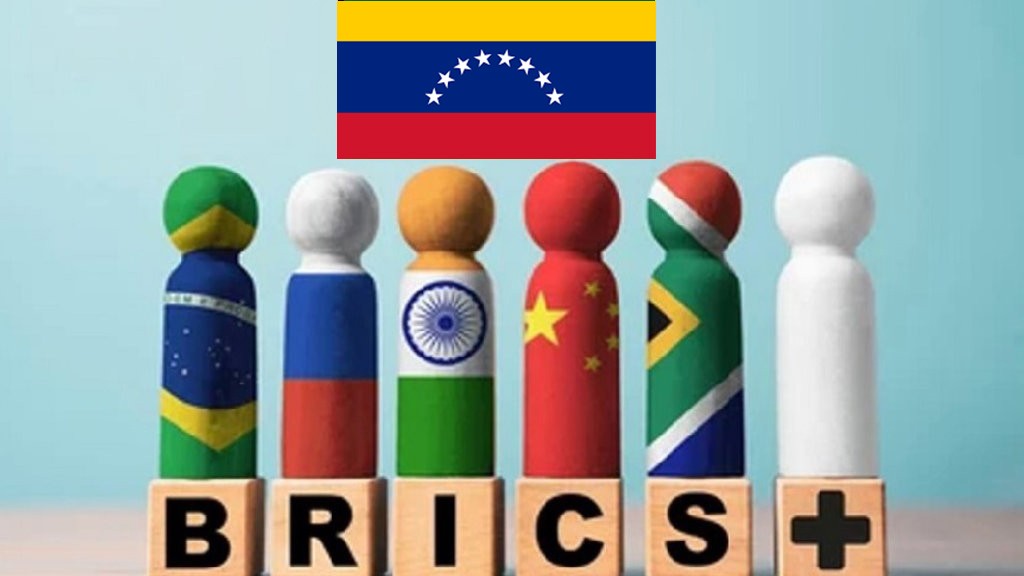
Russian Foreign Minister Sergey Lavrov said during talks with his Venezuelan counterpart Yvan Gil Pinto during the BRICS Foreign Ministers’ meeting this week, that Russia welcomes Venezuela’s interest in BRICS and will contribute to the strengthening of relations as the BRICS 2024 chair.
Lavrov stated that “We are glad to see you and your delegation in Nizhny Novgorod. We support Venezuela’s interest in BRICS. As the chair, we will contribute to the strengthening of relations. We note that BRICS and Venezuela are already effectively cooperating in the energy and medical spheres.”
“We are creating financial and logistical mechanisms that are resistant to external influence and ensure the independence of our relations, progressive development and protection from illegitimate actions. We value our international interactions where, in particular, within the UN framework, cooperation is actively developing on the basis of the Venezuelan initiative to create a group of friends in defense of the UN Charter,” the Russian foreign minister added.
Russia-Venezuela Energy Cooperation
Venezuela has the world’s largest proven oil reserves, however, its crude oil is very heavy by international standards, and as a result much of it must be processed by specialized domestic and international refineries. Russia has the capabilities to do so while the United States is embroiled in political and sanctions disputes with Caracas.
Russian companies are ready to develop oil production and refining in Venezuela via joint ventures, Venezuela’s State Owned PDVSA CEO Asdrubal Chavez said following a meeting of the Russian-Venezuelan Intergovernmental Commission in December 2022, with Chavez noting the importance of cooperation in all areas of the hydrocarbon value chain. “We have agreed to set up a respective working group to develop five joint ventures between Russia and Venezuela. So, I would like to thank Russia for the presence of these five new companies, which have expressed readiness to support us in the further resumption of oil production and processing. Public companies are interested in the entire range of oil production and refining operations.” Chavez said.
Venezuela is a member of OPEC, the global cartel that fixes energy prices and coordinates production.
Russia – Venezuela Trade Summary
Venezuela, along with Iran is significant due to its energy reserves. It is strategically important to note that Russia and Venezuela have engaged in satellite cooperation, an important ongoing issue that concerns global navigation but also one that can be put to military purposes – an issue Washington will no doubt be concerned about.
Given that this also includes existing cooperation with the US-backed GPS and the EU Galileo system as well as China’s Beidou, it is not implausible that future US / EU conflicts with Russia and China divide Global navigation into two separate units.
The financing issue is also a step forward to solving the trade sanctions that both suffer from and are bringing forward a mechanism to permit bilateral trade without having to use US dollars or the SWIFT banking network. Future bilateral currency swaps and the imposition of the Ruble as a lead currency may well manifest themselves shortly.
China’s position as concerns Venezuela may also be part of this. The MIR card issue is a stepping stone to a wider remit in terms of debit card use, and may later when technologies arrive within Russia’s SWIFT alternative, the SPFS system, be rolled out to also facilitate trade, although currently this move indicates a growing move to developing Russian tourism to Latin America.
Russia introduced direct flights between Moscow and Cuba in 2022. However, the main prize for Russia is securing Venezuelan oil reserves and refining these. Those will be heading for friendly LatAm, Asian, and African markets rather than the United States or Europe. Russia’s 2023 Foreign Policy Concept, which came into immediate effect in April last year makes specific reference to the Latin American and Caribbean regions as areas to be targeted.
That stance appears to be gaining ground, at least with Caracas. President Nicolas Maduro announced in mid-February 2024 that Venezuela aims to become a full-fledged member of the BRICS group “soon” stating that the emergence of a new multipolar world is “irreversible.”
Maduro has expressed hope that his country can secure BRICS membership at the group’s next summit in Russia in October this year. If confirmed, Venezuela will become a full BRICS member from January 2025.
Venezuela’s 2023 GDP growth rate was 5%. It has trade agreements with numerous Latin American and Caribbean nations.
Further Reading
Russia – Latin America 2024 Trade & Development
Our 2024 Russia’s Pivot To Asia Guide features comprehensive discussions on Russia’s relationship with numerous LatAm nations, including Argentina, Brazil, Bolivia, Chile, Cuba, Ecuador, Mexico, Nicaragua and Venezuela. We also comprehensively discuss the development of the BRICS. It is a complimentary download and can be accessed in English here and Russian here.
In a sign that Russia’s push towards a multipolar world is gaining traction, and that the international community is happy to connect with the with country, Vladimir Poteshkin, Russia’s Deputy Transport Minister has stated that direct flights to Tanzania, Kuwait, Saudi Arabia and Indonesia are due to begin before the end of this year. New direct flights to Vietnam, Bahrain, Jordan and Tunisia have been available since the beginning of this year.
Poteshkin said that “Currently, Russian airlines operate 1,124 aircraft, and 19 Russian airlines fly to 25 foreign countries. In turn, 54 airlines from 30 countries fly to Russia. It is safe to say that we have close relations with friendly states. We are interacting at every level, including with respective transport ministries and tourist industries.” He was speaking at the plenary session of the Travel tourist forum at Moscow’s VDNKh exhibition center.
Economic Development Minister Maxim Reshetnikov said earlier that Persian Gulf countries had become a primary inbound tourism market for Russia, while the introduction of a visa-free system was being discussed with Saudi Arabia, Bahrain and Kuwait.
Kuwait and Saudi Arabia offer more business opportunities, while Tanzania and Indonesia also provide this but are more tourism focused. Tanzania is popular for wildlife safari’s, while Indonesia is a huge country, with the popular tourist destination of Bali Island. Russian outbound tourists are seeking new destinations after the collapse and expense of tourism to Western Europe after EU airlines banned flights between Russia and the EU. The EU has also made the visa process extremely difficult for Russian nationals and has banned the import of Russian products.
The process has also damaged the EU tourist industry. According to the European Commission, in 2021, over 3 million Russians held Schengen tourist visas, with the majority being issued by Greece, Spain and Italy. That deceased to just under 450,000 in 2023, a decline of over 2.5 million Russian visitors. The Russian Association of Travel Agents data shows that 14 million Russian tourist travelled overseas last year, an increase of 27.6%.
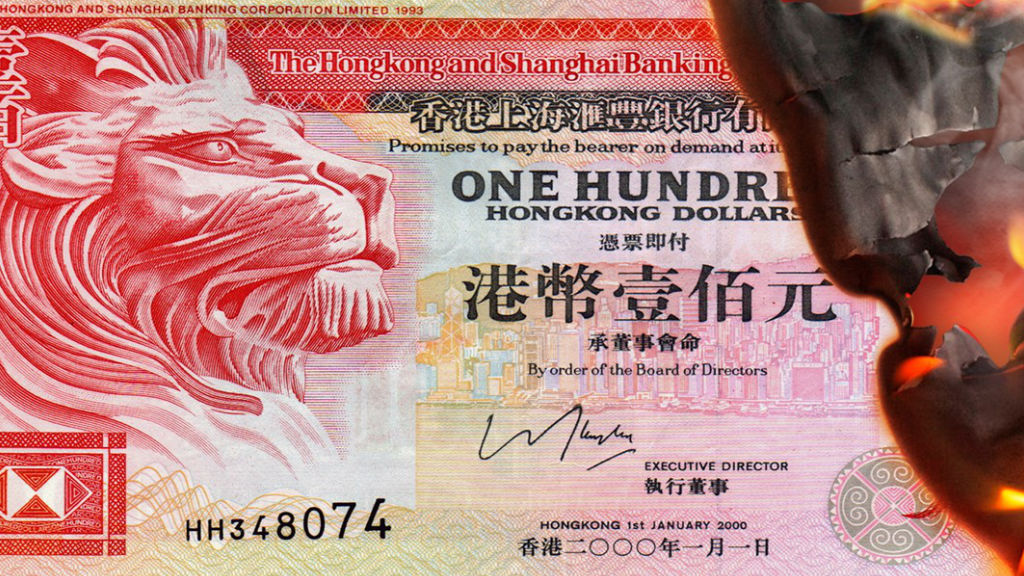
The Bank of Russia has announced it is suspending trade in the Hong Kong dollar with immediate effect from Thursday, June 13, with the move meaning that settlements on the Moscow Exchange (MOEX) will be suspended. The suspension has come after the United States issued a further round of sanctions on Russia meaning that third-country financial institutions risk being sanctioned for conducting or facilitating significant transactions with Russia, or providing any service to them.
The move to suspend trading in Hong Kong dollars comes as the Hong Kong dollar is pegged to the US dollar rate, while the Hong Kong dollar is also linked to the Chinese RMB Yuan. 2023 was the 40th anniversary of the peg being in place. The move to suspend Russian trading in the Hong Kong dollar would have come after consultations between Moscow and Beijing as a reaction to the new sanctions.
The United States also imposed sanctions on several Hong Kong firms, including VPower Finance Security, for aiding trade in gold produced by an already sanctioned Russian gold miner, the U.S. Department of the Treasury said.
In addition, the National Clearing Center and the National Settlement Depository of the Moscow Stock Exchange (MOEX) have also been blacklisted.
Russia’s Central Bank said in a statement on Wednesday that trading in the Hong Kong dollar would continue “on the over-the-counter market.” Individuals and companies will be able to purchase and sell the currency at Russian banks. All bank deposits made in the currency will remain secure, the financial regulator stated.
The Bank of Russia said it will use “bank records and information from digital over-the-counter trading platforms” to establish exchange rates for dollars and euros in the future.
The US move will be seen as a sanctions attack on both Russia and China, and especially Hong Kong. The territory lost its most-favoured trade status with the United States in 2021 as the US views the territory as home to many American investors and wishes to ‘preserve its determination to promote Hong Kong’s prosperity, autonomy, and way of life.’ U.S. goods and services trade with Hong Kong totaled an estimated US$56.2 billion in 2022. However, Hong Kong reverted to Chinese rule in 1997.
The move however is likely to have little trade impact, as Hong Kong has been turning away Russian clients from its banking services for the past two years and very few Russian businesses have been able to operate sustainably in the territory.
China however will be concerned that the United States wishes to sanction Chinese banks operating in the territory and therefore impact the mainland Chinese banking system, which the US says has been instrumental in providing financial services to Russia.
It remains unsure what the next steps will be. A worst-case scenario – and the implied threat – is that a fully fledged trade war breaks out between the United States and China with Washington going so far as to sanction Chinese banks. If that happened, global trade flows would be immediately disrupted and multiple economies – including the United States – plunged into recession. The likelihood of war would also significantly increase as all countries would want to adopt resource and financial protectionist measures, leading to increased military threats.
On the other hand, the US moves will also stress the urgency of China, Russia and their allied trade partners moving ahead as soon as is practical with a non-US dollar currency – as hasjust been discussedwith the BRICS.
Further Reading
Russia – Hong Kong 2024 Trade & Development
Russia’s trade relations with Hong Kong, China, Macau and Taiwan are comprehensively covered in our 2024 Russia’s Pivot To Asia guide. This is a complimentary download and may be accessed in English here and in Russian here.
The Cuban Foreign Minister, Bruno Rodríguez Parrilla has held discussions with Russian Foreign Minister Sergey Lavrov concerning the development of trade ties in St. Petersburg. The meetings have been held at the same time that a small fleet of Russian warships and support craft have arrived in Havana. Lavrov had visited Cuba in February this year amongst a flurry of diplomatic and trade activity between the two countries.
During the St. Petersburg meeting the two sides exchanged opinions on global and regional agenda, as well as building up cooperation between Moscow and Havana in politics, trade and economy, investment, and cultural and humanitarian areas. In his opening address, the Russian minister called the coordination of foreign-policy activities between two countries “exemplary”. Lavrov emphasized that the parties actively participate in major events on economic, political and security cooperation.
“High-level Cuban delegations have confirmed their participation in a number of other events that have or will take place in the upcoming months, including the Moscow Conference on International Security, St. Petersburg International Legal Forum, St. Petersburg International Economic Forum and other events” Lavrov stated.
A Cuban Cultural Park Real Estate Development In Havana
A notable joint real estate development project is a proposed Urban Park to be created in Havana, based upon Moscow’s Zaryadye Park, according to Nikita Stasishin, the Russian Deputy Construction Minister. He said that “We are now working out with our Cuban colleagues, so that our investors build a similar area to Moscow’s Zaryadye Park, but in Havana. We offered to Cuba constructing a park that will become a jewel of Havana.”
Moscow companies immediately involved in construction of the Zaryadye park can be investors, the Stasishin noted. It is expected that the park in Cuba will be smaller but include local flair. The project can be realized within three years after determining the source and the mechanism of funding, Stasishin added.
Zaryadye Park is an open-air museum, where the exhibits reflect the full spectrum of Russian architecture from the 16th to 20th centuries: a life-size exhibition against a green backdrop. It was the first public park to be built in fifty years and has proved highly popular since opening in 2013.
Russia – Cuba 2024 Bilateral Trade Development
Russia actively participates as a strategic partner for Cuba, financing prioritized projects for Cuban National Development and has linked these investments to Cuba’s 2030 Economic and Social Development Plan in various Cuban sectors, including energy, the bilateral agenda consolidates exchanges and contacts for the advancement of joint projects.
These include the construction of four 200-megawatt thermoelectric blocks, three at the Ernesto Guevara thermoelectric plant in Santa Cruz del Norte and one at the Máximo Gómez plant in Mariel Port as part of the Russian-Cuban cooperation, in addition to the Zarubezhneft project aimed at increasing extraction in the Boca de Jaruco deposits, in the northwest of Cuba.
In infrastructure, Russia has been upgrading Cuba’s national railway system. Russia is developing as one of Cuba’s main trading partners, rising to fifth position in 2021, backed by a 93% increase in trade compared to 2020. Energy will be a large part of future development, to lift Cuba to a large degree of self-sufficiency.
Speaking at the 2023 Russian-Cuban Intergovernmental Commission for Trade, Economic, Scientific and Technological Cooperation, Russian Deputy Prime Minister Dmitry Chernyshenko and Cuban Deputy Prime Minister Ricardo Cabrisas, attention was paid to this with Chernyshenko stating that “Energy is a key sphere of bilateral cooperation. Joint projects, including efforts to boost oil production at the Boca de Jaruco field, will help reduce Cuba’s dependence on oil and petroleum products imports.”
Chernyshenko said that additional projects to modernize a metallurgical plant and to deliver locomotives, vehicles, and other equipment are being developed as part of industrial cooperation.
Direct charter flights between Russia and Cuba resumed in late 2022, and these have been successful with Russian tourists. Chernyshenko said “We consider it important to develop mutually beneficial cooperation in healthcare and to strengthen Russian-Cuban interaction in IT. I am sure that meetings like this one will facilitate expanding sectoral cooperation between our countries and bring it to a new level.”
This was echoed by Cuba’s Minister of Tourism Juan Carlos Garcia Granda, who has stated in March 2024 that “We have seen a growth in tourist flows year-on-year of 208% for January and February 2024 compared with the same period in 2023. We understand that 200,000 to 250,000 Russian tourists is not a very significant figure for Russia, but it is a large number for our country. We wish to grow tourist traffic from Russia to 500,000 in the coming years.” Granda also announced plans to add direct flights from St.Petersburg to Havana commencing later in 2024.
The two countries cooperate in agriculture, in particular, on deliveries of food-grade wheat. Agricultural products traditionally rank at the top of Russian imports from Cuba. Agroindustrial products make up over 60 percent of Russian exports. Russia is also looking for maintenance contracts to help rebuild and repair some of Cuba’s Soviet-era infrastructure.
There is a lot of Soviet and Russian-made civilian equipment in Cuba, including infrastructure facilities previously built with Moscow’s assistance. Contracts for the maintenance of that equipment and infrastructure are also of interest to Russia.
The countries have de-dollarized their trade, while Cuba is accepting Russian MIR payment cards to facilitate tourism. Increasing numbers of Russian tourists are visiting now that direct flights have begun operating and European and US destinations are now off-limits to Russian travelers, who due to sanctions, are unable to use US and EU-issued bank cards.
Other developments indicating bilateral trade will show substantial future improvement are that Cuba has joined the Eurasian Economic Union as an Observer nation – a status that will allow it access to other EAEU member states and ultimately, sign off a Free Trade Agreement.
The EAEU is also discussing the establishment of a Special Economic Zone at Mariel Port. This will be attractive to Russian and Cuban manufacturers looking to export to other LatAm markets.
Bilateral trade figures are relatively small between the two countries at about US$250 million per annum, with 80% of that in Russia’s favour. Typical Russian products exported to Cuba include transport and power equipment, while Cuba exports sugar products, fruits, and rum.
Given the development of Russian investment into Cuba, the increase in tourism, and export trade development, it can be expected that Russian investments into real estate and support businesses for Russians in Cuba will begin to accelerate.
Cuba’s 2023 GDP growth rate was 1.8%. The country is a member of the ALBA trade bloc, which also includes Venezuela, Dominica, Antigua & Barbuda, Saint Vincent & the Grenadines, Granada, and Saint Kitts & Nevis. It makes Cuba an influential player in the Caribbean.
According to Russia’s Foreign Minister Sergey Lavrov, the legal framework for trade and economic cooperation between Russia and Cuba has been “significantly strengthened and supplemented”, including the creation of conditions for Russian investors to invest more actively in the Cuban economy. Russia continues to export fuel to Cuba while the two sides are discussing involvement in BRICS.
Further Reading
Russia – Latin America 2024 Trade & Development
Our 2024 Russia’s Pivot To Asia Guide features comprehensive discussions on Russia’s relationship with numerous LatAm nations, including Argentina, Brazil, Bolivia, Chile, Cuba, Ecuador, Mexico, Nicaragua and Venezuela. We also comprehensively discuss the development of the BRICS. It is a complimentary download and can be accessed in English here and Russian here.
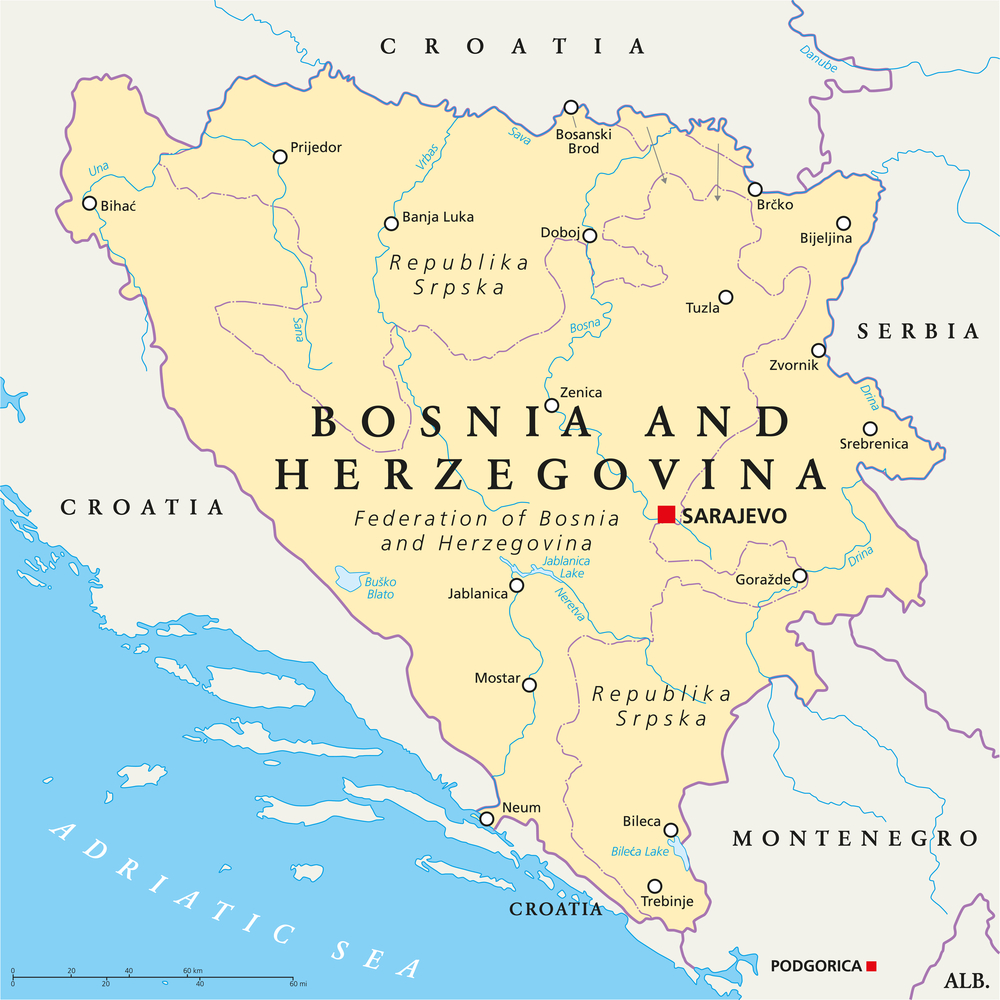
A little commented on issue in Western Europe is the significant possibility that Republika Srpska, currently part of Bosnia & Herzegovina (BiH), may shortly declare independence. Part of the former Yugoslavia, Republika Srpska is one of the two entities of Bosnia and Herzegovina, the other being the Federation of Bosnia and Herzegovina. It is located in the north and east of the country. Its largest city and administrative centre is Banja Luka, lying on the Vrbas river, and has a population of about 1.2 million people.
Bosnia and Herzegovina is a complex entity that consists of two main parts, the Croatian-Muslim based Bosnia and Herzegovina and the Catholic Republika Srpska, which is far closer in ethnicity to Serbia. In addition, while the BiH uses the Roman language, Republika Srpska uses the Cyrillic alphabet. Each entity already has its own constitution, legislative, executive and judicial authorities.
BiH also leans politically more towards the European Union, although Brussels appears not especially keen to absorb a Muslim member state. Republika Srpska meanwhile is pro-Moscow. The complete BiH is currently governed from Sarajevo, which is part of the BiH territory. Consequently, Republika Srpska feels that the decision-making process is not always representative of their wishes.
These potential divisions are one of the reasons why the Republika Srpska President Milorad Dodik visited St.Petersburg last week, where he met with Russian President Vladimir Putin.
Secession
Republika Srpska intends to issue a draft agreement on the peaceful separation of Bosnia and Herzegovina by June 30, introducing a subsequently reduced Bosnia & Herzegovina and Republika Srpska as an independent state, and creating a new European country, although this is expected to be rejected. However, Dodik has stated that the process must be peaceful.
Dodik said “We are talking about an absolutely real answer, caused by the circumstances that are taking shape now. They absolutely do not comply with either the BiH law, the constitution, or the Dayton Peace Agreement and therefore secession is the only answer to current threats and existing challenges. It will create completely new conditions of existence and a new reality. So, this is the real way out. But let’s see if the other side agrees. They will probably say no, but in any case, the development of the situation will be clearly in favor of this initiative, we will prepare it and conclude it in the form of a document that will be put on the table.
For 15 years, the Bosnian side has been causing great harm to Republika Srpska and hindering its development. Today we just see that if we were able to implement this project earlier, maintain the price of gas, then we would be one of the most promising regions in terms of investment. In this sense, Sarajevo really destroyed this prospect and caused us enormous material harm, and this is one of the reasons why I am talking about secession.”
The European Union has opened negotiations with Bosnia & Herzegovina over joining the EU, while Sarajevo has banned the importation of Russian gas into the entire region following pressure from Brussels. Banking services connected with Russia have also been sanctioned.
Dodik meanwhile has turned to Russia for support and is providing some incentives. He said that Republika Srpska is interested in adopting the Russian MIR payment system and wants to accelerate the construction of an additional gas pipeline from Serbia in order to purchase more Russian gas without having to listen to Sarajevo. He also wants to modernize the regional railway infrastructure through cooperation with Russia and wants Moscow to support a peaceful Republika Srpska withdrawal from Bosnia and Herzegovina. He noted that Banja Luka, which would become the new capital city, counts on Russia’s support in this matter.
Trade & Investment With Russia
Dodik also noted the current pressure the European Union is placing on Sarajevo to seize Russian assets, stating that most of these are actually in Republika Srpska. He stated that “On the territory of Republika Srpska there are almost 90% of all BiH Russian assets, and only a small part in the rest of the BiH. Republika Srpska definitely does not plan to freeze Russian assets and will never support such an initiative. This is completely inconsistent with how we see the development of our relations with the Russian Federation.”
In terms of interacting with President Putin, Dodik stated that “Yes, no doubt, we support each other. Our peoples and both our countries states have exactly the same understanding of everything that has happened. We see imperialist manners from outside, and we see how the identity of the Russian and Serbian peoples is threatened. And our mutual understanding creates the basis for mutual support. In my opinion, the Republika Srpska and Russia are currently very intensively interacting. We assist each other in economics, investment, as well as at the spiritual level. So, yes, together we are going in the same direction.”
Clearly, there is alarming potential for violence erupting across Bosnia & Herzegovina should Republika Srpska declare independence as it has stated it intends to do – in the form of releasing a road map by the month end. That in itself is not an immediate succession, but it has the power to inflame tensions. Neither Brussels nor Moscow would especially welcome a descent into what would be a de facto BiH civil war. However, it would introduce high-level diplomatic negotiations to work out a solution. That may have unexpected spin offs – getting European Union and Russian negotiators to work together to solve the Bosnia & Herzegovina/Republika Srpska differences could well act as a catalyst to build some trust and commonalities that may be put to later use when it comes to negotiations concerning the future of Ukraine.
In a major trade step forward, the Eurasian Economic Union (EAEU) and China have agreed to implement vital elements of cooperation in trade digitalisation, making mutual trade flows increasingly transparent and effective. The impact will further increase multilateral trade throughout China, Russia and the Eurasian landmass.
Russia’s Minister of Trade of the Eurasian Economic Commission, Andrei Slepnev stated while speaking at “The Balance of interests of Moscow and Beijing in Eurasia. Connection of the Eurasian Economic Union and the Belt & Road Initiative” forum that was held as part of the framework of the Ninth International Conference of the Russian International Affairs Council (RIAC) and the Chinese Academy of Social Sciences (CAS) titled “Russia and China: Cooperation in a New Era.”
Slepnev said that “Against the backdrop of previously unsuccessful attempts to integrate digital systems, when one of the parties was asked to adopt the tools and mechanisms of the other side, we have now reached with China a common understanding of integration as working on the principles of transparency, mutual respect, equality, as well as cooperation in various integration sites.”
There have been difficulties in aligning digital infrastructures, not least with coding issues. Chinese codes are usually in Chinese characters, Russian ones in Cyrillic or Roman. The EAEU also includes five member states, Russia, as well as Armenia, Belarus, Kazakhstan and Kyrgyzstan, making the adoption of a digital code all can utilize as well as interface with Chinese codes somewhat challenging.
However, Slepnev said that a Russia-China regulatory framework has now been put in place, and the current interface – the “Agreement on Trade and Economic Cooperation between the EAEU and China”, has been adapted to meet mutually compatible digital protocols. The implementation of the provisions contained in the regulatory agreement is expected to significantly contribute to the growth of mutual trade, increase intraregional connectivity, and also contributes to the development of opportunities for the development of cooperative cooperation.
The EAEU fits a geographical space between Eastern Europe and Western China.
Slepnev stressed that “Not only this Agreement, but in general the movement towards each other has made it possible to increase mutual trade between the EAEU and China, in the four years 2019 to 2023 to more than double.” That implies annual growth of 25% per annum as both economies begin to integrate and merge to become a large Eurasian trade space.
In this regard, he said that during the fourth meeting of the Joint Commission in April 2024 in Beijing, substantive agreements were reached to deepen cooperation in the digitalisation of transport corridors, technical regulation, customs cooperation, sanitary and phytosanitary measures, as well as e-commerce.
Slepnev noted that “In the future, it is planned to expand the list of areas discussed. In addition to transport, I would note such important elements of cooperation as digitalisation and climate, which, as we all understand, are based on technological transformation. These are the most important areas, here we are very close with China and jointly promote them on the BRICS and SCO platforms, so as not to create new barriers to trade, but to build common approaches.”
China has signed a Free Trade Agreement with the EAEU, however at present this is non-preferential. Slepnev addressed this issue, stating that a joint scientific study on further scenarios for the development of interaction between the EAEU and China was also taking place, as the pace and volume of cooperation already goes beyond the scope of the current agreement. “It is clear that in the current situation, full-fledged free trade would probably be too risky a step for our industry and agriculture. The scenario of limited liberalisation proposed by scientists of the EAEU and China looks viable under certain conditions. It can really diversify mutual supplies and open up prospects for our suppliers on the Chinese market.”
He suggested added supplements to the existing interface formats in meetings focusing on key, strategic issues, which would be discussed during the regular meetings of China and the five EAEU states, on the sidelines of SCO summits.
The concept of linking the EAEU and China’s Belt & Road Initiative (BRI) was formulated in 2015 as part of the Russian-Chinese high-level dialogue and was further supported by other member states of the Union. The main elements of this concept are:
“Support from the EAEU countries for the BRI initiative and readiness for close cooperation to promote it, the conclusion of an agreement on trade and economic cooperation between the EAEU and China, and the launch of a dialogue mechanism between the parties to link Eurasian economic integration and the BRI.”
The BRI is essentially a massive Chinese outbound financing programme with a major focus on infrastructure. Its aims are fairly simple, to construct two-way trade flows to feed China’s increasingly consuming population of 1.4 billion, and to assist China’s exports. BRI projects are also increasingly financially sophisticated – with many projects looking for returns on investment such as road, rail, airport and port investments being constructed and then being listed on local bourses. At that stage the original Chinese party typically exits, although they may retain a minority stake to retain future dividends. The policy has been successful, albeit with a few bumps along the road. To date China has invested about US$1 trillion. The implications of the EAEU and China agreement is that we can expect to see Chinese outbound investment into EAEU infrastructure projects increase in coming years.
Further Reading
Russia and China’s Belt & Road Initiative
We discuss the role of China’s Belt & Road Initiative in Russia in extensive detail in our Russia’s Pivot to Asia 2024 Guide. This is a complimentary download and can be accessed in English here and in Russian here.

 Русский