The Russian Federal Agency for Fisheries is to organize an exploratory expedition in 2024-2025 to assess water bio-resources in the exclusive economic zones of African countries using ships of the Federal Research Institute of Fisheries and Oceanography. The purpose will be to examine water quality and marine stocks, and will include visits to several African ports.
The Russian government stated that “The Federal Agency for Fishery is tasked with organizing an exploratory exhibition in 2024-2025 to assess the stock of water bio-resources in the exclusive economic zones of African countries using vessels operated by the federal state budget research center, the Russian Federal Research Institute of Fisheries and Oceanography.”
The move comes as Russia is looking to replace European fish purchases from alternative markets as well as looking to assist with improvements to the continent’s own consumption needs. African fishing fleets and ports are often underfinanced and use outdated technologies, while marine stock sustainability will also be a concern.
Species typically caught and consumed in West Africa include Hake, Mackerel, Sardines, Anchovies and Oceanic Tilapia.
We recently reviewed Russia’s trade with several West African countries following the Russian Foreign Ministers visits to the region last month. Please see our updates on Burkina Faso, Chad, Congo, and Guinea.
The Nornickel-Yenisei River Shipping Company, which manages the river assets of Norilsk Nickel, has stated that the Krasnoyarsk and the Lesosibirsk River Ports – both of which service inland traffic to the Arctic Ocean, are capable of increasing their throughput capacities to 2 million tonnes per year each, but the fleet is loaded 100%.
Olga Ksanf, the company general director said “The Yenisei River Shipping Company fleet has been 100% involved in the last four navigation operations on the river. We start navigation in early May and end at the beginning of November, when the fleet returns to Krasnoyarsk. There is an opportunity to increase the cargo flows of the Krasnoyarsk and Lesosibirsk River Ports by up to 2 million tonnes per year, each but the existing fleet is fully loaded,” Ksanf said at the Siberian Transport Forum on Wednesday (June 19).
The throughput capacity of both ports is currently 1.2 million tonnes per year (total cargo turnover is 2.4 million tonnes), she said. That capacity could increase by up to 70%.
The Yenisei River Shipping Company is the largest transport enterprise in the Krasnoyarsk Territory, transporting goods and passengers in the Yenisei and Angara basins. The company intends to transport 3.5 million tons of cargo during the 2024 navigation period.
Catching up with the demands being placed on Arctic developments – much of which is needed to support the Northern Sea Passage route between the Russian Arctic and Asia – involves significant resources in energy supplies as well as rail connectivity in addition to ocean icebreakers and inland shipping. Several Russian shipyards are currently heavily employed withbuilding 160 new Arctic-class vessels by 2030.
The Eurasian Union of Rail Freight Traffic Participants (ESP), which includes Russia’s largest container operators, has stated a need to bring back additional container train runs from central Russia to the Russian Far East. The Russian shift from markets in Europe to markets in Asia has created logistics bottlenecks.
Due to the lack of railway infrastructure on the eastern route, there is now a significant imbalance between export freight traffic headed east and imports going west, which has led to a massive accumulation of empty containers in the European part of Russia. As much of Russia’s export freight base is in Siberia, local shippers are experiencing a shortage of containers. In future, there will be a restructuring of freight traffic, but until this happens a number of support measures are needed.
The decision to run an additional three container trains per day on top of the existing 19 trains, bringing the total to 22 trains, was made at the end of 2022. Along with other measures, this made it possible to ship out imported containers and decongest overwhelmed ports in the Russian Far East.
The ESP said in its report for 2023 that shipments of containerized freight by railway in Russia could increase by 10%-11% in 2024.
The freight base for container shipments on eastern railways heading east could have increased by 38% to 32.7 million tonnes in 2024 from 23.7 million tonnes in 2023 in the absence of infrastructure constraints, the ESP said. Given the potential growth of the freight base, 36 container trains per day need to be running east along Russia’s eastern railways in 2024, the report said. The ESP expects these figures to grow to 48.9 million tonnes and 52 container trains per day by 2035.
The ESP was formed by Russia’s largest container operators and its members own about 95% of the fleet of well cars operating on the Russian Railways network. They also account for over 92% of the combined capacity of transport and logistics centers and about 63% of the capacity of marine container terminals in Russia.
The Sukhoi Port Blagoveshchensk logistics railway terminal will start operating in the fall of 2025, the Government of the Amur Region has reported. Blagoveshchensk is strategically important, as it lies on the Russian border with China on the Amur River. A railway bridge was completed in 2022, which connects to Heihe in China, and from there to China’s national railway system.
The Blagoveshchensk logistics complex will be used for transshipment of goods from road to rail transport and will connect the existing Blagoveshchensk-Heihe cross-border bridge and the Trans-Siberian Railway, and will make the exchange of cargo with China easier. On completion it will be the largest logistics railway terminal in the Russian Far East.
The terminal will take up 300 square meters ga, will be used to perform logistics operations related to the reception, loading and unloading, storage, sorting and processing of various consignments of goods, as well as commercial information services for consignees, carriers and other logistics intermediaries. It will be able to process more than 1 million tonnes of cargo per year; and is being connected to the Trans-Siberian railway.
Vasily Orlov, the regional governor, said “The Dry Port of Blagoveshchensk is an important project. It is included in The Amur International Transport Corridor, which we are creating with our partners from Heilongjiang Province. In addition to the Dry Port, it includes the Kanikurgan customs and logistics terminal, the Blagoveshchensk-Heihe road and rail bridge, a cross-border Amur River cable car, and the Blagoveshchensk International Airport. This infrastructure opens up great prospects for the development of border areas and will help to realize the logistics potential of the region.”
The Blagoveshchensk-Heihe border bridge between Russia and China was opened for traffic in June 2022. At present, it accepts up to 190 vehicles per day. However, with the launch of a permanent, 24 hour checkpoint from the autumn of this year, traffic flow will increase up to 630 trucks per day.
Alfa Bank, Russia’s largest private lender, has applied to the Chinese authorities to open offices in Beijing and Shanghai. The bank is aiming to become the first private Russian bank to open fully-fledged branches in China, and comes after it recently expanded its client support services for Chinese businesses. Alfa Bank said it is already providing services to thousands of companies working with Russia and has launched a Chinese-language website and support for Chinese-speaking clients.
Alfa Bank’s board of directors first revealed plans to open offices in Beijing and Shanghai last September, saying it views expansion in the Asian powerhouse as “strategically important.” In April, the bank announced it will launch the new branches by the end of 2025, saying the move would facilitate RMB Yuan transactions for both Chinese and Russian businesses.
In 2023, Alfa Bank emerged as the top lender in Chinese RMB Yuan in Russia, accounting for a third of all RMB Yuan loans in the Russian market.
The move also reflects growing economic ties between Russia and China after the two countries declared a ‘no limits’ friendship. The process has accelerated in the face of soaring tensions between Moscow and the West over the Ukraine conflict and multiple waves of economic sanctions against Russia.
Earlier this year, Alfa Bank became the first major Russian bank to receive an international rating in China after Lianhe Credit Rating assigned it with an AA- rating with a stable outlook.
The agency attributed its decision to a number of factors such as Alfa Bank’s systemic importance, efficient corporate management, high asset quality, and strong lending capacity. The bank had assets of US$62 billion as at 2020.
Alfa Bank was founded in 1990 by Russian businessman Mikhail Fridman, who remains the controlling owner. Headquartered in Moscow, it operates in seven countries, providing financial services to 22 million active corporate customers and over 1 million active retail clients as of 2021. The bank is under EU and US sanctions and has been barred from the SWIFT global payments network, meaning that the payment mechanism for exchanging RMB Yuan will probably be Russian rather than Chinese. Beijing has been wary of banking involvement with Russia in terms of attracting secondary sanctions, however as Alfa Bank is a Russian entity and already sanctioned, the risk becomes something of a moot point as transactions will presumably be made via Russia’s SPFS network, which is already sanctioned but does not utilise SWIFT.
The move illustrates that cross-border banking can still take place both without SWIFT and regardless of sanctions. Providing the entity involved is Russian, there is little else the West can do to stop non-SWIFT network transactions between two parties. This type of arrangement may become more common in Russia’s banking relations with other friendly countries.
Russian President Vladimir Putin is travelling to Vietnam on June 19-20 to meet Vietnam’s General Secretary Nguyen Phu Trong, President To Lam, Prime Minister Pham Minh Chinh, and National Assembly Chairman Tran Thanh Man.
The parties plan to discuss the current state of and prospects for the continued development of a comprehensive strategic partnership between Russia and Vietnam in the trade and economy, scientific and technology, and humanitarian fields, and exchange opinions on relevant items on the international and regional agenda. Based on the outcomes of the talks, Russia and Vietnam will adopt a joint statement and sign a number of bilateral documents.
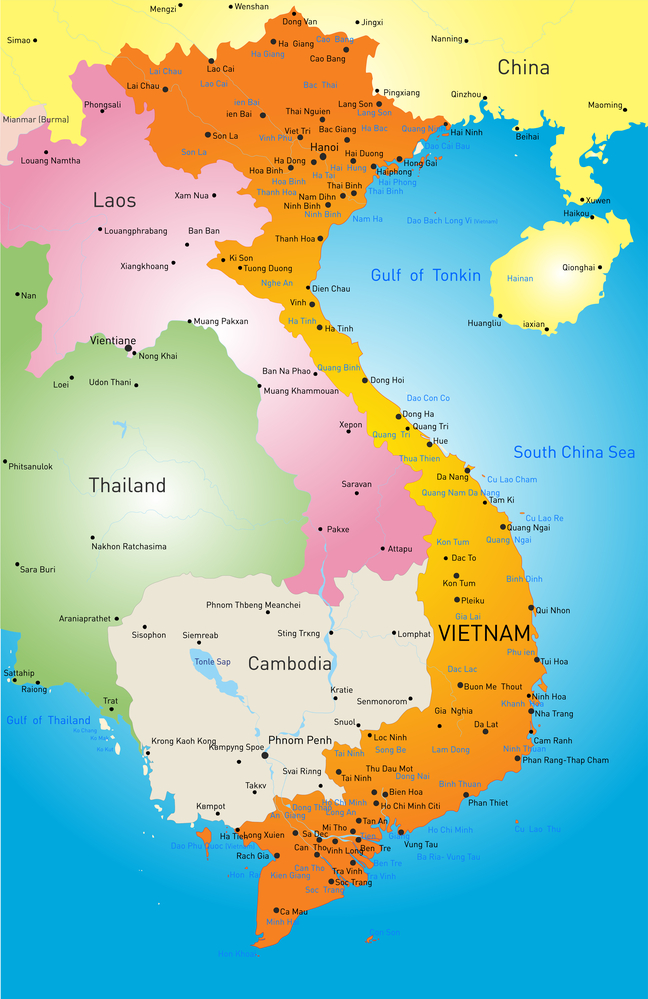
In this article we provide an overview of Russia’s 2024 trade and development issues with Vietnam.
Vietnam’s foreign policy is based on balancing which allows it to maintain room for manoeuvre. In this regard, Hanoi tries to take simultaneously into account the interests of Moscow, Washington, and Beijing. So far this worked to Vietnam’s benefit making the country more attractive to foreign powers such as Russia. Given the state of affairs between Russia and the collective West, Moscow is pushing for a re-orientation of trade to Asia, and Vietnam is expected to play a pivotal role in facilitating this shift. Yet not all is proceeding smoothly. Similar to Russia’s trade with Thailand, the bilateral turnover has fallen sharply due to the effects of the conflict in Ukraine. Putin’s visit will look at rectifying this and looking at how Vietnam can better collaborate with the Eurasian Economic Union.
Russia-Vietnam Bilateral Trade
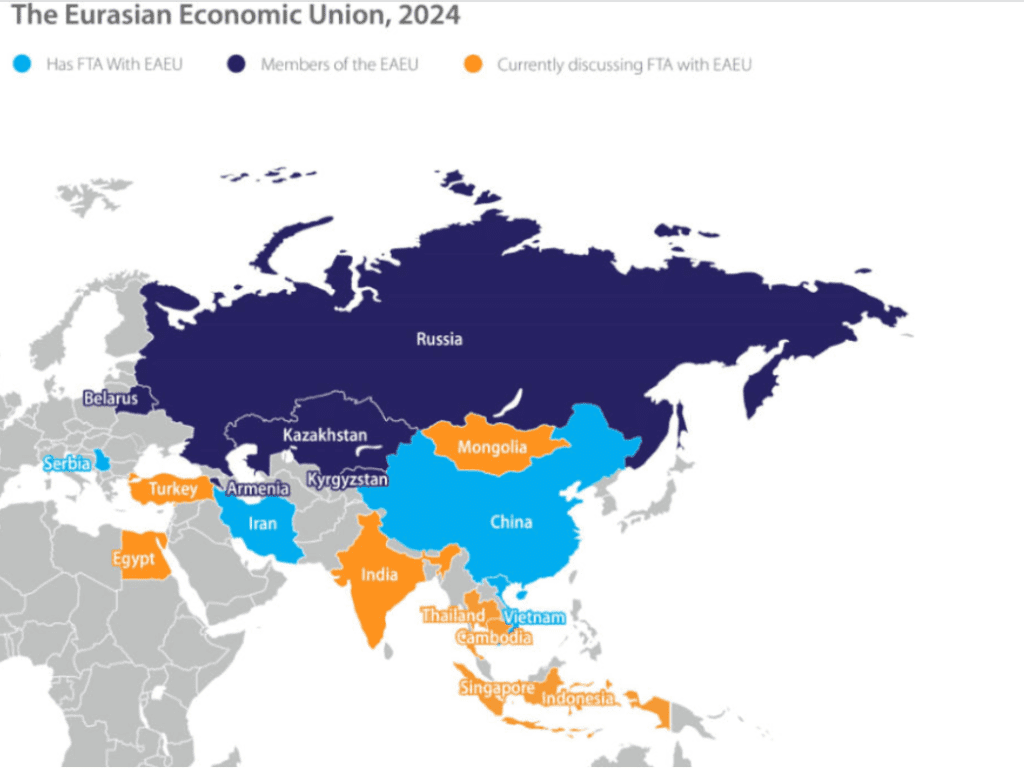
Vietnam signed an agreement to join the Eurasian Economic Union (EAEU) free trade zone in 2015 and became the first state from ASEAN to join the Moscow-led bloc. According to the agreement, Vietnam’s average import tariff rate for EAEU countries will decrease from 10% to 1% by 2025.
Bilateral trade between Russia and Vietnam reached a record high of US$7.1 billion in 2021, an increase of 25.91% (US$1.46 billion) compared to 2020. However, due to sanctions imposed on Russia as a result of the Ukraine conflict, the bilateral trade volume halved at the end of 2023 to about US$3 billion. This follows the dynamic set in 2022 when the trade turnover between Vietnam and Russia in 2022 decreased by 35.4%.
As to the structure of the bilateral trade, food products from Russia that are in growing demand in Vietnam include condensed milk, honey, confectionery, pasta, seeds, and sunflower oil. Additionally, Russia is also a critical exporter of modern weaponry to Vietnam making the country the largest buyer of Russian weapons (around 70% of the country’s arms comes from Russia) in Southeast Asia. Vietnam exports a range of goods to Russia, including electronics, textiles, agricultural products (like coffee, pepper, and seafood), and footwear.
Russia’s exports to Vietnam primarily consist of raw materials, machinery, and energy products. Russian officials argue that strengthening economic cooperation with Vietnam will be facilitated by the creation of a business dialogue with the EAEU Business Council. They also regularly talk about the use of national currencies in mutual trade, the possibility of paying for goods and services, as well as withdrawing cash in Vietnam using Mir cards. Another area of activity are business forums with the most recent held in April in Hanoi which attracted more than 200 enterprises from Russia and Vietnam.
Russia – Vietnam Bilateral Investments
Before Covid-19, Russia was Vietnam’s 26th largest foreign investor with 123 projects valued at up to US$933 million. By February 2022, Russian investments grew to US$953 million across 151 projects. By the end of the first quarter of 2023, Russia had 171 businesses in Vietnam with the capital surpassing US$970 million, but still positioned as the 28th top investor. Most of the Russian investments are focused on natural resource extraction.
In contrast, Vietnam has invested in 17 projects in Russia with a total worth of US$1.63 billion (which is 7% of all outbound Vietnamese investment). One of the central projects of Russian-Vietnamese cooperation was the construction of the Ninh Thuan-1 nuclear power plant, but in November 2016, the Vietnamese government suspended the project. Yet with the rapid growth of electricity consumption in Vietnam, the demand for nuclear technology in Hanoi has become relevant again, and Hanoi may return to the Ninh Thuan-1 nuclear power plant project. Another positive development is that earlier in 2023 a milestone agreement was reached on the creation of the Center for Nuclear Science and Technology in Vietnam between Rosatom and the Vietnam Institute of Atomic Energy.
With the departure from the Russian market of such Western food producers as the Finnish dairy company Valio, an alternative solution is Vietnamese products, and this is a developing trend. For instance, the Vietnamese company TH-True Milk, the largest modern manufacturer of dairy and agricultural products in the country, announced plans to invest around $2.7 billion in the Russian economy. This involved the construction of farms and processing facilities in the Moscow region, Kaluga and Tyumen regions, Bashkiria, and Primorsky Krai by the end of 2025. Vietnam’s per capita milk consumption is growing with the dairy market expected to grow from 159.6 kilotons in 2021 to 375.1 kilotons by 2030. The Primorskie project began earlier this year.
Another area of potential Russian investment in Vietnam is cybersecurity services. Russian technologies from large companies such as Kaspersky Lab and Rostelecom, or lesser-known Russian IT firms that are not subject to Western sanctions, can become an important auxiliary tool for Vietnam.
One of the most prominent areas of economic cooperation between Russia and Vietnam is in the oil and gas sector. Companies like Gazprom and Rosneft from Russia have collaborated with PetroVietnam on several projects, both within Vietnam and in Russia. There are also Zarubezhneft and NOVATEK which are interested in Vietnam.
A notable collaboration between the two countries was the joint venture between Kamaz and Vinamotor to produce Kamaz trucks in Vietnam. Russian companies have also shown interest in developing Vietnam’s railway infrastructure. Past projects have included modernizing the railway line connecting Hanoi and Ho Chi Minh City.
Presently Russia and Vietnam are also interested in developing seaborn connectivity and the natural geographic area for this is Russia’s Far East. The success would limit the deficiencies the two countries have historically had – geographic constraints that precluded closer and quicker trade relations. As such, although Russia’s trade relations with Vietnam have taken a hit – they can also be expected to bounce back as Russia’s Southeast Asian supply chains adapt.
Vietnam’s 2023 GDP growth was 5.05%. The World Bank forecasts its GDP is set to grow at 5.5% in 2024 and 6% in 2025.
October 25 Update: Malaysia has now been granted ‘BRICS Partner’ status. See more here.
Malaysia has decided to apply for BRICS membership and will start filing the official paperwork soon, Malaysian Prime Minister Anwar Ibrahim has said. Existing BRICS member South Africa has agreed to accept a request. Anwar said “We have made our policy clear and we have made our decision. We will start the formal process to join BRICS soon. We are waiting for the final result and the feedback from the South African government.”
Kuala Lumpur’s potential membership in the organization would be of strategic significance, as one of the world’s most important shipping lanes – the Malacca Strait, connecting the Pacific and the Indian Ocean – is located between Malaysia and the Indonesian island of Sumatra.
According to Anwar, Malaysia is “relieved” that the world is no longer unipolar, and that the rise of BRICS and China in particular has offered “a glimmer of hope that there are checks and balances in the world.”
The West wants to “control the discourse” in the world, but “we can no longer accept it because they are no longer a colonial power and independent countries should be free to express themselves,” Anwar said.
Earlier this month, Russian Ambassador to China Igor Morgulov said that about 30 countries have voiced a desire to join BRICS. In South Asia, Thailand, Sri Lanka and Vietnam have already made requests to join. Russian President Putin is visiting Vietnam from June 19.
Malaysia has a population of 34 million and a GDP (PPP) of US$1.3 trillion. It is a liberal Muslim country, and has a significant tourist industry. Its main exports are petroleum along with other natural and agricultural resources, including rubber and palm oil. It has significant manufacturing and service industries.
Russia Malaysia 2024 Trade & Development
Total Russia-Malaysia trade reached about US$3.2 billion in 2023, with about US$2.1 billion of this being Russian exports. Malaysia remains a key importer of Russian agricultural products, bringing in grains, oilseeds, meat, and dairy products. In return, Russia receives palm oil, rice, and fruits from Malaysia. Energy resources, primarily oil and gas, along with metals and chemical products, form the crux of exports from Russia to Malaysia.
Malaysia reciprocates with exports of cars, electronics, rubber, and palm oil. Russia is also interested in exporting Malaysian high-tech equipment.
Malaysia is also one of Asia’s largest semiconductor exporters with an annual volume of US$8.7 billion. The electronics sector contributes almost 6% of Malaysia’s GDP. Russia is also interested in medical products, and medical equipment, in particular in the field of dentistry. Around 31-32% of Malaysian exports to Russia are electronic goods. Malaysia has a developed auto industry, in particular the Proton and Perodua brands. In 2022, the country produced more than 700,000 cars – more than Russia.
Given the flight of Western companies from the Russian market the latter is now more open to the influx of Malaysian cars. This fits into the overall shift that is taking place in Russia since early 2022 – Asian car brands are becoming increasingly attractive to Russian customers.
Russian and Malaysian companies have now increasingly been switching to payments in Chinese RMB Yuan, UAE Dirhams, and other currencies. Yet for this mechanism to work, there must be common elements between participating states. Among the most important elements is the issue of determining the volume of trade and investment, which should be significant for payments in non-dollar currencies to be effective.
Another strategic move by the two countries to boost trade and investment is the finalization of a new Double Tax Agreement (DTA) between the two nations. This treaty aims to streamline and simplify the tax regime for businesses operating in both countries, fostering a more conducive environment for mutual investments. This treaty will set a standard 15% withholding tax rate on dividends. A 10% concessional rate will apply to recipients who hold a minimum of 25% of the capital in the dividend-distributing company. This follows an agreement signed in 2019 which covers mutual cooperation and the development of relations between Russia and Malaysia.
In a noteworthy event in May 2023, the “Russia – Islamic World: Kazan Forum” provided an avenue for detailed discussions on trade. Within this forum, the “Russia-Malaysia” segment facilitated by the Trade Mission of the Russian Federation in Malaysia and the Ministry of Economic Development of the Russian Federation explored ways to further amplify the trading relationship.
Both countries recognize the need for deeper bilateral and EAEU-ASEAN cooperation. In this regard, there are still notable challenges to address, particularly relating to standards and adherence. ASEAN remains predominantly driven by trade motivations, not geopolitics. While there are administrative hurdles to overcome and trade discussions to finalize, the potential trade alliance between ASEAN and EAEU is a development that is emerging and will benefit both sides. Initiatives are being set in motion for the creation of fresh supply chains.
Malaysia’s 2023 GDP growth was 3.8%.
Further Reading
Russia – ASEAN 2024 Trade and Development
Russia’s trade and development relations with Malaysia and all other ASEAN nations are comprehensively discussed in our 2024 Russia’s Pivot To Asia Guide. This is a complimentary download and may be accessed in English here and in Russian here.
The mutual trade volume within the Eurasian Economic Union (EAEU) in the first quarter of 2024 increased by ₽2 trillion (US$22.5 billion), according to Dmitry Volvach, a Deputy Minister of the Russian Ministry of Economic Development of Russia. He was speaking at the ‘Export to the EAEU countries’ conference of interregional cooperation in Novosibirsk last week.
Volvach said that “Compared to the same period in 2023, in January-March 2024, mutual trade of the EAEU member states grew by another 7%. Let’s see how we end the year, but the trend is very, very good, in value terms it’s almost 2 trillion Russian roubles. We are taking all possible steps to maintain these trends.”
In 2023, the volume of mutual trade between the EAEU countries increased by 5.4% to ₽7.4 trillion, reaching a record level during the EAEU’s ten 10 year existence.
One of the support tools is the creation in 2023 of a supranational mechanism for financing industrial cooperation within the EAEU.
Volvach commented “Today, the commission is selecting applications received for appropriate support measures; we have now allocated ₽1.8 billion (US$20.2 million) from the EAEU budget in order to be able to index the interest rate on loans for cooperation projects in which three or more countries participate. The EAEU, of course, would prefer to have more, but the entry threshold of three enterprises from three different countries is a conscious decision to support projects with a high degree of connectivity, a high degree of cooperation.”
Volvach also noted that in 2023 it was decided to establish the Eurasian Reinsurance Company.
“The company’s activities will support the volume of mutual foreign trade of the Eurasian Economic Union in the amount of more than ₽360 billion” (US$4 billion) he said.
Liliya Shchur-Trukhanovich, at the Department for Development and Regulation of Foreign Economic Activity of the Ministry of Economic Development of Russia has also clarified that the formation of the working bodies of this reinsurance company is currently being completed. The move is needed as Western reinsurance companies have withdraw from the Russian market, hindering shipping access to Western ports and creating additional content insurance risks.
Russia has proposed to BRICS countries and partnership members a mechanism for cross-border payments based on the BRICS Bridge settlement platform, according to Anton Siluanov, Russia’s Finance Minister. He explained that the mechanism would see BRICS members central banks issue digital financial assets (DFAs), which would in turn peg their value to the national currencies of the participating countries.
Settlement participants – for example companies involved in cross-border BRICS transactions, will use this infrastructure as an alternative to traditional settlements for making payments. This does not mean a single settlement such as a digital currency is being put into position, but that a technological solution to simplify and improve settlement procedures already exists and with cooperation can be put into operation. The procedure also sidesteps the SWIFT network.
Currently, the BRICS Bridge project is at an advanced stage of development, according to the Ministry of Finance, who stated in response to questions that “The concept is being developed, possible settlement mechanisms and lists of potential project participants are being formed. The issue is discussed within the BRICS countries in an on-going manner. We will implement it step by step, it is important for us to hear the opinion of all participants of the future platform.”
The BRICS currently includes Brazil, China, Egypt, Ethiopia, India, Iran, Russia, South Africa and the UAE. Saudi Arabia is expected to ratify its membership soon. Another 30 countries have expressed serious interest in joining.
The key idea behind creating such a platform is to increase the speed and accessibility of payments. According to the Ministry of Finance representative, platform participants will be able to settle with each other almost instantly, while the costs of making payments will be minimal.
The Financial Times has published an article describing a key meeting between the Ukrainian Finance Ministry and Officials attending the Peace Conference held over the weekend in Lucerne, Switzerland. The newspaper reported that Ukraine had asked for its official bondholders to take a 60% haircut on foreign exchange bonds due in August of US$20 billion. Those bondholders are mainly Western financial and private institutions.
The Ukraine Ministry further stated that its official creditors should only receive ‘symbolic debt repayments’ from mid-2024 to end 2027.
An official bondholders committee, formed to discuss the issue, commented that “Ukraine’s proposal is significantly in excess of market expectations and risks substantial damage to Ukraine’s future investor base.”
Bondholders had originally granted Ukraine a two-year moratorium on payments in early 2022, but this is set to run out in August. The talks on a further restructuring reflect deep Western investor uncertainty about the course of the conflict with Russia and how much debt Ukraine’s economy will be able to carry.
An investor committee representing about 20% of the bonds proposed cuts of just over 22% instead of Ukraine’s suggested 60%, however the IMF said this would also fail key debt targets.
Talks apparently failed to reach a compromise and will present a new concern to Ukraine’s financial backers, although negotiations will continue. The revelations that these discussions took place imply that the Peace conference was actually a front for Kiev to ask its backers to take a 60% haircut on pre-conflict Ukrainian government bonds that had been issued and are now coming due.
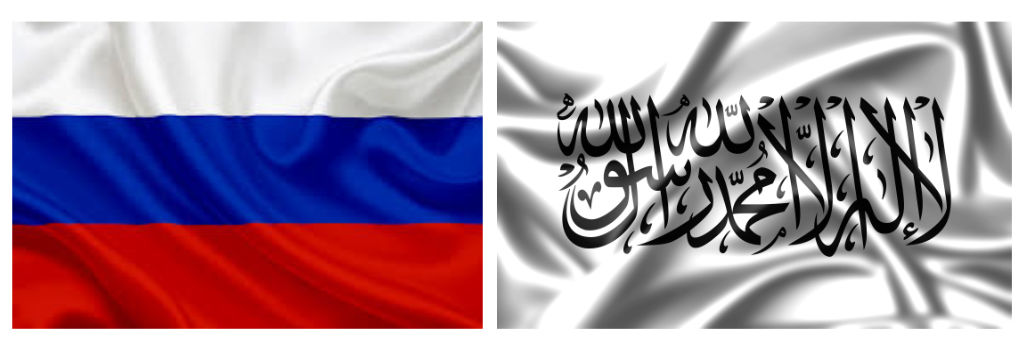
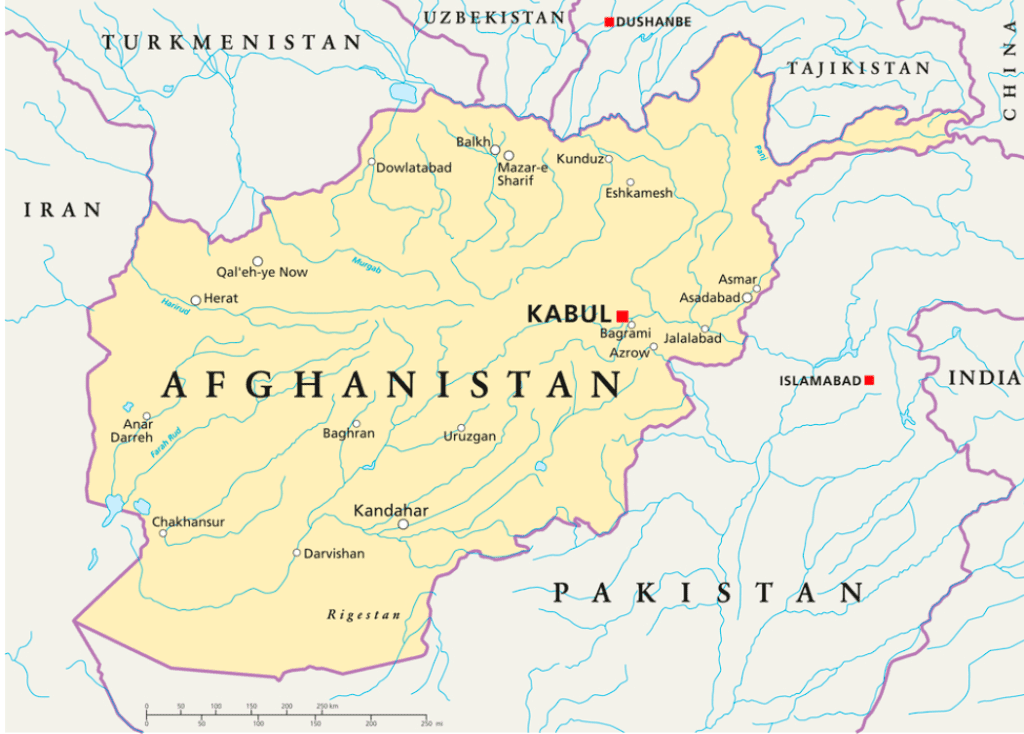
Stabilising the situation in the Islamic Emirate of Afghanistan, requires fundamentally new approaches to relations with this country. It is necessary to ease the military-political tension along such an extensive border, which is also crucial for Russia’s positions in the region, according to AsiaIs, a website devoted to Russia-Asia political analysis. Afghanistan shares the longest border with Central Asian counties at over 2,200 km.
The current Afghan authorities are developing economic ties with all Central Asian countries and Russia, primarily interested in tapping into significant reserves of various energy resources with the help of these countries. This, in turn, contributes to increasing the role of Russia and Central Asian countries in the socio-economic development of Afghanistan. Signals of such a policy from Kabul were evident during the recent international forums Russia-Islamic World (Kazan Forum-2024) and the recent Saint Petersburg International Economic Forum 2024.
Fall out from NATO Occupation & Sanctions
Strategically important is Kabul’s preference for economic partnership with countries that did not participate in the multi-year NATO occupation of Afghanistan. That occupation almost completely destroyed the remaining national economy, with intentions to turn the country into a springboard for various military-political combinations against Central Asian countries, Russia, Iran, and China.
The Taliban, now ruling Afghanistan since 2021, is listed as a terrorist organisation by the United Nations, a position duplicated by many other countries and especially in the West. International sanctions have been imposed against Taliban-controlled Afghanistan, while the United States confiscated Afghanistan Central Bank assets held on deposit for safekeeping and dispersed them instead to American victims of the Al-Qaeda 9-11 attacks.
However, these sanctions are gradually weakening, mainly due to the unified position of Russia, China, Iran, and Pakistan, as well as several other countries, including those from Central Asia, and the Middle East, advocating for the lifting of sanctions against the country.
Taking into account these developments, the Russian Ministry of Foreign Affairs and the Ministry of Justice jointly discussed with President Vladimir Putin last month a proposal to consider excluding the Taliban from the list of banned organisations in Russia. The Special Presidential Representative for Afghanistan, Zamir Kabulov, who announced this, clarified that the exclusion of the Taliban from this list is necessary before its recognition.
In the context of these trends, it is politically important to note that in March 25 2024, the Taliban authorities in Afghanistan recognized the Russian status of Crimea, confirming the decision of the country’s previous leadership dated November 2021.
A reciprocal impulse soon emerged from Kabul: the advisor to the Afghan Foreign Minister Zakir Jalali stated that significant progress has been made in relations between Russia and Afghanistan over the past three years, and the removal of the terrorist organisation’s status will remove the last obstacle to official relations between the countries.
Kazakhstan Recognition
Meanwhile, in early June, Kazakhstan decided to exclude the Taliban from the list of banned organisations. Kazakh President Kassym-Jomart Tokayev noted that this was determined by the importance of developing trade and economic cooperation with modern Afghanistan and understanding that the Taliban is a long-term factor in the country. Afghanistan’s involvement in interregional ties is among the strategic tasks Kazakhstan is involved with.
This means that a basic legal framework is being created for comprehensive development of politico-economic cooperation with Afghanistan and is already showing results. There is active development of economic ties between Afghanistan and China (which has also now officially recognized Taliban-controlled Afghanistan), Iran, India, Pakistan, Turkey, and numerous Arab countries. Afghanistan also receives diverse humanitarian aid from the UN in addition to its nearby countries, including Russia.
Lithium Deposits
Nuriddin Azizi, the acting Afghan Minister of Industry and Trade, stated on May 15 that “The Afghan authorities count on cooperation with Russia in the field of metal extraction.” Noting that his country has very large reserves of copper and lithium (Afghanistan ranks among the first in Asia in terms of Lithium reserves) as well as other resources, Azizi expressed hope that Russian companies will invest in Afghanistan. Lithium is a key component in rechargeable batteries for mobile phones, laptops, digital cameras and electric vehicles.
At the end of September 2022, according to Azizi, the Taliban concluded an economic deal with Russia. According to the Afghan minister, Russia will annually supply approximately 1 million tonnes of gasoline, 1 million tonnes of diesel fuel, 500,000 tonnes of liquefied petroleum gas, and 2 million tonnes of wheat. A little later, Kabulov, the Afghan Special Representative, confirmed that the deal on fuel and grain supplies between the countries has been approved. Kabulov did not specify the price parameters, but noted that the Taliban are ready to supply raisins, medicinal herbs, and minerals in return. These deliveries have already been partially implemented.
Rail Connectivity
Meanwhile, beginning autumn 2023, Kabul has initiated the formation, primarily with the help of Russia, Kazakhstan, and the Central Asian countries, of an additional railway route in the eastern sector of the North-South corridor. This is to run concurrently with the existing Turkmenistan-Afghanistan mainline (Serhetabat-Torghundi), extend through to Herat, and continue southwest through Afghanistan to the Iran and Pakistani ports of Chabahar and Gwadar on the Indian Ocean. This would provide Afghanistan with open ocean access for the first time.
Negotiations are underway for this project: according to Kabul’s official data, agreements have already been reached with Kazakhstan and Turkmenistan on their participation in the project. A relevant transit agreement with the involvement of Tehran and Islamabad is expected to be signed in August this year.
Last March, Afghanistan and Uzbekistan agreed to refine the railway project Termez (Uzbekistan) Mazar-i-Sharif Kabul (Afghanistan) Peshawar (Pakistan). Deliveries of Uzbek electricity, wheat flour, rice, fabrics, and fertilisers will increase. Projects for investment in coal energy, construction industry, and Afghan light industry are being developed. Afghan Deputy Prime Minister Abdul Ghani Baradar noted in this regard that Kabul is promoting an economic-oriented foreign policy with a priority on regional interconnectivity.
Gas Transit
Similar agreements were reached in spring of the current year with Turkmenistan, including on the continuation of supplies of electricity, food, and medicine. In order to ensure regular supplies of Turkmen gas from 2025, it is planned to extend the gas pipeline from the Turkmen Serhetabat to Herat. Turkmen experts have been invited to conduct geological explorations in the Afghan-Turkmen border areas. Turkmenistan is in favour of expanding its partnership with Afghanistan both in the framework of bilateral relations and in the implementation of large-scale regional projects involving other Central Asian and Middle Eastern states.
Hydroelectricity
In turn, Tajikistan and Afghanistan agreed in late December 2023 to increase supplies of hydroelectric power to the Eastern Afghan region and to create a new power line from the south of Tajikistan to the same region with the participation of Turkish and Chinese investors. After a two-year hiatus, the 5th transboundary wholesale-retail market (south of Dushanbe) resumed its work.
Reacting to these positive changes, since autumn 2023, Kabul has been developing a legal framework to establish a regime of maximum economic favouritism for countries that officially recognize Taliban-controlled Afghanistan and develop economic ties with it. This regime is already effectively extended to China.
Maximilian Shepelev, a professor at the Vernadsky Crimean Federal University has stated that “The geopolitical significance of Afghanistan is difficult to overestimate, and Russia’s key task is to prevent the country from becoming a springboard for anti-Russian movements in the region with the support of the USA. China has already recognized the Taliban as an effective government in Afghanistan, is actively developing relations with it, and Russia should follow a similar path.”

 Русский