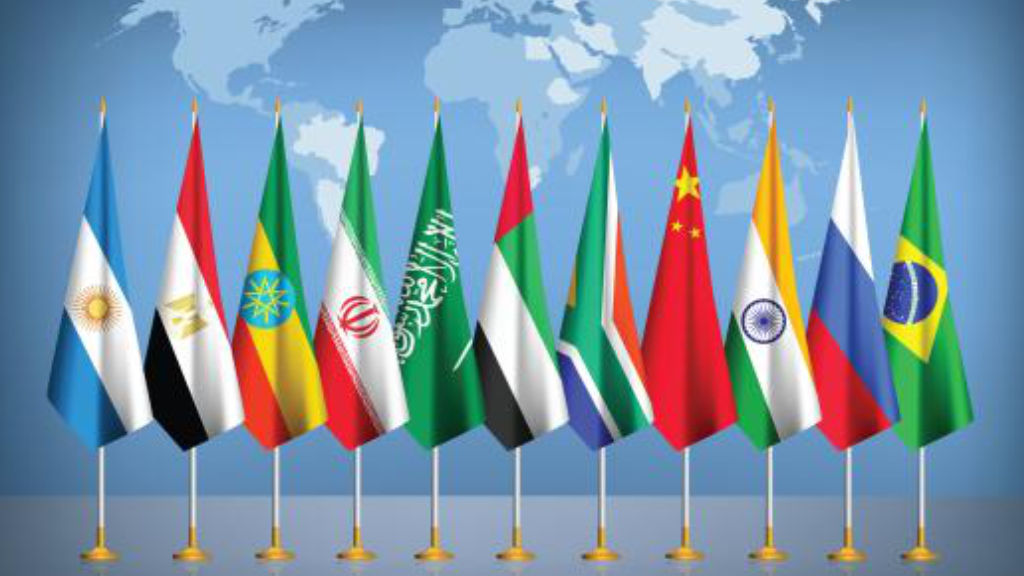
The BRICS group of counties – Brazil, Russia, India, China and South Africa, together with new entrants Egypt, Ethiopia, Iran, Saudi Arabia and the United Arab Emirates, have agreed to temporarily suspend the accepting of new members. The reason given is to allow time to integrate the latest members who joined from January 1st this year. Saudi Arabia is yet to fully complete its own ratification process.
The BRICS foreign ministers meeting was held this month where the issue was discussed. A full BRICS Heads of State conference is due to take place in Kazan in October.
About 30 additional countries, including heavy hitters such as Indonesia, Malaysia, Nigeria, Thailand and Turkiye have made overtures to join the bloc. However, mutual trade issues between existing members also require strategic coordination and the bloc seems to feel it should concentrate on its existing status before expanding further. A key issue is trade settlements and the creation of an intra-BRICS tradeable financial unit, which has yet to be resolved.
A new BRICS five year development strategy also needs to be worked on, with the current five year plan expiring in January 2025.
Russia’s exchange rate-linked export duty will decrease to 4.5% from July 1 from 5.5%, the Economic Development Ministry has stated. The decrease will impact a wide range of goods including ferrous, nonferrous and precious metals, coal (the export duty on coal was temporarily lifted from May 1 to August 31) and fertilizers.
Russia approved a resolution last September to link export duty to the Ruble’s exchange rate against the U.S. dollar from October 1, 2023 until the end of 2024. That is calculated is 4% at an exchange rate of 80-85 Rubles to the dollar, 4.5% at a rate of 85-90 Rubles, 5.5% at 90-95 Rubles, and 7% when the exchange rates is over 95 rubles to the dollar.
The Economic Development Ministry calculates the export duty based on the arithmetic average exchange rate over each month period, from the 26th to the 25th of the next month.
The exchange rate-linked duty is supposed to be scrapped from January 1st 2025, when the profit tax will be raised by 5 percentage points as part of a package of tax changes that the government has submitted to the State Duma.
The July decrease will benefit Russian exporters and their international clients.
Why the Atlantic Council’s Joe Webster is wrong about Kyrgyzstan and Europe
The small, landlocked Central Asian country of Kyrgyzstan has been called out by Joe Webster, a senior fellow of the Atlantic Council, in an article he wrote this week (June 25, 2024) ‘We Need To Talk About Kyrgyzstan’. In this, he essentially called for sanctions to be issued on the country for acting as a trade in-between on behalf of Russia and China. Webster, who claims to be a Russia-China expert, publishes the highly Western politically influenced “China-Russia Report” although he is based in the United States.
His comments include statements such as “Western countries need to strongly consider placing significant restrictions on trade with Bishkek.” Webster has also been providing these views in articles published in a Daily Telegraph podcast, and in analysis conducted in a recent article on Sino-Russian trade for The Atlantic Council itself.
In a nutshell, Webster is calling for specific Western sanctions on Kyrgyzstan to stop the supply of Western and Chinese goods flowing from the country into Russia. So far, so standard Western rhetoric. But, as influential as Webster may think himself to be, there are significant misinformation issues, and a lack of thought concerning his analysis. The two main issues Russia’s Pivot to Asia have with it – and he is far from being alone in this – are as follows:
Kyrgyzstan’s Regional Connectivity
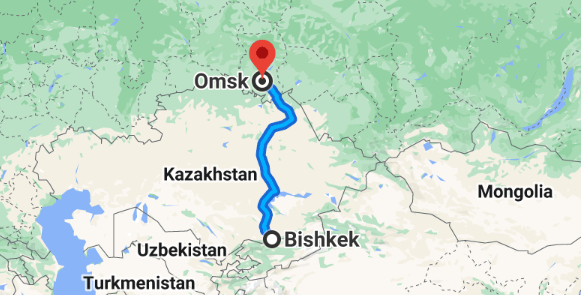
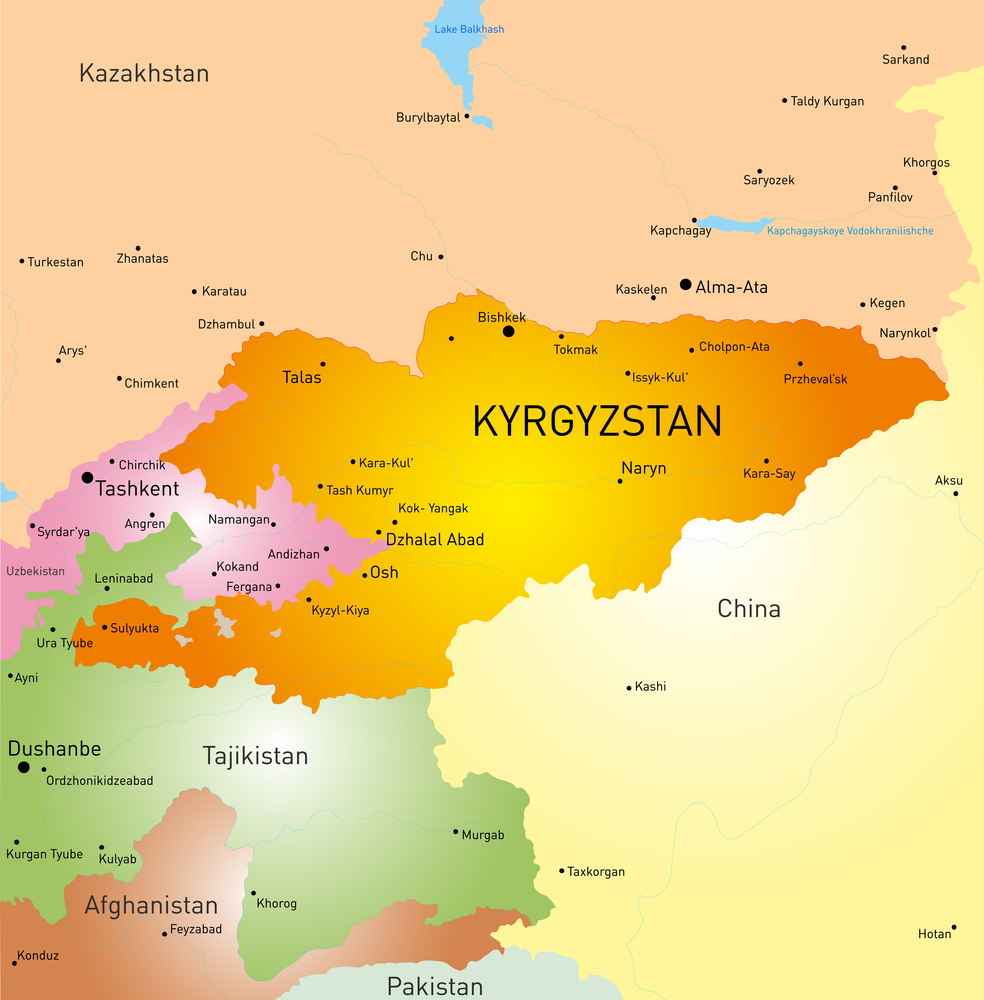
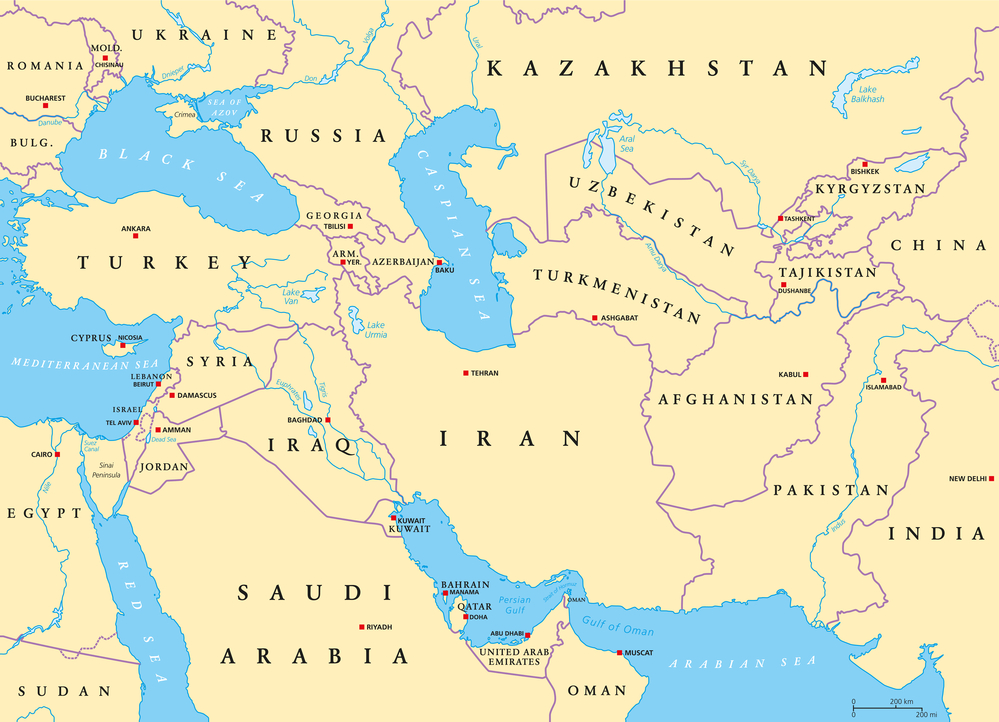
Kyrgyzstan is a highly mountainous, landlocked country, and although when looking at a map it can be seen as neighbouring China, it can also be noted that the county does not share a border with Russia. The closest distance between the two countries are Bishkek, the Kyrgyz capital, and Omsk, the nearest Russian city. They are one neighbouring country apart – Kazakhstan – and 1,800 km distant.
Furthermore, the Kyrgyz topography is such that while rail connectivity between China and Kyrgyzstan has been discussed on occasion, no direct route currently exists. Building an overland rail supply chain has been estimated at costing US$4.7 billion, involving the constructing of over 50 tunnels, 90 bridges and requiring high-altitude, harsh winter operational equipment, further adding to the cost. Some of the terrain such a railway would need to conquer is at altitudes of 3,500 metres.
In terms of road haulage, there are currently two options, either via the Torugart Pass connecting Kashgar and Naryn, or the road border crossing at Erkeshtam, also in the Tian Shan mountains. Both these crossings include dirt roads of up to 3,750 meters above sea level, have limited freight capacity and are only operational in the summer.
Instead, freighted goods from China to Kyrgyzstan usually take a long way around, looping past the Karakoram mountain range to the north via Kazakhstan, and then pass West again to reach the Kyrgyzstan border at Korday. There is no rail connectivity between Kyrgyzstan and Kazakhstan. The only other existing alternative connectivity between China and Kyrgyzstan is via air freight, which is expensive.
Webster then uses unverified US Comtrade data to suggest that Kyrgyzstan’s imports from China, and especially car spare parts, are destined for Russian tanks. He doesn’t explain how Chinese auto parts are compatible with Russian military vehicles, nor comment on why these are actually destined for Russia, although he does note unusual trade in ball bearings. In fact, Kyrgyzstan itself doesn’t have an auto manufacturing industry and needs to import large quantities of spares, mainly for trucks and similar vehicles, at higher rates than US norms as the roads are poor quality and the local vehicle maintenance infrastructure weak. Ball bearings are required for the small nuclear power plant turbines Bishkek is discussing with Rostacom.
Webster’s assumption that goods then make their way from China to Kyrgyzstan and onto Russia to ‘feed its war machine in Ukraine’ is somewhat absurd. They would need to be redirected via road through Kyrgyzstan back to Kazakhstan and connect with Russian railways at the Russian-Kazakh border. It would be far simpler and less expensive to conduct such shipments via Kazakhstan.
There is simply no need to send Chinese goods via Kyrgyzstan to Russia: it makes no sense. Yet Webster is advocating for Kyrgyzstan to be punished for exactly this.
Webster also criticizes Western manufacturers for supplying Kyrgyzstan with the intent for goods to then be redirected to Russia. He states that “Western countries should also consider applying tougher sanctions to Kyrgyzstan, which has been a huge violator of sanctions. This approach is not without risks but would disrupt the Russian war machine for several weeks or even months.”
The danger for Kyrgyzstan is that Webster has completely misread the situation.
Europe’s Russia Manufacturing Problem
However, he then goes further and accuses “many Western manufacturers” both in China and in Europe of doing exactly the same thing – exporting goods to Russia via Kyrgyzstan.
However, given the remoteness of Kyrgyzstan from Europe, and the already discussed freight transport difficulties in accessing the country to then redirect products to Russia, this route seems both expensive and awkward. There are far easier ways for European manufacturers to send goods to Russia. Webster would be better off looking at the Near East rather than Central Asia for European supply chains to Russia and pointing fingers at Bishkek.
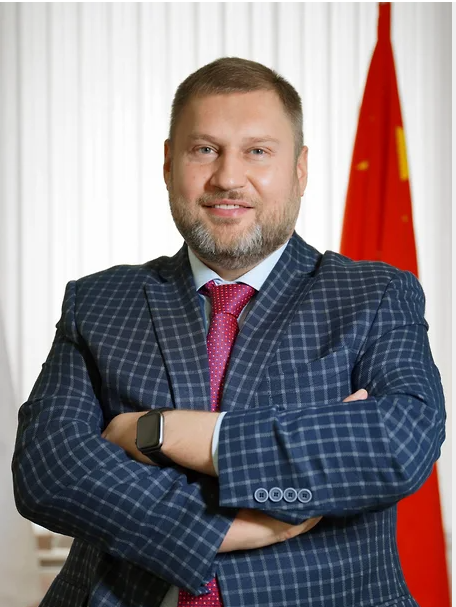
Joe Webster of the Atlantic Council: He wants the West to impose sanctions on Kyrgyzstan. His views are likely to ostracise him from the very countries in which he claims professional expertise.
However, there another issue, that Webster, and Western politicians in general conveniently ignore when talking about sanctions. And that is the impact upon their own economies. Webster states that “Many Western firms with operations in China are notionally exporting to Kyrgyzstan, but with the understanding that these goods will ultimately arrive in Russia. The status quo allows them to trade with Russia with a fig leaf of deniability. By placing Russia-like sanctions on Kyrgyzstan, Washington and Brussels can significantly disrupt China-to-Russia trade via the indirect route.”
Assuming that the EU did remove the ‘fig-leaf of deniability’ and place bans on its own corporations supplying goods to Russia via third countries, there would be immediate negative repercussions. Russia is still a lucrative, medium sized consumer market – its economy is also growing. Cutting off all European-owned manufacturing destined for Russian markets would have significant downstream economic effects.
Productivity & Profitability
Production would decrease, as would profits, as less goods would be manufactured.
Stock Market Declines, Shareholder Unrest
Declining corporate profits would negatively impact stock market valuations, shareholders – some of which are sovereign funds – would be unhappy with reduced dividends.
Unemployment
Workers would have to be laid off, inevitably creating social political dissatisfaction.
Drop In Fiscal Income, Increasing Social Welfare Burden
With lower corporate profitability, government fiscal income from taxes would decrease, while at the same time, an increase in social welfare spending would occur as a result of increased unemployment.
These negative scenarios would all create problems for incumbent governments, with their political popularity decreasing – an effect we are already seeing across Europe. We wrote to Joe Webster outlining these scenarios, as he hadn’t made these observations himself. Instead he has called purely for the cessation of EU owned, third party county, exports to Russia and for sanctions to be placed on Bishkek. He replied, calling us ‘trolls’ and ‘uninformed’. Readers can make up their own minds about the credibility of Western analysts possessing such attitudes when discussing the impact of sanctions.
Webster, and analysts like him pursue an academic style that allows no attempt at any debate, only offering immediate rebuttal. It indicates that Western analysts believe they are always correct and any other perspective is completely, wrong. Regrettably for the likes of Webster, such opinions are neither scientific, nor well researched. This may have future implications.
Summary
The West, and especially the European Union has got itself caught in knots over its imposition of sanctions. Joe Webster is a typical example of an analyst whose actual analysis goes little further than a belief that sanctions cure all trade ills – but does not think through the consequences. He is far from alone, yet as we have explained, the economic and social reality is rather more complex.
Unless a change in these attitudes begins to arise, change will be forced upon these political views. It is a process that may already be underway. The current crop of political thinking has been one-sided, and remarkably basic, with an overarching view that politics takes precedence over trade. The Achilles heel in this position is that democratic governments rely on businesses to conduct trade in order to levy taxes and then uses that money to support their societies. In Europe, it seems that governments are already running out of money and have spent what should have been income for their own citizens on Ukraine. Would further preventing their own businesses from conducting exports to Russia, even via third parties, be the only thing to do at this juncture? Is it completely wise to be beating up countries such as Kyrgyzstan on suspicion of acting as a go-between China and Russia?
Clearly, more thought needs to be put into resolving these issues. The ‘sanctions as a cure-all’ opinion is becoming increasingly shrill, and increasingly misrepresented. Even more suspect is the fact that no Western government asked their tax-paying voters if it was prudent to act in such a manner. The democratic voice as concerns any debate as to spending hundreds of billions of dollars of tax-payers money by both the United States and European politicians has not been referred to.
If more thought is not given by the West in resolving its difficulties with Russia, over time, the types of views expressed by the likes of Joe Webster will eventually become redundant. The harsh reality is that political views cannot be indefinitely extended without fiscal income, regardless of what todays politicians and analysts suggest. Careers are likely to be short-lived. Without political conflict with Russia, many political and pseudo-analytical careers will be over.
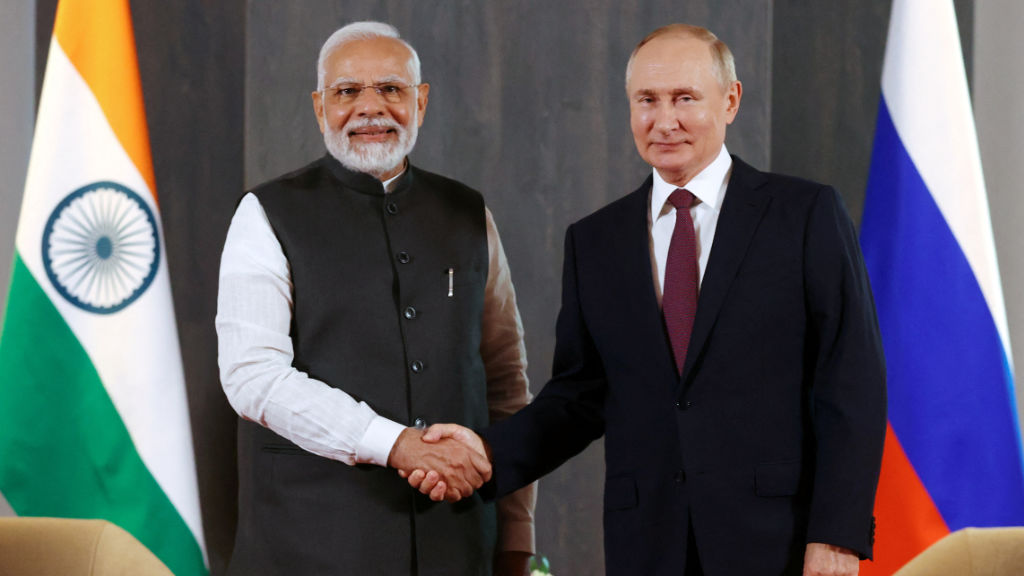
The newly re-elected Indian Prime Minister Narendra Modi is to visit Russia on July 8th, according to Indian news media. It will be his first trip to Russia for nearly five years and comes as Indian trade with Russia is hitting new highs, while BRICS collaboration is intensifying.
Modi’s visit comes a little over three weeks since the BRICS Ministers of Foreign Affairs met on June 10 in Nizhny Novgorod.
A significant part of Modi’s tip will be to discuss trade payments and the potential for a mutual BRICS settlement scheme. A ‘BRICS Bridge’ mechanism has been discussed which would be underpinned by members pledging 40% of reserves in gold and 60% on national currencies. India has a somewhat unique position in its trade with Russia as it buys far more from Russia than it sells, leading to Russia having over-capacity in Indian Rupees which it finds difficult to offload.
Trade between India and Russia stood at US$65.7 billion in the financial year ending March 2024, an increase of 33% over year end March 2023 (India employs an April-March financial year).
Modi will also likely discuss further expansion of the BRICS group itself, with the annual BRICS meetings due to be held in Kazan in October. A further 30 countries have applied to join, although new members approved during the Kazan meeting will probably see about five or six given the go ahead.
Modi will also be discussing energy, and not just oil and gas imports, which currently make up the bulk of bilateral trade. Six nuclear power plants, each of 1000 MW capacity are being constructed in Kudankulam, Tamil Nadu with Russian participation. The first is already producing electricity to its full capacity, while the second is in the process of achieving criticality. Excavation work for construction of the third and fourth plants are at an advanced stage.
Further Reading
Russia-India 2024 Trade and Development
India’s bilateral trade and development with Russia is extensively discussed in our 2024 Russia’s Pivot To Asia guide. This is a complimentary download and may be accessed in English here and in Russian here.
The former Mercedes-Benz plant in Yesipov near Moscow will begin mass production of China’s Exeed cars, the premium brand of Chinese automaker Chery under a contract assembly agreement starting in July. Mercedes-Benz exited the Russian market in April 2023, selling their shares in the Yesipov factory to the Russian local car dealer Avtodom. Interestingly, Mercedes-Benz inserted a buy-back cause into that agreement.
The serial assembly of the Exceed brand will begin with the VX model, with the first cars from this production beginning in August. Chery’s agreement with Avtodom sees the company being paid for each car it assembles, at about ₽45,000 per car kit. A second model should hit the production line in February 2025.
Chery have received declarations of conformity for its mass-produced Exeed M51 (model TXL) and M52 (model VX) cars, with the parts to be manufactured by the company in China, and assembled in Russia. A wider range of Chery models and sub-brands equipped with the same SQRF4J20C engine used in the Exeed VX and TXL models, as well as the Jaecoo J8 and Chery Tiggo may also be produced at the plant.
Avtodom general director Andrei Olkhovsky has said that the company has several parallel projects in place for the development of the plant with agreements already in place. “The number of partners is much larger than just the Chery group. We are ready to assemble for the Chery Group under contract as well, if necessary,” he said. The plant will simultaneously produce four to six models, he said.
According to Avtostat, Exeed is now the most popular premium brand in Russia. Sales of Exeed reached almost 3,900 units in May, while the agency estimates that sales in the entire premium segment reached 11,000 units for the month.
Moscow region governor Andrei Vorobyov said in June that the “first investor” at the Yesipov site had already assembled the first 300 cars last month. “This is a serious company; one of the leaders in the Chinese market. It wants to reach a volume of 100,000-120,000 units, including electric cars,” Vorobyov said in an interview at SPIEF-2024.
Other players are also interested in producing Chery vehicles. AGR Group (which combines the former Russian assets of Hyundai and Volkswagen) also received a declaration for the serial production of Chery cars at the former VW site in Kaluga. The declaration states that the car model planned for production is a T31 type car, with AGR indicated as the manufacturer.
Chery has repeatedly stated that production localization is a possibility. Chery Automobiles Rus reported in 2023 that it is not abandoning these plans and vehicles are being imported from China “while the company searches for and prepares production sites.” So far, Chery cars have been produced at the former Nissan plant in St. Petersburg, now part of AvtoVAZ, but under a different brand and without Chery participating in sales of the vehicles.
Avtostat’s Sergei Udalov said that the organization of any type of vehicle assembly line creates localization potential, which would make it possible to claim benefits and compensation, as well as to supply premium cars to government agencies. The premium segment is traditionally more stable and reacts more slowly to changes in the market, which makes volumes relatively predictable, he said.
Since Western auto manufacturers exited the Russia market, Chinese brands have leapt from a 5% to a 45% share of the entire Russian auto market. Last year ended with a 57.8% car sales market increase in Russia to 1.13 million units, following a 2022 slump as Western brands exited.
This year, new passenger car sales in Russia were up 109.4% year-on-year in March to 146,526 units, showing Western sanctions levelled following its conflict with Ukraine are no longer impacting the Russian market. Russia’s Q1 2024 tally is up 93% over 2023 suggesting Russian new auto sales will reach about 2 million for the year, roughly the same size as the UK new auto sales market.
The delayed Kuragino-Kyzyl railway line, which is planned to run from Krasnoyarsk Krai to Tuva in south-eastern Russia, close to the border with Mongolia, has been proposed to be constructed and now extended to Urumqi, the capital of China’s Xinjiang Province. The announcement was made by Vladislav Khovalyg, the head of the Republic of Tuva, at the XI International Siberian Transport Forum.
Investments in the project will approximately amount to about ₽1 trillion (US$11.3 billion). The railway will be able to handle up to 40 million tonnes of cargo per year.
Khovalyg said “Today at the meeting of the Coordinating Council of the Interregional Association of Economic Cooperation of the Subjects of Russia Siberian Agreement on transport, we will also talk about the expansion of the Kuragino-Kyzyl railway project to the Chinese city of Urumqi. The project is very promising within the framework of the development of the Central Eurasian Transport Corridor, the creation of which was proposed by Russian President Vladimir Putin. The expansion of the line will create 40,000 new jobs.”
The original planned construction of the Kuragino-Kyzyl line, which was planned to be the first railway in Tuva, began back in 2011. However, only about 1 km of tracks were laid, after which the project stopped due to lack of funding. The total length of the railway was to be 411 km.
In 2018, a concession agreement was signed between TEPC Kyzyl-Kuragino and Roszheldor to continue construction, but in April 2021, the project was again postponed.
However, the regional governments of Tuva and Krasnoyarsk have appealed to Moscow to once again begin the construction of the railway. There are new grounds for the implementation of the project. It was initially envisaged that the railway would mainly service the development of the Elegest coal deposit. Now it is planned to extend it via Mongolia at Tsagan-Tolgoi, to China. It would be linked with the North Siberian Railway, the construction possibilities of which were commissioned by Russian President Vladimir Putin in October last year.
In March of this year, it was reported that both the North Siberian Railway and Kuragino-Kyzyl Railway had received a preliminary assessment concerning the feasibility of construction. The Russian Investment Fund is believed to be involved in financing the project should it go ahead.
The railway would provide direct access to markets in China for Siberian goods, and vice versa.
Urumqi is the largest city in Central Asia and is also linked to China’s national rail network as well as to Kazakhstan. Kurugino is planned to be linked to the North Siberian Railway which in turn would extend deep into the heart of Siberia and intersect with the Trans-Siberian Railway which bisects Russia from Moscow to Vladivostok.
Russia and North Korea have signed an agreement to build a cross-border road bridge. Currently, the only bridge between the countries, which crosses the Tumen River, is the Friendship Railway Bridge, which was opened in 1959.
The new road bridge will expand transport connections between Russia and North Korea. The proposal has been on the table for several years, however there has been scepticism about the need to construct another bridge, as North Korea is under sanctions and there is not enough trade between the countries to justify another crossing.
However, with the extensive sanctions regime now in place against Russia, the situation seems to have changed. We noted in our earlier report on Russia-North Korea 2024 trade that the recent bilateral meetings between the two sides during President Putin’s visit to Pyongyang last week that the delegation included Russian and North Korean transport Ministers.
Located immediately downstream from the China–North Korea–Russia tripoint, the existing bridge is the sole crossing point on the 17 km long North Korea–Russia border. Planks are laid between the tracks making the crossing of road vehicles possible, but it is primarily a rail bridge. A specific road bridge will make road haulage border crossings far easier.
The bridge would also link with the Baranovsky–Khasan railway line, which leads from the Trans-Siberian railway in the south of Baranovsky on Russia’s Pacific Ocean coast to the North Korean border at Khasan, which continues into North Korea with the Tumangang railway line. That extends as far as the Raisin-Sonborg Special Economic Zone, North Korea’s primary manufacturing hub. The route is mainly operated by regional trains that connect places along the route with Ussuriysk, with connections to the Trans-Siberian Railway, as well as the regional Russian ports of Vladivostok and Khabarovsk.
While exact figures remain hard to obtain, bilateral trade last year reportedly reached US$120 million, marking a substantial increase from the past years. Yet, when contrasted with North Korea’s trade volumes with China, this figure might seem modest. Nevertheless, the growing trajectory is undeniable and given military-grade barter trade between them, can probably be valued in the billions of dollars today with the new bridge planned to facilitate this trade.
What is the current situation with receiving payment from Russian legal entities in Chinese banks?
“Briefly describing the situation is quite difficult and varied. Some banks do not complicate payments, others strengthened their verification, others have curtailed work with Russian banks and businesses, while others study the possibility of working with Russia and discuss these issues.”
Do payment schemes work through third countries?
“Different banks have a different attitude towards them. For example, the agent payment scheme through the UAE works well, but through Kazakhstan, oddly enough, it began to act with interruptions. It is impossible to completely disconnect Russia from international payments. Russia has the SPFS financial messaging system, in which there are 160 foreign participants from 20 countries. Also, Russian banks through Chinese counterparties are working with the Chinese CIPS system. In the last couple of years, some businessmen have returned to cash payments. This is not entirely convenient but works. No-one has set a goal of absolutely cutting Russia off from international payments even in theory – at least for now. The departure (from global markets) of such an exporter (as Russia) will be a shock that no one needs.”
Who turns to the Russian IT companies for help with payments to China?
“I can’t name specific companies, but most of them belong to the category of small and medium enterprises. I note that cooperation between Russian and Chinese companies in IT has begun. In addition to the companies themselves, industry associations and retailers are also involved. Corporate business is reluctant to help, as it usually has counterparties abroad who are interested in developing cooperation, with powerful teams of lawyers, logistics, and financial specialists, and they can afford expensive consulting services. In this regard, SMEs have much less opportunities, so they need more support.”
Vitaly Mankevich, the Chairman of the Russian-Asian Union of Industrialists and Entrepreneurs
Russia is preparing to cooperate with China in the production of microelectronics. Did Russian processor developers contact you on the organization of production in China?
“Now it is expensive to produce something to order, including microelectronics and processors, and in particular in China. It is easier to buy finished products that can be adapted to customer characteristics. Chinese companies are eager to adapt their products, including microelectronics, to the Russian market. At the same time, to establish communications in the field of microelectronics, Russian organizations are registering businesses in China, now we see great demand for this service from the business. Typically, such a company employs local Chinese who are ready to travel to any city in China at any time and explain the wishes of the customer.”
Due to the increase in sanctions, has the number of requests to the RSPP to organize access to the Russian market by companies from China, India and other Asian countries decreased?
“We have not observed a drop in interest towards Russia from companies from friendly Asian countries. On the contrary, their interest in industries that were affected after the departure of Western, Japanese and South Korean brands is growing. There are certainly sanctions risks for Asian companies due to cooperation with Russian organizations. But Chinese companies have been working with sub-sanction countries — Iran, Venezuela, North Korea for many years, they have enough experience. To be successful, you need to make the Chinese company a profitable offer — for price, volume, conditions, and so on.”
How are Russian electronics developers looking for Indian intermediaries?
“With Indian companies, it is another story — under sanctions is difficult for them to work. And at the same time, they do not trade in sub-sanction goods with Russia. In general, deliveries from India to Russia are beginning to reach relatively serious volumes. However, the West puts much less pressure on Indian companies, and there is some encouragement in this.”
Russian and Chinese IT companies have begun to create joint ventures for the production of drones, and computers. How do you rate this trend?
“The trend is expanding. Chinese partners are trying to make the most of all the advantages of Russian Special Economic Zones, the tax benefits of regions and other incentives. I think by 2030 we will see 6–7,000 of these focused companies from the small IT business sector. First of all, we are talking about drones, and here cooperation is carried out at the level of not only companies, but also universities and regions. A year ago, during a trip to China, our Russian Prime Minister Mikhail Mishustin named the production of civilian drones among the most promising areas of cooperation between Russia and China. China is a world leader in this sector. Most promising I see the creation of component production based in Russia’s economic zones.”
What other areas are of interest to China?
“Chinese partners are interested in idle capacities abandoned in Russia by the Western companies who exited the Russian market. In general, Chinese entrepreneurs are very keenly interested in everything that can be saved on: the cost of production in its production in Russia is much cheaper. With a high degree of probability, the same thing will happen in the field of electronics, for example, household products, as well as in the production of computer components.”
Further Reading
Russia’s 2024 Trade and Development With China and India
Our 2024 Russia’s Pivot to Asia guide contains extensive discussions and analysis about Russia’s trade with China and India. It is a complimentary download and can be accessed in English here and in Russian here.
Logistics terminals in Bilibino and Arkhangelsk, each with the capacity to handle 36,000 tonnes of cargo per annum, will be build by Russia’s Promstroyarktik LLC , according to the Chukotka’s governor’s office.
The project will be carried out with the Far East and Arctic Development Corporation (FEDC) under the Arctic Free Trade Zone, which offers preferential tax treatments. The terminals are scheduled to open in 2026.
Bilibino is in Russia’s Chukota region in the Far East, while Arkhangelsk is on the White Sea in the West, 1,250km north of Moscow. They represent the beginning and the end of the Northern Sea Route. They are intended for the transportation of cargo both along the route and will service trucking companies in the Arctic Zone. The warehouse complexes will consist of outdoor and indoor storage where they will receive, ship and transfer cargo between various multimodal types of onward transport. The first floating nuclear power plant, the Akademik Lomonosov, in Chukotka was launched in 2020 and provides 70 MWe power and heat to the nearby coastal areas.
“With the development of the Bilibino Port, Chukotka will receive have a significant increase in the shipments of food, construction materials and fuel, including year-round, an increase in competition. And, consequently, this means a decrease in prices for logistics, faster delivery and a decrease in the cost of goods. Furthermore, this is investment in infrastructure, meaning the creation of new jobs,” Chukotka Governor Vladislav Kuznetsov said.
The economic relations between Russia and other EAEU countries with Azerbaijan, are increasingly active and are forming a common and mutually beneficial economic space, despite the fact that Azerbaijan is not part of the Eurasian Economic Union (EAEU) trade bloc.
An accelerating growth in trade turnover between Azerbaijan and the EAEU, coupled with over 50 joint investment projects in about 20 industries are underway in either EAEU and Azerbaijan. Two-thirds of these projects are EAEU investments into Azerbaijan. The EAEU includes Armenia (one reason for Azerbaijan’s reluctance to join), together with Belarus, Kazakhstan, Kyrgyzstan and Russia. It fills ana economic space between Eastern Europe and West China.
The formation of this space is also facilitated by the participation of almost all the EAEU countries and Azerbaijan in the North–South International Transport Corridor and the Eurasian RailwayAgroexpress, which delivers a high-speed supply of agricultural raw materials and ready-made food to Asian markets and especially China.
Moreover, with the developing participation of Iran in these trade corridors, Baku, as Azeri Prime Minister Ali Asadov stated in Minsk in early June, is ready to develop mutually beneficial cooperation with the EAEU member states in ensuring food security.
The EAEU countries now account for about 40% of Azerbaijan’s total imports of fresh vegetables, fruits and berries, fresh herbs, and processed fruits and vegetables, while it is also a major buyer of Azerbaijan’s petrochemical products, providing added value to Azerbaijani industries. This is in contrast to the EU, which is mainly interested only in Azerbaijani oil and gas raw materials with little to no added value.
However, there is still more work to be done on behalf of the EAEU. Speaking at the Belarusian-Azerbaijani economic relations meeting on June 11, Belarus President Alexander Lukashenko said that “Our trade turnover is not bad. But it is unbalanced: we need to buy more goods in Azerbaijan.” Both Belarus and Azerbaijan said they are planning to more actively exchange technologies, including in the agro-industrial space and in the military-industrial area.
Concerning Azeri-EAEU transit and infrastructure, Azerbaijan’s geographical location contributes to each of the EAEU countries employ routes passing through the country as important logistics corridors for the export of their goods to other overseas markets.
Azerbaijan As A Transit Hub
In 2023, transit cargo flows between Azerbaijan and Russia increased by 174%, and between Azerbaijan and Kazakhstan over 400%. This trend is continuing. Transit cargo flows along the North–South Middle Transport Corridor through Azerbaijan (including its Caspian ports and ferries) more than doubled in 2022-23. Accordingly, Azerbaijani transit revenues are increasing due to the growth of transit cargo transportation, primarily with the EAEU countries.
Azerbaijan also participates in the Russia–Transcaucasia–Iran electric power corridor (in both directions) with the prospect of this project reaching onward to Iraq and Syria by the 2030. Since 2015, a new, moreover, indefinite agreement between Russia and Azerbaijan on the parallel operation of national electric power systems has been in force, which prevents electricity shortages in both countries in advance through mutual supplies. With a single electricity market in the EAEU planned from 2025/26, Azerbaijan’s electrical grid will be connected to this resource.
Azerbaijan-Russia Trade & Investment
Yusif Abdullayev, Executive Director of the Azerbaijan Export and Investment Promotion Agency said at the recent SPIEF concerning Azerbaijan’s cooperation with Russia that “Our relations are at their peak. There is practically no area where we do not cooperate. About 1,300 Russian companies are registered and active in Azerbaijan. Russia has invested about US$10 billion in Azerbaijan over the past 30 years, US$2.5 billion of which is in the non–oil and non-gas sectors. Plus, Russia ranks first in Azerbaijan’s non-oil exports. It is noted that in just 4 months of this year, we exported goods to Russia worth US$350 million. The total trade turnover for the first four months of 2024 is US$1.3 billion. These are serious figures.”
Dmitry Volvach, the Russian Deputy Minister of Economic Development stated that “Over the past one and a half years, the checkpoint capacity at our mutual borders has been increased many times. Instead of queues of transportation vehicles, there is an increased turnover, an expanded and rich assortment, and business prosperity. This is a landmark example of serious cooperation.”
Dedollarisation
Mikhail Galuzin, the Russian Deputy Minister of Foreign Affairs said that “We feel Azerbaijan’s understanding and support in creating an environment that would be independent of negative external influences. This is the creation of an independent financial system for mutual settlements, and transition to using our national currencies.”
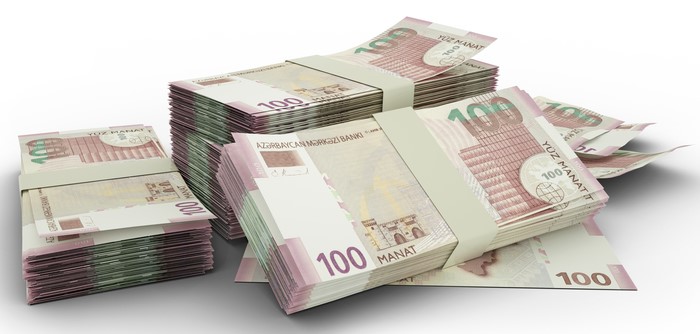
Concerning de-dollarisation in trade, the Azerbaijani Manat is stable and liquid, due to the regulation of its exchange rate by the Azeri Central Bank. The exchange rate of one Manat against the Russian Rouble, the US dollar and the euro in mid–June 2024 was stable at 52.4 (Manat to Rouble). In fact, the Azerbaijani Manat has been used for many years in mutual settlements with most post-Soviet countries and is present in the exchangers of most countries of the former USSR.
Further Reading
Russia-Azerbaijan 2024 Trade & Development Dynamics
We comprehensively discuss Russia’s bilateral trade and investments with Azerbaijan in our 2024 Russia’s Pivot To Asia guide. That is a complimentary download and may be accessed in English here and in Russian here.
Niger, in West Africa, has just withdrawn the operating licence for France’s Oranco uranium mine in the country. France is heavily reliant on the mine to support its own nuclear energy programme. Niger is likely to redirect this facility to Russia, and if as expected it does so, will signal another trend of Russian leadership in the global SMR industry.
Clients include countries throughout the Global South
Rosatom is currently leading the way in developing global Small Modular Reactors (SMR), with investments being made globally amidst multiple calls for the technology to be used throughout Russia and the Global South. One of the key points that President Putin has been discussing in Vietnam for example is the establishment of a joint nuclear technology centre, according to Aiyana Investment Research.
Russia’s Domestic Switch To SMR’s
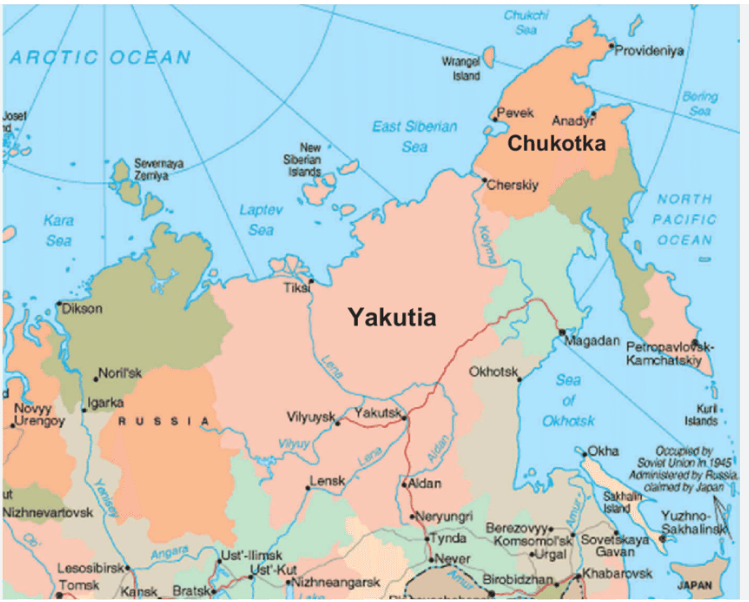
Examples of Russian domestic development came after President Putin visited Yakutia in the Russian Far East, the day before he visited North Korea. Yakutia is strategically important as a potential energy distribution hub for the Russian Arctic and Russian Far East, both of which need rapid development in order to cater for Russia’s move East and away from Europe.
The head of the Yakutia Government, Aisen Nikolaev, proposed at a meeting with Russian President Vladimir Putin that Russia establish the industrial production of small nuclear power plants, as it would allow for savings on the delivery of fuel to small settlements.
Nikolaev said that “I highlighted low-power nuclear power plants. Soviet developments already brought them to fruition, and they meet all modern safety requirements. They are unique in that their thermal and energy power is small, at 10 MW each. And if it were possible for a time to produce them not one-by-one, but by means of specific industrial production, then I think it would radically change the situation in hard-to-reach territories.”
Small nuclear power plants are ideal for northern towns such as Tiksi, which is expected to develop as a service port for the Northern Sea Route yet needs vastly improved energy efficiency.
“We spend a huge amount of money on importing fuel. We deliver it to small settlements 2-3 years in advance. They are insane expenses; it’s even scary to even say. And these small nuclear power plants could just solve everything,” Nikolaev said.
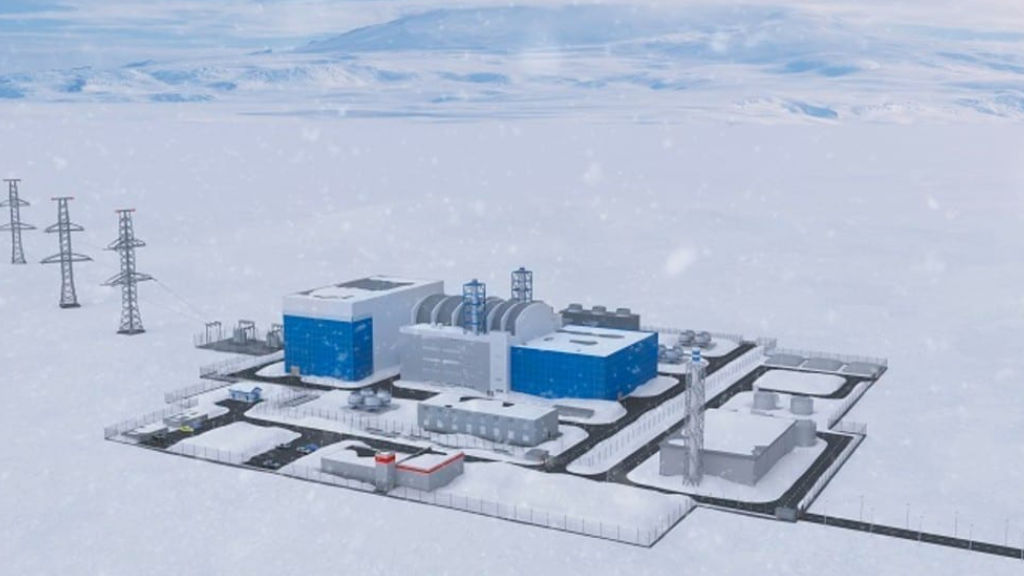
A new low-power land-based nuclear power plant is planned for construction this year at Ust-Kuyga, in the Sakha Republic (also part of Yakutia) on the River Yana, about 300km east of Tiksi. It will provide heat and electricity to the Kyuchus, Deputatskoye and Tirekhtyakh fields, industrial enterprises, social facilities and housing in the Ust-Yansky and Verkhoyansk regions. Ust-Kuyga is expected to become an inland service centre for ports such as Tiksi.
Russia’s SMR Exports
There is increasing market acceptance of Russian SMRs, despite Western geopolitical pressures. Numerous countries in Central Asia, including Uzbekistan, which agreed an SMR investment with Rosatom, using a RITM200 reactor commissioned to build it by 2026. Part of the Russia tech is to use existing nuclear waste to power up the basic plants, an effective way of re-cycling what was once thought of as toxic.
Rosatom is already building a SMR in Rooppur, Bangladesh, an investment to Dhaka of US$12 billion. Russia is currently involved in more than a third of the new reactors being constructed around the world at present, including in Belarus, Brazil, China, India, Iran and Egypt.
In Turkiye, Russia is building the country’s first nuclear power plant, a 4,800MW facility in Akkuyu which is expected to begin producing electricity this year. Russia often uses a build-own-operate model, which involves an even higher degree of co-operation as Rosatom provides everything, including the plant’s staff, during the lifetime of the project.
Other countries are taking notice. African, Asian and Latin American nation are also looking hard at Russia’s SMR’s, with numerous nations, including countries as diverse as Burkina Faso, Cuba, Iran, Guinea and Mali – among others – all interested in Russia’s SMR technologies. Wherever Russia’s busy Foreign Minister, Sergey Lavrov goes, the subject of energy – and increasingly nuclear – is at the top of the agenda.
Most recently in June, The Republic of Guinea in West Africa and Rosatom signed a MoU to cooperate on the development of floating power units using RITM-200 reactors to supply electricity to both to industrial and domestic consumers in Guinea. The first floating power plant, the Akademik Lomonosov, in the Chukotka region of Russia, was launched in 2020 and provides 70 MWe power and heat to the nearby coastal areas. Several North, West and East coast African countries appear poised to follow suit.
In 2023, Rosatom also began discussions with Nicaragua, Uzbekistan and Tajikistan about establishing nuclear technology centres. In Bolivia, the company completed a nuclear research centre in 2023 and, a few months later, secured a lucrative contract for lithium extraction.
However, the switch to SMRs doesn’t stop there. Global shipping is poised for a radical overhaul with all major cargo ships intended to be nuclear powered by 2035. Russia is already committed to delivering 160 Arctic class ships by 2030, while Russia’s general freight shipping, as used by companies such as FESCO, with a fleet of 30 large container ships, will also need upgrading.
While Russia currently leads the way in SMR technology, competition is on the horizon. Other style reactors are also being developed in the West, with the ‘holy grail’ of decarbonisation thought to be Thorium (Uranium 233) powered Molten Salt Reactors (MSR). To illustrate the depth of these coming changes, and the amount of money to be invested in them, it is worth looking at Bill Gates most recent comments on MSR technologies.
Russia has so far remained quiet about its own Thorium and MSR reactor developments – but for now, the West remains in catch up phase as concerns competing with Russia exporting its SMR technologies and currently dominating global uranium enrichment – 27% of the global total.
With the overseas SMR plants being managed by Russia technology experts during their lifespan – about 70 years – geopolitical risk is minimised, while that long project maintenance term allows Rosatom to offer attractive rates of investment – up to 90% financing for nuclear projects, with repayments spread over decades at minimal interest rates.
This intelligence gives very strong clues as to why Russia is so popular in the emerging world – it is sharing technologies, know-how and the financial risk to enable their own development.

 Русский