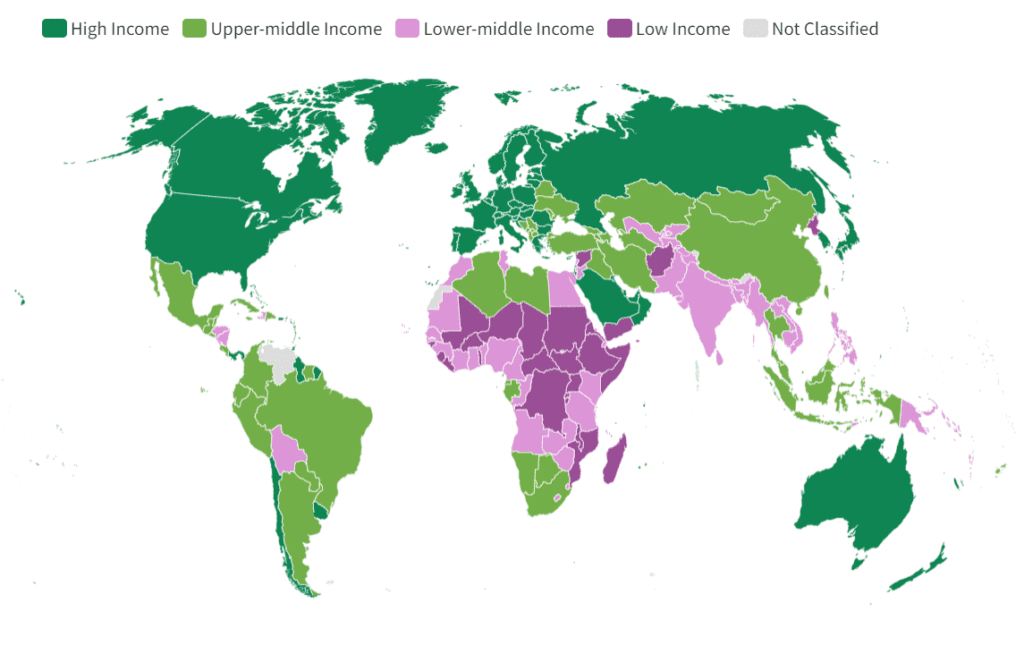
The World Bank has recognised Russia as a high-income nation in its official global rankings, after stating that the average Russian gross national income per capita in Russia is US$14,250, which at current exchange rates, in local Ruble terms is ₽1,260,940.
The World Bank Group assigns the world’s economies to four income groups: low, lower-middle, upper-middle, and high. The classifications are updated each year on July 1, based on the GNI per capita of the previous calendar year. GNI measures are expressed in United States dollars using conversion factors derived according to the Atlas method, which in its current form was introduced in 1989.
However, the Atlas method in itself may not necessarily be an accurate indicator as it favours the exchange rate used to convert local currency units to US$ as an average. The problem with this measurement is that it follows a different measurement than pure income levels and that the United States manipulates exchange rates with specific countries – including Russia.
If we were to take the ‘Purchasing Power Parity” (PPP) model, which compares a basket of goods and the costs to purchase them in a specific country, and the costs to purchase them in the United States, this provides a more accurate assessment of local wealth. In Russia’s case, the US$14,250 annual income mark would require a salary of US$47,261.50 in the United States to live to a similar quality of life. A useful global PPP calculator can be found here.
Source: The World Bank
The World Bank’s income classification aims to reflect a country’s level of development as a broadly available indicator of economic capacity. The World Bank categorizes countries with a high-income indicator when they pass a threshold of US$13,485.
It is notable that the World Bank status as concerns Russia comes after the West imposed massive sanctions upon the country and have tried multiple ways to disrupt its economy. This implies that the latent wealth of Russia’s economy, were sanctions not to have been imposed, would have been even higher.
The data is also useful to assess the longer-term consumer power of Russian consumers, a strong demographic requirement for both domestic and foreign manufacturers and exporters looking to access the domestic Russian market. China’s auto manufacturing industry for example has leaped from a 5% market share in 2021 to 45% today, with Chinese vehicles both being imported directly or now assembled in Russia. Russian domestic manufacturing of Chinese auto brands is the next step in this process, however the financial aspects and returns on investment need to be based strongly on Russian consumer spending power.
Russia’s Pivot To Asia can assist with Russian market research. Please contact us here.
The number of passengers for Russian airlines is expected to reach about 98.1 million over 2024, according to Russian Federal Air Transport Agency (Rosaviatsiya) head Dmitry Yadrov. This ranks Russia as the world’s third largest passenger aviation market, behind the United States and China, and just ahead of India.
Yadrov said that “For now, we are approaching the figure of 98.1 million. There will be a clearer understanding in August-September what will be the final figure of passenger traffic for Russian civil aviation by the end of 2024. Passenger transportation rose 8% to 40.5 million over the first five months of this year.”
Ireland is the highest European carrier with 78 million passengers, followed by Spain with 43 million, Germany with 33 million, and France 32 million per annum. Data is from the World Bank.
The forecast for Russian passenger traffic depends on what S7 Airlines decides to do with its fleet of 31 Airbus A320neo aircraft, which have Pratt & Whitney engines. Neither Airbus nor Pratt & Whitney are servicing these under sanctions imposed on Russia. This may reduce the number of operational flights as Russia looks to replace them with Sukhoi Superjets, powered by PowerJet SaM146 engines, however the latter is also restricted in part as the French manufacturing partner has also pulled out of maintenance and development contracts.
All Russian airlines will carry 98.1 million people this year, including 77.3 million domestically and 20.8 million internationally, under a comprehensive program for developing Russia’s aviation industry. Bottlenecks however still exist in replacing Western manufactured aircraft and engines, which may continue into 2026.
The first batch of Belarusian-built VGV SUZ crossover vehicles have been delivered to Russia, representatives of VGV have stated. “The first batch of VGV crossovers has arrived in Russia, the cars have passed customs clearance. This stage was the final one before the mass deliveries of cars to Russia. These VGV crossovers have undergone a large-scale adaptation for the Russian car market.”
The vehicles being delivered are the medium-sized VGV U70 Pro and U75 Plus crossovers, which were full-cycle manufactured at the Belarusian Unison plant.
The arrival on the Russian market is another example as to how Chinese auto manufacturers are entering into the Russian domestic – and related markets – after the withdrawal of most American and European manufacturers. We previously discussed the Chinese takeover of the previous Mercedes-Benz plant here.
As part of the adaptation for the Russian market in the U75 Plus and U70 Pro, among other redesigns, the suspension was recalibrated, the algorithms of the engines and hydromechanical automates were optimised, the media centre was fully Russified, the power units were adapted to AI-92 gasoline, and an expanded winter package was included in the equipment.
The Chinese company VGV, is a division of the manufacturer of Sinotruk trucks and specializes in passenger cars and light commercial vehicles, announcing its entry into the Russian market in December 2023.
The Belarusian Unison Plant was originally a JV between the US Ford Motor Company, the Russian Lada importer Lada-OMC and the Belarusian government, and was established in Apčak, near Minsk in Belarus. Ford had invested US$10 million in building the plant, which at the time was the most expensive Ford investment in Europe at that time. The Joint Venture existed from 1997 until 2000 when Ford exited due to low sales. It has now passed into British-Belarusian ownership and is operated as a vehicle manufacturing and assembly plant, including work with Chinese brands.
The role of national currencies in global trade is changing, as countries look at ways of at least partial minimisation of exposure to the US dollar. We discuss the evolutionary trends.
Two main global financial evolutionary events are happening at the same time: the first is changes to the role of the US dollar, which will prompt additional changes, and the second is technology and the digitisation of financial transactions. Both are intertwined, and neither have precedent, implying future US and global fiscal uncertainty.
The US Dollar Debt
In terms of the US dollar, the United States itself has largely been responsible for negative developments in terms of maintaining its credibility as a global currency. This has happened for four main reasons: One, the US has acquired so much US-dollar issued debt – US$32.72 trillion – that it appears almost impossible for this to ever be paid back. Quite how this can be managed in a responsible manner is the subject of much debate. But it has created a scenario where foreign governments are increasingly wary of investing in additional US dollar debt until a management system is put in place that will be able to support such a load. Without this, the US dollar will become prone to increasing shocks, leading to uncertainty and mistrust on the global financial markets. No solution has yet been proposed to correct this. The US could also default on its debt, leading to US bond holders carrying losses on their investments. This would have huge negative impacts on global trade.
Printing More Dollars
Related to this is the second issue of simply printing of more US dollars to cover up the fiscal debt. Yet ultimately, this debases the actual value of the currency and encourages inflation. Doing so has become a US treasury norm, yet the longer such actions continue, the worse the ultimate damage to the US dollar will be. Some economists are predicting an eventual major crash, introducing a massive recession and a huge reduction in US – and global – asset values.
The US Dollar As A Weapon
Third, the United States has used the US dollar as a trade and geopolitical weapon. It has done this in two main areas, firstly by manipulating the US dollar currency exchange rates in order to damage other national currencies when the US wants to inflict fiscal punishments or seek trade advantages. It has systematically done this numerous times, to Venezuela, Iran, Turkey and Russia amongst others.
The Ultimate Punishment: SWIFT Disconnection
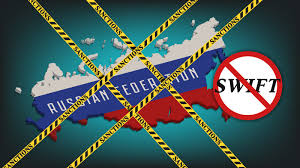
Fourth, it has also used the global SWIFT payment network as a switch to turn US dollar trade on and off according to its policies. The most notable economies to have been abused in this way are the Iranian and Russian economies. Other governments are becoming concerned that these punishments could in future be meted out to them, which also creates mistrust and fear of US dollar over-exposure. Any one of these problems are serious. It appears ultimately unlikely the United States will be able to fend off the repercussions of them all. In short – the United States has massively over-extended itself and damaged its own reliability as a global trade partner.
Achieving Currency Balance To Minimize Risk
Counterbalancing each of these is therefore a matter of some debate – and urgency – amongst other countries as they begin to look for alternatives and a safe place to hide should the US dollar collapse and the US economy go into a severe recession. There is no doubt that as and when this happens, global trade will also suffer, especially if the US economy can’t afford to buy. This is manifesting itself in several ways. Most notable is Russia, whose US-linked trade and US-dollar holdings are at record lows. Moscow has effectively inoculated itself from any future problems with the United States economy. Other countries are doing the same: China, although it finds it difficult to wean itself off US export dependency, is slowly reducing its US exports and looking to develop alternative markets – one of the main concepts behind its Belt & Road Initiative. China’s average monthly exports to the United States in the first four months of this year averaged US$32.25 billion, in 2023 they averaged US$35.5 billion. The main point for China is that it continues to look for alternative trade partners – like Russia, it has been busy in Asia, Africa, the Middle East and Latin America to do just this.
The New Emerging Regional Trade Blocs
Apart from shifting the trade focus away from the United States, other developments are occurring as well. These include a further three significant directions. First, the geopolitical evolution of trade blocs. The BRICS is most often discussed, but there is also the Eurasian Economic Union and Shanghai Cooperation Organisation that are relevant to Russia. There has been discussions about merging these. Other trade blocs have also become more prominent – for example the African Continental Free Trade Agreement, Latin America’s Mercosur, the Gulf Cooperation Council, South Asia’s ASEAN, amongst many others. All seek to promote inter-regional trade rather than specific US trade targets.
A Return To Gold?
Secondly, some of these blocs, including the BRICS, are discussing alternative currency platforms. For the BRICS, there are two considerations – one is as Russia is blocked from SWIFT and highly sanctioned, there is a need to find a way to pay Russia for its much needed energy resources and other products. Second is to encourage multilateral trade without recourse to the US dollar. Yet creating a new currency is a complex matter. Economies wax and wane and exchange rates vary. What security should be in place to support such a trade unit? With the US dollar supported by US$35 trillion of debt, fiscal academic thought is shying away from the US model meaning a potential return, at least in part, to real assets. One proposal for a unified BRICS trade unit is the “BRICS Bridge” allowing the ten current members to exchange units based 60% of their sovereign currencies and 40% backed by their gold reserves. Interestingly, Russia has some of the largest gold reserves in the world.
The Digital Currency Revolution
The third new influencer to come on the scene is technology. The mechanisms for providing digital currency transactions are already well known. Yet Central Banks are understandably reluctant to deploy these until all possible failsafe’s have been checked and made foolproof. That includes hacking, as well as fiscal warfare. However, numerous countries, including Russia, are in the process of conducting real-time trials. Launches are expected from 2025/26. How we physically transfer money will have changed completely by 2030. Who we transfer that capital too is also likely to change as the larger global community moves away from the United States and develops into a series of regional blocs, able to intertrade with each other without US dollar involvement.
But there is no need to feel the US will become estranged, at least not just yet. It has effectively captured the entire European Union as a market to feed on. But for Russia, and most other nations, there is a far bigger picture – where non-US dominated, global trade opportunities beckon.
Yakutia Railways has proposed the restoration of the Skovorodino – Reinovo railway, which would connect with the Russian Railways network and the Russia-China border crossing at Dzhalinda and Mohe in China’s Heilongjiang Province. That in turn links directly to the provincial capital Harbin, with onward links to Beijing and the Chinese national rail system. Mohe also runs services to Shenyang, an industrial city near North Korea, and Qiqihar, closer to Inner Mongolia. Shenyang is the provincial capital of Liaoning province and the largest city in Northeast China after Harbin.
Skovorodino is the administrative centre of Russia’s Skovorodinsky District, in the Amur Oblast. It is turn is linked by rail to Tynda, which is an important regional rail hub with connections to the main Baikal-Amur Mainline (BAM), which traverses Eastern Siberia and the Russian Far East. It is 4,324 km long and runs about 700km north, and parallel to the Trans-Siberian Railway.
According to Yakutia railway estimates, the reconstruction of the link, which would provide a cargo flow of up to 10 million tons per annum, would cost ₽4.2 billion (US$48.2 million). This can be provided by the Yakutia government in the form of cash and Russian Railways in the form of infrastructure. The thinking is that trade with China will continue to grow, and a new border crossing will be in demand.
The Dzhalinda border crossing with Mohe, which was operational until 2008, is not currently in use. Its restoration and development will open up new China market access for and to Siberia. For China, linking to the BAM railway through Mohe provides Heilongjiang, which is landlocked, with access to Russia’s Far Eastern ports with access to the Pacific Ocean.
Government fiscal income revenues from Russian imports will have declined in the West and increased in the East by tens of billions of dollars
Russia’s exports actually increased by US$31 billion after the West imposed trade sanctions, according to open-source intelligence calculated by Sputnik, itself based on data from Russia’s Federal Customs Service.
While Russia’s change to replace goods imported from the West was uneven, Western trade restrictions forced Russian companies to focus on markets in the Global South – with these new markets, such as China, and India among others having enormous purchasing powers.
Russia’s Exports
According to FCS trade statistics, Russian exports to unfriendly countries were uneven – while some items grew, others shrank. But overall, Russia saw an increase in exports compared to the pre-sanctions period, with companies earning an additional US$31 billion from trade with friendly countries, data from the Federal Customs Service show.
Western importers of Russian goods experienced an immediate downturn in direct Russian purchases valued at US$256.5 billion. Typically, these Russian manufactured goods would have also been marked up for resale to the retail sector in the EU and United States, denying their economies profit margins on that US265.5 billion. Typical profit margins vary from industry to industry, and can be as high as 100% for example on consumables. These Western governments would also have lost out on the non-collection of import duties, and VAT.
Fiscal Income Derived From Russian Imports
This data means that most fiscal income that Western unfriendly countries received as a direct result of previous Russian trade in goods has largely disappeared, with some estimates assuming this has dropped by 90%. Fiscal income as stated above is charged by importing countries from imposing import duties, which can vary considerably depending on the product, VAT (which is typically 12-20%) and profits taxes (typically 25-40%). These revenues have in essence been transferred away from Western exchequers to mainly Asian ones, with others in the Middle East, Africa and Latin America. This situation has not been commented on in the West, however the loss of this income to their economies also represents a significant income steam loss from the denial of Russian trade with that now falling into government exchequers from friendlier nations. Although difficult to quantify, these taxable revenues are also worth tens of billions of dollars and quite possibly into the hundred billion dollar range in terms of annual fiscal income value.
Despite Western media Gazprom rhetoric, Russia Is To Become China’s Largest LNG Supplier
Just a month after Western media took aim at Russia for not being able to reach agreement with China on increased gas supplies, Russia has announced that supplies of Russian gas to China via the Far Eastern route will start in 2027.
Western media reports of China’s alleged rebuffing of Russian gas are numerous but primary examples can be seen here, here, here, and here.
Many have also talked up the damage done to Gazprom’s business including allegations the company may never recover – see here, here, here and here.
Readers can make up their own opinions on the accuracy of Western media reporting on the issue, as Gazprom CEO Aleksey Miller made the announcement of increased Russian gas sales to China on Friday (June 28).
The Far Eastern route will deliver supplies of Russian natural gas from the shelf off Sakhalin Island to China. Moscow and Beijing had actually sealed an agreement for additional pipeline gas deliveries this route in February 2023.
According to Miller, the Far Eastern route will have an annual capacity of 10 billion cubic meters (bcm) once fully operational. The project involves the construction of a cross-border section across the Ussuri River between the already operational Russian pipeline and the Chinese city of Hulin.
Miller said that “With the Power of Siberia and the Far Eastern route reaching full capacity, Russia will become the largest gas supplier to China.”
Russia currently supplies gas to China via the Power of Siberia pipeline, a section of the so-called Eastern Route, under a bilateral 30-year agreement. Deliveries started in 2019, and the pipeline is expected to reach its full operational capacity of 38 bcm of natural gas annually next year, according to Miller.
Gazprom has been systematically boosting gas exports to China via the pipeline, he elaborated.
Moscow and Beijing are also nearing a deal on the construction of a mega gas pipeline known as the Power of Siberia 2. It will transport up to 50 bcm of gas annually from the Yamal Region in northern Russia to China via Mongolia.
Once all the pipelines are fully operational, the volume of Russian gas supplies to China could reach nearly 100 bcm annually.
“Russian gas is in demand in China,” Miller said on Friday, adding that in 2023 supplies exceeded contractual obligations by 700 million cubic meters. “At the beginning of this year, we continued to break records for daily exports to Chinese consumers.”
Natural gas consumption in China is projected to double by the middle of this century.
Denis Sassou Nguesso, the President of the Congo, has met with Russian President Vladimir Putin in Moscow, where Nguesso expressed his country’s interest in becoming a member of BRICS.
Nguesso stressed that the African country is interested in developing ties with the bloc, and said “I’ve heard about the BRICS+ format. So, if all these opportunities are available, why not? Congo would be interested.”
BRICS was founded in 2006 by Brazil, Russia, India, and China, with South Africa joining in 2011. Russia currently holds the BRICS chairmanship. The group expanded this year when Egypt, Ethiopia, Iran, and the United Arab Emirates became full members, although the BRICS bloc has ruled our further enlargement for the time being.
This year, Russia and the Republic of the Congo are celebrating the 60th anniversary of establishing diplomatic relations. In early June, Russian Foreign Minister Sergey Lavrov made an official visit to Congo, where he engaged in discussions with the country’s leadership. The talks centered on enhancing trade and economic relations, advancing energy sector projects, and strengthening military-technical cooperation.
We previously discussed Russia-Congo 2024 trade and developments in this article here.
The United States and United Kingdom have much to lose if the Kremlin downgrades relations.
The Kremlin said on Thursday (June 27) that Russia is considering a possible downgrading of diplomatic relations with the West due to the deeper involvement of the United States and its allies in the Ukraine war, though no decision has yet been made.
“The issue of lowering the level of diplomatic relations is a standard practice for states that face unfriendly or hostile manifestations,” Kremlin spokesman Dmitry Peskov told reporters when asked about the possibility of such a move. Peskov said that no decision had yet been made on the matter and that Russia was considering different ways to respond to the West.
The latest in a series of constantly damaging events to Russia’s multilateral relations with the West has come following two recent incidents, the West deciding to access Russia’s sovereign assets and give proceeds emanating from these to Ukraine, and the apparent discovery that US-made cluster weapons were found on a beach in Crimea along with allegations that the US military must have been directly involved in their use. Several Russian civilians were killed or maimed in that incident, which also prompted Moscow to summon the American ambassador.
In this article we examine the implications of what such a downgrade in relations would have.
Who are “The West”?
The term “The West” is bandied about as a specific group but it is not legally defined nor especially accurate. In the context of this situation, it currently describes countries that have collectively agreed to sanction Russia for its involvement in the Ukraine conflict. These include as the three main protagonists the United States, European Union and United Kingdom. However, Canada, Australia, New Zealand, Japan and South Korea are also involved. The situation has become complicated as not all EU nations are in full agreement on how to handle Russia – Hungary being a particular example.
This suggests that any Russian response would be with specific countries rather than blocs such as the EU itself. Japan and South Korea may also find themselves in the clear as both continue to trade with Russia, especially in energy. Russia’s principal targets in downgrading ties would probably be the United States, the United Kingdom, the EU in part, and possibly specific EU nations in full. Much depends on the outcome of some European elections with France for example having elections next month with a more pro-Russian candidate likely to do well. The answer then to this question is “it depends upon the circumstances” but would certainly target the United States.
Downgrading Russian relations with the United States
Such a move has never happened before, meaning there are various layers of uncertainty as to actual intent and the impact. However there appears little doubt that the Kremlin are working out all possible scenarios at this moment and will be prepared for the repercussions. However, the blanket use of sanctions upon Russia and the termination of SWIFT financial access have already meant that intended economic punishments, for the most part, have already been meted out by Washington. It also seems apparent that Russia has absorbed these.
Trade
In March 2024, the United States exported US$43.7 million of products and imported US$427 million of products from Russia, implying a that current total annual bilateral trade is worth about US$5.64 billion. Due to sanctions, none of this will be in any critical sectors. A downgrading in relations may have some impact but overall, the trade aspect has already been degraded to such an extent the impact would be minimal.
Consular Services
In the event of a downgrade, while Embassies may remain open, Ambassador-level contacts would be withdrawn, and potentially other senior diplomatic positions as well. Relationships are already at historic lows – the two countries Defence Ministers have only spoken once in the past 12 months. Diplomatic and Consular services would be downgraded or suspended. That means visa issuance would diminish or even cease except for important needs. The United States has already ordered the closure of Russian consular assistance in New York and Houston and reduced its consular assistance in Russia by 75%. These moves are already inconvenient to nationals on both sides, meaning that any further downgrading is unlikely to have much additional impact.
Diplomatic Connectivity
With the withdrawal of Ambassadors, G2G contact would be maintained at far lower levels, at levels best described as ‘Chief of Mission’. Contact between higher-level, Ministerial officials would be curtailed. That can be problematic as without the flow of interaction, the chances for misunderstandings are far higher. Given the current state of relations, this could increase the danger of military escalation if connections are downgraded to less experienced levels.
It would also mean that Russia would cease collaboration with the United States on many different levels – cultural, scientific, security and societal. It could, for example, affect everything from the war on drugs, the war on Islamic fundamentalism, agreements on nuclear and other weapons, global health care, energy and food security, and even the International Space Station. Most of these have already been curtailed, but doing so further again increases the space between the two countries and decreases cooperation on important global concerns.
Impact on Russia
The impact on Russia will be at the diplomatic level and concerns that downgrading relations increases inherent risk to Russia’s overall security. However, these have already been so substantially degraded with sanctions and other measures that nudging them further may not have much additional impact. The Kremlin will be assessing what these impacts will look like. They may decide that so much damage has already been done it makes little difference.
Impact on the United States
The impact on the United States will be much the same as for Russia, losses in trade and consular assistance have already come into being. The loss of full diplomatic contact would be a test for Washington however as it directly calls into question its diplomatic credibility as a trusted partner. To this extent, Moscow is throwing down a glove and rebelling. But there is a risk for Washington in that it could introduce a plethora of other counties also deciding to downgrade their US relations. Relations with numerous countries in Latin America, the Middle East, Asia and Africa are already difficult, and include the likes of Venezuela, Cuba, Iran, Syria, Libya, Afghanistan, Myanmar and multiple African countries including Burundi, Central African Republic, Cote d’Ivoire, Democratic Republic of the Congo, Eritrea, Somalia, Sudan, South Sudan, and Zimbabwe. I summarise this risk below.
Downgrading Russian relations with the United Kingdom
As a smaller aside, but not without longer term significance, a downgrading of Russian diplomacy with the UK – assuming Russia can count on follow-through support from countries in Africa, and Latin America could lead to the demise of the Commonwealth of Nations. This includes 56 countries that maintain ties with the UK, most of which were ex-colonies. While some members may not wish to follow Russia and cut diplomatic ties with London, they may begin to feel that the Commonwealth is now past its sell-by date. That would see the UK lose one of its neglected, but historically important global assets and further diminish its international standing.
Downgrading Russian relations with the European Union
Due to the EU’s political disparity, with some countries more Russia-positive than others, it appears that Russia’s approach to the EU in terms of downgrading relations would be somewhat selective. Much also depends on the outcome of various European elections. The EU still has significant trade with Russia, both directly and indirectly. EU imports of Russian LNG have been increasing, with about 21% of all LNG flowing through EU pipelines coming from Russia. Direct exports from the EU to Russia have been replaced by indirect exports to Russia channelled via third party countries. Accordingly any downgrade in relations with the EU itself is likely to be symbolic.
That may not however be the case with all EU members. Some, such as Poland, and the Baltic States, could find themselves with downgraded diplomatic entities as well. There is some European precedent in this – Lithuania had its diplomatic relations with China downgraded in 2021 after it set up an official trade office with Taiwan in response at the time to show ‘solidarity’ with China’s Uyghur Muslim population. They have not been restored, meaning Lithuania’s then US$3 billion trade with China has been replaced with Lithuanian trade with Taiwan of about US$30 million. Lithuania’s Foreign Minister is still in his position. Meanwhile, the Estonian Prime Minister is set to become the new head of EU. These developments may lead to diplomatic breaks with smaller members of the European Union, if not the whole bloc.
Summary
To date, being seen as having full diplomatic relations with the US government has been seen as a badge of honour and necessary. That mood may well have changed, and especially in Africa and parts of Asia. The Kremlin will want to be sure that if it downgrades diplomatic relations with the United States then other countries would follow – this would be a win for Moscow if so. It is possible some African nations could downgrade relations with Paris to show solidarity with Moscow.
If the Kremlin cannot be sure of this, then it is unlikely to happen. But if Russia can generate enough political support to follow through with a diplomatic downgrade, the global political view of the way in which Washington has managed its international affairs could be significantly damaged.
Having diplomatic relations with the United States is expensive. Some countries may decide their focus should be on their internal issues and resolving those with strategic, rather than global partners. If so, the damage is likely to significantly weaken the perceived United States hegemony rather than Russia.
Russia’s trade with China has been hampered by the impact of financial sanctions upon Russia, including not just its banks but also its SPFS payment system, which operates as an alternative to SWIFT. The United States and EU have threatened additional sanctions on any bank that conducts financial trade with Russia or connects to its SPFS system. That has made the larger Chinese banks very wary of dealing with Russian clients and / or trade.
However, the situation is starting to change. To help facilitate China-Russia trade – and China needs Russian energy to maintain its GDP growth rates – smaller Chinese financial institutions with very little or practically no international business with countries unfriendly to Russia have been stepping into the bilateral trade space. China’s small regional banks are less targeted by the West and are little exposed to new sanctions packages. If they are cut off from the SWIFT international network, it has no impact as they can connect to Russia’s SPFS system to conduct financial transfers. It means a a new generation of specialist Chinese banks – and probably in time, Russian banks as well – is emerging to concentrate on very specific trade corridors without interference from the West.
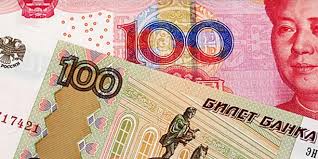
Since May this year, following discussions between the Russian and Chinese Presidents, several Russian companies have established direct payment acceptance agreements with six of the smaller Chinese banks and credit institutions in RMB Yuan. Electronic transactions have restarted.
For now, Russian importers can open accounts in these smaller Chinese banks, who have replaced the major Chinese banks who have now dropped out. China’s largest bank, ICBC, as well as the China Citic Bank, the Industrial Bank of China and others stopped accepting payments in RMB Yuan from Russian businesses in April 2024.
Many of these new generation of Chinese banks are located in North China, close to the China-Russia border. They have very little or practically no international business with countries unfriendly to Russia and therefore have some sanctions immunity. Sanctions may well be imposed but with no international trade to risk it makes Western measures something of a paper tiger.
There are some disadvantages to this solution, as these banks tend to charge higher transactional fees, and not all suppliers – especially from the manufacturing heartland in China’s southern provinces – agree to open accounts in banks based in the north of the country. However, this issue is increasingly being solved through Chinese export agents, although this adds again to the transactional costs. Today, the fastest and most reliable way to make a cross-border, Russia-China payment is through a branch of a Chinese bank in Russia or a Russian credit institution in China.
However, companies on both sides of the transaction (supplier and importer) must have an account with their agreed bank. Chinese businesses are increasingly opening representative offices in Russia and some will accept payments in Rubles as they have a longer term view on development into Central Asia where the Ruble is easily accepted. Some Chinese companies, usually from the raw materials segment, also use Cryptocurrencies for settlements. These transactions usually go through Hong Kong.
Historical Footnote
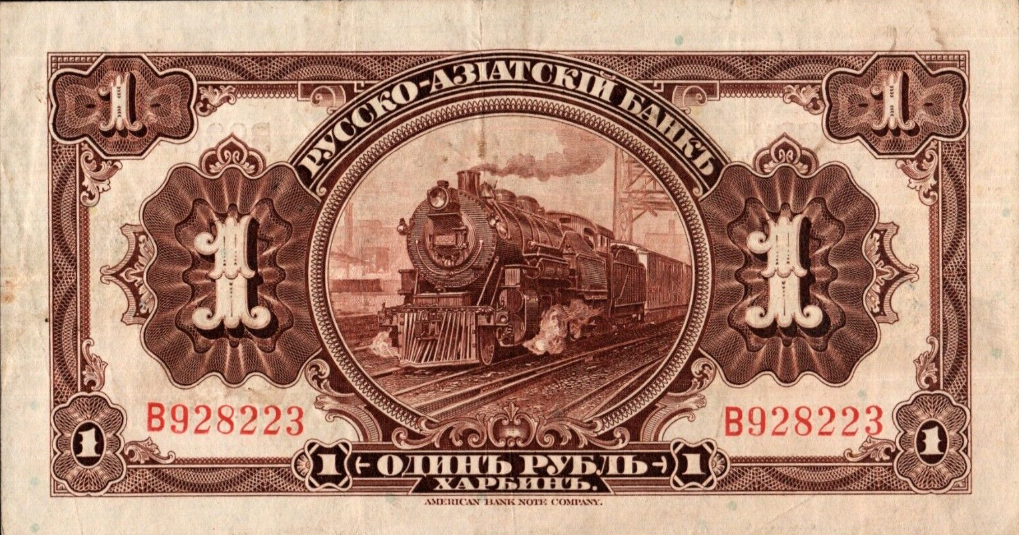
Interestingly, the current situation has some precedence. Over 100 years ago, a variety of foreign banks set up trading offices in China, including from Russia, and would set transaction rates based upon their respective currencies of the time – China was linked to a silver standard which provided a reliable value base. Russia also took part in this and established the Russo-Asiatic Bank in St.Petersburg, with a branch in Harbin, north China, which was then under Russian control. The bank also issued its own tradeable currency. Depicted above is a 1 Ruble note from 1917.
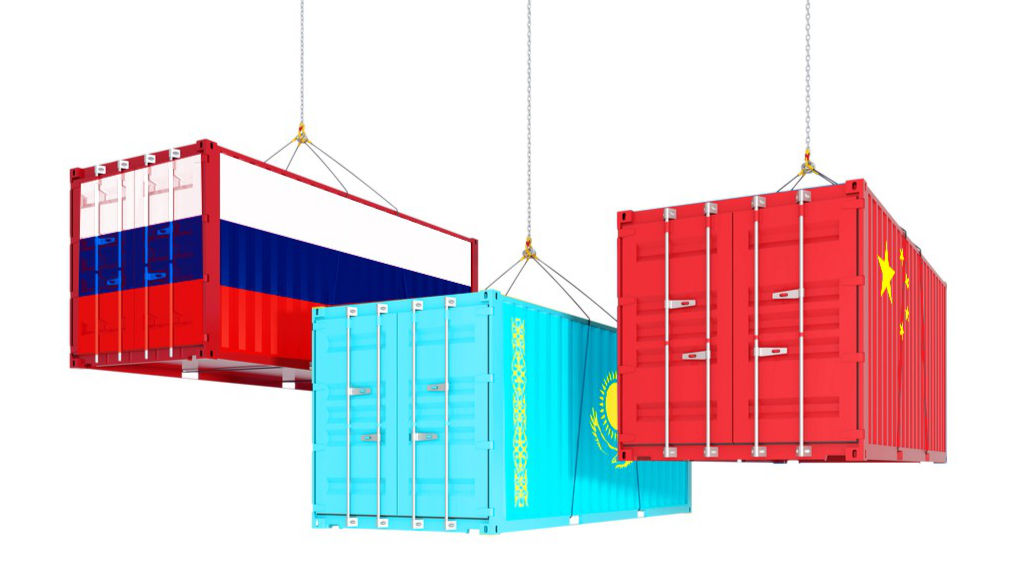
Russia, Kazakhstan and China are to conclude an Agreement for the creation of a Unified Digital Platform (ECP) for container transportation in order to optimize freight transport on the route connecting the three countries. The document is scheduled to be signed at the next meeting of the Kazakh-Chinese Business Council at the beginning of next month.
The ECP will become an integrated seamless system that combines the processes of customs clearance, electronic commerce and other functions. It will simplify logistics, promote the development of electronic commerce, simplify customs procedures, reduce trade barriers, and increase the transparency and efficiency of their mutual supply chains.
The agreement on the ECP was developed by the joint venture CRK Terminal, created by KTZ Express (Kazakhstan), Slavtrans-Service (Russia) and Xi’an Free Trade Port (China). These companies will be involved in the development and implementation of the project.
The CRK Terminal JV plans to involve the largest marketplaces in this initiative, including Alibaba, Pindouoduo, JD and 1688.com.
Damir Kozhakhmetov, General Director of KTZ Express, said that “The launch of the ECP will greatly simplify the logistical process. It will not only optimize cargo transportation, but also open up new business opportunities in the participating countries of the project.”

 Русский