Indian Prime Minister Modi has agreed with Russian President Vladimir Putin that India may establish a further two new consulates in Russia. Currently, India possesses an Embassy in Moscow, and Consulates in St.Petersburg and Vladivostok. These will be joined by new diplomatic consulates to be opened in Kazan and Yekaterinburg.
Kazan is a cultural and educational hub and an emerging economic centre in Russia, and the capital of the Tatarstan Republic. Kazan’s metropolitan population is about 3.5 million, with the city to host the annual BRICS Heads of State meeting in October.
Yekaterinburg is Russia’s fourth largest city, and also an important economic centre. It is the capital of the Urals Federal District, and has a metropolitan population of about 3.7 million.
Vladivostok is on Russia’s Pacific coast, and an important shipbuilding and diamond trading centre. Important Indian investors in both these industries are sited in the Vladivostok Free Trade Zone. It is the second largest city in the Russian Far East and close to the border with China. It has a population of about 650,000.
St.Petersburg is a major sea port and shipbuilding base, with joint Russia-Indian investments in the shipbuilding industry. It is Russia’s second largest city with a population of 6.5 million.
Moscow is the Russian capital, its largest city and its political and financial centre. Moscow has a metropolitan population of over 22 million.
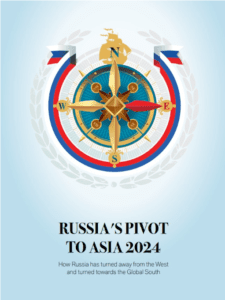
Russia’s trade and investment development with India is extensively covered in our 2024 Russia’s Pivot to Asia guide. This is a complimentary download and can be accessed in English here and in Russian here.
Cyprus loses a major Russian client to Kazakhstan’s fiscal gain as Western exits increase
The Russian chain of low cost retailers, Fix Price has redomiciled its corporate PLC entity from Cyprus to the Astana International Financial Centre in Kazakhstan. Fix Price operate over 6,500 retail stores worldwide, with 2023 revenues of ₽291.9 billion (US$3.3 billion) and net profits of ₽35.7 billion (US$403 million).
The move, which has come because Cyprus, as part of the European Union is now considered toxic to Russian holding companies, sees Cyprus lose direct taxable revenues worth about US$42 million, in addition to the local provision of legal, accounting, audit and related business services to Fix Price, as well as local staff redundancies. That income has now relocated for the benefit of the Kazakhstan economy. Fix Price, unless they have negotiated a sweetener deal with the Kazakhstan tax authorities, will also face a higher corporate tax burden – Kazakhstan’s CIT rate is 20% against 12% in Cyprus.
That taxable difference – equal to an increase of about US$40 million per annum to Fix Price’s overheads – can be judged to be worth the extra cost by Fix Price to avoid doing business in the European Union and redomicile to a more friendly jurisdiction.
Kazakhstan is part of the Eurasian Economic Union (EAEU), a free trade bloc that also includes Russia in addition to other markets in Armenia, Belarus and Kyrgyzstan. The EAEU also has Free Trade Agreements with Iran, Serbia and Vietnam with other countries such as Uzbekistan poised to do the same.
As of June 30, 2024, Fix Price operated 304 stores throughout Kazakhstan, including 287 of its own and 17 franchises, with operations in Astana (43), Karaganda (38), Pavlodar (33) and Almaty (30). The company employs 1,900 people in Kazakhstan.
Dmitry Kirsanov, Managing Director of Fix Price Group, said that “We see solid growth potential for Fix Price in Kazakhstan. In the first half of 2024, we expanded our store network by 24 outlets and plan to open 16 more stores by the end of the year.”
Fix Price has benefited from the global shift towards value in consumer demand. Over the past few years they have seen annual revenue growth at 30%, followed by highly profitable growth rates. Fix Price’s EBITDA margin in 2022 was 18.6%.
Fix Price are one of several Russian listed companies that have redomiciled their operations from Western HQ and stock markets to more friendly nations, with Kazkahstan’s operating environment often considered the best alternative option. These include Yandex, Ozon, Qiwi, and Cian, among others, who have all deregistered from Nasdaq or the New York Stock Exchange, while Russia’s O-key, Novatek, Tinkoff Bank, Sistema and a further 20-plus corporates have left the London Stock Exchange. There are multiple other examples. That corporate knowledge and market know-how is now moving away from the Western financial markets. While not all have relisted in Kazakhstan, a large percentage of them have, making the Astana International Financial Centrevery much a growth market for fund-raising and professional services to Russian and related multinationals as they redomicile away from Western corporate prejudices.
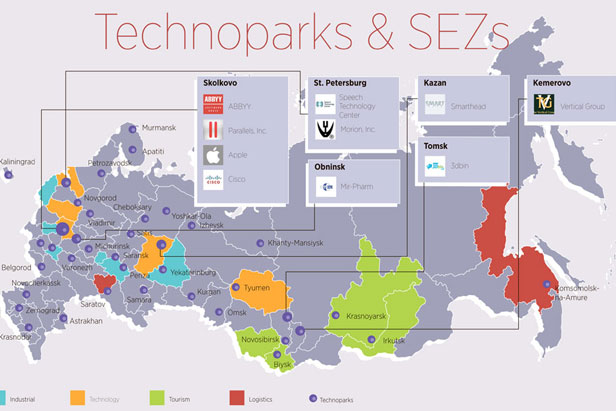
The Russian Ministry of the Economy has been assessing the effectiveness of the 44 Special Economic Zones (SEZ) in the country, including their fiscal effectiveness. SEZs are attractive investments for foreign investors as they typically offer reduced corporate income tax rates – typically zero for the first three-five years and at a 50% discount for the next five, as well as discounts on worker welfare contributions and utility bills. As energy costs are already low in Russia, this can make an investment in a SEZ highly attractive. Tax rates and overheads can differ from zone to zone.
Other benefits – especially for SEZ situated near Russia’s borders, can be their bonded zones. These mean that component parts can be imported duty free into the SEZ and then married with Russian local components without import duty and VAT having to be paid during the final product manufacturing or assembly process. This saves cash flow. The finished product can then either be sold onto the Russian domestic market (at which point duties and VAT are levied onto the retail price) or reexported elsewhere (with no duty payable in Russia). As Russia is also a member of the Eurasian Economic Union (EAEU) this means using a Russian SEZ to access markets within the EAEU can be financially attractive. The EAEU also includes Armenia, Belarus, Kazakhstan and Kyrgyzstan, and has free trade agreements with Iran, Serbia and Vietnam.
The Ministry of Economics also examined Russia’s SEZ fiscal contributions as well. In doing so, it found that most were productive, with business models contributing a combined ₽1.2 trillion (US$11.4 billion) to Russia’s GDP.
Of the 44 SEZs that were evaluated, 25 zones were considered fiscally effective, 18 achievably effective, with 1 ineffective, for which the management system has already been rebooted. The Ministry did not reveal which SEZs achieved these results.
Some adjustments to improve SEZ effective are being evaluated and are to be sent to the State Duma for passing into Russia’s SEZ laws. These include re-balancing the tax benefits for new investors to reflect differences in recognised R&D allowances as a capital contribution and the actual capitalisation.
Russia’s SEZs have also become increasingly popular with foreign investors over the past year. By the end of 2023, more than 1,000 resident companies were registered in the 44 SEZs, of which 176 were new investors, compared to 141 new investors in 2022.
During 2023, 18,100 new jobs were created, amounted to 169% of the planned budget, and up one and a half times higher than in 2022 at 12,000 jobs. Actual investments were also up at ₽660 billion (US$7.5 billion) in 2023 against ₽196 billion (US$2.3 billion) in 2022.
Russia’s SEZs have also been acquiring technology transfer know-how, itemised as an R&D contribution in investments, with this sector worth some ₽22 billion (US$250 million).
The UK held a General election this week with a new socialist Labour party government gaining power for the first time in 14 years. They were also voted into government with a significant majority meaning they will be able to follow their own policies when it comes to governing the UK. But where does this new British government stand on Russia? We briefly examine the positions of the new Prime Minister, Kier Starmer, and the senior members of his cabinet, based upon their previous experience and statements made.
Sir Kier Starmer – Prime Minister
Starmer has been generally quiet about Russia, although in a call yesterday to US President Biden he stressed that the UK remained supportive of Ukraine. However as regards the UK’s energy policy he has said that the UK is tied too much to ‘overseas sources’ and he would rebuild a British-owned and controlled energy sector. This will almost certainly mean continued Russian gas purchases in the interim period, although attention to this will be deflected – as has the EU’s increase of Russian gas purchases in Q1 2024, a trend that is continuing and is now at record levels. However, Russia has black-listed the new UK Prime Minister from visiting Russia in August 2022 for previous ‘anti-Russian’ sentiments. He is strongly pro-NATO. Starmer’s position with Russia is unlikely to see much change from the overall British establishment’s position – although he will want to be seen as ‘involved’ to take political credit should any opportunity for Russia-Ukraine negotiations arise.
Angela Rayner – Deputy Prime Minister & Secretary of State
Further left-wing than Starmer, she has been critical of businesses who have remained operational in Russia. She once claimed, incorrectly, that Russia had ‘deployed nuclear weapons in the UK’. Rayne has a fierce reputation for following publicly diverse trends, is pro-migrant, has described the Russian President as ‘despicable’, yet is close to former Labour Party leader Jeremy Corbyn, who is more sympathetic to Moscow. Rayner favours the UK dismantling its nuclear weapons deterrent yet is unlikely to action this viewpoint. She is also unlikely to favour improved relations with Moscow and is something of a loose cannon.
Rachel Reeves – Chancellor of the Exchequer
Has applauded the suspension of Labour politicians who have spoken out questioning British policy and statements about Russia. She is a former Bank of England economist and a believer in the ‘Bideconomics’ policy of borrowing money to stimulate growth. She is likely to remain tough on Russian sanctions and financial restrictions upon Russia.
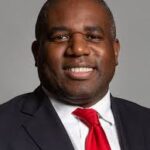
David Lammy – Foreign Secretary
Has responsibility for improving relations with Europe and the ‘Global South’ which are likely to see him compete against Russia’s Foreign Minister Sergey Lavrov. Is supportive of Ukraine joining NATO. In recent meetings in Kiev, Lammy stated that Vladimir Putin represented a “new fascism in Europe”. Nonetheless, his attempts to persuade the global south to favour the UK over Russia will be interesting to observe. For example, the UK now accounts forjust 2.6% of Africa’s exports and has halved its purchases of African goods over the past decade. In contrast, Russian purchases of African goods have increased over 150% since 2013.
Jonathan Reynolds – Business and Trade Secretary
Mandated to improve relations with the European Union. Is unlikely to change any policies as regards the UK’s trade with Russia. Has a somewhat erratic position on Moscow, one hand hand appearing pro-Ukraine, on the other criticizing Boris Johnson, the ex-British Prime Minister, for not meeting with the Russian President in 2021. Is unlikely to have any impact on Russian trade.
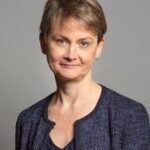
Yvette Cooper – Home Secretary
Is responsible for domestic UK security issues, with her main agenda to focus on asylum seekers and migrants. May push to send some Ukrainian refugees back home. Appears unlikely to change any UK security or visa policies as concerns Russian nationals.
Summary
The new British government obtained a large majority, although like most of Europe, actual voter turnout was low at about 20% of the eligible total. This means that the country is being run by a government that 80% of the British population did not endorse.
As in Europe, this leads to a collision between Government thought and media perspective, and leads to inconsistent approaches between government policy and national media coverage. At present, the two are reasonably aligned, yet this could change if the Government becomes unpopular – although it is democratically protected via its huge majority voting power.
But in essence, the new UK government appears to offer much of the same in terms of British Foreign policy as concerns Moscow. To be frank, its mostly dead.
Total direct trade in goods and services between the UK and Russia was £2.1 billion (US$2.69 billion) in the 2023, a decrease of 74.9% from 2022. Bilateral trade declined a further 16.1% in the first four months of 2024. It should be noted however that British consumer goods still access the Russian market via third party importers. The British themed ‘Black Chops’ pub in St.Petersburg is illustrative.
The only bright point to note is how the British Foreign Minister and Trade Secretary manage to perform when bumping up against Russia’s Foreign Minister and trade development personnel when seeking to persuade countries of the Global South that the United Kingdom is a preferable partner. Otherwise – the UK election is unlikely to change anything in terms of its impact upon the UK’s Russian policy.
Further Reading
Russia’s 2024 Pivot To Asia
Russia’s 2024 Pivot To Asia is a significant, independent overview of Russia’s trade with the global south and contains extensive trade and development data concerning Russia’s engagement throughout Asia, Africa, the Middle East, and Latin America. It is a complimentary download and may be accessed in English here and in Russian here.
Russia’s Foreign Minister Sergei Lavrov has held trilateral meetings with Chinese Foreign Minister Wang Yi and Mongolian Foreign Minister Batmunkh Battsetseg on the sidelines of the Shanghai Cooperation Organization Council of Heads of State meetings in Astana.
The Russian Foreign Ministry said that “During a substantive conversation, they exchanged views on enhancing trilateral cooperation in various areas, implementing a roadmap for advancing cooperation and a program for establishing the Russia-Mongolia-China Economic Corridor, (RMCEC) as well as priority areas for further development of this promising format.”
The RMCEC has been a long mooted trade and supply chain route that will utilise the existing Trans-Mongolian railway, a southern branch of the Trans-Siberian railway that bisects Mongolia from Ulan-Ude to Beijing. That would be double-tracked to increase capacity along the existing route.
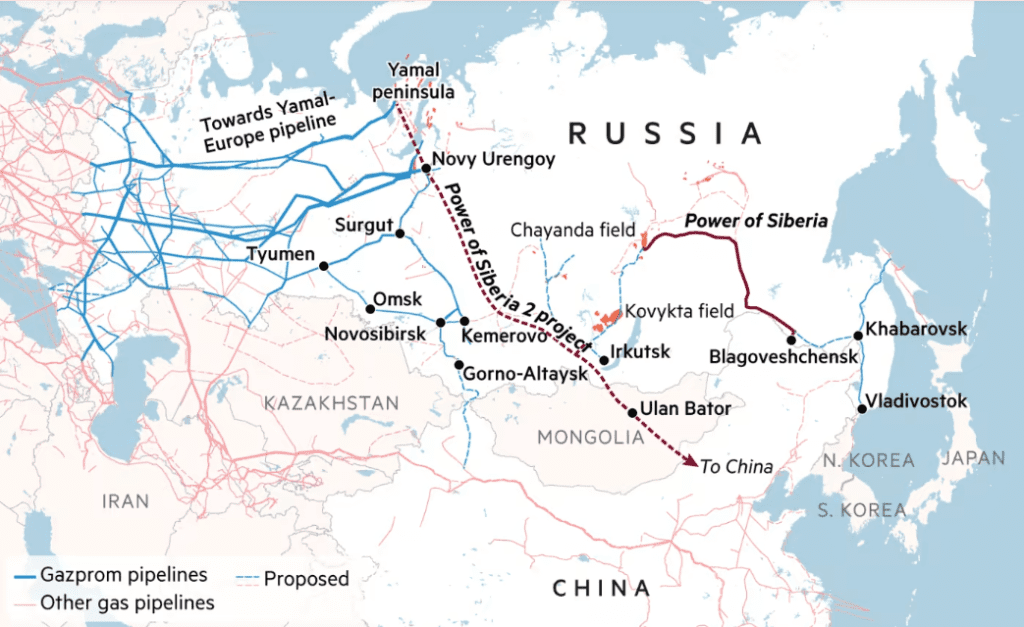
Additional facilities and developments along this corridor are likely to be accelerated as Russian President Putin and Chinese President Xi have instructed their Power of Siberia 2 (PS-2) operators – Gazprom and Sinopec – to finish negotiations on the PS-2 pipeline, which also bisects Mongolia.
The PS-2 is also of strong relevance to Mongolia as part of this will be a gas transit and distribution hub at Ulaan Baatar, the Mongolian capital, helping to power the capital city and assist with its development. Mongolia will also raise transit fees for the delivery of gas to China from Russia.
The Corridor is one of the six major land corridors of China’s Belt and Road Initiative. Its goal is to increase infrastructural and economic ties between cities including Beijing, Ulaanbaatar, Novosibirsk, Omsk, Yekaterinburg, and Saint Petersburg. The project would improve infrastructure links between the three countries, reduce freight times, and create new sea and land-based export routes for Mongolian natural resources. It also aims to reduce bureaucratic barriers at the border and provide a route for Chinese and Mongolian freight to Pacific ports via improved Trans-Siberian connectivity to Vladivostok. The Trans-Mongolian and Trans-Siberian lines intersect at Ulan-Ude.
To China, the CMREC represents the prospect of large-scale investment inflows overhauling Mongolia’s aging infrastructure network; and situates landlocked Mongolia as a key link in new trade networks linking East and West, representing new economic opportunities for the country as a transit and logistical hub.
Some of this connectivity has already been put in place. New rail links to connect Ovoot Tolgoi and Tavan Tolgoi, both coal mining regions in Mongolia, with China’s national rail network have been completed and use China’s 1,435 rail gauge standard. The Tavan Tolgoi-China link was completed in September 2022. It delivers 30 million tonnes of coal a year to the Chinese market at prices 25% of the previous cost of road haulage.
The two major beneficiaries are likely to be Ulaan Baatar and Ulan-Ude, while China obtains lower energy costs and improved market access to Russia. Mongolia is also negotiating a Free Trade Agreement with the Eurasian Economic Union, which would further boost its trade with Russia and China.
Russian President Putin also met with Mongolian President Ukhnaagiin Khurelsukh at the SCO event, stating that there is strong potential for broadening Russian-Mongolian cooperation in the energy sector. Ulaan Baatar continues to power itself on aging Soviet-era coal power stations.
Putin stated that “Energy has been and remains one of the key areas of our interaction. This work has been streamlined, but we can also discuss its expansion, implying hydrocarbons and electricity. We have many things to discuss.”
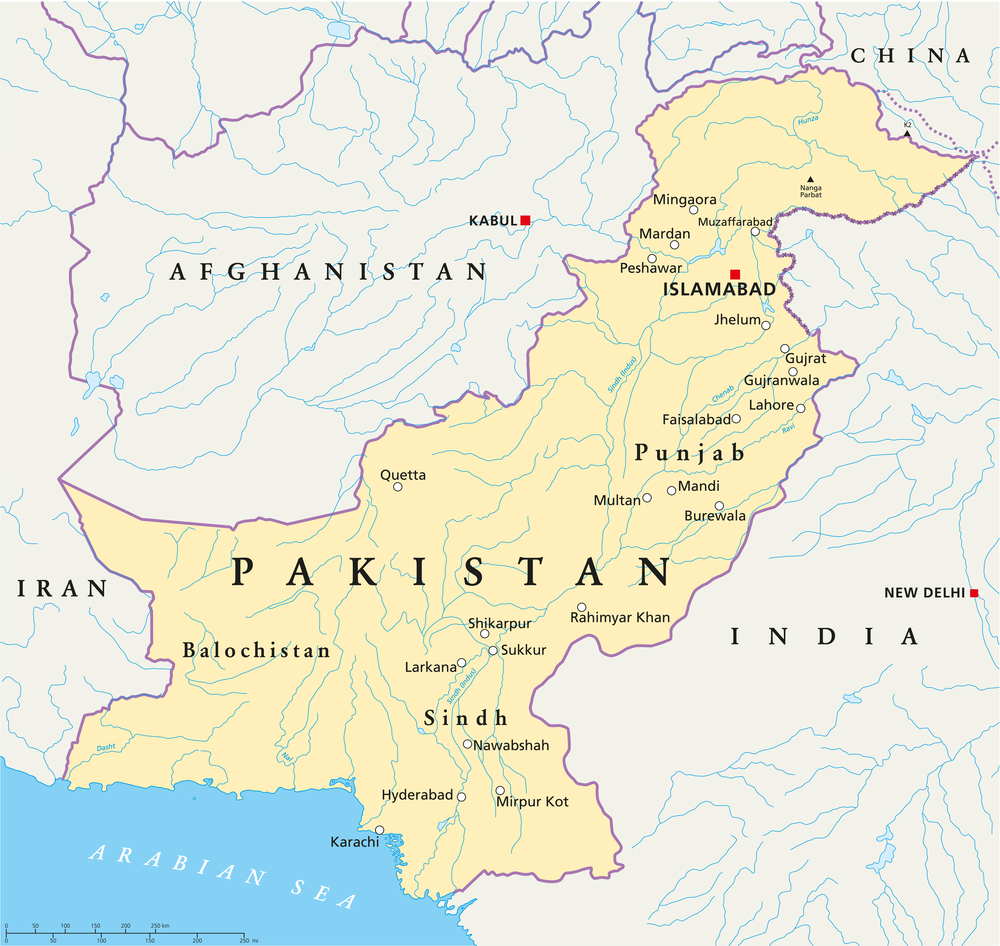
Islamabad proposes trade barter system to overcome financial difficulties
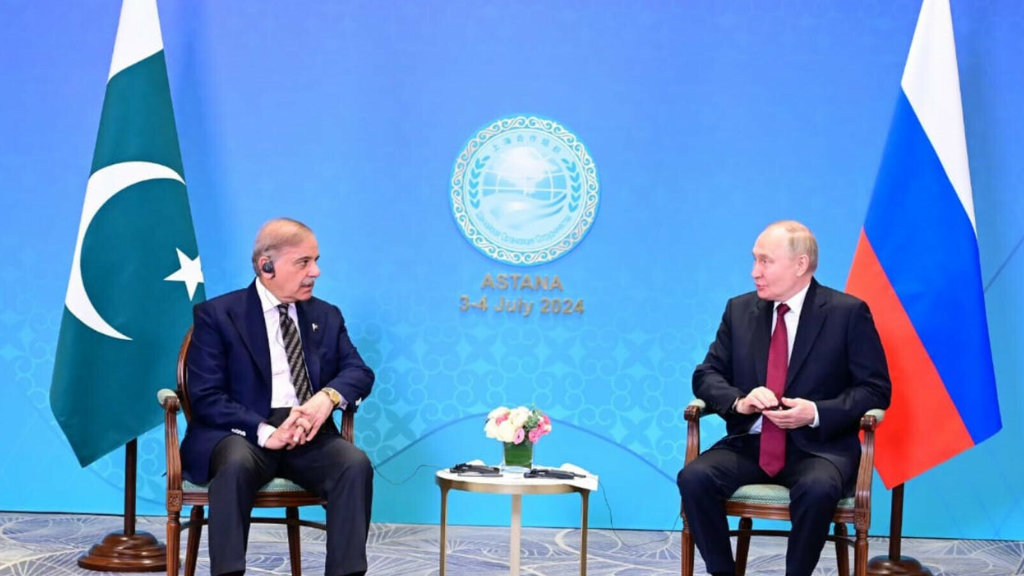
Russian President Vladimir Putin has met with Pakistani Prime Minister Shehbaz Sharif on the sidelines of the Shanghai Cooperation Organization (SCO) summit in Kazakhstan’s Astana.
Trade between Russia and Pakistan is growing, and Russia is willing to increase supplies of energy and agricultural produce to Islamabad, President Vladimir Putin said. “There are good prospects in our relations. I’d pay special attention to two areas, namely cooperation in the energy and agribusiness sectors. We’ve begun supplying our energy resources to Pakistan, and we’re willing to increase these supplies. At Islamabad’s request, Russia is also contributing to Pakistan’s food security, and we’re increasing grain shipments to the Pakistani market.”
Sharif said trade between his country and Russia amounted to US$1 billion a year and should be increased. “We’ve received oil from your great country, we’re very grateful for that and should keep following this path.” he said. “Remember that we used to trade based on barter terms in the 1950s-1970s. We imported a lot of equipment and products from the USSR and exported textile and leather goods to the Soviet Union. It’s now time to overcome financial and banking problems and resume and expand our trade relations based on barter terms. This would be very good for Pakistan, we could overcome a lot of trade and sanctions financing problems this way.” Sharif said.
Pakistan began making purchases of discounted Russian crude oil under a deal struck between Islamabad and Moscow last year. Pakistan also received its first shipment of liquified petroleum gas from Russia, marking Islamabad’s second major Russian energy purchase, despite Western powers’ move to impose sanctions on Moscow.
Pakistan first notified a mechanism for barter trade with Russia, Iran and Afghanistan in February 2023, allowing state-owned enterprises and private sector entities to engage both in imports and export of goods. The concept of a barter trade platform is not new but requires considerable management in terms of agreeing prices for what could be fundamentally different products. However, given that Russia is looking to develop trade ties with a larger number of emerging economies, it is something the Russian Export Centre will most likely be tasked with potentially developing.
Pakistan itself suffers from a lack of financial resources, poor infrastructure and needs to become an industrialized nation. It is also a nuclear power and has a significant population of 234 million – a significant market in its own right.
China has been a significant investor in Pakistan through numerous Belt & Road Initiative projects. To date it has placed an estimated US$62 billion into the country, mainly into projects centred along the China-Pakistan Economic Corridor (CPEC) which provides north-south and east-west connectivity throughout the country and is ultimately aimed at two main goals – connecting Afghanistan, via Pakistan, to the Persian Gulf, and providing the same routes to China’s southern Xinjiang Province, which borders Pakistan north of Gilgit.
China has invested in nuclear power plants in Pakistan, while Russia is still considering these types of investment. Sharif also invited Putin to visit Pakistan.
Further Reading
Russia-Pakistan 2024 Trade & Development
This subject is extensively discussed in our 2024 Russia’s Pivot To Asia guide. This is a complimentary download and can be accessed in English here and in Russian here.
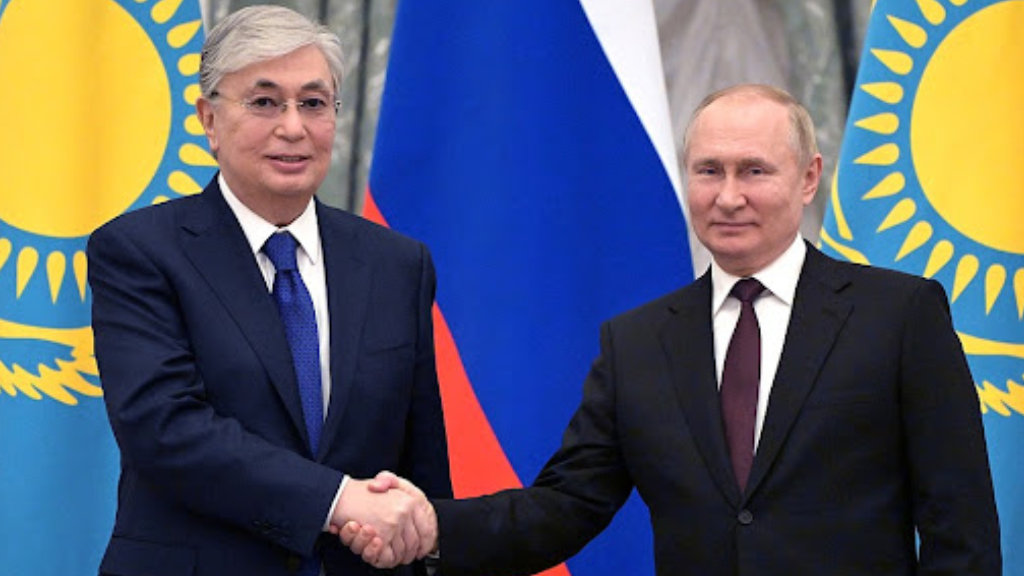
Russia – Kazakhstan bilateral trade is growing steadily, and has already reached almost US$30 billion, Russian President Vladimir Putin said during meetings with Kazakh President Kassym-Jomart Tokayev at the Shanghai Cooperation Organisation Heads of State summit held in Astana.
Russia remains one of the main trade and economic partners for Kazakhstan, Putin said, adding “We have many important areas. There is a very high cooperation. There are many interesting projects.”
Tokayev said that bilateral cooperation between Russia and Kazakhstan is evolving and increasing, stating that he personally has supervised the implementation of agreements and arrangements reached during Putin’s visit to the country last November. “These projects that were agreed upon during your last visit are very important. In fact, they embody the strategic nature of interaction between our countries.” Tokayev said.
In 2022 the bilateral trade volume between Russia and Kazakhstan had reached US$26 billion, with expectations in Astana and Moscow are that the volume of trade will expand still further. Year on year growth between 2021 and 2023 has averaged 15%.
As a result of the sanctions imposed on Russia, Central Asia’s trade structure began to shift. In Russia, the demand for specific goods from Kazakhstan has increased. For example, Russians now buy more Kazakh-manufactured computers, monitors, and projectors. Kazakhstan also exports iron ores and concentrates, ferrous waste and scrap, raw zinc, ferroalloys, and coal. Primary Kazakh imports however are oil and oil products, wheat and meslin, ores and concentrates of precious metals, iron bars, and gold.
It is also worth noting a significant increase in cargo transportation between Russia and Kazakhstan has occurred along the International North-South Transport Corridor (INSTC), which connects Russia with Iran and India, and the Global South via Kazakhstan, Azerbaijan, and Turkmenistan.
In total, about 8,000 Russia companies and 3,348 Russian-Kazakh joint ventures are operating in Kazakhstan. Earlier this year, Russia’s Ozon (the equivalent of Amazon) set up its first logistics center in Kazakhstan, while Wildberries, a competitor, has opened its fifth logistics center in the country.
Kazkahstan also serves as a transport conduit for China-Russia bilateral trade. Russian President Vladimir Putin meanwhile accepted the invitation of Kazakh President Kassym-Jomart Tokayev to visit Kazakhstan in November 2024.
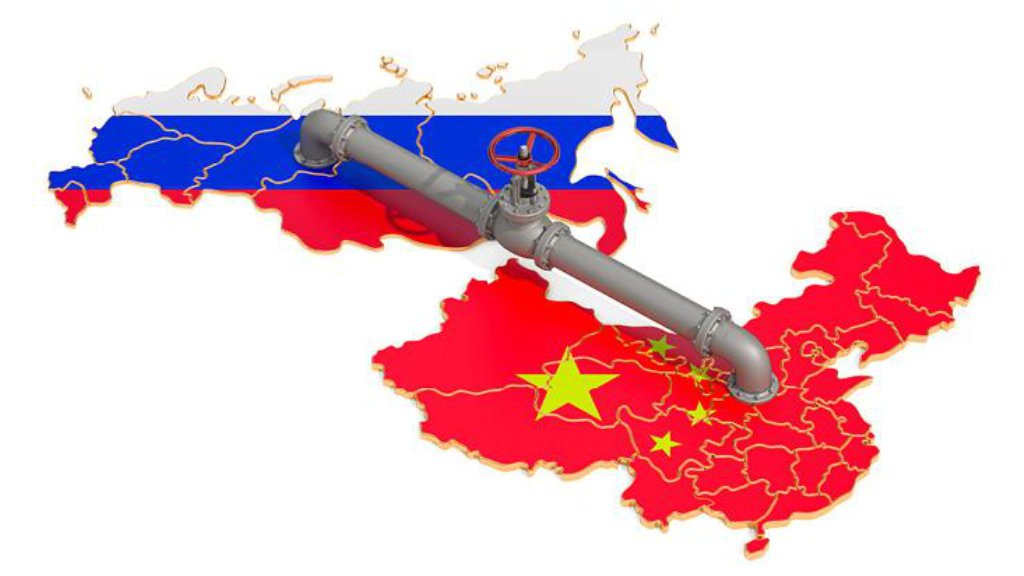
Russian President Vladimir Putin met with Chinese President Xi Jinping on the sidelines of the Shanghai Cooperation Organization summit in Astana yesterday (July 3), and have instructed the two countries’ responsible companies to agree on the terms of gas supply via the Power of Siberia 2 pipeline “as soon as possible,” according to Russian Deputy Prime Minister Alexander Novak.
Novak said that the delayed Power of Siberia 2 project was “Discussed and backed by both sides. We will continue to negotiate the conditions and parameters. Instructions have been given to do it as soon as possible.”
Novak did not specify possible deadlines for signing the contract or starting supplies, “No one is giving a date for signing the contract, because it is a negotiation process.” The timeframe for the start of supplies is “a subject of negotiations between the two countries and the two companies,” he added. However, Presidential pressures are likely to force Gazprom and Sinopec to reach a deal.
Negotiations have become protracted as the costs of the Power of Siberia 2 (PS-2) pipeline are more significant than the currently operating Power of Siberia 1 (PS-1). Slow-walking PS-2 gives China’s importers leverage in contract negotiations with Russia and other suppliers; the discussions themselves put pressure on suppliers to sign contracts or risk losing a share of China’s natural gas market. China signed a gas supply contract with Qatar recently to make this point. Another reason China has been in no hurry to finalize an agreement for PS-2 is that the country is unlikely to need the gas before the mid-2030s.
However, If China moves forward with PS-2, it will look to secure a lower price for PS-2 gas than it secured for PS-1 gas, since it is in a stronger negotiating position with Russia than it was in 2014 when the supply contract for PS-1 was signed. China customs data from December 2019 through December 2021 show that PS-1 gas was cheaper than China’s other pipeline gas and LNG imports. Sinopec essentially want Gazprom to agree a similar price for PS-2 gas supply as it agreed for PS-1 supplies. Both Xi and Putin now appear to want the protracted issue moved off their desks and into actual productivity.
If agreed, the project would also generate orders for Russia’s steel producers and subcontractors and accelerate the economic development of the Russian Far East, a top priority for Moscow.
The Pro-Russia BRICS bloc has soft power control over the Caspian and Red Sea supply chains
Azerbaijan, which has been attending the annual Heads of State meetings of the Shanghai Cooperation Organisation (SCO) in Astana has expressed interest in joining the BRICS grouping.
The BRICS includes Brazil, Russia, India, China and South Africa, while Egypt, Ethiopia, Iran, Saudi Arabia and the UAE joined from 1st January this year. Azerbaijan’s intent was signalled through cooperation documents it signed with China at the SCO meetings. Baku and Beijing adopted a joint declaration “On Establishing Strategic Partnership between the Republic of Azerbaijan and the People’s Republic of China” at the SCO summit, which states, amongst other Sino-Azeri bilateral developments that “Azerbaijan expresses its desire to join the BRICS, and China welcomes Azerbaijan’s participation in BRICS cooperation.”
Russia is also likely to be supportive as Azerbaijan’s involvement would create an additional link between it, Iran and the Middle Eastern region via road, rail and Caspian Sea access, while neighbouring Turkiye has also expressed interest in joining the BRICS. It would make the Caspian Sea region very much a pro-Russian regional trade and supply chain play.
This geopolitical influence also extends to the Red Sea, where the BRICS group, which now includes Egypt, Ethiopia, Iran and Saudi Arabia, also effectively possess soft control over the Red Sea supply chains – and especially now that Iran and Sudan have recently signed bilateral trade and investment agreements.
According to Azerbaijani Deputy Prime Minister Shahin Mustafayev, Russia’s 2023 bilateral trade with Azerbaijan reached US$4.4 billion and is expected to grow significantly during 2024. He said that “Serious headway was made in the past few years in practically all areas of cooperation, including investment interaction, industrial cooperation and cooperation in the transport and energy, agriculture, cultural and humanitarian, and many other spheres. Azerbaijan has invested more than US$1 billion in the Russian economy, and Russia has invested more than US$8.7 billion in the Azerbaijani economy. A large package of investment projects with Russian capital is now being implemented in Azerbaijan.”
Azerbaijan is additionally a member of the Commonwealth of Independent States, (CIS) a trade bloc of ex-Soviet states that also includes Armenia, Belarus, Kazkahstan, Kyrgyzstan, Russia, Tajikistan and Uzbekistan. All these countries Heads of State are also at the SCO event.
Further Reading
Russia-Azerbaijan 2024 Trade & Development
This subject is extensively discussed in our 2024 Russia’s Pivot To Asia guide. This is a complimentary download and can be accessed in English here and in Russian here.
The Russian President Vladimir Putin has met with Turkish President Recep Erdogan in Astana on the sidelines of the Shanghai Cooperation Organisationannual Heads of State meetings, with both sides also engaging in trade development talks. Current bilateral trade is running at about US$55 billion, with Alexei Yerkov, the Russian Ambassador to Turkiye, also present at the discussions, later stating that “Our two countries are aiming for US$100 billion in trade, a huge, but attainable number. Turkiye is a crucial trade partner for Russia over a wide range of industries. While construction is a trade lynchpin there is still room for more.”
Putin said that “All our large bilateral projects are being implemented on schedule. There are no delays. I would like to note that in 2023 the Russian tourist flow in Turkiye reached a record high with 6.3 million of our tourists visiting Turkiye. I would like to express my gratitude for the conditions the country has created for Russian tourists.”
Erdogan stated that “I can refer to the Akkuyu Nuclear Power Plant, which we are building together. We hope to put it into operation in the nearest future. With that, we have had contacts regarding the construction of another nuclear power plant in the city of Sinop. I believe we can and we will make serious steps. I want to point out that the Turkish Ministry of Energy and Natural Resources continues its contacts with colleagues in Russia. Following their meetings, I want to note that Botas and Gazprom continue their contacts.”
Turkiye is also interested in joining the BRICS group and will almost certainly be sending a delegation to Kazan in October, where the BRICS Heads of State annual conference will be held. Interestingly, about 50% of Kazan’s population are ethnically Turkic, with Tatarstan attracting about 25% of all Turkish investment into Russia. We previously discussed Turkiye’s trade with the BRICS members here.
Erdogan also invited Putin for a state visit to Turkiye, with this likely to take place in the autumn.
Further Reading
Russia-Turkiye 2024 Trade & Development
This subject is also extensively discussed in our 2024 Russia’s Pivot To Asia guide. This is a complimentary download and can be accessed in English here and in Russian here.
Putin, Xi, Modi and other regional leaders are all attending
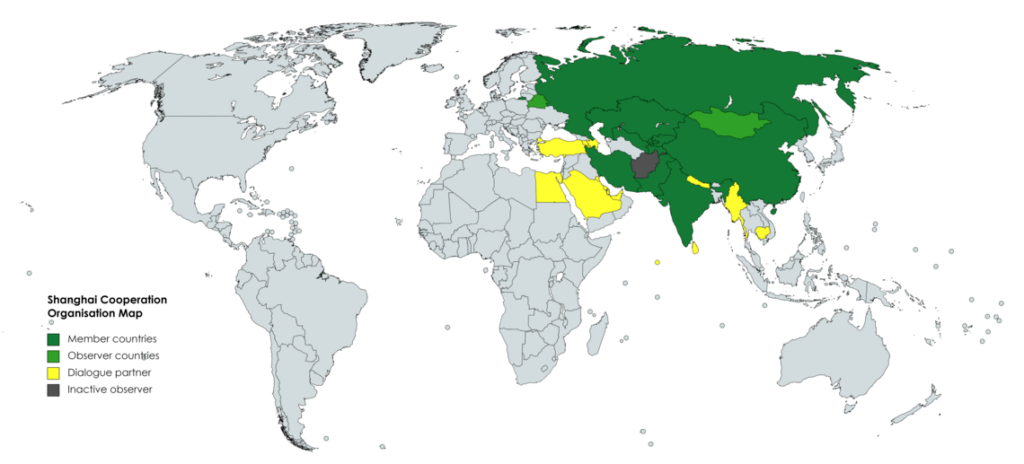
The annual Heads of State meetings of the member countries of the Shanghai Cooperation Organisation (SCO) has begun in Astana, Kazakhstan. The SCO has different categories of membership, with full members being China, India, Iran, Kazakhstan, Kyrgyzstan, Pakistan, Russia Tajikistan and Uzbekistan. Three countries — Afghanistan, Belarus, and Mongolia — have an observer status with the SCO, and a further fourteen — Azerbaijan, Armenia, Bahrain, Cambodia, Egypt, Kuwait, Maldives, Myanmar, Nepal, Qatar, Saudi Arabia, Sri Lanka, Türkiye and UAE have dialogue partner status.
Permanent Guest Attendees include the Heads of the United Nations, the Commonwealth of Independent States (CIS) the ASEAN bloc, (Brunei, Cambodia, Indonesia, Laos, Malaysia, Myanmar, Philippines, Singapore, Thailand, and Vietnam), and Turkmenistan.
Several countries have applied to join the SCO, including Algeria, Bangladesh, East Timor, Iraq, Israel, Laos and Syria. The United States applied to join in 2015 but was refused.
Mandate
The SCO was formed on the basis of the Shanghai Five, a forum of a group of countries concerned about the threat of terrorism, the disruption of border security, the rise of Islamic fundamentalism and the spread of its doctrines from the main flashpoint, Afghanistan. The situation in Afghanistan continued to deteriorate, culminating in the invasion of the country by U.S. troops in 2001. On June 15, 2001, the Shanghai Five was transformed into a full-fledged multidisciplinary cooperation organization, the Shanghai Cooperation Organization, as the status of the forum did not provide for decisive and large-scale actions to eliminate the threat of terrorism.
Subsequently, the SCO demonstrated its ability to cooperate on regional military and security issues, advancing common goals in the event of a final U.S. troop withdrawal, which occurred in 2021.
As it evolved, the SCO gradually transformed into a multilayered organization, focusing not only on counterterrorism but also on countering drug trafficking, then concentrating on regional connectivity, infrastructure, trade, and social development
It has subsequently morphed into a multi-layered organisation, still with a strong regional security aspect but also as concerns regional connectivity, infrastructure and social development as well as trade. The SCO describes its own goals as follows:
To strengthen mutual trust, friendship and good neighbourliness between Members;
To encourage the effective cooperation between Members in politics, trade, economy, science and technology, culture, education, energy, transport, tourism, and environmental protection;
To jointly ensure and maintain peace, security and stability in the region; and
To promote a new democratic, fair and rational international political and economic international order.
The SCO also acts as a regional sounding board for members who have historical common problems – such as India and Pakistan, both of whom joined in 2017.
Associated Bilateral Meetings
The annual meetings also act as a common platform for a host of additional regional meetings that take place around the same time, such as the East Asia Summit, which took place in Jakarta. Russia also attends these sessions as part of the ASEAN-Russia sub-committee. Other regional meetings also revolve around the main SCO event, including in Russia’s case, President Putin having direct meetings with the leaders of China, Kazakhstan, Azerbaijan, Mongolia, Turkiye, and Pakistan. Russia’s foreign policy aide Yury Ushakov said that Putin’s program “includes a range of very important bilateral contacts” as Moscow considers the summit to be a good opportunity for bilateral talks with the leaders who will attend.
The SCO currently accounts for some 20% of global GDP, while its total population represents nearly half of the global population, and their combined territory accounts for a quarter of the world’s land area. More recently, the West has stated that the SCO is now seen as a threat to NATO, mainly due to its regional security mandate.
The 2024 SCO Summit Agenda
The 2024 summit has been themed as “Injecting Stability Into The World” while the SCO Secretary General, Zhang Ming has outlined plans for this year’s summit, emphasizing that over 20 years of its development, the SCO has transformed from a regional mechanism for meetings of heads of state into a major, comprehensive international organization. In a welcoming address he stated that “The SCO pays attention not only to “high-level” tasks, such as politics, diplomacy, peace, development, security, but also to topics “close to the people,” such as tourism, sports, and waste disposal.”
Economic cooperation is likely to be high on the agenda, with the summit expected to produce initiatives aimed at reducing trade barriers, harmonizing regulations, and promoting investment across member states. This will include China’s Belt and Road Initiative (BRI) which is China’s mechanism for financing overseas infrastructure development, and which will be highlighted as a crucial framework for enhancing connectivity and economic ties. We can expect the announcement of China financed infrastructure projects among SCO members.
Other moves will likely include Algeria being accepted as an observer and Belarus being promoted to full member status.
Discussions will also be held with the Taliban representing Afghanistan as its legitimate government. There may be some breakthroughs on diplomatically recognising the Taliban as representing the Afghanistan state, which would free up trade and aid programmes to assist redevelop the country and ensure it does not slip back into civil war or revert to Islamic terrorism. Preventing attacks such as the recent ones in Dagestan by Muslim insurgents will be on the agenda as part of the SCO security alliance.
For Russia, the SCO will provide a platform for examining ways to increase supply chains to the SCO member countries, as well as deal with issues concerning the use of sovereign currencies as opposed to the US dollar and euro in facilitating trade. Discussions will invariably include development of existing initiatives such as the “BRICS Bridge” payment platform, which envisages use of a basket of regional currencies partially supported by sovereign gold reserves. The collective SCO nations possess about 6,020 tonnes of Central Bank gold reserves. China and Russia between are the world’s top two producers, together accounting for about 20% of new global supplies.
Summary
The 2024 SCO heads of state meetings will be largely ignored – or criticized in the West. Nonetheless, the SCO represents one of the most influential global blocs today – and it continues to expand. While it is built on the tenets of security, it also extends into other areas such as diplomatic and regional cooperation, investment and trade.
While the military and security aspect of the SCO are likely to remain a significant part of its overall remit, as concerns trade, there have been discussions of linking this aspect of the SCO to other entities such as the Eurasian Economic Union (EAEU) which would provide a specific motivational tax and duty structure to SCO members, and thereby further influence trade development. This, coupled with China’s BRI investments – currently at about US$1 trillion and increasing by a further US$92.4 billion in 2023 – signals that the money continues to be available for regional development.
With China, India and Russia, along with most, if not all, of the SCO states wanting to see a global move towards a more inclusive directional structure under the United Nations as concerns global issues, the SCO is already collectively acting as an alternative to the West. This 2024 Heads of State SCO summit will further underline and strengthen this point.
Further Reading
Russia and the Shanghai Cooperation Organisation
Russia’s trade and development with the Shanghai Cooperation Organisation is extensively discussed in out 2024 Russia’s Pivot to Asia guide. This is a complimentary download and can be accessed in English here and in Russian here.

 Русский