We rarely comment about the sanctions regime here on RPA mainly because we deal with trade and investment issues and also as the topic is usually well covered elsewhere. However, the news that Unilever are to slash their European workforce by 30% is a predictable result of sanctions being placed upon Russia and political pressure on Western investors to withdraw.
Unilever has been under pressure to leave Russia, and under Chief Executive Officer Hein Schumacher, it has stopped advertising in Russia and halted Russian exports and imports of its products. The inevitable result? A downturn in business operations and a downsizing of its main European operations – according to reports in the Financial Times, up to many as 3,200 employees are to be made redundant across Europe by the end of 2025.
The job cuts are officially part of Unilever’s “productivity programme” first announced in March, and includes slashing as many as 7,500 roles globally. Unilever employs about 128,000 people around the world. The company, whose brands include Hellmann’s mayonnaise and Dove soap, employs 10,000 to 11,000 office-based staff in Europe. Almost all of Unilever’s European office locations will be equally affected, but particularly its corporate centres in London and Rotterdam.
Unilever’s corporate announcement about the redundancies laid the decision at the need for a corporate rebalancing, rather than the decline of its Russia businesses. But bearing in mind that Unilever’s Russian profits in 2021 had doubled to €108 million, an increase of 91%, and now that has effectively been wiped out, it appears the actual culprit has been pressure to leave the Russian market and a political need to self-destruct its Russian operations.
Unilever owns 8 large Russian enterprises, including a margarine factory in Moscow, a sauce factory, a tea-packing factory and a perfume and cosmetics factory in St. Petersburg, a food factory and an ice cream factory in Tula, as well as ice cream factories in Novosibirsk and Omsk. These will now almost certainly pass into the hands of Russian investors, meaning Unilever will be almost certainly taking an additional significant asset write-off as well. That loss of revenues and loss of billions of dollars’ worth of productive assets needs to be covered up with cuts elsewhere. A loss of European jobs for Unilever employees appears to have been a large part of the solution. Ironically, Russia is suffering from a shortage of labour and wages are rising as its economy booms.
Readers can make up their own minds about the EU’s silence about this most recent economic damage caused to its economy. However as we have pointed out before, redundancies in the EU are a consequence of the sanctions policy impact upon corporate businesses in Russia. Unilever will not be the last.
Representatives of the Eurasian Economic Union (EAEU) and the United Arab Emirates (UAE) expect to come to a substantive conclusion of negotiations on signing a Free Trade Agreement (FTA) by the autumn of 2024, the Eurasian Economic Commission (EEC) has said. This followed statements by Andrei Slepnev, the EEC Trade Minister and Thani bin Ahmed Al Zayudi, the UAE Minister of State for Foreign Trade. The EEC is the governing body of the EAEU.
An EEC press release about this development was released this week and stated “On July 8, on the sidelines of the Innoprom-2024 exhibition, Andrei Slepnev, Minister of Trade of the Eurasian Economic Commission, met with Thani bin Ahmed Al Zayudi, Minister of State for Foreign Trade of the United Arab Emirates. During the meeting, the parties welcomed the successful progress of negotiations on the economic partnership agreement between the EAEU and the UAE and indicated a desire for their substantive completion in the autumn of this year.”
Slepnev added “We appreciate the positive attitude of the Emirati side. Trade between our countries continues to grow steadily, and this, I am sure, will help us jointly resolve all remaining issues of negotiations.”
The decision to start negotiations on the creation of a free trade zone between the EAEU and the UAE was made in December 2022. The first round of negotiations took place in March 2023. At the moment, three rounds have already taken place. The next round of negotiations should be held in September 2024. It is expected that it should be decisive.
Within the framework of the agreement, the parties expect to establish special conditions (reduction or zeroing of duties) for at least 1,300 products from the industrial sector and the agro-industrial complex.
The signing of the agreement will also contribute to the development of logistics partnership between the parties within the framework of the international North-South Transportation Corridor and strengthen the positions of EAEU exporters in the countries of the entire Persian Gulf.
The EAEU includes Armenia, Belarus, Kazakhstan, Kyrgyzstan and Russia, and has other FTA with Serbia, Iran and Vietnam. The UAE is also a member of the Greater Arab Free Trade Area (GAFTA) which also includes Algeria, Bahrain, Egypt, Iraq, Kuwait, Lebanon, Libya, Morocco, Oman, Qatar, Saudi Arabia, Sudan, Syria, Tunisia, as well as the United Arab Emirates. GAFTA is responsible for 96% of all intra-Arabic trade and has a GDP (PPP) of about US$8 trillion.
The UAE also joined the BRICS group in January.
Current Russia-UAE trade hit a record US$11.4 billion in 2023 and continues to increase. Russian exports to the UAE are dominated by diamonds and gold, which made up 40% of the total, while re-exporting from the UAE to Russia has also risen sharply, making up more than half of the 500 products that the UAE exports to Russia.
Over 700 Russian companies are established in the UAE while the number of real estate investors has also grown – as did the number of UAE based real estate agencies set up by Russians. Russian investors purchased real estate in the UAE worth US$500 million in 2022, while tourist numbers also surged 60% to 1.2 million visits. These trends are still growing – but at a slower pace than before. Nonetheless a FTA in place should significantly assist with 2025 mutual trade growth.
Further Reading
Russia-UAE 2024 Bilateral Trade and Development
Russia’s trade and investment development with the UAE is extensively covered in our 2024 Russia’s Pivot to Asia guide. This is a complimentary download and can be accessed in English here and in Russian here.
Will provide APAC steelmakers with coal from the world’s largest deposits
Dmitry Demeshin, the acting governor of Khabarovsk has said that financing for the construction of the Elga port in the region has nearly reached its ₽150 billion (US$1.7 billion) target. The port is mainly intended for the export of coal from the Elginsky deposit in Yakutia, with the rail connectivity to the Elginsky field expected to be completed in mid-2025.
The port’s capacity will be 30 million tonnes of coal per year with the possibility of increasing to 50 million tonnes. An entire city to support the ports operations will be built around Elga, connecting the Elginsky deposits and allowing coal exports to Asia-Pacific region. The Elginsky deposits are in the Sakha Republic and are the largest coking coal deposits in the world, with reserves of 2.2 billion tonnes.
450km of the 500km railway have already been laid, complete with required sidings and stations. This will also connect to the Baikal-Amur mainline (BAM) railway, a northern equivalent to the Trans-Siberian. A potential new export destination of note could be North Korea, which also requires coal power for much of its older generation manufacturing infrastructure. Steelmakers in the APAC region including South America are the primary end users of Elginsky coal.
The Port could also serve as a logistics hub for the Northern Sea Route.
The BRICS tenth parliamentary forum has been taking place in St. Petersburg, with major structural changes being discussed to manage the blocs development. Russia is the current chair of the forum, which was presided over by the Russian President, Vladimir Putin. He stated that “Thus far, BRICS does not have its own institutionalized parliamentary structure. But I believe that in the future this idea will definitely be realized.” Elsewhere, Wu Yuhua, Executive President of China’s SYIFA Council of Foreign-Invested Enterprises, said BRICS could become the “B20”, – being much more effective and attractive than the G20 group of leading economies.
Such developments would place BRICS on a bloc par with the G20, yet organised in the format of NATO. BRICS however is a multi-faceted, global trade organisation – the Eurasian security issues of members China, India and Russia are dealt with as part of the Shanghai Cooperation Organisation remit. The SCO concluded its annual Heads of State meetings last week. However, squaring the circle between BRICS and the SCO has already been discussed – with some members proposing the merger of the two blocs, in conjunction with the Eurasian Economic Union into one larger entity.
Who would comprise the B20?
The question then becomes not just the Parliamentary development – but who the B20 would include. There are strong existing indicators. BRICS already counts Brazil, China, Egypt, Ethiopia, India, Iran, Russia, Saudi Arabia, South Africa and the UAE as full members. Doubling this to twenty can be expected to include Bangladesh and Uruguay, who have both taken up participation in the BRICS New Development Bank and are presumably just a step away from joining having financially committed. In addition, multiple other countries have also expressed official interest in joining.
Sergey Lavrov, Russia’s Foreign Minister, has previously stated but countries need to be prepared and qualified to join BRICS, which may exclude for the time being Sri Lanka, who has indicated willingness to join but is still involved in refinancing its existing foreign debt. Other countries may also not yet be quite stable as concerns their overall fiscal stability – the next batch of members will be expected to contribute as well as gain.
An interesting candidate would be Turkiye, which although a NATO member could offer a great deal as new trade routes develop, and especially between Russia, China, Central Asia, and the Middle East. It is also a major, and influential economy. Azerbaijan and Kazakhstan are other strong candidates for similar transportation and transit reasons.
In Africa, Algeria has expressed interest and is a major energy play, while Zimbabwe would offer access to Central and South Eastern Africa.
Venezuela and Ecuador have both shown intent, with Ecuador negotiating Free Trade Agreements with both China and the Eurasian Economic Union. It would make sense to substitute these with a looser BRICS arrangement.
In Southeast Asia, some of ASEAN’s largest economies have applied to join, including Malaysia, Thailand and Vietnam.
These are probably the closest next ten members, however it should be noted that countries as diverse as Afghanistan, Bolivia, Cameroon, Congo, Chile, Costa Rica, Cuba, El Salvador, Guatemala, Honduras, Indonesia, Kenya, Mongolia, Nicaragua, Nigeria, Pakistan, Panama, Peru, Senegal, Sudan, Tajikistan, Tanzania, Turkmenistan, and Uzbekistan are all known to have at a minimum expressed interest. Some of these have formally applied. There are almost certainly others. Russian Federation Council Speaker Valentina Matviyenko said on Thursday (July 11) that “24 countries, if I’m not mistaken, are now in line to join BRICS. I don’t rule out that the CIS states may become BRICS members in the future.” The CIS states currently include Armenia, Azerbaijan, Belarus, Kazakhstan, Kyrgyzstan, Russia, Tajikistan and Uzbekistan.
What are the Motivations?
The main motivations are economic and influential. Outside the existing G20 the global political world sees changing are occurring and new trade flows, investment dynamics and financial blocs are in the process of being created. Increasingly “The West” is being seen as the United States and the European Union, together with outliers such as Australia, Canada, Japan, New Zealand, South Korea and the United Kingdom. Together, the collective West is being seen as possessing a disproportionate amount of influence, increasingly being wielded by the use of trade protectionism, sanctions and possession of global financial mechanisms that favour their development policies at the expense of other nations.
Those ‘other nations’ – the B20 or what could later even become the B30 or 40 – have decided that the best way to counter this perceived imbalance is to create their own bloc. That will provide greater influence over their own affairs and access to markets currently difficult to reach in the West. The other key aspect is that this realignment is also occurring at the same time as a new global, digital revolution is being ushered in. That will make trade flows easier, and offer alternatives to currently Western controlled institutions such as the World Bank, International Monetary Fund and even the SWIFT financial payments system. India especially will feel it has a larger and more globally influential role within BRICS or a B20 than the current Western dominated blocs.
But Who Would Oversee The B20?
Western media often states that the BRICS or what could become the B20 would be run by autocrats and dictators, and often point to Presidents Putin and Xi. That is somewhat disingenuous – both countries in fact have their own democratic structures in place with Presidents sitting on top of them. In any event, both China and Russia have stated that it must be the United Nations who sits on top of any global systemic management and be the final arbitrator. Both stress that the collective West have abandoned use of the UN to enforce their agendas, often bypassing international laws. This subject has just surfaced in fact, where NATO this week collectively accused China of supporting Russia’s war in Ukraine. To which China responded that nothing in their trade with Russia was in contravention with World Trade Organisation (WTO) regulations. That statement in itself gives a strong hint as to where international rules for political purposes have in fact been breached.
Summary
It will take some time for the BRICS to organise itself into a position where it can become a force to act as a rival to the G20. In any event, new membership applications are currently on hold precisely because the bloc needs to organise itself into a more formal institution to cope with these developments. However, the intent has been announced. We feel that the emergence of a B20 is likely to happen, with a parliamentary infrastructure in place by 2030. When that occurs, the multipolar architecture of the world can be reliably introduced as having taken effect.
Russia’s Deputy Foreign Minister Mikhail Bogdanov has been holding talks with the Senegalese President, Bassirou Diomaye Faye in Dakar. The sides discussed joint projects in energy, mining and processing of minerals, the Russian Foreign Ministry has stated, adding “The issues of increasing trade and economic and investment partnership volumes, improving the contractual and legal framework, and implementing promising joint projects in the fields of geological exploration, extraction and processing of minerals, energy, fisheries, and agriculture were thoroughly examined.”
Bogdanov also held talks with Yassine Fall, the Senegalese minister of African integration and foreign affairs. A comprehensive set of issues related to the further strengthening of friendly Russian-Senegalese relations was discussed in detail. Senegal has expressed interest in joining the BRICS group.
Emphasis was placed on the sustainable development of Russian-African cooperation in light of the results of the second Russia-Africa Summit held in St. Petersburg last summer. Additionally, the two sides discussed the preparations for the upcoming ministerial conference of the Russia-Africa partnership forum, set to take place in Sochi in November.
Alongside representatives of the Senegalese government, Bogdanov participated in the ceremonial official opening of the headquarters of the ‘Russia-Africa-Eurasia’ Chamber of Commerce and Investment in Dakar, aimed at partnering with the Russian NGO ‘Coordinating Committee for Economic Cooperation with African Countries’.
Concerning African regional issues, the Economic Community of West African States (ECOWAS) appointed the Senegalese President to mediate a dialogue with the military leaders of Burkina Faso, Mali, and Niger with the aim of returning stability to the region after the three Sahal countries left the ECOWAS bloc in January. Russia’s Foreign Minister, Sergey Lavrov, visited them all earlier this year after they overthrew their colonial-era relationships with France amongst concerns that ECOWAS was corrupt and far too under Parisian influence.
Omar Alieu Touray, president of the ECOWAS Commission, announced that Senegalese President Faye, who became Africa’s youngest leader when he took office in April, “has all the qualifications required to serve as a facilitator.” ECOWAS now effectively includes Benin, Cape Verde, Gambia, Ghana, Guinea-Bissau, Ivory Coast, Liberia, Nigeria, Senegal, Sierra Leone and Togo. Guinea is also a member but has also been suspended.
Russia will want to see ECOWAS remain secure and will be looking to assist with a smooth transition out of the bloc for the three Sahel states. Burkina Faso, Mali and Niger have instead announced a confederation of three Sahel states to replace their membership of ECOWAS and have adopted a joint statement for a treaty to set up the “Alliance of Sahel States’ Confederation” Capt. Ibrahim Traore, the leader of Burkina Faso, announced last week. He stated that “The AES (Alliance of Sahel States) is full of enormous natural potential which, if properly exploited, will guarantee a better future for the people of Niger, Mali and Burkina Faso.”
The three countries, with a combined population of 72 million, are affected by instability caused by militant groups. The trio is expected to cooperate on security issues and form closer economic ties.
Both ECOWAS and the AES are now looking for Russian support and assistance in security, military and trade alliances.
Anton Alikhanov, the Russian Industry and Trade Minister, has stated that mutual trade between Russia and the members of the Shanghai Cooperation Organization (SCO) surged by 25% in 2023, reaching US$333 billion. The SCO completed their annual Heads of State meetings in Astana last week. This means that Russia’s trade with the SCO equates to about 40% of its annual total global trade.
Alikhanov said that in terms of mutual direct investment, Russia’s direct investment into SCO countries had reached US$10.2 billion and added that nearly the same amount came into Russia from SCO members.
The SCO represents 40% of the world’s population, with member countries contributing about US$23 trillion (30%) of global GDP.
The goals of the organization are to strengthen relations between member states and promote cooperation in the political, economic, scientific, cultural, and educational fields.
Last week, speaking at the SCO summit in the Kazakh capital of Astana, Russian President Vladimir Putin said the use of national currencies in Russia’s settlements with fellow SCO members had exceeded 92%. Putin reiterated Moscow’s proposal to develop an independent mechanism for settling payments within the SCO, adding that joint efforts made by finance ministers and central bank governors had helped to strengthen trade and investment ties within the group.
SCO Members Projected 2024 GDP Growth
Country
Projected Growth Rate
Belarus
+2.4
China
+5.0
India
+6.8
Iran
+3.3
Kazakhstan
+4.5
Russia
+2.8
Kyrgyzstan
+8.1
Pakistan
+2.4
Tajikistan
+6.5
Uzbekistan
+5.4
We can compare this with the European Union at a projected 1% growth for the year.
(Sources: World Bank, Moodys. Statista)
Further Reading
Russia and the Shanghai Cooperation Organisation
Russia’s trade and development with the Shanghai Cooperation Organisation is extensively discussed in out 2024 Russia’s Pivot to Asia guide. This is a complimentary download and can be accessed in English here and in Russian here.
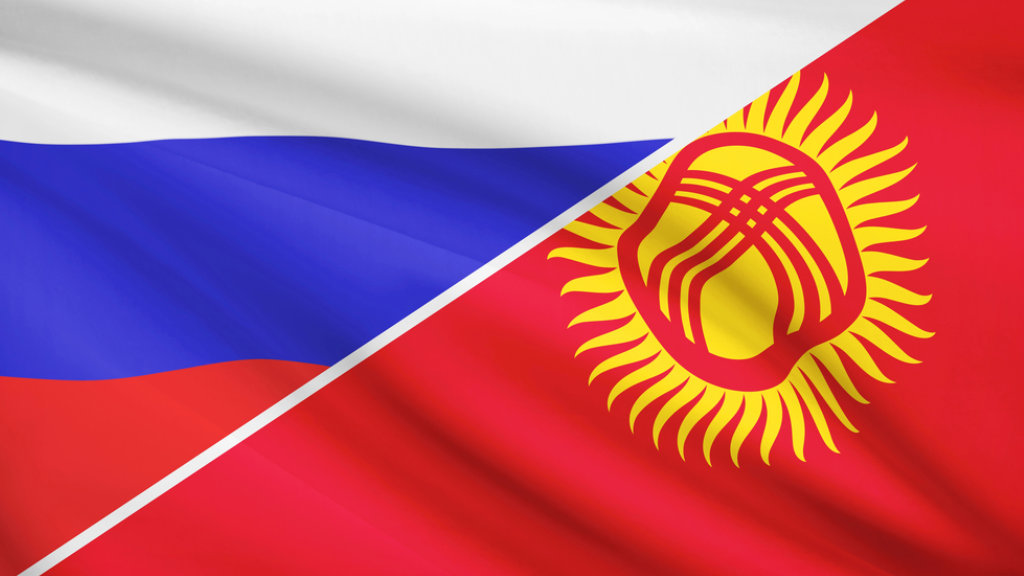
Akylbek Japarov, the Kyrgyzstan Prime Minister, has said that Kyrgyzstan and Russia intend to increase mutual trade by 70% to reach US$5 billion a year in the medium term. Japarov stated that “There is good potential for this. Last year, our trade was US$3 billion, and in four months of this year trade it has exceeded US$1 billion.” Japarov was speaking at a meeting of the Russian-Kyrgyz intergovernmental commission on trade-economic, technological and humanitarian cooperation in Krasnoyarsk.
Kyrgyzstan is developing new formats of e-commerce, trying to reduce entrepreneurs’ costs, and is introducing new instruments to support exporters in order to increase trade, Japarov said, while the Kyrgyz financial sector is stable. “Bearing in mind the parties’ ambitions to modernize the financial sphere and increase the share of settlements in national currencies, I believe the involvement of Russia’s largest banks – Sberbank, VTB, Vneshekonombank, Gazprombank – it is important for the financial market of Kyrgyzstan to open branches of these banks in the country” Japarov said. Kyrgyz banks are ready to provide services to financial flows of Russian legal entities and citizens, he said.
That goes hand-in-hand with Russian e-commerce businesses setting up logistics operations in Kyrgyzstan to help Russian consumers access Kyrgyz products and vice versa. Among the projects that are discussed between Bishkek and Moscow are projects in the light industry such as the Technopolis project in the Chüy Region where a new complex is expected to accommodate about 40 enterprises for 10,000 employees. Another project is the “Kyrgyz Textile Company”, planned to be opened in Osh and expected to create some 7,000 jobs. The third major project is the US$200 million construction of The Silk Way Industrial Park in Kyrgyzstan’s Chüy Region which is expected to have 112 specialized factories built to produce clothing, textiles, and footwear items. China has invested half of this capital with Russia the other half.
Clearly, Russia sees Kyrgyzstan as a gateway to China as well as potentially to other Central and South Asian markets. Investing in its manufacturing industries can show products as made in Kyrgyzstan rather than Russia and perhaps more amendable for export. As Kyrgyzstan, along with Russia is a member of both the EAEU and the CIS, this makes sense to take advantage of lower employment costs – providing the productivity gap between cheap labor and actual performance can be overcome.
Trade connectivity ties are also likely to improve over time as the much-delayed China-Kyrgyzstan-Uzbekistan railway has finally been approved and should be completed by 2030. Russia has rail connectivity with both China and Uzbekistan and this new route will provide rail access to and from Kyrgyzstan for first time.
Further Reading
Russia-Kyrgyzstan 2024 Bilateral Trade and Development
Russia’s trade and investment development with Kyrgyzstan is extensively covered in our 2024 Russia’s Pivot to Asia guide. This is a complimentary download and can be accessed in English here and in Russian here.
The Russian President, Vladimir Putin and India Prime Minister Narendra Modi have agreed to boost their bilateral trade to US$100 billion by 2030. Putin has been meeting with Modi for bilateral talks in Moscow, during which they discussed a wide range of issues. The two sides agreed on a plan of strategic cooperation until 2030.
According to Russian customs data, the Russia-India bilateral trade volume hit a record US$23.1 billion in the first four months of the current year, marking a 10% rise versus the same period in 2023. That implies a projected Russia-India 2024 bilateral trade figure of around US$69 billion.
Trade Settlement
Putin and Modi also discussed technical issues concerning trade financial settlements in rubles and rupees, a complex subject we have previously discussed here. Creating an effective infrastructure payment system is one of the most important issues for the two countries.
Bilateral trade between the nations has almost tripled in the past two years, with India ramping up energy, fertilizer, and coal imports from Russia. Russia’s exports are currently worth around US$60 billion, while imports from India are at US$4 billion. That has created a significant trade imbalance and an oversupply of rupees in Russia’s foreign currency account. New Delhi’s Ambassador to Moscow, Vinay Kumar, has said that India is planning to boost exports to Russia, however the main issue will be how India can spread its trade platform with Russia to include other currencies. While no further news on a “BRICS Bridge” style architecture, where transactions are made in a BRICS group basket of currencies has yet emerged, the subject will have been thoroughly discussed. If adopted, the BRICS Bridge concept would see an option for intraBRICS trade to be settled in a combination of currencies from Brazil, Russia, India, China, South Africa, Egypt, Ethiopia, Iran, Saudi Arabia and the UAE. Of these, Chinese Yuan, the Saudi Rial and the UAE Dirhams would be the most valuable alternatives from the Russian perspective. The fact that the two leaders have indicated annual sustainable bilateral trade growth of 5% from now until 2030 suggests that a solution is in the pipeline.
Saudi Arabia’s potential inclusion is this currency basket is an interesting one. It recently refused to renew its previous agreement with the United States to use the US dollar as the main currency in oil trade – the so-called ‘petrodollar’ arrangement, while there are reports that Riyadh was firmly against the expropriation of Russia’s frozen financial assets by the G7 and had indicated that if this occurred, they would sell off Eurobonds. With Saudi Arabia now part of the BRICS group, it suggests that Riyadh’s involvement in a ‘BRICS Bridge’ settlement scheme could become globally influential and provide Riyadh with more influence in global energy pricing.
Other Trade & Investment Areas
Putin and Modi will have also discussed other ways to boost trade and investment cooperation. Shipbuilding is an area that has gone under the radar somewhat, however Modi was previously the Governor of Gujarat State in India’s West, a major shipbuilding region. He has expressed interest in collaborations with Russia over the development of icebreaking oil tankers – deliveries already operate from Russia’s Yamal Peninsula to Indian processing facilities. Modi visited the Vladivostok shipyards in 2021. Developments can also be expected in this sector. Talks were also held about Russia building an additional six nuclear power plants in India. The two countries are also exploring the prospects of collaboration in the field of quantum computing, including the creation of quantum computers, and developing India’s semi-conductor industry to boost its productivity and provide Russia with much-needed supplies – especially as Russia is finding sources hard to come by and its economy is powering ahead – Russia’s PMI Index was 54.9 in June, compared to 43.5 in Germany, indicating huge demand in the Russian economy.
Further Reading
Russia-India 2024 Bilateral Trade and Development
Russia’s trade and investment development with India is extensively covered in our 2024 Russia’s Pivot to Asia guide. This is a complimentary download and can be accessed in English here and in Russianhere.
China’s RMB Yuan accounted for virtually the whole volume of exchange forex trading after the imposition of sanctions against the Moscow Exchange (MOEX), making up 99.6% of all transactions, the Central Bank of Russia has stated. Trading volume on the over-the-counter forex market reached ₽13 trillion (US$148 billion) in June.
When sanctions were first imposed in 2022, the average daily forex trading volume on MOEX fell 32.7%. However, the Moscow exchanges liquidity moved from “toxic” currencies to the RMB Yuan, increasing its trading volume on MOEX to record highs, including the ₽509 billion (US$5.8 billion) traded on June 19.
US dollar and euro trading on MOEX has been suspended since June, as a result of sanctions imposed by the United States and European Union. It is possible to conduct over-the-counter trade on MOEX, but volumes have plummeted. Euro over-the-counter trade is currently less than US$3 million a day, a miniscule amount considering the Russian economy is now the world’s 4th largest in PPP terms.
It means that the US dollar and the euro have been practically wiped out as currencies in Russian trade. The Bank of Russia will want to see diversity in currency trade however, with the potential introduction of a basket of currencies under the “BRICS Bridge” type of mechanism likely to be preferred balance.
If adopted, the BRICS Bridge concept would see an option for intraBRICS trade to be settled in a combination of currencies from Brazil, Russia, India, China, South Africa, Egypt, Ethiopia, Iran, Saudi Arabia and the UAE. Of these, Chinese RMB Yuan, the Saudi Rial and the UAE Dirhams would be the most valuable alternatives from the Russian perspective, although Russia’s trade with Central Asian countries is also on the rise and these may also start to show some increases in forex trading volumes.
Laziz Kudratov, Uzbekistan’s Investment, Industry and Trade Minister, has stated that Uzbekistan and Russia have every chance of increasing bilateral trade to US$30 billion by 2030, speaking at the Uzbek-Russia working group for increasing bilateral trade being held in Moscow.
Kudratov pointed to the major expansion of the structure of goods and the increasing share of products with added value. The implementation of a joint action plan boosting Uzbek-Russian trade in 2024-2030 is crucial for achieving the target, Kudratov said.
Kudratov also visited the Russian Foreign Trade Academy to discuss cooperation details and plans to open a branch of the Academy in Tashkent. The Uzbek Agency of Statistics estimates bilateral trade stood at US$9.8 billion in 2023.
Russian President Vladimir Putin had visited Tashkent in May and signed 27 documents aimed at expanding bilateral cooperation in various sectors with the Uzbekistan President Shavkat Mirziyoyev. These included agreements to expand cooperation in trade, culture, tourism, health, transportation, aviation, higher education, and energy, as well as a contract to build a low-power nuclear power plant in Uzbekistan.
Tashkent has also indicated it is prepared to discuss full membership of the Eurasian Economic Union, which if happened, would provide free trade access to Russia as well as Armenia, Belarus, Kazakhstan, Kyrgyzstan and its associated free trade agreements with China, Iran, Serbia and Vietnam.
Further Reading
Russia-Uzbekistan 2024 Bilateral Trade and Development
Russia’s trade and investment development with Uzbekistan is extensively covered in our 2024 Russia’s Pivot to Asia guide. This is a complimentary download and can be accessed in English here and in Russian here.
Indian Prime Minister Narendra Modi has been in Moscow holding talks with Russian President Vladimir Putin, in discussions likely to have far-reaching, positive consequences for Russia-India bilateral trade as well as the BRICS group.
There are however, technical problems to solve. A major stumbling block is that India buys far more from Russia than vice versa, which on one hand is a positive, yet on the other creates another set of difficulties. With bilateral trade running at US$50 billion last year, and increasing, Indian purchases of Russian exports outstrip Russia’s purchases by about 4 to 1. That becomes awkward when the Indian rupee is not fully convertible to other currencies. This means that rupees can be exchanged at market rates in certain cases, but approval is required for larger amounts – and India’s purchases of Russian goods are definitely ‘larger amounts’. So why doesn’t the Indian Prime Minister just agree?
Making the rupee a fully convertible currency would mean increased liquidity in financial markets, improved employment and business opportunities, and provide easier access to capital. However, disadvantages include higher volatility, an increased burden of foreign debt, and a negative effect on the balance of trade and exports. With a huge population, balancing the fiscal problems created by moving the rupee to full convertibility could create significant unrest – and expose the rupee to unwanted speculation (and economic punishment) by other actors wanting to push its value down.
Modi therefore has his hands partially tied. However, a little noticed sleight of hand has recently been introduced by the Reserve Bank of India (RBI), the country’s Central Bank. Last month, in a move towards de-dollarisation, the RBI permitted banks from 22 countries to open Special Vostro Rupee Accounts (SVRAs) for settling payments in Indian rupees. To increase bilateral trade in local currency, 20 banks operating in India are expected to open 92 SRVAs of partner banks from 22 countries. These are: Bangladesh, Belarus, Botswana, Fiji, Germany, Guyana, Israel, Kazakhstan, Kenya, Malaysia, Maldives, Mauritius, Myanmar, New Zealand, Oman, Russia, Seychelles, Singapore, Sri Lanka, Tanzania, Uganda, and the United Kingdom. The collective multilateral trade between India and these countries – including Russia – is over US$205 billion.
While this increases the volume of rupees India now receives for goods it sells to these countries, it has positive effects as well. It keeps a check on the flow of US dollars, euros and other globally traded currencies out of India, and reduces the transaction costs associated with currency conversions, further strengthening India’s economic ties with the participating countries.
Where this benefits Russia is that this mechanism slows down India’s foreign currency payments for goods, and additionally provides it with access to other foreign currencies from the 22 permitted countries in the reverse trade direction. These include major Russian trade partners in Belarus and Kazakhstan – both members of the Eurasian Economic Union alongside Russia – in addition to Bangladesh, a Russian client state with billions of dollars of Russian investment in nuclear power plants. In addition, several other countries under India’s Vostro account scheme also have expanding trade volumes with Russia: Botswana, Guyana, Kenya, Malaysia, Myanmar, Oman, Sri Lanka, Tanzania and Uganda. While India’s Vostro account scheme won’t fully solve Russia’s rupee problem, it will help provide alternatives. The scheme could also be expanded.
There are other implications. The RBI’s move is a direct rebuff to the use of the US dollar, which will see its use effectively replaced by roughly the US$205 billion per annum in rupees and other currencies. Creating demand for the rupee also helps strengthen the currency and makes it more valuable. With Russia already holding an estimated US$160 billion of rupees in Indian banks, and this increasing by an estimated US$1 billion a month, rupee value appreciation can be a bonus for Russia – if it can offload the currency. At present, according to the Deccan Herald, Russia has been using some of these reserves to purchase Indian stocks and bonds which it will later want to sell. India is also a major buyer of gold – some of which can be redirected back to Russia. All in all, Moscow may be in for a decent return over time – but it will be looking to Modi to assist with increasing non-rupee settlements via India’s Vostro account scheme to help with bilateral trade cashflows. Balancing India’s trade books with Russia is a primary reason that Modi is in Moscow – with innovative schemes to improve the situation already on the agenda.
Further Reading
Russia-India 2024 Bilateral Trade and Development
Russia’s trade and investment development with India is extensively covered in our 2024 Russia’s Pivot to Asia guide. This is a complimentary download and can be accessed in English here and in Russian here.

 Русский