Other unexpected bonuses are increasing Russia’s taxable corporate income from foreign investors originating from unfriendly countries as a direct result of sanctions being placed upon the country. Political pressures are also being placed on foreign investors to exit. It is another example of political thinking in the West apparently being divided from the fiscal repercussions.
Suspension of Double Tax Treaties With Russia
There are two reasons for this increase. Firstly, businesses that do not have a legal presence in Russia but have been conducting trade with business partners in the country are subject to withholding taxes, which is a form of income tax. The tax treatment for these transactions varies depending upon the specific Double Tax Agreement (DTA) that Russia has with specific countries; and can be industry and service specific. However, in response to Western sanctions, in August last year Russia suspended the DTA that it had in place with 38 unfriendly countries. These included Albania, Australia, Austria, Belgium, Bulgaria, the Czech Republic, Canada, Croatia, Cyprus, Denmark, Finland, France, Germany, Greece, Hungary, Iceland, Ireland, Italy, Japan, Lithuania, Luxembourg, Macedonia, Malta, Montenegro, New Zealand, Norway, Poland, Portugal, Romania, Singapore, Slovakia, Slovenia, South Korea, Spain, Sweden, Switzerland, the United Kingdom and the United States.
As a result, the preferential tax treatments previously enjoyed by businesses from these countries have largely been cancelled, and they must now pay higher taxable rates when it comes to receiving income from Russia. These tax rates are deducted at source in Russia prior to payments being made abroad (not all goods and services are forbidden, and such trade continues in niche markets).
There have been mixed signals coming from the affected countries. For example, the United Kingdom, which on one hand has imposed sanctions upon Russian trade, on the other released a statement on 18th August last year that called for the DTA to be reinstated.
The longer-term impact upon these corporates is that it increases their costs of doing business with Russia. But if Russia is an important market for them – and for most of them it is – they will absorb the extra burden. That simply means higher sell-on costs to the end user in Europe, and increased tax revenues for Russia. In fact, according to its June budget amendments, Russia’s Federal Treasury is expecting an additional ₽77 billion (US$876 million) more than budgeted for. The sole reason for this windfall is the suspension of the previously negotiated DTA.
Capital Gains Tax Due On Russian Market Exit
The second reason is fiscal income being generated in Russia by some foreign investors selling off property in the country and their shareholdings in Russian legal entities. These are registered legal entities in Russia and tend to be from what are now ‘unfriendly countries’. Typically, their Russia business have been profitable, but government political pressure and the imposition of sanctions has interfered with their business operations. About 30% of the total number of foreign investors from the West have decided to exit, or sell their businesses to their Russian management or partners, however the sale price generated is also subject to a form of capital gains tax in Russia.
In general, most of these foreign assets have been sold at reduced values, which is very much to the benefit of the buyer. In terms of the capital gains tax revenues charged on these transactions, the Russian treasury expects to now receive a windfall of an additional ₽84 billion (US$960 million) more than budgeted for. During 2024 for example, Danone, HP, Hyundai, Polymetal, Caterpillar, and Ceetrus all left the Russian market.
The longer-term impact on these foreign investors is that they have almost certainly lost the Russian consumer market on a permanent basis, as other competitors will simply take their place. This has already been the case in the auto industry, where Chinese brands have stepped in to take the place of European ones.
However, it should be noted that some of these foreign investors have a ‘buy-back’ clause in their exit deals, in the event that the political situation improves – although many political trade analysts feel this may not be for at least another ten years. The longer-term impact on Russia however is negligible – the businesses continue to operate in Russia, under Russian management and ownership, and will continue to be profitable and to pay taxes in Russia.
These two examples showcase how Western political thought as concerns imposing sanctions upon Russia, and especially pressure upon companies to exit, have little-thought through impact upon European consumers themselves. They instead add to competition for EU corporates within its export markets, while imposing minimal financial burdens upon Russia itself.
Russian and foreign investors are starting to become more savvy over tax incentives on offer in Russia’s Special Administrative Regions (SAR), increasing their investments by almost a third since the beginning of this year. The two SAR that Russia currently has are sited in Kaliningrad, in Western Russia, and Russky Island, Vladivostok in the Primorye Krai region of the Russian Far East.
428 incorporations have now been invested in these areas, according to the Russian Ministry of Economic Development, an increase of 29%. The demand for special zones is increasing, as it is becoming increasingly difficult to manage a business from overseas offshore jurisdictions due to sanctions. Kaliningrad tends to compete with similar British jurisdictions such as Jersey and the Isle of Man, as well as Cyprus and to some extent, Malta.
Russky Island offers alternatives to jurisdictions such as Hong Kong, and Singapore, in addition to Mauritius and the BVI. Previous double tax treaty agreements with all these offshore centres have also been suspended under sanctions. The Cyprus agreement was cancelled for example in 2022 and the jurisdiction has become Russia-toxic as part of the EU. Numerous previously Cyprus-based corporates have been moving away.
Moving to Russian SARs helps companies with Russian investments resume paying dividends to their shareholders. This is especially the case if those dividends are realised from markets in Russia as well other friendly countries.
The number of new incorporations in these two SAR is 10% more than in 2023, and almost three times more than in 2022. Such figures indicate that foreign companies are actively moving to Russian legal and tax jurisdictions, although the concept has remained a novelty to date. But this perception is changing.
The total amount of investments in Russia’s two SARs amounts to ₽85 billion (US$965 million). Investors are typically medium-sized, light industrial manufacturing, production, or assembly plants, but corporate investors have also been attracted as they can make dividends payments to Russian shareholders without facing financial barriers caused by sanctions. There are several examples: VK, Russia’s equivalent to Facebook, T-Bank, a large digital services consumer bank, Rusal, the largest aluminium producer in Russia, the Lenta retail store chain and many significant Russian corporates – whose shares are now traded on the Moscow Exchange. From July 24, trading in Yandex securities will begin after the company moved to the Kaliningrad SAR.
For SMEs, Russia’s two SAR offer a reduced 5% income tax for individuals and corporates, and do not pay taxes on dividends, property and the product imports into Russia, while currency controls do not apply. SARs are governed by Russia’s Foreign Corporate Law, which states that they are allowed to work according to the norms adopted in the country they were originally registered in until 2039.
The SARs also allows previously foreign registered companies to redomicile and continue to operate in Russia without fear of Western sanctions. The main purpose of organising these SAR was to create an alternative to foreign offshore zones for Russian business.
In the coming years, these SAR will actively develop and gain popularity, as they have been shown to stimulate regional development. It is possible that Moscow may facilitate additional zones, probably close to its Eastern border regions.
Russia’s Pivot to Asia can provide details and advisory services to best match your corporate activity to the variety of services and incentives offered by Russia’s SARs. Please email us at research@russiaspivottoasia.com
Oleg Kozhemyako, the Governor of Russia’s Far Eastern Primorsky territory, has stated that a special port for use by Belarusian exporters will be developed on Russia’s eastern seaboard. The announcement was made after Kozhemyaako met with Alexander Lukashenko, the President of Belarus in Minsk earlier this month. Chinese developers are also interested in the construction work, and the port could become a strategic transit point for cargo transport between Belarus and China. The construction of a Belarusian port is also underway in Murmansk and is expected to be completed by 2028.
The location of the Pacific Belarusian port will be determined by the end of 2024. Kozhemyako said that “This year we will already decide on the choice of the most convenient location, which must have both depth and existing infrastructure.”
In addition, the construction of a new seaport will contribute to the development of the Northern Sea Route and transit traffic on this transport corridor, which, although characterized by difficult climatic conditions, provides the shortest distance by sea between Asia and Europe.
Experienced port implementation specialists from Belarus have also visited the region.
Before Western sanctions were imposed, Belarus mainly exported to the European Union, and its main ports were operated between Lithuania and Latvia. However, with the adoption of EU restrictions, Belarus has turned to alternative had marine outlets.
China has been a significant investor in Belarus, with many automotive ventures registered at the Great Stone Industrial Park near Minsk airport. The original intent had been to target eastern European markets with Belarus-produced, Chinese auto brands. Instead that production will now be redirected to Russia, as well as to China and elsewhere in Asia. Belarus is also a world-leader in agricultural vehicles such as tractors and highly specialised mining trucks.
The Belarus President has met with China’s President Xi Jinping twice this year, and signed agreements totalling over US$3.5 billion in investments in February. This substantial economic pact signalled not just a strategic partnership but also underscored Belarus’ intention to pivot eastward.
China’s imports from Belarus surged by 65.4% in 2023, while bilateral trade grew by 33% to reach US$7.2 billion.
Sergey Glazyev, the Eurasian Economic Union Minister for Integration and Macroeconomics, has been taking part in the 11th Russian-Kyrgyz Interregional Conference in Krasnoyarsk.
The event is annually attended by heads of regions, entrepreneurs, representatives of business development and support institutions of the countries of the Eurasian Economic Union (EAEU). These include Armenia, Belarus, Kazakhstan, Kyrgyzstan and Russia.
The 2024 conference was held under the leadership of Akylbek Zhaparov, the Chairman of the Kyrgyz Cabinet of Ministers, and Alexey Overchuk, Deputy Chairman of the Government of Russia.
Glazyev stated that the development of interregional trade and economic cooperation is a key element of the Kyrgyz Strategy 2025. To implement it, the Commission held more than a dozen face-to-face events in various regions of the EAEU countries, webinars for representatives of the business community and regional authorities, and a special portal was launched on the EEC website.
Within the framework of the conference, the Commission organised a panel session “Interregional cooperation in the EAEU space.” The session presented an overview of the measures and activities implemented by the Commission to enhance interregional cooperation in the Union; proposals were made to improve the effectiveness of interregional cooperation in finance, investment, foreign economic activity, and transport and logistics.
Dmitry Volvach, Deputy Minister of Economic Development of Russia, who took part in the EEC session, spoke about the portal on interregional cooperation in the EAEU. According to him, the resource formed by the Commission allows any economic entity to publish information on goods and services, potential and existing investment projects, business events, regional preferences (benefits) for investors, as well as on the Union’s opportunities for business development, stimulating cooperation and trade and economic cooperation between regions, free of charge.
The need to develop transport links between Krasnoyarsk and Kyrgyzstan, including the establishment of direct flights between Krasnoyarsk and Tamchy (Issyk-Kul), which will help to unlock the tourist potential of these regions and increase bilateral trade opportunities was also discussed. At present, it is a difficult, 36 hour road journey.
Krasnoyarsk is the second-largest city in Siberia after Novosibirsk, with a population of over 1.1 million, and an important junction of the Trans-Siberian Railway. Tamchy is located on the north shore of Lake Issyk Kul, a major eco-tourism spot which Bishkek has spent millions on developing.
The EAEU delegation also took part in the business session “Cooperation opportunities for small and medium-sized businesses of Russia and Kyrgyzstan” during which tariff, logistics and improved digital customs services were all discussed.
The Indian government is in discussions with Russia on easing non-tariff trade barriers, with the goal of boosting its exports to the country, Indian Commerce Secretary Sunil Barthwal has stated. The move comes after Russia-India trade has boomed in favour of Russian exports, but left Moscow with an over-abundance of Rupees in its capital account. The Indian Rupee is not a fully convertible currency. A partial solution would be for India to boost its exports to Russia and for Russia to use those excess Rupees to pay for them.
Barthwal said that New Delhi wants to make its trade with Russia more balanced. Last week, the leaders of both countries set a trade target of US$100 billion by 2030. In 2023 the figure was US$65 billion, of which only US$5 billion were Indian exports to Russia. The bulk of bilateral transactions are Indian purchases of discounted Russian oil, coal and fertilisers. He said that “We are looking at various sets of commodities such as electronics, engineering goods and other items, where trade can be enhanced.” He added that India is also eyeing sectors where Russia is under Western sanctions.
Barthwal noted that India is looking for greater market access for its exporters, and has raised the issue of non-tariff barriers with Russia. According to Barthwal, Indian exporters of marine products and pharmaceuticals face issues in Russia regarding certification, and New Delhi has conveyed its concerns to Moscow.
There are also practical issues such as understanding Russian regulations and import approval procedures and administration – Indian exporters are generally not familiar with either the protocols or the language.
Foreign exporters requiring assistance in accessing Russian markets may contact Russia’s Pivot to Asia for help. Please email: research@russiaspivottoasia.com
During their summit in Moscow last week, Indian and Russian leaders Vladimir Putin and Narendra Modi discussed the need to expand and diversify economic cooperation. After the talks in the Kremlin, Putin’s top economic adviser Maksim Oreshkin said that “suitable payment mechanisms” featured in the discussions.
The two sides have signed nine separate agreements, including deals on promoting cross-border investments, on trade and investment in the Russian Far East through 2029, and cooperation on climate change and low-carbon development.
The countries have also revived negotiations on a Free Trade Agreement covering goods between India and the Eurasian Economic Union (EAEU), comprising Armenia, Belarus, Kazakhstan, Kyrgyzstan, and Russia, along with the logistics and transport development between the two countries via the International North–South Transport Corridor (INSTC). That carries freight directly between Russia and India via the Caspian Sea, transit through Iran and shipping to Mumbai.
The possibility of talks on a separate, Russia-India bilateral free-trade deal in services and investment has also been raised.
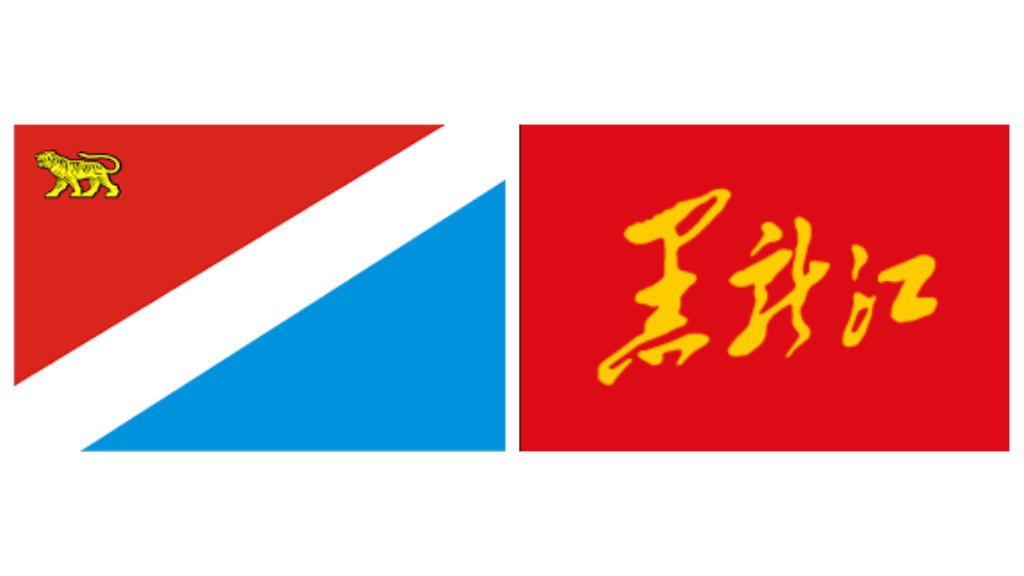
The government authorities of Russia’s Primorye Krai region, which borders China and North Korea, aim to boost trade with China up to US$11 billion by the end of 2024. The statement comes as the region hosts a delegation for the facilitation of international trade from China’s northern Heilongjiang province, which shares a significant border with Russia. During the visit, the parties discussed trade prospects. The flags of both Provines are shown above.
Andrey Blokhin, the minister of economic development of the region, said that “China is the main trade partner of Primorye. The region’s trade with China has grown by over 25% a year for the past few years. We plan to increase the trade by US$2.4 billion to US$11 billion in 2024”
The region’s exports to China include seafood, forestry and agricultural products, including milk, corn, soybeans and honey. “Now we can offer for export processed softwood and hardwood sawn timber and manufactured wood production. With stable demand, we are also ready to increase milk exports to 15,000 tonnes from 2027 and exports of organic Primorye honey to 12,000 tonnes,” Blokhin said.
He also invited Chinese partners to participate in the region’s housing, tourism and infrastructure projects. The minister also extended an invitation for the Chinese delegation to attend the ninth Eastern Economic Forum, which will be held in Vladivostok in early September.
Vladivostok is the capital city of the Primorye region, is a major Pacific Ocean port, and is connected via the Trans-Siberian railway to multiple large Russian cities including Moscow. It also has connections through to Beijing via Harbin as well as a large free trade economic zone offering preferential tax rates for foreign investors.
Russia has redefined its Asia strategy. Here’s how it will work
The most misguided way to develop Russian policy in Asia would be to focus it on interaction with regional institutions and platforms, ‘fraternal graveyards’ where individual expression is lost in the need for everyone to find a common denominator. This is all the more true now that these institutions have become arenas for confrontation between China and the United States, which are by no means restricted in using them exclusively in the interests of their own struggle. Previously, it was only the Americans who did this, making most regional platforms as meaningless as international conferences. Now China has joined in and is pushing its own agenda. As a result, the space for positive interaction within such entities as APEC or the East Asia Summit (EAS) – which until a few years ago were considered important for promoting Russian interests in Asia – is shrinking. Therefore, the most promising strategy for Russia in Asia today is to focus on dialogue with individual countries in the region, taking into account their interests as well as its own.
From the very beginning, Russia’s pivot to the East was seen as a project aimed not only at increasing the volume of trade and economic relations with Asian states, but also important for Moscow’s political presence in this region. It should be borne in mind that the process began in a fundamentally different historical era, when the world continued to live by the rules of globalization, created under the leadership of Western countries and mainly in their interests. Now, the situation in and around Asia has changed significantly.
First, the space of global economic openness itself is gradually eroding under the pressure of the West’s sanctions policy against China and Russia.
Second, in the context of a series of major military and political crises involving the major powers, the viability of the international institutions that have acted as the main agents of political globalization in recent years is being called into question.
Third, multidirectional processes are gaining momentum in Asia itself due to the intensification of Sino-American contradictions and the risky position of regional powers in these conditions.
Finally, Russia itself has significantly reoriented its foreign economic relations towards Asia in recent years. This has been stimulated by the conflict with the West and its sanctions pressure, while almost all Asian countries remain friendly towards Russia.
This means that now, almost fifteen years after the pivot to the East began to take shape as an important component of Russian foreign policy, it is time to take a critical look at its various doctrinal aspects. In any case, Russian policy in Asia is not unchanged from the times when the general situation in the world was very different. And some provisions of this policy need to be substantially clarified. First of all, with regard to the formats of political presence in Asia and the establishment of dialogue with individual Asian states. The Russian President’s recent visits to North Korea and Vietnam only confirm that our strategy in Asia is increasingly focused on dialogue with individual states. This does not preclude attention to broad international formats. But these can no longer serve as the primary platforms for promoting Russian interests.
In both cases, the intensification of dialogue is a sign of the high level of trust between Russia and its main partner in Asia, China.
For Beijing, all of Asia is an area where its cultural influence has been dominant for centuries, if not millennia. It is Chinese culture, including its political tradition, that has shaped the philosophical underpinnings of the statehood of countries, even if their relations with China have not been free of conflict. Yet Beijing is not allied with any of its immediate neighbors, and many of them are uneasy about its growing power. Another worrying factor for Asian countries, which the Chinese also understand, is the growing conflict between Beijing and Washington. For several decades, virtually all Southeast Asian countries have benefited from globalization driven by Sino-American cooperation. Now the situation is changing.
It can be assumed that China is aware that unilaterally strengthening its own position in the region could lead to further rapprochement between states such as Vietnam and the US. That would be a destabilizing factor. North Korea is a different case, of course. But here, too, Beijing’s options are severely limited. Although the confrontation with Washington is an irreversible, objective process, China wants to make it as peaceful as possible. Russia, on the other hand, is much freer in its actions, as confirmed by the results of Vladimir Putin’s visit to Pyongyang. China seems to understand that the problem of North Korean isolation must be solved one way or another. But for its own reasons it is not prepared to do so directly. At the same time, Russia’s engagement and partnership with Pyongyang cannot pose a threat to Beijing’s interests and security. That is the nature of the Russia-China relationship.
In the case of Vietnam, the work of Russian diplomacy is also linked to Asian countries’ desire to balance China’s influence and US pressure. The Vietnamese authorities make no secret of the fact that Washington is a priority partner for them in trade, technology and investment. And the development of political ties between the two countries makes it clear to Beijing that Vietnam, like India, cannot see itself as part of China’s sphere of influence. At the same time, the US also seems to realize that no one in Vietnam will become Washington’s unconditional ally in confronting its powerful neighbor. This generally contradicts the logic of the behavior of the world’s major powers, among which Vietnam occupies a prominent place.
And in this case, strengthening ties with Russia becomes the most appropriate alternative to the undesirable choice between China and the US.
It would certainly be a bit overconfident to think that Russia can replace one of Vietnam’s biggest trade and economic partners. But it is an independent and reliable friend in such important areas as energy and food trade. The question of competition with the EU does not even arise here – in recent years the Western European powers have fully confirmed their position as junior allies of the United States, with no geopolitical value of their own.
To sum up, Russian policy in Asia has now entered the next stage of its development. It is no longer based on the ideas of the past, when the most important thing was to ‘illuminate’ as many international platforms and forums as possible. Such illumination has achieved very little before – the right to be a bystander in the Sino-American conflict – and now it has become completely meaningless. But strengthening the relationship at the bilateral level is a painstaking task for diplomats and businesses, and of little interest to the public or the media. In the years to come, therefore, the work to get closer with Asian states will look like a smooth process, but behind the scenes there will be a lot of hard graft.
This article was written by Timofey Bordachev, Program Director of the Valdai Club, and was originally published in Russian here. Views expressed do not necessarily concur with the views of the Russia’s Pivot to Asia, yet are included here to provide access to other opinions.
Further Reading
Russia’s Pivot To Asia 2024
Russia’s Pivot to Asia is extensively researched in our PDF, and contains reviews of Russia’s trade and investment policies with over 100 countries throughout Central Asia, the Middle East, Africa, Southeast Asia and Latin America. It is a complimentary download and can be accessed in English here and in Russian here.
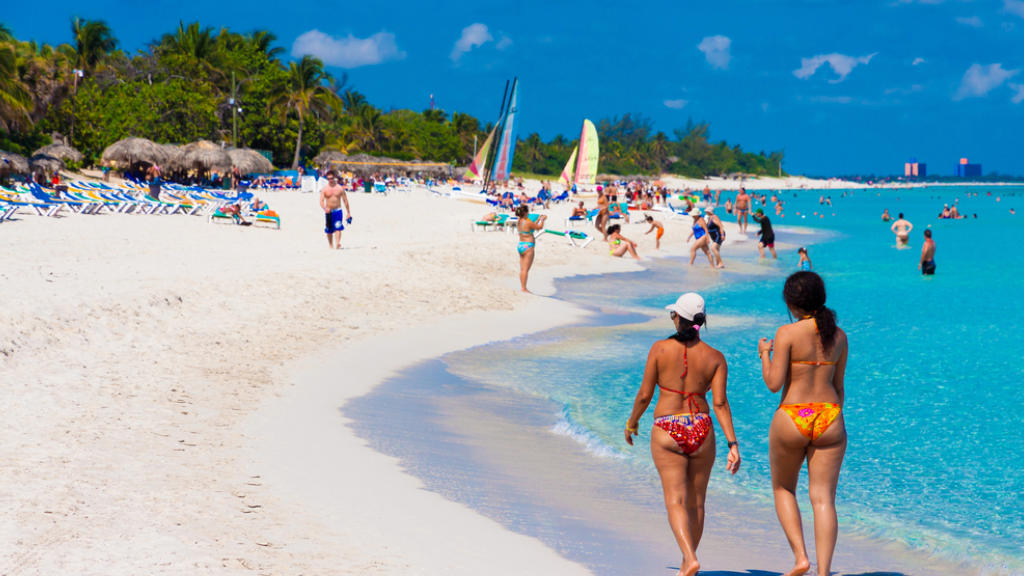
Almost 113,000 Russian tourists visited Cuba in the first half of 2024, according to Cristina Leon Iznaga, a diplomat at the Cuban Embassy to Russia in Moscow. She said that Havana hopes that the figure will increase to 200,000 by the end of the year.
Iznaga said that “In January-June, Cuba was visited by 112,700 Russian tourists, up 67% on the same period last year. We’ll have attracted 200,000 Russian tourists by the end of 2024.” Russians are the third largest group of visitors, after Canadians and the Cubans who fly in from abroad, she said. The United States and Germany are the others in the top five.
In 2023, Cuba welcomed 184,800 Russian tourists, a record number which broke the pre-pandemic record of 178,000 in 2019, the Cuban Ministry of Tourism said.
Cuba has been under sanctions from the United States since 1962.
Russia provides direct flights to Havana from Moscow via Aeroflot. Cuban culture received an international boost several years ago with the release of the film “Buena Vista Social Club” the true story of elderly musicians who came together to perform traditional Cuban dance hall music one last time, only for their songs to reach an international audience, culminating in subsequent performances at Carnegie Hall.
Russia has long diplomatic, political and cultural ties with Cuba. The best time to visit Cuba is from November to April when long and sunny days are combined with dry weather, making it a pleasant time for tours on the island. However, temperatures are perfectly moderate all year long due to Cuba’s tropical climate, although the May-October period can include rainy days. The island is world famous for its excellent rums and cigars.
The World Bank has compiled a list of countries by the level of trade surplus by the end of 2023. In total, US$23.3 trillion worth of goods were exported worldwide, and US$22.9 trillion worth of goods were imported. The total surplus amounted to US$365 billion.
In terms of the countries with the highest positive trade surplus (more export earnings than import expenses), the first place went to China, with a 2023 US$594 billion surplus. Germany was second, with US$245.3 billion and Ireland third with a net profit of US$178 billion.
Russia took the seventh place in this list. By the end of 2023, it earned US$121 billion more from its exports than the money it spent on imports. Western sanctions, which limited the supply of Russian products to EU countries, have had little effect on Russia’s export earning capabilities. Other economies with major trade surplus’ were other energy-driven economies: Saudi Arabia, the UAE, Qatar, Kuwait and Norway.
The number of countries with trade deficits has also increased, reaching 72 countries who spend more on imports than they earn on exports. Number one is the United States, which imported US$1.1 trillion more goods than they sold. India was second in terms of deficit, reaching a negative of US$245 billion – less than 25% of the US total – but with a consumer population over one billion higher. European Union economies were also significant consumers of more than they earned.
A new block container train will be launched from Ulyanovsk to Turkmenistan, Alexey Russkih, the Ulyanovsk governor has stated at the International Industrial Exhibition Innoprom. This will allow goods from the Ulyanovsk region to be directly delivered to Turkmenistan, and also to Iran and Pakistan.
Russkih said that “Together with colleagues from the Turkmen railways, we discussed the new route of the Ulyanovsk-Ashgabat-Inche-Burun-Sarahs block train. Thanks to the route along this eastern railway corridor of the Middle Volga-Caspian-Persian Gulf canal (North-South transport corridor), Russian goods will be able to reach Turkmenistan and its neighbouring regions: Afghanistan, Iran, and Pakistan.”
He clarified that at the moment, representatives of the Ulyanovsk region have already met with the main terminal operators and freight forwarders. “We have agreed on the design of the route, the development of a roadmap and the approval of deadlines for synchronizing work, as well as combining the route using railway and sea terminals of the port of Turkmenbashi,” the governor of the Ulyanovsk region said.
According to him, agreements on the development of technology for the formation of a direct block train have already been reached. “This will significantly speed up and reduce the cost of delivery of goods in this direction” Russkih explained.
It was also reported that a direct container train is also planned to be launched from the Ulyanovsk region along the western branch of the North-South transport corridor (via Azerbaijan and Iran). In the summer of 2022, direct deliveries of goods between Ulyanovsk and China have already begun.
Discussions concerning the development of a new, potential BRICS currency have been on-going for some time, yet have intensified in recent months due to several Heads of States meetings taking place that have actively discussed and committed research into the issue. A trend is emerging in the modern geopolitical landscape: large international associations such as the BRICS and the Shanghai Cooperation Organisation (SCO) are actively discussing the idea of creating their own currencies for interstate settlements.
This initiative is becoming particularly relevant in the light of the current global economic situation and sanctions pressure on several countries. Russia, China and India, all being members of both BRICS and the SCO find themselves at the epicentre of these discussions.
The potential benefits of introducing new currencies for Moscow in particular are obvious: the development of such aa currency would help circumvent sanctions restrictions in international trade and reduce dependence on the US dollar, all transactions with which are transparent to the US Treasury Department.
It is interesting to note that the most active supporters of the idea of a single currency are Brazil within the framework of the BRICS and Iran in the context of the SCO. So what are the motives of these countries in introducing their own currencies and the consequences of implementing their initiatives?
Brazil and the BRICS currency
Brazil’s interest in creating a single BRICS currency has deep roots. Back in 2015, the BRICS New Development Bank (NDB) was founded, designed to finance projects of the participating countries that could not receive support through traditional international financial institutions controlled by Western countries.
This opened up opportunities for Brazil, not only for its own development, but also for the implementation of integration projects in Latin America, strengthening the region’s independence from the United States and Brazil’s leadership position.
However, in 2022, the bank, headed since March 2023 by an associate of President Lula da Silva and former Brazilian President Dilma Rousseff, was forced to suspend consideration of new investment projects in Russia due to fears of secondary sanctions from the United States.
This has prompted the Brazilian leadership to look for alternative tools to achieve its strategic goals.
Currently, the BRICS Bridge unified payment system is being developed, which will allow settlements using the national currencies of the BRICS countries, eliminating the need to convert into dollar through American banks. However, this process is far from over, and Brazil is forced to balance between the desire for financial independence and the risk of falling under secondary American sanctions.
The SCO and the Currency Initiative
The Shanghai Cooperation Organisation (SCO), originally established in 2001 to strengthen security in Central Asia, has expanded its agenda and geography over time. Today, it includes Belarus, China, India, Iran, Kazakhstan, Russia, Kyrgyzstan, Pakistan, Tajikistan, and Uzbekistan. Afghanistan and Mongolia have an observer status with the SCO, and a further fourteen — Azerbaijan, Armenia, Bahrain, Cambodia, Egypt, Kuwait, Maldives, Myanmar, Nepal, Qatar, Saudi Arabia, Sri Lanka, Türkiye and the UAE have dialogue partner status. The SCO represents 40% of the world’s population, with member countries contributing about US$23 trillion (30%) of global GDP.
The geopolitical events of the past three years have significantly increased the importance of economic issues in the context of ensuring regional security. The pivot of Russia’s foreign trade to the Global South, as well as a now aggravated situation in the Middle East and the Red Sea, has resulted in a change in logistics chains and increased the relevance of the development of the North-South transport corridor passing through Iran.
Iran, also disconnected from the SWIFT global payments system, is particularly interested in creating alternative mechanisms for international settlements.
Unlike Brazil, Tehran is less concerned about the possible reaction of the United States and is ready to take decisive steps to create an interstate payment system independent of the dollar.
The combining of Iran’s Shetab payment system and Russia’s Mir payment system has almost been completed. Towards the end of this year, it is expected that Iranians will be able to receive Rubles at Russian ATMs, and Russians will be able to use Mir cards in Iran with withdraw Rials.
Meanwhile, Russia’s trade with the SCO membershas breached US$330 billion, meaning the financial clout is certainly there.
China and India
China, being a key player in the SCO, takes a more cautious position on the issue of creating a single currency. On the one hand, Beijing is interested in a settlement instrument beyond the control of the United States.
On the other hand, China’s trade volumes with the United States and the EU significantly exceed the trade turnover with the SCO countries, which forces the Chinese leadership to act with an eye to possible consequences for relations with Western partners.
At the same time, the RMB Yuan is increasingly being used in international settlements between countries of the Global South. In these circumstances, it is more profitable for China to support someone else’s initiative to create an alternative payment system than to promote its own.
India, another major player in the SCO, is also interested in developing alternative international settlement mechanisms. The possibility of using the Indian RuPay payment system in Russia and the Russian Mir system in India is being discussed. These issues will have been actively negotiated between President Putin and Prime Minister Modi at the recent visit of the Indian Prime Minister to Moscow. Developments are certain to be announced in due course.
Russia’s interests
Russia, under pressure from Western sanctions, is highly interested in the creation of alternative mechanisms for international settlements. Given the structure of Russian foreign trade, the development of such mechanisms with Asian partners is a priority.
However, Moscow prefers not to be the main initiator of the creation of new financial instruments, fearing that Russian financial structures may become targets of secondary US sanctions. In this context, Iran, which is in an even more difficult position in terms of foreign trade, appears to be an ideal partner for the first steps in this direction.
At the same time, Russia, together with the central banks of the BRICS countries, is already working on the creation of a new settlement and payment infrastructure that will allow payments to be made in national currencies, including digital currencies.
Symbolic points to the future
A single platform would add anonymity to payments and, as a result, independence. This will help reduce the influence of third countries – such as the United States – on international settlements.
The creation of such an infrastructure will also increase the competitive advantages of the BRICS countries, as Russia uses advanced financial technologies.
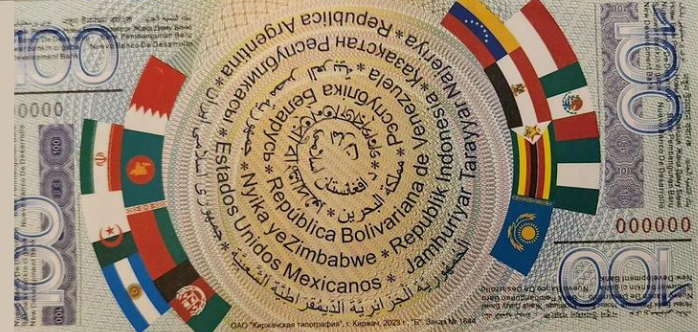
There have already been some symbolic gestures. In September 2023, a 100 BRICS banknote (pictured above) representing the future BRICS single currency was presented by Russian Ambassador to South Africa Ilya Rogachev to UAE Ambassador Mahsh Saeed al-Hameli. This took place during a meeting in Pretoria (South Africa), in connection with the accession of the UAE to the BRICS. The UAE subsequently joined from January this year.
On one side of this banknote are the flags of the five BRICS countries, and on the other side are the symbols of the states that intended to join the BRICS – and subsequently did so. It can be noted that the banknote itself was made in Russia.
Russia is also open to other initiatives that contribute to the diversification of international trade. The recent proposal of Pakistani Prime Minister Shahbaz Sharif on the use of barter schemes in bilateral trade may become the basis for the development of new settlement mechanisms in the future.
Key challenges
The creation of an interstate currency is a complex and lengthy process that requires overcoming many technical, economic and political obstacles. The experience of the introduction of the Euro shows that such initiatives go through several intermediate stages and require careful coordination between the participants.
The key challenges to the creation of common currencies within the framework of the BRICS and the SCO are:
The development of mechanisms for determining the exchange rates of national currencies in relation to the new single currency;
The creation of an effective clearing and settlement system between the participating countries;
Ensuring the stability of the new currency in conditions of volatility of global financial markets;
Overcoming political differences between the participating countries and reaching consensus on key issues of the functioning of the new monetary system;
Minimizing the risks of secondary sanctions from the United States and other Western countries.
Despite these difficulties, work on the creation of alternative mechanisms for international settlements continues. Many experts believe that the first step may be the introduction of a special unit of account, which will be used for offsets between the participating countries, without replacing national currencies in domestic circulation.
This approach would gradually increase the volume of trade in national currencies, reducing dependence on the US dollar and the euro. This is especially true for countries under sanctions pressure, such as Russia and Iran.
It is important to note that the creation of alternative mechanisms for international settlements is not limited only to monetary initiatives. Other forms of economic cooperation are also developing, such as swap agreements between central banks, the creation of common payment systems and financial messaging services similar to SWIFT.
The initiatives to create common currencies within the framework of the BRICS and SCO reflect the global trend towards the formation of a multipolar world economic order. These processes will undoubtedly have a significant impact on the structure of international trade and the financial system in the coming decades.
For Moscow, participation in these initiatives is of strategic interest, allowing it to diversify foreign economic ties and reduce vulnerability to Western sanctions. However, the success of these projects will depend on the ability of the participating countries to overcome existing differences and develop effective mechanisms for economic cooperation.
However, should a fully-fledged BRICS or SCO single currency not be created in the short term, the very real process of working on alternative mechanisms for international settlements is already helping to strengthen economic ties between the participating countries and the formation of new centres of power in the global economy.
This means that we are witnessing the beginning of a long-term process of transformation of the global financial architecture, the results of which will have far-reaching consequences for the global economic and political landscape. Change is coming.
This article has been translated, adapted and updated from the piece originally published by AsiaIs. The original can be seen here

 Русский