Russian President Vladimir Putin has ordered plans to be developed for major state-run companies to relocate their headquarters from Moscow to other parts of the country. The move is aimed at boosting regional budgets, help alleviate labor shortages, and reflect the growing importance of Russian development towards Asia. De-centralization would also boost the economies of other regions.
Moscow is home to most of Russia’s state-run giants, including the country’s top lenders Sberbank and VTB, energy majors Gazprom and Rosneft, defense and technology giant Rostech, Russian Railways, and many others.
Putin ordered the development of a roadmap on the phased relocation of the head offices of major corporations and state companies to the regions to be completed by October, after which implementation reviews will be held. He suggested that companies should prioritize Siberia, the Urals, and the Far East.
The initiative to transfer company headquarters to the east of the country comes amid strengthening economic ties with Asia. Russia has redirected the bulk of its trade flows away from the EU following Western Ukraine-related sanctions.
Putin first raised the idea in 2021 and reiterated it during the St. Petersburg Economic Forum last month. Russian regions outside the capital need more economic opportunities, Putin stressed at the time.
He gave the example of RusHydro, one of the world’s biggest producers of hydro-electric power and whose portfolio includes geothermal power plants in Kamchatka, which is moving 1,500 head office jobs to the Siberian city of Krasnoyarsk.
Depending on the scale of the company, the relocations could take up to ten years and would give a boost to regions, especially where unemployment rates are high, according to analysts.
Another prime candidate for relocation is Rostech which deals with security equipment and has a rapidly growing market in Southeast Asia. The second most powerful state corporation is Russian Railways, which has already overseen maximum development in European Russia however is heavily involved in new infrastructure projects across Siberia and the Russian Far East. There are many others.
In essence, Putin’s move is an acknowledgement that Russian growth and development is now moving away from the traditional power bases in European Russia and towards Asia. While Moscow will remain Russia’s political and financial capital, corporate development is required elsewhere. This will provide a significant boom to several more eastern Russian cities such as Novosibirsk, Irkutsk, Krasnoyarsk, Khabarovsk and Vladivostok – all major hubs with connections to Central Asia and China. The Russian Far East now accounts for more than 30% of Russia’s total Foreign Direct Investment. Vladivostok in particular is capable of developing as Russia’s east coast equivalent of Shanghai.
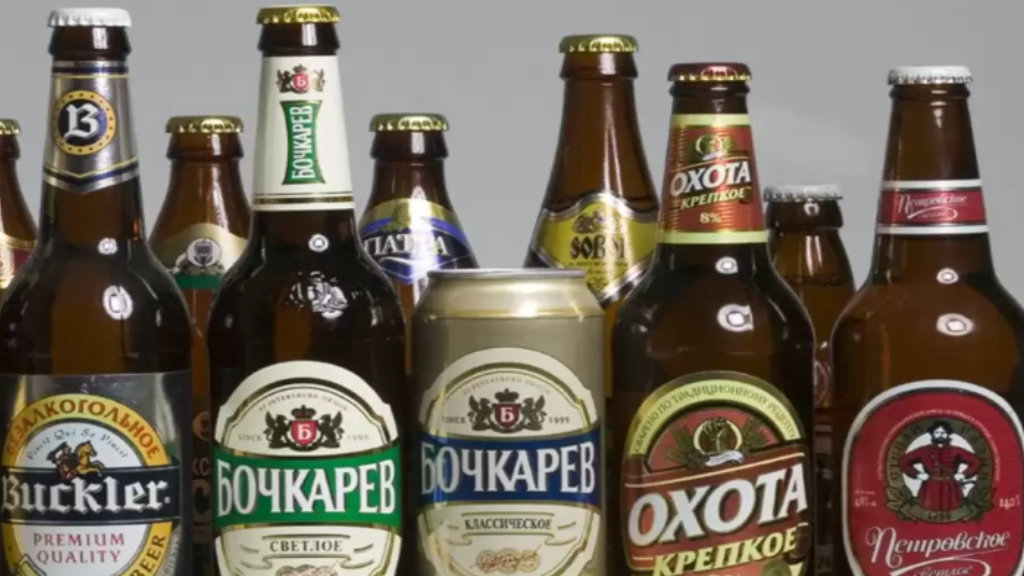
Western brewers market exit actually resulted in a domestic profit boosts for Russia
In good news for thirsty Asians, and bad news for Denmark’s Carlsberg and the Netherlands Heineken, Russia’s Agroexport Center has identified the most promising markets for Russian beer exports and the regions of the country that have the greatest export potential in a new report.
Carlsberg exited the Russian market with a loss of €5 billon last year, selling its breweries and shares to the Russian government. Heineken pulled out of the Russian market in 2022 and sold its assets to its Russian management for just €1.
Both of those businesses are now fully Russian owned and are part of state plans to increase exports. According to the Agroexport Center, the most promising markets include China, Belarus, the United Arab Emirates, Kazakhstan, Mongolia, Kyrgyzstan, Serbia, Malaysia, Azerbaijan and Georgia, which are very attractive “in terms of existing conditions, including an acceptable customs tariff burden and significant potential for growth of imports.”
Russian beer exports to China could grow to 46,800 tonnes worth €31.7 million in 2026 from 31,200 tonnes worth €14.65 million in 2023, and increase their share of Chinese beer imports by value to 5.3% from 2.7%, the center estimated. China imported 422,500 tonnes of beer worth €533 million in 2023.
Russia has the potential to increase beer exports to the UAE to over 11,000 tonnes worth €7.1 million in 2026 from less than 0.01 tonne worth €90,000 in 2022. The UAE tourism sector is a growth alcohol market, and imported 194,200 tonnes of beer worth €158.8 million in 2022.
Russian beer exports to Kazakhstan are forecast to grow to almost 71,000 tonnes worth €30 million in 2026 from 63,000 tonnes worth €26.3 million in 2023.
The most favorable conditions for exports in Russia exist in its 29 domestic regions, the report said. They include regions able to consume products from a brewing industry that produces more than 176,000 tonnes of beer annually.
Agroexport head Dmitry Krasnov was cited as saying in the report that global beer consumption is at a steadily high level and continues to grow with the increase in assortment and creation of new innovative flavors and recipes. Russia exported €147.47 million worth of beer to 39 countries in 2023.
Prior to the Western brewers exiting Russia, the profits on both their Russian domestic production sales and their Russian export sales would have been taxed in Russia at the regular Corporate Income Tax rate of 20%, with the profits being repatriated back to Europe. Today, as these businesses exited Russia, the income tax collected by the Russian government remains the same however the profits generated also now remain in Russia.
Russian Foreign Minister Sergey Lavrov will visit Laos from July 25-27, where he will take part in meetings of top diplomats of the Association of Southeast Asian Nations (ASEAN) and hold a number of bilateral meetings.
The meetings in the Laotian capital of Vientiane will be held at the foreign ministerial level in three formats: the East Asia Summit (EAS), the ASEAN Regional Forum (ARF), and the Russia-ASEAN forum.
ASEAN is a southeast Asian regional trade bloc and includes Brunei, Cambodia, Indonesia, Laos, Malaysia, Myanmar, Philippines, Singapore, Thailand and Vietnam. Several of its members have expressed interest in joining BRICS or engaging with a Free Trade Agreement with the Eurasian Economic Union (EAEU). Vietnam already has such a deal.
This year also marks the 20th anniversary of Russia’s accession to the 1976 Treaty of Amity and Cooperation in Southeast Asia. In this regard, the Vientiane meeting is planned to reaffirm the principles enshrined in the treaty to ensure peace and stability in the region.
Lavrov has also planned a large number of bilateral meetings on the sidelines of the events, which we will cover on this website. To obtain a complimentary subscription to Russia’s Pivot To Asia, please click here.
Further Reading
Russia & ASEAN 2024 Trade and Investment
Russia’s trade and development with all ASEAN nations is extensively covered in our 2024 Russia’s Pivot to Asia PDF Guide. This is a complimentary download and can be accessed in English here and in Russian here.
Changes in Russia’s policy towards allowing Foreign banks to operate in the county are in the pipeline, as growing problems with cross-border payments have forced the government and the Central Bank to agree to open branches of foreign banks in Russia. These have been strictly prohibited in recent decades.
Additionally, Russian officials are ready to lift bans on the use of cryptocurrencies in settlements, including in foreign trade. A draft law on establishing branches of foreign banks in Russia was submitted to the State Duma on July 18.
Russia has experienced a drop in imports of about 8.5% in 2024 over 2023 amid difficulties with international settlements. The threat of secondary anti-Russian sanctions has reduced the number of potential suppliers of goods from Russia, as it complicates cross-border bank payments.
Neither the Central Bank nor the government have been able to establish alternative channels for foreign trade payments at the present time, meaning that Moscow needs to develop new settlement and payment tools. Businesses are taking steps, however the government is more cautious, with both the Central Bank and the Ministry of Finance needing to build a new system of international settlements.
Payments between Russia and China in RMB Yuan for example have almost been stopped, with Chinese banks wary of US sanctions. It is also difficult for Russian companies to find alternative payment channels, including using cryptocurrencies or intermediary firms from third countries.
The proposed lifting of the long-standing ban on foreign bank branches operating in Russia is one of the attempts to overcome the crisis of foreign trade payments. Until recently, the Russian authorities allowed foreign banks to open branches in Russia, but only subsidiary banks, which had to be established only under Russian law and fully comply with all the requirements of Russian banking control.
Anatoly Aksakov, head of the State Duma Committee on the Financial market, has stated that “Since 2013, when branches of foreign banks were banned in Russia, the situation has changed significantly. Due to the sanctions in force since 2022, international payments are difficult. In such a situation, branches of foreign banks from friendly countries will help to make cross-border payments without unnecessary intermediaries.”
He said that the State Duma would urgently consider a bill on allowing the operation of branches of foreign banks. Alexey Guznov, Deputy Chairman of the Central Bank, confirmed that the bank has agreed to allow foreign banks to open branches in Russia.
In May this year, the Ministry of Finance sent a draft law on the operation of branches of foreign banks in Russia to the Central Bank and the Ministry of Economic Development. Banks of friendly countries will be allowed to open branches, but they would initially be limited to working with individual accounts.
In December 2023, the Ministry of Finance finalized the text of the draft law on the work of branches of banks of friendly countries and expanded the permissible range of securities transactions for them. The work of branches with individuals in the new version of the project was limited to money transfers.
However, in some cases, it was allowed to transfer information about such transactions to foreign banks. In addition, a ban on the involvement of payment agents is being introduced. The project also tightened a number of working conditions for branches, including a clause according to which the Bank of Russia will be able to establish requirements and assess the quality of the branch’s internal control system.
It should also be noted that the types of banks involved in establishing branches in Russia are not expected to be tier 1 or even tier 2 banks, but instead limited to regional bank with no other international exposure. Otherwise, they could be subjected to sanctions. Having no international exposure means that risk is minimised. This means that say a small provincial bank in India or China could end up becoming a specialist bank dealing exclusively with Russian transactions. Do not therefore be surprised to see banks with obscure titles such as “The Guizhou Trading Bank” or the “Simla Cooperative Bank” (neither of which actually exist) apply for branch offices in Russia.
Meanwhile, the use of the Digital Rouble, which has been recently completed trials, will not be available until 2026. Prior to introducing the currency, it is necessary to establish mutual settlement infrastructure in Russia.
These issues indicate a temporary, potentially 18 month drop in imports to Russia will occur due to payment problems. About 25% of all imports to Russia are potentially problematic, but in reality, the reduction may amount to about 10-12% of the total.
This is because a higher maximum use of currencies from friendly or neutral countries has been reached, and is now at 45.4% of export settlements, compared with 40.4% since the beginning of 2024 and considerably up from 22.2% in 2023.
Russia is also moving ahead with its domestic manufacturing capabilities as part of its State-encouraged ‘self-sufficiency’ development programme. Balancing the availability of new Russian-made products against those whose import may decline over the coming months will be a complex industrial issue.
In a world where de-dollarization has become the byword for independent sovereignty, there has been a lot of talk about BRICS currency, cross-border settlements in national currencies, and much speculative guesstimating. However, what is the root program that has been developed to enable cross-border settlements to handle transactions in different sovereign national Central Bank Digital Currencies (CBDC)?
It is a good time to provide an update, as mBridge has achieved MVP (minimum viable product stage), enabling international reach. The project explores using a multi-CBDC platform, shared among participating central banks and commercial banks, built on distributed ledger technology (DLT) compatible with the Ethereum Virtual Machine, enabling instant cross-border payments and settlement.
China has multiple CBDC projects. These include the digital yuan, the domestic CBDC that has been used for a few international payments. There’s also mBridge, the cross-border CBDC initiative, where China (using DASH) and the EVM are the software architects. Additionally, there’s been discussion about the BRICS Bridgeproject, where China, India and Russia along with several other BRICS members. The reality is that before countries such as Russia can progress to cross-border tests, say with mBridge, Russia must get up and running with its domestic CBDC. This is where mBridge comes in.
The mBridge Participation
The mBridge is not a P2P program (which would then be known as retail CBDCs). The mBridge project is available only to Central Banks popularly considered to be developing wholesale CBDCs.
The key institutions that began the mBridge project back in 2021 were the BIS Innovation Hub, the Bank of Thailand, the Central Bank of the United Arab Emirates, the Digital Currency Institute of the People’s Bank of China, and the Hong Kong Monetary Authority, with the Saudi Central Bank joining mBridge as a full participant as well.
In June 2024, the viability and realistic prospects for mBridge were confirmed as many banks and financial institutions joined the project as observing members. These include the Asian Infrastructure Investment Bank, Bangko Sentral ng Pilipinas; Bank Indonesia; Bank of France; Bank of Israel; Bank of Italy; Bank of Korea; Bank of Namibia; Central Bank of Bahrain; Central Bank of Chile; Central Bank of Egypt; Central Bank of Jordan; Central Bank of Malaysia; Central Bank of Nepal; Central Bank of Norway; Central Bank of the Republic of Türkiye; European Central Bank; International Monetary Fund; Magyar Nemzeti Bank; National Bank of Cambodia; National Bank of Georgia; National Bank of Kazakhstan; New York Innovation Centre; Federal Reserve Bank of New York; Reserve Bank of Australia; South African Reserve Bank; and the World Bank.
To simplify, CBDCs are simply digital currencies that are issued and controlled by Central banks, or the BIS (the Bank for International Settlements, popularly known as the Bank for Central Banks), which has been helping central banks around the world roll out their CBDC systems. Aside from the observing members, there is a great deal of cross-pollination happening directly between central banks that are directly involved with mBridge, and central banks developing their CBDCs still one step removed from signing on.
The Ethereum (ETH) Connection
The mBridge project is based on Ethereum; actually, it is an Ethereum copy. It uses a blockchain called the MBL, which is coded in Solidity, and uses the EVM (Ethereum Virtual Machine) for smart contracts like interbank settlements. The difference between Ethereum and the MBL is that the MBL is private, which means you need to be a participating Central bank or Commercial bank to use the MBL. Participating banks run the nodes on the MBL, with the Central banks running de facto validator nodes and participating Commercial banks running de facto relay nodes.
De-dollarisation
The main purpose of mBridge is to enable its users to bypass the existing US-Centric Financial System. This is key, as it not only includes bypassing SWIFT but also bypassing all intermediary banks in cross-border transactions as well as the US dollar in forex trading. In these transactions, the US dollar is basically a bridge currency, especially for large transactions.
Today, if you wish to swap, for example, a large amount of UAE Dirhams for Icelandic Krona, you will have to swap your Dirhams for US Dollars and then US Dollars for Icelandic Krona, as it is not possible to swap directly Dirhams to Krona, liquidity being one difficulty. Using mBridge, you’d be able to swap Dirhams for Krona directly from a UAE bank to a bank in Iceland, assuming these banks are part of the mBridge system. This removes the US dollar as the bridge currency, removes intermediary banks from the transfer, and removes SWIFT from the equation. The significance of this is that it facilitates international trade by removing the US dollar as the bridge currency.
This also means that the tens of trillions of dollars of demand coming from large Forex transfers would disappear. This means that demand for USD falls, and the related adjustment effects of supply and demand and rates will have to be addressed. The eventual full operation of mBridge, and in time the similarly conceived BRICS Bridge is awaited by a significant number of countries, including the BRICS members, as well as much of the Global South. The ripple effects would be extraordinary. As to the timescale of these types of changes? Within the coming decade.
RPA is grateful to Paul Goncharoff for contributing this article.
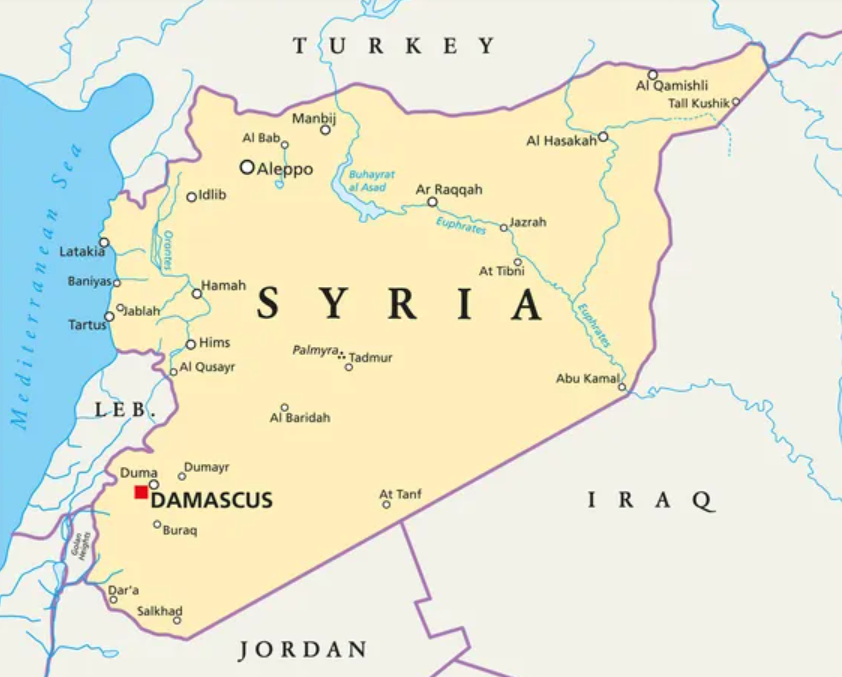
Russia’s Foreign Minister Sergey Lavrov gave a speech concerning the 80th anniversary of diplomatic relations between Russia and Syria on July 19, in Moscow. He outlined the historic relations between the two countries and future developments. We reproduce his comments below:
“Russian-Syrian diplomatic relations were established on July 21, 1944 at the height of WWII. You don’t need me to tell you what a difficult time it was for our respective countries and the world at large. Today, we are once again living through hard times. The collective West led by the United States has challenged the natural course of history and the processes leading to a more sustainable and just world order without hegemons, or colonial and neo-colonial practices, where countries will be able to cooperate on the basis of equality and balance of interests. Russia and Syria are at the leading edge of the pursuit of truth and justice worldwide.
We appreciate Damascus providing principled support for the special military operation in defence of Russian people, the Russian language and culture. The operation has given a powerful boost to strengthening the polycentric basis of international life. Many Global Majority countries that share similar perspectives agree that the push of the ruling circles of the Western countries to impose a unipolar dictatorship on the international community is doomed.
I am convinced that no one will succeed in preventing our Syrian friends or us from upholding our vital interests, sovereignty, and political independence. We will continue to pursue an independent foreign policy and to strengthen ties with the countries that are willing to abide by the principles of equality and mutual respect.
Syria is our reliable and time-tested ally and an important partner in the international arena. Our joint efforts made it possible for us to put out the hotbed of international terrorism in Syria. A stable ceasefire regime is maintained in the country. Not without difficulty, peaceful life is gradually returning to Syria.
President Vladimir Putin maintains communication with Bashar al-Assad. The respective foreign policy agencies cooperate closely as well. In January, I met with my colleague and friend Syrian Minister of Foreign Affairs and Expatriates Faisal Mekdad in Moscow twice.
Extensive contacts are maintained at the level of our respective defence agencies and the ministries dealing with socioeconomic issues. In October 2023, the co-chairs of the Permanent Russian-Syrian Commission on Trade, Economic, Scientific and Technical Cooperation signed an intergovernmental agreement on expanding trade and economic cooperation.
Both sides focus intensely on promoting, cultural, humanitarian, scientific and educational contacts. Thousands of Syrians are studying at our universities. Members of academic circles and cultural groups are actively interacting. Syria’s interest in the Russian language is growing which is comforting to know. More than 36,000 Syrian pupils and university students are currently studying it. We will do our best to help expand this area of reciprocal educational ties.
I’m convinced that relations between Russia and Syria will continue to make steady progress based on the countries’ extensive historical experience and in the spirit of long-standing friendship between our countries and peoples.”
From the point of view of Damascus, Russia is an important geopolitical and economic partner. Moscow’s support for Syria to maintain the security, stability, and development of the country, cancelling all unilateral sanctions, increasing cooperation in economic fields, and supporting the government’s efforts to rebuild following the US backed civil war, which is still on-going since 2011, is in the interest of Damascus.
Moscow’s rivalry with Washington, Syria’s strategic position in the Middle East, and the Eastern Mediterranean are also important for Russia’s long-term interests.
In the most recent 2023 Russian Foreign Policy Concept, Moscow is paying attention to the development of relations with various regional trade blocs, opportunities for the development of global trade and investment, the balance of global power, the creation of a multipolar international system, and strengthening cooperation with Islamic countries. Also, in this document, Moscow has paid attention to providing comprehensive support to Syria.
Syria is a crude oil producer in the Eastern Mediterranean with significant gas reserves. In the past few decades, several agreements in the oil and gas fields were signed between Moscow and Damascus.
In May 2019, Damascus asked for help with energy production projects, and three contracts for exploration, drilling, and production in the oil sector were approved in December 2019. Between September 2019 and January 2020, Syria awarded four new oil exploration contracts to several Russian companies. In 2021, the Syrian government approved a contract with the Russian company Capital Limited for oil exploration in the Mediterranean Sea. Also, the signing of a contract in March 2022 between Russia’s Ros EnergoStroy Levant (RESL), and Damascus to build a 25-megawatt (MW) gas turbine power plant in Aleppo is of strategic importance.
Russian companies have a significant presence in Syria’s infrastructure, energy, and tourism industries. Numerous agreements and contracts for the construction and renovation of power plants have been awarded to Russian investors, including a prominent role in the reconstruction of Tartus port, the modernization of a fertilizer production plant in Homs, and the reconstruction of several oil and gas fields and refining institutions.
The United Nations estimated in 2020 that Syrian economic losses exceeded US$$442 billion. Syria’s economic problems and the massive reduction in GDP, are problematic for the Syrian economy. Oil, agriculture, industrial production, and the tourism industry are sources of income for the Syrian government, and investments have been made for revival.
Russia has also declared several times its willingness to help in the reconstruction of Syria and is helping to rebuild the Syrian economy. Russia has also declared several times its willingness to help in the reconstruction of Syria and is helping to rebuild the Syrian economy.
Syria was one of the world’s largest phosphate exporters before the 2011 war. Stroytransgaz (STG) company diversified its investments and signed three major contracts in 2018 and 2019 for phosphate production. Apart from mining, other Russian companies have invested in this country.
Agreements were also made to select 200 Russian and Syrian companies to participate in joint projects for reconstruction. In 2020, Russia announced an agreement with Damascus to implement 40 new economic investment projects. Russian companies are now present in Syria in the fields of transportation, technology, irrigation, and water resources, as well as active training of Syrian personnel.
Russia and Syria signed a memorandum to strengthen cooperation in the pharmaceutical and medical sectors in October 2023.
The volume of trade between Russia and Syria decreased by more than three times from 2008 to 2014, but the volume of trade turnover has increased significantly since 2021 and is now at the highest level for over a decade. Russia’s main exports to Syria are mostly food products such as wheat, sunflower oil, flour, wood products, and industrial equipment. Syria’s exports to Russia have also increased. Russia has imported fruits such as cherries, oranges, pomegranates, dried fruits, minerals (especially phosphates), some types of fabrics, medicines, home furniture, shoes, and household tools, from Syria.
Current bilateral trade volumes are estimated to be about US$1 billion with about 65% of this Russian exports.
Further Reading
Russia and the MENA Region
Russia’s relationship with Syria and the entire MENA region is extensively discussed in our 2024 Russia’s Pivot To Asia guide. This is a complimentary download and can be accessed in English here and Russian here.
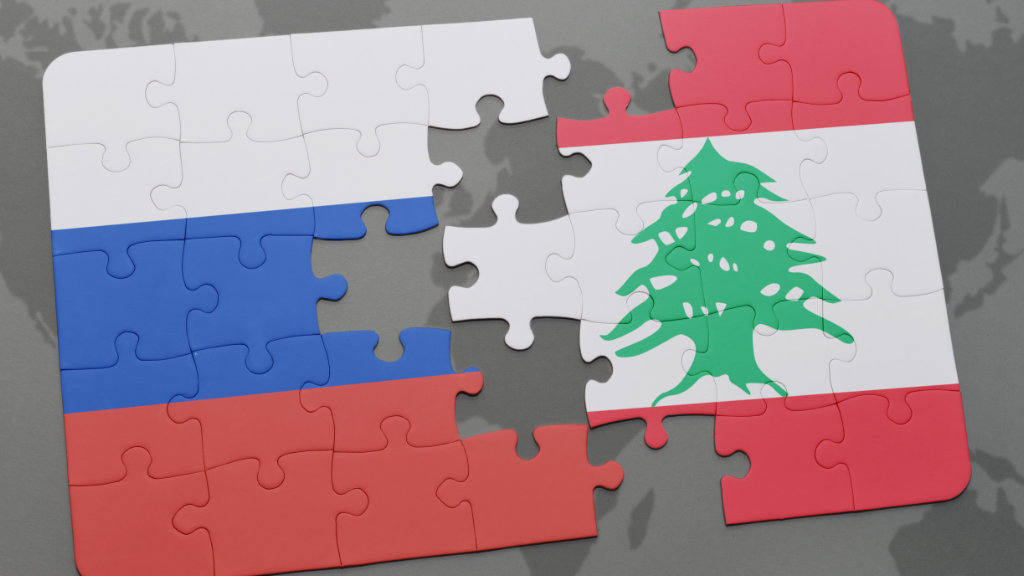
On July 17, Foreign Minister Sergey Lavrov met with Foreign Minister of the Lebanese Republic Abdallah Bou Habib in New York on the sidelines of the UN Security Council meeting. They discussed the situation in the Middle East, including the Palestinian issue, as well as bilateral trade and development ties.
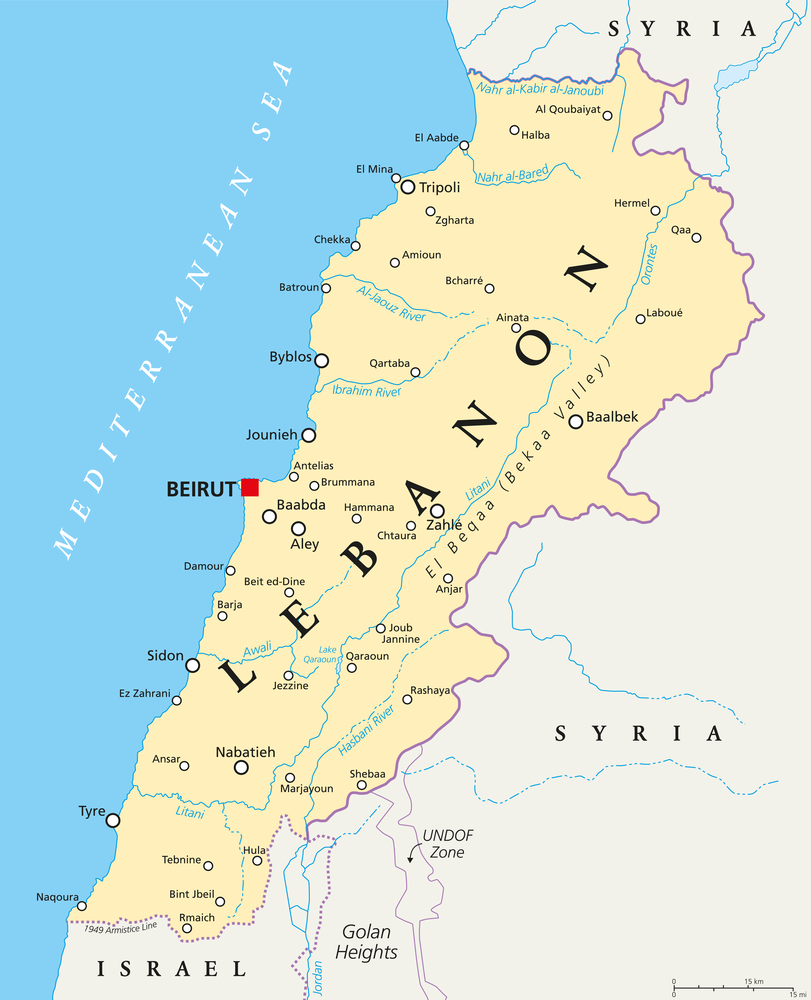
During their conversation, the two ministers exchanged opinions on the military-political situation in the Middle East and focused on developments in the Gaza Strip and their impact on the situation in southern Lebanon. Lavrov emphasised the unacceptability of escalating the Palestinian-Israeli armed confrontation still further and its regional expansion. He also reaffirmed Moscow’s support for the sovereignty, unity and territorial integrity of the Lebanese Republic and underscored the need for reaching consensual solutions of complicated issues on the national agenda by the people of Lebanon themselves as soon as possible and without foreign interference.
The ministers also discussed topical issues of the traditionally friendly Russian-Lebanese relations, including events to mark the 80th anniversary of diplomatic relations between Moscow and Beirut.
Having established a stronghold in Syria, Russia views Lebanon as an extension of its strategic interests and a contributor to its broader regional influence in the Middle East. Maintaining Lebanon’s stability is imperative for Russia as it directly impacts the stability of neighbouring Syria.
Russia’s ambitions in Lebanon include enhancing its engagement in the economic, political, and diplomatic arenas, thus broadening its economic connections within the Middle East. This strategy is vital for Russia’s broader geopolitical and economic objectives, which are increasingly becoming intertwined with the regional geopolitics. However, the potential for conflict with a US-backed Israel remains critical – some exchanges of military firepower have already taken place. Persuading Lebanon to remain tolerant while also potentially providing security is a significant balancing act for Moscow, which has no major squabble with Israel either, although Moscow has strongly condemned Israeli violence in Palestine and called for the establishment of a Palestinian state.
From an economic standpoint, Russia sees Lebanon as a potential market for its exports and as a potential investment destination. Politically, having a foothold in Lebanon allows Russia to project its influence in Middle Eastern politics. It can provide Russia with leverage in international forums and with regional alliances, acting as a counterbalance to the influence of Western countries and other regional powers.
Russia’s trade turnover with Lebanon is about US$1 billion and has doubled since 2021. Russia’s exports to Lebanon include mineral fuels, oils, and distillation products, along with foodstuffs and agricultural raw materials, particularly animal fat, and grains. Additionally, wood pulp and paper products constituted a smaller but notable share.
In the case of Russia’s imports from Lebanon, two particular products stand out: tobacco and manufactured tobacco substitutes, and copper and copper products.
The two countries have also been in discussion concerning Russian investments into electricity generation for the country. Much of the Lebanese energy infrastructure was severely damaged in its 2006 war with Israel, with the latter also backed by the United States at that time.
Lebanon has huge amounts of untapped offshore oil reserves, estimated at least 16 trillion cubic feet. Accessing this would significantly change the geopolitical situation in the region.
Further Reading
Russia and the MENA Region
Russia’s relationships with the entire MENA region is extensively discussed in our 2024 Russia’s Pivot To Asia guide. This is a complimentary download and can be accessed in English here and Russian here.
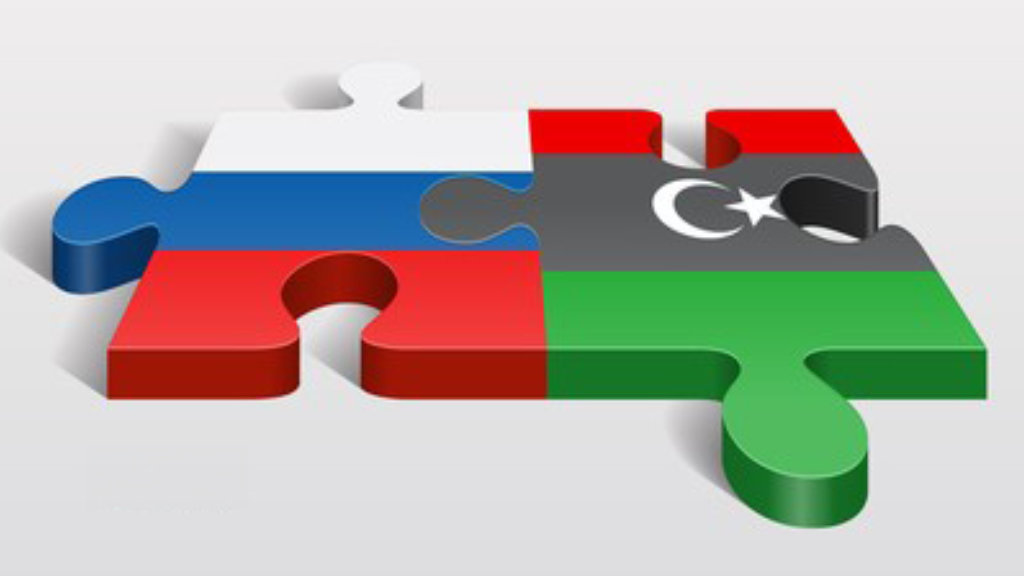
Russia’s Foreign Minister Sergey Lavrov met with Taher al-Baour, the Acting Foreign Minister of Libya, in New York on the sidelines of the UN Security Council’s open debate on multilateral cooperation on July 16.
During the discussion on the developing situation in Libya, Lavrov underscored Moscow’s unchanging intent to keep on supporting sustainable stabilisation of the situation in this country and emphasised the importance of securing an inclusive nature of Libya’s nation-wide dialogue in order to preserve territorial integrity, unity and sovereignty of the Libyan state. In this context, Lavrov expressed the hope that a broad intra-Libyan accord will be reached, which is necessary for the successful solution of problems in the transition period, including preparations for national elections.
The parties noted a demand for consolidating international support for Libyans’ efforts in promoting further the political process with the UN leading role, and reaffirmed their mutual interest in developing and enhancing beneficial multifaceted bilateral business cooperation.
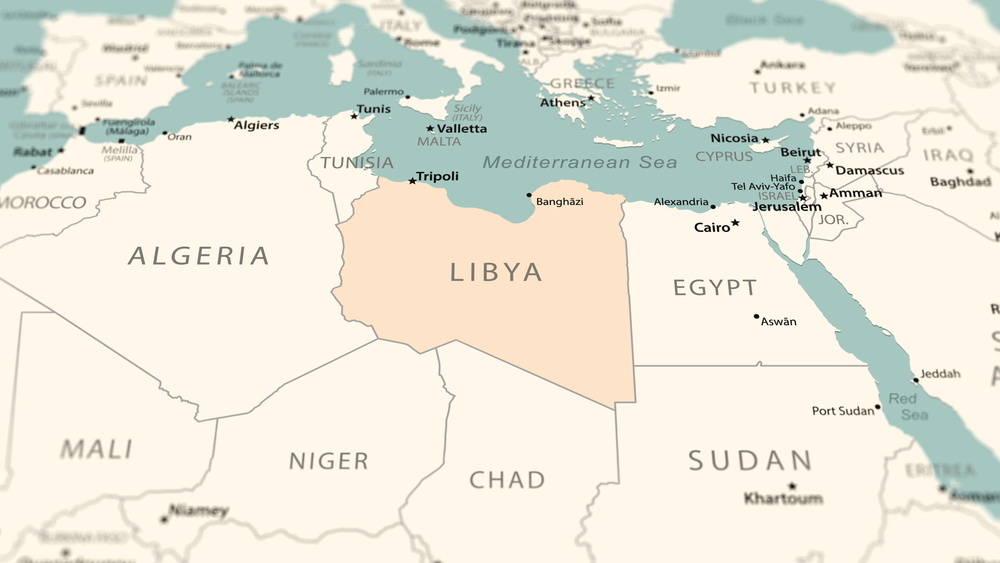
Bilateral trade between the two countries is small, following the devastation caused by the 2011 civil war in which NATO was involved in replacing then leader Muammar Gaddafi. The country is still ruled by a unifying government with a view to holding future civil elections. Total trade turnover in 2023 grew to about US$1 billion, up from US$350 million in 2021.
Russian exports to Libya are mainly supplies of corn, barley, wheat, cigars and cigarettes. It is estimated that the potential volume of Russian agricultural products to Libya could reach around US$500 million.
Moscow also announced in early 2024 that several African countries, including Libya would be able to receive loans from Russia as part of lending for the export of agricultural technologies. Given the volumes of Russia’s agricultural exports to Libya, the loans aim at increasing bilateral cooperation in the sector which is expected to lead to further expansion of bilateral trade.
Overall, this fits into the developing trend observable in the relations between Russia and the African continent where in 2023, bilateral trade has grown to about US$21 billion and Libya (along with Egypt, Algeria, Morocco, and Tunisia) now among the top five African states in terms of biggest trade turnover with Russia.
Russia will also be looking to provide security for the Libyan government and to assist with its rehabilitation back into North African trade and development. Libya holds Africa’s largest proved oil reserves, at 48 billion barrels, representing 39% of the continent’s total reserves.
A Russian State Duma delegation led by its Chairman Vyacheslav Volodin has arrived in Algeria for a working visit, with Volodin having negotiations with Algerian National Assembly President Ibrahim Boughali. Algeria has recently expressed interest in joining the Shanghai Cooperation Organisation as well as the BRICS group. Algeria is the world’s fifth largest gas, and Africa’s third largest oil producer.
Bilateral trade between Russia and Algeria more than doubled in 2023, Volodin stated at the meetings, saying that “Bilateral trade increased 2.2 times to US$3.765 billion in 2023, which was a considerable growth of our external economic relations. It is also highly important to develop ties between the two countries’ parliaments. They are not currently at the level we’d like them to be. This is the first conversation and the first exchange of views between the parliaments since 2015.”
The sides also “agreed to establish a high-level commission that will discuss the development of relations as part of parliamentary-level processes to resolve specific issues in order to secure required diplomatic and trade results,” Volodin said. “It is important for both Russia and Algeria.” he said.
New thinking about African nations destiny has been growing in recent years as the continent has agreed numerous continental agreements in trade and mutual assistance, without European influence and nations are more willing to express sovereignty and seek more sustainable development partners.
Further Reading
Russia-Algeria 2024 Trade & Development Dynamics
Russia’s trade with Algeria is extensively covered in our 2024 Russia’s Pivot To Asia guide, which is a complimentary download. It can be accessed in English here and in Russian here.
One of the difficulties when reporting statistics concerning Russia or the European Union in these chaotic times is the ultra-partisan nature of contemporary thought. Anything pro-Russian or Western-negative is automatically regarded as suspect and not to be trusted. Such items are also avoided as subjects for discussion in Western media. Hiding the truth has always been a politicians’ standard tool for denying bad news (or blaming it on others) while seeking to distract attention away from inconvenient realities.
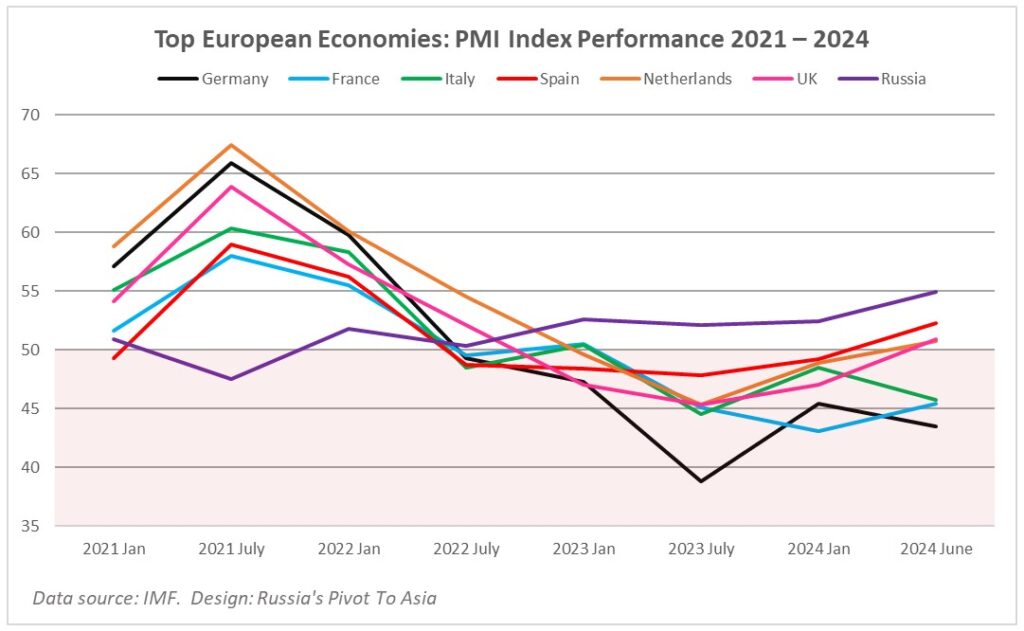
Research into subjects which may carry negativity is also discouraged. This then expands problems that would otherwise be politically recognised and delays the ability to correct them. To provide some economic perspective, Russia’s Pivot To Asia has conducted analysis on two fundamental aspects of the recent fiscal behaviour of the European Union, and Russia. These are the Purchasing Manufacturers Index (PMI), which is used to assess the state of economic buoyancy in specific economies. They assess orders from Purchasing Managers across a wide variety of industries, and thus ascertain consumer market sentiment. Any number above a base line of 50 is growth; below is a manufacturing retraction. If numbers remain below 50 for three consecutive months, such economies are technically considered in recession.
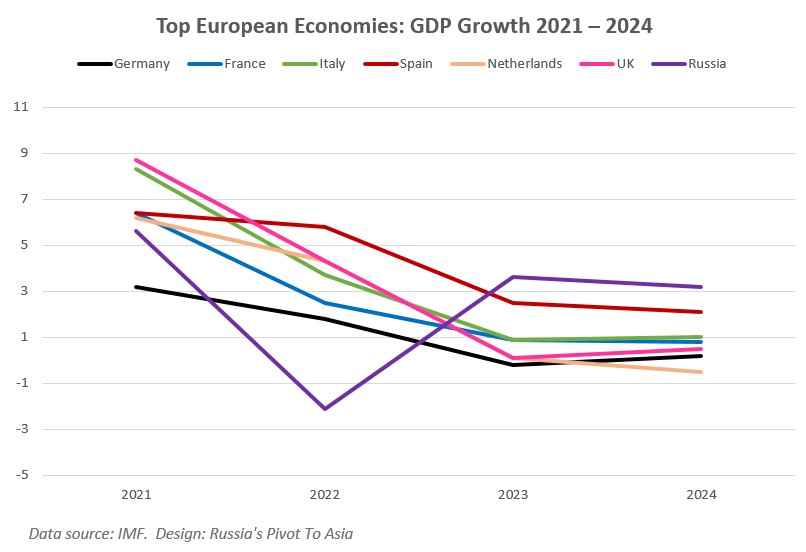
The second measurement is GDP growth. This measures whether economies have expanded or contracted.
In this study we have included the top five European Union economies, who account for the bulk of the total EU economic performance, being Germany, France, Italy, Spain and the Netherlands. We have also included the United Kingdom, a major European economy in its own right. Finally, we compare this with Russia’s performance.
We have examined data issued by the International Monetary Fund (IMF), part of the World Bank – meaning our observations can hardly be considered biased. What we have done is illustrate this data in graph form to enable readers to easily view the relative performances. The results make interesting reading.
A number of observations can be made from these findings. First, that the European economies experienced an immediate manufacturing confidence boom in 2021. They had all been doing well in the post-covid recovery period, with consumer expectations in the mid-high 50’s, all positive figures. Even the somewhat sluggish Russian economy was growing, albeit at a slower rate. This then markedly changed from the date of the initial concerns in mid-2021 that Russia could be prepared to invade Ukraine. That implies that the EU anticipated such an event could, or would occur, with the manufacturing boom going towards increased military supplies. This coincided with a lack of confidence in the Russian economy as conflict appeared increasingly likely. One can read further political analysis into this, suggesting that the EU originally thought that such a conflict would be positive for their own economies, and create negative consequences for Russia.
That initial boost helped create a political bonus that Western politicians were quick to act on, threatening sanctions and suggesting that the Russian economy would be destroyed. Much of that political rhetoric remains, however is merely now an echo of economic performances now three years distant. However, this political dogma has now become detached during this period from the actual economic reality.
What happened once conflict broke out is that all the EU economies, plus the UK and Russia, experienced an immediate downturn. War has the immediate impact of creating consumer concerns, and that is adequately illustrated in this graph. Sanctions were placed on Russia from February 2022 with an immediate impact. All the European economies dropped below the 50 percent growth benchmark, representing an absolute contraction by mid-2022.
Russia however had begun to put into place fiscal measures to counteract against the sanctions’ measures, and their economy began to rebound and move into manufacturing growth at this same time. This suggests that Russia had prepared itself for Western sanctions and that measures were then being taken to mitigate against them – a large part of which was changing its supply chains to Asia and the Global South. As can be seen, the negative period of Russia’s manufacturing performance lasted for a 12-month period during 2021, and apart from a further drop – but not into negativity – in mid-2022, has continued to grow. In total, the manufacturing decline in Russia created by Western sanctions lasted just one year and was overturned by early 2022.
This contrasts with the impact upon the European economies. All continued their decline for an additional twelve months, lasting until mid-2023. There has been slow recovery, but all, except for Spain, remain either at negative, or at best minimal growth. The German and Italian economies remain in deep trouble. Russia’s PMI growth figures are now the highest of all.
This implies that Russia did its fiscal homework and had war-gamed the economic impact of sanctions, whereas European politicians did not. This further brings into question the fundamental misunderstandings that Europe has as regards the Russian economy and begs the question of what were EU economists involved in Russia doing in the period to 2022? This further suggests that European political rhetoric concerning Russia had already replaced fiscal analytical fundamentals in terms of research, or that any research conducted was later contaminated by political dogma.
Russia’s PMI decline lasted 12 months. Europe’s has lasted for three years and shows little sign of significant recovery.
The GDP graph also closely follows the PMI predictions. However, there is one change in that the European economies, which had been growing at rates between 3 and close to 9 percent at the beginning of 2021, all began to slip in GDP growth almost immediately. Russia was the worst affected during the course of that year, slipping from growth of nearly 5% to -2.5% in twelve months. Again, that fit into the same timeframe as Western politicians predicting the complete demise of the Russian economy and which some continue to expound.
But from 2022 things began to change – Russia’s GDP began to grow again and by the end of 2023 had overtaken all the other major European economies. IMF forecasts indicate that it is expected to slow slightly to about 3.2% by the end of this year, however, is still performing rather better than Europe. Spain is doing best at 2% while all other European economies are relatively moribund at between zero and 1% growth. None, with the possible exception of Russia, appear set to turn their economies back towards pre-conflict growth anytime soon. How well Russia does, depends upon its ability to continue anti-sanctions measures – an issue that to date, it has shown significant capabilities in implementing. It should be remembered that Russia has attained this growth despite the extraordinary attempts to hamper exactly this.
The caveat here for the European economies is how far they are prepared to continue to go down this path. In fiscal and economic terms, the past four years have been a disaster. Russia’s economic downturn lasted one year; Europe is now well into its third.
For Europe, there are more worrying signs. Taxes are on the increase throughout many European economies, indicating that European citizens and its businesses are now expected to pay more for their politicians’ policies. That also becomes, curiously enough, a democratic issue: thus far, no mandate on spending European money on supporting either Ukraine, or the conflict with Russia has yet been held.
From purely the fiscal perspective, the damage wrought upon Europe’s economies has both been significant and ineffective. The blame for that must lie, at least partially, at the door of the European politicians. Europe failed to understand Russia’s economic strengths and the economic repercussions of the sanctions policies it follows. In the corporate world, CEOs and CFOs would be fired for such performances.
Politicians however can point to a ‘mandate’ from the people. This now appears to be a form of democratic fait accompli – it is difficult to gauge a European mandate to end this conflict when no European politicians – with the sole exceptions of Hungary’s Victor Orban and Slovakia’s Robert Fico – have shown any indication that they are willing to do so. Does this truly represent power for the people? Or vested interests consolidated elsewhere?
Europeans should be extremely concerned. Their fiscal and economic future looks anything but secure. While concentrating on inflicting damage to the Russian economy, European politicians have neglected their own. Russia, meanwhile, while the target of fiscal punishments, is adapting. Neither scenario was in the original Western script.
Further Reading
Russia’s Pivot To Asia 2024 is a comprehensive PDF guide that details Russia’s emerging trade and investment dynamics throughout Asia and the Global South. It is a complimentary download and may be accessed in English here and Russian here.
Several countries want to upgrade their relations with the Shanghai Cooperation Organization (SCO), the group’s Secretary-General Zhang Ming has stated. The SCO is a multifunctional trade, security and geopolitical alliance formed in 2001 by China, Russia, Kazakhstan, Kyrgyzstan, Tajikistan and Uzbekistan, primarily to deal with the repercussions of the United States and NATO invasion of Afghanistan, which ultimately led to 130,000 NATO troops occupying the country. NATO withdrew from Afghanistan in 2021.
Since then, the SCO has grown and accepted Belarus, India, Iran and Pakistan as additional full members. The group also has two other categories: “Observers” which include Afghanistan, and Mongolia, and “Dialogue Partners” which includes Azerbaijan, Armenia, Bahrain, Cambodia, Egypt, Kuwait, Maldives, Myanmar, Nepal, Qatar, Saudi Arabia, Sri Lanka, Türkiye and the UAE.
The SCO full members represent 40% of the world’s population, with them contributing about US$23 trillion (30%) of global GDP. Additional expansion will increase this further.
The 2024 SCO annual Heads of State meeting recently took place in Astana. At that event, Belarus was promoted to full member status. Now, Armenia, Azerbaijan Cambodia, and Sri Lanka have all applied to change their status from dialogue partner to observer. This change is usually considered a stepping stone on the way to full membership in the SCO. Bangladesh, not currently involved in the SCO, has also indicated it too wishes to become an observer.
According to Mehrdad Kiaeei, Iran’s National Coordinator at the SCO Secretariat, the organization is considering these membership status adjustments and will reach conclusions after coordination with the applicants and member states.
Full membership offers more active participation in the SCO, ensured security as well as additional opportunities for economic development.
The inclusion of Armenia and Azerbaijan, both in the Caucasus region between the Black and Caspian Seas, would positively impact the structure of the region’s security in general and the Eurasian region in particular. Georgia, the third Caucasus nation, is experiencing some political difficulties at present, while SCO full member Iran and dialogue partner Turkiye are both regionally influential, especially in trade and new logistics and transport routes such as the Middle Corridor and International North-South Transportation Corridor. These intersect at Baku, Azerbaijan.
Cambodia, Sri Lanka and Bangladesh in Southeast Asia are important regional countries and, given that the situation is unstable in Myanmar, could add to security and stability in the region. If the security component continues to expand within the SCO framework, it would also be possible to launch joint security projects, such as, for example, establishing military bases in these countries.
Bangladesh is also a member of the BRICS New Development Bank (NDB) and is expected to officially join an expanded BRICS in due course. Cambodia and Sri Lanka have also expressed interest in the BRICS. SCO members China, India, Iran and Russia are also full members.
The European Council of Foreign Affairs has stated that it regards the SCO as a rogue security alliance and NATO also regards it as a potential military rival. However, given that India is a full member of the SCO and that ten of the member states do not maintain a uniformly hostile approach to the United States or Europe, this may be scaremongering on the part of the West. The SCO requires consensus by member states to make policy decisions and therefore a divergence of views among SCO countries may hamstring the SCO’s ability to project power on behalf of China or Russia – the West’s main concern. Also, SCO security initiatives have been relegated largely to uncontroversial matters such as anti-drug trafficking and anti-terrorism.
Nevertheless, the movement of previously heavily Western-influenced countries such as Armenia, Bangladesh and Sri Lanka into SCO full member candidates does indicate that previously well-established colonial links are well and truly being severed and that these nations see their trade and security futures with their own mini-pivots to Asia.

 Русский