News

Aeroflot Expected To Provide Direct Flights To Bali From September  

Published on August 2, 2024

Aeroflot has requested permission to arrange direct flights to and from the island of Bali, starting from September 2024, the airline has stated. The airline is now awaiting the Indonesian aviation authorities’ decision, however this is expected to be granted. Indonesian President-elect Prabowo Subianto said at a meeting with Russian President Vladimir Putin on Wednesday in Moscow that Indonesia is positive about the launch of direct flights from Russia to Bali. Subiaanto said that “We believe that Aeroflot will be able to perform direct flights to Bali. We also support possible direct flights operated by both Aeroflot and other Russian airlines.”

Bali is a popular tourism destination in Indonesia and is somewhat unique in being Hindu in religion as opposed to Indonesia’s largely Muslim population. It possesses both beautiful beaches and spectacular inland volcanic scenery. It can be compared to a more lush, Asian tropical version of Sicily. 80% of all Russian visitors to Indonesia visit the island, with over 155,000 Russian tourists to Bali in 2023. Russians are increasingly opting for Asian vacations in the wake of difficulties obtaining visas for Europe. It is also now not possible to fly directly from Russia to the EU, making such visits both lengthy and expensive. 

Bali Map

Flights by Russian airlines overseas were also restricted after the introduction of Western sanctions in 2022, including the risk of the seizure of Russian aircraft in the UK, EU and United States. Such risks are neutralized by the buyout and re-registration of planes from the foreign register to the Russian register, while most other countries have decided not to follow Western restrictions or the confiscation of Russian property. According to Aeroflot’s presentation, 185 of the 271 Boeing and Airbus planes possessed by the group have been “cleared” of foreign registration.

Aeroflot said that the application for direct flights “was preceded by coordinated work and the joint efforts of Aeroflot, the Russian Foreign Ministry, the Russian Transport Ministry, the Indonesian embassy in Russia, and the Russia-Indonesia Business Council.”

Other popular Asian destinations for Russian tourists are Sri Lanka, Phuket (Thailand), Goa (India) and Da Nang in Vietnam.   

Further Reading

Russian Outbound Tourism Up 8.8% In Q1 2024

Development of the Zabaikalsk-Manzhouli Russia-China Border Checkpoint

Published on August 2, 2024

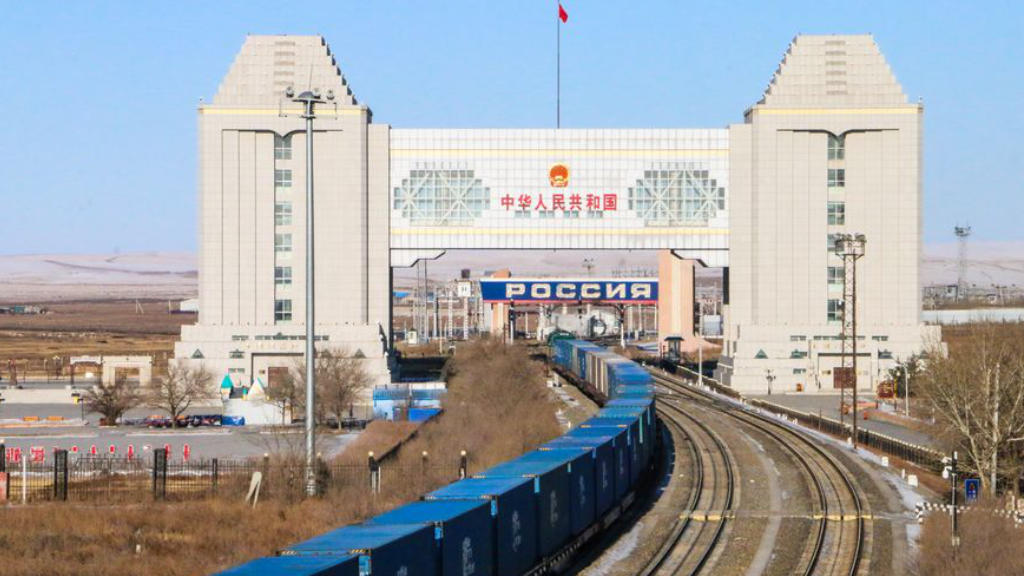
The Zabaikalsk border checkpoint on the Chinese border with Manzhouli in China’s Inner Mongolia Province is now the most in-demand crossing between Russia and China for cargo carriers. According to Russia’s Federal Customs Service (FCS), in the first six months of this year, imports of Chinese goods to Russia through this border crossing increased by 34%, while Russian exports to China increased by a multiple of five times. On average, customs officers process about 600 trucks per day.

The customs post at the Zabaikalsk checkpoint is currently operating 24 hours a day. There are also plans to further expand the site due to demand, including large-scale reconstruction of the border crossing, as a result of which the Zabaikalsk checkpoint will become the largest checkpoint on the Russian border and overtake Russia’s previous European borders in freight capacity.

Plans for Zabaikalsk include increasing the total building area to 42 hectares, adding 28 additional lanes for transport, while the throughput capacity will increase to 2,400 thousand vehicles per day, up from the current 600. Up to 1,600 passenger cars per day will also be catered for. There are special visit permits available for citizens of both sides of the border to use as long, as they are local residents and do not travel beyond either city limits. Russian and Chinese traders and tourists are common sights in their respective cities.  

The crossing has strategic importance as both Zabaikalsk and Manzhouli are situated on the Trans-Baikal Railway, which is in turn connected to Russia’s Trans-Siberian railway with connectivity both east to Vladivostok Port on the Pacific and west to Moscow. In China it is connected to the national railway network and has direct connectivity to Beijing. It is the fastest rail route to travel between the two countries capitals.

The Trans-Baikal Customs post specializes in transit cargo clearance procedures. Freight turnover by rail on this section of the border increased by 10% and amounted to 10.9 million tonnes. In total, about 575,000 loaded and empty wagons and containers were processed across the border in 2023.

The bulk of cargo between the countries now goes through this Trans-Baikal section of the border, since it possesses the necessary infrastructure (warehouses, terminals, and so on) and is located closer to other regions of Russia.

The border of both Russia and China is very close to eastern Mongolia, and there has been talk of extending a link from the Trans-Baikal railway to the Mongolian capital, Ulaan Baatar, to link up with the Trans-Mongolian railway.  Such a route would cross steppe plains and run for about 780km. The region also possesses significant coal reserves.     

Further Reading

Russia-Mongolia-China Economic Corridor To Be Developed

Russia To Develop Inland River Ports And Logistics Hubs

Published on August 2, 2024

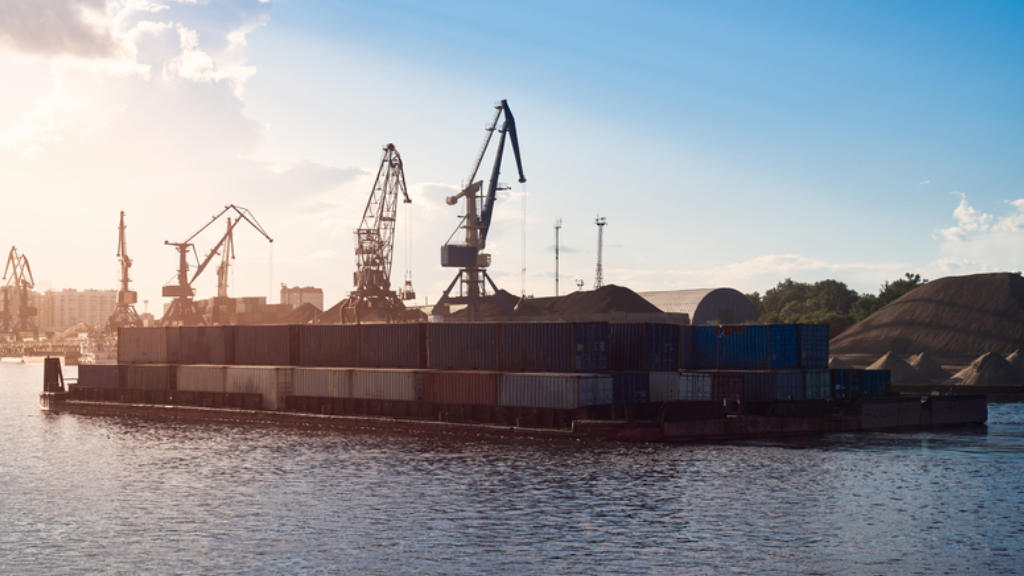
The Ob, Irtysh, Lena, and Yenisei Rivers are all to be developed to access the Northern Sea Route 

Russia’s Federal Agency for Maritime and River Transport (Rosmorrechflot) and Rosatom are to jointly create logistics hubs on the Ob, Irtysh, Lena and Yenisei rivers, with the aim to give improved access to the Northern Sea Route (NSR).

Russia possesses some of the largest rivers in Eurasia, with some of them crossing borders into countries such as China, and is expected to improve Russian internal connectivity to Asian markets via the NSR. The new initiative was announced by Andrei Tarasenko, the head of Rosmorrechflot, following discussions with Russian Prime Minister Mikhail Mishustin.

The project is aimed at developing river freight transport and reducing the load on railways in Russia’s east. Currently, Russia’s largest and easily navigable rivers such as the Ob, Irtysh, Lena, and Yenisei are not used to their full extent.

Tarasenko said that “Cargo turnover on these rivers has been falling because there are no logistics hubs or stevedores that should organise and accumulate cargo, and provide  cargo services. Many companies have received licenses, they have deposits, but they do not have or have not yet built logistics. Therefore, today we are negotiating with Rosatom on the creation of certain hubs on such Arctic and northern rivers that will accumulate cargo and go out onto the Northern Sea Route.”

Tarasenko added that a multimodal logistics hub would be created on the Amur River, along the border with China. He emphasised that the creation of river logistics hubs is a priority task for Rosmorrechflot, and said that “Today, we are talking with the railway workers, with all the stevedores, that these rivers should all be connected to NSR ports. There should be multimodal hubs based on river ports, in which the sea ports are also interested, and should participate in its construction, and provide them with cargo.”

Russian river

Rosmorrechflot also plans to launch river hubs in Tatarstan, the Samara region, Perm Krai and the Moscow region. The exact amount of funding for the project has not yet been determined, but it is expected that its implementation will be carried out through various sources – meaning government and the private sector.

These are exactly the sorts of investment projects that Russian Oligarchs and local businessmen should be investing in as they are excellent cash flow operations. The development of numerous Chinese entrepreneurs who became involved in their infrastructure build is a primary example. Many have now expanded beyond China and are now involved in infrastructure investments as part of the Belt & Road Initiative. Some of these businesses can now be classified as MNCs. Russian investors, now looking for domestic opportunities, should be taking note.

Further Reading   

Russia, China Extend Far East Cargo Routes To Include Cross-Border River Transport  

Russia, China Extend Far East Cargo Routes To Include Cross-Border River Transport

Published on August 1, 2024

Amur, Ussuri Rivers give Pacific Ocean access to China’s landlocked Heilongjiang Province

Russia and China are developing cargo transport corridors under the joint “River-Sea” development programme for the first time. The Chinese deep-water, Manjita river port is located at Fuyuan city in Heilongjiang, with the Manjita port having access to the Amur (Heilongjiang) and Ussuri (Wusuli) Rivers. 

The Amur River is over 2,800km long, and if extended to including its main stem tributary, the Argun River, which is also navigable, reaches a total length of 4,444 km. The Ussuri River is about 897 km in length, follows a more northerly route but also ultimately flows into the Amur. Both flow between Russia and China, with the Amur eventually emptying out into Strait of Tartary, in Sea of Okhotsk. The Straits divide the Russian island of Sakhalin from mainland Asia (South-East Russia), and connect the Sea of Okhotsk with the Sea of Japan to the south, and ultimately to the Pacific Ocean.

The first shipments will be made from Manjita port to the Far East Russian city of Khabarovsk and onto Khabarovsk’s sea ports. This provides Pacific Ocean access for Chinese cities along the Heilongjiang sections of the Amur and Ussuri rivers. Heilongjiang is a land-locked province. 

Khabarovsk is the largest city of Khabarovsk Krai (Province), and is located 30 km from the China–Russia border, at the confluence of the Amur and Ussuri Rivers, about 800 km north of Vladivostok. It is the largest city in the Russian Far East. Khabarovsk Krai is the most industrialized territory of the Far East of Russia, producing 30% of the total industrial products in the Russian Far East. It also lies on the Trans-Siberian railway, while its Pacific Ocean ports include maritime facilities on the Sea of Okhotsk, which in turn gives access to the Pacific Ocean. From there, goods can be shipped elsewhere along the East China coast, or to markets elsewhere in Asia.   

Amur Map

Manjita port has received permission to import wood, food, seafood and fish from Russia. River going barges have already been launched at the Manjita`s river port, capable of holding up to 12,000 tonnes of various cargoes.

Zhou Hongcheng, deputy head of the Fuyuan Department of Commerce and Checkpoints, was quoted as saying that “We plan to carry out the first combined cargo transportation on the river-sea route through Khabarovsk. So, we can say that the Pacific Ocean has now appeared on our doorstep.”

Freight traffic between Fuyuan and Khabarovsk is actively developing, especially during the summer navigation period. Special warehouses have already been built at both ends of the route, while Chna has also extended its own rail network to reach Manjita port.

Fuyuan city has stated its intention to integrate into the regional cross-border infrastructure, which is planned to be developed through Bolshoy Ussuriysky Island on the border of the Khabarovsk Territory with China.

A new road vehicle border checkpoint is also to be built on Bolshoy Usuriysky Island, which is part of the Khabarovsk city limits and along which the border with China runs. The project has already been approved by the two sides, and is expected to be operational by 2026. This additional border crossing will be able to handle over 1.3 million tonnes of cargo per year.

Until this opens, river transport links between Khabarovsk and China takes place via mixed checkpoints, where, depending on the season, either pontoon or ferry crossings are operated.

Further Reading 

Baikal-Amur Rail To Be Developed For Russia’s AsiaPac Markets

The 2024 Russia-China Energy Business Forum – Highlights

Published on July 31, 2024

The sixth Russia-China Energy Business Forum (RCEBF) has been taking place in Moscow, with over 500 politicians, heads of major companies in the energy and related industries, scientists, experts and analysts attending. Russia and China discussed issues of cooperation related to energy and the supply of hydrocarbons. The RCEBF has been held annually since 2018 in accordance with the agreements reached by Russian President Vladimir Putin and Chinese President Xi Jinping, and is being held under Development Strategy of the Fuel and Energy Complex and Environmental Safety of Russia, and the State Energy Administration of China. The event is co-organised by Russia’s largest oil company Rosneft and China National Petroleum Corporation (CNPC).

We discuss what took place at RCEBF, in an industry responsible for 40% of all Russia-China trade. Much discussion focussed on the transactional and settlements issues Russia and China both face.

Putin’s Statement 

Igor Sechin, the Head of Rosneft, made the opening remarks, in a message from Vladimir Putin, which stated that “Bilateral cooperation in the oil and gas, coal and electric power sectors is steadily expanding. Russian energy supplies to China are reaching record volumes. Specialists from our countries are working together to improve technologies for the extraction, processing and transportation of raw materials, and to increase their environmental safety.” According to Putin, the Russian-Chinese Energy Business Forum plays an important role in ensuring direct and constructive dialogue on issues of cooperation in these vital industries.

Xi Jinping’s Statement

Ding Xuexiang, the Chairman of the China National Petroleum Corporation (CNPC), introduced a message from Chinese President Xi Jinping, which read “The Chinese side is ready, together with its Russian colleagues, to further promote mutually beneficial energy cooperation, ensure stability and strength of production and supply chains in the energy sector, and contribute to a more dynamic, green and healthy development of the global energy industry.” According to Xi, the RCEBF has become an important platform for establishing contacts, strengthening mutual understanding and promoting cooperation between Russian and Chinese enterprises.

Russia-China Energy Trade Volumes

Sechin said that energy accounts for more than 70% of Russian exports to China. “For 75 years, there have been different periods in relations between our countries, but, as our leaders have repeatedly stressed, today they are at an unprecedentedly high level.” According to him, in 2023, the trade turnover between Russia and China increased by 26% and reached US$240 billion. According to the head of Rosneft, Russian-Chinese cooperation in the field of energy supplies is unparalleled in the Eurasian space. In 2023 alone, Russia exported 107 million tonnes of oil, 34 billion cubic metres of natural gas and more than 100 million tonnes of coal to China.

Sanctions & Subsidies

Sechin also noted that Western governments had underestimated the growth potential of the economies of Russia and China, and the imposed sanctions and unprecedented pressure on Russia and China had instead strengthened the economies, development and political cooperation of the two countries.

He said that “All efforts to curb the growth of our countries lead to the opposite result: the GDP growth rates of China (reached 5.2% in 2023) and Russia (3.6%). These are now confidently ahead of Western countries and global averages. At the same time, the West initially overestimated the effectiveness of its sanctions on the powerful potential of our economies. Last year, the IMF raised its forecast for Russia’s GDP growth four times. The year-end increase in Russia’s GDP exceeded initial expectations by almost 6 percentage points. A similar situation was observed in the case of China. Despite the inevitable slowdown of the Chinese economy repeatedly predicted by Western observers, again according to IMF forecasts, China’s contribution to global economic growth over the next five years will amount to 21%, which will exceed the combined contribution of all the G7 countries (20%).”

According to Sechin, the West is trying to slow down the economic development of the two countries. “The latest example of this is the sharp increase in protective duties by the United States and the European Union on goods, equipment and components in clean energy from China. (Ed: The EU has levied tariffs of 38% on Chinese electric vehicles and the US on the same by over 100%)  

Sechin concluded that “As the Chinese Foreign Ministry rightly noted, according to the logic of the United States, subsidies provided by the US Government are considered important industrial investments, while subsidies from other countries are considered unfair competition.”

De-dollarisation

Sechin also said that “Changes in the global economy and politics are leading to a decrease in the role of the US dollar in world trade, which is illustrated by China’s recent success in using the RMB Yuan. Last September, the RMB Yuan overtook the euro for the first time in trading settlements via the SWIFT global financial settlement network. Also, for the first time, the RMB Yuan has overtaken the US dollar in China’s international settlements. The RMB Yuan’s share is now 53%.”

“The dynamics of Russian-Chinese settlements is also indicative. Significant mutual commodity flow, as well as commodity flows from third countries, allowed us both to switch to settlements in national currencies, the share of which exceeded 90% by the end of 2023.”

According to Sechin, in order to the use of national currencies both on a bilateral basis and in settlements with third countries, it is necessary to create appropriate infrastructure and tools for conducting clearing operations and opening correspondent accounts, as well as the entire range of systems for exchanging interbank messages. This is an issue RPA have recently discussed here following statements this week made by the Central Bank of Russia. 

Russia-China Cooperation

Ding Xuexiang, China’s Vice Premier, also stated that cooperation between Russia and China in the energy sector remains highly dynamic, despite the complex, volatile international situation and obvious processes of deep transformation of the global energy market. He noted the practical results achieved by the two countries. “The first is the steady growth of energy trade. The second is the progressive promotion of particularly significant projects. The third is the steady expansion in areas of cooperation. The parties are actively working to open new horizons of cooperation in the oil and gas fields.”

According to Ding, it is necessary to continue to systematically promote trade and investment cooperation in the energy sector, unlock the potential of energy cooperation mechanisms, and consolidate bilateral cooperation dynamics in their energy trade.

Strategic Direction

Alexander Novak, Russia’s Deputy Prime Minister, said that the Russian-Chinese Energy Business Forum has turned into a productive platform for dialogue and the development of practical cooperation between Russia and China, stating that “As always, everything is organised at the highest level.”

“Russia also plays a stabilising role in overcoming the global energy crisis,” Novak said, stressing that the supply of fuel and energy resources from Russia increases the energy security and socio-economic stability of friendly countries, and long-term contracts of large Russian oil companies are the key to global reliability and providing China with energy resources from Russia at fair market prices.”

Dai Houliang, the Chairman of the China National Petroleum Corporation (CNPC), acknowledged that turbulence is increasing in the international energy market and the structure of global trade is changing, meaning that Chinese-Russian energy cooperation is very important for the global energy model. He said that “CNPC, for its part, will continue to work with Russian partners, use this forum and other effective cooperation mechanisms to achieve more tangible results and reach new levels of energy security and cooperation on a global basis.”

The Atlas Of Investments

Of note were additional comments from President Putin who said that among the important developments of the RCEBF, was the Atlas of Investments in Russian-Chinese Energy Cooperation. This is a unique information and analytical platform that diagnoses opportunities for the implementation of mutually beneficial joint projects and initiatives. This atlas allows investing businesses to get a deep understanding of the specifics of the work of the fuel and energy complex of Russia and China and has become a practical guide in the implementation of joint projects. It contains information on the current state and prospects of development of the fuel and energy complex of Russia, on management institutions and regulatory policy, examples of cooperation in the oil and gas industry, electric power industry, coal industry, nuclear energy, and renewable energy sources. It also contains information about the tools and opportunities for organising project financing and insurance in the energy industry in Russia. The data contained in the atlas is regularly updated by both parties.

The VII Russian-Chinese Energy Business Forum will be held in 2025 and will be held in China.

Summary

Although much of the public commentary was somewhat bland, the take-aways are the high level of importance that both countries place on energy development. Both Presidents gave personal addresses, and in giving these to their highest level of Energy Officials to provide, equally illustrated that mutual developments are planned for and co-ordinated at the highest levels. This is a scientific, fully researched and politically supported area of Russia-China cooperation.

While not explained in any detail, the two sides also commented on mutual developments in oil and gas, coal, nuclear, electric and the renewables energy sectors, meaning that bilateral energy cooperation is across a wide sphere. It should also be noted that regulatory policy is also being coordinated. What this means is that while projects are still being discussed and negotiated, the message is very clear: Russia and China intend to be long term energy partners for the foreseeable future, and that the impact of this – as seen in the references to the US dollar and Euro – are anticipated to have global implications.

Further Reading

Putin Wants Russia’s Largest Companies To Relocate To The East

EAEU – Indonesia Free Trade Agreement Nearly Finalised

Published on July 31, 2024

Russian President Vladimir Putin has said that the Free Trade Agreement between Indonesia and the Eurasian Economic Union (EAEU) is practically ready for signing, stating that “We are hoping that the agreement on a free trade area between the EAEU and Indonesia, which has been prepared for signing, will play a positive and noticeable role in the development of our trade and economic relations.” He made the remark during a meeting with Indonesian President-elect Prabowo Subianto. Russia has a keen interest in the Indonesian market, Putin added.

The EAEU includes Armenia, Belarus, Kazakhstan, Kyrgyzstan, and Russia. Indonesia is one of Asia’s largest countries with a population of 275 million (roughly the same as Russia) and GDP (PPP) of   US$4.721 trillion. It is a middle class, predominantly liberal Muslim country.

Indonesia map

Russia and Indonesia have historically been close partners. Indonesia does not support Russia’s isolation from the West, and the two are trying to strengthen the strategic partnership between them. For Russia, Indonesia is a window into the ASEAN and the Indo-Pacific region. It is also a rapidly growing economy, which is anticipated to overtake Russia in coming years, and has an ambition to become the sixth-largest economy in the world (in PPP values). This pushes Russia, as it focuses on Asia, to seek closer ties with the Southeast Asian giant.

Yet the two countries have nevertheless faced significant geographic and geopolitical constraints. Indonesia, being a self-interested actor in the international arena, pushes for a more independent foreign policy which also includes not choosing sides between the West and Russia.

This neatly falls into the multi-vector foreign policy agenda pursued by Indonesia and other Asian countries. Rather the country also adheres to neutrality and pursues policies that allow it to increase its manoeuvrability on the global stage.

Bilateral Trade

The volume of bilateral trade between Russia and Indonesia is growing: Indonesia reported that in 2023 it amounted to just over US$4.5 billion. The trend has been visible over recent years when, for example in 2021, Russia’s trade turnover with Indonesia amounted to US$3.3 billion, an increase of 40.65% compared to 2020.

Russia exports mainly wheat, meat, fertilizers and petroleum products to Indonesia. Russia also actively imports fats, palm oil, tea, coffee, cocoa and spices, machinery, and various equipment from the South-East Asian Republic. Indonesian exports to Russia also include manufactured goods such as electrical appliances, footwear, textiles, raw materials and minerals, wood, and various products from it.

Moreover, Indonesia has expressed interest in the procurement of Russian coal. Indonesia has close ties with specific regions of Russia. For instance, compared to 2021, in 2022 exports of natural rubber and fertilizers to Tatarstan increased by almost 30%. Tatarstan is significant in that it is both a majority Muslim region and has pursued an active trade policy when it comes to reaching out to Islamic nations.

The coming 2024 BRICS summit will be held in Kazan, the capital city of Tatarstan, with Indonesia expected to attend as a guest with an eye on also joining the bloc. 

Further Reading  

Russia Awaits September 1st Approval of Law on International Settlements Using Cryptocurrencies

Published on July 31, 2024

Mass Digital Ruble Usage Expected By July 2025 

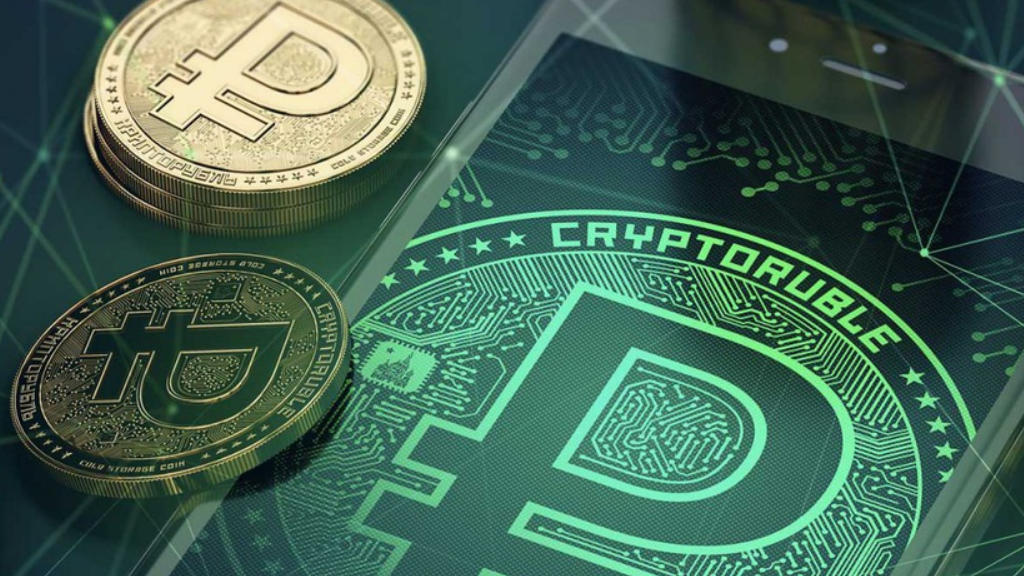
In an effort to intensify, speed up, and broaden the available tools used for settling international transactions, the Russian State Duma has passed, in its first reading, a bill that opens the way for the Bank of Russia to launch an experimental platform for the use of cryptocurrencies in international settlements. The document was introduced by a broad base of deputies from different factions gathered and led by Anatoly Aksakov, chairman of the lower house’s Financial Market Committee. 

If the bill is approved by the Troika, consisting of the State Duma, the Federation Council, and the President of the Russian Federation, the law will come into full effect on September 1, 2024. These approvals are expected and should serve to ease potential operational hiccups due to fears by counterparties of secondary, even tertiary, sanctions by the West when using traditional, even national currencies for trade settlements should they be part of or related to the SWIFT system. 

Amendments have been proposed to laws impinging on the Bank of Russia, currency regulation, and currency control. The changes will allow for the operation on an “experimental legal basis,”  combining permissions within the scope of the law on digital financial assets and digital currencies to conduct international settlement operations in cryptocurrencies. 

As of now, Russia prohibits the use of digital currencies for settlements. But this is set for almost immediate change. The bill adopted in the first reading will allow, within the framework of the experimental legal regime (EPR), the use of cryptocurrencies in international trade settlements. The functions of the regulator of the EPR in the field of digital innovations in the financial market will be assigned to the Central Bank. In response, the Central Bank has described its procedure for assessing and managing risks on the experimental platform. 

We expect that its implementation will contribute to increased competitiveness, increase the availability of a range of goods, as well as the growth of the profits of entrepreneurs and attract increased investment. Earlier on July 24, the State Duma also passed in the first reading a bill that will legalize cryptocurrency mining in Russia. This is a path that is at the same time courageous for any government to take and is at the cutting edge of support for free, unsanctioned trade.

There also appears to be the potential for almost immediate implementation.  The Central Bank of Russia Governor, Elvira Nabiullina has said that she expects the first settlements in cryptocurrencies under the experimental legal regime (ELR) to happen before the end of the year, and with mass usage to be introduced by July next year.

Nabiullina stated, in a speech to the Federation Council, that “In terms of our pilot project for the digital ruble, we will expand it in just a month for those banks that are already with us in the pilot mode. There will also be a series of expansions for the pilot project going forward. I can currently say that if everything continues to go according to our plan, then we will successfully implement the pilot projects. We will be able to move from the pilot mode to mass implementation of the digital ruble as of July 2025. We are aiming for these dates.”

The implications of these developments should not be underestimated. What Russia is effectively doing is replacing the US dollar-led global transactional system, which includes SWIFT, with a digital settlement system that operates beyond US control and is governed solely by the Central Banks concerned. It will ultimately make financial sanctions upon Russia less effective and could lead to a revolutionary explosion in the use of sovereign currencies as opposed to the US dollar standard. That in turn is likely to lead to extensive global de-dollarisation in transactions that do not involve the United States.        

Russia’s Pivot to Asia wishes to thank Paul Goncharoff for his assistance with this article. 

Further Reading

Russia To Permit Foreign Bank Branches & Cryptocurrency Settlements

Russia Rises To Eighth Place In Global Manufacturing Output

Published on July 30, 2024

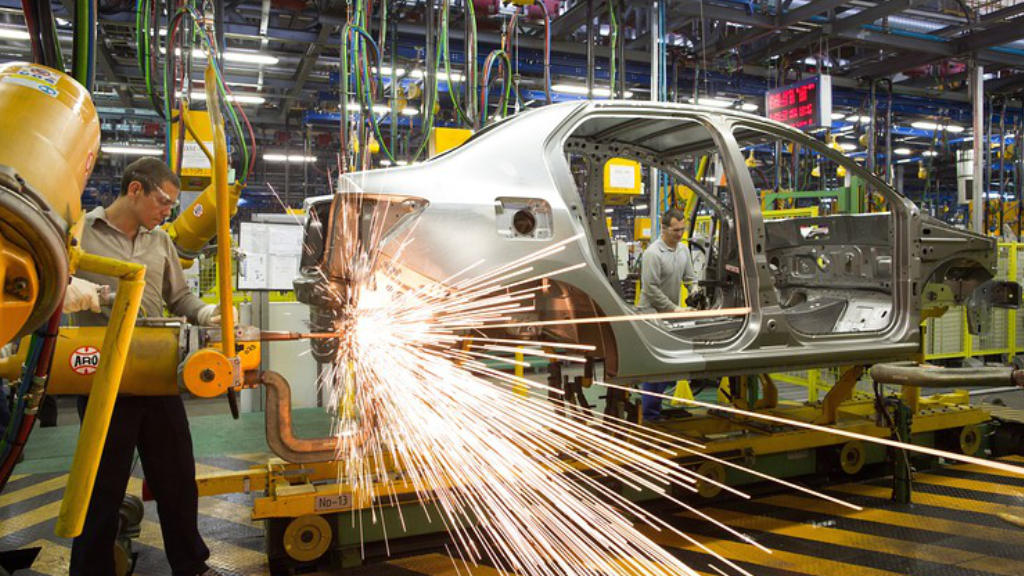
Russia has risen to the eighth place in global manufacturing output, according to a report issued by “Make UK”,  a British institution that represents UK manufacturers and competitive markets. The report  includes a wide variety of data about the contribution of manufacturing to different economies including exports, sectoral breakdown, R&D investment, salary levels and provides comparisons. 

China remains the largest manufacturing nation with output worth US$5.06 trillion, followed by the United States with US$2.69 trillion, and Japan with US$850 billion. Germany remains the biggest manufacturing nation in Europe with US$751 billion, followed by India and South Korea.

Mexico is in seventh place, Russia in eighth, Italy in ninth, France in 10th, Taiwan in 11th and then the UK in 12th. It is the first time the UK has dropped out of the world’s top 10 manufacturing nations. Russia has increased its defence and supporting production to now account for 6% of GDP.

Western reports typically conclude that Russia’s rise in productivity is due to the conflict in Ukraine, however this is only partially correct. What is often misunderstood or ignored is that Russia is also significantly investing in its own infrastructure, with big-ticket projects being put in place to reflect the changing supply chains. These include the BAM railway expansion, a northern addition to the Trans-Siberian railway, significant infrastructure, shipping and port developments in the Russian Arctic and Russian Far East, and multiple other projects all designed to enhance Russia’s trade with alternative markets.

In other, non-defence related consumer sectors, such as auto sales, the Russian market has expanded by 74.5% in 2024 over the same period last year. Beverages, such as beer sales, are also way up as is industry profitability – previously dominant Western brands have exited, but the production facilities remain operational. With Western investors previously repatriating up to 80% of their Russian profits back to their home country, that capital now remains in Russia, with the companies concerned now awash with money that now stays in the country. These types of industry sectors, including almost all consumer sectors from fast food, and pharma to household products and confectionary, now exited by Western businesses, paradoxically now have more money than ever before and are looking to increase exports to new markets.

These new motivations were outlined in Russia’s 2023 Foreign Policy Concept, which specifically outlined new directions in domestic manufacturing and the development of new markets. President Putin also referred to this at his recent inauguration speech, when he stated “Russia must be self-sufficient and competitive, and open new horizons.“ He also stated that he had targeted Russia to be the world’s fourth largest economy by 2030. 

This means that Russia’s current path in terms of self-sufficiency and increasing manufacturing output is now State Policy. With trade and development ties with Europe now mostly destroyed, Russia’s pivot to Asia is now driving the economy as developments to secure this are acting as significant growth drivers.

Further Reading

Putin’s Address To The Russian Union of Industrialists and Entrepreneurs

Malaysia Applies To Join BRICS

Published on July 30, 2024

Malaysian Prime Minister Anwar Ibrahim has sent an application for BRICS membership to Russia, which is currently holding BRICS presidency, he said, stating that “Malaysia has sent a letter of application to join the BRICS to Russia, expressing openness to participate as a member country or strategic partner.”

On Sunday, (July 28) Ibrahim met with visiting Russian Foreign Minister Sergey Lavrov, who has been in Asia attending ASEAN meetings. Malaysia is a founding member of ASEAN. According to Ibrahim, the conversation focused on Malaysia’s application to join BRICS, which, in his words, will have a considerable potential for both sides. Ibrahim and Lavrov also discussed the current situation in Palestine, with Malaysia emphasizing the urgent need for a permanent ceasefire and rapid humanitarian aid in Gaza, as well as Palestine’s acceptance as a full member of the United Nations. Regarding Ukraine, Anwar also called for dialogue and discussion as the means to resolve the conflict.

Lavrov said that as Russia is currently holding the BRICS Presidency, Moscow will help Kuala Lumpur promote its interest to the partnership with the association.

Malaysia map

Malaysia remains a key importer of Russian agricultural products, bringing in grains, oilseeds, meat, and dairy products. In return, Russia receives palm oil, rice, and fruits from Malaysia. Energy resources, primarily oil and gas, along with metals and chemical products, form the crux of exports from Russia to Malaysia.

Malaysia reciprocates with exports of cars, electronics, rubber, and palm oil. Trade in agricultural products and food between Russia and Malaysia saw an 18% uptick in 2022. Russia’s agricultural product exports to Malaysia totaled US$620 million. Russia is also interested in exporting Malaysian high-tech equipment.

Malaysia is also one of Asia’s largest semiconductor exporters with an annual volume of US$8.7 billion. The electronics sector contributes almost 6% of Malaysia’s GDP. The Russian market is also interested in medical products, and medical equipment, in particular in dentistry. Around 31-32% of Malaysian exports to Russia are electronic goods. Malaysia has a developed auto industry, in particular the Proton and Perodua brands. In 2022, the country produced more than 700,000 cars – more than Russia.

Given the flight of Western companies from the Russian market the latter is now more open to the influx of Malaysian cars. This fits into the overall shift that is taking place in Russia since early 2022 – Asian car brands are becoming increasingly attractive to Russian customers.

Russian and Malaysian companies have now increasingly been switching to payments in Chinese yuan, dirhams, and other currencies. Yet for this mechanism to work, there must be common elements between participating states. Among the most important elements is the issue of determining the volume of trade and investment, which should be significant for payments in non-dollar currencies to be effective.

Looking ahead Russia and Malaysia will remain cooperative. Yet Russia still is not central to Malaysia. Indeed, currently, about 71% of Malaysian exports go to Asian countries, 13% to North America, and only about 9% to Europe. The Russian market is peripheral, although it is growing. For Russia, the bilateral ties are mostly trade-focused, while Russian investments in Malaysia are negligible. Geographic constraints and international geopolitical conditions do interfere in normal development as Malaysia strives to avoid incurring secondary Western sanctions.

But there is good news. Russia ranked as Malaysia’s eighth largest trading partner among European countries in 2023. Total bilateral trade increased by 15.6% to US$3.1 billion, compared with US$2.79 billion in 2022, according to Malaysia’s Foreign Ministry.

Lavrov also stated that both sides recognise more can be done, saying that “We need to strengthen the legal (trade) framework. In May, we signed a double tax agreement, which will soon come into effect.”  Trade can also be boosted in the Russian tourism and halal exports.    

Both countries also recognize the need for deeper bilateral and EAEU-ASEAN cooperation. In this regard, there are still notable challenges to address, particularly relating to standards and adherence. ASEAN remains predominantly driven by trade motivations, not geopolitics. While there are administrative hurdles to overcome and trade discussions to finalize, the potential trade alliance between ASEAN and EAEU is a development that is emerging and will benefit both sides. Initiatives are being set in motion for the creation of fresh supply chains, with BRICS membership a key area in assisting with this development.

Further Reading

Russia-Malaysia 2024 Trade & Development

Russia’s trade and development with Malaysia and every ASEAN nation is extensively discussed in our 2024 Russia’s Pivot to Asia PDF guide. This is a complimentary download and can be accessed in English here and Russian here.  

Russia-India Eastern Maritime Corridor To Be Enhanced

Published on July 29, 2024

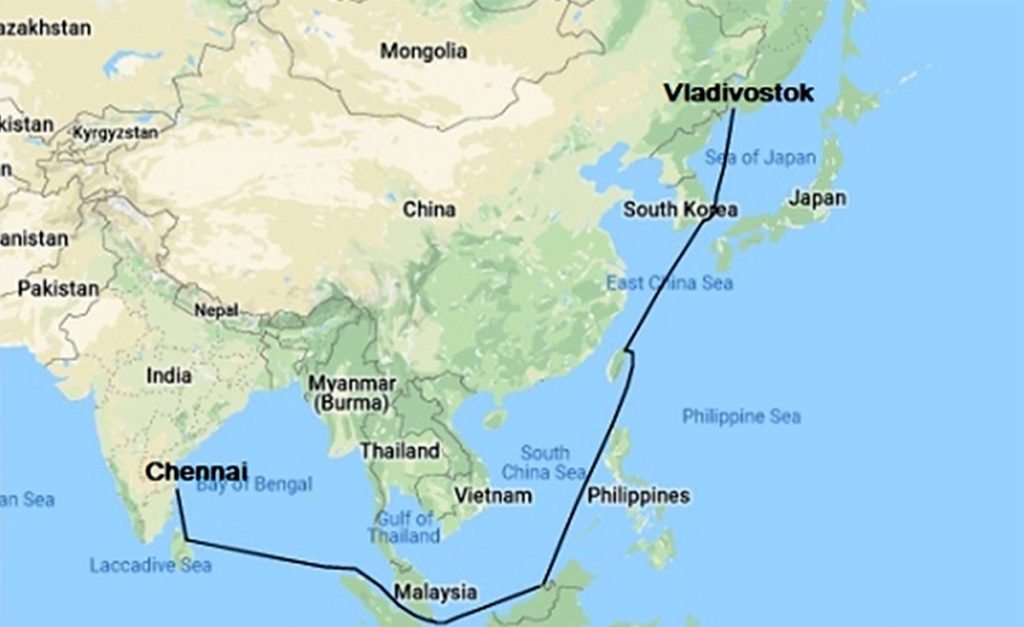
India’s Prime Minister Narendra Modi has stated that New Delhi and Moscow are working on expanding the capabilities of the 10,300-kilometre Chennai-Vladivostok Maritime Corridor connecting Russia’s Far East and Southeastern India.

Referring to the concept as a meeting of the ‘Ganges & Volga’, Modi reiterated that the corridor is expected to reduce the time required to transport cargo between India and the Russian Far East by up to 16 days, cutting the current 40-day travel time by almost half to 24 days. It is also expected to significantly reduce the distance by up to 40%.

At present, the distance between the Mumbai Port and Russia’s Port of St. Petersburg, by the Western Sea Route via the Suez Canal, is 16,066 km. This is the route that has traditionally been used between India and Russia, however conflicts within the Red Sea area are impacting Suez Canal transits. 

Meanwhile, the distance from Russia’s Vladivostok Port, via the Eastern Maritime Corridor, to India’s east coast Chennai Port is 10,458 km.  

Vladivostok Map

This corridor was proposed in September 2019 when Prime Minister Narendra Modi visited Vladivostok for the Eastern Economic Forum and the two countries signed an MoU to develop a sea route between the Indian port of Chennai and Vladivostok, to transport coal, oil, liquefied natural gas, fertilisers, containers and other types of cargo which are already part of the bilateral trade. It also conceives of ships calling at other Russian and international ports.

To facilitate further development, Anatoly Bobrakov, Russia’s Deputy Minister for the Development of the Far East and the Arctic, was in Chennai earlier this year, attending the India-Russia Workshop on Operationalisation of the Eastern Maritime Corridor, a seminar that was organised by the Chennai Port Authority. “Today it takes 40 days for cargo to reach Russia through the Suez Canal, but through the eastern corridor, the time will be reduced by 40% to 24 days,” he said.

Bobrakov said the onus for the success of this corridor lay with the private players in both countries. Governments, he said, will monitor the negotiations between Russian and Indian companies, especially with regard to interest by private Indian players for the import of Russian goods.  “Then we, as governments, will make appropriate decisions,” he added.

Sarbananda Sonowal, Indian Minister of Ports, Shipping and Waterways, has also stated that the Eastern Maritime Corridor’s saving of 5,608 km compared to the Suez route, will “reduce logistics costs immensely, and boost efficiency in transportation of cargo between the two countries.” Increased volumes will enhance the viability of the corridor and open much-needed new and fresh opportunities between the countries.

In 2023, India imported 56 million tonnes of coking coal, an essential raw material for the manufacture of steel largely, from Australia, the U.S. and Canada. Russian coking coal is of equivalent quality as the West and there is also a price advantage. In January 2024 Moscow lifted exchange-rate linked export duties on most coal exports, making Russian coking coal $12 per tonne cheaper than its Australian counterparts.

Another product that India imports from Russia is fertilisers. In 2023, India bought 4.35 million tonnes of fertilisers from Russia, but discounted rates came to an end in August 2023, and Indian importers had to pay market prices. However, given the volatility in the Middle East, India is unlikely to look at Saudi Arabia and Morocco at the moment as alternatives.  The quality of Russian phosphate-based fertilizers is hard to beat and participants at the Chennai seminar were clear that bringing these products via the eastern corridor would be beneficial. Sunil Paliwal, Chairman of the Chennai Port Trust, went a step further, suggesting that Russia could consider establishing fertiliser plants in its Far East for exports meant specifically for India.

Russia-India bilateral trade reached US$57 billion in 2023 and is continuing its upward trajectory in 2024, achieving a 23% growth this year to date. Trade however, is heavily skewed in Moscow’s favour: with about 90% in favour of Russian exports to India, an issue that s also creating balance of payment problems – Russia is accumulating more Rupees than it can reasonably use.

If imports via the corridor increase, as looks likely, this deficit will only widen, unless the flow of goods is two-way. There are several options to balance this out. For example, the price of eggs in Russia has risen by over 40% last year. The Namakkal district in Tamil Nadu, called the “land of poultry” has the capacity to export vast amounts of eggs to Russia, after suppliers pass Russian quality control requirements. Efforts are being made to expand these opportunities. In October 2023, the Indian Embassy in Moscow provided a sourcing list of priority goods for Indian exports. This included both food and non-food items which did not fall under Western sanctions.

An increase in imports from India will help other Russian exporters who have billions of rupees in vostro accounts, and adjust these balances with those importing from India – even if the Eastern Maritime Corridor plan takes several months to reach improved operational capacity.

These concerns aside, better freight and passenger connectivity between Southern India and the Russian Far East will open up new areas for bilateral cooperation in areas such as the export of machinery, auto parts, engineering goods, and consumer products such as much-needed pharmaceuticals from India to Russia and further integrate the economies of the two countries. There are also plans for Indian shipbuilders to become involved in constructing the new generation of Arctic Ice breakers and other maritime vessels.

The successful operationalisation of this corridor would help both India and Russia increase trade and develop a vital and non-volatile, alternative channel for the transit of goods between the two countries.

Further Reading

Indian Exporters Want Greater Market Access in Russia

For more Russia-India news please access our archives here. 

Pakistan Develops Strategic Rail Map For Connection To Russia 

Published on July 28, 2024

Pakistan has outlined a strategic rail map to engage with Russia and connect the two nations via railway networks and secure trade routes by circumventing the threat of US sanctions. Pakistan’s  Ministry of Foreign Affairs has endorsed this proposal, and revealed that its government was developing a three-pronged strategy including government-to-government (G2G) frameworks and projects, business-to-business (B2B) cooperation to foster trade and investment, and mechanisms to ensure safe trade and business operations. Pakistan and Russia are members of the Shanghai Cooperation Organisation, which promotes Eurasian trade and connectivity.  

The State Bank of Pakistan (SBP) has cautioned that doing business with Russian entities, which are already under sanctions, could pose challenges. It, however, highlighted that other nations such as Turkiye were conducting transactions with Russia in local currencies.

During a recent meeting at the Planning Commission, officials of the Pakistani Ministry of Foreign Affairs stressed the need for adopting viable strategies that could be taken up by a high-powered delegation set to visit Russia shortly.

Pakistan’s railways secretary outlined three crucial rail routes to build linkages with Russia and Central Asian states. These include upgrading the Quetta-Taftan rail network which would connect with Iran’s railway network in West Pakistan and would thus link with the North-South Transportation Corridor. A memorandum of understanding (MoU) has already been signed in June 2024. In this regard, a bilateral meeting is expected in the current month to implement the MoU and identify areas of cooperation.

Under the second route, the Kohat-Kharlachi rail network will be connected with Central Asian Republics through Afghanistan following a complete feasibility study. That is designed for exploiting Afghanistan’s coal reserves, but can be extended into Uzbekistan and ultimately link with the Turkestan-Siberia railway, which connects to Russia at the Uzbekistan border and runs through to Novosibirsk.    

For the third route, the Minelik Express will connect Reko Diq,also close to Iran, with Pakistan’s Gwadar Port, just west of Karachi, to gain access to markets of Azerbaijan and Russia. This is a direct and route to the Arabian Sea, significantly reducing the cost of transporting minerals. Reko Diq is also the site of the world’s largest gold and copper mine. Reko Diq has estimated reserves of 5.9 billion tonnes of ore grading 0.41% copper and gold reserves amounting to 41.5 million oz, and a mining life of at least 40 years.

Pakistan’s minister for national food security and research and industries and production supported a proposal of the special assistant to the prime minister on foreign affairs to come up with comprehensive plans for holding negotiations with Russia.

They also sought guidance of the State Bank of Pakistan on engaging in trade and business with Russia. The central bank clarified that those transactions that did not involve sanctioned entities would not face any issues, though banks would still be cautious due to the sanctions regime and Financial Action Task Force (FATF) compliance concerns. The Bank noted that regional banks were trading in their own currencies and coined the idea of exploring a barter trade mechanism to boost ties with Moscow. That could include trading gold and copper for railway construction. China’s state owned railway engineering companies will also be interested as part of Beijing’s Belt & Road Initiative. 

The Ministry of Foreign Affairs recommended aligning the visit of a delegation to Russia with the upcoming Inter-Governmental Commission meeting in September 2024.

That has included suggestions that Russian expertise should be leveraged for laying electricity transmission lines for ongoing hydel projects at high altitude and in extreme weather conditions. Earlier this month, Russian President Vladimir Putin offered Pakistan increased energy supplies, including crude oil, during a meeting with Prime Minister Shehbaz Sharif in Astana on the sidelines of a Shanghai Cooperation Organisation (SCO) summit. Putin and Shehbaz were in Kazakhstan for the regional summit, and it was their second meeting. Both leaders had previously met in September 2022 in Samarkand on the sidelines of another SCO summit.

Pakistan is keen to develop close relationship with Russia as part of efforts to diversify its foreign policy despite pressure from the West. In June last year, Pakistan received its first shipment of Russian crude oil under an agreement signed between the two countries. A cargo carrying 45,000 tonnes of crude oil arrived in Karachi while another 50,000 tonnes reached a week later.

Further Reading

Russia’s Bilateral Trade With Pakistan Increasing