News

The Putin-Xi Summit: Integrating Oblasts & Handling Sanctions

Published on May 15, 2024

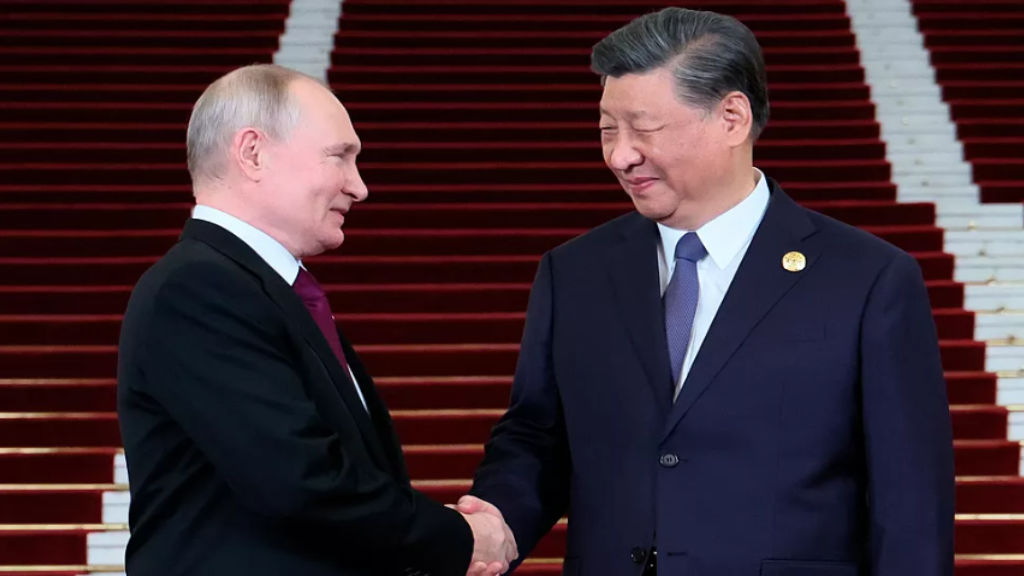
Russian President Vladimir Putin has confirmed his trip to Beijing to hold meetings with Chinese President Xi Jinping, himself just back from a trip to France, Serbia, and Hungary – the latter two Russia-friendly European nations. Putin meanwhile this week has restructured his government and moved around senior officials and just held meetings with Eurasian Economic Union heads of state. In this article we look at what a resetting of Western relations with China and Russia means, and how the two countries can be expected to work together to offset their declining relations with the EU in particular. Putin meets with Xi on Thursday and Friday. (May 16 & 17).      

The Russian Government Reshuffle

While Sergey Lavrov, the veteran Foreign Minister, remains in place, a key role in Russia has changed – with Andrei Belousov stepping in as Defence Minister. His predecessor, Sergey Shoigu, has been moved to a position within Russia’s Security Council, with the moves Russia is looking to take a different approach to its national security – which includes the Ukraine conflict. The main difference here is that Belousov is an economist – with close ties to China. This appears indicative of one of two possibilities: either that Russia is preparing for a long-haul conflict in Ukraine and needs better financial management of the military to support this, or that Moscow feels an end is in sight and in its favour. If so, reconstruction and integration of what were once Ukrainian territories into Russia also requires deft financial planning. Assuming the first case, Putin and Xi will be working out how best to continue under-the-counter military supplies to Russia. China is no special friend of Ukraine, having lost billions of dollars of investments in Ukrainian land use rights and agricultural deals since the conflict began. China was Ukraine’s biggest trade partner as recently as 2020, representing 11% of Ukraine’s total trade. However, in 2023, Ukraine’s National Agency on Corruption Prevention designated numerous Chinese MNC and SOE companies “international sponsors of war”, a situation that has certainly not gone down well in Beijing.

However, at the heart of the Russian reshuffle is a government with a foreign policy full of Chinese expertise. While Sergey Lavrov, and Andrei Belousov are already well known in China, so are Russia’s new Deputy Prime Ministers Alexei Overchuk, who has worked with the Eurasian Economic Union and Russia’s foreign policy, Vitaly Savelyev in Russian transport and logistics, including an overhaul of state carrier Aeroflot, Yury Trutnev, now responsible for the Russian Far East and long an architect of developing the Russian Arctic, Far East and Special Economic Zones – some in conjunction with China, – amongst others. It means that China has acquired a new political dynamic within the current Russian government administration.  

Reintegrating Oblasts and the Belt & Road Initiative

This new expertise has specific implications. Should Moscow feel it is about to prevail in Ukraine, China’s BRI infrastructure finance involving the reconstruction and rehabilitation of the Luhansk, Donetsk, Zaporizhzhia, Kherson and Kharkiv Oblasts (Provinces) into Russia would be a much-discussed subject. These regions, all of which are currently under at least partial Russian control, would almost certainly be ceded to Russia in the event of any Ukrainian military collapse. Also potentially coming into the picture could be Odessa Oblast on the Black Sea coast.

Why would China help finance these regions reintegration into Russia? Because these regions represent significant assets in both agriculture and energy – both of which China imports. Beijing had already made numerous agreements with Kiev over land use rights for crop and food production and had been looking into coal and other commodities, as well as financing rail links into the country. That money has now gone, with nothing left to show for it. Beijing would feel that Moscow, in return for BRI and other relevant support, would honour the deals that the Kiev government originally made. China’s proven success in BRI infrastructure development would almost certainly be a better option than any EU programme – as Brussels appears to have already demonstrated it is running short of funds.      

A Changing Europe

Xi’s visits to Serbia and Hungary were interesting. Serbia is not part of the EU and is staunchly anti-NATO. It also has a Free Trade Agreement with Russia via the Eurasian Economic Union. Hungary, while part of the EU, remains on friendly terms with Moscow. While Xi’s trip to both would have been in part, to unblock construction problems with the Belgrade-Budapest railway, he would also have looked at widening China’s BRI infrastructure in the Balkans region as a whole. Serbia is also a potential candidate for BRICS.

Elsewhere, Xi would have assessed the overall situation in the Balkans. Several countries feel let down by the EU keeping them on perpetual membership tracking, and resent Ukraine’s ambitions to join as soon as is possible and charging ahead of their own longer term promised EU agreements. This is now leading to a swing back towards trade with Russia and China, and the promise of Chinese investments. That will suit Moscow.    

Mitigating Against Sanctions

This is a subject of mutual interest as the United States has now been seen to use sanctions as a trade weapon, often with flimsy pretexts. TikTok is owned by Chinese investors (yet managed from Singapore) yet its popularity as an App have raised American concerns about spying. TikTok has been threatened with expulsion from the US market unless it sells its US division to an American firm. The United States has just imposed a 100% import tariff on Chinese electric cars – as the American market technology is well behind that of China’s. There are numerous other examples of US sanctions being deployed against China for what really amount to protectionist issues, dressed up as security concerns. The EU and UK generally follow Washington’s lead in this regard.

Meanwhile, the sanctions imposed upon Russia are well known – but with Ukraine used as an easy excuse for increasing the promotion of US energy and weapons supplies to Europe. Both Russia and China then face similar, if somewhat differing sanctions pressures upon their economic development, as do the multiple nations who are caught in the middle. These include businesses from across Central Asia and the Middle East, Turkiye (a NATO member), Africa and Latin America. It is not an exaggeration to say that the Global South is looking to Moscow and Beijing to help them out of US sanctions policy.  

Indeed, one of President Putin’s main goals will be to find ways to minimise disruption to the economic lifeline that China has provided. Since February 2022, Beijing has become the biggest buyer of Russian oil and gas, as well as a key source of imports. These range from consumer goods to components that can fall under the ‘dual-use’ sanctions banner. Washington is trying to cut off that trade flow.

New Banking Infrastructure

This extends beyond specific products but to global banking structures. In December, the White House threatened to impose sanctions on any bank clearing payments for Russia. Earlier this year, US Treasury secretary Janet Yellen and secretary of state Antony Blinken visited China and laid out these threats to Chinese leaders and financial institutions. There has been some effect. Chinese exports to Russia dropped by 15.7% in March and 13.5% in April compared with the same period last year. Getting around these deliberate, US imposed limitations will also be a core part of the Xi-Putin discussions.

Such sanctions have also been proven to be solvable. Over the past two years, the Russian and Chinese governments have demonstrated a remarkable ability to adapt to US restrictions. Putin’s visit presents a new opportunity to brainstorm the options in private before quietly implementing them. He will be accompanied by an experienced team from Russia’s Central Bank and the Finance Ministry, as well as IT and tech support officials who are responsible for the Kremlin’s drive to de-dollarise the Russian financial system. Their moves have already enabled Russia to withstand the initial shock of sanctions and then rapidly switch its financial system from dependency on the US Dollar and Euro to partial dependency on the Chinese RMB.  

In December last year, the RMB accounted for more than a third of settlements in Russian trade with foreign partners — from practically zero in 2020. Russia’s RMB deposits held in Russia currently amount to about US$68.7 billion, according to the Financial Times, and now far exceed its US dollar holdings. According to Russia’s Central Bank, RMB-denominated lending to support Russia-China trade has surged nearly fourfold to US$46.1 billion, thanks largely to the conversion of debt from US Dollars and Euros to RMB.

Russia and China also now use local infrastructure for proceeding and clearing transactions. After being cut off from SWIFT, Russia has been using its own domestic analogue, the financial messaging system of the Bank of Russia (SPFS), whose use is now mandatory in Russia. China operates its own cross-border interbank payment system (CIPS), which now includes about 30 Russian banks. While CIPS doesn’t equal the global transaction volumes handled by SWIFT, it is expanding. CIPS daily transactions increased by 50% in 2022, and by another 25% in the first three quarters of 2023.

CIPS also doesn’t just process payments between China and Russia. In April 2023, for example, Bangladesh used it to pay Russia’s atomic energy agency in RMB for work on a nuclear power plant.

However, while US threats to disconnect Chinese banks from SWIFT remain, the next steps for Moscow and Beijing will be the creation of infrastructure for clearing the most sensitive payments. This is unlikely to include any major Chinese bank integrated into the global financial system but some of its 4,500 regional banks already have correspondent relationships with Russian banks. A scheme for clearing problematic payments could include smaller banks that only conduct transactions in their national currencies and use only local infrastructure. The involvement of multiple shell companies as intermediaries, including from countries in Central Asia and the Middle East is likely. Such transactions will be costlier and take more time, but they will be much harder for the US to find and clamp down on.

By looking at the Russian economy as a giant sanctions experimental laboratory, Beijing and Moscow combined can fine-tune a financial infrastructure that can be used by other nations seeking an antidote to the United States weaponizing global financial systems and trade. A Putin-Xi summit to discuss the issue now seems more likely to succeed than a United States now preparing for Presidential elections and a European Union apparently overcome with fear. The Putin-Xi summit in Beijing to discuss global affairs and their relationship with each other suddenly seems to be the underpinning of a new, much needed global stability.

Russia Needs To Reduce Import Dependence On China: Chamber of Commerce & Industry

Published on May 15, 2024

The Russian Chamber of Commerce & Industry has suggested changes to Russia’s import substitution sector lest it start to rely too much on Chinese manufacturing.  

To reduce import dependence in Russia’s manufacturing and mechanical engineering sectors, it is essential to accelerate the development of component manufacturers – a third layer of Russian industrialisation. At present, the import dependence of mechanical engineering products is approximately 30% and is increasing. If this trend is not reversed, the Chamber suggests there will be complete dependence on Russian supplies from China.

During a meeting of the Russian Chamber of Commerce and Industry Council concerning Russia’s industrial development and the competitiveness of the Russian economy, it was stated that at the end of 2023, Russia’s manufacturing sector accounted for 12.4% of Russian GDP, representing an increase of 7.9% relative to 2022. However, this is significantly higher than the country’s GDP growth of 3.6% over the same period, yet could be negated if the current economic policy is not adjusted.

According to Konstantin Babkin, the Chairman of the Council, between January–November 2023, the receipt of taxes on production and consumption in the budget increased significantly compared to the same period in 2022. Consequently, VAT collection increased by 10.98%, personal income tax by 12.9%, income tax by 21.95%, and property taxes by 5.1%. Concurrently, the volume of collected “raw materials” taxes decreased: over the same period, revenues from the mineral extraction tax decreased by 11.06%, and excise tax collections fell by 62.3%.

Russia’s Competitiveness Disadvantage To China

Industrial manufacturers in Russia are at a disadvantage relative to their competitors from China, according to the Chamber of Commerce and Industry. Data cited by the Chamber show that the average cost of a loan for Chinese industrial enterprises is 0.05%, while for Russian ones it is 12%. Furthermore, the average tax burden on manufacturing companies in China is 20%, while in Russia it is 47.7%.

The result of these disparate conditions is the preponderance of Chinese manufacturers, both components and engineering products in general, on the Russian market. Babkin cites the example of electric motor production – units without which the production of the majority of final mechanical engineering products would cease. In China, 1.2 billion units were produced last year, and in Russia – 9.8 million. That compares to 46.6 million electric motor units being produced in Soviet Russia in 1990. Babkin says that “Russia is moving from dependence on the West to dependence on the East.”

Nikolai Sidorenkov, General Director of the Lifting Machines company, draws attention to the reduction in supplies of KamAZ vehicles and to the increase in shares of trucks from Chinese manufacturers in the Russian market. He states that in 2021, KamAZ released over 35,000 vehicles to the market, while in 2023, the figure was 31,000 a decrease. However, the Russian truck market grew from 84,000 units in 2022 to 143,000 in 2023. But that growth was achieved due to the supply of trucks from Chinese manufacturers, whose market share increased to 60% of Russia’s total.

He has also noted that Chinese manufacturers have are not yet developed a service sector for their products in Russia. There are no spare parts, the materials used to manufacture the products are of low quality, and the products themselves sometimes have unsatisfactory performance parameters.

Yet Chinese equipment remains a popular choice due to the competitive advantage enjoyed by its manufacturers in terms of business conditions. Sidorenkov has suggested that an effective measure could be the introduction of a “equalising” duty of up to 30% for all imported components of automotive special equipment, as well as imported cranes, supplied separately, not as part of special equipment. Furthermore, he suggests introducing a recycling fee on all lithium ion battery components imported separately from the vehicle.

The Need For Government Incentives 

Vladimir Gamza, Chairman of the Chamber of Commerce and Industry Council on financial, industrial and investment policy, notes that Russian mechanical engineering is highly import-dependent, with imports accounting for approximately 30% of the sector. The figure is higher only in pharmaceuticals, at 50%, and in the consumer goods sector, at more than 35%.

To reduce import dependence, it is necessary to implement measures to support manufacturers of components for Russian mechanical engineering. The Chamber of Commerce and Industry believes that in order to accelerate the development of this sector, it is necessary to provide enterprises with the same benefits that are currently available to companies in the IT industry. This experience has yielded positive results and should be extended to other challenging industries.

Furthermore, along the technological chain, it is necessary to stimulate the production of small-scale and special steels and at the same time ensure prices for them for Russian consumers are at a level comparable to the cost of their production. It is also necessary to develop a programme to modernise factories that produce foundry equipment and promote the creation of foundry production complexes and mechanical processing of castings.

Russia’s Third Industrialisation

Babkin has stressed that “Russia must ensure that its domestic producers are not placed at a disadvantage compared to their Chinese counterparts. Russia is well-positioned for dynamic growth, yet the key to success is the implementation of an effective economic policy. A third industrialisation is required. The development of non-resource sectors of industry will stimulate growth in the economy, generate demand for scientific developments, enhance the material well-being of the population, and improve the quality of education and address demographic challenges.”

According to data presented at a meeting of the Council of the Chamber of Commerce and Industry, Russia’s imports are primarily comprised of high-value goods, accounting for nearly 70% of all imports. Conversely, the composition of exports is predominantly composed of raw materials, accounting for over 70% of the total. The Chamber of Commerce and Industry has identified the need to invert this pyramid as a priority task.

Revised Tariffs and Taxes

To achieve this, it would be beneficial to implement a revised customs policy. The objective should be to not only replenish the treasury but also to create conditions for the development of individual industries. It is essential to implement a policy that will prevent the importation of products that can be produced domestically or within the EAEU.

In terms of tax policy, a paradigm shift is also necessary. In order to increase budget revenues, the tax burden on business is growing. This ultimately results in a decline in business activity. The Chamber of Commerce and Industry believes that budget revenues can be increased by creating conditions for the growth of production, which in turn will lead to an increase in the tax base. To this end, they propose reinstating the investment tax benefit in the format that was in force during the period when the government was headed by Yevgeny Primakov during Soviet times.

Furthermore, a change in monetary policy is required to address the current inflationary environment. However, the Chamber of Commerce and Industry believes that this has the opposite effect. A high key rate leads to higher prices for loans, a decrease in production activity, stagnation of production, a deterioration in the condition of households and increased inflation.

In this regard, the Council of the Chamber of Commerce and Industry has proposed amending the legislation on the Central Bank at the first stage. This would set the task of stimulating economic development and production growth. It is worth noting that several years ago, in his address to the Federal Assembly, Vladimir Putin also stated that it would be beneficial for the Central Bank to set such goals.

RPA Opinion

The opinion of Russia’s Pivot to Asia is that while adjustments need to be made concerning the market competitiveness of Russia’s domestic products when compared with Chinese imports, re-introducing Soviet-era policies to increase duties on Chinese imports needs to be handled with care. Russia is going through a period of some adjustment, and this will take time. There have been obvious opportunities that Chinese manufacturers have taken advantage on, and that frankly, Russia needed to have since Western sanctions were introduced in 2014.

An example has been in public bus transport. Prior to 2014, buses were imported from the EU, with brands such as Scania and Volvo. Afterwards, they were replaced with Chinese brands such as King Long. Now, public buses are provided by Volgabus. This evolution from Western to Chinese to Russian-built products is a natural evolution and explains why Chinese manufacturers have not backed up their vehicle sales to include services. Surely it is the role of Russian businesses to import and distribute such parts, and eventually to create their own domestic vehicle production and services industry.

While it remains true that Russian businesses would gain from domestic incentives, the element of Chinese competitiveness should remain. If not – domestic manufacturers, certain of 100% market share become lazy, and inefficient. Russian businesses need Chinese and other competition to motivate them. The role of the Government is to encourage this without interfering with market economics. Tariffs and duties can be used to do so – but should be aimed at pushing Russian manufacturers to be more competitive rather than deployed as punishment for China’s entrepreneurial instincts.

Uzbekistan Contemplates Further Eurasian Economic Union Trade & Development

Published on May 14, 2024

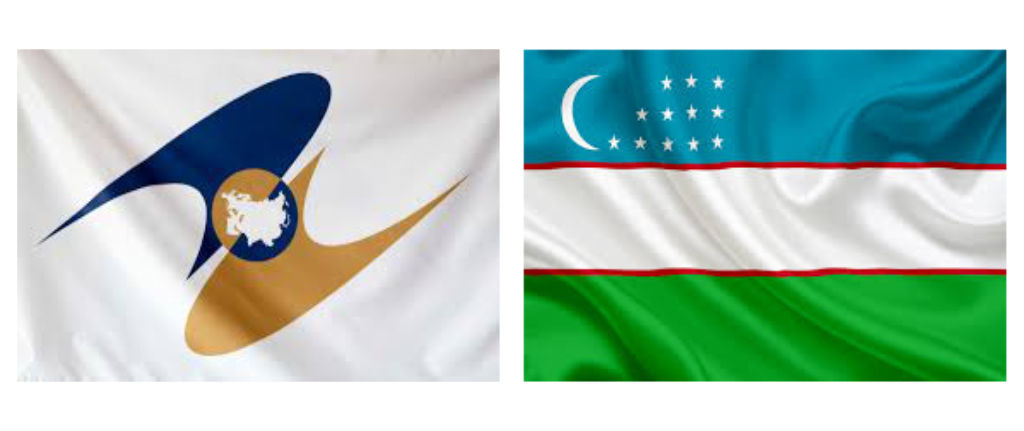
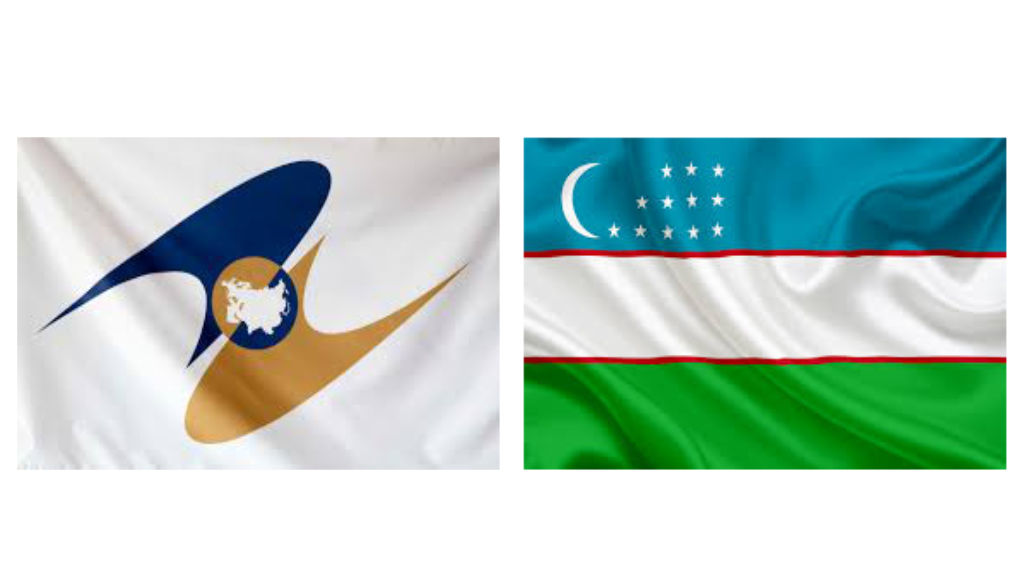
The tenth anniversary meetings of the founding of the Eurasian Economic Union (EAEU) took place last week, with the five member bloc assessing progress and planning ahead. The EAEU, which includes Armenia, Belarus, Kazakhstan, Kyrgyzstan, and Russia, fills the geographic space between Eastern Europe and Western China. Uzbekistan is not a member but does have Observer status and participated in last week’s meetings. 

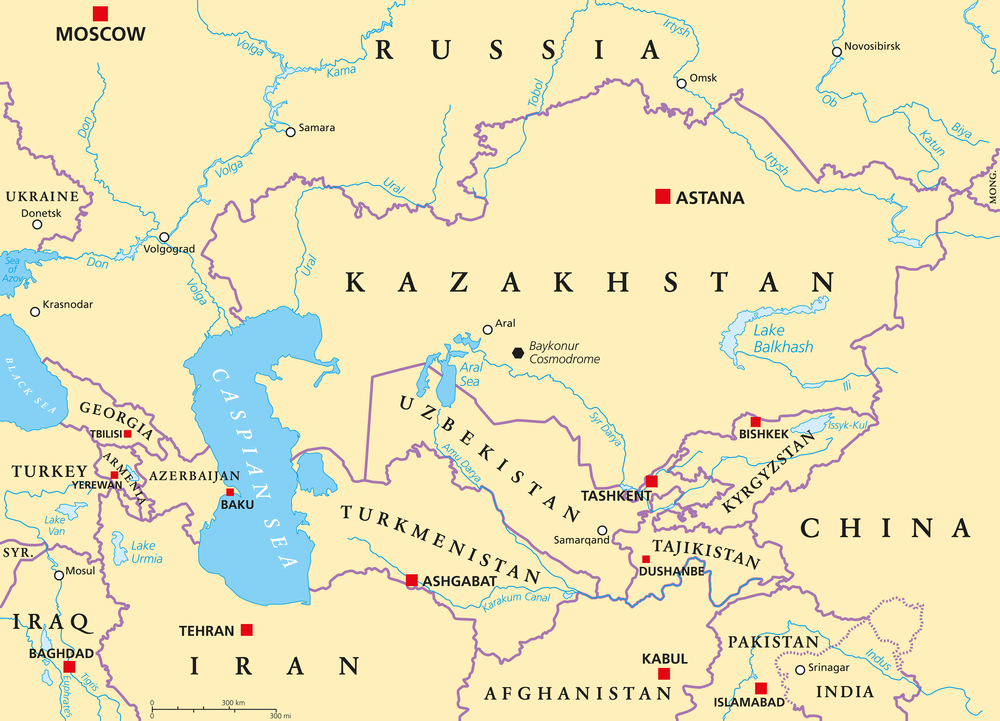
A leading issue is Uzbekistan’s continuing and future participation in the EAEU. Uzbekistan is a doubly landlocked nation, bordering Kazakhstan, Kyrgyzstan, Tajikistan, Afghanistan, and Turkmenistan. Due to its unique position, cross-border supply chains to these and their neighbouring countries are a significant issue for Tashkent. Regional disruptions could significantly damage its economy.

EAEU Uzbekistan Trade

The EAEU is the leading trade partner of Uzbekistan. Trade between Uzbekistan and the EAEU in January-February 2024 alone amounted to US$2.5 billion. Of this, exports accounted for US$747 million, and imports amounted to US$1.8 billion. This indicates a potential 2024 Uzbek-EAEU trade turnover of about US$14.5 billion. The EAEU’s share of Uzbekistan’s foreign trade accounts for 32.9%, of Uzbekistan’s total, with EAEU exports accounting for 29.9%, and imports from Uzbekistan at 34.6%.

The role of Tashkent in the EAEU today is difficult to overestimate. Uzbekistan covers almost half of the EAEU’s need for fruits and vegetables, thereby providing significant guarantees in EAEU food security. The Uzbek agricultural sector has consequently received EAEU privileges. The Agroexpress and logistics complex for agricultural products at Jizzakh, in central Uzbekistan, was launched by the Russian investors, and has opened up broad trade prospects.

Uzbekistan is also actively promoting products from its textile, automotive, and electrical industries to the EAEU. In the opposite direction there are powerful flows of metal products, petroleum products, wood, machinery and equipment, chemicals, cereals, and vegetable oils.

For example, Belarusian goods such dairy products, refrigerators and clothing are in demand in Uzbekistan, while Kazakh flour, confectionery, sweets and chocolate, Kyrgyz textiles and other consumer goods all have significant Uzbek market share. Russia provides supplies of electricity, gas and irrigation water for cotton plantations.

Political Background

Vladimir Berezovsky, of the Caspian-Eurasia Centre provides some background to Uzbekistan’s engagement with the EAEU: “The history of Uzbekistan’s entry into the EAEU was quite dramatic. The previous Uzbek President Islam Karimov had adhered to an isolationist course, closing his sales market to foreign products, thereby giving Uzbeki industry a competitive domestic edge. However, the lack of free trade also posed an often insurmountable barrier. Only from 2005, following riots in Andijan and Western imposed sanctions, did Karimov move towards his closest neighbours and sought closer relations with neighbouring countries. In 2008, the US company Chevrolet began an automobile plant in Asaka, while Washington at the same time began to disrupt Uzbekistan’s relations with its eastern neighbours.  That resulted in Karimov cutting off gas and electricity supplies to Kyrgyzstan and Tajikistan. Relations with Russia also deteriorated, to the extent that still, in 2024, no Russian bank operates in Uzbekistan.

This situation changed with a change of leadership in Uzbekistan and the coming to power of Shavkat Mirziyoyev in 2016. At that point, Uzbekistan began to reestablish ties with Russia and with the leaders of its neighbouring Central Asian countries.”

This means that Uzbekistan has moved away from an isolationist policy and has recognised the need to embrace regional infrastructure and redevelop Eurasian supply chains.

Uzbekistan-EAEU Initiatives

For example, Mirziyoyev has invited the EAEU to join the construction of the Uzbekistan-Afghanistan-Pakistan railway, which will provide landlocked Uzbekistan seaport access at Gwadar. This project is partially being financed by China as part of its Belt & Road Initiative.  

Mirziyoyev has also spoken in favour of joint scientific and applied research and the introduction of innovations, encouraging the development of cooperative ties in agribusiness. He put forward an initiative to hold an agricultural forum in the EAEU plus format in October 2024. Thus, Uzbekistan is consistently increasing the level of its participation in the EAEU and has moved beyond the official status of an ordinary observer. This is a logical step: the EAEU helps with the modernisation of economies, the creation of modern industries, the achievement of real sovereignty and, ultimately, improving the well-being of citizens.

European Union Issues

In Uzbekistan, however, there are still political elements that strongly oppose close ties with the EAEU and push a Western based agenda from their Embassies. In particular, there remains strong Western opposition to Tashkent becoming a full member of the EAEU. The EU for example has tried to deflect this by providing Uzbekistan with a General System of Preferences (GSP+) trade arrangement, which removes tariffs on two thirds (6,200 titles) of the product lines covered by GSP.

But should Uzbek producers join the EAEU, they would receive equal access to the market of the EAEU countries, while the lives of their significant migrant labourers would be much easier – a market that is closed off in the EU.  Uzbekistan’s migrant labour force is principally deployed in Russia and accounts for a significant share of Uzbekistan’s economy. According to World Bank figures, Uzbek labor migrants sent home US$16.7 billion in remittances in 2022, an amount equivalent to 21% of national GDP. 

Improved infrastructure routes to Russian and Chinese investment resources and technologies would also open. Uzbekistan would become part of a single customs space, as a central EAEU hub – between the EU and China and with increasing trade ties to the Middle East – significant potential investors. 

The future of Uzbekistan therefore revolves around maintaining trade ties with the European Union if at all possible, while securing supply chains within its own regional Eurasian space. Key here for Tashkent is the Russian experience. Should the EU seek to punish Tashkent for pursing closer ties with Moscow – including an EAEU membership – and cancel or reduce the GSP+ agreement, then Uzbekistan will need to be sure it can find replacement markets within the EAEU. That could be summed up as “Uzbekistan’s Pivot to Eurasia” and is the most pressing issue as concerns Uzbekistan’s future today. 

Further Reading

Russia – Uzbekistan 2024 Trade & Development

Russia’s trade and development dynamics with Uzbekistan are comprehensively featured in our 2024 Russia’s Pivot to Asia guide, which is a complimentary download and can be accessed in English here and in Russian here.

St.Petersburg Provides SME Incentives To Develop East China Exports

Published on May 13, 2024

The St. Petersburg government is to launch a pilot scheme for local SME exporters, providing subsidies for domestic businesses in the city looking to access markets in Eastern China. At the initial stage, it is planned to access four major ports in China: Qingdao, Shanghai, Ningbo, and Guangzhou. The initiative has been arranged by the St. Petersburg Export Support Centre.

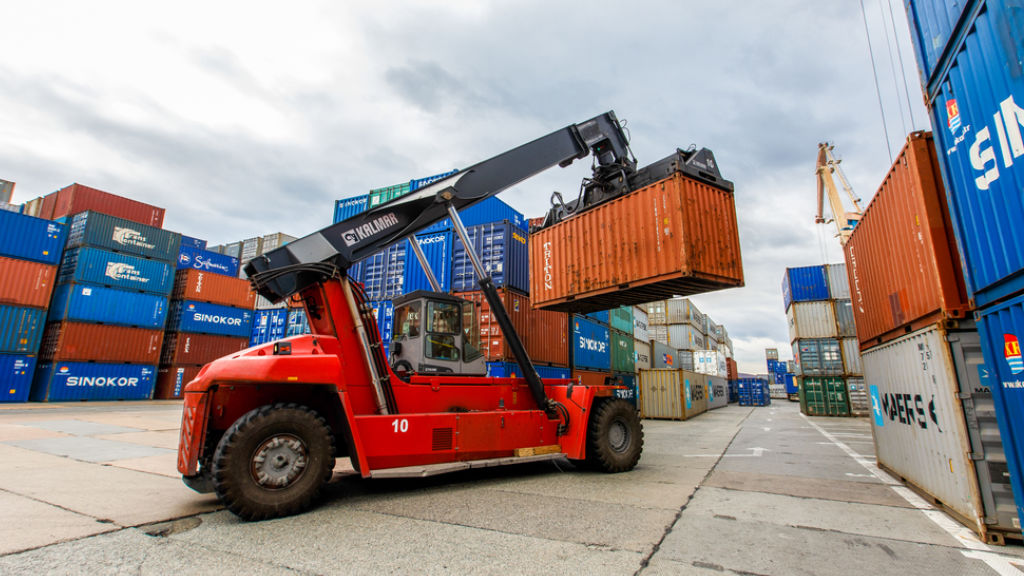
The first 40-foot container with goods from St. Petersburg manufacturers is planned to be sent to China in June, with the carrier to be selected as part of a competitive tender. Artem Kaloshin, the General Director of the centre said that “First, we want to send the first test batch to China, and after receiving feedback from exporting companies, we want to put the process on stream.”

After the initial stage is completed and fully operational in East China, it is planned to include ports in Latin America, Africa and India. Kaloshin did not specify the amount of government funding available for the new program, saying only that the amount will depend on the number of applications submitted, but in the future it could amount to tens of millions of rubles per annum. According to the General Administration of Customs of China, trade turnover between Russia and China in 2023 increased by 26.3%, amounting to a record US$240 billion. At the end of the first quarter of 2024, trade turnover between Russia and China increased by 5.2% and amounted to US$56.68 billion.

In January-March of this year, the volume of supplies from China to Russia increased by 2.6%, and supplies from Russia to China increased by 7.3%. “We collect applications for a certain direction, if there are enough of them to fill the container at least two-thirds, the Export Support Centre negotiates with logistics companies that freight the container,” Kaloshin explained.

The city budget pays 100% of the costs for container freight, customs clearance, agency support and cargo consolidation, as well as storage of products in a warehouse in St. Petersburg and its delivery to the port. In order to participate in the program, the company must be registered in St. Petersburg and be in the register of SMEs.

There are no restrictions on the types of products for export, with the exception of perishable goods. Most product will be non-perishable goods, including food, and engineering products. In fact, the new program, which is being implemented within the framework of the national project “Small and Medium Enterprises and Support for Individual Entrepreneurial Initiatives,” is an addition to another, already existing program to support SME exporters. It includes payment of 80% costs for transporting products across Russia. The amount of support for one SME can reach up to ₽1 million (US$10,800) or 5% of the amount of exports.

Any opportunity to reduce transportation costs will allow exporters to increase the volume of transported products and expand their geographical reach.

Costs will be reduced due to the full filling of containers, since at the moment SME exporters cannot always fully load a full container. The significance of this program lies in the fact that it affects small and medium-sized businesses, since this will help consolidate loads.

Further Reading                    

Arkhangelsk-Shanghai To Become A Regular Northern Sea Route Service

Mauritius Assessing MIR Card Introduction

Published on May 13, 2024

Mauritius is working on introduction of cards of the Russian MIR card payment system, according to Konstantin Klimovsky, the Russian Ambassador in the country. He said. “Authorities of Mauritius have plans for MIR use but it is difficult for the time being to say whether this will be achievable in 2024.”

Having access to Russia’s MIR system means that Russian or other MIR card holders in Mauritius can directly access their accounts in Russia and use their credit and debit cards to pay for goods and use ATM machines.

The Indian Ocean island nation is a popular tourist destination, however the potential impact of MIR access goes a lot further – Mauritius is an offshore financial centre and a member of the African Continental Free Trade Agreement (AfCFTA). That gives it preferential duty free status with most African countries.

Mauritius is also a member of the Common Market for Eastern and Southern Africa (COMESA), a regional economic community in Africa with twenty-one member states stretching from Tunisia to Eswatini.

Russia has negotiated a Double Tax Treaty with Mauritius however this has not yet been ratified. Should it be, Mauritius is likely to develop as a convenient base for Russian-African trade.

Further Reading

Russia – Africa 2024 Trade & Development

Russia’s trade and development dynamics in Africa are comprehensively featured in our 2024 Russia’s Pivot to Asia guide, which is a complimentary download and can be accessed in English here and in Russian here.

Eurasian Economic Union Holds Annual Heads Of State Meetings: Discussions and Developments

Published on May 11, 2024

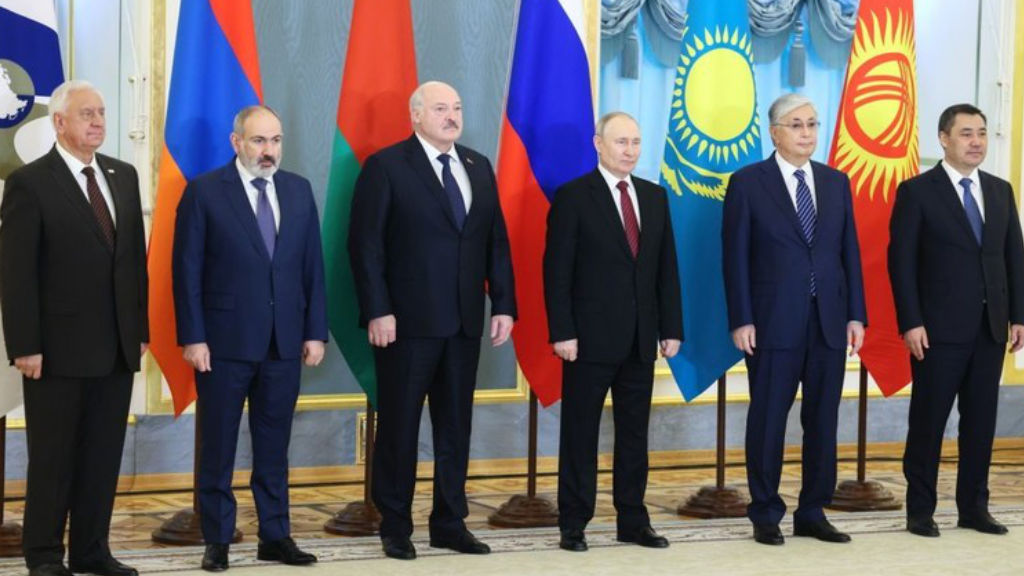
The heads of state of the Eurasian Economic Union (EAEU) countries met in Moscow this week to discuss the ten-year progress since the bloc was formed and make plans for future development. The event was attended by the five heads of state from Armenia, (Prime Minister Nikolai Pashinyan) Belarus (President Alexander Lukashenko), Kazakhstan, (President Kassym-Zhomart Tokayev), Kyrgyzstan (President Sadyr Zhaparov) and Russia, (Vladimir Putin) while Cuban President Miguel Mario Diaz-Kanel Bermudez and the President of Uzbekistan, Shavkat Mirziyoev were in attendance as observers.

The Presidents of Tajikistan (Emomali Rahmon) and Turkmenistan (Serdar Berdimuhamedow) attended a later EAEU dinner.

Russian President Putin applauded the bloc’s development, stating the EAEU has performed well over the past decade and established itself “as an independent and self-sufficient center of the emerging multipolar world.” The EAEU strongly adheres to its “main principles of integration cooperation,” namely “equality, mutual benefit, respect for and consideration of each other’s interests,” Putin noted.

“The economic indicators speak for themselves: according to available estimates, over the ten years the joint GDP of the EAEU countries went from US$1.6 trillion to US$2.5 trillion. Trade with third countries grew by 60% from US$579 billion to US$923 billion, while the volume of mutual trade almost doubled: from US$45 billion to US$89 billion, with over 90% of transactions already made in national currencies,” Putin stated, noting that positive macroeconomic trends have been observed within the EAEU this year as well. These figures suggest an annual, sustained EAEU growth rate of about 6-7% over the past ten years. 

The EAEU has proven to be beneficial not only to its member states, but to the broader Eurasian region, the president stated. The union “helps ensure stable and sustainable development both of the five member countries and the Eurasian region as a whole, and results in improving the quality of life and wellbeing of our people,” he said.

The EAEU is effectively a successor to the Eurasian Economic Community, a now-defunct group that existed between 2000 and 2014 but was dissolved soon after the EAEU treaty was signed. It fills a geographic space between Eastern Europe and Western China.

Russian Deputy Prime Minister Aleksey Overchuk said that trade turnover within the EAEU could exceed US$100 billion during 2024. “This, in fact, is evident from the statistics. Last year, we reached a record turnover at US$84 billion, this year we also have good growth. The year, of course, is not over yet, but there are some forecasts that we will exceed US$100 billion.”

According to Overchuk, the trade growth stems from the fact that EAEU members have succeeded in creating favorable conditions for businesses to interact within the bloc so that “business representatives within our five countries believe that it is most convenient for them to work with each other.”

A great deal of Russian consumer products, including fruits and vegetables that it previously bought from European producers are now sourced from EAEU members. The EAEU itself has achieved food security and is not dependent upon external suppliers.

Russia has stepped up efforts to expand trade and other facets of economic cooperation with allied nations as it faces Western sanctions. The country has also been actively switching trade from dollars and euros to national currencies. According to recent estimates, the share of national and other ‘friendly’ currencies in Moscow’s trade with EAEU reached 76% in 2022 and is expected to grow to 90% this year.

Concerning Cuba, Putin said that he expected that Cuba’s participation in the EAEU will be useful for all parties. At a meeting with Cuban President Miguel Diaz-Canel, Putin drew attention to the participation of the Cuban leader in the EAEU summit in Moscow on May 8, noting that this association is “one of the most efficient in the post-Soviet space. Cuba is taking part in it as an observer, and I hope that it will have results.” Putin said. Cuba-EAEU trade has been targeted for growth although it is apparently too early for a Free Trade Agreement to be put into place.

There is to be an EAEU-Mongolia FTA however, with the EAEU bloc voting to support such an agreement. In addition, the participants adopted a draft protocol on electronic exchange of information between the EAEU and Vietnam under the electronic system for certification and verification of origin of goods, within the context of the EAEU-Vietnam FTA.

Belarussian President Alexander Lukashenko meanwhile talked up the possibility of further trade development and especially between the EAEU and Africa. He said that “It is important to systematize the process of establishing partner relations between the EAEU and third countries, and in our view, this needs to be systematized. In current geo-economic conditions, it should be clearly determined with what countries in what sequence and within what kind of timeframe a free trade zone will be formed, and with what potential partners there may only be interaction within the framework of appropriate memorandums.”

This indicates Lukashenko envisages a ‘two-tier’ trade agreement approach, with Tier One being full FTA, and Tier Two trade agreements on a G2G memorandum basis.

Lukashenko went on to recall the signing of a full-scale trade agreement with Iran. The process of strengthening mutually beneficial cooperation in the format of the Five with much-promising and friendly Asian nations, including India, Indonesia, and the UAE is also underway, he said.

The Belarusian president also noted that the EAEU has by now paid little attention to dialogue at the EAEU level with the African Continent. “Africa needs a broad list of our products, works, services and technologies. Africa, as well as Latin America, is fed up with colonialism from certain leading nations. And this is the point when we should come to Africa.”

Parallel participation by EAEU countries and their partners within the CIS in the Shanghai Cooperation Organization and BRICS also opens up huge benefits, he said.

Further Reading

Eurasian Economic Union 2024 News

Russia Plans For National Economic Transition & Growth Resurgence 

Published on May 10, 2024

Andrey Belousov, Russia’s First Deputy Prime Minister, has said that Russia has worked out a plan to transform the country’s economy by 2030. His remarks followed President Putin’s decree, also issued this week, which sets out the goals for future Russian growth until the end of the decade. 

Speaking at a panel session on Wednesday (May 8) at the Russia International Exhibition-Forum titled “Developing an Efficient and Competitive Economy”, Belousov laid out the roadmap for implementing the long-term economic strategy. The key, according to Belousov, will be a transition from a demand-driven economy to a supply-driven one.

He said that “We need to create conditions in which the growth impulse will not be external, from monetary demand, but come from the production sector itself. Among the ways to achieve this are to introduce labor reforms, entrepreneurial incentives, increase efficiency and productivity – including through automation, and by harnessing artificial intelligence.”

Russian consumer spending – based on increased productivity and real wages – combined with capital investments and oil and gas exports will account for about 16% of the increase in Russia’s GDP, Belousov said. The IT and communications industries are regarded as the biggest engines of Russian growth, which the government aims to see expand by 130% by the end of the decade.

Belousov’s roadmap for economic transition involves extensive reforms aimed at improving productivity, including via automation and education, boosting investments, increasing exports other than natural resources and energy, and creating transportation corridors for Russian goods, which should be able to carry 1.4 billion tons of cargo by 2030.

Wednesday’s session also discussed the role of the federal and regional authorities in improving the investment climate and business activity in the country, as well as the removal of transportation restrictions while preserving Russia’s “logistical sovereignty.”

The specific goals set by the Russian President include Russia having the fourth-highest GDP – measured by purchasing power parity – in the world by 2030, thus surpassing Japan. Russia would also be among the top 25 countries for using robots in manufacturing and in the top ten in terms of scientific research and development.

The underlying intention of the transformation is to ensure Russia’s position as a sovereign nation that respects traditional values, engages with friendly nations, and improves its economic standing through science and private entrepreneurship, according to the 2024 decree. Belousov has further illustrated how this will be achieved.

Further Reading

Arkhangelsk-Shanghai To Become A Regular Northern Sea Route Service

Published on May 10, 2024

China’s Yangpu Newnew Shipping plans to make 10-12 shipping runs from Shanghai to Arkhangelsk along the Northern Sea Route (NSR) in 2024, according to the government of the Arkhangelsk region.

Alexander Tsybulsky, Arkhangelsk Regional head, and Tsetsen Goryaev, the General Director of the Arkhangelsk Commercial Sea Port and Elena Maximova, the General Director of Torgmall LLC signed an agreement on Wednesday (May 8) under which Torgmall will ensure the organization of the transportation of goods by sea from ports in China to Arkhangelsk. Yangpu Newnew Shipping is a business partner of the company.

The Arkhangelsk Commercial Sea Port will ensure that the infrastructure at the Ekonomiya Terminal is prepared for cargo transshipment.

“Thanks to our cooperation, last year we sent our first ship along the Northern Sea Route from Arkhangelsk to Shanghai. The agreement signed is a confirmation of our long-term intentions, so now we need to think through plans for the next five years and provide for the necessary investments in infrastructure development.” Tsybulsky said.

According to Ke Jin of the Yangpu Newnew Shipping, the company plans to operate four vessels on the line during the 2024 navigation season. In addition, the carrier expects to use the capabilities of Russian Railways to send cargo from Arkhangelsk to Moscow.

A test direct cargo run via the NSR from Arkhangelsk to Shanghai took place for the first time in ten years in 2023, with the ship carrying 500 containers of lumber. The distance is 26,500km. The travel time was 23 days versus 30-32 days from St. Petersburg.

Russia Map

According to the Arkhangelsk Commercial Sea Port website, the Ekonomiya loading and unloading terminal is located in the northern part of Arkhangelsk, 15 km from the White Sea. The terminal is capable of receiving vessels with a length of over 190 meters, a width of 30 meters and a draft of 9.2 meters.

Arkhangelsk is a major lumber centre, while it is also well connected via rail to Moscow and St.Petersburg. Chinese goods can arrive at Arkhangelsk for onward distribution while lumber and other Russian materials can be shipped to Shanghai.

Further Reading

Using The Interest On Russian Assets For Ukraine: The Details and Implications

Published on May 9, 2024

The European Union has approved the use of Russian financial assets, currently frozen in the Belgian Euroclear account, to be sent to the “European Peace Fund” (EPF) – a body established in the EU to send funds for munitions to Ukraine. In this article we examine the agreement and the implications.

Deal Structure

The Russian Central Bank has about €210 billion frozen within the EU – chiefly at the Euroclear depositary in Belgium. That money earns interest, which ought to be repaid to Russia. The EU approval however allows this interest to be sent instead to the EPF who then disburses it to Ukraine to allow the country to purchase weapons to use against Russia.

There are some caveats. Firstly, interest payments attract tax in accordance with Belgium’s own tax laws. Belgian laws apply a 30% tax rate on earnings derived from interest payments. It is unclear whether the Belgian government is levying this tax or has created a legal waiver to reduce or cancel its own tax laws.      

Secondly, the Euroclear depository typically charges a 13% handling fee for processing money held in its accounts. It is believed that this fee may have been negotiated to be split into two parts: a reduced 0.3% handling fee, and a fund of 10% to be deducted to cater for any eventual legal fees should Russia sue Euroclear for damages – which is highly likely.

There is also some anecdotal evidence that in agreeing to a lower handling fee, Euroclear themselves are not entirely happy with the EU’s position and are sending a signal to Moscow that the interest transactions – as they are not now profiting directly from it – are made under duress. The company has previously warned against such an approach.  

Ukraine Financing

The European media are reporting that these arrangements – although they have not been fully clarified – will allow Ukraine to receive an approximate €2.5 – 3 billion per annum to purchase munitions. The chief weapons suppliers to Ukraine are the United States and the United Kingdom.

To date, following just over two years of conflict, the West has spent about €163 billion on weapons and munitions for Ukraine, or a rough monthly average of about €6.8 billion. The €2.5 – 3 billion therefore committed by using Russian interest to pay for Ukraine munitions, based on previous expenditure amounts to about 9 days worth of weapons. 

What’s Next?

For the West, and Ukraine, granting permission to use Russian assets in this way is a step towards further seizure of Russian assets. From now accessing the interest payments, the path has been set to later accessing the capital.

Capital Flight Risk & The Euro 

However, should the EU go a step further and permit this, the credibility of the EU as a safe haven for foreign capital holdings – which are already stressed by the freezing of Russian assets and will be more alarmed at the seizing of interest payments due to Russia – will be significantly damaged. It may well result in a run on the Euro, and on other countries withdrawing capital assets from the EU. The Euro is currently worth 1.07 to the US dollar and has been declining this month. It will be of note to see if it drops below US$1 in value over the next two weeks. If it breaches that emotional barrier, it may fall much further.

Meanwhile, while an overall repositioning of foreign holdings out of Europe may not happen immediately, the risk of this occurring has now increased. Both the United States and Ukraine have been encouraging the EU to access Russia’s frozen capital.

Confiscation of European Assets in Russia 

Russia will almost certainly react in two ways: step up the confiscation of European assets in Russia. While Russia has already de-dollarized and de-euroed its domestic foreign currency holdings, there will not be a huge impact on any currency assets. But there could be at the corporate sector, where Russia may seize corporate assets held in the country. That would create political divisions between Brussels and European investors in Russia. As at May 2024, multiple European multinational corporates remain active in Russia, holding billions of euros of assets in plant and machinery and real estate. These are now in great risk of being seized by the Russian state and handed to Russian businesses to take over and manage. The estimated value of such assets in Russia is estimated to be about €150 billion. There have already been numerous warning signs that Russia will recover its Euroclear holdings by requisitioning European assets in Russia, with companies such as Danone and Carlsberg already subjected to this. It can be expected to be a continuing trend. Belgian investors can also now expect to receive ‘special treatment.’

On top of this, Moscow will be looking at mounting legal challenges. These will be aimed at Euroclear and potentially, the European Commission itself. Even the holding by Euroclear of 10% of Russia’s interest rates may not be sufficient – a point to argue as to the validity of using sovereign funds to offset legal challenges from the same sovereign country. These legal challenges can take years to process and EU lawyers and possibly the courts can be expected to engage in delaying tactics. These are challenges that could be in process for decades. The problem for Europe is that these challenges will have to appear on the EU’s overall ‘balance sheet risk’ – extending the potential weakness of the Euro, and the European credibility risk indefinitely. At some point, that may become an albatross around Brussels neck. The EU has embarked on a high-risk strategy in pursuit of relatively small financial rewards.

Russia Aims For 50% Domestic Passenger Aircraft Fleet By 2030

Published on May 9, 2024

As we discussed yesterday, Russian President Vladimir Putin has signed a decree on Russia’s National Development Goals to 2030. This includes increasing the share of domestically produced aircraft in Russian airline fleets to at least 50%.

“To set the following targets and tasks – Increasing the aviation mobility of the population by at least 50% by 2030 compared to 2023, while ensuring that the share of domestically manufactured aircraft in the fleet of Russian air carriers is at least 50% by 2030” according to the decree published on the Kremlin’s website.

According to Russia’s program for developing air transport, the share of aircraft operated by Russian airlines produced in Russia or the former USSR was 32.9% as at April 2022. Foreign jet airliners respectively accounted for 67.1%, while providing around 95% of the total aviation passenger turnover.

According to Reuters, as of May 2023, Russian carriers had 541 Western planes in active service or under maintenance. The Aeroflot passenger fleet alone consists of 178 airplanes, 119 Airbus and 59 Boeing planes, including the Airbus A320, the Airbus A330, the Airbus A350, the Boeing 737, and the Boeing 777. That US and EU aircraft fleet will not be replaced with the same, meaning Airbus in particular lose a major global client.

Russia is the world’s third largest aviation market after the United States and China, and carried 96.85 million passengers in 2021.

The new program stipulates that the share of domestic aircraft must exceed 50%, rising immediately to 57.8% in 2027, and the target is 81.8% by 2030. It is another example of Western sanctions stimulating Russia’s domestic manufacturing industry at the expense of Western products and to the benefit of the Russian domestic technology and manufacturing industries.

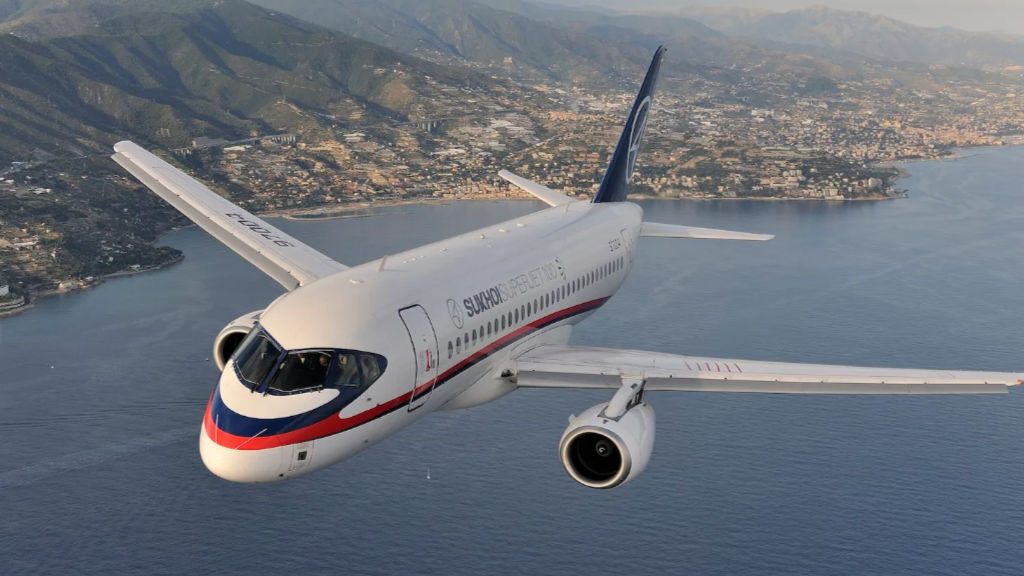
Russia’s Rostec SOE have announced the calendar in supplying flagship projects for the Russian domestic aviation industry, namely the MC-21, the Sukhoi SuperJet, and the Il-114-300, each with an expected market entry in 2025-2026.   

Russia has also been jointly developing and investing in civilian passenger aircraft with China to compete with Boeing and Airbus. The Comac-C-929 is scheduled for entering service by 2030.

Putin’s Presidential Inauguration Speech: National Development Plans & Russia To Become World’s Fourth Largest Economy By 2030

Published on May 9, 2024

The Russian President Vladimir Putin made a comprehensive speech during his inauguration ceremony in the Kremlin, focusing on Russia’s future and its national strategic development plans. We summarise these and provide a link to the complete text below.

Russian Priorities

Amid the rapid changes in the world, Russia “must be self-sufficient and competitive,” open new horizons “as it has already happened many times in our history.” The basis of Russia’s statehood is “inter-ethnic harmony, preservation of traditions of all peoples living in Russia – a country-civilization united by the Russian language.”

Russia’s top priorities will be to have a thriving population and preserve its centuries-old values and traditions, support for this course “will continue to unite public and religious associations, political parties at all levels of the government. The consolidated will of millions of people is a powerful force and evidence of our commonly held firm belief that we alone will determine Russia’s future for the sake of present and future generations.”

New Projects

Russia is confidently looking forward and is “already implementing new projects and programs that are designed to make our development even more dynamic and even more powerful.” With all its stability the Russian state system must create conditions for renewal and development: “Stability does not mean inertia.”

The atmosphere in society has changed, now “reliability, mutual responsibility, sincerity, decency, nobility and courage” are highly valued.

“I will do everything so that people who have shown their best human and professional qualities prove their loyalty to the Fatherland by deeds and take leading positions in public administration, the economy, and in all spheres.”

Continuity

Modern Russians bear responsibility before “our thousand-year-long history and our ancestors.” Previous generations of Russians stormed seemingly inaccessible heights, because they always placed their Motherland first: “They built a world power and achieved triumphs that inspire us today.” Russia’s leadership should ensure the continuity of the country’s development as a civilization for decades to come by bringing up the younger generation “who will strengthen Russia’s might, and develop our statehood.”

“We must remember the price of internal turmoils and shocks, therefore Russia’s political system must be sustainable and “and absolutely resilient to any threats and challenges, it must ensure gradual and stable development, unity and independence of the country.”

Foreign Policy

Russia is ready to strengthen good relations with “all countries that see Russia as a reliable and honest partner:” “And this is truly the world majority.”

Moscow is ready to engage in a fair dialogue on security and strategic stability, but “it should not be held from a position of strength but should be free of arrogance, conceit and a sense of exceptionalism,” “the parties to the dialogue should be equal and have respect for each other’s interests.”

Russia does not renounce dialogue with the West: “The choice is theirs: do they intend to continue trying to restrain the development of Russia, continue the policy of aggression, pressure on our country that has not stopped for years, or look for a path to cooperation and peace.”

Together with its partners in the Eurasian integration process and other sovereign centers of development, Russia would continue working to establish a multipolar world order and a system of equal and indivisible security.

Presidential Decree: National Development Goals

Russian President Vladimir Putin also signed a decree that sets national development goals for 2030. The decree is titled “On the National Development Goals of the Russian Federation until 2030 and for a Longer Term until 2036.”

The new decree defines National Development Goals such as population preservation and family support, education of a patriotic and socially responsible society, a comfortable and safe living environment, environmental well-being, a sustainable and vibrant economy, technological leadership, as well as digital transformation of government administration, economy and social area, and others.

Decree Structure

The preamble to the decree states that it was signed with the aim of sustainable economic and social development of Russia, strengthening the sovereignty of its government, culture, values and economy, increasing the population and improving the living standard. Putin, according to the document, based the decree “on traditional Russian spiritual and moral values and the principles of patriotism, the priority of the person, social justice and equal opportunities, ensuring the security of the country and public safety, openness to the outside world, economic development based on fair competition, entrepreneurship and private initiative, high efficiency and technology”.

The decree consists of 11 paragraphs, many of which are broken down into separate subparagraphs with specific goals and targets.

Goals & Targets   

A national goal of Technology Leadership: provision of technological independence and establishment of new markets in such areas as bioeconomy, health preservation of citizens, food security, unmanned aerial systems, production and automation facilities, transport mobility (including autonomous transport systems), data economy and digital transformation, artificial intelligence, new materials and chemistry, looking-forward space technologies and services, and new energy technology (including nuclear).

The decree also sets a task to increase the level of the gross added value in real terms and the production index in the processing segment of the industry by at least 40% by 2030.

Domestic Economic Impact

The Russian economy will become the fourth largest economy in the world prior to 2030, with sustainable growth at a rate of at least 2% per year and gradual acceleration to 3%, which will yield approximately 20% growth by 2030, Russian First Deputy Prime Minister Andrei Belousov said at a meeting of Russian President Vladimir Putin with members of the government.

Belousov listed five main mechanisms (increasing productivity, increasing investment, growing non-resource non-energy exports, supporting SMEs, developing import substitution), which, in his opinion, will allow this GDP growth to be achieved.

“The President’s Address to the Federal Assembly formulated a key goal that must be achieved in the economic sphere, which is that, by 2030, our country should become one of the four largest economies in the world. Today, as you know, in terms of GDP at purchasing power parity, the Russian economy ranks fifth. Calculations show that Russia can become the fourth economy in the world, ahead of Japan, provided that sustainable growth is maintained of at least 2% per year with a gradual acceleration by the end of the period to 3%. In total, the country’s GDP needs to increase about 20% over the period until 2030.”

Western Opinion

Much of the United States and European commentary concerning Putin’s speech and Russia’s development goals focused on the ‘illegitimacy’ of Russia’s Presidential election rather than the actual economic and development content. Most concentrated on who boycotted the ceremony rather than Russia’s plans. See media responses from the Hill here, the Guardian here, and Time here. The question then becomes whether the West is actually listening to Russia’s well-publicized development plans and is taking note; or is content to dismiss them with fairly broad – and somewhat irrelevant – political hyperbole. Russia, it appears to us, is making long term plans while the West is reduced to standing on the sidelines making rude gestures.

Further Reading