News

Russia’s Aurus Luxury Auto Brand Takes Over Toyota’s St.Petersburg Production Plant

Published on May 9, 2024

In another indication of how Western sanctions have spurred Russia’s domestic industries, a St. Petersburg-based plant formerly belonging to Japanese automaker Toyota has been transferred to Russian high-end carmaker Aurus, according to Denis Manturov, Russia’s acting Minister of Industry and Trade. Production of Aurus cars at the plant will start before the end of 2024.

Toyota shut down the plant in 2022 and left the Russian market as part of their sanctions against Moscow, with this designed to hurt Russian consumers with no access to what had previously been a significant Russian domestic market share. Both new vehicles and spare parts were withdrawn from the Russian market creating difficulties for vehicle maintenance – including those under Toyota warranty. 

After an initial slump created by sanctions and the withdrawal of Western marques from Russia, Russia’s auto sales have significantly recovered, albeit with a complete change of available brands. Chinese autos for example have increased their market share from 5% to 45% in Russia while Russian brands have also recovered and are now wholly-Russian owned. That means all profits now go directly the Russian treasury rather than being repatriated back to Japan, Europe or the United States.   

The St.Petersburg factory, which produced Toyota’s Camry and RAV4 models, was later sold to Russia’s Central Scientific Research Automobile and Automotive Engines Institute, abbreviated as NAMI, which owns the Aurus brand. In 2022, NAMI also acquired French car maker Renault’s controlling stake in the Russian car manufacturer AvtoVAZ.

Aurus is a line of luxury vehicles that was created with the aim of replacing the fleet of mostly foreign-made cars used by top Russian officials. The brand debuted at Russian President Vladimir Putin’s inauguration in May 2018. This Tuesday, President Putin used the latest version of the Aurus sedan to arrive at his inauguration ceremony in Moscow.

The cars are currently assembled at NAMI’s factory in Moscow and at an assembly plant in  Tatarstan, which used to be a joint venture between Russian company Sollers and the US manufacturers Ford. Last year, Aurus production was launched in the United Arab Emirates. In January, Manturov said that Aurus was expected to broaden its range of vehicles by adding more affordable and mass-market models. Sales of new large executive and business class sedans will be launched in 2025. In February 2024, President Putin gifted an Aurus to North Korean leader Kim Jong-un.

First Agroexpress Chelyabinsk Freight Train Leaves For Chengdu

Published on May 8, 2024

The Yuzhnouralsky Dry Port and Rusagrotek LLC have sent the first container train with agricultural products from Chelyabinsk to Zabaikalsk, one of the China border crossings. The train will proceed to Chengdu in China’s Sichuan Province, with the total travel time estimated at 14 days. The train consists of 70 forty-foot containers.

The route was launched as due to an increase in the export shipments of Russian agricultural products, with Yuzhnouralsky Dry Port expecting to send 2-3 container trains to Chengdu monthly. The route comes in addition to last week’s Chelyabinsk-Mumbai Agroexpress freight chain, which we reported on last week. 

The Yuzhnouralsky Transport and Logistics Center (TLC) is part of the Russian Transport Ministry’s project for the creation of a network of Transport and Logistics Centers (TLC). Currently, the TLC includes a Class A warehouse complex with an area of more than 60,000 sq. m, a container terminal with a capacity of about 10,000 TEU, as well as railway and utility infrastructure facilities.

Russian Railways began sending container trains along the International North-South Transport Corridor (INSTC) in the spring of 2023 from the South Ural Railway Chelyabinsk-Gruzovaya station, and then, in summer, from Formachevo station, located next to the Yuzhnouralsky TLC, whose infrastructure is used for trans-shipping containers from road transport to rail.

Russia’s FESCO Transport have also launched a railway container service on the Chelyabinsk- Vladivostok route, which also makes use of the Yuzhnouralsky TLC.

Russia’s national logistics and supply chain infrastructure is being repositioned to service east rather than west, in light of the long-term view that trade relations with Europe are unlikely to recover anytime soon. Russia’s trade with Asia has grown exponentially since Europe introduced sanctions.

Further Reading

Russia-China 2024 Trade & Development

The Russia-China trade and development dynamics are comprehensively featured in our 2024 Russia’s Pivot to Asia guide, which is a complimentary download and can be accessed in English here and in Russian here.

Sberbank Launches QR Code Payment System In Turkiye

Published on May 8, 2024

Sberbank has launched payments using the SberPay QR code service in Turkiye, the bank has stated. Turkiye had previously come under sanctions pressure from the United States over initial plans for its banks to accept Russian MIR cards.  Turkiye has become one of the biggest beneficiaries of the domestic Russian tourism market as Russians move away from European destinations. About 8 million Russian tourists visited the country in 2023.

The Sberbank press release stated that “Russians may now stock up on souvenirs and pay commission-free in shops and restaurants by using SberPay. To do this, just say that you are paying through the Metropol system when purchasing, go to payinturkey.com, click on the ‘Pay’ button, scan the seller’s QR code and pay using a convenient method,” the bank said on its Telegram channel.

The payment method is available in more than 30,000 stores and restaurants in 81 cities in Turkey, according to the bank’s website.

MIR payment system ATM cards ceased to be accepted in several countries in September 2022, including Turkiye, owing to a warning from the United States Treasury Department’s Office of Foreign Assets Control (OFAC), according to which non-U.S. financial institutions entering into agreements with Russia’s National Payment Card System (NSCP) risk becoming involved in actions to circumvent U.S. sanctions by expanding the territory for utilizing the Mir payment system outside Russia.      

Further Reading

Russia-Turkiye 2024 Trade & Development

The Russia-Turkiye trade and development dynamics are comprehensively featured in our 2024 Russia’s Pivot to Asia guide, which is a complimentary download and can be accessed in English here and in Russian here.  

Russia, Sao Tome & Principe Sign Cooperation Agreements

Published on May 7, 2024

The governments of Russia and the Democratic Republic of Sao Tome and Principe have concluded an agreement on military cooperation. The parties signed the deal in St. Petersburg on April 4, and is intended to remain in force “for an indefinite period of time.”

Russia and Sao Tome and Principe have agreed to cooperate in such areas as joint personnel training, armed forces staffing, the use of weapons and military equipment by personnel, material and logistics support, sharing experience and information in opposing extremism and international terrorism, and the training of military commanders.

The agreement also envisions participating in military exercises and monitoring them, visits by military aircraft, and visits by military ships and vessels.

Sao Tome & Principe is an island nation off the coast of Gabon in West Africa. Its rich volcanic soil and proximity to the equator made São Tomé and Príncipe ideal for sugar cultivation, followed later by cash crops such as coffee and cocoa and the lucrative plantation economy. It also has extensive fishing rights. Sao Tome has strong historic connections with colonial Portugal.

The security move gives Russia an effective West African coastal naval and support facility; and will mean Russia could provide additional military support to the Sahel countries of Africa as they move from European colonialism to independence. Sao Tome could be used for example for monitoring Nigerian ports. The West African country is 6 hours sailing from Sao Tome by ship and as of 2022 was the world’s 15th largest oil producer.  

Further Reading

France and Europe Are Being Evicted From Africa, as Russia and BRICS Provide Financial & Military Security

Russia Moves To Self-Sufficiency In Beer Production

Published on May 7, 2024

The largest member companies in the Association of Beer, Malt and Beverage Producers (APP), together with partner farmers, have increased the sowing area for malting barley 6% this year to 240,700 hectares, a press release from the APP said. Farms in over 20 regions of Russia grow malting barley for APP members, predominantly in Altai, Voronezh, Tula and Moscow regions.

The APP unites the largest Russian producers of brewing products – AB InBev Efes, Baltika and United Breweries (OPH LLC).

The move comes as sanctions prevented Russian beer being exported to Europe and a subsequent pull-out of several Western beer and lager producers from the Russian market. Carlsberg and Danbrew both exited Russia in 2023 along with other European brewers. Russian brands such as Baltika have now reverted to Russian ownership. 

The beer market in Russia was valued at about US$1.6 billion in 2020 and is projected to grow at a CAGR of more than 7% per annum. The Russian demand for craft beers especially is growing.

Vyacheslav Mamontov, executive director of the APP, said “Because of our partnership with farmers, it is possible to control the high quality of raw materials, minimize the risks of increasing their cost and reducing supplies in the current conditions, as well as support hundreds of local farms and provide them with best practices. Thanks to the development of proprietary agricultural programs, members of the APP grow more than half of the malting barley in the country and they almost completely provide themselves with these raw materials.”

The industry is currently not experiencing a shortage of malting barley seeds, the report said. However, it may arise in the future. This is due to restrictions on the import of seeds for certain crops, including barley, from unfriendly countries. To mitigate these risks, some APP members have already begun organizing the production of super-elite seeds and working with breeders, which in the future may allow for the creation of new varieties of barley in Russia, the press release said.

“At the same time, brewers continue to almost completely depend on imported hops; about 5% of the volume required by the industry is produced in Russia. FRI (The Financial Research Institute of the Russian Finance Ministry) and the APP developed and presented proposals for the development of hop growing in 2023, which include a significant expansion of the geography of hop cultivation in Russia, an increase in the area of hop fields, the provision of seedlings to farms, as well as an increase in the amount of financial support for farmers. It is also proposed to develop the process of hop processing: organize the production of machines and equipment for its cultivation, harvesting and subsequent modern processing,” the press release said. Russia has increased its hop imports from Armenia, China, South Africa, and Turkiye instead of using its previous suppliers from the UK, Germany, and United States. 

Indian Imports Of Metallurgical Coal From Russia Grows To 21% Of Total

Published on May 7, 2024

Imports of metallurgical coal from Russia have grown three-fold in the last three years to around 15.1 million tonnes in 2023-24 mainly due to lower prices – while the same imports from Australia have declined, according to Indian research firm Big Mint.

Russia’s share in India’s metallurgical coal imports of 73.2 million tonnes has risen to around 21%, up from 8% in 2021-22, Big Mint said in a report.

The import of metallurgical coal, which includes coking coal and pulverised coal injection (PCI), from Russia, stood at 5.1 MT, accounting for 8% of India’s total imports of 65.6 MT of the commodity in 2021-22. Metallurgical coal imports from Russia rose to 11.3 MT in 2022-23, accounting for 16% of 69.9 MT met coal imports in that year. In 2023-24, met coal imports from Russia were 15.1 MT or 21% of total met coal imports of 73.2 MT.

Australia, a major supplier of met coal to India, saw a decline in the commodity’s exports to India. Australia supplied 50.7 MT of met coal in FY22, or 77% of the total imports of India. Met coal shipments dropped to 42.2 MT in FY22, while market share also declined to 60%. In the last fiscal, met coal imports from Australia dropped further to 40.4 MT, resulting in a market share of 55%.

Iron ore and metallurgical coal or met coal are essential ingredients in steel production. India is dependent on imports to meet its domestic demand for met coal.

According to Big Mint analysts, “cost-benefit” is the main reason for the rise in imports of metallurgical coal from Russia. Imports from Russia are costing less to domestic steel players because of lower prices.

However, in the long run, imports from Russia are projected to whittle down as the country is expected to impose an export tax on met coal and an increase in logistics costs.

SAIL Chairman Amarendu Prakash had said the company sourced around 8 coking coal shipments of 75,000 tonnes each (totalling 600,000 tonnes) from Russia in the first two-quarters of FY24.    

Further Reading

Russia-India 2024 Trade & Development

The Russia-India trade and development dynamics are comprehensively featured in our 2024 Russia’s Pivot to Asia guide, which is a complimentary download and can be accessed in English here and in Russian here.

88% Of Iran-Eurasian Economic Union Bilateral Trade Expected To Be Tariff-Free

Published on May 6, 2024

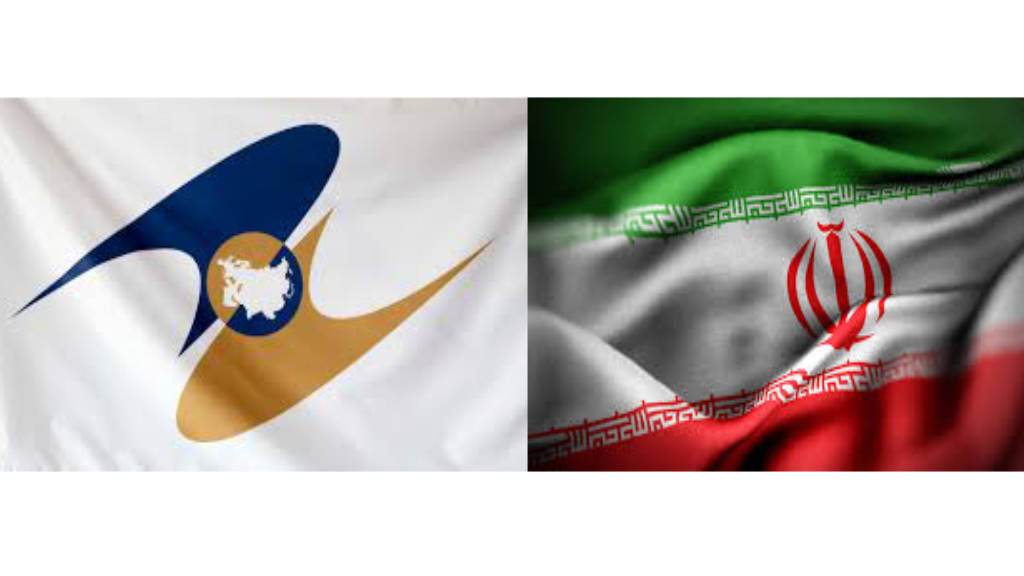
Eaeu Iran Flag

Kambiz Mirkarimi, a member of the board of directors of the Iran-Russia Joint Chamber of Commerce, has projected that over 88% of commodities exchanged between Iran and the member states of the Eurasian Economic Union (EAEU) will soon be subject to zero tariffs within the next two months. This forecast comes amidst the facilitation of trade agreements between Iran and the EAEU, which are expected to streamline exporters’ access to target markets.

The EAEU includes Armenia, Belarus, Kazakhstan, Kyrgyzstan and Russia. Iran signed off an initial  Free Trade Agreement in 2019. Mirkarimi emphasized the significance of the Free Trade Agreement (FTA) between Iran and the EAEU as one of the pivotal deals inked by Iran in recent years, noting that Iran’s exports to EAEU members reached approximately US$260 million in 2018. However, following the implementation of the FTA in 2019, the country’s exports to EAEU surged to over US$400 million, underscoring the transformative impact of the agreement.

Anticipating the ratification of the FTA by the parliaments of all EAEU member states within the coming two months, Mirkarimi outlined that trade tariffs on more than 88% of goods exchanged among Iran, Russia, and EAEU members will be reduced to zero. This development is poised to enhance the competitiveness of Iranian products vis-à-vis those from other countries like China and India, fostering a more favorable trade environment for Iranian exporters.

The signing of a permanent free trade agreement between the EAEU and Iran during the EAEU Summit in St. Petersburg on December 25, 2023, laid the groundwork for this advancement. Previously, in 2018, Iran and the EAEU had entered into a Preferential Trade Agreement (PTA), which took effect on October 27, 2019. Subsequently, negotiations were initiated to elevate the PTA to the level of a comprehensive Free Trade Agreement.

Further Reading

Russia-Iran 2024 Trade & Development

The Russia-Iran trade and development dynamics are comprehensively featured in our 2024 Russia’s Pivot to Asia guide, which is a complimentary download and can be accessed in English here and in Russian here.

Russia’s Energy Exports To Brazil Up 4,600% in 2023

Published on May 5, 2024

Brazilian imports of diesel oil from Russia last year soared 4,600% while purchases of fuel oil rose by almost 400%, in a US$8.6 billion boost to the Russian economy. Brasília imported 6.1 million tonnes of diesel from Russia in 2023, a 6,000% increase from the 101,000 tonnes the previous year. The value in dollar terms increased 4,600% from US$95 million to US$4.5 billion, according to official government figures.

Brazil’s purchases of fuel oil from Russia grew to US$5.3 billion from US$1.1 billion the previous year. Brazil overtook Turkiye in October 2023 to become the largest buyer of Russian diesel, according to data from Kpler, while the jump in diesel imports last year means Russia has overtaken the United States as Brazil’s largest supplier of the fuel.

Government officials say the sharp increase in purchases — which occurred during leftwing President Luiz Inácio Lula da Silva’s first year back in office — helped to control prices for the consumer.

Asked about the jump in Russian diesel imports, Brazil’s development, industry and foreign trade ministry said foreign trade was “influenced by multiple factors” and that “fuel imports are the result of decisions made by private agents and follow the logic of supply and demand”.

Moscow has been selling crude oil and oil products at discounted rates due to sanctions placed on it by western nations as a result of its full-scale invasion of Ukraine. The purchases by Brazil are allowed under the sanctions regime as long as it complies with a detailed set of regulations on issues such as shipping.

Oliver Stuenkel, professor of international relations at the Getulio Vargas Foundation, said: “The first thing going on is just realpolitik. Brazil has identified an opportunity to obtain Russian commodities at a discount and it is not only diesel, but also fertiliser. The same goes for countries like India. But at the same time Brazil is keen to preserve its economic and political ties with Russia. Brazil being willing to help out in the midst of this situation  is part of an implicit dynamic within the BRICS, which is they have an all-weather friendship and help each other out in times of difficulty.”

A top-10 crude producing nation, Brazil relies on diesel imports to fill about 20 per cent of domestic demand. Under President Lula, its state-controlled oil major Petrobras is investing to boost refinery capacity. Felipe Perez, Americas director at S&P Global Commodity Insights, said that, while there might be “politics at play”, price was the crucial factor driving the diesel imports. “People will try to find the cheapest diesel. Everything in Brazil depends on diesel. It is not just transport, but the agribusiness sector too,” he said.

The price of diesel has long been a sensitive issue in Brazil, which depends on legions of truckers to keep the economy moving. More than 60% of cargo in the country is transported by truck, compared with 32% in the US.

Russia’s exports of oil and gas to new markets have more than compensated for the decline in sales to the European Union. It is also likely to have a longer-term effect on European competitiveness on global markets as the EU’s energy costs have subsequently increased, and are likely to have the impact of the bloc losing future exports markets to countries such as Brazil, China and India that are taking advantage of less expensive Russian energy. That is likely to begin to manifest itself in pricing for agriculture as well as cross-sectoral manufacturing from 2025 onwards.  

Further Reading

Russia-Brazil 2024 Trade & Development

The Russia-Brazil trade and development dynamics are comprehensively featured in our 2024 Russia’s Pivot to Asia guide, which is a complimentary download and can be accessed in English here and in Russian here.  

Russia To Invite BRICS Countries To Form An Independent Financial System

Published on May 5, 2024

The Russian Ministry of Finance, together with the Central Bank and BRICS partners, will prepare a number of initiatives to create an independent international monetary and financial system. The result of this work may be, among other things, the creation of a digital settlement and payment platform “BRICS Bridge”.

This was decided following a meeting of BRICS finance ministers and central bank governors which took place in Sao Paulo in late February. Russian Finance Minister Anton Siluanov and First Deputy Chairman of the Bank of Russia Vladimir Chistyukhin presented the main directions of work in this area.

“The current system, based on the existing Western financial infrastructure and the use of reserve currencies, has a number of fundamental shortcomings. Such infrastructure must be accessible to everyone,” Siluanov said.

The Russian side is positioning the improvement of the international monetary and financial system as the main theme of its BRICS chairmanship. Based on the results of 2024, the Russian Ministry of Finance and the Bank of Russia, together with the association partners, will prepare a report to the leaders of the BRICS countries on this issue.

This article was provided with the kind permission of REAB

Russia Launches AYYA Android Smartphones

Published on May 5, 2024

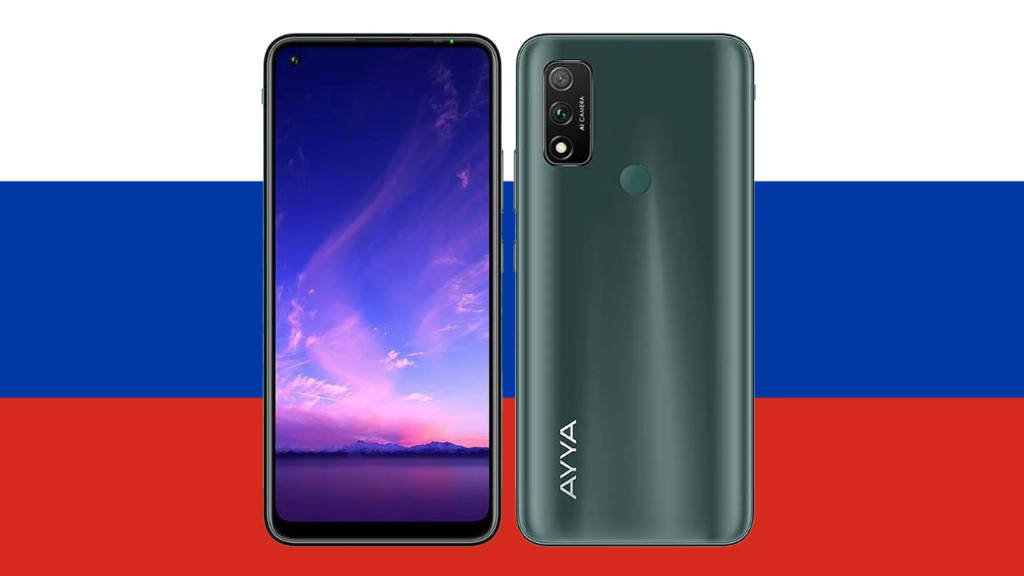
Russia’s Rostec, a high-tech military-level developer, and the Rostelecom its largest digital services operator have launched production of the Russian smartphones AYYA T1 with protection against data leakage. It is based on the Aurora mobile operating system, also developed by Rostelecom.

The phone is available for corporate customers in two versions – with Android 11 and Aurora OS. The fifth version of Aurora, adapted for office workers, was unveiled at the end of 2023.

A special feature of AYYA T1 is the impossibility of unauthorized data collection by cameras and microphone thanks to the option of their hardware shutdown. At the same time the access to the network and use of instant messengers is maintained. The devices are already available on the market and can be obtained at special market introductory rates of just ₽11,000 (US$140).

AYYA Smartphone Properties

The smartphone runs on an 8-core MediaTek Helio P70 processor with an Arm Cortex-A73/A53 chip. 4,000 mAh battery, 4 GB of RAM, built-in 64 GB can be expanded via MicroSD.

AYYA T1 has a metal frame and a plastic body. Available colors are black, blue and dark green. The display is 6.55 inches with a resolution of 1600×720, that is, HD+. The screen refresh rate is 60 Hz. It is usually recommended to buy smartphones with a frequency not lower than this value.

The main camera is dual, 12+5 megapixels, the front one is 13 megapixels. The gadget has NFC support, a Type-C connector and various sensors.

Russia has been seeking to localise production of Russian equipment and to phase out a previous reliance on imports. The AYYA phone is a primary example of the Russian consumer market beginning to change to Russian made products. User and tech reviews have been positive with the phone already showing up on Western ‘coolest new smartphone’ blogs.

Number of New Russian Exporters Grows 60% In Three Years As Asia Beckons

Published on May 4, 2024

The support measures provided for by the Russian Export Centre (REC) to encourage Russian businesses to look at new markets in ‘friendly’ countries has significantly increased the number of non-resource exporting companies. Among the most promising areas according to the REC are agricultural sector, IT and telecommunications, and logistics.

According to the Russian Ministry of Industry and Trade, during 2023, the volume of non-oil, non-energy exports amounted to US$146.3 billion, while the volume of Russian export supply and support businesses increased to about 16,200 companies. In particular, the number of exporters among the SME sector has grown by 60% — by 83,000 new businesses since 2020. REC Managing Director Veronika Nikishina says that almost any Russian entrepreneur who is able to produce competitive products and who has the desire can become an exporter.

New Russian Non-Energy Export Sectors 

The REC allocates three sectors with the greatest export potential: agriculture, IT and telecommunications, and logistics. According to the Russian Ministry of Agriculture, the sales from the export of agricultural products in 2023 exceeded US$45 billion for the first time.

In IT, the Russian export market has focused primarily on ‘friendly’ markets, mainly in providing solutions for information security and technological independence. In order to produce something highly specialized (for example, low power electric motors) at competitive prices, a large market is needed, otherwise the volumes will not reduce the cost to an acceptable level.

Logistics is the largest segment in the overall export of services in Russia, accounting for more than 25% of all services. The departure of new global sea lines from the Russian market, as well as the development of transport corridors such as the INSTC and the Far Eastern routes is also leading to the development of Russian transport and logistics services.

The REC provides support measures for Russian companies entering foreign markets. In particular, manufacturers and suppliers can contact their REC regional centers for export support and trade of Russia abroad to search for foreign customers and analyze these markets. There are also financing mechanisms for exporters to participate in international exhibitions and business missions to search for new sales markets and foreign partners, and logistics support. In addition, companies can obtain assistance in certifying and licensing their products.

To facilitate exports, the REC Digital Platform “My Export” was launched in 2020. It provides access to state and other services necessary for companies to enter the international market. Over three years, the number of platform users has already increased from 2,500 in 2020 to more than 29,000 in 2024. The number of online available services has also increased — from 14 to 125.

The development of the REC online export payment service will continue to be prioritized, while available digital financial products from the REC Group will include insurance and credit and guarantee support services.

The new wave of Russian exporters have now largely abandoned Western markets and are concentrating on Asia. Examples include Russia’s Niva and Mirel, both in the snacks market, who have entered into significant export contracts for delivery to Egypt, the UAE, Vietnam and China, while the Volgograd-based Zhasko company has recently entered new markets of Uzbekistan, Belarus, Kazakhstan, Kyrgyzstan, Tajikistan and Turkiye.

High-Tech Exports

Russian government support measures have also been calculated for the development of high-tech products with high export potential, such as drones, agricultural stratification and electric and hydrogen vehicles. Among these are examples such as Aeromax, who are developing a new model of unmanned civilian aircraft with an take-off mass of 3,000 kg. The development allows the use of unmanned goods in almost all climatic and geographical conditions and to increase unmanned cargo transportation, including when delivering heavy and overall cargo to hard-to-reach territories.

Russian companies are also creating their own innovations for the development of electric transport. This includes advanced energy platforms such as charging stations for electric vehicles based on a hybrid gas piston unit capable of generating electricity with almost zero environmental impact and suitable for use in Russia’s winter months (cold weather depletes pure EV stations very quickly).

The station has already been shown at exhibitions in the UAE and Kazakhstan. Russia’s Tigarbo Eco has developed 15 models of various ev passenger and freight models, ranging from a small double tricycle to an 18-seater electric bus and electric truck with a carrying capacity of up to two tons. The localization of production is already at 70%, with the company now exporting electric cars to Armenia, Belarus, Kazakhstan and Tajikistan.