News

First Russia-India Direct Agroexpress Train Sent From Chelyabinsk To Mumbai

Published on May 4, 2024

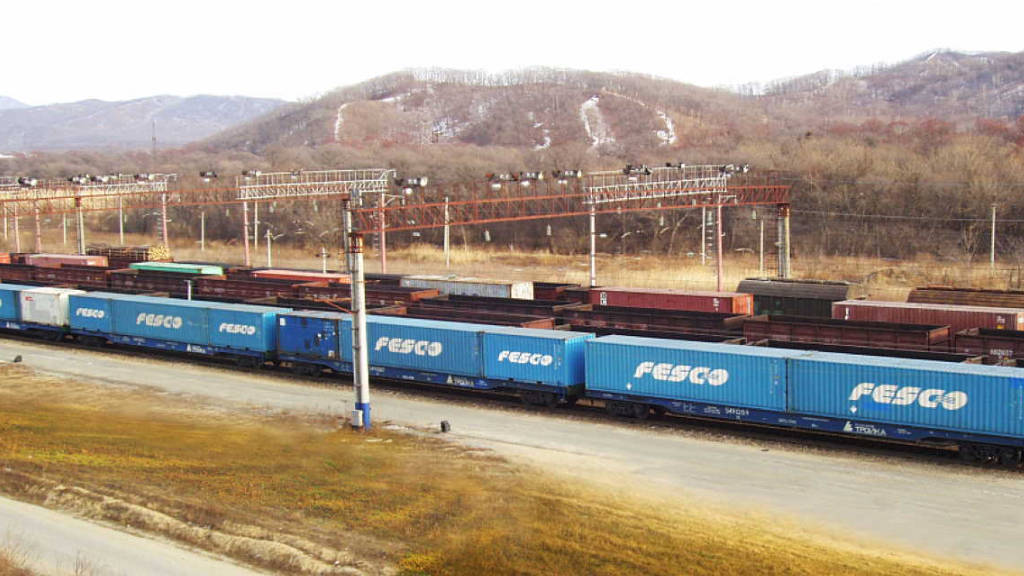
The first fully-fledged Agroexpress train, carrying oat flakes and cereals has been sent from the Yuzhnouralsky Transport and Logistics Center in Russia’s Chelyabinsk region to India’s Mundra Port in Mumbai via the eastern route of the International North-South Transport Corridor (INSTC), the press service of the State Transport Leasing Company has announced.

The Agroexpress route is a co-ordinated, international routing that is intended to service goods between Russia and Asia, including to China. On this occasion, the train will pass from Russia to Kazakhstan, and onto Sarahs in Turkmenistan. From there the containers will be reloaded onto track 1435 and will proceed through Iran to Bandar Abbas Port and then by sea to Mundra.

The planned travel time to the destination port is 35 days. The train was sent by Russian Railways Logistics JSC and includes 31 twenty-foot containers. 

According to estimates, the volume of agricultural goods transported along this transport corridor may reach 100,000 tonnes per year.

Continuous rail connections with countries such as Turkmenistan, Afghanistan, and Iran through Kazakhstan, as well as additional prospects for organizing cargo transportation to the countries of the Persian Gulf and Africa, provide new opportunities for Russian exporters to sell their products in alternative markets.

Since March 2023, Russian Railways has begun sending container trains along the INSTC from the Chelyabinsk-Gruzovaya station, which is part of the South Ural Railway. This has included rail to Iran as well as to Saudi Arabia. 

The INSTC is a multimodal route for transporting passengers and cargo, with a total length from St. Petersburg to Mumbai of 7,200 km. A significant part of it passes through Russian railways infrastructure, which, depending on the route, accounts for 33-53% of the total length of the land part of the corridor. The main goal of the development of the route is to serve Russian foreign trade with the Transcaucasus, the Caspian region, the Persian Gulf, and South Asia.

Further Reading 

Russia – Indian Ocean Multimodal Corridors Being Developed

Why Europe Isn’t Keen On Sending Money Derived From Frozen Russian Assets To Ukraine

Published on May 3, 2024

An on-going debate has been raging in the West about using frozen Russian capital – about US$282 billion, mostly belonging to the Bank of Russia – to generate funds to give to Ukraine. Of this money, about US$6 billion is held in the United States, with the vast majority being held in Europe.

Opinions on accessing this money to provide funding for Ukraine has varied, with the United States saying it believes international laws permit the seizing of all these funds. The EU however is not so convinced – it holds by far the larger responsibility and has been looking instead at utilising profits gained from the funds, rather than the capital itself. The debates continue.

Reputational Damage & Capital Flight 

There are three main reasons for European reticence. One is that other nations, including significant trillion-dollar economies such as China, India, Indonesia, and Saudi Arabia are alarmed at the thought that their European holdings could also be confiscated in the future.

The second is that Europe itself is concerned about what the impact would be upon its credibility. It is thought that capital flight would occur, and that the Euro would be irreparably damaged. But there is another issue: the amount of physical assets that Europe (and the United States) have in Russia.   

Russia Seizing European Assets

The US based Steinbach Research Group have estimated that foreign companies hold physical assets in Russia worth about US$285 billion, of which the largest part, US$105 billion, are European – more than three times the US$36 billion of assets held by American companies in Russia.

While the difference between Russian assets held in Europe and European assets held in Russia is about 2.5 to 1 in Europe’s favour, it means that were a tit-to-tat confiscation occur, the EU would benefit to the tune of about US$171 billion. However, balanced against that is the EU’s estimated 2024 annual GDP of US$19.35 trillion – a little over a thousand times that amount.  The problem is the relationship between the two – other countries are set to take exception to the EU seizing Russian assets.

Then there is the business political fallout between the European business community and its politicians. Significant numbers of European businesses continue to operate in Russia, including major MNCs such as Unilever, Eurospar, Leroy Merlin, Metro, Auchen, Nestle, Globus, Astra Zeneca amongst many other Fortune 500 businesses. Share prices would collapse. These businesses international supply chains would be damaged, profits would fall, fiscal tax revenues would decrease – and their European employees inevitably lose their jobs. 

While Ukraine would be more than content to receive Russia’s frozen assets from Europe, the risk is the political and economic fallout. With a near US$20 trillion economy to protect, balanced against Ukraine’s US$167 billion GDP, the risk for the EU becomes apparent. It is not worth risking the EU’s reputation, even though Kiev and Washington would love to see that money transfer take place.

Democracy

Dare EU politicians take that risk? The answer is they will probably not have too. With EU elections taking place next month, many EU politicians are preparing for a life beyond their current roles as swings towards a more pragmatic viewpoint as concerns Russian relations is likely to occur. Politicians in power today can state all they wish about taking Russian money – and pass the decision onto doing so to the new incumbents. As no-one has asked the European public’s opinion on the merits of a conflict with Russia at this juncture, differences of political attitude may start to kick in from July. Russia’s money appears safe – if frozen – for a little while longer.

Gas Down, Oil Up As Gazprom’s Euro Losses Are Offset By Asian Gains

Published on May 3, 2024

The Western media has been somewhat gleefully announcing that Gazprom, Russia’s largest gas producer, have announced losses for the first time in 20 years. They are estimated to be in the red to the tune of US$6.9 billion for 2023 results. The company, which is headquartered in St.Petersburg, had built its business model largely on serving European markets. The destruction of that trade has resulted in the company going through a transitionary period – gas pipelines are now being developed east, with the example of the Power of Siberia 2 line to China yet to come onstream.

Gazprom’s results are expected to get worse before they improve. Pavel Zavalny, the head of the Russia State Duma Committee on Energy, said on Tuesday  (April 30) that Gazprom’s losses are expected to reach about 1 trillion (US$10.8 billion) in 2025 due to an increase in the tax burden on the company and a decrease in revenue from gas exports. There has been criticism within Russia that Gazprom ought to have better planned for these scenarios and made earlier steps to cater for them. Be that as it may, the company’s strategy as concerns Europe appears to have been overly optimistic and its strategy as regards turning to Asia rather slow.

But Gazprom’s woes are not fully borne by the Russian State, its largest shareholder (it is a listed company). While Euro gas wanes, and pipelines to Asia remain a work in progress, Russia’s other major energy sector, oil, has been performing rather better. Lukoil in contrast posted record profits of US$13 billion in 2023, far outstripping Gazprom’s losses.

An estimated 90% of Russian oil exports last year ended up in India and China, two countries that were minor Russian oil exporters prior to the Ukraine conflict. However, these major changes in the oil delivery routes have not impacted the Lukoil’s ability to market its oil and finished petroleum products elsewhere – it has increased its oil reserves, and has acted as a banker to Central Asian oil companies in Azerbaijan and Kazakhstan. 

It should also be noted that European manufacturing output has declined, while Asian (and Russian) output has increased. There are inevitable bumps along the way as economies shift from one market to another – and in Russia’s case from West to East. But as the old adage states, when one door closes, another opens. Russia’s Pivot to Asia continues to be the answer to an over-reliance on European markets, while Gazprom – once it gets its Asian strategy delivering – will bounce back. 

Russian Investors Enter China’s Alipay Payment Market

Published on May 3, 2024

The Kazakhstan based fintech group Kaspi.kz has entered into a partnership agreement with Alipay+ to launch a payment service in China using Kaspi’s mobile application and QR code, Kaspi has stated in a press release.

Kazakhstan’s citizens that live or travel in China will be able to make payments using the QR code from the Kaspi.kz mobile application in more than 80 million locations in China, according to the company.

Kaspi operates a two-sided Super App business model: the Kaspi.kz Super App for consumers and the Kaspi Pay Super App for merchants and entrepreneurs. Kaspi’s offerings include payments, marketplace and fintech solutions for both consumers and merchants. The Kaspi Group is comprised of Kaspi Shop LLP, Kaspi Bank, Kaspi Pay LLP and Kaspi Travel LLP. As at April 1, 2024 the company’s main shareholders were Baring Vostok Funds (24.24%), Mikheil Lomtadze (21.53%) and Vyacheslav Kim (20.39%).

Baring Vostok are Russia’s largest independent private equity firm and are focused on investments in Russia and the Commonwealth of Independent States. They are based in Moscow. Mikheil Lomtadze is a Harvard educated, Georgian tech billionaire, while Vyacheslav Kim is a Kazakh billionaire and Chairman of Kaspi.

Alipay, founded in 2004 and part of Alibaba Group, is one of the world’s largest payment systems, serving over 460,000 companies internationally.

The investment by Barings Vostok in particular illustrates how Russian companies are investing in businesses from friendly countries that can act as a bridge between Russia and China when US sanctions make direct financial transfers difficult.

Sri Lanka’s Hambantota Airport To Be Jointly India-Russia Managed

Published on May 2, 2024

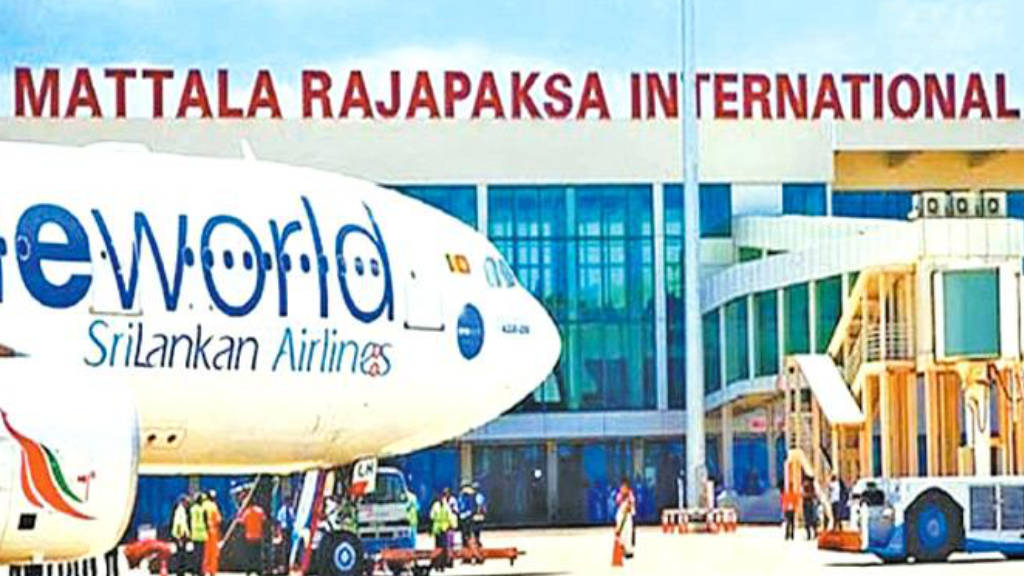
The Sri Lankan authorities have decided to transfer the management of the southern Mattal Rajapaksa International Airport (MRIA) in Hambantota to the Russian airport management company AR Regional Airports and India’s Shauraya Aeronautics.

MRIA is one of three international airports in Sri Lanka and was built to offset pressure at the main airport in the capital Colombo, while providing better tourism service to the islands south-eastern beach resorts. However, the airport has been plagued with difficulties since opening just before covid, with railway connectivity infrastructure still yet to be completed, although it is connected to resorts via the Chinese Belt & Road Initiative built Southern Expressway. The airport has currently operated at a loss, while the task of its new managers will largely depend on the ability to attract the support of Indian and Russian carriers. At present, only Indian and some Russian charter flights use the airport.

The management agreement is a 30-year contract and was made at a meeting of the Sri Lankan Cabinet on April 26, in connection with the countries urgent need to minimize financial costs.

MRIA is located 15km from Hambantota Port City and was built from funding provided by the Export-Import Bank of China at costs estimated at US$209 million.

MRIA – which was named after the now disgraced ex-President Rajapaksa, who is from the Hambantota region – will almost certainly be renamed after Hambantota city.  Its planned throughput is 1 million passengers per year.

This is not the first entry into the Sri Lankan market by Russian companies. The Delo Group is a major Russian transport and logistics operator and is planning to build a container terminal with a capacity of 10 million TEU in Sri Lanka, according to its Managing Director Sergey Shishkarev.

AR Regional Airports was founded in 2012, and manages ten airports, including Yekaterinburg, Samara, Nizhny Novgorod, Saratov and Rostov-on-Don. It handled total passenger flows of 17.4 million people in 2013. This is its second overseas investment. AR is also developing Uralsk airport in Kazakhstan in a joint venture with Kazakhstani partners. The company is looking to develop markets in friendly countries that require Russian qualifications and expertise in the airport industry.

According to ATOR, almost 200,000 Russian tourists visited Sri Lanka in 2023, which was a record high. In total, 1.5 million foreign tourists visited the island. Dmitry Gorin, vice president of the Russian Union of Travel Industry, has said that the number of tourists from Russia to Sri Lanka can grow by at least 10–15%, and said that the country is now among the top 5 most popular destinations among Russians after Turkiye, the United Arab Emirates, Thailand, and Egypt. A decrease in Sri Lankan tourism expenses has also become a factor in its growing popularity. The average price of a Russian two-week tourist package including flights and accommodation to Sri Lanka is about ₽250,000 (US$2.700). According to the Sri Lanka Tourism Development Authority, in 2023, almost two-thirds of Russian tourists to the island were transported by direct flights, by Aeroflot, Red Wings and Azur Air. With transfers, Russian tourists flew to Sri Lanka via connections in Istanbul, Sharjah, Dubai, Doha, Muscat, and Abu Dhabi.

If the Russian operator, can attract new airlines, then this can positively affect the price of tour packages, said Gorin, as the price of the ticket is between 50–70% of the total package holiday.

However, he said that he doubts that the Hambantota airport will be in demand for transit flights to South Asia, by Russians, as there are already a wide range of South Asian direct flights from Russia. Instead, Sri Lanka, he said, will continue to develop as a popular final tourist destination. That said, Sri Lanka has popular direct flight routes to New Delhi, Mumbai, and Chennai in India, as well as to the Maldives, Singapore, and the Middle East. 

Further Reading 

Sri Lanka To Formally Apply To Join BRICS

The Proposed Eurasian Economic Union – India Free Trade Agreement: Updates & Opinion

Published on May 2, 2024

India and the Eurasian Economic Union (EAEU) have been holding discussions concerning a proposed free trade agreement for some time now. With the EAEU including Armenia, Belarus, Kazakhstan, Kyrgyzstan, and Russia, the concept holds considerable promise for India as it looks to secure new markets – Kazakhstan is a target, as is Russia, without having to sacrifice much in the way of introducing new domestic competition. This latter sticking point, amid concerns about Chinese product competitiveness in the Indian domestic market scuppered plans for India to join the Regional Comprehensive Economic Partnership (RCEP) agreement. This has left New Delhi absent from any large scale FTA. The EAEU could fill that trade gap.      

However, India’s situation as regards the EAEU has also been influenced by the threat of Western sanctions. Since the beginning of this year, India has limited the import of Russian oil and petroleum products while at the same time the EAEU is counting on further negotiations with New Delhi to conclude an agreement.

Denis Manturov, the Russian Minister of Industry and Trade has stated that “We attach particular importance to the issues of mutual access of products to the markets of our countries. We expect to intensify negotiations with India on concluding a (EAEU) free trade agreement.”

That is still a work in progress, while the additional issue of signing a Russian-Indian agreement on the encouragement and mutual protection of investments is being worked out. As Manturuv said, “Improving trade and industrial cooperation between Russia and India can be ensured by ensuring uninterrupted mutual settlements. As part of the intergovernmental dialogue, we propose to consider the possibility of widespread use of national currencies and the currencies of friendly countries. This is relevant in the current conditions, and allows us to minimize costs and currency risks.”

Any successful outcome of the negotiations needs to be consistent with the interests and approaches of the Indian side, which is seeking to restore its trade benefits (preferences) in the EAEU, which have been cancelled in total for 76 countries and territories since the fall of 2021 and provide for the abolition of duties and volume (quota) restrictions in importing country for goods imported from the relevant countries. According to some estimates, the annual damage from secondary sanctions impacting the EAEU could reach US$7 billion.

As at the beginning of April, according to Bloomberg, the price discount for Russian oil for India amounted to US$2-4.5 per barrel, although in the first half of 2022 the discount reached US$25-28. In this regard, it is reasonable to assume that the Indian side is seeking if not a complete restoration of the previous, than a substantial current price discount.

Since mid-December 2023, Indian ports have periodically refused to accept tankers flying the flag of Russia, primarily Sovkmflot, which is sanctioned by the United States and a number of other NATO countries. This is countered by ship-to-ship transfers to non-problematic flags being undertaken in international waters. Even so, the need for New Delhi to be at least seen to be in compliance with sanctions has interfered with delivery timescales. 

During 2022-2023. Russian supplies of these goods for the Indian petrochemical industry increased at a record level, to the significant benefit of Indian counterparties. Indian savings for Russian supplies at reduced (discount) prices in 2023 alone amounted to almost US$3 billion.

Even so, at the end of March, India’s largest oil refiner refused to accept Russian tankers due to US sanctions. The company made the decision against the backdrop of new US sanctions (imposed in December 2023 and February 2024), which included Sovcomflot and 14 other tankers transporting Russian oil and petroleum products. Reliance Industries, India’s largest industrial holding company explained this decision as required compliance with its own political and commercial interests, as well as the introduction of new US sanctions, explaining that Indian oil refineries, trying to avoid a negative reaction from Washington, are operating at more cautious levels when it comes to Russia.

This means that under the current situation, Russian suppliers have to use non-sanctioned tankers under flags of convenience for supplies to India, along with re-export schemes through a number of countries in the Mediterranean, the Persian Gulf basin and Southeast Asia, which, along with the reduced prices of Russian supplies, leads to an increase in delivery times transportation and transport and logistics costs by at least a third (compared to direct deliveries in ships flying the flag of Russia).

The Western sanctions threats aside, there is also New Delhi’s response to consider. India was excluded as from Autumn 2021 from the EAEU trade benefits regime for developing countries, which have been in effect to the benefit of India since the early 2010s. That preferential EAEU tariff withdrawal was due to India’s new UN qualification as a developing industrial country. Clearly, New Delhi is also playing hard ball.

There have been additional concerns within the EAEU that some Indian goods to the region prior to 2021 had been dumped at lower than expected prices. The Indian side cannot also help but notice the preservation of trade benefits within the EAEU for Pakistan, its fierce political rival. As noted by Albert Khorev, the Russian Ambassador to Pakistan, in May 2023, in Islamabad, a Russian-Pakistani protocol on cooperation within the framework of the unified system of tariff preferences of the EAEU was signed. That document expands trade and economic ties between the two countries and reduces the administrative burden on the business of both sides. That did not sit well in New Delhi.

Taking into account the traditionally complex and even confrontational Indian-Pakistani relations, the preservation of trade preferences for Islamabad in Russia and the EAEU has created additional attempts in New Delhi to put pressure on Moscow to restore similar preferences for India.

That debate spills over into the Shanghai Cooperation Organisation (SCO) platform where both India and Pakistan are full members along with Russia, and to the potential expansion of BRICS, where Pakistan recently filed an application for membership. Moscow is now finding that New Delhi is a rather complex partner to be negotiating with.   

It seems that given the strategic importance for the entire EAEU, especially for Russia, of political and economic relations with India as the largest power in South Asia, it is probably advisable to partially restore previous foreign trade benefits for it, which would ease tensions in the supply of oil and petroleum products from Russia. Such a step is all the more appropriate in connection with India’s intention – after a three-year break – to initiate negotiations on the EAEU free trade agreement. Relevant discussions took place in New Delhi in March; it is possible that official negotiations on a free trade agreement, implying, that the reduction – or abolition – of customs duties on an agreed list of commodities will shortly begin. If these are successful, machine builders, electronics manufacturers and agricultural producers are all poised to benefit. There are also plans for industrial cooperation. Earlier, in September 2023, at the headquarters of the Eurasian Economic Commission (the directing body for the EAEU), a meeting was held between representatives of the Russian Trade Policy Department and the Industrial Policy Department of the EEC with colleagues from the Ministry of Trade and Industry and the Government of India. The prospects for cooperation, work to intensify negotiations on a free trade agreement, as well as plans for deepening industrial cooperation were all discussed.

It is worth noting that also in March, India, which currently has one of the fastest growing economies in the world, concluded a trade agreement with the states of the European Free Trade Association (EACT), under the terms of which Switzerland, Iceland, Norway and Liechtenstein will invest US$100 billion in India and will create an estimated one million jobs in the country over the the next 15 years. Negotiations with India on free trade agreements are also ongoing with the UK and the European Union. It is likely that Western players will continue to try to involve New Delhi in their anti-Russian sanctions measures, however, according to the Russian Ambassador to India Denis Alipov, it is important for New Delhi to maintain friendly relations with Moscow. The issue is how Russia’s Foreign Minister, Sergey Lavrov, and the Kremlin will be able to manage relations with India, enable a deal to be reached with the EAEU, while allowing New Delhi to effectively sit on the fence without attracting too much heat from the United States.

Further Reading

Tucker Carlson’s Interview with Russian Academic Aleksandr Dugin

Published on May 1, 2024

Tucker Carlson is well known in the West as a high-profile current events talking head, where up until 2023 he was the most prominent voice on Fox News. He was subsequently dismissed from Fox and has established himself as a voice for alternative opinions – most recently with his interview with Vladimir Putin, which was viewed over 1 billion times globally.   

This week, Carlson released an interview with the Russian academic and philosopher Aleksandr Dugin. Often described, erroneously as ‘Putin’s brain’, Dugin is in fact a philosopher rather than a politician, although his ideas concerning human nature have been considered by many – in the West – to be ‘dangerous’ and ‘offensive’. His books are banned in the United States, while he was the alleged 2023 target of a Moscow car bomb that killed his only daughter. US Intelligence services stated that Dugin had been targeted by Ukraine for his assertation that the country has no historical claim to sovereignty.

In the interview with Carlson, Dugin explains his theories of where the West – and especially the English-speaking countries – the United States, United Kingdom, Canada, Australia and New Zealand, have veered off on an erroneous course of ‘individualism’ – where the rights of the individual have superseded those of the majority.

Dugin explains that in his view, the concept of ‘individualism‘ has now been placed at the centre of a liberal ideology, and represents the freedom of individual thoughts – and rights – from any concept of collective identity. In other words, it is the complete opposite to communism.

It manifests itself in giving rights to minorities such as the LGTBQ movement, views concerning gender, and wokeism in general.   

As a result of this, Dugin says that Western society has become far more selfish, and that the roles within society have now changed – individual rights have taken preference over that of the collective. He comments that these attitudes are now infiltrating the rest of Europe. 

Without giving too much away – we link to the video below – Dugin expresses how this had led to conflict with Russia especially, which has a rather more traditional and collective mindset than is currently the case in the West. 

In essence – and one reason why his works have been banned in the West – he says that democracy has changed from promoting the views of the collective majority to upholding the views of collective minorities. Totalitarianism masquerading as a democracy.

It’s a fascinating look into how these mindsets are shaping the new world order and what the end result is likely to be – and what can be done to prevent it.

Carlson’s 20-minute interview with Dugin, conducted in English, can be viewed here:

Trans-Caspian International Transport Route Bottlenecks Discussed 

Published on May 1, 2024

The World Bank has identified ten critical actions to address the most pressing short-term bottlenecks across the Trans-Caspian International Transport Route (TITR), also known as the Middle Corridor, according to a brief published on the bank’s official website.

The solutions are based on a tripling of trade volumes through the Middle Corridor by 2030. With proper investment and efficiency measures, the Middle Corridor, linking Chinese and European markets via Central Asia and the Caucasus, could reduce travel times by half and triple trade volumes, reaching 11 million tons.

Within the Middle Corridor, the infrastructure is not facilitated to its full extent and routings in some areas are less efficient than they could be, according to the report. These have significance for Russia as parts of the TITS interlink with the North-South Transport Corridor, providing East-West TITR access for the INSTC.

The first two solutions target the congestion points in Almaty and at the Kazakhstan-Uzbekistan border, which have overly long waiting times. Both solutions involve the construction of additional routes: a railway bypass in Almaty and a new railway connection between Kazakhstan and Uzbekistan.

The Caspian Sea’s dropping sea levels bring another dimension to the challenge affecting port operations. According to the World Bank, Kazakhstan’s Aktau port needs fit-for-purpose equipment and increased berth capacity to improve its operational efficiency. “For example, slow ship-to-shore handling can be addressed by deploying the most efficient cranes for each cargo type and by acquiring rail-mounted equipment” says the World Bank report.

Further advice along the Middle Corridor includes increasing the amount of rolling stock in Georgia, enhancing the Akhalkalaki-Türkiye border rail connection and expanding Akhalkalaki rail station, expanding Georgian Poti Port’s maritime handling capacity, and modernizing the Sivas-Kars-Georgia border railway line.

To increase the competitiveness of the Middle Corridor’s Türkiye branch, the World Bank advises building a higher-capacity, above-ground railway link across the Bosphorus Strait via Istanbul’s Third Bridge. Failure to develop an alternative link could create a bottleneck in Istanbul.

Investments are also needed to improve port and rail connectivity in Romania and Bulgaria. “This could help strengthen internal and cross-border connectivity in the two countries, particularly to and from Central Europe,” reads the report.

The last point concerns improving trade facilitation, border management, and service delivery across the Middle Corridor. “Currently, customs and border management are not adequately digitalized, limiting effective information exchange. There is also no track record of coordinated, scheduled, and time-definite services,” says the report.

World Bank Vice President for Europe and Central Asia Antonella Bassani and Vice President for Infrastructure Guangzhe Chen emphasized the fundamental principles required for the development of the Middle Corridor, which is strong coordination and cooperation.

“Corridors are rarely zero-sum games. All participants stand to gain as the universe of opportunities expands far beyond what any country or stakeholder could achieve alone,” said Bassani, as cited by Charles Cormier, World Bank regional director of infrastructure for Europe and Central Asia.

Further Reading

Russia – Indian Ocean Multimodal Corridors Being Developed

Russia – Indian Ocean Multimodal Corridors Being Developed

Published on April 30, 2024

The first meeting on the development of the international Belarus-Russia-Kazakhstan-Uzbekistan-Afghanistan-Pakistan multimodal transport corridor with access to Indian Ocean Seaports has been held in Termez, Uzbekistan, and was attended by officials from respective national transport departments, freight forwarding companies and businesses.

They discussed the possibilities of increasing the volume of international cargo transportation along land corridors, optimisation of transport corridors and development of logistics processes, increasing the role of the CIS countries, Central and South Asia in the global transport and logistics system of Eurasia.

The parties concerned agreed a Road Map, which includes specific plans for the development of freight transportation. Among them is an increase in transit cargo transportation through Uzbekistan-Afghanistan-Pakistan through cargo analysis, the use of electronic digital documents and simplification of transportation processes.

The volume of transit cargo through Afghanistan has increased by more than 30% since the US military exit, reaching almost 1 million tonnes. Following the signing of a transit trade agreement between Uzbekistan and Pakistan in 2021, cargo transportation has increased significantly.

In 2022, the volume of traffic between countries through Afghanistan increased two and a half times compared to the previous year. This year, Uzbekistan plans to transport more than 1 million tonnes of cargo along this corridor.

At the same time, negotiations were held in Iran on the issue of Tajikistan’s access to its Chabahar Port, which is on the Persian Gulf and also has direct access to the Indian Ocean.

Dushanbe plans to increase its transit potential by joining the China-Tajikistan-Uzbekistan-Turkmenistan-Iran-Turkmenistan-Europe international multimodal corridor, as well as economic cooperation with Tehran through road transport along the route Tajikistan-Uzbekistan-Turkmenistan-Iran.

Through Chabahar Port, Uzbekistan, Tajikistan and other Central Asian countries will be able to gain access to the markets of Asia, the Middle East and Europe and expand transit opportunities.

In turn, Tehran will develop transit, including through the International North-South Transport Corridor (INSTC).  Due to its Free Trade Agreement with the EAEU, Iranian goods can be supplied to Central Asia using this route on preferential tariff terms.

Meanwhile, the Shanghai Cooperation Organisation (SCO) countries have also agreed to create two new transport corridors:

  • Belarus – Russia – Kazakhstan – Uzbekistan – Afghanistan – Pakistan
  • Russia – Caspian Sea – Turkmenistan – Uzbekistan – Kyrgyzstan

The memorandums were signed at the Transport Forum of the SCO member countries held in Tashkent.

Russia and Mongolia To Increase Border Crossing Capacity By 300%

Published on April 29, 2024

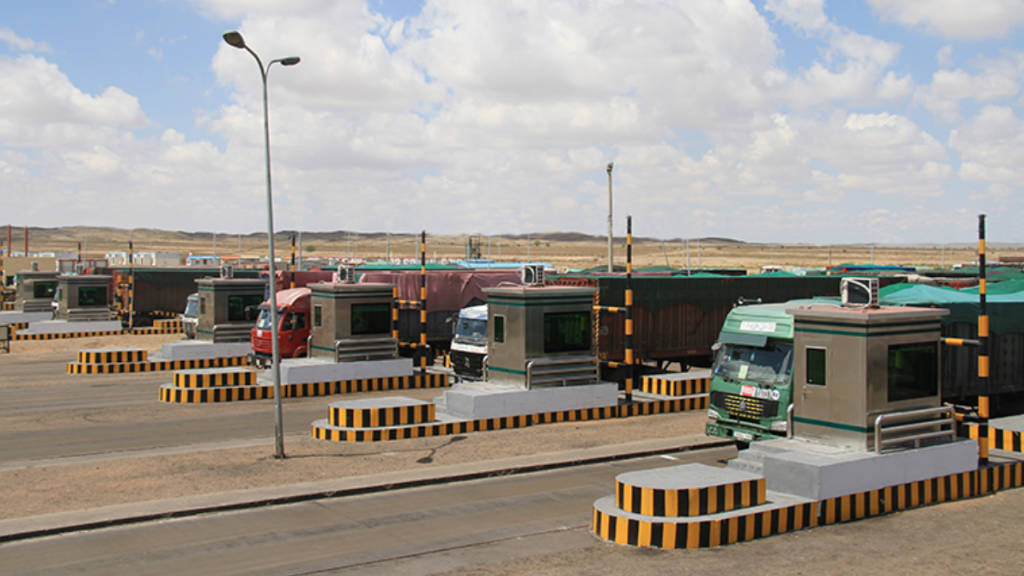
Ulaanbaatar plans to increase the capacity of checkpoints with Russia by at least 3 times, with the Mondy automobile checkpoint at the Russian Republic of Buryatia and the border with Mongolia being modernised. The border crossing will have nine lanes instead of today’s one. The capacity will be slightly less than 600 vehicles per day.

The background to this expansion is that Buryat customs is requesting additional lanes for cargo from Mongolia in light of increasing trade and cargo. The Mongolian government has also set a goal to increase freight and passenger transportation through border crossings, increasing their capacity by at least 3 times and connecting them with the Trans-Mongolian railway. In addition, a further 2,966 km of roads connecting to border checkpoints are being built. This should increase Mongolia’s exports to Russia from US$14 billion in 2023 to US$17 billion in 2025-28 and US$20 billion in 2029-2030.

Mongolian checkpoints

The modernisation of Mongolian checkpoints on the border with Russia began in 2023 with the largest border crossing, Altanbulag. The opening of the new Borshoo-Handgait checkpoint is expected in 2024. A master plan is being prepared for the modernisation of the Tsagaanuur-Tashanta border crossings on the border with the Altai Republic and Artsuur-Tsagaantolgoy with Tuva. Design work is being completed at the checkpoint on the border with the Trans-Baikal Territory Ereentsav-Solovyovsk.

In total, there are 16 border crossings on the 3,500 km border between Mongolia and Russia, of which 10 are operational. Eight are road crossings and two are railways. Within the framework of the Russian Federal project “International Trade Logistics” in the Far Eastern Federal District, it is planned to modernise the following additional checkpoints at Markovo, Turiy Rog, Poltavka, Kraskino, Kani-Kurgan, Zabaikalsk in addition to Mondy. The projects are expected to be completed by this year end.

Mongolia is currently negotiating a Free Trade Agreement with the Eurasian Economic Union which will significantly increase Mongolian trade with Russia and Kazakhstan especially via these new facilities.  

Further Reading

Russia-Mongolia Trade & Development

We discuss Russia-Mongolian trade and development in a comprehensive overview in our 2024 Russia’s Pivot to Asia guide. It is a complimentary download and may be downloaded in English here and Russian here.

Eurasian Economic Union, China Meet To Discuss Trade and Economic Cooperation

Published on April 29, 2024

On April 19, in Beijing, Andrei Slepnev, joint chair of the Minister of Trade of the Eurasian Economic Commission and Li Fei, China’s Vice Minister of Commerce held discussions of the Joint Commission on the implementation of the Agreement on Trade and Economic Cooperation between the Eurasian Economic Union and the PRC.

China has a Free Trade Agreement with the Eurasian Economic Union (EAEU) but at present this is ‘non-preferential’ meaning tariff reductions have not been applied. Instead, they are organised on a looser, ‘as need’ basis between China and the members of the EAEU – Armenia, Belarus, Kazakhstan, Kyrgyzstan, and Russia. The EAEU members fill a geographic space between Eastern Europe and Western China.   

The progress in implementing the roadmap for the development of trade and economic cooperation between the EAEU and China, approved at the last meeting, was examined in detail. An agreement was reached on the speedy completion of work on the signing of agreements between railway carriers of Russia and China and their certification centres on the organisation of international transportation using paperless technology, which will contribute to the development of digitalisation of transport corridors between the EAEU countries and China.

Both parties emphasised the importance of continuing consultations in the field of the climate agenda, development strategies of the EAEU and China, market protection measures and e-commerce provided for by the provisions of the road map. The establishment of regular dialogue in the field of public procurement and inter-exchange cooperation was noted.

In addition, the Joint Commission discussed the results and further steps to expand interaction in the areas of technical regulation, application of SPS measures, customs and industry cooperation. Separately, the intention was noted to contribute to the development of the Eurasian Agroexpress project, aimed at implementing accelerated transportation of food products from the EAEU to China by rail.

Both the EAEU and China have achieved a high level of data quality and completeness in the electronic exchange of information between rail carriers as they seek to digitise rail transport between them. Slepnev said that “Agreements between railway companies are in a high degree of readiness, which will allow us to reach a new level of cooperation. We are also considering new promising areas of cooperation.” This cooperation will minimize transportation time and speed up customs procedures between all EAEU members and China.

In addition, the parties discussed in detail the issues of access of high-quality agricultural products of the EAEU member states to the Chinese market, as well as opportunities to expand logistics routes within the Eurasian Agroexpress project.

The Eurasian Agroexpress Railway

The initiative to implement a joint project of the EAEU member states for the implementation of accelerated rail and multimodal transportation Eurasian Agroexpress in order to develop regular mutual supplies of agricultural products and food, as well as export supplies in Asian and European directions has proven effective.

The total 2023 volumes of transportation by the Eurasian Agroexpress exceeded 450,000 tonnes, with the principal cargos being oil and fat, fruits and vegetables, canned goods, grain legumes, as well as chicken and beef. The main destination for Eurasian Agroexpress is China.

Slepnev stated that “Currently, relations between the countries of the EAEU and China are at an unprecedented high level, which is confirmed by data on the growth of trade turnover. In 2023, this figure increased by almost a quarter compared to 2022. I am confident that next year, in addition to traditional issues of trade facilitation, as well as new directions on climate change and e-commerce, we will discuss other areas of deepening interaction identified as a result of a joint study conducted by the scientific community of the EAEU and China on the prospects for the development of trade and economic cooperation.”

Further Reading

Russia-China 2024 Trade & Development

We provide a comprehensive breakdown of Russia-China trade, in our 2024 Russia’s Pivot To Asia PDF guide. This is a complimentary download and can be accessed in English here and Russian here.