News

Half of Russia-China Financial Transactions Arranged By Third Party Brokers

Published on April 29, 2024

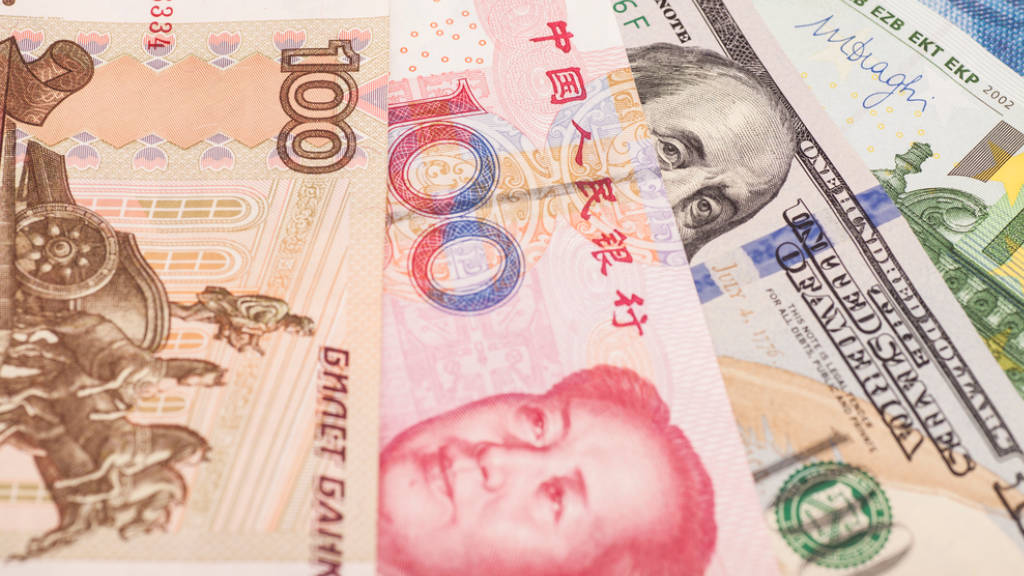
An estimated 50% of all financial transactions conducted between Russia and China are facilitated by means of intermediaries to avoid exposure by Chinese lenders to the risk of secondary sanctions, Reuters have reported, citing trade consultants and bankers, as well as importers and exporters.

In December, US President Joe Biden signed an executive order that took additional measures against facilitating transactions with Russia. At the time, the US Treasury was calling on foreign banks to boost compliance with anti-Russia sanctions.

As a result, come March 2024, several Chinese banks, including the Industrial and Commercial Bank of China, stopped accepting payments in RMB Yuan from Russia for fear of secondary sanctions, with almost 80% of payments to China being returned.

However, to get around the transactional ban, middlemen carry out cross-border payments from Hong Kong, Kyrgyzstan, Kazakhstan, the UAE and other countries that have not supported US measures. Some Russian companies have switched to payment agents, creating chains of temporary firms to make payment processes faster.

Nearly half of Russian entities working with Chinese firms are opting for their services, while major Russian businesses, most of which were targeted by Ukraine-related sanctions, established schemes with middlemen a year ago.

Shipment delays and prolonged transactions have forced Russian businesses to turn to intermediaries, despite increased fees that may amount to charges of 10-20% for each transaction, as well as a major risk of sanctions-related shipment seizures in third countries. According to one of the sources, a large batch of servers being transferred to Russia from China via Kazakhstan was confiscated after the shipment fell under the scope of US sanctions.

The use of intermediaries doesn’t provide companies with guarantees, as payments can still be refused by Chinese banks, while the less official nature of those settlements means that Russian firms may struggle to get their money back. Only a fifth of Russian firms reportedly have full access to their Chinese bank accounts, while 30% have limited access.

Russian businesses have expressed hope that President Vladimir Putin’s visit to China next month will help resolve the issue, while others are less optimistic, one remarking that Russia is not a top priority for Chinese banks, despite booming trade between the nations.

Eurasian Economic Union Performance for January–February 2024

Published on April 29, 2024

The Department of Statistics of the Eurasian Economic Commission has published a monthly analytical review of the main socio-economic indicators of the Eurasian Economic Union (EAEU) for January-February 2024.

During the first two months of 2024, there was an increase in industrial production of the EAEU by 3.8%, the volume of construction work performed by 4.8%, and retail trade turnover by 10.5%.

Freight turnover during this period increased in Kyrgyzstan (by 8.8%) and Kazakhstan (by 1.6%), passenger turnover in Kyrgyzstan (by 11.2%), Russia (by 10.6%), Belarus (by 8.6%) and Kazakhstan (by 7.6%).

The level of registered unemployment in the EAEU was 0.9% of the labour force.

These figures represent a healthy economic climate within the EAEU trade bloc, and are currently better than that of the European Union. 

Russia’s Special Administrative Regions Gain Offshore Investment Interest

Published on April 28, 2024

The number of new companies registered in the Special Administrative Regions (SAR) on Russky Island in Vladivostok, and Oktyabrsky island in Kaliningrad exceeded 400 in April, with the registration of new residents indicating the continuing interest in re-domiciliation into Russia’s legal jurisdiction. The SAR’s offer specific benefits not available on the Russian mainland, including lower tax rates, access to international currencies and duty-free import-export facilities.

The mechanism for redomiciling companies has been in place since 2018, when a set of laws was adopted to create SARs on the Oktyabrsky and Russky islands to welcome back Russian and attract foreign businesses away from increasingly restrictive foreign jurisdictions. With the onset of significantly expanded sanctions restrictions in 2022, the number of participants returning to Russian SAR’s from abroad has rapidly increased.

The Russian Ministry of Economic Development noted that as of April 23, there were 307 participants on Oktyabrsky Island (including 2 international public benefit funds, 3 international personal funds and 302 international companies) and 99 international companies participating on Russky Island. The math indicates the total number of companies offshoring in the Russian Far East is now 406. In December 2023, the Federation Council approved the law on amendments to the Tax Code streamlining and simplifying business operations.

The Ministry noted that in 2023, 200 new residents registered in the SAR’s, which is 2 times more than in 2022 and more than 7 times more than in 2021 (27 participants moved to the SAR’s in 2021). The number of foreign companies that moved to the SAR’s in 2023 and the number of companies that have moved as of this writing in 2024 indicate that the pace of re-domiciliation to Russia is continuing, albeit at a slightly less dynamic pace.

The Far East and Arctic Development Corporation (FEDC) noted that currently 99 international companies with total assets of about 5.5 trillion rubles are members of the Special Administrative Region on Russky Island, the largest being Interros, SUEK, Polyus, and Transneft.

Russian Foreign Minister Meets With Bolivian Foreign Minister in Moscow

Published on April 28, 2024

Russia’s Foreign Minister, Sergey Lavrov, met with his Bolivian counterpart Celinda Sosa in Moscow on Friday (April 26). The Bolivian diplomat is paying a two-day visit to Russia on April 26 and 27. Discussed were bilateral ties, political dialogue, ways of broadening cooperation in various sectors and improving the legislative and contractual framework, as well as Bolivia’s interest in joining the BRICS group.

Sosa said that “Special attention is being paid on ways to improving bilateral cooperation on the international arena.”

Positive Dynamics

Russia and Bolivia maintain an intense bilateral dialogue. Last year, President Vladimir Putin held a talks with his Bolivian counterpart Luis Arce, and met with Lavrov on the sidelines of the BRICS summit in South Africa’s Johannesburg.

“Russia and Bolivia share similar conceptual approaches to key issues on the global agenda, including the fundamental principles of international relations, such as sovereign equality of states, rule of law, indivisible security, unacceptability of interference into domestic affairs. Together, our two countries stand against illegitimate pressure of sanctions aimed at punishing undesirable governments,” the Russian Foreign Ministry said. Celinda Sosa is also known for publicly speaking against unilateral sanctions on countries.

The Russian Foreign Ministry noted the positive dynamics of economic cooperation between the two countries. Russia and Bolivia have established an Intergovernmental Commission on Trade and Economic Cooperation. Russia-Bolivia bilateral trade is currently about US$120 million per annum with Russia exporting the bulk of this. However, Moscow is on the lookout for new agricultural partners meaning Bolivian exporters now have the opportunity to increase their share. Another key trade area likely to receive a boost is lithium carbonate, a critical component in the growing electric vehicle and renewable energy sectors and of which Bolivia has important reserves.

BRICS Membership

In July 2023, Bolivian President Luis Arce officially notified BRICS of his country’s interest in joining the grouping. Russia holds the organization’s rotating presidency this year, so the issue of Bolivia’s membership will be high on the agenda of the upcoming BRICS meetings in Moscow. Russian officials and diplomats said on several occasions that the Russian presidency will come up with practical recommendations regarding the category of BRICS partner countries before the summit in Kazan in October.

“In its capacity of the group’s rotating chairman in 2024, the Russian side is poised to help La Paz engage more broadly in cooperation with BRICS,” the ministry said.

Bolivia is a member of the South American Mercosur free trade bloc which also includes Brazil – another BRICS member.

Further Reading

Russia-Bolivia 2024 Trade & Development 

Russia-Bolivia trade and development is comprehensively discussed in our 2024 Russia’s Pivot to Asia PDF guide. That is a complimentary download and can be accessed in English here and in Russian here.  

Kaliningrad Exports Wheat To Venezuela For The First Time

Published on April 27, 2024

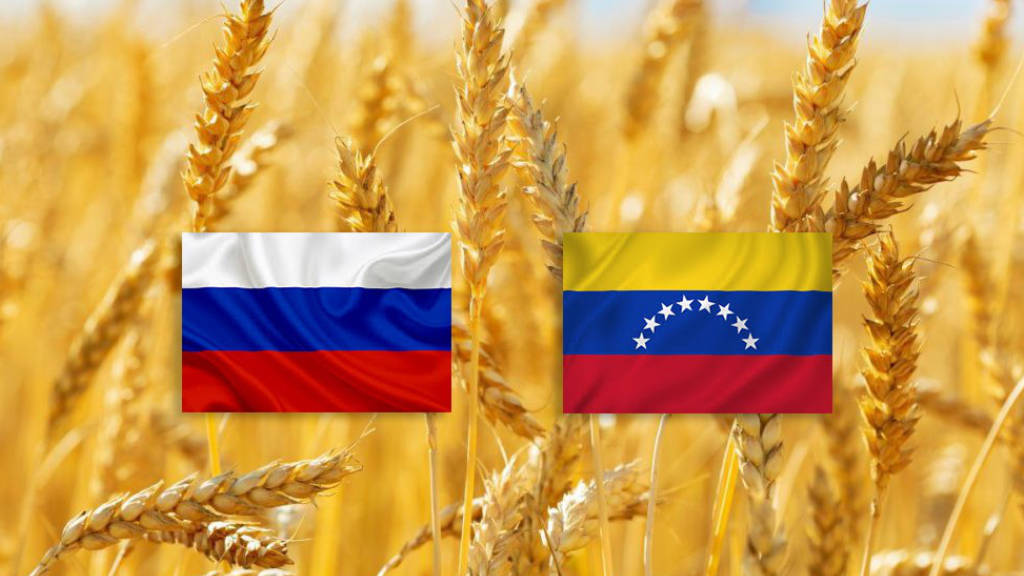
Food-grade wheat totaling 30,500 tonnes has been shipped for the first time to Venezuela from a Kaliningrad Region port, the press service of the regional department of the Federal Service for Veterinary and Phytosanitary Surveillance (Rosselkhoznadzor) has said. The shipment is further proof of Russia’s developing engagement with new emerging markets in Latin America.

Specialists from the regional Rosselkhoznadzor inspected the shipments and took samples, establishing that the quarantine-oriented products fully comply with the phytosanitary requirements of Venezuela, and issuing five phytosanitary certificates.

The ship was loaded at the terminal of the Sodrugestvo Group of Companies, at the Kaliningrad maritime canal in the town of Svetly. The terminal has a total berth length of 2,073 meters, thus can accommodate ships with deadweight up to 50,000 tonnes. Grain loading capacity is 29,000 tonnes per day.

Russia’s Foreign Minister Sergey Lavrov has met with the Venezuelan FM Yvan Gil several times over the past two years, including a visit to Caracas, and stated that the two countries have agreed to step up cooperation in oil extraction, agriculture, healthcare, and other areas. “We have agreed on practical steps towards broadening trade, investment cooperation, and contacts between business communities. We are planning numerous projects in the fields of oil production, development of gas fields, agriculture, healthcare, pharmaceutics, communications, outer space, and high technologies” Lavrov said after negotiations with Gil, adding “The scale and pace of cooperation will grow in all of those areas, and the existent mechanisms, including the bilateral high-level commission, will continue to be used for that purpose.”

Current bilateral trade is running at about US$130 million, although this has the potential, via increased energy ties, to reach into the billions. Non-energy items Russia exports to Venezuela include cereals, electrical products, and meat, while Venezuelan non-energy exports include optical, beverages, and fruits.

Further Reading

Russia-Venezuela Trade & Development

We provide a comprehensive breakdown of Russia-Venezuela trade in our 2024 Russia’s Pivot To Asia PDF guide. This is a complimentary download and can be accessed in English here and Russian here.

Putin’s Address To The Russian Union of Industrialists and Entrepreneurs

Published on April 27, 2024

The Russian President Vladimir Putin has addressed Russia’s business leaders concerning Russia’s economic strength and strategic goals. Saying that the Russian economy has demonstrated buoyant growth despite unprecedented external challenges, he stressed that he appreciated the contribution of the business community and proposed more engagement on strategic goals. Here are some key takeaways from Putin’s speech at the event, which took place in Moscow on Thursday (April 25).

Strong Dynamics

A country’s success, including on the battlefield, depends on how quickly technological challenges are resolved, Putin said. “And we are making it!” he told the gathering.

Russia’s economy has been positively dynamic, he reported. Gross Domestic Product (GDP) has demonstrated “good growth” in the first months of this year, following 3.6% growth in 2023, he said. In January 2024 GDP growth was 4.6% in annual terms and, in February, 7.7%. “Despite the unprecedented challenges we have faced in recent years, positive trends are strengthening in the domestic economy,” he told the audience.

Unemployment At An Historic Low

The Russian economy has gained strong momentum, which could be seen from the state of the labor market. Unemployment remains at a historic low of less than 3% and has also fallen among young people. “The growth in employment … among other things is the result of the efforts of businesses, companies, and the entire business community,” Putin emphasized. The average monthly salary in real terms increased by 8.5% in January, and real incomes in 2023 rose by 5.4%. Touching on a projected shortage of personnel in Russia, the president said this cannot be covered by migrant workers, and called for other approaches to be taken.

Greater Business Transparency

The Russian president urged that relevant authorities ensure maximum transparency for the conduct and development of business in the country. Every opportunity exists, he said, including “solid state resources and the potential of domestic business,” to implement the planned initiatives.

“The government will continue to support businesses so that they launch promising projects, increase capital investment, and create new jobs,” the Russian leader told the union congress.

Tax Adjustments

The president cited tax system reform as key among important steps to improve the investment climate in Russia. He noted that new tax conditions should be fixed for longer terms.

“Modernization of the fiscal system should ensure a more equitable distribution of the tax burden, while stimulating businesses that develop and invest, including in infrastructure, social, and personnel projects. In short, it is necessary to ensure stable and predictable conditions for reliable, confident business operation,” according to Putin.

Privatization

Putin recalled that law enforcement agencies have recently initiated proceedings to return some assets to state ownership.

“I would like to emphasize that this is not about revising privatization, we talked about this at the previous meeting, but about cases when the actions or inactions of the owners of enterprises and property complexes cause direct damage to the country’s security and national interests,” the president explained.

Industrial Growth

“Over the next six years, we need to radically … increase the volume of industrial production. Moreover, new enterprises, including high-tech ones, in critically important areas should appear literally everywhere,” Putin reiterated.

Companies that implement individual projects could use special state-support measures, which would be gradually expanded, he said. In particular, additional resources will be directed to the development of industrial mortgages.

“Russia’s strategic task is to increase the production of goods and services, primarily on its own technological base,” the president emphasized.

Supporting Data  

Putin’s address can be read in full here.

Russia’s GDP growth is expected to be 2.8% this year, according to the Russian Central Bank, while the IMF also suggest it will grow at a faster rate than Western economies.   

Russia’s Purchasing Managers Index (PMI) rating, which assesses manufacturing optimism, currently stands at 52.7 according to Trading Economics. To compare, Germany’s is at 50.5, France is at 49.9, the UK at 48.7 and the United States at 49.9.  Figures below 50 represent a contraction in manufacturing sentiment.

Further Reading

Russian Economy At Investment Grade: Central Bank

Putin To Visit China In May

Published on April 26, 2024

Russian President Putin plans to visit China in May, he has stated, and will be meeting with Chinese President Xi Jinping in Beijing. This would be Putin’s first foreign trip since the presidential elections in March and will follow his presidential inauguration on May 7.

The share of Russian Ruble and Chinese Yuan settlements in Russia’s total foreign trade has surged to almost 70% as Moscow rapidly shifts away from Western currencies, Economic Development Minister Maksim Reshetnikov said last year, with the de-dollarization of Russian trade with China now almost complete. “Our trade is restructuring. If we look at the country’s trade indicators as a whole, 68% of our trade is carried out in Rubles and Yuan, while 95% of our trade with China is settled in Rubles and Yuan. The issue of channels for payments has been solved” Reshetnikov stated.

Recent data from the Russian Economic Development Ministry shows that the Yuan overtook the US dollar in Russia’s import settlements with China in 2022. The RMB Yuan has since been used in Russian trade with Mongolia, Taiwan, the Philippines, Malaysia, the United Arab Emirates, Thailand, Japan, Tajikistan, and Singapore.

Russia’s trade with China reached US$240 billion in 2023, about 20% of its foreign trade total. Moscow is continuing to replace previous Western markets with an ambitious, and largely successful strategy to develop new markets East and in the Global South. China is a key part of this geoeconomic shift.

Further Reading

Russia-China 2024 Trade & Development

We provide a comprehensive breakdown of Russia-China trade, including with mainland China, Hong Kong, Macau and Taiwan in our 2024 Russia’s Pivot To Asia PDF guide. This is a complimentary download and can be accessed in English here and Russian here.

Flights Resume From Sakhalin to Phuket  

Published on April 26, 2024

Charter flights from Yuzhno-Sakhalinsk to Thailand will resume after a four-year break, as Russia’s Far East tourism reconnects with Southeast Asia. Tour operator Pegas Touristik together with the Russian regional Ikar airline will service the route to Thailand. Flights EO 3629/3630 will be operated on the Yuzhno-Sakhalinsk – Phuket – Yuzhno-Sakhalinsk route. Sakhalin is north of Japan. 

The flight program is being implemented from April 26 2024, to October 19 2025, with a frequency of once every two weeks on a Boeing 777 aircraft. The length of the route is over 6,000 km, and travel time will be about 8 hours.

Customs officers are preparing for the opening in mid-May of this year of a second regular flight from Yuzhno-Sakhalinsk to Beijing. Regular flights from Yuzhno-Sakhalinsk to Harbin, China resumed in the summer of 2023 after a three-year break. “In the first quarter of this year, almost 2,000 passengers crossed the border of the Sakhalin region on this line bound for Harbin and back. 

Last year, passenger traffic from Yuzhno-Sakhalinsk to Harbin and back reached nearly 4,700 people. Flights to Harbin are operated twice a week, and once per week in winter. Harbin was founded by the Russians in 1898 as a railroad station on the Trans-Manchurian Railway and has preserved much of its Russian-style architecture.

Yuzhno-Sakhalinsk Airport served 293,100 passengers in the first quarter of 2024, which is 7.4% more than the same period last year; international flights were operated only to Harbin. The airport is the base airport for Aurora airlines and served over 1.4 million people in 2023, a 12% increase over the year before. The airport serves eight airlines, who operate flights to 13 Russian cities and 8 towns within the Sakhalin region.

FRIDAY BIZARRE

Published on April 26, 2024

Our Look Back At Some Of The Weeks Most Bizarre & Cool Russo Moments

The UK’s Premium Stolen Cars Are All Going To Russia. Probably.

A completely biased article from the UK Daily Mail who blame UK car thefts on Russians and that only 4 Policemen in the entire country check outbound shipping containers. That and something to do with sanctions…In actual fact, luxury cars in Russia are fast gravitating towards beasts like the Chinese Hongqi and Russia’s own Aurus which is what everyone of serious note in Russia really wants because that’s what Putin drives, and well, because its Russian. BTW Daily Mail, Rolls-Royce and Range Rovers aren’t British anymore. You sold Rolls-Royce to Germany’s BMW in 1998 and Range Rover to India’s Tata Motors in 2008.

UK Industry Placed On A “War Footing”

Anything you can do, I can do better….The UK Prime Minister, standing on a box, on top-toes  and stretching his neck to make him appear taller than his actual 5 feet and 7 inches, has said he will put the UK’s defence industry on a ‘war footing’. One problem: the UK’s manufacturing industry has been in decline for several years – it’s too expensive and vastly uncompetitive. Maybe London can buy from China, Pyongyang or Tehran?

Yowsa! Bollywood Comes To Moscow

Perhaps hoping to emulate the mega-hit “The Unbelievable Adventures of Italians in Russia” the Indian superstar actor Vijay has been filming in Moscow with Indian director Venkat Prabhu. “I wanted a new place which Indian audiences have not seen before” said Vijay before dashing off to perform a dance number, which you all want to see, right? Right. The film, titled ‘The Greatest of All Time’ is scheduled to be released worldwide on September 5.

Indians In Siberia

Sticking with the Indian films shot in Russia theme, the 2023 movie Pathaan was shot partially in Siberia, here’s a clip of the revered motorbike chase, while Tiger 3 starring Salman Khan was shot partially in St.Petersburg. Back in Soviet times, Raj Kapoor’s films where very popular in the USSR. Your local Babushka might remember this.

Nobody’s Fault But Mine…

Apparently it was all Tucker Carlson’s fault that US loans of US$61 billion to Ukraine got delayed. So, yeah, free speech isn’t alive and well in the US Senate. And we’re not quite sure if Mitch McConnell is actually alive. Meanwhile, for those of you who thought this snippets title referenced Led Zeppelin, you’re absolutely right. Here.

Spartak Moscow v Zenit St.Petersburg

Last week we showed you the highlights of the Russian Super Cup semi-final between CSKA Moscow and Baltika, this week we have the Spartak Moscow v Zenit St.Petersburg semi-final. Who will play CSKA in the final? Watch at your own risk though. Russian football is sanctioned, and you could end up being prosecuted or made to watch Manchester United if caught. Or sent to Coventry.

Lev Yashin

The Black Spider.

Food For Thought

What we’ve been reading:

What we’ve been listening to:

  • Slomsky’s 9th Symphony
    The Belorussian composer’s merger of Shostakovich and Metallica. Skip the first movement and go to 09:04. Play LOUD! Here. 16:30 is reminiscent of Yes, while 23:10 goes partway between resolving the battle between wood, electricity, and the generation gap. Extraordinary.
  • Sparks: Aeroflot
    The permanently cool LA brothers take on flying Russian. A rather muddy Live in Moscow here and the album track here.
  • Tchaikovsky: May
    Ok Ok, all that before was noisy enough. Here’s Tchaikovsky’s May – his homage to the beginning of the White Nights which are just around the corner.

Keep Safe. And have a great weekend!

India Considering Use Of Russian-owned Rupees To Enable Exports to Third Countries.

Published on April 26, 2024

Russia’s Pivot to Asia has been discussing the use of different currencies in different ways since the United States threatened Chinese banks with sanctions. In addition to that issue, Russia also has problems balancing trade with India, which has skyrocketed with Delhi’s increasing purchases of Russia energy. However, bilateral trade isn’t that mature yet and Russia’s purchasing of Indian goods isn’t as strong. This has resulted in an imbalance in trade with Russia accumulating more Indian rupees than it can manage to disperse.

One new idea, proposed by Dr. Ajay Sahay, an executive director of the Federation of Indian Export Organizations (FIEO) established by India’s Ministry of Commerce and Industry, is that “An idea is a scheme that helps India’s exports and also helps Russia utilize accumulated rupees. It is a win-win option for both sides.” He noted that Indian banks hold billions of rupees belonging to Russian exporters, not mentioning the exact amount. (It is believed to be the equivalent of about US$55 billion – RPA) The FIEO head said that trade with Russia in Indian rupees still continues, with ruble-rupee trade continuing, but in relatively small amounts.

Russia-India trade turnover reached US$65 billion in 2023, with Russia retaining its position as India’s fourth leading trading partner. But this growth has brought along with it the trade imbalance currency problem. In addition to Indian rupees, Moscow and New Delhi conduct most trade settlements in UAE dirhams, Chinese yuan, and US dollars.

The general concept to help resolve this issue is as follows:

A Russian company agrees with a Brazilian (or other large buyer of Indian products) company to buy rice shipped directly from India. The Russian company will receive directly from the Brazilian company whatever currency they have agreed between themselves. The Russian company then transfers to the Indian rice supplier the agreed sales price in rupees that the Russian company already has on its account in India.

This third party route is a bit convoluted, but it is a potential beginning to balancing the trade scales between Russia and India, and permitting an unrestricted freer flow of goods and services where they are needed while skirting the over-regulated US dollar. This, and similar actions across the global trade horizon are all building towards some future form of a BRICS currency solution independent of unidirectional political restraints. It is essentially a form of currency bartering and hedging against the USD. The next step is working out the institutionalisation of this – an issue no doubt that the BRICS Central Banks would be looking at implementing as regards forex rates, transactional insurance and transfer systems.

Baikal-Amur Rail To Be Developed For Russia’s AsiaPac Markets

Published on April 25, 2024

The Baikal-Amur Mainline (BAM) railroad is one of the biggest infrastructures of the 20th century and will be further developed to expand Russia’s export and transit capabilities and to raise living standards for Russians living nearby, Russian President Vladimir Putin said on Tuesday (April 23).

The BAM is a broad-gauge railway, traversing Eastern Siberia and the Russian Far East. It stretches 4,324 km running about 700 km north of, and parallel to the Trans-Siberian Railway.

“This is one of the world’s biggest 20th century infrastructure projects” Putin said at a gala evening to mark the 50th anniversary since the start of the BAM construction, thanking those who worked on the project. “At the turn of the century, BAM helped open Asia-Pacific markets to the Russian economy. Along with our Trans-Siberian Railway, it has become a truly strategic transit corridor of both national and global importance,” Putin said.

This year the mainline’s capacity reached almost 42 million tonnes, three times what it was more than 12 years ago, he said.

“This year we are launching yet another, already third stage of the BAM and Trans-Siberian development, we are increasing the Eastern capacity of our railways. This work is already underway,” Putin said.

The project uses the most advanced technologies, creating additional demand for domestically-produced machinery and metallurgical products, for services in the construction sector and a host of other industries, he said.

“What we must do is not only to widen bottlenecks, our tasks now are far bigger: along the entire length of the BAM mainline we are to build what are essentially to be secondary continuous routes, including over 300 infrastructure sites. In ten years’ time the volume of traffic through the Eastern Polygon of Railways should reach 270 million tonnes a year,” Putin said.

This will enable broader use of natural resources in the of BAM and Trans-Siberian railway zone, providing a powerful impetus to open new production facilities and create new jobs, he said.

The president separately dwelled on the development of social infrastructure in East Siberia and the Far East. “We will pay particular attention to raising the quality of life for people in the population centers tied to BAM, including by providing further development of the hubs, the BAM major hubs Tynda and Severobaikalsk” he said.

Tynda is in Amur Oblast, Russia, located 568 km northwest of Blagoveshchensk, which borders Heihe in China. Tynda is connected to China by the Trans-Siberian railway and will develop as a hub servicing Russia-China trade.    

Severobaikalsk is in the Republic of Buryatia, Russia, located on the northern end of Lake Baikal at the mouth of the Tyya River, 440 km northwest of Ulan-Ude and 490 km northeast of Irkutsk. It is also connected to China via Mongolia and the Trans-Mongolian railway.

The BAM route reaches its eastern destination at Sovetskaya Gavan in Khabarovsk Krai. It is a strategic port on the Strait of Tartary which connects the Sea of Okhotsk in the north with the Sea of Japan in the south. Further BAM development will serve to increase the export and transit capabilities of Russia as an important link in the Eurasian transport system.

Further Reading

INSTC Route Has Potential To Carry 60-100 Million Tonnes