With Western nations increasingly making life difficult for Russian tourists, Russian nationals have been looking east for vacations, with Asia the main beneficiary. Russians for example are now the largest inbound tourist market for Sri Lanka. But other important destinations are also looking at expanding mutual tourism ties. Iran and Russia are also working together to increase mutual tourist flows to their countries.
Iran is rich in culture and beauty; and mutual tourist flows could reach 60,000 people in 2024, the Russian Center for Strategic Research (CSR) has said. While small, it does have an impact. The increase in mutual trips will be achieved by simplifying the visa regime for tourists, expanding the geography of flights, increasing the number of package tours, and actively working to establish the Shetab and Mir interbank information transmission networks, the CSR said.
“Direct flights have been established between Moscow and Tehran, the launch of flights to Iran from St. Petersburg and Kazan is being worked out. Iran’s membership in BRICS also plays an important role. It will expand our cooperation in the field of tourism and will contribute to an increase in business flow, which totaled about 7,000 people in 2023. The establishment of a visa-free regime for group trips has played an important role, as has the use of an electronic visa mechanism,” Yulia Maksutova, director of the Center for the Development of International Tourism of the Center for International Tourism said.
Iran entered the top ten countries in terms of flow of foreign tourists to Russia at the end of 2023, with over 29,500 people, while over 10,700 Russian tourists visited Iran. The Ministry of Economic Development predicts that by the end of 2024, mutual tourism flow with Iran as part of the group visa-free mechanism will reach about 40,000 tourists.
The Center for Social Research says that about 70% of Iranian tourists visit Russia on excursions, 25% are entrepreneurs who combine business trips with tours around the country, and 5% come for adventure tourism, in particular, Baikal, Altai, and ski resorts, for example, in the Elbrus region.
“They show great interest in the northern lights and consider the Murmansk region the best place to observe them. Husky riding is very popular among Iranians. Iranian tourists tend to travel with families. When traveling, they value safety and comfort, so they prefer good-quality chain hotels,” the statement from the CSR says.
About 24 million Russian tourists travelled overseas in 2023. Domestic tourism has also been increasing. About 10 million foreign tourists visited Iran the same year.
Sri Lanka intends to formally seek membership of the BRICS group of nations, Janitha Abeywickrema Liyanage, the country’s ambassador to Russia announced today (April 24). She confirmed that “Sri Lanka is planning to join BRICS+” and expressed hope that accession would provide “an opportunity to ensure both transport and food security.”
The BRICS group of non-Western economies – which previously comprised Brazil, Russia, India, China, and South Africa – has recently seen a major wave of expansion. Earlier this year, four nations – Ethiopia, Iran, Egypt and the UAE – became members, with Saudi Arabia pending. More are expected in the future, including Colombia, Venezuela, Thailand, Cuba, Senegal, Nigeria, Bahrain, Belarus and Pakistan.
Liyanage also announced that the visa scheme under which tourists from Russia can receive visas free of charge to visit Sri Lanka could be extended beyond April 30. Initially, their validity was set to expire on March 31, but this has been prolonged for another month.
“The issue is now being considered, perhaps there will be a further extension,” Liyanage said, noting that last winter several new direct flight routes were established between Russia and Sri Lanka, boosting tourism to the island nation.
Liyanage also announced that Sri Lanka plans to open three new Russian language centers, in cooperation with Russian universities. She explained that such centers are already functioning, and that 138 people have graduated from Russian language courses.
According to the Ambassador, there are currently about 1,000 Sri Lankan students studying at Russian universities and looking for employment. She explained that the Sri Lankan hospitality sector is actively developing, and that the importance of learning Russian has grown due to the influx of Russian travellers – who now represent the largest inbound tourist flows to the island.
She noted that the Russian language is popular in Sri Lanka because “relations between the countries go back many years and they have always been warm and friendly.” The Russian Foreign Minister, Sergey Lavrov, is fluent in Sinhalese and began his diplomatic career at the Russian Embassy in Colombo.
Sri Lanka is strategically positioned in the Indian Ocean with China a major investor in numerous Belt and Road Initiative projects including two sea ports, an airport, in addition to road and rail infrastructure.
Further Reading
Russia-Sri Lanka Trade & Development
We discuss Russia-Sri Lanka trade and development in our 2024 Russia’s Pivot To Asia guide. It is a complimentary download and can be accessed in English here and Russian here.
The flow of cargo traffic via the International North-South Transport Corridor (INSTC) may reach up to 60-100 million tonnes in the future, depending on necessity and relevance, Russian Transport Minister Vitaly Savelyev has said. To put that into context, this would be roughly equivalent to 10% of the global tonnage that transited the Suez Canal in 2023.
Savelyev was speaking at a meeting between Russian and Azerbaijani presidents, Vladimir Putin and Ilham Aliyev, with management of the Baikal-Amur Mainline on Monday (April 22). Savelyev stated that “In the future, the flow of cargo traffic may rise to 60-100 million tonnes from today’s 7-15 million tonnes. It will gradually develop, growing to 15, 30, 60 and so on, depending on necessity, on how relevant it is. In fact, we have quite serious expectations, and we believe that this corridor will be one of the main Eurasian transport corridors.”
Russian Deputy Prime Minister Marat Khusnullin, who also attended the meeting, updated media on the Rasht-Astara railroad section. “The President said today that another step has been taken in the development of the construction of the Rasht-Astara railroad, being the main route between Azerbaijan and Iran. The Rasht-Astara section, which we are to build 162 kilometres with the is expected to be finalized in 2027-2028. The Azerbaijani side is improving its part of the road, which allows carrying 7 million tonnes today. We want to increase it to 15 million tonnes and above.”
The INSTC is a multi-modal route that allows Russian imports and exports to travel North-South from Russia to ports on the Caspian Sea or via road via Azerbaijan and Iran through to Iran’s ports on the Persian Gulf. From there they can reach markets in the Middle East, East Africa and South Asia, and vice-versa. The INSTC also interconnects West with railway to the Caucasus and Turkiye through to the Black Sea, and East via Kazakhstan through to Central Asia and China.
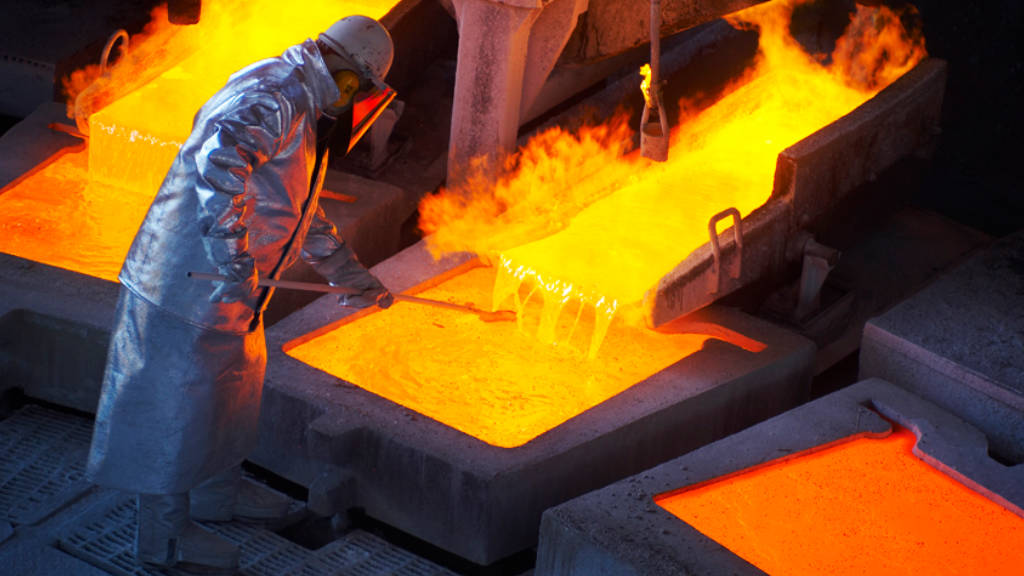
Norilsk Nickel, the metals group controlled by Russia’s richest man Vladimir Potanin, will move some copper smelting production from its home country to China, as western sanctions restrict access to key pieces of equipment and cut profitability, the Financial Times reports.
Potanin said that the mining major plans to relocate its copper smelting capacity at the Nadezhda plant in the Russian Arctic with new facilities in China from 2027. Russian President Vladimir Putin has already signed off on the plans, according to Potanin. The issue is included on the agenda for “Russia-Chinese meetings” at the highest level — an apparent reference to Putin’s planned trip to meet Chinese leader Xi Jinping later this year — and “has received political support”, Potanin said.
Potanin said sanctions pressure had made Norilsk “think about the right way to get our goods to the market” and decide to “move it to where it is consumed, and the final product will be sold as Chinese. Chinese goods are much harder to sanction in China than a Russian one supplied to China.”
Potanin provided one of the most detailed accounts yet of how western sanctions are hampering the country’s commodities exports, and said that sanctions have cut Norilsk’s revenues by at least 15% since 2022 because of difficulties around international payments, delivery refusals and pricing discounts, as well as troubles over plans to reduce sulphur dioxide pollution at its copper plants.
Potanin said the new plan would protect Norilsk’s exports from growing US pressure on financial transactions with Russia. “Settlements are one of the tightest places even in friendly jurisdictions, they don’t let exporters and importers work normally,” he said, adding that the company needed to avoid risks of operations ceasing because of problems with settlements.
Norilsk will pay three to four times more on debt servicing than three to four years ago because of the sanctions, while the difficulties of completing transactions have forced the company to pay commissions of 5-7% to middlemen.
The move highlights deepening ties in key commodities trade between Moscow and Beijing, with Norilsk’s move representing a further shift towards Russian copper being in effect a quasi-captive China supply, and bolstering China’s self-sufficiency.
Potanin said China’s dominant role in metals consumption — it accounts for more than half of the world copper and nickel trade — meant Russian producers were already heavily reliant on their largest customer. “This dependency increases along with sanctions pressure. We won’t get away from it, but if we’re more integrated into the Chinese economy, we’ll be more protected than if we don’t have it,” he said. “We are dependent on the Chinese system, but it’s better to be inside looking out, not outside looking at how you’re getting squeezed.”
Potanin’s comments about the cost of sanctions reflect wider concerns in Moscow about US pressure on banks doing business with Russia, said Alexandra Prokopenko, a former Russian central bank official. “The financial sanctions are a bottleneck,” she said. “Major banks have stopped working with Russian clients. Mid-sized and small ones still do but putting the payment chains back together has driven up commissions for Russian business, and China’s tougher compliance means there are three to five banks in the chain, rather than two.”
The US and UK took their biggest step yet last month to impose sanctions on Russian metals by banning copper, nickel and aluminium from being traded on the London Metal Exchange and Chicago Mercantile Exchange. Potanin said these sanctions would affect Norilsk’s efforts to expand its nickel exporting capacity for western consumers, including by investing and building a plant in Finland together with Germany’s BASF.
At Russia’s Pivot to Asia, we see the end result of the Western sanctions on Russian metals meaning that previously planned Russian corporate expansion investments into Europe are now moving instead to Asia. Russia possesses the world’s fifth largest copper reserves after Chile, Peru, Australia and the Congo. China’s reserves are eighth with the country a major supplier to Western markets.
Additionally, the decision to move the copper smelting plant to China will not affect the basic profitability of Norilsk’s copper mining business in Russia as it will simply export the product to its Chinese subsidiary. However it will impact on the added value component with the finished product sales being subject to Chinese VAT and profits taxes, which are generally higher than in Russia. However, the choice has become whether to continue in the business or exit it. The China solution retains most of Norilsk’s key activities in this sector. This move by Russian corporates to invest overseas into Central Asia and countries such as China is generally considered a positive by the Russian government as it forces Russian capital investments into international markets as opposed to being solely reliant on the Russian domestic economy.
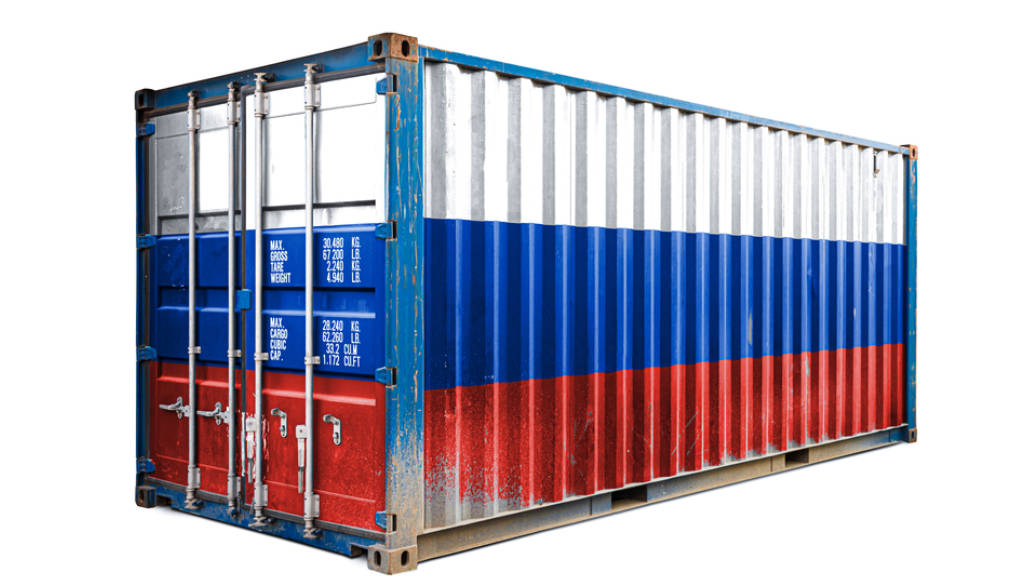
The Russian container market grew 13% in the first quarter of 2024 compared to the same period last year, to 1.608 million twenty-foot equivalent units (TEU), Russia’s FESCO transport group has said. The figures are indicative of expanding import-export trade.
Imports increased 10% to 706,000 TEU, and exports were up 13% to 436,000 TEU. Domestic shipping increased 19% to 318,000 TEU, and transit rose 18%, to 148,000 TEU, FESCO’s analysts said.
The market grew 13.3% in March 2024 YoY to 557,000 TEU. “The driver of growth relative to the same month last year continues to be transportation through the port of St. Petersburg,” the company said.
Russia’s container market consists of foreign trade and transit container turnover at the country’s ports, foreign trade and transit container turnover via land crossings on the Russian Railways network, domestic transportation of containers via Russian Railways and cabotage transportation.
FESCO owns assets in Russia’s port, railway and integrated logistics businesses, and owns the Commercial Port of Vladivostok, the intermodal operator FESCO Integrated Transport, the Dalreftrans operator of refrigerated containers, as well as the Transgarant and FESCO Trans companies. The group operates terminal complexes in Novosibirsk, Khabarovsk, Tomsk, and Vladivostok, and manages a container fleet of more than 170,000 TEU, including over 11,000 fitting platform railcars. The group’s fleet includes 37 vessels, which operate primarily on the company’s own shipping lines.
Iran could start accepting Russian MIR debit and credit cards within the next few months, the trade attaché from Tehran’s embassy in Moscow has stated. According to Mohsen Rahimi, work on preparing the necessary technical infrastructure is already underway, although implementing the system will take time. The move comes as Russia and Iran continue to build stronger economic ties. Iran has a Free Trade Agreement with the Eurasian Economic Union, while bilateral trade is running at about US$4 billion. Iran has also taken up membership of the BRICS.
Testing of the MIR system, the Russian alternative to Visa and Mastercard, may start in Iran as early as the end of summer or the beginning of autumn, Rahmani said.
Iran’s economy has adapted despite being under sweeping international sanctions for decades, analysts have noted, adding that Russia could use Tehran’s experience in resisting outside pressure.
Tatiana Monaghan, secretary general of the International Chamber of Commerce (ICC) in Russia said that the move to launch MIR in Iran is a logical forward step in developing bilateral cooperation after Tehran joined the BRICS economic group on January 1st.
Last year, the two countries announced at the KazanForum that they had completed all preliminary settlements for the use of MIR cards. Iran and Russia have also agreed to integrate the system with its Iranian analog, the Shetab system, to facilitate mutual transactions.
On July 23 last year, Iran’s Currency Exchange (ICE) launched a currency pairing system that enables exporters and importers to make payments in both the Iranian Rial and the Russian Ruble. Having MIR access will help facilitate trade and tourism.
MIR cards are freely accepted in the Abkhazia and Ossetian Republics, Belarus, and can be used with certain limits in Armenia, Kazakhstan, Kyrgyzstan, Tajikistan, Cuba, Venezuela, and Vietnam. Other countries including Turkiye and the UAE are also considering partnering with the MIR system.
Further Reading
Russia-Iran Trade & Development
We discuss Russia-Iran trade and development in a comprehensive overview in our 2024 Russia’s Pivot to Asia guide. It is a complimentary download and may be downloaded in English here and Russian here.
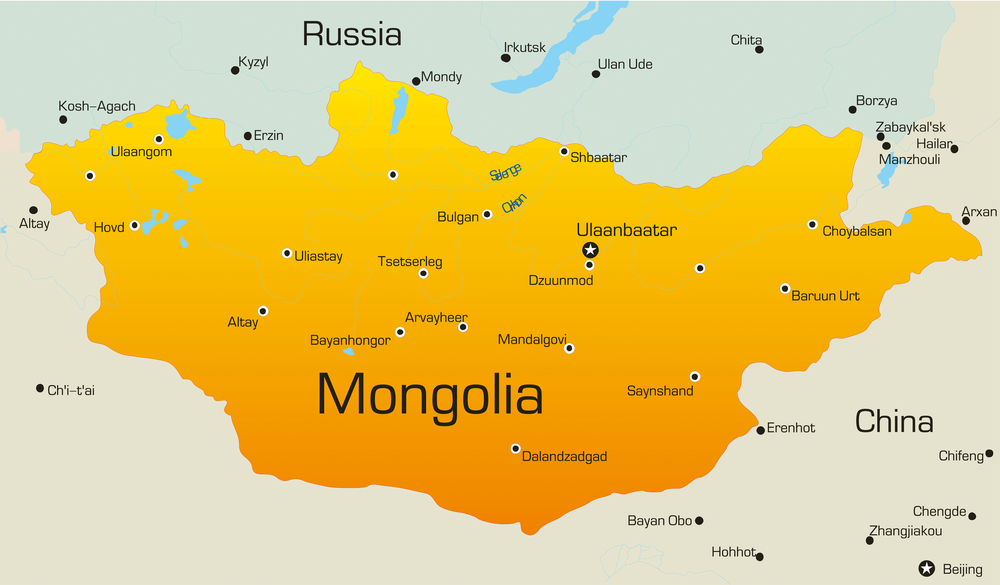
Meetings took place last Friday between Alexei Tsydenov, the Governor of the Russian Republic of Buryatia, Buyaagiiin Tulga, a Mongolian Minister and the Chairman of the National Committee for the Revival of Border Points.
The meetings focused on improving cross-border connectivity as Mongolia is shortly to engage in a Free Trade Agreement with the Eurasian Economic Union (EAEU). Both Russia and Kazakhstan are members of the EAEU, both share borders with Mongolia. The Buryatia Republic borders Mongolia to the south and comprises the region around Lake Baikal. Its capital city is Ulan-Ude. It is connected to the Mongolian capital, Ulaan Baatar, as well as to Beijing by the Trans-Mongolia railway.
With improvements having been made to the border crossing Kyakhta-Altan-Bulag motorway, the two sides have decided that the Aynek Gol-Baga Ilenkh border crossing will be temporarily opened with a view to establishing a permanent crossing. Tsydemov said that “This requires additional study with the Russian authorised bodies, since even in a temporary regime, all procedures must be implemented in accordance with our legislation. We will study this issue further. Both our countries are interested in economic development and increasing trade turnover. Therefore, we have worked and will continue to work so that our people travel, so that industry and trade develop, and interaction moves forward.”
Mongolia-EAEU Free Trade Developments
Another result of the discussions was the abolition of duties on 375 types of agricultural products from Mongolia. The temporary agreement on duty-free trade between the EAEU and Mongolia covers three groups of goods. The position of meat and meat products will allow Mongolian producers to significantly increase the export of beef, lamb, horse meat and other types of meat to the Russian market. More shoes, bags, gloves, belts and other goods will be made from Mongolian leather for sale in Russia. Mongolian entrepreneurs will also be able to increase industrial production of wool and cashmere products.
The Mongolia-EAEU free trade agreement will make it possible to diversify Mongolian exports and significantly increase their volumes. As at early 2024, Mongolia’s share in bilateral trade turnover with Russia is just over 5%. According to the Russian Trade Mission, Mongolia has the opportunity to increase its exports by 2-3 times in the next 3 years.
In addition, Mongolia’s rapprochement with the EAEU market will give new impetus to the development of free economic zones on Mongolia’s borders with Russia and China. As the trade agreement with the EAEU is implemented, it is planned to revive the Altanbulag special economic zones on Mongolia’s northern border with Buryatia and Tsagannur on the western border with the Altai Republic, which should become centers of interregional trade and logistics.”
In 2022, Russia exported US$2.4 billion worth of goods to Mongolia, with the main products being refined petroleum, raw iron, and fertilizers. Mongolia exports mainly feldspar to Russia.
Medical Cooperation
In turn, the Mongolian side removed state duties on the Russian drug Bulevirtide, which is used for the treatment of hepatitis. “Mongolia has decided to import medicines for infection caused by the hepatitis D virus. Parliament will pass a law exempting the Russian drug Bulevirtide from import customs duties and VAT,” the press service of Ikh Khural reported.
Among the agreements is payment from the Mongolian budget for the treatment of Mongolian citizens for hepatitis D in Buryatia. The cost of treating this disease per month in Ulan-Ude is about ₽170,000, with plans to subsidize this to ₽135,000, as the majority of patients with this type of hepatitis are Mongolian pensioners.
In addition, Mongolia is interested in using high-tech medical equipment from Russia. “We discussed many issues of cooperation. Issues of joint development of a program for the implementation of certain solutions in the field of healthcare were discussed, as well as joint work on the promotion and implementation of high-tech devices in Mongolia,” said Tulga.
In additional medical cooperation between the two countries, Professor of the Department of Infectious Diseases and Epidemiology of the Russian University of Medicine, Doctor of Medical Sciences Elena Klimova, met with the Minister of Health of Buryatia Evgenia Ludupova. They stated “Now we will work together on a roadmap for the management of patients with hepatitis Delta. Russian specialists have gained good experience, which they are ready to share, and the medical centres of Buryatia are ready to accept patients from Mongolia.”
According to the department, the prevalence of hepatitis in Mongolia influences the fact that the country has become the world leader in cancer mortality at the end of 2023. Every fifth death is caused by cancer, mainly of the liver and stomach. Among 180 countries, Mongolia ranks first in the incidence of liver cancer. Many patients go to Russia for treatment, especially to the Nuclear Medicine Centre closest to Mongolia in Buryatia.
Livestock Aid
The Buryatian Republic has also assisted Mongolia by donating grain and fodder, as a harsh 2023 winter created massive livestock losses. Mongolian nomads were supported by 27 farms in the Barguzinsky, Bichursky, Zaigraevsky, Kabansky, Kurumkansky, Kyakhtinsky, Mukhorshibirsky, Tarbagataysky districts of the Russian republic.
The Prime Minister of Mongolia Luvsannamsrain Oyuun-Erdene, during the reception of the Russian Ambassador to the country Alexei Evsikov, thanked the Russian government for providing 8,500 tonnes of feed grain as humanitarian aid for livestock farmers affected by livestock losses. The head of the Mongolian government noted that this assistance helps them get through difficult times.
In Buryatia, the grain harvest has increased for the last three years in a row. At the end of 2023, the Republic achieved the highest grain harvest in 23 years. The harvest amounted to 140,600 tonnes, an increase of 20.5% compared to 2022. The average yield of grain crops is 20.7 quintals per hectare.
The first batch of humanitarian aid to Mongolia, on behalf of the Russian government, was transferred on March 17 at the Kyakhta border crossing, where the Russian government has instructed the customs service to clear humanitarian cargo across the state border in a simplified manner and without charging duties.
Mongolian President Invites Vladimir Putin and Xi Jinping to Khalkin Gol
Cooperation between the two countries includes events such as the 85th anniversary of the legendary Battle of Khalkhin Gol, where joint Russian, Chinese and Mongolian soldiers defeated the invading Japanese army in 1939.
The President of Mongolia Ukhnagiin Khurelsukh, has also invited Russian President Vladimir Putin and the Chinese President Xi Jinping to this event. Its resolution notes that “the 85th anniversary of the victory in the Battle of the Khalkhin Gol River will be celebrated in August 2024 with the aim of perpetuating the feat of the heroes who took part in the battle and strengthening friendship and cooperation with Russia.”
Further Reading
Russia-Mongolia Trade & Development
We discuss Russia-Mongolian trade and development in a comprehensive overview in our 2024 Russia’s Pivot to Asia guide. It is a complimentary download and may be downloaded in English here and Russian here.
An unannounced, but effective partition of Ukraine is already taking place as Russia and the European Union have begun to deploy differing Rail infrastructure. Ukraine’s rail infrastructure has historically used the Russian gauge, which is 1,520 mm wide. However, Europe’s railways run on standard gauge, being 1,435 mm. The difference means tracks and bogies are incompatible.
The European Union however is part funding a rail network in the West of the country intended to link up with European railways, according to Global Construction Review. It is being built to standard gauge and will run from Uzhhorod in Western Ukraine to Chop, where the borders of Ukraine, Slovakia, and Hungary meet.
In addition, the United States is funding US$225 million to link Lviv in Ukraine, to the EU’s Trans-European Network.
To the East, Russia is reconstructing and upgrading rail networks to the original Russian gauge, compatible with the Russian rail network.
It takes several hours to unload a goods train from one gauge to the other, suggesting that Western Ukraine is following the European infrastructure system and Eastern Ukraine the Russian system. This creates infrastructure incompatibility within the country, but indicates that post-conflict reconstruction activities – albeit using different standards – are already taking place. This creates an infrastructure and logistics division within the country.
As of 2020, Ukrainian Railways was the world’s sixth largest rail passenger transporter and world’s seventh largest freight transporter. The total length of Ukraine’s main Russian gauge railroad network is about 19,800 kilometres, making it the 13th largest in the world. Ukraine’s standard gauge (European compatible) railway extends for about 350 kilometres. It is possible to build dual track railway. However, according to DTU Orbit the European research institute, the investment cost for European gauge railway projects vary between €12 to 45 million per kilometre, depending on the alignment allocation, amount of physical structures, and difficulties during construction. This means that replacing just 50% of Ukraine’s existing rail with European gauge would cost a minimum of €120 billion.
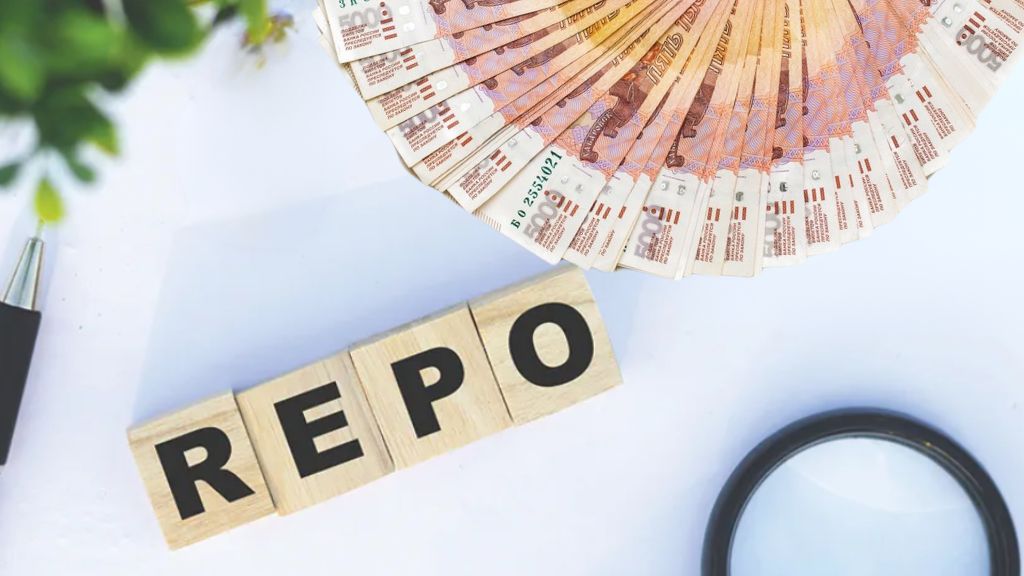
The United States House of Representatives cleared two important pieces of legislation over this weekend, both of which will affect Russia. Firstly, approval was given to extend an additional US$61 billion in loans to Ukraine, while the “Rebuilding Economic Prosperity and Opportunity for Ukrainians (REPO) Act approves the diverting of profits from Russian government capital and permits the funds to be given to Ukraine. We discuss these issues and what we see as the implications as follows:
Ukraine’s US$61 billion
In the Ukraine bill, of the US$60.7 billion allocated, a total of about US$23 billion would be used by the US to replenish its own military stockpiles, opening the door to future US military transfers to Ukraine. Another US$14 billion would go to the Ukraine Security Assistance Initiative, (USAI) in which the Pentagon buys advanced new weapon systems for the Ukrainian military directly from US defence contractors. There is also more than US$11 billion to fund current US military operations in the region, enhancing the capabilities of the Ukrainian military and fostering intelligence collaboration between Kiev and Washington; and about US$8 billion in non-military assistance, such as helping Ukraine’s government continue basic operations, including the payment of salaries and pensions.
This money is in the form of loans, not aid. Which means that Ukraine is liable for US$23 billion for the US replenishing its own military stockpiles – which may – or may not – be used to support Ukraine itself. The US$11 billion – again lent to Ukraine – is to pay for the US (not Ukrainian) military support ‘in the region’ while US$8 billion goes towards paying Ukraine’s social responsibilities for the next year.
What actually reaches Ukraine in military support therefore is rather less. This includes US$14 billion as part of the USAI, which is used to purchase US made weaponry, plus whatever the US uses as part of its own military operations. As President Joe Biden has said, “the Ukraine war is good business for the United States.”
What the US has actually done is dump US$61 billion of debt onto an already bankrupt country that will almost certainly be unable to repay it. Kiev will be hoping for ‘debt forgiveness’ later down the line but in reality, what is more likely to happen is that the IMF will have to restructure Ukraine’s debts – which will then be spread around member states to repay. The United States might take a partial haircut, but it will have refunded its own military. Make no mistake, the US$61 billion will mostly be repaid to Washington – by Western members of the IMF. As for the actual amount that Ukraine will receive, it will not be enough to prevent a Russian win. Since January 2022, Western nations have pledged more than US$380 billion in aid to Ukraine, including nearly US$118 billion in direct military aid to Ukraine from individual countries. Pledging and actually giving are somewhat different things, but if we take the US$118 billion in direct military capital as a base line, that equates to just under US$5 billion a month over the past 24 months. With the new money to be spent on supporting Ukraine in the battlefield amounting to either US$14 billion (USAI) or the full US$25 billion (USAI plus the US regional military allocation) this sum will support Kiev based on previous spending, for another 3-5 months only.
So, what is the point? We suspect that this spend – which appears huge but when examined, is not so large, mainly benefitting the US weapons manufacturing sector and its military stockpiles – is to buy time. That means that over the summer we can expect significant frontline activity to try and push Russia back and obtain the best possible hand for commencing negotiations come the late Autumn. After that, with US elections about to take place, it’s anyone’s guess. This means that the current Biden Presidency has bought itself enough time to say it supported Ukraine against Russia to the best of its capability and politically, the Biden administration stood up to Putin and was not defeated. That can be politically powerful post the 2024 US elections, when afterwards, a Moscow victory is almost assured. But it does mean that Ukraine – and Russia – will be in for a tough and bloody summer.
The REPO Act
The cheekily named “REPO” (shorthand for repossession) Act allows US institutions to confiscate billions of dollars’ worth of Russian assets sitting in US banks and transfer them to Ukraine for reconstruction. That was also passed by the US House of Representatives over the weekend. The United States is in possession of about US$6 billion of Russian assets, meaning that the financial implications for Russia are relatively minor, albeit annoying.
However, we believe that this is not the main aim of this Act – which is only an issue if the Biden administration chooses to use it. Instead, we believe that this is a signal to the European Union, who retain a far larger US$293 billion of frozen Russian assets, mainly sitting in banks in Germany, France and Belgium. The aim, in our opinion, is to persuade the EU that as the United States has endorsed such behaviour, then it is OK for the EU to follow and do the same. Philip Zelikow, Botha-Chan Senior Fellow at Stanford University’s Hoover Institution and a former Counselor of the US Department of State has stated very firmly that “Some of the best international lawyers in the world have looked hard at this question. They find the REPO Act’s approach to be sound. And those who have actually analyzed the financial repercussions find positives, not negatives. So, the way is clear to act.”
We see it as American politicians leading EU politicians by the nose to do something completely against EU interests.
Consider firstly the basic risk ratio: the EU has 48 times more frozen Russian assets than the United States does. Should the EU follow Washington and pass similar legislation – and act upon it – it is likely to have an immense impact as concerns international investment attitudes towards the European Union. While much of the media attention has focused on the downside for the United States, this would only become reality should they actually use the REPO Act, while Washington’s reputational risk exposure is limited to a fallout of US$6 billion, which can easily be offset by providing incentives.
The EU however has far greater exposure: US$293 billion is a substantial chunk of money. Touching that and sending it to a third party country (Ukraine) can be expected to lead to capital flight on a global basis. The risk is Europe’s. The impact would drain the EU of reserves and irreparably damage the Euro as a currency. Where would the money fly to?
Interestingly, the three countries where global capital has been moving to during 2024 are the United States, the United Kingdom, and Japan, as their liquidity, transparency and pricing have propelled them to be the top destinations for global cross-border capital.
All the US and UK have to do is say to the Europeans ‘its ok to use frozen Russian capital’ – which has effectively just happened. But if European politicians follow that advise and act upon it – London will re-emerge as a post-Brexit safe haven and financial centre again, while the US will be largely untouched – as long as they don’t actually touch Russia’s capital. But now the temptation is for the Europeans to do just that. The US REPO Act is aimed at Europe, not Russia. It’s about the fiscal control of Europe.
The US capital flight risk and de-dollarisation issue is not therefore an immediate issue today, although the REPO Act is about to be signed into law. Any minor fall-out over the US$6 billion can be covered. But this doesn’t mean the United States is out of the woods either. The much-anticipated de-dollarisation issue will occur as and when the United States defaults on its debt. That is currently standing at US$34.6 trillion and is another reason Washington pushed the Ukrainian US$61 billion onto Kiev’s books. That is about 40% of Ukraine’s annual GDP. President Zelensky meanwhile has reportedly replied with thanks.
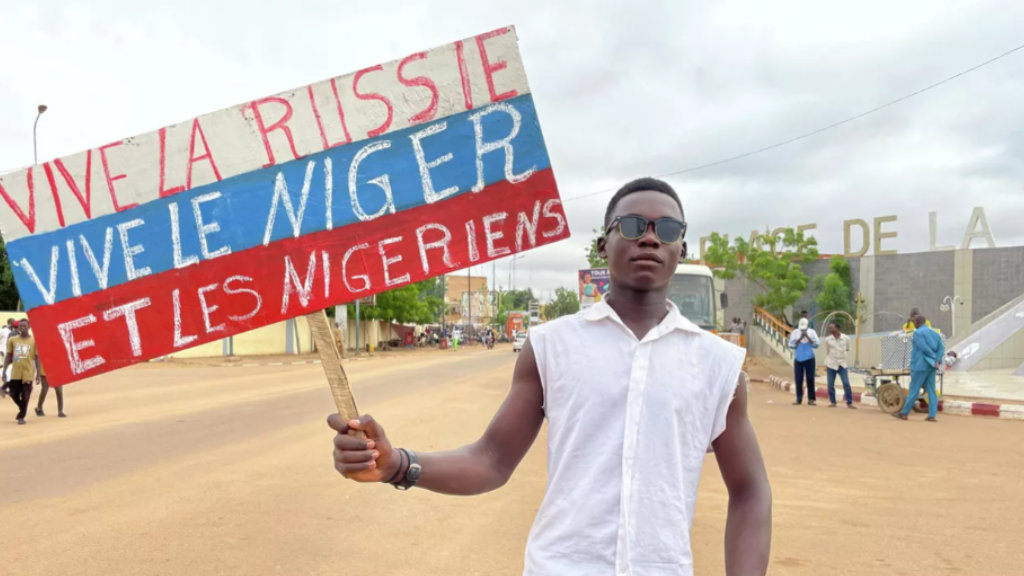
It is not being mentioned in French media, however 2024 is proving to be a year where France is being effectively evicted from its African colonial ‘possessions’ and being replaced with rather stronger leaders, often supported by their military, who have increasingly turned to Russia for support.
We have already commented on the position and French President Macron’s anger at Russia’s involvement in Niger and Mali. Mali has even gone as far as to align itself with Russia’s MIR payment system following fears that Paris might seek to disconnect the country from international finance, while Burkini Faso, Algeria and the Central African Republic are all making moves to engage with Moscow as opposed to Paris. US military involvement with a drone base in Niger has also been cancelled as Africa increasingly looks away from the West and towards Moscow for support.
The Russian military are currently overseeing the transition of military and security power in Burkino Faso, ably described by Al Jazeera here, while Algeria, as we illustrated here is significantly beefing up its security collaboration and trade with Russia.
Now, the Central African Republic (CAR) has done the same, with some 10,000 troops being trained in the CAR with the help from Russian instructors, according to CAR President Faustin-Archange Touadera. He stated that “We decided that we should focus not only on military training and the like, but to cultivate a truly patriotic force that loves their country. And we are working with Russian instructors along these lines,” he said in an interview with RTVI. “We continue training soldiers. Up to now, we have jointly trained more than 10,000 young troops. This is yielding results. Naturally, we have some problems from the point of view of military infrastructure, but we are working to correct this and will fix it.”
According to Touadera, since becoming President, his actions have been guided by the need “to modernize the army and take into account new challenges.” “We initiated a lot of reforms in our defense and security forces. We reorganized the army as a garrison-type one with defense zones (military districts) so that our defense forces could defend the population right on the ground. We decided to bring them closer to people and send them to really remote areas which come under numerous attacks and are gripped by violence,” he said. “We launched a training program, began to train not only the military but also the police, gendarmery and all other agencies that are to ensure our country’s security.”
Other issues are likely to follow in a cascading effect – other African nations with old colonial ties are now reviewing the fairness of their contractual agreements with European powers – and France especially, who has remained an active player in the region in a way in which the British have not. Reports of unfair pricing, effectively enforced by French security provided under the auspices of ‘keeping the peace’ have resulted in an array of rather more ‘militant’ (in Africa, read ‘patriotic’, in France read ‘autocratic’) leaders being ushered into power amid increasing mistrust of Parisian attitudes towards them as sovereign nations.
The Unseen Fiscal Repercussions
What has not been recognised or discussed is that this trend is poised to result in a plethora of new currencies hitting the markets as African countries look to abandon the Parisian controlled ‘Central African Franc’ (CFA, pronounced ‘CEFA’ in Africa) and turn to introducing their own currencies, some for the first time.
Six countries use what is officially designated the F.CFA: Cameroon, the Central African Republic, Chad, Republic of the Congo, Equatorial Guinea, and Gabon. These have a combined population of 55.2 million people and a combined GDP of over US$100 billion. Others use it as a proxy, such as Senegal.
On the French side, the guarantee provided to the CFA franc, and the assurance of its convertibility, is perceived as a vector of economic stability for the region. African critics however say true economic development for the 14 African countries that effectively use it can only be achieved if they get rid of the currency. They argue that in exchange for the guarantees provided by the French treasury, African countries channel more money to France than they receive in aid. They also argue that they have no say in deciding key monetary policies agreed to by European countries, which are members of the Eurozone with policy decided in Brussels. Some of these policies – such as the EU’s attitude towards Russia – are in direct conflict with African perspectives.
This has specific issues of interest to the BRICS, with Russia of course a key member. As we reported last week, Ethiopia – is a recent addition to BRICS and has proposed a unified BRICS currency. What is interesting here is that Ethiopia is a member of the Common Market for Eastern and Southern Africa (COMESA) which includes Burundi, Comoros, the Democratic Republic of Congo, Djibouti, Egypt, Eritrea, Ethiopia, Kenya, Libya, Madagascar, Malawi, Mauritius, Rwanda, Seychelles, Sudan, Swaziland, Uganda, Zambia, and Zimbabwe. COMESA naturally has significant trade relations with the Central African nations, and crucially, a lot of experience of developing their own Central Banking systems. This means that COMESA is an important case study for the Central African F.CFA users and can lend their experience to assist the development of independent currencies for them. Backed by the substantial backing of fellow BRICS members such as China, India, and Russia, it appears that a coming evolution for Central Africa will be the rejection of the F.CFA and the establishment of at least 6 and possibly 14 currencies no longer linked in Paris, or by the European Union, to the Eurozone.
We view the emergence of a BRICS currency as a long way off. However, the emergence of a revised basket of African currencies including new sovereign-issued tender supported by the BRICS economies is a totally different animal. With these ‘new’ economies having purchasing powers running into hundreds of billions of euros, and free to set rates divorced from an effective link to the Euro, the impact on the EU-African trade flows and the redistribution of wealth can be expected to be significant. If we are correct, this will prove a significant gain for Africa and the global south – at especially French, and EU expense as the loss of colonial fiscal influence is poised to hit hard. It will also underpin Russian, India and Chinese influence in the African Continent as the region’s entire security – and financial stability switches from Europe to Asia. The French President Emmanuel Macron’s need to present a victorious summer 2024 Olympics is coming right at the time when the need to be concentrating on Africa is at its height. Paris’s distraction however is Central Africa’s – and Russia’s – territorial, and influential gain.
Further Reading
Russia & The African Continent
There is a comprehensive analysis of Russia’s involvement in Africa in our 2024 Russia’s Pivot To Asia Guide, including comprehensive details of Russia’s trade with Africa, including Mauritania, Morocco, Algeria, Tunisia, Libya, Egypt, Sudan, The Sahel, Eritrea, Djibouti, Ethiopia, Somalia, Uganda, Kenya, Burundi, Tanzania, Mozambique, Nigeria, Equatorial Guinea, South Africa, Namibia and Angola. It is a complimentary download and may be downloaded in English here and Russian here.
African countries have significantly boosted imports from Russia, in signs that the shift to trade development with the global south is having a profound effect on supply chains, trade flows and creating new opportunities. Africa outperformed Russia’s trade partners from the Americas – the United States, Canada, Mexico and Latin America.
In 2023, the share of African imports of Russia’s overall export volumes saw a 100% year-on-year increase from 2.5% to nearly 5%, according to the Russian Federal Customs Service (FCS).
The portion for the Americas dropped to 2.9% in 2022 compared to 3.5% recorded in the previous year. In monetary terms, Russian exports to African nations increased by 43% to US$21.2 billion, while sales to the countries of North and South America declined by 40% to US$12.2 billion.
In comparison to the “pre-sanctions” year of 2021, Africa’s share in Russian exports increased from 3% to 5%, while America’s portion decreased from 6% to 3%, according to the Center for Macroeconomic Analysis and Short-Term Forecasting (CAMAC).
In 2023, exports of Russian petroleum products to Africa almost doubled, while wheat exports also grew significantly.
African countries’ share in Russian trade turnover (4.2%) are in line with the continent’s contribution to the world economy and global trade, which is hovering around 3%, according to Alexander Firanchuk, a senior research associate at the Russian Presidential Academy of National Economy and Public Administration (RANEPA).
Russian exports to the US specifically have seen a nearly six-fold decline since spring 2022, when the first sanctions were imposed on Russia by the West. About 70% of Russia’s exports to the United States during 2024 to date have been fertilizers and nuclear fuel – some of the only Russian exports to the US not yet affected by sanctions or tariffs. Prior to the Russia-Ukraine conflict, the United States accounted for nearly half of Russian exports to North and South America.
Russia has made specific efforts to boost its grade with Africa including hosting the biannual Russia-Africa Summit, which is personally attended by Russian President Putin and is considered a high-profile event in the African continent for both parties to better examine and develop mutual trade.
Further Reading
Russia’s Trade With Africa
The Russia’s Pivot To Asia 2024 Guide contains comprehensive details of Russia’s trade with Africa, including Mauritania, Morocco, Algeria, Tunisia, Libya, Egypt, Sudan, The Sahel, Eritrea, Djibouti, Ethiopia, Somalia, Uganda, Kenya, Burundi, Tanzania, Mozambique, Nigeria, Equatorial Guinea, South Africa, Namibia and Angola. It is a complimentary download and may be downloaded in English hereand Russian here.

 Русский