Colombia’s President Gustavo Petro has expressed interest in his country’s entry into BRCIS, while his Brazilian counterpart Luiz Inacio Lula da Silva intends to facilitate the promotion of candidacy of the neighboring country.
“President Petro expressed Colombia’s interest in joining BRICS as a full-fledged member as soon as possible, while President Lula welcomed this initiative, being committed to promotion of Colombia’s candidacy,” according to a statement published on the website of the Colombian government following the talks between Brazilian and Colombian presidents.
The BRICS group, established in 2006, first expanded in 2011, when South Africa joined the four founding nations of Brazil, Russia, India and China. The decision to invite six more countries to join BRICS, including Argentina, was made at the group’s summit in Johannesburg in August 2023. However, Argentina declined the invitation to join in late December. Five new members (Egypt, Iran, the United Arab Emirates, Saudi Arabia and Ethiopia) formally became full-fledged members of the BRICS group on January 1, 2024.
Russia-Columbia bilateral trade is running at about US$600 million with 2/3 of this being Russian exports, mainly mixed mineral and chemical fertilizers. Colombia exports mainly beef and coffee to Russia.
Our Look Back At Some Of The Weeks Most Bizarre & Cool Russo Moments
An Explosive Co-Incidence?
Three weapons manufacturing units handling arms for Ukraine have suffered unexpected explosions. A British Aerospace munitions factory in Wales blew up while a munitions factory in Pennysylvania caught fire both this week. These follow an incident in Texas in November. All these events happened at units deployed at least in part, to support Ukraine. It shows one of two things: the increasing amount of weapons production manufactured in the West leading to decreased safety, or some element of sabotage. A multiple of three is usually suggestive of a pattern, not co-incidence. Especially as X suggests that Russian agents have been blowing up supply chains in Germany, while incidents in Bulgaria and Romania concerning munitions-carrying rail trains being attacked have apparently been supressed by European media. There’s more on Russian agents apparently planning attacks in Germany here.
Russian Teen Train Surfs 650km From Moscow To St.Petersburg
RT has reported a Russian 17 year old train-surfed – clinging to the roof – 650km on the high-speed rail between Moscow & St.Petersburg at speeds of up to 250kph. He had planned to do the same on the way back but was spotted and arrested. We say: “Muchos respect, dude…” His Mum and Dad have been charged with ‘parental neglect.’
We love it when politicians come to blows. The passion! The commitment to the cause! The display of raw aggression! The right hooks! This was pretty impressive in the Georgian Parliament this week. Ouch.
Russian Military In Russian Cup Final
CSKA Moscow, a football team with strong Russian military connections – they sued to consist entirely of military personnel as players – have reached the Russian FA Cup final, defeating Baltika of Kaliningrad 2-0 in the semis. You wanna see the goals? Of course you do – here.
European Football Championship Finals: Slovakia vs. Ukraine
Sticking with football, given Slovakia’s pro-Russian stance, this game is going to be interesting. June 21, in Dusseldorf. UEFA’s 2024 slogan for the tournament is “United by Football, United in the Heart of Europe”. We’ll see what actually happens on the night…
Investments made – mainly by manufacturing businesses – rose by 76% in 2023 to hit ₽261 billion (US$2.8 billion) according to the Russian Association of Industrial Parks (AIP). Only confirmed investments on completed projects — were taken into account, with the volume the highest in ten years. AIP Director Denis Zhuravsky has said that the increases are a result of a response to unmet demand, while a new wave of creating local production of finished products is coming, replacing outgoing imports from “unfriendly” countries.
Russian capital is replacing Western capital however, as the share of foreign investment in industrial parks is declining, shifting the balance between foreign and Russian investments. In 2020 Russian investments were estimated at 45% of the total in Russia’s Industrial parks, increasing to 53% in 2023. Of the investments made directly in 2023, 72% were Russian companies, 17% Turkish, 3% German with other foreign nationalities making up the remaining 8%.
There is another difference, foreign investors tend to implement larger projects, with average investments of ₽2.6 billion (US$27.5 million). Russian companies are more often represented by SMEs with an average investment of about ₽200 million (US$2 million).
However, this trend is showing signs of change – Russian MNCs area now showing greater interest in Russia’s industrial parks, while supporting infrastructure is also improving. During 2023, investment into park infrastructure itself was estimated to be ₽46 billion (US$487.6 million) an increase of 40% more than in 2022. According Zhuravsky, the Russian market demand for production and warehousing facilities will last several years. To accelerate the creation of finished sites, he believes, it is necessary to extend industrial mortgages to the management companies of industrial parks – an issue the Central Government will need to look at in providing support.
Industrial Parks offer specific advantages and especially so in the manufacturing sectors. They are typically sited near to port access, and possess duty-free areas where products can be brought in from other countries (such as China) without the initial need for customs duties. These products can then be matched with Russian sourced products to manufacture a complete item. They can then be either resold on the Russian market (when the import duty in the imported components is levied) or exported (when no customs duty is levied and VAT on the domestic components can be reclaimed).
Russia has about 80 Industrial Parks, that also offer other incentives such as reduced utility rates and several years of profits tax exemptions. Consequently, they are very useful in developing a national export manufacturing business – and it appears that Russian businesses are finally now taking full advantage.
Russia and Azerbaijan have intensified work on the development of different segments of the International North-South Transport Corridor (INSTC), according to Alexander Sitov, the First Deputy Chairman of the Committee on Industrial Policy, Innovation and Trade of St. Petersburg, speaking in Baku.
“There are several segments of cooperation with Azerbaijan regarding the activation of the North-South international transport corridor. The corridor originates in the Baltic Sea, near St. Petersburg, and its branches end in Iran and India. Part of the route goes through Azerbaijan along land (roads and railways) and along the Caspian Sea, and we have agreed to work out cooperation zones” Sitov noted.
According to Sitov, Russia is currently modernising its Caspian port of Olya (year-round shipping) to increase cargo turnover along the route. This includes a new 250 hectare cargo area: the 1st stage involves the construction of six berths by 2027 for a cargo turnover of up to 6 million tonnes, the 2nd stage the development of capacities up to 12 million tonnes, the 3rd up to 50 million tonnes.
The construction of highways, transport interchanges, bridges and engineering structures is also being intensified. “I think Azerbaijan will be interested in the new initiatives of Russia on the INSTC” Sitov emphasised.
In the railway segment of the INSTC, the Rasht (Iran)-Astara (Iran-Azerbaijan border) section will be created, for which VTB Bank (RF) has loaned Iran over €1 billion. The section has proven something of a bottleneck in terms of INSTC connectivity, but this has now been resolved and should be completed by the year end. It will further enhance Azeri and Turkish trade connectivity with the Persian Gulf and South Asia.
Russia is already using the route, although not to capacity at present. It has been exploring its potential to reach other markets and sent a train direct through to Iran last year with the cargo then shipped to Saudi Arabia, and has done the same for goods destined for India.
The International Monetary Fund (IMF) has raised its outlook for Russian GDP growth in 2024 to 3.2% from the 2.6% it was predicting in January, it said in its April World Economic Outlook update, published on Tuesday (April 16).
The IMF forecast is above the 2.2% growth the Russian Economic Development Ministry and 1.0%-2.0% that the Central Bank of Russia are currently forecasting. Andrei Belousov, the First Russian Deputy Prime Minister said recently that the Russian Economic Ministry’s forecast could be raised a few tenths of a percentage point. The ministry is due to unveil its updated three-year macro-economic forecast in April and the Central Bank of Russia its updated medium-term forecast after its April 26 board meeting. The IMF also raised its forecast for Russian GDP growth in 2025, to 1.8% from 1.1%.
Pierre-Olivier Gourinchas, the IMF’s chief economist said that global growth, is projected to be the same, at 3.2% in 2024 and 2025. However, much of this growth is based in Asia and the emerging economies, not the West. The EuroZone area is expected to grow by just 0.4% in comparison.
Russia is increasingly been seen as a protective responsible power as an alternative to France, the old colonial power in Africa. Following French withdrawal from Niger and Mali, Algeria has joined the exodus of leaving Paris for Moscow ties. The two countries have signed a security cooperation agreement on a variety of issues, including fighting transnational organized crime, terrorism, extremism, and corruption, Russia’s General Prosecutor’s Office announced on Monday (April 15).
The signing came after talks between Algerian Minister of Justice Abderrachid Tabbi and Russian Prosecutor General Igor Krasnov, who was in North Africa on a Middle East tour.
The program is expected to be implemented from 2024 to 2025 and is based on a partnership protocol adopted last November, according to a press release from the General Prosecutor’s Office. Krasnov stated that terrorism is a pressing threat in Algeria, as extremists who commit unjustified cruelty do not respect borders.
Algeria was invaded by France in 1830 and remained a French colony until 1962. Ties between Algiers and Paris have become strained after accusations of unfair trade practices and Parisian support for neighbouring Tunis in border conflicts. Algeria’s military meanwhile is the largest in Africa.
At a separate meeting in Algeria’s capital, Algiers, on Monday, Russian Deputy Foreign Minister Mikhail Bogdanov and Algerian President Abdelmadjid Tebboune also agreed to strengthen cooperation in fields such as trade, energy, investment, culture, and humanitarian aid.
While discussing international and regional issues, the Russian official and the Algerian leader both declared that a peaceful resolution of conflicts in the Middle East and Africa is an absolute necessity.
“The closeness of the fundamental approaches of Russia and Algeria was noted regarding the lack of alternatives to the peaceful resolution of numerous conflicts and crisis situations in the Middle East and on the African continent, in accordance with the fundamental principles of the UN Charter,” the Russian Foreign Ministry said in a statement.
Both Moscow and Algiers have described their existing ties as “strategic.” According to the Kremlin, Algeria, along with Egypt and Morocco, is one of Moscow’s top African trading partners.
Last June, President Tebboune paid a three-day working visit to Russia, where he and President Vladimir Putin signed multiple agreements, including the Declaration on Enhanced Strategic Cooperation between Russia and Algeria. Both Mali and Niger to the south of Algeria have also entered into recent agreements with Russia and left their French past behind.
The possibility of Algeria joining the BRICS group in 2025 is also being discussed.
Russia-Algeria Trade A comprehensive analysis of Russia-Algeria trade and investment can be seen in Chapter 3, “Russia & North Africa” of our complimentary “Russia’s Pivot To Asia 2024” PDF guide, which can be downloaded for free in English here and Russian here.
The Arctic, endowed with significant resource wealth, is envisioned as an advantageous multimodal transportation link that presently enables a connection between the Asia-Pacific and European regions. Legal issues surrounding the Arctic’s jurisdiction provoke contention over rights to these lands, drawing in not just the circumjacent sovereign states but also nations keen on making inroads into this region. Analysts point out four tiers of rivalry and collaboration in the Arctic.
The inaugural tier is comprised of the Arctic nations or the “Arctic Quintet”: Russia, the United States, Canada, Denmark, and Norway, which possess the Arctic Ocean’s coastline. The proximate Arctic states make up the second tier: Sweden, Finland, and Iceland. These two tiers together form the “Arctic Octet,” that is, eight nations with territories within the Arctic Circle and maritime territories in the Arctic, along with legitimate terrestrial and maritime borders. These countries are members of the Arctic Council (AC). The third tier is represented by global organizations (such as NATO, the European Union, and Northern European country organizations), while the fourth tier include s non-Arctic states that nevertheless express interest in the Arctic, among which are included nations like China, Japan, India, and Singapore.
The growing influence of the People’s Republic of China is expanding each year, reaching increasingly further into various global territories. The international community has mixed reactions to China’s assertive move into the Arctic region. As an example, Norway’s Foreign Affairs Ministry has noted that the Arctic, alongside Africa, could emerge as a new area where China aims to advance its geopolitical ambitions. China’s strategy in the Arctic can be delineated into two primary goals: firstly, ensuring secured access to essential mineral resources vital for China’s expanding economy, and secondly, the pursuit of commercial maritime activities through Arctic waters. This article will particularly explore the latter aim of China’s Arctic agenda.
The “Belt and Road” initiative, launched by China in 2013, stands out as a groundbreaking venture recognized globally for its vast scope and ambitious nature. This strategic blueprint, unveiled by Xi Jinping, is comprised of two main components: the land-based “Silk Road Economic Belt” and the nautical “21st Century Maritime Silk Road.” A critical aspect of this broad strategy is the incorporation of the “Polar Silk Road,” signifying China’s ventures into the Arctic domain. Central to the fruition of this comprehensive strategy is leveraging the commercial potential of Russia’s Northern Sea Route (NSR), positioning Russia as an indispensable ally in the execution of China’s vision for an “Arctic Silk Road.”
First announced during Xi Jinping’s presentation at Nazarbayev University in Astana in 2013, this proposition gained traction and was subsequently reaffirmed at the 2015 EAEU summit, highlighting it as a modern framework for fostering Europe-Asia relations. The inaugural “Belt and Road” forum in 2017 attracted participation from 29 countries, mainly those through which the proposed routes are expected to traverse. The follow-up forum in 2019 expanded its reach, bringing together representatives from 150 countries, clearly reflecting the initiative’s global appeal and its role in driving forward the agenda of globalization.
This synthesis underscores the “Belt and Road” initiative’s extensive reach, merging varied regions from the vast expanses of Eurasia to the Arctic’s frozen borders. It paints a picture of China’s ambition to weave an intricate web of trading pathways and alliances that span across continents, with the NSR as a pivotal conduit in this grand global endeavour. The initiative’s escalating scale, as evidenced by increasing global participation, highlights its capacity to transform international trade dynamics and economic interactions.
Despite being geographically distant from the Arctic, China has developed a keen interest in the region, an interest that complements Russia’s Arctic endeavours yet also extends beyond them into unique ambitions. China’s Arctic policy is framed around three primary objectives: economic gains, geopolitical influence, and environmental protection. These goals underscore China’s broader strategy to diversify its economic dependencies and leverage the Arctic’s untapped resources and potential shipping lanes.
The global logistics landscape features a variety of routes connecting Asia and Europe, each with distinct characteristics regarding transport method, journey length, and delivery speed. A significant number of these routes converge on Lianyungang, a pivotal port city in Jiangsu province, which serves as a vital node due to its strategic location along the coast and near the Yangtze River, China’s most significant industrial waterway. This geographical advantage positions China to further its ambitions for a global maritime trade network, a critical component of its economic growth strategy.
The Northern Sea Route emerges as a focal point of China’s Arctic strategy, offering a shorter, more efficient path between Europe and Asia that could reduce reliance on traditional, risk-prone maritime routes such as the Malacca Strait and the Suez Canal. The successful voyage of the Chinese vessel Yong Sheng in 2015, which saved time and fuel, illustrates the NSR’s commercial viability. However, the current dependence on routes controlled by other nations, like the Malacca Strait, highlights the geopolitical complexities and the potential for disputes that could threaten China’s maritime trade.
China’s pursuit of the NSR reflects a strategic manoeuvre to enhance its trade security and environmental stewardship while bolstering its geopolitical stance in the Arctic and beyond. In the middle of 2017, China’s government officially announced its intention to develop the “Polar Silk Road,” a key component of its broader Belt and Road Initiative (BRI). This declaration intertwined the vision of a seamless connection between the BRI and the Eurasian Economic Union, positioning the Arctic route as an expedited link between Asia and Europe, thereby marking it as a pivotal extension of the BRI. The disparity in Arctic engagement between Russia, which possesses extensive navigational experience in the Arctic seas, and China, with its capacity and willingness to fund the maritime corridor for efficient utilization, underscores a partnership of complementary strengths.
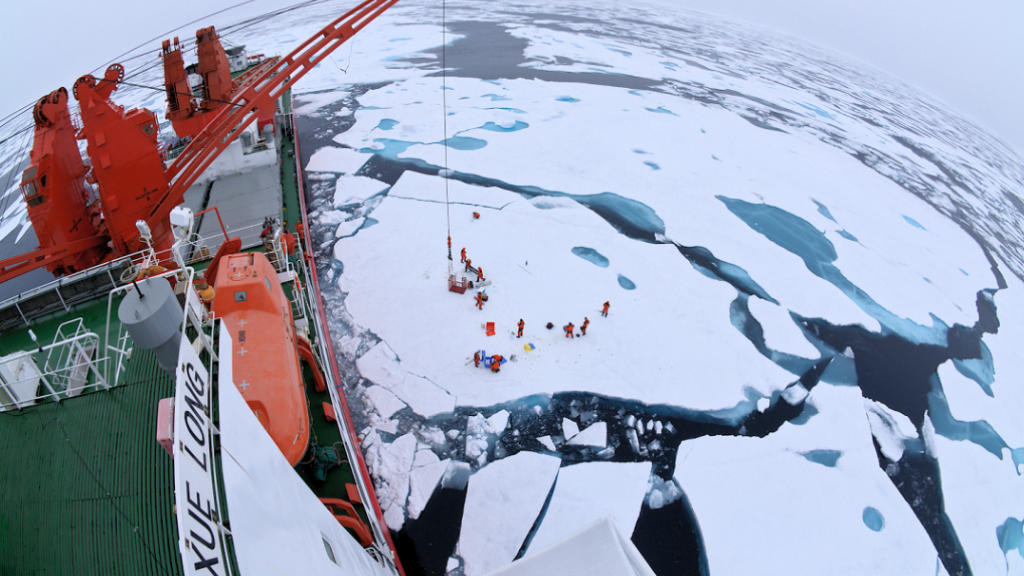
The Arctic Silk Road represents a pioneering navigational channel that traverses the Arctic Circle to connect significant economic zones across North America, East Asia, and Western Europe, offering the most direct route for trade between these regions. With its geographic advantage, this passage is seen as an essential element in China’s global strategic ambitions, which include establishing a firm foothold in the Arctic. Despite Russia’s dominant position in Arctic navigation and expertise, China’s venture, highlighted by the Tian En vessel’s journey through the Northern Sea Route with Russian nuclear icebreaker escort, reflects China’s strategic aim to ensure uninterrupted transport of its commodities. The commissioning of China’s first domestically produced icebreaker, Xue Long 2, along with plans for additional icebreakers, signals China’s resolve to affirm its Arctic presence and navigate independently.
The allure of the Arctic has transcended China’s strategic ambitions to capture the national imagination, with a significant surge in Chinese tourists embarking on polar expeditions to witness the Arctic’s natural wonders. This growing public interest is matched by strategic Sino-Russian cooperation on the Northern Sea Route, highlighting a mutual interest despite the logistical and environmental challenges of Arctic navigation. This collaboration points towards a concerted effort to leverage the Arctic’s unique geographical and economic opportunities for shared advantages.
China and Russia’s maritime authorities continue their dialogue under a mutual understanding memorandum for Arctic Sea collaboration to enhance their cooperative framework and policies for Arctic development. Data from the Russian Arctic logistics hub revealed that in 2016, ship traffic through the Northeast Arctic Passage surged by 35% from the previous year, with 297 vessels navigating the route. This upward trend in maritime traffic is expected to grow annually, fueled by the accelerating melt of Arctic Sea ice.
The Northern Sea Route stands out for its strategic advantage in reducing transit times and costs, aligning with China’s goal to cement its presence in the Arctic region. The diminishing Arctic ice area, which saw a reduction of 2.3 million square meters between 1984 and 2018, highlights the NSR’s potential viability. Despite challenges, China’s eagerness to utilize the NSR for freight transportation to Europe is evident. This route, being 6,400 km shorter than the traditional Suez Canal passage, offers significant fuel savings. Calculations by Chinese analysts suggest that a single voyage via the NSR can save up to US$3.5 million per voyage and shave off two weeks shipping time compared to the longer Suez route.
The global community’s growing fascination with the Arctic has positioned China as an eager participant in Arctic politics and economics, aiming to build a robust infrastructure and develop technological and human resources for an active role in exploiting Arctic resources and pathways. Future projections by some experts’ hint at the potential need for a Chinese military presence in the Arctic to safeguard its investments and interests, a scenario that might encounter resistance from Russia and other Arctic nations. Despite differing stances on NSR regulation — with China advocating for free and unregulated maritime transit, and Russia seeking full control over the route due to its proximity to Russian shores — Beijing considers Moscow as a crucial ally in the Arctic, viewing the NSR as a vital link in its Belt and Road vision.
Another area of collaborative effort between the two countries focuses on supporting environmental protection in the Arctic. Discussions on this cooperation commenced in May 1994 with the signing of an Environmental Protection Cooperation Agreement between the governments of the Russian Federation and the People’s Republic of China. However, a specific bilateral agreement dedicated solely to Arctic environmental protection issues remains unadopted, marking a significant oversight. Primarily, such an agreement is crucial for Russia, considering China’s activities in the Russian Arctic could potentially harm the region’s delicate and unique ecosystem.
Environmental collaboration is carried out through joint participation in international scientific and expert discussions on Arctic ecological security and through combined scientific research expeditions to the region. Both nations are active members of international organizations like the Arctic Council, the International Arctic Science Committee, the Pacific Arctic Group, and others, often addressing climate change and environmental conservation in the Arctic. Additionally, Russian and Chinese researchers, along with international academics, strive to develop scientific recommendations for protecting the Arctic nature and ensuring safe living conditions for the indigenous populations.
The environmental factor also plays a significant role in the further development of Chinese tourism. Hence, China stands to benefit from the extensive deglaciation of the Arctic in its quest to expand Arctic tourism. Chinese tourists have long been a significant source of income globally. Interactions between Chinese entities and northern and Russian communities are increasingly based not only on economic development and trade deals but also in the tourism sector, a powerful engine of economic growth. The economic boom in Asia and the shift of power from West to East have resulted in more Chinese families having the resources for global travel. Consequently, Chinese tourism is becoming increasingly important in Northern European countries, particularly in the Russian Federation, where tourism from East Asia, mainly China and South Korea, has recently been a stimulus for market and infrastructure development.
China’s involvement in Arctic development will not only attract investments into tourism but also contribute to the economic diversification of northern countries and Russia, which heavily rely on natural resource extraction. Joint Sino-Russian endeavours in the Arctic, especially the Yamal LNG project, showcase the dominant role of commercial entities in the bilateral cooperation within this region. The integration of Chinese transport companies into Arctic LNG ventures is gaining significance due to China’s escalating energy demands and the evolving Arctic energy landscape.
Given the Arctic’s challenging conditions and the icy passages of the Northern Sea Route, the transportation sector necessitates vessels with ice-breaking capabilities. The Yamal LNG project, a colossal energy initiative in the Arctic for extracting, liquefying, and shipping natural gas, is expected to produce approximately 16.5 million tons of LNG annually and 1.2 million tons of gas condensate. These outputs are targeted for the Asia-Pacific and European markets, with China being a significant recipient of about 3 million tons per year, highlighting its strategic market placement.
To assure effective transportation, Chinese logistic firms are crucial, enhancing the operational capabilities for LNG transport. The collaboration between Mitsui OSK Lines (MOL) and COSCO Shipping Energy Transportation Co., Ltd., which managed to navigate the Northern Sea Route eastward without icebreaker assistance, underscores the vitality of Chinese participation in the logistics of Arctic projects.
This burgeoning partnership sees China actively investing in the Arctic’s industrial development and LNG transport infrastructures, addressing the logistical challenges posed by the increasing scarcity of tanker-gas carrier capacities. The Yamal LNG project, partly financed and operationally supported by Chinese investments and technological inputs, demonstrates the symbiotic relationship between Russia’s resource-rich Arctic and China’s industrial and economic ambitions.
As both nations navigate the complexities of Arctic exploration and LNG production, their cooperative efforts reflect a broader strategy to harness the Arctic’s untapped resources while ensuring environmental stewardship and sustainable development in one of the planet’s most sensitive regions. Beyond their investment in the Yamal LNG project, Chinese enterprises have openly expressed their willingness to fund and partake in other major ventures in the Arctic region. In April 2019, NOVATEK inked a deal with the China National Oil and Gas Exploration and Development Corporation (CNODC), a subsidiary of the China National Petroleum Corporation (CNPC), and the China National Offshore Oil Corporation (CNOOC) for collaborative execution of the “Arctic LNG 2” project. This partnership was further solidified in June 2019, during the St. Petersburg International Economic Forum, where NOVATEK formalized an agreement for share purchase with CNOOC Ltd. As per these agreements, each Chinese firm will acquire a 10% stake in the “Arctic LNG 2” project. The “Arctic LNG 2” project, set to be developed at the Salmanovskoye (Morning) field, aims to construct three production lines with a total capacity of 19.8 million tons per year on gravity-based structures (GBS). Chinese transportation companies are anticipated to remain pivotal investors in Arctic LNG ventures, contributing to leasing, logistics infrastructure, shipbuilding, and more.
On July 7, 2019, an agreement was reached among NOVATEK, COSCO SHIPPING Energy Transportation Co., Ltd., Sovcomflot, and the Silk Road Fund concerning the establishment of “Maritime Arctic Transport” LLC. This agreement underscores the parties’ commitment to forging long-term partnerships for the joint development, financing, and implementation of new year-round logistics schemes for transporting hydrocarbons from Russia’s Arctic zone to the Asia-Pacific region and organizing transit cargo flow through the Northern Sea Route between Asia and Western Europe.
However, China and Russia’s Arctic governance perspectives notably diverge. Beijing advocates for a collective stewardship model, arguing that the Arctic belongs to the global community and suggesting a collaborative approach to regulation that includes non-Arctic nations like China. Moscow, on the other hand, champions exclusive rights for Arctic states, highlighting the significance of sovereignty over its Arctic expanse. These differences extend to debates over Russia’s rights to its Arctic coastal zones, China’s ambition to expand its icebreaker fleet, and differing views on environmental and indigenous people’s rights amidst China’s own controversial environmental and social policies domestically.
Despite these ideological divides, the collaborative dynamic between China and Russia in the Arctic is predicted to only grow stronger, driven by mutual interests and the vast potential for partnership. Russia benefits from Chinese investment in Arctic infrastructure and resource exploitation, while China gains access to crucial Russian hydrocarbon resources and icebreaker technology, enhancing its energy security. This interdependence suggests an evolving alliance, poised to navigate the Arctic’s future despite contrasting worldviews.
Looking ahead, the trajectory of Sino-Russian cooperation in the Arctic will likely be influenced by global economic trends, the evolving geopolitical landscape, and the international community’s response to Arctic development. While the partnership offers substantial economic benefits to both nations, it also requires them to navigate complex issues of sovereignty, environmental protection, and international law. The resilience of this partnership will depend on their ability to address these challenges collaboratively while respecting the interests of other Arctic states and indigenous communities.
The Sino-Russian economic relations in the Arctic, within the framework of the BRI, represent a multifaceted partnership with significant implications for regional development, global trade, and environmental sustainability. As the Arctic becomes an increasingly important arena for international cooperation and competition, the dynamics of this partnership will offer valuable insights into the future of global geopolitics and economic diplomacy.
The economic relationship between China and Russia within the Arctic, particularly through the lens of the Belt and Road Initiative, illustrates a complex interplay of strategic partnership, geopolitical ambitions, and environmental considerations. These, such as the Yamal LNG project, not only underscore the economic synergies between the two nations but also highlight the Arctic’s growing significance in global strategic calculations.
The partnership, while showcasing the potential for significant economic benefits and infrastructural development, also brings to the fore the delicate balance required in managing the Arctic’s fragile ecosystem. The environmental sustainability of such ventures remains a pivotal concern, necessitating stringent adherence to sustainable practices and international cooperation to mitigate ecological impact.
Moreover, China’s strategic incorporation of the Arctic within the ambit of the BRI, aiming to secure a stable energy supply and establish alternative trade routes, reflects its broader global ambitions. This move, however, introduces complexities in Arctic governance, posing challenges to Sino-Russian relations and their interactions with other Arctic and global stakeholders. As this partnership progresses, it will be imperative for China and Russia to navigate the geopolitical and environmental challenges with a cooperative and transparent approach. The success of their Arctic cooperation will likely hinge on their ability to align their economic objectives with the principles of environmental conservation and respect for the sovereignty and rights of other Arctic nations and indigenous peoples.
Ultimately, the Sino-Russian economic relations in the Arctic, framed by the BRI, offer a unique perspective on the evolving dynamics of global geopolitics and the imperative of sustainable development in one of the world’s most sensitive regions. The future of this partnership, poised between economic ambition and ecological responsibility, will significantly influence the Arctic’s role in the global economic and environmental landscape.
This article originally appeared in VIF India.
Further Reading
Russia’s Northern Sea Route
We extensively cover this subject in Chapter 13 “Russia-Asia Transport Corridors” in our 2024 Russia’s Pivot to Asia guide. It is a complimentary PDF download and can be accessed in English here and Russian here.
Our much-praised Russia’s Pivot To Asia PDF Guide is now available for download. This comprehensive book contains details of Russia’s trade and development with over 80 countries as well as analysis on new supply chain routes, trade agreements, and Russia’s involvement with the BRICS, EAEU, SCO and Belt & Road Initiative. Contents include:
Russia & Europe
Russia Legalizes Parallel Imports, Russia’s New Foreign Policy Concept, Understanding Russia’s Unfriendly Countries List, Sanctions Impact Upon The G7, Russia’s Resilience To Sanctions, Belarus, Serbia, Bosnia & Herzegovina, Italy
Russia, the Caucasus & Turkiye
Georgia, Armenia, Azerbaijan, Turkiye, Turkiye For BRICS?
Russia & North Africa
Mauritania, Morocco, Algeria, Tunisia, Libya, Egypt, Egypt & BRICS, Sudan, Sudan and Iran: Impact on Red Sea Shipping
Russia & the Middle East
Israel, Lebanon, Syria, Palestine, Palestine Non-Recognition & Russia Sanctions Compared, Jordan, Iran, Iran & BRICS, Russia & Iran Financial Connectivity, Iraq, Saudi Arabia, Russia-Saudi Multimodal Direct Freight Train, Saudi Arabia & BRICS, Kuwait, Qatar, United Arab Emirates, UAE & BRICS, Yemen
Russia & Central Asia
Russia’s Central Asian Foreign Policy Concept, Kazakhstan, Kazakhstan’s VTB Bank & MIR, Ozon in Kazakhstan, Turkmenistan, Uzbekistan, Afghanistan, Tajikistan, Kyrgyzstan, Wildberries in Kyrgyzstan, Mongolia, Mongolian Banks & MIR
Russia & South Asia
Pakistan, Pakistan Applies To Join BRICS, India, India / EAEU Free Trade Agreement, Russia & India Dedollarize, Russia’s Engineering Imports From India Triple, Nepal, Bhutan, Maldives, Sri Lanka, Bangladesh, Bangladesh To Join BRICS?
Russia & ASEAN
Brunei, Cambodia, Indonesia, Laos, Malaysia, Russian Halal Exports To Malaysia, Myanmar, Philippines, Singapore, Thailand, Vietnam
Russia & Greater China
China, Alfa-Bank in China, Helipay and China, Russia-China Amur Rail Bridge, Chinese Investors Replacing EU Investors in Russia, Ozon in China, Hong Kong, Taiwan, Macau, China-Russia Trade Dedollarizes
Russia & Far East Asia
North Korea, South Korea, Japan
Russia & the African Continent
Joint Russia-African Bank, Russia Africa Dedollarization, Russia and the Sahel, Eritrea, Djibouti, Ethiopia, Ethiopia To Manufacture Lada Cars For Africa, Ethiopia and BRICS, Somalia, Uganda, Kenya, Burundi, Tanzania, Mozambique, Nigeria, Nigeria To Join BRICS? Equatorial Guinea, South Africa, Namibia, Angola
Trade Organisations, The Eurasian Economic Union, The Eurasian Development Bank, The Commonwealth of Independent States, The Shanghai Cooperation Organisation, SCO: 2023 New Delhi Declaration, Intra-BRICS Trade, The Expanded BRICS, BRICS Countries & Their Free Trade Blocs, BRICS Pay, Twenty More Countries Apply For BRICS, Russia, EAEU Discuss China Co-Ordination, Russia and China’s Belt & Road Initiative, BRICS, EAEU & SCO Discuss Integration
Russia-Asia Transport Corridors
Logistics & Supply Chains, Russia’s Arctic Foreign Policy Concept, Northern Sea Route Development Plan, 2023 NSR Cargo Hits Record Volumes, China, Asia and the Northern Sea Route, Russia’s Freight East Exceeds Its Freight West, Russian Rail Developing Trans-Siberian Capacity, Gazprom Starts Work On Northern Latitudinal Railway, Russia-Asia Freight Up 37% In 2023, The Expansion of the INSTC, INSTC Reduces Reliance On North Asia Routes, Azerbaijan, Russia To Complete INSTC Missing Link, Russian 2023 Seaport Cargo Turnover Increased by 7.8%, Russia Increasing Number Of Container Ships On India-China Routes By 50%, Vladivostok Port Throughput Grows 400% In Two Years
Russia & The Digital Currency Revolution
The Impact of De-Dollarisation, Russia’s Digital Ruble
Russian 2023/24 Productivity
Executive Summary
A complimentary copy of this guide can be downloaded here.
The Ethiopian Ambassador to Russia, Cham Ugala Uriat has said that the BRICS members should work together to strengthen their economies, and create an alternative international monetary system, including an alternative to the International Monetary Fund (IMF).
He specifically stated that the Shanghai-based New Development Bank (NDB), established by the BRICS states and opened for business in 2015, should be strengthened so that it can “contribute to member states of BRICS,” the ambassador argued. Uriat expressed confidence that this would enable the NDB to serve as an alternative to the IMF and the World Bank.
The BRICS group of emerging economies, previously comprised of Brazil, Russia, India, China, and South Africa, underwent a major expansion when Iran, Ethiopia, Egypt, and the United Arab Emirates joined in January of this year.
In February this year, the head of the NDB, Dilma Rousseff, noted that with the addition of the new members, the group’s share in global economic output will rise from the current 35% to 40% by 2028. This will make the BRICS grouping larger than the G7.
While the media concentrates on the development of a BRICS currency, Russia’s Pivot To Asia views that as unlikely for the time being and that the use of a basket of BRICS currencies, would come into play first prior to any currency discussions. It should be noted that the ten ASEAN nations continue to trade in their respective currencies without the need to have established an Asian version to the Euro.
However, Uriat’s calls for strengthening the NDB are more feasible. The has an increasing loan book and has concentrated mainly on green finance projects in its history, which have particular relevance for Africa.
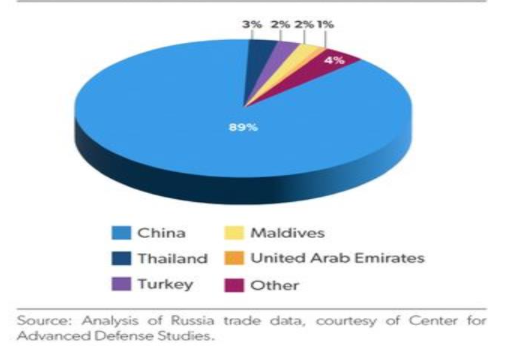
The sanctions imposed by the United States, which aimed to disrupt Russia’s military capabilities by limiting its access to advanced chips are only having limited results. While Russian entities can no longer get chips directly from American, European, Japanese, and Taiwanese companies, Russia continues to obtain advanced processors mainly through indirect channels, primarily involving Chinese distributors, who now control 89% of the market, according to a report from the American Enterprise Institute.
However, prices have risen. Russia pays nearly double for semiconductors compared to pre-war prices due to the need to establish new supply chains, with prices at US$1,411 per kilogram of chips in 2021, rising to US$2,730 per kilogram in 2023.
Chinese distributors have continued to supply Russian buyers with chips after Western companies and countries cut their ties with Russia. This process circumvents direct sales bans by routing the transactions through China, where enforcement of US sanctions largely disregarded, thus maintaining a steady flow of technology into Russia.
Additionally, Russia employs transshipment strategies involving other nations, such as Turkiye and the United Arab Emirates, which act as intermediate points for high-tech deliveries. Entities in these countries receive the initial shipments and then forward them to Russia, complicating the enforcement of export controls. Traders will always find ways to trade.
Before the sanctions, Russia sourced its semiconductors through three major avenues: direct imports from Western companies, which includes both direct imports by companies like AMD and Intel as well as sales by major distributors, such as Ingram Micro; Russian-designed chips manufactured abroad, primarily by TSMC; and a small domestic production mainly serving the defense sector. Post-sanctions, direct imports have been severely restricted except for covert routes through countries like China and possible secret manufacturing agreements with Chinese contract makers of chips, such as SMIC and Hua Hong.
Sources of Chips Exported To Russia
Meanwhile, AEI claims that Russian domestic chip manufacturing remains way too outdated and is limited to serving the defense industry. Manufacturers like Angstrem and Micron are heavily reliant on outdated wafer fab tools produced in America and Europe, which is why they have struggled to increase production in the face of sanctions that cut off their access to essential foreign equipment and materials. However, Russia has managed to obtain some wafer fab tools from countries known to be U.S. allies.
The AEI report advocates for a new, multilateral export control regime that includes strengthened enforcement mechanisms and recommends involving all U.S. allies to ensure a more cohesive and effective approach to semiconductor export controls. Meanwhile, China is not exactly a U.S. ally but remains a major trade partner. The difficulty is in the sheer dynamics and possibly an overstating of the Wests case: only a handful of nations – primarily the G7 – have actually imposed sanctions on Russia. The vast majority of countries have not, and of those, about half – or 80 nations actively seek trade with Russia. With mechanisms such as BRICS, and the introduction of tailored trade dynamics such as energy for chips, the hindering of Russian imports to an extent that it truly has the effects originally intended look increasingly difficult for the West to accomplish. While it is true that Russia has a deficit of domestic chip producers, this remains a country capable of space exploration at the cutting edge of science and it can only be a matter of time before Russia catches up, especially as President Putin has directed the Russian economy to become self-sustainable in key manufacturing areas – including microchips.
The first shipment of Russian pork has been delivered to the Chinese market according to Miratorg, the first company to begin deliveries after China lifted restrictions on Russian pork imports last September. China is the world’s largest importer of the meat, worth some US$4.5 billion annually. It is a prized market for global pork producers, and with the meat being highly popular in China, requires stringent checks to gain market access. Miratorg and other Russian pork producers will be hoping to gain an increasing Chinese market foothold.
The initial consignment of pork, weighing 27 tonnes was produced at the holding’s meat processing complex in the Belgorod region and sent from Selyatino station on March 7 by rail to Vladivostok. From there, it was loaded onto a ship to the port of Nansha in China. Russia’s FESCO organized the intermodal shipment process. The container arrived at the Chinese port after one month in transit, from where the importer unloaded the shipment into his warehouse on April 13.
“We greatly value the Chinese market and take a responsible attitude towards fulfilling all the veterinary requirements of the importing country. The goal is to increase supply volumes in the coming years and expand the range of meat products in accordance with the taste preferences of Chinese residents. The company independently ensures 100% quality control and complete traceability of products at all stages from “field to table,” Miratorg’s press service said.
As reported, China lifted restrictions on pork exports from Russia in September 2023. This decision was made based on the results of a risk assessment and analysis of the Russian state control system for African swine fever (ASF). A protocol on inspection, quarantine and veterinary and sanitary requirements for pork from Russia was signed on December 19, 2023 in Beijing, and a veterinary certificate was approved at the end of December. This gave Russia permission to export pork to the Chinese market.
Chinese specialists inspected a number of Russian companies interested in supplying pig products to the Chinese market in December 2023. As a result, three companies, Miratorg, Tambovsky Bacon (Rusagro Group of Companies ) and the Velikoluksky Meat Processing Plant were certified as suppliers for China. The Velikoluksky Meat Processing Plant sent its first shipment of pork products to China in early April.

 Русский