News

Russia and Iran: The Trade and Investment Dynamics Amid A Potential Regional War

Published on April 14, 2024

In many ways Russia and Iran find themselves in a similar geo-strategic position. Both are heavily sanctioned by the West and pursue a set of policies which aim at bolstering their respective influence on their regional, if not global stage. They also work to diminish the collective West’s ability to shape the world order and limit Eurasian powers’ projection of power. These wider incentives serve as a major driver behind the expanding cooperation between Russia and the Islamic Republic. Given the sanctions imposed on Russia and the latter’s wide-ranging attempts to re-orient trade from the EU to Asia, Iran stands to benefit significantly. This has already been evident throughout 2022 in terms of growing bilateral trade or mutual investments. The trends indicate the figures grew in 2023 and will continue to do so into 2024 and beyond. However, this could change given the current situation between Iran and Israel. In this article we outline where Russia-Iranian development stands today.

Trade

In 2022, the trade turnover between Russia and Iran increased by 20% and amounted to US$4.9 billion. Existing trends indicate that the bilateral trade will continue to grow. Russian officials even suggested that it would be possible for two countries to reach a staggering US$40 billion mark in bilateral trade. Since 2019, an interim Free Trade Agreement (FTA) has been in force between Iran and the Eurasian Economic Union (EAEU). It was extended until 2025 or until the entry into force of a new agreement on a permanent free trade regime. In January 2023, the EAEU and Iran signed an agreement to create a free trade deal which came into effect at the year end.

Russian exports to Iran mainly consist of metals, food and agricultural raw materials, equipment and vehicles, products of the chemical industry and others. Imports from Iran are made up of food and agricultural materials, pharmaceutical products, textiles and footwear, various machines and similar items. Following the visit of deputy prime minister of Russia, Alexander Novak, to Iran in May 2022, it was announced that the two countries agreed to switch to trade settlements in Rubles and Rials as much as possible, and also discussed the possibilities of operation of Shetab and Mir payment cards. A year later Russian officials claimed that around 80% of trade settlements between Russia and Iran are carried out in their respective national currencies. The remaining 20% is in US Dollars and Euros with even this expected to be supplanted by the Chinese Yuan in the future. In 2023, Russian and Iranian media reported that Russia and Iran were discussing the development of a common stablecoin – a cryptocurrency backed by gold – often regarded by Russian and Iranian officials as a potentially viable alternative to the US dollar’s dominance in global trade.
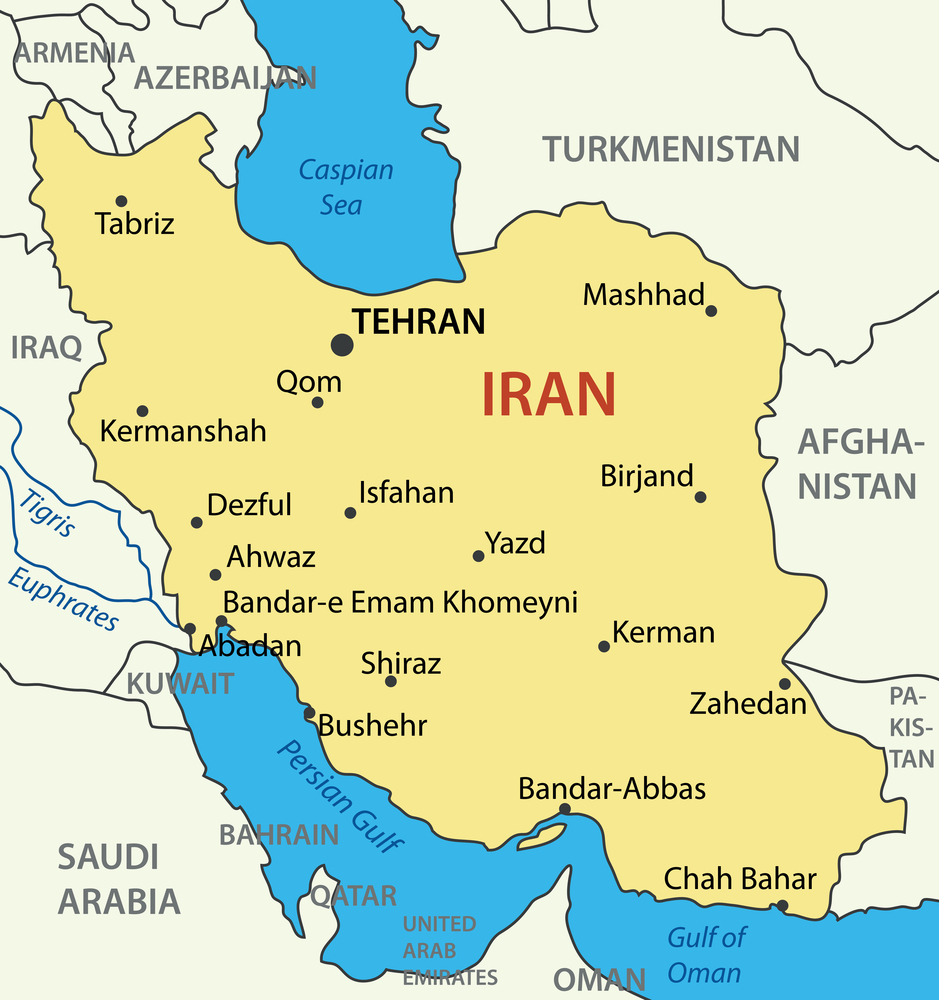
Iran Map

Investments

In 2022 Russia became the largest foreign investor in Iran, contributing US$2.76 billion (investment into two oil projects) to the country’s economy, which is nearly 2/3 of the US$4.2 billion that Iran attracted in total. FDI into Iran generally is also increasing – the US$4.2 billion is in itself significantly higher than what was recorded in 2021 when Iran received US$1.45 billion in foreign direct investment. Iran’s recent rapprochement with Saudi Arabia will also be an FDI spur into the country.

By early 2022 the largest joint investment project between Russia and Iran was the construction of the Bushehr nuclear power plant in Iran. In June 2021, the implementation of another project to create a thermal power plant (TPP) Sirik in the province of Hormozgan in southern Iran began with Russian investment in the form of a state loan. As Russia came under Western sanctions its push for closer investments ties with Iran became especially apparent by mid-2022. For instance, in July the National Iranian Oil Company and the Russian giant Gazprom signed a memorandum on energy cooperation which envisioned Russian investments of US$40 billion into Iran’s oil and gas industry. The Iranian side however has complained numerous times that only a small amount of the promised investment has arrived to date and that scheduled payments have been delayed. Large scale cooperation likewise takes place around the International North-South Transportation Corridor (INSTC), which aims at connecting Russia with the Global South and thus facilitating its re-orientation of trade from Europe to Asia.

In May 2023 Russia agreed to make another a significant investment into Iran by financing the still incomplete 162-km-long Rasht-Astara railway section in the north of Iran. This will shorten the travel time for products from Russia to Iran and vice versa. The project is scheduled to be completed by 2027 and is being financed by the Russian side. The total investment amounts to US$1.6 billion, with work underway. As this is a key connectivity issue for Russia’s pivot to Asia, funding has not as yet been an issue. The expansion of the much-touted corridor, however, has not yet come to full fruition. For instance, in 2022 about 14.5 million tons of cargo was transported along the western branch of the corridor (i.e via Azerbaijan), while 121 million tons were sent via the major Azov-Black Sea route. The difference is striking meaning that the INSTC, though it indeed has a significant potential, at the present is merely a route of regional significance rather than being a transcontinental corridor. 

Modest expectations are that by 2030 total throughput through the western branch will reach 30 million tons per year, while total cargo transportation through all three routes will hit 45 million tons. Iranian and Russian authorities are exploring another investment possibility through establishing a joint shipping company as part of efforts to strengthen strategic cooperation. This fits into a growing cooperation between the Russian regions bordering the Caspian Sea, and Iran’s northern territories.

In July 2023, the head of Russia’s Astrakhan region, Igor Babushkin, proposed creating shipping lines between the two countries’ ports. Iran and Russia have several active ports in the northern and southern parts of the Caspian Sea: including Makhachkala, Astrakhan, and Solyanka on the Russian coast, and Astara, Enzali, Nowshahr and Amirabad on the Iranian side. This area is especially interesting to Iran which has actively invested in Russia’s Caspian ports. For instance, the controlling stake in Astrakhan Port PJSC (53.1%) is owned by Iranian Nasim Bahr Kish CJSC. Russia owns 25%, while the rest is privately held.

Tehran and Moscow are also working the creation of an energy hub in a bid to establish a system which will provide stable gas prices, minimize competition between Russian and Iranian gas and prevent foreign interference. The two countries also agreed on development of a partnership for the production and maintenance of civil aircraft. It requires the development of the necessary infrastructure, with China and India also interested in participating. This is linked to the ongoing bilateral work in signing a services and investment agreement, given that the countries aim at intensifying cooperation across as diverse areas as energy, transport and logistics, finance, digital economy and technology, engineering, and tourism. Russia and Iran may be largely shunned in the West, but elsewhere they have proved adept at working around sanctions issues and creating new opportunities.

Tehran’s BRICS Membership

Tehran’s full-scale involvement in BRICS’ activities was the focus of discussions between Presidents Vladimir Putin of Russia and Ebrahim Raisi of Iran, in late September 2023. The sides discussed steps to ensure Iran’s smooth integration into the association’s full-format activities taking into account Russia’s presidency in 2024.

In the framework of his foreign policy doctrine, Iranian President Ebrahim Raisi has paid close attention to promoting economic diplomacy, the importance of multilateralism, Iran’s active presence in regional economic organizations, and new South-South cooperation. With Iran becoming a permanent member of the Shanghai Cooperation Organization, a permanent presence in BRICS became a logical next step, with Tehran participating in BRICS meetings and summits. From Tehran’s point of view, participation in BRICS with about 26% of the area, about 42% of the world’s population, strengthening economic and financial cooperation, an increasing role in the future of the world’s economy and geopolitics, would be a ‘new season’, that will increase political and economic power, and will be a “strategic victory” for Iran’s foreign policy.

Due to the efforts of the New Development Bank in granting US$8 -10 billion in loans (30% of this in Iranian Rial) and focusing on the implementation of projects and supporting infrastructure, Iran has also requested to become a member of the NDB. By becoming a BRICS member and the upcoming trip of the NDB President to Tehran, the process of Iran’s joining the New Development Bank will be easier. Iran’s participation in the bank and obtaining voting power will lead to financial and technical privileges of the bank and the granting of soft loans to support development and investment in Iran. Despite the small size of the bank compared to Western institutions, the bank’s foreign currency reserves and liquidity facilities are in favor of Iran. This can make difficult financial conditions easier for Tehran.

Tehran can still use the BRICS international position for geopolitical geoeconomic maneuvers. Also, Iran can be a stable partner for the group due to its unique geographical location and transit networks. Iran is the key part of the International North South Transportation Corridor (INSTC) connecting ECO, ASEAN, EAEU, India, Central Asia, the Middle East, GCC, and Europe. With the help of BRICS and with the operationalization of INSTC, Iran can earn about US$20 billion annually from transit via the INSTC route. 
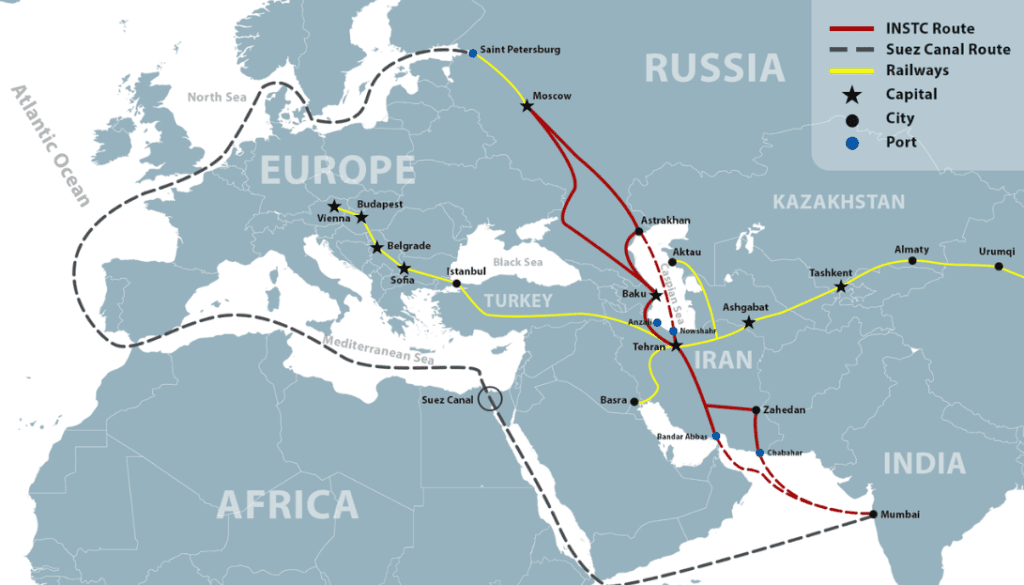
 INSTC route

In turn, that means Tehran can place itself at the crossroads of trade with BRICS and play a bigger role through China’s Belt and Road Initiative. That goes hand in hand with the development of Iranian free trade zones and the creation of new zones as one of the important economic approaches of the Iranian government.

Tehran hopes that with BRICS, it will be able to strengthen existing ports and increase exports from Iran’s free trade and special economic zones. Iran’s entry into BRICS can also be an important factor in helping Tehran in free trade negotiations with the Eurasian Economic Union (EAEU), India, cooperation with economic institutions, and Latin American and African countries. This approach is a step to develop trade with emerging economies, rapid economic growth, opening new markets, and huge foreign investment (FDI) deals in Tehran.

Although raising the issue of removing the dollar from global financial and banking exchanges is not practical in the short term, by joining BRICS, Iran expects to reduce its dependence on the dollar and diversify its portfolio of foreign currencies. The de-dollarization of the economy completely aligns with Iran’s economic policies in foreign trade. Forming alternative payment systems and non-dollar financial systems, moving away from reliance on the US dollar, increasing trade with domestic currencies, and creating a common currency can benefit Iran. Also, in case of overcoming the challenges and the members’ agreement and creating a new currency (similar to the Euro) and structures similar to SWIFT in BRICS, Iran will be one of the biggest winners.

In this approach, membership in BRICS can bypass US sanctions to some extent and support efforts to use national currencies and strengthen BRICS mechanisms. On the other hand, with the BRICS card, Iran can develop alternative routes, promote economic growth, diversify the economy, minimize costs, open new markets for Iran’s exports, develop e-commerce, market integration, and savings. Expanding Iran’s strategic relations with the main BRICS members and benefiting from the assistance of the member countries will open up geo-economic opportunities and contribute to the idea of a multipolar world in line with Iran’s foreign policy. In the past few years, Iran has been caught in the economic challenges of devaluing the country’s currency, annual inflation, hosting more than 8 million immigrants.

From the point of view of many in Tehran, with BRICS, it will be easier to attract large investments and economic reforms, increase the volume of production, stimulate Iran’s exports, increase trade exchanges, achieve the development goals and vision of Iran, and increase its overall GDP. Membership in BRICS can improve and increase tourists from the main and new BRICS countries. Iran imports part of its basic food needs, and providing food security and strategic goods, easy supply of raw materials and grains, and reducing supply chain costs will be easier through BRICS. In addition, Iran’s official joining of the BRICS group increases Iran’s position of economic power in Asia, the Middle East, and the world, the ability to influence important decisions and activities at the global level and to play a role in global trade and the international economy. Also, BRICS can use Iran’s internal economic capacities, such as cheap labor, rich natural resources of oil and gas, and the consumer market of 88 million people and its geopolitical position to strengthen itself.

Iran is a full member of the BRICS + group, will shortly be admitted as a full member of the Shanghai Cooperation Organisation and has a Free Trade Agreement with the Eurasian Economic Union. It has also signed a 20 year cooperation agreement with Russia, and a 25 year similar agreement with China.

This article was taken from the 2024 Russia’s Pivot to Asia guide, which details Russia’s trade and development with over 80 countries. It is a complimentary PDF download and can be accessed in English here and Russian here.

Mali To Use Russia’s MIR Payment System

Published on April 14, 2024

In further signs that the Europe-Africa dynamics are changing, Mali, which has recently cancelled colonial-era agreements with France, has said that the country is interested in using Russia’s MIR payments system. Badra Alou Coulibaly, the West African nation’s general controller of public services, said that the move will strengthen the existing “significant level” of cooperation between Bamako (the Malian capital) and Moscow.

The MIR system is an alternative to SWIFT, which has been used against Iran and Russia in cutting them off from the global payments network. Bamako feels that France has the potential to issue similar sanctions against Mali. 

Elsewhere, the Mir card is now in use in Armenia, Belarus, Vietnam, Kazakhstan, Tajikistan, and South Korea. On Friday (April 12) Coulibaly said Mali is “certainly looking forward” to accessing the Russian payment system, which other African countries, including Egypt, Nigeria, and Ethiopia, have expressed an interest in adopting.

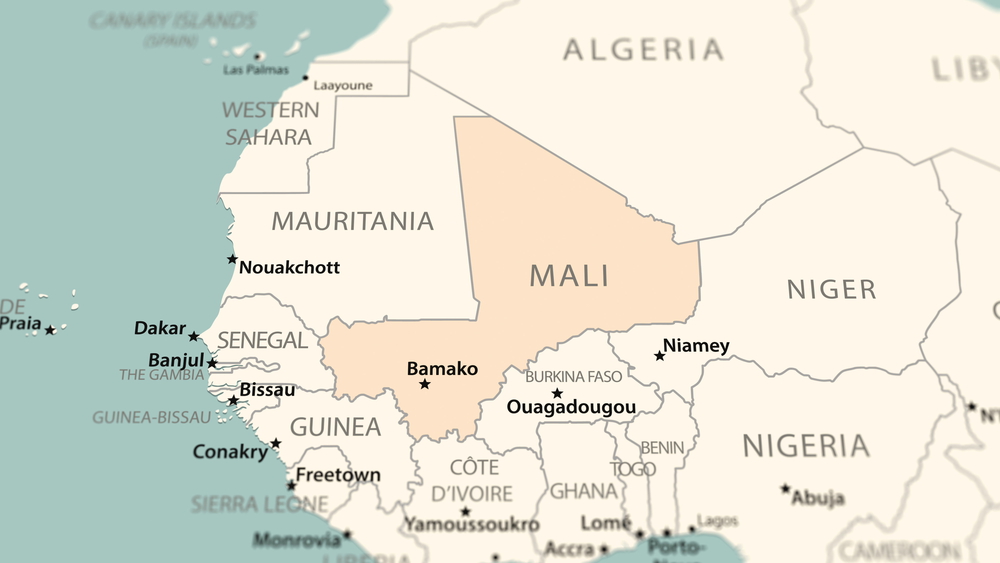
Map of Mali

Russia’s developing relations with Mali, along with neighbouring Niger and Burkina Faso, have sparked criticism in the EU since French troops were expelled from the military-ruled Sahel nations. EU foreign policy chief Josep Borrell claimed in January that Moscow’s influence had particularly increased in Mali, leaving the bloc unsure about the prospects for maintaining a presence in the Sahel region, which is rich in uranium and other minerals.

In November 2022, Russia pledged to send shipments worth about US$100 million to Mali, including 60,000 tons of petroleum products, 30,000 tons of fertilizer, and 25,000 tons of wheat. That was subsequently delivered in early 2024.

Mali is looking to increase its global partnerships. Mali is one of the largest gold producers in Africa. Mali has already signed an agreement with Russia to build a 200-ton gold refinery in Bamako. Rosatom has also signed a contract with Mali for mineral exploration and nuclear energy production. A contract to build a 200-300 MW solar power plant by mid-2025 has also been signed with Russia. Russian arms exports to Mali have also increased.

Further Reading

Eurasian Economic Union Industrial Production Up 6.6%

Published on April 14, 2024

Despite Western sanctions on Russia and the threat of sanctions being levied upon several Central Asian countries, industrial production in the Eurasian Economic Union (EAEU) increased by 6.6% in January-February of this year, the press service of the Eurasian Economic Commission (EEC) reported on Tuesday. The ECC is the management board of the EAEU.

Industrial production growth was seen in all member states: Armenia by 28.9%, Belarus by 7.1%, Kazakhstan by 4.6%, Kyrgyzstan by 7.8%, and Russia by 6.6%.

The EAEU fits the geographic space between Eastern Europe and Western China. Goods transit and supply chain growth has been significant over the past two years as Russia turned east, away from Europe for its imports and exports.    

“The volume of production in the mining industry and quarrying in the EAEU increased by 1.5%, manufacturing industry by 10.4%, electricity supply, gas, steam and air conditioning by 5.7%, water supply, sewerage system, control collection and distribution of waste by 4.6%,” the report says.

In contrast, manufacturing PMI In the Euro Area decreased to 46.10 points in March from 46.50 points in February of 2024. This indicates, that at present, the Central Asian and Russian economies are performing better than the European Union. Russia’s PMI for March was 55.7.

MTS Bank To Issue An IPO On Moscow Stock Exchange

Published on April 14, 2024

Russia’s MTS Bank, the fintech arm of Russia’s leading mobile phone operator MTS, has announced plans to carry out an initial public offering of its common shares on the Moscow Stock Exchange. Investors will be offered newly issued shares, with the proceeds from the IPO used to implement the bank’s growth strategy and further scale its high-margin retail business, MTS Bank said in a press release.

“The plan to become a public company confirms that MTS Bank has entered a new stage of development. This will give additional momentum to the bank’s profitable growth and thus make it possible to create additional value for shareholders,” MTS Bank CEO Ilya Filatov said in its IPO statement. The bank’s majority shareholder, mobile provider Mobile TeleSystems (MTS) does not plan to sell any of its shares in the IPO and will retain a majority stake in the bank after the offering.

MTS Bank was Russia’s 24th largest lender by assets at the end of 2023. The bank’s net profit rose 32% to ₽3.7 billion (US$39.6 million) in the first quarter of 2024 while its retail loan portfolio totalled ₽359 billion rubles (US$3.85 billion).

The bank, its majority shareholder and parties affiliated with them are expected to commit to a lock-up period of 180 days from the start of trading on the Moscow Exchange. The IPO will have a stabilization mechanism for up to 30 days after the start of trading.

“Our own expertise in retail banking and integration with the ecosystem of Russia’s leading telecom provider create significant potential for the further profitable growth of the business and increasing our share of Russia’s retail lending market. The bank aims in the medium term to double its loan portfolio and client base (to 8 million active clients), anticipating a gradual increase in return on equity to 30%,” MTS Bank said.

The IPO will be open to qualified and unqualified investors retail and institutional investors, the bank said.

The Moscow Stock Exchange ruble-based MOEX Russia Index edged up to 3,456 on Friday (Apil 12)  as a rally in industrial and precious metals continued to underpin results. Weekly, the index gained around 1.8%, driven by a surge in global commodities purchased from Russian exporters. The Index has gained 450 points since January 1. MOEX is expecting to see another 30 IPO’s over the next two months.

Russian Car-Sharing Service Opens Sourcing Office In Shanghai

Published on April 13, 2024

The auto fleet servicing subsidiary of Russian carsharing service Delimobil , Smart Mobility Management LLC (SMM) opened an office in China this year for direct purchases of spare parts, the company reported in notes to its financial statements for 2023.

The office was opened in Shanghai to “look for new counterparties, partners, investors and establish relations with them on behalf of the company,” SMM said.

Delimobil said that SMM is focusing on direct purchases of spare parts to optimize fleet servicing costs. “The share of our own spare part imports in 2023 amounted to at least 20% and this year we plan to increase it considerably,” Delimobil said.

Delimobil’s fleet grew by 34% to 26,600 automobiles in 2023. The company added Chinese brands such as Changan, Cherry, Geely and Haval to its fleet last year, and plans to expand to more than 30,000 vehicles in 2024.

It is another example of where Western brands who exited Russia have been left behind in an expanding market.

This Weeks Russia-China Foreign Ministers Meetings: Results & Analysis

Published on April 12, 2024

Russian Foreign Minister Sergei Lavrov completed a two-day visit to Beijing on Tuesday, where he met both Chinese Foreign Minister Wang Yi and President Xi Jinping. In many ways, his trip was preparation for the visit of Russian President Vladimir Putin to China, whose plans were confirmed by the Kremlin on the same day.

During the meetings, both sides paid a lot of attention to the Ukraine issue and agreed that any measures to resolve the conflict without the participation of Russia will not succeed. They also talked about jointly opposing the West’s policy of placing unilateral sanctions against both countries – which manifest themselves mainly as punitive tariffs on Chinese products, although now, sanctions are being introduced on Chinese companies such as ByteDance and TikTok. We include details from Beijing. We categorise them for ease. 

Ukraine Peace Plan

According to an announcement from the Russian Foreign Ministry, during his visit to Beijing, Lavrov held a thorough exchange of views on a number of hot topics, including the Ukrainian conflict. Based on Lavrov’s statements at the final press conference on April 9, such an exchange of views once again demonstrated the commonality of approaches between Moscow and Beijing. “My Chinese colleagues and I confirmed the conclusion that any international events are futile, which not only do not take into account Russia’s position, but completely ignore it, which promote an absolutely empty, ultimatum, so-called Zelensky peace formula and thereby completely divorced from any realities,” the Russian minister said.

However, sentiment towards the Chinese peace plan was far more positive. Lavrov expressed gratitude to the partners for their objective, balanced position, for their readiness to play a positive role in the matter of political and diplomatic settlement.

Multipolar World Order 

A significant part of the negotiations in Beijing was also devoted, as Lavrov noted, to the joint struggle for the establishment of a fair multipolar world order, where there is no place for dictatorship, hegemony, neo-colonial and colonial practices, which are now being widely used by the United States and the rest of the collective West. From further statements it became clear that the parties still have to work and work to achieve such a world order. This would manifest itself via the BRICS and a potential merge of that with the Shanghai Cooperation Organisation. We previously discussed that issue here. 

Sanctions

Chinese Foreign Minister Wang Yi spoke in great detail about the economic problems that are created as a result of the illegal policy of unilateral sanctions, said Lavrov, commenting on negotiations with his Chinese counterpart, but added optimistic notes, unexpectedly declaring that Minister Wang Yi on April 8, during closed negotiations invented the formula “double counteraction against double deterrence.” Sergei Lavrov did not disclose the specific steps that Moscow and Beijing intend to take to jointly resist the sanctions pressure of the United States and its allies, however a strategy is being formed. Again, this probably involves a speeding up of BRICS / SCO coordination and new trade agreements.  It is worth noting that the BRICS alone already has a higher GDP than the G7, with the latter being mostly responsible for many of the sanctions.

While Lavrov devoted a significant part of his discussions to the economic pressure Russia has from the West, Wang spoke about unilateral sanctions only once. “Unilateral sanctions violate international law, international order and are contrary to the development of the world,” he said, emphasising that China condemns such actions. The Chinese side though will have listened to Lavrov’s explanations of how sanctions against Russia are imposed and the negative effects. That will be filtered throughout China’s Foreign Ministry with answers expected as to mitigating against these. There is a pragmatic side to this: China also suspects that it may become increasingly sanctioned itself by the West and needs to prepare.   

China’s businesses are already under constant pressure from the United States and the European Union, strategically important trading partners who have recently announced a course to reduce the risks of excessive dependence on China. Most of these restrictions are related to the United States restraining China’s technological development and weakening competition. For example, the US order that ByteDance (owners of TikTok) divest itself of Chinese ownership or face having TikTok removed from US usage is an example.

Also, over the past two years, Beijing has been constantly blamed for Russia’s alleged support in the Ukrainian conflict, although China has insisted on its neutrality in this matter.

The day prior to Lavrov’s arrival in Beijing, US Treasury Secretary Janet Yellen stated the risks for Beijing if its close cooperation with Moscow continues, saying that “We have made it clear to China that we see Russia being supported through the goods that China and Chinese firms supply to Russia, and that Chinese companies could face significant consequences if they continue to provide material support to Russia.”

Almost simultaneously, US Secretary of State Antony Blinken warned US allies that China is providing Russia with satellite imagery of military targets, as well as microelectronics and machines for the production of tanks.

The Chinese Foreign Ministry retorted to this remark by saying “China is neither the culprit of the Ukrainian crisis nor a party to it. We have never sought and will not seek gain from the crisis. China regulates the export of dual-use goods in accordance with laws and regulations.” The Chinese side also called for not discrediting the normal relations between China and Russia and not to harm the legitimate rights and interests of China and Chinese companies.

Impact on China Trade

Along with statements about the illegality of secondary US sanctions, Chinese companies and its financial sector are trying to protect themselves from possible negative consequences. In March, several of China’s largest banks stopped accepting payments from Russia in RMB Yuan due to the threat of secondary US sanctions. One, the Zhejiang Chouzhou Commercial Bank, the main bank with which Russian importers worked, suspended all settlements with Russia.

However, Beijing remains interested in returning to a full-fledged economic and investment partnership with the United States. For example, Xi Jinping’s speech before the meeting of the Chinese President with representatives of American business in Beijing at the end of March, which included calls to continue investing in China, confirms these intentions. China is in effect deploying a difficult political balancing act in which it takes into account its relations with the United States. However, this is nothing new. A multipolar world though is in more China’s interests than maintaining the current US led global order, and Beijing will be looking for fault lines within the US itself to accomplish this rather than provoke Washington more aggressively.   

Lavrov noted that during the Russia-China meetings, both ministers paid special attention to the schedule of contacts at the highest level, since, according to him, the diplomacy of leaders, without exaggeration, is the central element of the Russian-Chinese comprehensive partnership and strategic interaction.

Putin-Xi Meeting

Russian Presidential press secretary Dmitry Peskov noted that Sergei Lavrov’s trip to Beijing can be considered as preparation for upcoming contacts at the highest level. Thus, he confirmed Vladimir Putin’s plans to visit China. Peskov did not specify the timing of the visit, calling it premature. In March, Reuters reported that the Russian leader would go to China in May, however it seems meetings with Xi will now take place at the next Shanghai Cooperation Organisation annual heads of state meeting in Kazakhstan in June, and at the BRICS annual meeting in Kazan in October.                    

Further Reading

Russian and Chinese Foreign Ministers Meet In Beijing

Russia & China To Develop Mutual “Supply Chain Stability”

Russia Warming To China’s Belt & Road Initiative Projects

Published on April 12, 2024

When Chinese President Xi Jinping announced the Belt and Road Initiative over a decade ago, Russia’s Vladimir Putin was not enthusiastic about the massive infrastructure drive moving into his country’s “backyard”. Moscow saw landlocked former Soviet countries in Central Asia, such as Kazakhstan and Kyrgyzstan, as within its orbit and the belt and road as a challenge to its dominance.

But a speech by a senior Russian official last week signalled just how much has changed in the decade since. Addressing the Boao Forum for Asia in China’s Hainan island, Russian deputy prime minister Alexey Overchuk said the Kremlin and Beijing had discussed the possibility of “improving connectivity” between the initiative and the Eurasian Economic Union (EAEU), the free trade area that includes Armenia, Belarus, Kazakhstan, Krygyzstan and Russia and fills the geographic space between Western China and Eastern Europe.

Analysts said if the two regional powers could come together and overcome the earlier mutual mistrust, the region could become more connected in trade and transport than ever before. Nevertheless, hurdles remain, they say.

Russia set up the EAEU with the former Soviet states of Armenia, Belarus, Kazakhstan and Kyrgyzstan in 2015 to foster economic integration and to advance its own geopolitical interests in Central Asia. It aimed to mirror the common market and customs union of the European Union, and was built on the foundations of previous blocs going back to the 1990s.

Compliance within the grouping was weak due to the limited power of the Eurasian Economic Commission, the union’s operational arm, and further cracks have emerged since the Russian invasion of Ukraine two years ago.

Western countries have imposed a range of sanctions on Moscow by curbing energy trade with it and banning Russian banks from the global SWIFT payment system.  The union has “lost a bit of unity since the outbreak of the Russian-Ukraine conflict”, said Wang Yiwei, director of the Institute of International Affairs at Renmin University of China. He added that some of the EAEU members were “worried about becoming the next Ukraine”.

To repair some of that damage, Moscow has shown increasing willingness to connect its own regional integration project with the Chinese initiative, which all EAEU members have joined.

“Russia is highlighting the Belt and Road Initiative-EAEU coordination again to leverage China’s influence to regain trust from neighbouring countries, especially some pushback from Kazakhstan,” Wang said.

Meanwhile, Wang said, China hoped to “further Eurasian integration” to turn bilateral cooperation into multilateral cooperation, adding momentum to its belt and road plans. A case in point was the China-Kyrgyzstan-Uzbekistan Railway, he said.

The 523km (325-mile) line was proposed in the 1990s to give China an alternative route to Europe, without transiting in Russia, and provide potential access for landlocked Uzbekistan and Kyrgyzstan to connect with Southeast and Western Asia.

The plans were folded into the Belt & Road Initiative, which started as a massive infrastructure project, expanded into a geopolitical strategy extending to trade, technological, and cultural cooperation. But construction on the line only started last year. Wang said that movement was the result of Russian support.

While the railway was not a direct partnership with the EAEU, the work only progressed due to the approval of the Kremlin, he said. Cooperation agreements between the EAEU and Beijing were in place as early as 2015 to pursue overland road and rail routes from China to Europe through Central Asia.

But concerns in Moscow and Beijing meant there was little progress, said Yun Sun, director of the China programme at the Washington-based Stimson Centre. “Russia had suspicions about Chinese presence in its backyard, and China had been worried about the commercial viability,” Sun said.

“Now with the war in Ukraine and the quagmire Russia is in, arguably Russia has no better option, the desire from Russia to promote economic cooperation is obvious.”

This was apparent in Beijing in May and December when Russian Prime Minister Mikhail Mishustin and Premier Li Qiang pledged to promote synergy between the belt and road and the EEU. Mishustin also met Xi in December.

Wang said Xi and Putin were also expected to discuss plans to coordinate the Belt & Road Initiative and the EAEU in their next meeting, which will reportedly take place in May.

China and Russia have also boosted strategic ties since the war in Ukraine began, increasing the Kremlin’s reliance on the Chinese market while China enjoyed cheaper oil from Russia.

With challenges like the Nord Stream 1, the gas pipeline connecting Russia and western Europe that has been disconnected since 2022, and limited prospects in the European energy market, “Russia aims to expand its presence in Asian and Global South markets through the BRI”, said Zoon Ahmed Khan, a research fellow at the Beijing-based Centre for China and Globalisation.

Khan said cooperation between the BRI and the EAEU could “include the development of transport corridors linking China and Russia with other Eurasian countries, the construction of energy pipelines, and efforts to enhance digital infrastructure and trade facilitation mechanisms”.

She said this might also offer the possibility for China to revive the Polar Silk Road, its plan for Arctic transatlantic maritime routes. The Polar Silk Road overlaps Russia’s initiative on the Northern Sea Route and would offer China a quicker alternative trade route to the Suez Canal.

But when it comes to infrastructure projects, challenges remain for China’s engagement with the well-established union, analysts say. Wang said these hurdles included whether the China-Kyrgyzstan-Uzbekistan Railway complied with Chinese or Russian track gauge standards.

At Russia’ Pivot To Asia we believe that while Moscow has some concerns about Chinese influence in Central Asia, improved connectivity infrastructure is a good thing and will help with Russia-China bilateral trade routes and their offshoots across the region – some of which link up with old-established Soviet era routes and enhances their capability. However, the focus appears to be on Far East Russian development as concerns Moscow directly, with the onus on putting into expanding Russia-China border crossings and developing Vladivostok Port capacity to service South Asia as well as the Eastern China seaboard. That includes Port and Logistics developments across the Northern Sea Route and the Russian Arctic, and we can expect to see more China-Russia coordination in developing the Arctic Belt & Road over the coming decade.

Further Reading

Russia & China To Develop Mutual “Supply Chain Stability”

Russia Approves Northern Sea Route Development Plan To 2035

Eastern Maritime Corridor Emerges As Russia-India-South Asia Red Sea Alternative

FRIDAY BIZARRE

Published on April 12, 2024

Our Look Back At Some Of The Weeks Most Bizarre Or Cool Russo Moments

Earthworms Globally Produce As Much Grain As Russia

Earthworms’ contribution to the world’s grain harvest matches that of Russia, according to a study by Nature Communications highlighting the creatures enormous role in food production. The worms help produce 140 million tonnes of food a year, which would make earthworms the fourth largest global producer if they were a country. Russia produced 150m tonnes in 2022 and expects to produce 120m tonnes this year. It’s not the most flattering comparison we’ve ever heard but then again…maybe worms should run for the Presidency of the United States with that sort of agricultural base.  

The Zelensky’s Purchase King Charles’ Highgrove Residence

Britain’s Daily Mail is reporting that Russian ‘sleuths’ planted a story that King Charles had sold his long time Highgrove home in Gloucestershire to Ukrainian President Zelensky. Now that is actually quite funny, if patently untrue. Highgrove, despite his Dad living there, is actually owned by Prince William. Talking of the Zelensky’s, an unsubstantiated rumour we overheard – but from a credible source – said that Mrs. Zelensky was seen buying a £1 million necklace in London recently. So maybe they’re planning a life of English Aristocracy? The UK has committed £12 billion to Ukraine, with up to 10% of funds unofficially being allowed to vanish as ‘comprador expenses’. If correct, that buys a lot of bling – and houses. View that as hearsay? Maybe, but at the same time show us the audited reports as to where the money went.

We Told You So: German Bankruptcies Are At A Record High

The Leibniz Institute for Economic Research Halle (IWH) has reported that insolvencies by German partnerships and corporations rose to another record high in March. According to the IWH, there were 1,297 insolvencies of partnerships and corporations in Germany last month. That’s 9% more than the previous record, set in February, and 35% more than in March 2023. IWH points out that insolvencies often lead to permanent losses of income and wages for the affected employees. An estimated 25,000 German companies will go bust this year and another 20,000 in 2025. 2022 had held the previous record high. It is interesting to note IWH data below and the dates this trend began – in 2022, when sanctions were first imposed.

We discussed whether the EU had adequately planned for the impact of sanctions this week in this article here.

The EU In A Pickle: To Recognise Putin’s Election Victory Or Not?

The European Union is in a quandary over whether to accept or reject the Russian Presidential Election results, which saw 80 million Russians cast their votes. Putin won with 88% of the votes cast. EU hardliners want to declare the elections as ‘illegal’ which would have the effect of placing Putin as persona non grata and as an ‘illegitimate’ leader to negotiate with in the event of any proposed settlement to cease the Ukraine conflict. Accepting Putin as the legitimate leader keeps that door open. Ivan Preobrazhensky, of the Aspen Institute Central Europe summarised the position as being that if the EU hawks win, it will prevent EU officials from communicating with Russia’s foreign minister, Russian representatives in international organizations, and with Russian ambassadors. The question would then be “How can we negotiate with Russia if we label it run by an illegal government?” A decision is likely to be taken during an EU parliamentary session at the end of this month in Strasbourg. Democracy huh?

Nationality Discrimination: Ukraine Wants Russian Nationals Banned From All EU Flights

Ukrainian Prime Minister Denis Shmigal is to push the EU to ban Russian and Belarussian passengers from all flights into the EU, explaining that Kiev is hoping to disrupt and cause discomfort to Russian tourists, families with members in the EU, and businessmen. Quite apart from imposing Ukrainian will on the EU, the precedent such an action would take is appalling: sanctions based upon nationality, although Europe’s migrants and the Palestine issue seem to be based on this. It’s a racist position and purely based on creating humanitarian divisions.

Ukrainian Olympics Committee: Do Not Shake Hands With Or Congratulate Russian Athletes

Ukraine’s National Olympics Committee (NOC) is releasing conduct guidelines for the country’s athletes, explicitly warning them against making any contact with Russians during the upcoming Paris Games. The governing sporting body has prepared a new protocol of conduct for the country’s athletes, NOC boss Vadim Gutzeit revealed on Monday, which include “Do not congratulate each other, of course, do not stand up for any mass photos, do not give joint interviews, of course, do not shake hands.”  Given that even to attend the Olympics, Russian athletes must not have shown any support for Russia against Ukraine, this seems pretty harsh. The Paris 2024 summer Olympics have already been diminished, now they are becoming unsporting. It is very sad that Russian nationals are now being treated as the Jews and Negros were by the Nazis at the 1936 Berlin event.

Son Of A Rich!

On a lighter note, “Son of a Rich 2” is the top grossing film in Russia so far this year, coming from the success of the first. The spoilt son of an Oligarch is forced to reevaluate his morals and standards. For a taste of what to expect, the (English subtitled) trailer of the pretty hilarious first film is here. “She’s wearing undies from the future!”

The Number One Song In Russia

Right now, it’s the RKBeavers and their song “After The Rain”. The cool, if moody video is here.

Dinamo Moscow v Spartak Mocow

It was a top of the table Moscow derby in the Russian Premier League last weekend. Wanna watch the highlights? Of course you do, here

Food For Thought

What we’ve been reading:

Keep Safe. And have a great weekend!
Russia’s Pivot To Asia

Macron Gets Aggressive As France Seeks Revenge For Niger & Mali Exits

Published on April 12, 2024

Update: April 13, 2024: French Foreign Legion arrives in Ukraine

The first group of French Foreign Legion mercenaries have arrived at the Ukrainian military HQ in Slavyansk in Donetsk, according to the Telegram channel Military Chronicle.

An initial group of 100 soldiers have arrived in the city, which is controlled by Kiev. It includes artillery reconnaissance specialists and engineers whose specialization is fortification and construction of field fortifications. These are part of the 3rd infantry regiment of the French Foreign Legion and have joined forces with the 54th separate mechanized brigade of the Ukrainian Armed Forces.

At present the Legionnaires move around the city accompanied by Ukrainian soldiers. It is assumed that the French will assist the Ukrainian Armed Forces in the defense of Slavyansk.

The move has dangerous significance because although the French Foreign Legion are deployed from Paris, its members are made up of foreign mercenaries. This allows France to claim that no French soldiers or military are involved. Nonetheless, Moscow will view this as being extremely close to being, if not an actual deployment of NATO troops in Ukraine.   

Meanwhile, in further suggestions that Macron has taken a personal stance against Russian President Putin,  Russian military trainers have arrived to reinforce Niger’s air defenses as the country pulls away from close cooperation with France, turning instead to Moscow for help as it fights Islamist insurgents and regain state control over its Uranium industry from French industrialists, who have allegedly been paying way below market price for Niger’s raw Uranium.  

NATO – and the European Union’s concerns will be whether Macron is overstepping the mark as concerns French involvement in Ukraine against Russia as retaliation for the French being forced out of its African colonies. 

The French President Emmanuel Macron has stepped up dangerous rhetoric with Russia in an apparent push to punish Russia for helping Niger expel French soldiers and take back control of its Uranium resources. Niger has been Frances’s main source of Uranium over the decades, however a military coup has seen an-anti-colonist government take control of the country. The Wagner Group were involved in supporting the Niger military in expelling the French.  Other African countries, including Mali, have also cancelled colonial-era agreements with France claiming they were exploitative. Mali borders Niger.

Map of Niger

That has escalated matters between Paris and Moscow with a furious Macron stating that French soldiers will be deployed to Odessa to counter Russian advances. Moscow has responded by fining several French retail investors in Russia for tax evasion and has passed control of the Agroterra assets to a Russian Federal agency. While Agroterra involves mainly US business interests rather than French – the message is unmistakable – as the decree that allowed the transfer of assets to take place is aimed specifically at companies from ‘unfriendly countries’. In Russia itself, French investors are now beginning to feel the heat.

The Association of Winegrowers and Winemakers of Russia (AVVR) has also appealed to the Russian authorities with a proposal to introduce import duties of 200% on wine from NATO countries as a measure “to protect the Russian market.” That impacts other nations but again, especially France.

The situation could become serious. If Macron holds fast on deploying French troops directly to Odessa, it will mean that NATO becomes directly involved with the conflict, an issue Moscow has expressly warned against. It also pits Paris against Brussels strategy in the EU.

A further military complication for France is that just to the West of Odessa lies Transnistria, a breakaway region of Moldova long supported by the Russian military. Any conflict there would open up a second front in Europe and widen the existing conflict beyond Ukraine.

France, having its nose rubbed in the mud in Africa, is in danger of becoming a loose cannon in Europe. Macron’s tantrums aside, be aware that Russia-France tensions are becoming highly volatile in Ukraine.   

Further Reading

Russia & The African Continent

There is a comprehensive analysis of Russia’s involvement in Africa in Chapter Ten, titled “Russia & the African Continent” in our downloadable 2024 Russia’s Pivot To Asia Guide. A complimentary download is available here.  

Vietnam Planning To Join BRICS

Published on April 11, 2024

October 25 Update: Vietnam has now been granted ‘BRICS Partner’ status. See more here.

Vietnam is actively working on a bid to join the BRICS group, according to Hanoi’s embassy in Russia. The country has yet to make a decision on a formal membership bid, although it is establishing a framework for BRICS participation and a potential request to join the group. Hanoi has not yet said if Vietnam will send a delegation to the BRICS summit scheduled for the Russian city of Kazan in October.

BRICS members Brazil, Russia, India, China, and South Africa were joined by four more countries at the start of this year, when Ethiopia, Iran, Egypt, and the United Arab Emirates formed part of a major expansion. Saudi Arabia has also been approved as a member but is reportedly considering final ratification of its accession.

Numerous other nations have expressed interest in becoming BRICS members, and some have already formally submitted applications, including Venezuela, Thailand, Senegal, Cuba, Kazakhstan, Belarus, Bahrain, and Pakistan.

The bloc’s political and economic influence has increased significantly since sanctions were imposed on Moscow by the US and its allies following the start of the Ukraine conflict in 2022. BRICS members have not joined the Western campaign and have continued and boosted trade with Russia.

Vietnam’s economy has been a development success story, according to the World Bank. Economic reforms undertaken over the past four decades have helped propel the country from being one of the world’s poorest nations to a middle-income economy in one generation. The Vietnamese economy grew by 5.05% in 2023, with the World Bank forecasting steady GDP growth in the coming years.

Vietnam’s manufacturing sector includes industries such as textiles and garments, electronics, machinery, footwear, and food processing, and has attracted significant foreign investment. Hanoi has adopted a neutral stance towards Russia’s conflict with Ukraine. Vietnam abstained on four of the UN General Assembly resolutions condemning Moscow and voted against a motion to remove Russia from the UN Human Rights Council.

Vietnam’s bilateral trade with Russia in 2023 reached about US$3 billion, with Russia exporting mainly cereals, crustaceans and pork. Russia’s exports to Vietnam were up 32% last year. 

Sergey Levin, Russia’s Deputy Minister of Agriculture noted that the potential for exporting agricultural products from Russia to Vietnam by 2030 could increase fourfold. This will be done by increasing the supply of grain, pork, and fish products. In addition, Russia is interested in increasing the volume of investments in the agricultural sector.

Vietnam has a Free Trade Agreement with Russia via the Eurasian Economic Union.

Further Reading

Russia & Vietnam: A comprehensive trade analysis – Chapter Seven in our 2024 Russia’s Pivot To Asia Guide

India’s UDM Nestors Investing in Dairy Production In Izhevsk SEZ

Published on April 11, 2024

UDM Nestors LLC plans to invest ₽946 million (US$10.1 million) in the construction of a milk processing plant in the Izhevsk special economic zone (SEZ) that is being created in Udmurtia, the regional government said in an order posted on its website. The project is expected to be operational by 2028 and is the most recent in a trend of Indian investors committing to the Russian market.

The project is expected to pay for itself in 70 months. UDM Nestors was founded in Izhevsk last December and its core business is “production of milk (other than raw) and dairy products,” according to the Unified State Register of Legal Entities. The company is owned by its director, Indian citizen Jalan Prashant.

The Izhevsk SEZ is being created in the Zavyalovsky district and will have an area of 190 hectares, the Udmurtia Development Corporation said on its website. Russia’s SEZ’s ned to be based on the Chinese model and offer tax-free status for typically five years, plus lower utilities charges. New Delhi is currently negotiating a Free Trade Agreement with the Eurasian Economic Union, which includes Russia. 

Further Reading

Russia Could Become India’s Largest Wheat Supplier in 2024 / 25

Indian Pharma Investor To Manufacture Medical Supplies In Russia’s Far East