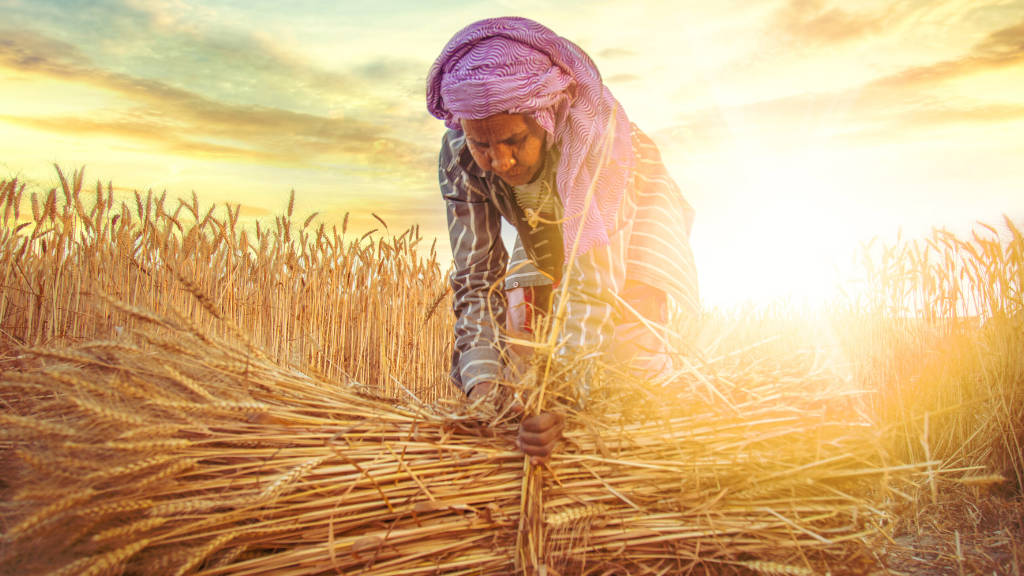
Due to the current high potential of the 2024 harvest, existing reserves and competitive prices, Russia will be able to become a leading supplier of wheat to India, according to the Rusagrotrans analytical center, following an analysis of the Indian grain market.
Rusagrotrans stated in an interview with Interfax that “If the wheat harvest in India this season [March 2024-February 2025) results at the average level of about 105 million tonnes, taking into account depletion and the need to replenish previously record reserves, India may move towards opening the market this year for several million tonnes in imported wheat.”
The current season’s crop in India is under threat due to the El Nino effect, which led to a lack of moisture during the grain-filling period.
“Immediately before the harvest in March, there were showers and hail in the main wheat-producing states, which increased losses. The government has already asked private traders not to purchase wheat from farmers so that the Food Corporation of India can replenish reserves and purchase a minimum of 30 million tonnes, targeting 34.2 million tonnes. The pace of purchases is currently ahead of last year’s, when only 26.2 million tonnes were purchased from the 2023 harvest.” Rusagrotrans said.
Official wheat stocks in India, according to Food Corporation data, fell to a seven-year low of 9.7 million tonnes in March 2024 (11.7 million tonnes in March 2022) due to low harvests in 2022 and 2023 and record sales of 9 million tonnes from June 2023 through the end of the 2023/2024 agricultural season.
The last time grain from Russia arrived in India was in the 2016/2017 agricultural year, when Indi imported 156,000 tonnes and then in 2017/2018, when it imported 258,000 tonnes from Russia. This happened amid a sharp decline in crop yields in India due to drought in the 2015/2016 and 2016/2017 seasons. That reduced yields from 93 million to 86.5 million tonnes in 2015/2016 and from 96 million to 87 million tonnes in 2016/2017. As a result, imports in the 2016/2017 season soared to 6 million tonnes.
Wheat production in India then grew to 108 million tonnes in the 2020/2021 season and 110 million tonnes in 2021/22. This allowed the country to accumulate record stocks, place some in reserve, and begin exports, which reached 7.6 million tonnes in the 2021/2022 season. A prohibitive duty of 40% was introduced on wheat imports to manage this trend.
However, the situation changed in the 2022/2023 season, when official data show that the Indian wheat harvest was 107.7 million tonnes, but prices and declining stocks were evidence that, due to severe drought in the spring of 2022, the harvest was likely to be significantly lower.
In October 2022, the import of wheat was partially allowed, but only low protein (9%) and only for processing into Atta flour, a whole meal flour for the production of flatbreads and export to other countries. This wheat is supplied from Australia.
Subsequently, reports appeared on the market about plans to reduce the duty on wheat imports from 40% to 15-20%. At present these have been officially denied – but the situation may change.
This Russia-India trade mechanism may also find a home in the proposed India-Eurasian Economic Union (EAEU) Free Trade agreement, which also includes Belarus, another important wheat producer. With weather patterns changing in India, it needs to source alternative supplies. With Delhi unlikely to want to place its wheat supply needs with China, the EAEU may well be a solution.
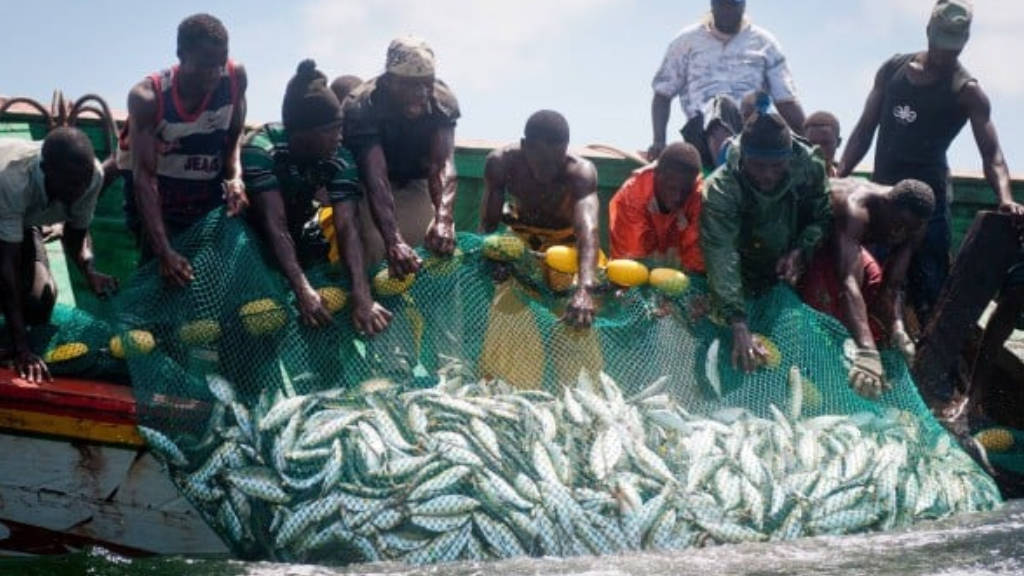
Russia’s Federal Fisheries Agency Rosrybolovstvo is preparing an expedition to study the fish stocks of African countries, which together with African partners, could begin in Q2 2024, Rosrybolovstvo head Ilya Shestakov said at a meeting with President Vladimir Putin on Monday (April 8).
Putin gave the order to organize the expedition following the conclusion of last year’s Russia-Africa forum. “We are currently cooperating with our colleagues from African countries on a large survey to study fish stocks in African countries. We are currently discussing this. There is funding for this, and headquarters have been created. We should start in the second half of the year. We are taking African scientists on board, and we will share all the data between us” Shestakov said.
The Great African Expedition should cover 14 countries of the continent, though this figure could be adjusted. The research should allow the Russian fishing fleet to expand the resource base to increase its catch.
Africa is heavily featured in our Russia’s Pivot to Asia 2024 Guide, which includes Russian trade and development overviews with Mauritania, Morocco, Algeria, Tunisia, Libya, Egypt, and Sudan in North Africa, Eritrea, Djibouti, Ethiopia, Somalia, Uganda, Kenya, Burundi, Tanzania and Mozambique in East Africa, South Africa, and Nigeria, Equatorial Guinea, Namibia and Angola in West Africa.
The Guide is a complimentary download and can be accessed in English here and Russian here.
EU sanctions mechanism “was not legally transparent”
In a case that may lead to unprecedented legal claims in the EU, a top EU court has annulled sanctions against billionaires Mikhail Fridman and Petr Aven, finding there was insufficient evidence the two oligarchs backed Russia’s conflict against Ukraine. The EU’s General Court concluded that the EU did not present enough evidence to show the billionaires were involved in efforts to undermine Ukraine, potentially setting a precedent for other appeals.
The ruling is a huge blow to the EU’s sanctions regime against Moscow, which has targeted more than 1,700 people and more than 400 entities, accusing them of supporting or enabling the invasion of Ukraine.
The ruling found there might be “a degree of proximity between Petr Aven and Mikhail Fridman and Vladimir Putin or his entourage” but said the EU had failed to “demonstrate that they had supported actions or policies” that harmed Ukraine, backed key Russian officials, or benefited from their decisions.
Aven and Fridman are the most high-profile Russians to have a top court rule against their inclusion on the EU’s travel ban and asset freeze list. They were both hit with sanctions on the grounds that they “supported actions and policies that undermine or threaten the territorial integrity, sovereignty and independence of Ukraine”.
“The General Court considers that “none of the reasons set out is sufficiently substantiated and that the inclusion of Mr Aven and Mr Fridman on [sanctions lists] was therefore not justified,” the court said in a press release. The ruling was “very unfortunate”, said a senior EU diplomat.
Fridman made millions in oil and telecoms, banking and retail in Russia before his arrival in London nearly a decade ago, where he and his partners set up Mayfair-based investment group LetterOne. The UK and EU imposed sanctions on Fridman and Aven, as well as their partners German Khan and Alexei Kuzmichev, in the early weeks of Russia’s full-scale invasion of Ukraine in 2022. As a result, the oligarchs were forced to cede control over LetterOne and moved to sell their stakes in Alfa-Bank, their biggest Russian asset.
Limited to a spending allowance of about £2,000 a month under the UK sanctions and facing an investigation from the UK’s National Crime Agency, Fridman struggled to pay for the upkeep on Athlone House, the £65mn mansion he owns in Highgate.
EU sanctions against hundreds of Russians were drawn up rapidly in the days following Russia’s full-scale invasion, and some Brussels officials have privately admitted that evidence often was hastily assembled, including citing press coverage.
Rulings by the General Court can be appealed and this will almost certainly happen.
Three less well-known Russian businessmen also had their sanctions lifted in September, and the EU dropped restrictions against tech founder Arkady Volozh in March. Volozh and eccentric fintech billionaire Oleg Tinkov, who won a challenge against UK sanctions last year, remain the only prominent Russian businessmen to offer vociferous criticisms of Moscow’s invasion.
Fridman returned to Russia in October. Russian legal counsel has said that the EU court’s decision showed how misguided western sanctions policy had been.
Alexandra Prokopenko, a fellow at the Carnegie Russia Eurasia Center in Berlin who studies sanctions, said the Kremlin had encouraged oligarchs to challenge them in court in order to set a legal precedent against them.
“The problem is the EU sanctions mechanism was not legally transparent,” she said. Had that been the case, the EU could have extracted war condemnations from Russian businessmen in exchange for sanctions relief. “But since there is now a court decision, they have no reason to do that.”
The cases are likely to drag on however this will lead to further examination of how the EU and UK governments, apparently arbitrarily, imposed sanctions on Russian nationals without going through any legal procedures. The ruling undermines the Western case for imposing sanctions, and the subsequent seizing of Russian personal and Government assets. The Russian government, which has long called the actions as ‘in breach of international law’ and ‘theft’.
Should the case go to appeal and Fridman and Aven ultimately prevail, further cases for damages caused by the illegal imposition of sanctions upon them could also be filed against the UK and EU governments, and be filed by Russian nationals and the Russian government in similar circumstances. Those claims could run into hundreds of billions of dollars.
Trading of Chinese RMB Yuan on Russia’s foreign exchange market hit an all-time high in March, the Bank of Russia (CBR) reported in its financial risk review on Monday (April 8).
Russia’s shift away from major Western currencies started with the US and EU sanctions imposed on the country over the Ukraine conflict. The financial restrictions made cross-border trade in Euros and Dollars more difficult and their presence on the Russian domestic foreign exchange market less important. As a result, the share of China’s currency has increased, and reached 53% of the total traded last month compared to 46.6% in February, according to the CBR. The share of RMB Yuan in over-the-counter trading also posted a record high, reaching 39.6%.
Meanwhile, the share of Western currencies, including the US Dollar and Euro, dropped to 46.4% on the exchange in March from 52.8% the previous month, data showed. In the over-the-counter segment, their share also continued to decline, decreasing to 54.7% from 59.8% in February.
Russian financial Analysts say the changes in the RMB Yuan and US Dollar trading volumes reflect Russia’s shift away from transacting in the currencies of so-called ‘unfriendly’ countries against the backdrop of international sanctions.
The restrictions include the blacklisting of a number of Russian banks and their removal from the SWIFT interbank messaging system, as well as bans on transactions with Russian financial entities and the freezing of foreign exchange reserves.
Meanwhile, Russia continues to establish the conditions for settlements in various national currencies, according to CBR Governor Elvira Nabiullina. Over the past year, the volume of settlements in currencies other than the US Dollar and Euro has surged from 39% to 67%, according to her. Other currencies being used include UAE Dirhams, Indian Rupees, and Kazakh Tenge, amongst others. That spread will likely continue, especially as the BRICS are working on creating a basket of currencies.
Russia’s Finance Minister Anton Siluanov, has repeatedly said that Moscow no longer trusts the US Dollar, calling it “a completely unreliable instrument.”
China and Russia have stated their aims to maintain “industrial supply chain stability” after Chinese foreign minister Wang Yi and his Russian counterpart Sergei Lavrov reinforced calls for their two countries to work more closely together against “hegemonism”, in a statement released by the Chinese foreign ministry.
Russia has been intensely sanctioned by Western powers while Chinese products have been subjected to high import tariffs rates. Wang summed up the Russian-Chinese position by stating that “China and Russia will be more active in pursuing the convergence of their interests, and work together to maintain international industrial supply chain stability.”
He mentioned that this would be achieved by better coordination of trade and development with the BRICS nations and the Shanghai Cooperation Organisation (SCO). None of the members of either of these entities have placed sanctions on either China or Russia. In addition to Russia and China, they include Brazil, Egypt, Ethiopia, India, Iran, Saudi Arabia, South Africa, and the UAE in the BRICS, and Kazakhstan, Kyrgyzstan, Pakistan, Tajikistan and Uzbekistan in the SCO. In addition, several others countries are poised to join the BRICS grouping while the SCO has also admitted Belarus and Mongolia as dialogue partners and Armenia, Azerbaijan, Bahrain, Cambodia, Kuwait, Maldives, Myanmar, Nepal, Qatar, Sri Lanka, and Turkiye as dialogue partners. There has been talks of merging BRICS and the SCO. The main BRICS grouping already has a higher GDP than the West’s G7, with 32% of the global total as against 30% as of 2023. The BRICS group percentage is also expected to increase. Wang’s comments suggests additional infrastructure will be put in place, including free trade agreements, to further develop non-Western supply chain security.
Meanwhile, the statement of mutual support and condemnation of the United States came as Janet Yellen, the US Treasury Secretary was flying back to Washington after a six-day trip to China during which she had warned her Beijing counterparts on Saturday of “significant consequences” for Chinese companies that provided “material support for Russia’s war against Ukraine, including support to the Russian defence industrial base”.
Lavrov’s visit to Beijing illustrated the growing partnership between China and Russia. In an additional meeting with Chinese President Xi Jinping, Lavrov said Russia was “delighted” by China’s success under his leadership and made veiled criticisms of countries “that are trying to contain China’s development, just as they are trying to contain Russia’s.”
Chinese state television quoted Xi as saying Beijing and Moscow had embarked on a path of “harmonious coexistence” and “win-win co-operation”. While the West has imposed sanctions and trade embargoes against Russia, Moscow has sustained its economy and defence industry thanks to expanded trade with China and increasing imports from Asia in particular.
China buys about 40% of Russia’s crude oil and most of its coal. It is one of the top three buyers of Russian oil products, pipeline gas and LNG.
Lavrov said that relations between Russia and China had reached an “unprecedented level” and that President Vladimir Putin’s re-election in March offered “additional guarantees” for the strengthening of ties. Wang replied that China would “continue to support Russia’s development and revitalisation under the leadership of President Putin.”
Another aspect of Lavrov’s visit was in preparation for an expected trip by Putin to meet Xi in China later this year. The Russian foreign minister said the two leaders would also meet at summits of the Shanghai Cooperation Organisation in Kazakhstan in June and at the BRICS annual forum in Russia in October.
Russia-China relations are extensively featured in our 2024 Russia’s Pivot to Asia Guide. That can be downloaded for free in English here and Russian here.
Russia’s Pivot to Asia sat down last week with a highly experienced group of people, including high-profile China and Asia experts, an American banker, and Russian academics. The question on the table: “Does the west have a game plan for Russia?”
First, about the attendees. All are well known in their fields and government influential. However, due to previous experiences of media (and government) harassment, choose to remain anonymous. We realise that impacts upon credibility but feel that the way in which the collective analysis is presented will illustrate that we know what we are talking about. It is disturbing that social media and more subtle pressure is now interfering with free speech and discussion to the detriment of individual reputations and freedoms, but take our word for it, it is. Now on to the discussion.
Did the collective West properly prepare for the situation with Russia?
There are two main component parts to this question, being the United States, and Europe. We will deal with them as follows:
The United States
It appears that the US does, and continues to have, a gameplan for Russia. This involves the following key strategies – all of which imply a Euro-centric mindset as to the reasoning behind them:
Removing Russia as an Energy Supplier to Europe
The US has benefitted extensively from the European decisions to turn away from Russian to alternative energy supplies, the bulk of which now come from the US. It was US President Donald Trump who originally berated Europe, and especially Germany for buying gas from Russia – and not meeting agreed defence and military expenditure.
According to Politico, the U.S. now provides Europe with nearly 50% of its LNG — up from roughly 25% before the Ukraine conflict — while LNG has overtaken pipeline gas as the most important source of supplies. This LNG is shipped in from alternative suppliers and is more expensive in terms of both cost – and pollution. The Council of Europe (the EU’s governing body) stated that in 2023, the United States was the largest LNG supplier to the EU, representing almost 50% of total LNG imports. In 2023, comparing to 2021, imports from the US almost tripled.
Also not satisfactorily explained was the 2022 demolition of the Nordstream gas pipelines running from Russia to Germany, which were destroyed in underwater explosions in an operation that could only have been undertaken with Sovereign Government support. Russian (and some US opinion) has pointed fingers at a US financed operation, while others have suggested several alternative theories. Investigations by several European countries have turned up inconclusive results, while the Russians have not been allowed to conduct their own investigations. The most obvious answer as to who had the motivation, and the subsequent behaviour to cover that up, is indicative of the actual reality.
Selling More Weapons to Europe
Trump again – he told NATO members in 2018 that 23 of 28 members were delinquent and owed vast amounts of money to the US. In many ways, the Ukraine conflict has allowed both the United States and Europe to get rid of older military stockpiles and send them to Kiev to fight the Russians. Those stockpiles have now been depleted, destroyed, and need replacing. According to Responsible Statescraft, the United States top 5 weapons contractors made US$196 billion in 2022. The European Defense Agency has stated that it spent a record €240 billion in defence spending in 2022, while EU Council President Charles Michel said that had further increased to €270 billion in 2023. Nearly all of that is imported, which is why the European Commission stated that the EU would introduce its first Defence Industrial Strategy just last month. That is designed to shift the EU industrial base to military production, however goals are set for 2030 – six years from now.
US Sanctions on Russia
According to the OEC, the United States bilateral trade with Russia in 2021 (pre-Ukraine) were US$16.63 billion, of which US exports were just US$1.63 billion.. That compares with the EU, whose bilateral trade with Russia in 2021 reached €257.5 billion (US$298.28 billion), or roughly seventeen times more than the US exposure. Of that, EU exports to Russia were worth €99 billion – over sixty times more than the American risk.
This means that in quantitative terms, sanctions imposed by lawmakers in Washington and followed through by Brussels inflict a significantly greater strain on the European as opposed to the American economy. Additionally, US sanctions aren’t always directed at Russia, although the reasons stated are. The US is following a trade pattern that blames Russia for the need to impose them, but actually impact third countries such as China, among numerous others including Iran, Turkiye, Kazakhstan and Saudi Arabia. Many of these also have negative impacts upon European trade ties elsewhere. Yet the EU is following the ‘anti-Russia’ sanctions message every time.
Attracting European Investors
Another impact of the increased energy prices in Europe has been the subsequent decline in European competitiveness. This is especially pertinent to the automotive industry, which has been dominated by European, American, and Chinese brands across Eurasia. That is now changing, with this coming at a time when the old generation of hundreds of millions of petrol-driven vehicles will be replaced by EV vehicles. That is spurring massive changes and a revenue boom for auto manufacturers as green energy takes over from fossil fuels and these are adopted, as government policy means consumers must now buy the new generation of private and commercial vehicles.
What has happened has been that European manufacturers were politically motivated to leave the Russian market , and have now largely been replaced in Russia by domestic and Chinese brands (the Chinese share of Russia’s auto market has increased to 56% of the total from 10% .in just two years).
However, energy prices in Europe have also been rising, and this impacts upon manufacturing costs. As a result, European auto manufacturers such as Germany’s VW have been looking to set up new manufacturing plants in the United States, and not Europe. VW for example have committed to build a US$2 billion factory in South Carolina, and also plans to build its first EV-battery plant outside Europe in Canada, and maybe the first Audi plant in the United States. These investments are being taken away from what had been plans for VW to invest in Eastern Europe.
The upshot of these four main economic issues are that the Ukraine conflict is extremely good business for the United States and it has developed a sound strategy. However, the goal appears not to be anything specifically to do with Russia, it appears more about permanently securing Europe as a client state.
The European Union and United Kingdom
Neither the EU nor the UK appear to have developed any long-term strategy or properly prepared for the situation in Ukraine, nor with Russia.
Much of the strategy involved has instead followed American policy without much thought given as to the impact, either upon Russia nor, crucially upon the European economies. What has occurred however appears to have been a reliance instead upon media to support the European (and American) political views concerning Russia – they almost mirror each other. European politicians (with a few dissenting voices, most notably Hungary) have stated that this is a ‘united’ policy, however little thought or preparation appears to have been targeted towards potential repercussions.
For example, when the sanctions were first imposed, EU leaders almost all predicted the collapse of the Russian ruble and the Russian economy. The basic fact that this didn’t occur suggests that they had not understood the consequences of their actions and failed to understand the Russian economy per se. The resulting high inflation levels in Europe, rise in energy costs and the impact on business competitiveness are now seeing a clear migration to the United States, and a marked increase in European spending on American products.
This apparent lack of original European thinking and foreign policy has been noticed by other players, (such as China) with criticism that Brussels and London merely appear to parrot Washington’s position. The conclusion, given that much of what has been said by European politicians and political analysts about the Russian economy, is that little research was conducted and that there has been no coherent plan – other than to follow the US lead. There has however been plenty of justification for continuing the conflict with Russia, in Ukraine.
Russia’s Reasons for Invading Ukraine
A great deal was said concerning Russia’s motivation for ‘instigating’ the Ukraine conflict, as justification for the subsequent behaviours – mostly encouraged by Washington:
Attempts To Weaken Putin
Part of the justification for imposing sanctions was to instigate domestic Russian unrest, de-stabilize the Russian government, leading to an overthrow of the Russian President. Some of the measures taken were decidedly unfriendly towards ordinary Russian nationals without any connection to Government, other than perhaps the fact that Russians were ‘accused’ of voting him into office and are therefore somehow culpable. The problem with this approach – for the West – is that it contravenes democratic rights. Some of these measures are unprecedented and borderline racist. These include the non-issuance of visas to ordinary Russians, many with family in Europe, the blocking of banking and other financial transactions, which again impacts Russians with family overseas and vice-versa, and recent Ukrainian suggestions to ban all Russians and Belarussians from flying on European airlines.
Added to this is the freezing and seizing of assets and the resale of those to Ukraine – and while sympathy for Oligarchs maybe hard to realise, this extends to confiscation of ordinary Russian owned cars, mobile phones and jewellery at EU borders. That is becoming very close to theft.
Then again, some measures don’t make much sense, such as the banning of Russian artists and cultural performances in the West. That merely deprives Western audiences, not Russian. Interestingly, Russia hasn’t reciprocated. EU nationals can apply for Russian visas online, while the famousMariinsky theatre in St. Petersburg is showing works just this week (April 8-14) by Adam, Bartok, Bizet, Beethoven, Fure, Gounod, Massenet, Mendelssohn, Mozart, Schubert, Strauss, Verdi, and Wagner.
In the long run, this hasn’t really presented much domestic trouble for Putin. The EU has miscalculated. Instead, the impact has been to encourage Russian tourists – 14 million overseas trips in 2023 – to spend time in other markets, such as Morocco, Turkiye, Dubai, Sri Lanka, Bali and Thailand to name just a few. The gain from inconveniencing ordinary Russians in Europe has merely seen them relocate to alternative destinations and spend their money elsewhere.
In terms of imposing export bans on selling European products to Russia, three main things have occurred.
Parallel Imports – where the same brand product is imported via a third country (Armenia, Georgia, Turkiye and others). EU politicians may claim EU exports to Russia have declined but what they don’t mention is that doesn’t mean Russians cannot obtain them.
Russia imports alternatives, mainly from Asia;
Russia manufactures its own replacements. McDonalds and Coca-Cola both pulled out of Russia, for example. Russian investors bought up all 900 McDonalds restaurants and now operate them as ‘Tasty Dot’. Coke sold their soft drinks plants to their Russian distributors. The products in both cases, although rebranded, taste exactly the same. And the profits generated in Russia by these businesses now remain in Russia.
All that the desire to discriminate against Russians has done, is to create mistrust between the EU and Russia. It hasn’t made Russian’s miss or yearn for Europe. Instead, it’s introduced them to new products, markets and destinations elsewhere.
The Recreation of the USSR
This has often been bandied about, including by US President Biden, mainly based upon comments made by Russian President Putin’s historical remark that the collapse of the Soviet Union was a ‘historical tragedy’ for Russia. But then again, he has also mentioned multiple times that Russia has no intent on recreating the USSR. Who is right? Let’s look at the reality:
Will Russia Invade Europe?
Putin has saidthat a Russian invasion of a NATO country will not happen. But, as Europe’s Politico says, “Why trust him?” That gets to the real crux of the matter. While Eastern Europe contains multiple countries that used to be part of the Soviet Union or were heavily influenced by Moscow: Bulgaria, Croatia, Czech Republic, Estonia, Hungary, Latvia, Lithuania, Poland, Romania, Slovakia, and Slovenia, most of these are members of NATO.
It has been well established that NATO considers an attack on one NATO member as an attack on all and that all NATO countries – which also includes, amongst others, the United States, and United Kingdom would then become involved. That is a formidable force, while any Russian invasion would be met with extreme local resistance too. It would open up a front of 2,360km in addition to the current frontline with Ukraine of 1,886km (2024). The question to ask is why would Moscow pursue such an option?
According to the EU Commission, between February 2022 and December 2023, the value of EU imports from Russia fell by 82 %, dropping to US$84.9 billion in value. This means that in pure economic terms, the European Union is now worth less than US$90 billion to Moscow in terms of revenues.
Meanwhile, Russia’s exports to Asia increased to US$306.6 billion in 2023 – over triple the European value. Russia’s supply chains and its economic infrastructure have now pivoted strongly to Asia. The question then becomes why would Russia invade Europe, and create a war with NATO that it would
almost certainly lose,
be extremely unpopular in Russia let alone the global community,
has little economic added value and
would divert attention and money away from much needed development to the East.
It just doesn’t make any sense – for Russia. But suggesting the prospect of such an event does make a lot of sense for weapons manufacturers supplying the EU.
Russia’s European Preparations
In contrast to the European Union, Moscow appears to have researched and gamed a potential economic conflict with the EU itself since 2014 – which is when the EU first imposed sanctions upon Russia for annexing Crimea. It appears to be from that occasion – when Moscow seems to have felt that Brussels had deceived it over its Ukraine policy and intentions – that it began to prepare. Consequently, numerous economic punishment scenarios would have been war-gamed in the Kremlin and many scenarios, including worst-case events studied, discussed and prepared for. It appears that Moscow very much had a series of strategies and protections in place to cater for European economic sanctions and the removal of its markets from Russia. That manifests itself: Russia’s PMI index, which measures manufacturing growth sentiment, was at 55.7, its highest level for 18 years, in March. Germany’s was at 41.9.
Conclusions
Moscow also appears to have understood the role of the United States within this, a nation that seems to have the motivation, and has instigated, and carried out its development strategy. That however seems fully concentrated on Europe, with Ukraine being the catalyst, whether Kiev or Brussels really understands this or not.
The European Union in contrast appears to have been caught unprepared,and been wholly reliant on US strategy to sustain its position since the Ukraine conflict began. The projected impact of this means that the US economy will be fine – and is in fact doing well, with the energy and weapons industries especially. The UK weapons sector will also prosper, although Britain too now suffers from high energy costs. Russia is in the process of adapting, an issue that may have surprised Washington but doesn’t affect the end result as far as their European ambitions are concerned. The loser in this appears to be Brussels, which seems to have lacked preparation, had not developed any meaningful independent foreign strategy, and has effectively become a vassal of the United States.
The proof of a lack of EU research into the issue can be seen with Ursula von der Lyan suggesting in March 2024 that the EU needs a common defence industrial policy. Yet the conflict with Russia and Ukraine dates back to 2014. The implication is that the EU has sat on its hands for the past ten years, been utterly unprepared, and allowed far smarter American politicians and manufacturers to take complete advantage.
For a complete analysis of Russia’s Pivot to Asia, please download our complimentary 2024 report in English here and in Russian here.
Russia’s Pivot to Asia have published our first annual Russia’s Pivot to Asia Guide, in Russian. It is a 300-page full colour PDF with maps and graphics that details Russia’s 2024 trade and development with 80 countries, in addition to evaluating new supply chain routes such as the INSTC and the NSR, and Russia’s developments within regional trade blocs such as the BRICS, CIS, EAEU, SCO, China’s Belt & Road Initiative and others. It was written by academics and businessmen with extensive experience of Russia, Asia and the Eurasian region. It is a complimentary download and includes the following chapters:
Russia & Europe
Russia, the Caucasus & Turkiye
Russia & North Africa
Russia & The Middle East
Russia & Central Asia
Russia & South Asia
Russia & ASEAN
Russia & China
Russia & Far East Asia
Russia & The African Continent
Russia & Latin America
Russia’s Membership Of Multilateral Trade Organisations:
Eurasian Economic Union
Commonwealth of Independent States
Shanghai Cooperation Organisation
BRICS
Russia & The Belt & Road Initiative
Russia-Asia Transport Corridors:
The Northern Sea Route
The International North-South Transportation Corridor
Russia & The Digital Currency Revolution Russia 2023/24 Productivity
Executive Summary
We intend to update this on an annual basis. The guide can be downloaded, for free, here. The English version can be downloaded here.
Sergey Lavrov, Russia’s Foreign Minister, is meeting with Wang Yi, China’s Foreign Minister (and State Councillor) on Monday and Tuesday (April 8 & 9) in Beijing to discuss bilateral cooperation and plans for Vladimir Putin’s meetings with Xi Jinping next month.
Talks between Lavrov and Chinese Foreign Minister Wang Yi, who extended the invitation to the Russian minister, will consist of bilateral cooperation as well as “hot topics”, such as the situation in Ukraine and the Asia-Pacific, the Russian foreign ministry said.
Russian diplomats said that the foreign ministers will also discuss bilateral cooperation, including “interaction in the international arena with a focus on joint work in the UN, BRICS, the SCO, the G20, APEC and other multilateral mechanisms and forums.”
Lavrov previously visited Beijing in October 2023. The sides discussed in detail cooperation in Eurasia and the prospects of Russia’s BRICS chairmanship.
Russia-China bilateral trade reached US$240 billion in 2023 and is growing at over 7% more in 2024.
The China-Russia talks come just days after the US Treasury Secretary, Janet Yellen visited Beijing and threatened sanctions on any Chinese companies that supplied products to the Russian military. Yellen’s latest warning came as US officials told Bloomberg that Chinese firms were supplying microelectronics and machine tools for the production of tanks, and optics and propellants for use in missiles.
Both Moscow and Beijing have repeatedly denied American claims that the Russian military has bought ammunition and ‘dual use’ technology (with both military and civilian applications) from China. Lavrov and Wang will no doubt be discussing the implications of Yellen’s remarks.
Russian consumers now possess more income at their disposal since pre-covid times, where according to Macrotrends Russian consumer spending rose 19.68% in 2022.
That has led to seven new international brands opening their first stores in Russia during Q1 2024, according to Nikoliers a commercial real estate consulting firm.
“Based on the results of the first quarter, the Russian retail market added seven new international brands. New brands have appeared in the clothing and footwear, household goods, household appliances and electronics, and perfumery and cosmetics categories the Nikoliers report says.
Another ten additional retailers have announced they are entering the Russian market this year. Confirmed are 8 Seconds (South Korea), Home Box and Brands (UAE), Deha (Italy), Big Chefs (Turkey), Panier des Sens (France), Semir and Balabala (China), Laplandia (Finland) and Lifework (South Korea). They represent the clothing and footwear, household goods, restaurants, cosmetics and perfumes, products for children and grocery categories.
Nikoliers said that last year. the Russian market welcomed 27 new foreign brands, mainly from Turkey, Lebanon and Belarus, while eight retailers ceased operations. They said that Russia remains an interesting market for foreign brands. The Russian middle class is estimated to be about 80-100 million people in size. Most of these brands are filling in market sectors that were previously occupied by Western businesses.
India’s PSK Biotech Private Limited has signed an agreement to start manufacturing personal hygiene products, diapers, and medical supplies in the city of Yuzhno-Sakhalinsk, in Russia’s Far East Sakhalin region. Production is planned to launch in November this year.
The initiative would also significantly reduce the Sakhalin region’s reliance on imported technology and shorten the delivery time to people with disabilities, according to the company. PSK Biotech Private Limited wants to establish a long-term presence in the Russian market, Prabind Singh, PSK’s business development director stated. The company also plans to manufacture veterinary products.
Long-time trade and economic partners, India and Russia have worked to expand cooperation over the past two years in a response to Western sanctions on Moscow.
Companies from India are exploring opportunities in the pharmaceutical, diamond, and hydrocarbon sectors in Russia’s Far East, Anatoly Bobrakov, Deputy Minister for Development of the Russian Far East and Arctic said in India in January at the Vibrant Gujarat Global Summit in Gandhinagar.
Russia’s Far East trade with India grew by 40% in 2023, he added. The region – which borders the Pacific and Arctic Oceans, and spans over four time zones – accounts for one-third of Russia’s coal reserves, mines over 90% of its diamonds, and 50% of its gold.
The Russian government also has plans to develop ports and air transport infrastructure in the Far East. The Sakhalin administration is discussing plans with Moscow to build a 580-kilometer bridge to connect the island with mainland Russia, allowing it direct rail access to the markets in China.
Sakhalin is a federal subject of Russia (an oblast) comprising the island of Sakhalin and the Kuril Islands in the Russian Far East. The oblast has an area of 87,100 sq.km, while its administrative center and largest city is Yuzhno-Sakhalinsk. As of the 2021, it has a population of about 500,000.
Sakhalin Oblast is rich in natural gas and oil, and is Russia’s fourth wealthiest federal subject and wealthiest oblast. It borders by sea Khabarovsk Krai to the west and Kamchatka Krai to the north, along with Hokkaido, Japan to the south.
Our Look Back At Some Of The Weeks Most Bizarre Russo Political Moments
US-Russia Manure Trading Bourse Opens
It’s been great to see sensible adult dialogue is back in vogue, with White House National Security Communications Adviser John Kirby stating that Russian comments about the appalling attack on Crocus City reminded him of what his uncle, a small farm owner in Florida used to tell him. “He used to say that the best manure salesmen often carried their samples in their mouths,” Kirby said. “Russian officials seem to be pretty good manure salesmen.” Russian Foreign Ministry spokeswoman Maria Zakharova responded in a social media post that “We don’t have such proverbs in Russia, because they carry manure in their mouths over the ocean, and not here. This explains why the expression ‘to wash one’s mouth out with soap’ is so popular in the United States.”
Luxury Skiing In North Korea
The DPRK has been gearing up for Russian tourists who can now take direct flights Vladivostok-Pyongyang and enjoy the powder. At a time when Europe suffered this winter due to a lack of snow, Far East Asia offers alternatives. RPA has visited North Korea, its worth a trip. The poverty commented on however is partially because of sanctions – the US never forgot who won the Korean War. But snow doesn’t fall exclusively on democracies. An advert promoting the skiing can be seen here. Prices are from ₽70,000.
A Gentleman In Moscow
A heads up that “A Gentleman In Moscow”, Amor Towles’s 2016 novel about a Russian aristocrat sentenced to live in the Metropol Hotel in the early 1920’s has been made into a film series starring Ewan MacGregor. The trailer can be viewed here.
Zelensky Turns Down Mass-Media Global Marketing Opportunity
The Ukrainian President Volodymir Zelensky has somewhat uncharacteristically turned down the opportunity for reaching out to a mass global audience, in rebuffing requests for an interview with US media personality / quasi journalist Tucker Carlson. Carlson’s last interview of note was with Russian President Vladimir Putin, obtaining views of about 1.2 billion. He had intended to ask Zelensky why he thought the United States should continue funding Ukraine. Calls and requests to Zelensky and the Presidential Press Office for a similar interview to that with Putin went unanswered.
London’s Woke Royal Festival Hall
London’s Royal Festival Hall held a programme that included some Russian repertoire on Wednesday, under the baton of Maxim Emelyanychev. His bio, as described in the concert programme, omitted to mention he is Russian, while Tchaikovsky’s name was spelt in the Polish style: “Tchaikowski”. Glinka’s overture to “Ruslan & Ludmilla” was played along with Rachmaninov’s “The Rock”. Neither were described as Russian composers, while introductions to Russian poetry mispronounced Lermontov’s surname. Is that cancel culture or just plain bad manners? We expected rather more from anything labelled as British and Royal.
Paris’s Ex-Lovers
The Mayor of Paris, Anne Hidalgo has treated Russia like a former husband invited to his ex’s second wedding. For the sake of peace, you can come. But please don’t. “I want to say to the Russian and Belarusian athletes that they aren’t welcome in Paris.” Hidalgo said. But then again when have any tourists ever been welcome in Paris, let alone athletes? Besides, who wants a welcome from Anne Hidalgo? Her city is full of bedbugs and she looks as if she’s constantly chewing a wasp.

 Русский