Russia and Laos have discussed energy cooperation prospects, with Russian Deputy Energy Minister Roman Marshavin, taking part in negotiations with Laos Prime Minister Sonexay Siphandone. The meetings were held in Vladivostok on the sidelines of the Far Eastern Economic Forum.
Russia’s Energy Ministry stated that “The sides discussed a number of prospective cooperation areas, including Russian energy supply, joint hydropower projects and development of renewable energy generation.” According to the World Bank, 95% of Laos electricity is generated by hydropower.
Marshavin commented “Russia and Laos have a long-standing energy partnership rooted in the Soviet era. Today, we are ready to offer Laos a broad range of modern engineering solutions in traditional and renewable energy and to mediate the establishment of direct contacts between respective companies of both countries.”
The negotiations highlighted the provision of cybersecurity at energy facilities. Russian companies are also ready to share their competences in this area with Laos partners.
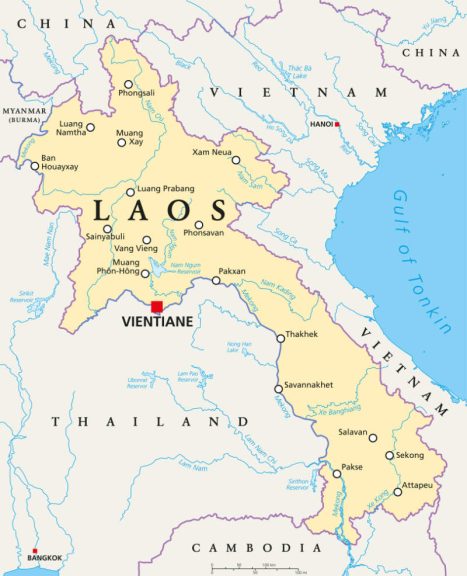
Laos is a small, landlocked yet mountainous country in southeast Asia, bordering China, Vietnam, Thailand, Cambodia and Myanmar. In the past, bilateral trade and investment have been restricted due to its distance from Russia and relative remoteness. However as Russia has developed significant trade with China and Vietnam, and regional road and rail infrastructure has improved, Laos has become more accessible for Russian traders and investors.
The Russian President, Vladimir Putin, met with the President of Laos, Thongloun Sisoulith, in Moscow in August. Several agreements were signed, including a MoU between corresponding agencies on cooperation in water resources management and protection, together with a 2025–2026 roadmap for cooperation between Russia’s Rosatom and the Laos Ministry of Industry and Trade on nuclear energy.
Bilateral trade between Russia and Laos rose by 66% in 2024, with growth continuing at 20% year-on-year from January to May in 2025. To deal with the bilateral logistics challenges and increasing trade demands, Russia plans to start railroad transportation with Laos and container transportation by sea. Putin said last month that “Due to an increase in mutual cargo flows, issues concerning expansion of container transportation by sea from Laos to Vladivostok through Vietnam’s ports are being considered. There are also plans to organize railroad cargo transportation through China.”
Concerning Rosatom, Putin mentioned that “Agreements on nuclear energy will create a foundation to provide the Laotian economy with cheap and environmentally safe energy.” Previous talks have involved Rosatom and Laos discussing the construction of a two-unit nuclear power plant.
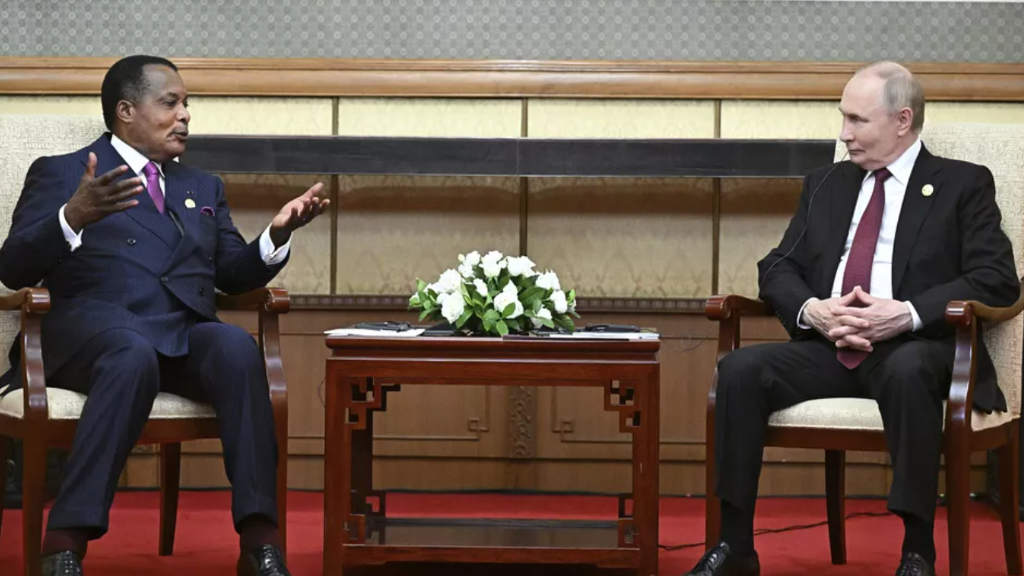
The Russian President, Vladimir Putin, has been attending the celebrations for the end of World War II in Beijing and has had the opportunity to discuss bilateral relations with other attendees, including with the Republic of Congo’s President, Denis Sassou Nguesso. This is what they had to say:
Vladimir Putin: “Mr President, I am delighted to see you, this time on the sidelines of events held to celebrate the 80th anniversary of the end of World War II and China’s victory over Japanese militarism.
We meet regularly. Our efforts in this sphere, our interaction with the Congo, are among our foreign policy priorities in Africa. The Congo is our reliable and time-tested friend and partner.
You regularly attend Russia–Africa meetings at the level of heads of state and other events. We maintain regular personal contact, and our colleagues in the government collaborate in various spheres.
Our trade ties are stable, but as we have both pointed out many times, further efforts are necessary to advance them to a new level. Young people from your country continue to receive professional training in Russia. We are not only ready to maintain this level of ties but also to increase the number of Congolese young people who wish to receive an education in the Russian Federation.
Our foreign ministries maintain regular contact, and we coordinate our work at all international platforms. I am delighted to have this opportunity to meet with you on the sidelines of today’s events.”
Denis Sassou Nguesso: “Thank you very much, Mr President, my dear friend.
It is always a great pleasure and honour for me to meet with you, as well as with other leaders and representatives of the Russian Federation.
Of course, I have fond memories of the events I attended in Moscow several months ago, namely the military parade. I attended a military parade today as well. As I have said, I fondly remember the events I attended in Moscow when we celebrated a landmark event, victory over Nazism and fascism. The Red Army was the first to enter Berlin.
It goes without saying that we also supported the resistance movement and struggle of the Chinese people against Japanese aggression. We remember Mao Zedong and the other forces that came together and acted jointly to defeat Japanese aggression. We are also aware of problems in Taiwan, but we know the background.
I was delighted to receive an invitation from President Xi Jinping to attend this parade and this solemn celebration. When I learned that you will be here as well, I thought it would be great to hold a bilateral meeting on the sidelines of these events and to have a dialogue.
For my part, I would like to note the high level of our relations and the ties between our states. These relations are developing. Today we can also exchange views on global issues that need to be addressed. Thank you very much for finding the time to meet with me.
Relations between our countries are growing ever stronger. I hope that we will be able to discuss a number of issues in the restricted format. I see that you have brought along a large delegation today.”
Summary
While the initial greetings were standard diplomatic speak, the two presidents had brought with them trade delegations, with Russia-Congo bilateral and investment trade developing.
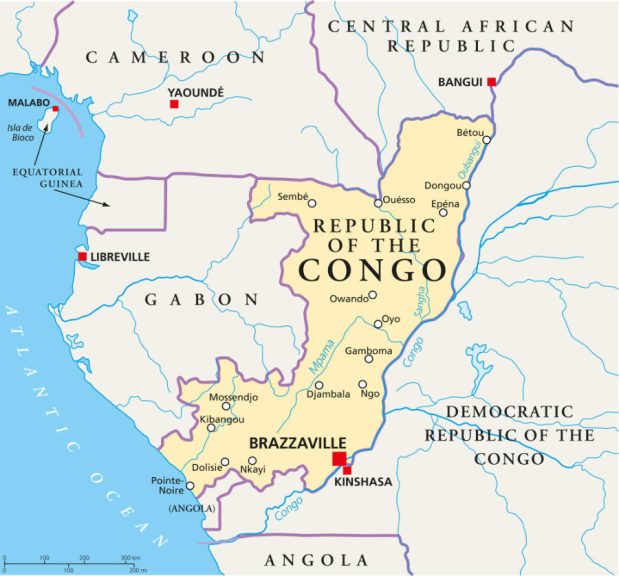
The Republic of the Congo is in Central Africa, with a West African coastline, and is known for its rich natural resources, particularly in the oil and gas sector.
The country’s economy is heavily reliant on the oil and gas industry, which accounts for around 65% of its GDP, 85% of government revenue, and 92% of its exports. In recent years, the Republic of the Congo has been working to expand its energy capacity, with projects like the Nguya Floating Liquefied Natural Gas (FLNG) facility, which is set to complement the existing Tango FLNG facility.
These projects are expected to significantly enhance the country’s liquefaction capacity. Beyond oil and gas, the Republic of the Congo is diversifying its economy and attracting foreign investment in sectors like forestry, agriculture, construction, ecotourism, transport, mining, and information technology services. The country is also rich in mineral resources, including potash, phosphate, and gold, which are extracted and exported. The manufacturing sector, although still limited, includes industries such as processed foods, beverages, cigarettes, textiles, and cement.
The Republic of the Congo is a member of several important trade agreements. It is part of the Economic Community of Central African States (ECCAS), which aims to foster economic cooperation among Central African countries. The country is also a member of the Central African Economic and Monetary Community (CEMAC), a customs and monetary union that promotes economic integration through a shared currency, the Central African CFA franc (XAF). The Republic of the Congo is a signatory to the African Continental Free Trade Area (AfCFTA), which seeks to create a unified market across the continent by reducing trade barriers. Additionally, as a member of the World Trade Organization (WTO), the Republic of the Congo adheres to international trade regulations, promoting trade liberalization and dispute resolution mechanisms.
The Congo has a population of approximately 6.3 million people, a GDP (PPP) of US$28 billion, and a GDP per capita (PPP) of US$5,550. 2025 GDP growth is expected at 2.8%.
Russia has investments in the oil and gas sector, including pipeline and related projects, a major investment being to transit energy to the inland capital, Brazzaville, which Russia is also financing.
Military and related technical cooperation is also part of the bilateral mix, with training and supplies of new Russian military equipment to the country.
In terms of bilateral trade with Russia, the Republic of the Congo saw a trade turnover of US$250 million in 2024, nearly double the 2023 volumes. Russia exports wheat and petroleum products, while the Republic of Congo exports mainly fruits.
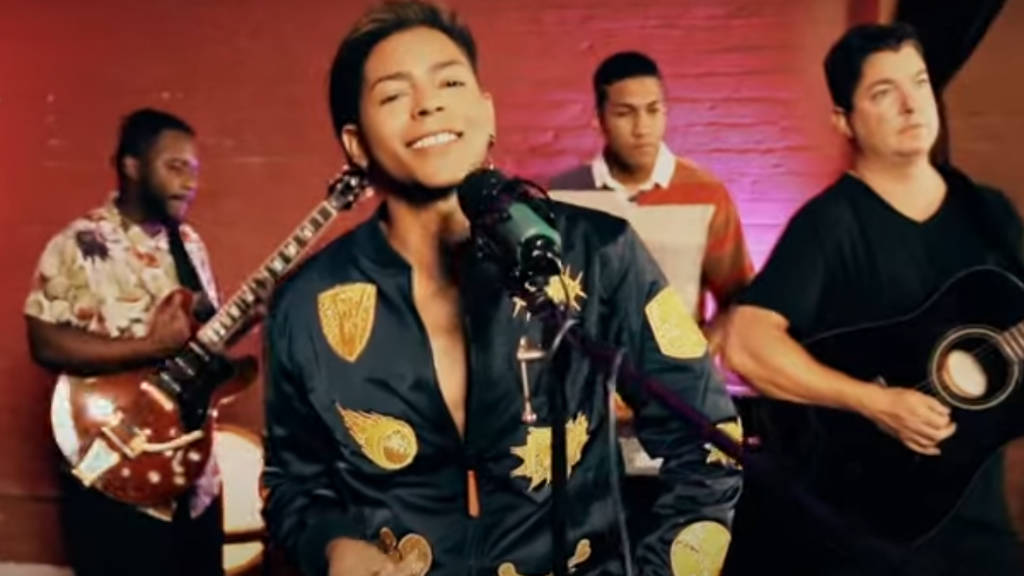
The United States is to participate in this month’s Intervision Song Contest being held in Moscow on September 20, with American singer-songwriter B Howard representing the US. The Intervision Song Contest is Russia’s version of the Eurovision contest, which has been criticised for promoting a woke and LGBTQ agenda. Russia has been banned from entering that competition for several years. Eurovision has also become politicized rather than purely about musical talent – Ukraine was manipulated to win it in 2022, the year that the Ukraine-Russia conflict began.
The surprising move by the United States indicates that the banning of Russian culture and events in the West may slowly be receding. Western artists have been wary of performing in Russia due to Western government disapproval, while numerous Russian artists have had scheduled performances in the West cancelled. The Intervision Song Contest is expected to feature entries from about 20 countries, including China, the CIS countries as well as some of the BRICS nations. The US’s participation, with B Howard best known as the subject of speculation about being Michael Jackson’s son, could represent a breakthrough in US-Russia cultural ties, and possibly influence a still highly politized Europe about re-engaging with Russian cultural events.
There has been much speculation about the financial arrangements and costs of building the Power of Siberia 2 gas pipeline between Russia, Mongolia and China, with Russian Energy Minister Sergei Tsivilev clarifying details at the Eastern Economic Forum currently taking place in Vladivostok.
He said that the financing scheme for the project and other issues need to be finalised quickly, stating, “The signed memorandum takes into account the main parameters – it will pass through Mongolia, and the supply volume is 50 billion cubic meters per year.” The project is very complex; it will require the construction of large pipeline lines, so now we will move on to active work to finalise this project, and then we will be able to speak specifically about the timelines and finances of this project. So far, all this has been done at the pre-feasibility study level. Now we will have to work out the financing schemes and everything else. Without signing this memorandum, further work was impossible. Now we have freedom of action; we have been given permission, so we will finalise this scheme quickly. This will be worked out next year.”
Tsivilev also said that design work is underway to increase the capacity of the already built Power of Siberia gas pipeline from 38 bcm to 44 bcm of gas per year, as agreed during the meetings between the Russian, Mongolian and Chinese presidents earlier this week.
He added that “Design work is currently underway to increase capacity. After this is completed, we will announce specific timelines. For now, the design capacity is fixed at 38 billion cubic meters; to reach the level of 44 bcm, additional changes to the project will need to be made,” he said.
Alexei Millar, Gazprom’s CEO, has previously said that the Power of Siberia 2 project will be the largest-ever construction project carried out on the Eurasian continent.
Russian oil major Rosneft and China have signed an agreement on additional supplies of 2.5 million metric tons of oil per year via Kazakhstan, according to Russian Energy Minister Sergey Tsivilev, who stated, “The agreement was also signed by Rosneft and its Chinese counterparts on the additional delivery of 2.5 million metric tons of oil via Kazakhstan.”
The Russian government approved earlier the protocol on amendments to the intergovernmental agreement with China, providing for the opportunity of increasing Russian oil supplies to China by 2.5 million metric tons.
Last year, China purchased a record of more than 100 million tonnes of Russian crude oil, which accounted for almost 20% of its total energy imports.
This energy supply chain agreement comes hot on the heels of Russia’s mega gas agreement with China, with supplies transiting Mongoliawith the Power of Siberia 2 pipeline, earlier this week.
Russia’s VTB has secured the principal approval of the Central Bank of Iran to open a branch in the country and will offer customers international settlements in national currencies as part of its servicing foreign commerce, according to Olga Basha, a VTB board member. She was speaking at the Eastern Economic Forum currently taking place in Vladivostok.
Basha said that “It should be noted that settlements in national currencies—Russian ruble and Iranian rial—are already available in VTB’s infrastructure. As for a branch, VTB has received the principal approval of the Central Bank of Iran. This is the first foreign bank that has opened in Iran for a long time. The opening of a branch is a fairly lengthy process. We’ve gone through the initial stages and are continuing to move forward. We’re establishing all contacts, building the right chain of interactions, studying all legislative nuances, and holding a dialogue with the regulator on issues of infrastructure, IT, and so on, so the process takes time.”
The branch is expected to open in Tehran in late 2025 or early 2026.
VTB plans to conduct international settlements in national currencies through the branch as part of its servicing of foreign commerce. Basha added, “Our bilateral trade turnover is growing; settlements will go through us via a direct channel. Currently, international settlements with Iran go through payment agents, which makes the process more expensive. When settlements go through the branch, trade participants’ costs will decrease. As for other services, we will also provide letters of credit, a standard VTB branch activity.”
VTB also said that it planned to offer bank products and settlement mechanisms needed on the Iranian market.
Russia’s trade with Iran has boomed, especially since Iran signed a Free Trade Agreement with the Eurasian Economic Union. Bilateral trade increased by 11.4% in the first half of 2025, indicating an expected trade volume of about US$5.5 billion for 2025. The two governments have set a bilateral trade target of US$10 billion to be achieved by 2030.
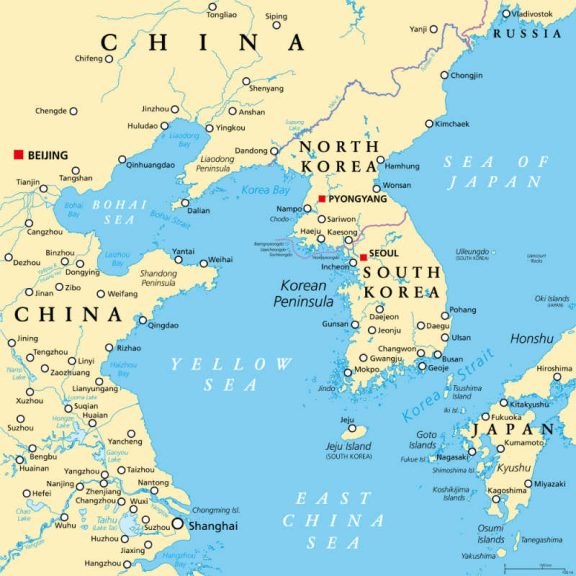
The Russian President, Vladimir Putin, has been attending the celebrations for the end of World War II in Beijing and has had the opportunity to discuss bilateral relations with other attendees, including North Korea’s Kim Jong-un. This is what they had to say:
Vladimir Putin: “Mr Chairman of State Affairs of the Democratic People’s Republic of Korea, allow me to extend my wholehearted greetings to you once again.
We have already spent quite some time together this morning, attending the celebrations held by our Chinese friends. I would like to note that all these events were prepared and conducted at an exceptionally high level. They directly concern our countries because we took part in the common struggle against Nazism, fascism and militarism.
I am delighted to have this opportunity to hold a bilateral meeting with you on the sidelines of today’s events. Relations between our countries have recently acquired a special dimension of trust, friendship and alliance. We are well aware that it was at your initiative that your country’s special units took part in the liberation of the Kursk Region in full compliance with the new Treaty of Comprehensive Strategic Partnership between the Russian Federation and the Democratic People’s Republic of Korea.
I would like to emphasise that your soldiers fought valiantly and heroically. We will never forget the sacrifices made by your armed forces and the families of your military personnel.
I would like to thank you on behalf of the Russian people for participating in our common fight against modern neo-Nazism. Please convey our heartfelt words of gratitude to all the people of the Democratic People’s Republic of Korea.
I am happy to see you and to have the opportunity to discuss all aspects and spheres of our bilateral relations.”
Kim Jong-un: “Comrade President, I am delighted to have the opportunity today to talk about our relations, interaction, the outlook for the further development of our relations, and also to meet with you.
After we signed our interstate treaty in June last year, our relations have been developing in all spheres.
We fought jointly in accordance with that treaty and our obligations to the fraternal Russian people and armed forces set out in the treaty. I would like to extend special thanks to you, Comrade Putin, for your high assessment of our soldiers’ heroism, which you have expressed several times, including here.
As I said during our previous meeting, if there is anything we can do to help Russia, we will certainly do that, and we will regard this as our fraternal duty. We will do everything in our power to assist Russia.
We are cooperating in all spheres across various economic sectors. I believe that we must strive for great success to keep pace with the times and to enhance the well-being of our people. I would like to express my gratitude to you for finding the time to meet with me despite your packed schedule.
Summary
The two leaders exchanged greetings but gave little away, as is normal between these two countries. North Korea has assisted Russia on the frontlines with Ukraine by sending troops to the region. Official bilateral data puts their bilateral trade at less than US$1 billion, mainly in the provisions of oil, fertilizers and agricultural produce. In reality, Russia’s trade with North Korea is likely to now be more than its trade with South Korea – the two sides are involved in the weapons and military support sectors (such as provision of trained soldiers and their equipment, as well as construction engineers) while technology transfer in rocketry and required systems is also likely to have taken place. An educated guess would put values at about US$12-20 billion.
The two sides are also developing connectivity infrastructure, with numerous projects involving new roads, rail connections and bridges being built.
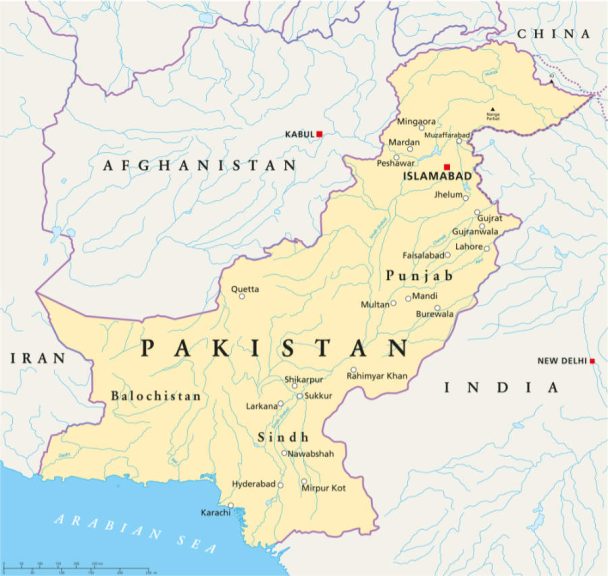
The Russian President, Vladimir Putin, has been attending the annual Heads of State Shanghai Cooperation Organisation summit in China, and has had the opportunity to discuss bilateral relations with other SCO members, such as with Pakistan’s Prime Minister, Shehbaz Sharif. This is what they had to say:
Putin: “Last time we met was a year ago on the sidelines of the SCO summit in Astana. Notably, Pakistan remains our traditional partner in Asia. We value our relations. I would like to point out that during our previous meeting, we agreed to step up our relations, and indeed, some progress has been made. Unfortunately, due to a number of objective circumstances, our trade is down albeit by a very small margin. Nevertheless, this is a telling sign for us to address this matter and to work on it.
Regrettably, Pakistan continues to face natural disasters. We worked together, sat at the same table during the SCO session, and you told us about them. We very much hope that under your leadership your country will overcome these difficulties and challenges. We extend our deepest condolences to the people of Pakistan in connection with the devastating floods. You recently told me about them.
Meanwhile, we continue to cooperate through inter-parliamentary channels. Interaction is going on uninterrupted. We cooperate on international platforms. Pakistan is currently serving as a non-permanent member of the UN Security Council, and we are also working day in and day out on this most important platform.
Russia has SCO events at the level of heads of government planned for November. We will be delighted to see you in Moscow, if your schedule allows for a visit.”
Sharif: “We are meeting for the first time after our meeting last July, and I can say with a sense of confidence that together we have been making very serious and sincere efforts to promote our bilateral relations, particularly in the field of trade.
Last year, our trade had a spike. We imported oil from Russia, and that led to an increase in our bilateral trade.
Our relations have been on the rise in the past years, we are also very keen to strengthen our bilateral relations – I think we are moving in the right direction. There has been flurry of visits of delegations between the two countries. Your honourable deputy prime minister went to Islamabad; Russian delegations visited Pakistan; and our delegations visited last year. Recently we signed protocols in terms of how to promote our cooperation in agriculture, iron and steel, energy, transport, and Middle corridor starting from Belarus, then transiting Russia, Kazakhstan, Uzbekistan, Afghanistan, and Pakistan. This is a very important corridor.
I think that all this put together reflects, beyond any way of doubt, a very keen commitment to build our relations. Thank you very much for your invitation to visit your great country. I will be very happy to be there.
I would like to also thank you for supporting Pakistan and trying to have a balancing act in the region. I know and I must say that we respect your relationship with India – that is perfectly fine – but we also want to build very strong relations, and these relations will be supplementary and complimentary for the good, and for the progress and prosperity of the region. I find you a very dynamic leader, and I want to assure you but like to work with you very closely.”
Summary
Bilateral trade between Russia and Pakistan has been growing reached US$1.3 billion in 2024, with agricultural trade dominating. Russian and Pakistan also engaging in direct barter for products such as oranges (Pakistan) and legumes (Russia). Russia has also shown interest in Pakistan’s oil industry sector.
For more the latest additional intelligence concerning Russia-Pakistan trade and investment, please click here.
The Russian President, Vladimir Putin, has been attending the annual Heads of State Shanghai Cooperation Organisation summit in China and has had the opportunity to discuss bilateral relations with other SCO members, such as with Nepal’s Prime Minister, Khadga Prasad Sharma Oli. This is what they had to say:
Putin: “Mr Prime Minister, I am delighted to see you and have this opportunity to talk with you and discuss both current matters and bilateral issues on the sidelines of the SCO summit.
We established diplomatic relations in 1956, and next year we will be marking an anniversary. Even today, we can sum up some outcomes of our cooperation. I would like to note that we have never had any problems. Moreover, our positions on key issues on the international agenda are either very close or fully aligned, as diplomats usually say. We can also think about ways to expand and deepen our interaction in the most important areas.”
Oli: “Your Excellency, thank you very much for managing to find time – although it is midnight – to meet with me and to provide me this opportunity. I am very glad to get this opportunity to meet with you.
We are all friends, of course. Between our two countries, diplomatic relations were established in 1956, and since then, our bilateral relations have always been very good. I don’t know the reason but our two nations’ friendly ties are a little bit weak right now. Before, I think, they were very strong, with frequent coming and going, but so far I know of no Russian president or top leader who has visited Nepal until now, though people from Nepal have visited Russia. When I was prime minister, I was in Russia in 1999 and 2000. I got the opportunity to understand and see the landscapes, geography, and historical places like Moscow and St Petersburg. They really are special. I also got the opportunity to go to neighbouring countries, like Belarus and Ukraine.”
Putin: “Mr Prime Minister, I will take advantage of your idea, and we will certainly consider visiting your country, Nepal. Meanwhile, we will always be glad to welcome you in Russia, at any time convenient for you.”
Oli: “When I visited Russia in 1999, I knew that more than 5,000 students were getting good education in Russia, in different universities, in particular at the People’s Friendship University, where many students got the opportunity to study there in Russia. Even now there are so many doctors in Nepal who are treating people, who were educated in Russia.”
Putin: “You know, whenever people study in another country, including Russia, they leave it with very good impressions and warm memories. In this case, with memories of Russia. These people then become a natural link between Russia and their homeland, in this case, Nepal.
Considering humanitarian cooperation, we attach great importance to continuing contacts in education and culture. We will be glad to further develop this area of our cooperation. You mentioned that young Nepalese are showing an increasing interest in education in Russia in different areas. Of course, we will meet you halfway in identifying the most promising areas of study. We can also consider other spheres of humanitarian cooperation. I am sure the Russian public would be very interested, for example, in an exhibition of Nepalese sculpture. Let us consider this possibility as well.”
Summary
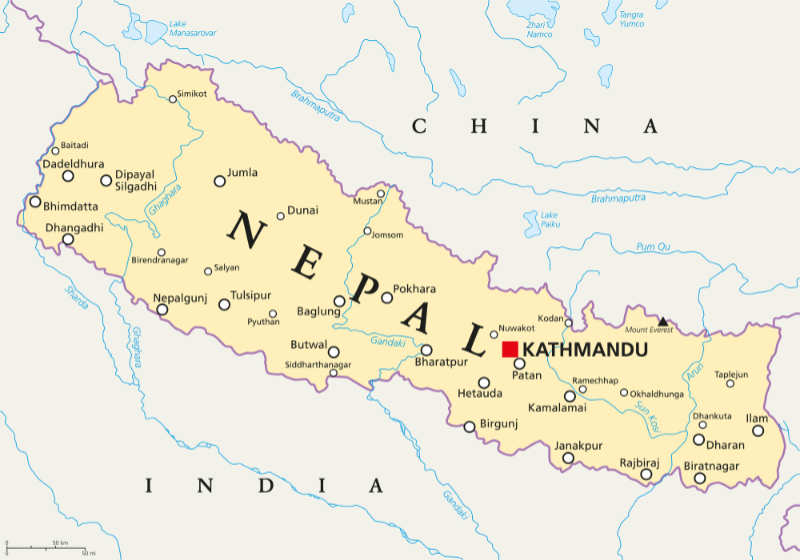
Given their geographic remoteness from each other, it is understandable that bilateral trade relations between Russia and Nepal are in small volumes. Nonetheless, the two countries’ relations are close, friendly and multi-faceted in nature and scope, encompassing economic and technical cooperation, trade, tourism, culture and human resource development. Both Nepal and Russia have similar views on international issues of mutual concern.
The teachings and ideals of the Buddha, who was born in Lumbini, Nepal, spread to Russia through Tibet and Mongolia. The Buryatia, Tuva and Kalmykia regions of the Russian Federation have substantial Buddhist populations. Russia has an estimated 1.5 million Buddhists based in these regions.
Nepal is one of the richest countries in the world in terms of water resources, and Russia is looking to get involved in the country’s energy sector. According to Russian President Putin, Moscow and Kathmandu are looking to increase cooperation in the energy, metallurgy, infrastructure, and civil aviation sectors. Russia already supplies helicopters to Nepal, with Russian aviation equipment proving itself to be suitable for use in Nepal’s high-mountain conditions. Russian Mi-17 helicopters are operating in Nepal, and plans are in place to develop their use.
Nepal is reportedly working on several projects, including nine major power plants, while considering another 27 sites for future exploration. It is expected that Russian energy corporations will try to get involved and benefit from cooperation with Nepal, as the country’s river systems provide immense potential for hydroelectric development. Nepal’s maximum potential for the production of hydroelectricity has not yet been met. Russian technology related to hydropower plants, accessories, and non-conventional use of energy is particularly suitable for Nepal. It is worth mentioning that the Soviet Union provided assistance to Nepal for the setting up of the Panauti hydroelectric power station in 1965.
Nepal has a population of about 31 million and a GDP (PPP) of about US$170 billion. Per capita income in PPP terms is about US$5,500. The country is a significant recipient of overseas remittances due to a substantial number of Nepalese workers being based overseas.
Major industries include tourism, carpets, textiles, cigarettes, cement, brick, as well as small rice, jute, sugar and oilseed mills. Agricultural products include cereals (barley, maize, millet, paddy and wheat), oilseed, potato, pulses, sugarcane, jute, tobacco, milk and water buffalo meat.
Russia -Nepal bilateral trade dropped in 2022 and 2023 due to the secondary problems caused by sanctions interfering with trade and logistics. In 2024, there was some recovery, mainly via Indian supply chains, with Russia exporting about US$16 million worth of goods to Nepal, being mainly edible seeds, nuts and other agricultural produce. Nepal exported items such as woollen items such as shawls and carpets, as well as black tea to the value of about US$5 million.
According to Sergey Katyrin, head of the Russian Chamber of Commerce and Industry, exports from Russia to Nepal could increase tenfold to US$400 million in increasing agricultural products trade. He said that “There is potential for creating joint ventures for the storage and processing of agricultural products, with future access to large markets in neighbouring countries.”
According to him, the agro-industrial complex is one of the most promising areas of cooperation between Russia and Nepal for increasing bilateral trade, in particular, the export of agricultural machinery and agricultural products.
Katyrin added that there are prospects for supplying grain and chemical fertilizers to Nepalese markets under state contracts. Nepal is interested in purchasing sunflower oil, sugar, and flax, and in turn offers to consider the possibility of establishing supplies to Russia of tea (both granulated and leaf), pickles, medicinal herbs, extracts for cosmetic needs, and essential oils.
As President Putin pointed out, Nepal and Russia will celebrate their 70th anniversary of the establishment of diplomatic relations in 2026, with a plan to drive tourism expected.
Hainan FTP RSC Group is a leading platform for the development of Hainan’s digital economy. The platform has the status of a national technology business incubator and is positioned as a center for innovation in digital commerce and a leading platform for the development of fintech. More than 15,000 companies with a combined turnover of more than ¥200 billion (US$28 billion) are registered here.
Under the partnership, the RDIF and Hainan FTP RSC Group will consider the possibility of jointly establishing a center for industrial and trade cooperation on Hainan geared toward Russian companies, the fund said. The new center will make it possible to take advantage of the Hainan Free Trade Port to offer Russian businesses integrated services and infrastructure to implement international projects.
The Hainan FTP RSC Group are free trade zone operators in Hainan Island, off China’s southern coast near to both Hong Kong and Vietnam. The entire island is a free trade area with very specific benefits, especially in medical tourism, as it is able to import and utilise certain drugs and medical treatments not available in mainland China.
The RDIF and Hainan FTP RSC Group will also provide support for Russian companies to implement investment projects at the Hainan Ecological Software Park and in other regions of China. Russian investors will be offered access to legal, tax and administrative services, as well as government support measures, which will make it possible to take advantage of local infrastructure.
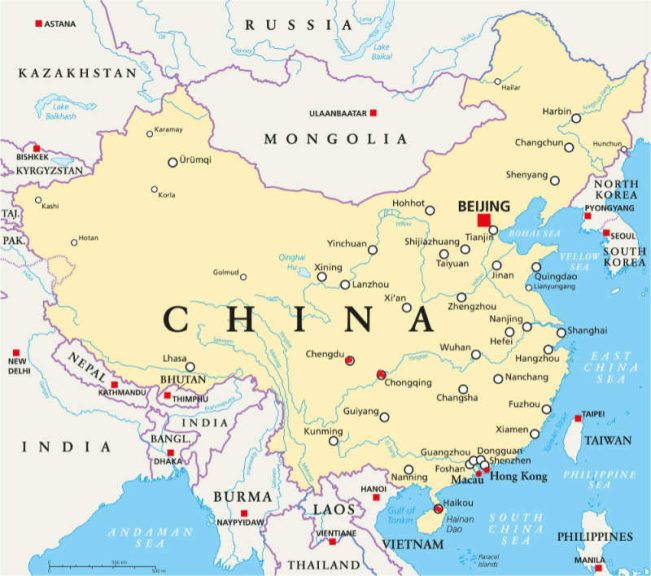
In addition, the RDIF, the National Coordination Center for International Business Cooperation (NCC) and the Sichuan Association in Russia have agreed on a partnership to implement joint investment projects in Russia and China. The NCC and Sichuan Association plan to study markets, help identify suppliers and consumers in both countries, and provide logistical support. The RDIF will bring in its portfolio companies and international co-investors to realize the investment opportunities. Sichuan is a huge inland Chinese province with a population of about 120 million people. Its major cities are Chengdu and Chongqing, although Sichuan and Chongqing are administered as separate entities.
RDIF head Kirill Dmitriev stated that “Together we will focus on such promising sectors as infrastructure, high-tech manufacturing and electronic commerce, while simultaneously creating a new forum for dialog and cooperation.”
The Shanghai Cooperation Organisation (SCO) members have voted to reorganise the status of the three non-full member categories of “Dialogue Partners,” “Observers,” and “Permanent Guests” into one single category: “SCO Partners.” The move simplifies categories and makes the group easier to administer.
This means that Afghanistan, Mongolia and Turkmenistan all become partners, as does the ASEAN trade bloc, which already included three dialogue partners (Cambodia, Laos, and Myanmar) and effectively adds Brunei, Indonesia, Malaysia, the Philippines, Singapore, Thailand and Vietnam into the SCO mix. ASEAN is represented at the SCO by its Secretary-General, Dr. Kao Kim Hourn, and has been attending SCO events since 2017.
Also elevated to partner status is the Commonwealth of Independent States (CIS), although its individual members were all previously involved either as full members or dialogue partners. Having a singular bloc voice, represented by its General Secretary, Sergey Lebedev, is also useful in having one voice representing the interests of all the SCO states. Interestingly, to reciprocate, the SCO itself became an observer to the CIS. Following the 2025 Tianjin summit, the Chairmanship of the SCO has passed to Sadyr Japarov, the President of Kyrgyzstan. Each full SCO member state holds the chairmanship for 12 months.
In addition to this, the United Nations, previously recognised as a permanent guest, is also elevated to the status of partner. The UN is represented by its Secretary-General, Antonio Guterres, thus retaining a link between the SCO and all other nations of the world and, in particular, the United States.
With the SCO bloc clamouring for reform at the UN, Guterres’ return to New York to discuss developments at the SCO Tianjin summit is bound to result in knock-on effects as the status of the United Nations itself during a time when its global credibility is being called into question. As the Kazakh president, Kassym-Jomart Tokayev, himself previously a director-general of the United Nations in Geneva, stated at the SCO summit, “In the current difficult geopolitical realities, we must support the UN as a universal and independent organisation. At the same time, there is a need to reform the United Nations, primarily its key body, the Security Council. We are fully aware of the complexity of such a reform, but there is no other way. If the current generation of leaders refuses to fulfil this task, it can definitively and irrevocably undermine the confidence of states in the UN.”
Note: Articles like this take many hours to prepare. Our analysis comes with decades of regional experience and professional expertise. When using our content, kindly refer to Russia’s Pivot To Asia as the source.

 Русский