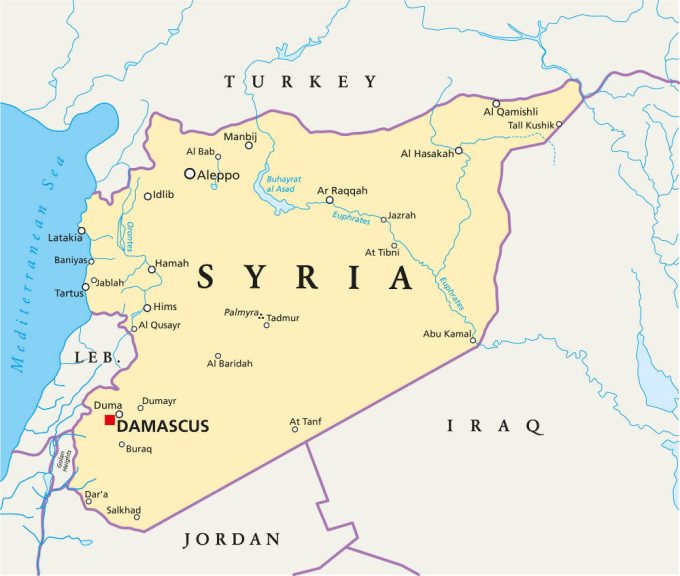
The Russian Deputy Prime Minister, Alexander Novak, has proposed to the new Syrian authorities that the Russia-Syrian Intergovernmental Commission on Trade and Economic Cooperation should now be reactivated. He was speaking as part of a Russian delegation with Syrian officials in Damascus.
Novak stated that “We propose to resume the work of the intergovernmental commission on trade and economic cooperation, which has proven itself to be a good tool for expanding our relations, primarily in the economic area. We are also discussing practical possibilities for providing assistance to Syria together with our partners in the region, with Qatar in particular, in terms of humanitarian supplies and the restoration of the energy sector. We confirm our readiness to launch a number of projects aimed at providing Syria with food, fuel, and pharmaceutical products both on a commercial basis and as part of humanitarian aid.”
Syria underwent a change of government after what was essentially a civil war ousted long-term Russia ally Bashar al-Assad, who is now in exile in Moscow, a situation that has irritated the new Syrian leader, Ahmed Hussein al-Sharaa, who wants to try him for crimes against the Syrian people.
Relations between Russia and Syria are complicated, with Russia also wanting to keep its Syrian military bases at the Khmeimim Air Base and Tartus Port. However, Russia has been working hard to maintain diplomatic relations, while al-Sharaa has held conversations with Russian President Putin.
Signs that this new détente is paying off are that the contract to print the new Syrian banknotes was recently awarded to a Russian company.
The BRICS nations convened an emergency virtual summit yesterday (September 8), hosted by Brazilian President Lula da Silva, to discuss the situation concerning the United States imposition of trade tariffs on multiple countries including BRICS members. The meeting lasted about 90 minutes.
All ten full BRICS members were present, represented by Brazilian President Lula Da Silva, Russian President Putin, the Indian External Affairs Minister, Subrahmanyam Jaishankar, the Chinese President Xi Jinping, the South African President Cyril Ramaphosa, the Egyptian President Abdel Fattah El Sisi, the Iranian President Masoud Pezeshkian, the Indonesian President Prabowo Subianto, the Crown Prince of Abu Dhabi Khaled bin Mohamed bin Zayed Al Nahyan, and the Ethiopian Deputy Foreign Minister Mesganu Arega.
In this article we provide summaries of what was said, with links to the complete speeches, and provide analysis as to the intent and likely outcomes.
Brazil
US tariffs on Brazil: 50%
The Brazilian President Luiz Inacio Lula da Silva hosted the summit and made hard-hitting comments about the current state of global trade affairs, saying that “It is increasingly clear that the governance crisis is not a temporary issue. The pillars of the international order created in 1945 are being undermined at an accelerated and irresponsible rate, while the World Trade Organization has been paralyzed for years. In just a few weeks, unilateral measures rendered fundamental principles of free trade, such as the Most Favoured Nation and National Treatment clauses, are now dead. We are witnessing the formal burial of these principles. Our countries have become victims of unjustified and illegal trade practices, while tariff blackmail is being normalized as a tool to conquer markets and interfere in domestic affairs. The imposition of extraterritorial measures threatens our institutions, secondary sanctions restrict our freedom to strengthen trade with friendly countries, and to divide and conquer is the strategy of unilateralism.”
Counterbalancing this, he said was the BRICS: “It is up to BRICS to show that cooperation overcomes any form of rivalry, and that mutually agreed rules and norms are essential for development. Trade and financial integration between our countries offer a safe option to mitigate the effects of protectionism. Together, we represent 40% of global GDP, 26% of international trade and almost 50% of the world’s population. We have among us large exporters and consumers of energy. We have the necessary conditions to promote green industrialization, which generates jobs and income in our countries, especially in high-tech sectors. We have 33% of arable land and are responsible for 42% of global agricultural production. The BRICS Bank is increasingly contributing to the diversification of our economic bases and the promotion of a fair and sovereign transition.
We therefore have the necessary legitimacy to lead the refoundation of the multilateral trading system on modern, flexible bases geared to our development needs.”
Lula finished his speech by adding “The Global South is in a position to propose alternative global development strategies and head off a new Cold War. BRICS is now the new name for defending multilateralism.”
The Russian Presidential spokesman, Dmitry Peskov, stated that President Putin’s comments would not be made public due to the sensitivity of the situation as concerns US sanctions and discussions with the United States concerning Ukraine. However, it is already well known that Putin is for the continuing development of BRICS and the push to find new markets away from the United States and overall European trade and economic influences, which are currently regarded in Russia as toxic.
India
US Tariffs on India: 50%
The Indian External Affairs Minister, Subrahmanyam Jaishankar, stated the Indian position as concerns BRICS, emphasising that economic practices globally must be fair, transparent, and benefit all countries. He called for a constructive and cooperative approach to trade—rejecting barriers and non-trade linkages—and highlighted the importance of resilient supply chains and democratizing access to manufacturing. Jaishankar underscored that the world is facing serious challenges from conflict, volatility, and climate, and urged the protection of an open, fair, and rules-based international trading system, especially for developing countries.
He added that the BRICS should “proof global trade against market shocks” and that this meant creating more resilient, reliable, and shorter supply chains, adding that global trade should “democratize manufacturing and production and encourage growth in different geographies.” He also stated that the BRICS focus is on stabilising the international economy and the world order.
US tariffs on China: Over 1,000 sanctioned companies, 30% tariffs, has threatened 245%.
The Chinese President Xi Jinping made a statement titled “Forging Ahead in Solidarity and Cooperation,” noting that a once in a century transformation is accelerating globally, with unilateralism, and protectionism getting out of hand. He stated that “BRICS countries should act on openness, inclusiveness and win-win cooperation, defend multilateralism and the multilateral trading system, advance greater BRICS cooperation, and build a community with a shared future for humanity.” He also implied that the BRICS represented the Global South and said that “Multilateralism is the shared aspiration of the people and the overarching trend of our time.”
Xi called for extensive consultation and joint contribution with the United Nations and WTO to resolve problems, to cement the foundations of multilateralism, while representation of Global South countries should be enhanced.
President Ramaphosa stated that unilateral tariff actions are contributing to an increasingly protectionist environment which poses great hardships and danger for the countries of the Global South and is an obstacle to our economic growth. He added that these strategies constrain developing economies to remain locked into the lower end of global value chains.
He stated that South Africa is supportive of BRICS initiatives that improve the resilience of our economies as BRICS countries and those of the Global South and strengthen the global multilateral system. He added that South Africa’s focus is on strengthening and collaboratively diversifying our trade and investment partnerships with Africa, Asia, and the Middle East, and that it wants to see Africa as the beating heart of global trade engaging the world “not as a mere exporter of raw materials, but as a creator of value.”
He added that a “BRICS Economic Partnership Strategy” should be developed to send a clear message that all BRICS members are committed to mutually beneficial trade that addresses the needs and interests of all its members, saying that “A commitment on the part of all of us to sustainably address our various non-tariff barriers would position BRICS as a stable and predictable mutually beneficial trading partner amidst the current global disruptions.”
The Egyptian President Abdel Fattah El Sisi stated that “The international landscape is now plagued by blatant duality of standards and flagrant violation of the provisions of international law. This is occurring without the slightest regard for accountability, under a system of impunity and an alarming escalation of unilateralism and protectionist measures.
This regression undermines the very foundations of international peace and security. It pushes humanity back into a state of disorder and lawlessness, solidifying the use of force as a means to impose will and achieve objectives, all at the expense of legitimacy and justice.”
He also called for additional coordination amongst the BRICS nations, including with trade finance and to concentrate on the use of sovereign currencies as opposed to the US dollar in multilateral BRICS trade.
Masoud Pezeshkian, the President of Iran spoke about the need to reform the global financial system, stating that “BRICS should lead a comprehensive reform of international financial institutions, including the International Monetary Fund and the World Bank, so that they reflect global economic realities in the face of illegal unilateral sanctions and to continue developing their economies without being subjected to unfair political pressure. Rebuilding the current world order requires serious reforms in global governance, from revising the composition and functions of the UN Security Council to restructuring the international financial and monetary system. Groups like BRICS and other Global South institutions have a special responsibility in leading the transition toward a multipolar, democratic, and just order where the voices of all countries, especially developing nations, are heard.”
Iran has endured decades of US sanctions that restrict its access to global markets, including its main export, oil.
Indonesia
US Tariffs on Indonesia: 19%
The Indonesian President, Prabowo Subianto Prabowo underscored that the BRICS collective economic power, large population, expansive markets, and abundant natural resources make it a formidable force in shaping the future of global politics and economics.
He also stressed the importance of openness, coordination, and close cooperation among BRICS members in tackling global uncertainty. He called on BRICS nations to embrace their moral responsibility in creating a more equitable and balanced world order, emphasizing the need for more frequent consultations, saying “We must continue to strengthen our collaboration. We must consult with one another more frequently. BRICS has a moral duty to lead the way toward a fairer global order.”
Ethiopia
US Tariffs on Ethiopia: 10%
The Ethiopian presentation has not at this time been made public, however the country has previously called for reform, with Prime Minister Abiy stating in June this year that there was need to reform global decision-making institutions, including multilateral financial institutions and the UN Security Council, to ensure equitable representation of developing countries, especially from Africa. He indicated BRICS countries should continue playing their aspirational role in order to advance peace, prosperity and their collective security.
United Arab Emirates
US Tariffs on UAE: Varies upon product: 10%-50%
The Crown Prince of Abu Dhabi, Sheikh Khaled bin Mohamed bin Zayed Al Nahyan, representing Sheikh Mohamed bin Zayed Al Nahyan, President of the UAE, underlining that the BRICS serves as a vital framework for collective international action, driving development for its member states and people, while advancing shared global prosperity, in alignment with the UAE’s commitment to building economic and trade partnerships that further enhance sustainable development and deliver growth and prosperity for all nations.
A short video, in Arabic, of the Crown Prince’s comments can be seen here.
Other Commitments
Collectively, the BRICS countries also agreed to expand the role of the “Friends of Peace” group in resolving the Ukraine conflict and unanimously gave their support for the “Two States for Two Peoples” plan on the Palestinian issue, advocating for peace and stability in the Middle East. That latter issue puts them into direct opposition to the United States, Israel, and much of the European Union. This will become a hotly debated issue at the upcoming United Nations General Assembly.
Summary
Criticism
Western media has tried to downplay the meeting, with many concentrating instead on the issue that the Indian Prime Minister Modi was not present, instead having his Foreign Minister provide India’s perspective. They used Modi’s absence to suggest he had argued with China’s President Xi in Beijing last week – whereas in fact the two seemed to get on very well. India’s External Affairs Minister, S. Jaishankar, who stood in for Modi, is already well known to the BRICS group and is a highly respected economist. In fact, Modi was attending the annual conference for India’s National Democratic Alliance, a long standing domestic political engagement with the largest political party in the country.
Others pointed out that none of the BRICS countries openly criticised the US President, while many did not mention the United States at all – a typical diplomatic approach. There have been insinuations that this was so as not to ‘enrage’ Trump, however this is a collection of highly experienced leaders – banging the table and making insults is not BRICS behaviour – in contrast to standard rhetoric coming from the West. While that milder approach may signify weakness by some commentators, it remains more diplomatically helpful when attempting to negotiate complex issues.
BRICS Virtual Summit Objectives & Deliverables
The collective BRICS virtual summit appears to have been a working platform to rally calls throughout the Global South as an appeal to work together at the United Nations and the World Trade Organisation to resolve difficulties.
The opportunity to press for this will come very soon, as the 80th United Nations General Assembly is to take place in New York on September 23, where World Leaders will have their say. In this regard, the BRICS Virtual Summit can be regarded as a pre-UN rallying call to make sure that everyone is on the same page and will be pushing for reform. That suggests that the BRICS diplomatic push will be extremely active over the coming two weeks as they rally the Global South behind them to make clear a case for change and to summon significant amounts of pressure to be put on the United States to move away from a unipolar approach. Trump will be attending.
In this instance, the BRICS Virtual Summit was a precursor to the main event – the UN General Assembly.
What Happens Next?
This depends upon the results at the United Nations General Assembly. If the BRICS virtual summit is anything to go by, it is going to be a hot one. We will have to wait to see what transpires; but should the ‘Global Majority’ speak out in criticising the United States, then US long term policy will be influenced. With Trump there, and due to speak, almost anything is possible – he is not a man who takes criticism lightly. However, as the Brazilian President stated yesterday, now is the opportunity for the Global South to make itself heard. We will soon learn how loud that voice is – or is not – and the implications of what that means at the month end.
But the coming UN General Assembly is also now focused on a very important issue – will the Western nations get behind and support reform – or not. The BRICS summit has therefore made a soft ultimatum. Despite the lack of finger-pointing, the underlying message is unanimous: there needs to be UN and WTO reform, or the global trading system will collapse.
Interestingly, at the BRICS side of this, mechanisms have already been proposed – and supported – by the members of the Shanghai Cooperation Organisation just last week. Except for Brazil (whose President yesterday also suggested the BRICS works in tandem with the SCO) the BRICS founding partners – Russia, India and China – are all founding partners of the SCO.
They all approved of Chinese President Xi’s introduction of a ‘Global Governance Initiative’ a policy that lays out a structure for improved management and direction of global affairs, and especially within trade. While this document stresses the need to work with the United Nations, if the UN – and this will come to a head at this month end – proves unable to reform, then there will be a global crisis of confidence as regards the credibility of the UN itself as remaining suitable for fulfilling its stated mandate of “maintaining international peace and security, to develop friendly relations among nations, foster international cooperation to solve global problems, and promote human rights and fundamental freedoms for all.”
If the Global South at the UN General Assembly feel that it is no longer fit for purpose and is unable or does not want to reform – then that will usher in an entirely different set of events. But there is another aspect that should be taken into consideration: the BRICS are prepared. The Global Governance Initiative exists, and it may yet become an alternative. We will soon learn what will happen on September 23, when all the Global South’s frustrations are given a very public, global platform to voice their opinions. Will they roll over? Or will they fight?
Note: Articles like this take many hours to prepare. Our analysis comes with decades of regional experience and professional expertise. When using our content, kindly refer to Russia’s Pivot To Asia as the source. Enquiries? Email us at info@russiaspivottoasia.com
The trade turnover between Russia and China, which grew by almost 2% last year to US$245 billion, can be expected to grow by another US$30 billion in the coming two years, according to Peter Zaselsky, the Chairman of Russia’s Roseximbank. He was speaking at the Far Eastern Economic Forum in Vladivostok.
Russia-China trade turnover has slowed this year, mainly because of sanctions and also due to a natural rebalancing of trade. According to China’s General Administration of Customs, Russian-Chinese trade turnover in the first half of 2025 decreased by 9.1% to US$106.5 billion.
But Zaselsky, whose bank specialises in the financing of Russia imports and exports, said that the pace of growth would pick up again due to the growth of Russia’s non-energy exports to China, a sector that is not generally sanctioned.
Zaselky explained that “Our trade turnover with China has not reached a plateau; there are prospects for growth. According to our estimates, within the coming two years it will grow by US$30 billion across the entire product range, including US$5-7 billion due to exports of non-primary and non-energy goods from Russia, such as potash fertilisers, aluminium, crabs, fish, rubber, wheat, metallurgical and chemical products.”
He stated there are several main growth factors, adding that “one of the main growth areas is the expansion of the geography of cooperation with Chinese partners, including access to China’s southern provinces, which are still not very familiar to us today.”
That coincides with findings that about 80% of Russia’s exports from the Russian Far East only go as far as China’s three major northern provinces – Heilongjiang, Liaoning, and Jilin – and the two eastern ports of Shanghai and Qingdao. There is plenty of market room in China and elsewhere for Russian companies to continue to explore.
Zaselky said that “Partnership in the logistics sector is one of the most promising areas of cooperation between Russia and China. Today, 65% of container shipments of Russia’s foreign trade traffic connect with China. Almost all types of transport are involved, and all routes are well-established and complement each other. The Arctic Express project and the development of the central railway corridor through Mongolia show great additional potential. Plus, there are plans to develop more cross-border crossings. In the long term, according to our financial need assessments, the greatest opportunities are associated with industrial, technological, and payment cooperation; joint productions in advanced technologies; and technological transfer.”
He also stated that sanctions restrictions will not interfere with trade development because new technologies will negate their impact. “The transition to national currencies and digital technologies will change the system of international settlements in the future. At present about 85% of Russia’s foreign trade settlements are carried out in our respective national currencies, the rouble and the RMB yuan. However, we are also seeing a transformation of the international settlements system. The share of alternative calculations is growing. The future belongs to new technologies, digital currencies, local payment systems, and block payment systems. It will not be the same as before.”
Zaselky’s forecast, if correct, would mean that Russia-China bilateral trade would rebound again to reach US$243 billion by 2027 – about the same level as in 2024. Key to understanding the implications of this, however, are that the development scenarios are also different. By the end of 2027, as compared to the end of 2024, the market will have matured. That includes a better understanding and balancing of bilateral trade dynamics, a larger market push by Russian companies into the Chinese interior, and new mechanisms to facilitate bilateral trade finance.
Plucky little Laos, in southeast Asia, has just become the latest country to ignore US import tariffs, by stating that it will redirect its US exports to other markets. Laos has been hit with a 40% import duty on its products.
What is surprising about this move is that Laos is a relatively small country, with a population of just 8 million and generating a GDP of just US$16.5 billion. The United States has a GDP of US$29 trillion and a population of 340 million. The Laos market is never going to be huge for US exporters. Laos does run a trade imbalance with the United States, but considering their size differentials, this is always likely to be the case – there are simply more American consumers, while the Laos consumer base is small in comparison, an emerging market in terms of wealth, and is distant and somewhat remote – Laos is ASEAN’s only landlocked nation. However, Laos is also a partner state with the BRICS. And this is where the United States tariffs policy gets its maths wrong.
The Laos Prime Minister, Sonexay Siphandone, stated yesterday that Laos would instead redirect its coffee exports to Russia instead of the US. As a relatively small producer in the global scheme of things, this means that smaller economies such as Laos, are more flexible and able to find replacement export markets, in this case, Russia, who will now buy all the previously US-market intended Laos production. Russia has a population of 143.5 million.
But what about India? And China? These are not small countries. As we have seen, the Trump administration is currently putting considerable pressure on India to stop buying Russia oil and has imposed tariffs of 50% on Indian imports to the United States. US administration officials have stated that India will soon comply with US wishes, having denied them access to the American consumer markets. But there is a problem. India, as part of BRICS, has an alternative market it can sell too – the BRICS group. The BRICS members and partners have a combined population of 4.45 billion. That means that for every single American consumer, there are 13 alternative BRICS consumers.
While huge economies such as India need time to redirect their US$90 billion of exports to the United States to alternative markets, an increased spend of just US$0.3 a week among the BRICS consumers in purchasing Indian exports is enough to absorb the entirety of what used to be its US exports. Simply put: the US consumer economy is too small to dictate where global exports should or should not go. The alternative markets are substantially larger. The United States economy is 1,757 times larger than the Laos economy. When countries like Laos can afford to ignore America tariffs by using those alternative markets, the writing is on the wall as to where Trumps tariffs policy is ultimately heading.
Laos could reroute its coffee sales from the US to Russia due to the 40% tariffs imposed by US President Donald Trump, Laotian Prime Minister Sonexay Siphandone has stated. Trump imposed levies on goods from Laos last month as part of a broader flurry of country-specific tariffs aimed at addressing what he called unfair trade imbalances. US-Laos trade is valued at US$842 million, with the US exporting just US$40 million of that. However, the Laos economy is small, at just US$16.5 billion generated by a population of 8 million. The United States has a GDP of US$29 trillion and a population of 340 million. The Laos market is never going to be huge for US exporters.
Siphandone said that Laos would stand up to the US tariffs, stating that “Among the goods that Laos supplies to the US, but can also supply to other countries, are agricultural products such as coffee. Laos also supplies coffee to Russia, and now the volume of these supplies can increase. If US tariffs make our products too expensive and they will not buy them there, then we will increase the volume of supplies to Russia.”
The US tariffs have also hit top coffee exporters Brazil and Vietnam, with tariffs on their exports to the United States reaching 50% and 20%, respectively. Brazil, the world’s largest coffee producer, accounts for 37% of global output, while Vietnam contributes 17%.
Coffee prices have spiked sharply in recent months due to harvests being damaged by poor weather, as well as market disruption caused by the new US tariffs, according to the International Coffee Organization.
Americans drink coffee more than any other beverage, with two out of three consuming it daily, according to the US National Coffee Association. The group lobbied for an exemption for coffee ahead of the Trump tariffs but so far to no avail. The price of a Starbucks Latte Grande in the United States has increased from an average of $5 in June to $6 in September.
The problem that Trump faces with his tariffs on foreign imports is that smaller countries, such as Laos, can relatively quickly move their exports to other, larger markets, while those larger markets in turn, such as China, India, Indonesia and Brazil are substantial enough to absorb these measures and re-arrange alternative export consumption among themselves. For example, the BRICS group has a combined population of 4.45 billion that can be positioned to absorb previous export quantities to the United States of just 340 million. For every single American consumer, there are 13 BRICS consumers.
Laos, while small, is a full member of the ASEAN trade bloc, and a BRICS partner nation. Both the President and the Prime Minister of Laos have met with President Putin over the past week, with significant developments in bilateral trade and investment ties occurring. Details of these can be read here and here.
The Cypriot-based Burger King Russia is the latest EU listed company to have redomiciled its business from the European Union to Russia, where it will continue to operate as BKR ICLLC.
According to the Russian Unified State Register of Legal Entities, Burger King Russia was re-registered on September 1 in Kaliningrad’s special administrative region. The company’s CEO is Sergei Kozlov, who heads Burger Rus LLC, the master franchisee of Burger King in Russia. The international chain did not have its own restaurants in Russia but franchised them. The ICL owns 99.84% of the capital of Burger King Rus.
The 2024 revenue of the Russian Burger King company, according to the Russian Accounting Standards (RAS) had reached ₽90.26 billion (€936 million) in 2024, up 21.2%. Gross profit grew 14.3% to ₽17.29 billion (€179.3 million).
Those revenues would have normally been reported and subsequently taxable (upon repatriation) in Cyprus, which has a corporate income tax rate of 12.5%. This means that Cyprus has lost 2024 taxable income of about €22.41 million, taxable revenues that will now flow to Russia. In addition to this loss, professional services jobs will also have been lost in the legal, tax and accounting areas that would have previously been responsible in Cyprus for maintaining the companies accounts.
The re-domiciliation of EU-based companies to Russia has been going on since 2023 and is increasing, although this is typically unreported in European media. Other examples can be seen here, here, here, here, and here.
Russia’s FESCO transport group has transported a record volume batch of over 9,000 tonnes of peas during August, from southern Russia to China. FESCO stated that “The delivery was carried out with the leading exporter ‘Sila Sibiri’ using the regular FESCO Black Sea Service (FBSS) on the Novorossiysk Qingdao route.”
This is part of the integrated FESCO Agro logistics service, which was created specifically for Russian farmers. The plans for the future include further increasing the volume of transportation and expanding the range of exported crops. The demand for plant protein is growing in China and Asia, with Russian farmers expanding their cultivated areas to meet demand.
Russia is a major global producer and exporter of dry peas, ranking as the world’s leading producer in and experiencing significant growth in its harvest. Russia produced 4.7 million tons of the product during the 2023/2024 agricultural year.
Key drivers for this expansion include increased planted areas, particularly in the Stavropol and Krasnodar regions, in addition to growing domestic and international demand, especially from China and India.
Russia’s agricultural sector accounts for about 6% of its total annual GDP.
Discussions With Senior Officials From China, Mongolia, Laos, and about the Russian Economy: Full Contents & Analysis
The Russian President, Vladimir Putin, has taken part in a series of conversations as part of the Far Eastern Economic Forum in Vladivostok. Other participants included Sonexay Siphandone, the Prime Minister of Laos, Gombojav Zandanshatar, the Prime Minister of Mongolia, and Li Hongzhong, Vice Chair of the Standing Committee of the Chinese National People’s Congress.
These sessions are often useful as they are unscripted and can often throw up interesting geopolitical observations. Russia, China and Mongolia for example had just signed a massive, 30 year gas supply agreement for the Power of Siberia 2 pipeline.
The session was moderated by Maria Rybakova, and contained significant input from Putin as concerns the Russian domestic economy, as well as significant insights into Russia’s trade and infrastructure development with ASEAN, the development of Mongolian integration into Russia-China connectivity and supply chains, and an overview from China as regards Belt & Road Initiative style investments into Russia and other regional markets.
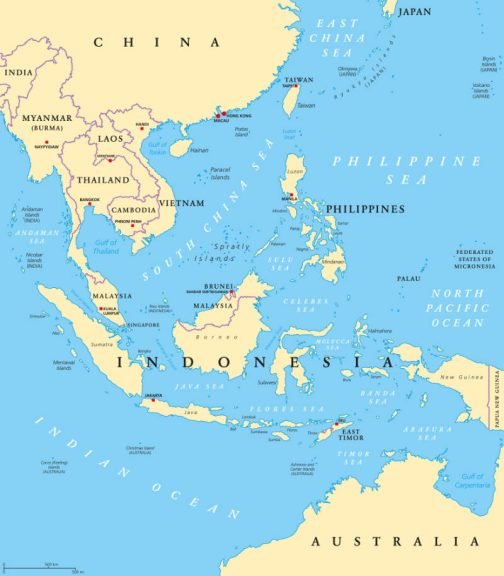
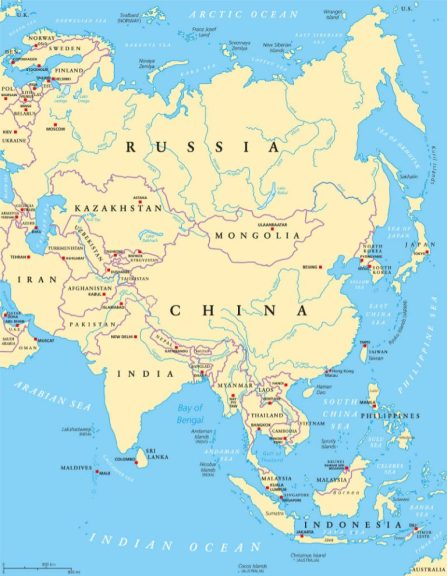
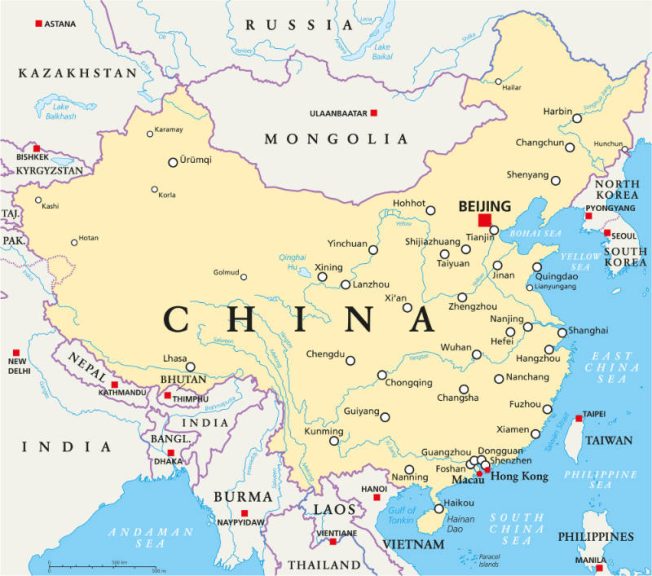
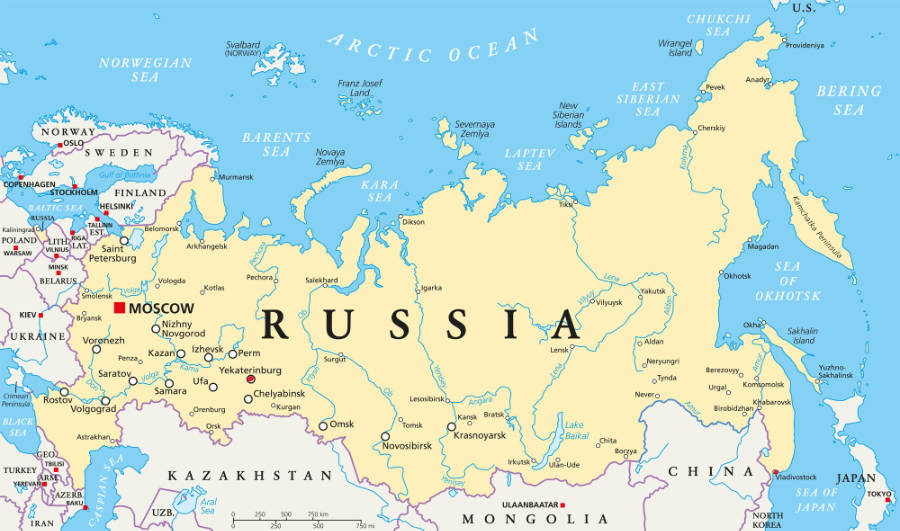
Putin also talked about the potential for trade with the Asia-Pacific nations and particularly with Alaska. It was a substantial, involved session, that we have broken up into four main parts marked by pertinent maps: ASEAN, Mongolia, China, and Russia.
Comments are prefixed by the relevant surnames; our analysis is prefixed RPA. Non-essential text has been edited for ease of reading and to avoid repetition.
Rybakova: “President Putin, traditionally, we have two main economic forums in Russia: the Far Eastern Forum, which has always been oriented towards Asia and the Pacific region, and the St Petersburg Forum, which, has always served as a window to Europe.
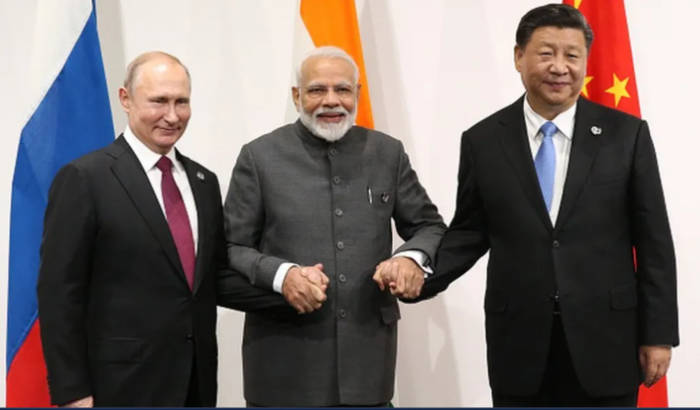
If you look at the Russian sovereign symbol – the double-headed eagle – it also looks to the West and to the East. You had a fulfilling trip to China for the Shanghai Cooperation Organisation summit. One can get an impression that the eagle is now looking to the East with its both heads. A group photo of you, Xi Jinping, and Narendra Modi has circulated throughout global media. It was dubbed a new alliance of the elephant, the dragon and the bear. My question is: “What place does the bear have in this alliance? What is it in this group?”
Putin: “A bear is a bear.”
Rybakova: “A bear is a tough animal.”
Putin: “You said that our Russian eagle is looking to the East and to West. But there is also South.
I have discussed this issue with my colleagues many times. What I am saying is that Russia’s development and our expanded interaction and joint work with our friends from the Asia-Pacific region and the Global South has nothing to do with the current political developments.
President Xi Jinping and I took up this major effort 20 years ago. It has nothing to do with the current circumstances but is related to our respective national interests. Our economies are complementary, we are neighbours, and we share many common interests, common approaches, and traditional values.
We, in Russia, knew the inner workings of the global economy. What are they? The whole world knows well that it is growing at a fast pace featuring new areas of focus and growth points. Naturally, we are guided by this, as we enjoy excellent neighbourly relations with many countries, including China, India, and Indonesia. Please note the pace of growth in these countries: Indonesia has almost 300 million people. That is quite a market.
Then there are smaller, but rapidly growing countries, such as Malaysia, Thailand, and Vietnam, with which we have had special relations for decades. Why would we not put all of that to good use? It is a natural thing to do. It is simply an answer to objective processes occurring around the world and in the global economy.
We have never refused to cooperate with those who wish to work with us, including in other countries across Asia. I simply do not want to put anyone in a difficult or awkward position. Companies from certain countries that face some problems due to the current political circumstances have not left our market; they are still in Russia, and they continue to operate and even to expand.
For political reasons, many European companies have exited – at a loss to themselves. We are aware of this and remain in contact; many are eager to return as soon as political restrictions are lifted. We do not turn our backs on anyone. Contrary to suggestions that we are “looking elsewhere,” we are not. Our foreign and economic policies remain stable and predictable.
In my view, this represents a clear competitive advantage, as stability is crucial for business. We have not turned away anyone or forced anyone out. Those who wish to return are always welcome, based on the re-entry conditions that we are developing.
Regarding the Dragon and the Elephant dancing together – this analogy was originally made by President Xi Jinping, not me – later the Bear was added. The Bear, of course, symbolises Russia. But we are staying in the Far East, and here we also have the world’s largest Tiger – the Ussuri tiger, which is a Russian tiger.”
RPA: The Ussuri Tiger, (Panthera tigris tigris) also known as the Siberian Tiger, is the largest Tiger species in the world.
Rybakova: “Continuing with our earlier economic theme, overall, it seems to me that there is a global trend towards protectionism. In other words, it appears that many countries prefer focusing inward, supporting domestic business rather than attracting external competitors. I want to emphasise that this is just my observation and my opinion – I am not an economist and would like to hear your opinion. What do you think: is this policy, which seems to be actively pursued in some countries, beneficial or not?”
Putin: “The protectionist approach is harmful, both to those who adopt it and to the global economy and international trade. It fosters separatism, both regional and national. Nothing positive comes from pursuing such a policy, as today’s world is highly interconnected and driven by possibilities and technological development. Isolating oneself within a purely national framework is difficult and counterproductive, as it inevitably undermines competitiveness.
We proceed from the fact that Russia is open to cooperation with all countries of the world, and above all with those who are willing to work with us, with our friends. At the same time, we are not shutting ourselves off from anyone. I believe the vast majority of those who are present here, if not everyone, will agree with me: such openness is beneficial to everyone who adheres to this point of view and this policy.”
LAOS & SOUTHEAST ASIA (ASEAN)
Rybakova: “Next, I would like to turn it over to the Prime Minister of the Lao People’s Democratic Republic. Mr Sonexay Siphandone, you have the floor.”
Siphandone: “Ladies and gentlemen, it is a genuine joy and honour for me to participate in this forum. I was very happy to receive an invitation from President Putin and to come to Vladivostok. This is my first time in this city. On behalf of the Government and the people of the Lao People’s Democratic Republic, I would like to express my sincere gratitude for the warm welcome extended to me and our delegation.
This forum contributes to improving the quality of life in the Russian Far East and in the complete Asia-Pacific region. Our meeting today clearly demonstrates Russia’s leading role as it strives to promote international cooperation within bilateral and multilateral formats. This also applies to political and economic interaction, as well as to promoting innovative technologies and designs.
Today, we have found ourselves in an extremely difficult situation, where changes in the international arena are absolutely unpredictable due to the geopolitical situation, with existing problems, primarily caused by protectionist measures that some countries are introducing in an attempt to compete and even hinder the growth, accelerated growth of other countries.
This is aggravated by several other problems, including natural disasters, climate change, exceedingly rapid development of modern technologies, and innovative technological solutions, especially the introduction of artificial intelligence.
We are facing the problem of instability on the energy and raw materials markets. Food also poses certain problems. We are witnessing crises in this area as well.
These problems must be solved to ensure global peace, prosperity and stability now and in the future. To solve all these problems, we must cooperate. We must use the existing consultative, multilateral and bilateral mechanisms that are based on the principles of mutual respect and compliance with international law. This is an important mechanism that often requires certain reforms to properly reflect the current situation and to meet its challenges.
The theme of this year’s forum is “Cooperation for Peace and Prosperity.” This choice is highly relevant in today’s circumstances, because without peace, prosperity cannot be achieved. Conversely, without prosperity, peace cannot be truly sustainable or lasting. That is why we must work together to ensure that the concepts of prosperity and peace go hand in hand.
The Far East brings together multiple countries with enormous potential. We can see that Russia plays a key role as a driving force for strengthening cooperation in this region, both in bilateral and multilateral formats.
Above all, associations such as BRICS, the Asia-Europe cooperation framework, the SCO, and others contribute significantly to advancing regional economic cooperation. These formats are based on the principles of mutual respect and the independence of their members.
Laos also seeks to promote cooperation within the framework of open and inclusive mechanisms. We believe that only through such cooperation can we find effective solutions to modern challenges. It is essential to make use of international mechanisms that continue to remain relevant in addressing these problems.
For the Government of the Lao People’s Democratic Republic, it is essential to create a more favourable economic environment for attracting investment and expanding trade.
Among other measures, we are working to establish and develop special economic zones and industrial parks across the country. We have also eliminated unnecessary bureaucratic barriers to make the process of attracting direct foreign investment as comfortable and transparent as possible.
We have also updated the investment law, introducing several provisions that make investing in our country more attractive to both domestic and international partners.
Our focus is on the most promising sectors: agriculture, renewable energy, geological exploration, manufacturing, pharmaceuticals, education, technology, services, tourism, transport, infrastructure projects, and logistics.
I would also like to stress that Laos is the only ASEAN member state without access to the sea. This makes it especially important for us to maximise the advantages of our strategic geographical position. Our goal is to ensure connectivity through land transport routes and thereby contribute to the development of logistics across the southeast Asian region.
Our government makes considerable investment in infrastructure and the construction of high-speed railroads across the entire country. We also continue to extend transport and logistics connectivity with friendly countries to become a regional hub for investment and trade. Tourism obviously plays a major role in that respect.
It is thanks to such policy and measures that Laos has earned trust and recognition at regional and international platforms. I would like to note that Laos held the 2024 ASEAN presidency during which we identified nine priority tracks.
All of them concerned the promotion of greater connectivity and sustainability of the region built around ASEAN’s three major principles. We had a very fruitful ASEAN presidency, and we remain loyal to the declared principles, namely, the principle of ASEAN’s central role.
Today we can safely say that ASEAN is a community which has proved its commitment to peace and regional cooperation, acting invariably in the spirit of mutual assistance, in accordance with the path ASEAN has chosen.
The Lao People’s Democratic Republic believes that enhancing ASEAN requires the promotion of economic cooperation and connectivity in the overall region. We will continue to augment regional integration and connectivity.
Laos is open for cooperation with all countries to achieve the goals of promoting peace, stability, prosperity and wellbeing in the region and worldwide.
It is in this spirit that I would like to invite you all to visit Laos so as to learn about our rich culture and beautiful nature as well as to see your potential in fostering cooperation and making investment in our country.
Also, on behalf of the Government and the people of Laos, I wish every success to the 10th Eastern Economic Forum here in Vladivostok. I hope it will remain a venue for free exchange of opinions, for cooperation and building a future where all countries have equal opportunities.”
RPA: The Russian Deputy Energy Minister Roman Marshavin met with Siphandone just a day earlier to discuss Russia-Laos cooperation in energy development and investment. That report, which also contains other bilateral trade and investment intelligence, can be accessed here.
In the wider context, Siphandone’s comments illustrate growing trends on the geopolitical level. As he stated, Laos is a member of ASEAN, and he referred to ASEAN policies numerous times as being in complete alignment, and in alignment with Russia’s foreign trade policies. That aptly illustrates the growing relationship between Russia and the ASEAN bloc, which is also a Shanghai Cooperation Organisation partner. Several ASEAN countries are either full members or partners of the BRICS, including Indonesia, Malaysia, Thailand and Vietnam, while Vietnam also has a Free Trade Agreement with the Eurasian Economic Union (EAEU). Other ASEAN countries, including the major Indonesian market, are negotiating similar deals.
In total, ASEAN has a GDP (PPP) of US$13.15 trillion, with a GDP per capita (PPP) of about US$19,048, among a population of about 690 million. It is for this reason that ASEAN is specifically mentioned in Russia’s Foreign Policy Concept as a key market to engage with. Siphandone’s remarks indicate that this policy is working well. While Russia’s trade and relations with China tend to grab all the headlines, it is Russia’s developing ties with ASEAN that are almost equally as important.
Apart from underlining the increasing ties between Russia and Southeast Asia, Siphandone also addressed the issue of protectionism. Here, two global trends have now emerged, with especially the United States and European Union, engaging in protectionism via the use of sanctions and trade tariffs. The East, on the other hand, does not engage in such behaviour and prefers to negotiate trade agreements. This is a remarkable turn-around, as during the Cold War and immediate post-Cold War era, it was the ‘communist east’ that engaged in protectionism and the West that were pushing for free trade and globalisation. Today, that scenario has undergone a 180-degree turn.
Rybakova: “Thank you very much for your kind words. Thank you for the invitation, I will gladly accept it as I have never been to Laos. In addition to what you have told us, I would like to separately discuss an amazing thing: Laos is the world’s largest exporter of electrical power. You are even referred to as a Southeast Asia battery. How did Laos manage to increase it in such amounts so fast? Respectively, we may also learn about the Laos example, especially as President Putin said we must also build hydroelectric power stations and increase the fuel and energy complex in every possible way. My main question is where will the money come from? We are talking enormous amounts of funds, the volumes are large, and the goals you have set are, let us say, quite serious.”
RPA: While Russian oil and gas tend to hit the headlines, Russia is also developing other energy resources, such as nuclear, wind, and hydroelectricity.
Putin: “I will answer here. Yesterday, we had a major meeting with Laos where we discussed the fuel and energy complex in the Far East, and the importance of investing in expanding it. Money is always important, but not the main thing. The main thing is to properly organise work, to identify priorities, and to establish interaction between various entities that have been assigned a common task.
This common task is for the regional authorities to, on the one hand, come to terms with investors and, on the other hand, investors must guarantee – some of our colleagues present here, for sure, are planning to do something – and these investors must guarantee the consumption of this energy, meaning that those who will produce it must be sure that as they invest money in creating energy capacities and grid facilities, their efforts will not be in vain, and things will not hang up after they spend their money.
The first thing that needs to be done is to organise joint work, and then to look for the latest technologies and investors who are ready to use these technologies in conjunction with the oversight organisations in charge of monitoring the fragile ecosystem of the Arctic and the Far East. This is the common task.
In that case, money will not be a problem, because the invested funds will quickly show a return on investment. Ultimately, this will benefit the budget as well, since it will receive more tax revenue from the effective and competently organised work at new enterprises.”
RPA: Putin is indirectly discussing the importance of Public-Private Partnership (PPP) agreements here where Governments provide some capital and project guarantees and the private sector matches the Government’s commitment. This structure also allows a flow from the private sector into infrastructure projects, as long as a sensible RoI can be achieved. This can be through the longer-term cashflow benefits of customer revenues (such as water or electricity bills) or through the specific project later being listed as an IPO, when initial investors can cash out all or part of their equity. We can expect an IPO boom in Russia and in countries where Russia is investing in future years.
Rybakova: “Since we are discussing energy projects, I still want to listen to the story about how Laos managed to make such a stride (become a major electricity exporter) I want to ask how you could become the main power source? I understand that our technical issues have now been resolved. Mr Siphandone, please tell us the secret of your energy market. How did you manage to achieve such great results? Why does everybody want to connect to your power source?”
Siphandone: “This is a very important question. We consider the electric power to be a priority area for us, like oil and natural gas. The thing is that we are a country that purchases 100% of its oil and gas, and for this reason the electric power is important for us, and it is also green power. Our government encourages a broader use of electric power.
We also regard the development of hydropower engineering as a priority, as we have abundant water resources and many rivers in our country. All this allows us to build a large number of hydroelectric power plants. 95% of the energy that Laos produces comes from hydropower engineering. The total capacity exceeds 12 million megawatts. We plan to increase this figure to 30 million megawatts.
But given climate change and other problems, the problem looks still greater for us, especially during the rainy and drought seasons. This is why we resort to other, alternative energy sources. Specifically, we use wind and the solar energy.
We would like to thank President Putin, after our President visited Russia at the end of July. During the talks, peaceful use of nuclear energy was discussed, as well as the use of nuclear energy products in medicine. We talked about cooperation in agriculture. I firmly believe that cooperation with Russia will make it possible for us to develop our energy sector, and it will develop in a more stable manner. Moreover, we will ensure stability in the production and consumption of energy.
Of course, we cannot speak for entire Asia, but given our development priorities, we focus on advancing technology and science. We are creating a network of metadata centres to develop the ICT sector, and all of this requires energy. Therefore, we give priority to meeting domestic demand for energy and then export energy to neighbouring countries.
We are developing a power transmission network in order to cover more Asian countries.
Previously, we exported electricity to Vietnam, Cambodia, and Thailand. We also exported electricity to Singapore and Malaysia. Nowadays, we are beginning the second stage of all these projects. Yes, these are all priority areas for us, but energy must be provided first for our own domestic consumption and also meet the needs of neighbouring countries if we export this electricity there. These are very good prospects for our sector.”
RPA: It is interesting to note that Laos has such a forward-thinking attitude towards its energy needs. While it has abundant hydro-electric resources, the Government has recognised it is over-reliant on the one resource (95% of its energy production) and is looking to diversify. It is embracing wind power, solar as well as nuclear power options. This is in complete contrast to the European Union, which decided it was over-reliant on Russian gas, yet had already failed to diversify its energy sector by rejecting nuclear power, then placed import tariffs on inexpensive Chinese made solar panels and wind farm equipment, as well as EV’s. As Siphandone stated, the primary objective for Laos was to ‘give priority to meeting domestic demand’ whereas in the EU this changed to become ‘stop buying Russian energy’ – resulting in higher, not lower energy prices with their domestic demand.
Rybakova: “In 2021, Laos and China launched one of the largest high-speed railways. There have been reports that the railway may be subsequently extended to Thailand. It is a major project that requires complex technology and infrastructure. The question is: is there an opportunity, a chance, or prospects for connecting the railway to Far Eastern ports? And how can this be done sooner? It would expedite both our trade and cooperation. Is this a realistic prospect?”
Siphandone: “As for transport, we are using a modern railway that is far more advanced compared to the railway we built many years ago. As I have already said, we are turning from a country with no sea access into a country connected to others. On this project, we cooperate with China, and we cooperate in railway development. We have successfully completed the Laos-China railway Of course, the coronavirus pandemic was an obstacle, but we have managed to overcome these difficulties in our strategic cooperation.
According to the respective initiative, there is an agreement between Russia and China. If there is also an agreement between Russia, Laos and China, we will be able to transport products from Laos via China to the Far East, including to Russia.
The railway may open new cooperation opportunities for Russia and ASEAN, China and ASEAN, and improve Lao products’ access to the market. I would like to stress that this is an alternative route that is faster and more sustainable.
The government of Laos is considering the possibility of establishing sea routes to Vladivostok through China, potentially via Hainan or a Vietnamese port. We have already agreed on some aspects of this project to date.
It would be an excellent opportunity for us to cooperate with Vietnam. We have no access to the sea, but we have made an agreement with Vietnam that would help us reach both China and Russia.
As for Mongolia, we could also use similar transport infrastructure to exchange products. Certainly, there have been many advantages to developing the Laos-China railway network.”
RPA: As Siphandone mentioned, Laos is landlocked, meaning access has traditionally been via overland routes from China, although the country is mountainous. The China-Laos railway was a major engineering feat and now connects Laos to China’s Kunming city in Yunnan Province, a major southwest Chinese hub and connected to the Chinese national railway system in its own right. Yunnan itself is a market of 47 million as opposed to Laos population of 8 million.
However, obtaining access to seaports, such as those in Thailand and especially neighbouring Vietnam, would also greatly assist Laos in its foreign trade. The Russian FESCO transport and logistics operator has already earmarked Da Nang, on Vietnam’s eastern seaboard, to service transhipments to and from Russia and Laos, from Vladivostok.
MONGOLIA, CENTRAL & EAST ASIA
Rybakova: “I would like to invite our next speaker. Prime Minister of Mongolia, Gombojavyn Zandanshatar, you have the floor.”
Zandanshatar: “Ladies and gentlemen! President Putin, I would like to sincerely thank you for your kind invitation to participate in the Eastern Economic Forum, which grows in significance and scale with each passing year. It is a great honour for me to take part in the jubilee tenth Eastern Economic Forum as the head of the Executive Power of Mongolia.
The regular assembly of the Eastern Economic Forum, along with its discussions on key issues of international and regional economic development, investment, infrastructure, energy, and environmental cooperation, is of great importance for shaping the future trajectories of our countries. This has firmly established the forum as a vital mechanism for dialogue in the Asia-Pacific region. I am confident it will continue to serve as an authoritative platform for meaningful discussions.
This year’s theme “Cooperation for Peace and Prosperity” is both timely and highly relevant. I believe that our deliberations here will help chart new avenues for joint development.
Amid large-scale political, social, and economic changes on the global stage, our countries are facing complex challenges in the social and economic spheres, including rising prices and persistent logistical and financial difficulties.
I am confident that the Far Eastern region – home to the majority of the world’s population and accounting for one-third of global GDP – will play a decisive role in the future. For this reason, Mongolia is keen to deepen trade and economic ties and to expand investment, particularly with the countries of East and Southeast Asia.
Along with our geographical advantages, Mongolia boasts abundant natural resources as well as a young and skilled workforce. The Government of Mongolia has been pursuing consistent policies to harness these assets, attract investment, and foster trade and cooperation, and these efforts are already delivering results. Over the past three years, our economy has grown at an average annual rate of 6%, contributing to the region’s stable development.
The Government will continue its work on diversifying the economy, strengthening macroeconomic stability, creating a favourable business climate, and enhancing the openness of foreign trade.
We are currently celebrating the 80th anniversary of the end of the Second World War, an event that has been ingrained forever in the history of humankind including the peoples of Mongolia, Russia and China.
Our countries, eternal neighbours and strategic partners, keep strengthening and fostering bilateral and trilateral relations, overcoming all barriers, as we are set on expanding mutually beneficial cooperation.
Ten years ago, the three countries’ leaders signed a roadmap of cooperation between Mongolia, Russia and China, and identified the priorities of trilateral interaction. Several days ago – in fact, three days ago – the leaders had a meeting in China to discuss further cooperation plans.
I want to stress that Mongolia is ready to actively participate in the alignment of the Steppe Road Initiative, the Eurasian Economic Union, the Belt and Road Initiative, and also to promote and deepen the implementation of the economic corridor with Russia and China. We will ensure stable and fruitful participation on this track.
The programme of establishing an economic corridor Mongolia-Russia-China designed to develop and enhance comprehensive cooperation within the strategic partnership between Mongolia, Russia and China, will enhance political trust, attract investment and contribute to regional integration. In this context, Mongolia has always had highest regard for the significance of and prospects for the 33 projects of the economic corridor. We believe that laying foundations for mutually beneficial cooperation, especially in road transport, helps attract investment from international banks and financial institutions. Regular trilateral meetings on the implementation of these projects also promote their advancement.
The parties have also agreed in principle on another major project – construction of a gas pipeline across the territory of Mongolia. I would like to declare with full responsibly from this rostrum that the Mongolian government is committed to rendering every possible support to this mega project. We believe this project will unveil new economic opportunities, will be beneficial for the environment and strategically important. It will become a project of great significance for trilateral cooperation.
In addition, our countries are also discussing an upgrade of the central transport corridor connecting our three nations, setting up new railway interchanges and the development of cross border checkpoints which meet international standards. These are all strategically important and economically advantageous projects. We think the implementation of these programmes and projects contributes to expanding trade and transport links between Russia, China, Asia and Europe and also steps up regional cooperation.
An interim agreement on free trade between Mongolia and the Eurasian Economic Union and its member states was signed at the meeting of the Eurasian Economic Commission Supreme Council in Minsk last June. Under the agreement, tariffs were cut on 367 goods and temporary customs duties on some goods were completely scrapped, which was in important step forward in regional economic integration.
The Eastern Economic Forum will open new opportunities to fight problems in the Far East, Asia and the Pacific Region, invigorate regional cooperation in the economy and other areas, and also launch new important joint projects and programmes.
We are totally ready to expand cooperation and to advance the development of the region together. Over the past time, we have initiated a multitude of programmes and measures to enhance integration. Stepping up these efforts, filling them with new content will serve our common interests.
I wish all the participants of the Eastern Economic Forum success, achievements in work, and good health.”
RPA: Zandanshatar mentioned numerous important projects in his address. We can identify these as follows:
The Steppe Road Initiative: is a proposed road project that would link the Mongolian capital, Ulaan Baatar, to Astana in Kazakhstan via Russia. It would provide a connectivity link of various inland ports and transit hubs between the three countries. Ulaan Baatar envisages “Five Great Passages” requiring US$50 billion in investment, which would include:
A 997 km-long transnational expressway linking Russia and China, 1,100 km of electrified rail infrastructure, the construction of a new railway between the major border checkpoints at Altanbulag on the border with Russia, and Zamyn-Udd near the Chinese border, and the construction of oil and gas pipelines from Altanbulag to Zamyn-Uud.
The Steppe Road isn’t just about transport infrastructure, but part of a Mongolian national development strategy which also seeks to invigorate the country’s telecom and tourism sectors and boost its mining and energy potential.
Much of the road route is already being built as part of Russian and Kazakhstan’s own domestic development, such as the Russian Vostok M-12 route.
The Eurasian Economic Union (EAEU) includes Russia, Belarus and Armenia as well as Kazakhstan and Kyrgyzstan, and has signed a free trade agreement with Mongolia that came into effect in June this year. With an EAEU population of 185.5 million, and a Mongolian population of 3.5 million, the onus is on Mongolian manufacturers and exports to take advantage of a deal that reduces duties on 367 commodity products. This has already spurred the setting up of free trade zones and manufacturing hubs on Mongolia’s borders.
The Russia-Mongolia-China Economic Corridor describes the transit trade between China and Russia, via Mongolia. New services and infrastructure is being put in place to develop this route, with an increase of 21% in trade along the corridor in 2024.
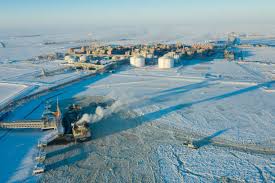
The Power of Siberia 2 pipeline agreement was also signed by Mongolia, China and Russia last week, a significant project likely to be the most expensive and complicated ever constructed in Eurasia. The pipeline carries Russian gas from Yamal in Siberia through to China, via Mongolia. This will also allow Mongolia to wean itself off the existing coal power stations in Ulaan Baatar and create a much cleaner environment for the capital, while also providing the Mongolian economy with significant transit fees.
Rybakova: “I have a follow-up question. You mentioned the Power of Siberia pipeline. I have the following question – will Mongolia buy Russian gas, or will you render transit services only?”
Zandanshatar: “Mongolia is not only a transit country. It can also buy and consume natural gas, connect our cities to this pipeline, and build a Mongolian gas distribution network. It will contribute to industrial development and mitigate environmental problems such as winter smog in Ulaanbaatar and will offer new opportunities for Mongolia’s economy. It will become a strategically crucial natural resource to solve current issues.”
Rybakova: “President Putin, the next question is a logical follow-up on our discussion of the Power of Siberia. The memorandum has been signed and this caused a stir. Everybody had a sigh of relief, as it seemed to me. The term of the agreement is 30 years. I have not seen the specific price. As I understand, it must be a commercial secret, yet they say that the prices will be lower than in Europe, at least. There was a Soviet joke that we are giving our oil to Europe through “Friendship.” What do you think, are we going to give the “power” of our Siberia to China?”
Putin: “This is a mutually beneficial project. As for prices, they are based on the market and are estimated using the same formula as for Europe. The formula is the same but its components, the prices of various products, which make up the gas price, they are simply different in different regions of the world. The prices in Europe differ from those in Asia. And the formula to determine the price is the same, it is absolutely market-based.
We had long talks, and every time when participants in the economic activity are talking and trying to find a solution – and most of the people here are like those – everybody understands well enough: this is not an easy process, yet everybody is striving to reach the result both negotiating sides are interested in.
Gazprom and its Chinese partners have reached such a result in the course of their years-long efforts. I can only congratulate them all once again. It is really one of the major energy projects in the world.
We are also discussing cooperation in the Asia-Pacific region. You keep bringing me back to cooperation, say, with our friends and allies in China. We have not yet talked about India: there are many plans there, too. But the Asia-Pacific region also includes the United States. And there are many interested parties there who want to resume or begin new work with us.
We have received excellent proposals for working with US companies in Alaska: they have resources there, and we have technologies for extracting and liquefying gas that are much more effective than those that some of our American partners have. They know this, and at the level of economic players, companies are ready for cooperation. It does not depend on us. We are also ready, but if any political decisions are made there, we will move in this direction, and we can work together in the Arctic, too.
We have already discussed possible work in a trilateral format on some of our Arctic fields with our Chinese friends. In fact, all these options are being discussed, they are on the table. We only need a political decision. This is possible, and cooperation in both gas and oil would be mutually beneficial.”
RPA: Putin extends the Russian Far East focus of the conference here to be part of a wider “Asia Pacific” region involving the United States (Russia is a member of APEC). He provides very recent updates on the potential for United States involvement in the region, including for Russian companies to commence operations in Alaska, noting that some of Russia’s technical experience and equipment in cold weather climates is superior to American products. In return, Putin has suggested Russia is amenable to working with American companies in the Russian Arctic, and even in a trilateral format with Chinese investors. All of this appears to be post-Ukraine settlement developments, but the seeds of cooperation have undoubtedly been sown.
Rybakova: “Mr Putin, what do you think is the obstacle now preventing us from starting this as soon as possible? What is putting spokes in our wheels?”
Putin: “This is not a question for me. We are not putting spokes or anything in any wheels. Initially, you asked about the Russian Eagle, which is one of our symbols. It looks in one direction and in the opposite. Look at the Eagle now. Did we turn away from anyone? No, we did not turn away from anyone. The Eagle continues to look both ways.”
CHINA
Rybakova: “I would like to give the floor to Li Hongzhong, member of the Politburo of the Communist Party of China Central Committee and Vice Chairman of the Standing Committee of the National People’s Congress.”
RPA: Readers should note that Li is currently the first-ranking vice chairperson of the Standing Committee of the National People’s Congress and a member of the Politburo of the Chinese Communist Party. Although China does not publish a hierarchy of CPC members, this would place Li as the second highest ranking official after Xi Jinping.
Li: “Ladies and gentlemen, friends, I am delighted to meet you all in Vladivostok, the pearl of the Russian Far East, at the 10th Eastern Economic Forum. This year marks the Forum’s tenth anniversary. A decade ago, thanks to the initiative of President Putin and his personal support, the Forum’s remarkable journey began here.
It has become a powerful driver for unlocking the potential of the Russian Far East and strengthening the economy of Northeast Asia.
Over the past nine years, we have witnessed not only the growth of the Forum, but also remarkable progress and breakthroughs in the history of China–Russia relations. Under the strategic guidance of President Xi Jinping and President Vladimir Putin, political mutual trust has deepened steadily, while comprehensive cooperation between our two countries has continued to expand.
The breadth, depth, and high quality of our bilateral cooperation reflect the vitality of interregional ties and exchanges. In this context, I would like to highlight the strong momentum of cooperation within the Northeast China – Russian Far East framework, made possible by the personal attention and efforts of our two heads of state.
For many years, China has remained the largest trading partner and leading external investor in the Russian Far East. In 2024, trade in the Northeast China – Russian Far East region reached US$105.8 billion, representing 43% of our total bilateral trade and serving as a key driving force in China–Russia economic relations.
Today, the world is undergoing profound and accelerating changes. Global challenges are not diminishing, and the lack of global governance is becoming increasingly acute. Many issues transcend the internal affairs of individual states and cannot be resolved by any country alone.
Just a few days ago, President Xi Jinping put forward an initiative on global governance at the SCO Plus meeting. This initiative focuses on the vital question of what kind of global governance system should be created, and how it can be reformed and improved.
This represents China’s vision for effectively addressing global challenges and deepening international cooperation. It reflects the expectations of many stakeholders, demonstrates the responsibility of a major power, and expresses its desire to build a community of shared destiny for humankind.
China and Russia are influential powers and constructive forces supporting global strategic stability and advancing global governance. We are ready to fully leverage the advantages that our two neighbouring countries enjoy, and to strengthen close and united cooperation with all regional partners, including Russia, in the spirit of joint consultations, joint construction, and shared benefit. Together, we can move toward a bright future of peaceful development and mutually beneficial cooperation. In this context, I would like to offer the following opinion.
First – peace and stability contribute to development. Peaceful, stable and prosperous Northeast Asia meets the interests of all the countries in the region and is a common dream of its peoples. China has long been pursuing the path of amicability and establishing neighbourly, partner relations with adjacent nations, supporting the countries of the region in selecting a development path consonant with their national realities. We are ready to deepen mutual political trust and alignment of interests, jointly safeguard the regional stability and respond to common risks and challenges.
Second – openness and tolerance contribute to prosperity. As the Chinese adage goes, ‘Openness leads to progress while isolation – to lagging behind.’ Amid current globalisation, none of the countries is progressing alone. We back up an open, transparent, inclusive and non-discriminatory multilateral trade system and advocate the creation of an open-type regional economy, unlocking the potential of natural peculiarities and the geographical advantages of the world’s countries. We are ready – through joint consultations, joint construction and joint use – to strengthen cooperation in production and supply chains, remove protectionism, assist in the free movement of capital, market and technologies for the sake of economic integration in the region.
Third – reciprocal exchange and assimilation contribute to cementing mutual understanding. Spiritual bonding of nations is a foundation for friendly relations between our countries. Our countries are bonded by common mountains and rivers; our cultures influence each other. Our peoples maintain close ties while our friendship is rooted in the past.
We need to continue this friendly timeline, deepen reciprocal exchanges and training, enhance cooperation in tourism, education, youth affairs, culture and art. We need to make people’s trips easier so as to foster neighbourliness and friendship.
A Chinese adage says, ‘When everyone’s efforts are joined, victory is inevitable.’ Peace and prosperity in our region are inseparable from each party’s efforts. China is ready “to open its doors” so as to share new development opportunities with all countries of the world on the basis of the news results of China’s modernisation and China’s greater openness.
We are ready to promote neighbourliness and friendship, strengthen mutually beneficial cooperation for the sake of joint usage of the results of the development of all the region’s countries for our wonderful common future.
I wish all the participants’ fruitful work. Thank you for your attention.”
RPA: Li’s economic observation that Northeast China / Russian Far East region now accounts for 43% of all Sino-Russian bilateral trade is a significant milestone. This implies very specific trade and investment connectivity between especially between China’s Heilongjiang, Liaoning, Jilin, and to a certain degree its more western Inner Mongolia and Xinjiang Provinces. Connectivity with Mongolia and the latter two will increase Sino-Russian trade in these regions, as will Russia-China connectivity via Kazakhstan. At the present time, the trade focus appears to be centred on the Russian Far East, and the Primorsky and related areas.
He also mentioned all the countries of the region, which also relates to Mongolia, as well as North Korea. Both China and Russia have been building significant infrastructure close and to North Korea, signalling a re-evaluation of Pyongyang’s potential as playing an active role in regional development. Kim Jong-Un will be paying particular attention as to how Mongolia has managed, and will manage, to develop given its similar geophysical position of being tied to both Russia and China. Moscow and Beijing will both be wanting to see North Korea at least partially take its position as an active Northeast Asian state and to have Pyongyang’s dependency on them reduced.
Li also mentioned Russia and China’s geographical connectivity in terms of rivers. This is an under-appreciated part of their bilateral transport and logistics, and especially to the western regions, where several major rivers form inland transport arteries, with flows leading to the Arctic regions. The two countries are exploring the possibility of developing an astonishing 70 rivers as part of their mutual logistics reach. China also wants to insert supply chain infrastructure developments into this as part of its Belt & Road Initiative, and to provide assistance with the development of supply chains from the Trans-Arctic Corridor ports in Northern Russia to markets elsewhere in Russia, China and into Central Asia and beyond. There is, for example, significant Chinese investment into Yekaterinburg to develop that as a massive inland port to service Eurasian/Arctic trade. As always, China plans a long way ahead.
Rybakova: “President Putin, I would like to touch upon your meeting yesterday, which focused on Russia’s reciprocal decision to abolish visas. We discussed this earlier, and you mentioned during your visit to China that China has introduced a visa-free arrangement for Russians. My immediate question is this: While expanded tourism will certainly benefit both countries’ economies and cultural ties, the main concern remains the matter of payments. For example, I want to visit China as a tourist, but I don’t have a Visa card, and my Mastercard is blocked here. I got a UnionPay card issued about three years ago, but it no longer works. Today, very few banks can issue such cards, and those that do are ruble-based, meaning payments are made in rubles. The only option is to carry cash and exchange it or find a more creative solution. Unfortunately, I haven’t mastered cryptocurrency yet.
Are there any preconditions for making the system of payments between our countries more transparent and accessible? I would like to pose the same question, in turn, to Mr Li Hongzhong.”
Putin: “First of all, I would like to emphasise that the decision by China’s political leadership – clearly made at the highest level – allowing visa-free entry for Russian citizens into China came as a complete surprise to us. We had no prior knowledge of it, and it was especially welcome.
Naturally, this decision is a strong sign of friendship, which we deeply appreciate. It will undoubtedly lead to a significant increase in mutual travel, create more favourable conditions for businesses, and further strengthen the ties between our two countries.
To travel to any country, including China, an ordinary person usually needs to visit several authorities, submit documents, and go through various formalities. Now, with this visa-free arrangement, one can simply board a plane and fly – no bureaucracy. Right? This will undoubtedly bring our two countries closer together. Naturally, we will respond in kind to this gesture of friendship and adopt the same measures.
Regarding tourist travel, it is true that the system of payments needs further improvement. We are working on this intensively. Our financial institutions of the highest level are attending to this matter, along with commercial banks.
I do not want to make more comments at the moment, so as not to create any difficulties for future decisions. This is also connected with the need to respect the interests of financial institutions operating under sanctions pressure. Nevertheless, possible solutions do exist.
We are perfectly aware that steps must be taken for tourists to have as few difficulties as possible. They can certainly use our Mir payment card, and similar Chinese instruments. These payment instruments can be aligned; third countries’ bank cards can also be used. I assure you that the central banks of both countries are working on this and will find a solution.
The heads of the financial institutions discussed all these issues in my presence and in the presence of President Xi Jinping right now, during our delegation’s visit to China. They are maintaining a dialogue and keep discussing this matter. I am confident that decisions are forthcoming.”
Li: “The Chinese Government is introducing a visa-free regime for Russian citizens. These are important outcomes and agreements between our heads of state. It is a meaningful sign of enhanced large-scale progress in Russian-Chinese relations.
I think President Putin’s answer to you is very professional and sets benchmarks for further development. I will not go into detail either, but I think, since our countries will meticulously work out all the issues together, we are sure to remove difficulties and technical issues related to payments. Therefore, we are confident we will achieve our goals.
For example, circulation of Chinese currencies and payments. Of course, we hardly use cash now in China, we use our telephones for payments. This is a hard time for thieves because we do not use cash, it’s just a payment method.
When I arrived in Vladivostok, I also had a good impression because I used my telephone here just like in Beijing. It means we already have good alignment in telecommunications.
We also have to work on financial communications at the next stage. I think that we will certainly reach these goals through joint efforts.
I have just mentioned Russian-Chinese cooperation. I said we need to ensure the free movement of capital, markets and people. I firmly believe that we will solve this issue.”
Rybakova: “Well, it looks like my only hope is the QR codes, no other options.”
RPA: Neither Putin nor Li would be drawn on the subject of Russia-China mutual payment access issues, as the situation is still being resolved and needs to be sanction-proofed. China especially is wary of secondary sanctions, and particular in its banking sector. However, at the same moment, President Trump is also wary of sanctioning China too much because of its substantial involvement in US supply chains.
Rybakova however, perhaps unwittingly, did mention at least an interim solution, being the use of QR codes in making payments. Both Russia and China are actively looking into this, and Li referred to it in passing, as making payments via the use of QR codes via a personal smartphone doesn’t require transactions to travel via financial networks, they travel instead via telecommunication networks.
Note: At this point the discussion diverged to the Ukraine conflict, which is not part of the Russia’s Pivot To Asia remit. Therefore, we have edited this part of the conversation out as not relevant to our subject matter. Readers wanting to access this section can visit the Kremlin website herewhich contains the transcript in full.
RUSSIA
Rybakova: “Russia, and especially the Far East – we are going to talk about wealth – naturally boasts enormous natural resources. This also applies to fish resources. Recently, I came across some interesting statistics, which I would like to share with you.
According to available data, in 2024, Russia’s crab exports to China reached a historic high of over 41,000 tonnes. For comparison: supplies of Russian crab to the domestic market over the same period amounted to about 8,000 tonnes. In other words, we have a sort of crab paradox: the crab really does walk sideways, bypassing us and heading instead to Korea, Japan, and China.
Do you think Russia has sufficient processing capacity at its ports to add value through processing, and supply it to the domestic market instead of just catching and auctioning it? After all, live crab is the most expensive product and, as far as I know, all live shipments are currently going in the opposite direction.”
Putin: “It is not all about prices, although that is one of the key factors.
In order to improve and expand the supply of this product to Russian regions, the issue of logistics must first be resolved. We transport it by rail, which is costly, or by air, which is even more costly. That is the problem. Seafood – both fish and crab – ends up mainly in expensive restaurants. Why? Because it has to be flown in. If we could organise transportation and build logistics correctly, the situation would change.
However, I should note that fish products from the Far East – not only crab, but seafood in general – account for about 75% of the national catch. Of this, about 65% is also processed in the Russian Far East.
Today, logistics is the most sensitive issue. We are working on it. We are giving it serious attention, and we will expand our capacity to distribute seafood, including crab, to all regions of the Russian Federation. This is indeed a problem.
According to Ministry of Health standards, we are not yet meeting recommended levels of seafood and fish consumption. If I am not mistaken, the norm is 28 kg per capita per year, while today we are at around 23–23.5 kg. Clearly, there is work to be done here. We are thinking about it, and I hope this issue will be resolved.”
Rybakova: “Since we mentioned transport and accessibility, intraregional flights in the Russian Far East are not, of course, a matter of comfort but a matter of survival. There is simply no other way to reach some areas with such long distances.
I would like to tell you a brief story. I have a friend who lives in Khabarovsk. He needed to fly to Vladivostok but there were no direct tickets available. I think everybody who lives here knows how difficult it is to grab an intraregional flight ticket. And you wouldn’t want to drive 750 km. I hear from drivers they travel with two spare tyres just in case. Anyway, my friend bought a connecting flight through Moscow and flew from Khabarovsk first to Moscow, where he spent four hours in an airport, then boarded a plane and flew to Vladivostok. So, he did all that and, as their plane was approaching Vladivostok, due to adverse weather, their flight was diverted to a backup airfield in Khabarovsk. Overall, he spent 24 hours flying from Khabarovsk to Khabarovsk. Clearly, it is an anecdote, but it explains a lot about regional transport difficulties.
When do you think we can resolve the issue of medium-haul aircraft? Today, I’ve also come across news that the State Transport Leasing Company signed an agreement to lease 50 Baikal aircraft.
Perhaps I have missed something. Is Mr Trutnev here? (Ed: Yury Trutnev is the Presidential Envoy to the Far Eastern Federal District) We have spoken, and he told me that there is no such thing as a ‘Baikal aircraft’. They bought an aircraft that does not exist yet. I am a little confused. Do these aircraft exist or not? And what are the prospects of intraregional flights in the Russian Far East?”
Putin: “The key issue is the availability of medium-haul aircraft in sufficient quantity. The Government, the Ministry of Industry and Trade and our domestic enterprises have many plans in this area.
Unfortunately, I have to agree that this matter is taking longer than we wanted. But there is Baikal and other small aircraft that are to replace Antonov An-2. This is work in progress. I will be honest, sometimes we argue with some of our responsible parties. They will have to expedite these efforts.
We have plans and specific models ready. They have been launched, and I have seen them in operation. The next step is serial production and supplies to airlines. We will certainly do all we can to speed up the process. We are aware of this problem and of the fact that it still persists. We will keep on working on solutions.
I will not list everything. We have the Baikal, and many other aircraft models. I have seen them in operation. But serial production is not yet launched.”
RPA: The Baikal UZGA LMS-901 aircraft is a short haul turbo-prop aircraft, that has been ordered by Siberian operators KrasAir and Aeroservis, with seven to be delivered to Aeroservis between 2025 and 2028. It is powered by a Russian built Klimov VK-800SM turboprop engine.
In January 2023, Russian Aerokhimflot, an association of forestry and agricultural aviation operators set up in 2019, agreed to acquire 120 LMS-901s between 2026 and 2030. In September 2024, Putin ordered the LMS-901 into serial production, although its intended Klimov VK-800SM engine is not expected to be certified until 2025, with deliveries of the aircraft not expected until 2026/27.
Rybakova: “In your speech, you mentioned investment growth; and indeed, foreign investment has increased over the past four years. My question is this: if we look at the investment climate as a whole, foreign investment mainly comes from a few major countries, including China.
You placed considerable emphasis on technological progress, underscoring the need to develop knowledge-intensive and complex industries. Yet, and this is no secret to anyone, investment is still largely directed toward commodity sectors such as mining, oil, gas, coal, and the infrastructure that supports them.
So, perhaps a logical question would be: is there a risk of falling into a commodity trap, where we would be perceived exclusively as an investment partner in these areas?”
Putin: “No, there is no such trap or threat of falling into one. That risk would exist only if we did nothing. You paid attention to my speech, and one of my central – if not the main – arguments was precisely that: when it comes to investment, we must make the Far Eastern region far more innovative.
This is not a problem of our partners that they tend to invest into the extraction of mineral resources. It is our problem. We should create conditions for the development of innovative sectors of the economy, and for people with the right expertise to come to work here. In fact, such a trend is already emerging, as I mentioned. Our task is to build the right environment.
I can assure you that our partners will be eager to invest in promising enterprises, provided that their implementation also brings them benefits. That is the only way it works; there is no alternative. I am confident that we can implement all of these plans.
We discussed these issues with our Chinese partners in Beijing. Overall, we should organise our work, calibrating it to high technology economic sectors. This is what we are going to do. This is the only future for our economies and our countries, the foundation of our shared success. This certainly applies to the regions of the Far East as well.
One more thing about mineral resources is the concept that we can just drill a hole, and oil and gas will just pour through it is a primitive one. The technologies that Russia has adopted do not exist anywhere else in the world. This is a high technology sector. The same applies to the gas sector as a whole.
Gazprom’s cooperation with our Chinese friends and partners is not limited to supply contracts. It is a genuine strategic partnership, which means that people are working together on technology-intensive industries, including gas. And there is plenty of work to be done to ensure the effectiveness and profitability for both suppliers and buyers. An extensive number of advanced technological solutions are necessary.
This work within the framework of strategic partnerships between interested companies has already been established and is underway. The only task now is to extend it to related and promising industries, such as artificial intelligence, and of course, we will do this.
We have agreements in the aviation industry with China as well. I am going to fly to Samara, where I will talk about engine manufacturing. There are plans to work on aviation, which is well-represented in the Far East, including both military and civilian aircraft. Our Sukhoi Superjet 100 is manufactured here in the Far East. There are areas that can be improved, and the same applies to shipbuilding.”
Rybakova: “I checked a job hunt website in Vladivostok. I was curious to see what is offered. What jobs and professions are really in demand here? Mr President, I have hardly seen any jobs for IT professionals. Even the most in-demand professionals section did not mention IT. I found one job opening in software development, but this is not much.
According to a SberIndex analysis, businesses in the Russian Far East are growing faster than on average in the country – and you said so yourself. And yet, this is mainly due to building large production facilities and production of mineral resources. The IT sector is lagging behind.
In your opinion, what could solve this problem if employers start seeking IT professionals? Are they to be ‘imported’? How can the Far East attract highly qualified technology professionals and incentivise them to stay here and treat this region as their home rather than a temporary placement?”
Putin: “I have spoken about this at length in my remarks and said that young people are moving here as they see prospects. There is a demand for young professionals. This trend is apparent but needs reinforcement from the government. The region needs support in shaping a new image of local economic development, mainly with the help of advanced technologies.
I do not know what you have seen on websites, but I know for certain, having heard it from top managers of local companies, that there is a shortage of highly qualified workforce. The Zvezda shipbuilding complex that we have mentioned today is building a large-capacity fleet that we have not had before. We also need aviation professionals here.
We need to develop all modern technologies so that we can go beyond developing the Far Eastern and Arctic mineral resources and can make this region part of Russia’s technology-intensive production in general. It is what we plan, and it will elevate the region to a new development stage.”
Rybakova: “Mr President, another aspect concerns the exorbitant wage demands among blue-collar workers as drivers want ₽400,000 (US$4,927) and welders want ₽500,000 (US$6,159) a month, for example. This is another side of the story. How can this matter be resolved in your opinion? Is it appropriate today to seek such high wages?”
Putin: “I believe the more people earn the better. It does matter. I said that it is an economic category. The higher the wage the higher the spending. The higher the spending the more Russian products are popular in the market because usually, people wish to buy Russian-made goods, and so on. This is another economic factor – and a positive one. Moreover, it makes people’s lives better.”
RPA: Putin managing to be both a socialist – and a capitalist – at the same time.
Rybakova: “Of course, since we are talking about wages, I would really like to discuss what is happening with the Russian economy in general. Many statements have been made on the sidelines of the forum. German Gref (CEO of Sberbank, Russia’s largest bank) has said he has noted signs of technical stagnation in the Russian economy. Do you agree with this?
Putin: No. He knows this well. We maintain constant contact. He regularly participates in our meetings, including those I hold with the Government and the Central Bank. Some members of the Government share his opinion, mainly because the Central Bank is holding the rate high to combat inflation.
You complained about prices in shops. The goal is not only to bring prices in shops down but also to ensure that economic actors also restrain price growth. We can discuss anything, but I do not want to give assessments now. I have my own view, of course, but let me refrain from evaluating the Central Bank’s work. Let me note instead that our Central Bank is highly respected across the international finance community. This is first-hand information.
The Central Bank’s policy is deliberate. In 2023, Russia’s GDP grew by 4.3% and in 2024, by 4.4% At the same time, inflation rose, too. We need to address macroeconomic challenges and ensure a soft, smooth landing of the economy to stabilise key macroeconomic indicators and slow down price growth.
I know the debates very well: we discuss this daily. Just yesterday we were talking about this. Some experts believe that the economy has cooled down, but lending has not stopped. Ask Mr Gref himself: has lending stopped? No. Has the pace of lending has slowed down? Yes.
I know some industries are going through rough times, and people present here also understand this very well. However, everyone also understands that nothing good will happen if inflation spins out of control. It would become impossible to plan anything, not just years ahead, but even ten days ahead. This is a very delicate issue. Take banks, for example. You can ask the Chairman of VTB. He will tell you: yes, perhaps they have overdone it, maybe the economy has cooled somewhat too much.”
Rybakova: Mr Kostin (Chairman of VTB bank) often complains about the key rate.
Putin: “Yes. The Ministry of Economic Development will tell you the same thing. And all of them are right in their own way. But I am confident that we will eventually find a way to maintain the necessary pace of economic growth while keeping inflation to a minimum.”
Summary
Maria Rybakova’s line of questioning was almost exclusively about the Russian economy, whereas the Far Eastern Economic Forum is an international event. Unfortunately, she appeared not especially well-prepared, in particular as she missed any opportunity to discuss the Chinese aspect of its Russian trade and development issues with Li Hongzhong.
While Putin’s comments about the Russian economy were of interest, the Russian Far East’s economy now extends far more beyond its own borders and now embrace not just East Asia, but deep into Southeast Asia as well. That really is the take home from this dialogue, with the Laos Prime Minister describing in some detail how his country is also becoming better connected to Russia – via the Russian Far East. That is also following the same trajectories as Malaysia, Thailand and Indonesia, a substantial achievement when one considers that the distances involved are significant. For example, the distance from Vietnam’s Ho Chi Minh City port to Vladivostok is 10,300km. From Jakarta to Vladivostok is about 7,500 km. To compare, London to New York ports is about 5,600km.
The real intelligence for us then in listening to what was said, is Russia’s increasing focus on access and development with Southeast Asia from the Russian Far East. There is huge amount of development still to come from this extraordinary reach and geographical connectivity.
And what’s next? Putin already gave the answer: Russian Far Eastern development with Alaska, and vice-versa. Give that 3-5 years; but plan your geostrategic agendas accordingly.
Note: Articles like this take many hours to prepare. Our analysis comes with decades of regional experience and professional expertise. When using our content, kindly refer to Russia’s Pivot To Asia as the source.
The United States Secretary of Commerce, Howard Lutnick, has made some rather extraordinary demands of India when it comes to assessing their trade position with the US. With India now subjected to 50% tariffs on its exported goods to the American market, Lutnick claimed that ‘the customer is always right’ and that India should stop buying Russian oil, leave BRICS, and engage in US dollar trade. He also stated that as China would never be a significant trade partner for India and that the US has the world’s largest economy at US$30 trillion, India would be foolish to continue its current moves to embrace the Shanghai Cooperation Organisation. But is Lutnick correct in his assumptions? Let’s examine these issues:
The Customer Is Always Right
Until he/she becomes a pain in the ass or wants to bargain too much, and especially when a better and larger volume customer arrives. The customer does not have a sacred right to demand from the supplier whatever it wants.
India Should Stop Buying Russian Oil
As the Indian External Affairs Minister, S. Jaishankar, recently pointed out, India is buying at the agreed Western price cap levels. He also pointed out that the European Union buys more from Russia than India does.
Leaving BRICS
Has India suggested the United States leaves its Free Trade Agreement with Canada and Mexico? No.
De-Dollarising
India and the United States bilateral trade hit US$129 billion in 2024, with that trade including US$41.5 billion in US exports. India will have used money from its US dollar capital account to pay for these American goods. US exports to India also increased by 3%. It is normal for countries when they trade to use their respective currencies. It is abnormal to insist that India pay for everything in US dollars when it has its own currency, the Indian Rupee.
India-China Trade
Lutnick is correct that China and India have had problems in the past, mainly related to border disputes. These now seem to have been reconciled. Sino-Indian bilateral trade was US$127.75 billion in 2024, not insignificant, and can be expected to grow. Chinese tariffs on Indian imports vary depending on product, but average about 10% (as opposed to the United States tariffs on Indian imports of 50%). The reason this trade should grow is because China and India have a combined population of an estimated 2.8 billion, while the United States has a population of 340 million. So where are the customers?
The United States Is The World’s Largest Economy
Lutnick quotes the US economy as being the largest in the world at US$30 trillion. However, he is incorrect. China, when measured in purchasing parity (PPP) terms is larger at US$41 trillion. India’s economy in PPP terms is US$20.4 trillion. According to IMF projections, India will surpass the US economy in PPP terms by 2038 if both nations maintain their projected growth rates. Lutnick’s statements then appear to be bravado rather than factual. It is also interesting he referred to the US dollar issue. With the United States US$33 trillion in debt, it currently owes more money than it makes in one year. We note that Lutnick graduated in 1983 with an economics degree, 42 years ago. Our view is that global economics has changed so much since then, that before making statements about countries such as India, it might be a better move for Lutnick to go back to college and take an economics fresher course in global economics. The best place for him to do that, given his interests in India is the top Economics University in India – Christ, in Bangalore. Applications to attend courses are available.
The Russian President, Vladimir Putin, has been taking part in the Plenary session of the 10th Eastern Economic Forum. Putin gave a lengthy speech, which exclusively dealt with development issues in the Russian Far East, and covered regional economic, industrial development, rare earths, energy, logistics, the Trans-Arctic Corridor, shipbuilding, legal and tax incentives, an Arctic Free Trade Area, regional digitization, and the development of the Russian Far East as a new tech hub.
An initial introduction was conducted by Maria Rybakova. Our comments are listed as RPA.
Rybakova: “Dear Mr. President, I should say straight away: I am not an economist. I am a news presenter with a legal education who lives in Moscow. In short, I am oriented towards the humanities. But I also go shopping quite often, and I am someone who pays attention to prices, which, frankly, sometimes surprise me. I really know very little about economics, and you know, sometimes when you are looking for answers, you go on a video platform – which, as you know, now runs a bit slowly in Russia – and there, economists tell you that everything is bad: inflation is rising and the budget has been stretched to the limit. Then you go on another platform, and there, other economists tell you that everything is fine, everything is great, that there are breakthroughs ahead, we will beat everyone, and so on. Like any other Russian citizen, I have a question: Mr Putin, which of these economists should we trust?”
Putin: “Don’t take anyone at their word. The truth is, you should proceed from your own experience, rather than seeking the opinions of those who like to voice their views online. Instead, I suggest you consult the opinions of experts if you truly want to get to the essence of the issue that concerns you. I am not saying anything revolutionary here.
Even among specialists, views differ. The questions you have raised only appear simple on the surface. Take prices, for example. Rising prices are, essentially, inflation. The Central Bank is working to curb this inflation and bring it back to the well-known and necessary target of no more than 4–5 percent. But this requires keeping the key rate high, which raises concerns for those engaged in real production. Many people here will no doubt say: “This is unacceptable, it is impossible, the key rate must be sharply reduced.” But if that happens, prices will only rise further.
So, the only thing I can say is this: I want to assure you that Russia’s financial authorities – the Government of the Russian Federation and the Central Bank – are acting professionally. We have always, and I want to stress this, always proceeded from the principle that a stable macroeconomic policy is the foundation for developing the Russian economy and, consequently, the social sphere. We have pursued this course for many years, at least a decade and a half, and it has consistently delivered positive results, creating the conditions for the country to move forward. I am confident this will be the case again.”
Rybakova: “The main point I wanted to make is this: today I would like us to talk about the economy not in abstract, highbrow terms, not about institutional economics, but about the economy that matters to ordinary people in Vladivostok, to a typical family. That is the kind of economy that concerns me, and people like me.
I will now give the floor to the President.”
Putin: “Thank you. Allow me first to address the Russian part of our audience. I would ask you to extend a warm welcome to all our international guests. For my part, I wish to express my gratitude to our foreign colleagues for coming here, showing an interest in working with us, and devoting their valuable time to this forum.
Russia and Vladivostok once again are hosting participants and guests of the Eastern Economic Forum, with representatives from more than seventy countries around the world.
This year, the forum is being held for the tenth time. Let me remind you that the very idea of establishing it coincided with the launch of a new stage in the development of the Russian Far East. This major undertaking is aimed at creating broad opportunities for citizens, for young people, above all for businesses, to fully unlock the resource, industrial and logistical potential of this strategically important region of Russia, and to improve the quality of life for its residents.
Today’s tenth anniversary forum is not only an opportunity to take stock of the joint efforts of government bodies, entrepreneurs and public organisations, but also to outline the next steps – our long-term plans for the Far East. These plans concern strengthening its role both in Russia’s national economy and in international relations, above all in the rapidly growing Asia-Pacific region.”
Russia Far East Development: Background
“As you know, the development of the Far East and Siberia has been designated as Russia’s national priority for the entire 21st century. This was announced in the Address to the Federal Assembly in 2013.
Subsequently, the legal framework was formed and updated, and a whole range of instruments to support business was introduced, including advanced special economic zones, the Free Port of Vladivostok, preferential arrangements for the Kuril Islands, and the establishment of a special administrative district on Russky Island.
Ambitious plans have been rolled out to strengthen transport, energy and utilities infrastructure. Decisions have been made to support housing construction, renovation, and the development of social facilities: schools, kindergartens, clinics and hospitals, and sports complexes.
All these measures are united within the large-scale State Programme for the Development of the Far East. It sets ambitious targets for accelerated economic and technological growth and for improving the wellbeing of the population across the Far Eastern regions of the Russian Federation.”
Russian Far East: Economic Indicators
“These efforts are delivering results. In recent years, the Far East has taken a leading position across many key indicators – first and foremost economic ones – outpacing Russia’s overall growth rates.
Over the past 10 years, the GDP of the Russian Far East has increased more than 2.5 times, from ₽4 trillion to ₽11 trillion (US$49 billion to US$135 billion).
During this time, ₽20 trillion (US$245.5 billion) were invested in the fixed capital of Far Eastern companies and enterprises. A quarter of this amount was channelled into projects with state support in such sectors as mining, oil and gas chemistry, construction and others.
The leading regions in terms of fixed capital investment over these 10 years were as follows: Yakutia, with ₽4.5 trillion, the Amur Region, with ₽4 trillion, and the Sakhalin region, with ₽2.6 trillion. Together, these three account for 55% of all investment in the Far Eastern Federal District.
The investment dynamics in the Far Eastern regions are such that, in real terms, their volume last year was double that of 10 years ago. For comparison, across Russia as a whole the figure was 1.5 times higher. That, too, is a good result. But still, the Far East has done better. Per capita, investment in the Far East today is twice as high as the national average.”
RPA: To provide some context to these figures, the current GDP of the Russia’s Far East is roughly equivalent to that of Uzbekistan. Russia’s capital investment into the Russian Far East is equivalent to 3.5 times France’s annual spend on its military and defence budget.
The growth of business and entrepreneurial activity, along with the expansion of economic opportunities in the Far East, forms the foundation for the region’s future development. It is important to maintain steady progress in its traditional sectors, in areas that are already on an upward trajectory, to develop infrastructure and logistics links, to ensure reliable supplies of affordable and clean energy, and, of course, resources.
I should also note that the Far East’s resource base and mineral extraction are expanding. Over the past decade, coal and gold production in the region has grown almost 1.7 times. This has been made possible in part by the declarative principle of subsoil licensing, which has enabled greater private capital involvement in geological exploration, significantly increasing the number of newly discovered deposits, including major ones such as the Lugokan Gold and Copper Deposit in the Trans-Baikal Territory and theRoman Gold and Silver deposits in Yakutia.”
RPA: Russia holds Gold Reserves of about 2,329.63 tonnes, and has unmined reserves of an estimated 12,000 tonnes, the largest in the world.
Rare Earths
“On the issue of rare earth metals, which are used in high-tech industries, instrument-making, nuclear technology, electronics and other spheres, these resources are often accumulated in dumps during the development of deposits, including here in the Far East. There is a system for registering these resources. They can be extracted and effectively used with the development of new technologies.
At the same time, we should regularly review these valuable components throughout the production chain, including at the stage of their reprocessing and export in the form of concentrates. In addition, we must introduce advanced technologies for enriching and processing rare and rare earth metal ores. We must also encourage demand for them at new industrial facilities in Russia.
In February this year, we agreed to approve a long-term plan for the development of the rare earth metals industry. I would like the Government to present this no later than November this year.”
RPA: Russia has the world’s fifth largest rare earth reserves, and is planning to increase its share of global rare earths production to 10% of the total by 2030.
Energy
“A meeting on the development of the energy complex of the Far East was held prior to this plenary session. It is clear that the demand for electricity in the region will increase with the development of the economy and the social sphere. Consequently, we must plan the construction of energy facilities so that they meet the growing demands of businesses, cities and villages, and the people. The focus is on the expansion of gas and modern coal generation, as well as using the huge potential of hydropower generation.
The hydroelectric power plants on rivers in the Far East are a low-impact electricity source, and new ones must be built. Their construction implies modern engineering and technological solutions, and our leading company in this field, RusHydro, has the necessary experience and groundwork. However, it is obvious that the development of hydropower generation calls for major investments.
Relevant instructions have been issued. I hope that the Government and our colleagues in the regions will continue to give special attention to the development of small and large hydroelectric power plants. I would like to emphasise that we are not only talking about the economic aspect. Responsible water use, maintenance of perennial runoff, and flood prevention are integral parts of the development of hydropower generation that have a direct impact on the environment, agriculture and the safety of cities and towns.”
RPA: Although when it comes to energy and Russia the majority of people think of oil and gas, hydroelectricity generation also shows huge potential. Russia’s freshwater resources are concentrated in its thousands of rivers and lakes, including Lake Baikal, which itself holds 20% of the world’s unfrozen freshwater. The Russian Far East is ripe for hydro-electric production due to its topographic nature, while other countries require development expertise in this sector, such as Laos and Nepal meaning there is technical expertise export potential in addition to regional energy development.
Logistics
“Rivers in the Far East are also natural transport arteries connecting territories and ensuring deliveries to cities and towns within the framework of the northern supply.
In this context, a separate issue is logistics. In recent years, the load on the transport system of the Far East has grown significantly. The region’s ties with foreign countries are being strengthened. All of this requires the upgrading of road and rail arteries, the expansion of seaports and the creation of modern transport hubs with automated warehouses and digital cargo processing.
We will continue modernising the Eastern railway network – the BAM and the Trans-Siberian Railway. By 2032, their carrying capacity should be one and a half times higher than at the beginning of this year.
It will also be necessary to further expand the railway links to the seaports of the Far East, which are developing dynamically, primarily through private investment. Over the past 10 years, port capacity in the region has effectively doubled. Today, it stands at almost 380 million tonnes of cargo per year.
According to the current federal project, the Far Eastern ports’ capacity should increase by a further 115 million tonnes of cargo per year by 2030.
In the Far East, transport bridges to China have already been built: the Nizhne-Leninskoye-Tongjiang and Blagoveshchensk-Heihe bridges. Plans also include the construction of new bridges, including one to North Korea across the Tumannaya River, which is scheduled to open next year. It is essential to actively develop transport and logistics hubs in the vicinity of these bridges to make full use of their capacity. In addition, border crossings are being modernised. This task has also been set, as it is of considerable importance: a single transport artery is not enough, and appropriate administrative logistics are required.
I would also add that airports in every region of the Far East are being upgraded. They now handle more than 14 million passengers a year, including tourists, who are increasingly visiting these remarkable and beautiful places.
In this context, I would like to note the initiative of VEB.RF. Master plans have been prepared for the development of twelve new all-season resorts in Primorye, Sakhalin and Kamchatka. This will allow the number of tourists visiting these regions to almost double over the next ten years.
I would also highlight such landmark developments as the restoration of flights between Vladivostok and Pyongyang, as well as the launch of direct air services between the capitals of Russia and North Korea. The flight on this route took place at the end of July. A month earlier, direct train services between Moscow and Pyongyang were resumed. I am confident that these measures will contribute to the further rapprochement of our countries and the establishment of stronger ties.”
RPA: Russia’s Far Eastern Port total capacity target of handling 495 million tonnes of freight 2030 is comparable to over double that of Los Angles Port, the largest in the United States, with 222 million tonnes.
Trans Arctic Corridor
Of course, a particularly significant topic for the Far East, for our entire country, and for the whole Eurasian continent is the development of the Trans-Arctic Transport Corridor. It runs from St Petersburg through Murmansk, Arkhangelsk, and the Northern Sea Route, all the way to Vladivostok.
We see that interest in this route is growing, both from Russian companies operating in the Arctic and from foreign carriers. And this is not just about individual, one-off shipments, but about forming a stable cargo base. We will develop the Trans-Arctic Corridor.
We often speak about the Northern Sea Route. But if you have noticed, I specifically said – and continue to say – Trans-Arctic Corridor, because we have concluded that we need to operate on a larger scale, and that this artery must function as part of a complex system with all the territories adjoining the Northern Sea Route and their capacities.
This is a comprehensive system that should integrate maritime, rail and road transport. It will allow us to use the potential of our largest rivers, such as the Ob, Yenisei, and Lena. Everything must work as a single, unified system.
Our task is not only to establish reliable and safe sea routes in the Arctic and enable year-round operation of the Trans-Arctic Corridor. There is also work, as they say, onshore: developing communications and navigation, ship servicing systems, and emergency and rescue infrastructure. And, of course, this includes modernising seaports in the Arctic and the Far East.
Incidentally, just yesterday, the Artyom Multimodal Hub was opened in the Primorye Territory. It handles containers arriving both from abroad and from Russian regions, and it is expected to improve the efficiency of northern supply deliveries.
It is very important that similar modern transport and logistics centres develop in our country, that there are more and more of them, and that cargo delivery and handling become faster and more efficient. And I would like to emphasise that it is precisely at such points, in logistics hubs, that advanced technologies, including unmanned systems, should be applied.
The Trans-Arctic Corridor must primarily operate in the interests of the domestic economy and our regions of the Far East, Siberia, and the Arctic, taking into account cooperation between them and opening new opportunities for business.
Here, I would like to underline two potentially significant directions for development.”
Shipbuilding
“First, the creation of modern shipbuilding centres. They should be capable of producing the full range of vessels needed for the route, from tugs and supply ships to bulk carriers and ice-class gas carriers, as well as ultra-powerful icebreakers.
Second, to increase the efficiency and resilience of the Trans-Arctic Corridor, we need to provide direct access for cargo from Siberia and the Urals to Arctic maritime routes.
I ask my colleagues in the Government and the Russian Maritime Board to assess the feasibility of these proposals and provide their recommendations.
RPA:The Russian government has unveiled a massive, US$6 billion plan to build hundreds of new vessels by 2050, upgrade its shipbuilding capability, and increase the workforce in its maritime industry, much of this to be in passenger vessels and cargo ships.
Legal & Tax Motivation
Previously, advanced and innovative mechanisms, such as Priority Development Areas (PDAs), gave a strong boost to economic growth and private initiative in the Far East.
The law on PDAs was adopted in late 2014, and the mechanism was launched in 2015. The goal was to create truly globally competitive environment for doing business in the Russian Far East. Therefore, we developed PDA arrangements based on the best business and investment climate practices, including from the Asia-Pacific region.
What benefits does this mechanism provide today? These are, first of all, low insurance premium rates (7.6% for 10 years). The federal revenue tax will be zero for five years. The regional revenue tax will amount to anywhere from zero to 5% in the first five years, and 10% for the next five years.”
RPA: The standard corporate income tax rate in Russia is 25%.
Putin: “The subsidised tax rate on mineral extraction is provided. In addition, the PDAs provide for a free customs zone, as well as reimbursement of a portion of the expenses involved in building infrastructure and issuing low-interest loans to businesses.
The reason I am dwelling on the PDA terms in such great detail is because they are unique for business, and not only in our country, but in many other countries around the world.”
RPA: China in particular made significant economic progress by launching various Special Economic Zones, providing similar tax breaks as described, along with Free Trade zones, which improve business cashflow by deferring import duties and VAT payments, as well as promoting employment. Other benefits such as lower energy and utilities costs, larger government contributions to employee welfare costs, lower than market value rents and so helped develop China’s domestic industrial base to a point where many of what were once domestic companies have become MNC’s and are engaged in projects around the world. Russia is following this same path.
Putin: “PDAs have proven their effectiveness. They have helped launch numerous investment projects, systematically support entrepreneurs and companies at the most important stage during construction, setting up the production cycle, and reaching design capacity. In the Far East, 18 PDAs have been created employing over 300 residents, who have invested almost ₽4 trillion (US$49 billion) and created 95,000 new jobs. The Government has made several decisions to expand the boundaries of specific PDAs to accommodate new projects.”
Arctic Free Trade Area
“Based on existing experience, I propose taking a radical step and to launch a single preferential regime for business throughout entire Russian Far East and the Arctic. This must be in place by January 1, 2027.
The task is to simplify the use of support measures for entrepreneurs, companies and their new projects. In other words, investors should have access to incentives wherever they take their money, in every Far Eastern or Arctic region, city and town.
I would like to point out that the launch of the single preferential regime will preserve all the terms extended to investors in priority development areas. They do not have to worry that anything will be changed spontaneously. This also concerns the residents of international priority development areas. This instrument stipulates even longer-term profit tax privileges and the so-called grandfather clause – not everyone in the hall knows what it is, so I will explain this term. This clause precludes any changes in the terms of operation for up to 15 years and stipulates an individual approach and support for each investor, including foreign companies.
The legal framework is ready, and international priority development areas will start operating in the Transbaikal Territory, the Amur Region, the Jewish Autonomous Region, and the Khabarovsk and Primorye territories on January 1, 2026. We invite all interested partners to take advantage of this opportunity.
Regarding the single preferential regime for the Far East, I would like to say this: the list of incentives, their precise parameters, deadlines and industry focus will be determined by the Government together with our colleagues in the Far Eastern entities of the federation. But there are some fundamental issues I would like to point out.
Using the results achieved in the mining and processing industries and solid infrastructure, we must start a new development stage in the Far East, shaping an economy of the future, radically improving living conditions in cities and towns, training in-demand professionals and launching high-tech projects. This is the essence of the new stage. We must turn the entire territory of the Far East into a hub for high-tech projects. It is a vast territory with a sparse population and large areas where people can be employed. We must use modern methods for the development of this territory.
National projects to ensure the country’s technological leadership have already been launched. On the basis of each of these, I instruct the Government to prepare and approve an appropriate development programme for the Far East and the Arctic by the end of the year.
For a technological breakthrough, a genuinely bold approach to regulation and the legal framework for business operations is required. These must give the green light to innovation, stimulate the development of cutting-edge solutions, and facilitate their implementation in pilot and subsequently serial production, as well as in the social sphere and everyday life.
For instance, an experimental legal regime is already in effect on Sakhalin. It allows for the accelerated testing of unmanned technologies. I instruct the Government to create conditions for their widespread application on agricultural lands, in environmental protection and natural resource management, as well as at industrial and logistics sites. Why should unmanned technology not be developed in such areas? There are none of the risks that might arise in densely populated regions of the country. Moreover, life itself demands the use of such technologies. Take, for example, forest fires that break out hundreds of kilometres away from the centres responsible for responding to them. Unmanned technology is perfectly suited for use in these vast areas.
There are other opportunities for applying modern technologies across these vast territories. This is precisely where they should be deployed. However, this requires a corresponding workforce. What must be done to ensure such a workforce? Conditions must be created so that people can live here, so that they want to live here. Social infrastructure must be developed, cultural facilities must be enhanced, and so on. Otherwise, there will be no workforce, and consequently, there will be no people capable of advancing these technologies. This is a comprehensive task.
It is evident that such solutions will be in demand not only on Sakhalin but also in other regions of the Far East, including the Amur Region, the Trans-Baikal Territory, Chukotka, and so on.
In this regard, I consider it possible to extend the experimental legal regime for unmanned systems to all Far Eastern regions and expand it primarily to include such areas as the use of digital platforms, artificial intelligence, and data exchange.”
RPA: This is a massive undertaking and means that billions of dollars are to be spent on the Russian Far East in terms of available financial incentives and additional benefits to encourage people to relocate and invest in the region. Tax breaks lasting up to 15 years will comfortably allow for smaller businesses to develop, promote wealth creation, and ultimately lead to the development of significant Russian Far East Multinationals companies being created, many with significant expertise in cold weather climates. Wealth creation will be fastest in the Russian Far Eastern regions than in the traditional Western centres.
Russian Far East: Digitization
In June, at the St Petersburg Economic Forum, I spoke about the importance of leveraging the advantages of electronic marketplaces. Within the framework of the experimental legal regime, I propose utilising the infrastructure of domestic information platforms for state and municipal procurement in the field of education.
The Russian Far East must become an advanced digital development region, especially in data circulation. Of course, this circulation should take into account matters of confidentiality and security. We talk about this all the time. We will revisit this topic at the artificial intelligence forum, which will take place closer to the year end. I look forward to the Government preparing corresponding proposals.
The Russian Far East As A Tech Hub
Next is to develop and master technologies and to establish modern production facilities, at least 100 industrial, business and technology parks with the proper areas and utilities will have become operational in Russia by 2030. At least ten such parks will need to be created in the Russian Far East and the Arctic regions. I am confident that their state-of-the-art infrastructure and capabilities will be popular with the start-up companies that are implementing promising projects and, among other things, planning to manufacture products that are designed to replace foreign analogues, including construction materials, and medical and transport equipment, to name a few.
In order to promote the development of domestic production facilities, conditions must be met for a wider use of the so-called offset contracts, when investments in new factories, workshops, or enterprises are guaranteed by state orders. It is likewise important to expand the practice of interregional offset contracts, under which production facilities open in one constituent entity of the Russian Federation, and products manufactured under guaranteed orders are shipped to more than one region.
Financing innovative ideas and technological projects is a separate issue. Private investors and venture investment have a greater role to play under these arrangements than the state. The Voskhod Fund, which has supported about 40 companies in robotics, medicine, and space technologies, is a compelling example to back up this point.
I am asking our colleagues from the Government to carefully review the experience of this Fund and to help scale up its activities to include our technological leadership projects. Please focus on this.
In general, I believe a transparent, modern, and effective financial ecosystem must be created in the Far East. The Eastern Exchange, which is, for all intents and purposes, a Far Eastern stock exchange, is operational. I suggest working out plans for further expanding it, including financial channels, regulatory framework, and incentives for placing corporate shares.”
RPA: Russia is also investing in specific cluster manufacturing parks in the Far East, with Putin suggesting more than 100 new parks are to be created. Again, these typically provide tax and other manufacturing incentives. Business clusters are parks where independent, yet related businesses can be next to each other to reduce costs. An example is in shoe-manufacturing (although Russia will be looking at higher-tech examples) where differing leather, plastic, rubber, metal, fabric and other component parts are all manufactured by different companies, yet sit together to enable a complete finishing product to be produced faster and more efficiently.
Summary
The Russian Far East is the easternmost part of Russia and the Asian continent, and is coextensive with the Far Eastern Federal District, which encompasses the area between Lake Baikal and the Pacific Ocean. The area’s largest city is Khabarovsk, followed by Vladivostok. The region shares land borders with the countries of Mongolia, China, and North Korea to its south, as well as maritime boundaries with Japan to its southeast, and with the United States along the Bering Strait to its northeast. It should not be confused with Siberia, which is to the West.
The Russian Far East accounts for 6,952,600 km2 or about 41% of Russia’s total landmass. To compare, Texas has a landmass of 695,662 km2, or about 10% of the Russian Far East. The European Union has a landmass of 4,233,255 km2.
The main development issue with the Russian Far East is the population, which amounts to about 7.5 million, or slightly over than 1 person per km2, one of the lowest population densities in the world. Resolving this will be a major challenge for Far Eastern development plans, although the current policy seems to be to attract people from other areas of Russia by providing fiscal incentives. This is likely to mean a migration away from the expensive Western part of Russia, and the cities of Moscow and St. Petersburg. With a Russian lower-middle class population of about 15 million, attracting these people to migrate to the Far East where there are perhaps better wealth creation opportunities will, over time, become an increasing demographic trend. Doing that has to coincide in the provision of social services, and construction of schools, hospitals and related infrastructure – issues Putin also discussed.
This may later need to be augmented with imported labour, such as from India, Pakistan or Africa, where ten year employment contracts may be provided in return for salaries in Russia at rates higher than generally available in their home regions. While no policy exists at this time to cater for such migrants, the substantial human capital needs of the Russian Far East almost certainly means that at some point, state policy will need to be introduced to inject human capital, as well as financial capital into this massive region to enable it to reach the potential that Putin outlined.
Note: Articles like this take many hours to prepare. Our analysis comes with decades of regional experience and professional expertise. When using our content, kindly refer to Russia’s Pivot To Asia as the source.
The Russian President, Vladimir Putin, has been attending the celebrations for the end of World War II in Beijing and has had the opportunity to discuss bilateral relations with other attendees, including with the Vietnamese President, Luong Cuong. This is what they had to say:
Vladimir Putin: “Mr President, friends, I am delighted to hold a bilateral meeting with you on the sidelines of these celebrations. First of all, I would like to congratulate you and the people of Vietnam on the 80th anniversary of the declaration of Vietnam’s independence, which you marked yesterday.
This year, we marked 75 years of diplomatic relations between our countries. Over these years, special relations of alliance and fraternal mutual assistance have developed between Vietnam and Russia. It is difficult to list all the spheres of our cooperation, which has been growing stronger in the past few years.
I am delighted to discuss all areas of our cooperation. Of course, I also have fond memories of the warm welcome that was extended to our delegation during our latest visit to Vietnam.”
Luong Cuong: “Mr President, I am delighted to be meeting with you in Beijing today on the occasion of a special landmark event.
I am also grateful to you for the warm feelings and greetings to the party, state and people of Vietnam on the 80th anniversary of the August Revolution and the National Day of Vietnam. Thank you for sending Russian troops to take part in the parade in Vietnam.
Everyone in Vietnam values highly the substantial fraternal assistance which the Soviet Union extended to us when we were fighting for our freedom and which Russia is providing to us now as we build our country.
We consistently attach great importance to our traditionally friendly relations with Russia – these are brotherly, time-honoured relations.
I would like to congratulate you, on behalf of the party and the state of Vietnam, on the great achievements Russia has made over the past period. You have overcome numerous difficulties.
We believe that under your guidance Russia will become great and will be a mainstay in defending peace, justice and stability. We believe that this will be so, and we wish you success.”
Summary
While the initial greetings were standard diplomatic speak, the two presidents had brought with them trade delegations, with Russia-Vietnam bilateral and investment trade booming. The two countries are increasingly trade intertwined, with Vietnam having a productive free trade agreement with Russia via theEurasian Economic Union, while also being a BRICS Partner Country. Russia meanwhile is a permanent guest to the ASEAN bloc, which includes Vietnam. Russia, in turn, has been a strategic partner of the ASEAN bloc since 2018. It should be noted that the Declaration on Strategic Partnership between Russia and Vietnam was signed earlier, in 2001, and in 2012, the strategic partnership between Russia and Vietnam acquired comprehensive status. All these mechanisms have helped develop bilateral trade and investment, especially as Russia is looking for new markets and supply chain opportunities.
Vietnam has a population in excess of 100 million and a GDP (PPP) of US$1.76 trillion. Current GDP growth is 7.5%. According to Vietnamese Prime Minister Pham Minh Chinh, the country is aiming to achieve GDP growth of between 8.3% and 8.5% in 2025. Its Ho Chi Minh Port is linked directly to Vladivostok, while the country also offers access to other ASEAN markets.
Despite the challenging international situation and headwinds in the form of anti-Russia sanctions levied by the United States and other unfriendly countries, mutual trade grew by 20.2% in 2024 and continues to steadily grow.
The key areas of the comprehensive strategic partnership include cooperation in the fuel and energy sector. The joint venture Vietsovpetro has acted as its flagship for over four decades now. The Russian company Zarubezhneft and the Petrovietnam Oil and Gas Corporation are successfully developing hydrocarbon fields in Vietnam, while Rusvietpetro Company operates in the Nenets Autonomous Area of the Russian Federation with the participation of both of the above companies. Russian Gazprom, the world’s leading operator in natural gas production, also works on the Vietnamese continental shelf.
For a complete overview of Russia-Vietnam bilateral trade and investment projects, please click here.

 Русский