News

The New SCO Development Bank May Compete With SWIFT: Russian Finance Minister

Published on September 14, 2025

The Russian Finance Minister, Anton Siluanov, has outlined his vision for the proposed Shanghai Cooperation Organisation (SCO) Development Bank, the formation of which was discussed at the beginning of this month at the annual SCO Heads of State summit in China.

The SCO includes full members Russia, Kazakhstan, Kyrgyzstan, Tajikistan, Uzbekistan, India, Pakistan, Iran, and Belarus, together with several SCO partner nations: Afghanistan, Armenia, Azerbaijan, Bahrain, Cambodia, Egypt, Kuwait, Laos, Maldives, Mongolia, Myanmar, Nepal, Qatar, Saudi Arabia, Sri Lanka, Turkiye, Turkmenistan, and the UAE. ASEAN is also a partner to the SCO; however, it does not have its own development bank.
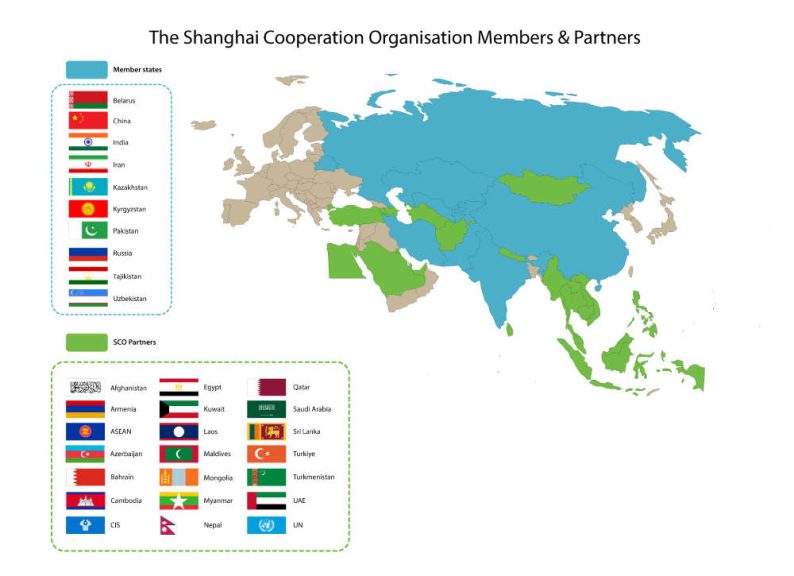
SCO Map

Siluanov said that Russia and China are already actively engaged in developing the concept of the SCO bank. Both discussed its key potential functions at the SCO heads of state summit and will discuss them in more detail at the financial meeting of dialogue partners later in the year. Main topics are how such a bank could reduce dependence on Western financial infrastructure and whether there are operating or sanctions risks. Russia and China are also significant shareholders in the Asian Infrastructure Investment Bank (AIIB) and the BRICS New Development Bank, (NDB) both of which are capitalised at US$100 billion and provide capital for regional infrastructure and development projects. The AIIB tends to invest in hard infrastructure such as roads and rail, and the NDB in green projects. What remit an SCO bank would carry out therefore needs to be different, yet complementary.    

Siluanov said that following the recent SCO summit, many key decisions were made, including the establishment of an SCO Development Bank, while the discussion of topical issues, including the SCO Development Bank, also continued at the Far Eastern Economic Forum in Vladivostok at the Ministry of Finance level.

SCO Financial Depository
Financial Depository

Silunaov made several interesting statements about the role of the proposed bank, saying that “We need to have our own independent payment infrastructure. This is especially important against the background of sanctions when the financial channels of the West (SWIFT) become inaccessible not only to Russia but also to other partners (Iran). Therefore, the creation of an independent depository on the basis of the SCO bank is being discussed.

He added, “We would like this bank to create opportunities for investors in our countries to be able to freely buy and sell securities in any country. That is, to perform such an independent depository function in its own way. This topic has also been discussed with our Chinese partners.”

Due to Western sanctions, Russia’s overseas sovereign financial assets have been frozen in the European depositories Euroclear and Clearstream since 2022, meaning that for Russians, making international investments has become very risky. Through the proposed SCO Development Bank structure, it will be possible to finance investment projects in SCO countries, as well as provide their citizens and companies with financial market services that they may currently not have access to.

This would mean that an SCO Development Bank could become an alternative to European depositories. However, there are still obstacles. Among them are the high profitability of rouble-denominated securities, as well as uncertain forecasts for quotations of securities denominated in SCO foreign currencies. There also remains a relative risk of asset freezing, as foreign securities would be issued and accounted for outside Russia, which means that settlements would also take place there. This means that the risk issue is to what extent the Eurasian SCO market would be able to meet investors’ expectations.

Siluanov said that Moscow and Beijing have already agreed to discuss these aspects in more detail at the upcoming meeting of the Russian-Chinese Intergovernmental Financial Commission in October. This mechanism has been in operation since 2006, with representatives of the ministries of finance, the central bank, and commercial banks of Russia and China participating. Progress depends on the policy of the respective central banks and the infrastructural capabilities and desire of each of the other SCO countries.

Digital financing

Digital financing

There are other areas an SCO Development Bank could become involved in. Russian borrowers have been denied access to global financial markets due to US and EU sanctions, and Chinese banks have avoided transactions with Russian companies due to the risk of secondary sanctions. Meanwhile, cooperation between Russia and China on simplifying project financing has been gaining traction. For example, China is preparing to open the domestic (Panda) bond market to large Russian energy companies such as Rosatom, who are shortly to conduct a test issuance of Panda bonds. Other Russian companies, such as Gazprom, may follow if the issue is successful. The opening of this market is indicative of the deepening mutual economic ties between Russia and China.

The placement of bonds in China will give these companies the opportunity to raise money at more affordable rates in RMB Yuan, which is important against the background of the high cost of loans in Russia and the ban on foreign loans. This will allow Russian companies to receive financing for such large-scale projects as the Power of Siberia 2 and the construction of other nuclear power plants: Rosatom has a significant global order book. 

Siluanov also said that one of the most realistic and immediate tasks of the SCO Development Bank is to provide interstate loans and that the move towards digital finance would greatly simplify this. He said that the development of this is a priority, saying, “We discussed with our Chinese partners how this bank should deal with new types of settlements, digital settlements, digital rubles, digital currencies, and digital financial assets in order to be independent of Western infrastructure.”

The reference to ‘digital settlements’ means that the SCO bank would also be designed to accumulate excess liquidity and direct it to finance projects in countries where there is a high demand. Financing in RMB Yuan currently looks the most advantageous in this scenario, as it has the largest transactional global volumes of any of the SCO currencies.

A key element will be the synchronisation of existing national payment systems with each other. This would additionally create a powerful platform for cross-border settlements without the involvement of Western intermediaries and external risks. The current Western system involves clearing banks. and other intermediaries who charge a commission of their transactions, as anyone making an online transaction via SWIFT or an intermediary bank will be familiar with. Analysts suggest that even a partial transfer of 30-40% of SCO multilateral trade to an SCO platform is equivalent to trade of about US$700-800 billion and would allow participating SCO countries to save billions of dollars on Western bank fees.

Facilitating Russian Investment
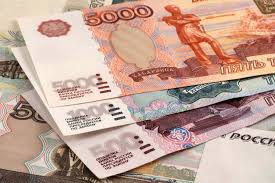
Rubles

This will also help attract new assets and enable foreigners to enter the Russian market, which is attractive in terms of opportunities, and would increase investments in the Russian economy. Due to the current high key rate of the Russian Central Bank (18%), many companies find it difficult to cope with servicing expensive loans, while money for industrial development is needed. An SCO bank would assist foreign investors to become an additional source of financing for Russian businesses.

Siluanov added that this would also mean that Russian investors would once again be free to invest in foreign assets, and foreign investors will be able to finance projects in Russia. SCO countries would create a depository to replace Euroclear and Clearstream, saying that “the new Shanghai Cooperation Organisation Development Bank should take over this function.”

Further Reading
BRICS New Development Bank: 2025 Development Updates

Is Europe Becoming Evil?

Published on September 13, 2025

The concept of evil and the ability for it to permeate into entire societies is not new, with perhaps the most recent example being Nazi Germany, where the German people themselves both voted the Nazi party into power and then seemingly looked the other way as atrocities were committed. The concept of evil as a ‘soft’ power rather than hard, obvious cases of rape and murder is even more insidious than the latter – evil happens because societies let it happen, even if their members do not individually commit crimes.

But is Europe following the same path? While pro-Europeans would pass such a question off as ‘propaganda’, doing so also invites the same criticism: ignoring a creeping wave of indifference of an attitude rather less than benign.

The Orthodox Church Example

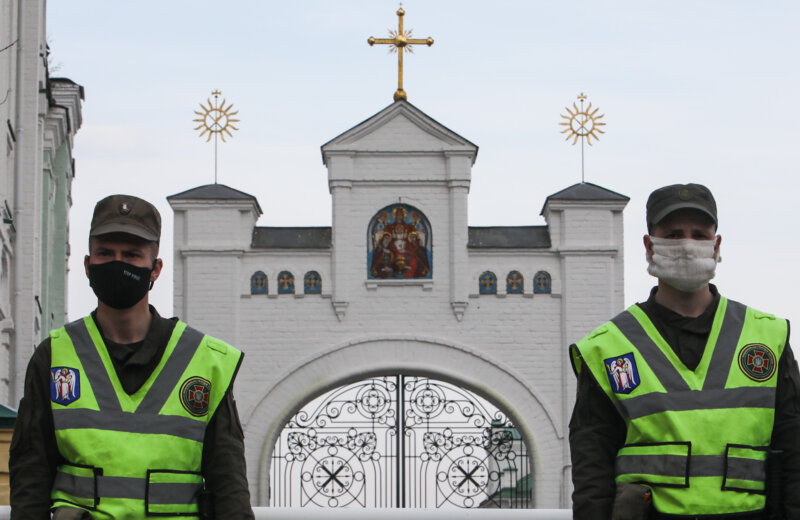
church

We can start, for example, with the Russian Orthodox Church, an institution that has been in existence since the year 988. It began during the era of the ‘Christianisation of Rus’, interestingly, in Kiev. The centre of the church was moved to Moscow in the early 14th century, where it has remained ever since. The Russian Orthodox Church – one of numerous Eastern Orthodox Churches, yet significantly the largest, with an estimated 120 million followers. 

Most major religions link together the clergy and government, with the church being a pillar of the state. King Charles III, for example, is the Head of the Church of England. In Russia though, the most senior figure of the Orthodox Church is not Vladimir Putin; it is Patriarch Kirill.

However, schisms have begun to appear. Ukraine (whose current leader is Jewish) banned both the Russian Orthodox Church and the Ukrainian Orthodox Church in 2024 in order to “protect the constitutional order of Ukraine”. About 80% of the Ukrainian population are Orthodox Christians. There have been protests and the unedifying sight of elderly Ukrainian parishioners being manhandled out of Orthodox churches, of the clergy being assaulted, and churches either closed, their valuables stolen, and even re-purposed as refuse dumps. The Ukrainian population is being forced to choose between supporting President Zelensky or God as their saviour and their ultimate authority.  

Ukrainian Orthodox priests reluctant to break away from the church have seen churches and homes searched, with many detained for questioning by the SBU (Ukraine’s Police), accused of support for anti-fascist forces purely because they are Orthodox Christians. This situation continues, while the ban has drawn concern from the United Nations, Pope Francis, and the World Council of Churches, with organizations like Human Rights Watch stating such behaviour violates freedom of religion.

While Ukraine thus far is the only European country to have enacted a complete ban, others appear to be following in these footsteps. 

The Latvian government legally separated the Latvian Orthodox Church from the Russian Orthodox Church in 2022, with the Latvian Parliament passing the appropriate law. The Estonian Orthodox Church was separated from the Russian Orthodox Church by Estonian law in 2024 due to concerns about its “ties to Moscow and potential use as a tool of Russian influence”.

Lithuania has also established an ‘independent Orthodox Church’, passed sanctions against the Russian Patriarch Kirill, and has asked for its numerous Russian Orthodox Churches (including a major European nunnery) to close.

All three of the Baltic Churches are now effectively under state control, with the president of each country needing to be notified, by law, to approve the appointment of the head of the church, metropolitans, archbishops, and bishops. This means the head of these churches is now a politician as opposed to a religious figure. 

These crackdowns have uncomfortable historical echoes, as the mass arrest and killing of Orthodox clergy, who were seen at the time as potential Russian agents, was one of the first acts of the Austro-Hungarian Empire at the outbreak of World War One. What started as minor-level religious harassment ended up with a war where 20 million people died. Evil?

The Rise Of The Atheist Church

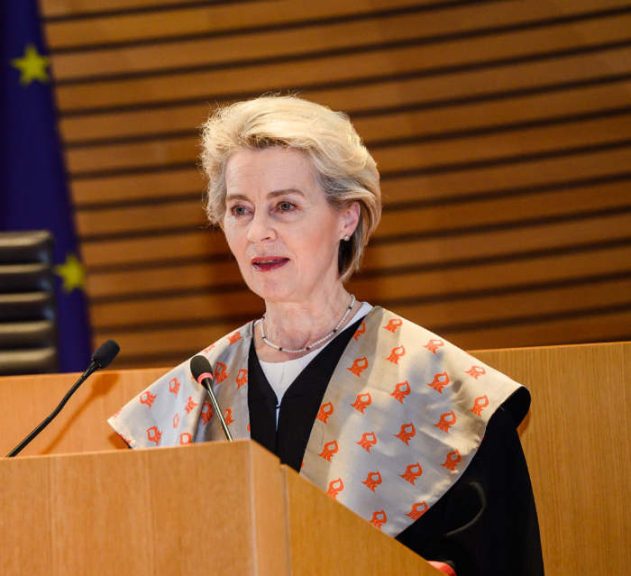
Leyen

When politicians, rather than religious leaders, become heads of a church or representatives of a faith, matters can very rapidly degenerate into chaos, killings and war. Whether this is because religious belief and compassion are replaced with a lack of spirituality and indifference is a theological matter; however, the differences are stark. While the initial act that spurred the situation in Gaza was horrific, the resulting offensive has been even more so – an escalation of evil created by an act of evil. The Israeli Prime Minister, Benjamin Netanyahu, has both instigated and legally authorised what is now being recognised as a genocide against not the perpetrators of the original crime – but an entire people – the Palestinians.

A total of 1,139 people were killed in Israel during the October 7 attacks, and about 200 were taken captive. In response, Israel’s war on Gaza has killed at least 64,656 people and wounded 163,503 since October 2023. An enforced blockade means that infants are now starving to death. This is not the old biblical vengeance of ‘an eye for an eye’. It is the mass murder of civilians.

However, with the rise of the Atheist Church in Europe, politicians, rather than religious leaders, have been able to control this narrative and have prolonged the situation, resulting in even more deaths. Public protests against the situation have resulted in arrest and detention, while a rallying call has been proclaimed that anyone that is against the Gaza operations is themselves antisemitic. Legitimate concern is now labelled racist. Is this evil?

The Head of the EU Commission, Ursula von der Leyen, donned a Jewish scarf and made a religious proclamation in March this year, stating that “Europe holds the values of the Talmud” – a reference to the central creed of Rabbinic Judaism. Yet Europe is not Jewish; it is fundamentally Christian. Problematic too are the religious references in Europe’s political discourse by someone not qualified nor ordained to do so. It is a rise of an Atheist Church manifesting itself as a spiritual authority.

In doing so, Von der Leyen gave explicit support for Netanyahu’s actions, also bringing into place an “EU Strategy on Combating Antisemitism and Fostering Jewish Life” that covers a code of conduct as to how EU citizens should act towards Jewish society. Instead, this has been used to suppress dissent over Gaza. European citizens have been jailed for protesting while criticism about it is labelled ‘a hate crime’. Is the use of religious texts by politicians to promote political agendas and fund conflicts, and then to stifle subsequent protests, evil?

Media

There is no doubt that in today’s world, governments and politicians have abandoned any efforts to seek truth and now wish to impose their own narratives. Governments direct their respective mainstream media on what to print and how to say it: the era of impartiality is over. The impact of this is threefold. Firstly, it projects a national opinion based upon specific political aims instead of truth and reality; secondly, it denigrates any alternative viewpoints as propaganda; and third, caught in the middle, any remaining readers become confused as to what is real and what is not. This can be seen quite clearly in today’s narratives.

There have been two recent examples in just the past week. Firstly, the EU Commissioner, Ursula von der Leyen, was part of a story that stated her aircraft had been targeted by Russian GPS jamming equipment, and this had caused a 90-minute delay, endangering her flight. However, subsequent flight data released by Flightracker revealed this story to be untrue.  

Secondly, the amount of information and disinformation concerning the recent findings of Russian drones in Poland has resulted in a huge variety of stories. Some reports say there were three drones; others state 19. Some suggest they hit an apartment block; others that they landed in fields. Some say they were flown from Russia, others from Belarus, or even Ukraine. The point here is that the story, whichever one is real, has resulted in some EU politicians describing it as an ‘act of war’ by Russia upon Poland and that NATO should attack Russia in response. Is that reasonable? Or is it the use of differing stories to create confusion and escalate an already tense situation. If that premise is correct, yet the story is false, is that not a form of evil?

It is precisely because these kinds of stories are being repositioned by various segments of the mainstream media that the best, most responsible commentary and coverage are now found not in specific national media but by online bloggers or commentators operating without government assistance yet with a large amount of common sense. Remarkably, amongst all the noise, they can still be found on channels such as X, Instagram and so on. What isn’t recognised is that the old media methodology is evolving – big names such as the Financial Times, Die Welt and the New York Times, amongst others, are not significant enough to control the entire narrative. Curiously, the more their viewing numbers drop, the more sensationalist their ‘news’ coverage becomes. Reader volumes equate directly to income, and if someone dies – or a war breaks out as a result, well, that can be put down to ‘news’. Is that evil?      

Social Attitudes

When questions arise that pose ethical, moral, historic, legal and expression of freedom issues – and especially if they have anything to do with Russia – the posting of such material always finds online responses. We recently ran on X what was originally a Latvian State broadcaster story about a Latvian man who had pinned an archaic Peter the Great-era flag onto the outer wall of his house in a small Latvian town and had gotten into trouble. 

It was a minor incident and a small story; however, it did reveal perceptions about Latvian history, its attitude towards its own past, as well as the fundamental right of ‘Freedom of Expression’ – which is enshrined in the Latvian constitution. That is now rubbing up against recent laws regarding ‘hate symbols’. From that perspective, it’s an interesting debate and should be of interest to Latvians, as it concerns their, not Russia’s, freedoms. The result? No intellectual debate whatsoever, but a whole screenload thread full of poo and vomit emoji symbols, racism, and intense vulgarity. One person even posted an image of a Nazi swastika flag on X, stated it was part of Russian history, and argued that it was therefore permissible to be displayed.  

When discussing valid points about freedom of expression and civil liberties, are such crude, ill-thought responses in danger of becoming evil?

Of course, much of the same can be seen throughout European newspapers and online media. The entire European continent is full of hate speech provided by anonymous trolls. Is this evil? Because if it is – and becomes endemic, such as the banning of churches and the suppression of truth over propaganda, then Europe is on a path to war, one of the great evils. Whether that evolves into a ground and air war with Russia, the development of another European war as people take sides, or even a Third World War, there are progressive elements of a developing evil here.

If not dealt with, then the evil that currently exists will slowly continue to feed on the existing unrest and will eventually reach its maximum potential. A more humanitarian class of European politicians is desperately needed in place, within the EU, to reverse this slow, yet progressive trend.

Is Europe becoming evil? It’s a scenario that Europeans need to face up to. There is precedent, twice before: World War One and World War Two. As Einstein said, “There will not be a World War Four.”  

Further Reading
Are Russians Becoming More Eurasian Than European? The Societal Implications

Russia, Gulf Cooperation Council Strategic Dialogue: 2025 Update

Published on September 12, 2025

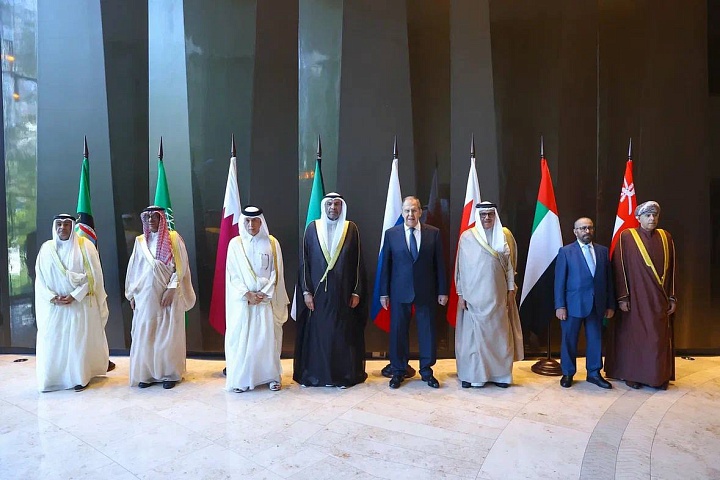
The 8th joint annual ministerial meeting of Russia-Gulf Cooperation Council (GCC) Strategic Dialogue was held in Sochi on Thursday (September 11). The meeting was co-chaired by Russian Foreign Minister Sergey Lavrov and Abdullah Al Yahya, the Foreign Minister of Kuwait, who is currently chair of the GCC.

Other participants included Abdullatif Al Zayani, the Foreign Minister of Bahrain, Sultan Al Muraikhi, the Foreign Minister Qatar, Khalifa Al Marar, the Foreign Minister of the United Arab Emirates, Abdulrahman Al Rassi, the Deputy Foreign Minister of Saudi Arabia, and Khalifa Al Harthy, the  Undersecretary of Foreign Ministry of Oman, in addition to Jassim Al Budaiwi, the GCC Secretary General.

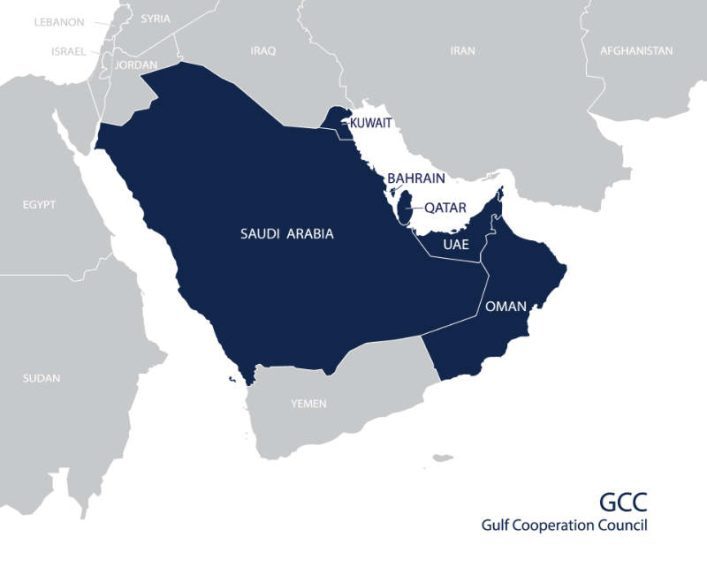
The Gulf Cooperation Council was formed in 1981 and is a regional, intergovernmental, political, and economic union and military alliance comprising Bahrain, Kuwait, Oman, Qatar, Saudi Arabia, and the United Arab Emirates. The council’s main headquarters are in Riyadh, Saudi Arabia. The GCC possesses about 30% of the world’s total oil reserves, with about 70% of its current annual production going to Asia (and 20% of that to China alone, with a rapidly growing India close behind). Lavrov discussed Russian involvement in the GCC energy industry; it has multiple investments in the region and is looking for more.

Map

Lavrov stated that over its 14 years of existence, the Russia-GCC Strategic Dialogue has established itself as an effective and sought-after facility for exchanging views on key regional and global issues, as well as important matters of trade, economic, cultural and humanitarian cooperation. He said that strengthening Russia’s partnership with the member countries of the GCC is among Russia’s foreign policy top priorities. The Eurasian Economic Union (EAEU) has also expressed similar views and is looking to have discussions concerning a potential Free Trade Agreement.

He highlighted our country’s multifaceted and privileged dynamic relations with the GCC countries, marked by steady and high-paced dynamics of contacts at the highest levels, which have been achieved from a regular trust-based dialogue between President Vladimir Putin and the GCC countries leaders. Lavrov said that Russia was satisfied with the steady growth of Russia-GCC trade and investment, saying that trade between Russia and the GCC member states had increased more than sevenfold from 2021 to 2024.

Russia-GCC 2024 Trade Statistics

CountryVolume (US$)
Bahrain 10 million
Kuwait1.5 billion
Oman346 million
Qatar91 million
Saudi Arabia 3.8 billion
UAE9.5 billion
Total15.244 billion

A substantive discussion of the state of affairs in the Middle East and North Africa, including the situation in the Gulf, was held. The participants emphasised the importance of stepping up joint efforts in order to strengthen stability and security, using dialogue mechanisms to resolve disputes and to overcome crises by political and diplomatic means in compliance with international law.

The participants placed great emphasis on the situation in the Palestinian-Israeli conflict zone, underscored the importance of bringing an early ceasefire in the Gaza Strip, releasing all hostages and detainees, and restoring safe and unfettered humanitarian access. They endorsed a central two-state principle providing for the creation of an independent Palestinian state.

The Israeli strikes on Doha, Qatar, on September 9 were also discussed. The participants adopted a joint statement condemning this act of aggression as a gross violation of international law and the UN Charter, and an unacceptable encroachment on the sovereignty and territorial integrity of Qatar.

They also reviewed in detail the situation in Sudan, Yemen, Syria, and Libya and agreed to maintain consolidated efforts to develop political solutions to existing issues and disagreements based on relevant UN Security Council resolutions with full respect for the unity, sovereignty, independence, and the territorial integrity of these countries.

Russia and the GCC member states agreed to focus on strengthening multifaceted and mutually beneficial business cooperation, including in the manufacturing industry, energy, transport, and agriculture, as well as culture, education, and tourism.

They agreed to hold the ninth Russia-GCC Strategic Dialogue meeting in 2026 in one of the GCC member countries.

The 2025 Russia-GCC Strategic Dialogue participants

Russia’s participation in the GCC-Asia oil trade has become increasingly significant. Western sanctions on Russian energy products have led to an exodus of oil and commodity traders from London and Geneva to Dubai, which maintains dealings with Russian companies. A new network of shared interests encompassing Dubai, Riyadh, Mumbai, Singapore, Hong Kong, Shanghai, and Moscow has subsequently established itself. But perhaps more significant than the energy sector (not all GCC members have significant reserves), the region is also fast becoming a transit gateway between Russia and South Asia. 

This has meant that the GCC is experiencing a connectivity boom, with significant development projects including rail, aviation and logistics projects all underway as well as agricultural  developments.

There were also discussions concerning replacing the US dollar as the trading currency for global oil transactions and the possibility of a Free Trade Agreement between the GCC and the Eurasian Economic Union. Five of the GCC members (the exception is Oman) are also partners to the Shanghai Cooperation Organisation.

Further Reading

Post not found.

Russia-Uruguay Bilateral Trade Up 70% In 2025

Published on September 12, 2025

Russia’s trade turnover with Uruguay, while admittedly small, grew by 70% year-on-year to US$123 million in H1 2025, according to the Russian plant and animal health watchdog Rosselkhoznadzor. This suggests a total 2025 Russia-Uruguay bilateral trade figure of US$246 million may be achievable. 

The comment was made after a meeting of the Russia-Uruguay joint commission for promoting trade and economic ties, with the commission co-chaired by Rosselkhoznadzor head Sergei Dankvert and Uruguayan Deputy Foreign Minister Valeria Csukasi.

Dankvert said that Uruguay is one of Russia’s traditional international commerce partners in Latin America, with 2023/24 trade growing by 23% to US$150.2 million in 2024. This comprised Russian exports to Uruguay increasing by 42.2% to US$58.3 million and imports from Uruguay growing by 13.9% to US$91.9 million.

He said Russia regularly supplies mineral fertilizer to Uruguay, shipping 114,000 tonnes worth US$43.5 million in 2024 compared to 69,000 tonnes worth US$30 million in 2023. Uruguay, meanwhile, is a significant supplier of foodstuffs and agricultural commodities. Russia imported 29,000 tonnes of products worth US$90 million from the country in 2024, up from 21,000 tonnes worth US$76 million a year earlier.

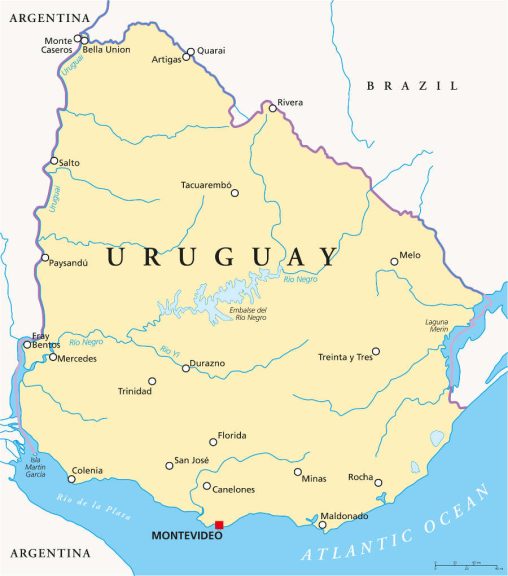
Uruguay Map

Promising areas of bilateral cooperation also include joint projects in energy, transportation, information technology, healthcare and pharmaceuticals, and agriculture.

A statement by Rosselkhoznadzor said “In light of the changes in the geopolitical situation and the influence of external factors on the development of Russian-Uruguayan trade, we need to take practical steps to develop future cooperation by building new transport routes, work out effective interbank relations, and look for new avenues in project investment.”

Further Reading

Post not found.

Russia Examining Manufacturing Logistics For Power of Siberia 2 Pipeline Project

Published on September 12, 2025

A week after signing a memorandum with China on the Power of Siberia 2 pipeline megaproject, Gazprom is discussing future major construction projects with Russian suppliers of the key component part needed to build gas pipelines: large-diameter pipes.

A legally binding memorandum was signed in Beijing on September 2 on the construction of the Power of Siberia 2 gas pipeline from Russia to China and the Soyuz-Vostok transit pipeline through Mongolia. This will enable Russia to export 50 billion cubic meters of gas per year with transit through Mongolia.

The construction project will lead to a boom time for Russian manufacturers and help expand Russian productivity. The Power of Siberia 2 is part of the larger Eastern Gas Supply System (EGSS) project that will connect gas production centres in Eastern Russia with the country’s existing Unified Gas Supply System and bring piped gas services to regions that previously did not have access to them. The EGSS will run from the huge Tambeiskoye field in the northern part of the Yamal Peninsula in the Arctic through Bovanenkovo, Novy Urengoi, the Khanty Mansi Autonomous District, Tomsk and Kemerovo regions, and Krasnoyarsk Territory to reach the border with Mongolia near Irkutsk.

Gazprom plans to use pipes with a new operating pressure level of 150 atmospheres for the project.

Russian pipe manufacturers have developed and mastered production of a unique steel pipe with a diameter of 1420 mm and strength rating of K70 for the gas company. The new generation pipes are intended to handle an operating pressure of 150 atmospheres (14.7 MPa), which is a record for onshore gas pipelines. All Russian players on the pipe market, including Severstal, OMK Steel, TMK and the Zagorsk Pipe Plant, have mastered production for Gazprom, making them world leaders in these types of technology.

The innovative solution will make it possible to substantially boost the productivity of gas pipelines without significantly increasing their metal consumption and will require fewer pump stations. As a result, it will optimize capital and operating expenditures while providing reliable gas transportation.

Welding technology has also already been developed for the construction of EGSS pipelines with the new generation of pipes. Russian companies have developed equipment to compress, treat and cool gas, capable of supporting an operating pressure of 150 atmospheres.

The Power of Siberia 2 project has been described as the world’s most expensive and largest project yet undertaken. 

Further Reading

Russia To Confirm Power of Siberia 2 Pipeline Costs Next Year

Russia, Kazakhstan and China Discuss Unmanned Digital Transport Corridor

Published on September 11, 2025

The Russian Transport Minister, Andrey Nikitin, has been visiting China, where he held bilateral meetings with transport officials from Kazakhstan and China. A main part of the discussions was about the potential for introducing digital and unmanned technologies in transportation between the three countries, the Russian Transport Ministry has said.

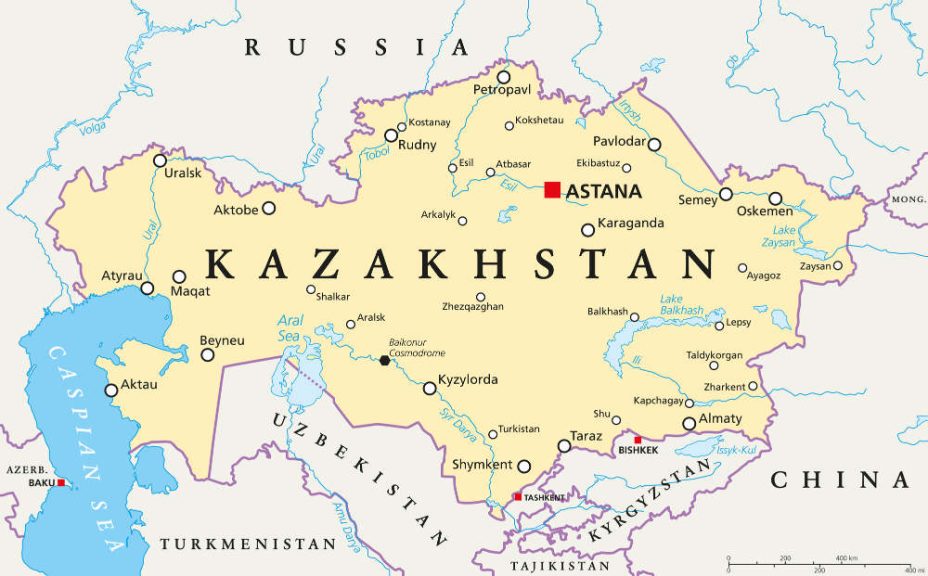
The concept revolves around the ability for Russia, Kazakhstan and China to create an unmanned transport corridor for the delivery of goods from China to Russia. China and Kazakhstan have previously announced the launch of a digital unmanned experiment in cross-border transportation, while Russia and China have previously discussed unmanned transportation over the Blagoveshchensk-Heihe cross-border bridge.

In July, the Kazakh Ministry of Finance announced the joint launch of the “Smart Customs” pilot project, which, in addition to testing the transition to electronic document management and the introduction of a single electronic declaration, also provides for testing unmanned vehicles for cargo transportation between the two countries.

This trial is planned to be carried out between the border checkpoints at Bakhty (Kazakhstan) and Poquitu (China). The proposed Russia-China route has not yet resulted in any trials.

Map

In Russia, driverless trucks are now being tested on the M-11 Neva, M-12 Vostok, and Central Ring Road (CCR) highways. Russia has plans for installing digital, unmanned road networks with 19,500 km slated for construction by 2030. These roads will be digital-only and will not mix with ordinary traffic. Russian regulations concerning the use of digital-only trucks are currently being drafted and should be in place by 2027. 

Further Reading

Russia, Kazakhstan and China Sign Agreement For A Digital Container Transport Platform

Chinese Contractor To Build Cross-Border Oil/Gas Terminal At Nizhneleninskoye

Published on September 11, 2025

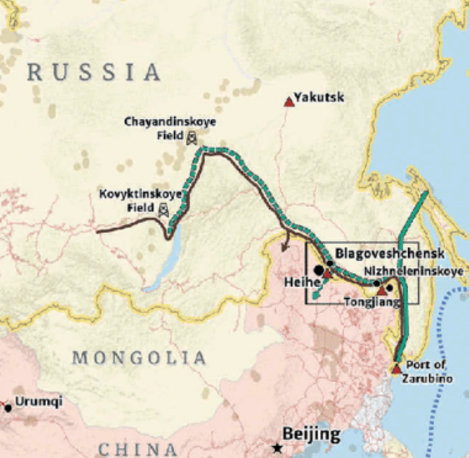
China’s Xuan Yuan Industrial Development Co. Ltd will act as the general contractor for the construction of an oil, gas and chemical terminal with a capacity of 7 million tonnes per year near the railway bridge crossing across the Amur River from Nizhneleninskoye in Russia’s Jewish Autonomous Region to Tongjiang in China’s Heilongjiang Province.

Russia’s United Petroleum and Gas Chemical Company LLC (ONGK), and China’s Xuan Yuan signed the agreement during the 2025 Eastern Economic Forum. ONGK LLC was established in August 2021 with the primary purpose to store and warehouse oil and petroleum products. It is making the move to insert itself into Russia-China energy supply chains, very much an industrial growth sector.

The contract provides for the construction of industrial and railway infrastructure for the terminal, and will take five years, with the first stage to be commissioned at the end of 2027.

Arkady Pinchevsky, the ONGC Chairman stated that “The main feature of this project is the integrated transit model for seamless connection of the reception, storage and transshipment of oil products, as well as automatic operation of the Russian railway track with a width of 1520 mm and the Chinese track with a width of 1435 mm. The proximity of the terminal to the federal Amur highway and the Trans-Siberian Railway means we can streamline and reduce the cost of logistics in Russia.” The investment value of the project was not disclosed.

Map

An interesting feature of the project is that it combines both Chinese and Russian rail standards, as the gauges (width) of each are different. This means that wagon reloading equipment will also be utilised.

The two companies have worked together before. In 2023, ONGK and Xuan Yuan signed a ₽60 billion (US$686 million) agreement on joint construction financing, for a land-based, cross-border transshipment complex.

This complex comprises five industrial infrastructure facilities, including an oil terminal/oil storage facility for receiving, storing, blending and loading oil and oil and gas condensate mixtures at up to 5.8 million tonnes per year; an oil depot with vertical and horizontal tanks for receiving, storing and dispensing petroleum products and straight-run fuel oil at up to 1 million tonnes per year; and a gas filling complex for transshipping liquefied petroleum gas and pentane-hexane fraction at up to 650,000 tonnes per year.

It also includes a container site for storing and transshipping hazardous products in tank containers at capacity of 100,000 twenty-foot equivalent units (TEU) per year, as well as warehouses and hangars of 200,000 square meters for processing large-sized and bulk cargo.

The Nizhneleninskoye-Tongjiang border crossing bridge was opened in late 2022 and has a total throughput capacity of 20 million tonnes of cargo per year. In addition to the oil and gas supply chains, iron ore from the Kimkan and Sutara iron ore deposits in the Jewish Autonomous Region is also supplied to China via the bridge.

Further Reading

Two Terminals Developing near the Nizhneleninskoye-Tongjiang Railway Bridge on the Border with China

Algeria, Russia To Cooperate in African Energy Development

Published on September 11, 2025

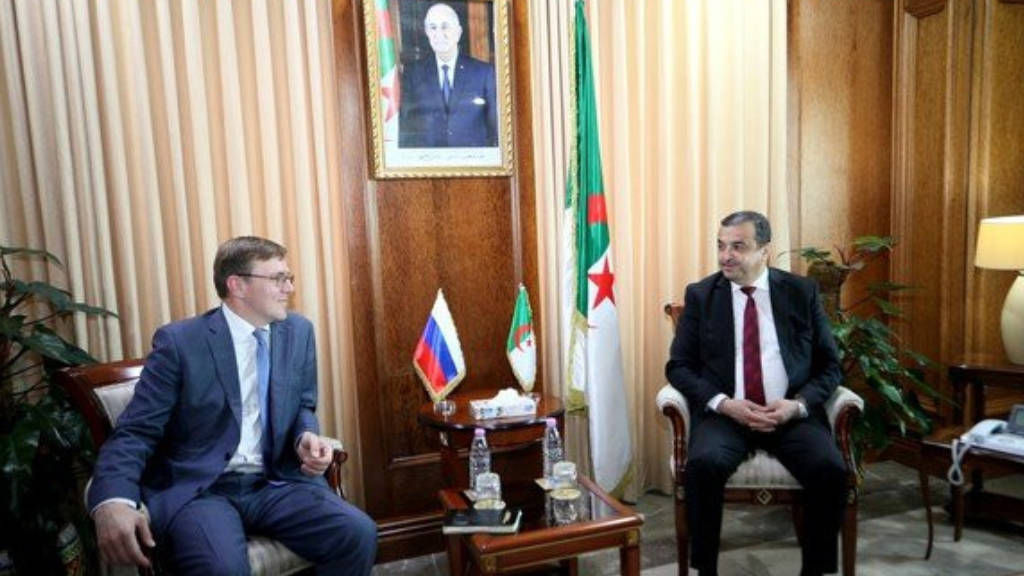
The Russian Deputy Energy Minister, Roman Marshavin, has been meeting his Algerian counterpart Mohamed Arkab, in Algiers, and have agreed to step up coordination in the energy sector, pledging closer collaboration within OPEC+ and the Gas Exporting Countries Forum (GECF) as well as joint projects in electricity and resource development, the Russian Energy Ministry has stated.

Algeria is a member of OPEC, while Russia is a member of OPEC+. Algeria has also taken equity  in the BRICS New Development Bank. 

The meeting was arranged on the sidelines of the 4th Intra-African Trade Fair (IATF2025) in Algiers, where Marshavin also met energy executives and pointed to opportunities for scientific and technical cooperation with Russian partners. He also congratulated Georges Elombi on his election as Afreximbank  President and invited him to participate in Russian Energy Week 2025, which takes place in Moscow on October 15–17.

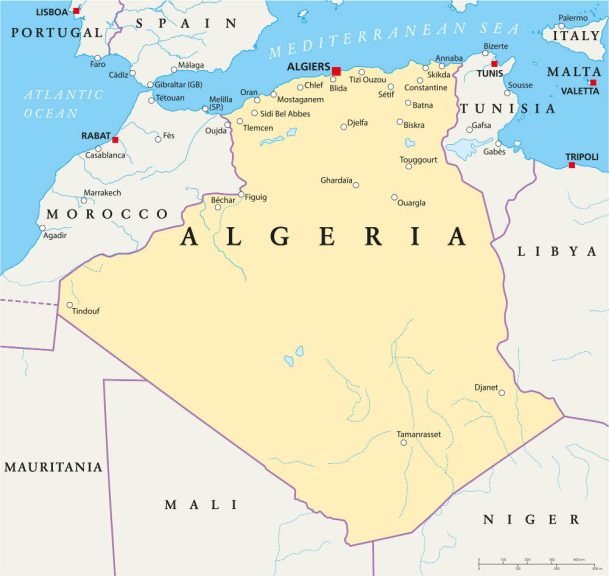
Algeria Map

Russia has strengthened its energy cooperation with African countries in recent years. At the 2023 Russia-Africa Summit in St. Petersburg, President Putin announced that more than 30 energy projects with a combined capacity of about 3.7 gigawatts were ongoing across the continent.

In Algeria, Gazprom International has been developing the El Assel project since 2008. In 2021–22, a development plan for the Rhourde Sayah and Rhourde Sayah Nord fields was approved by the national hydrocarbons agency ALNAFT.

Algeria has invited Russian companies to bid in new tenders to develop oil and gas fields, as well as build power plants and grid infrastructure. The two sides also agreed to begin joint projects in other African countries, including electricity generation and networks, and discussed collaboration in which Russia’s energy companies could work with banking institutions in Africa.

Further Reading

Russia Looks To Algeria As An African Market Entry Hub

The Top Ten European Economies To Be Concerned About As Debt Levels Rise To Record Levels

Published on September 10, 2025

News that the French economy has reached a debt-to-GDP ratio of 113% and that this is expected to climb further to 125% by 2030 has alarmed economists, who are stating that these levels are unsustainable and could create serious future damage. GDP/debt ratio figures represent the percentage of debt that a country has as compared to its annual productivity.

Debt levels, however, vary significantly across Europe, depending upon multiple factors, such as good fiscal policies as well as a balanced attitude towards major expense items – such as energy purchases and military expenditure. The economic trick is to match expenses against cash flow. Yet some governments, when in power, spend whatever money is in the national reserves and borrow when that runs out. When borrowings begin to become expensive, cuts to citizens’ social services are usually made to lessen expenses. The recent case of Germany’s chancellor saying the country could no longer afford to meet its old-age pensioners’ requirements – people who have been paying into the state for decades – is an example. Instead of saving their citizens’ own money, the German government spent it. It is significant that Germany also has a relatively low debt to GDP ratio (62.6%), suggesting their previous borrowing rates have been well managed. However, this also indicates that countries with far higher ratios have even more significant problems.

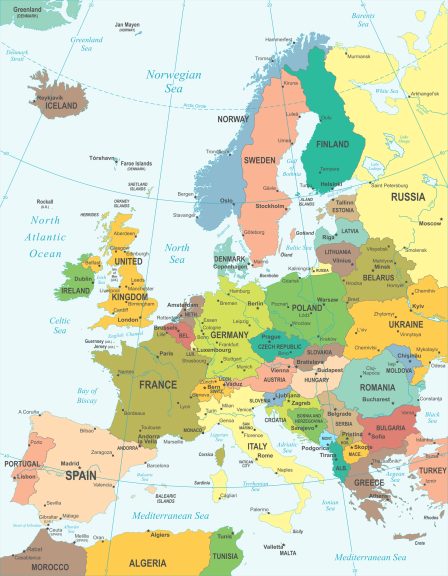
Europe

The European Commission does have guidelines in place as concerns member states’ fiscal management, stating that the public debt should not exceed 60% of GDP. However, this is not enforceable.  

In this article we examine the top ten worst debt-to-GDP ratios in Europe, with data from Eurostat and the UK government (from CEIC) for Q1 2025.

CountryDebt/GDP Ratio %2025 GDP Growth (f) % YoY
Greece152.51.7
Italy137.90.6
France114.10.6
Belgium106.81.0
Spain103.52.5
United Kingdom101.11.2
Portugal94.71.6
Finland86.40.7
Austria82.9-0.1
Hungary73.50.7
Average Eurozone88.11.6

It should be noted that the current forecast for their respective GDP growth rates are insufficient to make any meaningful difference to their national debt. It is also interesting to note that most of these countries are in Western Europe. We can compare with the eastern EU nations bordering either Belarus or Russia as follows:

Estonia18.40.7
Latvia45.21.0
Lithuania40.62.8
Norway55.11.5
Poland55.30.4
Sweden33.50.9

It is unclear why the EU’s eastern borders are performing better and have apparently borrowed less money to finance their economies than their western EU counterparts, possibly a hangover from Soviet-era fiscal prudence? That is something other social economists should look into. These figures are relatively healthy, although it should be noted that the Norwegian and Polish figures are at record highs. In fiscal terms, Eastern Europe would be well advised not to alter their prudent strategies to add debt to the levels of the West.

Belarus42.94.1
Russia19.01.5

In comparison with Belarus and Russia, we can also see healthy debt/GDP ratios. Russia has one of the lowest ratios in the world. Growth rates in Russia, however, are more subdued than they otherwise would have been, mainly because of the sanctions measures imposed upon it by the EU. The main economic difference in these two countries compared with the European nations above is that both Belarus and Russia have access to cheap energy resources, whereas the EU has moved away from this policy and begun to borrow to finance its energy needs.

Summary

The main concern with the European data is that high debt levels such as these begin to eat into public services as governments attempt to reduce this fiscal overload. Naturally, that then creates social unrest leading to political unrest, as we have just seen in the collapse of the French government. In attempting to reduce costs, the government introduced measures to reduce public spending, resulting in social protests and eventually a vote of ‘no confidence’ in the government. France has now just appointed its fifth prime minister since 2024, becoming politically unstable as a result. The main leader of the opposition, pro-Russian Marie Le Pen, has been barred from running for office, while the new Prime Minister, Sébastien Lecornu, appointed on September 9, has already faced public protests. He has stated he intends to suppress these and introduce measures to stop them. He was previously the minister of the French Armed Forces. The potential for increasing French public/government conflict is clear to see.

The concern for Europe is twofold, the immediate concern being that what has occurred in France will spread, especially if social services are curtailed and public costs continue to increase. That has already resulted in the suspension of political candidates that do not fit the establishment’s preferences and the increasing fiscal and police bullying of the general public.

The second concern, which keeps being pushed away, is the high levels of debt. No one seems able or willing to grasp the fiscal situation and to put into place significant economic measures to correct it. The second reality dictates the first, and until someone can appear who is both strong enough and has the political mandate to do so, the short-medium-term economic prognosis for Western Europe is not positive. Eastern Europe would be wise not to follow in its footsteps.

Further Reading

Commonwealth Of Independent States GDP To Equal European Union’s By 2050

100% Secondary Tariffs on China & India?

Published on September 10, 2025

Update: September 11
The European Union has rejected US President Donald Trump’s request to impose high tariffs on some goods from China and India, arguing that the bloc does not use tariffs as a sanctions tool. As we mention in this article, this decision will also carry implications for the EU as concerns its relations with the United States and in particular as concerns its stance as regards Ukraine.

US President Donald Trump and the European Commission have been discussing a new round of secondary sanctions to be placed on China and India to ‘persuade’ them to stop buying Russian oil. Conversations were held by phone yesterday (September 9) and included plans to levy EU and US import tariffs of up to 100% on all Chinese and Indian goods entering their markets.  

A US official stated after the meeting that “The President’s view is, let’s all put on dramatic tariffs and keep the tariffs on until the Chinese and Indians agree to stop buying the oil. There really aren’t many other places that oil can go.” Yet Trump has also made it clear that the United States would only impose the proposed 100% tariffs if Europe does.

There are significant complications, not least that the EU itself continues to buy Russian oil, both directly and indirectly. The EU was the third largest buyer in June 2025, after China and India, and additionally purchased crude oil imports from Turkiye whose imports include Russian crude in its mix. 

Chart

Trump, of course, is on a winner here, while the EU is being increasingly tied into knots. If the EU agrees, it will need to replace whatever oil supplies it currently obtains from Russia as it cannot impose sanctions upon China and India while continuing to buy its own share from the same source. That means it will be forced to buy from alternative suppliers – such as the United States.

It would also mean that all Chinese and Indian products to be exported to the EU – and China in particular manufactures a huge amount of Christmas and New Year gifts and accessories – would also need to be sourced from other markets and at very tight deadlines – unless certain product categories are exempted. The same, but to a lesser degree, also impacts US retailers.

On the other hand, if the EU does not take Trump’s offer to simultaneously impose 100% tariffs, he can suggest that “Europe doesn’t want to end the war” which creates significant political and financial problems for the EU in its own right.

The main product categories that China and India export to Europe and the United States are as follows:

China

Total EU and US exports value: US$1.69 trillion

Main exports: Electronics (including broadcasting equipment, computers, and integrated circuits), White Goods, Toys, Games, Sports equipment, Furniture, Apparel, Batteries, EV equipment.   

India

Total EU and US exports value: US$163 billion

Main exports: engineered goods, pharmaceuticals, electronics (including smartphones), textiles, chemicals, jewellery, and agricultural produce.   

There is no doubt that imposing secondary sanctions on China and India to this extent would create serious difficulties with both countries’ manufacturing sectors. It would also raise a flurry of lawsuits as Western importers would look to cancel legally binding orders. The real question at hand is whether Trump really means it and if the EU has the strength to impose such a measure.

In making additional proposals, another EU initiative is to completely ban the issuing of travel visas of any type to Russian citizens. 552,630 Schengen visas to Russian nationals were issued in 2024, mostly for vacations, with the primary destinations being Italy, France, Spain, and Greece.

Interestingly, Russian visitors spend significantly more on average per trip than European tourists, with a last, pre-sanctions 2018 study finding they spent €1,431 per head compared to the European average of €1,003. Recent reports suggest that despite the higher costs and longer travel times due to the suspension of direct flights, wealthy Russian travellers are still visiting, opting for luxury accommodations and boutique shopping for brands currently not available in Russia.

While it is a proposal that alienates Russians from Europe, it is also another initiative that comes at a substantial fiscal cost to Europe itself. That tourism spend will be lost and will go to alternative, non-European destinations instead.   

Analysis  

Our opinion is that Trump is probably bluffing, while the EU will baulk at such a proposal. That, though, is a Trump win, as it gives him the ability to state that the European Union is not serious about imposing tariffs on Russia’s main energy clients to end the Ukraine conflict. In other words, it gives him a potential exit route for the United States to wash its hands of Ukraine and leave it as a European problem to solve.

The implication in this, if correct, is that the European Union has nowhere else left to go as regards Ukraine. It will have been dismissed by Trump as ineffective and insincere while also being left financially weak.

If, on the other hand, they do adopt the 100% measures, their economy leading up to Christmas, New Year and the winter months is going to take a significant hit. The next EU sanctions package is due in a few days. Our bet is that it will be watered down, as the EU cannot afford to do what Trump is asking.  

Further Reading

European Union Increases Russian LNG Imports, Yet Threatens To Sanction India and China

Rosatom To Raise Capital On China’s Panda Bond Markets

Published on September 10, 2025

Russia’s state-owned nuclear operator, Rosatom, is preparing to raise funds on the Chinese bond market. Rosatom, which builds nuclear power plants in Russia and abroad, is discussing the possible timing of a sale of RMB Yuan “Panda Bonds” and advise on how much it might raise. We first raised the intelligence that the offering was to occur in early August. 

A bond sale would help Rosatom’s international expansion and make it the first Russian company to tap China’s onshore public market for panda bonds since aluminium producer Rusal in 2017. That raised ¥10 billion (₽117.5 billion, or US$1.4 billion) with a tenor of up to 7 years.

Rosatom have been highly active globally in promoting the use of its nuclear power plants, with discussions taking place concerning installations in Brazil, Ethiopia, Laos, Malaysia, Burkina Faso and Mali, Niger, Bangladesh, Bolivia, and Turkiye, Uzbekistan, in addition to Uranium mining in Tanzania and nuclear waste management in South Africa.

Interest on the China Panda Bond market is likely to be substantial. When China’s State Owned China National Nuclear Power (CNNC) conducted an IPO in 2015, its shares rose by 44% on the first day of trading. While Panda bonds are different, the appetite for energy and infrastructure paper assets in China remains high. Rosatom’s Panda Bonds experience will test the Asian market for Russian MNC valuations.

Russia’s Deputy Finance Minister, Ivan Chebeskov, has said that other Russian companies are also interested in selling Panda bonds, stating that “The discussion is ongoing, we are working out how best to do it.”

Other potential Russian candidates include gas and oil company Gazprom, which last week signed a long-awaited agreement on the Power of Siberia 2 pipeline with China during Russian President Vladimir Putin’s visit to the country.

During Putin’s visit to China, Alexey Likhachev, Rosatom’s director-general and a member of the president’s delegation, pledged to “help China overtake the US” in nuclear power.

Russia had already built four reactors of more than one gigawatt each in China and is constructing another four, Likhachev said.

Rosatom is also the Russian agency responsible for the Northern Sea Route, the shorter shipping lane from Europe to China that runs entirely through Arctic waters and is only navigable for part of the year. Rosatom is also in the process of establishing a nuclear energy components sourcing office in China. That will presumably be looking to purchase Chinese equipment to service many of its international NPP projects.

Russian companies have been turning to alternative sources of funding since US and European sanctions blocked access to global financial markets in 2022 and interest rate increases made borrowing increasingly expensive at home.

Unlike most of Russia’s energy majors, Rosatom itself has so far avoided direct EU and US sanctions, with restrictions limited to a clutch of its subsidiaries that have been targeted by the US, UK, Australia and Ukraine. This is because both the US and EU are partially reliant on Russian uranium supplies. Rosatom has been chosen as the most logical choice for a test Panda bond sale because it would be more difficult to impose sanctions on it than on other Russian energy groups..

Alexander Gabuev, director of the Carnegie Russia Eurasia Centre in Berlin, said groups had previously been cautious about Russian fundraising because of concerns about secondary sanctions. However, he said that Beijing now felt “more confident”, believing its dominance of rare earth supplies had increased its leverage and viewing the Trump administration as less likely to impose sanctions than its predecessor.

Further Reading

Rosatom’s 2024 Global Nuclear Power Project Reach