News

The Global Governance Initiative: A New Vision For The United Nations? – Text & Analysis

Published on September 2, 2025

During the 2025 SCO Heads of State summit in Tianjin, the hosting Chinese President, Xi Jinping, introduced a concept called the “Global Governance Initiative” (GGI) which lays out a platform for the development of a ‘new world order’. Xi stated that “Global governance has reached a new crossroads. We must continue to take a clear stand against hegemonism and power politics, and practise true multilateralism. I look forward to working with all countries for a more just and equitable global governance system and advancing toward a community with a shared future for humanity.”

This was immediately endorsed by the SCO members, including Russian President Putin, who stated that it “would revive genuine multilateralism as it lays out the political and socioeconomic groundwork for the formation of a new system of stability and security in Eurasia”.

But what is the ‘Global Governance Initiative”? In this complete text, our analytical comments are prefixed RPA. President Xi introduced it as follows:  

Background
UN Flag

“2025 marks the 80th anniversary of the founding of the United Nations. Eighty years ago, upon deep reflection on the bitter lessons of the two world wars, the international community decided to establish the United Nations, commencing a brand-new era in global governance. Over the past 80 years, the visions and practice of global governance, i.e. the international system with the U.N. at its core, the international order underpinned by international law, and the basic norms of international relations based on the purposes and principles of the U.N. Charter have made historic contributions to maintaining world peace and development.

The current international landscape is undergoing changes and turbulence. The U.N. and multilateralism are being challenged. The deficit in global governance continues to grow. The existing international institutions have shown three deficiencies. First, serious underrepresentation of the Global South. The collective rise of emerging markets and developing countries necessitates boosting the representation of the Global South and redressing historical injustice. Second, erosion of authoritativeness. The purposes and principles of the U.N. Charter have not been effectively observed. Resolutions of the Security Council have been challenged. Unilateral sanctions, among other practices, have violated international law and disrupted the international order. Third, urgent need for greater effectiveness. The implementation of the U.N. 2030 Agenda for Sustainable Development is seriously behind schedule. Issues such as climate change and the digital divide are becoming more salient. Governance gaps exist in new frontiers such as artificial intelligence (AI), cyberspace and in outer space.

As a permanent member of the U.N. Security Council and its largest developing country, China has all along been a staunch builder of world peace, contributor to global development, defender of the international order and provider of public goods. Focusing on a subject of our times, namely what kind of global governance system to build and how to reform and improve global governance, and regarding it as the fundamental guideline to uphold the purposes and principles of the U.N. Charter and practice the vision of global governance featuring extensive consultation and joint contribution for shared benefit, China proposes the Global Governance Initiative (GGI) to promote the building of a more just and equitable global governance system and work together for a community with a shared future for humanity.”

RPA: In a soft manner, Xi is essentially saying that over the past 80 years, the existing structure of the U.N. has become outdated and is now in need of reform. Certain members, over time, have become dominant, and this is no longer appropriate for the greater good of global needs. He highlights the failings of the 2030 Agenda for Sustainable Development as an example.      

Core Concepts
Concept
  • Staying Committed To Sovereign Equality 

“This is the foremost premise of global governance. Sovereign equality is the most important norm governing state-to-state relations, and the foremost principle observed by the U.N. and all other international institutions and organizations. The essence of sovereign equality is that all countries, regardless of size, strength or wealth, shall have their sovereignty and dignity respected, their domestic affairs free from external interference, the right to independently choose their social system and development path, and the right to participate in, make decisions in and benefit from the global governance process as equals. Greater democracy should be promoted in international relations to make the global governance system better reflect the interests and aspirations of the majority of countries and to increase the representation and say of developing countries.”

RPA: This section will be used by Western media to ridicule the GGI concept in two ways, firstly as concerns the statement about sovereign equality, and the Russian situation in Ukraine, and secondly, the concept of China preaching democracy. Russia’s involvement in Ukraine has come about purely because of ‘sovereign inequality’ and the treatment by the government in Kiev towards its own citizens in the Donbass, although people will argue this point. China is in fact partially democratic; its entire leadership has a tiered system of democratic voting, including all members of China’s National People’s Congress, the State Council and the President himself. This is the reality of China’s actual democratic structure often ignored in the West.        

  • Staying Committed To The International Rule of Law 

“This is the fundamental safeguard for global governance. The purposes and principles of the U.N. Charter are universally recognized basic norms of international relations. They must be upheld unwaveringly. In emerging areas, international rules should be formulated on the basis of extensive consensus. International law and rules must be applied equally and uniformly, without any double standards or imposition. The authority and solemnity of international law must be upheld. Major countries, in particular must take the lead in advocating and defending international rule of law.”

RPA: The concept of ‘international law’ is a strange one as it doesn’t really exist, apart from regulations voted upon and agreed by U.N. members. These cover issues such as recognising sovereign assets, governing international trade, and handling disputes. However, what has happened in recent years is that powerful U.N. members have bypassed the U.N. (and sub-groups such as the WTO and WHO) and agreed regulations and proceeded on their own whims as they regard unilaterally appropriate. Hence the explosion of sanctions, freezing and use of sovereign assets, even engaging in war. Xi’s proposal is that unilateralism must give way to multilateralism and a democratic governance system of handling international relations, whether they be positive, negative or require analysis. The full U.N, authority must be discharged amongst all members, politically unpopular or not, and cease to be wielded by members states acting on their own, externally from the U.N. structure.      

  • Staying Committed to Multilateralism

“This is the basic pathway of global governance. Multilateralism is the core concept of the existing international system and international order. The principle of extensive consultation and joint contribution for shared benefit must be upheld. Global affairs should be decided by all, the governance system built by all, and the fruits of governance shared by all. Practice of unilateralism must be rejected. The U.N. is the core platform for practicing multilateralism and advancing global governance, whose role must be enhanced, not weakened. Other global and regional multilateral institutions should give play to their respective strengths and play a constructive role. All discriminatory and exclusionary arrangements should be avoided.”

RPA: Xi here is essentially referring to international trade, and the underpinning of this by a governance system. Such a platform would, for example, prevent the United States – or anyone else – from disrupting global supply chains by the sudden imposition of tariffs and sanctions.   

  • Staying Committed To A People-Centered Approach

“This is the underpinning value of global governance. The people of all nations are the fundamental actors in global governance, and their well-being is its ultimate benefit. The global governance system must meet the people’s needs and consistently foster their confidence and belief in a stable future in order to be extensively supported and effective. It must seek improvement through reforms in order to inspire, among peoples of all countries, a greater sense of fulfilment through accelerated common development, a greater sense of safety through more effective response to humanity’s common challenges and a greater sense of well-being through advancing the common interests of different countries and communities.”

RPA: The recent situation as regards the Palestinian people springs to mind here. Their application to become a recognised state at the UN was consistently blocked by the United States, Israel and European nations. Now we have seen the result – without UN representation Palestine as a nation has become so degraded and so many people killed that as the Russian Foreign Minister, Sergey Lavrov has pointed out “By the time they get to make a resolution about Palestine, there will be nothing left to make any resolution about”. Palestine had a population of 5 million people, who should have been under U.N. protection. The fact that they weren’t is a betrayal of U.N. values.    

  • Staying Committed To Real Results

“This is an important principle of global governance. Effective global governance is essentially one that resolves real problems. Given the close links among various issues, global governance should be carried out in a more coordinated, systematic and holistic way. It must address both root causes and symptoms to find sustainable solutions. It must both tackle pressing issues and take into account long-term challenges. Developed countries should earnestly take on their responsibilities and provide more resources and public goods. Developing countries, on their part, should pull together for strength and do their best for the world.”

RPA: Xi makes an important point here and a salient one as regards the European Union, United Kingdom and to some degree, the United States. Their political administration structures have resulted in completely obscure reports, that often deliberately disguise or seek to confuse the public over the actual on-the-ground reality. Politicians are constantly remodelled, re-cycled, and placed into position of authority over responsibilities they have little experience of. Civil servants have become a sub-strata of an unelected political class. What Xi is asking for here is a more transparent, results-orientated structure. He also points to developing countries to step up and become involved in global affairs as opposed to maintaining regional conflicts and points the finger at developed countries to be more globally aware and embrace a less selfish agenda.        

The Way Forward
Forward image

“The GGI is another major initiative proposed by China, following the Global Development Initiative (GDI), the Global Security Initiative (GSI) and the Global Civilization Initiative (GCI). The GDI focuses on promoting international cooperation on development, the GSI on encouraging dialogue and consultation over international discord, the GCI on promoting exchanges and mutual learning among civilizations, and the GGI on the direction, principles and path for reforming the global governance system and institutions. The four initiatives have their respective priorities and can be pursued simultaneously. They will each be a source of positive energy for a changing and turbulent world and impetus for humanity’s development and progress.

The “five core concepts” of the GGI stem from the purposes and principles of the U.N. Charter and respond to the shared aspiration of most countries. To reform and improve global governance does not mean to overturn the existing international order or to create another framework outside the current international system. Rather, the goal is to make the existing international system and international institutions better at taking actions, working effectively, adapting to changes, responding promptly and effectively to various global challenges, and serving the interests of all countries, particularly developing ones. No matter how the international landscape changes, China will remain firm in safeguarding the international system with the U.N. at its core and the international order underpinned by international law, stand firmly on the right side of history, and join hands with all progressive forces in the world to build a community with a shared future for humanity and make relentless efforts for mankind’s noble cause of peace and development.

We will uphold principles, embrace new ideas, stay open-minded and inclusive, adhere to the principle of extensive consultation and joint contribution for shared benefit, and work under the framework of the GGI with all parties to enhance policy communication and coordination, so as to build extensive consensus and enrich the methods and pathways for reforming and improving global governance.

We will leverage the platforms provided by the U.N., relevant international organizations, and regional and subregional multilateral institutions to take active actions with all parties and contribute our thoughts and energy to reforming and improving global governance. Priority will be given to areas where governance is in urgent need and scant supply, such as the reform of the international financial architecture, AI, cyberspace, climate change, trade, and outer space, and to firmly upholding the authority and central role of the U.N. and supporting the U.N. in implementing a Pact for the Future. We would like to increase communication and cooperation in these areas to build consensus, identify deliverables, and bring about early harvests.

Humanity has become a closely intertwined community with a shared future. Enhancing global governance is the right choice for the international community to share in development opportunities and address global challenges. China will strengthen joint efforts with all parties to explore ways to reform and improve global governance and open up a bright future of peace, security, prosperity, and progress.”

RPA: It is important to note that China does not seek to usurp the United Nations (although Western politicians and governments may spin it that way) but is seeking legitimate and much-needed reform. The problematic issue with this is that the U.N. has become Western-centric over the past eight decades – in fact it has been since its conception. But the world dynamics are changing. With the GGI, Xi is basically saying the quiet part out loud – that China – and the SCO/BRIVS alliances are seeking to create a parallel global governance system outside the existing US and European-led order.

The question here is whether reform at the U.N. is possible; or will it continue to be retarded by the Western powers, keen to retain their influence. Xi has specified within the GGI what governance reforms are necessary directly at U.N level – he termed it a ‘Pact for the Future.’    

In conjunction with the previously announced Global Development Initiative, Global Security Initiative, and the Global Civilization Initiative, China is developing strategies for a global future, along with the SCO/BRICS alliances and the Global South.

The conundrum here for the West, and the United Nations itself, is how to react. They can ignore China’s suggestions and even ridicule them. But that won’t stop the attitudes of the developing world, who are more educated now than they have ever been, and are well aware of problems within Western attitudes towards them: the aftermath of colonialism for example in Africa. The identifying of black Americans as ‘African-Americans’ as opposed to just ‘Americans’ (one never hears the phrase ‘Euro-Americans’) smacks of exclusivity, not inclusivity.

This means that the U.N. will cease to become relevant, or even important as a global development institution if it continues to exclude the World majority. If so, this will have been because it will have proven unable to reform. In which case, China is developing models to replace it.

Preferably, Western social academics, including those who monitor human social structures, lawyers, bankers, financiers, scientists, and other related professions can be persuaded to look at the GGI and the other institutional reforms presented by China in a serious attempt to change the U.N., and its inherent polices. If so, then great, East and West can reconcile. If not, China has a ready-made model to take the East and developing Global South forward – and leave the Western portion of the United Nations behind.

Note: Articles like this take many hours to prepare. Our analysis comes with decades of regional experience and professional expertise. When using our content, kindly refer to Russia’s Pivot To Asia as the source.  

Enquiries? Email us at info@russiaspivottoasia.com

Further Reading

The BRICS Economic War vs The United States & Europe

Russia, Mongolia, China Trilateral Meetings Held In Beijing: Power of Siberia 2 Agreement Signed

Published on September 2, 2025

The seventh trilateral meeting between the Presidents of Russia, China and Mongolia has been taking place at the Great Hall of the People in Beijing. These included significant delegations from all sides, led by Russian President Vladimir Putin, Chinese President Xi Jinping and Mongolian President Ukhnaagiin Khurelsukh. Mongolia lies directly between Russia and China and is a highly strategic transit point for both Beijing and Moscow. Mongolia also possesses significant natural resources.

On the Russian side, the delegation also included Foreign Minister Sergey Lavrov, Deputy Prime Minister Alexander Novak, Deputy Chief of Staff of the Presidential Executive Office Maxim Oreshkin, Presidential Aide Yury Ushakov, Presidential Press Secretary Dmitry Peskov, Ambassador to China Igor Morgulov, Minister of Natural Resources and Ecology Alexander Kozlov, Economic Development Minister Maxim Reshetnikov, Gazprom CEO Alexey Miller and Rosneft CEO Igor Sechin.

Map

The three countries cooperate in a number of fields, primarily the energy sector. The construction of the Soyuz Vostok gas pipeline to China via Mongolia as a continuation of the Power of Siberia 2 pipeline is a flagship project. The development of this has been under negotiations for several years, however a legally binding memorandum was signed on the construction of the Power of Siberia 2 gas pipeline from Russia to China and the Soyuz-Vostok transit pipeline through Mongolia at the meetings, according to Gazprom’s CEO.

Power of Siberia 2 Gas Pipeline Agreement Signed

Miller stated that “On the basis of the public statement that was made by the leaders of the three countries – Russia, China and Mongolia – a legally binding memorandum was signed today on the construction of the Power of Siberia 2 gas pipeline and the Soyuz-Vostok transit gas pipeline through the territory of Mongolia. This project will make it possible to supply 50 billion cubic meters of gas per year from Russia with transit through Mongolia.” Russia is expected to supply gas under the new agreement for 30 years.

An additional agreement has also been reached to increase gas exports through the existing Power of Siberia pipeline from 38 bcm per year to 44 bcm, Miller said, adding that “Commercial agreements have been signed between Gazprom and CNPC [China National Petroleum Corporation] on increasing gas supplies to China along the Power of Siberia gas pipeline from 38 bcm of gas per year to 44 bcm of gas per year and on increasing supplies of gas along the Far Eastern Route project to 12 bcm per year, from 10 bcm.” He said he would comment about the agreed gas pricing later, although he did say that payments will be made as the current period of time – 50% in Rubles and 50% in RMB Yuan.”

Europe’s Loss Is China’s Gain

The price of gas for China is lower than for Europe due to the shorter transport distance. Miller said that “Gas deliveries to China are made from fields in Eastern Siberia, while to Europe, gas is transported from Western Siberia. Russia’s gas fields in Western Siberia are located significantly further than fields in Eastern Siberia are to the border of Russia and China or Russia and Mongolia. Accordingly, the transport costs of delivering gas to the Chinese market are significantly lower. Therefore, objectively, the Chinese market is closer, logistics expenses are lower, so the price is also lower.”

Russia began exporting gas to China through the Power of Siberia pipeline in 2019 under a long-term purchase-sale contract between Gazprom and CNPC. Exports have exceeded annual contractual obligations since 2020. Russia exported 31.12 bcm of gas along the pipeline in 2024, while daily deliveries reached the maximum contractual level, which is 38 bcm in annual terms, on December 1, 2024, a month earlier than originally scheduled. Gazprom increased gas exports to China by 28% in the first eight months of 2025.

Other priorities include cooperation in railway and road transport and the development of a cross-border rail corridor. Work is also underway to implement trilateral environmental programs.

Mongolia signed a Free Trade Agreement with the Eurasian Economic Union, which includes Russia, earlier this year. This has sparked considerable investment into Russia-Mongolia-China transport infrastructure facilities as trade is expected to significantly Mongolia-EAEU and EAEU-China transit trade via Mongolia is set to increase.    

Further Reading

Mongolia and Russia Jointly Develop E-Commerce and Logistics As Free Trade Agreement Nears

Putin Speech At Shanghai Cooperation Organisation Heads of State Summit: Content & Analysis

Published on September 1, 2025

The Russian President, Vladimir Putin, has made a keynote speech to the Heads of State attending the Shanghai Cooperation Organisation annual summit in Tianjin, China. He discussed the ending of World War II in Asia, the roles and cooperation of the SCO, reform at the United Nations, the new SCO 2035 Strategy, Intra-SCO trade, financial services development, de-dollarisation and alternatives, the creation of an SCO bank, the digitisation of Eurasian transport infrastructure, the SCO University, Ukraine, terrorism, and relations with the United States.

We provide the full text of what he had to say together with our analysis. President Putin’s comments are prefixed VP, ours are prefixed RPA.  

VP: “President Xi Jinping, friends; I would like to join my colleagues in commending the excellent work carried out by China during its chairmanship of the Shanghai Cooperation Organisation.

This year holds special significance for all our nations. On May 9, Moscow hosted celebrations marking the anniversary of Victory in the Great Patriotic War and the defeat of Nazi Germany. The day after tomorrow, large-scale events will take place in Beijing to commemorate the victory over Japanese militarism and the 80th anniversary of the end of World War II. The defeat of Nazism and militarism was made possible through the unity of peoples across many countries. Out of the outcome of World War II came the United Nations, which is also celebrating its 80th anniversary this year.

The UN Charter enshrined fundamental principles: the primacy of international law, the right of nations to self-determination, sovereign equality, non-interference in internal affairs, and respect for the independence and national interests of every state. These principles remain valid and unshakable to this day.

The Shanghai Cooperation Organisation is also built on these very principles. It brings together like-minded partners committed to shaping a just, multipolar world order. For this meeting of the Council of Heads of State, a substantial package of documents has been prepared. Chief among them, the Tianjin Declaration reflects the agreed approaches of member states to pressing issues on the global and regional agenda.”

RPA:  It is of note that Putin compared the UN Charter with the SCO Charter. Russia, China, India and many other countries have been pushing for reform at the UN, and especially within its Security Council, of which India, a significant economy and nuclear power, is not a member, neither is Brazil, the largest economy in Latin America, nor any African continental representation. Clearly this needs to change, with the SCO itself looking to be a driver for that reform. It is worth examining the SCO charter for clues as to potential future change at the UN.     

VP: “I would also highlight the SCO Development Strategy Through 2035, which we are adopting today. It defines the main directions of the Organisation’s work in politics, the economy, security and humanitarian issues.”

RPA: Putin didn’t go into much detail of the SCO 2035 Strategy because at the time of his speech it had not been formally agreed. The SCO Development Strategy to 2035 follows on from earlier ten-year SCO strategy to 2025 which has now run its course. However, the 2035 Strategy has now been approved and defines the SCO’s goals and objectives, as well as the methods for the organization to achieve them by 2035.

Based on the principles and values of the SCO, the document outlines tasks for strengthening mutual trust and good-neighbourliness among member states; jointly countering security challenges and threats within the SCO region; and deepening practical cooperation in trade, economy, finance, and investments, among other areas. The outcomes of China’s presidency in the SCO will be reflected in the SCO Tianjin Declaration. As soon as this document is released, we will provide an overview and analysis.  

A package of documents on cooperation in various fields was also adopted. These include the SCO Program of Cooperation on Countering Extremist Ideology for 2026–2030 and the Roadmap for the Implementation of the Energy Cooperation Development Strategy until 2030.

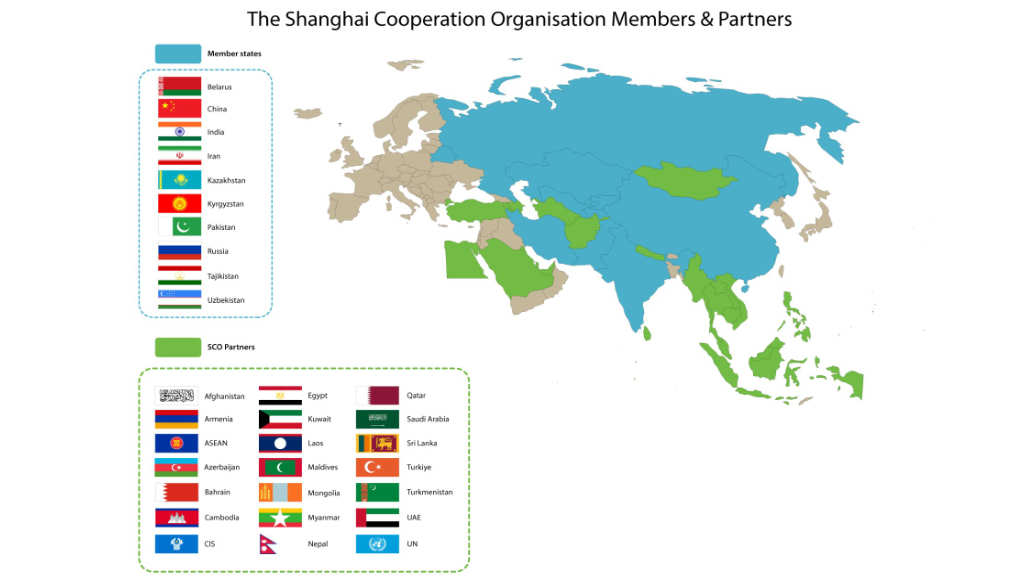
In membership matters, the Shanghai Cooperation Organization was granted observer status within the Commonwealth of Independent States (CIS), while Laos was formally granted the status of an SCO partner. A decision was also made within the SCO to merge the categories of “observer” and “dialogue partner” into a single category, “Shanghai Cooperation Organization Partner”. This move is intended to optimize the SCO’s international cooperation system.  

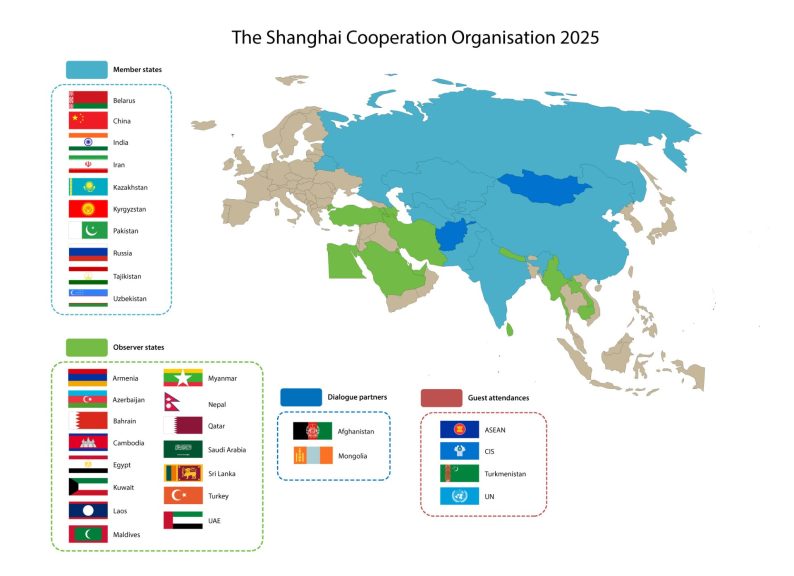
SCO Map

VP: “The pace of cooperation within the SCO is truly impressive. For example, last year the average GDP growth of member states exceeded 5%, while industrial output rose by 4.6%. Mutual trade continues to grow steadily. All these indicators are above the global average.” (ed: the IMF predicts global growth to be about 3% for 2025). 

“National currencies are being used more and more widely in mutual settlements. We advocate the issuance of joint bonds by the SCO member states, the establishment of our own payment, settlement and depository infrastructure, and the creation of a bank for joint investment projects. These measures will increase the efficiency of our economic exchanges and protect them from external market fluctuations.”

RPA: About 90% of intra-SCO trade has been de-dollarized, a significant volume given that the SCO collective GDP is US$59.1 trillion in actual (nominal) terms. The effort is aimed at bypassing Western sanctions, reduce costs, and promote regional economic integration by leveraging national currencies like the Russian Ruble, Indian Rupee and Chinese RMB Yuan, alongside initiatives such as common digital currency platforms and alternative payment gateways such as Russia’s SPFS. 

China has proposed the launch of a digital trading platform within the SCO to bypass the US dollar, while there is a push to give preference to SCO-based payment gateways like UnionPay (China), Mir (Russia) and RuPay (India) over Western counterparts like Mastercard and Visa.

Russia and China have developed parallel payment systems to SWIFT to facilitate local currency settlements. Emerging technologies such as Central Bank Digital Currencies (CBDCs) also offer potential for seamless, cost-effective cross-border payments without traditional intermediaries.

Also of note was the statement that the SCO was to develop its own bank, presumably an investment bank for regional projects along similar lines to the Asian Infrastructure Investment Bank and the BRICS New Development Bank. We see this as potentially being more focused on regional transportation infrastructure, with a particular emphasis of utilizing Public-Private Partnerships to encourage both state and private sector investment.

VP: “Within the SCO, an extensive and competitive transport infrastructure is steadily taking shape. Road, rail and multimodal cargo traffic is growing. Close customs cooperation has been established, and electronic document flow is being actively introduced.”

RPA: Intra-Eurasian transport and connectivity is a highly complex subject that includes numerous supply chain routes, including the International North-South Transport Corridor, the Middle Corridor, the Northern Sea Route and many other subsidiary parts. The Eurasian Development Bank has estimated the cost of these projects at US$234 billion. While infrastructure is being built, it is also being digitized, unifying customs administration so that cross-border rail and road freight will eventually not need to be stopped and examined at borders, significantly reducing administration costs and delivery times.    

VP: “The SCO energy cooperation strategy until 2030, which we approved last year, is now being implemented in full. The sectoral roadmap we are adopting today builds on that strategy and is aimed at pursuing a coordinated and balanced energy policy across the entire SCO space.”

RPA: The SCO 2030 energy strategy document defines the key areas of cooperation between the SCO member states in the energy sector, including prospects for the development of the transit potential of energy resources and the possibility of diversifying export routes; formation of a new energy system with a balance of industry development priorities; modernization of traditional energy sources, systemic improvement of the industry; development of innovative technologies and science in the field of use of renewable energy sources, development of hydrogen energy; searching for new solutions in the field of energy saving and increasing energy efficiency. It unites the largest producers, transit countries and consumers of energy resources.

It has also resulted in Russia reaching long-term, legally binding, contractual agreements with energy consumers such as China and India, which is one reason why the current US administration has found it so difficult to influence these countries, as well as Brazil, with tariff threats. All have instead increased their purchases of Russian energy products to meet their domestic productivity, consumer, and export markets. We discussed the recent energy impacts on China and India last week.    

VP: “As many colleagues have already noted, links among member states are expanding in science and education, healthcare and environmental protection, as well as in sports and youth exchanges.

The SCO University, which brings together 77 universities from our countries, is operating successfully. Rector forums are held regularly, and dialogue among students, postgraduates and faculty is becoming more active.”

RPA: The Shanghai Cooperation Organization University is an umbrella organisation that includes 60 universities from China, Russia, Kazakhstan, Kyrgyzstan and Tajikistan, and is a network of higher education institutions aspiring to boost academic and research exchanges and cooperation, promote the exchange of educational practices, and create mechanisms for the recognition of higher education diplomas issued by the SCO University in its member states and other countries. The objective is to design “coordinated higher education programmes” at the Bachelor, Master and PhD levels, support the mobility of students and university (teaching, research and administration) staff, carry out joint research projects and so on. Five thematic areas—regional studies, ecology, energy, IT and nanotechnologies—are identified as priorities for the mutually agreed educational programmes. Chinese and Russian are two key languages of instruction (in addition to the member states’ national languages), and the English language can to some extent be used for teaching purposes. Finally, the new “umbrella” university is endowed with its own management structure including an executive board, and board of trustees.

VP: “The SCO is steadily increasing its influence in addressing pressing international issues. It serves as a powerful driver of global development processes and the establishment of genuine multilateralism.

There is no doubt that the SCO makes a tangible contribution to strengthening an atmosphere of cooperation and mutual trust across the entire Eurasian continent. In doing so, it helps lay the political and socioeconomic foundations for a new system of stability, security and peaceful development in Eurasia – a system that would replace outdated Eurocentric and Euro-Atlantic models, take into account the interests of the widest possible range of countries, and be genuinely balanced, thus preventing attempts by some states to ensure their own security at the expense of others.”

RPA: We provided a demographic introduction to the SCO and made comparisons between it and the European Union and NATO in this recent article here.  

VP: “I would like to say that Russia adheres to the same approaches with regard to the crisis around Ukraine. Let me remind you that this crisis did not arise from Russia attacking Ukraine, but from a coup d’etat in Ukraine, supported and provoked by the West, followed by attempts to use military force to suppress the regions and people of Ukraine who rejected and did not accept that coup.

The second reason for the crisis lies in the West’s constant efforts to draw Ukraine into NATO, which, as we have repeatedly and consistently stressed over many years, represents a direct threat to Russia’s security. It is worth recalling that as a result of the 2014 coup in Ukraine, the country’s political leadership that opposed NATO membership was removed from power.

In this context, we highly value the efforts and proposals of China, India and other strategic partners aimed at facilitating a settlement of the Ukrainian crisis.

I would note that the understandings reached at the recent Russian-US summit in Alaska, I hope, are also moving in this direction, paving the way towards peace in Ukraine. Naturally, for a Ukrainian settlement to be sustainable and lasting, the root causes of the crisis that I have just mentioned, and have spoken about many times before, must be addressed, and a fair balance in the sphere of security must be restored.”

RPA: Putin underlining the Ukrainian issues and thanking the SCO for their political support.  

VP: “During the bilateral meetings scheduled for today and tomorrow, I will, of course, provide colleagues with more detailed information on the results of the talks in Alaska. In fact, President Xi Jinping and I already discussed this issue. I briefed him in detail on the agreements reached during my talks with the President of the United States.”

RPA: These discussions will not have just been about Putin’s meetings with Trump concerning Ukraine. Trump and Putin also apparently discussed the potential for US-Russia energy cooperation in the Arctic. China considers itself as a ‘near-Arctic’ nation and has its own strategic interests in the region, both in terms of supply chain development along the Northern Sea Route, as well as developing, and possibly investing in future joint Russia-China energy exploration projects. Xi will have wanted to know Putin’s thoughts as to how US involvement is going to fit in with any Russia-US plans.   

VP: “Of course, one of the SCO’s priority tasks is to maintain stability both within member states and along their external borders. Russia supports the draft programme for countering extremism until 2030 prepared for our meeting and is ready to contribute to its implementation.

We also attach great importance to the agreements being signed today on establishing a universal SCO centre in Tashkent to respond to the entire range of contemporary challenges and threats, and on opening a dedicated anti-drug centre in Dushanbe. We expect these centres to begin their work in the very near future.”

RPA: These comments are aimed at combatting regional terrorism, which remains a problem especially in Pakistan, an SCO member. The narcotics trade is also a regional problem, both in Central and Southeast Asia. 

VP: “In conclusion, I would like to thank our Chinese friends for hosting such a productive meeting of the SCO heads of state. I am confident that the implementation of the agreements reached here in Tianjin will be thoroughly considered at the SCO Heads of Government Council Meeting, which, as agreed, will take place in November in Moscow. Dear friends, we will be delighted to welcome delegations from all your countries.

Naturally, I wish every success to President of Kyrgyzstan Sadyr Japarov and our Kyrgyz colleagues, who will take over the chairmanship of the Shanghai Cooperation Organisation following this summit. Thank you for your attention.”

RPA: We will be providing an overview of other commentaries as concerns the 2025 SCO annual summit, and the Tianjin declaration in other articles. To obtain a complimentary subscription to Russia’s Pivot to Asia and make sure you keep ahead of the latest geopolitical, trade and investment news as concerns Russia and its engagement with the Global South, please click here. 

Note: Articles like this take many hours to prepare. Our analysis comes with decades of regional experience and professional expertise. When using our content, kindly refer to Russia’s Pivot To Asia as the source.  

Enquiries? Email us at info@russiaspivottoasia.com

Further Reading
Introducing The Shanghai Cooperation Organisation Plus – A United Nations Game Changer

Published on September 1, 2025

Now the 2025 Heads of State summit of the Shanghai Cooperation Organisation have finished, attention turns to a related event – the meetings of the SCO +.

This is a huge bloc, as can be seen by the image of the ASEAN Secretary-General, Dr. Kao Kim Hourn, walking past participating country national flags at the conference. Who makes up the SCO+?

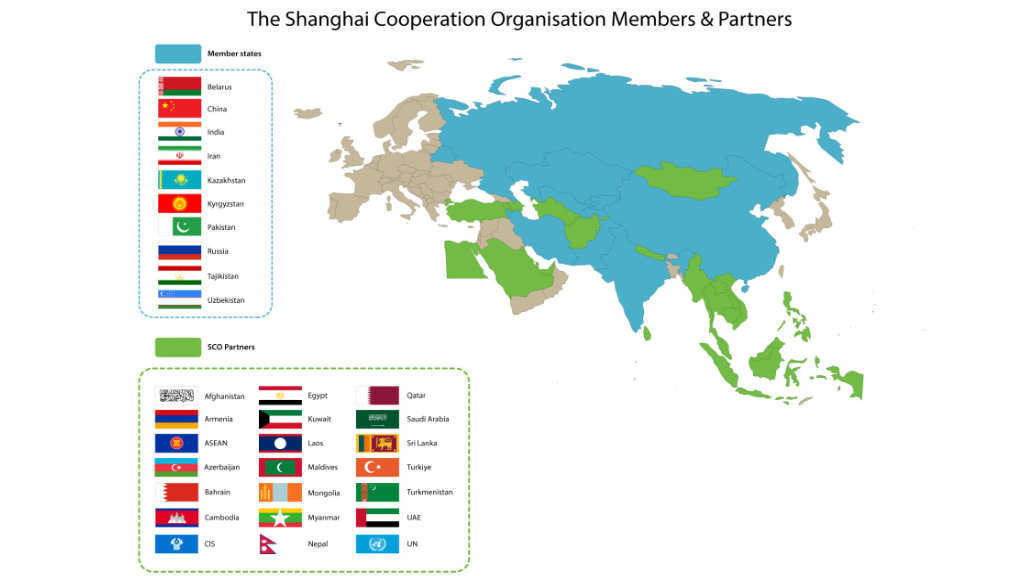
It includes the full members of the Shanghai Cooperation Organisation: Belarus, China, India, Iran, Kazakhstan, Kyrgyzstan, Pakistan, Russia, Tajikistan and Uzbekistan, together with the new SCO category of SCO Partners, which includes Armenia, Azerbaijan, Bahrain, Cambodia, Egypt, Kuwait, Laos, Maldives, Myanmar, Nepal, Qatar, Saudi Arabia, Sri Lanka, Turkiye, Turkmenistan, and the UAE.

Malaysia is also attending, as is Cuba, and the ASEAN Secretary-General, Dr, Kao. Apart from the ASEAN countries mentioned above, ASEAN also includes Brunei, Indonesia, Philippines, Singapore, Thailand and Vietnam. In addition to this, the UN Secretary-General, Antonio Gutteres is also in attendance along with representatives of the Asian Infrastructure Investment Bank and New Development Bank. North Korea’s Kim Jong-Un will join some of the group later during Beijing’s parade to acknowledge the end of World War II in Asia, an event that takes place on September 3rd. Kim’s Grandfather, Kim Il-Sung, fought the invading Japanese in that conflict. In total, this means that 35 nations (including North Korea) will have taken part in the SCO meeting in one or more formats.

SCO Map

A key part of the SCO discussions this year has been the need for reform of the United Nations. Numerous members of the SCO plus, including China, India and Russia, are deeply unhappy with the lack of reform at the UN at all levels. This includes the makeup of the UN security council’s five permanent members, in which China and Russia regularly brush up against the triumvirate of the United States, United Kingdom and France, who block any attempts to expand this to more than five nations lest they lose influence. It is a similar situation with UN finances, which are dominated at the World Bank and IMF level by the United States and European Union and whose lending and aid policies are increasingly seen as self-serving. It is of note that the SCO members have agreed to establish an SCO bank, although it remains to be seen where this will be headquartered – Kazakhstan or India are likely to be the primary options. What will probably occur though is a capitalisation of US$100 billion – the same size as the existing Asia Infrastructure Bank (AIIB) and the BRICS New Development Bank (NDB). We expect the SCO Bank to be committed to transport related infrastructure development.         

On the UN issue however, it is pertinent to note that the President of Kazakhstan, Kassym-Jomart Tokayev, himself previously a Director-General of the United Nations in Geneva, issued warnings at the SCO, aimed at the United Nations, that should the UN not reform, this could permanently undermine confidence in the organization. Tokayev stated “In the current difficult geopolitical realities, we must support the UN as a universal and independent organization. At the same time, there is a need to reform the United Nations, primarily its key body, the Security Council. We are fully aware of the complexity of such a reform, but there is no other way. If the current generation of leaders refuses to fulfil this task, it can definitively and irrevocably undermine the confidence of states in the UN.”

Tokayev instead praised the Global Governance Initiative (GGI) put forward by Chinese President Xi Jinping, which contains a long-term vision for the development of the international community. That includes five principal commitments:

  • Adherence to sovereign equality;
  • An international rule of law; 
  • Multilateralism;
  • A people-centered approach;
  • A focus on taking real actions.

The challenge for the SCO + is to make this work. It already comprises an effective, participating 35 nations (the European Union has 27) while adding in the BRICS countries and partners states not part of the expanded SCO format (Brazil, Bolivia, Ethiopia, Nigeria, South Africa, and Uruguay) adds another 6 nations. In addition, Algeria, Bangladesh and Colombia are also equity holders in the NDB, while numerous other candidate nations wish to join.

Clearly, the SCO and SCO + has some significant muscle. One thing appears certain: the age of a unipolar global governance system based around the United States and Europe, with a few outliers is now over. The remaining question really revolves around what will succeed it – a reformed United Nations, or a bilateral global model with a diminished UN on one hand, and an SCO plus BRICS model on the other. Discovering which it will be is no longer a choice – this journey has already begun.

Note: Articles like this take many hours to prepare. Our analysis comes with decades of regional experience and professional expertise. When using our content, kindly refer to Russia’s Pivot To Asia as the source.  

Enquiries? Email us at info@russiaspivottoasia.com

Further Reading

The Shanghai Cooperation Organisation: 2025 Demographics & Tianjin Summit Overview

The Shanghai Cooperation Organisation: 2025 Demographics & Tianjin Summit Overview

Published on August 31, 2025

The annual Heads of State meeting of the Shanghai Cooperation Organisation (SCO) is set to take place in Tianjin, northern China from August 31 to September 1. It will be attended by more than 20 heads of state, including Russian President Vladimir Putin, in addition to the heads of 10 international organizations, such as the United Nations, World Bank, BRICS, ASEAN, EAEU and CIS. In this article we provide some key data concerning the SCO and compare it with other pertinent organisations.

Shanghai Cooperation Organisation Members & Participants

SCO logo

The SCO is an international organization founded in 2001. It includes Russia, Belarus, China, India, Iran, Kazakhstan, Kyrgyzstan, Tajikistan, Pakistan and Uzbekistan. Observer countries are Afghanistan and Mongolia, while SCO dialogue partner countries are Azerbaijan, Armenia, Bahrain, Cambodia, Egypt, Kuwait, Laos, Maldives, Myanmar, Nepal, Qatar, Saudi Arabia, Sri Lanka, Turkiye, and the United Arab Emirates.

Other countries have also applied for status as dialogue partners, including Algeria, Bangladesh, Iraq, Israel, Syria, and Vietnam.  Some of these may be formally accepted during the coming summit. 

Functions

Two hand image

The SCO was originally founded in 2001 to provide regional security intelligence as the Islamic terrorism situation in Afghanistan began to deteriorate, a situation that culminated in the United States invading the country that same year. Concerned about the threat of Islamic fundamentalism at the time, the SCO was formed at the instigation of China, which had concerns over the situation in Afghanistan impacting its western Xinjiang province, which has a border with the country. While its origins are in regional security, the SCO also functions as significant regional dialogue platform, allowing countries that have long-standing differences (such as India & Pakistan, and Tajikistan & Kyrgyzstan) to maintain dialogue in more low-key side meetings when direct official communications become strained. It also fulfils a humanitarian function as well as regional economic development and trade facilitation.

The European Council of Foreign Affairs has referred to the SCO as a ‘Rogue NATO’ and generally regards the SCO as a potential threat. Interestingly, Turkiye attends SCO meetings and is also a full NATO member.   

The SCO is the world’s largest regional organization in terms of geographic scope and population, covering approximately 24% of the world’s total area (65% of Eurasia) and 42% of the world population, meaning about 3.45 billion people live in the ten SCO full member countries. As of 2024, the SCO’s combined nominal GDP accounts for around 23% of the global total, while its GDP based on PPP comprises approximately 36% of the world’s total.        

Economics & Trade    

Container

While the SCO has more than trade in its remit, it does coordinate economic and trade development activities with the regional Eurasian Economic Union (EAEU) and Commonwealth of Independent States (CIS) trade blocs, many of whose members are also part of the SCO. We recently discussed the EAEU’s demographics here and the CIS here.  

The only other comparable trade organisations in the Eurasian region are the European Union, ASEAN, GCC and SAARC.

ASEAN includes Brunei, Cambodia, Indonesia, Laos, Malaysia, Myanmar, Philippines, Singapore, Thailand and Vietnam. The GCC includes Bahrain, Kuwait, Oman, Qatar, Saudi Arabia and the United Arab Emirates. SAARC includes Afghanistan, Bangladesh, Bhutan, India, Maldives, Nepal, Pakistan and Sri Lanka.

We can compare these organisations size with the SCO as follows (Data from respective Central banks and the World Bank. Figures are in USD):

EntityNominal 2024 GDP2024 GDP Growth2025 (f) GDP PPP 
ASEAN 3.8 trillion4.6%13.56 trillion
EAEU2.4 trillion4.4%5 trillion
EU 19.9 trillion 1.2% 29.17 trillion
GCC 3.54 trillion3.1% 9.2 trillion
SAARC4.47 trillion6.0% 21.7 trillion
SCO59.1 trillion 5.1% 70.38 trillion

It should be noted that the additional second tier 16 countries that are either SCO dialogue partners or observers would provide the following additional data:

SCO 2nd tier4.34 trillion 3.2%11.46 trillion

The SCO combined (all ten full members and 16 associates) are as follows:

SCO Total64.45 trillion4.15%81.84 trillion

In summary, as concerns these statistics, the Shanghai Cooperation Organisation ten full members have a collective (nominal) GDP nearly three times larger than the European Union, and in economic parity terms, is four times larger.

SCO v NATO

NATO Flag

The West often makes disparaging remarks and comparisons between the Shanghai Cooperation Organisation and NATO. In this scenario we can compare them as follows: (SCO ten, Figures in USD). It should be noted that these figures reflect the amounts dedicated to each organisation by their members and not their collective national spend. This is expressed instead in the collective percentage of GDP.

Entity Active Military Annual Military SpendCollective GDP Spend
NATO3.5 million2.9 trillion2.83%
SCO 6.36 million750 million3.17%

This data implies that for every 1 dollar the SCO commits to spending on their military capabilities, NATO spends US$3,866.

SCO Map

Finance

Finance

The Eurasian region is serviced by numerous banks, including the Asian Infrastructure Investment Bank (AIIB), which is headquartered in Beijing, and in which all SCO members retain equity. The bank is capitalised at US$100 billion and is involved in projects throughout the region.

In addition to this, the BRICS New Development Bank (NDB), while not wholly focused on Eurasia does become involved in regional projects involving SCO members. It is also capitalised at US$100 billion. The Asia Development Bank (ADB) is also regionally involved, however is influenced by the United States and Japan. The Eurasian Development Bank is also heavily SCO influenced. These banks are capitalised at US$50 billion. Additional, smaller banks are also involved in providing regional finance, although the market has also been dominated by China’s national outbound spend – the numerous Belt & Road Initiative projects, with estimates that Beijing has committed close to US$1 trillion in funding over the past decade, mostly into the SCO region.        

The 2025 SCO Summit: What To Expect  

Tianjin

This years’ summit is the largest since the SCO was formed and has taken on special trade and security significance in the wake of Washington’s tariff threats and the overall uncertain global trade and security ambiance.

Comparisons can be made between the recent ‘mini summit’ in Washington between the US President Trump and several senior European leaders, in which the discussions appeared downbeat and subdued. The SCO on the other hand will be a more vigorous meeting, with perhaps a greater sense of unity and forward-thinking, despite some political pressures among certain members. The onus will be on the SCO to unify and strengthen rather than fall into divisions.

In the trade sphere, attention will be paid to creating more stability within the SCO nations themselves, in order to head off the tariffs uncertainty created by the United States. Rather like countries such as Brazil, China, India and Russia have congregated around the BRICS to counter US trade policy, the same can be expected to occur within the SCO. This will almost certainly lead to agreements on regional trade and logistics infrastructure. For example, we recently discussed the merging of digital transport platforms between China, India, Kazakhstan and Russia here. 

Agreements on financing this regional infrastructure will also be discussed, with projects either manifesting themselves in G2G, regional banking, or multilateral agreements. A key part of this will be the development of the Trans-Afghan Railway, which would connect landlocked Uzbekistan and Afghanistan with Indian Ocean seaports on the Pakistan coast, as well as provide much-needed commercial opportunities in Afghanistan itself. An estimated US$5 billion is required to make that happen.

Coupled with this will be discussions concerning the further development into Central Asia of the eastern corridors of the International North-South Transportation Corridor (INSTC) and the Middle Corridor to China. The Eurasian Development Bank has estimated the total cost of upgrading and building regional SCO transport networks at US$245 billion.    

Then we come to security. Afghanistan appears to have settled, although occasional, albeit localised incidents do occur. Pakistan however continues to suffer terrorism problems, coming to blows recently with fellow SCO member India and creating problems on the Iranian border. A considered approach to improving Pakistan’s security is a fundamental problem the SCO will have to deal with.

There will also be some celebrations – China (and much of south Asia) is to mark the 80th anniversary of the ending of WWII, with a series of ceremonial events including a military parade that will take place on 3 September in Beijing. We can expect some contrite responses from Japan, who were the main wartime aggressor against the region at that time.

There may also be some SCO expansion, with the likes of Saudi Arabia perhaps taking a full membership role as opposed to doing the same in BRICS. Some of the new applicant countries mentioned may also become dialogue partners. 

However, the underlying message can be expected to remain the same when contemplating the SCO as it does for the emergence of BRICS: a renewed interest and physical need to better develop trade ties, infrastructure and trade volumes amongst members. That will go together with a determined effort to not exclude the European Union or United States from trade development and investment – but to hedge against their wilder, more erratic policies. The SCO summit can be expected to underline Eurasia’s Pivot to Asia as it seeks reliability, and sustainability in trade, together with humanitarian development in regional security structures.

Reports such as this take several hours to research and write and are additionally fact checked, another time-consuming process. We also provide this intelligence for free. When quoting any of these articles, please refer to ‘Russia’s Pivot To Asia’ when doing so. Thankyou. 

Note: Articles like this take many hours to prepare. Our analysis comes with decades of regional experience and professional expertise. When using our content, kindly refer to Russia’s Pivot To Asia as the source.  

Enquiries? Email us at info@russiaspivottoasia.com

Further Reading
Russian Foreign Ministerial Statements and Q&A At The Shanghai Cooperation Organisation: July 2025 Content & Analysis

European Union Increases Russian LNG Imports, Yet Threatens To Sanction India and China

Published on August 31, 2025

The European Union was the largest importer of Russian LNG in July this year, with the EU’s top 5 importers paying Russia €1.1 billion for the fuel, according to the Center for Research on Energy and Clean Air (CREA). The EU does not sanction natural gas, which accounts for over 67% of these imports. In July, it was primarily delivered via pipeline or as liquefied natural gas.

In total, the EU was the largest buyer of Russia’s LNG, purchasing 51% of Russia’s total exports, followed by China with 21% and Japan with 18%. It was also the largest buyer of Russia’s pipeline gas, accounting for 36% of exports, while China purchased 30% and Turkey 27%.

Despite the Russia-Ukraine war and Brussels political rhetoric, the European Union’s reliance on Russian LNG has grown. Imports have increased by 9% since 2022.

In terms of specific countries, Hungary was the largest EU importer of Russian fossil fuels in July, purchasing €485 million worth. These imports included crude oil (€200 million) and pipeline gas (€285 million).

France ranked second, importing Russian fossil fuels worth €239 million, all in the form of LNG. However, some of the gas imported in France is also directed to Germany.

Slovakia was the third-largest importer. 79% of its imports consisted of crude oil transported via the Druzhba pipeline, valued at €169 million. This pipeline has been consistently attacked by Ukraine.

Belgium and Spain ranked fourth, and fifth, buying exclusively Russian LNG, with imports totalling €102 million and €66 million respectively.

In terms of oil, in July 2025, an estimated €127 million worth of Russian oil was transferred daily via ship-to-ship operations in EU waters. G7+ tankers conducted 86% of these transfers, worth a total €3.937 billion over the month. This is despite the EU advising other countries such as China and India not to buy Russian oil or face sanctions, a threat that is currently being ignored, but which the EU has stated will be dealt with in its 20th package of sanctions – which are currently being prepared. Should the EU impose secondary sanctions on China and India, they will likely respond with their own reciprocal measures.

China was the EU’s third-largest export destination last year, worth €213.3 billion to EU manufacturers. 87% of EU exports to China were manufactured goods including machinery, automobiles, chemicals, and electronics.  

Indian imports from the EU were worth €44.79 billion in 2024, with the main items being machinery, aircraft, and electronics.

Should the EU decide to place secondary sanctions upon China and India, they will need to be extremely careful about implementing this. China-India bilateral trade is just US$118 billion and is somewhat artificially reduced due to their previous poor relations. However, both Chinese President Xi and Indian Prime Minister Modi are actively seeking to improve this, with discussions on their trade being held at the Shanghai Cooperation Organisation Heads of State summit in China, when Xi and Modi, and their respective trade teams will meet. With their bilateral trade potential estimated to be US$500 billion, there is plenty of room, should the EU impose punishments upon them, to simply remove their imports from the EU and substitute these imported products in their respective bilateral trade.  

Further Reading

Asia Now Buys 45% Of All Russian LNG, The European Union Purchased A Record 52% In 2024

Russia’s Exports Of LNG To China Up 28.3% In 8M 2025

Published on August 31, 2025

Russia’s exports of natural gas to China rose by 28.3% year-on-year in the first eight months of 2025, according to Gazprom CEO Aleksey Miller. Speaking at a meeting with the heads of subsidiary companies and organizations, Miller added that Gazprom continues to supply gas steadily and reliably to both domestic consumers and international partners.

Russia currently supplies gas to Asia’s largest economy via the Power of Siberia pipeline, part of a US$400 billion, 30-year agreement signed between Gazprom and China’s state-owned CNPC in 2014. Deliveries began in 2019, and the pipeline reached full operational capacity in December 2024, making Russia the top supplier of natural gas to China.

Ranked among the world’s largest gas importers, China remains the second-biggest buyer of Russian gas. While the EU accounted for the largest share of Russia’s pipeline gas exports, purchasing 39%, China and Turkiye each accounted for 27%.

In 2024, China’s pipeline gas imports from Russia reached US$7.355 billion, reflecting a 14.29% increase compared to the previous year. Liquefied natural gas (LNG) imports also rose by 12.85%, according to Chinese customs data.

In May this year, Russian President Vladimir Putin and Chinese leader Xi Jinping agreed to accelerate the Power of Siberia 2 pipeline project, which would double Russia’s gas export capacity to China to 50 billion cubic meters annually.

Economic cooperation between the countries has continued to strengthen despite sweeping Western sanctions against Moscow. Bilateral trade hit a record US$245 billion in 2024, underscoring the deepening ties.

Putin is currently visiting China and is participating in wide ranging talks with Xi as well as participation in the Shanghai Cooperation Organization Heads of State summit.

Further Reading

President Putin’s Interview With Xinhua: Full Contents & Analysis

India To Increase Imports Of Russian Oil, Ignoring US Sanctions On Its Exports

Published on August 31, 2025

India is set to increase its imports of Russian oil in September, with trading sources saying that Nayara Energy and Reliance Industries plan to increase their purchases by 10-20% compared to August levels. The increase would translate to an additional 150,000-300,000 barrels per day.

The move comes despite US President Donald Trump imposing additional tariffs on India as punishment for buying Russian oil.

Russia has emerged as India’s key oil supplier since the beginning of the Ukraine conflict in February 2022 – accounting for nearly 40% of India’s crude imports. In parallel, India has become a major exporter of refined fuels to Europe since 2023.

New Delhi’s oil trade with Moscow has drawn criticism and economic punishment from the United States, which has imposed an additional 25% tariff on Indian imports from August 27, on top of 25% tariffs already in place.

In July, the EU imposed sanctions on the Vadinar refinery in Gujarat, which is owned by Nayara, an Indo-Russian private company in which Rosneft holds a 49% stake.

US officials have repeatedly claimed that Indian oil purchases are fuelling the Ukraine conflict. On Wednesday (August 27) Peter Navarro, a senior trade adviser to the US President stated that “the conflict is effectively Indian Prime Minister Narendra Modi’s war” and alleging that New Delhi’s discounted oil purchases from Moscow are helping Russia’s armed forces. US President Trump and US Treasury Secretary Scott Bessent also recently criticized India for its trade with Russia. India has called the US tariffs “unfair, unjustified, and unreasonable” and has pledged to safeguard its national interests.

The Indian External Affairs Minister, Subrahmanyam Jaishankar, has also pointed out that the European Union conducts more bilateral trade with Russia than India does. 

The European Union’s 2024 bilateral trade with Russia was €67.5 billion in goods, plus an additional €17.2 billion in services. India’s bilateral trade with Russia was €58.79 billion.

Further Reading

India Pivots To BRICS During Meetings In Moscow

Brazil Increases Imports Of Russian Oil Products

Published on August 31, 2025

Unlike China and India, Brazil does not import crude oil directly from Russia. However, it ranks as the third-largest buyer of Russian refined petroleum products globally—behind Turkiye (26%) and China (13%)—accounting for 12% of such imports.

Those imports have also been increasing. According to data from the Helsinki-based Centre for Research on Energy and Clean Air (CREA), Brazil imported €443 million (US$483 million) worth of Russian oil products in June 2025 alone. Brazil’s imports of Russian oil products rose 40% between January and October 2024 compared to the same period in 2023, with Brazil now buying 50% of its clean petroleum products from Russia and just 13% from the United States. Since early 2023, Brazil has spent nearly €20 billion (US$21.8 billion) on imports of Russian refined oil. That is revenue that Washington sees as preferably belonging to US oil sales and not Russia’s.    

Brazil has also reached out to the BRICS countries to counterbalance US tariffs and direct trade away from the United States. With the US imposing 50% tariffs on Brazil’s own crude oil, which like Russia’s, needs refining, Brazil has begun exporting to India instead, with India’s crude oil imports from Brazil surging by 75% over 2024.   

Like China and India, Brazil has ignored the threat of United States tariffs. This is impacting more than just oil and has spilled over into the agriculture sector as well. For example, Brazil has made a deal with China to import more Brazilian coffee and soybeans from China instead of selling to and sourcing these products from the United States.

30% of US coffee consumption was sourced from Brazil until June this year, resulting in significant US price increases, while Brazilian farmers have dislodged US producers from the China market, leaving the US with plenty of soy but no buyers. 

A Starbucks Café Latte Grande cost US$3.65 in May this year in the United States. That has increased to US$6.48 as of August.   

Further Reading

Brazil, Russia and BRICS Trade Relations: July 2025 Update  

President Putin’s Interview With Xinhua: Full Contents & Analysis

Published on August 30, 2025

The Russian President, Vladimir Putin, has given an interview to Xinhua, the Chinese state-owned media group, on the eve of the upcoming Shanghai Cooperation Organisation (SCO) annual heads of state meetings, which begin on Sunday (August 31). In the interview, Putin discusses his relationship with Chinese President Xi Jinping, the historic role of the USSR and China fighting the spread of fascism in Asia, China-Russia relations and trade, the SCO and the BRICS. It serves as an excellent background to the coming SCO meetings and as a platform for understanding the current status of Russia-China relations.

Xinhua’s questions are prefixed X, President Putin’s are prefixed VP, and our comments as RPA. 

X: “In May this year, the President of the People’s Republic of China, Xi Jinping, paid a state visit to Russia and took part in the celebrations marking the 80th anniversary of Victory in the Great Patriotic War – a visit that proved highly successful. Your own visit to China is expected shortly. What are your expectations for the upcoming visit? Over the past decade, you and President Xi have maintained close contacts, shaping and guiding the steady development of bilateral relations. How would you describe President Xi Jinping as a leader?”

VP: “Indeed, the visit of our friend, President of China Xi Jinping, to Russia in May was a resounding success, drew wide international attention and was highly regarded in our country. His arrival coincided with a date that is sacred to us, the 80th anniversary of Victory in the Great Patriotic War, thereby lending deep symbolic significance to the further development of Russian-Chinese relations. We reaffirmed the strategic choice of our peoples in favour of strengthening the traditions of good-neighbourliness, friendship, and long-term, mutually beneficial cooperation.

The Chinese leader was the principal guest of honour at the celebrations in Moscow. During our high-level talks, we held a very productive discussion of key issues in cooperation between our nations. The outcome was a comprehensive joint statement and the signing of a substantial package of bilateral documents.

Very soon, at the invitation of President Xi, I will pay a return visit to China. I greatly look forward to visiting the city of Tianjin, which will host the Shanghai Cooperation Organisation summit under China’s presidency. We expect that the summit will give the Organisation powerful new momentum, strengthen its capacity to respond to contemporary challenges and threats, and enhance solidarity across our shared Eurasian space. All this will help shape a fairer multipolar world order.

As for the Russian-Chinese talks, these will take place in Beijing. I look forward to in-depth discussions with President Xi Jinping on all aspects of our bilateral agenda, including political and security cooperation, as well as economic, cultural and humanitarian ties. And, as always, we will exchange views on pressing regional and international issues.

In Beijing, we will also pay tribute to the shared act of heroism of our fathers, grandfathers and great-grandfathers, who together defeated militarist Japan, thereby bringing the Second World War to its final conclusion. We will honour the memory of those who sealed with their blood the brotherhood of our peoples, defended the freedom and independence of our states, and secured their right to sovereign development.

President Xi Jinping treats his country’s history with utmost respect; I know this from personal communication with him. He is a true leader of a great world power, a man of strong will, endowed with strategic vision and a global outlook, and unwavering in his commitment to national interests. It is of exceptional importance for China that such a person stands at the helm at this challenging, pivotal moment in international affairs. The President of China sets an example for the entire world of what a respectful and equitable dialogue with foreign partners can and should be today. In Russia, we deeply value the Chinese leader’s genuine commitment to advancing our comprehensive partnership and strategic cooperation.”

RPA: It is notable that Putin describes Xi as a ‘friend’, this terminology is only used when personal relations are very good. We have seen both men together at various events and can confirm their personal warmth. Putin has mentioned an anecdote in the past of him playing piano and Xi singing, a substantial departure from their usual, more serious public demeanour.

Meanwhile, Putin’s visit to China includes the two-day SCO summit, meetings with Xi Jinping in Beijing, and attendance at the 80th anniversary parade marking the end of WWII in Asia.   

X: “China and the Soviet Union, as the principal battlegrounds of the Second World War in Asia and Europe, bore enormous sacrifices and made a significant contribution to victory in the global fight against fascism. In your view, what is the relevance of preserving the memory of that Victory in today’s complex international environment? How should China and Russia jointly defend their shared historical memory at a time when some forces on the international stage are attempting to distort historical truth?”

V: “As I have already noted, this year, together with our Chinese friends, we commemorate the 80th anniversary of Victory in the Great Patriotic War and the capitulation of militarist Japan, which marked the end of the Second World War.” (ed: note in Russia, World War II is referred to as the ‘Great Patriotic War’)

“The peoples of the Soviet Union and China bore the brunt of the fighting and suffered the heaviest losses. It was our citizens who endured the greatest hardships in the struggle against the invaders and played a decisive role in defeating Nazism and militarism. Through those severe trials, the finest traditions of friendship and mutual assistance were forged and strengthened – traditions that today form a solid foundation for Russian-Chinese relations.

I would remind you that even before the full-scale outbreak of the Second World War, in the 1930s, when Japan treacherously launched a war of aggression against China, the Soviet Union extended a helping hand to the Chinese people. Thousands of our career officers served as military advisers, assisting in strengthening the Chinese army and providing guidance in combat operations. Soviet pilots also fought bravely alongside their Chinese brothers-in-arms.

Between October 1937 and June 1941, the Soviet Union supplied China with 1,235 aircraft, thousands of artillery pieces, tens of thousands of machine guns, as well as ammunition, equipment, and supplies. The principal route was an overland corridor through Central Asia to China’s Xinjiang Province, where Soviet specialists built a road in record time to ensure uninterrupted deliveries.

The historical record leaves no doubt as to the scale and ferocity of those battles. We remember the great significance of the famous Hundred Regiments Offensive, when Chinese Communist forces liberated a territory with a population of five million from Japanese occupation. We also recall the unparalleled feats of Soviet troops and commanders in their clashes with Japan at Lake Khasan and the Khalkhin Gol River. In the summer of 1939, our legendary commander Georgy Zhukov won his first major victory in the Mongolian steppes, which in effect foreshadowed the later defeat of the Berlin-Tokyo-Rome Axis. In 1945, the Manchurian Strategic Offensive Operation played a decisive role in liberating northeast China, dramatically altering the situation in the Far East and making the capitulation of militarist Japan inevitable.

In Russia, we will never forget that China’s heroic resistance was one of the crucial factors that prevented Japan from stabbing the Soviet Union in the back during the darkest months of 1941–1942. This enabled the Red Army to concentrate its efforts on crushing Nazism and liberating Europe. Close cooperation between our two countries was also an important element in forming the anti-Hitler coalition, strengthening China as a great power, and in the constructive discussions that shaped the post-war settlement and helped to reinvigorate the anti-colonial movement.

It is our sacred duty to honour the memory of our compatriots who displayed true patriotism and courage, endured all hardships, and defeated powerful and ruthless enemies. We pay deep respect to all veterans and those who gave their lives for the freedom of future generations and the independence of our countries. We are grateful to China for its careful preservation of memorials to Red Army soldiers who gave their lives in battles for the liberation of China.

Such a sincere and responsible attitude towards the past stands in stark contrast to the situation in some European countries, where monuments and graves of Soviet liberators are desecrated in a barbaric manner or destroyed, and inconvenient historical facts are erased.

We see that in certain Western states the results of the Second World War are de facto revised, and the verdicts of the Nuremberg and Tokyo tribunals are openly disregarded. These dangerous tendencies stem from a reluctance to acknowledge the direct culpability of the predecessors of today’s Western elites in unleashing the world war, and the desire to erase the shameful pages of their own history, thereby encouraging revanchism and neo-Nazism. Historical truth is being distorted and suppressed to suit their current political agendas. Japanese militarism is being revived under the pretext of imaginary Russian or Chinese threats, while in Europe, including Germany, steps are being taken towards the re-militarisation of the continent, with little regard for historical parallels.

Russia and China resolutely condemn any attempts to distort the history of the Second World War, glorify Nazis, militarists and their accomplices, members of death squads and killers, or to defame Soviet liberators. The results of that war are enshrined in the UN Charter and other international instruments. They are inviolable and not subject to revision. This is our shared, unwavering position with our Chinese friends.

The memory of the joint struggle of the Soviet and Chinese peoples against German Nazism and Japanese militarism is an enduring value for us. I would like to reiterate that the participation of President Xi Jinping in Russia’s commemorations of the 80th anniversary of the Great Victory carried profound symbolic importance. To mark the 80th anniversary of the USSR’s Victory in the Great Patriotic War, China’s Victory in the War of Resistance against Japanese Aggression, and the founding of the United Nations, we signed a Joint Statement on Further Deepening the China–Russia Comprehensive Strategic Partnership of Coordination for a New Era. This document provides a consolidated response by our countries to attempts by certain states to dismantle humanity’s historical memory and to replace the well-established principles of world order and dialogue forged after the Second World War with the so-called rules-based order.”

RPA: Putin is well versed in Russian and global history, including World War II. Putin’s elder brother, Viktor, born in 1940, died of diphtheria and starvation in 1942 during the Siege of Leningrad by Nazi Germany’s forces during World War II. This means that occasions marking the end of WWII have specific personal meanings for the Russian President and are pointers as to why he feels so strongly that the nature of the conflict should be remembered and not distorted.  

X: “In recent years, practical cooperation between China and Russia in areas such as energy, agriculture, automotive manufacturing and infrastructure has produced positive results and brought about new breakthroughs, while bilateral trade has reached record levels. How do you assess the current state of Chinese-Russian practical cooperation? What are your plans for further promoting high-quality, mutually beneficial cooperation between China and Russia?”

VP: “Economic relations between Russia and China have reached an unprecedented level. Since 2021, bilateral trade has grown by about US$100 billion. In terms of trade volume, China is by far Russia’s leading partner, while last year Russia ranked fifth among China’s foreign trade partners. I would stress that while trade figures are denominated in US dollar equivalents, transactions between Russia and China are carried out in Rubles and RMB Yuan, with the dollar or euro share reduced to a statistical discrepancy.

Russia firmly retains its position as a leading exporter of oil and gas to China. Since the Power of Siberia pipeline began its operation in 2019, cumulative deliveries of natural gas have already exceeded 100 billion cubic metres. In 2027, we plan to launch another major gas route, the Far Eastern Route. We are also working together effectively on LNG projects in Russia’s Arctic region.

We continue our joint efforts to reduce bilateral trade barriers. In recent years, the export of pork and beef to China has been launched. Overall, agricultural and food products occupy a prominent place in Russia’s exports to China.

Bilateral investment volumes are growing. Last year, Russia and China agreed to an updated Plan for Bilateral Investment Cooperation. This year, a new Agreement on the Promotion and Mutual Protection of Investments has been signed. Large-scale joint projects are being implemented in priority sectors.

Our countries are cooperating closely in industry. Russia is one of the world’s principal markets for Chinese car exports. At the same time, production is being localised in Russia not only for Chinese cars but also for household appliances. Together, we are building high-tech manufacturing and infrastructure facilities. We also have large-scale plans in the construction materials industry.

To sum up, economic cooperation, trade and industrial collaboration between our countries are advancing across multiple areas. During my upcoming visit, we will certainly discuss further prospects for mutually beneficial cooperation and new steps to intensify it for the benefit of the peoples of Russia and China.”

RPA: Russia-China bilateral trade reached US$245 billion in 2024, although the trade content balance and trade policies between the two countries is evolving, and as Putin stated, diversifying. We have commented on the changes coming in Russia-China bilateral trade and investment make up here.    

X: “This year marks the conclusion of the cross years of culture between China and Russia. During this period, our countries have developed extensive cooperation in education, cinema, theatre, tourism, and sports. How do you assess the results of Chinese-Russian cultural and humanitarian exchanges and cooperation? What prospects do you see for further promoting ties between the peoples of China and Russia?”

VP: “Large-scale bilateral cultural and humanitarian initiatives make a significant contribution to fostering friendly relations. The Russian Year in China and the Chinese Year in Russia (2006–2007) were a great success. The subsequent themed years of languages, tourism, youth, media, regional cooperation, sport, science and innovation, launched successively from 2009 onwards, received significant public appreciation.

Today, cultural exchanges between Russia and China continue to develop dynamically. The Russia-China Roadmap for Humanitarian Cooperation until 2030, which includes more than 100 major projects, is being consistently implemented.

I would particularly highlight the successful organisation of the Russia and China Years of Culture, held in 2024–2025 and timed to the 75th anniversary of diplomatic relations between our countries. The rich and diverse programme met with an enthusiastic response both in Russia and China.

I would also note that the Russian side initiated the Intervision International Song Contest, scheduled for September 20 this year, and we are pleased that our Chinese partners have shown keen interest in this project.

Education and science remain especially promising areas for cooperation. Academic mobility and inter-university contacts continue to grow. Today, more than 51,000 Chinese students are studying in Russia, while 21,000 Russian students are studying in China. In May, President Xi and I agreed that 2026–2027 will be designated as the Russia-China Years of Education.

Cooperation in science, technology, and innovation is also expanding, including in fundamental research and mega-science projects. For example, Moscow State University and Peking University plan to open a joint institute for fundamental research. We fully support the establishment of modern laboratories and advanced centres in priority high-tech fields to strengthen the technological sovereignty of Russia and China.

Film production is another vibrant area of cooperation. In February, the joint Russian-Chinese adventure film Red Silk premiered in Russia, and we expect it to reach Chinese audiences soon. In May, an Action Plan for Film Production was signed in Moscow. We anticipate the release of many new Russian-Chinese films in the near future: films that will promote sound moral principles and traditional spiritual and ethical values, while presenting truthful accounts of important historical events. To this end, we have also launched a new initiative, the Open Eurasian Film Award, a unique platform for cinema, free from bias or political intrigue.

Tourism is another important sphere I would like to note. The figures here are encouraging: by the end of 2024, mutual tourist flows had increased 2.5 times, reaching 2.8 million people.

Sports cooperation has also been productive. We are grateful to our Chinese partners for their active participation in international sporting events hosted by Russia, including the innovative Games of the Future, BRICS Games, and many others. The Chinese national team was among the largest delegations at these competitions. We firmly believe that sport should remain free from any politicisation.

Youth policy is another priority area. We highly value the coordinated work of leading Russian and Chinese media, and our cooperation between archives plays an important role in preserving historical truth. It is encouraging that bilateral cultural and humanitarian cooperation continues to gain momentum. This is undoubtedly a strategic dimension of our relationship, helping to build a broad public base of friendship, good-neighbourliness, and mutual understanding.”

RPA: Putin mentioning many bilateral cultural initiatives here, with alternative international popular competitions such as the Intervision Song Contest a direct competitor to the Eurovision Song Contest which has become plagued by wokeness and the promotion of LGTBQ sexuality. Both the Russian and Chinese cultures are more reserved, yet in a modernistic way, with their respective governments maintaining the need to uphold traditional values and not to let moral standards decline within their own societies. Much of the bilateral cultural events planned will be following this basic national criteria. 

Of particular note is the reference to bilateral cooperation in in science, technology, and innovation, and collaborations between their respective Universities. Russia and China have reached close to the limit as concerns their current trade capabilities, which are to some extent fairly basic – Russia exports oil, gas, and agriculture, and China exports automobiles and white goods. In order for this to develop, and the Russian economy to properly evolve, more attention needs to be paid to technological innovation and the development of future-use tech.

Deepening collaboration with China will help Russia change its economic model to a technological innovation model that will help project the country forward in much more suitable terms than is currently the case. It should be noted that China was by far the producer of the most patented designs in 2024, a trend that has been in existence for several years. China issued filed 798,347 new patents last year, more than double that of the United States. Russia filed 23,315.

Russia as a global technical centre of innovation and new product development is the way forward for its national future. Collaboration with China in science and technology is a key strategic development issue.  

X: “The Shanghai Cooperation Organisation (SCO), jointly established by China and Russia, serves as an important platform for comprehensive regional cooperation, crucial for ensuring peace, stability, and development across the Eurasian space. China holds the rotating SCO presidency for 2024–2025, and the 25th SCO Heads of State Council meeting will soon take place in Tianjin. How do you assess the constructive role the SCO has played over more than two decades in maintaining regional peace and stability and promoting common development and prosperity? In your view, in which areas should member states further strengthen exchanges and cooperation?”

VP: “The establishment of the SCO in 2001 embodied the shared aspiration of Russia, China, and the Central Asian states – Kazakhstan, Kyrgyzstan, Tajikistan, and Uzbekistan – to build trust, friendship, and good-neighbourly relations, and to promote peace and stability in the region.

Over the years, the SCO has developed a solid legal and institutional framework, creating mechanisms that enable effective cooperation in politics, security, trade and investment, as well as cultural and humanitarian exchanges. Since then, its membership has expanded to include India, Pakistan, Iran, and Belarus, while partner and observer countries, representing the political, economic, and cultural diversity of Eurasia, are also actively engaged in joint activities.

The SCO’s appeal lies in its simple but powerful principles: a firm commitment to its founding philosophy, openness to equal cooperation, non-confrontation with third parties, and respect for the national characteristics and uniqueness of each nation.

Drawing on these values, the SCO contributes to shaping a fairer, multipolar world order, grounded in international law, with the central coordinating role of the United Nations. A major element of this global vision is the creation in Eurasia of an architecture of equal and indivisible security, including through close coordination among SCO member states. We view the Greater Eurasian Partnership, linking national development strategies, regional integration initiatives, and strengthening ties among the SCO, the Eurasian Economic Union, the CIS, ASEAN, and other international organisations, as the socio-economic foundation of this architecture.

I am confident that the Tianjin summit, along with the SCO Plus meeting, will mark an important milestone in the SCO’s history. We fully support the priorities declared by the Chinese presidency, which focus on consolidating the SCO, deepening cooperation in all areas, and enhancing the organisation’s role on the global stage. We attach particular importance to aligning this work with the practical measures taken under Russia’s presidency of the SCO Heads of Government Council. I am confident that, through our joint efforts, we will give the SCO new momentum, modernising it to meet the demands of the time.”

RPA: Putin outlining the essential vision of what the SCO is. Of note is he stressed the non-confrontational, all-inclusive aspect of the Eurasian region, a statement at odds with the European Commission, who have likened it instead as a ‘Rogue NATO’. In fact, when their respective defence budgets are compared, for every 1 dollar the SCO spends on security, NATO spends US$3,866.

Putin also illustrates both the multi-lateral and multi-disciplinary aspects of the SCO, including its relationships with trade development – something one never hears about NATO. In the trade aspect, Putin mentions the Eurasian Economic Union, the Commonwealth of Independent States and Southeast Asia’s ASEAN, all of which are significant trade, not security blocs. The overall make up of what the SCO is, as a multi-disciplinary platform for the promotion of Eurasian development, is little understood by the West who instead view the entity as a strategic threat. A comprehensive demographic overview of the SCO, including GDP comparisons with ASEAN, the EAEU, CIS and European Union can be seen here.

X: “As President Xi Jinping has repeatedly emphasised, China is ready to work hand in hand with Russia to strengthen mutual support across multilateral platforms, including the UN, the SCO, and BRICS, to safeguard the development and security interests of both nations, unite the Global South, and promote an international order that is fairer and more rational. How do you assess cooperation between China and Russia within these multilateral frameworks? In your view, in which areas can China and Russia set new benchmarks in global governance, particularly with regard to emerging fields such as climate change, artificial intelligence governance, and reform of the global security architecture?”

VP: “Cooperation between Russia and China in multilateral formats is a key pillar of our bilateral relations and plays a major role in global affairs. Time and again, our exchanges on critical international issues have shown that Moscow and Beijing share broad common interests and strikingly similar views on fundamental questions. We are united in our vision of building a just, multipolar world order, with a focus on the nations of the Global Majority.

The Russia-China strategic partnership acts as a stabilising force. As the two leading powers in Eurasia, we cannot remain indifferent to the challenges and threats facing our continent and the wider world. This issue is a constant focus of our bilateral political dialogue. Russia’s concept of creating a common space of equal and indivisible security in Eurasia resonates closely with President Xi Jinping’s Global Security Initiative.

The interaction between Russia and China at the UN is at an unprecedentedly high level, fully reflecting the spirit of comprehensive partnership and strategic cooperation. Both countries attach special importance to the Group of Friends in Defence of the UN Charter, a vital mechanism for consolidating the Global South. Among its key achievements is the resolution “Eradication of colonialism in all its forms and manifestations,” adopted by the UN General Assembly on December 4, 2024.

Russia and China support reform of the UN so that it fully restores its authority and reflects modern realities. In particular, we advocate for making the Security Council more democratic by including states from Asia, Africa, and Latin America. Any such reforms must, however, be approached with the utmost care.

Close cooperation between Moscow and Beijing has positively shaped the work of leading economic forums, including the G20 and APEC. Within the G20, together with like-minded nations, and especially BRICS members, we have redirected the agenda towards issues of real importance to the Global Majority, strengthened the format by including the African Union, and deepened the synergies between the G20 and BRICS.

This year, our South African friends hold the G20 presidency. As a result of their efforts, we look forward to consolidating the Global South’s achievements and establishing them as a foundation for the democratisation of international relations. Within APEC, China’s chairmanship in 2026 is expected to give fresh impetus to Russia-China engagement.

We are working closely with China within BRICS to expand its role as a key pillar of global architecture. Together, we advance initiatives aimed at expanding economic opportunities for member states, including the creation of common platforms for partnership in strategic sectors. We are paying special attention to mobilising additional resources for critical infrastructure projects. We stand united in strengthening BRICS’ ability to address pressing global challenges, share similar views on regional and international security, and take a common stand against discriminatory sanctions that hinder the socioeconomic development of BRICS members and the world at large.

Alongside our Chinese partners, we support the reform of the International Monetary Fund and the World Bank. We are united in the view that a new financial system must be based on openness and true equity, providing equal and non-discriminatory access to its tools for all countries and reflecting the real standing of member states in the global economy. It is essential to end the use of finance as an instrument of neo-colonialism, which runs counter to the interests of the Global Majority. On the contrary, we seek progress for the benefit of all humanity. I am confident that Russia and China will continue to work together towards this noble goal, aligning our efforts to ensure the prosperity of our great nations.”

RPA: Putin here sees Russia and China very much as working together for global reform and has used the term ‘Global Majority’ to describe the emphasis of nations broadly supportive of the need for change. We can visualise this as a map in which the countries shown in grey are supportive of Russia and China, and conduct their diplomatic, trade and investment in a normal manner, while the countries shown in blue are involved in issuing sanctions.

Sanction Map

There are significant issues and barriers to manifesting change in global management and reform, as many of the institutions responsible for this have become US or Western-centric in their makeup and are actively resistant to reform. This includes the United Nations, where Russia and China wish India, Africa and Brazil to join the UN security council, but this is stymied by the current three other members of the permanent security council – France, the United Kingdom, and the United States, who do not want to see their influence diluted. It is a similar situation at many other global institutions, such as the World Bank, whose largest shareholder is the United States, which also allies itself with Western nations. The IMF is in a similar situation. Both have faced accusations of lending money against the background of political reforms as opposed to actual economic needs, and thus pushing the overall Western political agenda. The United Nations, and World Bank will have representation at the SCO summit. Both Russia and China view these organisations as fundamental pillars of global stability, but are pushing for reform, not a dismantling of them.

This is why both China and Russia place great emphasis on developing their international diplomatic profiles and have been extremely active in the global south – the more countries that side with them in international affairs, the more pressure they can bring to obtaining reform among the various global institutions.  

Meanwhile, complimentary organisations to the existing global institutions are also emerging. China established the Asian Infrastructure Investment Bank (AIIB) in 2016, it is now the world’s second largest global investor. Russia and India are among the largest shareholders in the AIIB, which will also be present at the SCO summit.

The BRICS group, which includes Brazil, Russia, India, China and South Africa, along with Egypt, Ethiopia, Indonesia, Iran, and the UAE is additionally developing as a loose trade organisation with a recent emphasis on rebutting US tariffs by boosting trade ties with each other. Another nine countries are BRICS partner states: Belarus, Bolivia, Cuba, Kazakhstan, Malaysia, Nigeria, Thailand, Uganda, and Uzbekistan. The BRICS group will also be represented at the SCO summit.

In summary, what Putin is describing is an evolution, not a revolution of the current world order, with moves, as he states, towards a fairer global society. The challenge for countries such as Russia and China is how to manifest this without the need to resort to conflict with an increasingly isolated Western group of countries who at present, appear quite prepared to resort to weapons and threats at any sign of attempts to dilute their hold on international affairs. The SCO summit will contribute to this sensitive, yet ultimately inevitable ongoing process.

Further Reading

The Shanghai Cooperation Organisation: 2025 Demographics & Tianjin Summit Overview

Russian Wines Have Replaced 60% Of European Imported Wines In Russian Markets & Restaurants

Published on August 29, 2025

Consumer interest in Russian wine is rising amid systematic operations to develop the industry and improve product quality, according to the Russian Agriculture Ministry, which stated that “Over 60% of wine on store shelves and in restaurants is now domestically produced, with Russian consumers increasingly choosing Russian wine.”

Wine production in Russia is also growing, with output of sparkling wine jumping 15.8% year-on-year to 8.7 million decaliters (dal) and still wine 12.6% to 20.9 million dal in the first seven months of 2025.

The ministry added that “developing viticulture, including through the sustainable expansion of vineyard areas, is facilitating growth in production. Vineyards currently occupy over 110,000 hectares, of which 86,400 hectares are of fruit-bearing age. There are plans to plant another 6,000 hectares of new vineyards this year. Most of these are in the Krasnodar and Crimea regions (on the Black Sea) as well as Dagestan and Chechnya (North Caucasus). Winegrowers are also beginning to work more actively with indigenous varieties, many unique to Russia. Russian wine tourism is also actively developing in tandem with production, with 800,000 tourists visiting Russian wineries in 2024 and over 900,000 tourists expected in 2025.”

Preliminary estimates indicate that Russia’s overall grape harvest should total about 900,000 tonnes this year.

Winemaking in Russia dates back to Roman times, and possibly earlier, with ancient terracotta amphorae being discovered off what is now the Russian Black Sea coast. Sparkling wine production dates back to the Imperial Times.  

Vivino rates the top three Russian wines in the following categories as below:

RED

Red wine

White

white wine

Sparkling

Sparkling wine

Further Reading

How Russia Is Repositioning Its Wine Industry To Boost BRICS and Domestic Production