News

Russia, Turkmenistan Bilateral Relations: August 2025 Update

Published on August 29, 2025

The Russian Foreign Minister, Sergey Lavrov, has been meeting with the Turkmenistan Foreign Minister, Rashid Meredow, in Moscow, with the two sides set to develop trade and economic cooperation, including in transport, logistics, and energy projects, Lavrov said after the talks. They had previously met in June, in Ashgabat on 25 June and signed a bilateral cooperation program for 2025–2026.

This week’s Moscow meeting was a follow-up, with Lavrov stating, “The conversation we have had today confirmed the mutual determination of both Russia and Turkmenistan to broaden trade and economic cooperation and to implement joint projects in transport, logistics, infrastructure, and energy spheres.”
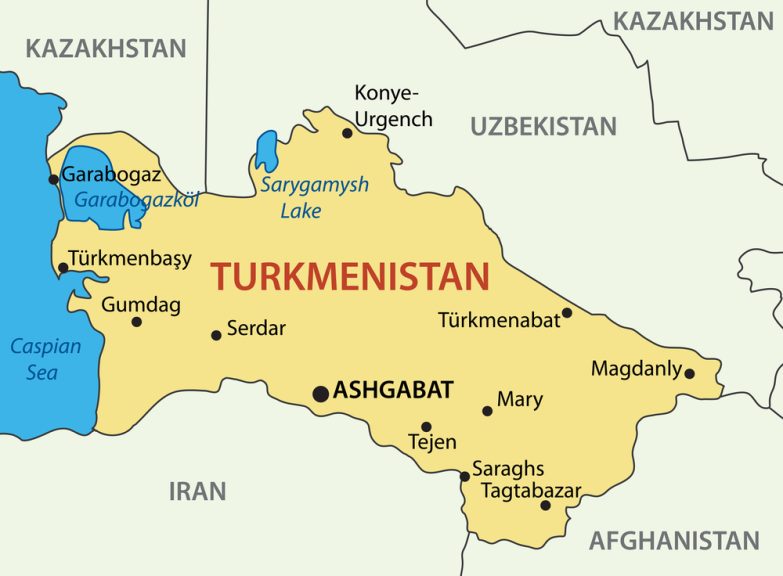
Turkmenistan Map

In terms of Russian regions, Astrakhan, on the Caspian Sea, is a major port in Russia and is part of the International North-South Transportation Corridor (INSTC) into Central Asia. Trade between Russia’s Astrakhan region and Turkmenistan grew by 15% last year, with ongoing shipments in 2025 including key exports like fish products and wheat flour.

These statistics were highlighted during a meeting dedicated to cooperation with Turkmenistan, held as part of the Tenth Caspian Media Forum. Astrakhan Governor Igor Babushkin noted the long-standing and evolving nature of the region’s interaction with Turkmenistan and emphasized Astrakhan’s readiness to further strengthen partnerships.

Turkmenistan’s Deputy Prime Minister Khojamyrat Geldimyradov stated in June that bilateral trade grew 58% between January and May this year alone. If maintained, that would imply a 2025 bilateral Russia-Turkmenistan trade total in excess of US$2.5 billion.  

The Turkmenistan President, Serdar Berdimuhamedow, will be attending the upcoming Shanghai Cooperation Organisation 2025 Heads of State summit which commences this Sunday (August 31) in Tianjin, China.  

Further Reading

Post not found.
Russia and Burkina Faso Discussing Direct Air Connectivity

Published on August 29, 2025

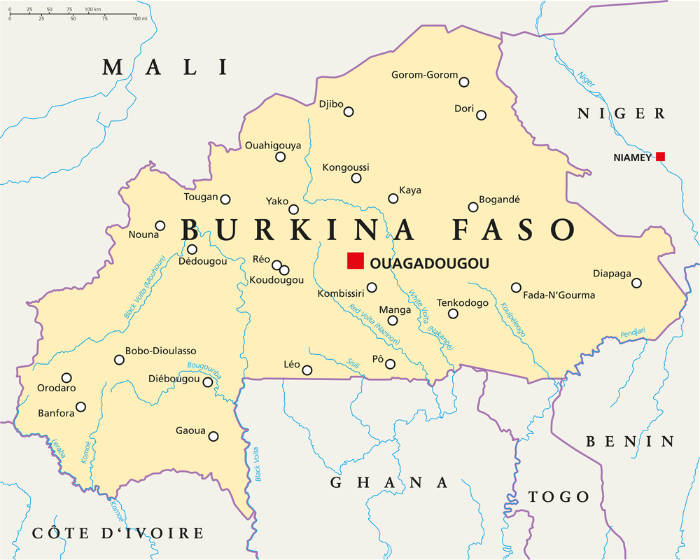
Russia and West Africa’s Burkina Faso are discussing plans to launch direct flights between their respective capitals—Moscow and Ouagadougou—aimed at boosting tourism, according to Aristide Tapsoba, the Burkina Faso Ambassador to Russia. Tapsoba made the comments at Technoprom 2025, the ongoing international forum on technological development, in Novosibirsk.

Tapsoba added, “We already have a Russian company that wants to launch direct flights between Ouagadougou and Moscow and between the capitals of Mali and Niger and Moscow. This is currently being discussed.”

Burkina Faso Map

He highlighted growing cooperation between Ouagadougou and Moscow in tourism and culture, noting that exchanges are already under way. He said a Burkinabe delegation of over 500 people is due to travel to St. Petersburg in October to work in the fields of tourism and the economy.

More than 500 Russians have also visited Burkina Faso since the beginning of 2025; some attended the Festival of Cinema and Television of African Countries in Ouagadougou, where a Russian symphony orchestra performed.

Russia has increased cooperation with several African nations across multiple sectors—including aviation, road, rail, and maritime transport—after declaring the development of mutually beneficial partnerships with the continent a foreign policy priority.

Further Reading

Burkina Faso Interested In Joining BRICS

Russia To Invest US$6.2 Billion In Developing Krasnodar Regional Ports In Azov & Black Sea

Published on August 28, 2025

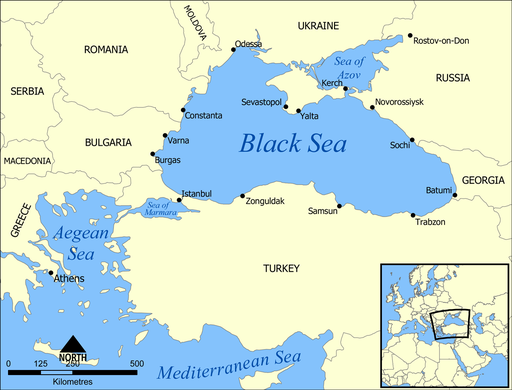
Russia is to invest more than ₽500 billion (US$6.2 billion) in the development of Krasnodar’s port infrastructure by 2030, according to Nikolai Patrushev, the Chairman of Russia’s Maritime Board. He stated that “About 20 projects with a total investment of over ₽500 billion are planned to be implemented in the ports of the Krasnodar Territory – Novorossiysk, Taman, Tuapse, Temryuk, Kavkaz, and Yeysk, by 2030.” He was speaking during a meeting on the implementation of national maritime policy in the coastal territories of the Azov-Black Sea region. This will facilitate the establishment of regular routes with the countries of the global South and the development of the International North-South Transport Corridor.

He stressed that Russia’s development includes the “large-scale process of updating and expanding Russia’s port infrastructure.” In particular, a universal transshipment complex with a capacity of 12 million tonnes of cargo per year is being built in Novorossiysk Port, and a transshipment complex of ammonia and mineral fertilizers with a capacity of up to 5 million tonnes per year is being built in Taman Port.

In addition, projects are being implemented in the Rostov region to build a complex of port, logistics facilities, and terminals for the export shipment of grain and bulk cargo to river-sea vessels.

Map

Patrushev noted that all ports of the Azov-Black Sea basin should be integrated into a single transport system in the near future in order to roll out regular routes towards the global South. He said that “it is important to integrate all ports of the Azov-Black Sea region into the unified transport system of Russia as soon as possible and ensure their efficient operation, including determining their role in maritime interregional and international cargo transportation. Solving these tasks, as well as creating conditions for the operation of river-sea vessels in the Azov-Black Sea basin and building new export routes with countries of the global South, will contribute to the development of the international North-South transport corridor.”

Currently, the ports of the Azov-Black Sea basin actively carry out transportation with Turkiye, as well as to the countries of the Middle East, Africa, and Asia. However, their use is limited by the need for transshipment to feeder vessels. In addition, access to ports is provided through the Bosphorus and Dardanelles Straits, where shipping is often suspended due to geopolitical incidents.

Further Reading

Minsk Tractor Works To Invest in Expanding Factory In Krasnodar

Russia To Manufacture Cars In Kyrgyzstan

Published on August 28, 2025

The Central Asia Capital Investment Fund plans to launch an automobile plant in Kyrgyzstan for the assembly of Ladas under the Muras brand in a technological partnership with Avtovaz, the fund has stated. The launch of this facility will reduce Kyrgyzstan’s dependence on imports of used cars, the fund has said. Avtovaz is the parent company of Lada.

The project is designed for 10 years and is planned for phased implementation with a gradual deepening of localization. In the first stage (2026-2030), semi-knockdown assembly is envisaged with production of up to 1,500 cars per year. The second stage (2031-2035) will see complete knockdown assembly, expansion of the model range, and production of up to 5,000 cars. The third stage (after 2035) will involve full-cycle production at a level of over 7,000 units annually.

Five Avtovaz models will be produced under the Muras brand—Granta, Vesta, Largus, Niva and the recently launched Iskra. Up to 12,000 new jobs will be created for the project’s implementation.

The project has been supported by both Kyrgyz and Russian authorities, the fund said. Support from the Russian government is provided in particular in the form of tax benefits and a leasing program for cars produced in Kyrgyzstan, it said.

The total investment in the project will amount to ₽2.4 billion (US$30 million). Financing will be carried out using the fund’s own capital and funds raised through bond issuance.

Central Asia Capital is an investment fund focused on fostering innovative projects in Kyrgyzstan and Central Asia. Founded in 2018 as leasing.express finance, the fund has since expanded its goals and is now involved in diversified investment activities. Today, Leasing Express operates as a portfolio company specializing in leasing services, while Central Asia Capital concentrates on investment. The fund is based in Bishkek and also engages in philanthropic activities, supporting orphanages, senior care homes, rehabilitation centers for children with disabilities, kindergartens, and animal shelters.

Further Reading

Russia To Manufacture Cars in Nigeria

Russia, Belarus Governments Support Creation Of Joint Credit Rating Agency

Published on August 28, 2025

The Standing Committee of the Russia-Belarus Union State has supported a proposal to create a credit rating agency, the committee has said. The move is necessary, as Western credit ratings agencies, including Fitch, Moody’s, and S&P, pulled out of these markets in 2022, making it extremely difficult for banks and companies in Russia and Belarus to obtain any ratings or data on the creditworthiness of their own institutions and corporations, making the raising of global capital nearly impossible. 

The Standing Committee stated that “A decision was made to work out the issue of forming this international financial and analytical institution of the Union State, which assigns sovereign credit ratings, with the relevant agencies. Having our own platform for an unbiased assessment of financial stability will facilitate the expansion of mutual trade lending and increase investment between friendly states, reduce dependence on politically motivated assessments, and support the development of the common financial market of the Union State.”

Belarus has 12 publicly listed companies, with most involved in the agricultural sector. Belarus is also home to the Universal Commodities Exchange, an important trading house and the largest of its kind in Eastern Europe. This is to be developed as a larger Eurasian Commodities Exchange by 2029. This will spur the development of Belarusian and other regional businesses, which will require access to development finance. A reliable credit agency will be able to assist in raising capital from Eurasian bankers.

It is a similar, albeit larger, situation in Russia, which has 222 listed corporations. Russia is also discussing the establishment of joint credit ratings agencies with China.

Further Reading

Chinese Credit Ratings Agency Gives Russian Debt A “Stable Outlook” Ranking

Russia’s Whoosh EV Bikes Operator To Expand In Latin America

Published on August 28, 2025

PJSC Whoosh Holding, the Russian holding company of the Whoosh electric bike-sharing service, plans to increase its expansion in Latin America, according to the company’s founder and CEO Dmitry Chuiko. Currently, Whoosh operates in two Latin American countries, Brazil and Chile.

Chuiko said that “The focus of work in the near future will be directed, among other things, to expansion in the Latin American region. We plan to at least double the fleet there by the end of 2025, as we see high demand for rides, and also to develop new service locations, including new countries.”

In H1 2025, Whoosh Holding’s revenue in Latin America increased 2.7-fold year-on-year to ₽928 million (US$11.5 million), the company said. The number of rides increased 2.69-fold to 5.7 million. At the same time, revenue per ride in the region is 1.9-fold higher than the average in Russia and the Commonwealth of Independent States.

Whoosh is a developer of technological solutions for micromobility transport and the largest Russian operator of the eponymous kick-sharing service. The company is present in Russia, Belarus, Kazakhstan, Brazil, and Chile.

PJSC Whoosh Holding, the parent company of Whoosh Group, conducted an IPO in December 2022, with the publicly traded float at 33% of the total equity.

Further Reading

Russian, Chinese Manufacturers Collaborate On Next Generation Of Public Transport E-Scooters

Russia’s Belt & Road Initiative Completes Digitization of Azerbaijan-Georgia Railway Line

Published on August 27, 2025

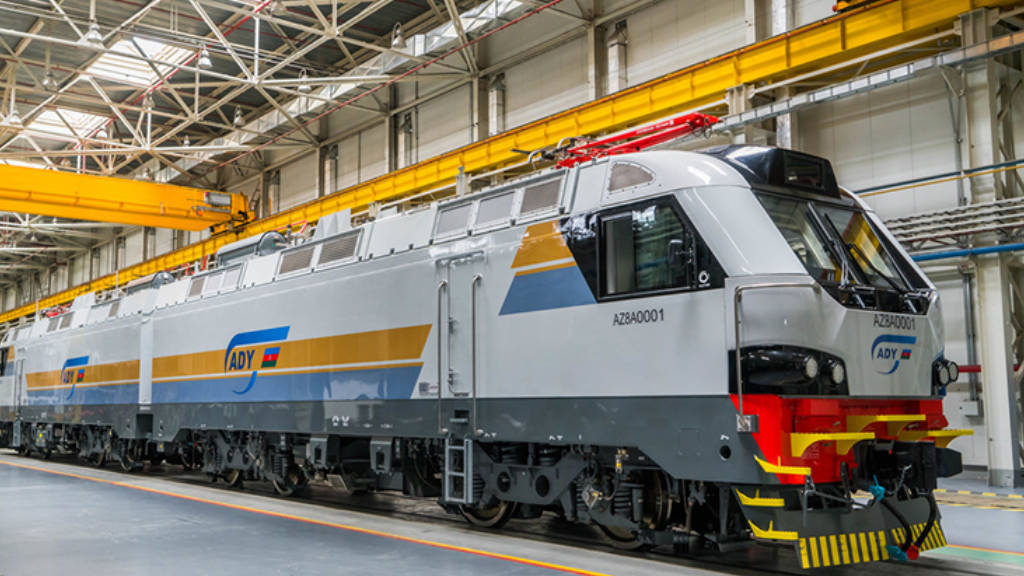
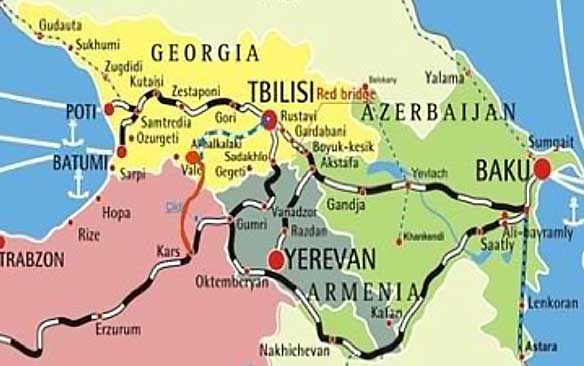
Russian engineers have completed the digitalization of the Baku–Boyuk-Kesik railway line, a key corridor linking Azerbaijan and Georgia. The final stage of the project has involved modernizing the 122-kilometer Ujar–Hajigabul section, which had not been upgraded since 1980.

The project was carried out by Natsproyektstroy, a leading Russian infrastructure holding comprised of more than 100 companies that works on railroads, roads, bridges, energy facilities, and ports.

In this way, Russia is taking a leaf out of China’s Overseas Direct Investment policies, commonly known as the Belt & Road Initiative. Since 2015, Chinese engineering companies have been very active in building infrastructure overseas, often in countries that do not possess their own capabilities to do so. China also provides low-interest loans for these projects, which recipient governments can pay off over long-term arrangements. Often these are linked to cash flow-generating assets, such as railways and toll roads, which receive income from passengers using the facilities. Sometimes, Chinese investors will also take an equity position in such businesses.

On the Baku-Boyuk-Kesik railway, the outdated relay-based systems on the route have been replaced with a microprocessor centralization system, MPC-EL-AZ, produced by Azerbaijan’s Rail Trans Service with Russian digital technology. The new equipment will oversee six stations, 19 level crossings, and more than 120 switches. Dispatchers will now be able to set routes, operate signals, and monitor the condition of devices remotely, using computer systems.

Map

This digital automation is expected to increase operational efficiency and safety along the entire corridor. Natsproyektstroy Deputy General Director for Commerce Dmitry Bolotsky has said the upgrade will raise passenger train speeds on the line from 100 km/h to 140 km/h and freight speeds from 80 km/h to 120 km/h.

Train intervals are expected to fall from 20 minutes to eight minutes once the new system is fully integrated.

Since 2019, Natsproyektstroy companies have converted 711 switches and 27 stations along the Baku–Boyuk-Kasik line to digital control, including key hubs in Ganja, Yevlakh, Ujar, and the power system junction station at Boyuk-Kasik. The group stated that the project has also created jobs in Azerbaijan through localized production, in cooperation with Rail Trans Service.

The significance of this modernization is amplified by its connection to the Baku-Tbilisi-Kars (BTK) railway line. The BTK line is a key link in the logistics chain of the Trans-Caspian International Transport Route (TITR), also known as the Middle Corridor. The total length of the BTK is 829 kilometers. Of these, 504 kilometers pass through the territory of Azerbaijan, 246 kilometers through Georgia, and 79 kilometers through Turkey. Construction of BTK as an alternative railroad route connecting Turkey with Azerbaijan, bypassing Armenia, started in 2008. The cost of the project exceeds $1.1 billion, of which $775 million was invested in Georgia, mainly at the expense of Azerbaijan, and $345 million was spent on the Turkish section.

Further Reading

Russia Conducting Work on Iran’s Rasht-Astara Railway

Russia and China Discuss Joint Aircraft Engine & Helicopter Manufacturing

Published on August 27, 2025

Russian-Chinese cooperation in aircraft engine manufacturing was discussed during Russian Industry and Trade Minister Anton Alikhanov’s visit to China this week, according to the Russian Trade Ministry. Alikhanov visited a Chinese aero-engine institute as well as technological development and innovation centers.

First Deputy Russian Prime Minister Denis Manturov said over a year ago in Beijing that supplies of Russian aircraft components, including engines, were being considered as a possible option for cooperation in aircraft manufacturing. He stated that this would require the adjustment of previously approved interstate documents.

Initially, Russia and China discussed the joint creation of a Russian-Chinese wide-body passenger aircraft, the CR929. In 2014 Russia and China signed a cooperation agreement, and a little later the China-Russia Commercial Aircraft International Corporation (CRAIC) was established and became the project operator. Commercial deliveries were scheduled to begin after 2025, but first the Covid pandemic forced the partners to review the deadlines and move the start of deliveries to 2028-2029, and then anti-Russian sanctions prompted them to change the format of cooperation from joint production to a customer-contractor agreement.

Manturov stated in May 2024 that “We have revised the format of this project, and changes in interstate documents should be made in terms of changing approaches. In other words, there is a customer and a contractor. The Russian side is willing to join with these competencies in this project based on a contract of executors.”

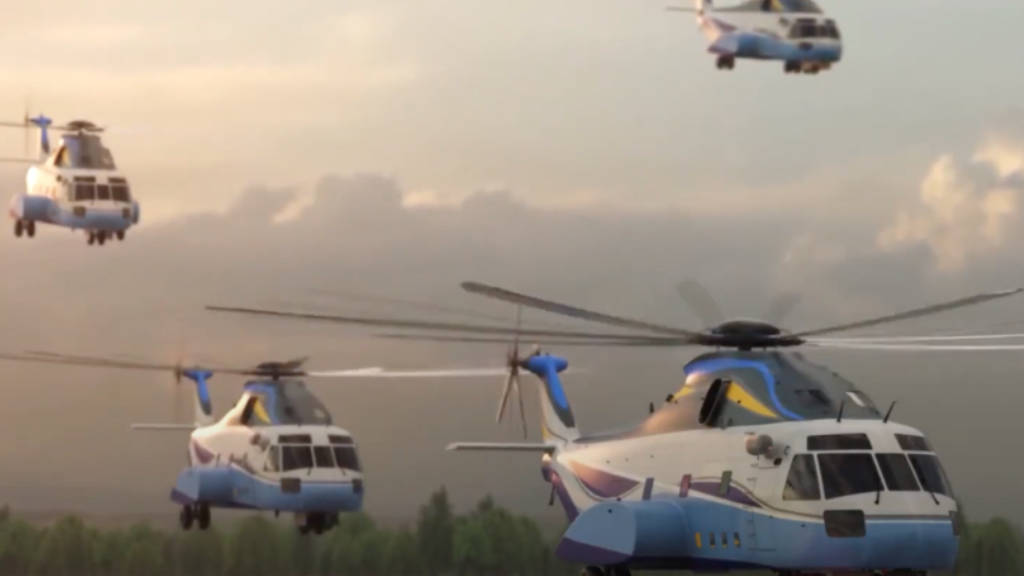
In parallel, Russia and China are working on creating a Russian-Chinese heavy-lift civilian helicopter. The intergovernmental agreement on the project was concluded in 2016, and the contract was signed in 2021. As reported, its maximum takeoff weight should be 38.2 tonnes, its flight range is 630 kilometers, and its speed is 300 kilometers per hour. Serial production of the helicopter, according to the agreements, will be set up in China, with Russia supplying some of the parts. Alikhanov’s visit to China should help move some of these projects along. He also visited the research and development center of Li Auto EV manufacturer, where he got acquainted with the autonomous driving system and tested a new model of the Lixiang Mega electric minivan. He additionally visited Piesat Information Technology, which is China’s largest software developer of telecommunications satellites and Earth remote sensing devices.

Russia’s Gazprom Signs Oil and Gas MoU With Mongolian Government

Published on August 27, 2025

Gazprom has signed a memorandum of understanding with the Mongolian government aimed at developing a partnership in the oil and gas sectors. The document was signed during a working visit by a delegation from PJSC Gazprom led by Gazprom Mongolia Chairman Alexei Miller, Gazprom has stated.

Miller held working meetings with Ukhnaagiin Khürelsükh, the Mongolian president, and Gombojavyn Zandanshatar, the prime minister, in Ulaanbaatar.

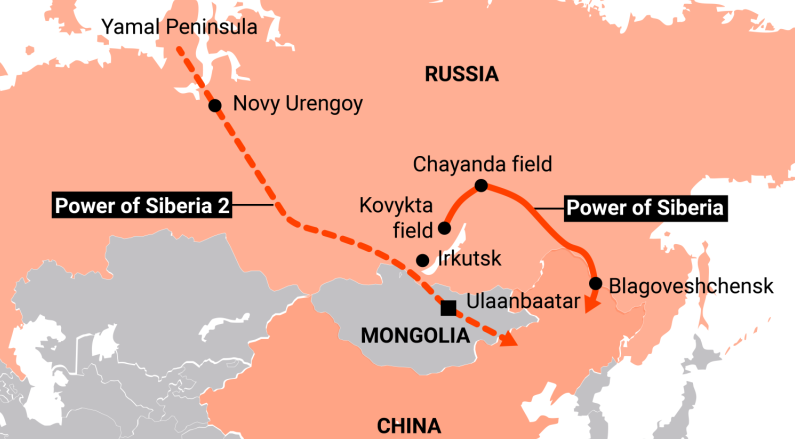
The Mongolian side is completing the environmental assessment of the Soyuz Vostok gas pipeline from Russia to China, which will become an extension of Power of Siberia 2. The Power of Siberia 2 project involves supplying up to 50 billion cubic meters of gas per year to China through Mongolia from Russian resources in Yamal, Western Siberia. The project’s implementation timeline depends on the conclusion of a contract between Gazprom and China’s CNPC, with negotiations still ongoing.

Natural gas consumption in Mongolia, through which a transit gas pipeline from Russia to China will be laid, could reach 5.6 bcm per year by 2040, according to estimates by scientists from the Melentyev Institute of Energy Systems of the Russian Academy of Sciences’ Siberian Branch.

That in turn would help Mongolia wean itself off its old, Soviet-era coal-powered units, which create significant pollution problems in the winter months. 

Further Reading

Eurasian Economic Union to Sign Free Trade Agreements With Mongolia & UAE End June

Afghanistan Turns To Russia For Investment Into Its Hydrocarbon Industry

Published on August 27, 2025

The Afghani Minister of Mines and Petroleum, Mullah Hidayatullah Badri, has stated that Afghanistan is home to sizeable hydrocarbon reserves and has invited Russian companies to invest in its oil and gas sector. He was speaking at the Tatarstan Petrochemical Forum which has been taking place in Kazan.

Badri said, “Afghanistan opens its doors to you. We invite you, especially those from Tatarstan, to invest in our energy sector, oil and gas in particular. The government of Afghanistan guarantees security, transparency, and long-term opportunities for your capital. We want to use the wealth of technological experience that Tatarstan has and create joint projects that will benefit not only our countries but also the whole region.”

Studies conducted by the US Geological Survey show that Afghanistan has about 444 billion cubic meters of undiscovered, recoverable natural gas reserves and 75 billion cubic meters of identified reserves. Afghanistan’s Angus oil field, which was discovered in 1959, stands out as the sole oil field in the country. The reserves are estimated to be approximately 6 million barrels.

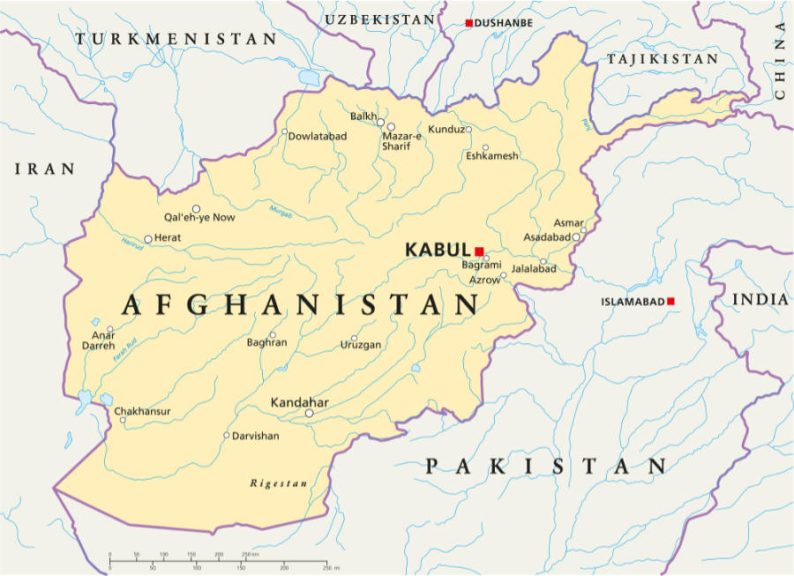
Afghanistan map

Badri added that Afghanistan’s Amu Darya, Katavaz, and Helmand basins contained most of the country’s significant natural resources, including hydrocarbon feedstock, saying that “These resources are sufficient not only to satisfy Afghanistan’s needs but also to become a source for exports to neighboring countries, ensuring energy security and regional development. We are not striving to become part of any political blocs, and we want to develop mutual ties with regions step by step and expand mutual interests in an economic sense. Afghanistan is striving to become a transit hub uniting Central and South Asia, as well as the Middle and Far East”.

An Afghanistan delegation will be attending the Shanghai Cooperation Organisation’s annual summit in China, which begins on Sunday (August 31).   

Further Reading

Russia Officially Recognizes The Taliban As Afghanistan’s Legitimate Government

Iran To Become Regional Gas Transit Hub For Russian LNG

Published on August 26, 2025

Iran and Russia have been jointly developing a strategy to position Iran as a strategic gas transit hub, potential that began following bilateral discussions and the 2024 signing of an agreement for Russia to supply up to 300 million cubic meters of gas to Iran daily. That supply chain will begin later this year.

Stanislav Mitrakhovich, at Russia’s National Energy Security Fund, has said that until recently, Russia exported relatively small amounts of natural gas to Iran. But it is often cheaper for Iran to import gas to supply its densely populated northern provinces rather than to deliver it there from gas-rich Iran’s south, as Iran’s pipeline network is insufficient. It is over 2,000 km from Iran’s southern coast to its northern coast, where the capital, Tehran, is also located.  

Instead, it is more cost-effective to transit Russian gas via Azerbaijan, which does not require the construction of any additional pipelines at this time.

The first large-scale shipments of Russian gas to Iran via Azerbaijan, up to 2 billion cubic meters (bcm) annually, are expected to begin by the end of this year and are set to increase to 55 bcm per year. That is close to the 63.8 bcm of gas Russia supplied to all of Europe in 2022. It would mean that Russia will have successfully redirected all its previous LNG supplies to non-European markets.

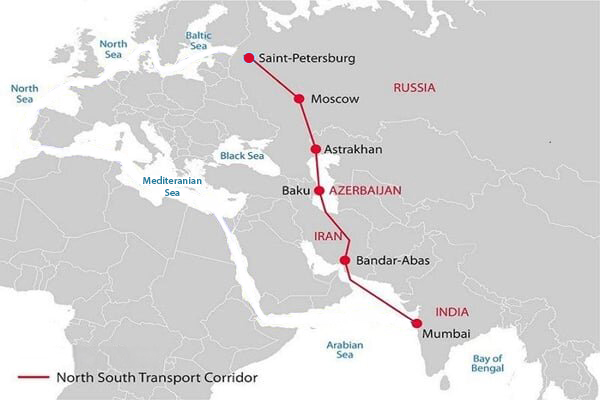
INSTC Map

Mitrakhovich said that this means that Iran can position itself as a major supplier of natural gas to global markets, assuming that it obtains and introduces the required technologies and finds a way to deal with Western sanctions. That makes sense, as Iran already has—and will shortly complete—the International North-South Transportation Corridor, which bisects the country and leads to other markets in the Middle East, South Asia, and East Africa. 

Mitrakhovich’s comments suggest that Russia is also interested in promoting this concept and may provide funding and technical assistance to Iran to make it happen—as it would also facilitate Russian LNG sales and additionally help a key ally—as well as lead to inexpensive energy supplies to emerging markets, including Pakistan.   

Further Reading

Russia, Iran INSTC Trade Volumes Could Reach 15 Million Tonnes By 2028/29