News

EU Sanctioned Russian Fertilizer Held In Latvia For Two Years Finally En Route To Sri Lanka

Published on October 20, 2024

One of the many criticisms of the manner in which Brussels has managed its sanctions policy against Russia has been the knock-on effect it has had on third party countries. This has actively damaged the European Union’s credibility in the eyes of numerous countries, many of them in the global south.

An example is a shipment of Russian fertilizer, which has finally departed Latvia to commence its voyage to Sri Lanka, Russian fertilizer producer Uralchem has stated. The vessel, MV Asian Majesty, has been anchored in the Bay of Riga with 55,000 tons of potash on board since early 2022, due to EU sanctions.

That delay has coincided with Sri Lanka suffering a triple whammy of economic problems – its vital tourism sector was reduced to zero during covid, terror attacks derailed a planned tourism recovery, oil and food prices went through the roof and the government effectively went bankrupt resulting in loan defaults. It was the worst economic crises in its history, which significantly impacted Sri Lanka’s agricultural output, ability to import replacements, and led to mass shortages. Food security problems affected all sectors of the Sri Lankan economy, putting millions of Si Lankans at risk of food insecurity. It also created significant social unrest in the country.

Uralchem CEO Dmitry Konyaev said that “Potash is an essential nutrient for the growth and reproduction of plants, and its use in crop farming is vital for consistent yield gains. We are proud to contribute to the stability of Sri Lanka’s farming sector and the wellbeing of its people.”

According to the company’s statement, inspections showed that the fertilizer remained in good condition despite its long-term storage on the ship and would contribute to improving vital crop farming in the country.

This is the sixth free fertilizer shipment by Uralchem to countries facing risks of food shortages as the company aims to “alleviate the effects of an unprecedented global food crisis.”
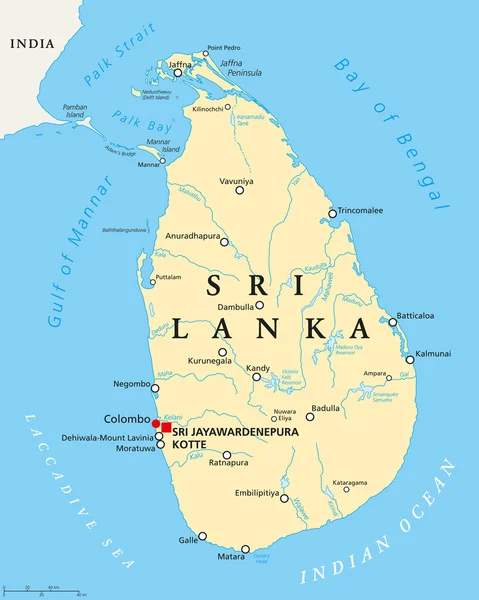
SriLankan Map

To persuade EU sanctions regulators to remove the blocking of its products, to other markets, the Uralchem Group – one of the largest fertilizer producers in the world – has donated around 190,000 tons of fertilizers to developing nations while also handling the sea freight and other delivery costs. Yet it has still taken the European union two years to agree to these humanitarian measures. 

 The company said that in collaboration with the United Nations World Food Programme (WFP), over 166,000 tons of vital fertilizers have been shipped from European ports — to Malawi, Kenya, Nigeria, and Zimbabwe, in addition to Sri Lanka. 

A total of 262,000 tons of Russian fertilizers have been blocked in 2022 at ports in Latvia, Estonia, Belgium, and the Netherlands.

Sri Lanka, which has a strong European colonial past and ties with Portugal, the Netherlands and the United Kingdom, has recently moved to request membership of the BRICS and has become a dialogue partner of the Shanghai Cooperation Organisation, which includes Russia, China and India, partially as a result of its treatment by Brussels. Important infrastructure development projects in Sri Lanka, such as the management of its new international airport and a new power plant built by Iranian contractors are also now being awarded to BRICS countries and not European investors. 

The simple equation is that membership of blocs involving Russia are now proving more reliable than relations with Brussels. Another question to ask is how many other smaller nations in the global south now feel the same way as a result of European behaviour.   

Further Reading

Russian Outbound Tourism Up 8.8% In Q1 2024

BRICS Pay Launches, Will Be A Global Payments Game Changer 

Published on October 19, 2024

The BRICS Pay system has been launched, with immediate implications for the future role of the US dollar, and the use of financial sanctions upon other countries. The system bypasses the US controlled SWIFT payments system, disregards the US dollar as a preferred currency and allows instant settlement in sovereign currencies instead.  It is likely to be followed, in time, by digital sovereign currencies.

BRICS Pay is a decentralised and independent payment messaging mechanism system under development by the BRICS member states, and is similar to the SWIFT payments interface. BRICS Pay is a joint venture between the BRICS member states to receive and make payments in their own local currencies.

It was originally launched in 2018 by the BRICS Business Council. The team that cooperatively runs BRICS Pay consists of financial, banking technology experts from the original founding nations of BRICS – Brazil, Russia, India, China and South Africa. The purpose of BRICS Pay is to make international payments less costly and complicated, encouraging international cooperation between the growing crowd of BRICS members. In January this year, the original five BRICS members were joined by Egypt, Ethiopia, Iran, and the UAE. More members – a further 30 countries have applied to join – are expected to bee announced at the 2024 BRICS summit which takes place from 22-24 October.  

According to the BRICS Pay website, numerous government, and respective technological, financial, legal, and consulting firms have united to form the BRICS Pay Consortium, operating under the principles of a decentralised autonomous organisation (DAO).

“The Consortium adheres to the regulations of each country where its members operate,” the website further states. “It is a network-based entity without a central headquarters. The Consortium’s membership is not publicly disclosed.”

According to BRICS Pay, “The Bretton Woods-era global financial system is undergoing a significant transformation. We are witnessing rising global debt, increasing wealth inequality, and the fragmentation of trade and finance systems. Our goal is to ensure equal access to financial technologies and global wealth, providing everyone with the opportunity to reach their full potential. Today, we begin building a new, fair, and decentralised financial system for the future.”

The BRICS Pay project aims to facilitate seamless transactions between member states and provide an alternative to existing global financial infrastructure dominated by Western systems like SWIFT. The key objective is to foster financial cooperation among the BRICS nations and reduce dependency on the US dollar in trade settlements, thus creating a multipolar financial world order.

It means that with a decentralised, autonomous system, users can bypass the use of the US dollar and Euro and use their own currencies. Transactions will be immediately settled at the prevailing currency exchange rate, with no additional mark ups, or need for corresponding banks. It means that a buyer in China can receive a QR code for payment from a Russian vendor, accept it, and the money then auto deducted in Chinese RMB Yuan from the Chinese account and instantly deposited in Russian Rubles to the Russian users account.

BRICS Pay accounts can be set up easily on your smart phone, linked to your respective bank account or other financial platform, while payments are made via an auto-generated QR code, and shown to the recipient who scans that and completes the transaction. 

This has obvious implications for the sanctions issued on countries such as Iran and Russia, who can now make payments in their respective sovereign currencies instead. These currencies – and those of most of the BRICS countries – are also based on real assets, rather than debt, which is the case in the United States. It is a parallel financial system that completely bypasses the need for U.S.-controlled financial institutions.   

The ultimate vision for the system is cross-border retail support across the BRICS+ bloc. Future plans are to examine business-to-business payments and then develop the BRICS+ UNIT, being the crypto proposition for the bloc.

The BRICS Pay system still needs to be rolled out however, with BRICS members banks, corporate and individual accounts all requiring connectivity. That process will take time, with the BRICS pay app on your phone probably not a useable feature until 2028.  However, there have been reports that in Russia, a BRICS Pay service for non-cash payments for foreigners may appear in Russia this year. BRICS Pay will make it possible to pay with Visa and MasterCard cards inside Russia and, in the future, with the MIR card beyond its borders. We will keep readers updated about these potential developments.

A useful video introducing the BRICS Pay system can be viewed here.

Further Reading

Putin Says BRICS Payment System In Progress, Nasdaq Says Would Disrupt US Dollar and Euro

Putin – 2025 Economic Growth to be in Russia, China, India and Saudi Arabia

Published on October 19, 2024

Russian President Vladimir Putin has forecast that the economies of Russia, China, India, and Saudi Arabia will show strong positive growth over the coming years, while it will also be advanced in Africa and Southeast Asia.

Speaking at a BRICS media event, he stated “Growth, positive growth will be in such strong countries as China, India, positive growth will be in Russia, Saudi Arabia, while countries of Southeast Asia and Africa will demonstrate advanced growth. Forming of new centers of development is a sign of the times, Putin said “This development, in the opinion of experts I trust, to whose opinion I listen, it will objectively go in the first instance in BRICS member-countries; the so-called Global South, Southeast Asia, and Africa.”

Country / Region    2024 GDP Growth2025
Russia3.9%1.9%*
China4.8% 4.5%
India7.0% 7.2%
Saudi Arabia3.8%4.6%
ASEAN4.8% 4.3%
African Union4.1%  4.4%
European Union 1.0%   1.2%
United States    2.7% 1.5%
*Note analysts have consistently marked Russian forecasts down. They have been revised upwards from the original projections every year since 2020.

There are a number of economic drivers affecting these projections. Firstly, Russian energy exports have increased and are available at discounted rates to ‘friendly countries’ – meaning all of the above except for the EU and the United States. These lower-than-expected energy overheads are driving industrial growth in these regions, while higher costs in the EU and West are depressing their industrial output. This situation is likely to remain constant until sanctions upon Russia are removed.

Other drivers include consumer growth, which is particularly noticeable in China and India, although the former has shown some slowdown due to an aging population and market maturity. It should be noticed that China’s growth at over 4% is also being achieved amongst a population five times larger than the United States.

India is still benefiting from its middle-income population boom, while Africa is just beginning to realise the emergence of its own developing middle-income class.

In contrast, the economies of the European Union and the United States appear to have peaked, and having politically manipulated themselves with having to absorb higher energy costs, in addition to an aging and less productive population – look set for a decade or more of lower growth expectations.

Further Reading

Serbia Abandons EU in Favour of BRICS: Other European Union Candidates Progress and the BRICS Alternative

Calls For Shanghai Cooperation Organisation Independent Payments Mechanism: Implications For BRICS, SWIFT, US Dollar, Euro and British Pound

Published on October 17, 2024

Readers will be familiar with discussions amongst the BRICS countries to establish a SWIFT alternative payments and settlements platform, however the concept is now spreading. Russia is calling for the removal of obstacles to the implementation of plans to increase the share of national currencies in mutual settlements between the Shanghai Cooperation Organization (SCO) countries and believes the SCO needs an independent payment and settlement mechanism.

Russian Prime Minister Mikhail Mishustin said at a meeting of the SCO Heads of Government Council that “To strengthen trade and economic cooperation, it is necessary to protect our financial sector from third countries’ influence. To focus on the implementation of the roadmap to increase the share of national currencies in mutual settlements, which our leaders approved two years ago. And to remove the current obstacles. There is a need for an independent SCO payment and settlement mechanism. For example, in the form of electronic platforms, bank institutions, or a system of authorized financial agencies. That way we will create convenient and predictable conditions for business.”

Mishustin also pointed out the need for a transparent financial instrument to support the project activities of the SCO. “One of the options is to establish a special account and use it to support initiatives at the first stages. These will be conducted through a public-private partnership, concession agreements, using funding from the state budget and development institutions, and also other forms of mixed financing” he said.

BRICS compared with SCO

There are however significant differences between the BRICS and the SCO. The BRICS group is a loose multilateral grouping of economies that have significant global and/or regional powers. At present, it includes Brazil, Egypt, Ethiopia, Russia, India, Iran, China, South Africa and the UAE. Another 30 countries, including economies from Latin America, the Middle East, Africa, and across Asia have made applications to join. However, the BRICS is not a trade organisation as such – members are encouraged, rather than legally bound to trade with each other at preferential rates depending upon their physical needs at the time.

The SCO is a multi-faceted, more security-based organisation, although it does include trade within its remit. It is also more Eurasian, rather than a global entity. The SCO full members currently include members Belarus, China, India, Iran, Kazakhstan, Kyrgyzstan, Pakistan, Russia, Tajikistan and Uzbekistan.

Dialogue partners include Afghanistan and Mongolia, while Armenia, Azerbaijan, Bahrain, Cambodia, Egypt, Kuwait, Maldives, Myanmar, Nepal, Qatar, Saudi Arabia, Sri Lanka, Turkiye, and the United Arab Emirates are Observers. Guest attendees include ASEAN, the CIS, Turkmenistan, and the United Nations. Like BRICS though, it is not a trade entity with specific trade regulations amongst its members.

So, what is the point of Mishustin’s calls for a separate SCO financial and settlements platform?

Payment & Settlement Mechanism Options

Here, Mishustin is recognising a fundamental truth – the technology to introduce specific payment and settlement systems without the need to divert funds via SWIFT already exists and is poised to revolutionise global trade mechanisms. While the BRICS has attracted much media attention in its discussions over BRICS pay and mutual settlements, Mishustin has identified a regional – yet simultaneously global desire to move away from US dollar dominance and trade controls, such as sanctions and bans on using specific currencies.

In this, he has recognised a need for other trade blocs to revert to trading in their respective regional currencies rather than the US dollar or other currencies such as the Euro, British Pound, or the CFA (French-African Franc) and the Australian dollar. Given Mishutin’s position, he is naturally proposing this for the Eurasian bloc – being the Shanghai Cooperation Organisation. However, his proposals also have specific implications for other regional blocs, such as the Gulf Cooperation Council, Latin America’s Mercosur, and several African blocs such as COMESA, ECOWAS, and ECCAS – amongst several others.

If correct, and given the technology already exists, such a move places the fiscal responsibility for currency management within these countries and their respective trade blocs back in their own hands and removes them from links to the US dollar and other Western currencies. The reason for this is the breakdown of trust and communications between the use of currencies – especially the US dollar – as a trade weapon, and the loss of sovereign control over currency management this can sometimes interfere with. This is not purely restricted to US government pressures, in the past, wealthy US-based funds have sometimes bet against particular currencies and targeted them to devalue wealth as a means to then purchase national assets at more attractive rates.  

What’s Next?

While Mishutin’s comments were aimed at the SCO, the implications are global in nature. What is beginning to occur is a technologically driven movement away from a one-country (US) controlled global payments and settlement system (SWIFT) to a diverse, multiple-structured system of more sovereign-based currency settlement systems. This places the control of sovereign currencies back in the hands of governments (and to some extent the electorate) and moves them away from Western influence.

There are pros and cons with this: and to some extent this is a brave new world and as such regional structures have not been so integral to the diverse nature of global trade as before. The implications for the global role of the US dollar and the continuation of currencies such as the Euro and Pound may start to be called into question, and these will have their own domestic impacts. 

There is also the question of how smaller currencies can be supported. That implies some links to natural assets depending upon specific resources. These could be gold, oil, gas, or even assets such as fresh water, other minerals, and even productivity indexes. Here, Russia has a distinct advantage: when evaluating the range of proven and available global mineral and natural resources, Russia consistently appears in the top three in practically all wealth and reserve categories.

Further Reading

Putin Says BRICS Payment System In Progress, Nasdaq Says Would Disrupt US Dollar and Euro

Russia – Mongolia Bilateral Trade Up 21% In 8M 2024 As ‘Steppe Road’ Project Is Discussed

Published on October 17, 2024

The Russian Prime Minister, Mikhail Mishustin has met with the Mongolian Prime Minister Luvsannamsrain Oyun-Erdene at the annual Prime Ministerial meeting of the Shanghai Cooperation Organisation (SCO) currently being held in Islamabad. Russia is a founding member of the SCO, while Mongolia is an Observer nation.

Mishustin said that “The Russian side is giving a lot of attention to expanding trade and economic cooperation with Mongolia. In particular, our trade volume increased by 21% in January-August this year” while saying that the bilateral intergovernmental commission on trade and economic cooperation is very active. “There are many projects here. We are working together on strategies in the sphere of energy, industry, agriculture, and in the humanitarian sphere” Mishustin said.

According to Mishustin, more than 70,000 Mongolian citizens have graduated from Russian universities. “The peoples of Russia and Mongolia are united by our cultural and humanitarian ties. I am absolutely confident that, with further interaction, we will find very many new ideas, projects in various areas.” Mishustin told Oyun-Erdene.

Magnolia Map

Mongolia is currently negotiating a Free Trade Agreement with the Eurasian Economic Union, which is hoped will be finalised in December. The two countries have also embarked on several projects to develop border crossing capacity and other trade routes, including a road link between Ulaan Baatar and Astana, the capital of Kazakhstan.   

There has also been intense speculation about the future of the proposed Power of Siberia 2 gas pipeline between Russia and China, which transits Mongolia. Negotiations have proven difficult over gas supply pricing, however, both Presidents Putin and Xi have apparently asked their respective organisations to reach a deal. Mongolia would be a beneficiary in terms of earning transit fees, with the opportunity also of using some of this energy to power its rapidly expanding capital city.

Along with this, a Russia-Mongolia-China economic corridor is also being discussed, the so-called ‘Steppe Road’ being the connection of ports and railways between the three countries.

This is a Mongolian initiative that it wants to get started with the assistance of Russia and China.  Ulaanbaatar envisages “Five Great Passages” requiring US$50 billion in investment, which woud include:

  • A 997 km-long transnational expressway linking Russia and China
  • 1,100 km of electrified rail infrastructure
  • The construction of a new railway between the major border checkpoints at Altanbulag on the border with Russia, and Zamyn-Udd near the Chinese border.
  • Construction of oil and gas pipelines from Altanbulag to Zamyn-Uud.

The Steppe Road isn’t just about transport infrastructure, but part of a Mongolian national development strategy which also seeks to invigorate the country’s telecom and tourism sectors and boost its mining and energy potential.

Mangolia Map

This would provide some benefits to both China and Russia, as well as Mongolia, which could be used as a processing centre for several industries and trade between Russia and China. Mongolian salaries are about 20% of those in the nearest developed Russian and Chinese cities. Mongolia also possesses significant mineral reserves of interest to both, including in various critical industries.     

Further Reading

New Russia – Mongolia Border Crossing and Special Economic Zone To Open In 2025

Serbia Abandons EU in Favour of BRICS: Other European Union Candidates Progress and the BRICS Alternative

Published on October 17, 2024

The Kremlin spokesman Dmitry Peskov has stated that the BRICS is a more welcoming and member-oriented group than the European Union, commenting on the possibility that Serbia could seek to join the BRICS bloc. His comments came after Belgrade said that instead of EU membership, it would explore the option of joining BRICS, which is currently chaired by Russia.

Peskov stated that “Serbia has been having its arm twisted. The EU always lays down conditions for cooperation and demands certain actions. We are certain that instead, Serbia will make decisions that are most beneficial to its people.”

Serbia applied to join the EU in 2009 and has been a candidate for membership since 2012. But in an interview on Sunday, Serbian Deputy Prime Minister Aleksandar Vulin accused Brussels of moving the goalposts for accession, most recently by linking Belgrade’s membership to severing relations with Moscow.

Serbia’s largest export partners are Germany, Bosnia-Herzegovina, Italy, Hungary and Romania. Its main import partners are China, Germany, Russia, Italy, and Hungary. However, the Serbian capital, Belgrade, was bombed by NATO in 1999. An estimated 1,000 people were killed and 5,000 wounded.  

The European Union also has a long history of promising eventual membership to other countries, but then stretching out the application process and leaving the countries concerned somewhat in a state of limbo and hindering their ability to look at other trade blocs – until the emergence of the BRICS bloc as a potential alternative. These include:

CountryEU Membership Application  
Albania2009
Bosnia-Herzegovina2016
Georgia2022
Kosovo2022
Moldova2022
Montenegro2008
North Macedonia2004
Serbia2009
Turkiye1987
Ukraine2022

Of these, national elections are about to be held in Georgia and Moldova, both of which have strong views concerning a choice between relations with the EU or maintaining relations with Russia. Brussels is insisting they take sides when both would prefer a degree of neutrality given their ex-Soviet history and previous relations with Moscow. Ukraine should also have held elections earlier in the year however President Zelensky cancelled them in favour of maintaining his mandate. His Presidency expired in May this year.  

Kosovo meanwhile is not fully recognised by several EU states rendering its application to join the European Union a political curiosity.   

Peskov said that “BRICS does not impose any conditions on anyone. It’s based on mutual respect and the readiness to address the concerns and interests of members. No one there says ‘either, or.’ That’s why the group is so attractive to a raft of countries.”

That said, direct comparisons between the European Union structure and the BRICS are almost polar opposites. The EU has a strict intra-regulatory economic, trade, and legal protocol which all members must abide by. The BRICS in contrast is a far looser group, with members free to negotiate with each other in terms of trade agreements, an approach which in uncertain times means rather more flexibility. This can be illustrated in their respective GDP growth figures. The combined EU GDP growth 2024 rate is expected to be 1% in 2024; rising to 1.6% in 2025. The current BRICS countries (Brazil, China, Egypt, Ethiopia, India, Iran, Russia, South Africa, and the UAE) have an average GDP growth rate of 4.2% for 2024 and a forecast of 3.6% for 2025. That rate is four times higher than the EU during 2024 and despite a dip, still more than double the EU’s projected growth for next year.

Russian President Vladimir Putin said in September that the current BRICS states had agreed to discuss granting Partner Status to several aspiring members and to potentially approve some of the bids during the Kazan summit from October 22 to 24. If agreed upon, BRICS Partner status will become a new form of partial BRICS membership, intended to act as a gradual transition toward full integration into the group.

Azerbaijan, Algeria, Vietnam, Indonesia, Pakistan, Malaysia, Nigeria, Thailand, Venezuela, Kazakhstan, Palestine, DR Congo, Gabon, Bangladesh, Bahrain, Kuwait, Senegal, Cuba, Belarus, Bolivia, and Turkiye are among other nations that have expressed their wish to join BRICS.

In 2024, according to Statista the BRICS share of Global GDP has risen to 34.92%, while that of the G7 has dropped to 30.05%. Any further expansion of BRICS will widen this gap.

Further Reading

BRICS May Admit More Countries As Members: The Candidate Nations 

Russia-Turkiye 2024 Relations: BRICS, Black Sea and US$100 Billion Trade Discussions

Published on October 16, 2024

Russia’s Deputy Foreign Ministers Sergei Vershinin and Alexander Grushko met with Turkish Deputy Foreign Minister Mehmet Kemal Bozay in Moscow, for consultations to discuss the implementation of strategic economic and energy projects along with regional agenda items.

The Russian Foreign Ministry has said that “The two parties had a substantive exchange of opinions on key items of the Russian-Turkish agenda, including the implementation of strategic projects in the economy and energy sectors. They updated a schedule of upcoming contacts at the top and high levels. They also discussed relevant regional and international problems within the scope of the UN Security Council and General Assembly. Special significance was attached to the situation in the Middle East, focusing on the escalation of violence in the Gaza Strip and Lebanon, as well as global food security, including the situation in the Black Sea area.”

After the Ukraine conflict broke out in 2022, Ankara did not restrict contacts with Moscow as several other NATO members did. Turkiye also only agreed to sanctions approved by the United Nations and did not close its airspace to Russian civil flights. Turkiye became one of the only possible communications channels between Kiev and Moscow.

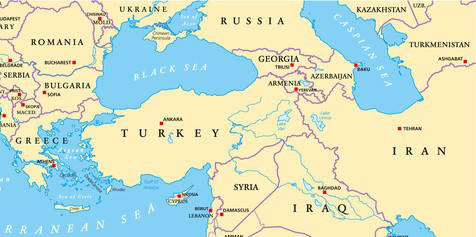
While discussing the Russia-Turkiye trade situation is normal, there have been subtle hints in some of Russia’s recent dialogue, most notably with Iran and China, that some regional changes may be being planned for. As regards Turkiye and the Black Sea, this would imply some changes to shipping activity – and security – may be underway. With the Ukraine conflict directly impacting Black Sea shipping routes, these types of discussions will be looking at future potential narratives. The Turkish navy patrols the Bosporus channel between the Black and Mediterranean Seas and is a vital part of any alterations in regional sovereignty or shipping activity.

This could also affect Georgia, whose national elections take place next week, which are likely to re-elect the Georgian Dream party, which has a pragmatic policy toward Russia. It refuses to join in anti-Russian sanctions, despite threats from the EU, as this would significantly damage its economic well-being. If the party wins, it can expect increased trade from Georgia’s Black Sea port of Poti, which will require additional monitoring and security in the Black Sea.  Ankara will also need to be involved in any future settlement agreements between Kiev and Moscow.

Mediterranean Bassin Map

Western sanctions imposed on Russia have redirected global trade flows, with Turkiye becoming one of Russia’s key trading partners. In its efforts to build closer trade links with the Middle East and the Global South at large, Russia has paid special attention to establishing greater trade and economic ties with Turkiye, the key nodal state with the potential to alleviate Moscow’s trade and financial isolation from the West. As has occurred with most of the Middle Eastern and Asian economies, Turkiye has greatly benefited from this re-orientation of trade.

As Turkiye’s economy has experienced a difficult period, ties with Russia have given the potential to minimize negative economic trends. Russia-Turkish trade has jumped by 57% since the conflict in Ukraine broke out. Both will be looking to further expedite these relations. The booming relations between Russia and Turkiye now touch upon an increasing number of sectors, from the expected launch of a joint nuclear power plant project to the work on the Turkish Stream gas pipeline and the sale of S-400 air defense systems.

Thanks to its “no-sanctions policy”, Turkish trade with Russia surged in 2023, reaching US$65 billion, although it prompted the US to warn Ankara of having to face potential sanctions itself if it continues facilitating trade with Russia. Both Ankara and Moscow however have set a target to increase bilateral trade volumes to US$100 billion by 2030. Curiously, and underlining the warping effect Western sanctions are having on Russia’s trade flows, the European Union itself is a key motivator in this trade increase. 

This is because Turkiye has increased its imports of Russian energy and begun reselling it to the European Union, while Turkiye was technically abiding by the EU sanctions. In 2023, Turkiye increased its purchase of Russian fuel products by 105% over 2022, while increasing its fuel exports to the EU by 107%. The fuel that Turkiye sold to the EU was still Russian, but as a middleman, Turkiye traded with Europe legally. Energy exports traditionally form the basis of Russian deliveries to Turkiye.

In other categories, Russia mainly imports from Turkiye agricultural produce and beverages, electrical machinery, plastics and products made from it, and organic chemicals. Exports from Russia to Turkiye primarily consist of gas, oil, mineral fuels, mineral oils, and products of their distillation. Russia also exports grain, and copper to Turkiye.

Turkiye will be a major participant in next week’s annual BRICS Heads of State summit in Kazan, which itself, although part of Russia, is an ethically Turkic region with strong connections to Turkiye. Ankara has stated it would like to join BRICS, and if it does, would be the first NATO member to join. That would raise hackles in Brussels, meaning that the Russia-Turkish diplomatic space is a hot topic right now.

Further Reading    

Turkiye’s Trade With The BRICS Countries As It Looks To Join

Russia To Ratify ‘Strategic Partnership Agreement’ with North Korea: Implications

Published on October 16, 2024

Russian President Vladimir Putin has formally requested that the Russian State Duma ratify the treaty on comprehensive strategic partnership with North Korea (DPRK) that he signed during his trip to Pyongyang in June. The Russian media reported on Monday that the ratification proposal had been registered in the legislature’s docket and is expected to be voted into law.

According to the document, the two countries would “cooperate to ensure lasting regional and international peace and security.” The explanatory note attached to the bill for Duma lawmakers says that Russia and the DPRK are committed to establishing “global strategic stability and a fair multipolar international system,” and are basing their partnership on the “principles of mutual respect for state sovereignty and territorial integrity, non-interference in internal affairs, equality and other principles of international law.”

In terms of ‘international law’, these typically mean in line with UN agreements on disputes and other related items, including trade, the definition of sovereignty, and conflicts.

Moscow and Pyongyang also pledged not to conclude any agreements “directed against the sovereignty, security, territorial integrity, the right to free choice and development of political, social, economic and cultural systems and other key interests of the other Party” with any other third party countries. The terming of the Russia-DPRK agreement also appears to imply that any attempts by the United States in particular to interfere with North Korean sovereignty – such as reunification with South Korea – would face resistance unless Pyongyang had specifically agreed.       

Another article spells out the opposition of Russia and the DPRK to Western sanctions, describing them as the “application of unilateral coercive measures, including those of an extraterritorial nature,” illegal and contrary to international law and the UN Charter. Moscow and Pyongyang have pledged not to apply such sanctions against each other.

The document includes an article that states that “if one of the parties is subjected to an armed attack by any state or several states and thus finds itself in a state of war, the other party will immediately provide military and other assistance by all means at its disposal in accordance with Article 51 of the UN Charter” and national legislation.

This means that similar to NATO Article 5, that an attack on either Russia or the DPRK would be regarded as an attack on both, and both sides will take military action against the aggressor.

North Korea Map

The situation as regards security in North Korea has raised alarms in both Beijing and Moscow, with apparent United States-originated provocations. Pyongyang has complained that military drones have entered its airspace from the south and in response have destroyed part of its own road and rail connectivity to the border, apparently in response to a feared US driven land invasion. There are creeping worries that as the Ukraine conflict appears to be concluding, Washington may try and provoke incidents in the Russian Far East, including with North Korea. That would inevitably also involve China, and it is one of the reasons why the Chinese and Russian defence ministers met a few days ago in Beijing. Such threats could be used by the West to obtain better terms for any settlement in Ukraine. 

Were the United States to increase military activity in the Korean Peninsula, this would also affect China’s position as concerns Taiwan, which is also on the Eastern coast. The Chinese navy exercised a mock ‘blockade’ of the island last week in response to Taiwan purchasing new US weapons systems.

Apart from the military aspect of the Russia-DPRK agreement, there are trade and food security issues as well. North Korea has an extensive military-focused industrial base, with Russia an increasingly important client as it looks to secure its borders. Russia has 57,792 km of borders to protect, the longest in the world. In turn, North Korea requires food security and will be looking at supplies of Russian grain. Official bilateral trade figures typically report figures in the tens of millions of US dollars, but in reality, the figure can be expected to be well into the tens of billions in value as both sides look to enhance cooperation, some of it in barter deals.  

Further Reading

Russia, North Korea To Build New Cross-Border Road Bridge

Shanghai Cooperation Organisation Prime Ministers Council Meeting Begins In Pakistan 

Published on October 15, 2024

The Meeting of Council of Prime Ministers of SCO Member States has begun in Pakistan, with Russia represented by Prime Minister Mikhail Mishustin. The SCO includes full members Belarus, China, India, Iran, Kazakhstan, Kyrgyzstan, Pakistan, Russia, Tajikistan and Uzbekistan. 

Dialogue partners include Afghanistan and Mongolia, while Armenia, Azerbaijan, Bahrain, Cambodia,  Egypt, Kuwait, Maldives, Myanmar, Nepal, Qatar, Saudi Arabia, Sri Lanka, Turkiye, and the United Arab Emirates are Observers. Guest attendees include ASEAN, the CIS, Turkmenistan, and the United Nations.

On this occasion, New Delhi’s position will be presented by Indian Foreign Minister Subrahmanyam Jaishankar. It is the first time in nearly nine years that an Indian foreign minister has travelled to Pakistan.

Pakistan Map

The two-day agenda will include development of regional trade and economic cooperation, strengthening socio-cultural ties between the SCO member countries, combating climate change, and reviewing the SCO performance. The meetings will be chaired by Pakistan Prime Minister Shehbaz Sharif.

China’s Premier Li Qiang inaugurated a China-funded international airport in Gwadar, a key Pakistani port on the Arabian Sea. This is part of a massive ‘China Pakistan Economic Corridor’ (CPEC) investment by Beijing that links a deep sea port and airport on the Arabian Sea by road and rail to the Chinese border in Northern Pakistan.

Russia has also been involved in developing overland supply routes with Pakistan via Iran.

Further Reading

Pakistan Joins International Transport Corridor Route from Belarus to Indian Ocean

New Market Exit Terms For ‘Unfriendly’ Investors In Russia

Published on October 15, 2024

The Russian Ministry of Finance has introduced significant changes to the market exit conditions of Russian based assets owned by individuals or entities from so-called “unfriendly” states or companies controlled by them. These are as follows:

  • The valuation discount is increased to 60%, meaning that assets can be sold at a price not exceeding 40% of the market value determined by an authorized appraiser;
  • The ‘exit tax’ payment to the Russian federal budget is increased to 35% of the market value (not the discounted value) of the assets being sold. 25% shall be paid within one month of completion of the transaction and the remaining 10% shall be paid in two installments   within the following two years. Should the market value exceed ₽50 billion (US$516 million) this transaction must be additionally approved by the President of Russia.

The above requirements are applicable both to new petitions for obtaining the permission of Government Commission for Control over Foreign Investments in the Russian Federation and the ones being already considered by the relevant ministries. In the latter case applicants will have to adjust the conditions of planned transaction and change their applications accordingly.

The ‘Unfriendly countries’ list includes: 

Albania, Andorra, Austria, Australia, Bahamas, Belgium, Bulgaria, Canada, Croatia, Cyprus, Czech Republic, Denmark, Estonia, Finland, France, Germany, Greece, Hungary, Iceland, Ireland, Italy, Japan, Latvia, Liechtenstein, Lithuania, Malta, Micronesia, Monaco, Montenegro, Netherlands, New Zealand, North Macedonia, Norway, Poland, Portugal, Romania, San Marino, Singapore, Slovakia, Slovenia, South Korea, Spain, Sweden, Switzerland, Taiwan, Ukraine, United Kingdom, (and all UK dependencies) and the United States.  

Further Reading

Russia’s Tax Revenues From ‘Unfriendly Countries’ Business Exceeds Forecasts

Zimbabwe Academic Compares IMF With BRICS Bank

Published on October 15, 2024

Kudzai Dominic Chiwenga, an associate professor at the University of Zimbabwe, has spoken about currency strategies and compared the World Banks ‘International Monetary Fund’ (IMF) with the BRICS New Development Bank (NDB).

The NDB, he has said, provides more flexible and supportive terms than the IMF. Chiwenga, who is also the Chairman of the Zimbabwe-Russia Youth Foundation, said that the NDB was designed to provide a “fairer system” for member nations and other developing countries.

While the IMF was originally established to aid developing countries, many nations, including Zimbabwe, have found themselves trapped in cycles of debt, with high interest rates and unfavorable borrowing conditions, he stated.

The NDB, Chiwenga believes, provides more equitable financial support and serves as a “breath of fresh air” for countries looking for alternatives to traditional global financial institutions, saying that  “It has an open-door policy that is open to other countries.”

The NDB was founded in 2015 by the BRICS nations – Brazil, Russia, India, China, and South Africa – to mobilize resources for infrastructure and sustainable development projects in the bloc and other emerging markets. As part of its expansion, the bank welcomed Bangladesh, Egypt, the United Arab Emirates, and Uruguay as new members in 2021. In September 2023, Algeria was also granted membership.

The NDB doesn’t link loans to any other political issues, and purely provides them on the basic of economic need and the repayment terms. The IMF typically includes terms such as democratic reforms, human rights issues and preferential trade agreements with the West as qualifying clauses.   

Chiwenga emphasized the importance of Zimbabwe’s evolving economic strategies. One such initiative is the country’s new currency, the Zimbabwe Gold (ZiG), which is pegged to the commodity. The professor explained that this was part of a broader effort to anchor Zimbabwe’s economy to its abundant natural resources, particularly minerals.

“In Africa, we are rich in minerals, and naturally, we want to tether our economy to the areas where we are strongest in,” he said, referring to the country’s struggles with inflation and the impact of economic sanctions.

Zimbabwe has maintained a long-standing policy of fostering friendly relations with nations across the globe, including a strong bond with Russia. According to the professor, the partnership between Harare and Moscow dates back to the Soviet era, when the African state sought support during its liberation from colonial rule.

The Soviet Union was one of the few nations that stood by Zimbabwe during this critical time, a connection that continues to thrive today. Despite external criticism from Western powers, Zimbabwe remains committed to maintaining its friendships and advancing mutual cooperation in key areas such as agriculture, energy, education, tourism, technology, and innovation, he noted.

The IMF postponed a scheduled meeting with Russia in Moscow earlier this month, which had been planned to assess the state of the Russian economy. It was cancelled indefinitely following protests from Western governments despite Russia being an IMF member and contributing state.    

Further Reading

Algeria Joins BRICS New Development Bank