The Russian Foreign Minister, Sergey Lavrov, has held consultations with the Vatican’s Special Envoy for Peace, Cardinal Matteo Zuppi.
According to a statement published on the ministry’s website, Lavrov met with the Vatican’s emissary as part of a working visit by Zuppi to Moscow. The two have held in-depth discussions “on cooperation in the humanitarian sphere in the context of the conflict around Ukraine and touched upon a number of topical issues on the bilateral and international agenda.”
The sides noted the “constructive development of the Russia-Vatican dialogue” during their talks.
Since the outbreak of the Ukraine conflict in 2022, the Vatican has been a vocal advocate for a diplomatic solution to the crisis. Last year, Cardinal Zuppi was designated as the Holy See’s special envoy for peace in Ukraine and has since visited Kiev, Moscow, Washington, and Beijing in hopes of negotiating peace.
The Vatican’s secretary of state, Cardinal Pietro Parolin, also travelled to Ukraine this July and met with the President Zelensky and other senior officials. Zelensky pushed his ‘peace formula’, however after that discussion, Parolin said that Zelensky’s formula was “insufficient” and stated that Russia must be included in any negotiations.
Moscow has welcomed the Vatican’s “neutral and balanced” position on the conflict and its efforts to find a peaceful resolution to the crisis.
In June, Russian President Vladimir Putin announced that he was ready to declare an immediate ceasefire and start peace negotiations if Ukraine withdrew its forces from Russia’s new territories and gave legally binding commitments to neutrality. However, after Kiev launched an incursion into Kursk Region in August, Putin said that no such peace talks could be held while Ukrainian troops were on Russian soil and attacking Russian civilians.
Russia has a traditional Christian social background and has one of the highest percentages of church-going populations in the world. Christian operas such as Wagner’s Parsifal have been playing to full houses at Russian theatres over this past year, while Bach’s Passionof Christ and Lloyd Webber’s Requiem remain on the October playbill.
This contrasts with standards in the West. In Germany, a sadistic, sexual LBGBQ opera has sold out all performances, while the current top billing film in the United States is a slash horror film that has made people physically sick with the gratuitous violence it displays. The current Ukrainian President Zelensky, despite representing an Orthodox Christian country, is Jewish, not Orthodox Christian in faith.
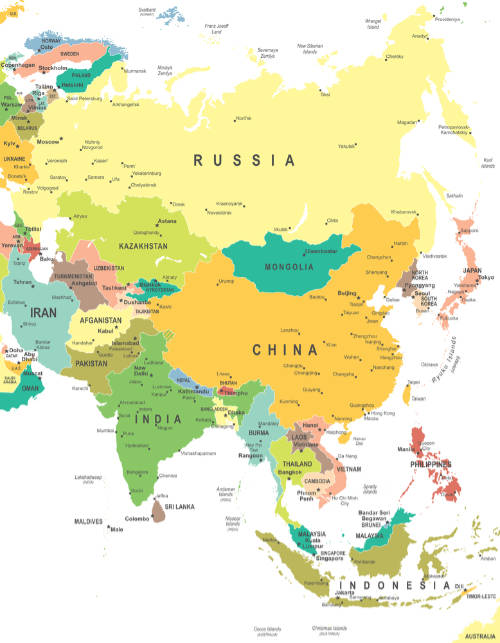
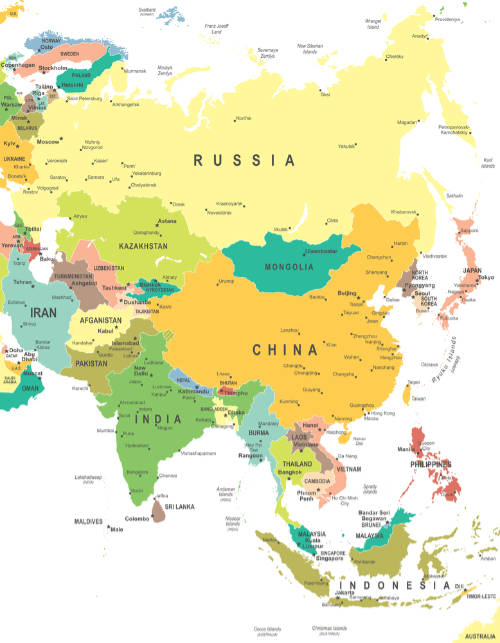
The Russian Defence Minister, Andrei Belousov, has met with Dong Jun, his Chinese counterpart, in Beijing on Monday (October 14). The meeting comes two days after the culmination of the East Asia Summit which China, Russia, and the United States all participated in together with numerous Asian countries. Russia has expressed immediate alarm about American plans to militarise the region.
Dong told Belousov that the two countries’ militaries should “deepen strategic collaboration”, stating that “The two militaries should follow the direction set by their leaders, deepen strategic collaboration… and continuously advance military relations. Under the strong leadership of President Xi Jinping and President Putin, China-Russia relations have reached an all-time high, serving as a model for major power relations.”
Belousov stated that “Military cooperation between Russia and China is a key element in maintaining global and regional stability. I am confident that our discussions will further strengthen the Russia-China strategic partnership in the defence sector.”
Last month, Russian and Chinese warships carried out joint drills in the Sea of Japan, part of a major naval exercise that Putin said was the largest of its kind for three decades. During the East Asia Summit, Japan had signalled its intention to expand its own military and align it with United States policy.
China and Russia meanwhile declared a “no limits” partnership shortly before Moscow launched its attack on Ukraine and have carried out a series of military drills together since. President Vladimir Putin said in August that Russia’s economic and trade links with China were “yielding results”, and that the two were working on joint “economic and humanitarian” projects.
How far Russian and Chinese military collaboration will extend remains to be seen. The two countries have several contact points in this regard:
Alleged Chinese support for Russia’s involvement in Ukraine;
Security support to maintain peace and development in Afghanistan;
Preventing a collapse of the North Korean regime;
Potential security support for the Northern Sea Route;
Potential security support in Africa and Middle East;
Military support to protect mutual – and especially Chinese – interests in the South China Sea and Southeast Asia in general.
The situation as concerns Japan will be of concern to both Beijing and Moscow, while Beijing also faces intimidation in nearby Taiwan, which has been receiving substantial US weapons infrastructure and deployment. To the West, several ASEAN nations are wary of China’s military strength and especially around the South China Sea area, which Beijing claims as its territory. India is also wary of Chinese intentions in the Indian Ocean and is also developing its naval capabilities.
On the other hand, it is possible that for the first time, joint Russian-Chinese missions could be in future deployed to help keep the peace in other regions, such as supporting of certain government in Africa, Central Asia and the Middle East. This would, if true, mark a change of strategy for Beijing which has been reluctant to see its troops anywhere other than protecting what it sees as its own territory. The Chinese are also not used to see images or news of their soldiers seeing in war zones or being among casualties. How far Beijing feels it needs to go to persuade the Chinese public such steps are becoming necessary is an interesting question.
It is apparent that part of Washington’s policy towards the Asian region is to create military unrest, and to influence parts of Asia against China. With the region also very much now becoming a lifeline for Russian trade interests, securing the entire Eurasian region, in terms of both land and maritime borders is a complex and significant task for both Beijing and Moscow to resolve.
Russia has been participating in the annual East Asia Summit in Vientiane, Laos, with Russian Foreign Minister Sergey Lavrov representing the Russian Federation. Other attendees included all the ASEAN nations (Brunei, Cambodia, Indonesia, Laos, Malaysia, Myanmar, Philippines, Singapore, Thailand and Vietnam) together with Australia, Japan, South Korea, the European Union and the United States.
The normal protocol at the conclusion of such summits is the issuing of a joint declaration, designed to illustrate bloc unity. This did not occur at this summit, with Russia and China objecting to the wording. In a subsequent, open Q&A session, Lavrov explains the reasons why and comments on regional issues. His remarks are reproduced below under the initials SL, independent questions asked at the press conference are identified as Q; our analysis is provided under the initials RPA.
SL: “We have completed our meetings as part of the 19th East Asia Summit. President of Russia Vladimir Putin instructed me to represent him at this event. The discussions demonstrated that our Western colleagues, who are ASEAN partners, just like Russia, China and India – these Western colleagues have been seeking to undermine the multilateral economic and security architecture which has evolved over decades with ASEAN at its core and which has proven its relevance and effectiveness.
However, it is obvious today that the United States and its allies decided to draw the Asia-Pacific Region into NATO’s sphere of interests by creating narrow and exclusive US-led military and political associations. This includes the troika formed by the United States, Japan and South Korea. There is also the United States, Japan and the Philippines trio. For the Indo-Pacific, they created the Quad, which includes Australia, New Zealand, South Korea and Japan. All this does nothing to promote collective efforts, while fragmenting this common space by dividing it into friends and foes.
We have highlighted that this Western policy may lead to the region’s militarisation, while also threatening stability and sustainable development in the Asian part of our shared continent.”
RPA: This is express criticism of Western policy that seeks to introduce creeping militarisation into the East Asia region, mainly on the basis of containing China, the regional dominant force. Russia and China view this as an escalation of Western military expansion and influence into Asia, leading to an increase in potential regional conflicts.
SL: “Russia reaffirmed its unwavering support for ASEAN countries in their efforts to preserve peace and ensure equal cooperation with all ASEAN partners. The West though wants to make ASEAN its main partner. And the primary purpose of this partnership would be to oppose Russia’s and China’s interests. In terms of Russia’s relations with ASEAN, for more than three decades, we have been building our strategic cooperation with this association based on an independent agenda free from any momentary political considerations. Next year, we will be marking the 20th anniversary of the first Russia-ASEAN summit and the adoption of the Joint Declaration on Progressive and Comprehensive Partnership at it.”
RPA: Lavrov pointing out that the Russian involvement in ASEAN has historically not been driven by military or political rivalry interests but on trade.
SL: “Instead of using the events held as part of the East Asia Summit for pursuing vested political interests, Russia opted for promoting initiatives in several domains, including pandemic response, people-to-people contacts, including tourism, and supporting volunteering. We offer practical avenues for working together which can benefit all the participants and advocate equal and mutually beneficial cooperation. During this meeting, we tabled a proposal to work together on developing remote territories. This is an important topic for us, just as for many ASEAN countries.
During these, we set forth and circulated our overall perspective regarding cultural and social connectivity, which has become especially relevant considering the spread of destructive ideologies and attempts to blur and eliminate the traditional values.
Quite a few ideas we heard from our ASEAN colleagues on reinforcing the regional architecture can be viewed as complementary with Russia’s well-known initiative to create an architecture of indivisible security and equitable development for Eurasia.
The Association hosted the Secretary-General of the Shanghai Cooperation Organisation as its guest at the East Asia Summit for the third time. He put forward a positive proposal to promote closer contacts between the SCO and ASEAN in various spheres that are relevant for the countries involved. We could see that the SCO and ASEAN are natural partners not only in terms of their geography, but also considering the firm commitment by their member countries to the principles of sovereign and mutually beneficial cooperation while taking into account each other’s interests.
We welcomed the fact that several ASEAN countries want to forge closer ties with BRICS. Today, this structure acts as one of the cornerstones of a multipolar world order. In just a few days, Kazan will be hosting the BRICS Summit, which will be a major international event. Several ASEAN countries were invited to attend it, and they accepted these invitations.
We have no doubt that the approaches we develop within BRICS for dealing with various topical matters can also serve the participants in the East Asia summits, especially ASEAN member states.”
Q: What or who has prevented the adoption of the final statement?
SL: “In a nutshell, the final declaration has not been adopted because of the persistent attempts by the United States, Japan, South Korea, Australia and New Zealand to turn it into a purely political statement, contrary to the decades-long practice of East Asia summits, which boils down to preventing the saturation of declarations with confrontational geopolitical narratives. For the past years, these declarations focused on practical cooperation in the economy, trade, investment, and the humanitarian sphere. It is obvious to everyone that the attempts to politicise these spheres of work are counterproductive.
Last year, we adopted the East Asia Summit Plan of Action. This year, we submitted a number of practical proposals aimed at implementing projects in the spheres stipulated in that plan.
The West systematically hindered these actions, demanding that we assume responsibility for all the developments in Ukraine, where the United States and its allies provoked a state coup and have been supporting the activities of the criminal Kiev regime since then. This is the main reason. The ASEAN nations fully realise that this cannot promote cooperation in the format of the East Asia summits.”
RPA: The implication here is that Australia, the European Union and the United States wanted to include text in the East Asia Summit declaration that condemned Russian activities in Ukraine.
Q: When commenting on the results of the Russia-ASEAN foreign ministers’ meeting held here, in Laos, in July 2024, you said that the Association supported the idea and appreciated Russia’s advocacy of an ASEAN-centric architecture in the region. Which ASEAN actions does Russia appreciate in the context of its regional concerns?
SL: “For the Association’s central role. We are convinced that the reinforcement of its central role, which is a tough job when our Western colleagues are trying to split ASEAN, calls for a great deal of political will. The ASEAN countries certainly have it.”
RPA: Russia’s position is that the West is trying to split opinion within ASEAN. As concerns Ukraine, ASEAAN has maintained a politically neutral position. Russia views Ukraine as a subject that should be off the table in terms of East Asia discussions.
Q: Shortly before the summit, the new prime minister of Japan proposed creating an Asian analogue of NATO. He said that new conflicts were possible in the region otherwise. What could be threatening the region, and what can be done to repel these threats?
SL: “Any form of militarisation and any proposals regarding new military blocs come laden with the risk of confrontation, which can develop into a “hot phase.” As for Japan, we are seriously concerned about its re-militarisation. Having forgotten the lessons of WWII, the Japanese authorities have stated increasing defence spending and augmenting its basic doctrines with a pre-emptive strike capability.
Japan is increasing its involvement in the US global ballistic defence plans, with the possible deployment of intermediate – and shorter-range ground-launched missiles in Japan. Overall, it is gearing up for strengthening its military capability in both traditional and new spheres, such as cyberspace and outer space.
Japan is taking part in more naval exercises with the United States and other NATO countries. Work is underway to align narrow bloc formats. One is the Japan-South Korea-US partnership, and the other is the US-Japan-Philippines platform, which is being established.
Japan has openly declared readiness to take part in joint nuclear missions with the US and interest in joining the AUKUS project. This entails obvious risks. We regularly discuss this at the IAEA. This clear refusal to abandon the path of peaceful development is a matter of concern for us. This could lead to the collapse of the current global architecture and its replacement with the “rules-based order,” about which the Japanese prime minister spoke at length at our meeting today. This policy is being actively and openly encouraged by the United States.
The US Ambassador to Japan has recently said that the United States was thinking of creating a “trade defence coalition” of approximately 50 countries in the Asia-Pacific Region to “isolate Beijing economically.” In other words, aggression and confrontation are not only encouraged in the military-political sphere but also in the economy, thereby hindering the universal idea to promoting inclusive formats of mutually beneficial economic cooperation.”
RPA: Russia expressing in some detail its unhappiness with Japan’s trend towards militarisation and inclusion in a Western military alliance in East Asia.
Q: You have mentioned the interest of ASEAN countries in BRICS. Did any of the countries express their interest in joining BRICS here on the sidelines of the ASEAN events?
SL: “This subject was not raised at the plenary sessions. But as I said, a number of ASEAN countries have been invited to the BRICS Summit in Kazan on October 22-24. They accepted the invitations. So, you will see them all there.”
RPA: Lavrov is being coy here. Our understanding is that numerous ASEAN countries have made official enquiries as concerns BRICS membership, including Indonesia, Malaysia, Thailand and Vietnam. Collectively, these represent the largest economies in ASEAN.
Q: Even before this summit, the US press wrote that the United States would try to put the conflict in the South China Sea and the conflict in Ukraine at the forefront of the debate. Did they succeed?
SL: “They tried, but the attempt met no response among ASEAN members. Participants from the pro-Western group, including Japan, New Zealand and Australia, echoed the US rhetoric, but this did not have any actual effect on the discussion. In real life, the United States is building military-political alliances of a closed bloc nature. This policy is aimed at containing both China and Russia.
The South China Sea issue was raised quite often in participants’ statements. Chinese Premier Li Qiang, who represented Beijing at the event, reaffirmed his interest in having all issues relating to the territorial disputes in the South China Sea resolved on the international legal basis – specifically, the 1982 UN Convention on the Law of the Sea – and in the framework of the ongoing negotiations between China and ASEAN. The parties have already adopted two statements on the principles that should guide their further work. They are now close to an agreement on a Code of Conduct in the South China Sea.”
RPA: The West has been critical and dismissive of Chinese claims in the South China Sea, parts of which are disputed between China and several ASEAN nations, including the Philippines and Vietnam. This criticism has led to calls for US military involvement in the area ‘to protect shipping’, which China vehemently opposes. In terms of a Code of Conduct agreement, this may not be as close as Lavrov suggests, China has consistently delayed signing such a document.
Q: You have earlier mentioned that Washington blocked the adoption of the EAS final declaration. Nevertheless, does the United States really continue to use the East Asia Summit platform to fight Russia and China?
SL: “That is right. These are the goals of their current policy to promote a “free and open Indo-Pacific.” This is a paradoxical slogan, given that all practical steps taken by the United States and its allies are aimed at shutting out Russia and China and winning over as many ASEAN members as possible to their side. Washington is actively wooing the Philippines now. The concept the United States is currently guided by makes no mention of any “free and open” Indo-Pacific region whatsoever.
When the United States and its allies unanimously reaffirmed their commitment to ASEAN’s central role in facilitating cooperation in the region today, they were being dishonest, to put it mildly. In fact, everything they do is aimed at containing Russia and China. Everything that has been accomplished in the ASEAN-centric format over decades is being sacrificed to this goal now. That format was convenient for everyone and incorporated the interests of each and every stakeholder. So, the destructive nature of Washington’s actions in the region is obvious.”
RPA: Russia detailing US attempts to ‘split’ ASEAN into countries friendly towards the West and countries friendly towards China, with no grey area in between. However, collectively, ASEAN has a Free Trade Agreement with China and is its largest trade partner.
Q: Two days ago, the Ukrainian ambassador to Turkiye said that, according to his information, a peace conference on Ukraine may be held in December. Do you think Russia should react to this kind of hint-dropping, given that the US presidential election results will be announced in November?
SL: “We do not follow the statements made by Ukrainian representatives from time to time at various levels. We are not interested.President Putin laid out our stance very clearly when he spoke at the Foreign Ministry on June 14. This policy is being consistently implemented. We will see the matter through to the end.”
Q: The European media continue to comment on Ukraine. In particular, Italy’s Corriere della Sera wrote that Vladimir Zelensky could agree to a ceasefire on current frontlines if he is given security guarantees by the United States and accelerated accession to the European Union. How would you comment on the fact that such statements are aired by the media, and on the tone and content of these publications?
SL: “To be honest, I have no comment on this. Some news pops up every day like a jack-in-the-box. Vladimir Zelensky says one thing today and quite another thing tomorrow, when his administration – or whatever they call it, the office of the President of Ukraine – corrects him.
I see no point in following this. When politicians are serious, this can be seen in real deeds, on the ground. They make practical steps. Right now, what we see on the ground is our armed forces consistently achieving the objectives planned. So far, we have not heard anything serious in politicians’ statements.”
RPA: Blunt rebuff for questions about Ukraine in the context of the US elections and European media coverage.
Q: According to official statements, Iran’s parliament is seriously considering the possibility of the country’s withdrawal from the NPT in anticipation of a possible retaliatory missile strike by Israel. Do you think that if Iran withdraws from this treaty, its next step could be to create nuclear weapons? What are the chances international players will succeed in persuading Israel to refrain from a new missile attack on Iran?
SL: “I think you have four what-ifs here. If something happens, and if someone reacts to it in a certain way. We prefer to rely on facts, as I said in answering the previous question. Every country has politicians or parliamentarians who make statements that do not reflect their government’s hands-on strategy or official policy. We have seen many examples of this.
As for the actual state of affairs, the IAEA, which monitors Iran’s nuclear programme quite closely, sees no indication of Iran beginning to shift it towards a military dimension. These assessments are regularly submitted to the Board of Governors. We rely on these professional assessments.
But if any plans or threats to attack the peaceful nuclear facilities of Iran were to be carried out, it would amount to a serious provocation.”
RPA: Lavrov tried to stick to issue related to East Asia in the Q&A, but inevitably was called to comment on issues in Iran and as concerns China’s position in the South China Sea. That in itself is of relevance as it illustrates that Russia is still seen as a necessary sounding board against the United States involvement in global conflicts. As regards East Asia, there is distinct unhappiness at the United States attempts to divide ASEAN members into different US and China camps, with ASEAN countries themselves having previously stated they do not want to be made to choose sides. Nonetheless, Washington apparently continues to prod, and pose this status, creating difficulties for ASEAN in determining its own course without external Western influence. In this context, the decision not to issue a collective declaration on the 2024 outcomes of the East Asia Summit probably suited the West’s position rather than that of Russia and China. Lavrov’s frustration was apparent, if somewhat resigned.
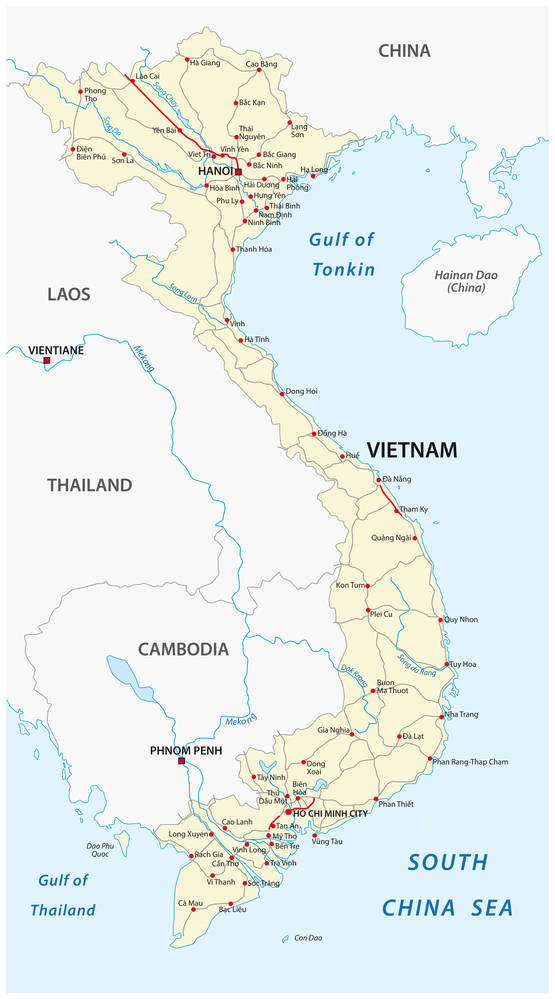
Russia’s Foreign Minister Sergey Lavrov has met with Bui Thanh Son, Vietnams’ Foreign Minister, on the sidelines of the 19th East Asia Summit. Vietnam is a member of ASEAN and has a Free Trade Agreement with Russia via the Eurasian Economic Union.
Vietnam’s foreign policy is based on balancing which allows it to maintain room for manoeuvre. In this regard, Hanoi tries to take simultaneously into account the interests of Moscow, Washington, and Beijing. So far this worked to Vietnam’s benefit making the country more attractive to foreign powers such as Russia. Given the state of affairs between Russia and the collective West, Moscow is pushing for a re-orientation of trade to Asia, and Vietnam is playing a pivotal role in facilitating this shift.
Vietnam signed an agreement to join the Eurasian Economic Union (EAEU) free trade zone in 2015 and became the first state from ASEAN to join the bloc. According to the agreement, Vietnam’s average import tariff rate for EAEU countries are about to decrease from 10% to 1% from January 1st 2025. That is likely to push Russian exports to Vietnam to record highs.
As for the structure of bilateral trade, Russian exports to Vietnam mainly consist of raw materials, machinery and energy. Food products from Russia that are in growing demand in Vietnam include condensed milk, honey, confectionery, pasta, seeds and sunflower oil. In addition, Russia is one of the most important arms exporters to Vietnam (about 70% of arms are supplied from Russia), making the country the largest buyer of Russian weapons in Southeast Asia. Vietnam exports a range of goods to Russia, including electronics, textiles, agricultural products (coffee, pepper, seafood) and footwear.
Following a significant hit in 2022 after sanctions were introduced upon Russia, bilateral trade volumes with Vietnam are now recovering. In the first seven months of 2024, trade turnover surged to US$2.74 billion, up 45.5% year-on-year, suggesting an annual 2024 total of just under US$5 billion for the full year. In 2021, bilateral trade had reached a record US$7.1 billion.
With the departure from the Russian market of such Western food producers as the Finnish dairy company Valio, an alternative solution is Vietnamese products, and this is a developing trend. For instance, the Vietnamese company TH-True Milk, the largest modern manufacturer of dairy and agricultural products in the country, announced plans to invest around US$2.7 billion in the Russian economy. This has involved the construction of farms and processing facilities in the Moscow region, Kaluga and Tyumen regions, Bashkiria, andPrimorsky Krai. Vietnam’s per capita milk consumption is growing with the dairy market expected to grow from 159.6 kilotons in 2021 to 375.1 kilotons by 2030. This will now be serviced from milk produced by Russian cows.
Another area of potential Russian investment in Vietnam is cybersecurity services. Russian technologies from large companies such as Kaspersky Lab and Rostelecom, and lesser-known Russian IT firms that are not subject to Western sanctions, are an important auxiliary tool for Vietnam.
One of the most prominent areas of economic cooperation between Russia and Vietnam is in the oil and gas sector. Companies like Gazprom and Rosneft from Russia have collaborated with PetroVietnam on several projects, both within Vietnam and in Russia. Zarubezhneft and Novatek are also exploring the Vietnam market.
A notable collaboration between the two countries has been the Kamaz and Vinamotor JV to produce Kamaz trucks in Vietnam. With Vietnam being a member of ASEAN, this opens the trade export door to other ASEAN markets such as Indonesia, Malaysia, the Philippines and Thailand. ASEAN also has Free Trade Agreements with China and India.
Russian companies have also shown interest in developing Vietnam’s railway infrastructure. Past projects have included modernizing the railway line connecting Hanoi and Ho Chi Minh City. Presently Russia and Vietnam are also interested in developing seaborn connectivity and the natural geographic area with Russia’s Far East and have been developing regular maritime services between Vladivostok and Ho Chi Minh City. This success has limited the previous geographic constraints that hindered trade volumes in the past and is helping the development of their bilateral trade flows. 2025 promises to be another year of improved trade and investment.
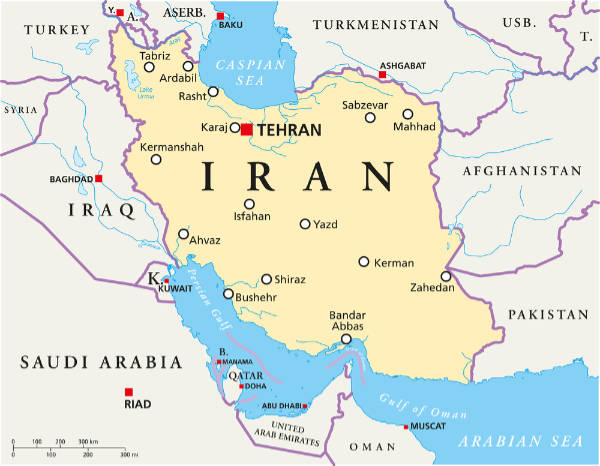
Russian President Vladimir Putin met with his Iranian counterpart Masoud Pezeshkian in Ashgabat. Their first face-to-face meeting since Pezeshkian was elected President of Iran in July, although they had telephone conversations during this time. The talks come at a key time for Middle-Eastern relations, with Israel expanding its military aggression, Yemen attacking Western shipping in the Red Sea, and US sanctions on both Russia and Iran potentially affecting EU energy needs.
The Russian delegation to the talks also included Russian Presidential aide Yury Ushakov, Presidential press secretary Dmitry Peskov, Deputy Prime Minister Alexei Overchuk, and Deputy Foreign Minister Mikhail Galuzin.
Israel
According to Pezeshkian, the situation in the region has escalated dramatically because Israel doesn’t recognize “any international legal and humanitarian standards”, while “European countries and the United States don’t want relations between countries in the Middle East to develop peacefully” he stated, reasoning that the West has been involved in creating conflict to disrupt access to Middle Eastern energy reserves (we reference our recent Russia-Syria article here to illustrate this point) in order to slow progress by non-Western economies.
Iran and Israel have exchanged some recent missile attacks after Israeli attacks killed Iranian officials in Lebanon. The situation remains tense.
Energy
Should Iran’s position as concerns Israel worsen and the two sides engage in further military strikes, this could have serious repercussions for Europe’s energy needs, especially if shipping is cut off at the Straits of Hormuz. It provides the only sea passage from the Persian Gulf to the open ocean and is one of the world’s most strategically important bottlenecks. 30% of the world’s LNG and almost 25% of total global oil consumption passes through these Straits, which are partially controlled by Iran. This would create significant energy supply chain problems, especially for Europe. It would also place Russia as one of the key energy suppliers at a time when Europe has sanctioned both Iran and Russia and banned the use of their oil and gas products. The irony will not have been lost on Putin or Pezeshkian.
Russia has subsequently issued statements warning Israel not to attack Iran, saying that the consequences of doing so would be extremely dangerous. Tehran meanwhile has urged Gulf states to stay ‘neutral’ amid the tensions. Putin meanwhile stressed that “We are actively working together (with Tehran) on the international arena and our assessments of current events in the world are often very close.”
Western Reaction
The Western media reaction to Putin and Pezeshkian’s media has been somewhat downbeat. Most have expressed concern that the two are introducing a new ‘multilateral world order’ that is likely to replace Western hegemony. There has been some slow recognition that this may now occur, leading to some political analysis about dealing with energy supply chains being in the hands of Asian-focused economies and that a reset of political thinking towards countries such as Iran, China, and Russia may now be needed. Senior NATO officials have expressed the opinion that its ‘Founding Policy’ towards Russia ‘may now be outdated.’
Putin has said that Russia wants to create a “new world order” for Moscow’s allies to counter the West and stated that Moscow supported “the broadest possible international discussion” on the emerging multipolar world and was open to discussing it in various forums, including the Commonwealth of Independent States, the Eurasian Economic Union, the Shanghai Cooperation Organisation and BRICS.
Trade
Putin said that Russia-Iran trade is demonstrating good trends and growing. “We are observing trade growth this year. True, it has yet to compensate for the certain decline of last year, however, the overall trend is good.”
During the first quarter of this year, trade turnover between Russia and Iran grew by 48% over the same period in 2023, a year in which overall commerce between the two countries lagged due to sanctions restrictions. The two sides have begun trading in their respective currencies, and are aligning financial settlement networks to get around the suspension of their SWIFT accounts.
To maintain this growth, on June 12, Russia approved a Free Trade Agreement between Iran and the Eurasian Economic Union. Apart from new infrastructure such as the North-South International Transport Corridor, the FTA can save Russian exporters an estimated US$300 million in duties and other costs in accessing the Iranian market.
Current bilateral trade is dominated by the energy sector and weapons sales, however, the overall commercial trend is expanding into the automotive, construction, and agricultural industries. Expected 2024 trade volumes are anticipated to be about US$6 billion.
Iran and Russia are poised to sign off on a 20-year Strategic Partnership Agreement worth about US$200 billion, probably to be announced at the upcoming BRICS annual summit to be held in Kazan from October 22-24.
Russian President Vladimir Putin held talks with the Chairman of the Khalk Maslakhaty (People’s Council) of Turkmenistan, and the countries former President, Gurbanguly Berdimuhamedov in Ashgabat on Friday (October 11).
“Strategic partnership relations are developing successfully between Russia and Turkmenistan, and this is largely due to your efforts, as you have laid the foundations of such relations, they are very close, trusting, we are very happy about it and will contribute in every possible way to further development” Putin said at the meeting.
He praised the Russian-Turkmen trade and economic relations and said that the two countries continue to work on new projects to develop bilateral relations within the framework of the intergovernmental commission.
According to Putin, close relations have also been maintained at the regional level. “Inter-regional ties are developing well: 60 subjects of the Russian Federation have stable ties with their friends and partners in Turkmenistan. The leaders are Tatarstan, Astrakhan Oblast, and St. Petersburg” the Russian president said.
Putin also noted that Russia is looking forward to the visit of the President of Turkmenistan to Kazan for the BRICS summit, noting that “We have good relations with the current President – both business and personal. He regularly visits Russia, recently he was in Moscow for the CIS summit, and now we are waiting for him in Kazan for the BRICS summit. In my opinion, these will be interesting and useful meetings. Many countries are coming: 35 countries have announced their participation so far.”
Turkmenistan’s political neutrality serves as a favourable basis for the development of economically beneficial relations with its neighbouring states in Central Asia as well as regional powers such as Iran. Ashgabat’s ties with Moscow fit into this dynamic. Given Turkmenistan’s geographical location and significant potential in the development of the ‘Middle’ transport and transit corridor, Russia, seeking alternative trade routes sees the growing importance of relations with Turkmenistan.
For example, the two countries stepped up work on the International North-South Transport Corridor (INSTC) to bring it to full capacity. This is opening up a wide field of opportunities for businesses related to the construction of infrastructure, service and trade and logistics centres, and the modernization of seaports. Turkmenistan is also a conduit for Russian trade with Uzbekistan and Afghanistan.
Russia also looks at Turkmenistan as the latter is one of the main gas-producing countries in the world. This could impact Russia’s gas supplies to Central Asia, China, and elsewhere. For some time, China held a monopoly on Turkmen gas purchases. However, in 2019, the Russian company signed a contract for the purchase of natural gas from Turkmengas for a period of five years – until June 30, 2024. Putin’s visit will have touched on extending this.
For Turkmenistan, this deal is beneficial mainly because it allows them to have more flexibility in negotiations with other buyers, primarily with the Chinese.
Bilateral trade has surged this year, increasing by 73% in the first half of 2024, surpassing US$700 million, according to the Russian Ministry of Economic Development. That implies that 2024 Russia-Turkmenistan bilateral trade of about US$1.4 billion for the year is likely to be achieved.
Major exports from Russia to Turkmenistan consist of machinery, equipment and vehicles, food products and agricultural raw materials, products of the chemical industry, metals and various products made from them, wood and pulp and paper products, and mineral products.
Turkmenistan exports textiles and footwear, food products and agricultural raw materials, products of the chemical industry, machinery, equipment, and vehicles, vegetables and certain edible roots and tubers, chemical threads, flat and similar threads from chemical textile materials. Turkmenistan has significantly expanded its product range and is now turning from a single-product exporter of hydrocarbons into a multi-vector trade partner. For Turkmenistan trade with Russia is critical because it guarantees growth in exports of cotton, textile and agroindustrial products, and chemical products to Russia.
Turkmenistan, in turn, is interested in cooperation with Russia in the fields of the pharmaceutical industry (vaccines), shipbuilding (construction of sea vessels for the Caspian flotilla), machine tool and automotive industries (deliveries of KAMAZ and GAZ trucks), and high-tech products (telecommunications equipment, etc.) and exploration. Overall, the Russia-Turkmenistan trade balance has not yet reached full capacity. For example, the numbers are dwarfed by China-Turkmenistan trade which in 2023 amounted to US$11 billion: exports from Turkmenistan to China accounted for US$10 billion, of which more than 90% came from natural gas supplies.
The Russian Foreign Minister, Sergey Lavrov, has been in Laos, attending meetings of the East Asia Summit, which included 18 partners, including Russia, being the United States, the European Union, Japan, Australia, South Korea, India and China, and the members of ASEAN. This also includes Brunei, Cambodia, Indonesia, Laos, Malaysia, Myanmar, Philippines, Singapore, Thailand and Vietnam. Papua New Guinea also attends as an observer.
The summit focus has been on security issues in the Asia-Pacific where, Moscow and Beijing say, the situation has deteriorated due to NATO’s intentions to militarize the region.
Over the past year, since Russia has singled out ASEAN as a priority in its foreign policy doctrine, there has been no significant developments between Russia and ASEAN as a bloc, although none were particularly expected. According to Alexander Korolev, the Deputy Director of HSE Center for Comprehensive European and International Studies, Russia continues to develop relations with individual ASEAN member countries, primarily Malaysia, whose Prime Minister Anwar Ibrahim has discussed Islamic banking cooperation at the Eastern Economic Forum in Russia and has been actively campaigning for Malaysian membership in BRICS, while Indonesia, Myanmar, Thailand and Vietnam have all expressed interest in joining.
According to Korolev, ASEAN has refrained from indulging in any discussions on Ukraine, although the subject still comes up at these bi-annual events. These however, deal with the conflict’s impact on food and energy security rather than any military or political implications.
In terms of a brief 2024 bilateral trade look between the attending East Asia Summit members and Russia, we can provide the following snapshot
Country / Region
Sanctions Against Russia
Trade Volume (USD)
Trend
ASEAN
No
22 billion
Australia
Yes
200 million
China
No
260 billion
European Union
Yes
122 billion
India
No
65 billion
Japan
Yes
10.2 billion
South Korea
Yes
20 billion
United States
Yes
27 billion
*European Union energy imports from Russia have increased slightly in 2024, although trade figures since 2021 have shown a significant decline of about USD153 billion.
**United States energy imports from Russia have increased slightly in 2024. Overall trade figures since 2021 are showing a slight improvement with no marked decline.
Indian media is reporting that two of the country’s shipyards will work on building four non-nuclear icebreaking ships for Rosatom, with the likely contact set to go to Gujarat shipyards – Indian Prime Minister Modi’s home region.
New Delhi is already considering one state-owned and one private shipbuilder for the plan, while reports state that discussions are currently being concluded by the Indian and Russian governments. The two sides are also discussing the possibility of engaging in shipbuilding and the repair of Russian vessels in India’s shipyards, as well as the training of Indian seafarers in Polar waters.
These discussions apparently took place during the first meeting of the Joint Working Group on Cooperation in the Northern Sea Route (NSR) between Russia and India. That took place in New Delhi on Thursday (October 10).
The Russian side, which included Government officials, visited the shipyards to assess their capabilities and infrastructure. Both sides are keen to finalize the issue quickly. India is a major buyer of Russian LNG from the Arctic Ocean Yamal Peninsula, but also wants to benefit from providing some of the delivery capabilities. Indian shipyards are the 12th largest in the world, however the Indian government sees the development of its shipbuilding industry as key to economic development. To compete, it wants to be able to offer designs – such as icebreakers – that very few other shipyards can offer. On Russia’s side, the Russian shipping fleet has also been targeted for mass expansion with at least 400 commercial vessels to be constructed by 2030, in addition to numerous warships.
An Indian official was quoted as saying that “Russia is ready to do everything to get the icebreaker ships constructed in India, saying that if you make these ships for us, we will give you many more ship orders”, adding that Indian authorities had extended all possible help to local shipyards to execute the Rosatom order.
Vladimir Panov, Rosatom’s special representative for Arctic development, has said that India and Russia are currently “shifting from top-level contacts to actual workflows” related to cooperation on the Northern Sea Route (NSR), expressing hope that the parties “will complete them and move on to detailing this year.”
The NSR, which stretches the entire length of Russia’s Arctic and Far East regions, is expected to become a major trade route for goods shipped between Europe and Asia. It could drastically reduce transportation times compared to traditional pathways through the Suez or Panama canals.
Freight traffic via the route has been growing steadily. Russian authorities expect annual maritime cargo flows along the NSR to reach as much as 200 million tons by 2030. They plan to boost cargo throughput at northern seaports and to increase the size of the country’s Arctic fleet.
Russian President Vladimir Putin had previously said that the development of the resource-rich Far East and the NSR are strategic priorities for the country. According to the head of state, Russia will ensure all-year navigation via the Arctic route.
On October 8, the heads of the Commonwealth of Independent States (CIS), currently chaired by Russia, met in Moscow . The leaders of Armenia, Azerbaijan, Belarus, Kazakhstan, Kyrgyzstan, Russia, Tajikistan, Turkmenistan and Uzbekistan are taking part in it.
There is a Free Trade Agreement between CIS member countries, but the CIS FTA differs from the Eurasian Economic Union (EAEU) in that CIS members enter into bilateral trade agreements with each other rather than acting as a collective bloc. Armenia, Belarus, Kazakhstan, Kyrgyzstan and Russia are also members of the EAEU. The issue of their unification has been discussed. The CIS has a total area of 20.36 million km2 and a population of about 240 million. CIS GDP is estimated at US$5.5 trillion (PPP) and the average GDP per capita is US$22,500 (PPP). The Human Development Index (HDI) is 0.74, which is considered high.
The CIS is somewhat derided in the Western media in comparison to the European Union, but the World Bank has stated that “there is no evidence that the CIS countries as a group lag significantly behind in trade openness or export levels compared to countries with similar GDP per capita and population size,” although it has suggested that the CIS’s development potential is underutilized. The Bank also stated that “the CIS free trade area is a favorable trade-enhancing bloc. It has a free trade regime, agreements on mutual recognition of standards and non-restrictive rules of origin.”
Current CIS GDP growth is estimated at 4.7% in 2024, rising to 5% next year. EU sanctions against Russia have proved economically beneficial for the CIS economies and after a period of adjustment, transit trade has shown significant growth. According to Statista, per capita income in all CIS countries will also grow in the next three years.
European Union GDP growth forecasts are for 1.2% in 2024 and 1.6% in 2025. GDP per capita figures in Europe are also declining slightly, while tax burdens are increasing.
During the summit, the leaders discussed the key tasks of cooperation between the CIS countries, as well as current regional and international problems. Following the summit, the leaders of the Commonwealth of Independent States signed a package of documents promoting cooperation in the economic, cultural, law enforcement, humanitarian and military spheres.
The next meeting of the CIS Council of Heads of State will be held on October 10, 2025 in Dushanbe.
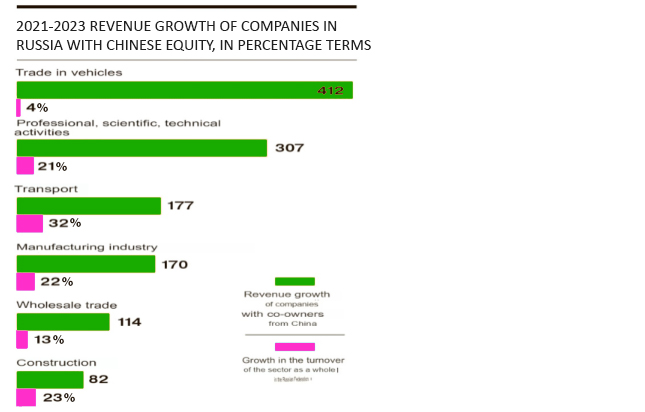
The redistribution of foreign participation in the Russian market over the past two years has resulted in Chinese investors becoming the largest source of foreign investment into the country. In the first nine months of 2024, the number of Russian registered companies with Chinese equity increased by 32% over the same period in 2023, according to SPARK-Interfax.
Much of this has been motivated by the exit of European businesses from Russia. The Chinese have simply replaced the European corporates – the vast majority of which were highly profitable and therefore proven business models – with their own investments.
Chinese investors have made up a staggering 34% of all new foreign invested company registrations in Russia during 2024, up from 13% in 2021. The volume of Chinese new business registrations in Russia is running at about 200 a month, followed by investors from Belarus with about 130. Some of those Belarus investments may be of European origin.
The growth of Chinese investment in the Russian market has coincided with a tripling of Chinese revenues in Russia, far outpacing Russia’s GDP growth rates, which are the highest in Europe.
However, the sectoral distribution of Chinese investors is uneven. Key growth sectors include the Auto sector, with the revenues of Chinese auto dealers in Russia growing by over 5 times, and its market share increasing from 24% to 43%. Russian taxi companies now routinely use Chinese models while their take up in the vehicle rentals and consumer purchases have also significantly increased.
The Wholesale sector accounts for 26% of the total revenue of Chinese invested businesses in Russia, with 38% of all Chinese foreign invested enterprises (FIEs) in this sector. These investors are coming into the massive hyperstores that used to be operated by the likes of Leroy Merlin and Ikea, however the structure of Russia’s wholesale market is changing. Trade growth in mechanical products increased 2.2 times, with a market share of 69% of the total, driven by more Russian’s turning to DIY activities and especially in home improvements. Other industrial goods grew by 1.8 times, to take 16% of the market), light industry by 2.1 times; accounting for 11%), while trade in consumer goods also grew by 2.7 times.
In the processing sector, Chinese investors in Russia saw this area grow at 2.7 times over the year, although the overall share of processing revenues in Russia fell from 20% to 18%. The leaders are the automotive industry (its share in processing increased from 46% to 73%), metallurgy (the share decreased from 17% to 7%), and woodworking (a decrease from 9% to 3%).
Among the rapidly developing sectors, scientific / technical activities and transport cumulatively accounted for just 6% of China FIE revenues, but their growth was more rapid (4.1 times and 2.8 times) in 2023 compared to 2021.
It remains to be seen what the European long-term business communities ultimate reaction to the losses they have now endured, based on political constraints imposed upon them will now be. Many of these companies have significant institutional investors.
The encouragement to exit Russia, the closure of ports and of course sanctions have destroyed the bulk of European manufacturing, revenues and profits previously obtained from the Russian market. Not only have those revenues ceased, they are highly unlikely to ever to coming back as more competitive Chinese investors have now taken their place. With Russian Corporate Income Tax rates at 20%, this has meant that 80% of European profits previously generated from Russia are also not now returning to Europe. That was European fiscal tax income, with taxes further levied in Europe on the difference between CIT tax paid in Russia and CIT tax rates due in the EU, which are generally higher.
Boardrooms in China meanwhile will be celebrating at this somewhat unexpected and unique set of Russian business opportunities and profitability.
Russia’s Minister of Transport, Roman Starovoit, and the Deputy Prime Minister Alexey Overchuk have met with the Pakistani Minister of Privatisation, Communications and Affairs of the Investment Council, Abdul Alim Khan, where the parties discussed issues of transport and logistics cooperation.
During 2023, the volume of traffic between Russia and Pakistan doubled, and in the first half of this year the growth amounted to another 25%, according to the Russian Ministry of Transport. The countries are also jointly developing a new land transport corridor that will run from Belarus to Pakistani ports in the Indian Ocean.
The parties are also developing land transportation. After an agreement on road transport was signed between Russia and Pakistan in November 2022, several truckloads of goods (mainly fruits) from Pakistan have already been delivered to Russia by road. These leave Pakistan for Iran at the Taftan-Mirjaveh border crossing, continue on the main Iranian Highway 84, cross into Azerbaijan, and continue to the Russian border at the Yarag-Kazmalyar checkpoint.
This route is expected to become another branch of the International North-South Transport Corridor. This will be coordinated with the planned railway infrastructure on the eastern branch of the North-South corridor, which passes through Kazakhstan and Turkmenistan and onto Iran.
These infrastructure and supply chain corridors area bringing other regional projects to greater significance. To fully exploit routes east, the construction of the Trans-Afghan Railway also becomes important. This would run between Uzbekistan, through Afghanistan and connect with Pakistan’s rail network and its Indian Ocean ports. Connectivity west to Pakistan and its border with Iran would be a highly strategic connection. The agreement to build the southern route, Uzbekistan-Afghanistan-Pakistan has already been signed in a US$4.8 billion deal, partially financed by China.
With the introduction of Western sanctions, Russia had to reorient itself to new markets and, as a result, to other logistics routes. Russia also needs new access to the world’s oceans, which is exactly what the Pakistani ports in the Indian Ocean will provide.

 Русский