The Russian President Vladimir Putin has met with visiting Azerbaijani President Ilham Aliyev in Moscow. The main focus of the meeting was the Azerbaijan-Armenia peace process, with both sides working on the final conclusion of a peace treaty. They signed regulations on the joint activity of Armenian-Azerbaijani border delimitation commissions on August 30, 2024. Both countries have launched their respective parliamentary procedures to approve the document.
A Russian peacekeeping contingent had been deployed to the Karabakh region in October 2020 after the end of Armenian-Azerbaijani hostilities, however given the détente, was able to withdraw in June this year.
Russia would prefer normality in Armeni-Azeri relations, both are members of the Commonwealth of Independent States (CIS) trade bloc that Russia wants to expand, and both are key for developing parts of the International North-South Transportation Corridor (INSTC). In addition to this, neighbouring Georgia is about to have its own parliamentary elections, the outcome of which could affect Armenian and Azerbaijani relations with the breakaway Caucasian Republics of South Ossetia and Abkhazia. We discussed these issues here and here.
In terms of Russia-Azerbaijani trade, Putin stated that “We informally touched upon the current status of our relations. I want to note at once that relations are developing positively. There are many good, interesting projects in the field of energy and infrastructure development. They are all promising. They are all real, relevant, bilateral and multilateral.”
Bilateral trade reached US$4.3 billion in 2023, an increase of 17.5%. Much of this was due to the joint work of both parties to increase the volume of freight and transit traffic within the INSTC and the subsequent expanding of capacity at the Russian and Azerbaijan borders.
Moscow’s re-orientation of commercial ties from the EU to Asia and the Middle East benefits Russia’s neighbours and Azerbaijan is no exception. The latter serves not only as a market for re-export to Russia, but also as a developing transit route between Russia and Iran in the INSTC. Azerbaijan is the western branch out of three routes making up the INSTC and it links Iran’s and Russia’s most populous and relatively industrialized provinces expanding the transit trade between these two substantial Eurasian actors.
Russian exports to Azerbaijan mainly consist of wheat, meslin, crude petroleum, crude petroleum products derived from bituminous minerals, timber, various gaseous hydrocarbons, mineral or chemical fertilizers. From November 2022 Russia also began selling gas.
Azerbaijan sends to Russia mostly animal products, plastics, rubber and rubber, machinery, equipment and apparatus, mineral products, and oil.
Exporting to Azerbaijan is easily carried out from all major cities across Russia, with interregional cooperation is the engine for the development of Russian-Azerbaijani trade and economic alignment. For instance, Azerbaijan is regularly visited by delegations from Adygea, Komi, Tatarstan and North Ossetia-Alania, Khanty-Mansiysk Autonomous Okrug-Yugra, Astrakhan, Kaliningrad, Nizhny Novgorod, and the Rostov regions, as connectivity from the Volga River region to the Caspian Sea and onto Azerbaijan’s Baku port remains dynamic.
A critical region for Russia-Azerbaijan trade cooperation is Dagestan. The cargo turnover between the latter and Azerbaijan by rail has tripled since the removal of restrictions on the movement of nightly freight trains. Cargoes are mostly heading to the Middle East, which can access the region via Iranian ports. The transit of goods through Azerbaijan to Russia has quadrupled since 2022.
The Russian President Vladimir Putin has met with visiting Armenian Prime Minister Nikol Pashinyan in Moscow, shortly after hosting Azerbaijan President Ilham Aliyev. The main focus of the meeting was the Armenia-Azerbaijan peace process, with both sides working on the final conclusion of a peace treaty. They signed regulations on the joint activity of Armenian-Azerbaijani border delimitation commissions on August 30, 2024. Both countries have launched their respective parliamentary procedures to approve the document.
A Russian peacekeeping contingent had been deployed to the Karabakh region in October 2020 after the end of Armenian-Azerbaijani hostilities, however given the détente, was able to withdraw in June this year.
Russia would prefer normality in Armenian-Azeri relations, both are members of the Commonwealth of Independent States (CIS) trade bloc that Russia wants to expand, and both are key for developing parts of the International North-South Transportation Corridor (INSTC). In addition to this, neighbouring Georgia is about to have its own parliamentary elections, the outcome of which could affect Armenian and Azerbaijani relations with the breakaway Caucasian Republics of South Ossetia and Abkhazia. We discussed these issues here and here.
Pashinyan said of recent Armenian dialogue with Russia that “I am very happy to note that our political dialogue has been quite active in the past few months. Russian Prime Minister Alexey Overchuk visited us; we held a meeting of the intergovernmental commission and thoroughly discussed all bilateral issues. We held a meeting of the EAEU intergovernmental council in early October. I discussed cooperation issues and the Armenian-Russian agenda with Russian head of government Mikhail Mishustin. I am pleased to have a chance to summarize these discussions today.”
While in Moscow, Pashinyan will also take part in the Commonwealth of Independent States (CIS) annual summit. The CIS leaders are expected to sum up the results of Russia’s CIS chairmanship and make plans for 2025, holding one-on-one and expanded talks and signing a number of documents.
In terms of bilateral trade, as Russia reorients its foreign trade from its previous close ties with the European Union, Armenia has been benefiting significantly in acting as a convenient re-export hub. The country has also received thousands of Russians who have been relocating to take advantage of this and creating businesses of varying sizes. This resulted in increased money transfers between Russian and Armenian banks over the past two years totalling a staggering US$3.6 billion. The withdrawal of Western companies from the Russian market has also made it possible for Armenian suppliers to expand their businesses across Russia.
Bilateral trade turnover reached US$7.3 billion in 2023, a record high, partially driven by European manufacturers wanting to sell to the Russian market but unable to be seen doing so directly. Putin stated at the meeting that 2024 trade figures wee likely to hit US$14-16 billion. He also stated that Russian investors had placed about US$4 billion into the Armenian economy in terms of new business startups and Joint Venture partnerships.
Putin also noted that Armenia benefits from participating in the Eurasian Economic Union (EAEU), saying that over the last decade, Yerevan’s trade turnover with the countries of the economic organization increased fourteenfold.
However, there are some frictions, including controversies over Armenia’s participation in the Collective Security Treaty Organization (CSTO). Armenia announced in May that it would not partake in the future financing of the CSTO. This is a Eurasian bloc that also includes Belarus, Kazakhstan, Kyrgyzstan, Russia and Tajikistan. It came to the aid of Kazakhstan in 2022 when civil unrest threatened the political stability in the country. Armenia has also suggested it might hold a referendum to assess support for joining the European Union, another move that has not gone down well in Moscow but might be an attempt to extract some trade concessions.
The boom in trade continues however, with H1 2024 volumes double those of 2023.
Armenia’s re-export capabilities have proved significant in supplying Russian consumers with products and brands no longer sold directly in Russia, and are well reflected in the changing structure of bilateral trade. Prior to 2022, Armenia exported mainly agricultural products, raw resources, and a limited amount of technologies, however in 2022 the situation drastically changed.
Aside from the plethora of third party re-exports from across Europe and Turkiye, Armenia itself exports various food and agricultural products, textiles, precious metals and stones, machinery, equipment, and chemical products to Russia. Armenia imports energy from Russia (oil, gas and petroleum) in addition to precious stones and gold, as well as a variety of industrial products.
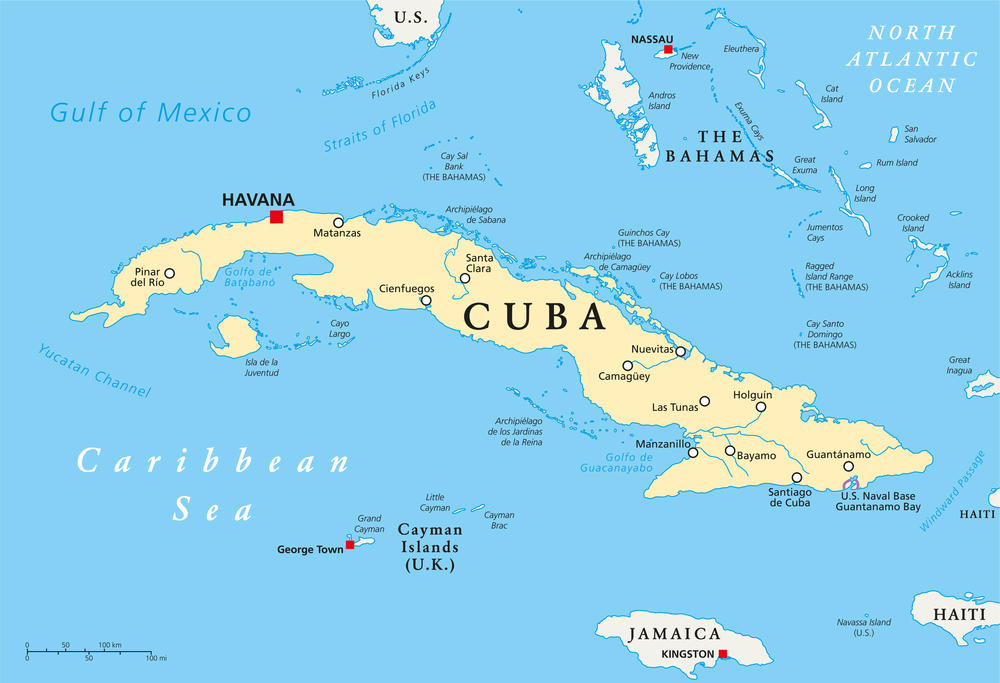
October 25 Update: Cuba has now been granted ‘BRICS Partner’ status. See more here.
The Cuban government has made an official request to join the BRICS bloc in a letter sent to Russian President Vladimir Putin, according to Carlos Pereira, the director general of bilateral affairs of the Cuban Foreign Ministry.
He said that “Cuba has officially requested to be included in BRICS as a ‘partner country’ in a letter to Russian President Vladimir Putin, who is the 2024 interim chairman of the association, which is strengthening its position as a key player in global geopolitics and the hope of the Global South.”
The Russian Ambassador to Cuba, Viktor Koronelli has previously said that Moscow expected to see a delegation from Cuba at the BRICS summit in Kazan. The country’s president Miguel Diaz-Canel subsequently received an invitation from Putin.
The BRICS group was originally created in 2006, while Russia assumed the rotating BRICS presidency again this year. This began with the accession of new members to the association — in addition to Russia, Brazil, India, China and South Africa, it now also includes Egypt, Ethiopia, Iran, the United Arab Emirates and Saudi Arabia. The 2024 Russia’s BRICS presidency is held under the motto of ‘Strengthening Multilateralism for Equitable Global Development and Security.’
Cuba is a longtime ally of Moscow. Last November, the two countries signed a seven-year program of trade and economic cooperation. It is aligned with Cuba’s National Development Plan until 2030 and provides for expanding cooperation in trade, economic, scientific and technical spheres, stimulating the growth of trade exchange and investment, and creating conditions for effective rapprochement of enterprises of the two countries. Joint initiatives include projects to build solar stations in Cuba, a full-cycle agro-industrial enterprise for the cultivation and processing of sugar cane, fertilizer production, as well as various infrastructure projects such as the revamping of its railway system.
Also part of this program are the construction of three units at the East Havana TPP in Santa Cruz del Norte and one unit at the Maximo Gomez TPP in the port of Mariel. The capacity of each unit will be 200 MW. In Mariel Port (Artemisa province), Cuba has created the country’s first free economic zone, which is attractive for Russian and Cuban manufacturers wishing to export products to other markets in Latin America. In addition, Zarubezhneft and the Cuban state company Cupet are implementing a project to increase oil production at the Boca de Jaruco field in northwestern Cuba. Energy will be an important part of future development to raise Cuba to self-sufficiency.
Cuba is becoming a popular tourist destination , with more than 120,000 Russians visiting in 2023 and arrivals increasing by 67% in the first half of 2024. Direct air services between Moscow and Havana resumed in December 2023, while starting October 13, Rossiya Airlines will also provide direct scheduled flights to Havana. Mir cards are accepted in Cuba and can be used to pay in most hotels in Havana, Varadero, Cayo Coco, Cayo Santa Maria, Cayo Largo, Holguin and other resorts.
Russia is accelerating the dedollarization of trade relations with a number of Latin American states with which Russia maintains close economic ties. “This is also going on within the BRICS framework, there are ideas to introduce alternative payment platforms,” said Alexander Shchetinin, director of the Latin American department of the Russian Foreign Ministry. According to him, the forms of dedollarization can be different, but the main priority is the development of mutually beneficial cooperation.
The two countries also cooperate in agriculture, particularly in the supply of wheat. Agricultural products have traditionally dominated Russian imports from Cuba and account for more than 60% of Russian exports. Russia is also seeking maintenance contracts to help rebuild infrastructure facilities built during the Soviet period.
Other developments pointing to a significant improvement in bilateral trade in the future include Cuba’s entry into the Eurasian Economic Union as an observer country, a status that will allow it access to other EAEU member countries and eventually sign a free trade agreement.
Bilateral trade figures have grown significantly and are already close to the US$1 billion mark. Sergei Baldin, Russia’s trade representative to Cuba, said Russian exports to Cuba increased 7.9 times year-on-year in 2023. Cuba, for its part, has more than tripled its exports to Russia, signalling a blossoming exchange of goods and services.
Among the typical Russian goods exported to Cuba are transportation and energy equipment. Imports include such goods as sugar, fruit, rum and cigars.
Brazil and China, both full BRICS members, along with Venezuela, who has also applied to join the group, are among Cuba’s largest trade partners.
Syria is negotiating to join BRICS, according to Bashar Jaafari, the Syrian ambassador to Russia. “We are very interested in joining BRICS and Syria is in serious negotiations to join.” he said at the “North Caucasus: New Geostrategic Opportunities” event held last week in Pyatigorsk.
The annual BRICS Heads of State meeting will be held from in Kazan. The BRICS group has expanded over the past year from Brazil, Russia, India, China and South Africa, to now include Egypt, Ethiopia, Iran, Saudi Arabia, and the UAE, all of whom became full members on January 1.
Syria has undergone prolonged traumatic events over the past decade, with civil war and Western military interference and sanctions decimating its economy. It should be an important regional energy player, with an estimated 8.5 trillion cubic feet of gas and 2.5 billion barrels of oil. It has a population of about 25 million and a GDP today of US$11 billion. In 2010, it had a GDP of US$252 billion, illustrating its massive decline. In terms of restructuring, China has been involved while Russia is interested in its energy industry. Investing in Syria’s shattered energy production and rebuilding its economy and infrastructure will be a major task. Syrian reconstruction is estimated to require about US$300 billion in investment. As an aside, that compares with the US$160 billion the EU has provided to support the Ukraine conflict, with the EU now also short of energy supplies. That might not have been the case had it not become geopolitically involved in the Syrian conflict.
The current bilateral trade volume between Russia and Syria is about US$650 million annually. Russian exports to Syria include grains, medicines, and raw materials, while Syria exports fruits, nuts, salt, sulfur, soil, stone, lime, and cement. In August, the two countries Central Banks stated that they are discussing a transition to settlements in their respective national currencies in bilateral trade.
Syria’s top ten trading partners include BRICS and BRICS-friendly countries such as China, Egypt, Iraq, Lebanon, Russia, Saudi Arabia, and Turkey meaning that despite Syria’s problems, access to its energy reserves and opportunities in matching that to infrastructure development means its BRICS negotiations and potential membership application may be received favourably.
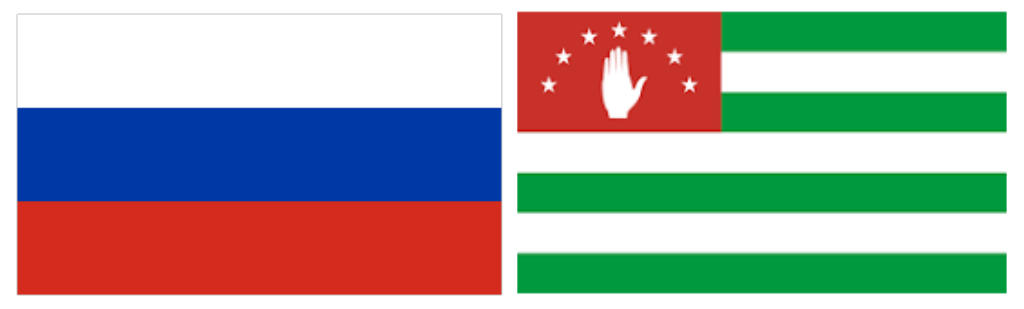
Russia’s Foreign Minister Sergey Lavrov has held bilateral meetings with Sergey Shamba, the Foreign Minister of the Republic of Abkhazia.
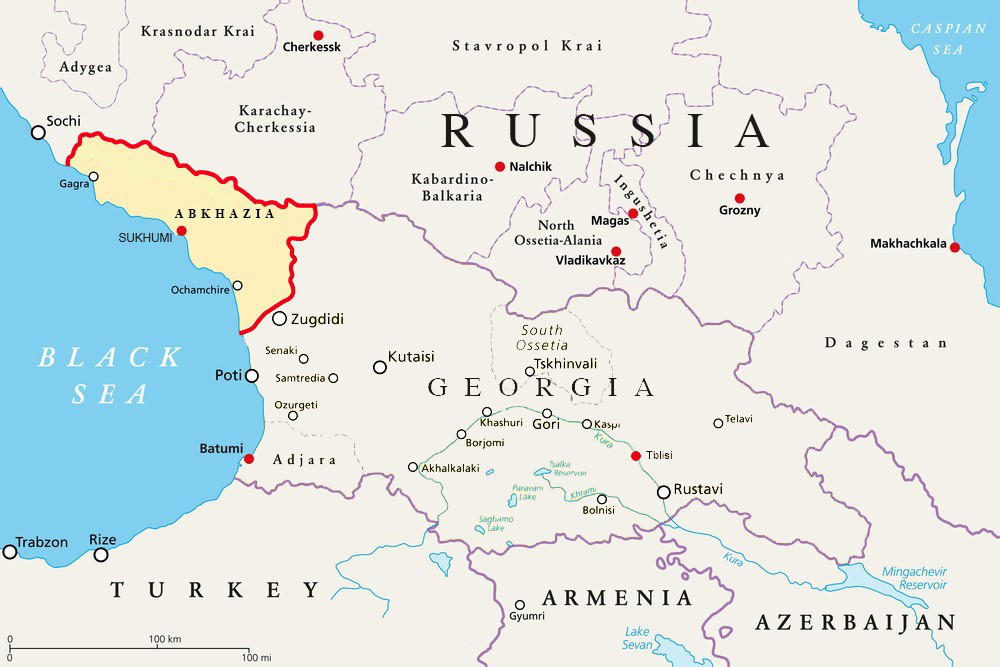
Abkhazia is a semi-recognised independent country that was formed in 1993. It had previously been a province of neighbouring Georgia, however following mass civil unrest and Georgian military action against ethnic Abkhazians, Russian troops were called in to restore peace. Abkhazia was then recognised as a separate country by Moscow, and its border with Georgia closed. A second war resulted in 2008, again resolved by Moscow, who now have troops stationed on the Abkhazia-Georgia border.
The status of Abkhazia as an independent state is not universal, with the majority of UN members not recognising the country. Georgia still claims Abkhazia as its territory but has not been in effective administrative control for over 30 years.
Abkhazia has a population of about 250,000. Its capital city is Sukhumi.
Lavrov and Shamba discussed the latest overtures from Georgia, which is undergoing parliamentary elections on October 26. Georgia has moved politically closer to Moscow in recent years, with the Georgian Dream political party, currently ahead in the polls, stating that they would apologize to Abkhazia for the previous conflicts if it wins nationwide elections next month.
That has led to discussions as to whether Abkhazia might eventually be returned to Georgia.
Lavrov has recently said that “They (the Georgian Dream party) have said that they want historical reconciliation. What form this reconciliation takes is up to Abkhazia to decide. If there is interest from all sides in normalizing these relations, we are ready to help.”
It is also possible that Georgia, which has had its application to become part of the European Union delayed almost indefinitely, may yet rejoin the Commonwealth of Independent States (CIS). It left the organisation in 2008 in the aftermath of the Russian-Georgian war, which itself was instigated by Georgian activities in Abkhazia. Both Armenia and Azerbaijan to the south and east are full members and it would help unite pan-Caucasian trade ties.
Russia provides assistance to Abkhazia in ensuring security, socioeconomic progress, and developing its foreign policy and trade. About 40% of Abkhazia’s annual budget is financed by Moscow. Its annual GDP is about US$500 million.
However, earlier this month, Moscow suspended a major tranche of funding for Abkhazia after local leaders refused to implement several pro-Russian policies. That also complicates matters given that Abkhazia is financially dependent on Russia to pay salaries and pensions. Abkhaz Foreign Minister Sergey Shamba also warned that Moscow would switch to charging the region commercial rates for energy, which has historically been heavily discounted.
The best-case scenario for Moscow, Sukhumi and Tblisi would be some form of reconciliation, as Abkhazia would cease to be a drain on Russian resources and Abkhazia could revert back to its traditional and more obvious trade partnership with Georgia and its markets. These include Armenia, Azerbaijan, Turkiye and the potential for Abkhazia to be linked with the International North-South Corridor, which further links east to Central Asia, and south to Iran and South Asia.
Abkhazia’s fertile land and abundance of agricultural products, including tea, tobacco, wine and fruits (especially tangerines), have secured a relative stability in its economy, although trade with Georgia and beyond would significantly improve matters were this to happen. Tourism – mainly from Russia at present – is also a major industry.
Russia’s Foreign Minister Sergey Lavrov has held bilateral meetings with Akhsar Dzhioev, the Foreign Minister of the Republic of South Ossetia.
South Ossetia is a semi-recognised independent country that was formed in 1990, when the South Ossetian Autonomous Oblast, established by Soviet authorities in Moscow in 1922, declared independence from the Georgian Soviet Socialist Republic in September 1990. That in turn led to Georgian military action against ethnic Ossetians in 1992-93. Russian troops were called in to restore peace. South Ossetia was then recognised as a separate country by Moscow, and its border with Georgia closed. A second war resulted in 2008, again resolved by Moscow, who now have troops stationed on the Ossetian-Georgia border.
The status of South Ossetia as an independent state is not universal, with the majority of UN members not recognising the country. Georgia still claims South Ossetia as its territory but has not been in effective administrative control for over 30 years.
South Ossetia has a population of about 60,000. Its capital city is Tskhinvali.
Lavrov and Dzhioev discussed the latest overtures from Georgia, which is undergoing parliamentary elections on October 26. Georgia has moved politically closer to Moscow in recent years, with the Georgian Dream political party, currently ahead in the polls, stating that they would apologize to South Ossetia for the previous conflicts if it wins nationwide elections next month.
That has led to discussions as to whether South Ossetia might eventually be returned to Georgia.
Lavrov has recently said that “They (the Georgian Dream party) have said that they want historical reconciliation. What form this reconciliation takes is up to South Ossetia to decide. If there is interest from all sides in normalizing these relations, we are ready to help.”
Russia provides assistance to South Ossetia in ensuring security, socioeconomic progress, and developing its foreign policy and trade. About 80% of South Ossetia’s annual budget is financed by Moscow. Its annual GDP is about US$120 million.
Lavrov stated “I would like to strongly reaffirm the importance of ties with the Republic of South Ossetia, our close friend and ally – this is a time-tested strategic partnership we are consistently pursuing in full compliance with the 2015 Treaty on Alliance and Integration. We are building a common defence space. Our economic, social and humanitarian cooperation is also improving.
We have gratefully taken note of the support that the people of South Ossetia have been providing to Russian citizens targeted by Ukraine’s terrorist attack on the Kursk Region. Please convey our special gratitude to the management of the South Ossetian State University for allowing students from the Kursk Region to take study there without having to pay any tuition fees.
We will continue to assist our friends in ensuring security, achieving economic growth, social and cultural progress, and in strengthening the South Ossetian state in other ways, as stipulated by bilateral agreements. We can only move forward from here. Our decisions of 2008 are not subject to revision. The Russian-South Ossetian Intergovernmental Commission on Economic Cooperation is implementing our trade and investment programme. This is an important element in strengthening our relationship at its core.”
The best-case scenario for Moscow, Tskhinvali and Tblisi would be some form of reconciliation, as South Ossetia would cease to be a drain on Russian resources and could revert back to its traditional and more obvious trade partnership with Georgia and its markets. These include Armenia, Azerbaijan, Turkiye and the potential for South Ossetia to be linked with the International North-South Corridor, which further links east to Central Asia, and south to Iran and South Asia.
South Ossetia economy is primarily agricultural, although less than 10% of South Ossetia’s land area is cultivated. Cereals, fruit and vines are the major produce. Ossetian wines are regarded as some of the region’s best. Forestry and cattle industries are also maintained. A number of industrial facilities also exist, particularly around the capital, Tskhinvali. The majority of the population survives on subsistence farming, although the local production of flour has improved after wheat fields have been increased to 1,500 hectares.
How Georgia’s own political destiny plays out in the near future will have a considerable impact on South Ossetia, especially if some form of reconciliation can be put into place.
Or: Is This Article Russian Propaganda or an Intellectual Debate? You Decide.
The extraordinary lengths to which Europe has gone to support Ukraine – and in turn, seek to turn public support for the countries leadership and therefore pursue a highly aggressive anti-Russian stance are unprecedented over the past century.
Never to such an extent has Russia-phobia been hyped up to such an extent – not even during the Cold War, when the entire world came very close to nuclear Armageddon. It wasn’t just limited to the Cuban missile crisis either – we can gain a glimpse of more recent unease between the Russia and the United States from viewing the Frankie Goes To Hollywood “Two Tribes” hit single, released in 1984.
However, that dynamic has shifted. During that era, the world was concerned about war between the United States and Russia, with most of the rhetoric – President Reagan’s infamous ‘joke’ “We begin bombing Russia in five minutes” being a scary example of US black humour of the time. Needless to say, it didn’t go down well in the Kremlin, with its leaders branded ‘humourless’ – which one would be given such comments.
Three things have changed since then. Firstly, the rise of the internet as an instant, global method of exchanging information. Secondly, European attitudes towards Russia. And third, shifting geopolitical dynamics. These are affecting Europe in ways never seen before. And while there are some potential positives within these changes, the manner in which they have been adopted appears to have created long lasting damage to Europe in particular. In this article we examine these issues and try and make sense of the dynamics and what they imply.
The Rise of Digital Communications
The internet has revolutionized the way in which the world’s popular community shares information. Intelligence, opinions, information – and misinformation – can now all be exchanged and distributed within milliseconds. Interestingly, the world’s most popular platforms for doing so are all US based. Hence the likes of X (Twitter), Facebook (Meta) and Linked In have become global giants. Other countries have their own versions of these, including China and Russia, however these are essentially regionally restricted due to their language usage. The global community tends not to be able to read either Chinese characters or Cyrillic, but they do – even as a second or even third language – understand English. This means that the global dominance of English-speaking platforms will continue.
Naturally – and almost inevitably – the United States, UK and much of Europe (where English is a common second language) and their governments – including information and security agencies – have looked at this advantage with some abandon. The use of these platforms to spread misinformation has become weaponised. This is just one reason that these social media networks have been banned by some countries, and especially those who have been critical of, or are regarded as ‘competitors’ (China) or ‘threats’ (Russia). It has also been interesting to observe the opinions of China gradually shifting from ‘competitor’ to ‘threat’ over the past two years. Clearly, a planned narrative is in place when it comes to influencing public opinion – still required in both democracies and autocracies.
The rise – and fast speed of this sharing – a technical advance – may however have already overtaken human capabilities. The human brain is often described as an excellent ‘thought-processing machine’, but it has only evolved to process naturally occurring levels of information. Some decisions made take time, such as the developing of a relationship with another person, or what to cook for dinner. Others are immediate, such as the emergency responses such as being surprised by a Lion and (hopefully) running away.
In between these two formats are the consideration thought processes, that are more analytical, experience based and allow us to form considered, objective opinions as regards a measured reaction. But what has happened with the rise and speed of digital information availability is that our brains are constantly being pressured with making ‘immediate’ opinions – the emergency mode. The problem is that this constant barrage of stimulation becomes addictive. It has also been shown to rewire our own brains to accept shorter, faster bursts of decision making and the underlying satisfaction the brain also provides in having done so. The downside is that the brains’ ability to concentrate for longer periods – the consideration process – is diminished. Numerous medical studies have confirmed this effect, such as here, here and here. Both governments and the media platforms concerned know this. It benefits both – media platforms generate more advertising income from social media addicted views, while governments use it as a form of opinion control. The internet has become the ultimate capitalist tool – and it is staggeringly effective.
In the case of anti-Russian information, this has resulted in actions never before attempted or experienced. While the Russian President, Vladimir Putin, has received most of the brickbats handed out by the West, ordinary Russians have been targeted as well, in a significant departure from what was previously deemed as acceptable behaviour.
Business
There are several examples, with most bilateral focal corporate points being placed in abeyance. The Russo-Britain Chamber of Commerce (RBBC) which had existed since Russian Imperial times and continued even during the height of the Cold War didn’t just suspend its operations – it was subjected to a targeted media campaign to discredit it, including attacks on a member of the Royal Family, the British Ambassador, and her husband. For the first time in over 100 years, it has ‘indefinitely’ suspended operations. A business bridge between British and Russian companies, its function has now been taken over entirely by the British government. The British government now controls all access to Russian trade. British ‘free enterprise’ as concerns Russia has been removed. This is actually the methodology utilised by State-controlled economies – such as Communist nations.
The Arts
In the arts, performances by Russian artists have been cancelled throughout the Western world. There are multiple examples, but we illustrate a few concert examples that never happened here, here, here,here, and here.
How does this compare with the Russian viewpoint? Interestingly, there has been no cancelling of European works in Russia. A simple look at the October Mariinsky Theatre website playbill will reveal European composers such as Adam, Debussy, Delibes, Leoncavallo, Mozart, Puccini, Rossini, Verdi, and Wagner, and that’s just in week two.
History
Europe’s cancel culture has also impacted the great thrones of learning – museums. More sad examples are here, here and here.
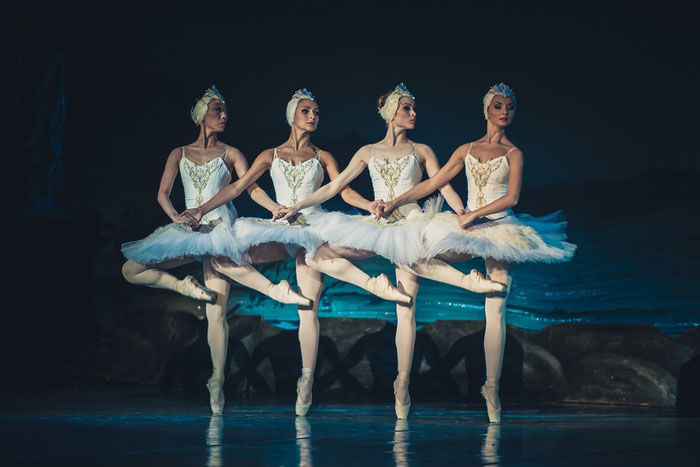
There’s even a specific ‘cancel Russia’ website which states that “Russian culture is a colonialist culture, and no support whatsoever should be given to Russian artists, writers, or musicians and their exhibitions, publications, or concerts.” We’re not sure which historical academic – if any – provided this opinion and that it is the only correct one (it isn’t). However it takes the popular opinions against Russia into past history and decides that even 18th and 19th century arts are now 21st century subversive. This is getting very close to the real destruction of art, culture, and history, and is just a small step to methods deployed by the Nazi’s against the Jews. Perhaps someone could explain why watching “Swan Lake” is an endorsement of Russia’s contemporary foreign policy.
Sports
Sports of course were one of the first activities to fall. Russia, after hosting an excellent 2018 tournament, were subsequently barred from completing their 2022 World Cup soccer finals rounds (they were on track to qualify) and are completely excluded from the 2026 event. The Olympics, likewise, has completed its past two Games without Russian athletes, which somewhat diminishes the competition. Are these ‘so easy to cancel’ attitudes really necessary? Or desirable? Is a Russian ballerina or concert pianist really a threat to European security? Is it really wise to cut off cultural and historical relations from a country that itself has been part of European culture and history for hundreds of years in such a manner? Has any real contemplative thought gone into this? Or is it led by the fast reacting speed of internet opinion and distribution? These are debates that should be taking place. The problem in Europe is that when they are – the cancel culture harasses the organisers. Is this real freedom of expression? Freedom to voice one’s own opinion?
Media
Most Russian media has been blocked in the West, typically under the guise that it mirrors the Russian government views and is therefore both biased and misinformative. Curiously, very few Western media outlets are barred in Russia, even without VPN. Those that are include the BBC. However, CNN, The Washington Post, New York Times, Financial Times, Economist and nearly all well-established Western media outlets are all freely available for view, without a VPN, in Russia. It’s an unusual thing to say given the ongoing autocratic vs. democratic freedoms debates so beloved by the West, however media freedoms and the ability to view what one wants, unrestricted from government interference, are rather better in Russia than they are in Europe.
Travel
European nations, including the UK and United States, has imposed ‘unofficial’ barricades for ordinary Russian (and Belarusian nationals) to obtain visas to visit. They are either now routinely denied, or valid for very limited times. The West also barred all Russian airlines from entering their territory, meaning there here are no direct flights between EU countries and Russia. Russian aircraft use has also been sanctioned.
There has been a considerable impact; Ylva Johansson, the European Commissioner for Home Affairs, has stated that there has been an 88% drop in the numbers of Schengen visas issued to Russian nationals, as they represent ‘a security risk’. Be that as it may, Russian tourists have changed their travel plans – 24 million Russians are expected to have taken overseas trips by this year end – with the vast majority now heading to Asia, and not Europe. The damage to the European tourism industry has been immense.
In contrast, Russia has not placed visa restrictions on European nationals – in fact it has made the application process simpler and less time consuming – by introducing an official online service. Meanwhile, foreign visitor numbers to Russia have increased, mainly due to the introduction of visa-free services to several Asian countries. 2024 figures are expected to show about 16 million foreign visitors to Russia for 2024.
Trade
Some 22,500 sanctions have been imposed by the West upon Russia, which in turn has become the most-sanctioned country in the world. According to the Center for a New American Security, Russia now accounts for 61% of all sanctions issued by the United States. That compares with perennial bad boys Iran (14%) and North Korea (2%).
In terms of restricting Russia’s ability to access Western-made products, these have had little effect. Other third-party suppliers just filled the gap, buying and selling between the West and Russia. There is nothing that cannot be obtained in Russia today, from the latest Porsche to French wines, the latest iphone or English mustard.
What has impacted Russia negatively has been the secondary sanctions issue, in which Washington has threatened other countries with sanctions – and especially disconnection from the SWIFT payments system – if they process payments to and from Russia. While this has slowed trade growth – and especially with China – it hasn’t stopped it. What it has done however is two-fold – it has ushered in a profound non-Western distrust in how the United States in particular conducts its foreign policy and trade, which will lead to negative repercussions for the US down the line. It has also ushered in the beginning of alternative payment systems, which for Russia now has become a technical priority.
This can be expected to materialise as early as next year. We know this because Russia has passed legislation allowing its Central bank to trade in cryptocurrencies and has ordered its commercial banks to offer digital transfer services to all their clients from July 1. China meanwhile has actioned nearly US$1 trillion in digital, non-SWIFT payments over the past 18 months. That amount alone is about 3.5 times the total volume of its annual trade with Russia.
The longer-term impact will be increasing de-dollarisation, also significantly affecting the euro. It was notable that the New York based Nasdaq advised clients of a need to off-load dollars.
In overall trade terms, the EU has overseen – quite deliberately – a substantial decrease in its trade volumes with Russia. In 2021, the total trade in goods between the EU and Russia amounted to €257.5 billion. The EU’s imports from Russia were worth €158.5 billion, while EU exports were worth €99 billion.
That has shrunk to about €70 billion worth of imports from Russia for 2024, while the EU will have exported an estimated €29 billion worth of goods – a 70% total decrease in its supplies to Russia. In short, the EU decimated its exports industry while economically restraining its own manufacturing capabilities – most of its imports from Russia were cheap energy, powering its industrial base. As a result, the EU’s energy costs have soared while industrial productivity has declined. The EU’s overall PMI numbers (these measure productivity: below 50 is retrenchment, above is expansion) are an average of 45, in Russia (with no energy shortages) they stand at just over 52 – seven full percentage points higher.
These EU exports – a large part of which were in significant supply chain and added value industries such as auto manufacturing – will never come back. The Chinese auto manufacturers stepped into the gap left by exiting EU models and now represent the largest foreign auto brands available in Russia.
The other issue is economic reality in the political arena. The EU simply isn’t as important to Russia as it once was. While Russia made moves to engage with friendlier countries, the EU has quite deliberately diminished its own trade importance to Russia. Brussels self-importance has significantly damaged its trade reputation and vitality in Moscow. The EU is simply not worth what it once was to Russian trade aspirations.
Meanwhile, what about the average Russian consumer? Well, Russian domestic replacements are proliferating, while angry fashionistas are chopping up their Chanel and LV bags and buying high end Asian brands instead. It’s never a wise move to mess with a Russian girl.
Political Attitudes
The general social media attitude towards ordinary Russians has also changed. On one hand, Western media has portrayed Russia as run by a mafia and having rigged election results. Yet on the other, ordinary Russians are blamed for ‘putting Putin in power’ and somehow culpable for the situation in Ukraine. That is unfair. The West can’t have it both ways.
There is also an attitude that by imposing bans on exports, refusing visas, and generally being deliberately difficult towards ordinary Russians, this means that somehow the Russian population will instigate a revolution and depose Putin. This is both naïve – and implies a civil war. But Russia has been here before. Its previous revolution resulted in about 10 million deaths. A new one would almost certainly result in far greater numbers of casualties and usher in fighting across Eurasia. The more frenetic media commentators suggest that dead Russians are preferable to dead Ukrainians. The rhetoric, in choosing who has the right to live or die, based upon their nationality is morally abhorrent. The observation that all Russians – men, women, children, grandmothers and babies – are collectively responsible for the deaths of Ukrainians ushers in the concept of national guilt – charges laid against the Germans and the rise of the Nazi’s. The question to ask – and many would say yes – is whether Russia really is a Nazi style state? But Putin doesn’t appear to be holding mass ideological rallies – and has suggested numerous times here, here and here amongst several other occasions, that he wants to negotiate a settlement and regain peace. Yet this is near impossible when Ukrainian President Zelensky passed a Ukrainian law expressly forbidding this.
Such attitudes have spread across Europe. No-one is talking to Russia – and to be seen to be even talking to a Russian has become politically suspect. Russians living in Europe and the United States have been ostracised, as the Jews once were. Western attitudes have now spread to social intolerance, and discrimination. Russians in the West now face social ostracism, bias, and outright antagonism. Its hard to feel sorry for Oligarchs, but there have also been some highly legally dubious confiscation of assets – some of which will take years to be resolved. Yet this discrimination affects ordinary Russians as well. Is it right to place the blame for the current geopolitical situation amongst all Russian nationals? Women, Children and Babies?
The outcome is twofold – the demonisation of a specific nationality, including the sparks of implied violence – and a complete degradation of anything Russian. This is borderline racist. The questions the EU should really be asking itself is whether this is the type of society it wants to encourage. It may surprise many, but Russia has decided it does not.
There are arguments against that, with pointers to LGBTQ rights, however the real issue here is that Russia is a conservative country with a fundamental traditional makeup. Russian social society generally doesn’t care – and has no interest – in what goes on in private bedrooms – homosexuality is not illegal – yet it doesn’t want such sexual liberations paraded in public either. Russia has found a balance that suits its own society. Western liberals appear to think this is backward and demand change. In Russia, a country in which they do not live. It is an old colonial attitude – Europe knows best. But does it? And who is next in line for this special kind of Western treatment? China? Africans? Muslims? Where does this stop? Or does it progress?
Aftermath
In a word: Isolation. In fact, this is exactly the term that the West – including Europe – uses to describe Russia’s position in global affairs. Yet this itself is a falsehood. While the much repeated, claim that 143 members of the 195 United Nations members voted negatively towards the initial reaction to Russia’s conflict – termed an invasion – of Ukraine, that was at the very beginning of the conflict, when Western diplomatic and media exposure condemning it were at their zenith. That vote, crucially, did not call for action.
Two years on, and the situation has changed. There is now a greater and more in-depth understanding of the reasons for the conflict, and more cause for non-Western countries to be cautious about supporting the Western perspective. Crucially, this now falls into distinct, and separate camps in Western mindsets: economies resisting Western pressure are in thrall to Russian energy and therefore not capable of rational decisions, are driven by a reliance on Russian weapons exports, or are politically suspect. As at now, just the United States, most (but not all) of the European Union, the United Kingdom, Australia, New Zealand, together with limited assistance from Japan and South Korea are supportive of sanctions leaving, a rather more sizeable group – 75% – of non-Western countries who are not.
Systemic Differences
So where is this going? The trends point to further diplomatic and trade spats ahead. There are dark clouds surrounding the West’s relations with China, and especially over technology-driven products such as EV’s. This hasn’t come out of nowhere. It has come out of a complete failure by the West to embrace technological change and evolve. The inherent problems with the democratic, capitalist system have begun to manifest: short-term profit taking at the expense of longer term sustainability, and short-term planning at the expense of longer term, scientific solutions.
There is profound gap appearing in the management and direction of what can now fairly easily be termed “West” and “East”. Much of this is scientifically and educationally driven. A google search of mainstream Western politicians as opposed to Russian and Asian is revealing.
In the West – the United States, UK and Europe, the ‘political class’ have taken precedence. These individuals have typically been educated in ‘political science’ (usually promoting the superiority of the capitalist system over Marxism). Here are several examples. Check out the educational ‘political science’, purely Western based legal qualifications, and examples of academic plagarism: here, here, here, here, here, here, here, and here.,
It should be noted that all the academic qualifications owned by the individuals above are theoretical rather than practical. None are scientific. Readers can do their own, subsequent verification research.
In contrast, here are the academic backgrounds of Russian and major Asian politicians, here, here, here, here, here, here, here, here, here and here. (Top marks if you knew Putin is an economist). The point is the educational background between West and East is different – theory against practicality. What then becomes apparent in the non-Western nations is that the decision-making process is based upon scientifically educated backgrounds, while the West has reverted to largely political – meaning capitalist – theory. One is based upon practical reality, the other upon short-termism. It is tempting to view the problems the world faces today as having, at least partially, been created by over-exploitation and unfettered greed caused more by political science theory and the supporting laws, than the engineers and scientists views. But this may change.
The Immediate End Game
Assuming these differences do not result in a nuclear conflict – which is alarmingly hard to dismiss – what will happen next?
The systemic differences between Russia, Europe, and the overall West vs. the Rest appear hard to overcome. If this is true, then Western sanctions against Russia will not change even if the situation in Ukraine is resolved. Europe will remain disenfranchised from Russia, and this will inevitably impact its relations and influence with any country east of Poland. There are signs that the EU wishes to extend this stance into trade wars with China, battles against technology and pricing they cannot hope to win.
This means a continual shift towards reliance upon the United States, in both trade, supplies and security. We covered the fragility of this reliance in this article Europe’s Supply Chain Crisis Deepens As Russia & Asia Steam Ahead which detailed long term and hard to resolve supply chain problems in the Red Sea from Asia, and critically, also from the west coast of the United States. This isn’t Russian propaganda; these are real issues.
This in turn implies that the European Union and UK will start to come under more economic pressure. They will be viewed by the United States as an exclusive import-export market which Washington wishes to control – for the benefit of the United States. However, there is precedence. A geopolitical and trade look at how the United States has managed Central and South America, right on its doorstep – should give serious cause for concern. This region has been largely stripped of its resources – a continuing process – has significantly devalued currencies, and has serious political and in some cases, military problems. That is the role model.
It is unclear whether the EU has the capability or even political will to emerge from this morass. If it does, then it will need to realign with Russia and Asia as a priority. If not, then we will likely see the emergence of a new Pangea – a supercontinent comprising the East Coast of the United States, the UK, and the Western European Union. That will become an exclusive, – and expensive – free trade zone. It will be hard to get in. Visa requirements may require political allegiance.
Other parts of the existing EU, especially to the East, may well devolve, either into an alternative Eastern bloc, or as part of a Moscow initiative such as the Eurasian Economic Union. Think a downsizing of the EU can’t happen? It already has – Brexit. Devolution may well continue as Hungary and Slovakia appear thoroughly discontented, and others may follow if EU spending continues to impact negatively upon their own budgets and economic growth.
It appears hard to make a case for the EU surviving in its current format. It is, in some way, not European enough, and especially when Brussels attempts to understand or reconcile much of its territories Soviet history. That remains an underrated – and unresolved – fault line.
Elsewhere, global trade will diversify into regional blocs; but will develop independence away from the West. Russia and China will be hugely influential in these areas, both in terms of energy (Russia) and finance (China). India will remain more insular, however still important. All will be heavily involved in a BRICS styled “Belt & Road Initiative 3:0” which will see all involved in non-Western infrastructure development. None will trade in the US dollar except when it involves the US-EU bloc.
The Future EU
The ultimate question is whether this is good for the European Union? Or Russia?
The upshot is that the EU will become a de facto asset of the United States. It will lose independence, although living there should be comfortable – but not quite to American standards. The ‘American dream’ will continue to be promoted. But on the downside, Europe will be terrorised. The world to the East will be dressed up as dangerous, backward and inferior. Europe has been here before of course, and for many it was a preferable system of schizophrenic societal management. The future for Western Europe is to become more American, paranoid, and controllable.
For Russia, it means globally influential expansion. It is already investing in its own quiet version of the Belt & Road Initiative and is attracting old European colonial habitats in South America and Africa into its own orbit. Russia, China and India are already supporting this process with their own vested interests. The Chagos Islands and Niger are just small examples of what is already becoming a cascade of switching political allegiances from West to East.
There is, however, a bellwether. The question is not now which countries are clamouring to join the European Union, it is which countries now wish to join the BRICS. That provides the breeze indicating which way the global trade and political winds are blowing. The issue readers should ask is simple: Are you prepared – or not?
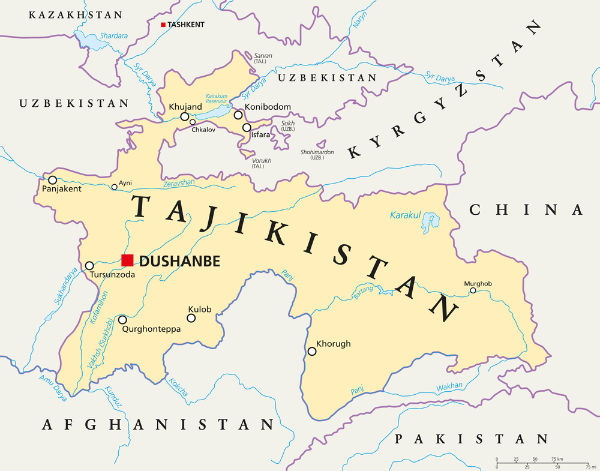
Tajikistan’s President, Emomali Rahmon has met with Russian Deputy Prime Minister Marat Khusnullin, as part of the two countries Intergovernmental Economic Cooperation Commission in Dushanbe. The Tajik Ministry of Foreign Affairs stated that “The meeting addressed strengthening multi-faceted cooperation between Tajikistan and Russia. Attention was paid to expanding ties between the two countries in trade, industry, energy, finance, banking, and investment.”
Attracting Russian investments to Tajikistan for implementing joint projects, including in industrial cooperation and creating industrial parks, offering tax incentives, were part of these discussions.
Khusnullin said that “Our economic relations are demonstrating high development rates. Russia remains a key trade partner of Tajikistan. Trade grew 14% in the first eight months of 2024, reaching US$1.26 billion, with both imports and exports increasing. Interregional cooperation is on the rise. More than 70 Russian regions have already established contacts with Tajikistan in a broad range of areas.”
This implies a total 2024 bilateral trade turnover of about US$1.86 billion, and would be a record high.
In terms of culture, an agreement on building a centre for gifted children and a new building for the Russian Drama Theatre in Dushanbe is an important step in the development of Russian-Tajik relations, he said. Design assignments and general plans have been signed and a state registration certificate has been received, he said adding that construction is expected to begin this year.
The meeting’s participants discussed the details of cooperation on trade, industry, customs, agriculture, culture, education, and tourism and made plans for the further development of bilateral relations. Khusnullin and Rasulzoda signed a protocol of the intergovernmental commission’s meeting and a program of economic cooperation between the Russian and Tajik governments until 2027.
The Tajik Chamber of Commerce and Industry and the RWB company (Russ and Wildberries) signed a memorandum of cooperation, while the VisionLabs company and the Smart City company signed a memorandum of cooperation aimed at developing digitalization joint projects.
In late 2022, entrepreneurs from Russia and Tajikistan, together with the Russian Trade Mission, have chosen three highly promising investment projects into consideration: a center with electron accelerators for phytosanitary processing, fruit processing for pectin production and the creation of a shoe manufacturing facility in Tajikistan. A significant multimodal Russian logistics carrier, PEK, began its operations in Tajikistan. The company specializes in the delivery of cargoes by air and road, and has already helped identify Tajik economic sectors for Russian businesses to become involved with.
Close links also exist between Russia’s Tatarstan and Tajikistan. For instance, Tatar companies are interested in the Tajik market. Among these are Tatneft, KAMAZ, KMPO, Shipbuilding Corporation, Pozis, GMS-Group, Tatkhimfarmpreparaty amongst others.
In 2023, Tajikistan increased its exports of high-tech products to Russia by more than 50%. Tajikistan exports to Russia include communication equipment, air-cleaning equipment, computer and block equipment, transistors, electric batteries, zinc ores, fruits, and animal and vegetable oils. Russia exports agricultural products, woodworking, ferrous metals, vehicles, chemical industry, mineral fuels, and wood.
Tajikistan is highly dependent on Russia in some of the key trade products important to the operation of various industries in the country: more than 50% of Tajikistan’s needs in fuels and lubricants, wood, oils, and various food products are supplied from Russia.
The country is also an active investment destination for China’s Belt & Road Initiative, which is providing loans to finance road, and rail connectivity between China, Tajikistan and onward into Afghanistan and Uzbekistan – a key part of the revitalisation of Central Asian supply chains. For example, Afghanistan has significant deposits of lithium (used in EV batteries) and beryllium, which is lighter than aluminium and stronger than steel used in airplanes, helicopters, ships, missiles, and spacecraft. Chinese and Russian investors will be looking at jointly accessing and processing these critical minerals, amongst many others, with Tajikistan potentially a key access point and processing hub.
The Russia-China relationship has been the focus of ongoing conjecture in the West, much of it referring to how Beijing will eventually outmanoeuvre Moscow and subsume Russia either via land grabs or financial coercion. Sergey Lavrov, Russia’s Foreign Minister, has weighed in on the debate by stating, somewhat enigmatically, that “Our friendly and good-neighbourly relations with China are not within an alliance, but they are superior in their effectiveness to military-political alliances that exercise the logic of confrontation.”
In this he was referring to Russia’s relations with China on a purely bilateral basis rather than within the BRICS or other regional organisations such as the SCO. Lavrov was speaking about the 75th anniversary of diplomatic ties between Beijing and Moscow.
He also went on to say that “Russia is interested in China being a prosperous and stable country while China needs a strong and successful Russia. Today, Russian-Chinese cooperation has acquired the nature of a comprehensive partnership and strategic interaction that enter a new era. According to the leaders of our countries, bilateral relations are currently at an unprecedentedly high level. At the same time, they are constantly being enriched with new content.”
He pointed out that over the past decades, the countries’ bilateral ties had been repeatedly put to the test, commenting that “The most important thing is that we have managed to show strategic wisdom and stamina. We have managed to build an exemplary model of relations between two neighbouring great powers in a spirit of good-neighbourliness, friendship and cooperation.”
Discussing previous border disputes, Lavrov stated that “In 2005, agreements came into force that finally closed the border issue and turned the shared border into a belt of peace and friendship.” In this he was referring to disputed, strategic territorial islands in the Amur (Heilongjiang) River.
This year both sides agreed to open border crossings at the Big Ussuri Island and to establish mutual free trade zones and other initiatives.
Despite occasional Western rhetoric to the contrary, it appears unlikely that any new territorial disputes would occur between the two countries. Both follow similar development policies as concerns Asia and global affairs, and while China is not entirely reliant on Russian energy, problems with any Russian supplies would prove significant. China’s second city, Shanghai, is almost exclusively serviced by Siberian gas, as are many other cities throughout the country.
China does have a far larger population, and there have been concerns, especially in the Russian Far East, that this could eventually lead to a take-over Russian territory by stealth. However, President Putin has incentivised both Russian nationals and corporates to relocate to the region, while also building up the Russian military presence – mainly as regards protecting its Arctic regions from North American threats, rather than Chinese.
The Russian Far East is also something of a paradox in that it has been settled by European, rather than Asian Russians, meaning ethnicity is obvious. It is a curious historical feature of the Russian landmass that it is Russia’s Siberian and Central Asian Republics rather further to the West – and some distance away from China – that maintain a stronger ethnic Asian identity than the Russian Far East. Assimilation by stealth would not be so simple.
Russia is of course also a nuclear power with a serious, conflict proven military capability. China does not possess such battle proven attributes and in any event is more concerned with the United States weaponizing Taiwan and on maintaining peace on its Western borders. Russia and China collaborate extensively for example on issues relating to security in Afghanistan.
Mutual trade, although there have been disruptions created by Western financial sanctions and threats, remains strong and can be expected to increase. China has a consumer population of over 1.4 billion, and it needs stability – something Lavrov referred too – to maintain the social order and mutual prosperity dividend that exists between the Chinese population and its government.
Russia is therefore key to China’s security, and the reverse is also true. Given the nature of both political alignment between the two powers, and their respective strengths and weaknesses, it seems highly unlikely that malign influences would be permitted to disrupt what appears to be a close symbiotic relationship with many potential decades worth of mutual benefit flowing between them.
Suggestions to the contrary, on analysis, appear to be ill-informed, mischievous Western based background noise and of little geopolitical insight. Serious observers should perhaps pay more attention to the developing BRICS as a key to understanding the reality underpinning Russia-China geopolitical detente and collaboration. After all, who would want to give up 65% of global influence and an almost guaranteed bilateral prosperity when in a solid, mutually acceptable diplomatic relationship?
The proposed barter trade format to help cash poor Pakistani farmers and financially sanctioned Russians has begun, and it’s not small potatoes. Russia’s Astarta Agrotrading, one of the countries largest agricultural commodity traders, is not only bartering 20,000 tonnes of chickpeas, it’s building an entire logistics complex to facilitate this type of trade.
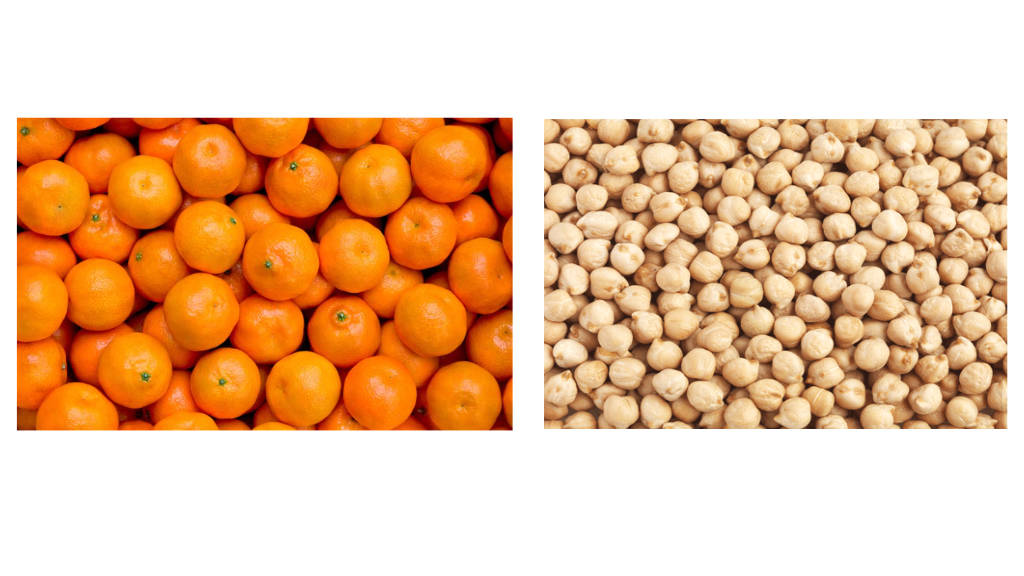
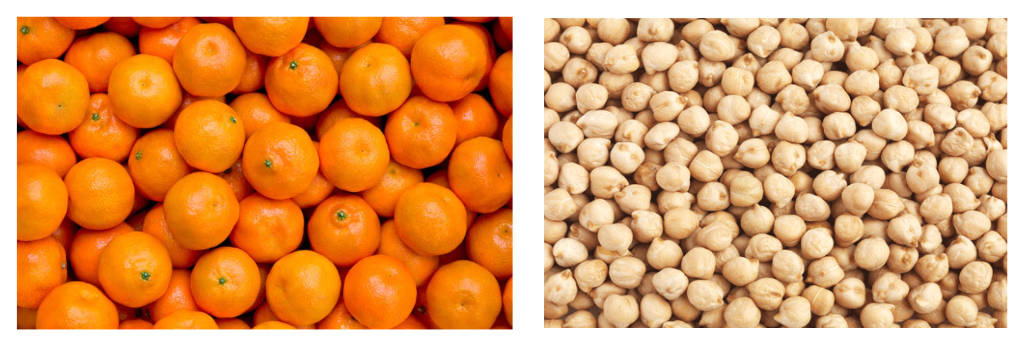
Stanislav Neveinitsyn, of Astarta Agrotrading said that “Two agreements have been signed. We’re exchanging chick peas for rice with one company in Pakistan and we’re exchanging chick peas for mandarin oranges with another. The exchange is scheduled to occur in the next two weeks.”
The Saratov-based company has plans to expand this type of trade and intends to set up a specific customs warehouse in Saratov Region for this purpose. Neveinitsyn stated that the company plans to set up its own 76,000-square-meter customs warehouse in order to expand this type of trade.
“We want to do a complete complex. We have a hub in Engels where we plan to do the customs warehouse in order to provide all services, on the ‘single window’ principle. We load a vehicle with chick peas, clear for export and ship to Pakistan. The vehicle returns with the bartered product. We unload it at the same customs warehouse, clear through customs and send the Pakistani goods for sale, in such a way that the vehicles go back and forth like trams.”
“The first chick pea shipment will be a trial, because we need to understand the saleability of their rice, which we will get in exchange. The mandarin contract will be carried out from December through May,” he said. Shipments will be arranged by truck, but all the issues concerning deliveries still need to be worked out with the customs authorities and Russian plant and animal health watchdog Rosselkhoznadzor.
The Pakistani rice partner is Pakistan’s second largest rice grower and processor, while the Pakistani partner in the mandarin deal is the countries largest dealer in fruit. The size of the mandarin shipment is still unclear “because we’re going to try their mandarins for taste in the literal sense of the word,” Neveinitsyn said.
“There is strong demand for legume crops in Pakistan, so we need to get Saratov farmers to grow them more, and we’ll be able to organize guaranteed sales,” he said.
Rosselkhoznadzor, Russia’s food safety agency, have said that the most important aspect in such trade is that the imported products must comply with phytosanitary standards and have a phytosanitary certificate confirming its safety. In turn, the product shipped from the Russian side must also comply with other parties phytosanitary requirements.
The agreements were signed with Meskay & Femtee Trading Company and National Fruit Processing Factory at the beginning of October at the first Pakistan-Russia Trade and Investment Forum in Moscow. Over 70 Pakistani companies took part, while more than 100 companies from Russia attended the forum.
The forum focused on Russia-Pakistani cooperation in IT technology, setting up IT centres, Safe City projects, expanding trade in leather, textiles, agriculture, fruits, and vegetables.
Astarta Agrotrading is bullish about the prospects for barter trade growth, with the company also planning to arrange barter trade relations with other countries, such as Uzbekistan and Azerbaijan. Neveinitsyn said that “With Azerbaijan, negotiations have already been held on shipments of tomatoes and pomegranates. Azerbaijan is now deciding what it needs. I was in Azerbaijan last week, and held negotiations. They took an interest.”
Russia’s Economic Development Ministry announced at the beginning of 2024 that it had developed a guide for barter trade for Russian businesses involved in foreign trade. It includes a description of the types of barter transactions and their advantages, reference material on laws and regulations governing barter in foreign trade, step-by-step instructions for arranging them, the procedure for determining equal value of the goods or services exchanged, and standard forms.
Vladimir Ilyichev, the Deputy Economic Development Minister said at the time. “In an environment of sanction restrictions, participants in foreign economic activities are actively entering new markets, including the markets of foreign countries whose national currency is not convertible or has high volatility. Foreign trade barter deals will make it possible to exchange goods and services with foreign companies without the need to make international transactions.”
Russia’s Foreign Minister, Sergei Lavrov and the acting Afghan Foreign Minister, Amir Khan Muttaqi have discussed trade and financial settlement processes in Russia-Afghani trade as well as plans to intensify trade and economic cooperation between the two countries, including in the energy sector, the Russian Foreign Ministry has said.
Lavrov and Muttaqi met on the sidelines of the sixth session of the Moscow Format Consultations on Afghanistan. During the meeting, the parties discussed Afghanistan settlement problems and bilateral cooperation between Moscow and Kabul. They highlighted Russia’s and Afghanistan’s mutual interest in maintaining trusting political relations and stepping up mutually beneficial trade and economic cooperation, with a special emphasis placed on exploring projects in the energy and agriculture sectors.
Lavrov and Muttaqi reaffirmed the leading role of regional negotiating mechanisms on Afghanistan, primarily the Moscow Format Consultations. Concerns were raised about opium production, security, and education in addition to humanitarian affairs.
Russia launched the Moscow Format Consultations in 2017, and it has since become a regular platform for discussion of challenges facing Afghanistan. Special representatives and senior officials from China, India, Iran, Kazakhstan, Kyrgyzstan, Pakistan, Tajikistan, Turkmenistan, and Uzbekistan will attend the gathering.
Russia has been dealing with the lack of infrastructure and security issues, most notably within the ‘Quartet’ – a grouping of Russia, Iran, China and Pakistan. They recently met in New York to discuss Afghani reconstruction.
Russia-Afghanistan bilateral trade has been improving. According to the Federal Customs Service of Russia, trade and economic relations between Russia and Afghanistan showed significant growth last year, reaching just over US$1 billion, 25% higher than the same period in 2022.
The main Russian exports consisted of petroleum products, wheat, and agricultural machinery, while Afghanistan mainly supplied dried fruits, textiles, and carpets.
Amid this positive dynamic, Russia has set ambitious goals for further increasing economic cooperation with Afghanistan. According to Rustam Khabibullin, head of the Russian Business Center in Afghanistan, there are plans to increase bilateral trade turnover to US$3 billion by 2025 and to US$10 billion by 2030. Key to those numbers though are significant energy agreements. Energy in Afghanistan is provided by hydropower, fossil fuels and solar power. Currently, less than 50% of Afghanistan’s population has access to electricity.
China will be investing into the infrastructure sector as well – Afghanistan recently became a signatory to the Belt & Road Initiative, with the massive China-Pakistan Economic Corridor, which has seen significant road and rail developments in Pakistan, now being extended into Afghanistan.
In a further development, Moscow has removed the ruling Taliban from its terrorist status, paving the way for Moscow to formally recognise the Taliban as the official government of Afghanistan.

 Русский