News

Russia, China, Iran and Pakistan Discuss Afghanistan Security and Reconstruction 

Published on October 1, 2024

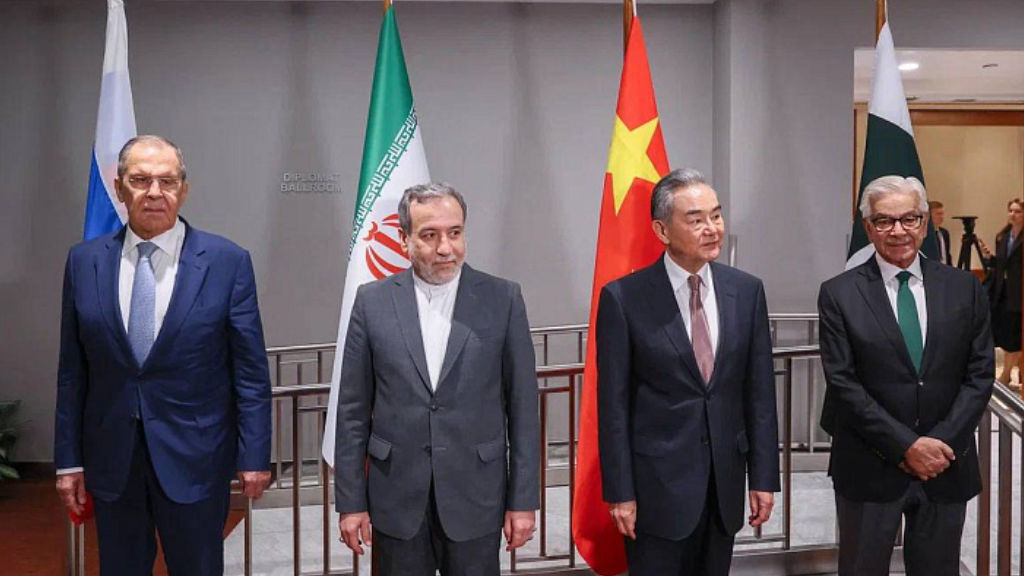
Russia’s Foreign Minister Sergey Lavrov has been in New York attending the annual UN General Assembly. Russia, China, Iran and Pakistan are full members of the Shanghai Cooperation Organization, and Afghanistan is an observer country. Afghan representatives did not attend the meeting having been denied US Visas because some members of the government are on the UN sanctions list as people linked to international terrorism, and the Taliban-established interim government of Afghanistan remains unrecognized internationally.

Chinese Foreign Minister Wang Yi proposed four suggestions to assist with the future development of Afghanistan, and acknowledged that over the past three years, the situation in Afghanistan has undergone a stable transition to self-government, but there is much to do in terms of reconstruction and development, and many difficulties and challenges for long-term stability. China’s suggestions are:

Security

A multilateral approach to building security, including the strengthening of intelligence exchanges, and expanding law enforcement and security cooperation, with the aim to eradicate violent terrorist groups within Afghanistan. It should be noted that Russia has recently supplied several Sahel nations with surveillance satellites to assist with the tracking and anti-terrorist movements of undesirable factions.  

Reconstruction

This is an important topic that requires significant investment. It includes comprehensive reconstruction measures (this is in line with China’s “One Belt, One Road” initiative plans to turn Afghanistan into a trade center for Central Asia).  Jointly promoting the Tunxi Initiative to support Afghanistan’s reconstruction.

The Tunxi Initiative was adopted on March 31, 2022, at the Third Ministerial Conference of Afghanistan’s Neighboring Countries held in Tongxi, Anhui Province, China, along with Iran, Russia, Pakistan, Tajikistan, Turkmenistan, and Uzbekistan. It envisages humanitarian aid programs in addition to the establishment of trade corridors, including the expansion of the $90 billion China-Pakistan Economic Corridor (CPEC) to Afghanistan, including the Uzbekistan-Afghanistan-Pakistan railroad, and the establishment of free trade and economic zones on Afghanistan’s borders with Iran, Pakistan and Tajikistan.

The project aims to put Afghanistan on the path of industrialization, promote the Afghan economy and trade, and encourage Afghanistan to formulate its future economic development plans based on its own national conditions, and strengthen the internal drivers of national development.

This means all countries involved agree to establish an economic cooperation belt around Afghanistan to improve Afghanistan’s external development environment. Afghanistan meanwhile needs to create a favorable business environment for foreign investors.

All parties encourage the use of local currencies in bilateral trade and investment to lower transaction costs and facilitate trade and investment, and to strengthen communication with Afghanistan on trade policies, the signing of trade facilitation agreements, formulate transitional preferential trade arrangements, reduce taxes and fees on trade with Afghanistan, streamline customs clearance procedures such as commodity declaration and quality inspection, and improve Afghanistan’s level of trade facilitation.
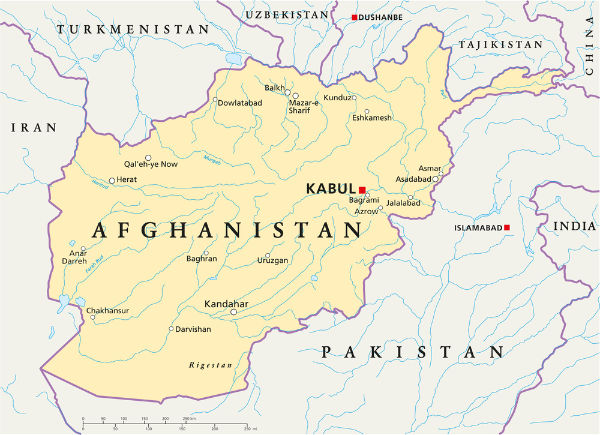
Afghanistan Map

A Consistent Legal System

The third measure is to uphold justice, and gradually introduce into Afghanistan legal platforms for cooperation amongst all opposing parties, rather than being a venue for national geopolitical competition.

International Guidance

The fourth measure is to provide positive guidance, and to encourage the international community to focus on the most urgent challenges facing Afghanistan.

The meeting highlighted the importance of collaboration among neighboring countries to ensure stability in Afghanistan. The officials stressed that ongoing dialogue with the Taliban is crucial for peace in the region.

Following their discussions, the Quartet released a statement reiterating their commitment to ensuring that Afghanistan does not become a safe haven for terrorist groups, stating that “There is no alternative to establishing mutually respectful dialogue and partnership relations than with the current authorities of Afghanistan.”

Further Reading  
Stablising Afghanistan: Russia’s New Opportunity

Russia – Morocco 2024 Bilateral Relations: Update

Published on September 30, 2024

Russia’s Foreign Minister Sergey Lavrov has been in New York attending the annual UN General Assembly. During the UN events, several other bilateral meetings were held as numerous countries wish to discuss current affairs with Moscow. Lavrov subsequently met with Nasser Bourita, Morocco’s Minister of Foreign Affairs and African Cooperation.

The ministers focused on priorities related to advancing the traditionally friendly relations between Russia and Morocco.  They confirmed their countries’ shared intent to maintain effective foreign policy coordination in the interests of ensuring regional and international security and stability. They also stressed the need to settle crises persisting in the MENA region and the Sahara-Sahel area through political and diplomatic means based on the fundamental principles and norms of international law, while recognising the central role of the United Nations.

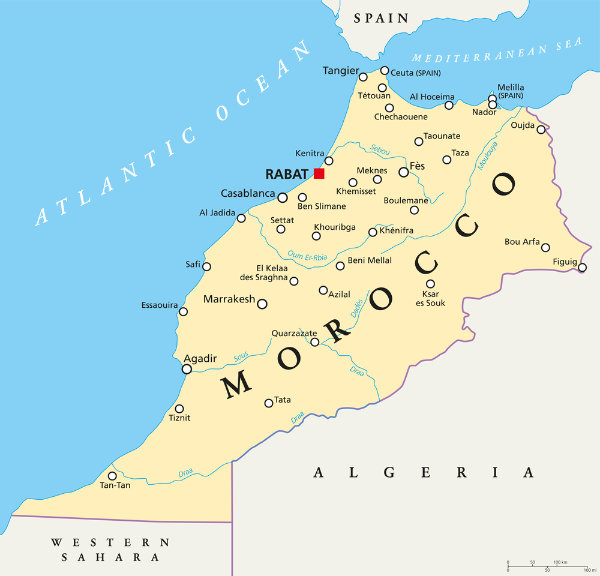
Morocco Map

Amid Russia’s efforts to mitigate revenue losses from decreased trade levels with the West, Moscow has actively re-engaged with the African continent. Seen as a part of the vast Global South, Greater Africa offers numerous opportunities for Russian companies seeking new markets and export manufacturing capabilities. In Africa, Russia’s economic interests are also neatly merged with global geopolitical shifts. Moscow is pushing for the creation of a multipolar world order and for the Kremlin, the African continent presents a good opportunity to tilt the balance of power away from the collective West, dragged down by a toxic colonial legacy and perceptions of unfair trade and investment practices that have left little on the table for the Africans themselves.

Russia is also keen on wooing African countries to develop a bloc of votes at the United Nations to fend off American policies. While Morocco is not the biggest trade or investment partner for Russia, the country’s geopolitical importance has been growing and it sits on some of the world’s largest raw material deposits. Expanded ties with Morocco would give Russia an additional tool to help re-shape the shifting balance of power in Sahel where French influence is in decline and a power vacuum is emerging. Elsewhere, renewed Russian involvement in North Africa is apparent with Egypt recently joining the BRICS grouping, while Algeria and Tunisia have expressed interest.

Morocco has also become a new preferred tourism destination for Russian nationals now feeling uncomfortable with European vacations. Direct flights are now operated between Morocco and Russia with tourism numbers reaching record highs in 2023.

Trade

Morocco is Russia’s third biggest trade partner amongst African countries after Egypt and Algeria. Russia’s exports to Morocco in 2022 amounted to US$1.93 billion (an increase of 65% compared to 2020) or 11.2% of the total trade Russia had with the African continent.

Russia’s trade with Morocco is significant as it constitutes a sizeable part of Russia’s overall commerce with the African continent.

Russian importers are traditionally interested in grapes, citrus fruits, nuts and cocoa beans from Morocco and other North and East African countries. Morocco maintains close ties with particular regions of Russia. For instance, trade between the Russian Republic of Bashkortostan, a traditionally ethnic Turkic region, and Morocco increased 30-fold over the past five years. Various autonomous regions of Russia have been selectively astute in developing trade partners that fit mutual needs.

Overall, Russia’s exports to Morocco mainly consist of oil, diesel, coal and inorganic chemicals. There are increasing exports of fertilizers, stone and plaster materials, aluminium, and cereals among related products. Russia imports fruits and nuts, and light industry products in addition to lumber, cars, veterinary vaccines, and IT services.

Overall, Russian grain suppliers are particularly interested in Morocco as the country is among top African importers of wheat. For example, Morocco announced that by 2024 it would be importing about 2.5 million tons of wheat. However, a major hindrance to Russia’s exports are the customs duties – which can be as high as 40% for some products.

For Russian companies, one of the strategies used to mitigate against this is to establish joint ventures in Morocco, which are granted more favourable conditions. The main advantage for companies opening production in Morocco, is the possibility of further export to the countries that Morocco has free trade zone agreements with. Morocco has preferential trade agreements with 62 countries and is a member of the African Continental Free Trade Agreement (AfCFTA) which reduces intra-African trade tariffs on 95% of all products within various phased in timescales. Rabat ratified this in April 2022.

Morocco is also a member of the Greater Arab Free Trade Area which also includes Bahrain, Egypt, Iraq, Kuwait, Lebanon, Libya, Oman, Qatar, Saudi Arabia, Sudan, Syria, Tunisia, and the United Arab Emirates. Other notable FTA include agreements with Jordan and Turkiye.

Russia – Syria 2024 Bilateral Relations: Update  

Published on September 30, 2024

Russia’s Foreign Minister Sergey Lavrov has been in New York attending the annual UN General Assembly. During the UN events, several other bilateral meetings were held as numerous countries wish to discuss current affairs with Moscow. Lavrov subsequently met with Bassam al-Sabbagh, Syria’s Minister of Foreign Affairs.

In the course of the meeting, they had an in-depth review of the situation in Syria and around it with a focus on the aspects of its comprehensive settlement in strict compliance with the principles of respect for the sovereignty, unity and territorial integrity of Syria.

The ministers discussed the current situation in the Middle East in the context of the continuing escalation in the Gaza Strip and exacerbation of the situation in Lebanon.

They also touched upon pressing issues of strengthening Russian-Syrian relations and confirmed their mutual commitment to maintain close coordination at the United Nations and other international platforms. This mans they will support each other in international affairs.

The ministers also signed a Declaration of Russia and Syria on Ways and Means of Countering, Mitigating and Compensating the Negative Consequences of Unilateral Coercive Measures.

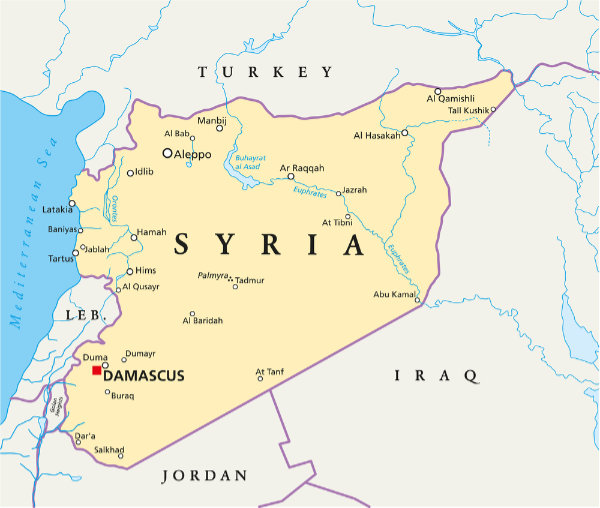
Syria Map

From the Syrian perspective, Russia is an important geopolitical and economic partner. Moscow’s support for Syria to maintain the security, stability, and development of the country, cancelling sanctions imposed upon Syria, increasing economic cooperation and supporting the government’s efforts to rebuild is in the interest of Damascus.

Syria’s strategic position in the Middle East, and the Eastern Mediterranean are also important for Russia’s long-term interests. In the most recent 2023 Russian Foreign Policy Concept, Moscow is paying attention to the development of relations with various regional trade blocs, opportunities for the development of global trade and investment, the balance of global power, the creation of a multipolar international system, and strengthening cooperation with Islamic countries. Also, in this document, Moscow paid specific attention to providing comprehensive support to Syria.

Energy

Syria is a crude oil producer in the Eastern Mediterranean with significant gas reserves. In the past few decades, several agreements in the oil and gas fields were signed between Moscow and Damascus. Russia’s Stroytransgaz has had projects such as a natural gas processing plant and assistance in the construction of the Arab gas pipeline. Tatneft began pumping Syrian oil in 2010 through a joint venture with the Syrian National Oil Company. Between September 2019 and January 2020, Syria awarded four new oil exploration contracts to several Russian companies. In 2021, the Syrian government approved a contract with the Russian company Capital Limited for oil exploration in the Mediterranean Sea. Also, the signing of a contract in March 2022 between Russia’s Ros EnergoStroy Levant (RESL), and Damascus to build a 25-megawatt (MW) gas turbine power plant in Aleppo is of strategic importance.

Investment in Rebuilding Syria

Russian companies have had a presence in Syria’s infrastructure, energy, and tourism industries for many years. Over the past years, Moscow’s role has been prominent in the reconstruction of the port of Tartus (a contract of more than US$500 million was signed in April 2019), the modernization of a fertilizer production plant in Homs, and the reconstruction of several oil and gas fields and refining institutions.

Russia has also given the Damascus numerous government loans, while Moscow’s investments in Syria can be measured in the tens of billions of dollars.

The United Nations estimated in 2020 that Syrian economic losses exceeded US$$442 billion. Syria’s economic problems and the massive reduction in GDP, are problematic for the Syrian economy. Oil, agriculture, industrial production, and the tourism industry are sources of income for the Syrian government, and investments have been made for revival. Russia has also declared several times its willingness to help in the reconstruction of Syria and is helping to rebuild the Syrian economy. In the strategy of “rebuilding Syria”, Damascus has placed great hopes on Russia and is encouraging foreign investment by deregulation of the banking sector and new laws and guarantees. Russia has also declared several times its willingness to help in the reconstruction of Syria and is helping to rebuild the Syrian economy. These initiatives look set to continue and may provide a springboard for Russian investments into other regional areas – such as the Lebanon and Palestine – that will require immediate investment once the Israeli conflict is resolved. 

Russia – Jordan 2024 Bilateral Relations: Update  

Published on September 30, 2024

Russia’s Foreign Minister Sergey Lavrov has been in New York attending the annual UN General Assembly. During the UN events, several other bilateral meetings were held as numerous countries wish to discuss current affairs with Moscow. Lavrov subsequently met with Ayman Safadi, the Deputy Prime Minister and Minister of Foreign Affairs of Jordan.

The ministers had a detailed exchange of views on key issues on the Middle East agenda, with a focus on the escalation in the Palestinian-Israeli conflict. They emphasised the urgent need for a ceasefire in the Gaza Strip and called for steering the situation towards a political and diplomatic track in accordance with the decisions of the UN Security Council and the General Assembly.

The parties confirmed the alignment or similarity of Russia’s and Jordan’s respective approaches to resolving the crises in Lebanon, Syria and other persistent crises in the region. Both sides reaffirmed they should be resolved in strict compliance with the norms of international law, taking into account the interests of all parties involved.

Additionally, they covered priority aspects of further expanding the traditionally friendly ties between Russia and Jordan.

Jordan Map

Russia and Jordan have had positive ties stretching back to the Soviet times. Investment and trade relations, however, have been limited. It is only in recent years that concrete steps taken to enhance and develop these.  In 2017 a memorandum of cooperation between the Eurasian Economic Commission (EEC) and Jordan was signed to increase trade turnover with the Eurasian Economic Union (EAEU) by launching new joint projects.

In 2023 Jordan and Russia signed a bilateral cooperation program between Jordan and Russia, in the presence of the Russian ambassador to Jordan and discussed plans for Jordanian-Russian Trade, Economic, Scientific and Technical Cooperation. Negotiations are also being held to ensure entry into the Russian market for Jordanian agricultural products. Numerous official trade visits to Russia have been undertaken, during which issues such as the transportation of goods and customs duties introduced by Russia were discussed, with the process still ongoing.

In 2023, Russia’s trade turnover with Jordan amounted to about US$250 million, and has halved due to problems with the Israel-Palestine war. Russian exports typically consist of food products and agricultural raw materials, metals, wood and pulp and paper products, chemical products, mineral products, and various machinery. An important area of cooperation between Russia and Jordan is agriculture, with rice being a primary commodity and both sides wanting to increase Russian exports. Due to the regional situation, the immediate development of trade development ties remains uncertain, with the onus on security concerns at this moment.

Russia – Sudan 2024 Bilateral Relations: Update

Published on September 29, 2024

Russia’s Foreign Minister Sergey Lavrov has been in New York attending the annual UN General Assembly. During the UN events, several other bilateral meetings were held as numerous countries wish to discuss current affairs with Moscow. Lavrov subsequently met with Abdel Fattah al-Burhan, Chairman of the Supreme (Sovereignty) Council of Sudan.

Sudan is currently engaged in a civil war between two opposing forces, the Sudanese Armed Forces (SAF), and the paramilitary Rapid Support Forces (RSF). The conversation focused on the developments in Sudan in the context of the continuing armed confrontation between the country’s regular army and the Rapid Support Forces (RSF). The Russian delegates stressed the need to stop the hostilities and launch a broad national dialogue as quickly as possible. Sudanese fighters have also been involved in Yemen. Part of the conflict revolves around decisions as to whether Sudan should be a secular, or Islamic State. Burhan (SAF) favours the secular nature of government and prefers freedom of choice in matters of religion in the country.   

The meeting’s agenda also covered matters related to further expanding Russia-Sudan relations and building on their tradition of maintaining friendly ties. The two parties reaffirmed their shared commitment to proactively coordinating their positions within the United Nations – meaning Russia is counting on Sudan’s political support and vice-versa.

Sudan Map

Russia’s interest in Sudan goes much further than politics and trade. Prior to the Sudanese civil war, Russia had been looking at establishing a naval base at Port Sudan, although those plans are currently suspended.

Russia is slowly moving towards supporting the SAF in Sudan’s conflict, as it regards the more Islamic RSF as potentially troublesome. However, the RSF are close to Saudi Arabia, with Russia needing to be politically skilled in dealing with these relationships as it does not want to be seen to irritate Riyadh. 

In doing so however, Moscow has also been entertaining Burhan, who attended the 2019 Russia-Africa Summit in St.Petersburg and held discussions with Vladimir Putin. Following this, Russia appears to have been arming the SAF and are set to sign a series of military and economic agreements, including the establishment of a proposed Russian naval logistical support centre, rather than a full military base on the Red Sea. That downgrading of plans for Port Sudan is also less of a problem for Saudi Arabia.

Sudan meanwhile has suggested expanding the bilateral cooperation to include economic aspects such as agricultural ventures, mining partnerships, and port development, which Russia has apparently agreed to. However, the Sudan civil war needs to be resolved first.

Further Reading  

Russia To Open Embassies in Sierra Leone, Niger, & South Sudan: The Implications

Russia – Yemen 2024 Bilateral Relations: Update

Published on September 28, 2024

Russia’s Deputy Energy Minister Sergei Mochalnikov and Yemen’s Oil and Minerals Minister Saeed al-Shamasi, co-chairmen of the Russian-Yemeni intergovernmental commission, have been discussed the trade and economic cooperation between the two countries on fuel and energy on the sidelines of the Russian Energy Week.

The two sides discussed interaction in industry, agriculture, and modernization of the current generation capacities, and reached an agreement to hold its next intergovernmental commission  session in Yemen in 2025.

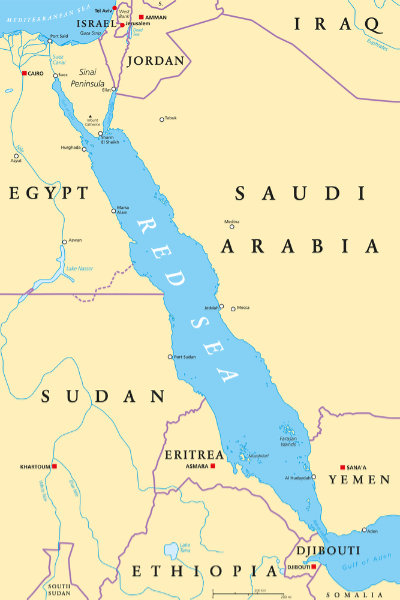
For Russia, Yemen is important because Moscow sees the Bab el-Mandeb Strait as an access route to the Horn of Africa, and the Red Sea where in Sudan, Russia announced its plans to open a naval base. Ideally, Moscow’s long-term objectives in Yemen are to use it as a potential base for expanding trade and security relations with the parts of eastern Africa.

Red Sea

Due to the political-military problems in Yemen, Russia’s trade turnover with Yemen has not changed significantly over the past decade at about US$250 million, although according to Russia’s Foreign Minister Sergey Lavrov, speaking in February this year, it did increase somewhat in 2023. Russia’s exports to Yemen consist mostly of food products and agricultural raw materials.

Russia does have some sympathy for the Houthi rebels in the country, who are backed by Iran. On the subject of the Houthi’s involvement in harassing shipping in the Red Sea, Lavrov had this to say:

“We believe that the escalation of tensions in the adjacent waters of the Red Sea and the Gulf of Aden resulting from the Yemeni Houthis firing at commercial vessels largely stemmed from the unprecedented escalation of the Palestinian-Israeli conflict and the nine-year crisis in Yemen. We do not condone the shelling of commercial vessels, regardless of the underlying motives. However, we cannot approve the aggressive actions of the United States and Britain against the territory of the Republic of Yemen, either. They have no international mandate in the form of a UN Security Council resolution to do so.”

There have been ongoing attempts despite the problems to create, and maintain a trade and investment platform. In 2005, the President of the Russian Chamber of Commerce and Industry, Evgeny Primakov, signed two agreements on cooperation between the chambers of commerce and industry of both countries, while several more fundamental documents were signed in economics and trade, including an agreement on the promotion and development of cooperation in trade, economics and industrial activities.

At present it is clear that Russian businesses see little interest in Yemen except for relatively limited opportunities trade in coffee, seafood, and a small selection of building supplies. The same holds true for Yemen’s oil industry, where production is low, and it is unclear as to the true extent of Yemeni reserves. What is known is that the county has a proven 3 billion barrels of oil reserves, ranking 29th in the world. These are equivalent to about 137 times its current annual consumption, reflecting both the inability of Yemen to use its resources and the low investment levels to assist it in doing so.

Given that there are high security costs associated with entering the Yemeni market, the possibility of the Russian oil and gas sector investing in the exploration of the Arabian country is quite low. The security situation in the country does not permit wide space for manoeuvrability, suggesting that Russia – along with Iran but without irritating Saudi Arabia – could at some point provide some influence in military assistance to help secure the situation. For example, Russia has recently agreed to provide military surveillance satellites to Mali and Niger. Yet this is a very difficult balancing act to manage – which is why Russia is taking a highly cautious approach.  

That said, Yemen has profound strategic importance, and it should be noted that several BRICS countries run alongside the Red Sea and have essential control over it. These include Egypt, who operate the Suez Canal, Saudi Arabia, whose full BRICS membership is awaiting ratification, and Sudan, who have expressed an official interest in joining the group. Iran is a full BRICS member and is regionally influential, as are the UAE.  

Further Reading  

Houthi Red Sea Attacks: “We Will Not Target Russian or Chinese Shipping”

Putin Says BRICS Payment System In Progress, Nasdaq Says Would Disrupt US Dollar and Euro

Published on September 27, 2024

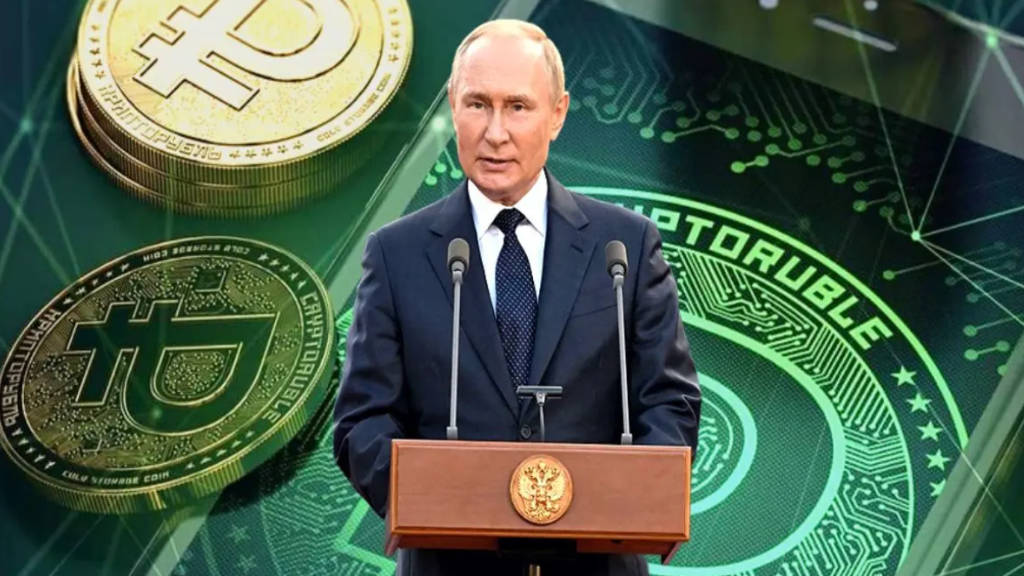
The Russian President Vladimir Putin has been speaking at the Russian Energy Week forum in Moscow, and stated as part of his speech that the BRICS member nations are jointly developing a payment and settlement framework to be used for trading within the group.

Putin stressed that supplies of Russian oil and gas to ‘friendly’ countries allow them to ensure economic stability and compete more successfully in the global market. However, he also acknowledged that “certain difficulties” remain when it comes to these countries making payments for Russian energy. Russia had been disconnected from the SWIFT international banking system as part of financial sanctions imposed on Moscow by the West over the Ukraine conflict.

Settlement in National Currencies

An alternative system, he stated, was already underway in terms of development. ”As part of our cooperation with BRICS countries, we are working to create our own payment and settlement system. This will allow member states to create conditions for the effective and independent servicing of all foreign trade amongst themselves. Russia is already actively switching to the use of national currencies in trading with BRICS countries and our partners are extremely interested in this.”

The share of the Russian Ruble in the country’s total foreign trade operations has increased almost threefold between 2021 and 2023, Putin stressed. In the first half of this year, it stood at 39.4%, he said. In terms of use in Russian exports, to Europe it has grown to nearly 67%. 

As the current chairman of BRICS, Russia is hosting the bloc’s annual summit in Kazan from October 22 to 24. The BRICS includes Brazil, Russia, India, China and South Africa along with Iran, Egypt, Ethiopia and the UAE. Multiple other countries, including trillion-dollar economies such as Indonesia, Malaysia, Nigeria, Saudi Arabia, Thailand, and Turkiye have all expressed official interest in joining. 

Blockchain-Based Payment System

Rather than a BRICS currency, the plans are to ultilize a BRICS blockchain-based payment system. Known as the ‘BRICS Bridge Multisided Payment Platform’, it would connect member states’ financial systems using payment gateways for settlements in central bank digital currencies.

The planned system would serve as an alternative to the SWIFT international cross-border payment platform, operated by the US-controlled, EU based ‘’Society for Worldwide Interbank Financial Telecommunication” which is dominated by US dollars.

According to the Kremlin, the goals are to create an independent BRICS payment system, based on state-of-the-art tools such as digital technologies and blockchain. It also needs to be convenient for governments, businesses, and the resident citizens as well as cost-effective and free of politics.

BRICS Currency

There have also been discussions about the emergence of a BRICS currency. Andrey Mikhailishin, head of the task force on financial services of the BRICS Business Council, detailed this as a top project under consideration, being a common unit of account. It is currently referred to by BRICS members as “The Unit.”

The value of the common unit of account would be pegged 40% to gold and 60% to a basket of BRICS member’s national currencies. The BRICS Business Council considers The Unit a “convenient and universal” instrument, since it could be converted into any national currency.

Earlier this month, the New York-based Nasdaq stock exchange warned in an article that should the BRICS nations establish a new reserve currency backed by a basket of their respective currencies, such a move “would likely significantly impact the US dollar, potentially leading to a decline in demand, or de-dollarization. In turn, this would have implications for the US and global economies.” In the article, Nasdaq also suggests several strategies that can be adopted to capitalize on these trends – including “investing in assets denominated in currencies other than the US dollar.”

BRICS Ratings Agency

A BRICS ratings agency, independent from Western agencies such as Moodys, S&P and Fitch, is also on the agenda. All Western ratings agencies exited the Russian market in 2022, making performance evaluations on Russian companies extremely difficult to verify and hence depressing their projected values. Both Russia and China had also complained that Western agencies were deliberately pressurized to undervalue their businesses so as to deflect capital investment, or at least make it more expensive to raise investments. A BRICS ratings agency however needs to be seen as transparent and could involve the BRICS New Development Bank.

Expected Developments

While the introduction of a BRICS currency such as The Unit may be some way off, its introduction cannot be ruled out. The BRICS nations will be studying carefully any impact on the US dollar as most (with the exception of Russia) still possess substantial US dollar-denominated assets. All, however, are looking to reduce these holdings and have been actively doing so, especially China.

More likely to emerge sooner rather than later is the ‘BRICS Bridge’ payment system. Both China and Russia already possess their own internal payments systems, CIPS and SPFS, and it is already understood that these are compatible. Technical work and assessment is undoubtedly taking place to assess the security and compatibility of other BRICS members systems. What will be important is a unified platform, that stands separately from internal platforms. While the West has indicated it is prepared to disconnect national currencies from SWIFT – both Russia and Iran have been targeted in this way – it is a different matter when contemplating the multi-disconnection of countries such as China, India, Brazil and the UAE.

Trials between Russia and China has already been going on in terms of digital platform transactions, while China’s use of digital transfers as part of its global trade has nearly reached US$1 trillion over the past 18 months. Clearly, the technology exists and works. The immediate task is to ensure the highest levels of security – such a system would be an obvious target for Western hackers – and to integrate other BRICS members internal platforms onto the BRICS Bridge. This may also require some changes to national legislation, which can take time. 

However, with China and Russia poised to go ahead in digital trade from mid-2025, acting in some way as a trial for the rest of BRICS, we see the potential of a BRICS financial trading platform as becoming a reality by 2026/27. The proposed BRICS currency, the Unit, may then be operational by 2030. If correct, it will mean that Western sanctions upon Russia will gradually begin to lose their effectiveness from mid next year as alternative systems and new technologies surpass the relative crudeness of SWIFT disconnection.

There are likely to be spillover developments as well. Should the BRICS Bridge prove successful, this can be expected to spur similar economic blocs into doing the same thing. SWIFT will probably decline to become a Western-only financial service, while the role of US and EU intermediary and corresponding banks will also diminish. With that comes an inevitable move away from the US dollar and euro, and a new age of sovereign currencies – and their values – being determined by regional, rather than international markets.

Further Reading

Post not found.

Russia To Start Exporting Lentils To India

Published on September 27, 2024

The humble lentil has entered the products Russia will now export to India, as India’s Ministry of Agriculture and Farmers Welfare has said Russian lentils have passed the required quarantine phytosanitary requirements and has obtained the right to supply lentils to India on a regular basis.

Trial shipments began in 2022. Data from the Argus-Fito federal government information system indicate that Russia had ramped up supplies of leguminous crops to India 23-fold year-on-year to 545,000 tonnes since the beginning of the year as on September 22, 2024.

Dal Makhani
Dal Makhani consumed in Delhi may now have its origins in Russia.

Lentil consumption in India has risen to around 3 million tons, but can only provide about half of that from domestic production, and needs to import more than 1.3 million tons of lentils annually. Russia’s new supplies make up about 35% of its current total shortfall.

Most of Russia’s lentil production is grown in the Altai region in southern Siberia, with Saratov, Omsk, Penza and Orenburg also all producing Lentils.  

This new, sizeable Russian export market is noticeable for the coordinated manner in which Russian diplomats and producers have been working in tandem to identify new supply chain needs in Asia and act in concert to fill them.

Further Reading

India To Build Special Port To Handle Russia / INSTC Goods

Russia To Start Exporting World’s Biggest Coking Coal Deposits To East Asia From 2025

Published on September 27, 2024

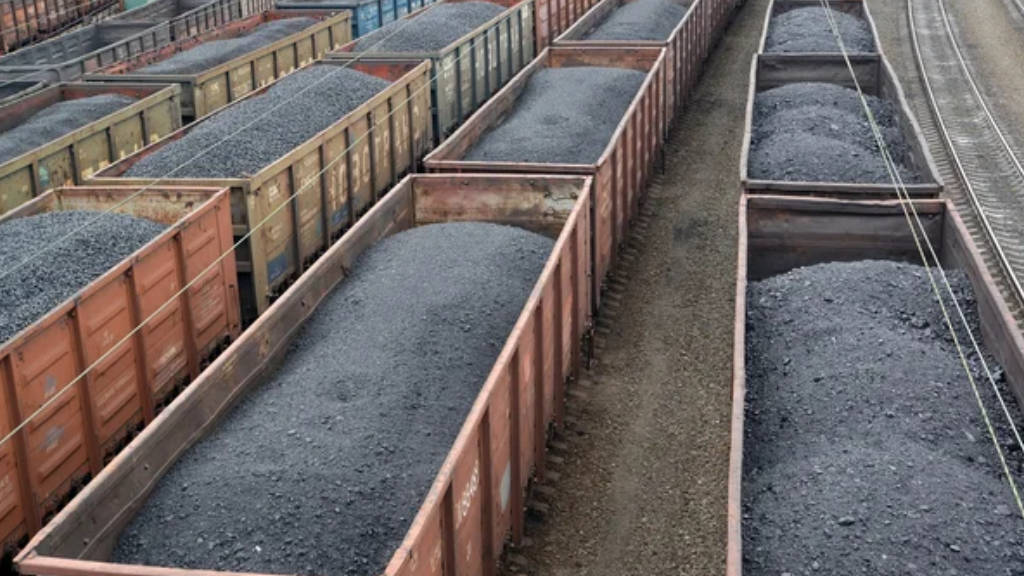
Russia’s Elginskoye coal deposits are one of the world’s biggest coking coal deposits, with JORC-compliant reserves of about 2.2 billion tonnes. Located in Yakutia, the Elga coal company, which operates the mine, is also building a private, ‘Pacific Railway’ which will start operations in 2025, according to Russian President Vladimir Putin.

He was speaking at the plenary session of the Russian Energy Week on Thursday (September 26), saying that “The Far East’s coal mining centre’s capacity is expanding. Incidentally, the Pacific Railway will start operating next year. This is a private route from the Elginskoye deposit in Yakutia to the port of Elga in the Khabarovsk Territory.”

Elga’s railway will export coal from the Elgnskoye deposits through the Elga port on the coast of the Sea of Okhotsk, which the company is also building itself, with capacity of 30 million tonnes. Most of these exports will be to Asia.  In 2022, China imported some 345 million short tons of coal, thus making it the world’s largest coal importing nation. India came in second, with coal imports amounting to 234 million metric tons that year. These are followed in the top five importers by other East Asian destinations, being Japan, South Korea and Taiwan. Vietnam and the Philippines are also among the world’s top ten coal importing countries.

Russia ranks third globally in coal reserves (182 billion tons) and is the sixth-largest coal producer in the world (accounting for 4.5% of global coal production). Russia’s coking coal is typically used in metallurgy production such as steel manufacturing.  

Further Reading

Post not found.

Russia Expands Baltic Sea Ports Capacity To Reach Emerging African and LatAm Consumer Markets

Published on September 26, 2024

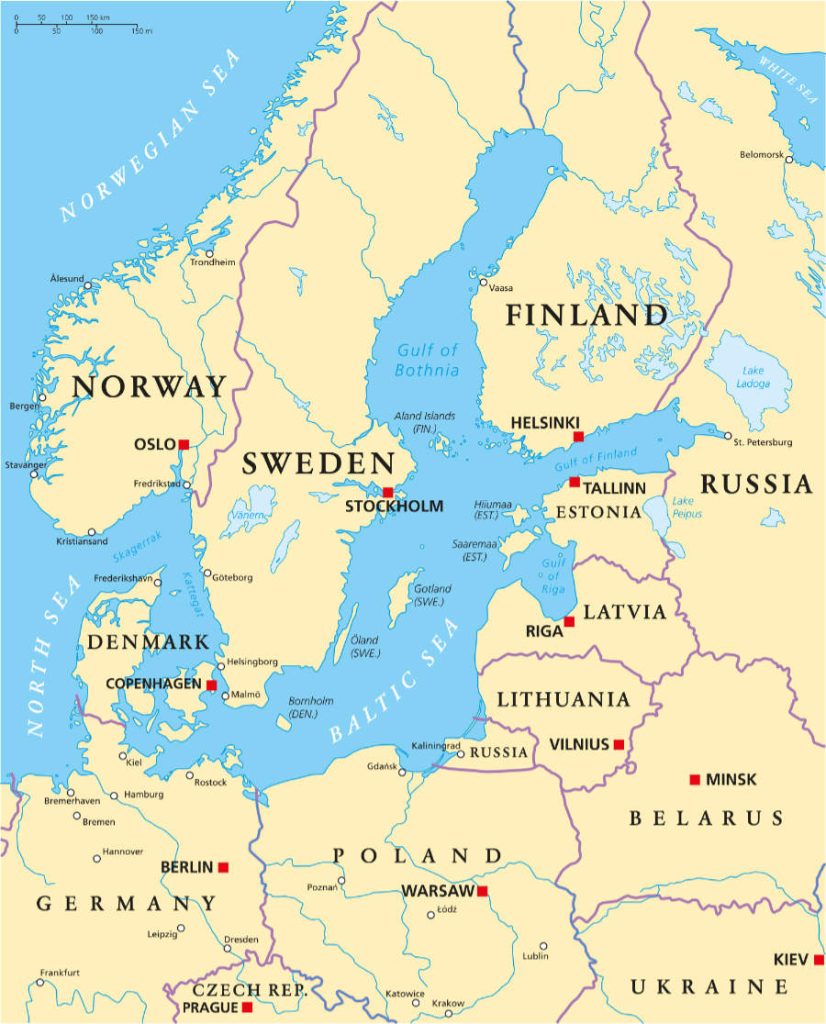
Despite the European Baltic Sea nations closing their operations to Russian shipping – at some cost to their throughput – Russia has been expanding its Baltic Port capacities to meet new markets in Africa and Latin America. This goes hand in hand with Russian plans to boost agricultural exports by 50% by 2030.

Russia is the world’s largest grain exporter, and exported over 62 million metric tons of grain in the 2023/24 season. With increased productivity, it is looking at new markets in Latin America and West Africa to expand its trade from the traditional grain markets it has in North Africa and the Middle East.

In the last 18 months, Russia has launched two major ports, Vysotsky and Lugaport, in the Gulf of Finland, not far from St. Petersburg. Vysotsky shipped its first grain in April 2023, while Lugaport began operations in June this year and capacity is expected to reach 7 million tons by early 2025. The Vysotsky Port has been sending grain to consumers in Algeria, Brazil, Cuba, Mali, Mexico, Morocco, Nigeria and Tunisia.

The two ports have capacity to handle up to 15 million tons of agricultural exports, including grain, per annum. That would account for 25% of Russia’s 62 million tons of grain exports forecast for the 2024/25 season.

In comparison, the EU’s Baltic Sea ports have seen significant declines in cargo volume throughput since they closed their facilities to Russian shipping and supplies. Latvia’s Riga port has seen throughput decline by 20% while Estonia’s Tallinn port has seen volumes decline by 29%.  

Ksenia Bolomatova, deputy head of Russia’s state-controlled agricultural conglomerate OZK said that “Last year, our record harvest showed that with the pace of loadings for exports, we do not have enough capacity.”

Russia’s President Putin set out a goal to increase agricultural exports by 50% by 2030 as part of a strategy to cement the country’s position as an agriculture superpower along with Brazil, the United States and China, while Russia has become the world’s biggest exporter of wheat, corn, barley, and peas in the last decade, – but further growth could be constrained by shipping capacity bottlenecks.

Novotrans, one of Russia’s largest logistics firms, stated that “The expansion of the Baltic Sea terminals’ capacity is a question of economic and transport security and sovereignty.” Russian trade flows and shipments have so far seen no major disruptions in the Baltic, where 96% of the coastline belongs to NATO members, including Estonia, Finland, and Sweden.

There have been comments made by politicians from these countries that NATO should block the Baltic Sea route to Russian ships as part of a new measure of sanctions. However, such statements have been badly received in Africa and Latin America as such moves would interfere with their food own security. This type of attitude is one reason why global opinion is moving away from the European position – often regarded as selfish without thought for other nations – regards sanctions upon Russia.     

The decision to enhance capacity at Russia’s Baltic Sea ports comes as the West African and LatAm markets are easier to reach and have shorter delivery times than from Russia’s Black Sea ports, which are also being disrupted due to the ongoing conflict with Ukraine. Two weeks ago, a Russian vessel carrying grain to Egypt was hit in a rocket attack, while the Russian local government in Port Kavkaz said that Ukraine sank a ferry carrying fuel tanks intended for grain transshipment.

Russian exported 62 million tons of grain by sea in the 2023/24 season with 90% of supplies going via the Black Sea, mostly to markets in the Middle East and North Africa. This share is set to fall as Baltic Sea infrastructure grows.

Baltic Sea ports loaded 1.5 million tons of grain last season, a three-fold increase from the previous season but still just 2.4% of overall Russian exports. Darya Snitko, a Vice President of Gazprombank, one of Russia’s biggest lenders to farmers, said that “Logistically, the Baltic has many advantages for grains exports, and the capability of Baltic terminals to handle bigger ships should help reduce overall costs. Supplies from the Baltic Sea are more competitive than shipments from the Azov-Black Sea area when trading with countries in Africa.”

Further Reading
Russia Plans Maritime Cooperation With Sao Tome & Principe On The West African Coast

Russia, Equatorial Guinea Hold Trade Development Talks

Published on September 26, 2024

The Russian President, Vladimir Putin, has been holding discussions with the President of Equatorial Guinea, Teodoro Obiang Nguema Mbasogo, in Moscow. Equatorial Guineas currently holds the Presidency of the Economic Community of Central African States (ECCAS).

The Kremlin said the agenda for the talks “includes prospects for the further development of Russian-Equatoguinean relations in various areas as well as topical international and regional issues.” It will be Mbasogo’s third visit to Russia and the second in the past two years. In November 2023, the two leaders held full-format talks, focusing on bilateral cooperation and the development of Russia’s ties with Central African countries. 

Back then, Putin suggested focusing on expanding trade and economic ties, adding that Russian companies have significant interest in working in Africa in general and in Equatorial Guinea in particular. In his opinion, the African country has “great potential investment opportunities,” especially in the context of natural resource extraction.

This year, Moscow and Malabo are marking the 56th anniversary of establishing diplomatic relations.

Economic Community of Central African States

Russian research vessels are currently engaged in the ‘Great African Expedition’ to assess fish stocks in the West African Atlantic Ocean, with Equatorial Guinea taking part in the exercise. Russia is looking to replace European supplies and is also looking to invest in African ports and processing factories.

In terms of the ECCAS, this is a free trade area and includes Equatorial Guinea in addition to Angola, Burundi, Cameroon, the Central African Republic, Chad, the Democratic Republic of the Congo, Gabon, the Republic of the Congo, Rwanda, and São Tomé and Príncipe.

Russia established maritime port agreements with São Tomé and Príncipe earlier this week, while the ECCAS region as a whole has a population of 200 million and a GDP of about US$758 billion – roughly 25% of the African total.

All ECCAS members except the Central African Republic are heavily dependent upon oil revenues, with Russia’s interests concentrating on the energy sector. Interestingly, the talks between Putin and Mbasogo are taking place in the format of a bilateral meeting within the framework of the Russian Energy Week, a discussion platform for discussing trends in the development of the global fuel and energy complex, which is attended by BRICS and other heads of state and government, representatives of major international energy companies and industry leaders.

Further Reading

Post not found.