News

Russia Plans Maritime Cooperation With Sao Tome & Principe On The West African Coast

Published on September 25, 2024

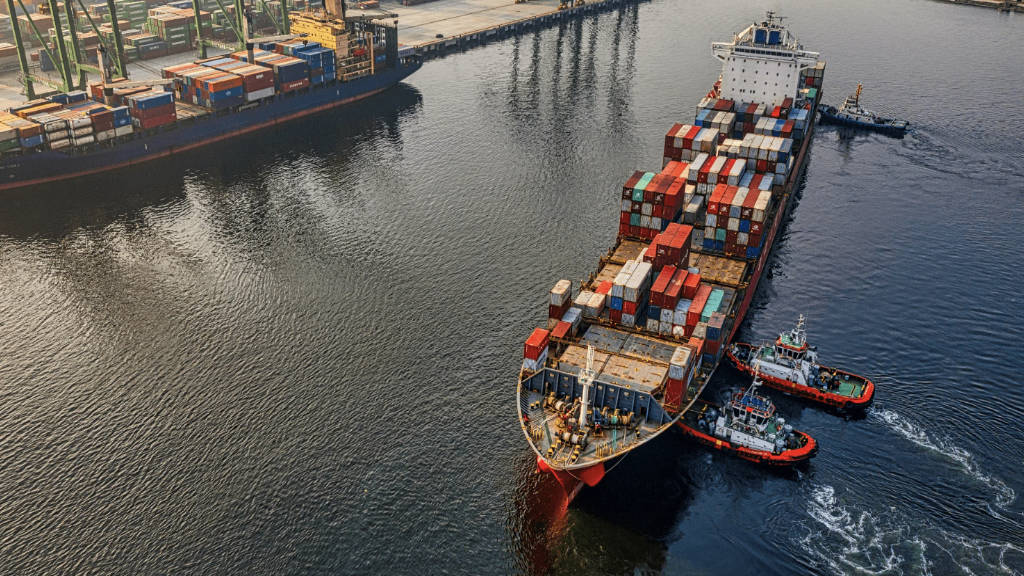
Russia is set to gain access to a key strategic naval port in the West African Atlantic Ocean through a bilateral cooperation agreement with the island nation of Sao Tome and Principe, located off mainland Nigeria, Cameroon and Gabon.  

A bill on the issue has been approved by a Russian government commission on legislative activity.

Alexey Chepa, of the Duma’s Committee on International Affairs, stated that ratifying the agreement will allow Russian ships to be stationed in the Gulf of Guinea. “Today, a large number of ports where our ships could come in for refueling are closed. Therefore, opportunities to find friendly ports significantly facilitate the activities of the Russian fleet.” Chepa said about the proposals.

West Central Africa Political Map

Under the agreement between Russia and Sao Tome and Principe, which was initially signed in St. Petersburg in April, the two sides will exchange assistance in naval education, cooperate in providing engineering support, combat piracy and terrorism, and provide logistical support. Cooperation is also expected to include Naval joint exercises and other activities between the two countries’ armed forces. The draft document says the agreement will last for an indefinite period.

Sao Tome & Principe also provides shipping registry services, while its main port is relatively well developed and can handle all types of vessels.  

Russia is currently involved in the Great African Expedition maritime research project, analysing fisheries potential. In addition, it has been making diplomatic and trade inroads into the West Africa region. Cameroon and Nigeria for example have both expressed interest in joining BRICS. 

Further Reading

Post not found.

Russia signs Strategic Satellite Agreements with Burkina Faso, Mali and Niger

Published on September 25, 2024

Burkina Faso, Mali and Niger have agreed with Russia to acquire telecoms and surveillance satellites, in what is becoming a significant development in West Africa. According to Mali’s Finance Minister Aluseni Sanou, the telecoms vehicle is expected to provide television and radio broadcasting throughout the countries of the Sahel Alliance of States (ASG), internet and mobile phone services in remote areas, as well as secure communication channels. The remote sensing satellite will help monitor borders, determine natural resource reserves, and eliminate the consequences of emergency situations.

Executives from Roscosmos, Russia’s aerospace agency, met with ministers from the three countries in Mali’s capital Bamako on Monday to formalise the deal. The ASG countries, ruled by military juntas, have long faced problems in fighting Islamist rebels and have also sought Russian military assistance in that regard. Islamist rebels continue to operate across the vast and porous borders of Mali, Niger and Burkina Faso in the semi-arid Sahel region south of the Sahara Desert. All three countries were formerly French heritage colonies, and their relations with Paris have become increasingly fraught in recent times. 

The remote sensing satellite project is seen as a crucial part of the security strategy, especially after the recent attack by Islamist militants on Bamako airport, a target far from the jihadists’ usual areas of operation.

The Sahel Alliance of States was created by the military leaders of Mali, Burkina Faso and Niger last September to provide a collective defence architecture in response to international pressure for an early return to civilian rule. The Wagner Group, now part of the Russian military, is helping to prevent further political instability. The last American and French troops left the region at the end of 2023. Niger was a major source of uranium for France’s nuclear industry. 

Russia has been actively working to expand its influence in Africa, especially in the Sahel, as relations between countries in the region and their Western allies have deteriorated.

However, despite the presence of the Russian military, the security situation remains unstable and requires investment, which Russia intends to provide.

Rosatom is implementing a project to build a nuclear power plant in Burkina Faso, which will further help energy and development in the region. Burkina Faso has also expressed interest in joining the BRICS group, while Chad, another Sahelian state, is also keen to develop closer ties with Moscow.  

Further Reading

Post not found.

Burkina Faso Interested In Joining BRICS

Published on September 25, 2024

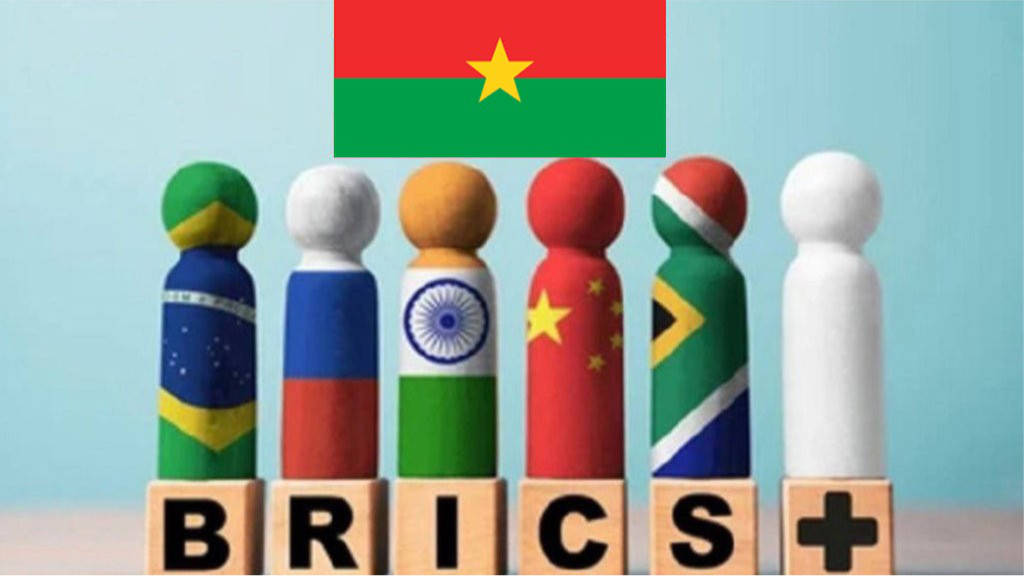
The Prime Minister of Burkina Faso, Apollinaire Joachim Kyelem de Tambela has expressed an interest in joining BRICS. In a meeting with Russian Ambassador Igor Martynov in Ouagadougou on Monday (September 24), he said that “Membership of the BRICS group would make it possible to challenge the domination of the dollar and the euro, and to achieve fairer trade relations on the international stage.”

Following the meeting, the Burkinabe government published a post on Facebook, confirming that Kyelem de Tambela had “argued for Burkina Faso’s joining the integration of BRICS countries (Brazil, Russia, India, China and South Africa).”

Martynov also discussed proposals for Russia’s development of a nuclear power plant in Burkina Faso saying that “The meeting was very fruitful and successful. We are in tune regarding our approaches to bilateral cooperation. We also discussed intensifying our cooperation in all areas.”

In June 2023, the Burkinabe government and the BRICS group signed a memorandum of understanding for cooperation. The document defines areas of cooperation, which include the economy, health, education, infrastructure, air and rail transport, industry, commerce, mines, energy, sport, culture, information and communication technologies, and tourism.

Burkina Faso Map

Burkina Faso is one of the least developed countries in the world, with a GDP (PPP) of just US$63 billion. However, natural resources include gold, manganese, limestone, marble, phosphates, pumice, and salt.  Agriculture represents 32% of its gross domestic product and occupies 80% of the working population, consisting mostly of rearing livestock. In the south and southwest, the people grow crops of sorghum, pearl millet, maize (corn), peanuts, rice and cotton, with surpluses to be sold. A large part of the economic activity of the country is funded by international aid, despite having gold ores in abundance.

Russia will be looking at mining opportunities. In July this year, Igor Martynov the Russian Ambassador said that Burkina Faso may give Russian company Nordgold preferential treatment in gold mining. Burkina Faso imports from Russia reached US$57.73 Million in 2023, and included mineral fuels, oils, distillation products, explosives, iron and steel, fertilizers, cereals, and pharmaceutical products. Moscow also gifted 25,000 tonnes of wheat to Burkina Faso last year.

Burkina Faso’s exports to Russia reached US$306,000 in 2023, according to the United Nations COMTRADE database on international trade. Although small, that represented an increase of 50% over 2022. Burkina Faso exports to Russia consisted mainly of rubber.

For more up-to-date intelligence about BRICS and the potential new members, please review our special BRICS article category here. 

Further Reading

Post not found.

Kazakh-Russia Direct Passenger Rail Services To Resume

Published on September 25, 2024

Passenger train services between Karaganda in Kazakhstan and Moscow will resume on December 17, 2024, after being suspended since 2020 due to covid, Russian Railways has announced. They stated that “The passenger service between Karaganda and Moscow will be reopened. Starting December 17, 2024, international express train No. 83/84 on the Karaganda-Moscow route will operate twice a week.”

It said departures from Karaganda are scheduled for Tuesdays and Saturdays, while trains will leave Moscow on Tuesdays and Fridays. The train stops at several major cities, including Karaganda, Astana, Kokshetau, Petropavlovsk, Chelyabinsk, Ufa, Samara, Penza and Moscow, while the service will feature both compartment and open-plan carriages, as well as special accommodations for passengers with limited mobility. The route also provides connectivity through to China.

Karaganda Map

The Karaganda route is popular with both Kazakh and Russian SME traders, with its resumption assisting the range of goods that will be available at local markets along the railway. It is also popular with seasonal and service workers from across Central Asia as an inexpensive route via Astana to Russia and the higher wages available in Moscow. The complete journey from Karaganda to Moscow takes two and a half days, and is additionally popular as a less time-consuming yet similar tourism experience to the Trans-Siberian Railway.

Further Reading 

First Agroexpress Chelyabinsk Freight Train Leaves For Chengdu

Has Putin’s “War In Ukraine” Really Failed – As Biden Suggested To The UN?

Published on September 24, 2024

The out-going US President, Joe Biden, gave a speech to the United Nations General Assembly yesterday (September 24) in which he stated that “The good news is Putin’s war has failed at his core aim” and then went on to list achievements, mainly as regards the expansion of NATO and the fact that Ukraine remains a sovereign country. But is this an accurate observation?

The answer, is no, not really. It also depends upon what Biden thought Putin’s ‘core aim’ has been. For example, there has not been any suggestion that Moscow wished for Ukraine to ‘disappear’ and be fully integrated as part of Russia. Neither is there any historical precedence for this to occur.

Putin’s ‘core aims’ have in fact been well documented: the replacement of the existing Kiev government and to seek assurances that Ukraine will not join NATO and will instead promote a concept of neutrality. As Ukraine has not joined NATO it can be assumed, at least for now, that one of Putin’s core aims has in fact been met. Russia’s ‘Special Operation’ meanwhile will continue at  least according to the Kremlin, until the other two elements – neutrality and a change of government – occur.

But there is more to judging success or otherwise than what Biden thinks Putin’s ‘core aims’ have been. Here we provide some other measures of what could be termed ‘success’ or ‘failure’. Green arrows indicate a positive trend from Russia’s perspective, red ones a negative. 

Territorial Gains

Part of the Ukraine conflict has been to protect the ethnic Russian-speaking population in East Ukraine, who declared a de facto breakaway from Kiev in 2014, and have been under military assault by Kiev ever since. Moscow did not recognise these regions as part of Russia until 2022, when it formally accepted their request to join the Russian Federation. As of September 2024, this has meant that Russia has gained about 109,000 km2 or 18% of what was previously Ukrainian territory.

National GDP

In 2021, Russia’s GDP was US$1.837 trillion. Despite the sanctions and conflict, it has subsequently risen to US$2 trillion.

GDP Growth

GDP growth dipped to -2.1% in 2022, but rebounded in 2023 to reach 3.6% and is currently on track to reach 3.9% in 2024, according to the latest statements from Anton Siluanov Russia’s Finance Minister.

Debt to GDP

Russia’s debt to GDP was 20.94% in 2021. In 2024, it is expected to be further reduced to 18.1%. This compares with the recently announced 100% levels for the UK, 88.7% for the EU and 102% for the United States.    

Per Capita GDP Growth

Russia’s average per capita income was US$12,532.05 in 2021. In 2024, it has risen to US$14,391. In comparative PPP terms, these expected 2024 figures are higher than several EU nations at US$38,292.

Inflation

This has been a tricky one for Russia to grapple with, as inflation was running at 6.69% in 2021 and ballooned to 13.75% in 2022. The current 2024 rate is 9.1% however it is forecast to drop to 4% by the year end.

Exports

Russia’s total export values in 2021 reached US$549.14 billion. Despite sanctions, these increased to US$631.55 billion in 2022 but have since reduced to an expected US$425 billion for 2024.

Foreign Exchange Reserves

At the end of 2021, these stood at US$630 billion. They are currently standing at US$614 billion, a slight decrease.

Foreign Investment

Russia’s official foreign investment for 2021 was US$40.45 billion. It subsequently declined as numerous Western investors exited the market, but has rebounded to about US$72 billion in 2024, mainly as result of Chinese investors and some JV infrastructure projects. Some of these upcoming investments are significant and will manifest in 2025-2030.

Summary

As can be seen, as per all normal economic indicators, the Russian economy is doing well. This is only partially related to what is happening in Ukraine, despite Western media suggesting it is because Russia is now a ‘war economy’, whatever that is supposed to mean. In fact, the Russian economy has been greatly affected by Western sanctions, however it is the fiscal reaction to these that have changed the entire direction of Russia’s economic performance.

Key amongst these have been prudent fiscal policies – note Russia’s very low levels of debt, which equates to minimal interest payments. Coupled with this has been numerous changes to the tax system, which now actively encourages both Russian overseas and foreign capital into the country.

In addition, prior planning has seen Russian exporters quickly adapt to new markets – its ‘pivot to Asia’. The Russian President, Vladimir Putin, did not want a conflict with Ukraine. Biden’s policies and Ukraine’s own challenges in stating it wished to become part of NATO crossed a red line. Ironically, that has resulted in significant changes to the way in which Russia runs its economy, and these have largely been fruitful. This means that if equating Russia’s success – or ‘failure’ as Biden somehow manages to spin it, in terms of the Ukraine conflict is measured in purely fiscal terms, then the US President is largely incorrect in the assumptions he gave to the United Nations.

In terms of ‘failure’ – it may have been more accurate for Biden to have pointed at the EU’s inability to cope with its own policies as regards Russian sanctions. That, at least, would have been more honest.

Further Reading 

Post not found.

Russia Imports Chinese Diamonds To Beat Financial Sanctions

Published on September 24, 2024

Money Can’t Buy Me Love, but Diamonds Are Forever

Russia has imported a significant quantity of diamonds from China for the first time, with 35,000 carats of the gems, worth more than US$12 million, imported last month, based on Chinese customs data. Both countries had stated that barter could be used to settle trade transactions due to financial sanctions difficulties, and this appears to be the case here.

According to the Chinese GeneraI Customs Administration, China exported 35,230 carats (7kg) of non-industrial unpolished processed diamonds to Russia in August for a declared value of US$12.4 million. The previous largest diamond transaction between the two countries was in 2013 and involved stones worth just US$200,000.

China’s diamond industry is among the world’s largest industrial diamond producers, and it has become one of the world’s leading players in the diamond market. With a growing middle class and an increasing interest in luxury goods, demand for diamonds in China has skyrocketed, creating new opportunities for local and international diamond producers.

Russia is the largest diamond mining country. Exploration, mining, processing and sale of diamonds in Russia is mostly carried out by one company – Alrosa, which accounts for about 95% of all diamonds mined in Russia. In 2016, the company established the Eurasian Diamond Center (EDC) in Vladivostok’s Free Trade Zone, where diamond products are traded, relevant certificates of release and export operations are processed for buyers.

Three other major players in the global diamond trade are Dubai and India, which provide most of the cutting and polishing services in the jewelry trade, while Hong Kong is a major transaction center. About 90% of Russian diamond processing takes place at Indian diamond cutters – some based in Vladivostok – while Chinese account for about 5%, although the Chinese share of this industry is growing. 

The Netherlands also used to be an important centre for cut diamonds due to its connections with South Africa. However, with the EU imposing rigorous (and expensive) 2023 tests to ensure no Russian diamonds enter the EU market, the Dutch market has significantly declined. This has meant that the European market has deprived itself of additional revenue from the Russian diamond industry, while Russia has simply transferred this trade to alternative Asian markets.

Although the transactional volume in this trade is small in the larger scope of Russia-China bilateral trade, this deal does show how financial sanctions can be overcome by simply exchanging products. The barter route may only be a temporary solution. From 2025, both Russia and China intend to use cryptocurrency transactions. Russia passed legislation permitting crypto to be used from September 1 this year, and has authorised its banks to provide cryptocurrency services as part of their regular transactional services to their customers from July 1 2025. China meanwhile has processed nearly US$1 trillion in crypto foreign trade settlements over the past 18 months.

Further Reading

Post not found.

Moscow Stock Exchange Begins Trading In Cocoa Futures With African, Asian and Latin American Producers A Main Beneficiary

Published on September 24, 2024

The Moscow Stock Exchange (MOEX) has begun trading in cocoa futures contracts, with trading and settlements conducted in Russian Rubles. The cocoa trade desk began operating yesterday (September 24) and reflects an international demand for the product, reflecting the dynamics of the price of cocoa beans supplied from countries in Africa, Asia, and Central and South America. In other words, the Moscow Exchange has begun representing commodities produced in the Global South. 

MOEX stated in a press release that “Investors can use futures to expand the possibilities of investment strategies, hedging risks and generating a profit from price fluctuations. Futures contracts will allow market participants to protect their income better from undesirable changes in exchange prices for cocoa beans for those whose activities are related to the production and processing of cocoa.”

The underlying asset of the futures is the cost of cocoa beans on foreign markets. About 70% of the world’s cocoa beans come from four West African countries: the Ivory Coast, Ghana, Nigeria and Cameroon. Of these, the Ivory Coast and Ghana are by far the two largest producers of cocoa, accounting for more than 50% of the world´s cocoa. Other important producers include Brazil, Ecuador, Indonesia, and Papua New Guinea. Brazil is already a member of BRICS, while Cameroon, Ecuador, Ghana, Indonesia and Nigeria have all expressed interest in joining.    

The parameters of cocoa settlement futures are contract code COCOA (CC), a minimum contract volume of 10 kg, as well as execution dates in March, May, July, September, and December, respectively.

Maria Patrikeyeva, of the Moscow Exchange Derivatives Market, said that “There is significant interest from market participants in the commodity instruments segment. On the one hand, this is owing to rising raw material prices and increased volatility in the markets, and on the other hand, a steady need to diversify investments.” The Russian Association of Confectionery Industry Enterprises (ASKOND) has said that cocoa bean imports to Russia were estimated at nearly 69,000 tonnes in 2023.

Interestingly, the MOEX contracts being traded are for futures deliveries exclusively to the United States. The US is the world’s fourth largest importer of cocoa with this meaning that Russia is now gaining a foothold in the US consumer market.  

The move by MOEX to begin trading in cocoa futures is an interesting development as the exchange typically trades in Russian products. However, Russia’s increasing involvement in trade with African and Latin American countries, as well as the rise of BRICS + grouping has now made Moscow, rather than traditional trade settlement markets in Europe or the United States a preferred choice for Global South producers – who are also willing to have the product priced in Rubles as opposed to euros or dollars. It is a global commodities development trend worth keeping an eye on as global producers start to shift away from Western manipulated currency trade prices.

Further Reading

BRICS, EAEU Could Be Part Of A New Unified Eurasian Commodities Exchange

Pakistan Joins International Transport Corridor Route from Belarus to Indian Ocean

Published on September 23, 2024

Pakistan has officially joined the International Transport Corridor (ITC), which runs Belarus-Russia-Kazakhstan-Uzbekistan-Afghanistan-Pakistan-ports of the Indian Ocean, the Uzbekistan Ministry of Transport has stated. The ITC will strengthen ties between Central and South Asian countries, whiloe for Belarus and Russia, both of which are under sanctions, it will provide additional access to the world ocean ports.

The Pakistan agreement was signed on September 8, as part of the framework of ‘international cooperation in the field of transport and logistics projects’ with the Pakistan Minister of Communications of Pakistan signing the document outlining the creation and development of a transport corridor leading from Belarus to Pakistan’s Indian Ocean ports.

In April this year, all countries part of the ITC met in Termez, Uzbekistan, where Belarus signed their end of the deal while Afghanistan and Pakistan announced the implementation of internal procedures for joining the project. A roadmap was signed at that meeting, including specific plans for the development of cargo transportation, analysis of cargo flows, introduction of electronic digital documents and optimisation of customs procedures.

Russia intends to take a direct interest part in this, which, in the context of sanctions restrictions, including in the logistics sector, needs additional access to the worlds ocean.

The Uzbekistan Minster of Transport, Ilkhom Rustamovich Makhkamov,  said that “Pakistan’s accession to this large-scale project marks an important step in strengthening regional trade ties and accelerating the process of international cargo transportation through the ITC. The parties expect that the ITC will become an important link in the transport system of Eurasia, providing convenient and efficient routes for the transit of goods, strengthening economic cooperation between the participating countries.”

The complete development of the ITC also includes the construction of a railway that will connect Uzbekistan, Afghanistan and Pakistan and would significantly accelerate the delivery of goods along the route. The implementation of this project is already being discussed between the parties.

Further Reading

Post not found.

Russia – Azerbaijan Overland Border Crossing Being Enlarged – Increases Throughput 12 Times

Published on September 23, 2024

The overland Tagirkent-Kazmalyar checkpoint on the border between Russia and Azerbaijan is to be upgraded and expanded, with plans to increase its vehicle throughput by 12 times. The Tagirkent-Kazmalyar crossing is a priority development project as it is a key access along the International North-South Transportation Corridor, (INSTC) which connects Russia south to markets in Asia and East to Central Asia and China.

By the end of this year, an integrated state border crossing system will be deployed at the checkpoint, which will provide automated data collection from all inspection complexes. It will provide automated data collection and processing from radiation monitoring systems, weight and dimensional control, inspection and inspection complexes, video analytics systems, car inspection, electronic queue and speed up the border crossing process. Part of this includes a procedure where it is possible to scan a vehicle in motion. It will also include an electronic queue system for trucks.

As a result, the number vehicle lanes at the Tagirkent-Kazmalyar border will increase from the current six to twenty, while the total throughput capacity will increase 12 times to 2,360 vehicles per day.

Tagirkent-Kazmalyar is in the Republic of Dagestan, Russian territory on the Caucasus mountains, and is 33 km northeast of Magaramkent, the regional administrative centre.  Dagestan covers an area of 50,300 square kilometres, with a population of over 3.1 million. The expanded crossing will help facilitate Dagestan-Azerbaijan trade. Russia’s bilateral trade volumes with Azerbaijan reached US$4.4 billion in 2023, an increase of 17.5% on 2022, according to the Azerbaijani State Customs Committee. Azerbaijan’s trade with Russia accounted for 8.52% of all its foreign trade last year, with Russia being Azerbaijan’s third biggest trading partner. Russia’s overland exports to Azerbaijan mainly consist of wheat, meslin, timber, and fertilizers. Azerbaijan sends Russia mostly animal products, fruits and nuts, plastics, rubber and mineral products. Energy shipments are typically sent via the maritime ports.

There are four and border checkpoints between Russia and Azerbaijan. The largest is the Yarag – Kazmalyar crossing, where reconstruction work was completed at the end of 2023.

Russia has been embarking on a national scale programme of upgrading capacity at its land border crossings. We have recently discussed updates on China here, Mongolia here. 

Further Reading

First Freight Train Route from Ulyanovsk to Azerbaijan Since USSR Era To Begin In September

Russia Publishes List of ‘Destructive Countries’ – With Their Nationals Eligible For Russian Residency

Published on September 22, 2024

Moscow has listed 47 countries, including some from Asia, whose “destructive attitudes” contradict Russian values, opening the path for nationals of these nations to seek asylum in Russia if they so choose. This follows the signing of a Presidential decree last month allowing foreigners who disagree with the “neoliberal” agenda pushed by their own governments to apply for Russian residency.

That list has now been published and includes the following countries and territories: Australia, Austria, Albania, Andorra, the Bahamas, Belgium, Bulgaria, Canada, Croatia, Czech Republic, Cyprus, Denmark, Estonia, Finland, France, Germany, Greece, Ireland, Iceland, Italy, Japan, Latvia, Lithuania, Lichtenstein, Luxembourg, Malta, Micronesia, Monaco, Montenegro, the Netherlands, New Zealand, North Macedonia, Norway, Poland, Portugal, Romania, San Marino, Singapore, South Korea, Spain, Switzerland, Sweden, Taiwan, Ukraine, the United Kingdom, and the United States.

According to Putin’s edict, nationals of “destructive neoliberal” countries are eligible to seek temporary residence in Russia without having to satisfy the standard immigration requirements, such as national quotas, Russian language proficiency, and knowledge of Russian history and laws.

The concept streamlines the immigration and naturalization process for foreigners who shared the “cultural, traditional and family values” of Russia, while also presenting it as a way to help Russia overcome a demographic dip. The scheme may also be extended to provide full Russian nationality and passport.

Nationals of these countries who wish to discuss their eligibility for the relocation to Russia scheme should contact the Russian Embassy in their country of origin or current residence. 

Further Reading

Post not found.

Russia, Iran, Overtake Saudi Arabia and Iraq As Leading Oil Exporters To China

Published on September 22, 2024

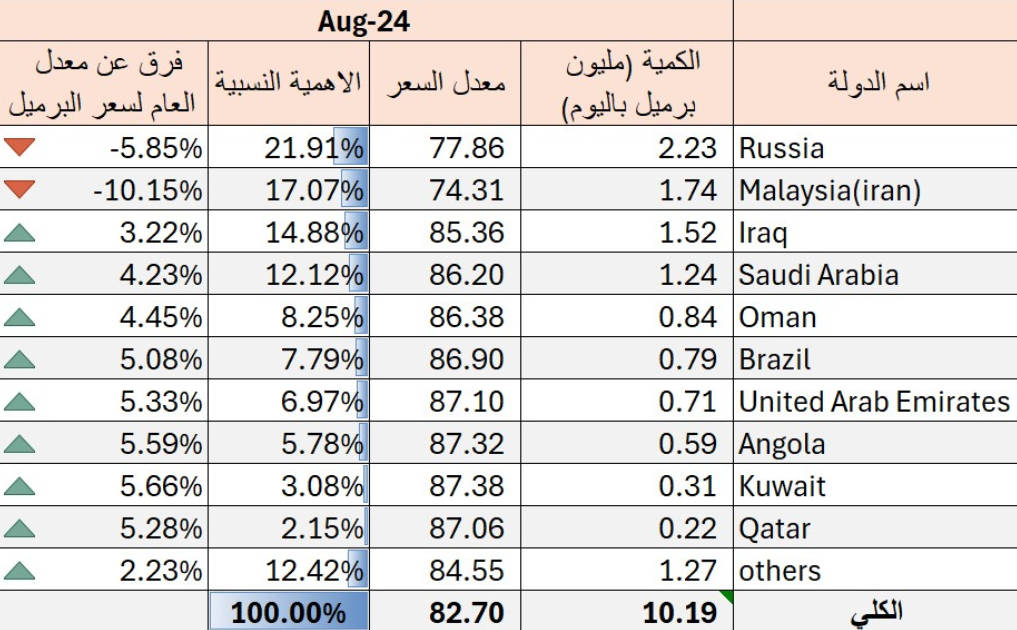
The Future Iraq Institute for Economic Research and Consulting has reported that Iraq and Saudi Arabia have lost their positions as the largest oil exporters to China due to purchasing incentives offered by Russia and Iran. According to the report, Russia captured 22% of China’s oil imports in August 2024, offering prices that were 6% below the average purchasing rate. Meanwhile, Iranian oil, funnelled through Malaysia, accounted for 17% of Chinese imports, with discounts of up to 10% compared to market rates.

These aggressive pricing strategies have pushed Iraq and Saudi Arabia, traditionally major suppliers to China, down the ranks in the world’s largest oil market.

The report noted that in July 2024, Russian oil was priced 4% below the average, while Iranian crude was sold at 7.5% below the standard, further solidifying both countries’ positions as top suppliers to China despite their lower prices.

Russia oil exports have found new markets in Asia, partially due to Western sanctions and partially due to aggressive pricing intended to combat competitive pricing by Western friendly suppliers. Brent crude oil prices in the EU have increased from a low of US$18.38 per barrel in Apil 2020 to reach US$80.36 in August 2024.

The pricing strategy adopted by Russia and Iran towards China means that globally productive manufacturing in China is now far more competitive than their European rivals, who are currently being priced out of international markets. EU oil supply prices from the United States are up to three times more than the pre-sanctions supplies from Russia. 

Further Reading 

Post not found.