Russian fish exporters need to actively develop new niche markets through marketing tools, according to German Zverev, President of the All-Russian Association of Fishermen. This will be of interest to Russian sales and marketing businesses with China market capabilities. According to Zverev, China is currently the second largest global importer of fish products after the United States. In 2023, the volume of China’s purchases amounted to US$18.76 billion, or 10% of the total global trade in aquatic produce.
Zverev pointed out that these dynamics will change. “Due to changing consumer dynamics, in the coming years, China will overtake the United States, becoming the main importer of fish products in monetary terms. The Chinese market is important for Russia: in 2023 it accounted for about 50% of Russian exports, the share of Russian fish products in total Chinese imports reached 15.5%.”
Zverev said that China also will eventually lose its role as an intermediate processing sector for the supply of processed products to Europe and the United States, while at the same time its position as the largest consumer of seafood will grow. “This opens up prospects for increasing the supply of Russian fish products for China’s domestic consumption, but at the same time it creates a need for high-quality marketing of our products. Russian fishermen have previously been successful in creating niche markets in China.”
Zverev quoted example of premium crab. According to him, in the 2000s, Russian fishermen created a premium crab market in China from zero. As a result, from 2017 to 2023, the supply of live crabs increased fivefold from 6,300 to 30,100 tonnes. “Norwegian companies have managed to generate demand for chilled fillets of aquaculture Atlantic salmon: supplies soared from 598 tonnes in 2016 to 39,400 tonnes in 2023. One of the latest examples is Russian frozen crab. The Chinese began to consume it at home. As a result of the emergence of a new market, the supply of frozen crabs has increased almost ten times in just two years to 10,800 tonnes by the end of 2023. Another case is Surimi (Fish paste, an ingredient used in many Asian dishes). The affordable price and high quality of Russian Pollock Surimi have allowed Russian fishermen to take a strong position in this market,” Zverev said.
According Zverev, there are also prospects for the development for other Chinese niche markets, including Pollock Caviar, Sardines, and fishmeal for aquaculture farms.
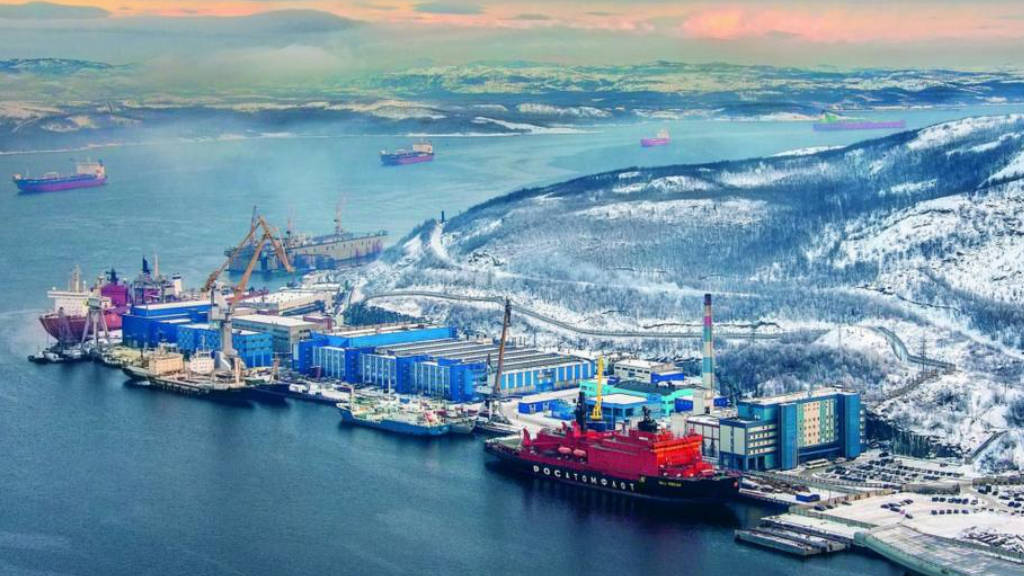
With Western cruise companies such as US-based Princess Cruises suspending sales of cruises to Russian citizens, Russia has begun to develop a new cruise industry designed to meet the needs of holidaymakers. In 2022, the Russian Government allocated ₽15 billion (US$164 million) for the construction of seven civilian fleet ships. Three of them will be built at one of Russia’s oldest shipyards, Krasnoye Sormovo. The main operator is expected to be the Russian company Vodokhod.
The vessels will be built using new technologies and will be able to operate in the Black, Caspian and White Seas, the Gulf of Finland, as well as on inland waterways. It is planned that the first vessel will be working in 2025, and the second and third in 2026.
The White Sea and the Gulf of Finland
In 2019, the United Shipbuilding Corporation (USC) presented designs for a 350-passenger Arctic liner, with helipads and possibly a casino on board. “The ship will necessarily have a helipad, an icebreaker hull, an ice belt that allows freezing into the ice, most likely propeller columns with the capability for dynamic positioning, five-star interiors for sophisticated customers. Other public areas will have a casino, if allowed” said Alexei Rakhmanov, USC’s Chairman.
Black Sea
These vessels, capable of carrying more than 2,000 passengers and 600 crew members, are designed to serve the Black Sea market, including Turkey and Georgia. Development has been delayed for now due to the situation in Ukraine.
Caspian Sea
These ships – four are being built – will be able to accommodate up to 180 passengers: 74 standard cabins (44 with a balcony), 10 deluxe cabins, 2 grand suites and 2 cabins for people with disabilities. They will be located on the main deck, middle deck, dinghy deck and sun deck. The Caspian Sea cruises will operate from the Russian home port of Makhachkala in Dagestan with calls at Aktau (Kazakhstan), Turkmenbashi (Turkmenistan), Anzali (Iran) and Baku (Azerbaijan).
Mikhail Pershin, General Director of the Krasnoye Sormovo shipyard, spoke about the modernisation of the domestic cruise fleet: “It is appropriate that Krasnoye Sormovo was one of the first shipyards to get involved in this work. Russia’s first cruise liner ‘Mustai Karim’ was built in Nizhny Novgorod, while the last ships such as the “Lenin” and “Soviet Union” were also built here in the late 1950s. Work on a new series of cruise liners will allow us to continue building up our competences in passenger shipbuilding’.
In the first half of 2024, 90 million Russians took holidays within the country, while another 20 million travelled abroad. “The demand for river cruise tourism is now obvious and, according to all forecasts, will only grow. This is well understood in the Government, so the order involves considerable sums of federal funding. New comfortable ships will help thousands of people of our country have a good rest and see the beauty of Russia” said Alexey Rakhmanov, General Director of USC.
In September 2022, Viktor Yevtukhov, Russia’s State Secretary and Deputy Minister of Trade and Industry, said the Ministry would be allocating a further ₽480 billion (US$5.3 billion) from Russia’s National Welfare Fund to build between 250 and 270 new civilian ships, with final delivery to be completed by 2027.
Amid the furore concerning the United States sanctioning the Russian media platform RT, other tactics are also being used by US media and content outlets to supress free speech. One of these has directly affected Russia’s Pivot to Asia, whose embryonic Linked In account has abruptly been suspended within 24 hours of it being set up.
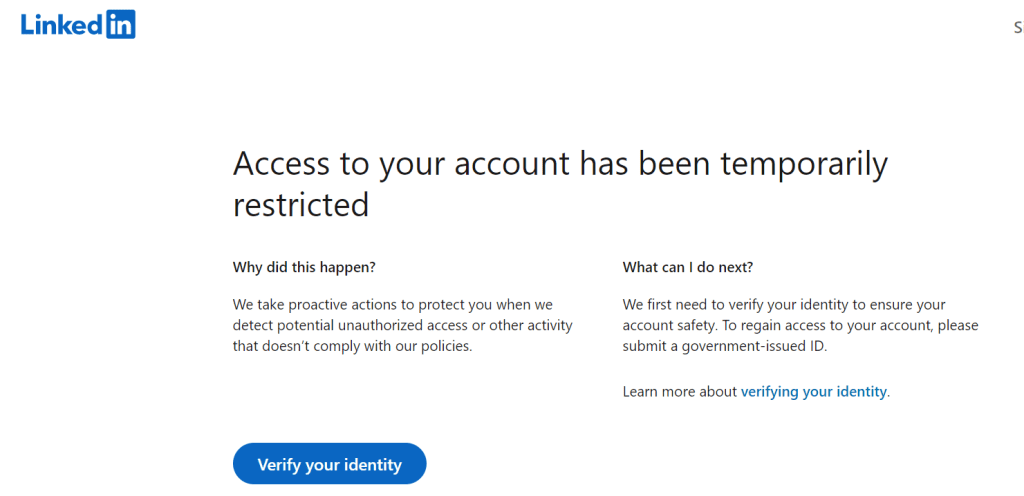
Following these articles, the account has been suspended with requests to provide a personal telephone number, and more worrying, a legally verified copy of our ID. This request is shown below:
Linked In state that this is ‘a proactive measure to protect you’ and then request personal details. That’s not ‘protective’ – that’s surveillance.
We have been made aware of other personnel facing problems with Linked In. One of our contributors is a well-known figure in Asia, and had a 15-year old Linked In profile with thousands of contacts. Upon posting an article about making a donation to a Ukrainian refugee charity, and doing so from Moscow, the article exploded with comments. Nearly all slammed the author for making a donation from Russia, claimed it wasn’t enough (it was US$1,000) and generally creating a huge amount of anger. 20,000 views and over 500 comments later that account was suspended for ‘inappropriate use.’ Requests were also sent to verify the persons’ identity with a request for a copy of a legally verified passport. They did, yet the account remained suspended despite the clarifications. So – what happened to their passport details? Who has those and what are the implications? Its unnerving stuff.
That incident altered the perspective of many whose previous opinion had been that US media were reasonably tolerant and that there wasn’t any attempt to coerce. When 20,000 angry Ukrainians descend upon an individual because they made a donation to assist Ukrainian refugees – but from Moscow – you can be sure that this was an organised attempt to intimidate. What was surprising was that this behaviour was seemingly encouraged by Linked In’s own policies.
This type of situation doesn’t gain much traction in Russia itself as Linked In has been blocked in the country. That was because it refused to comply with Russian laws requiring the data of its Russian based members be placed on Russian servers instead of US based ones. That effectively means that the Russian government itself was warning Russian Linked In users that their data was being kept (and potentially scrutinized) by the United States government. But it, as we have seen, Linked In can and does intimidate and silence the overseas Russian or Russian-friendly diaspora.
Meanwhile, RT is just one of multiple Russian-based news organisations that are not just banned in the West, but actively sanctioned. Journalists employed by RT can now be arrested and imprisoned in the West and have their assets confiscated. The US based American veteran Scott Ritter, a critic of the US policy in Ukraine, has had his passport revoked.
Right now, in Russia (and without using a VPN) we can access Western media outlets such as the Financial Times, The Economist, the Washington Post, The Atlantic, and many others. It may come as a surprise, but real freedom of the press is more noticeable in Russia than in the West.
At present, Russian ballet, opera, music and the arts in general are also subjected to censorship in the West. Performances are cancelled, musicians and even ballet dancers are told they are unwelcome. In Kiev, playing Tchaikovsky, or reading Pushkin in public can get you fined, jailed and beaten up. This month, at the Mariinsky theatre in St.Petersburg, the programmeover the next two weeks includes works by Bach, Britten, Elgar, Donizetti, Liszt, Massenet, Mendelssohn, Mozart, Rossini, Schumann, Schubert, Straus, Verdi, Vivaldi, and Wagner.
When one side to a conflict begins to impose censorship, and the other doesn’t, that gives some pointers as to which one of the opposing partners is really committed to freedoms, and which is masquerading in saying they are upholding democratic values, but in reality, are stealthily taking them away. Linked In’s behaviour is just one example.
US-Russia Media Impact On Donald Trump
Meanwhile, as concerns the latest news about the attempted, second assassination attempt on Donald Trump, it appears that the US government has not only been censoring content, it has wound up their media so much about Ukraine that American citizens are prepared to commit murder against fellow Americans (even a President!!!) in following the narrative. Clearly its a sign that US media manipulation and the aggressive messages within this anti-Russia, pro-Ukraine campaign have gone way too far. It’s driving ordinary American people to commit insane, highly criminal acts.
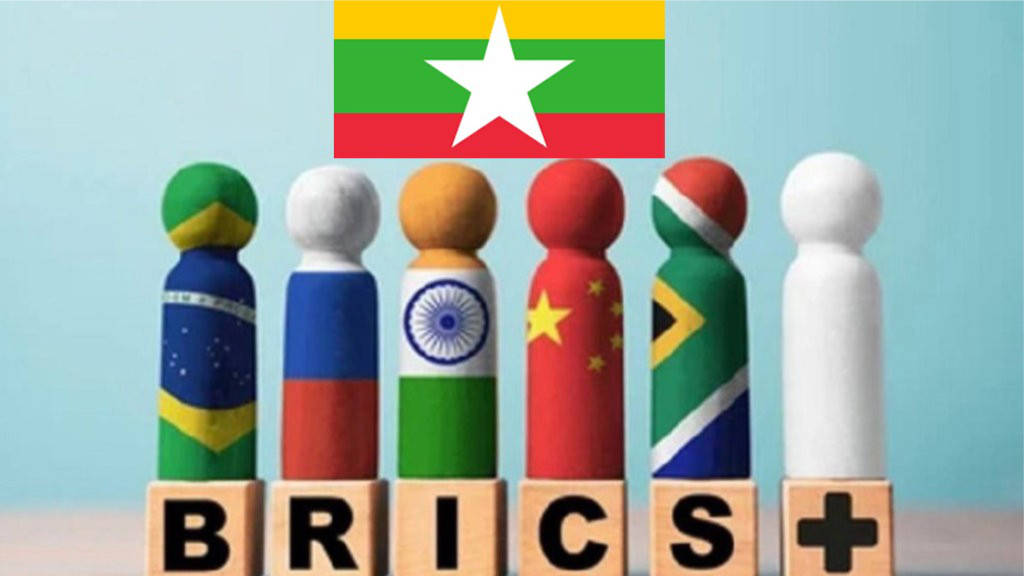
Myanmar would like to participate in BRICS as an observer country, its Minister for Information Maung Maung Ohn has stated: “We are poised for cooperation with the integration as an observer country, without full membership.”
Russia took over the BRICS chairmanship from 1 January this year and will hold the BRICS summit with the participation of heads of state in Kazan from 22 to 24 October. The Myanmar government would like to participate in the BRICS summit, though it has not yet received an invitation, the minister said. ‘In the future, we have a desire to send an application for full membership of the association. In our region, Southeast Asia, many have already applied. And we want to do so,’ Maung Maung Ohn added.
Amid the re-orientation of trade from the West to Asian markets, Russia has been expanding its trade and, to some degree, investment ties with South Asian countries. Among them, Myanmar stands out as a promising market for Russian companies that are willing to fill in the niche created by the exit of major Western companies also from Myanmar. The Western sanctions imposed on Russia have pushed Moscow to re-assess its approach to Southeast Asia. With limited trade and investment relations in pre-2022, Moscow has since then re-invigorated bilateral political and economic ties with Naypyidaw.
This expansion fits into the overall Russian thinking toward foreign trade but also serves as preparation for further growth of commercial ties with South and Southeast Asia especially given the fact that Myanmar is a significant member of ASEAN. Myanmar also enjoys direct access to China, India, and ASEAN countries through ports in the Bay of Bengal and the Andaman Sea.
In December 2022, Russia and Myanmar agreed to develop cooperation in various spheres of bilateral interaction: in the customs sphere, in the field of protection of sanitary and epidemiological well-being of the population, as well as in education and science. The agreement is built on an earlier bilateral economic cooperation strategy signed in August 202, when Myanmar expressed interest in importing liquefied natural gas and other energy resources from Russia.
In June 2023 a memorandum of cooperation was signed between the Eurasian Economic Commission (EEC), the directive body of the Eurasian Economic Union (EAEU), and Myanmar which aims at increasing cooperation in such areas as regional economic integration, customs regulation, energy and transport.
Related to this, in September 2023, direct air traffic between Russia and Myanmar resumed after a 30-year break and the two countries also signed a memorandum of understanding on tourism development the same month. Myanmar has also announced plans to join the Russian equivalent of SWIFT (SPFS) and in June the country’s officials proposed using the Chinese RMB Yuan and Ruble in settlements between the two countries.
Bilateral trade during H1 2024 has been somewhat erratic, however reached US$257 million as of the end of June, implying a total bilateral trade turnover in excess of US$500 million, which would b a record high.
Russia’s exports to Myanmar mainly consist of hard coal, three-component fertilizers, diammonium phosphate, refined sunflower oil, ammonium sulfate, anthracite, bulk semi-finished products, and unvulcanized rubber. The top Russian imports from Myanmar include men’s and women’s clothing, shoes, cotton sewn garments, sweaters, vests, and similar apparel.
In a tit-for-tat move, President Putin has asked the Russian government to look into imposing restrictions on Russian exports of so-called ‘strategic’ materials such as nickel, titanium and uranium in response to sanctions imposed by the West. If carried out, the move has the potential to reshape critical industry supply chains as Russia’s allies, such as China, could receive these products at rather lower prices than their Western competitors.
Purely on the back of Putin’s statement, commodities such as uranium have already seen an immediate price surge, with Putin’ intent also coming after French importers of the product lost their supply contracts with Niger – nullified following a military coup with Niger being assisted by the Wagner Group. France is energy dependent on uranium – with Russia the world’s largest enricher and possessing the sixth largest reserves. The Russian product has not been sanctioned by the West, ironically as it needs these Russian supplies. But Putin now intends to change this dynamic, stating that “other” resources may be affected, including nickel and titanium, while emphasizing that restrictions should be considered so long as “this does not harm Russia.”
If such an export ban were introduced, it is likely that shortages and significant hefty price increases for these strategic metals would hit European markets. Asia though, along with the United States, would benefit.
Russia’s Strategic Reserves
Russia is a resource superpower and possesses substantial reserves of virtually all the primary commodities required to keep a contemporary economy functioning. Russia possesses 12% of global reserves, 32% of LNG, 8% of all untapped uranium, and 11% of the planet’s coal. It also possesses 25% of global iron reserves, 33% of nickel, 15% of zinc and titanium, 11% of tin, 10% of lead and rhodium, 8% of chromium, 7% of copper, 3% of cobalt, 2% of bauxite and about 1% of gallium, plus substantial amounts of beryllium, bismuth, and mercury. Russia also has about 12% of global potash (used in an array of areas, from agriculture and industrial chemicals to pharmaceuticals). In addition to those commodity baskets, Russia has reserves of 23% of the world’s gold, 12% of silver, 20% of platinum group metals, and as much as 55% of diamonds, which are also used in industrial production as well as the jewellery sector.
Russia is also a potential world leader in the production of rare earth minerals (which are used in an array of modern high-tech devices, communications systems and advanced weaponry). While it only accounts for about 2% of rare earths production today, Russia has the second-largest reserves, constituting up to 28.7 million metric tons, and has committed to major investments in production and processing. Known rare earths possessed by Russia include samarium, europium, gadolinium, lanthanum, neodymium, promethium, and cerium.
Global Dependence Upon Russian Resources
Since sanctions were imposed, a realisation has begun to develop that while the Russian economy can survive without Western technological and consumer goods, the same cannot be said of the West when it comes to Russian oil, gas, uranium, fertilizers and other materials. For example, the EU quietly illustrated last week via the Euro LNG Trackerthat it increased its imports of Russian LNG by 11% in H1 2024. France, Spain and Belgium accounted for 87% of Europe’s Russian LNG imports during that time, while French imports of Russian LNG rose by 110%. Despite all the Brussels and London rhetoric, Europe is currently buying record volumes of Russian LNG amid shortages of US and Gulf-sourced supplies.
The United States meanwhile continues to rely on Russian uranium to fuel its nuclear power plants, with plans to wean itself off Russian dependency only coming into effect by 2028. Meanwhile, major Western agricultural producers including the US, Germany, France and Poland have negotiated special sanctions exceptions for themselves to allow the continued purchase of Russia’s nitrogen fertilizers, which are energy-intensive to produce.
Supply Chain Impact
“The pain” of a Russian freeze on strategic resource exports “would be felt by both the US and the EU, and all countries listed as ‘unfriendly’ to Russia, as they would have to source the required elements from third country suppliers, and that would entail an appreciable price increase for the commodity, and the extended supply chain costs that entails,” according to Paul Goncharoff, a Moscow based consultant. He said that “In this case, most, if not all alternative suppliers would be countries listed as ‘friendly’ to Russia. This is a value-added benefit for those countries.”
Maxim Khudalov, chief strategist at Vector X, a Moscow-based investment and brokerage firm, said that the higher commodity prices would add to the productivity overhead increases already being experienced by producers and consumers in many Western countries, suggesting that the United States and Europe could expect a 15-20% bump in the costs of its strategic resource imports if Moscow moves ahead with the restrictions, especially since Russia is in a unique position globally in the production of high-quality nickel, aviation-grade titanium, and enriched uranium.
For instance, while Russia today accounts for ‘only’ about 8% of total global nickel output, it accounts for about 20% of the production of high-grade nickel used to produce high-quality stainless steel and nickel-containing alloys, which are needed for space, aviation and defense technologies.
The same goes for high quality titanium. Russia’s titanium giant VSMPO-AVISMA in Sverdlovsk is globally unique in its ability to produce vast amounts of aviation-grade titanium.
Finding reliable replacement suppliers would take time, including the introduction of new quality and safety testing systems, and recertification which could take years, and in the case of aviation-grade titanium be required to meet strict temperature, bending, pressure load and other requirements.
Khudalov said that “In an airplane, you can’t just say ‘well, I don’t like this supplier of an element used for the wing, I’ll take it from somewhere else.’ Nothing of the kind. If you replace the element used in the wing, you change the airplane, and have to retest it, because it’s no longer safe for civilian use. The conclusion here is that it is very difficult to replace Russian supplies in the aviation industry, requiring significant recertification efforts.”
Competitive Impact
If Europe loses access to Russian aviation-grade titanium, this adds to Airbus’s production costs, affecting the aviation giant considerably in its high-stakes rivalry with Boeing.
Higher nickel costs would mean higher prices for virtually all of Europe’s high-tech products, from electronics to specialized mechanical engineering products. These products would become more expensive in Europe and provide US competitors with significant price-competitive opportunities.
European manufacturers are more vulnerable than in the United States, because the US, with all its capabilities, can afford to increase production costs, mainly because their own energy is cheap. Europe cannot afford any increase in production costs and will lose out to US competitiveness.
In the case of enriched uranium, the situation is even more complex, as it is a restricted resource typically exported to a specific customer for a specific use. Planning for the replacement of suppliers is a long and painstaking process, as nuclear power plants can’t simply be turned on and off at will.
France is the world’s second largest producer of enriched uranium after Russia, but Russian enrichment technology is better, with enrichment costs 35-40% cheaper. This means if a fellow European country has to switch to French-sourced material, it will have to pay a very hefty premium.
Advantage Asia
Khudalov noted that Russia, over the short term, could lose part of its export revenues if resource exports to the West were curtailed. “It can’t be said that all these possible restrictions on the Americans and the Europeans are critical and would kill their industries. It won’t. But it will add very serious difficulties, first and foremost of an organizational nature, because they would have to look for a supplier of comparable quality, and of course, pay a price they are not accustomed to paying. Because when a force majeure occurs on the market, and for them this would constitute a force majeure, any normal businessman will be obliged to take advantage of their status as an alternative supplier. Most of the alternative suppliers are located in China, with whom the United States are in the process of starting a trade war.”
“This means that while President Putin’s proposal sounded like a proposal to limit the supply of strategic metals to unfriendly countries, it almost certainly means no restrictions for friendly countries. In that case, we would deliver a nice pass to China, whose entire industry is aimed at producing high-tech equipment and would effectively get a 15-20% advantage on the cost of strategic materials over Western competitors. This would benefit Beijing in its push to put pressure on Europe and the US in all markets globally.”
Russia, meanwhile, will be able to reorient its strategic metals exports to other major alternative markets as well, including India and the ASEAN nations, and is increasing nuclear power cooperation with countries in the Global South, from Central Asia, China and India to Africa and Latin America, and has a number of new technologies and projects that could use the extra capacity, from the world’s only floating nuclear power plant, to new series of small, modular, low cost and secure reactors.
Manufacturers world-wide would be advised to work out alternative strategies for getting energy into their production facilities should Putin react to Western sanctions with some of his own.
Russia and Turkmenistan’s bilateral trade has surged this year, increasing by 73% in the first half of 2024, surpassing US$700 million, according to the Russian Ministry of Economic Development.
Deputy Minister of Economic Development of Russia Dmitry Volvach stated that “Last year, trade between Turkmenistan and Russia grew by 13%, and in the first half of this year has risen by 73% totalling more than US$700 million. The range of mutual trade is expanding, and the share of high-value-added goods is increasing.”
Volvach noted the importance of strengthening relations between Russia and Turkmenistan and noted significant events that have fostered bilateral cooperation, stating “The historic declaration agreed by our leaders in June 2022 to deepen our strategic alliance supports bilateral relations. A Russian-Turkmen business roundtable during Russian Prime Minister Mikhail Mishustin’s January 2023 visit to Ashgabat was significant. The 600-person Russian forum included roundtable discussions and business council meetings. It opened up investment and trade between our countries considerably.”
Turkmenistan is beginning to benefit from the International North-South Transport Corridor (INSTC) which sees Russian exports from ports in and near Astrakhan on the Caspian Sea flow south. One of those destinations is the Turkmenbashi Port, which then connects to Turkmenistan’s rail network and which also has connectivity links to Uzbekistan.
Russian companies have been involved in developing the new Arkadag smart city. Major Russian exports to Turkmenistan has included construction materials as well as engineered products for the countries energy industry, and include machinery, equipment and vehicles, food products and agricultural raw materials, chemicals metals and various products made from them, wood and pulp and paper products, and mineral products.
Turkmenistan exports textiles (cotton) and footwear, food products and agricultural raw materials, products of the chemical industry, machinery, equipment, and vehicles, vegetables and certain edible roots and tubers. Turkmenistan has significantly expanded its product range in recent years and is now turning from a single-product exporter of hydrocarbons into a multi-vector trade partner. For Turkmenistan trade with Russia is critical because it guarantees growth in exports of cotton, textile and agroindustrial products, and chemical products to Russia.
Turkmenistan, in turn, is interested in cooperation with Russia in the fields of the pharmaceutical industry (vaccines), shipbuilding (construction of sea vessels for the Caspian flotilla), machine tool and automotive industries (deliveries of KAMAZ and GAZ trucks), and high-tech products (telecommunications equipment, etc.) and exploration. Overall, the Russia-Turkmenistan trade balance has not yet reached full capacity, with the increasing INSTC connectivity helping the two countries to expand their trade portfolio and volumes.
Update – September 18 Alexsei Mozhin, the IMF’s executive director for Russia, has stated that the IMF’s leadership has now scrapped plans to begin a review of the Russian economy this week, because the mission was “technically not ready”. The IMF is understood to have come under pressure from European member states not to visit Russia.
The International Monetary Fund (IMF) will send staff to Moscow next week to review the Russian economy for the first time since the conflict with Ukraine, and imposition of Western sanction.
Officials of the Washington-based organisation will travel to the Russian capital and meet Russian economic officials prior to publishing an assessment of the Russian economy and providing recommendations about how the Kremlin might improve its economic handling and tackle issues such as the climate crisis.
The IMF said it was a “mutual obligation” to carry out an article IV review of a member country and the process was only suspended because of the volatility of economic data. The situation in Russia was now “more settled”. The IMF’s article IV states that “The IMF shall hold bilateral discussions with members, usually every year. A staff team visits the country, collects economic and financial information, and discusses with officials the country’s economic developments and policies.” Russia has been a member of the IMF since 1992.
Several European countries have protested against the IMF’s plans, saying it would damage the reputation of the IMF to resume dialogue with a country that had invaded another, although when this had previously occurred in other conflicts involving European nations such a complaint was not made. On the other hand, it may provide Washington with useful information about how Russia is really dealing with sanctions amongst all the partisan hype.
According to the latest data from Moscow’s Federal State Statistics Service, Russia’s economy grew by 4% in Q2 2024. Much of the expansion was in the manufacturing sector, where factory output is partially related to the Ukrainian conflict, but not exclusively. Other factors include Russian manufacturers stepping into market gaps vacated by Western firms, and a very specific government drive to boost exports to Asia. Additional steps such as the creation of Free Trade Zones and tax incentives have also helped.
Foreign analysts looking at Russia have limited intelligence resources to examine the Russian economy as many analytical firms left Russia leaving gaps in data analysis, resulting in their own statements often being coloured by Western political rhetoric. An example was the predicted collapse of the ruble, a situation that did not occur.
An IMF spokesperson said at a press briefing in Washington that “The IMF and all of our member countries have a mutual obligation to conduct Article IV consultations. This obligation is in our Articles of Agreement. In the case of Russia, since 2022, the economic situation has been exceptionally unsettled, which has made it difficult to anchor Article IV consultations, especially thinking about the outlook and policy frameworks for both the near and the medium term. Now that the economic situation is more settled, Article IV consultations with Russia are resuming, in line with the legal obligations of both the IMF and the member country.”
The Digital Ruble will be in use across Russia in less than a years’ time, as the Central Bank has issued instructions to Russia’s systemically important lending institutions to allow clients the option to conduct transactions in Digital Rubles by July 1, 2025. The regulator has sent the corresponding proposals on amending the legislation to the Finance Ministry, the Central Bank said.
The banks concerned are Gazprombank, Sovcombank, Promsvyazbank, Russian Agricultural Bank, Sberbank, Tbank (formerly Tinkoff Bank), Alfa-Bank, VTB , FC Otkritie, UniCredit Bank, Credit Bank of Moscow , Rosbank and Raiffeisenbank.
Bank clients will have ethe right to open digital ruble accounts, deposit cash into them, make funds transfers, as well as receive digital rubles via the relevant infrastructure, the Central Bank of Russia said. Russia will be the first country in the world to fully introduce a digital variant of its sovereign currency in large scale format to its general public.
Russia’s smaller banks have been given more time to adjust their systems – their deadline is July 1, 2026, while other credit institutions have to make sure they comply with the requirement by July 1, 2027.
In addition, the regulator plans to set deadlines for the mandatory acceptance of payments in digital rubles by trade and service companies (TSCs). This requirement is to be fulfilled by July 1, 2025 by companies with annual revenue of over ₽30 million (US$330,000) by July 1, 2026 by those with annual revenue of over ₽20 million (US$220,000) and by July 1, 2027 by all other companies.
Payments for purchases with digital rubles will be conducted using a universal QR code based on the National Payment Card System, which will help banks and TSCs avoid additional costs.
The digital ruble is a third variant of the national currency that has been designed to expand the options of making payments and funds transfers. Digital ruble transactions have been piloted since August 15, 2023, with around 600 individuals from among employees of 12 banks taking part in the first phase.
The second pilot phase started from September 1, 2024 and is involving 9,000 individuals, and 1,200 TSCs.
Uranium One Group, a division of Russian SOE Rosatom, and Bolivia’s SOE Yacimientos de Litios Bolivianos (YLB) have signed a contract to build a lithium carbonate production plant at the Uyuni Salt Flat in Potosi, Bolivia, in the second half of 2025. Production will then gradually expand to eventually produce up to 14,000 tonnes of lithium carbonate per year, according to Rosatom.
YLB aims to position Bolivia as a leading global supplier of lithium, which is used in the pharmaceuticals industry to treat depression and other mental illnesses. There are also developing applications in the battery industry, and it is likely that Rosatom will piggyback battery storage technologies from the available Bolivian deposits.
Rosatom has been working with Bolivia for some time. In 2016 the parties signed an intergovernmental agreement to cooperate on the peaceful use of nuclear technology and the construction of a nuclear research and technology centre, with construction to be completed in early 2025.
Rosatom might also build a plant in Bolivia to manufacture energy storage devices, the company’s first deputy CEO, Kirill Komarov said at the Atomexpo 2024 exhibition.
The parties have also discussed the possibility of building small nuclear power plants in Bolivia.
Some Russian businesses have begun using gold to pay Chinese suppliers to get around US sanctions and threats of sanctions against Chinese banks affecting Russia-China bank transfers. The alternative solution means that gold is purchased in Russia, transported by private courier to Hong Kong, where it is sold, and the cash is deposited into the Chinese suppliers account at a local bank.
Hong Kong is a Free Port and does not levy any import duty on gold, although it is mandatory to declare the gold to Hong Kong customs upon arrival. The declaration process is straightforward, and the associated fees are minimal. Proper declaration however is crucial to ensure compliance with Hong Kong’s regulations and to avoid any legal complications. The process avoids all use of the banking system except for the deposits into secured Chinese bank accounts.
Russian couriers transport the gold and its ownership documents across the border and obtain an authentication seal and receipt signature from Chinese brokers, who then provide cash which can be used to settle transactions with Chinese suppliers.
Hong Kong is a major Asian centre for gold trading as it is a regional hub in the jewellery business. In 2023, it imported about US$16 billion worth of gold, mainly for this industry, and mainly to serve the mainland Chinese market – being a major consumer of gold with a massive middle class consumer population of about 550 million people.
Apparently co-ordinating with this need, the Chinese Central Bank raised the gold import quotas for several of its major banks, anticipating revived demand despite record high prices. The new quotas, aimed at helping the People’s Bank of China (PBOC) control how much bullion enters the world’s leading consumer of the precious metal, were granted in August. Last year, China imported US$3.1 billion worth of gold from Hong Kong. That figure can be expected to increase for 2024.
Russia is the world’s second largest producer of gold, and has some of the world’s largest gold reserves. Russia’s mined reserves at the Central Bank jumped from 1,035 tonnes in 2013 to 2,333 tonnes in 2023. It mined 310 tonnes of gold in 2023 worth about US$26 billion at current prices.
Russia’s Transit Transport Group, (TTG) one of Russia’s largest shipping companies has expanded its ‘Fetled Express’ marine service from Shanghai to St. Petersburg, adding the Sri Lankan port of Colombo to the route.
The service directly connects China, Vietnam, Sri Lanka, Turkey, and Russia and is part of the Asia-Russia intermodal transportation chain. The full route of the sea line: Shanghai – Ningbo – Nansha – Ho Chi Minh City – Colombo – Istanbul – Novorossiysk – Istanbul – St. Petersburg – Kaliningrad.
Ships pass along this complete route in about 40 days from Shanghai.
In China, TTG also serves Dalian, Xingang, Qingdao, Zhapu, Ningbo, Nansha, Shàntóu, Xiàmén and Shanghai. In Sri Lanka, the Colombo Port City is a Chinese investment made as part of its Belt & Road Initiative programme at a cost of about US$15 billion. “The Port of Colombo, located on a strategically important sea route, enables rapid connectivity between the growing economies of South Asia. With its state-of-the-art infrastructure, it ensures high speed and reliable cargo handling. This makes it an ideal transport hub for companies looking to shorten delivery times and reduce logistics costs. Cooperation with Colombo Port will improve logistics processes and expand opportunities for realising our customers’ business solutions. Regular schedules and on-time delivery; short and predictable transit time, wide federal network, availability of empty equipment, cargo tracking are the main priorities of the international logistics company Transit”, said Boris Puzynin, Head of Marine Line Department.
Transportation is carried out in the senders and Transit Line containers. The range of goods includes a wide range of cargos, including dangerous, refrigerated, and bulky goods.
TTG processes 300,000 TEU annually, with a fleet of 20 ships of various tonnages amongst 40,000 containers. The company uses its container terminal, which is one of the largest terminals in the Far East, based in Vladivostok. TTG also uses its railway fleet of 3,000 special platforms for the transportation of containers and a vehicle fleet including 350 special container ships and tractors of various modifications. The company employs about 2,000 people.
Russia has one of the largest maritime fleets in the world, with an officially recognised number of about 2,900 significant vessels operating under the Russian flag. The true figure is likely to be far higher however and possibly up to 10,000 vessels given Russian-owned ships operating under different flags and its recent acquisition of a 600-strong estimated ‘shadow shipping fleet’ to service sanctioned energy products. Russia has also embarked on a vigorous shipbuilding programme and is having ships built at its shipyards and in India. 24 warships were delivered to the Russian Navy this year while Russia also aims to add 100 commercial vessels of various sizes per annum for the next five years.

 Русский