News

Russia To Evaluate The Performance Of Its International Participation Memberships

Published on August 28, 2024

The Russian government is to put into place a more assertive approach in promoting its national concerns and development agenda within multiple international organizations, including the World Bank, APEC, OECD, APEC, G20 and BRICS amongst others. To do this, the Ministry of Finance (MoF) has selected the Economic Expert Group, who during 2024–2025, will conduct scientific research to establish the performance of these institutions and how to strengthen the impact of Russia’s participation in their activities. The project has been titled “Analytical & Research Support for the Participation of the Russian Federation in the Activities of International Organizations and Forums.”

The Economic Expert Group is an independent think tank that deals with macroeconomic and public finance issues. Based in Moscow, it cooperates with the government, the Ministry of Finance, the Ministry of Energy and the Central Bank. According to the MoF government procurement documents, the study should be carried out in 2024–2025 and completed by the end of 2025.

Russia’s Ministry of Finance is an active participant in several international, financial, and economic forums, including BRICS, G20, APEC and the Shanghai Cooperation Organisation (SCO), among others, and organizations such as the International Monetary Fund (IMF, part of the World Bank) the Financial Action Task Force (FATF, which deals with global money laundering) along with several other international platforms. With changes in global geopolitics, the need has arisen to evaluate their effectiveness as concerns Russia, as well as the need to better coordinate and promote Russia’s agenda within them.

The procurement document poses the following questions from the MoF to be researched and answered:

Improving Russia’s Monetary and Financial System

This includes three studies. Firstly, the potential improvements of the global monetary and financial system in the context of Russia’s current chairmanship in BRICS. This includes a study whether the creation of a new independent monetary infrastructure is necessary and has the adequate potential.  Also, examining the prospects and risks for the development of the global economy, considering multiple shocks. Among these are high interest rates, threats to food and energy security, and the need to increase labour productivity. There will also be studies as to the approaches, benefits and costs of expanding the use of national currencies in mutual settlements within the SCO.

Attracting investment into Russia’s Infrastructure Development

Two studies are within this section. Firstly, the analysis and monitoring of capital flows. In this regard, it is proposed to evaluate the work of the IMF, World Bank, and OECD. This includes the potential for investment in Russian infrastructure; and proposes to study tools for stimulating long-term investments in such projects and attracting private capital from countries friendly to Russia. It also deals with ‘soft power’ issues such as the potential for the West to restore relations with Russia, overcoming Russia’s political and social disappointment in Europe, and the status of the Russian language. 

Managing the Transition to Carbon Neutrality

One study, being an analysis of the macroeconomic consequences of the policy of transition to carbon neutrality has been commissioned, focusing on reducing greenhouse gas emissions to zero.

Expectations

The MoF noted that in the research work it is necessary to justify proposals for Russia’s position on issues that are included in the agenda of the activities of world organizations. Thematic reports must be prepared for all the six studies mentioned above, as well as additional information and analytical materials.

One of the most important issues on the agenda is improving the monetary and financial system, including the launch of the BRICS currency, which can create competition between the Euro and the US dollar.

For Russia, the issue is acute, as over past two years the West has been introducing restrictions on payments from Russia, with the largest banks and financial platforms subjected to sanctions, and secondary restrictions also threatening third party, non-directly involved countries who wish to continue to interact with Russia. Therefore, two of the six studies on which the MoF want to strengthen their position are related to the financial system.

The BRICS single currency is one of the important topics that Russia is actively promoting as chairman of BRICS, which it holds until the end of this year. There are difficulties to overcome, as each member BRICS country has its own national legislation on this matter. However, there has been a general positive attitude by the BRICS members towards the use of national currencies, suggesting a BRICS basket of currencies could be a solution.

Improved Institutional Coordination 

Russia needs to participate in international forums, because political decisions affecting Russia are made at these events. They also influence the economic and political situation in the world, with significant agreements being concluded with international partners. The MoF has requested the necessary research to fine-tune Russia’s participation to allow Russia a better platform and to make better use of these institutions; and develop the international activities of Russia with the ability for high-quality Russian involvement. 

Alexander Arsky, a researcher at the Center for Strategic Studies at the Faculty of Economics of RUDN University, says that Russia’s position must be reasoned, and confirmed by statistics based on which accurate forecasts can be made. According to him, participation in forums and summits requires a scientific and methodological approach to increase the trust of foreign partners in Russia’s position in the international arena.

Further Reading

Russian and European Intellects Are Moving Apart

Russian Wine Maker Abrau-Durso To Produce Tonic Beverages In India

Published on August 27, 2024

Abrau-Durso, Russia’s leading producer of sparkling wines, has begun producing sparkling beverages in India. Boris Titov, Abrau-Durso’s principal owner has said the initial trial batch will total 10,000 bottles. Unlike the companies usual, champagne style products, the new India production will be a low alcohol sparkling beverage aimed at the youth market and available in different fruit flavours.

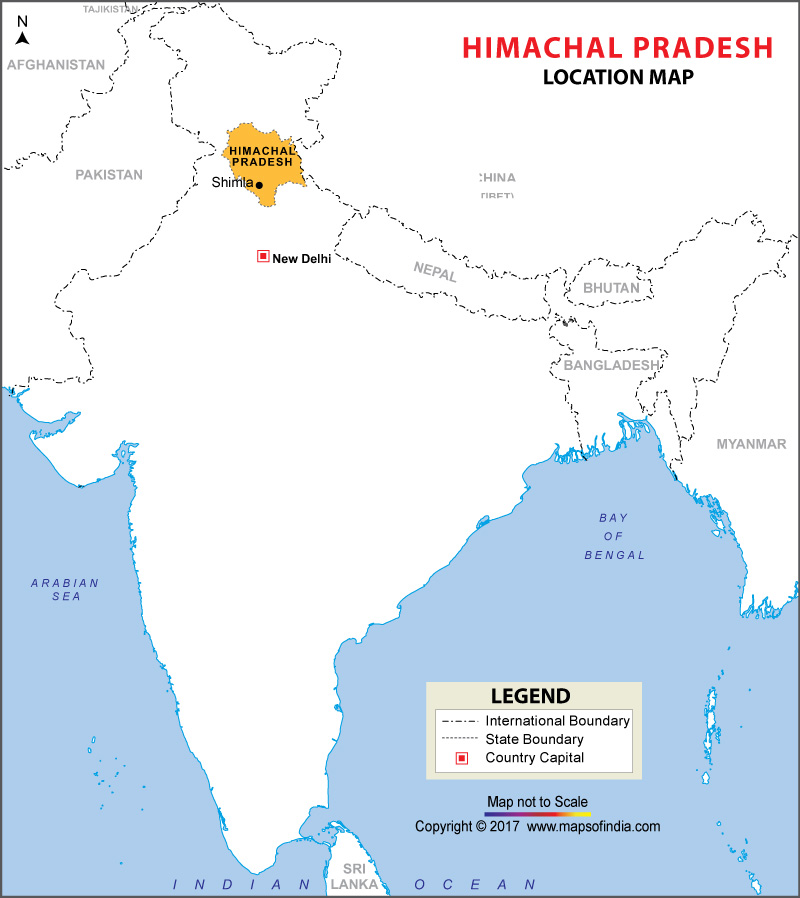
Titov said that “While studying the prospects of entering the Indian market, it became clear that the best option is to set up production directly there. Therefore, we’re setting up production of a unique sparkling beverage with the addition of natural fruit juices in Shimla, in the foothills of the Himalayas. This is low-alcohol sparkling beverage that will be popular among young people.” The first product is an Indian tonic water, with citrus notes. One bottle is enough to make three Gin & Tonics.  

Shimla is at an altitude of 2,276 meters and is warm in the summer yet snowclad in winter. Many fruit varieties grow in this region, with apples being specially prized. Shimla used to act as the summer capital city for the summer month during the British Raj era as the heat in the Indian plains proved too much for the then European colonialists.  

In India, Abrau-Durso has invested about US$4 million into a recently created joint venture, with 51% of the shares belonging to the company.

The production of the first batch of 10,000 bottles is now close to completion. The beverages will be ready to drink, made entirely in India, and available in both cans and bottles. Production is expected to grow to 6 million liters by 2026.

Abrau-Durso dates back to Russia’s Imperial times when the Tsar ordered wineyards producing sparkling wines to be planted on the Russian Black Sea coast, allegedly to compensate for the huge amounts of imported French champagne the Imperial court were consuming at that time. India also has a long history of manufacturing sparkling wines, with Chandon, a division of Moet & Chandon, also producing champagne style wines in the country.

The move to establish a Joint Venture in India with a local partner taking care of the local production issues makes a lot of sense for Abrau-Durso. Most tonic waters consumed in Russia are expensive, imported Western varietals, meaning that there is a competitive market there the company can compete with. India also has a massive consumer market. When the JV productivity gets up to speed, the company could be on a real winner with this simple, relatively inexpensive, yet far-sighted investment.      

Further Reading

Indian Exporters Want Greater Market Access in Russia    

Russian Crypto Exchanges & Stablecoins To Be Trialled To Support Foreign Trade 

Published on August 26, 2024

Two crypto exchanges are expected to be launched in Russia, one in Moscow and the other in St. Petersburg, with the aim of assisting foreign trade payments.  While the operating mechanics are not yet specifically in place, Russian lawyers feel they will most likely be created in an experimental legal mode. To begin with, usage may be limited to Russian MNCs and the initial functionality of the project may also be limited due to third party sanctions risks.

According to unofficial reports, there are plans to create at least two crypto exchanges in Russia. One it is planned at the St. Petersburg Currency Exchange (SPVB) for foreign trade activities, with a second site is planned to be created in Moscow. However, it has not yet been decided whether it will be made on the basis of the Moscow Exchange or separately within the framework of the experimental legal regime.

Stablecoins

Stable Coin

Current thinking has also turned to the creation of stablecoins, with the prospects of creating stablecoins for the Chinese RMB Yuan and, in general, for the BRICS basket of currencies. Stablecoins, due to their legal nature, is similar to a cryptocurrency, however this also poses technological difficulties in the Russian blockchain and in terms of its convertibility, liquidity set, and relation to the traded product collateral. Oleg Ogienko, of Russia’s BitRiver IT communications business, says that “There is a point of view that stablecoins are digital financial assets in terms of Russian legislation due to the presence of an emission center and an oblige.”

Currently, cryptocurrencies in Russia are regulated by several key regulations, the main one of which is rule 259-FZ “On Digital Financial Assets”. This law establishes the legal basis for the issuance and circulation of digital financial assets; but does not contain direct rules governing the activities of crypto exchanges. In this regard, there is still no clear and unified legal mechanism for the creation and operation of crypto exchanges.

Now the only regulation applicable to potential crypto exchanges in Russia is the EPR (Experimental Legal Regime) law, which has just been adopted. Under this, should crypto exchanges be authorised, at first, only a small circle of businesses will use the exchange, in test mode, followed by Russia’s largest exporters and importers. It remains unlikely that small and medium-sized businesses, and especially individuals, will have access to this test phase, while it is important to emphasize that the contours of the future experiment are completely left to the regulator.

Technological Pushback

Technological Pushback

However, not everyone agrees that the technology will be in mass usage. Nikita Vassev, the founder of TerraCrypto believes that only those who have no other choice will use cryptocurrency exchanges, saying that “Those who have a choice will not exchange convenient trading platforms, which the best developers have been improving for years, for domestic platforms. And concerning stablecoins, it is the same story. They will only be used by those who have no other choice. The only scenario in which a trading business will use a cryptocurrency exchange is as a last resort.” 

Other experts have also confirmed doubts in these projects. Blockchain remains a relatively transparent entity, and in case of violation of confidentiality, information about transactions may be included in the sanctions lists, and blocking will begin for transactions with crypto assets purchased on such domestic exchanges. Simply put, if information leaks to the public that the cryptocurrency was purchased on the Russian stock exchange, then, using special technical tracers means, that these transactions can be easily tracked and all transactions can be marked as suspicious.  That would significantly damage the transaction participants, but also future owners of digital currency, even those completely uninvolved in Russia. The centralized nature will kill any trust, – as we have seen with the recent arrest of Telegram founder Pavel Durov. How the system works needs to have some protection against the West’s attempts to destroy mechanisms they cannot control.

Further Reading

Russia’s New Digital, Crypto, Cross Border Finance and Foreign Banking Laws: An Explainer

Moscow Hosting BRICS International Municipal Forum   

Published on August 26, 2024

Moscow is hosting the BRICS International Municipal Forum (IMBRICS) from August 27/28, an event that is bringing together city mayors and related municipal officials from 126 countries, 89 Russian regions and 500 cities to discuss and share information on municipal and urban planning.

The Government of Moscow is acting as the General Partner of the IMBRICS event. It is aimed at integrating positive global experience in the technological, economic, and social development of municipal territories of the BRICS countries and their partners.

An introductory video to the event can be seen here:

Moscow will be sharing its experiences of best practice development, which include traffic management and urban transport. Many of the BRICS nations are emerging economies in their own right, with huge movements of rural populations to the cities occurring.

The event is also noticeable in terms of attendees, while the West claims that Russia has been internationally ostracised, in fact the reverse is true: globally emerging nations are now starting to reject so-called ‘Western values’ – which is the past has often used its trade and development terms for exploitative purposes. Those issues are now coming to the forefront as developing countries turn towards countries such as Russia, China and the other BRICS nations for development know-how, assistance and guidance.

There are commercial benefits too. While China has its Belt & Road Initiative as a form of outbound investment, Russia has also been providing external investments, and especially in the energy field, another important part of powering municipal growth. Both China, Russia and any recipient countries will be looking at investments that can assist wealth creation. This means targeting projects that can generate cash flow returns for the primary investors and as well as the respective sovereign state government. Developing economies are always capital hungry. Forums such as the IMBRICS event act as a showcase for best municipal development practice; and will later lead to project assessments and implementation to secure growth and development for the emerging, 126, non-Western countries that are attending.

Further Reading      

BRICS Discussing An Aerospace Engine Consortium

Russian Beer, Wine Consumption Up, Vodka, Tobacco Down 

Published on August 25, 2024

Russian consumer habits are changing, of note to the friendly countries that Russia continues to trade with. In terms of the adult consumer sector, beer accounted just over 50% of Russia’s total alcohol sales since the start of 2024.

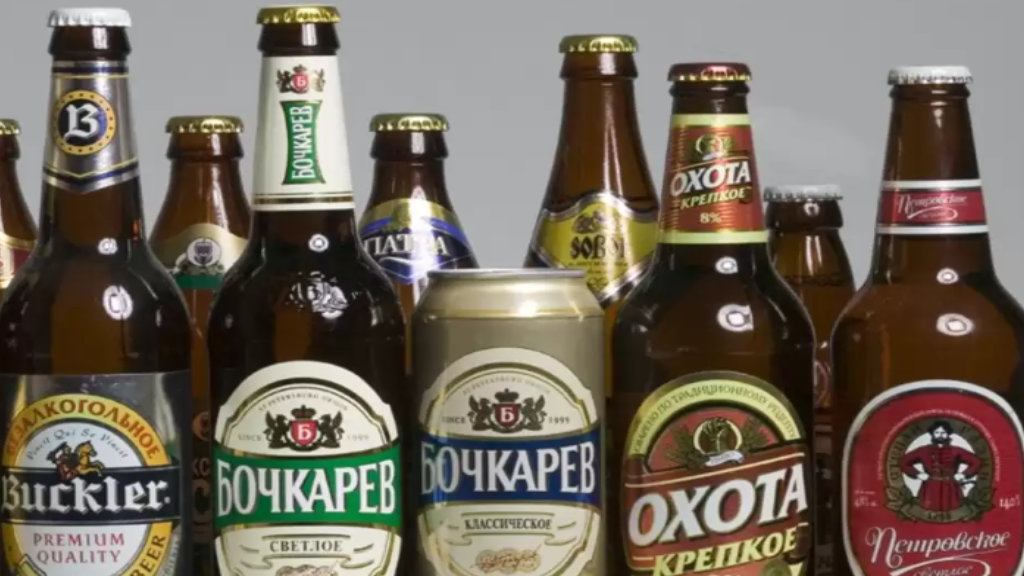
Beer is now the most popular alcoholic beverage among Russians, accounting for 51% of total alcohol sales since the beginning of the year, according to data from Atol. The company is Russia’s leading manufacturer of equipment and software solutions for the retail sector.

Wine was the second most consumed alcohol product in the country and made up 23% of sales in the alcoholic drinks category, according to the report. Vodka, Russia’s stereotypical national beverage, is losing out to lower-strength alternatives in terms of domestic sales, with a share of just 6%. Gin and rum each accounted for a 5% share, while various other spirits made up the remaining 10% of sales.

The peak demand for alcoholic drinks was recorded in June, reaching 18% of total annual sales. That corresponds to higher than normal temperatures as global warming has an effect.

Russian Deputy Prime Minister Tatyana Golikova said last month that alcohol consumption in the country has almost halved since 2009, with intake declining from 14 to eight litres per capita. A former health minister, Golikova noted that Russian authorities have been developing health centers and consulting offices for preventive care since 2009. An information campaign for greater awareness among the public has also been launched. “We started talking about the basic necessity to change our lifestyle within the framework of the national project ‘Health’,” Golikova stated, adding that tobacco consumption has also significantly decreased over the past 15 years.

Russian consumers are increasingly turning to domestic beers and wines as well as imported products from BRICS nations such as South Africa, (wine), China (beer) and even Indian whisky. All these countries now offer good quality alcoholic beverages, although Italian wines continue to remain popular amongst otherwise declining overall Russian consumption of EU products.   

Further Reading

Russia Targets Asian Beer Exports

South Africa To Export More Wines To Russia

Published on August 25, 2024

South Africa is working with partners to increase exports of wine and fruits to new markets in Russia, according to Pretoria’s embassy in Moscow. The move is part of the African nation’s efforts to expand its market reach beyond Moscow and St. Petersburg, which are its current traditional trade destinations, Cecile Theresa Heppes, an adviser at the embassy’s political department, has stated.

“Our countries already have a very high level of political relations that go back many decades, but our trade relations and our trade performance are not at the level we would like them to be at. Both sides are working as closely as possible to increase trade,” Heppes stated.

South Africa has emerged as one of Russia’s key political allies, particularly as a member of the BRICS bloc. However, the deficit in trade ties between the two countries has reportedly long been a source of concern for local businesses in Africa’s most advanced economy.

According to the United Nations COMTRADE database on international trade, exports from South Africa to Russia totaled US$282.77 million last year. Vladimir Padalko, vice president of Russia’s Chamber of Commerce and Industry, has reportedly stated that the trade turnover between the two countries reached US$1.2 billion in 2023. Pretoria’s main export to Russia had been citrus fruits, with its primary imports from Moscow being chemicals and fertilizers.

South Africa has an extensive wine industry, dating back to its colonial period. The 2022 annual grape harvest amounted to 1.4 million tons (1.06 million litres), of which 81% was used for wine. Currently, about 2,500 farmers cultivate nearly 90,000 hectares of land under vines.

The International Organisation of Vine and Wine (OIV), has reported that 8.6 million hectolitres (1 hectolitre is equivalent to 100 litres) of wine were consumed in Russia in 2023, marking a 3% increase at a time when the global market is shrinking. Russia’s average per capita wine consumption is now 7.2 litres per annum.

All South African wines for export must be granted an export licence. Samples of each batch of wine destined for foreign countries are sent to the Wine Certification Authority at Nietvoorbij, Stellenbosch, where they undergo detailed tasting tests and chemical analysis in the laboratories before licences are granted. An official seal is given to each bottle by the Wine Certification Authority, which verifies that the claims made on the label regarding origin, vintage and grape variety are true. South Africa leads the world in environmental sustainability and regulated production integrity. From the 2010 vintage, a new seal for South African wines was introduced, which traces the wine from vine to bottle. The seal is a world first,and certifies a wine’s integrity as well as sustainability. The Sustainable Wine South Africa website is here.

In terms of international wine production is concerned, Italy leads with 19.3% of the total, France is second with 17.7%, Spain third with 13.8% and South Africa eighth with 3.9%. Wines from the Stellenbosch region are generally considered the finest.

Further Reading

Russia – Africa 2024 Trade & Development – The Latest Updates

St. Petersburg Port To Focus On Latin American & East African Trade 

Published on August 24, 2024

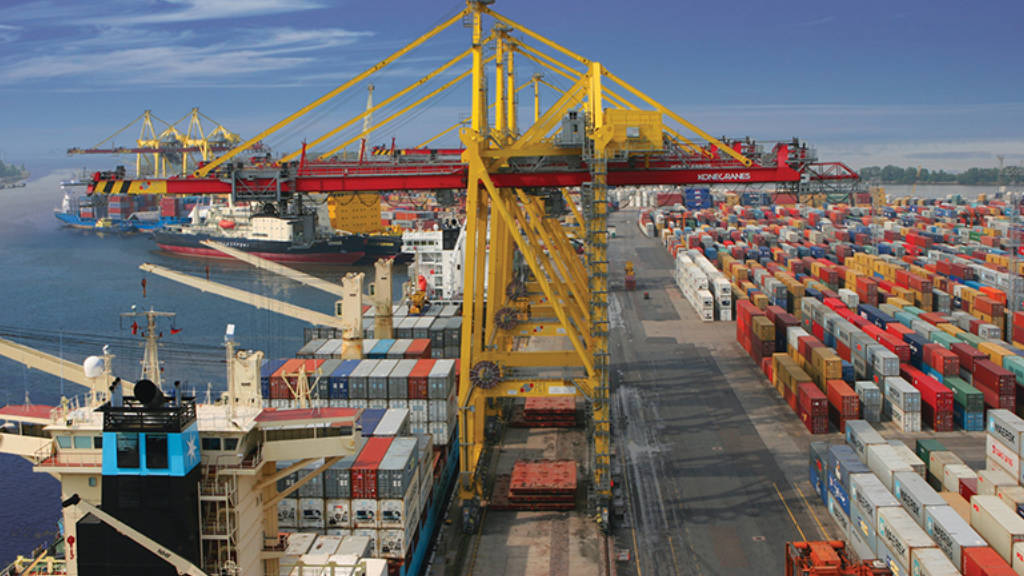
The Port of St. Petersburg is expanding export support measures and is looking to develop subsidised container shipments to Brazil, Venezuela, Tanzania and Cuba, according to Kirill Soloveitchik, the city chairman of the Committee on Industrial Policy, Innovation and Trade.

It is planned that at the first stage, shipments will mainly be carried out in bulk. The Export Support Centre will cover the costs associated with the consolidation of goods, as well as their storage and customs clearance. Soloveitchik said that “Priority areas such as Venezuela, Cuba, Brazil, Senegal and Tanzania are being implemented. In fact, this is a free service for the exporter: the Export Centre pays for the container freight, agency support and temporary storage for the period of cargo consolidation at the place of departure.”

The subsidised service will combine goods from different customers into a combined cargo. According to Soloveitchik, the priority will be small batches of goods that do not require special storage conditions and special temperature conditions.

The Export Support Centre will cover all costs associated with cargo consolidation, agency support, shipping container freight, customs clearance, storage and delivery of goods from St. Petersburg. This will allow the city’s exporters to significantly reduce the cost of delivering their goods to new markets, which will lead to a significant increase in their competitiveness.

At the moment, such support already covers four ports in China – Shanghai, Qingdao, Ningbo and Nanshu.  St.Petersburg was badly hit by the sanctions imposed by the EU in particular and the cancellation of all Western shipping line services to the port. It is now moving to service alternative markets.  

In 2023, the volume of exports from St. Petersburg to the so-called “friendly” countries increased by 83%. In Q1 2024, this figure increased by another 52.4% compared to the same period last year.

Further Reading

FESCO Launches Bulk Cargo Maritime Freight Service from Shanghai to St. Petersburg  

Belarus and China to Sign Technology Investment and Services Free Trade Agreement 

Published on August 23, 2024

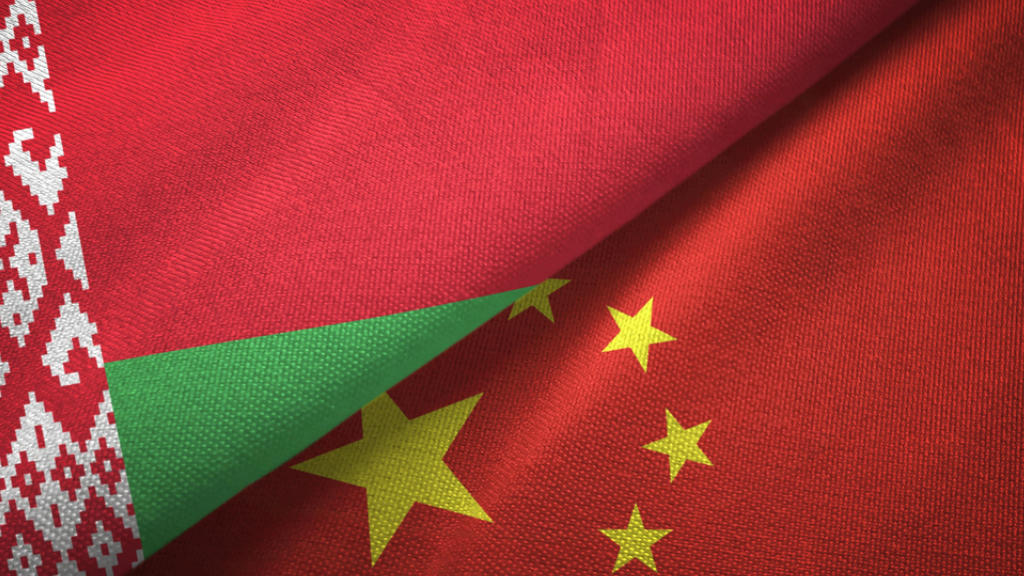
Belarus and China are to sign a Free Trade Agreement covering services and investment, Belarusian President Alexander Lukashenko said at a meeting with Chinese Premier Li Qiang in Minsk on Thursday (August 22).

Lukashenko said that “Our two parties will sign documents formalizing plans for their future partnership in key areas. One of them is an agreement to create a free trade area for services and on investment. Belarus is the first Eurasian Economic Union (EAEU) country to conclude such an agreement with China.”

The EAEU is a free trade bloc that includes Belarus along with Armenia, Russia, Kazakhstan and Kyrgyzstan. The EAEU also has FTA with Iran, Serbia and Vietnam. The Belarus-China FTA would not have been possible without other EAEU members agreeing and will have an impact on Chinese market access into their economies via Belarus.

Lukashenko said he has invited the Chinese government to allow leading Chinese technology companies enter the Belarusian market as a core mid-term task for the two countries’ governments. “We see the development of Belarus in cohesion with China’s new quality productive forces concept based on technologies, innovations and high-quality human potential,” he said.

The new agreement is expected to enable Belarus to increase exports of its services to China by at least 12%-15% within the next five years, while investment in Belarus will grow by at least 30%, Lukashenko said. To facilitate Belarusian exports to China, Russia is building a specific Belarusian goods port on its Pacific coastline in the Russian Far East.

Further Reading

First Belarus-Chinese JV Autos Arrive In Russia

China Suppliers Sending Russian Market Goods Via Third Party Countries

Published on August 23, 2024

Some Chinese supplies to Russia are switching to third-party, rather than direct routes for sending goods to Russia due to difficulties with sanctions and logistics. Western governments have issued ‘stop’ notices on numerous products to Russia, including electronic and so-called ‘dual-use’ items, which if ignored can result in sanctions being imposed on Chinese suppliers themselves and the logistics and cargo operators.  

Not all Chinese suppliers are affected by these threats, which impact those only that have additional international trade. For suppliers that only deal with Russia, the sanctions remain ineffective. However, most of China’s largest suppliers have international business interests and are now asking to ship goods through third countries, a phenomenon that began in July. Thus far, imports from China remain at a high level.

The main issue is two-fold – financial and logistical, and since July, additional sanctions measures have made bank transfers and logistics more complicated. Consequently, a number of Chinese suppliers have begun to request Russian businesses import Chinese goods through third countries.

Products affected include all goods that are included in the stop lists of codes for foreign economic activity (such codes are assigned to each type of product), however this also impacts products that are not on this list. This tightening is due to the ongoing pressure from the West on the Chinese banking system in dealing with Russia.

Those suppliers who do not have the opportunity to accept payments from Russian companies through Chinese banks or a branch of a Russian credit institution in China now ask to ship goods through third countries and receive payment from them. This means that there must be documentary evidence that the goods are shipped there.

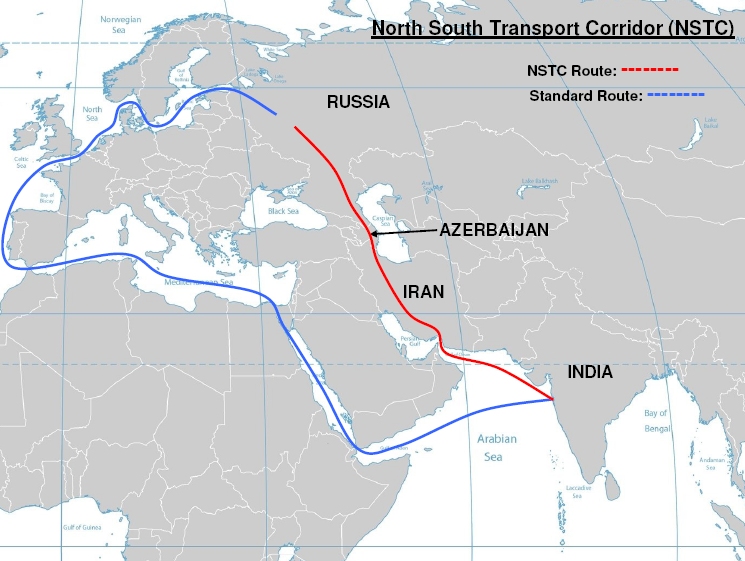
Shipping via third countries, such as Iran, is possible, and has an additional benefit is assisting with the development of new trade routes such as the North-South Transportation Corridor. Chinese goods can arrive at Iran’s Persian Gulf Ports such as Bandar Abbas, be transported via rail to Iran’s Caspian Sea ports, and then shipped to Russia’s own Caspian Ports such as Astrakhan.

North South Transport Corridor Map

These new routes also present new opportunities, although it does increase costs for the Russian consumer. Pavel Kuznetsov, Vice President of the National Coordination Centre for International Business Cooperation, has stated that Russia has prepared for this scenario in 2022, when the main schemes for the delivery of goods through third countries were developed. According to him, this is evidenced by a threefold increase in imports from Kyrgyzstan, as well as a 1.5-fold increase from Kazakhstan. Southeast Asia, Turkiye and the Gulf countries are also involved in this process.

Meanwhile, Chinese companies are also motivated in maintaining and increasing supply volumes, and working around sanctions, especially in the context of the Chinese export economy. Kuznetsov noted that it is also beneficial for transit countries to ensure Russia’s supply chains. This is a cashflow generating service, with a steady stream of additional service payments.  

According to the Chinese General Customs Administration, in January-June of this year, the trade turnover between China and Russia increased by 1.6% compared to the same period in 2023 and amounted to US$136.67 billion. Commercial ties between the two countries are developing despite the restrictions.

Over the past three years, China’s share in Russia’s foreign trade turnover has grown and now reaches about 45% of the total. This means that making settlements with Russia’s largest trading partner acquires strategic importance and requires increased efforts, including from the Central Bank. It is now necessary to build a new infrastructure for cross-border settlements, ensuring the stability of supplies.

These are also now being introduced. The use of cryptocurrencies for example are poised to become one of the most effective ways to increase the volume of payments and the flow of goods with China, with Russian President Vladimir Putin signing a law on August 8 to permit foreign trade settlements in digital currency to be carried out in the format of experimental legal regimes starting from September 1. China is also arranging Free Trade Agreements with third party countries to help facilitate these actions.

Further Reading 

Russia and China To Conduct First Barter Trade Deals In September / October  

Russia’s Great African Expedition Sets Off To Explore Africa’s Continental Coastal Fisheries 

Published on August 23, 2024

Russia’s Federal Agency for Fisheries (Rosrybolovstvo) has launched a major research initiative aimed at studying marine biology resources along the coast of 18 African countries in the Indian and Atlantic Oceans. A ceremony to launch the expedition took place on Wednesday (August 22) at the marine fishing port in Kaliningrad, Russia, and was attended Russian Deputy Prime Minister Dmitry Patrushev and a number of other Russian officials.

Patrushev said “Today, we are launching one of the most ambitious projects in the fishing industry – the Great African Expedition. This is a unique event since similar research has not been conducted since the 1980s. The expedition will assess aquatic biological resources off the African coast and open up new fishing areas.”

The expedition will enable Russia to assess the reserves of aquatic biological resources along Africa’s coastlines and identify new fishing areas.

“As we know, Russia ranks among the top five global leaders in terms of catch volume. Last year, our fishing industry set a record by harvesting 5.37 million tons of aquatic natural resources. As a result of the Great African Expedition, the scope of fishing operations will further expand. African nations will be granted access to information on fish reserves, contributing to global food security. This will be another significant contribution by Russia towards ensuring global food security.”

According to Kirill Kolonchin, director of the All-Russian Research Institute of Fisheries and Oceanography (VNIRO), the expedition will continue until the beginning of 2026.

Two Rosrybolovstvo research vessels will be deployed to study the coastal waters. In addition to Russian scientists, researchers from various African coastal nations will also join the expedition, according to VNIRO.  The team of scientists on each vessel will comprise 12 experts specializing in acoustic, oceanographic, hydrochemical, hydrobiological, and ichthyological research.

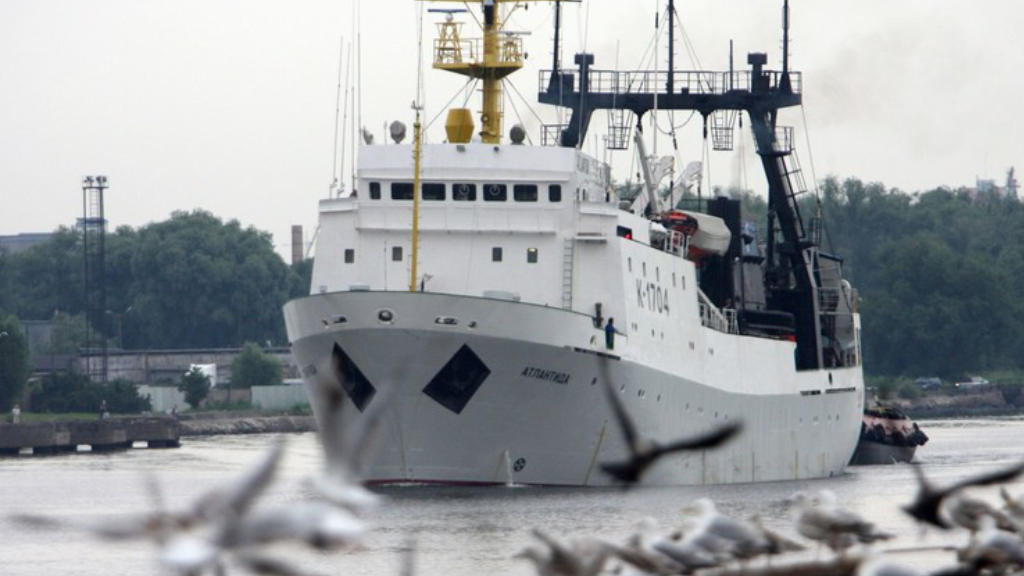
The ‘Atlantniro’ research vessel will study the coastal zones of Mauritania, Nigeria, Morocco, Cameroon, Sao Tome and Principe, Gabon, the Republic of Congo, Equatorial Guinea, and Angola. Meanwhile, the other vessel, the ‘Atlantida’, will focus on the waters of Mauritania, Guinea-Bissau, Guinea, Senegal, Mozambique, Sierra Leone, Madagascar, Mauritius, and Eritrea.

The Great Africa Expedition Map

Further Reading

Africa Fish Image

Russian Fisheries Agency To Assess African Oceanic Resources

Russia’s Trade With BRICS Countries Increases 6% In 5M 2024

Published on August 22, 2024

The BRICS Partnership for a New Industrial Revolution is Underway

Anton Alikhanov, Russia’s Trade & Industry Minister, has been attending the 8th meeting of the BRICS Industrial Ministers in Nizhny Novgorod, and has said that during the first five months of 2024, Russia’s trade turnover with the complete BRICS membership increased by 6.3%.

This includes all BRICS nations, including Brazil, China, India and South Africa, as well as new members Egypt, Ethiopia, Iran and the UAE. The 6.3% figure may appear small, but in terms of total volumes it comes from a high existing trade base and represents an increase of about US$17.64 billion in value. Russia’s total 2023 BRICS trade reached US$294 billion.  

The basis of Russian industrial exports has traditionally been the products of metallurgy, mechanical engineering, the timber industry, light and chemical industries, including fertilisers. Additionally, Russian companies are increasingly now offering after-sales services, as well as training programs for local staff.

Other promising areas of cooperation in the BRICS space are within the framework of the “BRICS Partnership for a New Industrial Revolution” where agreements have been reached on the substantive elaboration of initiatives in the chemical industry, pharmaceuticals and medical equipment, the mining sector and metallurgy, intelligent manufacturing and robotics. There are six main areas within this initiative:

  • Strengthen policy coordination in the context of the New Industrial Revolution;
  • Strengthen human resource cooperation on cutting-edge technology and skills;
  • Promote communications and cooperation in the digital field;
  • Improve industrial capacity development;
  • Enhance cooperation in inclusive growth projects;
  • Deepen stakeholder cooperation and promote resource complementarity.

The concept behind the BRICS New Industrial Revolution is characterized by digitization, networking, and A.I, with new technologies, industries, and models, with existing production methods and business models currently undergoing profound adjustments.

The BRICS countries have similar stages of industrial development, strong industrial complementarity, similar development strategies and common interest demands, and have certain advantages in terms of industrial foundation, market size, and resource capabilities. They also have a strong foundation for cooperation in fields such as mechanical manufacturing, electronic information, and energy resources. Seizing new opportunities for the development of the new industrial revolution and deepening industrial cooperation has become a consensus among the BRICS countries.

The BRICS countries are rich in energy resources, in both fossil fuels and renewables. For example, should Saudi Arabia join the group, as appears likely, the BRICS would possess 47% of all global oil reserves. In comparison, the United States owns 2.1%.

In GDP terms, the BRICS has a global share of 37.3% of the world’s total, compared with 29.9% for the G7 nations. 

Further Reading

Venezuela Suggests Transferring Its US Energy Contracts To The BRICS Countries