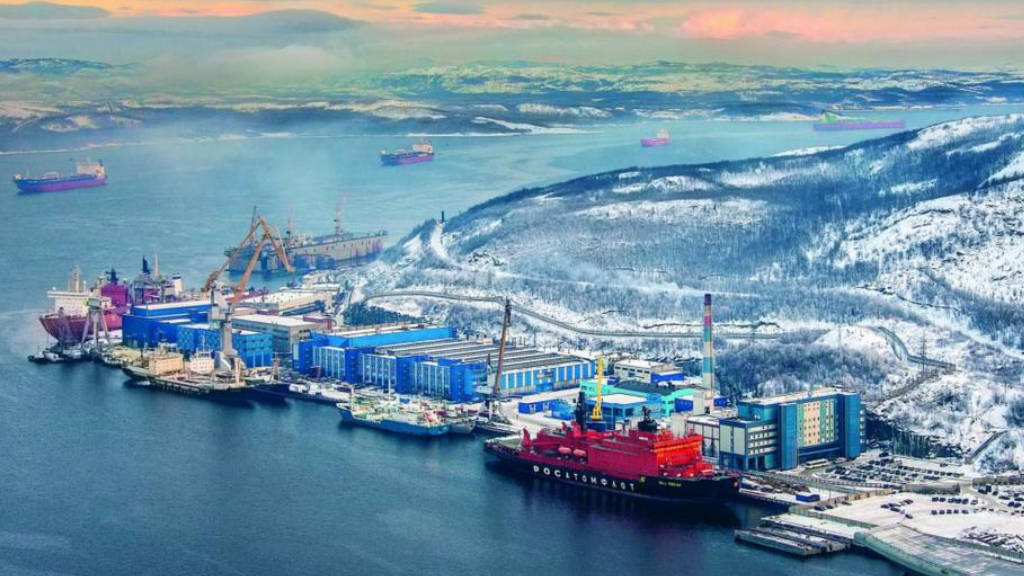
Russian presidential aide Nikolai Patrushev, who oversees the country’s national maritime policy, has stated that the Arctic ports of Murmansk, Arkhangelsk, Dikson, Tiksi and Pevek are the priority developments to allow the Northern Sea Route (NSR) to become one of Russia’s main transport arteries.
This needs to be carried out in conjunction with the development of Russia’s inland ports and rivers, and especially the Lena, the Ob, the Yenisei, as well the White Sea-Baltic Canal,” he said, stating that “In order to allow the Northern Sea Route to take on the role of one of Russia’s major transport arteries, it is necessary to modernize infrastructure and ensure the development of ports as part of the NSR. The transport connectivity of Russia’s Northwest, Siberia and the Far East will be improved considerably as a result.”
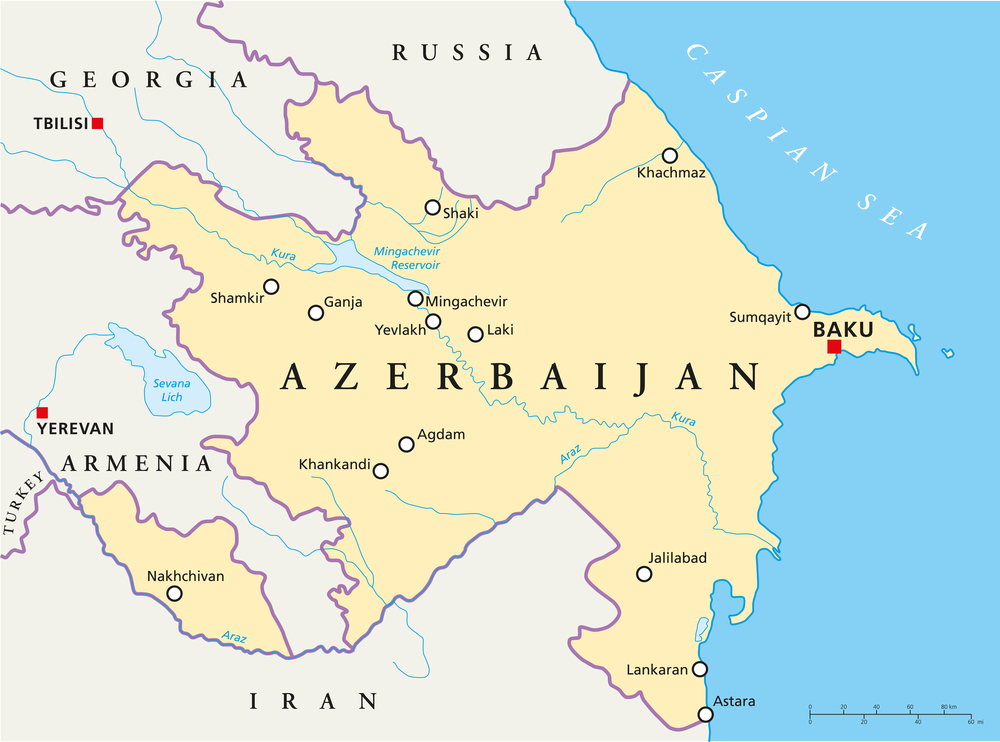
In related news, Russian President Vladimir Putin, who has been visiting Azerbaijan, has announced that Russia’s United Shipbuilding Corporation (USC) and Azerbaijan’s Baku Shipyard are starting construction on river and sea class tankers for transporting petroleum products. He said that “Their usage should allow for markedly increasing the supply of energy resources to global markets, including along the Azov-Black Sea and Caspian Sea routes.”
Russia is also pressing ahead with the redevelopment of numerous inland ports along the border with China to further promote regional infrastructure and trade.
A Section of the Chinese Nine Dragon Wall In St.Petersburg
Russia’s FESCO Transport Group has launched a regular marine service for the delivery of bulk cargoes from Shanghai to St. Petersburg, the company has said. This includes services for the collection of goods from warehouses within a radius of up to 300 km from Shanghai. The first container ship within the framework of the service has already delivered goods to St. Petersburg, delivering Chinese manufactured household appliances.
“FESCO Transport Group has launched a regular service for sending LCL containers (Less than Container Load) with combined cargoes from Shanghai to St. Petersburg along the deep-sea route,” the company said in a statement.
Transportation is carried out within the framework of the FESCO Baltorient Line, which connects the main ports of China and India with St. Petersburg through the Suez Canal.
FESCO uses its own container ships for the delivery of goods, which guarantees the regularity of shipments. It is planned that the ships will leave Shanghai on average once every two weeks. The estimated travel time will be about 45 days. The only caveat is that dangerous and sensitive goods are not accepted for transportation.
In general, all types of piece and container cargoes from 1 cubic metre and weighing from 350 kg are accepted for transportation. “In addition, within the framework of the LCL service, FESCO is ready to provide customs clearance and cargo insurance, as well as organise the through transportation of containers from St. Petersburg to various regions of Russia by regular rail services of the Group or by road,” FESCO stated.
China has a balance of payments issue with Russia, with Russian exports to China far outstripping Chinese exports to Russia. With Western white goods manufacturers also pulling out of the Russian consumer market, their place is now being taken by Chinese manufacturers. FESCO new service will both help address the trade imbalance for China as well as assist Chinese manufacturers replace European brands.
Foreign nationals who share Russia’s traditional values, and disagree with the ‘neoliberal’ principles imposed by their own governments can now apply for Russian residency permits, according to a decree signed on Monday (August 19) by President Vladimir Putin.
Unofficial estimates suggest that up to 80,000 foreign individuals – and their families – would take up Russian residence if made available. The main driver behind this appears to be the move towards promoting ‘gender fluidity’ and transexual normality in some Western schools, in addition to other related issues such as the overall promotion of the LGTBQ community as a mainstream movement, coupled with vilification for individuals who do not agree with minorities having such a large say in their national makeup. Of particular concern is children’s education and the exposure to such social variants. Parents who oppose such values can now be prosecuted for ‘hate crimes’ and regarded as promoting intolerance towards minorities. Some teachers, for example, who refuse to allow these subjects or refuse the use of ‘correct’ gender pronouns to be used in the classroom have been jailed.
Others believe these issues merely confuse young children and are equivalent to a form of abuse.
The promotion of gender fluidity is illegal in Russia, and while homosexuality is legal, it is not encouraged as part of normal social society behaviour. In short, this means the State does not intrude on individuals private sex lives but doesn’t want them publicly promoted either. Gay parades and so on are banned in Russia.
While Putin has signed the decree, enabling it to come into effect, details still have to be worked out. A list of the countries whose societal values are in question, and consequently their citizens made eligible for a Russian residence will be determined by the government. The foreign ministry will also streamline the issuance of three-month visas for those interested in moving to Russia for these ideological reasons. The decree will come into force on September 1. A move to provide permanent residence visas is expected to follow once Russia’s immigration department can introduce vetting and related procedures.
The visas will not require an existing proficiency in the Russian language, although applicants will be expected to learn.
In November 2022, Putin approved a framework for state policy to preserve and strengthen traditional Russian spiritual and moral values. Among the values are life, dignity, human rights and freedoms, high moral ideals, strong family values, and priority of spirituality over materialism.
Last November, Russia’s Supreme Court outlawed the “international LGBTQ public movement,” designating it an extremist organization. In July 2023, Putin signed a decree banning gender reassignment surgeries. It was also announced in June that the Russian government was drafting legislation banning the promotion of “child-free ideology,” particularly among young women.
During an address to the Federal Assembly in February, Putin said that “a large family with many children should become the norm, the philosophy of social life, the guideline of the entire strategy of the state.” The Russian leadership has taken numerous measures to reinforce these values in recent months.
Russian President Vladimir Putin has been visiting Azerbaijan on August 18-19, holding negotiations and discussions with Azerbaijani President, Ilham Aliyev. The talks are designed to address the further development of Russian-Azerbaijani relations of strategic partnership and alliance, as well as current international and regional issues” according to a Kremlin press release.
Plans are in place to adopt a joint statement by the heads of state and to sign intergovernmental and other documents.
Relations between Russia and Azerbaijan are at a very high level of allied interaction. Aliyev paid an official visit to Russia in April and had extensive discussions with Putin at that time. A great deal of attention has been placed on Azerbaijan’s growing importance to Russia as a conduit for goods transit both south and east, using its connectivity with Turkiye and Iran via the North-South Transportation Corridor and the Baikal-Amur Mainline (BAM) railway running east, with Azerbaijan’s Baku Port serving as a Western logistics port to connect with the route. Improved road connectivity between Russia and Azerbaijan is also part of the regeneration of trade ties.
In support of these infrastructure efforts, Azerbaijan’s economic relations with Russia and other EAEU countries are increasingly active and are forming a common and mutually beneficial economic space, despite the fact that Azerbaijan is not part of the Eurasian Economic Union (EAEU) trade bloc. Azerbaijan has alsoexpressed interest in joining the BRICS.
Russia’s trade and investment ties with Azerbaijan fit into the overall pattern observable in Russia’s trade/investment relations with its immediate neighbours following the outbreak of the conflict in Ukraine in 2022. Moscow’s re-orientation of commercial ties from the EU to Asia and the Middle East benefits Russia’s neighbours and Azerbaijan is no exception.
The latter serves not only as a market for re-export to Russia, but also as a developing transit route between Russia and Iran in what constitutes the International North-South Transport Corridor (INSTC). Azerbaijan is western branch out of three routes making up the INSTC, linking Iran’s and Russia’s most populous and relatively industrialized provinces and expanding the transit trade between the two big Eurasian actors. Yet despite the growing bilateral trade, Russia is not dominating Azerbaijan’s external trade. The investments dynamic is slower, and as in the case of many other countries Russia lags behind other actors when it comes to using emerging investing opportunities. Baku and Moscow seem to work for expansion of investment ties but amid the Western sanctions Russia seems to lack resources to adequately challenge other countries’ position in the Azerbaijan market. Putin and Aliyev will be looking at fixing these bottlenecks.
Azerbaijan and Russia are mostly comfortable with where their bilateral relations are at the moment. The two countries are close politically as reflected in the agreement on enhanced cooperation in nearly all spheres signed between Moscow and Baku in February 2022. Yet despite Moscow’s cajoling Azerbaijan will likely abstain from joining Russia-led Eurasian Economic Union (EAEU). Both prefer transactional manner of bilateral relations avoiding undue expectations and full-scale alliance mode.
Trade
Bilateral trade between Russia and Azerbaijan reached US$4.4 billion in 2023, an increase of 17.5% on 2022, according to the Azerbaijani State Customs Committee. Azerbaijan’s trade with Russia accounted for 8.52% of all its foreign trade last year, with Russia being Azerbaijan’s third biggest trading partner.
Overall officials from both countries contend that given the re-orientation of Russia’s trade dynamics east, trade volumes between the two countries could double by 2026. Russian exports to Azerbaijan mainly consist of wheat, meslin, crude petroleum, crude petroleum products derived from bituminous minerals, timber, various gaseous hydrocarbons, mineral or chemical fertilizers. From November 2022 Russia also began selling gas.
Azerbaijan sends to Russia mostly animal products, plastics, rubber and rubber, machinery, equipment and apparatus, mineral products, and oil. Exporting to Azerbaijan is easily carried out from all major cities across Russia. Interregional cooperation is the engine for the development of Russian-Azerbaijani trade and economic alignment.
Further Reading
Russia’s trade and investment developments with Azerbaijan and other regional countries are comprehensively discussed in our 2024 Russia’s Pivot to Asia PDF guide. This is a complimentary download and can be accessed in English here and in Russian here.
Anton Alikhanov, Russia’s Trade & Industry Minister, has stated that the BRICS nations would create a consortium for the construction of aircraft engines, after a meeting between the BRICS countries’ industry ministers. We stated that “We hope that our proposals on creating a consortium in power engineering, in particular, aero engine construction, will be supported. Many BRICS states are already engaged in aircraft construction. Everyone is trying to engage in its own development, but aero engines are a unique competence. Russia has good scientific and industrial potential, therefore we suggest creating such a consortium that will become a point for expanding industrial cooperation.”
Alikhanov said that the work may include joint production of gas turbine installations for the fuel and energy sector, saying that “The same concerns cooperation on engines for sea, railroad, aircraft and space equipment. The development of these technologies could become a driver for a whole number of related industries and the appearance of new competencies in our countries. We see very good prospects here, bearing in mind our experience and development, and also the large expanding market in the BRICS space.”
Alikhanov told reporters potential engine construction facilities may be deployed in Russia and in the partnership’s other countries. “In actual fact, joint production could be in any BRICS country. In particular, we are interested in Russia’s international cooperation and exports, including the creation of industrial zones for our manufacturers from abroad, such as in Brazil, in the United Arab Emirates, in Africa, and in Asia. We regard this proposal as an instrument for developing industrial cooperation, and on the other for promoting our brands and competencies in foreign markets.”
Brazil’s Embraer aircraft are popular, while Russia has long designed aircraft with the Sukhoi Superjet already in use. India is a global manufacturer of aircraft parts, China has its own COMAC aircraft, while African and Middle Eastern countries also produce aviation components.
Free Trade Agreements between the Eurasian Economic Union (EAEU) and Egypt, Indonesia and the United Arab Emirates (UAE), are almost finished, according to Anton Alikhanov, Russia’s Trade & Industry Minister said at a meeting of BRICS industry ministers.
“Free trade agreements are a major and efficient mechanism of developing the EAEU’s relations with foreign partners. They allowed seriously increasing trade turnover with Vietnam, Serbia and Iran. Agreements with the United Arab Emirates, Indonesia and Egypt are at advanced stages,” he said.
Alikhanov also suggested that the possibility of cooperation between BRICS and EAEU be considered. “Today the EAEU is a deeply integrated regional economic integration between five countries: Russia, Armenia, Belarus, Kazakhstan and Kyrgyzstan. On the EAEU space the freedom of movement of goods, services, capital, workforce is ensured. A common regulatory policy is pursued in key sectors of the economy. Due to this, the EAEU is actively developing, with mutual trade and industrial cooperation growing,” he stressed.
Further Reading
Russia’s current trade and investment profile with Egypt, Indonesia and the UAE is comprehensively discussed in our 2024 Russia’s Pivot to Asia PDF Guide, a complimentary download that can be accessed in English here and in Russian here.
China’s main thrust into the potential of investing in Russia as part of its global Belt & Road Initiative (BRI) overseas investment and infrastructure plan essentially began in 2018, when the Chinese government published its “China-Russia Cooperation and Development Plan for the Russian Far East (2018-2024).”
This is a programmatic policy document guiding cooperation between the two sides and also acts as a guide for Chinese enterprises to invest in the Far East. It is divided into seven sections, and summarizes the cooperative advantages of Russian Far East region for Chinese investors in geographical location, energy and mineral resources, agriculture, forestry and aquatic products, transportation, aviation and ship manufacturing.
It also proposes seven priority areas of Sino-Russian economic and trade cooperation in the Russian Far East, including natural gas and petrochemical industry, solid minerals, transportation and logistics, agriculture, forestry, and aquaculture. The Plan outlines in detail the Sino-Russian strategic cooperation projects and infrastructure projects in the Russian Far East, and comprehensively explains the development mechanism of Sino-Russian economic and trade cooperation in the Far East.
Moscow’s initial reaction was sluggish, until 2022, and the outbreak of the conflict with Ukraine. Until then, Moscow’s trade and investment focus was primarily geared toward Western Europe. Then, suddenly, Russia lost its main export markets in Europe, along with most of the key suppliers of technology and inputs to industry, including key military manufacturers in Siberia and the Far East. The Kremlin realized it had no hope of retooling and expanding its industrial base to sustain its conflict in Ukraine without Chinese assistance, an issue that made Russian President Vladimir Putin more amenable to serious concessions to China.
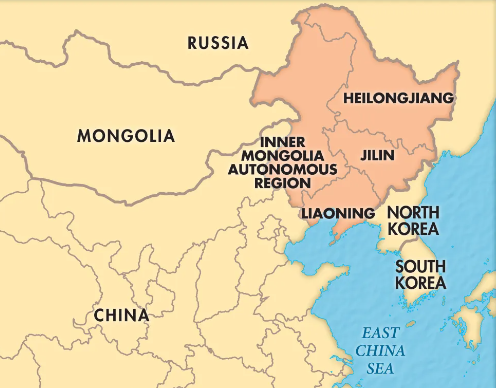
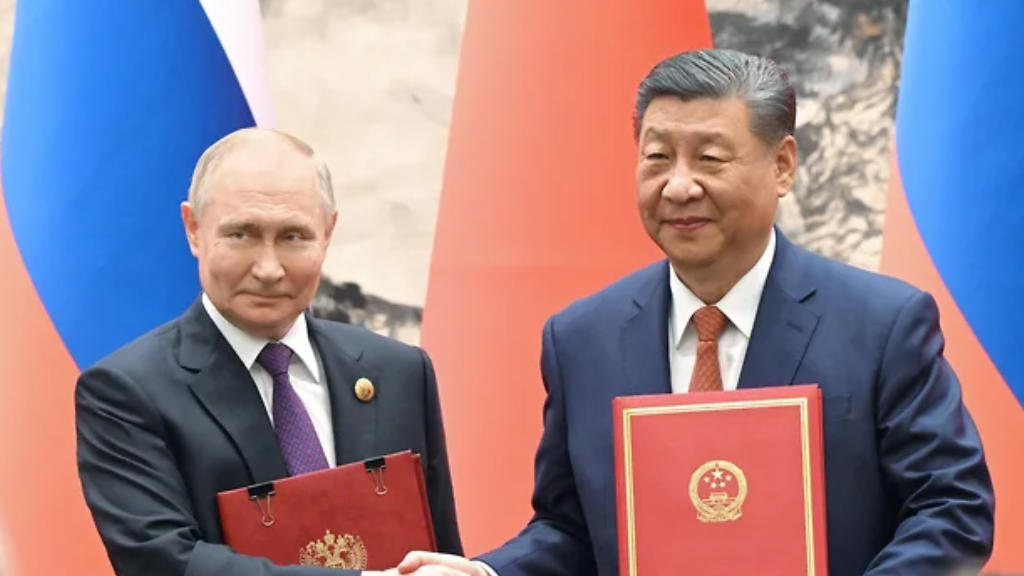
His state visit to Beijing and the northeastern province of Heilongjiang in May 2024 included repeated expressions of approval for an expanded Chinese role in developing the Far East. That same month, the appointment of economist Andrey Belousov as Russia’s new Defence Minister highlighted Putin’s new appreciation that Russia’s development could only be won by prioritizing economic and industrial policy. In truth, Putin had realised this years before – but Ukraine provided the national impetus.
In Beijing, this subsequent shift in Russia’s attitude was seen as an opportunity. With significantly reduced holdings of U.S. Treasury bonds, China has plenty of funds to invest. Beijing’s aim, on the one hand, is to exploit the Russian Far East’s rich resources, mainly minerals, to ensure a secure supply chain for domestic manufacturers, free from Western influence. On the other hand, China can also sell a lot of high-tech equipment and technology to Russian industry, shoring up the latter’s defence sector and perhaps obtaining useful military know-how in exchange. This particularly applies to the Far East, where Russia has a high concentration of defence industries in need of investment.
Chinese investment interests are focused on two key areas. One is the junction of the Amur (Heilongjiang) and Ussuri rivers, where Bolshoy Ussuriysky (Heixiazi) Island and the Russian city of Khabarovsk (with its population of 620,000) are located. The other is near the mouth of the Tumen River, not far from Russia’s Vladivostok port (population 600,000), close to the Chinese border. In both of these strategic locations, Russia is harnessing China’s financial resources and manufacturing savvy to build two gigantic special economic zones.
Putin’s May visit to China cemented China’s engagement in developing the Far East, though moves in that direction had already begun in mid-2023. At that time, Russian media disclosed that China and Russia had agreed on some elements during the Putin-Xi meeting in March 2023, including plans to directly invest more than US$160 billion in 79 major projects in Russia. These investments would involve critical infrastructure, information technology, energy, mining and other sectors. Some are going under the radar, such as the redevelopment of Russia’s River Ports along its China border, linking to downstream seaport access. Direct rail connectivity between Siberia and North China is also being enhanced.
The IT and infrastructure components of these projects were closely linked with defence output, which Russia has now positioned as the main driver of its current economic growth. These sectors, previously off limits to foreign investors due to security concerns, are now open to Chinese partners. By the end of 2023, the number of investment projects with Chinese capital in the Russian Far East had reached 49, with a total of nearly US$9 billion invested. This is still only a relatively small fraction of the planned US$160 billion, indicating that 2024 onwards will be years for China to action its investment goals, in what is likely to be a ten-year development and investment strategy.
That is not to ignore some negotiations between the two sides. China has delayed the gigantic Power of Siberia 2 pipeline, whose 50 billion cubic meters annual capacity Putin had hoped would replace nearly half the natural gas volumes he used to sell to Europe. China now has adequate supplies of natural gas, in part thanks to growing LNG imports, including from Russia’s Sakhalin pipeline. More importantly, Beijing does not want to be too dependent on Russia’s gas. It has avoided this in part by developing gas supplies from other markets such as Turkmenistan, Iran and Kazakhstan, while negotiating Russia’s intended price point downwards. Currently, despite both sides making noises that the Power of Siberia 2 will eventually come onstream, the two sides are apart in their valuations.
Without the certainty of a major jump in gas sales to China, Russia’s main thrust for increasing its Chinese investment revenues is to attract Chinese investment in industry, as well as mineral, food and timber resources in the Far East. This is something President Xi can agree to. One example is China’s purchases of enriched uranium and other radioactive elements, isotopes and compounds, reaching a combined US$233 million in May 2024. Investing in Russian infrastructure and retaining equity also provides future cash flow income for China’s SOEs.
A boost in bilateral trade however has undergone delays when Washington threatened to impose secondary sanctions on foreign banks supporting transactions involving Russian purchases of dual-use products. To protect itself, China abruptly halted bank payments to Russia, resulting in a sharp initial drop in trade volumes from March and April this year. By the time President Putin visited Beijing in May 2024, however, the parties had discovered a relatively simple work-around. The Chinese authorities permitted some local banks in northeast China to resume handling payment transfers with Russia, allowing trade and investment flows to resume, especially to the Russian Pacific regions. Despite explicit G7 warnings, Beijing has little to worry about because these lenders have very low international exposure and would not suffer significant losses from being sanctioned. Yet, Russia is aware that it cannot circumvent higher transaction costs regardless of alternative solutions.
Another priority for Beijing is securing direct access to sea for its landlocked northeast, industrial provinces of Heilongjiang and Jilin, which are separated from the Sea of Japan by a 15 km stretch of the Tumen River. Opening this waterway for deep-draft ships could have important strategic implications for Beijing, including establishing a direct Chinese presence for the first time in more than a century on the Sea of Japan. Yet this is exactly what Japan, and the United States does not want to see.
One obstacle to navigation is the North Korea-Russia Friendship Bridge, a railway built over the Tumen in 1959 whose low span hinders the passage of larger vessels. Dealing with this, the most recent bilateral statement on the 75th anniversary of reestablishing diplomatic relations between Beijing and Moscow explicitly mentioned that “the two sides will conduct a constructive dialog with the Democratic People’s Republic of Korea on the issue of Chinese ships sailing through the lower reaches of the Tumen River.” Only a tripartite agreement between the three countries will allow the extensive dredging, building of a high-span bridge and construction of port facilities that would allow commercial navigation on the waterway. Discussions are underway yet may prove awkward as Pyongyang will want to extract maximum leverage.
Even for goods not produced in Russia, such as its Eurasian Economic Union and CIS trade partners, the growing number and efficiency of border crossing points and customs clearance procedures is speeding up the delivery of inputs needed for Russia’s increasing productivity. Currently, 19 border crossing points are operating in Heilongjiang province, and they are being systematically digitized. Russia is now finally building up the logistical infrastructure its manufacturing industries need to become regionally competitive – with Asia a primary target. China’s apparent ten year, multi-billion dollar Belt & Road Initiative spend is a large part of helping Moscow achieve this – and cement Russia’s turn away from Europe to become an Asian-focused and influenced economy. Russia economic analysts will in future need to possess Asian, not Western based experience.
Russia’s FESCO Transportation Group is launching the FESCO Intra Asia Service (FIAS) regular line between Vietnam and Malaysia, the company has stated. A 400TEU container ship from the FESCO fleet will operate the line between the Vietnamese port of Ho Chi Minh City and Malaysia’s Port Klang. The ship will depart once a week and the inter-port transit will take three days, the company said.
Departing from Vladivostok, the ship will make its first call at Malaysia’s Port Klang as part of the FESCO Intra Asia Service on Saturday (August 17), while the estimated date of arrival in Ho Chi Minh City is August 22. The bulk of the FIAS cargo will be chemical products, agricultural goods, food products, textiles and clothing. This is the first sea line to open in almost twenty years without ship calls at Russian ports, FESCO said, with the vessel then returning to Vladivostok with Asian goods for the Russian markets.
German Maslov, FESCO Vice-President for Liner and Logistics Division said that “Thanks to the FIAS service, we are entering a fundamentally new market for FESCO and will be able not only to strengthen our presence in Southeast Asia, but also to give an additional impetus to the development of the group’s existent line between Vietnam and Vladivostok. FESCO Intra Asia Service is operated by a vessel from our fleet, which allows the group to provide customers with guaranteed capacity and a regular schedule. In addition, we plan to use Port Klang as an additional hub for sending transit cargo from India, Singapore, Bangladesh and other countries in the region both to Vietnam and farther to Russia.”
These may be small wins in the overall scheme of Russia’s exports, but its still a lot of crab. Russia exported 9,400 tonnes of crab worth US$177 million to South Korea in H1 2024, according to the All-Russian Association of Fisheries Enterprises, Entrepreneurs and Exporters (VARPE).
Although supplies decreased by 20% in physical terms and by 14% in value terms, that fits in with an overall reduction in South Korea’s crab imports in any event. As a result, despite the drop, Russia actually increased its share of the South Korean crab consumer market in value terms from 78.2% in the first half of 2023 to 79.1% in January-June 2024, it said. “The prices of Russian crabs are even lower than in 2021 and 2022, but the average prices have started increasing gradually. Specifically, the average cost of frozen crab from Russia has increased by almost 2%, and the cost of live and chilled crab has increased by 16% since the first half of last year,” VARP said.
Russian crab catchers not only maintained their share on the Korean live crab market in value terms (91.9%) in the first half of this year, but also increased their share in the frozen crab sector by almost four percentage points to 54.1%, VARPE said.
Russian fishermen lead in the supply of premium sorts of crab, which enables them to maintain a considerable share of the world’s market in monetary terms. The volume of Russian crab exports in 2023 reached US$1.8 billion, which, according to VARPE estimations, is 40% of the world’s trade in this aquatic bioresource,” it said.
Most of the crab destined for South Korean markets is caught in the Russian Far East.
The European markets loss of Russia as a consumer market is creating new wealth elsewhere, as illustrated by Russia importing 30,500 tonnes of fish and seafood from Turkiye in H1 2024, a 35% increase from the same period last year, according to the analytical center of the Russian Fish Union.
Turkish exports to Russia increased by 15% to US$153 million in value terms. This is small fry when compared to Russia’s huge industrial imports, however, represents a significant market shift in a highly competitive industry. US$153 million buys a lot of fish.
In particular, imports of frozen trout increased by more than 40% to almost 18,000 tonnes, and imports of chilled trout increased by almost 80% to 9,000 tonnes. Imports of frozen sea bass (pictured above) increased by 25% to 500,000 tonnes.
Now, more than 50% of Turkish exports of frozen fish and 14% of exports of chilled fish go to Russia, the Fish union said. Frozen fish accounts for 58% of Russia’s fish and seafood imports from Turkiye in monetary terms.
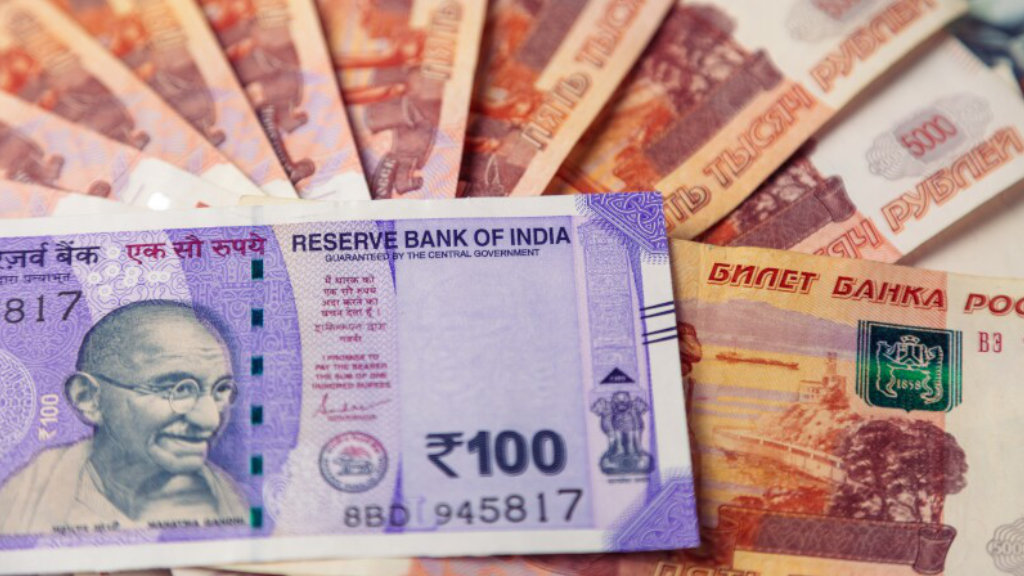
India and Russia are exploring the idea of a benchmark Ruble-Rupee exchange rate to start direct trade using the two currencies, according to Indian media. Top regulators and bankers from both nations are seeking to overcome dollar trade barriers created by Western sanctions against Moscow, and to facilitate more Russian purchases of Indian goods. India buys far more from Russia than vice-versa, leading to Russia accumulating huge stockpiles of Indian Rupees it is finding difficult to offload. A controlled, reliable exchange rate would help alleviate this problem.
The issue will be discussed this week during a visit to Moscow by one of the Reserve Bank of India’s (RBI) Deputy Governors, and senior officials from some of the country’s state-owned banks.
India and Russia have significantly increased mutual trade in recent years, with India emerging as the second-largest buyer of Russian crude oil, after China.
According to India’s Ministry of External Affairs, imports of Russian goods to India have surged by about 8,300% since 2021, driven by “strategic crude oil procurement.” Meanwhile, Indian exports to Russia have grown by 59%.
The RBI recently took feedback from local and Russian banks as well as financial institutions dealing with mutual trade when examining the payments issue. Currently, banks that handle export and import payments have to use the US dollar exchange rate to convert national currencies. However, with several leading Russian banks barred from the SWIFT cross-border messaging system, the scope of dollar-based currency transactions has been significantly reduced.
Payments for purchases of oil and other heavy imports require the services of large Russian banks. In this context, the Ruble-Rupee market and rate, coupled with a payment messaging system could provide an alternative to SWIFT.
The Ruble-Rupee reference exchange rate could be set by the RBI and Bank of Russia, and “revised to keep in sync with the underlying market realities,” a senior banker has stated.
Banking officials will also discuss measures to allow a greater use of the Rupee balance lying in special accounts that Russian banks have with their Indian counterparts. The funds have accumulated because rupee payments for Russian imports exceed Indian exports heading the other way and amount to the equivalent of tens of billions of dollars.
Following Western sanctions, Russia and its trade partners have started to use national currencies for transactions, such as the Chinese RMB Yuan and the United Arab Emirates Dirham. Russian Foreign Minister Sergey Lavrov said in May that over 90% of bilateral trade settlements between Moscow and its largest partner, Beijing, were made in national currencies, and will be hoping that the same can occur in Ruble-Rupee trade.

 Русский