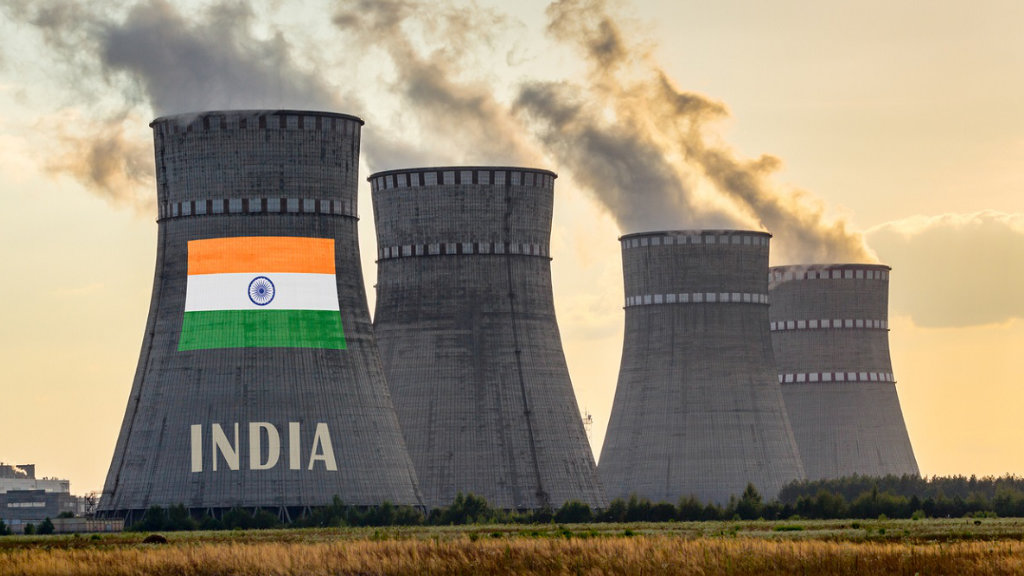
India’s Nuclear Power Corporation of India Limited (NPCIL), is considering forming a joint venture with Rosatom for manufacturing nuclear fuel in the country to boost its nuclear capability. Russia is already helping build the Kudankulam Nuclear Power Plant (NPP) in southern India, set to be the largest atomic power plant in the country. That NPP is being built by NPCIL and Atomstroyexport, Russia’s nuclear power equipment and service exporter.
New Delhi is working out a deal with Moscow for the supply of nuclear fuel and core components for the Kudankulam Nuclear Power Plant, according to the Times of India. The deal is estimated at 105 billion rupees (US$1.2 billion). The Kudankulam NPP currently has two operational units, each with a capacity of 1,000 MW, and is the main power provider for the southern Indian state of Tamil Nadu on India’s southeast coast.
The plant’s first two units entered service in 2013 and 2016. Units 3 and 4 are currently under construction. Agreements for the final two units, 5 and 6, were signed last December when Indian Foreign Minister Subrahmanyam Jaishankar visited Moscow. Once completed, the plant will be the largest nuclear power plant in India with a capacity of 6,000 MW.
According to the deal for nuclear fuel supplies, TVEL, the fuel company of Russia’s state-run Rosatom, will be supplying fuel, control rods, and a fuel assembly inspection tool for units 3 and 4 of the plant from 2025 to 2033.
The two countries have been working together in the nuclear industry for several decades. A joint statement issued by Moscow and New Delhi during the visit of Indian Prime Minister Narendra Modi to the Russian capital in July stated the two countries would expand cooperation in the nuclear energy sector. Prior to Modi’s visit to Moscow, senior Indian officials suggested that India could strike a major deal with Russia to provide uranium on a long-term basis.
While Indian leader was in Moscow, Rosatom also announced that the two countries are in talks to build six new Russian-designed high-capacity nuclear power units at another site in India.
Russia is also offering India new technology – small modular reactors with a generating capacity of around 100-200MW. Rosatom CEO Aleksey Likhachev presented the technology to Modi and Russian President Vladimir Putin during Modi’s visit. According to Likhachev, Russia’s offer for India includes a high level of localization and the possibility of transferring the construction part of the project to New Delhi for Indian contractors to develop under Russian supervision.
At present, India’s nuclear generating capacity is around 7.5GW, with New Delhi planning to increase it by 70% in the next five years, reaching 13GW by 2029.
Russia’s Investment Chamber (RIC) brokerage, which has been mandated to organize the exchange of frozen assets between Russian and non-resident investors, has announced the completion of settlements for the purchase of foreign securities.
RIC commented that “Despite external sanctions pressure while bids were being accepted, RIC managed to sell to non-residents about a quarter of the foreign securities tendered by resident individuals. Out of the single pool of foreign securities worth ₽35.3 billion, (US$367 million) securities worth ₽8.1 billion (US$89 million) were purchased.”
More than 708,000 individuals sold a portion of their securities, the Investment Chamber said.
“RIC is considering the possibility of holding an additional round of the sale of foreign securities. If the necessary permits are received, the tendering information will be disclosed.”
The RIC accepted bids from resident individuals from March 25 to May 8, and from non-residents from June 3 to August 2.
The holding of auctions and conclusion of these transactions enables Russian private investors to withdraw from investments in foreign securities which are subject to restrictions on disposal owing to restrictive measures introduced by sanctions placed upon the Russian securities market. Russia introduced a law to approve the procedure and conditions for the conduct of auctions and the conclusion of transactions (operations) involving foreign securities (“the Conditions”) by way of the exchange of frozen assets between Russian and foreign investors, in March this year.
It enables non-residents to purchase these securities for Rubles, including using funds held on special C-type bank accounts. Moreover, the securities will be credited to special transit custody accounts of non-residents which allow them to be transferred from the Russian depositary infrastructure to a foreign infrastructure without additional authorisations from Russia.
The buyers of these securities are likely to be overseas brokerages in Asia, or overseas Russians who see value retained in these bonds and can see profitable opportunities in either holding them, or reselling at a later date. RIC’s ability to offload them signals there remains market demand on the international market – excepting Western investors.
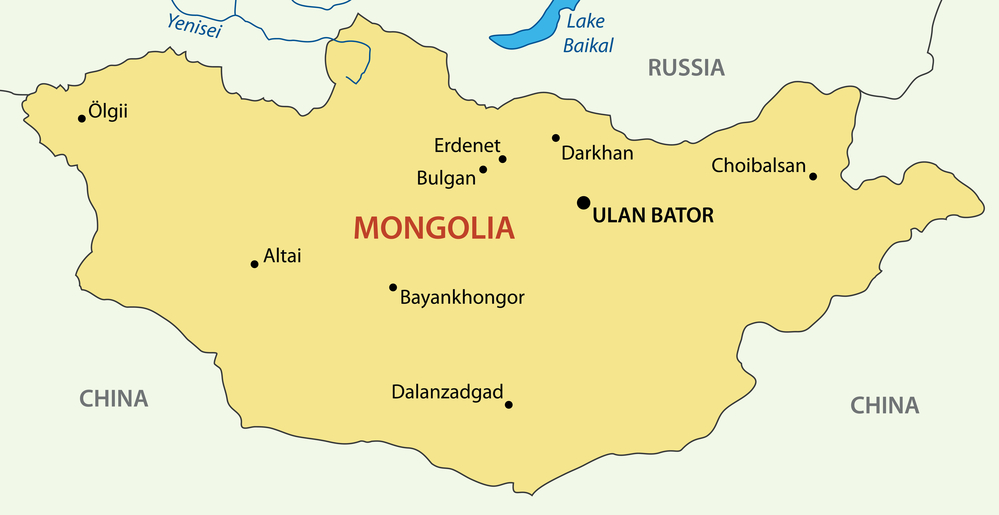
Russia and Mongolia are compiling a list of mineral resource sites for joint geological exploration in their border area under agreements reached at a meeting of their intergovernmental commission for trade and economic cooperation, according to Alexander Kozlov, the Minister of Natural Resources and Ecology of Russia.
Kozlov stated that “Mineral resource use has recently become an important area for our bilateral cooperation. A special sub-commission where we discuss the geological prospects has been created under the intergovernmental commission. For example, a list of prospective sites for joint development in the border belt is now being compiled. On the Russian side there are deposits of noble, nonferrous and ferrous metals, coal and fluorspar.” Mongolia has a reasonably well-developed mining industry.
Kozlov was speaking following meetings with Mongolian Prime Minister Oyun-Erdene Luvsannamsrai. Delegations from the two countries sides discussed cooperation in energy, logistics, education, culture and sport at meetings in Ulaanbaatar, after which they agreed that the next meeting of the Russian-Mongolian intergovernmental commission will be held in Moscow this autumn.
The trade between Russia and Mongolia has grown by 21% so far this year. Russia exports mineral products, food, chemical products, equipment and vehicles to Mongolia, while imports from Mongolia consist primarily of fluorspar. Industrially, fluorspar is used as a flux for smelting, and in the production of certain glasses and enamels. The purest grades of fluorite are a source of fluoride for hydrofluoric acid manufacture, which is the intermediate source of most fluorine-containing fine chemicals. Hydrofluoric acid is used in pharmaceuticals and in the manufacturing of Teflon, while fine chemical applications are used in the processing of rare earths, a key ingredient in the semi-conductor industry.
Kozlov also said that the countries have worked out the issue of signing a temporary agreement on free trade between the Eurasian Economic Union (EAEU) and Mongolia in order to make the Russian market more accessible for Mongolian goods.
“We plan to sign the agreement in December, at a meeting of the Supreme Eurasian Economic Council. Furthermore, projects are being agreed that will create a Russia-Mongolia-China economic corridor. This is the connection of ports and railways between the three countries” Kozlov said.
Moscow and Beijing are looking to a barter trade system to overcome the hesitancy of Chinese banks to run foul of US sanctions in conducting cross-border financial transactions with Russia. The moves, which are expected to be temporary, come as the two sides are trying to limit the transactional use of the SWIFT banking system. An initial two deals, both related to agriculture are scheduled to take place in September.
International barter is difficult to conduct due to the procedural complexities concerning customs value assessments. Russian industrial companies have acknowledged they are discussing the export of metals from Russia in exchange for equipment from China, while China has previously concluded barter deals. In 2019, Beijing agreed to exchange Malaysian palm oil valued at about US$150 million for construction services, civil and defence equipment. In 2021, a Chinese company sent US$2 million worth of auto parts to Iran in exchange for pistachios. Barter transactions between Moscow and Beijing took place during the existence of the USSR, and continued into the early 1990s.
The deals currently under discussion will be the first bilateral barters between Russia and China in about 30 years. Anticipating this, in November last year, Lilia Shchur-Trukhanovich, Director of the Department for Development and Regulation of Foreign Economic Activity of the Russian Ministry of Economic Development, announced that the department, together with the Russian Export Centre (REC), had developed a navigator for concluding barter transactions.
It is necessary to conclude not only closed, but also open barter transactions, in which it will be possible to combine goods into a basket so that it satisfies all parties to the contract. In February this year, Russia’s Ministry of Economic Development announced that it had developed step-by-step instructions for handling foreign trade barter transactions. Pakistan and India have also expressed interest in such schemes, which as they do not involve the transferring of any capital are a partial solution. We can expect the process to become more refined over time, with the possibility of a standard Eurasian barter exchange also a future direction.
The volume of air freight transported overseas by Russian airlines in H1 2024 amounted to 63,400 tonnes, 3% more than in the same period of 2023, according to statistics from the Federal Air Transport Agency.
To compare, in the first 6 months of 2022, which saw international air cargo at 196,000 tonnes meaning that slow growth is now starting to emerge after the initial shock of sanctions.
In the same January-June 2024 period, Russia’s airlines increased domestic cargo volumes by 2.8% at 153,600 tonnes. That followed an increase of +7% in 2023.
In January-June 2023, cargo turnover had collapsed by 57.3% over 2020, following the introduction of Western sanctions against Russia. Russian airlines faced a ban on flights to the United States, Europe and a number of other unfriendly countries, as well as the risks of arresting Russian aircraft in unfriendly states.
The trend points to gradual further recovery, as Russia continues to develop new trade partners and establish new trade routes, some of which will require servicing by air despite the additional costs. These include items such as live seafood and other perishable consumer items. However, Russia’s previous air freight volumes with the West have been largely replaced by increased shipping volumes with the East.
Update – August 14: A result of the Putin-Abbas meeting, Palestine has been invited attend October’s annual BRICS heads of state conference, which will be taking place in Kazan. Abbas stated that “A particular format will be organized and will be devoted exclusively to Palestine, so that all BRICS members and other guest attendees can voice their views on the developments that are taking place in this area.”
The Palestinian President, Mahmoud Abbas is visiting Moscow from August 12-14, and is expected to meet with Russian leader Vladimir Putin on August 13 (Tuesday), according to Abdel Hafiz Nofal, the Palestinian Ambassador to Russia. Abbas will also be meeting with various Arabic Ambassadors while in Russia.
According to the ambassador, the main topic of discussion will be the Palestinian-Israeli conflict. Nofal said that “The situation in Gaza will be on the agenda. They will talk about Russia’s role and what can be done. We are in a very difficult situation, and Russia is a country close to us. We need to consult.”
Russia is one of 145 of the 193 member states of the United Nations that recognise Palestine. It has been a non-member observer state of the United Nations General Assembly since November 2012. This limited status is largely due to the fact that the United States, a permanent member of the UN Security Council with veto power, has consistently used its veto or threatened to do so to block Palestine’s full UN membership. Russia supports the complete recognition of the Palestinian state, however Australia, Canada, France, Germany, Italy, Japan, Mexico, South Korea, the United Kingdom, and the United States do not.
Politically, there are motivations for both counties to cooperate, even if it means a reduction of Russia’s diplomatic ties with Israel. This is now tied to placating Russia’s own sizable Muslim population and heading off inter-ethnic and religious violence at home. Abbas visit comes a week after Sergei Shoigu, Russia’s Security Council Chief, visited Tehran for discussions. Sergey Lavrov, Russia’s Foreign Minister, also met with Lebanon’s Foreign Minister, Abdallah Bou Habib in New York on the sidelines of the UN Security Council meeting last month.
Putin and Abbas will almost certainly be touching on related bilateral issues, such as security, aid and humanitarian assistance. Although now this will have dramatically declined, Russia-Palestinian trade levels have always been small given the complexities of doing business with the country and its relative isolation viz-a-viz Israel. However, the two countries have established a joint Russia-Palestine Committee which operates at the Ministerial level. Relations have been described as ‘strong’. Much trade that does exist has been based on humanitarian needs. In 2021, Russia exported products valued at US$37 million to Palestine, being chiefly medical supplies such as vaccines, blood plasma, antisera, toxins, and cultures. Russia also supplies wheat and aluminium. The same year, Palestine exported about US$158,000 worth of produce to Russia, the vast bulk of this being tropical fruits and some leather goods.
The focal point however will remain Israel and Palestine’s humanitarian issues, discussions concerning an end to the conflict, and Palestine’s post-war future – which Russia will want to support.
Russia’s natural resource trade with China exceeded US$65 billion in H1 2024, according to China’s Ministry of Customs, reaching record levels.
Overall, Russian exports of natural resources to China increased by 4% over the same period last year, year-on-year, reaching a new high of US$65.2 billion between January and June of this year. Oil and gas supplies accounted for nearly 90% of all shipments. This included over US$55 billion worth of crude oil to China, a 5% increase over 2023.
China has also been paying more for Russian oil, with the average price for Russian oil exports jumping by 9% in H1 from the same period in 2023. China paid on average, US$80.3 per barrel, slightly over US$20 more than the West’s self-imposed US$60-per-barrel price cap, which was imposed on Russian oil as part of Western sanctions policy, but which has been ignored by everyone else.
In other, non-oil natural resources, Russian aluminum shipments to China have also grown at a record pace and have surged by 64% in annual terms to reach sales of US$1.8 billion. Exports of other Russian commodities to China have also been increasing. Exports of metal ores grew by 15% to US$2.3 billion in H1 this year, while timber exports also increased by 2% to US$1.7 billion.
Bilateral cooperation between Russia and China has been growing over the past two years and continues to accelerate. Trade turnover hit a historic high of US$240 billion in annual terms last year, with exports and imports growing at a double-digit volumes.
Russia has redirected the bulk of its trade flows to Asian markets, particularly to China, after Western countries imposed sanctions on Moscow. Economic ties between Moscow and Beijing have also been improved by the mutual decision to conduct the majority of transactions in their respective currencies, instead of using US dollars.
Russia has been supplying record volumes of fertilizers to Brazil, a fellow BRICS member, according to Brazilian customs data. Brazil is the world’s biggest importer of soil enhancers, with imports from Russia exceeding 1 million tons over the three consecutive months – May, June and July. Monthly shipments reached an average 1,140,000 tons, a growth of 7.5% over the same period in 2023.
Russia is Brazil’s leading supplier of fertilizers, with China second with an average of 783,400 tons a month. Brazil is a major global agricultural producer, and has been ramping up purchases of fertilizers in recent months due to increasingly challenging weather conditions.
Russia and Brazil have been expanding economic ties as mutual trade within the BRICS group continues to grow. Rodrigo de Lima Baena Soares, Brazil’s ambassador to Russia, said earlier this year that bilateral trade between the two countries had hit a record high of US$11 billion. Sao Paulo only recognizes sanctions issued by the UN Security Council, and does not comply with other, Western originated trade restrictions on Russia.
Taking advantage of these new markets, Russia’s EuroChem fertilizer producer has opened a new factory in Brazil with an annual production capacity of one million tons of advanced phosphate fertilizers. EuroChem invested around USS$1 billion in the project, which it acquired from Norway’s Yara in early 2022 while it was still under construction, when the Norwegian side pulled out following political pressure.
Russia’s multilateral trade with nearly all the BRICS economies – including China, Egypt, Ethiopia, India, Iran, South Africa and the UAE has been increasing. The BRICS economies now account for about 35% of global GDP compared to 30% by the G7 countries.
Several Western airlines are pulling out of routes servicing China as sanctions have forced Western carriers to incur greater operational costs by avoiding Russian airspace. British Airways, Virgin Atlantic and Quantas are just three who are giving up what were lucrative direct flights to Beijing and Shanghai. Other, BRICS and BRICS related airlines are now filling the gaps – and at very reasonable prices.
British Airways has become the latest European airline to scale back flights to China as demand weakens and the cost of avoiding Russian airspace reduces the appeal of the route for carriers. BA on Thursday (August 8) said it would suspend its route between London’s Heathrow and Beijing from October 26 for at least a year. Rival Virgin Atlantic said it would also close its route between London and Shanghai from October 25. Quantas have also ceased flying direct routes to China. Several other European airlines are understood to be poised to follow suit.
The moves have come after the West imposed sanctions on Russian airlines entering their airspace and banned Aeroflot, its subsidiaries, and other Russian airlines from using their facilities. Russia responded by banning Western airlines, including from the EU and United States, from Russian airspace. This has meant that flights between Europe and Asia especially, are now hours longer than before and with significantly increased ticket costs. The price of aviation fuel in the West has also increased as the West refrained from purchasing cheaper Russian supplies.
The cheapest, one-way direct flight between London and Beijing on BA was recently priced at over US$1,600. By comparison, direct, round-trip flights between Moscow and Beijing on China Southern airlines can be obtained for under US$400. Chinese aircraft are not barred from Russian airspace.
In terms of the BRICS, the retrenchment of especially European airlines from Eurasia has created opportunities, with a surprising amount of intra-BRICs air connectivity having been developed. This means opportunities for airlines from the BRICS and BRICS Plus countries to move into the Eurasian market. We identify the main players as follows:
Brazil
LATAM Brasil is the largest regional airline in South America with extensive connections throughout the region. It also connects with fellow BRICS member South Africa with direct flights to Johannesburg. While LATAM doesn’t yet operate direct flights itself to other BRICS countries, it does code share with other BRICS airlines as regards direct connectivity to Rio de Janeiro and Sao Paulo. We identify these services below.
Russia
While the Russia sanctions are negative for the overall connectivity performance of European airlines to Asia, access from Russia to Asia and vice versa has been expanding, with new opportunities for other airlines too. Russian airlines are expanding routes across Asia, Africa and the Middle East with Aeroflot also now flying long haul direct to destinations such as Bali and Cuba. This trend is continuing, and especially as concerns the Russian outbound tourism sector.
Aeroflot meanwhile flies direct to India (Delhi, Goa, Kolkota, Mumbai), China (Beijing, Guangzhou, Harbin, Hong Kong, Sanya, and Shanghai), South Africa (Johannesburg), Egypt (Cairo, Hurghada, Sharm-el-Sheikh), Ethiopia (Addis Ababa), Iran (Tehran), and the UAE (Dubai). Aeroflot is also extensively connected throughout Russia, as well as the Caucasus, and Central Asia.
India
Air India has direct flights with fellow BRICS members Russia (Moscow), China (Hong Kong), South Africa (Durban, Johannesburg), Egypt (Cairo), Ethiopia (Addis Ababa), Iran (Tehran) the UAE (Abu Dhabi, Dubai). It is also well connected throughout India as well as to other southeast Asian destinations.
China
China has an extensive international network, and multiple airlines servicing these. Of these airlines, two main ones stand out in international travel: Air China and China Southern, although there are others. Air China services BRICS members Brazil (Sao Paulo), Russia (Chita, Irkutsk, Moscow, Omsk, St.Petersburg and Yekaterinburg) South Africa (Johannesburg), as well as Egypt (Cairo), Ethiopia (Addis Ababa), Iran (Tehran), and the UAE (Dubai).
Based from Guangzhou, China Eastern also flies direct to BRICS members Russia (Irkutsk, Khabarovsk, Moscow, Novosibirsk, St.Petersburg and Vladivostok), Ethiopia (Addis Ababa) and the UAE (Dubai). Both these, as well as smaller regional airlines, including Hong Kong based Cathay Dragon, also have extensive connectivity throughout Central Asia, the Middle East and Southeast Asia.
South Africa
South African Airways is significantly outnumbered in fleet size by Ethiopia Airlines (see below), partially because the country is deep in the Southern Hemisphere and further away from many destinations. Yet it has direct flights to Brazil (Rio de Janeiro, Sao Paulo), China (Beijing, Hong Kong), India (Mumbai), and the UAE (Abu Dhabi).
Africa
Ethiopia, a member of BRICS from January, has Africa’s most popular airline, and has taken on new direct routes, including from South Africa to Russia (Moscow), as well as to other BRICS countries such as Brazil (Sao Paulo), India (Ahmedabad, Bangalore, Chennai, Delhi, Hyderabad and Mumbai) China (Beijing, Chengdu, Chongqing, Guangzhou, Hangzhou, Hong Kong, Nanjing, Shanghai, Shenzhen, Xiamen and Urumqi) and of course multiple destinations across Africa. Ethiopian Airlines also flies to fellow BRICS members Egypt, Saudi Arabia and the UAE.
Egypt
Egypt joined BRICS in January, and has direct flights to other BRICS members including Brazil (Sao Paulo), Russia (Moscow), India (Delhi, Mumbai), China (Beijing, Guangzhou, Hangzhou, Hong Kong, and Shanghai) South Africa (Cape town, Durban, and Johannesburg) as well as to Ethiopia (Addis Ababa), and the UAE (Abu Dhabi, Dubai, Fujairah and Sharjah). It also has extensive connections throughout the MENA region and elsewhere into Africa.
The UAE and Middle East
The United Arab Emirates also joined BRICS in January, where from the Near East, Emirates, Qatar and Fly Dubai now frequently services the Eurasian region, as does Turkish airlines.
Emirates airlines has direct flights to Brazil (Rio de Janeiro, Sao Paulo), Russia (Moscow, St. Petersburg), India (Ahmedabad, Bangalore, Chennai, Delhi, Hyderabad, Kochi, Kolkota, Mumbai and Thiruvananthapuram), as well as to China (Beijing, Guangzhou, Hong Kong, Shanghai, Yinchuan and Zhengzhou) and South Africa (Capetown, Durban, and Johannesburg). Other BRICS members Emirates service include Egypt (Alexandria, Cairo), Ethiopia (Addis Ababa), and Iran (Tehran). Naturally, Emirates also has extensive connections throughout the Middle East and North African destinations.
Iran
Iran has been heavily sanctioned by the West, and this has curtailed its international flight schedules. Nonetheless it maintains very important regional connectivity including important connections through to Azerbaijan (Baku), Turkiye (Istanbul), and Uzbekistan (Tashkent). In terms of its connections with fellow BRICS members, it operates direct flights to Russia (Moscow), India (Mumbai), China (Beijing), and the UAE (Dubai).
Summary
As can be seen, the intra-BRICS air connectivity is extensive, and still growing. This will become even more apparent when other expected members join. These include numerous other African nations, including the North African Mediterranean states, the Indian Ocean facing, east African states as well as multiple countries throughout Southeast Asia and several in Latin America. This expansion and improved connectivity is happening partially as many of these countries either possess their own fuel resources, or can buy them relatively cheaply from Russia. These friendly countries also have access to Russian airspace. Both of these factors help keep down the cost of flight tickets and provide a reasonably cost-effective method of travelling.
This is happening at the same time that Western airlines are facing increased costs due to their largely self-imposed desire not to purchase less expensive Russian oil, coupled with their longer routes – especially to the East – also adding to their operational costs when having to bypass Russian airspace.
The conclusion therefore is that a deterioration of Western air services is occurring – and the BRICS countries and their airlines are now picking up on these new opportunities. This will have extensive filter-down impacts as well – BRICS demand for upgraded airport and new airport capacities, demand for new aircraft, the development of new warehousing and supply chains, including the building of airport connecting road and rail facilities, employment, and the creation of new consumer wealth. Imposing sanctions motivates growth and development elsewhere – with this example being very much to the advantage of the BRICS.
Further Reading
For updated news about the BRICS please view our BRICS archiveshere.
The 2022 price cap on oil sanctions that placed a limit of US$60 per barrel on Russian crude, are another example where ill-thought out economic policies matched with related geopolitical movements have instead created problems for the West’s own shipping supply chains.
The oil cap sanctions, introduced in September 2022, were intended to limit the revenues that Russia obtained by selling oil. At the time, Russian crude was reaching US$91 a barrel. However, in what now increasingly seems like a bizarre sleight of hand, the United States, United Kingdom, European Union and Australia, effectively sanctioned their own shipping companies by banning them from facilitating any purchases of Russia oil priced above US$60.
The problem with this strategy was three-fold: no-one else apart from the countries above followed these rules; they failed to acknowledge the existence of out-dated, but still sea-worthy vessels lying at anchor around the world (with owners happy to be rid of them) and other geopolitical developments. We discuss these failings as follows:
The 60 Dollar Price Cap
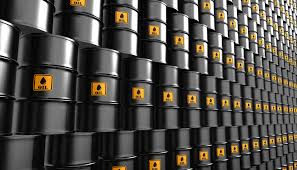
Energy-hungry countries such as China and India – and many others – simply ignored what the West were doing and continued to buy oil from Russia. Bargains were there to be had as Moscow encouraged this by offering discounts – but with prices are still way above the US$60 mark. Russia currently charges China US$80 a barrel, for example. Other countries pay more than China – volume discounts matter. The other side of the coin is that it de-motivates Russia to sell to the West. Why should it sell for US$60 a barrel when it can obtain higher prices in Asia? This has conversely lead to higher, not cheaper prices in the West.
Russia’s Shadow Fleet
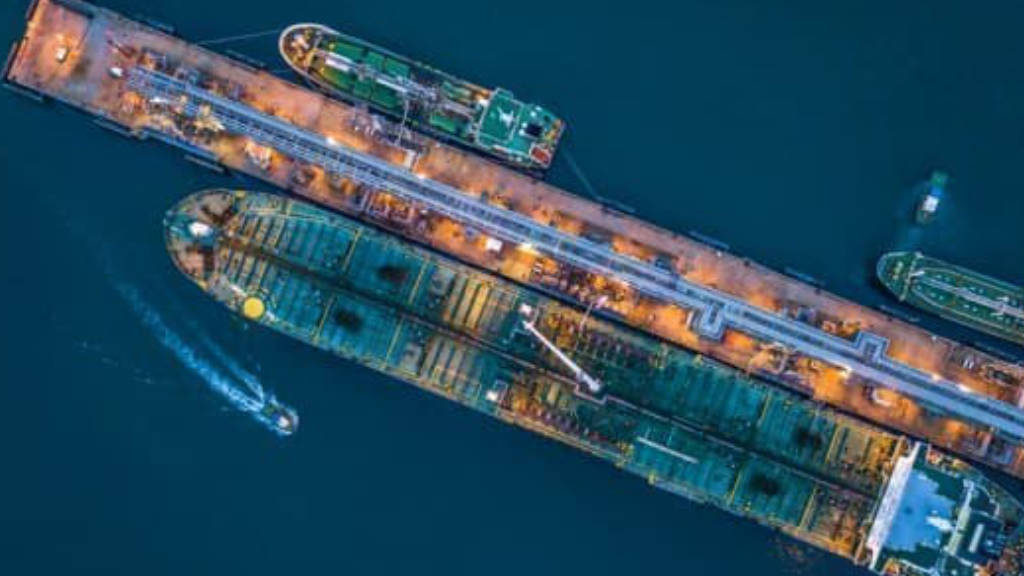
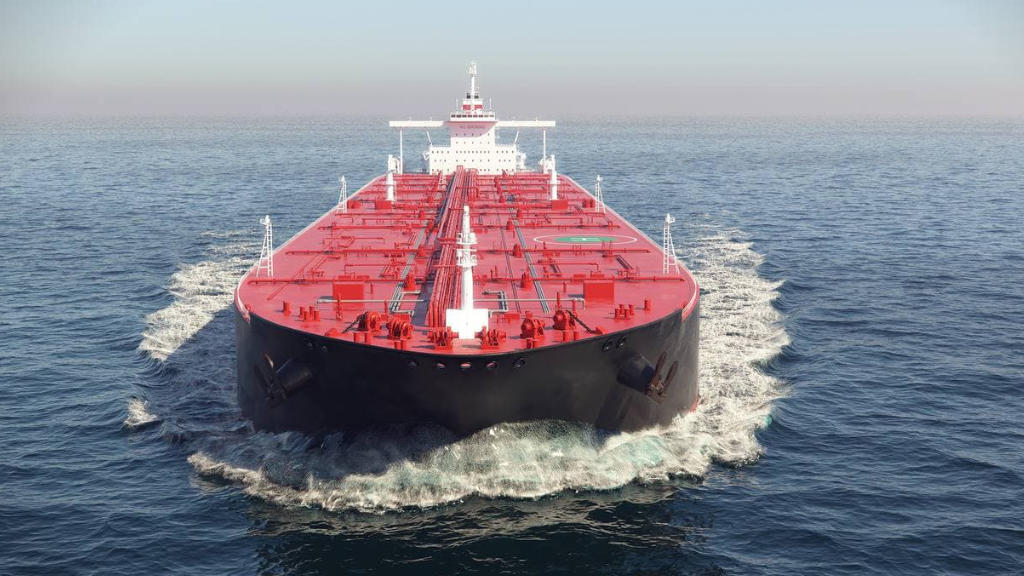
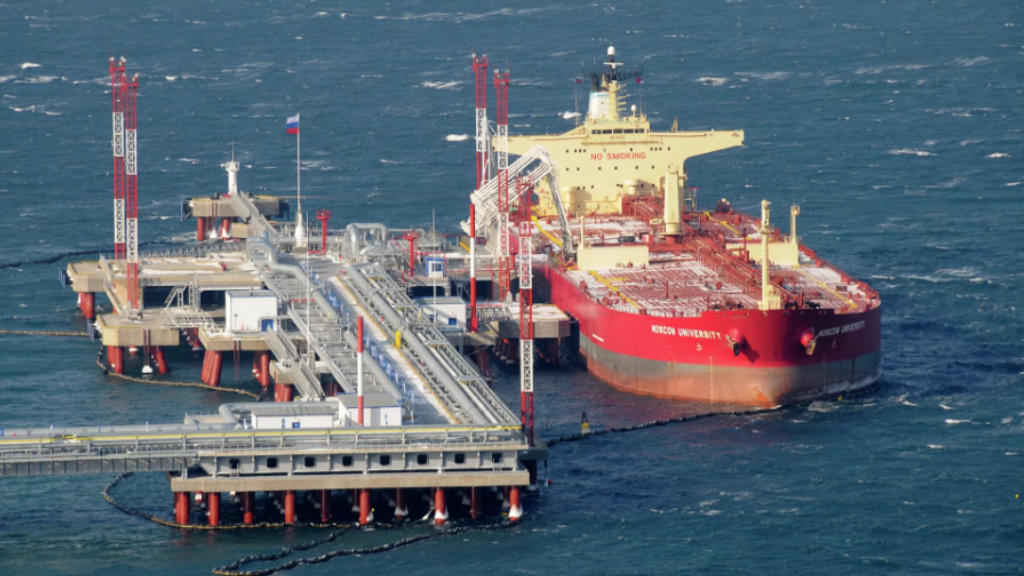
The second issue is the so-called ‘shadow fleet’. To get around the sudden withdrawal from the global oil supply chains of the contemporary shipping fleet (mostly owned by the West), Russia simply went and bought or leased second-hand vessels to replace them. These vessels may be older, slower and less eco-friendly – but they get the job done. Acquisitions were made via off-shore companies (a Western invention) to hide ownership, reflagged in different, more friendly jurisdictions (even Mongolia, a land-locked nation, has a shipping register) with the result being an estimated 600 oil tankers joined the ‘shadow fleet’ – all with the purposes of solving the shipping shortage. It was the Kremlin equivalent of buying ships from Oxfam, but it worked.
Russia – and the countries it trades oil with – have also used smart tactics to confound the price cap sanctions. The West calls these ‘Deceptive Shipping Practices’ (DSP), and while not ideal, for reasons of safety, and the potential for oil spills, include numerous movements such as the disabling of a ship’s onboard Automatic Identification System (AIS) to manipulate its location tracking data and mask its movements.
Vessels also utilize ship-to-ship (STS) transfers where a vessel will meet up with another at sea and transfer its cargo or oil to conceal the origins. The more meetings a vessel has, the harder it is to detect the origin of the oil. Using DSP allows Russia to pursue multiple avenues to offload its oil, and helps buyers obfuscate their own records and circumvent sanctions. These ship-to-ship transfers allow for a ship to leave one place with a cargo and that cargo to arrive at the next port of call on a different ship that perhaps doesn’t have the same sets of concerns tied to its identity.
What this has achieved is that instead of hindering the amount of money Russia can sell its oil for, the price cap has created a far-less transparent, globally untraceable and elderly shipping fleet that now circumnavigates the world’s oceans. Instead of modern, cleaner, and faster, the world’s overall shipping use has become older, dirtier and slower. The West has culpability in introducing this.
Russia’s Shipbuilding Industry
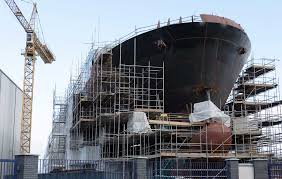
This has also galvanised Russia’s own ship-building industry, with President Putin ordering Russia’s shipyards to step up production. 49 new vessels will join the Russian commercial fleet this year, while Russia is also looking a shipyard Joint Ventures in China and India. This has now become a priority, ten-year shipbuilding project, as Russia phases out the 600-strong shadow fleet with a new fleet of its own.
This, coupled with the 40 new Navy vessels Russian shipyards are also expected to deliver this year and for the foreseeable future, will mean that by 2030 Russia will own one of the world’s largest maritime fleets. That puts its oil supply chains back firmly under its own control.
Asian Oil Stockpiling
Meanwhile, significant oil buyers such as China and India – with a combined 25% of the global population – have massive energy needs of their own to keep their economies growing. China’s 2024 GDP growth is currently at 5% while India’s is rocking along at 7%. Realising that Russian oil discounts won’t last forever, they are buying far more oil than they can immediately consume. The result is that Russia is now selling more, not less oil than when the 60 dollar cap was introduced. Since late 2022, when the cap was introduced, China has bought an average of 700,000 more bpd from Russia, from 1.6 million to 2.3 million. India, the biggest opportunist, bought 1,900% more in 2023 than in 2021, from 100k bpd to 1.9 million bpd. Turkiye upped its Russian oil imports by 150 percent from 2021 to 2023. Other countries, where they can, are also stockpiling Russian oil while prices remain favourable. Overall, the impact of the 60 dollar price cap has motivated Russia to double its year-over-year oil and gas revenue in 2023 to US$14 billion.
Other Geopolitical Impacts
Russia had already begun to work with India and Iran concerning the North-South Transportation Corridor, which permits multimodal logistics from Russia’s Caspian Sea ports, via Iran, to the Persian Gulf and beyond to East Africa and South Asia. Although not yet fully operational while some bottlenecks are being dealt with, direct Russia-India cargo is already being delivered along this route. Cargo has also been delivered from Russia directly to Saudi Arabia. In time, this will become increasingly important as it completely bypasses Europe and concentrates Russian shipping to the South and to the East. Expansion can also be expected to continue – just last week, Moscow announced it was interested in helping Tanzania develop its Indian Ocean east coast ports near Dar Es Salaam. Crucially, these future African east coast routes also avoid the Red Sea.
Yet finding itself involved in another, even more unpopular, political conflict, Western shipping is now a target for pro-Palestine groups operating from Yemen, the southern gateway to the Suez Canal to the north, itself leading to the Mediterranean Sea and European ports. Pirates operating from Somalia remain problematic, while the potential for Iran to limit use of the Straits of Hormuz further complicates the situation for European shipping in particular as a Middle Eastern war with Israel looms.
As a result of these dangers, insurance premiums for ships using the Red Sea route have skyrocketed – leading to an estimated 90% of all previous Red Sea route shipping now taking a longer, time-consuming and costly route around the South African cape. However, logistics facilities have been found wanting. Previously fairly minor ports such as Algeciras (Spain) and Tanger Med (Morocco) have become crucial EU transshipment hubs, but are already at an unexpected and unforeseen over- capacity, leading to some ships being turned away, or delayed. The politicians who dreamed up the price cap didn’t factor in any other potential risk circumstances.
However, these disruptions extend beyond the Mediterranean. In the Americas, drought has forced the Panama Canal Authority to limit daily transits and vessel drafts, exacerbating delays and increasing shipping costs. Spot rates for container shipping have surged, with prices between Asia and the east coast of the United States more than doubling.
With the peak shipping season for the Christmas period for Western markets rapidly approaching, this could spell real trouble if Red Sea disruptions persist or worsen, and the inevitable European holiday consumer demand revives. The presence of anchored ships outside EU and US ports signals systemic strain, with potential economic impacts extending well beyond increased freight rates.
The Arctic Solution
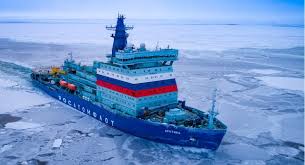
An antidote to these US and European maritime woes does exist – the Northern Shipping Route (NSR). While still being developed, shipping volumes this year between Russia and Asia have reached record highs, with this expected to be a continuing trend. This route will also in time be a major conduit for Russian exports. It could also be used as an alternative by European shipping lines, and there is a realistic possibility that Arctic shipping routes will be widely used as early as 2040. Unfortunately for the EU, the NSR is in Russian shipping lanes and under Russian jurisdiction. With Russia dominating this route, access for Western, unfriendly countries appears remote.
Summary
The end result has been that as a consequence of the Western-imposed 60 dollar price cap, the entire maritime charts as concerns global shipping and related supply chains have had to be redrawn. With what now appear to be hopelessly optimistic forecasts, and without taking into account any other associated risks, the outcome for the EU has been the replacement of normal services by unreliable supply chains to Europe, increased costs, and delivery delays. On Russia’s side, this has resulted in the development of new supply chains, a boom for Russia’s oil sales, increased revenues and a motivation to build a new shipping fleet that within a few years is poised to become one of the world’s largest.
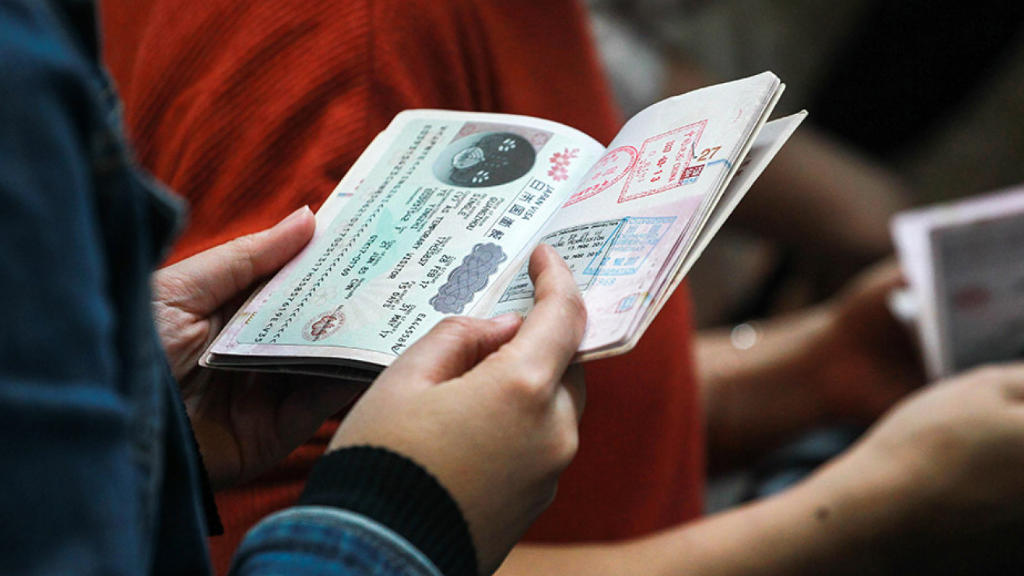
Russia’s Unified Electronic Visa system for entry into Russia has been in operation now for exactly one year, with 540,900 foreign nationals using it to enter Russia. The Russian Foreign Ministry has released data for the period August 2023 to July 2024. Bear in mind these figures are for E-Visas only and do not include other applications.
China became a significant leader in the number of issued electronic visas, with 254,200 visits to Russia over the year, far outstripping everyone else. This is partially due to it being a neighbouring friendly country, with excellent cross-border immigration facilities, and a fast-track arrivals process. Chinese tourism is also often organised at the state level, with mass tourist groups arriving at any one time.
Saudi Arabia was a surprising second – Saudi nationals obtained 43,400 electronic visas over the year, with many concentrated during the summer months when the Middle Eastern weather reaches into temperatures in excess of 40 degrees. Russia has become a new favoured destination.
Germany was third, with 42,600 E-Visa arrivals, followed by Turkiye with 32,800 and Estonia with 28,600 electronic visa visits. Despite the Estonian governments strong anti-Russian stance, with a population of 1.35 million, E-Visa arrivals from Estonia to Russia account for about 2% of the entire national population – a significant percentage.
Rounding out the top ten E-visa arrivals were citizens from India, (28,000), Latvia, (16,000), Iran (13,600) Kuwait (13,300) and Lithuania (8,800).
Artur Muradyan, the Vice President of the Russian Association of Tour Operators (ATOR) said that “Around 80-90% of real tourists use an electronic visa. The majority of tourists from China, Saudi Arabia and Turkey come on short-term trips or for business purposes, while residents of Germany and Estonia mainly enter Russia for work or to visit relatives.”
Alexander Musikhin, the General Director of Intourist stated that “The Russian E-Visa is convenient: it is 3 times cheaper than a face-to-face visa, payment can be made online and in local currency, and to date there have been no refusals. In terms of the number of foreign tourists, compared to last year, by the end of 7 months we are seeing a 2.5-fold increase.”
Musikhin said that the majority of foreigners entering Russia on an electronic visa were business tourists, although the Russian excursion tour market is also growing.
He also identified trends, saying that “Both individuals, families and small groups, as well as traditional groups of up to 40 people come. The main preferences have not changed – these are Moscow and St. Petersburg, but interest in the southern regions, such as Krasnodar is also growing. We also have increases of foreign visitors to the Far East, as well as to Murmansk and Kazan. Modern tourists value not only the informational and historical components of tours. Emotions also play an important role. Photos of beautiful and famous locations, as well as interactive activities such as learning how to cook national dishes, are of interest to many foreign tourists.”

 Русский