Western companies that have left the Russian market have suffered billions in write-downs and lost revenue, Reuters reported on Thursday, (March 28) citing calculations based on company filings and statements.
The US and its allies have placed unprecedented sanctions on Russia over the past two years in retaliation for Moscow’s military operation against Ukraine. The measures have led to significant problems for Western firms operating in Russia, including with payments and supply chains, while some international companies have also been shamed by Ukraine and its backers into quitting the country.
According to Reuters, exiting Russia has cost foreign companies over US$107 billion, a 30% increase since the news outlet’s previous tally in August 2023. The report indicated that the increase in losses also stems from Moscow introducing tight requirements for companies wishing to divest, ensuring local buyers receive major discounts on businesses. These include a 50% discount on their assets and a mandatory fee to the Russian budget of at least 10% of the price.
Several divestment deals have been made for a nominal fee of as little as 1 ruble, as in the case of French carmaker Renault. The car giant left Russia in May 2022 and reported a write-down of over US$2 billion as a result of the withdrawal from its second-biggest market. Renault ceded its 68% stake to Russia’s biggest carmaker, AvtoVAZ, with an option to buy it back within six years. AvtoVAZ manufacture Lada cars, which are now based on Renault engineering. The factory continues to operate and has increased production in 2024 as Russia’s auto sales market rebounds.
Collective write-downs of this sort of magnitude will eventually impact share prices. Most of the exited businesses are listed in the West and these financial losses will eventually show up in their balance sheets.
Reports however vary on the number of companies that have exited Russia since 2022. The Yale School of Management puts the number at about 1,000 businesses, while KSE’s Leave Russia project claims that only 372 have completed their withdrawal. Meanwhile, hundreds of foreign companies continue to operate in the country, including French retailer Auchan, US snack giant Mondelez International, Nestle, and Unilever.
Many producers of consumer goods and everyday products have refrained from leaving the Russian market, arguing that ordinary citizens rely on their products. Some also admit that leaving would cost them too much.
Moscow has said it will not stop foreign businesses from leaving, but only on its terms. It also considers the withdrawal of Western firms to be a lucrative opportunity for domestic companies, which can expand their portfolios by acquiring the assets of exiting firms and continuing their operations.
The Chinese Hurun Research Institute has released its latest Global Rich List rating, with a surprise result in that India’s Mumbai has surpassed the Chinese capital Beijing in terms of the number of billionaires living there. Mumbai is now in third place in the world rankings after New York and London.
In Russia, according to Hurun, six US dollar billionaires were added over the past year, which moved the country into seventh place in global ranking with 76 billionaires. Hurun also noted the growing “migration of billionaires” which is almost certainly linked to sanctions and will include individuals who may be based overseas and possess related passports but would otherwise be identified as Russian. If included, Russia would move into fourth position, ahead of any Western Europeans.
The annual Global Rich List ranking from the Chinese Hurun Research Institute reports that over the past year, the number of US dollar billionaires worldwide increased by 167, reaching a total of 3,279 people. The total wealth of billionaires also increased by 9% in 2023, with their collective wealth estimated at US$15 trillion.
The wealth of billionaires working in the financial sector (+10%), consumer goods (+8%), food and beverages (+7%) and real estate (+7%) grew most rapidly. The combined wealth of billionaires from the media and entertainment industry showed good growth (+US$226 billion), surpassing even the wealth of billionaires from the high-tech industry (+US$149 billion), financial services (+US$118 billion) and the retail trade (+US$104 billion).
The situation is worse for billionaires working in the field of healthcare and medicine – their total wealth, according to Hurun’s calculations, decreased by US$75 billion. The overall wealth of entrepreneurs working in the field of industrial products also decreased (-US$46 billion).
Chinese researchers reported that in the PRC over the past year the number of dollar billionaires decreased by 155 people, to 814. Nevertheless, in the Hurun ranking, China retained first place in the world in the number of billionaires actually living there. The United States remained in second place, which, however, came very close to China (+109 dollar billionaires, total number 800). India retained third place, where over the past year there were 84 more billionaires, and the total number was 271. The top five was completed by Great Britain (146) and Germany (140).
Russia, with 76 dollar billionaires, is in seventh place in the Hurun ranking after Switzerland (106). “Russia added six dollar billionaires over the year, despite the fact that the Ruble decreased in value by 21%,” says Hurun. “They made their wealth in the metallurgy, mining and energy sectors, but for financial services the past year was not easy.”
The Chinese Institute estimated the total wealth of Russian billionaires at US$341 billion.
Moscow also retained its place in the top ten cities in the world with the largest number of billionaires with 59 billionaires (+2). New York was in first place (119, +14), London was in second (97, +10). But Beijing lost third place to Indian Mumbai, dropping to 4th place. Shanghai was also included in the top ten cities with the largest number of billionaires (5th place, 87 billionaires, (-16), Shenzhen (6th place, 84, -10), Hong Kong (7th place, 65, -12), New Delhi (9th place, 57, +18) and San -Francisco (10, 52, -2).
Chinese researchers named “migration of billionaires” as one of the main trends in the current ranking. “The migration of billionaires is intensifying. In the 2022 Hurun Global Rich ranking there were 9% of immigrant billionaires, and in 2023 this rose to 15%. “The most preferred destination for such migration is the United States, with the UK in second place. They are followed by Switzerland, Singapore, and Dubai.”
Our Look Back At Some Of The Weeks Most Bizarre Russo Political Moments
The Pope On The Myrotvorets Hit List
Pope Francis came in for a lot of criticism recently after he called for negotiations between Ukraine and Russia and that Kiev shouldn’t be afraid to compromise. That led to furious denouncements from Kiev as well as Brussels and Washington, making the Vatican a target for extremists. However, rumours that the Pope was added to the notorious Ukrainian Myrotvorets hitlist for assassination have been proven false. But the sight of multiple, senior Western politicians clamouring to publicly attack His Holiness will mean Purgatory will now call in China’s Belt & Road Initiative for additional infrastructure development across its seven terraces, as the arrivals space is becoming rather limited.
British Mercenaries Fighting For Russia
The UK Daily Mail carries a story about British mercenaries fighting with the Russian military. One of them, identified as Ben Stimson, stated ‘Every man takes his choice… a lot of us, the foreign volunteers, have chosen to come over to the Russian side.’ British media has said they are ‘Traitors, drug addicts, convicted thugs and an absolute disgrace’. That compares with British mercenaries fighting for Ukraine, who are described elsewhere as ‘Selfless, heroes, patriots and on the right side of history’. Well, to be fair, the UK should know. It is apparently one of the world centres for private military contractors, many of them with British Army backgrounds. Money talks huh? Given that foreign mercenaries in Russia will be given Russian passports as well as cash rewards, at least the UK should be grateful they are no longer a burden on the welfare state.
Whack-A-Mole Sanctions Busting
According to Bloomberg, the Yemeni Houthi’s continue to create havoc against Western shipping in the Red Sea, courtesy of…Elon Musk’s Starlink network. SpaceX currently has some 5,500 Starlink satellites in low-earth orbit, while Starlink have sold about 2.6 million terminals, which with an approved subscription can access highly accurate GPS positioning. Yemen’s internet was cut off months ago, but the Houthi’s have a solution: Buy the Starlink terminals and subscriptions from approved dealers elsewhere. Dealers offer to purchase and activate kits in other African countries such as Mozambique, where they are licensed, and then deliver them to where wanted. Russia’s Presidential spokesman Dmitry Peskov was asked if Russia uses any Starlink terminals in Ukraine, replying with an entirely straight face that “the software is not certified for use in Russia.”
A reminder to download the English language PDF of our 2024 Russia’s Pivot to Asia annual report if you haven’t already. It includes the following chapters about Russia’ trade and development with Europe, the Caucasus & Turkiye, North Africa, the Middle East, Central Asia, South Asia, ASEAN, China, Far East Asia, the African Continent, Latin America, as well as Russia’s Membership Of Multilateral Trade Organisations: the Eurasian Economic Union, Commonwealth of Independent States, Shanghai Cooperation Organisation, BRICS and the Belt & Road Initiative. We also cover Russia-Asia Transport Corridors, the Northern Sea Route, the International North-South Transportation Corridor, Russia & the Digital Currency Revolution, Russia’s 2023/24 Productivity – and an Executive Summary. Get yours here.
The Russian language edition will be out next week.
Russian Interference In The US Elections
This media gem will raise its head again in coming months, but as Statista have noted, Russia allocated about ₽33 billion (US$360 million) from its Federal budget to pay for the recent 2024 Presidential elections. The US in contrast is pretty opaque about how much it spends on holding Presidential elections (Can any readers make any sense of this) but in terms of the candidates themselves, Trump and Biden blew an estimated US$16.48 billion in the 2020 campaign, with 2024 projected to be even more costly. Whichever, basic back on envelope maths indicates that US election spending seems to dwarf the Russian election budget by a factor of at least 50 times. And Russia influences US election results? LOL.
Putin – The Facts
While the West is up in arms about Russian President Putin being re-elected for the fifth time, here’s a quick snapshot of some of the reasons why. Autocratic? Or just good at his job?
BRICS without China
The well-meaning, but slightly short of a Golubsti King of Eswatini, (the country previously known as Swaziland) has stated that his Kingdom, the last Monarchy in Africa, would like to join BRICS. He made the announcement at meetings in Taipei, stating that “If China does not object in anyways, this would be the best time for Eswatini to join this alliance, with the hope that this would not influence our relations with one of our best diplomatic allies with Taiwan.”
The smart phone market in Russia is dominated by Chinese products, most notably Huawei, whose phones commanded a whopping 79% of all smartphone imports into Russia last year. In total, the Russian smart phone market is worth US$7 billion annually.
But both Apple, who sold US$2 billion worth of product that ended up in Russia in 2023 (see our Russia’s Pivot to Asia PDF guide for details on that) and Samsung saw market share decline. Why is this trend happening? Crucially, Apple and Samsung have been disconnecting the MIR app from their phones making Russian banking access for users very awkward following pressure under sanctions. Meanwhile, Apple were fined US$2 billion by the EU earlier this month for…you guessed it – preventing certain apps on their products in contravention of EU anti-trust fair competition rules.
Russia’s Reciprocal Cancel Culture
Well, there isn’t one. As President Putin stated on Wednesday, Russia has no intention of cancelling any country’s culture. He said that “Moscow has no plans to respond in kind.” While numerous Russian cultural concerts overseas have been cancelled, the Mariinsky (St.Petersburg) is performing works in April by Bach, Beethoven, Massenet, Meyerbeer, Mozart, Puccini, Rossini, and Wagner, let alone the Russian repertoire. And that’s just in week 1. Meanwhile, European Netflix subscriptions surged by 13.1 million in January/February 2024, with price hikes also expected this year. Sort of Tchaikovsky (whose ‘Sleeping Beauty is also on this month) competing with Evil Dead 6. Take your pick!
Fashionista Report! Smoking Hot Pants!
Louboutin shoes – those super expensive, red soled designer chic items from Paris – have always wisely used Russian dealers to distribute their products in Russia. Good news! Russia’s footwear imports, according to “The Shoes Report” increased by 47% in 2023. All of which is true, as well as a great excuse to show the video by the legendary “Leningrad” rock band who (with the help of Victoria Beckham) did so much to sell the brand to Russia’s super chic. The message: wear Louboutin’s – and someone will marry you. Awww… The video, for those of you who haven’t seen it – with English subtitles – is here. Louboutin – which is still privately held – had revenues of a quarter of a billion dollars in 2023.
Meanwhile, in January and February 2024, more than half of all new shopping centre openings (25/45) in St.Petersburg were in fashion retail.
Readers have asked us for what online resources are available for expats in Russia. That’s been a moving target as many of these have left over the past few years due to covid and then the current situation, while a lot of what were websites have moved onto social media platforms. These issues combined have seen the expat in Russia resources hit new lows.
However, we detect a bounce-back – many would-be expats are attracted to Russia because of its high standards of living and human dignity. Not everyone agrees with gender-fluidity being taught in school classrooms to 5 year olds for example. Anyway, here is a list of 2024 website and online resources that are useful to expats in Russia. Click the titles for the direct links.
Internations is a global organisation, with outlets in Russia. There are chapters in Moscow and St.Petersburg. Joining is free, members can check which other cities are available. They hold regular monthly gatherings at selected hotels, restaurants in their respective locations, and it’s a very useful resource for getting to know locals and other expats.
“Explore, Discover, Thrive: Your Gateway to Expat Life in Russia!” A brand new Telegram site with useful content and podcasts. Well done! Well worth a visit.
There are many LinkedIn Groups concerning Russia, many are industry specific so members can choose their most appropriate. Of special mention are Russian Connection, and Doing Business In Russia. Both are private and you have to request joining. Russia’s Pivot To Asia is also on Linked In, and posts articles daily. See you there!
Likewise, there are numerous Facebook groups related to Russia, but again many are selective while others appear dormant. But have a search. Note Facebook is banned in Russia and doesn’t have much of a Russian audience.
Other tips:
When using these resources, be very careful when it comes from taking online advise concerning money transfers and so on unless it is from an experienced and trusted professional. Check the credibility of anyone offering pay-for services before parting with cash.
Embassies
The Commercial sections of some of the Embassies in Russia provide occasional events to mark diplomatic ties and so on. It can be worth registering with your specific Embassy in Russia to find out about these and to let them know you’re in the country in case any assistance is required. You can google your related Embassy to find contact details.
Chambers of Commerce
There are also specific country-related business groups, councils and chambers of commerce that are worth looking for. A quick Google search should help you find these. Do you know a resource that should be on this list? Email us at info@russiaspivottoasia.com
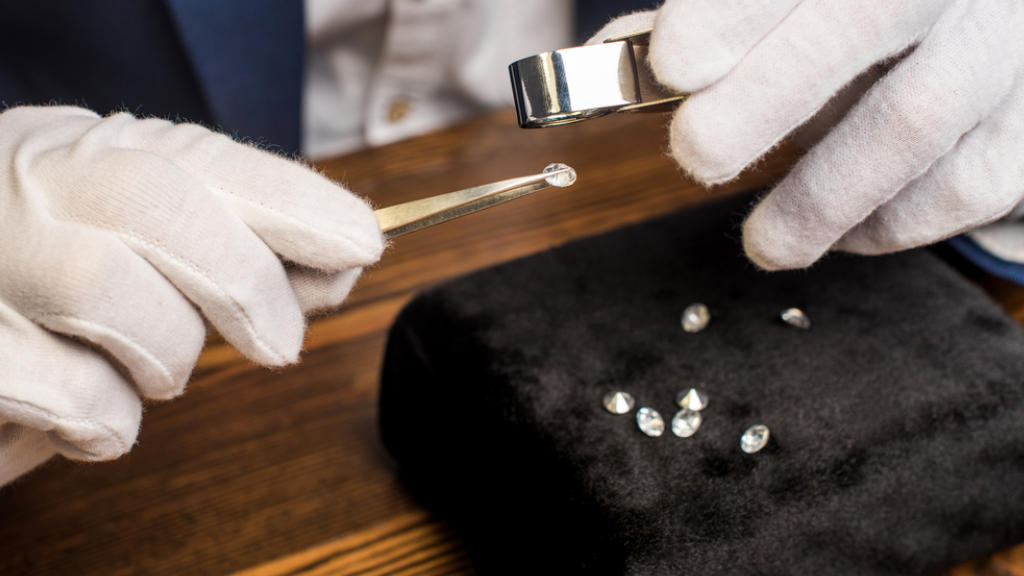
Western sanctions on Russian diamonds are proving good business for Mumbai and Dubai, where European traders and cutters are now relocating too, after Brussels decided to impose sanctions on Russian sourced gems. Russia is the world’s largest supplier of raw diamonds, mostly sourced from Siberia’s Yakutia region. Neither India nor Dubai have followed the sanctions imposed by the West.
A direct EU and G7 ban on Russian diamonds came into effect in January this year, and was followed by phased-in restrictions on indirect imports from March 1. A tracking mechanism is also being planned by September to help Western authorities identify the origin of imported diamonds in an effort to avoid sanctions violations.
Europe’s Antwerp, in Belgium has traditionally been the global hub of the diamond trade, dating back to colonial times and the Belgian diamond mining industry in Africa. However, Western restrictions on Russian diamond imports have destabilized the entire industry, as traders struggle to verify gems heading to the EU. It’s not small business. In 2022, diamonds were the world’s 25th most traded product, with a total trade of US$123 billion.
The problem traders now have is that EU paperwork required on every diamond valued at more than 1 carat imported into the bloc now takes on average about two weeks to complete. Prior to the sanctions, the procedure took 48 hours. That time difference has a huge impact – with diamonds trading for millions of dollars, that additional timescale significantly increases financial costs for traders as it extends the interest costs on the time between buying and selling, which currently run at about 10%. Insurance premiums also rise due to the longer transit time. It also upsets clients along the entire EU diamond supply chain as delivery on valuable product is significantly delayed.
Matters are not going to improve – from September 1 the checking procedure will extend to all diamonds of 0.5 carats or more. As a consequence, the trade is moving out of the EU as the impact has rendered the European industry unprofitable. There will be downstream impact as well – the European high-class jewellry industry will be affected, as will the industrial sector, as diamonds are also used in precision equipment and for their hardness – the gems are used in industrial saws.
There are other issues. Being an almost pure form of carbon, diamonds from different countries are almost identical. Yet all must be independently verified before being allowed into the EU.
But this is good news for Asia, and the gem industry in India and Dubai in particular. Mumbai has long been the centre for global cutting since Imperial times. Pieter Bombeke, a master diamond cutter in Antwerp, has stated that “There used to be 4,000 diamond cutters in Antwerp. Now it’s 120. Most of the work has gone to India where the labor is cheap.”
In fact, India is now the world’s largest importer of diamonds, accounting for 40% of the global total.
While India processes diamonds, the diamond exchange in Dubai is now taking over as the global sales hub, again relocating trade away from the EU. The Dubai Multi Commodities Centre (DMCC), a Free Trade Zone in the Emirate, has reported a 19% increase in the value of diamond trade from 2022 and 2023, worth a total of US$38.3 billion last year for rough and polished diamonds. This included a 42% rise in polished diamonds and a 7% rise in rough.
From Mumbai to Dubai to the global markets – the next biggest buyers are the United States, followed by Hong Kong, which has become an Asian hub, mainly servicing the Chinese jewellery market. Hong Kong imported US$14.3 billion worth of diamonds in 2022. With the US having joined the Western sanctions against Russian diamonds, their percentage of global import share will probably fall. However, neither China, India nor the UAE – or anyone else outside the G7 has introduced restrictions on Russian diamonds. The result for the European diamond industry has been chaotic. One wonders if in future years, business academics will write books such as “How EU Politicians Imposed Sanctions on Russia and Wrecked Their Own Economies”. If so, the section on the global diamond trade will be a significant part of the book.
The subject of Ukraine’s public debt is shortly to become a pressing issue as the International Monetary Fund (IMF) has scheduled a meeting to discuss it with creditors on April 17. The IMF have already stated that the matter requires ‘deep treatment’.
According to Focus Economics, Ukraine’s Public Debt reached 78.5% of GDP in 2022, and is almost certainly higher in 2024. This figure is far above that of the Eastern Europe average of 32.5% of GDP.
These suggest that as of 2022, Ukraine was in debt to about US$128 billion. This is held by mostly by Ukraine’s banks, most notably the Central Bank of Ukraine with an estimated 50%, while around 30% is owned by state banks, and the rest is distributed among private commercial banks, companies, non-residents, and the local population. These banks then typically issue bonds – which have in the past been purchased by mainly European banks.
However, the IMF said in December that the dynamics of debt and Ukraine’s ability to finance it are limited under both the baseline and downside scenarios, and even with fiscal adjustment and official support, these indicators continue to be past manageable levels.
The IMF says that Ukraine needs to reduce public debt to 82% of GDP by 2028 and to 65% of GDP in 2033. Among the restructuring targets, it also stated that gross financing needs should average 8% of GDP in the post-program period (2028-2033).
The April 17 meeting is an important one as it is essentially a meeting of a group of creditors, who will decide how to manage Ukraine’s apparent inability to repay its existing bonds. They will be expecting haircuts. However, this will be followed by requests for more money under an already agreed Extended Fund Facility (EFF) Arrangement for Ukraine. That amounted to US$15.6 billion in Eurobonds and was agreed by Ukraine’s creditors in March 2023. That was to provide some financing for the 5-year period 2023-2028 and was designed to keep the Ukrainian government functional for the next 5 years.
As part of that deal, the Ukrainian government pledged to take numerous measures in the EFF period to manage the sovereign debt and achieve three objectives, namely, restore debt sustainability, maintain liquidity and reduce the financing gap, and create the necessary conditions for the participation of the commercial sector in the post-crisis recovery.
The government stated at the time that “The Ukrainian authorities will explore a number of alternate scenarios to ensure the debt payment and maximize the efficiency and success of the process, while being aware of the goal of the soonest restoration of Ukraine’s access to the market. The Ukrainian government has hired financial and legal consultants to support the process.”
The ministry was expecting to begin talks with commercial creditors on a new rescheduling at the beginning of 2024, so that the talks could be finalized by mid-2024. The IMF meeting is scheduled to be part of this process.
It remains to be seen how the Ukraine government will explain the measures it said it would take and whether these have met with any success. It also remains to be seen how Kiev will propose viable plans to reduce its public debt by 2028 and still further by 2033.
In fact, these discussions will be a key test of President Zelensky and the Ukrainian Economic Ministry. The IMF – and Ukraine’s creditors – will want to see hard facts and a road map on the table to see how Ukraine can manage itself out of debt. There have for example been reports that the Ukrainian plans for fiscal redevelopment and future industrial productivity remain reliant upon the return of lands that have already been incorporated into Russia. If true, it will most certainly be seen as unrealistic.
Ukraine therefore appears to be close, if not already in default of its existing EFF with little hope of raising expectations. If so, one or more of three things are likely to occur:
Changes in Ukraine’s government to install financial hard-liners under EU budgetary control;
A continued extension and raising of Ukraine’s debt to be supported by Western backers – although it remains uncertain where this money would come from;
An acknowledgement that the best course of economic action would be to allow Russia to absorb part of Ukraine’s debt. That means an acknowledgement that the current state of Ukraine and not how it was prior to 1994 has to be the main basic economic case.
The outcome of the April 17 meetings therefore may well dictate what the future of Ukraine looks like, its viable territory, and economic development plan. It appears increasingly apparent that Ukraine’s creditors will decide upon the course of action to take. The financial space for Ukraine to illustrate it is a viable nation and not a failed state is now closing. The job of selling the Russian factor to the Western public will be seen as a side show – and one for the politicians to solve. It will be interesting to hear the political tunes changing what and how they play.
In a nod to the BRICS grouping’s ability to increase trade and alternative supply chains, Russia exported 900,000 tonnes of wheat to Brazil in 2023, rising from fourth place to second place among Brazil’s leading suppliers, according to Russia’s Agriculture Ministry Agroexport center.
Argentina is traditionally Brazil’s largest supplier of wheat, with a market share of 54% in 2023, however declining political relations between the two countries are changing the trade dynamics. Argentina declined to join the BRICS group in late 2023.
Russia supplied 21% of total wheat exports to Brazil, surpassing both the United States and Paraguay in the rankings. Russia also sells fertilizers and nuclear plant developments to Brazil.
For further analysis of the Russia-Brazil 2023/24 trade dynamics, please refer to the specific chapter on Latin America in our PDF Guide. It is a complimentary download.
BRICS Grain Exchange
Meanwhile, the European Union has a placed the maximum allowable import duty of 95% on Russian wheat to prevent it entering EU markets. It has accused Russia of ‘distorting global prices’.
However, the move will maintain high prices for EU and Ukrainian wheat supplies and has been condemned by many African countries for discouraging what should be a lower global average. 2023 produced the world’s second-ever largest harvest and prices ought to decline as a natural supply and demand market result. The EU is the world’s second largest producer of wheat after China, while Ukraine is sixth. Prices are currently set in France.
Consequently, Russia has proposed an alternative Wheat exchange to be focused on a BRICS Grain Exchange that would allow buyers to purchase directly from producers rather than via EU-based contracts and middle-men as is currently the norm. This would change the way in which global supplies – and prices – are formulated as China and India are the world’s first and third biggest wheat producers, with Russia fourth and the biggest exporter of wheat. An exchange based on the BRICS grouping of Brazil, Russia, India, China and South Africa as well as Egypt, Ethiopia, Iran, and United Arab Emirates would have global clout and be beneficial to Global South buyers.
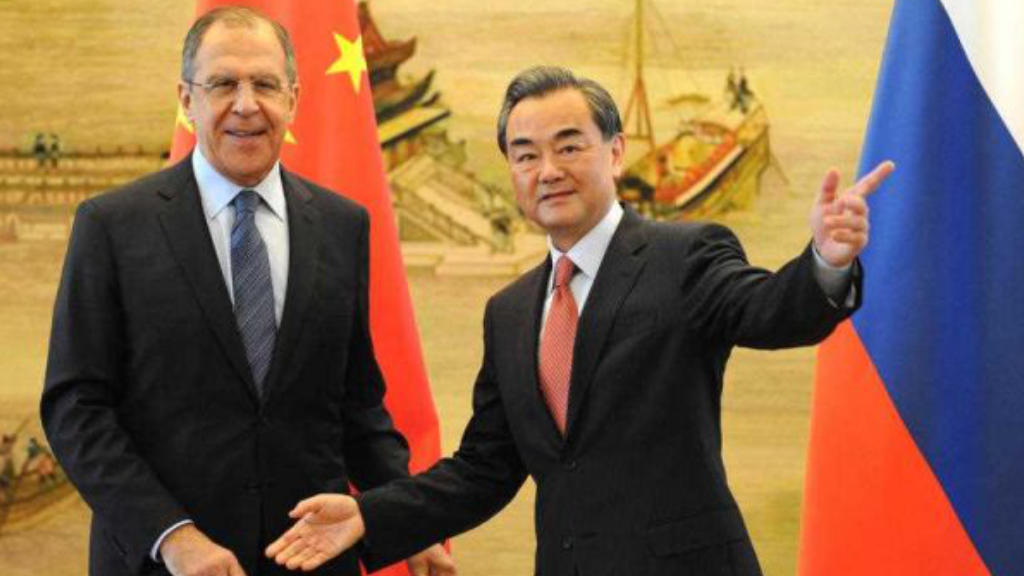
Russia’s Foreign Minister Sergey Lavrov with China’s Foreign Minister Wang Yi.
The phrase “Russia’s Pivot to Asia” has been in use for over a decade – and deployed by many to describe the reactions of Russia towards to economic sanctions imposed by the West. Those began in 2012. So, with over ten years of tracking this phenomenon, how accurate has Western media been in detailing what has been happening? We summarise the top twenty google searches of the phrase to uncover the most popular articles, what was said, who by, and when, in chronological order:
Brookings Institute, 2013 “For all its posturing about turning Russia into a hub of intra-Asian trade and cooperation, Moscow’s strategic focus is still stuck on the West.”
ICPS, 2013 “Russian foreign policy faces the mismatch between a self‐perceived image and notion of a Soviet‐era great power and the actual reality of a truncated and a stagnant Russian petro‐state seeking to insulate itself from the forces of change.”
CSIS, 2015 “Russia undermines its ability to become a full-fledged Asian power.”
PRIO, 2016 “This makes Russia one of the key sources of instability in the Asia-Pacific region.”
The Economist, 2016 “Vladimir Putin is leaning east, but his engagement is superficial.”
Taylor & Francis, 2016 “Russia is unlikely to seek a relationship based on a common outlook. That will move Russia ever closer to the non-Western world, primarily the Asian giants.”
Nanyang University, Singapore, 2016 “Russia needs to strengthen ties with other Asia-Pacific countries and ASEAN as a regional grouping so as to attract more diversified trade and investments into its Far East region.”
ORBIS, 2019 “In the past, geopolitical and economic factors have hindered Russia’s Asian Pivots and caused the Kremlin to turn back toward Europe.”
Marshall Centre, 2019 “The “Greater Eurasia” idea has little economic or institutional backing and exists largely at a rhetorical level.”
The Diplomat, 2020 “Russia’s pivot to Asia is instrumental for offsetting Western sanctions.”
ORBIS, 2020 “The flourishing Sino-Russian strategic relationship has developed mutual economic necessity and geopolitical underpinning.”
Yale 2020 “Ultimately, a desire to avoid becoming China’s junior partner might drive the Kremlin to repair its strained relations with the United States and the European Union.”
Carnegie, 2022 “There is less to this supposed strategic shift than meets the eye. Russia is and will remain a European power.”
ORF, 2022 “The West’s collective reflection of the events in Ukraine draws a conditional line under the 30-year era of Russia’s search for a place in the western-centric world.”
DW, 2022 “Russia’s Asia pivot has boasted few achievements since 2012.”
DW, 2024 “Russia doesn’t see itself as fully belonging to either the West or to a triangle with India and China. It is not Europe. It is not a part of the West. It is not a part of the East. It is the centre.”
Summary It should be noted that the above opinions are not listed in terms of their Google popularity, we have listed them in chronological order and have discounted Russian media in order to gain a Western perspective. If we had listed them in terms of online popularity, it is noticeable that Google lists the most negative, anti-Russian (and the oldest) at the top.
That said, of the 20 media statements reported, 12 are dismissive of the ‘Pivot to Asia’ concept and 8 pragmatic or positive. This points to divided global viewpoints over the situation. Of the positive comments, it is noticeable that the prestigious Nanyang University in Singapore in 2016 were among the first to illustrate a pragmatic viewpoint, noting how Russia’s interest in the East would be of economic benefit to ASEAN. Yet neither Carnegie nor Yale subsequently appear to have taken note.
None of the negative pieces mentioned any benefits for Asia in engaging with Russia, other than to be largely dismissive and concentrating largely on what they perceived as a “failed” or “failing” foreign policy.
That in itself is of interest, as much of the underlying attitudes appeared to come from perspectives that Russia cannot succeed and will ultimately face ruin if divorced from the West. That implies a deep-felt belief that Russia fundamentally needs Europe in order to survive and prosper. What is happening today is that those beliefs are now facing significant challenges.
This includes global opinions now being formed by attitudes with non-Western origins, and as we can see in this short study above, slowly taking a more significant and vociferous role in the formulating of international opinion. The cynical may also observe that if search engines such as Google were not American controlled, those may have wider circulation. In summary, while Western attitudes towards Russia’s pivot to Asia may be dismissive, Asia’s are not.
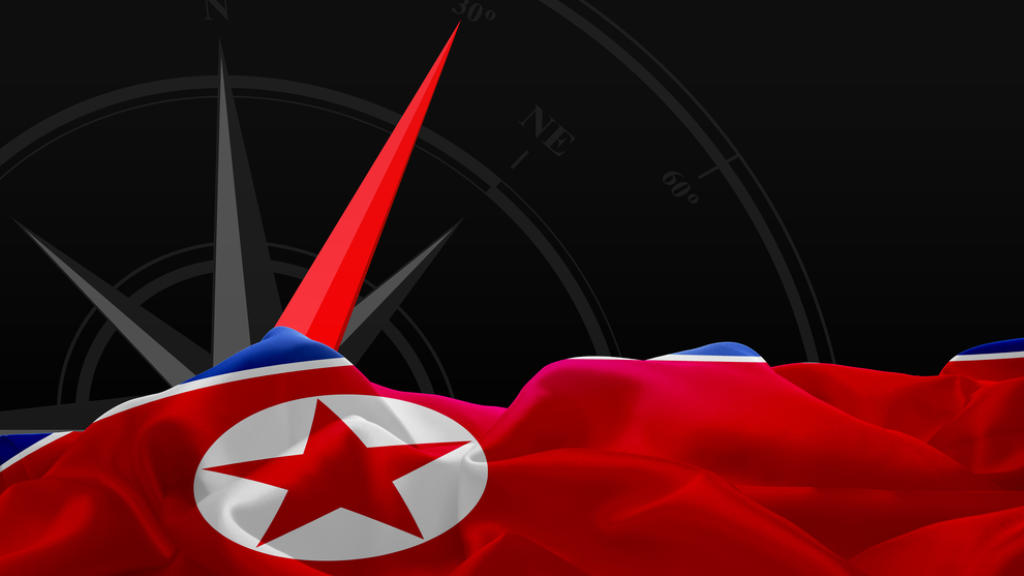
The Financial Times has reported that Russia has started supplying oil directly to North Korea in defiance of UN sanctions, further cementing ties between the two countries and dealing a new blow to international efforts to contain Pyongyang.
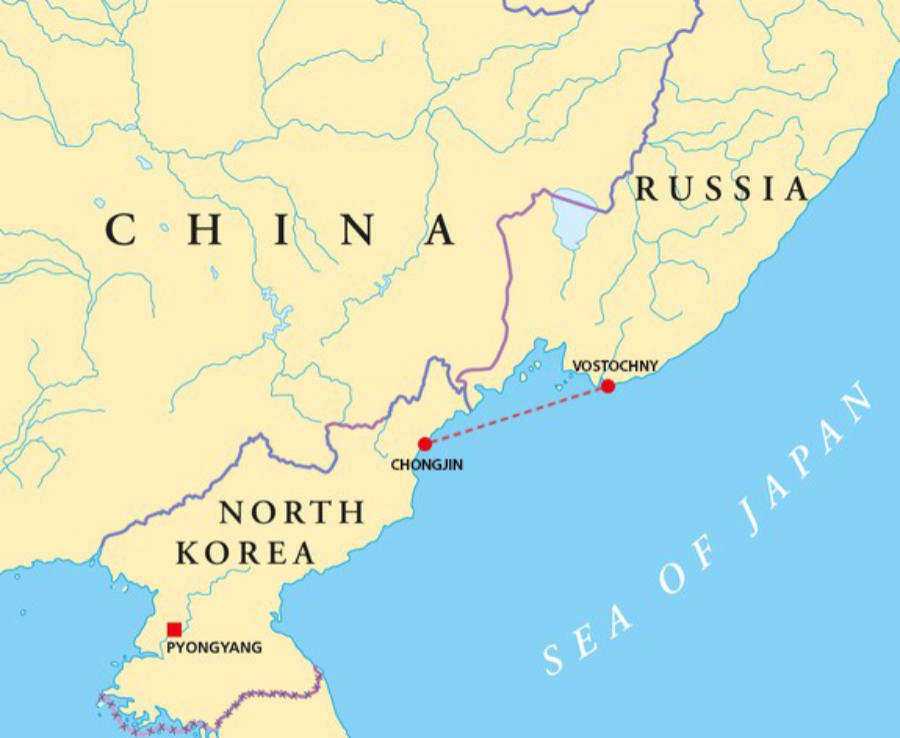
At least five North Korean large oil tankers have travelled this month to collect oil products from Vostochny Port in Russia’s Far East, according to satellite images. The shipments, which began on March 7, are the first documented direct seaborne deliveries from Russia since the UN Security Council — with Moscow’s approval — imposed a strict cap on oil transfers in 2017 in response to Pyongyang’s nuclear weapons tests.
The ships, which are North Korean-flagged and classified as oil products tankers, all visited the same berth operated by a Russian oil company at Vostochny Port, where they appeared to load. Satellite imagery confirmed that two of the ships then travelled from Vostochny Port to the North Korean port of Chongjin, where they appeared to unload.
The vessels seen at Russian terminals are some of the largest-capacity vessels in North Korea’s fleet, with several of these UN-sanctions designated, meaning that under sanctions they shouldn’t be allowed entry into foreign ports, nor involved in oil deliveries.
All five of the North Korean ships made the journeys to Vostochny Port with their transponders switched off. One of those vessels, the Paek Yang San 1, was identified by the UN as having been involved in illicit ship-to-ship oil transfers designed to circumvent the import cap, which restricts North Korea to just 500,000 barrels a year each for oil and petroleum products. Deliveries can also only be deemed compliant if they are reported to a UN sanctions committee.
Researchers have calculated that the oil deliveries documented from Vostochny Port could amount to 125,000 barrels — 25% of North Korea’s permitted annual quota under UN sanctions — in a matter of weeks.
Hugh Griffiths, a former co-ordinator of the UN panel that monitors sanctions on North Korea, was quoted in the FT as saying: “These oil deliveries constitute a full-frontal assault against the sanctions regime, which is now on the brink of collapse.”
The deliveries come after North Korea last August began supplying thousands of containers of munitions to Russia. Vostochny Port has also been used as a hub for Russian ships allegedly involved in arms trade between the countries.
Griffiths said that “What we can see now is a clear arms-for-oil bartering arrangement in open contravention of sanctions that Vladimir Putin signed off on personally, illustrating Russia’s trajectory in recent years from international spoiler to outlaw state.”
The revelation of the apparent oil-for-arms trade comes as western diplomats are rushing to preserve the UN panel that monitors compliance with sanctions on North Korea, amid fears that Russia could veto a renewal of the body’s mandate, according to three people familiar with discussions at the UN in New York.
Western officials postponed a vote on renewing the expert panel last week after Russia and China made proposals to water down its mandate, the people said. The deliberations over the UN sanctions panel, which were first reported by Seoul-based news service NK News, have raised questions about how long the UN body — and the sanctions regime itself — can survive.
“While there is a debate about the effectiveness of sanctions, what we are now seeing is what would start to happen if the sanctions were removed,” said Byrne. “This is giving North Korea a very significant lift.”
Go Myong-hyun, a senior research fellow at South Korea’s state-affiliated Institute for National Security Strategy think-tank, said direct supplies of oil and petroleum products from Russia to North Korea would “go a long way towards stabilising the North Korean economy”.
“For the past seven years, Pyongyang has had to pay a high premium for the oil products it needs, as it relied on a complex and expensive network of criminal brokers and mid-sea ship-to-ship transfers. But now, it appears it has secured a steady supply of oil either at a heavy discount or as direct payment for the munitions it is supplying to Moscow,” he added. “That is going to free up resources for North Korea.”
Our analysis of the situation is simple: If the West wants Russia’s assistance in maintaining sanctions on countries such as North Korea, then it shouldn’t have placed the volume of sanctions upon Russia that it has. It is very basic cause and effect.
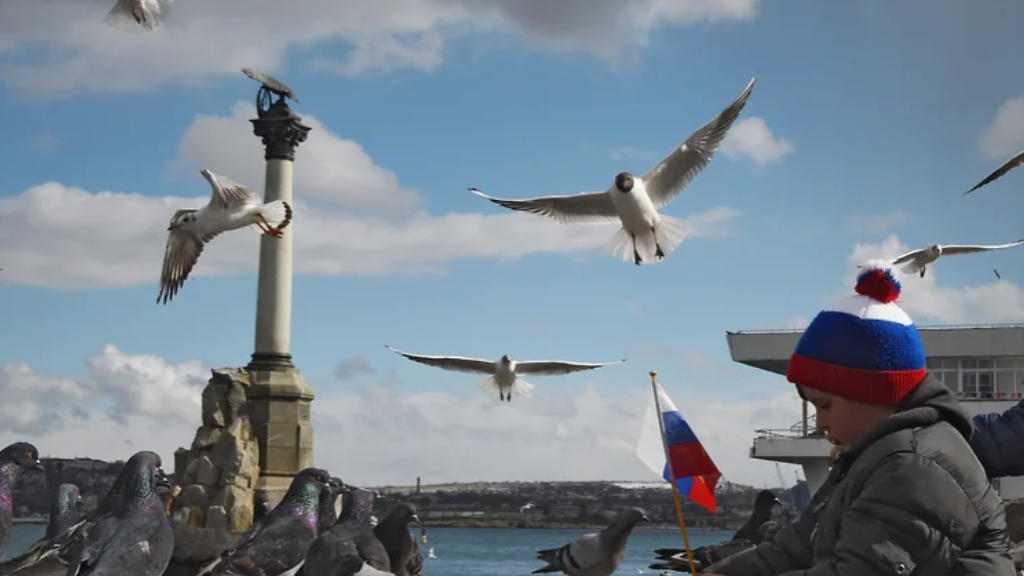
On March 18, 2014, the Republic of Crimea and the city of Sevastopol became part of Russia. The Russian newspaper Kommersant has published data on how Crimea has changed since it returned to Russia.
GDP Growth
From 2014 to 2022, the GDP of Crimea increased 3.5 times — from ₽189.4 billion to ₽655.9 billion (US$9.32 billion), while Sevastopol increased from ₽30.1 billion to ₽229.7 billion (US$3.26 billion).
Crimea has risen from 62nd to 48th place as concerns GDP size in Russian oblasts and republics, and is now comparable with the indicators of Kursk and Tver. Sevastopol started from the last, 85th place in 2014. It has subsequently risen to 76th place. For comparison: in 2013, Crimea’s GDP was about US$4.3 billion meaning it has doubled in the past decade with an average annual GDP growth rate of about 10%.
According to the Crimean Ministry of Finance of Crimea, the largest taxpayers of the republic account for 14.4% of revenues and are Krymenergo, Krym Railways, K-telecom, and the Massandra wine and cognac plants.
GDP Per Capita Growth
The average monthly salary in Crimea from 2015 to 2023 increased by 109% — from ₽22,400 US$241) to ₽46,800 (US$504). In Sevastopol, the average monthly salary increased by 118% – from ₽21,800 US$235) to ₽47,000 (US$507).
However, in comparison with the all-Russian indicator, income levels remained unchanged at 64.6% of the average salary in Russia. This means that salaries in the region are competitive, mainly due to risk due to the proximity to Ukraine. Wages could be expected to rise as and when the conflict is over.
To compare with neighbouring Ukraine, the average salary in Ukraine, according to the state statistics service, from 2014 to 2023 increased from 3,500 to 17,400 hryvnia, at the weighted average dollar exchange rate — from US$292 to US$477.
The size of the average pension in Crimea over the same period in nominal terms increased one and a half times — from ₽11,100, (US$119) up to ₽16,700 (US$180). A similar picture was observed in Sevastopol, where in nominal terms the pension increased from ₽12,300 (US$132) to ₽18,300 (US$197).
When compared to Ukraine, according to the Ukrainian state statistics service, the 2023 pension reached the equivalent of US$147.
Food & Wine Productivity
Crimea is well known for its agricultural and vinicultural industries. Since rejoining Russia, Crimea has increased the production of its wineries: from 2.4 million cases in 2014 to 10.9 million cases in 2022 (every fifth bottle was from Sevastopol wineries). Also, the share of Crimean wines as part of Russia’s total production increased. In 2014 Crimean wines accounted for just 3.3% of the Russian market, increasing to 16.7% in 2023.
From 2013 to 2023, grape production increased by 138%, and of other fruits by 164%.
The size of sown area used to grow basic grain crops in Crimea significantly decreased after Ukraine blocked the North Krym Canal. Production of 754,000 hectares in 2013 reduced to 711,000 hectares in 2015. The canal was reopened by Russian forces in 2022 and is likely to mean significant improvements in agricultural productivity from 2023 data onwards.
Industrial Productivity
The value of Crimea’s mining production for the period from 2015 to 2022 increased by 25%, from ₽7.3 billion to ₽9.1 billion, and in the processing sector by almost three times, from ₽44.4 billion to ₽125.9 billion.
The energy sector nearly tripled from ₽22.7 billion to ₽65.7 billion. In the main shipbuilding manufacturing industry, from 2014 to 2022, shipbuilding increased by 4.4 times. This is likely to continue as Russia upgrades its maritime fleet and is adding over 100 vessels to its Arctic routes by 2030.
Population
According to the Russian Federal State Statistics Service, the population of Crimea grew from 2014-2020 by 47,000 people, while from 2021 to 2023 it decreased by 21,800 following an increase in Ukrainian attacks upon Crimea. Sevastopol also showed steady growth in terms of population. In total, as of January 2024, 1.967 million people live in Crimea.
According to the State Statistics Service of Ukraine as of November 2013, the Crimean population mix was Russian (58.5%), Ukrainian (24.3%), and Tatars (12.1%). The All-Russian Population Census conducted in 2021 recorded the following Russian (72.9%), Tatars (14%), Ukrainian (8.2%).
Tourism
Over the past ten years, over 60 million people visited Crimea, and since 2014 more than 70 new hotels have been built. In 2021, the number of tourists reached 9.4 million. After Ukraine started attacking Crimea, the number of tourists has almost halved by 2023.
Rail transport, which accounted for 66% of the total tourist flow to Crimea in 2013, ceased to be a means of delivering tourists in 2014, when Ukraine destroyed connectivity with the region.
After Crimea rejoined Russia, the Kerch Strait ferry crossing became the main transport corridor connecting Crimea with the Russian mainland. In 2018, the Crimean bridge was opened, connecting the Kerch and Taman peninsulas. The total cost of building the bridge amounted to more than ₽220 billion (US$2.37 billion). Since the start of traffic on the Crimean bridge, 26 million vehicles have passed in both directions, of which 21.8 million are cars, and about 300,000 buses and lorries. However, the bridge has come under repeated attacks from Ukraine.
Infrastructure
Over the past decade, 300 km of new roads have been built in Crimea, with another 4,000 km repaired. For the first time since the Soviet era in 1992, a comprehensive repair of Crimea’s bridge structures was carried out. From 2015 to 2022, ₽345 billion (US$3.72 billion) was allocated for the development of the transport and road industry, and an additional ₽84.8 billion (US$910 million) in 2023.
Housing & Energy
From 2014 to 2023, more than 7.1 million square meters of housing were commissioned in Crimea. In 2023, apartment sales in new buildings increased by 17.6%.
Electricity prices in Crimea are still lower than those in neighbouring Krasnodar Krai, however the local level of electricity production in the Crimea does not yet cover its needs. Infrastructure is being put in place to correct this and should be operational by 2025.
Free Trade Zone
Crimea established a Free Trade Zone in 2014, with a license to operate until 2039. The Zone provides investment incentives including reduced profits tax and utility charge subsidies. Over 1,700 companies have registered in the zone, with declared investments of about ₽150 billion (US$1.62 billion) employing over 66,000 people. Major investment areas are agriculture, construction, industry, resorts and tourism, and transport. Russia is a member of the Eurasian Economic Union (EAEU) which allows Crimea access to markets in Russia as well as Armenia, Belarus, Kazakhstan and Kyrgyzstan.
The EAEU also has Free Trade with Iran, Serbia, and Vietnam. Ukraine in contrast left the Commonwealth of Independent States (CIS) trade bloc in 2014, which includes the EAEU members in addition to Azerbaijan, Tajikistan and Uzbekistan. Ukraine now is not a member of any trade bloc, but is hoping to join the European Union – although the time frame to do so seems long term.
Summary
While Crimea remains somewhat hindered due to the conflict in nearby Ukraine, it has nonetheless managed to average annual GDP growth rates of 10% since its return to Russia. Spending on infrastructure development, the instigation of a Free Trade Zone and Russia’s own standing within trade blocs such as the EAEU and CIS have provided Crimea with a resumption of trade with its traditional partners.
However, much anticipated developments in the tourism and construction industry have been shelved due to the ongoing uncertainty over the situation with Ukraine and increasing levels of aggression towards the Crimea from the country. At present the main opportunities are in the industrial and trade, rather than tourism sectors. However, should agreement with Ukraine to end the conflict be resolved in future, the tourism and related property sectors will boom.
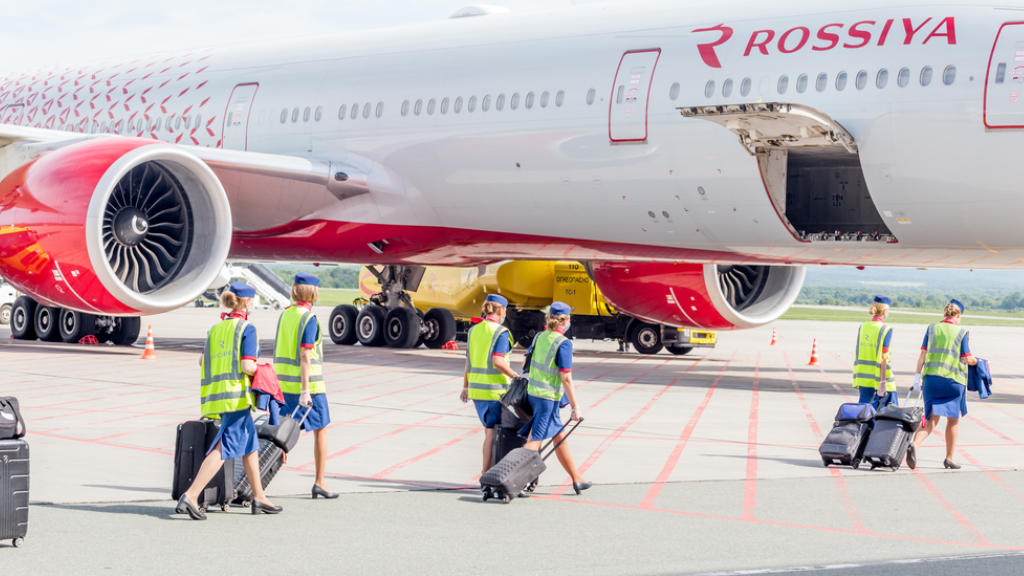
The new spring 2024 schedule for Russian airlines flight schedules includes the opening of new foreign destinations and the resumption of previously existing, but mothballed routes. Details are as follows:
Russia-China
Yakutia Airlines are to begin operating direct regular flights on the Yekaterinburg-Beijing route from April 4, with departures three times a week on Mondays, Thursdays, and Saturdays on Airbus A319 aircraft. The cost of a one-way ticket will be from ₽29,000. Passengers arrive at the new Daxing Airport, which is connected to Beijing CBD by trains and taxis.
From mid-May, Ural Airlines plans to resume flights from Yekaterinburg to Harbin.
Russia-Macau
Aeroflot will receive clearance to fly to Macau from March 31. Flights were previously belonged to Royal Flight, which ceased operations after the introduction of sanctions against Russia in 2022. Macau is a leading casino and tourism hub near to Hong Kong.
Russia-Mongolia
KrasAvia has started flights from Krasnoyarsk to Ulaan Baatar, Mongolia’s capital city. KrasAvia has opened the sale of air tickets for flights from Krasnoyarsk to Ulaanbaatar and back in the summer schedule, which will be valid from March 31 to October 26, 2024. Flights will be operated departing Krasnoyarsk at 23:55 on Wednesdays, with arrival at UB at 04:15, the travel time is 3 hours 20 minutes. Departure from Ulaanbaatar is at 05:25 on Thursdays, with arrival back at Krasnoyarsk at 08:10.
The flights will be served by ATR-42 aircraft. The cost of a ticket for the Standard fare (one piece of luggage up to 10 kg + 5 kg hand luggage) will be from ₽12,375, and for the Optimum fare (one piece of luggage up to 23 kg + 5 kg hand luggage) from ₽16,830. Online check-in is provided with the choice of a seat in the cabin, as well as the ordering of additional services: meals from the menu, insurance, reservation of excess baggage and special types of transportation (unaccompanied children, animals, sports equipment, musical instruments).
Russia-Kazakhstan
Yakutia Airlines has opened a new route between Irkutsk and Almaty, with the route priced from ₽14,260.
Sochi is also developing as a Russian regional hub for Central Asia and the Middle East. The following flights are being offered by Ural Airlines and operated on medium-haul Airbus A320 aircraft with 162 passenger seats.
Russia-Uzbekistan
Sochi – Tashkent, departure from April 1 on Mondays at 17:55 and on Thursdays at 17:30. The travel time is 3 hours 40 minutes.
Sochi – Namangan, departure from April 6 on Saturdays at 21:00, the travel time is 3 hours 30 minutes.
Uzbekistan Airways also operates flights on the Sochi-Tashkent route six days a week, and on the Sochi-Namangan route twice a week.
Russia-Kyrgyzstan
Sochi – Bishkek, flights resume from May 25 on Saturdays, departure at 06:00, the travel time is 3 hours 55 minutes.
Pobeda Airlines will also now fly from Moscow to Osh. Flights will start on April 26 and will operate daily.
Russia-Dubai
Sochi-Dubai, flights commence from April 6 to May 18 and from September 28 to October 26, departure on Saturdays at 03:30, the travel time is 4 hours 05 minutes.
Flydubai, Red Wings, Rossiya and Azimut also all fly to Dubai from Sochi.
Russia-Izmir
Rossiya will commence flights from St. Petersburg to Izmir, in Turkiye, from April.
Russia-Philippines
IrAero Airlines began operating flights on the Irkutsk – Manila route from March 6. The departure from Irkutsk is every Wednesday at 22:00, from Manila every Thursday at 07:25. The flight time is 8 hours 20 minutes. Superjet 100 aircraft are used with a refuelling stopover in Shijiazhuang (China) without disembarking passengers.
IrAero became the first airline in Russia to launch direct flights to the Philippines after a long break. Irkutsk meanwhile is developing as a Russian regional aviation hub – it is now possible to fly from Irkutsk to 20 other international destinations, with the most popular routes being Bangkok, Osh, Phuket, Bishkek and Tashkent. Irkutsk airport has handled more than 137,000 passenger departures since the beginning of the year.
Russia-Tunisia
Aeroflot will start flights to Tunisa as of March 31, and will offer flights to Djerba and Enfidha.
Other Routes
Additional routes have also been opened to Georgia, Belarus, and Vietnam.
More Aircraft
While Russia’s air carriers are improving their flight programmes, the government is discussing the allocation of another tranche from the Russian National Welfare Fund to buy more aircraft and expand the international flight schedule.
The Russian Ministry of Transport proposed that the government allocate another ₽295 billion (US$3.2 billion) to re-register foreign aircraft as Russian property. Funds are mainly requested for Aeroflot based on the potential acquisition of about 90 aircraft. The extension of government funding can help minimize legal risks when flying abroad and reduce the foreign currency debt burden of carriers.
In 2023, the government allocated almost ₽297 billion (US$3.4 billion) from the National Welfare Fund, which made it possible to buy out 162 aircraft from Aeroflot, S7, Ural Airlines and Aurora. That was over 30% of the fleet owned by foreign lessors. The NWF funds were allocated to the National Logistics Company (NLC) at 1.5% for 15 years. Aeroflot received aircraft on an operating lease, while private airlines received a financial lease.
Since December 2022, Aeroflot Group has re-registered 93 aircraft using funds from the National Welfare Fund. Also, in the spring of 2022, the airline purchased eight more Airbus A330s, which were under financial leasing, with its own funds. In addition, in 2023, the group’s fleet was replenished with one Boeing 737-800 from the suspended Royal Flight, as well as two aircraft of the State Transport Leasing Company.
In total, Aeroflot has a fleet of 349 aircraft, including 78 SSJ-100 of Rossiya Airlines. Of the 271 foreign aircraft, 185 were removed from the foreign register: 102 aircraft of foreign owners re-registered in 2022–2023 and 83 aircraft of Russian lessors. Thus, the group could potentially re-register another 86 foreign aircraft to the Russian lessor.
In addition to Aeroflot, in 2023 co-financing from the National Wealth Fund was provided by S7 Airlines (45 aircraft), Ural Airlines (19 aircraft) and Aurora Airlines (8 aircraft).
Taking into account aircraft purchased from financial leasing and individual transactions paid for with their own funds, Russian airlines re-registered more than 170 aircraft out of approximately 400 owned by foreign lessors. For now, the carrying capacity is sufficient to meet demand on foreign routes, but over time the Russian airlines fleet will decrease. In addition, the repurchase reduces legal risks and helps prevent claims and seizures of aircraft. According to Aeroflot, insurance settlement transactions made it possible to reduce the share of foreign currency leasing obligations in Russia from more than 90% of the total to 60% in early 2024. As we pointed out here Russian tourism hit a record high in 2023 and is set to grow at just under 10% per annum to 2032.

 Русский