News

China Increases Purchases Of Russian Oil

Published on August 22, 2025

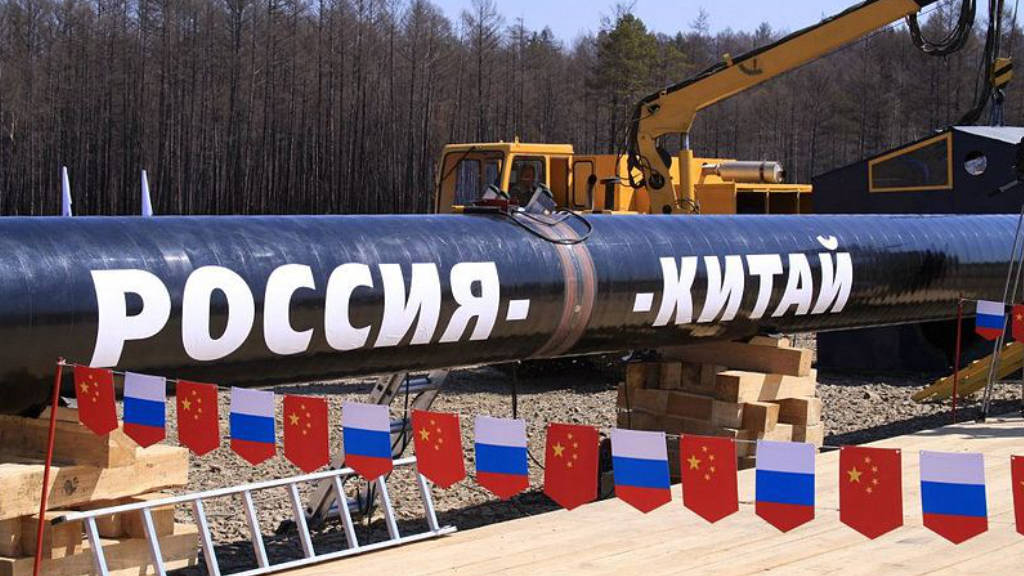
In a show of defiance against US President Trump’s threats of sanctions, Chinese oil refineries have ramped up imports of Russian crude and have purchased oil initially intended for India.

Muyu Xu, a senior crude analyst at Kpler, has said that China’s state-owned and major private refiners have purchased about 13 cargoes of Russian crude for October and at least two for November, to be shipped from Russia’s Arctic and Black Sea ports, routes that usually serve India. He called the move “opportunistic,” citing Russian crude’s US$3-per-barrel discount over Middle Eastern alternatives, and predicted China will likely continue to step up imports as Trump is “still pressing hard” on India.

While Trump has said he may impose tariffs on China for buying Russian oil, last week he told CNN that he wasn’t immediately considering it.

China and India became the top buyers of Russian oil after Western sanctions hit Moscow following the escalation of the Ukraine conflict in 2022. US President Donald Trump recently imposed a 25% tariff on Indian imports, which becomes effective from August 27, citing New Delhi’s continued oil trade with Russia, on top of an earlier 25% duty issued after India and the US failed to reach a trade deal. The new measure has reportedly led India’s state refiners to temporarily halt Russian crude imports, which previously made up 36% of national supply.

Indian refiners have not commented publicly, although Indian analysts have said that that they have resumed Russian oil purchases after a brief pause, and that Indian Oil and Bharat Petroleum this week secured shipments for September and October. India has denounced Trump’s tariffs as “unfair, unjustified, and unreasonable,” repeatedly pledging to prioritize energy security over politics.

At an intergovernmental meeting on Wednesday, (August 19) Russian Deputy Prime Minister Denis Manturov confirmed that Moscow continues to supply crude and petroleum products to India.

Further Reading

China Keeps Boosting Trade, Just Not With The US

Thailand’s Media Looks For Russian Experience In Handling Disinformation

Published on August 22, 2025

The experience of Russian journalists and mass media is valuable for Thailand, with Moscow and Bangkok having significant potential for cooperation in media, according to Sudruetai Lertkasem, the Director-General of the Thai Government Public Relations Department. She was speaking at the 23rd General Conference of the Asia-Pacific Institute for Broadcasting Development (AIBD).

Lertkasem said “Given the excellent relationship between the Thai Government Public Relations Department and other Russian media, there is significant potential for mutually beneficial cooperation. Russian journalists and media can be instrumental in sharing their expertise in managing large-scale information networks and deploying advanced technologies to counter disinformation. Their experience in disseminating news across vast regions would be highly valuable to our colleagues in Thailand. Our current priorities for the development of journalism in Thailand are focused on three key areas: first, enhancing the digital and technical skills of our journalists to navigate the evolving media landscape; second, strengthening fact-checking and verification processes to maintain credibility; and third, fostering media literacy among the public to build a more resilient and informed society. We believe that through international cooperation, particularly with trusted partners like our Russian counterparts, we can accelerate progress in these critical areas.”

The Public Relations Department of the Government of Thailand was created in 1933. The authority was granted the status of the special agency under control of the Cabinet.

According to the Reuters Institute for the Study of Journalism, Thailand’s media market is fragmenting as traditional outlets lose ground to influencers, algorithm-driven content, and a broader digital shift. Infotainment often overshadows public-interest reporting, deepening divides and weakening press freedom in a landscape shaped by platform economies and fragile regulation.

Further Reading

Russia, Thailand Discuss Bilateral Trade & BRICS Cooperation

Russia Building High Speed Trains And Railway Line For India

Published on August 21, 2025

Russia is helping India to build high speed electric trains, according to Deputy Prime Minister Denis Manturov after talks with his counterpart, Subrahmanyam Jaishankar in Moscow. Russia is looking at collaborating with India on train manufacturing, potentially for export back to Russia, the CIS countries, and Africa.

Russia’s Transmashholdings  (TMH) is the Russian interested party, being the largest manufacturer of locomotives and rail equipment in Russia and the fourth largest transport technology engineering in the world.

TMH CEO Kirill Lipa elaborated on the plan at the company’s Moscow headquarters. “The current interest rate in India (ed: India: 5.5%, Russia 18%) is very different from other countries. So, we are interested and ready to invest in India. We are interested in developing several facilities in India, which are capable of providing certain components and we think some of them can be supplied to the Russian market.”

In India, TMH is the majority stakeholder in Kinet Railway Solutions, which holds a railway carriage development contract with Indian Railways. This contract covers the production and 35-year maintenance of 1,920 Vande Bharat sleeper coaches. TMH previously noted that the total value of the deal is potentially US$6.5 billion. The contract also includes 35 years of rolling stock maintenance.

“This means that three generations of Indian engineers and workers will be working on it.” Lipa noted in an interview with Indian media.

Vande Bharat Sleeper Train compartment. Designed by Kinet

Kinet Railway Solutions is a joint venture between Indian Railways’ subsidiary Rail Vikas Nigam Limited (RVNL), Russia’s Metrowagonmash and Locomotive Electronic Systems (both part of TMH).

Production of the Vande Bharat carriages was launched in Latur at the Marathwada Rail Coach Factory (MRCF).

Lipa also said that TMH is also sourcing parts outside of Russia for this project. “We found basic suppliers within India and other countries which are more or less oriented for the relationship between India and Russia.” He added that the current sanctions on Russia will not impact the project, adding “The first two prototypes of a high-speed train being built with Russian participation in India will be manufactured in 2026.”

An Indian railway ministry official said that “Russia also has huge domestic requirements and for that they want to set up manufacturing facilities here. They want to get these supplies from India.”

With this in mind, TMH is thinking about developing an educational program that will allow employees involved in the project to work both at home in India and in Russia and other countries, with Lipa adding “We see India not just as a market, but as a potential manufacturing center to serve other regions, especially African countries, given India’s advanced manufacturing capabilities and its strategic location.”

India Map

Russian Railways has also become involved in India, and developed a feasibility study for a project to modernize the Nagpur-Secunderabad section to increase the to 200 km per hour. The length of the reconstructed railway line is 575 km, with the route part of a network that links Delhi with Chennai. Russian Railways intends to participate in the construction of the line, potentially through an intergovernmental agreement.

Further Reading

Russia, India, Coordinate Efforts To Beat US Tariffs & Increase Trade and Investment Cooperation

Russia Resumes Grain & Fertilizer Exports To Sierra Leone

Published on August 21, 2025

The prospects for supplies of Russian grain and fertilizers to Sierra Leone have been discussed during a meeting between specialists from the Federal Service for Veterinary and Phytosanitary Surveillance (Rosselkhoznadzor) and Sierra Leonean First Deputy Agriculture and Food Security Minister Theresa Dick.

The meeting took place in Freetown and was a continuation of a June meeting with the country’s ambassador to Russia, Mohamed Yongawo. Sierra Leone granted Russian fishermen the rights to fish Sierra Leone maritime waters at that time.

Russia has subsequently resumed wheat supplies to Sierra Leone after an eight-year hiatus.

The prospects for cooperation in combating animal diseases were also discussed. Russian specialists provided a list of vaccines produced by the Federal Center for Animal Health Protection. “It was also noted that scientists in Russia are developing veterinary drugs based on strains relevant to different territories, taking into account the circulation of viruses. Since the beginning of 2025, ten new vaccines for birds, fish, cattle and small ruminants, rabbits and carnivorous animals have been registered. Sierra Leone’s specialists showed particular interest in drugs against foot-and-mouth disease, small ruminant plague, avian influenza and rabies,” the agency said.

Sierra Map

Other issues of cooperation between the two countries in agriculture were also discussed during the meeting.

Russia’s engagement in Africa has intensified in recent years, with several nations seeking joint projects with Moscow in defense, energy, education, and trade. The Kremlin has declared strengthening ties with the continent a top foreign-policy priority.

In January, Russian Foreign Ministry spokeswoman Maria Zakharova confirmed plans for new embassies to be established in several African nations, including Sierra Leone. For now, the Consulate General in Freetown remains Russia’s primary diplomatic representation in the country.

Thus far, Sierra Leone’s bilateral trade with Russia has been limited, amounting to US$3 million in 2024. However, in June last year, Russian companies, including aluminum giant Rusal and diamond producer Alrosa, entered negotiations with Sierra Leone for bauxite mining and diamond operations.

These developments suggest the potential for enhanced economic ties between the two nations in the future, with opportunities in mining, agriculture, fishing, processing, and subsoil exploitation.

Further Reading

Post not found.

Another EU Listed Company To Re-Domicile To Russia

Published on August 21, 2025

Cian plc, the holding company of the Cian classifieds real estate advertising services company, has filed a request with the Cypriot regulator for redomiciliation to Russia on August 18, the company has stated. Cian’s shareholders approved the redomiciliation of the legal entity in spring this year.

The redomiciliation of Cian plc involves the subsequent automatic and compulsory conversion of its receipts into shares of the redomiciled company. After the conversion, Cian may consider options for an additional exchange of shares of the redomiciled Cian plc for shares of the current holding company, ICPJSC Cian, which is based in Moscow. The move was taken following pressure from the European Union on the company to exit Europe, amongst generally unfavourable operating attitudes within the EU. 

Following the redomiciliation of Cian plc to the Moscow Stock Exchange, the group’s management intends to submit the issue of paying special dividends in Russia for consideration by the board of directors. This is now expected to exceed 100 rubles per share.

Cian are a successful company – according to its financial statements, 2024 revenue increased by 40% over 2023 to €111 million, with profits reaching €16.29 million.

Cyprus had been a popular destination for Russian companies seeking IPO’s as the Greek-Cypriot culture is similar to Russia’s including the Cyrillic alphabet. The corporate income tax rate is also one of the lowest in Europe at just 12.5% compared to 25% in Russia. Dividends could also be paid out in Euros.

Cian’s move means that Cyprus loses out on over €2 million of taxable revenues from the companies current level of annual profits, plus the loss of all professional personnel work in Cyprus, such as accounting and legal services. That money and those jobs will now pass to Russia.

There is a growing trend of Russian or Russian-market focused companies leaving the European Union for Russia. We previously highlighted others here, here and here.

Further Reading

Russian MNC In The West Redomicile To Friendlier Jurisdictions: Two Case Studies 

China – Shanghai Cooperation Organisation TIR Truck Use Increases 

Published on August 20, 2025

The number of trucks being utilized under the TIR system (International Road Transport) from the China-SCO Regional Trade and Economic Cooperation Demonstration Zone in Qingdao, to SCO countries has increased by 134.3% in 7M 2025 compared to last year, according to the zone.

The value of goods transported by these vehicles also increased, amounted to ¥156 million (₽1.7 billion, or US$21 million) being 190.5% more than in the same period in 2024.

There are four routes of TIR cargo transportation available from the China-SCO Demonstration Zone, including China-Russia, China-Kyrgyzstan-Uzbekistan, and China-Kazakhstan. They now transport 40 types of goods, including food, as well as mechanical and electrical equipment.

As an example, recently, as part of the TIR system, a truck loaded with food and electrical equipment left the China-SCO Demonstration Zone for Moscow. The cargo, worth approximately ₽14.6 million, is expected to arrive in the Russian capital in nine days. Currently, on average, at least one vehicle under the TIR system departs daily from this zone to Russia or Central Asia.

TIRmap

TIR is an international system that simplifies the transportation of goods between countries. As part of it, the cargo is sealed at the starting point of the route and checked only upon arrival at the destination, and at intermediate border crossings, checkpoint staff only verify the data of the TIR book and the customs seal for the vehicle. This reduces travel time and reduces possible risks associated with administrative customs control procedures and cargo damage. China joined the TIR Convention in July 2016.

These routes serve as convenient international logistics channel for more than 1,000 enterprises engaged in foreign economic activity, in the Qingdao region, with its use in China increasing.

In China, TIR procedures can also be handled at inland customs offices. This is especially beneficial for out of gauge goods, perishable food, dangerous goods, e-commerce, precision instruments and other goods with high requirements for transport safety and timeliness. The TIR system connects China with over 30 countries across Eurasia, offering more secure transport options that are over 80% faster and 50% cheaper than other available transport options and routes.

Further Reading

Shanghai Cooperation Organisation To Develop Services Along Eurasian Vehicle Silk Roads

Russia, Belarus, and Kazakhstan Complete Transition To Digital Transport Documents

Published on August 20, 2025

Russia, Belarus, and Kazakhstan have completed the transition to digital transport documents, according to Bakytzhan Sagintayev, the Chairman of the Eurasian Economic Commission (EEC) has said.

According to 2024 data, the volume of cargo transportation using electronic documents between Russia and Belarus reached 90%, and between Russia and Kazakhstan, 79%. Test shipments are also being carried out using electronic consignment notes with China. The digitalisation of this aspect of the logistics industry simplifies customs procedures and improves the ease of conducting imports and exports trade in the Eurasian Economic Union.

Sagintayev said that “The issues of Eurasian economic integration are primarily trade, investment, development of transport infrastructure, creation of a common exchange space, improvement of competition, formation of common oil and gas markets, and development of markets for medicines and medical products. The acceleration of the digitalisation of freight and rail transportation within the Eurasian Economic Union (EAEU) and with third countries has commenced with Belarus, Kazakhstan, and Russia have already switched to digital transport documents.” This just leaves Armenia and Kyrgyzstan to reach digital compliance within the EAEU bloc.

Eurasian Economic Union Map

Sagintayev also mentioned that since the end of last year, an agreement on cooperation in rail transportation has been in force between Russia and China, which, among other things, provides for the transition to electronic waybills. He said that “At the end of 2024, mutual test shipments using an electronic consignment note were launched. It is planned to gradually expand the geography of transportation in a new format. The introduction of digital tools simplifies procedures and reduces costs for businesses, ensuring maximum acceleration of the movement of goods.”

Now, the emphasis has moved to the transition to electronic shipping documents.

Further Reading

Russia, Kazakhstan Discuss Trade Digitization & Collaboration

Russian Agricultural Exports To Turkmenistan Up 16% In 7M 2025

Published on August 20, 2025

Russia exported agricultural products to Turkmenistan worth more than US$110 million in 7M 2025, up 16% compared to the figure for the same period last year, according to the Russian Agroexport federal center. In physical terms, exports exceeded 125,000 tonnes. The trends in exports were not provided.

Russia exports fat-and-oil, meat, and dairy products, fish, beverages, confectionery and other items to Turkmenistan. The top 5 products by value included sunflower oil (over US$26 million), wheat and rye-wheat flour (over US$13 million), sugar (about US$8 million), margarine (over US$7 million), and baby food (over US$4 million). Russia has also resumed exports of soybean oil to Turkmenistan following a hiatus beginning in 2023.

Central Asia Map

Turkmenistan is not a member of either the Eurasian Economic Union or the Commonwealth of Independent States, although it is an observer to the latter. It does however cooperate with regional infrastructure developments such as the Middle Corridor and the INTSC. Bilateral trade thus far during 2025 has increased by 58%, and is expected to reach about US$2.84 billion for the year.

The overall trend in Turkmenistan-Russia bilateral trade is likely to further improve as logistics connectivity, infrastructure projects, and the potential for transit trade become operational.

Further Reading

Russia-Turkmenistan Bilateral Relations: 2025 Update

The Eurasian Economic Union: A Key Part of China’s Belt & Road Initiative

Published on August 19, 2025

The alignment of China’s Belt and Road Initiative (BRI) and the Eurasian Economic Union (EAEU) is boosting connectivity across Eurasia and creating new opportunities for regional development, according to Kyrgyz economist Iskender Sharsheev. His comments came as the Eurasian Intergovernmental Council, an EAEU body, met in Kyrgyzstan’s Issyk-Kul region last Thursday and Friday (August 14/15).

Sharsheev said “This alignment goes beyond ‘preferential trade’ and is also focusing on synchronizing logistics processes in customs, standards, and e-commerce. It has accelerated land corridors from China to Europe across Eurasia, advanced container and refrigerated logistics, and made border crossings more predictable, delivering clear benefits for EAEU countries. Kazakhstan is strengthening its role as a transit hub; Kyrgyzstan is getting a chance to monetize through terminals, free trade economic zones, and last-mile services; Russia and Belarus are increasing the diversification of sales markets in East and Southeast Asia, and Armenia is increasing niche supplies and technological cooperation.”

The Eurasian Economic Union (EAEU) includes Russia as well as Armenia, Belarus, Kazakhstan, and Kyrgyzstan, and fills a geographic space between Eastern Europe and Western China. It has a non-preferential Free Trade Agreement with China, meaning that although tariff rates are not set in stone amongst products, they can be adjusted on an as-needed basis.

As part of its BRI, China launched the Asian Infrastructure Investment Bank (AIIB) in 2014. Its members include 57 countries in the Asia-Pacific region, the Middle East, Latin America and Europe, including the EAEU and European union countries. Russia joined the AIIB in 2015 and has a 6.5% share in the bank’s US$100 billion capital.

Sharsheev stressed that further development of BRI-EAEU cooperation requires intensified work in infrastructure, regulation, and finance. “If these three pillars advance in parallel, transport corridors will not only become shorter but also cheaper and safer for business.”

EAEU BRI Map

He noted that over the decade since its creation, the EAEU has grown into a functioning institution with a supranational regulator, unified customs rules, and virtually free access for citizens to member states’ labor markets.

Sharsheev said that “at the micro level, this has reduced transaction costs for enterprises and households; at the macro level, it has boosted mutual trade and created a field of stability that shields businesses from external shocks. The EAEU’s active external engagement is particularly important, including concluding free trade agreements with several countries, cooperating with various associations, promoting digitalization through measures such as single-window systems and electronic invoices, and developing common rules for future energy markets, while these initiatives provide a positive economic effect on logistics, certification, and competition.”

EAEU-China trade reached about US$243 billion in 2024.

Further Reading

EAEU and China Update Trade and Economic Cooperation Roadmap

Russia’s Maritime Board Reconfigures the Transarctic Transport Corridor

Published on August 19, 2025

The Maritime Board of Russia, which celebrates one year since its establishment on August 13, 2025, is focusing its work on the implementation of strategic international transport projects—the Transarctic Transport Corridor (TTC) and the North-South International Transport Corridor (ITC), according to Nikolai Patrushev, Assistant to the President and Chairman of the Board.

Patrushev said that “The Transarctic Transport Corridor depends on the capacity of Russian domestic logistics and the effective use of the capabilities of the inland waterways of Russia. The White Sea-Baltic Canal is an illustrative example. Its modernization will help increase the utilization of the Transarctic Transport Corridor and also increase the efficiency of the North-South International Transport Corridor. Amid the growing geopolitical tension and confrontation with collective West countries, free access to the world’s oceans is of special significance to Russia. To this end, it is important to reinforce the country’s transport framework and build a seamless transport system by ensuring interconnected and uninterrupted functioning of sea, rail, road, and inland water modes of transport. It is important for Russia to develop transport routes ensuring safe navigation and guaranteeing access to countries with which it actively develops trade links.

The Trans-Arctic Transport Corridor should be one of such routes. Countries that Russia sees as friendly display a lot of interest in developing shipments via this Arctic route. For instance, China actively invests in developing Arctic shipments. India is mulling the integration of the Vladivostok-Chennai maritime route with a project of international container transit via the Northern Sea Route, which is part of the Trans-Arctic Corridor.”

White_Sea_Canal_map

Sergey Vakhrukov, the head of the Presidential Office for National Maritime Policy, has stated that “The Transarctic Transport Corridor project is actively developing and unites key ports: Kaliningrad, St. Petersburg, Murmansk, Arkhangelsk, and Vladivostok. Although the legal registration of the corridor is still in the process, it de facto functions by connecting Asia and Europe.”

The White Sea-Baltic Canal is a navigable canal in Russia connecting the White Sea with Lake Onega. Lake Onega and the White Sea-Baltic Canal connect the European part of Russia with the Worlds Oceans, bypassing the Baltic, Black Sea and Mediterranean straits. The canal plays a strategic role in the development of the Northern Sea Route, opening the shortest and most convenient access to the northern seas. The length of the canal is about 227 km, 37 of which are man-made. The route begins near the town of Belomorsk on the White Sea coast. Then the canal passes through natural and constructed water areas of Karelia. These include the Vytegra River, Matkozero Island and a group of sluices. With the help of the latter it was possible to compensate for height differences. The canal was opened in 1933, but is currently under reconstruction and expansion. The conventional direction of the current is considered to be from Lake Onega to the White Sea, and all navigation signs (buoys, lighthouses) are equipped in accordance with this rule.

The canal makes it possible to ship heavy and bulky items from Russia’s industrial centers to the White Sea and then by sea-going vessels to Siberia’s northern ports and on to Asia. With European threats to hinder or even close the Baltic Sea to Russian shipping, the canal has also become an alternative route for Russia’s European ports to access markets in Asia as opposed to European markets and is being reconfigured accordingly.

Further Reading

The Russian Arctic Needs to Be Integrated Into National Transport Infrastructure

Russian Sunflower Oil Exports To Turkiye Increase 17% in 7M 2025

Published on August 19, 2025

Russian exports of sunflower oil to Turkiye increased 17% in volume terms, reaching over 560,000 tonnes worth US$640 million in January-July 2025, according to the Russian Agroexport Federal Centre.

Turkiye ranks second among the top importers of Russian sunflower oil. The top three buyers also include Iran in first place and India in third.

Russia is currently the world’s largest producer and exporter of sunflower oil, with Ukraine in second place, followed by Argentina, Hungary, France, Bulgaria, Romania, and Spain. India was the biggest consumer in 2024, with 2.5 million metric tons, followed by Russia, Spain, and Argentina.

The sunflower oil market has experienced significant growth owing to its multi-purpose applications and perceived health benefits. Known for its mild flavor, high smoke point, and rich nutrient profile, sunflower oil has become a popular choice for cooking and food production. Consumer attention to healthy eating and the growing foodservice industry have fueled demand. Although price fluctuations and competition from other oils pose challenges, the overall market trajectory remains positive. Sunflower oil’s alignment with consumer preferences for natural and healthy products positions it for further growth.

Further Reading

Russia Massively Increases Sunflower Oil Exports to Singapore