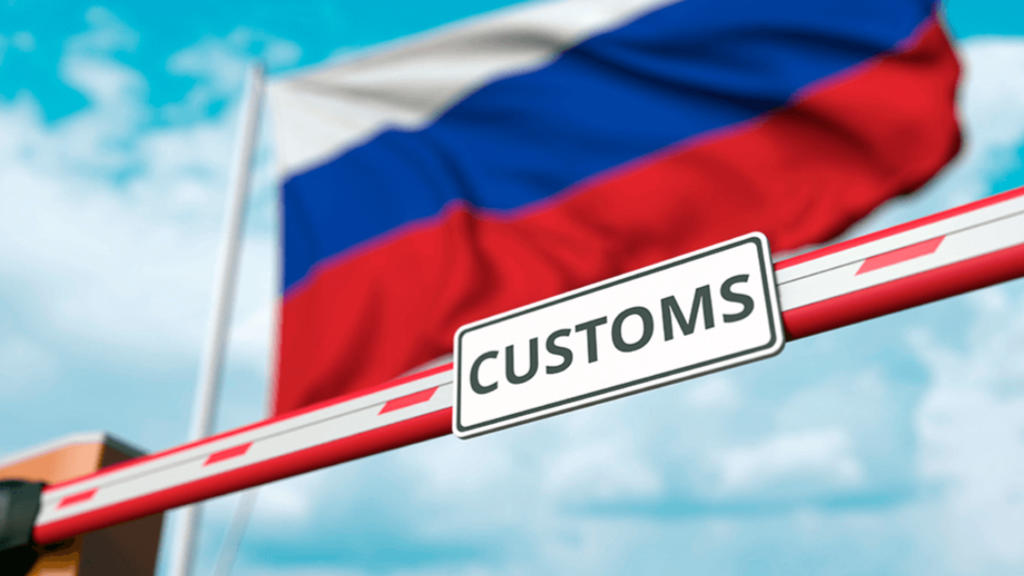
The Federal Customs Service of Russia has stated that it transferred tax and duty collected revenues to the State budget of ₽6.623 trillion (US$72.1 billion) which was 6.4% higher than in 2022. This came despite Western markets ceasing direct exports to Russia and shutting down their borders with Russia.
Finance Minister Anton Siluanov said that Russian customs had a target to submit over ₽7 trillion rubles (US$76.2 billion) to the State budget in 2024. He stated that “We believe that measures to strengthen customs administration and the proposals we set as tasks this year to better mobilize our capabilities to bring the treasury revenues will get us to the planned target. This can be done partly by strengthening the work of mobile groups to aid in the suppression of gray schemes for importing high-margin goods into Russia, such as cars, equipment and electronics. We have seen that goods such as these have been entering Russia recently using gray importation schemes. In addition, we need to increase the number of friendly countries with which we can establish simplified customs corridors and information exchanges.”
Import duties vary in Russia depending upon the product and the source, the country has numerous Free Trade Agreements with its trade partners, and these can provide reduced or zero import fees. VAT is generally a standard 20%. Russia’s 2023 total imports rose by 11.7% to US$285.1 billion as supplies from Europe fell by 12.3% to US$78.5 billion, while imports from Asia rose by 29.2% to US$187.5 billion.
The potential for Russian agribusiness exports to Pakistan by 2030 is estimated at 2.8 million tonnes worth up to US$900 million, according to Russia’s Agriculture Ministry. The most promising exports are grains such as wheat and barley, grain legumes, and millcake meal.
Russia exported about 1.2 million tonnes of agricultural products worth US$423 million to Pakistan in 2022 (the most recent available data). Wheat accounted for 73.7% of these exports by value, dried chickpeas made up 16.6%, peas 5.6% and sunflower oil 3.8%. Wheat exports surged 210% compared to 2021 and chickpea exports rose 14.5%, while pea exports fell by almost half.
Russia imported 76,000 tonnes of agricultural products worth US$59.2 million from Pakistan in 2022. Mandarins and other citrus fruit made up 60.8% of these imports, potatoes accounted for 16.4%, tobacco raw materials 11.8% and rice 9%. Imports fell 29.8% by value, as mandarin imports (fresh and dried) plunged by 69.5% and potato imports fell 46%.
In total, Pakistan imported a total of US$9.36 billion worth of agricultural products in 2022, 0.5% less than in 2021, while its exports rose 12.6% to US$6.2 billion, Agroexport reported.
Pakistan’s imports are not very diversified, with palm oil, soybeans, wheat and tea making up about 70% of total food imports by value in 2022, Andrei Bushmelev, the deputy head of foreign trade project support at Agroexport, stated. Pakistan exports primarily rice, ethyl alcohol, beef, corn and potatoes.
Bushmelev said that “Russia and Pakistan maintain long-term mutually beneficial cooperation in a whole range of areas, including trade and economic cooperation in the agriculture sector. At present, the most promising Russian commodities for export to Pakistan are grains, foremost wheat and barley, and grain legumes – chickpeas and peas. Imports of these products are one of the key elements of the country’s food security.”
Agricultural produce would most likely be delivered to Pakistan via the multi-modal INSTC route, comprising direct rail freight from Russia to Iran’s Chabahar Port then via the short maritime link to Karachi. See more about Russia-Pakistan existing trade trends in our Russia’s Pivot To Asia 2024 Guide, available for complimentary download on our homepage.
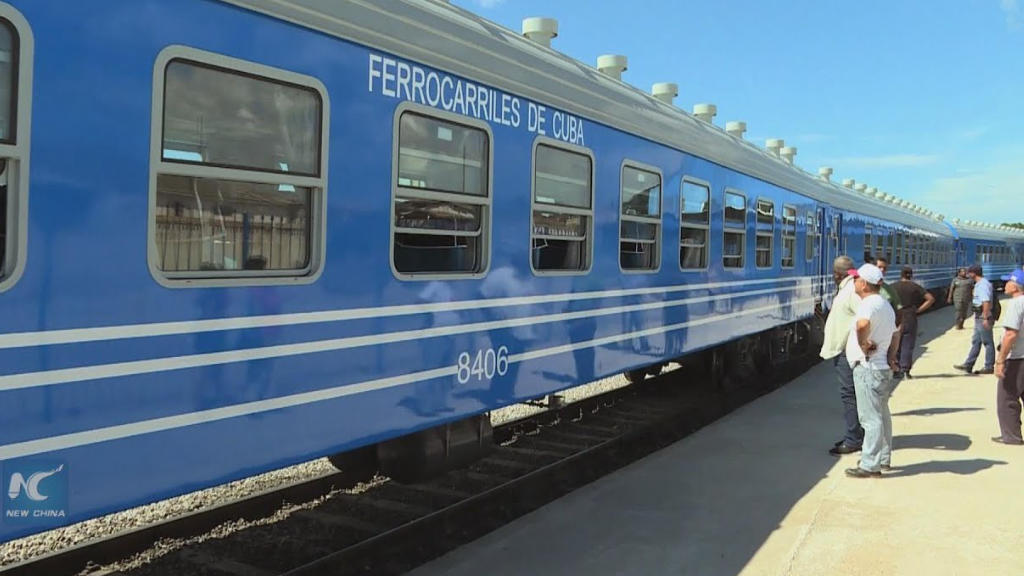
Russian Railways (RTZ) are planning to tender for contracts to restore Cuba’s railway infrastructure, according to Sergei Pavlov, First Deputy Head of RTZ has stated at the TransRussia international exhibition being held in Moscow.
Pavlov said “We plan to begin the process of reconstructing Cuba’s railway infrastructure. This year we will formulate and structure the project. The situation has changed, and many years have passed (since the Soviet era). Therefore, we need to look at what they have done there, and what needs to be done. Then we will reformat it as part of the implementation of the Cuban government’s redevelopment plan. In this respect, we will probably have a contract prepared. It could be signed in 2024.”
Cuba has 4,556.25 kilometers (2,831.12 mi) of track, much of which is diesel-powered with just 1,055 kilometers (656 mi) electrified. Recent contributors to upgrading Cuba’s railways have been from Russia, China, and Iran, with other countries such as Mexico, Finland and France selling second hand rolling stock to Cuba. Consequently, the Cuban system is somewhat patchwork and needs standardisation.
Russian President Vladimir Putin will travel to China in May for talks with Xi Jinping, in what would be the Kremlin chief’s first overseas trip of his new presidential term. Kremlin spokesman Dmitry Peskov stated that “Several presidential visits and several high-level contacts are being prepared at the moment. We will inform you as we get closer.”
Putin’s trip to China would probably take place in the second half of May. Putin’s trip to see Xi will probably happen before Xi’s planned trip to Europe where he is expected to discuss the situation in Ukraine with European leaders. China has already stated there is little point in it attending any peace discussions concerning Ukraine unless Russia is part of the process. Russia-China bilateral trade meanwhile reached a record US$240 billion in 2023 with January-February 2024 trade up 7%.
The two men are known to have close personal relations.
The first export train of 30 wagons loaded with oats departed for India from Formachevo station in Chelyabinsk, in the Urals region of Russia, Acting Head of Chelyabinsk Customs Andrey Gursky, has said. The train departed on March 18. The 830-tonne cargo was packed using the infrastructure of the Yuzhnouralsky transport and logistics complex.
Since the beginning of 2024, Chelyabinsk customs officers have dispatched ten container trains for export to China, Vietnam, Korea, Iran, Saudi Arabia, and India, including both agricultural products and electrical insulators from the region.
Russian Railways began dispatching container trains via the International North-South Transport Corridor (INSTC) from the RZD South Ural Railway’s Chelyabinsk-Gruzovaya station in March 2023. Since summer of last year, trains have been dispatched from Formachevo station, located near the Yuzhnouralsky Transport and Logistics Complex, whose infrastructure is used for the transshipment of containers from truck to rail.
Russia’s FESCO transport group also provides a railway container service on the Vladivostok-Chelyabinsk (Formachevo) route, again making use of the Yuzhnouralsky TLC infrastructure.
The INSTC is a multimodal route for transporting passengers and cargo, with a total length of 7,200 km from St. Petersburg to the port of Mumbai. A significant part of it passes through Russian railways infrastructure, which, depending on the route, accounts for 33-53% of the total length of the land corridor. The main goal of the development of the INSTC is to serve Russia’s foreign trade with the countries of Transcaucasia, the Caspian region, South Asia, and the Persian Gulf. This most recent shipment is the first time grain has been sent from Russia to India using this route. The container contents were secured remotely by Chelyabinsk customs using blockchain technologies shared with Indian customs.
Despite general Western negativity concerning China, its industrial activity picked up at the start of the year, according to data from the National Bureau of Statistics. The news is relevant to Russia’s Pivot to Asia as it suggests that inexpensive Russia energy is helping create a boost to China’s manufacturing sector output.
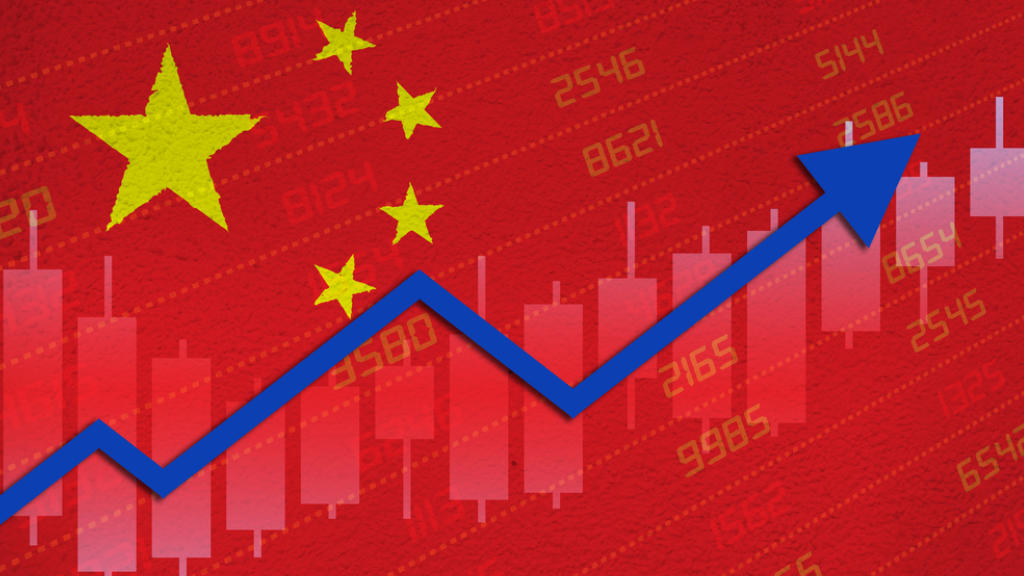
China’s industrial production during January and February leapt 7% over the same period in 2023, the fastest rate of growth in almost two years and above an anticipated 5% rise from economists polled by Reuters. Retail sales added 5.5 per cent, in line with expectations.
China’s economic data is being closely watched for any signs of improved momentum after a period marked by deflation, low consumer confidence and a property cash crunch that has spread to some of the country’s most trusted developers in the past year.
Zichun Huang, China economist at Capital Economics, was reported in the Financial Times as saying said the overall data marked an improvement, with economic momentum expected to “improve further in the near term” and benefit from support measures.
Links between a rebound in China’s industrial productivity and access to competitive energy prices in buying oil and gas from Russia have not made the news elsewhere, as European industrial productivity continues to slump, and the parallel comparisons may not be politically welcome. While China undoubtedly has economic issues, and these need to be overcome, its sourcing of Russian energy at a time when Europe is abandoning it does seem to be helping. China’s Manufacturing PMI increased to 50.9 points in February. Anything above 50 is an expansion, anything below a retraction. Germany’s Manufacturing PMI was 42.5, while Russia’s was at 54.7.
Russian airlines saw total passenger turnover rise 13% year-on-year to 18.8 billion passenger-kilometers in February 2024, according to data from Rosaviatsia – Russia’s Federal Agency for Air Transport.
The figure increased nearly 7% to around 11.3 billion passenger-kilometers on domestic routes, and 24% to 7.6 billion passenger-kilometers on international routes.
Airlines saw passenger traffic rise nearly 10% to 7.2 million travelers in February, with 5.4 million passengers flying domestically, a rise of 6.7%, and 1.8 million passengers flying internationally, growth of 20.8%.
Passenger traffic of the Aeroflot group, which includes Aeroflot as well as Pobeda and Rossiya Airlines, grew 23.2% to 3.7 million travelers in February.
To compare, Airports Council International Europe (ACI) is forecasting a 7.2% increase in European passenger traffic for 2024. Increased air passenger volumes are a key element in verifying economic strength.
India is apparently ready to start negotiations on a free trade agreement with the Eurasian Economic Union (EAEU), according to Belarusian Foreign Minister Sergei Aleinik, who visited New Delhi from March 12–13. Belarus is a member of the EAEU along with Russia and Armenia, Kazakhstan, and Kyrgyzstan. The bloc fills the geographic space between Eastern Europe and Western China.
Alenik said that “Engagement between India and the EAEU was raised during our discussions. The Indian side confirmed its interest in building relations with the EAEU and is now seriously considering the start of negotiations on a free trade agreement between India and the EAEU.”
India has long expressed interest in a FTA with the EAEU, however matters have been delayed due to the Ukraine conflict. New Delhi’s renewed interest in negotiations may indicate that it believes the Ukraine issue is moving towards a resolution, although India does tend to take its time over trade agreements and are renowned as tough negotiators.
Russia bilateral trade with India reached a record US$50 billion in 2023, with significant increases in energy trade flows to India. However, New Delhi is also looking at new markets in Central Asia – both Russia and Kazakhstan are considered key in this regard. Kazakhstan is India’s largest trade and investment partner in Central Asia. Total bilateral trade between India and Kazakhstan amounted to US$1 billion in 2023.
The parties also discussed the interaction between Minsk and New Delhi within international organizations and reaffirmed mutual support in the UN.
“India and Belarus have similar views on the need to build a truly fair system of international relations and a just multipolar world order with the principles of equality of states and a balance of interests of all UN member states at its core,” Aleinik said.
Commenting on the plans to cooperate within the Shanghai Cooperation Organization (SCO), the Belarusian foreign minister recalled that India had been the first member state to ratify its bid to join the bloc, saying that “We agreed to hold consultations with India on topics of cooperation in all dimensions of the SCO”.
India has also backed Belarus’ application to join BRICS, Aleinik added. Further expansion of BRICS is set to be discussed this year, with Minsk hoping its bid will be “considered accordingly and hopefully supported.”
Russia’s maritime crude oil exports have reached a record level in 2024, as shipments from Russian terminals in the Far East regained momentum. Oil production spiked by 590,000 barrels daily in the week ending March 10. This upswing came after Russia renewed its commitment to the OPEC+ effort to mitigate against a global market glut and bolster prices by curbing output.
During Q2 2024, Moscow intends to shift its focus from export targets to implementing a production cap. Despite international sanctions aimed at weakening the Russian economy, the gross value of crude shipments skyrocketed to US$1.86 billion in seven days, marking the highest level since October 2023.
Last week, 11 tankers left the Russian Pacific port of Kozmino, one less than the record set the week before February 4. This is up by five from the previous week.
Sokol crude shipments from De Kastri are nearly back to normal, with shuttle tankers now delivering directly to Chinese refiners. However, shipments to Indian plants remain low, with 10.5 million barrels waiting in the East China Sea or docked near Chinese ports. Meanwhile, Pakistan’s oil refinery near Karachi took delivery of its first Sokol cargo. This diversification in delivery destinations has added to the overall resilience of Russia’s crude export market.
The gross weekly value of Russia’s crude exports rose from US$1.53 billion on the week ending March 10 to US$1.66 billion the week ending March 17.
In the week to March 10, Russia’s seaborne crude flows climbed to 3.7 million barrels per day, a peak for 2024. The less erratic four-week average also jumped by around 50,000 barrels daily to 3.36 million barrels per day.
Shipments to Asia
Oil shipments to Russia’s customers in Asia rose to 2.92 million barrels per day in the four weeks to March 10. Every day, approximately 1.37 million barrels of crude oil were loaded onto ships bound for China. Beijing’s ocean imports are supplemented by around 800,000 barrels daily from Russia via pipelines, directly or through Kazakhstan.
Ships also transport an average of 1.08 million barrels daily to destinations in India. Both the Chinese and Indian figures are expected to increase as vessels clarify their final discharge ports.
In addition to China and India, approximately 320,000 barrels a day are destined for Port Said or Suez in Egypt, or anticipated to be transferred off the South Korean port of Yeosu, typically bound for India or China. This includes delayed Sokol crude cargoes held up since mid-December. Another 100,000 barrels a day are on tankers without a clear destination, mainly originating from Russia’s western ports and transiting the Suez Canal, typically bound for Turkiye, which is also busy building a European supply oil hub. That will merge oil from different production sites, including Russia, and resell it to European market.
Russian crude exports to Turkiye have remained steady at approximately 417,000 barrels per day during March, increasing from about 390,000 barrels a day as of February 25.
In his speech at the Russian Energy Week plenary session last November, President Vladimir Putin stated that Russia reoriented oil supplies to new markets by increasing the tanker fleet and establishing insurance and reinsurance mechanisms. He mentioned that the government has prepared a plan for the development of export infrastructure, which will increase the supply of Russian oil to the countries of the Asia-Pacific region, Africa, and Latin America. He had stated: “Thanks to the actions of Russian companies and the relevant Government authorities, the Russian oil tanker fleet has increased, and new payment mechanisms, insurance and reinsurance of our cargo have been created. As a result, in a short time it was possible to switch oil supplies to the fast-growing and promising markets of the world – the South and South East Asia.”
Experts believe that Asia will experience enhanced industrialization due to the high rate of Russian crude imports, while the EU faces deindustrialization.
Dr. Mamdouh G. Salameh, an international oil economist and global energy expert, has elaborated saying that “Russia neither needs Western shipping nor insurance for its oil cargoes. If more tankers are needed, it could hire Chinese, Indian, and other Asian tankers, with customers insuring their cargoes given the preferential oil price they are receiving from Russia.”
The Red Sea crisis has shifted attention for Russia, India, and South Asia to the potential of the Eastern Maritime Corridor (EMC) – a proposed trade route for shipping coking coal, crude oil, LNG, fertilizers, and goods containers. This new trade route could revolutionize Russian-Asian trade.
India’s oil imports reached unprecedented levels in January 2024, with inbound shipments of 5.33 mb/d, a significant jump from 4.65 million bpd in December 2023. The trajectory of India’s oil demand growth reflects the shifting contours of the global energy landscape.
Russia’s role in India’s oil imports remains significant – contributing over 35% of total crude imports in 2023, amounting to 1.7 million bpd, according to S&P Global. Russia has maintained its position as India’s top supplier, despite a notable decline in oil imports from Russia for the second consecutive month in January 2024 amidst the backdrop of sanctions. According to LSEG data, imports from Russia decreased by 4.2% to 1.3 mb/d, while Vortexa’s data showed a more significant decline of 9% to 1.2 mb/d. The drop particularly impacted the supply of the light sweet Sokol grade.
The increased appeal of Russian crude to Indian refiners, despite tightening sanctions, is compounded by escalating tanker premiums due to the Houthi attacks in the Red Sea region. The crisis has disrupted global shipping and supply chains, impacting commodities and crude oil prices. The Suez Canal is one of the most vital links for international shipping – based on data from Kpler, it typically handles 10-12% of worldwide crude exports and 14-15% of oil product exports, including gasoline and diesel, which transit through the Red Sea. The United Nations Conference on Trade and Development, (UNCTAD) reports that the most significant impact has been observed in liquefied natural gas carriers, which have ceased operations entirely since January 16, 2024.
This highlights the need for resilient trade mechanisms to navigate unforeseen crises, shaping the future of trade relations. India, heavily reliant on the Suez Canal for trade with Europe, West Asia, and Africa, faces significant repercussions from the Red Sea crisis, given that approximately 60% of its crude oil imports come from the Middle East.
This crisis has not only heightened India’s energy and security concerns but has also escalated transportation costs and time. It is estimated that the closure of the Suez Canal inflicts daily losses of around US$200 million on India’s trade.
Additionally, the conflict has driven up shipping expenses by 40-60%, leading to a substantial surge in rates for transporting 20-ft containers to Europe and the US, now priced at an average of US$2,000, up from US$500 prior to the crisis. Similarly, freight rates for shipping containers to Saudi Arabia have doubled, climbing from US$700 to US$1,500.
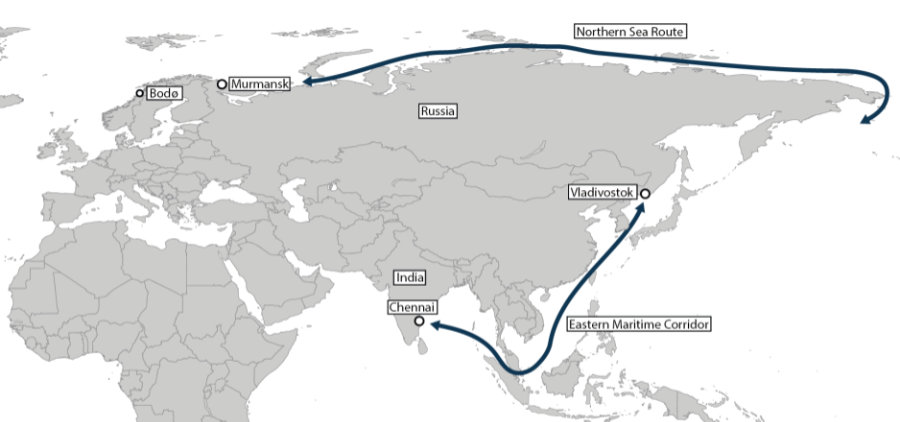
The Red Sea’s problems have shifted attention to the Eastern Maritime Corridor (EMC), connecting Russia’s Far Eastern Vladivostok Port with India’s Chennai Port. En route, this passes through (Russia to India) the Sea of Japan, the East China Sea, the South China Sea, the Malacca Straits, the Andaman Sea, and the Bay of Bengal. The route includes ports options if needed such as Dalian, Shanghai, Hong Kong, Ho Chi Minh City, Singapore, Kuala Lumpur, Bangkok, Dhaka, Colombo, and Chennai. Given this is the trading heart of Asia, the EMC offers plenty of other opportunities too.
Interestingly, the EMC was used by the two countries during Soviet era, but as trade volumes decreased post 1990s, the route became dormant. Today, the EMC is becoming of serious interest for the future development of Russia-India and overall Russia-South Asia trade ties.
At present, Russian vessels and shipments going through the Suez Canal route are not the primary focus of the Houthi attacks. Nonetheless, the diversion of ships away from the Suez Canal and Red Sea, opting instead for longer routes around the southern tip of Africa, has resulted in extended voyages. Consequently, this redirection has led to a scarcity of vessels and an increase in freight rates.
This means that the EMC has several advantages over the existing routes for India-Russia trade (apart from Red Sea route, these include the Cape of Good Hope route and the North Sea route). The EMC offers a significant reduction in both cargo transit time between India and the Russian Far East of up to 16 days, and in distance by up to 40%, promising substantial efficiency gains in transportation.
Currently, the route from Mumbai to of St. Petersburg, Russia, via the Western Sea Route and Suez Canal spans 8,675 nautical miles or 16,066 km. In contrast, the distance from Chennai to Vladivostok via the EMC is significantly shorter, at only 5,647 nautical miles, or 10,458 km. This translates to substantial savings of 5,608 km in distance, providing significant reductions in logistical costs and enhancing the efficiency of cargo transportation between Russia, India, and Asia.
The EMC is not only a trade route, but also a strategic corridor that can enhance cooperation between India and Russia in the energy sector, as well as in other areas such as the Arctic and the Northern Sea Route (NSR).
The Arctic region is a key area for Russia’s economy, holding about 13% of the world’s undiscovered oil and 30% of its undiscovered gas. India has shown significant interest in investing in Arctic projects and using the NSR, which is a shorter and cheaper path to Europe and North America than the Suez Canal route.
As for investments, India has been actively involved in the Arctic region for years. For instance, in the first seven months of 2023, India accounted for 35% of the eight million tons of cargo handled by Murmansk port, which is about 2,000 km north of Moscow.
India and Russia have already taken some steps to operationalize the EMC. In September 2019, Prime Minister Narendra Modi and President Vladimir Putin launched the Chennai-Vladivostok Maritime Corridor during the Far Eastern Economic Forum in Vladivostok.
The EMC is a game-changer for Russia and Indian trade, as it offers a new and viable route for their energy and economic cooperation, amid the Red Sea turmoil. It can also boost the strategic partnership and mutual interests of the two countries, as they seek to diversify their markets and sources, and to counter the challenges posed by the sanctions and the crisis. It can also revolutionize Russia’s total Asia trade and provide stable supply chains for all regional participants.
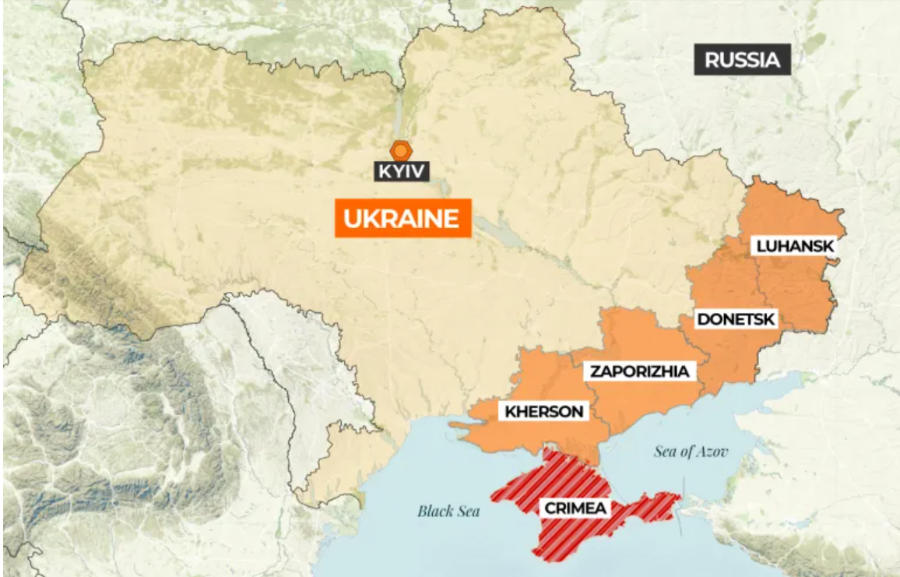
The four regions annexed by Russia in September 2022 from Eastern Ukraine have seen a surge in taxable revenues, following their reorganisation and investments and incentives made into the territories by Moscow. Tax revenues in Donetsk, Lugansk, Kherson and Zaporozhye have continued to grow, with a total of 210 billion rubles (US$2.27 billion) raised in 2023, according to the Russian Federal Tax Service (FTS).
Konstantin Chekmyshev, Deputy Head of the FTS, told the Russian Accounts Chamber board in March that tax collection in Donetsk and Lugansk had jumped by 34% compared to 2022, while the actual tax burden decreased.
Previously under Kiev’s administration, the central government had neglected these regions due to their pro-Russian views and culture and had ceased effective funding from 2014, leaving them in effective limbo and to be supported by Russian grants. Eventually, the status quo changed as these regions voted in what were described as ‘illegal’ referendums to rejoin Russia in 2022. All voted overwhelmingly to do so. The results have been unrecognised by both Kiev and the West.
The regional infrastructure, including power, water, sewage and other essential services such as medical, post, internet, IT and TV have now all been absorbed into the Russian national systems, while the FTS has focused on simplifying the legal procedures for businesses entering the new regions. Moscow provides tax incentives and grants for Russian businesses and foreign investors to invest in these regions.
For example, Russian President Vladimir Putin signed a law in 2023 to create free trade economic zones for each of the new regions, with preferential tax treatment for investors, and other tax and non-tax incentives. These include discounts on utilities, employment benefits, and five year delays for profits tax contributions. These are similar to the incentives provided in the free trade economic zones in Crimea and Sevastopol.
This has spurred investment into these regions for businesses that are not location-specific or have business experience in the region, including with Ukraine. According to Chekmyshev, the number of SMEs setting up in these zones continues to grow, and especially in Zaporozhye and Kherson.
The Zaporozhye Region is located in the south of European Russia and has access to the Sea of Azov, with industries now recovering in agriculture, energy and mining. Kherson is also in South Russia and has access to both the Azov and Black Seas. It has a developing agricultural industry. Donetsk is on the Azov Sea and has over 15,000 rivers. It is mineral rich, especially in coal (the Donets Coalfield) and has considerable reserves of rock salt. It also has deposits of dolomites, limestone, clay and mercury, as well as iron and aluminium ore. Lugansk is sited on the Seversky Donets River, and has a metals industry, coal, anthracite and peat coal mining, machine-building and chemical industries. It also has a developed agricultural sector focusing on crop farming. The collective population of these four regions is about 8.6 million.
Russian domestic investment data indicates that as of March 2024, 155,000 new businesses have registered in the four new Russian regions, of which 99,000 are SMEs.
The dynamics of tax revenues at the beginning of 2024 also remain positive, according to the FTS, having doubled in January and February in annual terms. The pragmatic reality is that these regions have not been under effective control from Kiev since 2014, existing in a type of twilight zone being neither supported by Ukraine, yet not part of Russia either. That significantly damaged their local economies and social infrastructure, with the regions also subjected to military conflict. Over time, that position became untenable, with Russia eventually stepping in to secure the populations well-being and restore order and infrastructure. One of the classic steps to take when recovering broken regions once they have been secured is the re-structuring of the local economy and providing stimulus to do so. In this case, the resumption of taxable commerce is indicative of a sustainable social and commercial environment, and subsequently allows the local economies to develop on their own merits.

 Русский