News

95% of Western Investors Still in Russia In 2024

Published on March 16, 2024

Austrian Foreign Minister Alexander Schallenberg has said in a meeting with US Secretary of State Antony Blinken during a joint press conference in Vienna on March 15, that 95% of Western companies are still invested in Russia. This is despite Western government pressure since early 2021 and many high profile foreign businesses announcing their exit from the country. 

Schallenberg confirmed that Austrian firms remain “heavily engaged” in Russia, saying that “Yes, Austrian companies are present in Russia, as are about 95% of all Western companies.” Schallenberg then insisted that international restrictions placed on Moscow must “be fully respected – there cannot be any exceptions.”

He didn’t make any mention of any government compensation being offered to any Austrian or any other Western company that suffered losses from exiting the Russian market at the behest of their government. Neither have any Russia-exit compensation plans been offered. This illustrates a deep division between the wishes of Western governments and Western investors as concerns Russia and an essential disconnect between Western government demands and corporate fiscal responsibilities.   

Last week, Politico reported that Washington has been pressuring one of Austria’s largest banks, Raiffeisen Bank International, to withdraw from Russia. The US Treasury’s Acting Assistant Secretary Anna Morris told Austrian officials and the company’s representatives that the bank risks being shut out of the US financial system – disconnected from SWIFT – if it fails to comply with the demand. The bank is listed on the Wiener Börse, with 38% of the bank owned by public shareholders. If a SWIFT disconnection were enacted, Raiffeisen bank shareholders – mostly Austrians and other Europeans – would likely suffer huge losses as share prices would collapse.

Raiffeisen said that it has reduced its operations in Russia significantly since February 2022, but it remains reluctant to withdraw from the country. It generated almost half of its profits there last year and has responsibilities to about 10,000 staff in the country. It regards Central and Eastern Europe as its primary markets and has been in Russia since 1996. 

In February, Russia’s Deputy Prime Minister Denis Manturov said about 20% of major European and US companies have left the Russian market, but the rest have kept their businesses in Russia with many increasing their regional investments.

Russian Auto Market Sales Grew 80% In February 2024

Published on March 16, 2024

The market for passenger cars and light commercial vehicles in Russia grew 80% in February 2024 and is forecast to continue growing in March, the Association of European Businesses (AEB) has stated in a press release. The AEB is the main representative body of foreign investors in Russia.

Based on calculations by the AEB Committee of Automobile Manufacturers, sales of passenger cars and LCVs in Russia last month, with deliveries through alternative channels taken into account, totaled 108,312 units.

“In February 2024, the market as a whole grew 84% compared to February 2023, and 74% in the first two months of the year. The impact of market oversaturation due to high levels of inventory remains, but is now less pronounced. The impact of the high key rate continues,” Head of the Automakers Committee Alexey Kalitsev said.

“Based on market trends in January-February, there are good prerequisites for continued growth in March,” Kalitsev said.

The Russian government is introducing and adapting various support measures and restrictions to regulate the Russian car market, which should stimulate and strengthen the development of local production, the AEB said. One example the Association cites is the expansion of the list of Russian-made cars recommended for government procurement. The Ministry of Industry and Trade published the updated list at the end of February. The list has expanded to include models from Kaliningrad Avtotor, which assembles Chinese branded cars. It also includes Citroen C5 Aircross models, which are assembled at the PSMA Rus plant in Kaluga.

The AEB also said that, since February, the simplified certification system for officially imported electric vehicles has ceased to operate. “In the short term, this will not contribute to the growth of sales of these cars, but, obviously, this should stimulate local production and have a beneficial effect on the technical support for the cars sold,” Kalitsev said.

The Association’s release also says that, starting April 1, an additional recycling fee will be introduced for cars imported into Russia through EAEU countries. “This measure has and will stimulate the February and March auto sales, while the window is still open and those who want to buy a cheaper car will try to take advantage of it.” Kalitsev said.

The Russian auto market was the 17th largest in the world in 2023, however rose 37% in sales last year after two fallow years in 2021 and 2022 when many Western manufacturers exited the local market. It has taken time for alternative investors – both Russian and especially the Chinese – to acquire and retool exited Western factories in Russia, however now a rebound is occurring.

Moscow Stock Exchange Expecting 20+ IPOS In 2024

Published on March 16, 2024

The Moscow Stock Exchange (MOEX) has seen an increase in domestic Russian corporate interest for conducting IPOs and SPOs compared to 2023; with more than 20 transactions potentially taking place in 2024, according to Vladimir Krekoten, the Managing Director of the exchange.

Krekoten was speaking at the ‘Financial Markets: New Guidelines in a Changing World’ conference in Moscow and said “We see the pipeline of transactions that investment houses have, and we understand that this is a significantly larger figure than the 13 transactions that took place in 2023. However, in my opinion, everything will depend on the market situation. And demand as well, and the interest rate, and, accordingly, how financial markets will behave in 2024. I really hope we see a figure greater than 20.”

There were nine IPOs and four SPOs on the Moscow Exchange in 2023.

Natalya Loginova, director of the department for work with issuers on the MOEX, has stated that more issuers are planning IPOs in 2024 than in 2023, with about 7-8 companies preparing to go public in the first half of the year. Several of these are Russian-based businesses that have been sold off by their original Western owners and are looking for domestic investment capital. These can be expected to attract premiums.  MOEX is the largest exchange in Russia, operating trading markets in equities, bonds, derivatives, the foreign exchange market, money markets, and precious metals. The Moscow Exchange also operates Russia’s central securities depository, the National Settlement Depository (NSD), and the country’s largest clearing service provider, the National Clearing Centre. At the end of 2023, the total trading volume on MOEX platforms reached 1.3 quadrillion rubles (about US$140 billion).

Putin Approves US$6.6 -Billion-Dollar High Speed Moscow-St. Petersburg Railway

Published on March 16, 2024

Russian President Putin has approved the construction of the delayed High-Speed Moscow-St.Petersburg railway. Discussions on a new link were prominent in 2019, but Covid issues put the project on hold. However, in February this year, a masterplan for the Moscow-St. Petersburg line was agreed. Construction is to start immediately.   

At present, one line runs mostly at a 200kmh (124mph) through four Russian oblasts (provinces) between St. Petersburg and the nation’s capital. The journey takes between three-and-a-half to four hours and is taken on the highly popular Sapsan route.

Trains on the new line would run consistently at 250 km/h (155 mph). This will reduce travel time between the two cities to a reported two hours and fifteen minutes. Drawing inspiration from Japan’s Shinkansen high-speed trains, the plan includes a frequency of trains departing every 10-15 minutes.

Russia’s Transport Minister Vitaliy Savelyev has indicated that an initial fleet of 28 trains, designated for this high-speed service, is expected to be delivered by 2028. Estimates for the cost of construction have been reported at about US$6.6 billion. The new high-speed railroad will create tens of thousands of new jobs, attract the country’s best construction and engineering resources and provide the service to a catchment area of 30 million people.

Putin also has his eyes on further high-speed routes heading east, stating that “We need to move towards Nizhny Novgorod, to Voronezh, and from Nizhny Novgorod to Kazan, and from Kazan to the Ural region.” Ultimately the concept is to provide high-speed rail to China, however this will take time to realise.

EAEU Industrial Output Up 4.7% In January 2024

Published on March 16, 2024

Industrial output in the Eurasian Economic Union (EAEU) countries rose 4.7% year-on-year in January, with all EAEU countries demonstrating growth, the EAEU press service has said, stating “The EAEU had an industrial production volume of 104.7% in January 2024, on par with January 2023.”

Armenia had industrial output growth of 21%, Belarus of 5.4%, Kazakhstan of 3.4%, Kyrgyzstan of 16.5%, and Russia of 4.6%, the Eurasian Economic Commission (EEC) the governing body of the EAEU said.

The EEC advised that the volume of output increased by 0.7% in mining and quarrying; by 7.5% in manufacturing; by 4.9% in electricity, gas, steam, and air conditioning; and by 3.3% in water, sewerage, and waste collection and distribution. The energy figures are related to seasonal winter cold, while consumer and export positives are the manufacturing sector results. 

These figures indicate that the EAEU has also absorbed the impact of secondary sanctions and is to some extent being carried along both by Russia and China trade. China’s manufacturing PMI was also slightly up (0.2%) in January this year over the previous month.

Russian Economy To Be World’s Fourth Largest By 2030

Published on March 15, 2024

The Russian economy will become the fourth largest economy in the world before 2030, with sustainable growth at a rate of at least 2% per year and gradual acceleration to 3%. This will yield approximately 20% growth by 2030, Russian First Deputy Prime Minister Andrei Belousov said at a meeting of Russian President Vladimir Putin with members of the government on March 14.

Belousov listed five main mechanisms (increasing productivity, increasing investment, growing non-resource non-energy exports, supporting SMEs, developing import substitution), which, in his opinion, will allow this GDP growth to be achieved.

“The President’s Address to the Federal Assembly formulated a key goal that must be achieved in the economic sphere, which is that, by 2030, our country should become one of the four largest economies in the world. Today, as you know, in terms of GDP at purchasing power parity, the Russian economy ranks fifth. Calculations show that Russia can become the fourth largest economy in the world, ahead of Japan, provided that sustainable growth is maintained of at least 2% per year with a gradual acceleration by the end of the period to 3%. In total, the country’s GDP needs to increase about 20% over the period until 2030.

The World Bank stated that the Russian economy grew by 2.6% in 2023, driven by significant fiscal support. The bank projected that Russia’s economic growth rate should decelerate to 1.3% in 2024 and further to 0.9% in 2025, with the tightening of monetary policy on the part of the Central Bank of Russia (CBR) likely to weaken domestic demand.

Russia’s Central Bank said that the Russian economy grew by 3.6% in 2023; and has predicted growth of 2.6% for 2024.

EAEU, Mongolia Complete Preparations For Temporary Free Trade Agreement

Published on March 15, 2024

The Eurasian Economic Union (EAEU) and Mongolia intend to complete the preparation of a temporary agreement on setting up a free trade zone by the end of 2024, the Eurasian Economic Commission (EEC) said following consultations with Mongolian representatives earlier this week. The EAEU includes Russia in addition to Armenia, Belarus, Kazakhstan, and Kyrgyzstan. It fits the geographic space between Western China and Eastern Europe.  

The EEC Trade Minister, Andrei Slepnev has said that “It stands to reason that we’ve been speaking of a temporary agreement, as time does matter. It’s important for us to quickly and promptly achieve a result that everyone would feel. The EAEU and Mongolia have a broad range of opportunities to increase the level of competitiveness of national industrial manufacturing facilities, enhance bilateral trade, and improve the terms of access to each other’s markets.”

Mongolia currently has observer status at the EAEU, which also has FTA with China, Iran, Serbia, and Vietnam.

Russia To Develop Cinematic Film Production With Asian Partners    

Published on March 14, 2024

Russia’s Minister of Culture, Olga Lyubimova has stated (March 13) that numerous Asian countries are interested in developing cinematography together with Russia and conducting joint film production, and that this will be fully supported by the government.

Lyubimova said in an interview with the Rossiya-24 that “We have joint production, and have formalized the possibility of joint production with many countries. We already cooperate with the CIS members, and now alongside Asian countries. Thailand, China and India are enthusiastic. In general, SCO and BRICS members are very active in developing cultural ties in film.”

Representatives of these countries actively participate in film festivals and present their projects, including at the Moscow International Film Festival, she said.

“This kind of communication and the possibility of joint production are extremely valuable, and we will fully support it. It is a task of the Russian state to give an additional incentive, additional opportunities to any joint project, to support it on both sides, to make a joint product, and to enjoy its results together,” Lyubimova said. Measures will be discussed to support joint production projects with other countries, she said, adding “We will support such films both financially and with resources, offering an opportunity to film and use particular locations.”

In terms of global revenues, in 2021, China reported the highest box office income worldwide, at approximately US$7.3 billion This is more than the revenues of the United States, Canada, Japan, and the United Kingdom combined. Russia placed sixth globally with revenues of US$600 million while India was seventh at US$500 million.

In terms of attendees, India placed first in 2022 with 981 million movie tickets sold, surpassing the combined ticket sales of China, the United States, Mexico, and Japan.

In 2023, Russia embarked on the first action movie to be filmed in space, with Actress Yulia Peresild, and the film director Klim Shipenko, both travelling to the International Space Station to film the movie “The Challenge”. The film was organised by the Russian space corporation Roscosmos and the public broadcaster Channel One, with an approximate budget of around ₽ 1.155 billion (US$12.5 million). Filming in orbit took place for nearly two weeks, with the film theatrically released on 20 April 2023. It collected more than ₽1 billion in the first two weeks and holds the record for the highest-grossing Russian film on its opening day.

Russian Foreign Investors Redomiciling To Kazakhstan

Published on March 14, 2024

The Kazakh Minister of National Economy Bauyrzhan Kudaibergenov, has said that over 40 foreign investor, with assets worth more than US$1.5 billion have completed the process of relocation from Russia to Kazakhstan. “Today, the government is working on the relocation of foreign companies, including large enterprises. We have about 400 companies from more than 30 countries on our list.

“As of March 2024, we have assisted 41 companies including InDriver, TikTok, and so on. Work is underway to assist another 37 foreign companies currently domiciled in Russia. They are worth an additional US$1 billion.” Kudaibergenov said at a government briefing.

The Vice Minister added that these are mainly companies from the manufacturing industry, IT and digitalisation, as well as the mining industry.

In 2023, according to Kazakh Invest, 72 companies operating in the Russian market expressed interest in moving to Kazakhstan. The President of Kazakhstan, Kassym-Jomart Tokayev has moved the economy to create favourable conditions for companies that have left the Russian market to move to the country.

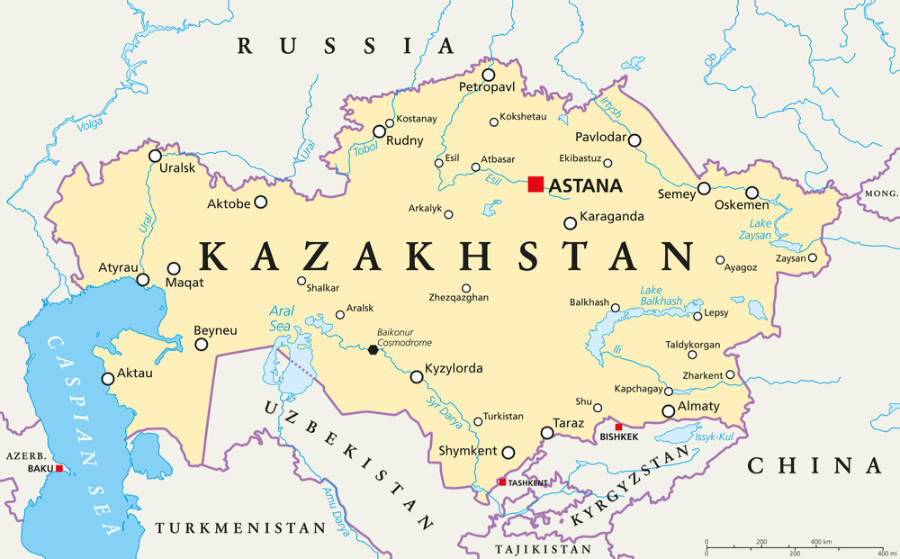
Kazakhstan is part of the Eurasian Economic Union (EAEU) which has Free Trade Agreements with Russia. The Kazakh Tenge is traded daily on the Moscow financial markets. Relocation from Russia to Kazakhstan means that foreign investors can maintain their Russia business while managing it instead from cities such as Almaty, the regional capital, yet without being subjected to Western sanctions which have been directed at Russian based businesses.  Russia-Kazakh bilateral trade reached US$27.4 billion in 2023, a record high, and increased again during January and February 2024. Russian corporate investment into Kazakhstan reached US$20 billion in 2023. Kazakhstan’s trade with China also increased in 2023 to hit US$37 billion, showcasing the countries capabilities as a conduit for Russia-China bilateral trade, which hit US$240 billion the same year. Foreign investors are now following the same supply chains yet managing from what is now becoming the central trade hub – Kazakhstan.   

Moscow City Government Supplies in 2023 Reached 78% From Domestic Product Sources

Published on March 14, 2024

Vladimir Efimov, the Deputy Mayor of Moscow for Economic Policy and Property and Land Relations, has stated on March 10 that Russia’s capital city now concludes about 80% of contracts for the purchase of Russian goods on its Russian supplier portal.

He stated that “In 2023, Moscow customers concluded 130,400 contracts on our supplier portal for the purchase of various products. These are construction, medical and office supplies, electronics and office equipment, communications equipment, and software. Most of the purchased 78% is of domestic origin.” Moscow signed the remaining 22% of contracts for the supply of goods from Belarus, China, Kazakhstan, and other countries, he noted.

The largest number of transactions last year was carried out by the government for the supply of construction goods, with a total of 19,000 purchases taking place. Another 15,100 contracts were signed for the purchase of household goods and office equipment, 10,800 for medical goods, 10,300 for paper, paper, and stationery products.

The Top 5 most popular categories of purchased products are in IT, communications, office equipment and electronics. 8,000 contracts were signed in this area.

The results are indicative of the procedural trend in Russian manufacturing and purchasing: initially replacing Western products with imported products, then developing Russian domestic production to satisfy demand. 

Russia To Develop Domestic Price Indicators And Remove World Pricing Tags

Published on March 14, 2024

The Russian State Duma has approved in the first reading this March, a bill on the gradual decoupling of prices for goods on the domestic market of Russia from global indicators. This means about the possibility of the Russian Federal Antimonopoly Service (FAS) to not take these into account when determining the monopoly high and low prices of goods. The bill has already faced criticism from deputies due to the risks of widespread application of standards and even inflated prices on the domestic market. Experts acknowledge these risks due to the low level of competition in the domestic market; but note that the FAS will retain the same tools and the ability to reconcile with world prices. It makes it possible to decouple prices for goods in Russia from exchange and over-the-counter price indicators of world commodity markets.

The FAS supports the project, as it corresponds to the road map of the service for the development of exchange trading in goods. The document excludes from the concept of monopoly high and low prices of goods as aa comparison with prices on foreign markets: the FAS will not be obliged to take into account their exchange and over-the-counter indicators.

The explanatory note explains this by the fact that prices in Russia are often based on world prices without taking into account the situation in the domestic market, and the changes will ensure the priority of the interests of Russian consumers, regardless of external conditions.

The FAS agrees that prices within the country should primarily take into account the balance of supply and demand and the capabilities of the domestic consumer. The project will extend to goods for which domestic indicators have already been created, they add.

According to State Duma, this is the second version of the bill: it takes into account the pre-matureness of a complete abandonment of global indicators before the formation of their national system. However, the legal department of the Duma apparatus notes the risks of widespread application of the norm due to the lack of specification of cases of admissibility of the use of external indicators.

Ilya Dolmatov, the head of the Institute of Economics and Regulation of Infrastructure Industries at the National Research University Higher School of Economics, believes that using foreign indicators is not entirely objective for the domestic market in the changed geopolitical conditions, but if necessary, the FAS retains a tool for comparing prices with world prices.

There remains a possible increase in uncertainty in Russian markets, including fuels, metals, crops, fertilisers, chemicals, petrochemicals and medicines. Dolmatov said that “If the market is deprived of the opportunity to focus on world prices, benchmarks and pricing rules should be offered in return. Determining the market price within an isolated market seems extremely difficult.”

Although Russia is one of the largest global exporters and importers of raw materials, it does not have its own generally accepted stock exchange indicators. How far such a system is managed under State control or via an independent regulator will be a key debating point. It is also likely to give Russia more of a say over global commodity prices based on own its terms rather than as part of a global ‘basket’ largely dominated by Western players.