News

Developing a SWIFT Alternative Digital Currency Global Trading System

Published on March 14, 2024

As geopolitics reshape the contours of physical commerce, digital services remain one area where sovereign countries can engage between each other with relative freedom, during a period where certain nations around the world are erecting new politicized barriers, controlling, restricting, or sanctioning trade in goods like minerals, raw materials, food, through to services, semiconductors and technologies.

As countries seek to shield their supply chains from external trade disruptions — whether they stem from political, or other reasons — it is a safe bet that demand for digital services will continue to rise as the dominant transactional technology, including the use of digital currencies as opposed to traditional fiat money.

The U.S. Federal Reserve, Treasury Department, Congress, the ECB, and similar institutions within the G7 have only recently begun seriously considering the viability of a Central Bank Digital Currency (CBDC), as a legal tender national digital currency. They are focused primarily on policy issues such as potential impact on financial stability or public access services. The national security implications of CBDCs are also on the table being discussed through various prisms all of which have resulted in a lagging, unprioritized approach to implementation.

Digitized currencies are data. A Digital currency moves across international borders, upholding privacy and security standards while maintaining lawful auditability in a fully digital economic world. The United States for instance trails other nations in its consideration of a CBDC. On the other hand, countries like China, and Russia among other non-G7 nations have been working toward, even implementing their own forms of CBDC for over 5 years. This progressive lead may enable them to shape the global standards and processes governing this financial transformation. The results could transcend data privacy and unipolar security constraints.

Governments have viewed cryptocurrencies as a possible challenge to their ability to manage and regulate the economy because simply put, they are used to doing so. They must figure out how to adjust to this new paradigm and create regulatory frameworks that strike a balance between innovation and control.

New global payment exchanges could undermine components of the international financial system that enhance the financial power of the US and the aligned G7 to help them combine and control their narrative regarding norms of international behaviour. Vulnerable components include the SWIFT service, which facilitates the movement of USD across international borders and, among other things, is fundamental to the U.S. financial sanctions regime of diplomacy.

Cryptocurrencies and CBDCs

CBDCs issued by governments are stand-alone innovations. They should not be confused with cryptocurrencies such as Bitcoin or Ethereum which were launched in 2009 and 2015 respectively. The growing popularity of cryptocurrencies, their exceptional freedom of borderless movement, speed, and of course risks, have however fueled government consideration of national digital currencies such as CBDCs.

Cryptocurrencies create and maintain “sovereignless” money through decentralized, cryptographically secured digital technologies that operate independently of any government. The first cryptocurrency was Bitcoin, but as of this writing, there are over 2,200 cryptocurrencies, mostly referred to as “altcoins” that are valued at just over US$2.3 Trillion. It is a drop in the comparative global value bucket, but it is still very early days.

Anyone can potentially create and maintain private cryptocurrencies by participating in transparent and decentralized technological processes that operate independently of any government. Cryptocurrencies are mainly used for holding value and financial speculation, P2P transactions, rather than as a retail payments system. Price volatility has limited the value of the bulk of cryptocurrencies by and large, as a vehicle for savings, although it can be argued that certain cryptocurrencies can be more attractive than several weak national currencies. Still and all, the acceptance by businesses of key cryptocurrencies is a noticeable, and growing trend.

The market has looked for ways to deal with the issue of volatility by creating specialized tokens called stablecoins. These cryptocurrencies claim to be backed by reserves of a government-issued currency. Central bank officials worry that the widespread use of stablecoins could potentially impede effective management of national monetary policy, which could become even more challenging as time moves on and the technologies mature.

CBDC Design

CBDCs are legal tender digital currencies, issued and maintained by governments or central banks. A retail CBDC differs from existing “normal” electronic currency transfers in two important respects. First, retail CBDCs are for use by people, businesses, and similar entities, and can largely obviate the present use of traditional intermediary payment cards such as VISA or MC to settle for services.

Central banks have long made large electronic interbank currency transfers to commercial banks and other financial intermediaries. In the United States for example, the Federal Reserve’s Fedwire system provides real-time settlement for these wholesale interbank services, although the potential as seen with the Russian CBDC that in testing trials has shown it can handle both interbank and retail functions.

CBDCs can reduce the costs, risks, and barriers to access associated with credit cards and payment platforms like Paypal, Venmo, and AliPay (which use digital representations of fiat currencies to provide money transfer services). CBDCs could also create new options for central banks. Unlike physical cash, CBDCs can be “programmed” thatnks to blockchain technologies, to perform predetermined functionality like helping to implement a desired monetary policy. For example, central banks can use CBDCs to provide direct government payments to citizens or create incentives for private savings or spending at a speed and efficiency that is currently impossible. The blockchain is an incorruptible digital ledger of economic transactions that can be programmed to record not just financial transactions but virtually everything of value.

A national CBDC will not be completely decentralized and open to all as are cryptocurrencies. Governments could, but do not have to, use blockchain and immutable digital ledger technology for their CBDCs. Some governments are constructing their own CBDC, while others are partnering with private technology companies.

As more countries issue CBDCs, governments behind the curve may grow concerned about missing out on a major trend in global currency. China’s e-CNY has added momentum to the transition to CBDCs.

CBDCs could disrupt elements of an international financial system that has greatly benefited the United States and enhanced its global influence. The dollar’s position as the favored reserve currency provides America with massive strategic advantages, from lower borrowing costs to leverage over global norms of behaviour through enforced sanctions.

This is a big reason why CBDCs are seen as a path forward for states wishing to challenge the status quo by reducing their externally-influenced vulnerabilities such as financial sanctions. Additionally, by using CBDCs to create new localized cross-border payment systems, governments can promote commercial reliance on their national CBDC. Finally, states that lead in the use of such innovation traditionally have led the development of international standards governing those technologies, which may further erode the influence of the G7s style rules-based order in controlling financial values and flows.

EAEU and Iran Agree On Eurasian Agroexpress Project

Published on March 14, 2024

Developing Agricultural Express Routes Via EAEU, Iran, Middle East, India & China

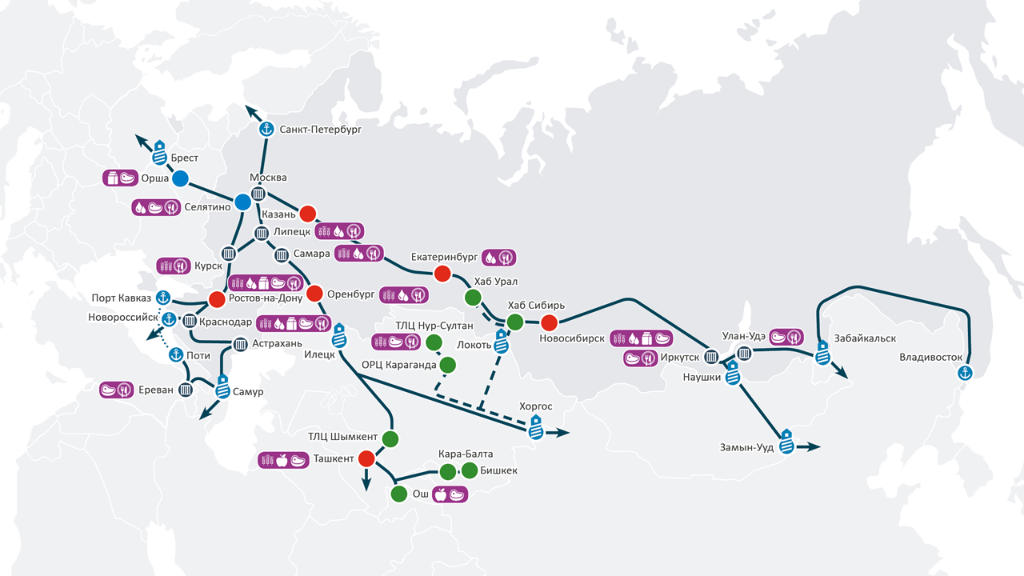
The Eurasian Economic Commission, the governing body for the Eurasian Economic Union (EAEU) held meetings with Iran in mid-March side to discuss the development of the Eurasian Agroexpress project. This is aimed at developing exports of agricultural products from Eurasian Economic Union member states (Armenia, Belarus, Kazakhstan, Kyrgyzstan and Russia) to China, Uzbekistan, Vietnam and other countries of South-East and Central Asia using regional transport infrastructure. In February 2023, Agroexpress was scaled up to cover the INSTC.

“As agreed during the work on a full-format free trade area between the Eurasian Economic Union and the Islamic Republic of Iran, we are moving all our agreements into practice,” noted EEC Trade Minister Andrei Slepnev.

He stated that the discussions focussed on the supply of EAEU products to Iran, as well as the organisation of large-scale transportation of Iranian vegetables and fruits to EAEU markets. These products are already on store shelves today. However, with the use of Eurasian Agroexpress, agricultural products will be delivered more quickly, with better quality and fewer intermediaries, reducing costs and improving delivered quality.

Alireza Peyman-Pak, the Iranian Deputy Minister for Agriculture, stated “We offer interaction with our largest Iranian logistics companies, which can either directly enter the project or act as a single window for organising the supply of your agricultural producers to Iran and the export of our products in the opposite direction.”

Following the meeting, the parties agreed to continue working in these logistics, delegating the discussion of the specific format and details of cooperation to the directorate of the Eurasian Agroexpress project ANO Eurasian Agrologistics and the Iranian company.

Slepnav remarked that “At the same time, we understand that, in addition to logistics, there are other issues that need to be resolved. These include mutual settlements, veterinary and phytosanitary control, and issues of transit through Iran towards the Persian Gulf countries and India.”

EAEU Trade in Sovereign Currencies Reaches 90% Of Total After Discontinuing US Dollar Use

Published on March 14, 2024

The share of national currencies in the Eurasian Economic Union (EAEU) trade currently amounts to 90%, according to Russian Prime Minister Mikhail Mishustin, speaking at the end of February this year. According to him, the percentage of use of domestic currencies is still growing.

The EAEU, which is based on the Customs Union of Russia, Kazakhstan, and Belarus, was established in 2015, and was later joined by Armenia and Kyrgyzstan. In 2016, Vietnam became a free trade partner of the EAEU. The EAEU is a Free Trade bloc designed to ensure the free movement of goods, services, capital and workers among member countries. Currencies include the Russian Ruble, Armenian Dram, Belarus Ruble, Kazakhstan Tenge and Kyrgyzstan Som.

2024 Performance against the US DollarJanuary 1  March 15  
Russian Ruble89.2190.81
Armenian Dram424.98402.0
Belarus Ruble3.133.24
Kazakhstan Tenge218.8222.3
Kyrgyzstan Som112.3111.7
(Exchange Rates.Org)

The 2.5M 2024 data above indicates the EAEU is generally becoming slightly more export competitive against US dollar prices commodities. Although changes are small these can have significant impacts on trade measured in billions of dollars.

Mishustin made the comments while addressing a meeting of the EAEU Intergovernmental Council. During his remarks, he highlighted that in the first 11 months of 2023, GDP of the EAEU grew by approximately 3.5%, while industrial production gained almost 4%, and retail turnover rose by more than 6%.

As trade within the EAEU continues to grow, member countries have been reducing the use of the US Dollar and Euro and instead turning more to national currencies in mutual settlements. Russian President Vladimir Putin has called on the member states to create a common dollar-free payment system with the aim of “boosting economic sovereignty.”

Russia’s 2024 Economic Soft Landing

Published on March 12, 2024

Russia’s economy continues to successfully battle through hardships while continuing to grow stronger, The Economist has reported on March 10, and has repeatedly “defied the doomsayers”. The publication added that Russia’s economic performance appears to be returning to pre-conflict levels despite numerous rounds of unprecedented sanctions imposed by the West over the past two years.

Russia has managed to rein in inflation, which was a cause for concern late last year, the paper noted, stating that “Data to be published on March 13th are expected to show that prices rose by 0.6% month-on-month in February, down from 1.1% at the end of last year. On a year-on-year basis inflation is probably no longer rising in Russia, having hit 7.5% in November.”

The Economist credited the success to the timely actions of the Russian Finance Ministry and the Central bank. The Ministry’s exchange-rate controls supported the Ruble and reduced the price of imports while the bank’s decision to double interest rates led to the inflation slowing down.

In consequence, Russia now appears to be heading for a “soft landing,” the weekly said, with inflation slowing down without inflicting serious damage to the economy. GDP meanwhile grew by more than 3% last year, while unemployment rates remained at a record low. Business closures were also at their lowest in eight years, according to the report, while also noting Russia’s “resilience.” Russian businesses also found effective ways to overcome the restrictions imposed by the West by establishing “durable supply chains with ‘friendly’ countries,” to the point where Russia now receives more than half of its imports from China.

With trade relations secured, Russian exporters are ditching the discounts on their goods that were originally introduced after the Western sanctions push. The discount on oil Russia offers to Chinese customers, for instance, has fallen from more than 10% in early 2022 to about 5% today, and that these new policies were bringing in more revenues and profits for the Russian companies.

“The Russian economy appears to be proving the pessimists wrong,” the weekly said, adding that it is “once again back on track.”

The International Monetary Fund has also expressed surprise that the Russian economy is growing faster than many experts predicted, and revised its growth forecasts for 2024 to 2.6%, up from previous expectation of just 1.1%.

China’s 2M 2024 Foreign Trade Grows Faster Than Expected On Bilateral Trade With Russia

Published on March 11, 2024

The Financial Times has reported that China’s foreign trade grew faster than expected in the first two months of 2024, driven partly by electronics and increased exports to emerging markets and Russia, with Beijing’s foreign minister touting “a new paradigm” in relations with Moscow.

China’s total exports rose by 7.1% in January and February compared with a year earlier, beating a Reuters poll of analysts that forecast an increase of just 1.9%  Total imports were up 3.5%, compared with a 1.5% estimate, suggesting that Western analysts have significantly downplayed the strength of the Chinese economy.

Tao Wang, chief China economist at UBS, was quoted as saying “A big driver of China’s export recovery has been the upswing of the global tech product cycle, basically electronics. We have seen that cycle bottoming out in the latter part of 2023.”

The improvement in China’s trade, which compares with a 5.2% growth for the full 2023 data, is on target to help China meet what is described as an “ambitious” target of 5% GDP growth for 2024.

China-Russia bilateral trade hit a record US$240 billion in 2023. In January and February 2024, China’s exports to Russia remained resilient, growing by 12.5% year on year, while imports rose by 6.7%. If maintained during all of 2024, this would suggest a total China-Russia 2024 bilateral trade increase of another 9.6% to about US$274 billion. Some analysts have suggested that this will not occur due to an already high base and limited space for Chinese exporters to further expand their market share.

Apple Pays Multi-Million Dollar Anti-Trust Fine To Russia

Published on March 11, 2024

In a classic example of how convoluted and opaque the US sanctions upon Russia can be, the American iphone manufacturer Apple has paid a ₽1.18 billion (US$12.3 million) fine to the Russian government after a court in Moscow found the US tech giant guilty of abusing its dominant market position through its App Store.

FAS, Russia’s anti-monopoly watchdog, announced in late January this year it had received the payment, following a November 2023 ruling that found Apple had prohibited app developers from informing customers that they can pay for their purchases outside the App Store.

The dispute between Apple and Russia’s competition regulator dates back several years, and is not the first time Apple has paid fines in the country. The iPhone-maker also paid a ₽906 million (US$10.1 million) fine in 2022 for a different violation of antimonopoly law, according to the FAS. Other western tech groups, including Google, have also paid fines following action by FAS in recent years.

In order to pay fines imposed by the Russian government, US companies must seek permission from the US Treasury’s Office of Foreign Assets Control, the body that enforces trade controls.

Apple stopped sales of its physical products in 2022, but its App Store and some of its subscription services still operate. At the end of 2022, Apple gave up its office in the centre of Moscow, however it still has two legal entities that operate in the country.

Apple has removed the apps of some Russian news outlets and Western sanctioned Russian banks from its mobile store. iPhones are still widely in use in Russia, with the company manufacturing iphones for the Russian consumer market yet using third party dealers in countries such as Turkiye, Kazakhstan and the UAE for selling onto Russian users. Apples sale of iphones indirectly to Russia were estimated to be worth about US$2 billion in revenues to the company during 2023.

Russia’s Sberbank Made Record Annual Profits in 2023

Published on March 11, 2024

Russia’s largest lender Sberbank made a record net profit of ₽1.5 trillion (US$16.3 billion) in 2023, as Russia’s financial sector recovers from western sanctions.

Sberbank’s IFRS full-year results, published on February 28th 2024, showed a more than fivefold increase in profits on the previous year, primarily achieved through a high level of lending activity. It corresponds to around half of what all the Russian banks together generated in 2023.

With a stake of 51%, the Russian state is the majority shareholder of Sberbank, whose chief executive Herman Gref is a longtime economic confidant of Vladimir Putin. The bank has a quasi-monopoly status, holding about half of Russian retail deposits, while about one in three Russians hold accounts with the bank.

Sberbank has been heavily sanctioned by the West and was disconnected from the global SWIFT payment network in May 2022.

Russia Proposes US$1 Billion Asset Swaps with Western Investors

Published on March 11, 2024

Russia’s finance ministry has set terms for a proposed swap of Russian and western investors’ frozen assets in each other’s jurisdictions, allowing each side to claw back value lost to sanctions. Moscow hopes the potential exchange, announced by the ministry on March 11, will unblock ₽100 billion (US$1.1 billion) in European securities, mostly owned by Russian retail investors, by letting western investors buy them with their own funds stranded in Russia.

Russian retail investors can submit offers to swap western securities from March 25, while western investors can bid for them starting from June 3, according to Investitsionnaya Palata, the Russian broker appointed to organise the trade.

Russia currently has about US$300 billion frozen in mainly European accounts, while Western companies also have an undisclosed amount of money currently frozen in Russia. It is unclear whether the Russian proposals will be met with approval by the EU and United States. However, if not, business pressure upon their respective governments – leading to potential claims for damages – could be levied on them by companies wanting to exit the Russian market in accordance with political wishes but being expected at the same time to be absorb significant losses while doing so.

However, if Russia’s proposals are accepted, it is likely to lead to addition asset swaps and reduce the burden of possessing inaccessible frozen assets on balance sheets by both Russian and Western corporates and traders.

2024 Red Sea Shipping Problems See Russian Rail Transit Demand Increase 40% 

Published on March 11, 2024

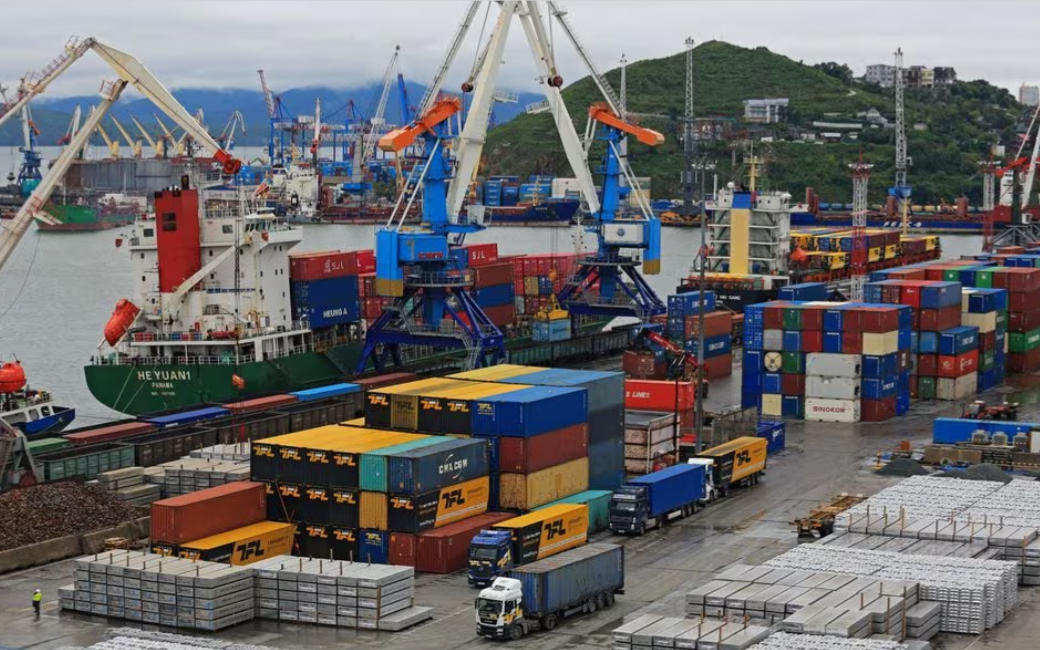
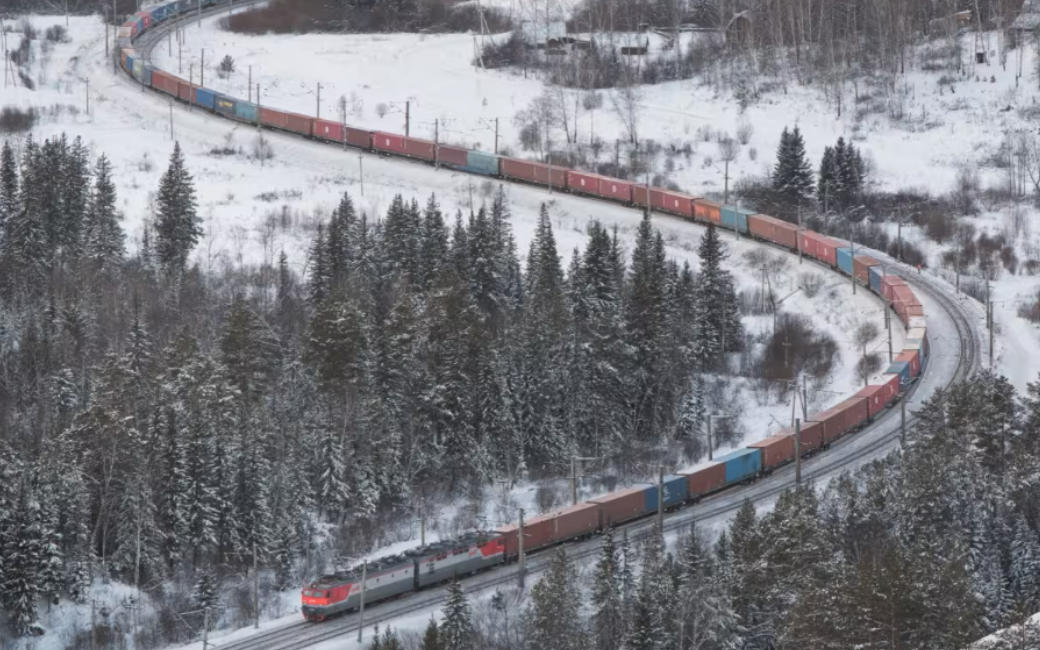
The Financial Times has reported that demand to move goods from Asia to Europe by rail via Russia has soared since the start of the Red Sea crisis, according to logistics companies and rail operators, providing a boost to RZD, Russia’s state-owned rail monopoly.

Germany’s DHL said requests to transport goods on the Russian rail corridor had jumped about 40% since container ships started diverting via a longer route from December 2023. RailGate Europe said demand was up about 30%, while Netherlands-based Rail Bridge Cargo said cargo rail traffic via Russia during 2024 was 31% higher compared with the same time last year.

Logistics companies have looked anew at routes through Russia following the decision of most large container shipping lines to divert Asia to Europe sailings that would normally go through the Suez Canal to travel via the Cape of Good Hope. They acted after a campaign of attacks on commercial ships was launched by Yemen’s Iran-backed Houthis in support of Gaza’s Palestinians.

The diversions have pushed up door-to-door journey times between China and Northern Europe by seven to 10 days, to between 50 and 55 days. DHL said door-to-door journey times by rail through Russia between Chengdu in China and Duisburg in Germany were currently between 25 and 30 days.

“The requests have picked up since the beginning of the situation in the Red Sea by around 40 per cent,” DHL said of customer inquiries about rail. “The overwhelming amount is going through Russia.” DHL says the majority of Asia to Europe goods go by rail travel on what it calls the ‘west corridor’, via Kazakhstan into Russia then into Belarus. Some traffic goes via a “north corridor”, crossing directly from China into Russia east of Mongolia.

RZD, which owns Russia’s vast rail network and operates most trains, is owned by the Russian state, however under EU sanctions, there is a near-ban on movements of road freight to and from Russia and Belarus. There are also restrictions on RZD’s ability to access some financial services. However, there is no ban on moving goods by rail through the country. RZD retains a near-monopoly over haulage of trains on Russia’s vast rail network, meaning that the company is paid both for hauling the goods through Russia and for access to its network.

Figures from Eurasian Rail Alliance, a Russian company that organises freight movement on railways using Russia’s 1,520mm rail track gauge — wider than European tracks — show that container rail movements from China to Poland were 14,532 twenty-foot equivalent units (TEUs) of containers in January. This was 36% above data for January 2023.

Some logistics companies offer a “southern route” that avoids Russia, going via Kazakhstan, Azerbaijan, and Turkey. But that route, which involves a ferry crossing of the Caspian Sea, takes longer than a container ship trip between China and Europe. It is viable mainly for goods going to and from central Asian countries such as Uzbekistan.

The findings underline the position the EU has found itself in having imposed sanctions on Russia and closed its ports to Russian ships. It has become reliant either on just the Red Sea and Suez routes or the longer – and more expensive – round Africa route. These costs are being passed on to consumers at a time when EU inflation has been problematic, while productivity has decreased. How EU politicians will manage to extricate themselves from the impacts of a secondary conflict in Gaza inflaming tensions in the Red Sea while at the same time maintaining transport sanctions on the Russian routes remains a conundrum.

Moscow Exchange Reports Record Transactional Activity by Private Investors in February

Published on March 11, 2024

Private investor activity on the Moscow Exchange (MOEX), Russia’s largest stock market, reached an all-time high in February 2024, according to the exchange. A total of 4.1 million individuals conducted transactions on the exchange last month. During this period, they invested 74.2 billion rubles (US$820 million), an 11% increase year-on-year. The vast majority of investments were made in bonds, amounting to roughly 59.1 billion rubles.

The overall number of individuals with brokerage accounts on MOEX exceeded 30.7 million at the end of last month. They opened 54.3 million accounts.

Among the most popular securities in the portfolios of private investors were the shares of Russia’s largest lender SBER Bank (37.9%), state energy giant Gazprom (14.1%), oil major Lukoil (14.1%), tech giant Yandex (7.9%), as well as stocks of energy companies Surgutneftegaz and Rosneft, and mining majors Norilsk Nickel and Severstal.

The total trading volumes across MOEX’s markets surged to 111.4 trillion rubles in February, a weighty increase from 83.6 trillion rubles a year ago. In the foreign exchange (FX) market, which makes up a significant portion of MOEX’s activities, trading volume reached 27.7 trillion rubles against 19.4 trillion recorded in February 2023.

Russia Approves “Friendly States” List Of Bankers & Brokers Able To Trade In Forex  

Published on March 11, 2024

Russia has approved a list of states whose bankers and brokers can now take part in currency trading in Russia. This list of “friendly and neutral” countries allowed to trade on the country’s currency exchange market, was released in early February this year and is exclusive to countries who have not signed up to Western sanctions on Russia. They are now able to participate in foreign exchange trading on both Russia’s forex and derivatives markets.

The list comprises: Azerbaijan, Algeria, Armenia, Bangladesh, Bahrain, Belarus, Brazil, China, Cuba, Egypt, India, Indonesia, Iran, Kazakhstan, Qatar, Kyrgyzstan, Malaysia, Morocco, Mongolia, Oman, Pakistan, Saudi Arabia, Serbia, South Africa, Tajikistan, Thailand, Türkiye, Turkmenistan, the United Arab Emirates, Uzbekistan, Venezuela, and Vietnam.

It includes all the BRICS nations including China, all the EAEU members, nine MENA nations and four ASEAN states.