News

The European Union’s Coming Economic War Versus The BRICS

Published on August 7, 2025

The regional Ukraine conflict, initially a European issue, has now evolved into a new, generally unacknowledged phase that is revealing in its geographic spread and aims – it has morphed into a global economic war, essentially pitting the European Union and the United States against the rest of the world. Both are demanding compliance with their wishes from the BRICS nations – under threat of higher tariffs. The question for the European Union is how far it is prepared to go in countering the BRICS group. 

The Flash Point: Ukraine   

Although the Ukraine conflict has its origins in cultural and basic military conflict, it changed in nature from being essentially a small local civil war from 2014 involving the Donbass region to become a full military battle pitting EU, UK and NATO forces against Russia. Using NATO as the uniting shield, the conflict became a strange beast – with all the opposing parties denying they were involved in a direct conflict with Russia when it has become apparent that both on economic and military terms, they are.

Impact on the European Union

To date, the NATO allies have spent an estimated €50 billion per annum on supporting Ukraine, with additional costs, especially to the European Union economy estimated at about €1 trillion in the form of increased energy supply chain overheads as of mid-July 2025 as a result of sanctions. In addition, the European Union appears to remain committed to much of this annual expenditure, with defence budgets now increased to 5% of total GDP – at least an extra €700 billion annually. It may not stop there. Energy costs will remain higher than the previously less expensive Russian-sourced supplies, while concerns have also been raised about the suitability of European logistics, transport and communications infrastructure and the additional need to invest in these.

It is hard to pin-point accurate figures, and the EU’s own publicly available accounts are often bewildering in what they do and do not say, ending up being an undecipherable mix of financial percentages without providing any baseline data.

US gas exports to the EU have also risen from US$12.2 billion in 2021 to a recently committed, but possibly unsustainable US$250 billion per annum from 2025.

 What now appears obvious is that the EU has gotten into a conflict whose expense levels are well into the trillions of euros, with higher associated costs than pre-2022 now a built-in part of the overall European economy.

In addition to taking this financial hit, EU economic development has also been stopped in its tracks: in 2021 overall EU economic growth was in excess of 5%, for 2025 it is expected to average out at 1%. Should that 5% growth rate have been maintained, this represents a loss to the EU economy during the period 2021-2025 of about €5 trillion. That is equivalent to about 25% of the current total EU GDP of €20 trillion. This gap will continue to grow in terms of lost development and increased expenditure – a classic double-whammy. This is why predictions such as the EU being caught up by at present smaller economic blocs – such as the Commonwealth of Independent States – begin to look increasingly predictable. And all this for a relatively small country that is not an EU member.   

Impact on Russia

Russia by all accounts has weathered the economic storm rather well, although understandably there have been significant stresses – the loss of €300 billion of sovereign assets, and an economic journey that has been turbulent to say the least. At present though, Russia appears to have overcome the odds – its economy has grown from US$1.89 trillion in 2021 to an estimated US$2.8 trillion in 2025. In PPP terms, which is used when comparing economies, the Russian economy has risen to become the fourth largest in the world and equates to a purchasing power of US$7.67 trillion. Russia has managed to completely restructure its supply chains, has absorbed the impact of over 20,000 sanctions, and has developed an increasingly sanctions-proof economy that can now operate independently of both the United States and European Union. That cannot be said of either the United States or Europe. This simple fact is where the looming BRICS economic conflict with the West is now beginning.

Ukraine Conflict Goals & Achievements  

It now appears that the European Union, supported by the United States, became involved in the Ukraine conflict for expansionist principles, both by absorbing Ukraine and weakening Russia to allow Brussels to negotiate better trade and investment terms in what appears to have been an attempt at instigated a regime change in Moscow to allow a more pro-European government to take power. There are numerous pointers towards this, multiple, on-going references for Ukraine to join the European Union, the same for the removal of Vladimir Putin as Russian President and numerous calls for the breakup of Russia as a single country. More on that concept here and here.

The benefits for Europe and the United States would have been substantial, with Brussels apparently buying into this concept. Unfortunately for Brussels, it hasn’t worked out the way it was intended to, and attempting to drive these types of geopolitical changes has proven far beyond the EU’s capabilities. What has changed is that the economic conflict now involves not just Russia, but the BRICS, with the EU now seemingly poised to attempt to inflict economic damage upon the bloc instead.

The European Union vs The BRICS

BRICS

In GDP terms, the EU has a nominal GDP of about €17 trillion, and a Purchasing Power Parity (PPP) value of €37.5 trillion, reflecting the difference in values and production costs of the US economy and US dollar value against the Euro. Adding the UK economy into this equation would provide an overall expected 2025 European PPP value of €41 trillion.

That compares to the big four BRICS economies (Brazil, Russia, India, China) with a nominal GDP of €23.1 trillion. In PPP terms however, the BRICS big four have a value of €60 trillion – about 50% larger than the EU value. When the BRICS full membership of ten countries (Brazil, Russia, India, China, South Africa, Egypt, United Arab Emirates, Ethiopia, Iran, and Indonesia) is taken into consideration, that figure becomes €72.58 trillion – slightly less than double the EU figure.

This means that EU economist must be very careful as how they assess their economic clout when considering tariffs against the BRICS bloc – any miscalculation or over-emphasis on nominal (as opposed to PPP) strengths could prove disastrous during a time when as we can see, the European economies have already taken a battering. 

EU Tariffs on BRICS
Tariffs

The average EU tariff on imported products varies by product type, and by country, as the EU does not apply a uniform tariff rate across all goods, making EU trade data typically complicated to determine. However, what can be stated is that the EU have been negotiating trade with numerous BRICS countries, including Brazil, via the Mercosur trade bloc, although these have stalled somewhat with no agreement as yet being ratified by either side. EU agreements with South Africa have been on-going, however again, there appear to be significant challenges described as ‘serious differences’. The EU has also suspended development aid to Ethiopia.

An EU agreement with Indonesia has been under negotiation since 2016, with current talks being the 19th in this series – making one wonder if the EU is employing ‘professional negotiators’ whose actual aim is to maintain on-going talks without concluding them. 

EU relations with China have been described as ‘rock bottom’ following inconclusive talks in Beijing last month, while the EU position with Russia is well known with 18 rounds of sanctions imposed upon Moscow. Trade relations with Iran are also degraded and additionally impacted by sanctions.

India has accused the EU of ‘bullying tactics’ in their trade negotiations, with the EU also imposing sanctions on Indian oil refineries.  

In short, the EU’s collective position as regards trade with the BRICS group is thoroughly inconsistent and lacks any solid agreements. However, it is in a position to impose tariffs – and has already done so on certain Chinese products, such as EV’s and solar panels. Others may follow should EU market regulators, already used to imposing sanctions on Russia and Iran, turn their eye to other BRICS members. In doing so they would be following the same policy as Washington, which may be of assistance in the EU’s own trade negotiations with the United States as a way to gain favour with President Trump. Currently, Trump has imposed an additional 15% tariff on top of existing product categories on EU imports, with the EU wanting to reduce this to 10% – the same as the United Kingdom. 
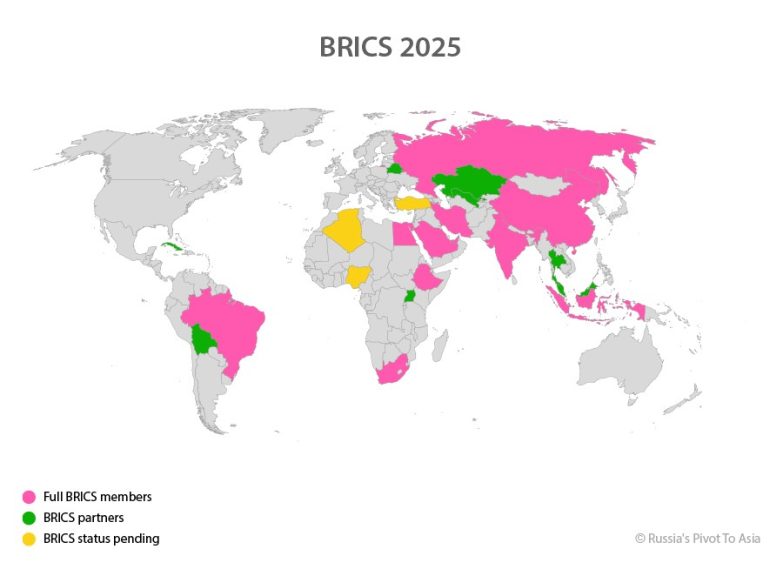
BRICS Map

Von der Leyen’s BRICS Gamble

Von der Leyen

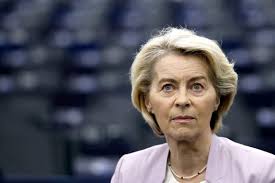
Should Ursula Von der Leyen decide to take on the BRICS, this trade data and current geopolitical issues appear to mean that whichever way one looks at it, Brussels would have a battle on its hands to bring the BRICS under its will. In nominal GDP terms, the EU is still economically larger, but in PPP terms it is just 55% of the BRICS total. Meanwhile, the BRICS economies do not appear to be complying with Trump’s wishes and as trade with the EU is relatively insignificant (apart from China and India) will presumably ignore any EU demands as well.

The BRICS economies also appear to be helping each other overcome trade restrictions imposed by higher US tariffs. China for example has just fast-tracked the application processes for nearly 200 Brazilian investors throughout the country.  

India too, has rejected any moves to discontinue its purchases of Russian oil, even after the imposition of US tariffs of 25% – with these being increased by a new Trump executive to 50% as from August 27th. That may test India’s resolve, but not unreasonably, India has pointed out that the US itself continues to trade with Russia in amounts that would have been enough for Moscow to have purchased 660 T-90 tanks. While there will be some domestic political pain for India, as we discussed in some detail here, it is unlikely to back down. 

China has also refused to bend to Trump’s will, with President Xi Jinping saying that China “will not be bullied” China continues to face the highest tariff burden among America’s major trading partners, with China’s effective tariff rate at 41.4%, up from 10.7% at the end of last year. It is also worth noting that senior Indian officials have just visited Moscow and the Indian Prime Minister Modi is to visit Beijing. None have as yet, any plans to meet with President Trump – nor with the Ursula Von der Leyen, whose welcome upon arrival in Beijing last month was decidedly chilly.

Apart from its economic superiority over the EU, the main advantages of the BRICS group is its sheer size – the ten BRICS full member nations possess about 46% of total global agricultural land and have a population of about 4 billion people. That stacks up against the European Union with 18.2% of total global agricultural land and a population of 450 million. These figures suggest that the BRICS has the capacity to absorb a move away from the EU markets, while the European Union – as long as it maintains reasonable economic and trade ties with the United States – probably has enough capacity to maintain its wealth as a more protected US/EU bloc, although significant growth appears out of the question.

The End Game

Iron Corset

While Trump may be vociferous in his criticism of BRICS – he has challenged the group as being a threat to the US dollar – the overall goal appears to be a short-medium term tariff based conflict designed to eject the BRICS nations from the United States and eventually the European Union, and establish a US/EU focused group while leaving the BRICS to develop their own supply chains and markets.

The EU appears to be onboard with this concept, although it also appears they have little choice: they have essentially committed themselves to the United States, while a coming battle with China and possibly more of the BRICS group over tariffs additionally appears to be brewing. Russia and Iran have already been heavily sanctioned.

If correct, this confirms the development not of a multi-polar global society, but of a partial one. The United States and the European Union on one hand, and the BRICS plus, with most of the rest of the world on the other. That has significant implications for the BRICS countries, and the Global South with not just a realignment of a ‘Pivot To BRICS’ occurring but the additional institutional need of regulatory and fair governance. Beijing and Moscow, along with Delhi, will get the chance to show just how fair and open they are prepared to be in running the rest of the world without trade or economic reliance on Washington or Brussels.

For Europe however, rather than a global free trade bloc, Ursula Von der Leyen and her contemporary colleagues appear to have subjected the entire European Union into a straitjacketed relationship, based almost entirely on the whims of the United States – the European Iron Corset.

Further Reading

The BRICS Economic War vs The United States

BRICS Leaders To Discuss US Tariffs

Published on August 7, 2025

Brazil will discuss a response to US President Donald Trump’s tariffs with other BRICS nations, Brazilian President Luiz Inacio Lula da Silva has stated. Lula said he will reach out to other BRICS nations and discuss how to tackle the tariffs. In addition, he said he would reach out to his Chinese and Indian counterparts, Xi Jinping and Narendra Modi, as well as other leaders.

In total, the BRICS has ten full members: Brazil, Russia, India, China and South Africa, along with Egypt, Ethiopia, Indonesia, Iran, and the UAE.   

Earlier in the day, Trump announced that he would raise tariffs on India – another founding BRICS nation – to 50% by late August. Trump already placed 50% tariffs on Brazilian goods earlier this month, in a move that Brasilia condemned as an illegal attempt to politically influence its internal policy.

“I’m going to try to discuss with them about how each one is doing in this situation, what the implications are for each country, so we can make a decision” Lula said.

According to the Brazilian leader, Trump is trying to “dismantle multilateralism” and promote “unilateralism, where he negotiates one-on-one with other countries,” allowing the US to maintain “the advantage.”

US Tariff Rates On BRICS Countries

CountryRate
Brazil50%
Russia10%
India50%  (from August 27)
China30%
South Africa30%
Egypt10%
Ethiopia10%
Indonesia19%
Iran10%
UAE10%

(source: The White House)

“What bargaining power does a small Latin American country have against the United States? None,” Lula said. Brazil’s nominal GDP is US$2.2 billion. The United States is about US$30 trillion.

BRICS Map

Trump has previously threatened BRICS members with additional 10% tariffs, accusing them of a concerted effort to sabotage the US dollar as the global reserve currency. BRICS nations have denied this and argued that Washington’s own foreign policy undermines the currency, by forcing countries to use their own currencies in international trade as Washington has weaponised the dollar.

The US president has also threatened to impose further tariffs on Russian trade partners – the biggest of which are BRICS partner nations – to pressure Moscow into accepting a ceasefire deal in the Ukraine conflict.

Washington could also place higher tariffs on China, currently the biggest purchaser of Russian oil, Trump said on Wednesday. Both Beijing and New Delhi have vowed to defend their sovereign interests in the face of US tariff hikes.

There has already been some intra-BRICS cooperation: South Africa has boosted its agricultural exports to other BRICS nations, China has fast tracked nearly 200 Brazilian applications to establish businesses in China, Indonesia is restructuring its seafood industry away from the US and towards BRICS, while Russia and India have also met to discuss strategy.

While in nominal GDP terms the BRICS ten are roughly at GDP parity with the United States, in Purchasing Power Parity (PPP) terms the BRICS economies are nearly three times larger.

Apart from economic superiority, the main advantages of the BRICS group is its sheer size – the ten BRICS full member nations possess about 46% of total global agricultural land and have a population of about 4 billion people. That stacks up against the United States with 13.7% of total global agricultural land and a population of 340 million. These figures suggest that the BRICS has the capacity to absorb a move away from the US markets. 

We previously discussed the implications of the United States economic war upon the BRICS in some detail here.

Further Reading

Russia Proposes A Permanent BRICS Seat At The G20 As Global South Gains Influence: Analysis

Russia, India, Coordinate Efforts To Beat US Tariffs & Increase Trade and Investment Cooperation

Published on August 7, 2025

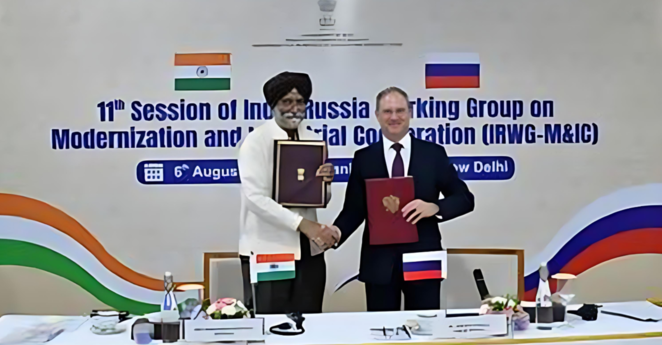
India and Russia have discussed ways of strengthening their economic partnership, focusing on cooperation in rare earths, aircraft parts manufacturing, and railways, officials said in a statement on Wednesday. The discussions were held during the 11th Session of the India-Russia Working Group on Modernization and Industrial Cooperation in New Delhi. That came at the same time as US President Donald Trump’s announced an increase of tariffs from 25% to 50% on Indian imports for New Delhi’s continued purchases of Russian oil. We discussed the US economic war with the BRICS here.

The Russia-India working group focused on collaboration in science and technology, including wind tunnel facilities, aircraft engines, and carbon fiber tech. Opportunities in coal gasification and industrial infrastructure were also discussed. The meeting concluded with the signing of a protocol which confirmed the strong strategic partnership between the two countries.

Meanwhile, Ajit Doval, India’s National Security Adviser, is in Moscow for meetings with President Vladimir Putin, for a visit aimed at strengthening the defence and security partnership between Russia and India. Indian media reports have indicated that Doval will discuss the acquisition of more S-400 systems for India. New Delhi currently has three systems – part of a larger order of five purchased from Russia. They were used during the country’s brief military confrontation with Pakistan in May. Russia’s Deputy Defence Minister Col. Gen. Aleksandr Fomin has also met with Indian Ambassador Vinay Kumar.

Alexey Gruzdev, the Russian Deputy Minister for Industry and Trade, with Amardeep Singh Bhatia, India’s Secretary of Department for Promotion of Industry and Internal Trade

Doval last visited Moscow in September 2024 and met with Russian President Vladimir Putin, with both sides highlighting the growing partnership. Putin said that the time that “Our special privileged strategic partnership is gaining momentum and growing stronger, which we are delighted about. We are also pleased to see India’s success in strengthening its statehood and advancing its economy under Prime Minister Modi’s leadership.”

Following Doval’s visit, Indian Foreign Minister S. Jaishankar is also expected in Moscow later this month for talks with his Russian counterpart, Sergey Lavrov. Doval also stated that Russian President Putin is expected to visit India ‘in the near future’, saying that “We are very excited about the visit of President Putin to India. The dates have almost been finalised. These summits are always watershed moments in our relations.” 

These meetings are timely in discussing the development of the Russia-India bilateral strategic partnership, and especially as White House rhetoric, which blames Russia for US tariffs on India, appears aimed at disrupting these relations.

Relations between Russia and India are instead continuing to develop, and appear not to be affected by any White House attempts to drive them apart. Russia and India appear to have war-gamed the new US economic tariffs on India, and what with Modi’s upcoming visit to China, all three – plus other BRICS economies – appear to be coordinated in their responses. It is not immediately apparent if the White House is on the same level when it comes to coordination.

The Indian Prime Minister, Narendra Modi, has stated that he “will not compromise” concerning the 50% US tariffs on Indian imports, saying that “I know, personally, I’ll have to pay a heavy price — but I am ready for it. That was a reference to the political pressure he will face with Indian pharmaceuticals, electronics and the agriculture sectors all under pressure. India’s agricultural sector includes cotton, hemp, jute and silk production and employs about 45 million people.  

India has now joined Brazil at the top of the list of countries facing the highest levies from the United States.

Further Reading

Trumps’ Tariffs On India: Impact and Implications For India, the United States & Russia

The BRICS Economic War vs The United States & Europe

Published on August 6, 2025

The regional Ukraine conflict, initially a European issue, has now evolved into a new, generally unacknowledged phase that is revealing in its geographic spread and aims – it has morphed into a global economic war, essentially pitting the United States against the rest of the world. It is essentially demanding tributes from its allies, such as the European Union, and compliance with its wishes from the BRICS nations.

Ukraine has become sidelined in a global struggle for economic dominance. However, the US appears not to be getting all its own way. In this article we examine the current stages of this conflict and compare the opposing sides.

The Nexus Point: Ukraine    

Ukraine Flag

Although the Ukraine conflict has its origins in cultural and basic military conflict, it changed in nature from being essentially a small local civil war from 2014 involving the Donbass region to become a full military battle pitting US and EU forces against Russia. Using NATO as the uniting shield, the conflict became a strange beast – with all the opposing parties denying they were involved in a direct conflict with Russia when it became apparent that both on economic and military terms, they were.

Impact on the European Union

EU Flag

To date, the NATO allies have spent an estimated €50 billion per annum on supporting Ukraine, with additional costs, especially to the European Union economy estimated at about €1 trillion in the form of increased energy supply chain overheads as of mid-July 2025 as a result of sanctions. In addition, the European Union appears to remain committed to much of this annual expenditure, with defence budgets now increased to 5% of total GDP – at least an extra €700 billion annually. It may not stop there. Energy costs will remain higher than the previously less expensive Russian-sourced supplies, while concerns have also been raised about the suitability of European logistics, transport and communications infrastructure.

It is hard to pin-point accurate figures, and the EU’s own publicly available accounts are often bewildering in what they do and do not say, ending up being an undecipherable mix of financial percentages without providing any baseline data. But what appears obvious is that the EU has gotten into a conflict whose expense levels are well into the trillions of euros, with higher associated costs than pre-2022 now essentially a built-in part of the overall European economy.

In addition to taking this financial hit, EU economic development has also been stopped in its tracks: in 2021 overall EU economic growth was in excess of 5%, for 2025 it is expected to average out at 1%. Should that 5% growth rate have been maintained, this represents a loss to the EU economy in the period 2021-2025 of about €5 trillion. That is equivalent to about 25% of the current total EU GDP of €20 trillion. This gap will continue to grow in terms of lost development and increased expenditure – a classic double-whammy. This is why predictions such as the EU being caught up by at present smaller economic blocs – such as the Commonwealth of Independent States – begin to look increasingly accurate. And all this for a relatively small country that is not an EU member.    

Impact on the United States

US Flag

While the United States has contributed about US$182.8 billion to Ukraine (both via NATO and its own efforts) there is a significant difference in the impact on its economy. Much of this will have been offset – instead providing an economic boost – by two elements. Much of this money was used to reinvest in US military production, which was then resold, while US gas exports to the EU rose from US$12.2 billion in 2021 to a recently committed, but possibly unsustainable US$250 billion per annum from 2025. In short, the Ukraine conflict has proven to be good business for the United States. It has secured a position as primary energy supplier to the European Union, given its military-based economy a significant boost, and has both decreased its budgetary commitment to NATO and, from March, has ceased funding Ukraine. The positive economic performance of the United States has been in stark contrast to that of the European Union. The United States GDP has grown from US$23.68 trillion in 2021 to a projected US$30 trillion by the end of 2025.

Impact on Russia

Russia Flag

Russia by all accounts has weathered the economic storm rather well, although understandably there have been significant stresses – the loss of €300 billion of sovereign assets, and an economic journey that has been turbulent to say the least. At present though, Russia appears to have overcome the odds – its economy has grown from US$1.89 trillion in 2021 to an estimated US$2.8 trillion in 2025. In PPP terms, which is used when comparing economies, the Russian economy has risen to become the fourth largest in the world and equates to a purchasing power of US$7.67 trillion. Russia has managed to completely restructure its supply chains, has absorbed the impact of over 20,000 sanctions, and has developed an increasingly sanctions-proof economy that can now operate independently of both the United States and European Union. That cannot be said of either the United States nor Europe. This simple fact is where the looming BRICS economic conflict with the United States is now beginning.

Ukraine Conflict Goals & Achievements   

Graph Down

It now appears that the European Union, supported by the United States, became involved in the Ukraine conflict for expansionist principles, both by absorbing Ukraine and weakening Russia to allow Brussels to negotiate better trade and investment terms in what appears to have been an attempt at instigated a regime change in Moscow to allow a more pro-European government to take power. There are numerous pointers towards this, multiple, on-going references for Ukraine to join the European Union, the same for the removal of Vladimir Putin as Russian President and numerous calls for the breakup of Russia as a single country. More on that concept here and here.

The benefits for Europe and the United States would have been substantial, and Brussels apparently bought into this concept. Unfortunately for Brussels, it hasn’t worked out the way it was intended to, and attempting to drive these types of geopolitical changes has proven far beyond the EU’s capabilities. But this is not true of the United States. While its initial goals of diminishing Russia might have changed from the Biden era rhetoric of reducing the ruble to rubble – the overall aims of the United States appear to remain intact. But what has changed is that the economic conflict now involves not just Russia, but the BRICS.

The United States vs The BRICS

Coffee

While the United States has moved on in terms of providing military support to defeat Russia on Ukraine’s battlefields, its economic efforts to impose at least restrictions on Russia continue. However, this has now spilled over to include the BRICS countries, which may not have been the original 2022 intention under President Biden. It certainly seems to be so under President Trump, in terms of rhetoric at least. Whether this breaks out into a longer-term battle of economic will remains to be seen, but there are significant signs that the United States, under Trump, is continuing to press its superiority if not in military terms, then certainly in economic ones.

Nominal GDP

It is wise to refer back at this point to the US economy, which unlike the European Union, has not been damaged by the Ukraine conflict and has instead been doing well. It remains the world’s largest economy in nominal GDP terms and will probably breach the US$30 trillion barrier this year. In nominal terms, it is roughly 30% larger than the Chinese economy. That compares to the big four BRICS economies (Brazil, Russia, India, China) with a nominal GDP of US$27 trillion.

Purchasing Power Parity

This apparent US economic dominance changes however, when the calculations involve Purchasing Power Parity (PPP) capabilities. This is an important economic statistic and is used when comparing economies. The difference between nominal and PPP GDP measurements is that Nominal GDP and GDP Purchasing Power Parity (PPP) are both measures of a country’s economic output, but they differ in how they account for price differences across countries. Nominal GDP uses current market exchange rates, while GDP (PPP) adjusts for differences in the cost of goods and services, providing a more accurate comparison of living standards. It is unknown whether President Trump or his economic advisors use nominal or PPP calculations when calculating the effect of sanctions. It should be pointed out that global institutions such as the World Bank and IMF all use the PPP data when analysing economic impacts, and especially when it comes to comparisons with the United States economy.

Under PPP calculations, as these use the US dollar as the base, the US GDP remains the same at about US$30 trillion. But the BRICS big four as mentioned above now reaches over US$70 trillion – more than double the US value.

When the BRICS full membership of ten countries (Brazil, Russia, India, China, South Africa, Egypt, United Arab Emirates, Ethiopia, Iran, and Indonesia) is taken into consideration, that figure then becomes US$84.75 trillion – nearly three times larger.

Trump’s BRICS Gamble

Gamble

This means that whichever way one looks at it, the United States is going to have a battle on its hands to bring the BRICS under its will. In nominal GDP terms, the US is still economically larger, but in PPP it is just 30% of the BRICS total. The BRICS economies do not appear to be complying with Trump’s wishes. Brazil is a relatively small economy compared with the United States, yet Brazilian President Lula has already stated in response to Trump’s imposition of 50% tariffs on Brazilian imports that the country has already diversified its supply chains away from the United States.

The BRICS economies also appear to be helping each other overcome trade restrictions imposed by higher US tariffs. China for example has just fast-tracked the application processes for over 200 Brazilian investors throughout the country.   

India too, has rejected any moves to discontinue its purchases of Russian oil, even after the imposition of US tariffs of 25% – with these being increased by a new Trump executive to 50% as from August 6th. That may test India’s resolve, but not unreasonably, India has pointed out that the US itself continues to trade with Russia in amounts that would have been enough for Moscow to have purchased 660 T-90 tanks. While there will be some domestic political pain for India, as we discussed in some detail here, it is unlikely to back down.  

China has also refused to bend to Trump’s will, with President Xi Jinping saying that China “will not be bullied” China continues to face the highest tariff burden among America’s major trading partners, with China’s effective tariff rate at 41.4%, up from 10.7% at the end of last year. It is also worth noting that senior Indian officials have just visited Moscow and the Indian Prime Minister Modi is to visit Beijing. None have as yet, any plans to meet with President Trump.

Further cooperation is also beginning elsewhere, with BRICS member Indonesia looking to sell its shrimp products to China instead of the United States. Indonesia has been hit with 19% tariffs on seafood products; 60% of Indonesia’s total production was exported to the United States. That will now be absorbed by Chinese consumption.

Apart from economic superiority, the main advantages of the BRICS group is its sheer size – the ten BRICS full member nations possess about 46% of total global agricultural land and have a population of about 4 billion people. That stacks up against the United States with 13.7% of total global agricultural land and a population of 340 million. These figures suggest that the BRICS has the capacity to absorb a move away from the US markets, while the United States – especially when viewed in conjunction with the European Union, has enough capacity to maintain its wealth as a more protected US/EU bloc.

The End Game

world

While Trump may the vociferous in his criticism of BRICS – he has challenged the group as being a threat to the US dollar – the overall goal appears to be a short-medium term tariff based conflict designed to eject the BRICS nations from the United States and eventually the European Union, and establish a US/EU focused group while leaving the BRICS to develop their own supply chains and markets.

The EU also appears to be onboard with this concept, although it also appears they have little choice: they have essentially committed themselves to the United States, while a coming battle with China over tariffs additionally appears to be brewing.

If correct, this confirms the development not of a multi-polar global society, but of a partial one. The United States and the European Union on one hand, and the BRICS plus, with most of the rest of the world on the other. That has significant implications for the BRICS countries, and the Global South with not just a realignment of a ‘Pivot To BRICS’ occurring but the additional institutional need of regulatory and fair governance. Beijing and Moscow, along with Delhi, will get the chance to show just how fair and open they are prepared to be in running the rest of the world without trade or economic reliance on Washington or Brussels.

Further Reading

Russia Proposes A Permanent BRICS Seat At The G20 As Global South Gains Influence: Analysis  

Russia’s Domestic M&A Activity Up 54%: 2025 Performance Update      

Published on August 6, 2025

Russia’s domestic Mergers and Acquisition (M&A) market has risen in Q2 2025, with the volume of deals reaching ₽907 billion (US$11.3 billion). According to analysts, this is due to expectations of the Central Bank of Russia easing its monetary policy, while the outflow of foreign investors from Russia has also created opportunities. Russian investors also expanded their presence in overseas markets. Generally speaking, a healthy M&A market is positive news as it illustrates that private equity is being invested into the economy and mergers taking place to create stronger business entities due to encouraging market conditions. 

According to the results of Q2 2025, Russian M&A transactions valued above ₽80 million (US$1 million) increased by 54% compared to Q1, while the average deal has remained around ₽7.4 billion (US$93 million) over the past three quarters. The largest volumes of M&A transactions were recorded in the transport, construction, and services industries, with the largest Q2 transaction being the purchase by Rosselkhozbank of 50% of Avito, (a Russian classifieds advertising website) for an estimated ₽9.6 billion (US$1.2 billion).  

There has also been an increase in the number of cross-border transactions. In Q1 2025, companies from France, Germany, the United States, Austria, and the Netherlands left the Russian market, however, Russian investors also acquired foreign assets, with a growing trend for acquisitions in friendly countries gaining momentum, especially in metallurgy and mining. For example, in May, Rusalsigned an agreement to purchase the Indian alumina refinery Pioneer Aluminum Industries for ₽37 billion (US$468.8 million).

The second largest deal was in the IT sector – Veon Holdings acquired the taxi aggregator service Uklon for ₽12.4 billion (US$155 million), while Solidcore Resources acquired a controlling stake in the Tokhtar gold deposits in Kazakhstan for ₽2 billion (US$25 million).

Russian companies have also been purchased by foreign investors, with most of these transactions during 2025 related to the purchase of assets directly in Russia, while during 2024, foreign investors mainly acquired Russian overseas assets.

The re-emergence of the M&A market is the result of the international situation becoming more stable for Russian investors, who have now become familiar with dealing with sanctions risks, and ways to mitigate against them. Russian companies are also looking to diversify their resource base and supply chains to reduce their continuing dependence on overseas vendors from unfriendly Western countries.

By the end of 2024, the Russian M&A market had returned to the pre-conflict 2021 figures in terms of the number of transactions, with expectations that the domestic market will continue to grow during 2025 and into 2026. The Russian overseas market would only see a significant increase in cross-border transactions should changes in macroeconomic and especially external conditions, such as the easing of sanctions, occur. take place. Cross-border M&A will take place more often within the CIS and would be associated with diversification and reducing sanctions risks.

Further Reading

Russia and China to Jointly Produce Gas Turbines for Central Asia and the Middle East

Russia’s Rosatom To Seek International Financing Via China & Islamic Bonds

Published on August 5, 2025

The supervisory board of Russia’s Rosatom Group has given the greenlight to raise foreign financing, and work is underway on preparing the issue of Chinese RMB Yuan bonds and Islamic Sukuk bonds.

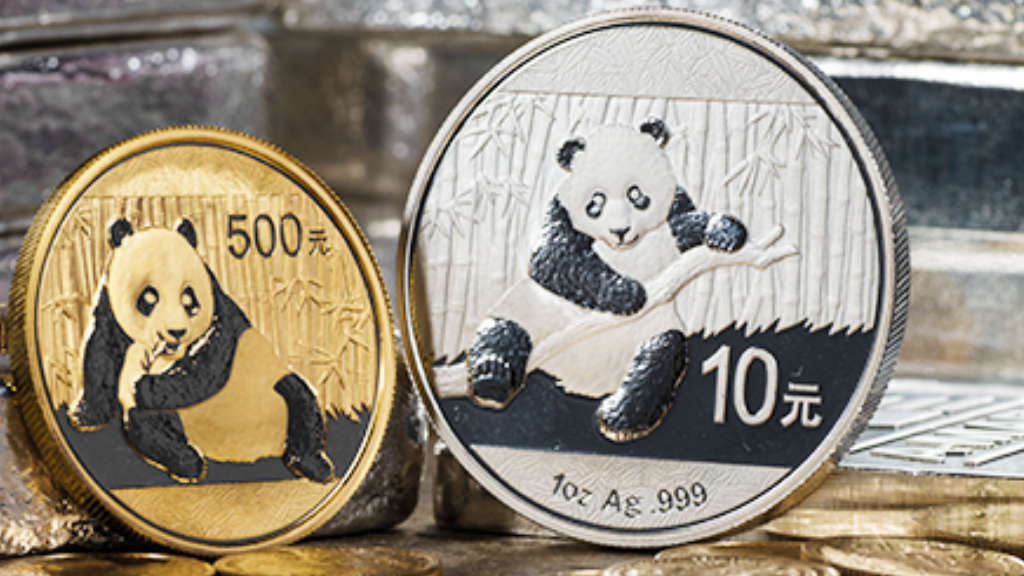
The China bonds could manifest themselves as the so-called ‘Panda Bonds’, being Chinese renminbi-denominated bond from a non-Chinese issuers, sold in China.

These will be sold to finance its subsidiary Atomenergoprom (AEP), in order to complete the construction of the Akkuyu nuclear power plant in Turkiye, where a Siemen’s default led to a new requirement to raise capital. The new arrangements were disclosed by Ilya Rebrov, Rosatom’s deputy CEO for economics and finance.  

Rosatom is also exploring raising financing through initial public offerings. Rebrov said “With IPOs, a number of risks arise related to corporate governance and disclosure of information amid the fulfilment of national objectives. In light of this, Medscan Group (a leader in Russia’s private healthcare sector) and nine other companies working in composite materials, information technology and gold mining have been selected with potential managing banks for preparation for IPOs in 2026 and beyond.”

Nuclear industry organizations have a number of potential restrictions to going public, he said. “Deals with organizations that might own nuclear materials and nuclear facilities, as well as with companies that have strategic significance must have the prior approval of the Russian president or the government commission for control over foreign investment in Russia. Right now the main issue is the priority and speed of implementation of critically important projects. Consequently, it’s important to balance the corporation’s budget without factoring in additional state support.”

He added that several other Russian companies are being considered as possible candidates if their financial results in 2025-2026 demonstrate stable growth and if they draw interest from potential investors in preliminary discussions and meetings.

In terms of internal resources for 2025-2030, Rosatom’s EBITDA is expected to grow by ₽1.2 trillion (US$14.97 billion) while its investment needs are expected to grow by ₽4.5 trillion. Rosatom reported earlier that its investment program totalled ₽1.456 trillion in 2024.

The moves are interesting as it appears that international funding for Russian-involved projects will now be sought not on western financial markets but in MiddleEast and Asia markets. The Islamic financing sector is of particular importance as the appetite for these extends throughout both regions and are available in major centres such as Hong Kong, Singapore and Jakarta as well as Istanbul, Dubai among other regional locations, where support and interest in Asian projects (such as the Akkuyu NPP will be higher and investors more knowledgeable.      

Further Reading

The Islamic World and Business Relations with Russia

Egypt’s Suez Canal Wants Partnership With Russia 

Published on August 5, 2025

Egypt’s Suez Canal Authority, the Egyptian state body responsible for operating the waterway, is seeking to sign a partnership deal with Russia. The two countries are already working together on a major industrial project in the Suez Canal Economic Zone in eastern Port Said. 

Osama Rabie, chairman and managing director of the Suez Canal Authority, said on Monday (August 5) that Russia currently has no direct partnership with the canal itself – only with the economic zone, stating that “We also hope for such a partnership agreement.”

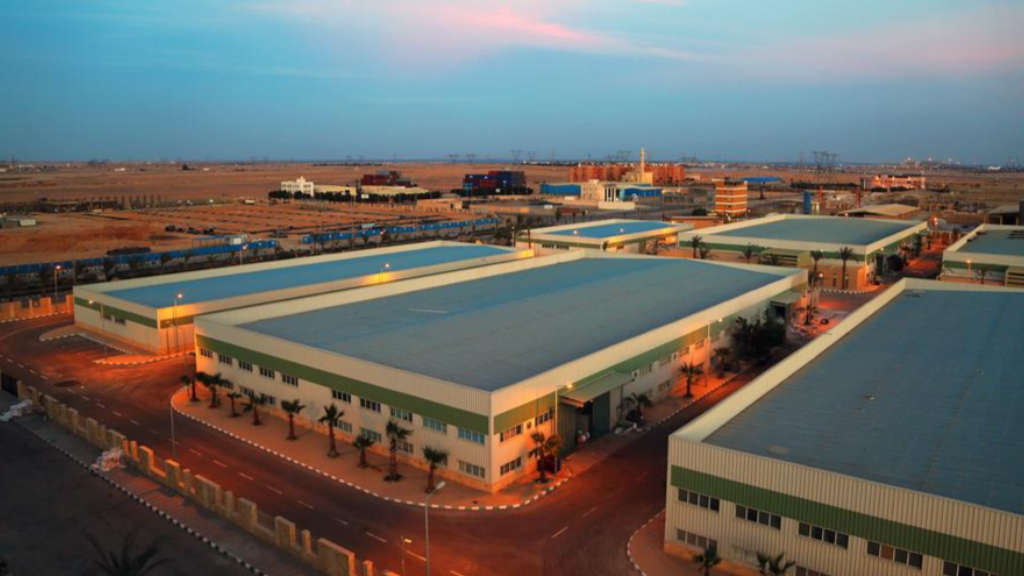
In 2018, Russia and Egypt signed a deal to establish a Russian industrial zone on a 5.25 million-square-meter site, to be developed over 13 years. Dubbed ‘Sun City,’ the project will provide Russian manufacturers with access to markets in Egypt, the Middle East, and Africa. China also has an adjacent manufacturing park, where it is possible Chinese and Russian investors could collaborate. 

Industries expected to operate in the zone include automotive, pharmaceuticals, oil and gas, mining, and nuclear technology. Egyptian officials say the venture will create 35,000 jobs and attract around US$4.6 billion in investment. Businesses will benefit from preferential tax policies. Egypt is also a member of the African Continental Free Trade Agreement, which eliminates taxes on intra-African trade. 55 African countries are committed to this deal.

The Sun City project will allow Russian investors to manufacture, assemble and process production lines in Egypt, with zero import duties or VAT until the work is completed. Investors then have the opportunity to reexport them elsewhere (such as to the CIS countries) or to sell onto the Egyptian or other African markets, at which point some tariffs and VAT become due. The benefits are three-fold for Russian investors: a cash-flow expense saving until the product is ready, lower Egyptian worker overheads, and profits tax breaks lasting several years. Egypt is also negotiating a Free Trade Agreement with the Eurasian Economic Union at which point the zone will truly show its economic and trade value. 

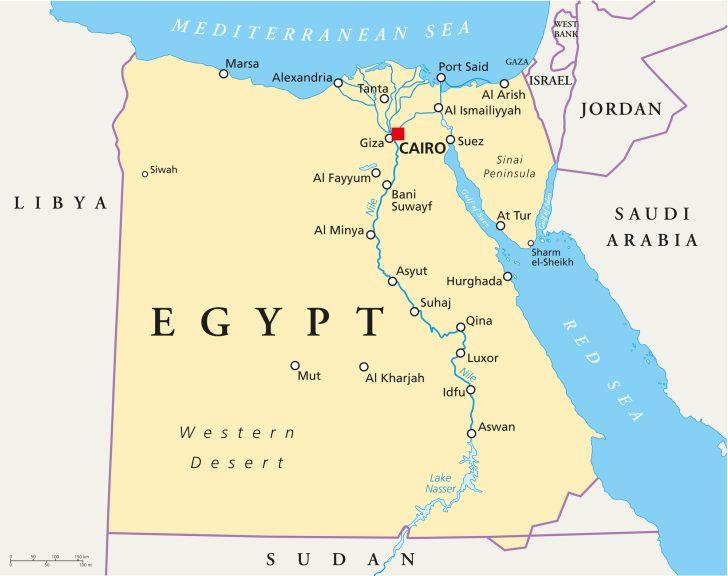
Egypt Map

In May, Egypt and Russia held an intergovernmental commission on trade and cooperation in Moscow, where both sides reaffirmed the importance of the project as a way to boost industrial ties.

Egypt was one of four nations – along with Ethiopia, the United Arab Emirates, and Indonesia – that became full BRICS members in 2024. BRICS was originally formed in 2006 as an economic group between Brazil, Russia, India, and China, with South Africa joining four years later. According to Russian President Vladimir Putin, BRICS has already surpassed the Western-led G7 in terms of combined GDP.

The Suez Canal remains a vital artery of global trade, carrying an estimated 12-15% of total cargo, 30% of container traffic, 9% of seaborne oil, and 8% of LNG.

Further Reading

Post not found.

Russia Looks To Africa For Aircraft Spare Parts  

Published on August 4, 2025

Russia wants new aircraft – a perfectly normal requirement for a country with a thirst for air travel both domestically and globally. However, hampered by Western sanctions, Russian airlines are no longer able to access new Airbus and Boeing aircraft, nor spare parts to maintain their existing fleets. This situation has driven several innovative solutions, including the manufacturing of unapproved spare parts locally.

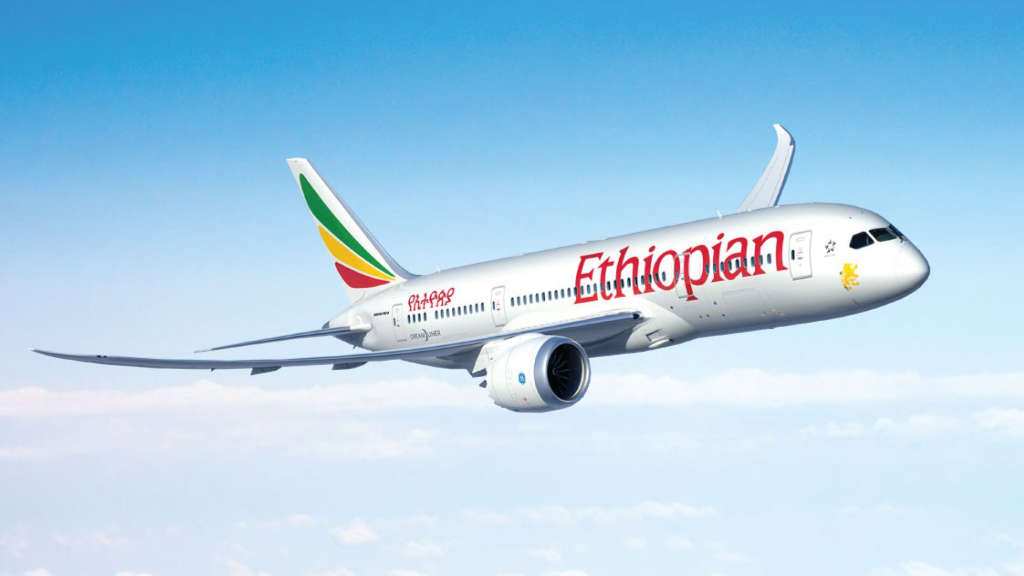
Russia is now looking to Africa for solutions, and has been in discussions with Ethiopian Airlines, the continent’s leading airline in terms of fleet size and passengers carried. In a recent meeting with the Ethiopian Civil Aviation Authority (ECAA), Russian officials proposed a trade deal, including a possible wet-lease (pilots and planes) agreement for aircraft.

Russia’s Trade Commissioner in Ethiopia, Mr. Yaroslav Tarasyuk, met with the Ethiopian Civil Aviation Authority last week to discuss possible cooperation in air transport management. Building on a recent Ethiopia-Russia Air Services Agreement that came into force last year, the two sides expressed an interest in expanding their bilateral collaboration in aviation. The latest meeting covered the supply of aviation communication and surveillance equipment to Russia, the construction of an aircraft repair centre in Addis Ababa, in addition to the wet-lease of Ethiopian Airlines aircraft.

Details on the wet-lease agreement were not shared. In April, the Russian government announced that it would allow its airlines to wet-lease aircraft from foreign entities – meaning an agreement with Ethiopian Airlines is possible.

Curiously, the United States may have indirectly assisted in this development – it cancelled its US Aid Programme this year with Ethiopia a major recipient. Russia’s in Africa has already been increasing, with the government assisting in weapons and military supplies to Addis Ababa – and other regional governments – to help put down insurrections. 

Ethiopian Airlines operates a fleet of more than 120 active aircraft, including Boeing 787s, Airbus A350s, and Boeing 777s. The airline also holds orders for more than 60 planes. As Ethiopia continues to pave the path towards becoming “Africa’s Aviation Hub by 2033,” the ECAA has entered negotiations with international entities to develop cooperation and drive its growth. Aside from Russia, the ECAA also met with North Korean representatives in the last two weeks. Russia and North Korea recently began the first nonstop flights between their capitals.

Fleet Age & Maintenance Concerns

With no access to Western aircraft or parts, a lot of Russia’s airline fleet is grounded. The local industry is struggling, despite attempts to mitigate some of its problems through the creation of locally-made aircraft parts and the purchase of Russia-produced planes such as the MC-21. Last year, Aeroflot bought five Boeing 737-800 freighters to scrap them for spare parts.

Concerns have been raised about Russia’s continued reliance on aging local planes in the absence of new Western-manufactured jets. On July 24, an Antonov An-24 aircraft (manufactured in 1976) crash-landed in far Eastern Russia, killing all 48 on board.

Growth plans for Russia’s airlines have been stifled by a lack of access to Western markets. The United States and European Union constituted important segments for Russian and Western carriers alike. Now, Russia’s airlines are forced to shift their focus elsewhere, with significant growth in flights recorded domestically, in Asia and Africa.

Russia is growing its presence in Africa, characterizing both an interest in the region’s economic growth and geopolitical ambitions for more influence. Collaboration with Ethiopia could be seen as a move to help solidify the country’s position as a global power. China and Russia have expanded their reach across Africa through trade deals and other economic agreements. Russia’s bilateral trade with Ethiopia, for instance, is said to have increased by nearly 40% year-on-year during the first 10 months of 2024.

By turning to Africa for its own aviation industry, Russia hopes to take full advantage of its political influence. Ethiopian Airlines is one of the continent’s fastest-growing carriers and boasts a very modern fleet of Western-made jets. There is plenty to offer, should the two parties reach an agreement to support Russia’s growing aviation needs.

Further Reading

Russia, Iran, Looking At Aviation and Auto Manufacturing Investments

India To Continue To Buy Russian Oil Despite US Threats

Published on August 3, 2025

The Indian government has not requested its oil refining industry companies to oil companies to cut back imports from Russia, according to Randhir Jaiswal, the Indian Ministry of External Affairs spokesperson. He stated that “As far as sourcing India’s energy requirements is concerned, we take decisions based on the price at which oil is available in the international market and depending on the global situation at that time. The government had not given any direction to oil companies to cut back imports from Russia.”

His remarks come as US President Donald Trump had stated on Saturday (August 2) that “I understand India no longer is going to be buying oil from Russia. That’s what I heard. I don’t know if that’s right or not, but that’s a good step. We’ll see what happens.”

India has become one of Russia’s largest oil customers since Western sanctions drove down prices, helping Moscow maintain crucial export revenues whilst providing New Delhi with cheaper energy to fuel its growing economy. Earlier in the week, Trump formalised 25% tariffs on Indian exports through an executive order covering around 70 nations, though the document notably omitted the additional “penalty” he had previously threatened over India’s Russian energy purchases – a measure that Washington could still take.

The US president has repeatedly criticised India’s energy ties with Russia whilst announcing punitive trade measures. Declaring a “massive trade deficit with India,” Trump argued that while “India is our friend, we have, over the years, done relatively little business with them because their tariffs are far too high, among the highest in the world.”

He described India as having “the most strenuous and obnoxious non-monetary Trade Barriers of any country,” while noting that “they have always bought a vast majority of their military equipment from Russia, and are Russia’s largest buyer of energy, along with China, at a time when everyone wants Russia to stop the killing in Ukraine.”

Two Indian government sources told Reuters on Saturday, not wishing to be identified, that “These are long-term oil contracts. It is not so simple to just stop buying overnight.”

Russia is the leading supplier to India, the world’s third-largest oil importer and consumer, accounting for about 35% of its overall supplies. India imported about 1.75 million barrels per day of Russian oil from January to June this year, up 1% from a year ago.

Justifying India’s oil purchases, India’s Energy Minister has previously stated said India’s imports of Russian grades had helped avoid a global surge in oil prices, which have remained subdued despite Western curbs on the Russian oil sector.

Unlike Iranian and Venezuelan oil, Russian crude is not subject to direct sanctions, and India is buying it below the current price cap fixed by the European Union. However, sources told Reuters this week that Indian state refiners stopped buying Russian oil after July discounts narrowed to their lowest since 2022—when sanctions were first imposed on Moscow—due to lower Russian exports and steady demand. Indian Oil Corp, Hindustan Petroleum Corp, Bharat Petroleum Corp and Mangalore Refinery Petrochemical Ltd have not sought Russian crude in the past week or so.

Indian refines Russian oil and then uses it both for its domestic demand and for added-value exports, much of which goes to the European Union.

Further Reading

Trumps’ 25% Tariffs On India: Impact and Implications For India, the United States & Russia

Russia, China Discuss Wood Pellet Standards For Russian Exports

Published on August 2, 2025

The Chinese Ministry of Commerce, along with Chinese agencies for environmental protection, reform and development, energy, forestry and customs regulation has confirmed the acceleration of work to optimize pellet imports into the country.

Wood pellets are generally burned for heat, although they may also be used to generate process steam and/or electricity. The stoves to burn pellets can range from large commercial boilers to small, residential heaters.

The discussions are illustrative of who China’s ‘non-preferential’ free trade agreement with the Eurasian Economic Union (EAEU) actually works. Instead of being based on a broad list of thousands of product categories and respective tariffs, it operates on an ‘as need’ basis. 

Currently, regular pellet supplies from Russia or the EAEU to China are not taking place, as this byproduct of wood processing had been classified by Chinese regulators as waste rather than biofuel. Russian forestry companies, which prior to sanctions primarily supplied fuel pellets to the European market, have repeatedly drawn authorities’ attention to the need to create new sales markets, pointing to significant accumulations of sawdust in warehouses. The largest potential market for Russian pellet supplies is China. The Russian Industry and Trade Ministry has therefore been negotiating to lift China’s import restrictions.

According to data cited in the ministry’s statement, Russia-China trade turnover in the forestry sector in 2024 amounted to US$6.6 billion.

The wood pellet market in China is a huge opportunity and a challenge for Russian producers. Demand for biofuels in China is growing 15%-20% annually, but only those who are ready to meet strict environmental standards can enter this market.

Further Reading

St. Petersburg Exchange To Close First China Timber Export Contract

Russia, Turkiye, Renegotiate Akkuyu Nuclear Power Plant Deal After Siemen’s Default

Published on August 2, 2025

Russia’s Rosatom, its nuclear energy agency, the relevant Turkish government agencies, and key contracting organizations have discussed the implementation status and financing arrangements for the Akkuyu nuclear power plant project in Turkiye, Rosatom have announced. These covered licensing progress, training of operational personnel, physical protection measures and other related topics.

Anton Dedusenko, the JSC Akkuyu Nuclear Board Chairman stated that “The project is being implemented under changing external conditions. In close cooperation with the Turkish side, we are working to resolve issues around ensuring uninterrupted financing of the project while continuing to implement the site work schedule.” 

Turkish Deputy Energy Minister Zafer Demircan said that “The Akkuyu NPP project is being implemented in constant coordination among all participating parties.”

The Akkuyu NPP is expected to provide electricity to more than 12 million consumers, including civil and industrial infrastructure facilities, in more than 10 provinces of Turkiye. The NPP will consist of four power units with a capacity of 1200 MW each.

The project has faced several challenges, in particular due to the failure of Germany’s Siemens to deliver equipment for the NPP. Russian Deputy Prime Minister Alexander Novak said late last year that “We’ve found ourselves in a situation where, despite a contract concluded, Siemens breached its contractual obligations on supplying certain equipment items.” That issue is shortly to result in legal action against Siemens, who were paid for the equipment but have not followed through with delivery.

Rosatom, together with the Turkish government, have instead taken corrective measures with alternative equipment procured from friendly countries. The situation has damaged the export sales credibility of EU manufacturing sectors in the global marketplace and enabled competitors to take their place. Rosatom are also bidding for the construction of a second NPP in Turkiye. European contractors will not be invited.  

In addition, Rosatom is working on resolving financing issues that arose due to the blocking of significant funds for the Akkuyu NPP by EU sanctions, the corporation said last month. Rosatom is sanctioned by the EU, however the plant is becoming built to service Turkish, not Russian consumers.

Further Reading

Russia Leads The Way In Global, Small Nuclear Power Reactor Exports