Russia’s JSC AminoSib, which specializes in advanced wheat processing, is to begin exporting wheat gluten to Brazil. It plans to export 300 tonnes to the country and has already shipped a 25-tonne test batch.
The company stated “Latin America does not have its own plants for advanced wheat processing. A significant proportion of its imports currently come from Europe, and in comparison to the prices of imports from Europe, Russian gluten occupies a middle position, while it can compete with Europe in terms of quality.”
Gluten is a protein found in wheat, rye, and barley that acts as a binder and adds texture to many foods. It is commonly used in bread, pasta, and baked goods.
JSC AminoSib produces lysine, gluten, ethyl alcohol, as well as DDGS fodder and bran through the advanced processing of wheat. The plant was fully launched in 2018.
The Russian President, Vladimir Putin, has met with the President of Laos, Thongloun Sisoulith, in Moscow. Several agreements were signed, including a treaty on mutual legal assistance in criminal matters; a MoU between corresponding agencies on cooperation in water resources management and protection, and in vocational and professional training.
A 2025–2026 roadmap for cooperation between Russia’s Rosatom and the Laos Ministry of Industry and Trade on nuclear energy was signed, as were two documents concerning cooperation between the Foreign Ministry’s MGIMO University and the National University of Laos and the Laotian Foreign Ministry’s Institute of International Relations.
Russia’s trade relations with Laos have been limited as the country is landlocked and mountainous, meaning access is overland, mainly via China or Vietnam; although bilateral trade between Russia and Laos rose by 66% in 2024, with growth continuing at 20% year-on-year from January to May in 2025. To deal with these challenges and increasing trade demands, Russia plans to start railroad transportation with Laos and container transportation by sea.
Putin said that “Due to an increase in mutual cargo flows, issues concerning expansion of container transportation by sea from Laos to Vladivostok through Vietnam’s ports are being considered. There are also plans to organize railroad cargo transportation through China.”
Concerning Rosatom, Putin mentioned that “The agreements on peaceful atom signed during the talks create a foundation to provide the Laotian economy with cheap and environmentally safe energy.”
Rosatom and Laos previously signed a roadmap concerning nuclear energy in September 2017, and the corresponding memorandum had been signed the year before. Sinava Souphanouvong, Laos’s then-deputy energy and mines minister, said in an interview with Rosatom’s corporate media outlet in August 2015 Rosatom and Laos were discussing the possibility of building a two-unit nuclear power plant.
When discussing the history of Russian-Lao relations, Putin cited the USSR’s support for Laos’ independence struggle as the foundation for current relations, saying that “The Soviet Union supported Laos’ struggle for independence and contributed to the development of its economy and armed forces. This shared history provides a solid foundation for today’s partnership.”
Putin also thanked the Lao leadership for a gift of two elephants to commemorate the 65th anniversary of bilateral relations, noting “they may be useful for household needs.” Putin said that “These elephants will live in a zoo in Saint Petersburg. I used to study there previously.” Sisoulith explained that the elephants are symbols of Laos, the “Land of a Million Elephants,” and of peace.
About 85% of Laos population of 7.7 million work in agriculture, with 90% of the arable land planted for rice. Peanuts, cotton, tea, tobacco, corn, sweet potatoes and sugarcane are also grown. The primary sources of GDP are the exploitation of gypsum, copper, tin, gold, and oil. Trading and catering services make up the majority of the service industry. Telecommunications equipment, trucks, metal constructions, rolled metal goods, and hydraulic turbines are the primary imports.
Through its membership of ASEAN, Laos increasingly trades with its ASEAN neighbours as well as China. Laos has also been given Generalised System of Preference (GSP) status by Belarus and Russia, while Kyrgyzstan and Tajikistan also grant Laos goods tariff-free protection. It also has additional bilateral agreements with Argentina, India, Kuwait, Mongolia, North Korea, and Turkiye. In January 2022, Laos became a member of the Regional Comprehensive Economic Partnership (RCEP).
Laos has a GDP (PPP) of US$79 billion, GDP per capita (PPP) of US$10,112, and an expected 2025 GDP growth of 4%.
2024 Russia-Laos bilateral trade was about US$8.3 million, however the two countries have long diplomatic ties going back to the Cold War era. Laos does pick up some manufacturing investments from neighbouring countries such as Thailand and China, and it also has a developing tourism industry. What trade there is, is typically energy produce from Russia and agricultural products such as fruits from Laos. The country is also quite mountainous which has created additional connectivity issues. In that sense, it was interesting that the Russian Minister of Transport, Roman Starovoit was also recently involved in bilateral discussions. There may be opportunities for Russian Railways to provide rolling stock.
Both the Russian and Laotian Central Banks are in discussions to involve the potential use of Russian MIR cards in Laos and to formalise Ruble-Kip trading, moving to sovereign currency use in trade relations. Although the trade dynamics are small, there are opportunities in the tourism sector for Russian nationals as well as smaller trade possibilities.
The Singapore-based, Hong Kong owned container line, Sea Legend Shipping, is preparing to launch a direct China–Northern Europe container service along the Northern Sea Route, with the service expected to be operational from September. The transit time will be 18 days, while the route through the Cape of Good Hope takes 30 to 50 days.
The Istanbul Bridge container ship, with a capacity of almost 4,900 twenty-foot equivalent units (TEU), will be involved in the service. The rotation of ports includes Qingdao, Shanghai, Ningbo, Felixstowe, Rotterdam, Hamburg, and Gdansk.
Currently, the container ship is operated by Sea Legend’s partner Safetrans Line, specialising in the Russian market. Previously, “Istanbul Bridge” was called “Flying Fish 1”, and made a previous Arctic voyage in 2023.
Transit through the Northern Sea Route is an important step for Sea Legend. The expansion of its activities in the Arctic reflects the deepening of Sino-Russian cooperation and Beijing’s growing interest in developing alternative trade corridors in the face of geopolitical instability.
The September voyage will be Sea Legend’s only Arctic trip, which, according to the carrier, has already been fully booked.
Northern Sea Route shipping is growing, with Russia investing heavily in expanding the route and its infrastructure, aiming for significant cargo volume increases by 2035.
Russian Railways has announced that shipments in export-import traffic through border crossings with China increased by 0.9% in the first 6 months of this year. In January-June 2025, 20.4 million tonnes of cargo were transported by rail in both directions. Exports increased by 1.9% to 19.2 million tonnes.
10.1 million tonnes of export goods were exported through the Zabaikalsk-Manchuria border crossing (+0.2%), 4.5 million tonnes (+8.6%) through Grodekovo-Suifenhe, 3.1 million tonnes (+8.6%) through Nizhneleninskoye-Tongjiang, and 1.3 million tonnes (-26.4%) through Kamyshovaya-Hunchun.
In terms of products, shipments of iron ore increased by 20% to 4.4 million tonnes, paper by 19.3% to 1.9 million tonnes, fertilisers by 2.4 times to 1.1 million tonnes, chemicals by 19.5% to 666,000 tonnes, non-ferrous metals – by 1.8 times to 607,000 tonnes, oil cargo 1.6 times to 524,000 tonnes.
Coal traditionally accounts for a significant volume of export shipments (36.7%). In 6 months, 8.6 million tonnes of solid fuel were shipped to China through border crossings.
The Russian-owned Ozon Holdings Ltd has been granted permission by the Cypriot Department of Registrar of Companies and Intellectual Property to relocate to Russia, the company has reported.
Ozon’s shareholders approved the decision to relocate to the Kaliningrad region’s special administrative district at the end of December this year. There, it will continue operating as IPJSC Ozon. It has been reported that the relocation process should be complete by the end of 2025, whereupon the company’s shares will be traded instead on the Moscow Stock Exchange.
The company’s shareholders will hold an extraordinary meeting on September 1, to discuss “legal questions essential for the completion of the relocation process”, the approval of the company’s new legal structure in Russia, the composition of the board of directors, the amount of the charter capital, the approval of the charter as well as the conferral of powers allowing the board of directors to perform various functions related to the relocation.
Ozon also said that following the completion of its re-domiciliation to Moscow, Ozon’s depositary receipts will be automatically converted into shares of the Russian ICPJSC. In connection with this, trading in the company’s securities on the exchange will be suspended for several weeks.
Ozon is Russia’s version of Amazon and has operations throughout Russia, and increasingly throughout non-Western supply chains. In 2020, it was regarded by Forbes to be Russia’s third most valuable internet company. It was previously listed on Nasdaq and also delisted from the United States in 2023. It employs about 46,000 people and in 2024 had revenues of ₽615 billion (US$7.678 billion) with an increase in revenues of 45% over the year. Profits were estimated at ₽100 billion (US$1.248 billion).
Ozon’s departure from Cyprus means a loss of income tax payable of about €136 million per annum, plus the loss of jobs, and other associated services supporting the company in the EU. These taxes and gains will now be provided to Russia.
Russia’s FESCO Transportation Group shipped more than 8,500 TEU of containerized cargo on the FESCO Indian Line West (FIL-W) marine service between ports in India and the United Arab Emirates (UAE) and the Russian port of Novorossiysk in the first half of 2025, 30% more than a year earlier, the company has reported.
Export shipments rose 4% to over 3,500 TEU while import shipments surged 54% to more than 5,000 TEU. Most of the import cargo consisted of construction materials, chemicals, plastics and rubber, food products and refrigerated cargo, including pharmaceuticals. Export cargo consisted of Russian timber products, paper, metals and agricultural produce.
The FIL-W line’s regular route includes the Indian ports of Nhava Sheva and Mundra and the key UAE port of Jebel Ali. The line is operated by three FESCO container ships with combined capacity of more than 3,000 TEU. The third vessel was added in early June.
The travel time is about 17 days from the UAE to Novorossiysk and typically 21 days from the Indian ports, with departures once every two weeks.
The FIL-W service, through the feeder lines of FESCO partners, also connects to the Indian ports of Kolkata, Thoothukudi and Chennai, as well as Chattogram, Bangladesh; Karachi, Pakistan; Colombo, Sri Lanka; Mombasa, Kenya; Shuwaikh, Kuwait; Hamad, Qatar; Bahrain; Sohar, Oman; Dammam, Saudi Arabia; and Durban, South Africa.
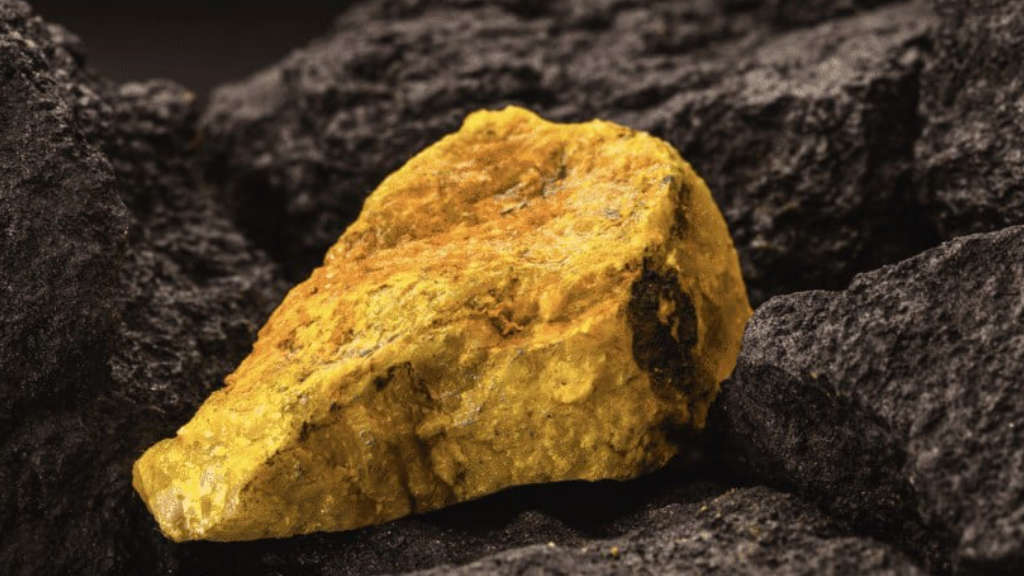
A subsidiary of Rosatom’s state nuclear energy corporation has commissioned a pilot installation at a uranium project in Tanzania, Rosatom CEO Alexei Likhachev has stated, specifying that this concerns the Mkuju River project in southern Tanzania.
The Tanzanian government had completed an environmental assessment in June and has green-lit the project to start.
The Mkuju River mine is a large open pit mine located in the southern part of Tanzania in the Ruvuma Region. Mkuju River is the largest uranium reserve in Tanzania having estimated reserves of 182.1 million tonnes of ore grading 0.025% uranium.
The mine has been developed by Mantra Tanzania, a subsidiary of the Uranium One Group which is owned by Rosatom. In 2017 Mantra suspended further development of the project because of low uranium prices. In 2020 they announced to resume extraction by applying solution mining (in-situ recovery (ISR), an eco-friendly technology.
Identified uranium resources at the mine are estimated at about 55,000 tonnes, with the Mkuju project expected to make Tanzania a top 5 uranium producer in Africa.
Uranium mining is seen as a way to enhance energy security, attract investment, and generate revenue, in Tanzania, with the country also exploring the potential of nuclear energy, with its own uranium resources potentially reducing the cost of nuclear power production.
Russia has been highly active in developing nuclear power plants in Africa, with recent investments in Burkina Faso, Maliand Niger among others.
August 6 update: The US President, Donald Trump, has now imposed tariffs of 50% on Indian imports with immediate effect.
The US President, Donald Trump, has issued a threat of 25% tariffs, plus an additional, as yet unannounced tariff to be placed on Indian imports to the United States from 1st August 2025. We analyse the likely impact and the implications for India, the United States and Russia.
Background
This tariff threat is not in fact new – Trump originally proposed these tariffs on Indian products back in March but delayed imposing them until the end of July. In the interim period, the two sides have been engaging in trade talks with a view to an agreement – but Trump’s deadline has had the effect of imposing the deadline. The additional, undisclosed tariff is apparently to punish India for being a member of BRICS, and its rate is, as yet, unknown.
The tariffs are meant to punish India in three areas: to pressure it to open up its markets to US products; to punish it for buying Russian oil, and for being a member of BRICS, which Trump has described as an ‘anti-American alliance’. We also perceive a move to push Indian and US investment into other markets.
The Indian parliament, the Lok Sabha, have been debating the issue today (July 31) to discuss the situation, with early signs suggesting a somewhat vociferous response. Trump further inflamed Indian feelings by suggesting that the Indian economy is ‘dead’ and that he would engage with trade preferences with Pakistan instead – not exactly diplomatic language and one calculated to inflame passions, possibly to panic Indian politicians into making a deal, but also to encourage Indian investors to look at alternative markets.
The Economics
India is the world’s third largest economy in PPP terms with a projected 2025 GDP (PPP) of US$21.87 trillion. Its GDP growth for the year is expected to be about 7%, making it one of the fastest growing economies in the world at this current time.
Indian exports to the United States were worth some US$129 billion last year, made up of specific strategic categories in pharmaceuticals, electronics, auto components, and jewellery the main categories. The proposed tariffs look set to impact about 10% of all Indian exports to the United States, meaning an actual target area value of about US$12.9 billion of goods would actually be affected. That would add an extra US$3.225 billion in import duty costs to Indian goods entering the US marketplace. This is an absorbable amount for the Indian economy, although it would create political pressures within India concerning support for the affected industries. However, the as yet unannounced ‘extra’ tariff could increase this burden. It should be noted though that the Indian Prime Minister, Narendra Modi, enjoys considerable political support in India and also has an astute business background. He would be likely to deflect any internal political challenges arising from increased tariffs created by US actions.
The main affected industrial sectors are as follows:
Oil Refining
This sector impacts Russia, with the United States wanting to place tariffs on India’s oil refineries, which process a large amount of Russian oil. India sources 37% of its total oil imports from Russia, making it an important client for Moscow (it should be noted that oil exports account for about 2.9% of Russia’s GDP – it exports far more LNG). Tariffs would impact Indian state-owned refineries Indian Oil, Bharat Petroleum and Hindustan Petroleum, as well as significant privately owned companies such as Reliance Industries. India then resells the refined Russian crude onto international markets. Tariffs in this sector would reduce India’s refining profitability. For an interesting take on India’s position within the global energy market, this short clip from Indian Energy Minister Hardeep Singh Puri is worth a listen here
There are two issues here, as the US doesn’t import significant amounts of refined oil from India, but interestingly, India’s oil imports from the US jumped over 270% year-on-year in the first four months of 2025. The aim of placing tariffs on Indian crude would appear to be to potentially create a price increase – which would benefit US refiners, which currently provide about 21% of global production. That said, this would be diametrically opposed to the EU position of imposing a price cap.
We suspect that the oil sector will instead be hit by the as-yet unannounced additional tariffs rather than the United States raising its import duties on Indian oil, meaning we will have to wait and see what happens here. But at face value, it appears to have no impact on Russian oil exports to India, would possibly damage Indian refiners’ profitability, and therefore encourage them to find new, non-US markets – which is already being done. A potential global rise in refined oil prices seems the logical conclusion.
Pharmaceuticals
India is a world-leader in pharmaceutical manufacturing, mainly generic drugs, although as covid illustrated, it is capable of providing huge quantities of vaccines. US exports amount to about US$8 billion per annum, with Sun Pharmaceuticals, Dr.Reddy’s and Cipla, three powerful Indian MNCs earning about 30% of their revenues from the US market. Tariff increases would increase political pressure within India and would also negatively impact US retail prices.
Electronics
India is a major global supplier of electronics, and a leading source of finished smartphones to the United States, including Apple products. India exported US$12.33 billion of electronics to the United States in 2024. Imposing 25% tariffs on imported electronics from India would substantially damage profitability models for US companies invested in India and supplying the US market. It would also be likely to hinder sourcing of related component parts for US made products in everything from autos to computers. The motivation appears to be possibly persuading American companies to invest in manufacturing in more controllable global economies, and ideally back to the United States itself.
Textiles
India has a significant garments industry sector, including ready-made garments, knitted and woven fabrics, home textiles, and fashion accessories. It exported about US$36 billion worth of these products to the US in 2024. This would create problems in India’s textiles and garments sector as it employs about 45 million people. US buyers and brands invested in India would also need to source and possibly relocate to other markets.
Pakistan
Trump mentioned that the United States has invested in Pakistan’s energy sector – an agreement was reached yesterday (July 30) and that ‘Pakistan could eventually export oil to India’ – a jibe that will have not gone unnoticed in New Delhi. In fact, Pakistan’s oil reserves are the 53rd largest globally with an estimated 332 million barrels. India ranks 23rd globally with reserves of 4.5 billion barrels.
US Dollar Usage
Trump has mentioned that the BRICS are ‘anti-American’ and ‘anti-US dollar’ although the dropping of the USD in global trade with Russia was created by US sanctions on Russia and the terminating of its SWIFT financial supply chain. There is little that the United States can do in this regard, despite the rhetoric, as the US cannot insist that India refrains from using its own currency – the rupee – in trade with other countries.
Summary
Trump’s 25% tariffs on Indian imports will create some political headaches for Prime Minister Modi, especially within India’s large agricultural sector, with impacts on India’s significant garments sector – cotton, jute, silk and wool affecting millions of workers. Other than this, much of the repercussions will either bypass any meaningful impact on the Indian economy, likely creating a loss of income for American investors in India. That policy of forcing US supply chains to relocate to more favoured political destinations has been used by Washington in the past, with the primary example to encourage manufacturing devolution from China.
When looking at the proposed tariff measures, and the manner in which they were announced, there is an underlying implication that even Trump doesn’t take them entirely seriously – there is a tongue – cheek, ‘wind up’ nature about his remarks. What is noticeable is that they are little to do about Ukraine, and more to do with poking India with a stick. Any benefits for the US appear to be longer term and ‘encouraging’ US overseas investors to seek alternative markets – with a possible motive of directing a flow of much-needed foreign investment into Pakistan.
The only caveat in this assumption is the unannounced ‘BRICS tariff’ – although we find it hard to see how the United States can impinge upon intra-BRICS trade. In fact, a more likely scenario is that to offset the loss of any US exports, particularly in the textiles sector, Indian investors may be more mindful to increase their overseas investments within the BRICS group – and gradually begin to seek investor relations with Pakistan. If this is the real aim, then Trump may well be more politically astute than most politicians realise.
The category of “luxury” cars available in Russia has changed radically since 2014. While Western brands such as Ferrari, Lamborghini, Rolls-Roycehttps://www.rolls-roycemotorcars.com and Bugatti, have dominated the past decade, 13 ‘premium’ brands have been recently added, including China’s Hongqi, Lixiang, and Zeekr marques. Leadership in the luxury segment is consistently held by well-known Western brands with a history, while Chinese brands with a comparable price are considered premium. Sales of luxury cars are generally stable: negative economic factors do not affect them so much, and the strengthening of the ruble is spurring demand. By the end of the year, sales of luxury cars in Russia are likely to increase, according to Russian dealers. But it is important to define between the luxury and premium categories in the auto sector.
Sales of new luxury cars in Russia in April — despite declines in other segments of the passenger car market — grew by 15% year-on-year, to 78 units, according to the Avtostat auto industry research analysts.
According to them, sales during the January-April 2025 period amounted to 193 units. The surge in demand in April is probably connected with the strengthening of the ruble, with imports becoming cheaper, and as a result, buying is more profitable.
In general, according to Nikolay Baskakov, Director of the Avilon Premium Division of Avilon AG, the luxury car market in the country is quite stable. Evgeny Zhitnukhin, Commercial Director of the Fresh automobile marketplace, explains this by the stability of the target audience, which has high solvency and is less susceptible to the influence of economic shocks, saying. “They are ready to buy cars even in the face of rising prices and economic fluctuations.”
According to Avtostat, the leader in the luxury car market in April was the Bentley brand, whose sales grew by 22.7% to 27 units. In second place was Rolls-Royce with 26 units, an increase of 62.5% over 2024. Lamborghini rounded out the top 3, having reduced sales by 45.5% to 12 units. They were followed by Ferrari and Aston Martin, whose sales grew 4.5 times to 9 units and 1.5 times to 3 units respectively. The most popular models in April were the Rolls-Royce Cullinan, Bentley Bentayga, Bentley Continental GT, Lamborghini Urus and Rolls-Royce Spectre. The Russian luxury brand Aurus is also present on the market, but sales of the brand’s cars are not officially disclosed.
Most often, purchases are made in the Moscow region. Market participants also note that luxury cars are often leased by companies for CEOs.
Luxury vs. Premium
The line between luxury and the upper premium segments in the car market is blurred, and there are no clear criteria for division, industry participants state, blurring the line between well-established western and Chinese marques. But in addition to the high price, which is inherent in both segments, luxury cars are distinguished by the history of the brand and a high reputation.
Maxim Kadakov, editor-in-chief of the magazine “Za Rulem” says that “There are no boundaries here. Everyone, for example, believes that Rolls-Royce is luxury. Because this has been developing over the years, decades, and with some cars, more than a century.”
At the same time, there are brands on the Russian market that are premium, but within their lineup there are models that are either bordering on, or entering the luxury segment, notes Nikolai Ivanov, director of the new cars department at Rolf. “For example, the Jaguar Land Rover brand. The Range Rover Autobiography SVO model costs more than ₽40 million (US$490,000). This is almost the price of a Bentley Bentayga.” The average cost of a luxury car in Russia, according to a survey among dealers, is ₽30–45 million.
According to Evgeny Zhitnukhin, the differences between the luxury and premium segments are exclusivity, the use of high-quality materials, handcrafted work and unique design solutions, which makes cars, in essence, “works of art.” But, he confirms, given inflation and changes in the car market, the differences between these categories are becoming less obvious. Some premium manufacturers have begun to offer models with luxury elements, seeking to attract customers from a higher segment.
Another difference between luxury cars is their limited supply. Such cars cannot be sold in quantities of 5,000 units per month.
Defining Luxury
One of the official criteria for a respectable car in Russia is inclusion in the list of models subject to the so-called luxury tax. This tax is calculated using a specific formula: the standard transport duty is multiplied by a coefficient depending on the cost and age of the car. The list of cars subject to the increased tax is updated annually by the Ministry of Industry and Trade. It includes both luxury and premium brands.
In 2014, when the measure came into force, cars costing over ₽3 million were considered “luxury” in Russia. At that time, the list included 187 models of the following car brands: Audi, BMW, Cadillac, Hyundai, Infiniti, Jaguar, Jeep, Land Rover, Lexus, Maserati, Mercedes-Benz, Nissan, Porsche, Toyota, Volkswagen, Bentley, Aston Martin, Ferrari, Lamborghini, Rolls-Royce and Bugatti.
In 2022, after the adoption of amendments to the Tax Code, the minimum price of “luxury” cars increased to ₽10 million (US$120,000). This limit is still in effect. According to the list of the Ministry of Industry and Trade, in 2025, 555 models are considered “luxury” – three times more than in the original list. And the number of brands represented in the list has increased by 13 since 2014: Chevrolet, Genesis, Aurus and Chinese Aito, HiPhi, Hongqi, Lixiang, Seres, Tank, Voyah, Zeekr, BYD, M-Hero have all now appeared under this category.
The Chinese Approach
Despite the expansion of Chinese cars on the road in Russia, brands from China have not yet reached the luxury segment, and there are no prerequisites for the fact that they will in the future, according to industry participants. Chinese manufacturers themselves are in no hurry to position themselves as luxury, defining themselves instead as ‘premium’. Scepticism about Chinese cars among Russians in this segment has generally been overcome, meaning they are considered a good alternative (especially the upper limit of the premium segment) for those who do not want to overpay for supplies of European cars.
According to Avtostat, Chinese manufacturers took the lead in the new premium car market in January-April, which is showing a decline overall (minus 45.6% year-on-year). The Exeed brand is in first place, with sales down 51.6% year-on-year to 7,390 units. Tank is in second place, with sales down 33.9% to 5,760 units. Lixiang rounds out the top three, with sales down 67.7% to 3,320 units. BMW and Mercedes-Benz follow (minus 26.6% to 3,170 units and minus 21.5% to 2,020 units, respectively). The best-selling models in the first four months of this year are the Exeed LX, Tank 300, Tank 500, Exeed RX and Lixiang L7.
Parallel Imports
Foreign luxury car manufacturers have officially stopped deliveries to Russia in 2022, but cars continue to be delivered to the country via parallel imports, according to dealers. In particular, they are imported through Belarus, Armenia, and Kyrgyzstan.
Returning To Russia?
There is no talk yet about the return of luxury brands to Russia, however, according to Ivanov, it will be easiest for them to do so. “The entire supply chain consists of small automobile boutiques. These are not full-fledged dealerships, the opening of which requires much more preparation, effort and time.”
Most market participants and experts assess the prospects of the luxury car market positively, at least sales will remain at last year’s level. According to Avtostat, 568 such cars were sold in 2024. They suggest that “The growth of luxury car sales in the second quarter will continue, and the key factor is the summer season, when luxury sports models are actively purchased. The opposite situation though is likely in the premium segment. We clearly see that the premium car market will fall sharply. The forecast is at least 50% by the end of 2025.”
Russia’s non-resource, non-energy exports are adapting to new conditions and strengthening their positions in the eastern and southern markets. In 2024, the positive balance of foreign trade increased by almost 8%, with exports to Africa and Asia continuing to grow. Export development reflects the potential of the domestic industry: Russian companies produce more than the domestic market requires and find buyers for their products abroad. The Russian state also supports its exporters, helping them enter new markets, promote products under the Made in Russia brand, and contribute to the sustainable development of the economy.
Export is one of the drivers of the Russian economy. It forms about 20% of GDP, with about 30% of Russia’s total export deliveries coming from the non-resource, non-energy sector. Oil exports, by contrast, counts for about 2.9% of Russia’s total GDP. In this context, and the recent news concerning supplies to the European Union, it should be noted that oil exports have been the primary export of the United States for the past 17 years.
Russia’s export sector also provides jobs for 6 million Russians and makes a significant contribution to the consolidated budget: according to preliminary estimates, the contribution in 2024 was ₽4.8 trillion (US$58.5 billion). This fiscal income is used among other things, to implement social programs and achieve national development goals.
On April 24, at a meeting on economic issues, President Vladimir Putin emphasized that the changing global situation has opened up new opportunities for Russian production and export, stating that “We need to not only monitor these factors and forecast their changes, but, most importantly, use the emerging opportunities to develop our own production, trade relations and exports, to strengthen the domestic economy as a whole, so that under any external conditions we can achieve progressive dynamic movement forward.”
According to the Russian Federal Customs Service, the positive trade balance for Russia during 2024 increased by 7.79% compared to the level of 2023 and amounted to US$150.9 billion. Russia’s trade turnover last year increased by 0.89% – to US$716.9 billion.
Russia’s Africa, Asia and LatAm Exports
Meanwhile, Russian exports continue to pivot from Western markets to Eastern and Southern ones. For example, exports to Asia increased by almost 8%, reaching US$329.2 billion. Trade with Africa is rapidly developing – in 2024, exports to Africa increased by 15%, and in January – February 2025 – by 42% compared to the same period last year. In Latin American markets, during the same period, exports increased by 7.6% to reach US$1.9 billion in value. If these growth rates are continued over the course of 2025, Russian exports to Asia will reach US$355.53 billion, Russian exports to Africa will reach US$24.38 billion and exports to Latin American markets US$11.4 billion. It should however be noted that Russia’s export growth to China has declined somewhat during the year, although exports to Indonesia and Vietnam have increased, suggesting an Asia figure of closer to US$340 billion is more likely.
Russian Export Development 2025-2030
From 2025 to 2030, the volume of non-resource, non-energy exports is projected to reach US$248.1 billion, a strategic goal outlined in the national “International Cooperation and Export” policy. The objectives of this include not only increasing the physical volume of supplies, but also promoting Russian products in foreign markets, strengthening international cooperation and strengthening Russia’s image as a supplier of high-quality goods and services.
To achieve these goals, the state is developing tools to support exporters at all stages of their activities. Under the national project “International Cooperation and Export”, companies receive financial and non-financial assistance: from consultations and subsidies for expenses to assistance in promoting in foreign markets. Exporters can also contact the Russian Export Centerand its regional divisions, as well as export support centers and Russian trade missions abroad, to receive support. They help manufacturers and suppliers find foreign clients, analyze demand for products, assess the requirements of foreign legislation, and provide other support necessary for exporters. They offer over 120 different services, ranging from help with analytics and permits to support of deliveries and promotion to foreign markets. 40,000 Russian companies and sole proprietors have already registered in the system.
Assistance For Foreign Investors
The government plans to unify the provision of services and support measures to foreign trade participants. A special foreign trade digital standard will be developed for this purpose. Various regional approaches to providing assistance will be integrated into the One Window information system (also on the Russia Export platform) with government services becoming more targeted, as some regions of Russia have particular trade connectivity with specific overseas markets.
An important service for exporters that can be obtained on the My Export platform is Buyer Search, where Russia Export Platform experts conduct marketing research for Russian companies and provide analytical data on key sectors of the requested market, prepare a report indicating specific clients interested in supplying manufactured products, and help establish contacts with foreign partners. Under the International Cooperation and Export project, entrepreneurs who are considering entering foreign markets can undergo training at the Russian Export School. Educational programs provide knowledge on all aspects of export activities, help reduce risks and costs when entering foreign markets and learn how to effectively use available government support measures for exports.
Another area of business support has been the development of the “Made in Russia” brand. Russian based manufacturing businesses that have undergone voluntary quality certification are promoted. In 2022-2024, 120 exhibitions and business missions were held in 27 countries under the program, as a result of which contracts were signed for the supply of Russian products worth ₽79 billion (US$977.6 million).
The promotion of Russian goods abroad is carried out in several directions, including participation in international exhibitions and business missions, the development of e-commerce, entry into foreign retail chains, and the opening of branded retail stores under the Made in Russia brand.
To join the Made in Russia program, enterprises must undergo a voluntary product certification procedure. Product documents issued by accredited bodies with an accreditation area for product certification in reliability, organicity, environmental friendliness, uniqueness, and quality.
The Director of the Department of Economic Cooperation of the Russian Foreign Ministry, Dmitry Birichevskiy, has been speaking at the Valdai Club’s 3rd Russia-Africa conferenceand the South African Institute of International Affairs (SAIIA). South Africa is in a somewhat unique position as it has just taken over the Presidency of the G20, and from January 1 next year will assume the Chairmanship of the BRICS group.
The G20 includes Argentina, Australia, Brazil, Canada, China, France, Germany, India, Indonesia, Italy, Japan, Mexico, Russia, Saudi Arabia, South Africa, South Korea, Turkiye, the United Kingdom, the United States, the European Union and the African Union. Guest invitees include, among others, the United Nations, the World Bank and ASEAN.
The BRICS includes Brazil, Russia, India, China, South Africa, Egypt, Ethiopia, Indonesia, Iran and the United Arab Emirates as full members with Belarus, Bolivia, Cuba, Kazakhstan, Malaysia, Thailand, Uganda, Uzbekistan and Vietnam as partners.
Birichevskiy had this to say about South Africa’s potential in chairing both groups simultaneously:
“South Africa’s Presidency in the G20 is of great importance for numerous reasons. It is the first time that an African country has assumed leadership of this key international economic forum. And this is exactly one of the manifestations of the emergence of a new world order.
In 2025 the G20 rounds off its first full cycle of presidencies, which offers a good opportunity to review our past efforts and discuss the goals ahead.
On top of that, several anniversary dates create an exceptional historical context for the G20 this year. Namely the 80th anniversary of our Victory in the World War II and the founding of the United Nations; as well as the 65th anniversary of the adoption of the UN Declaration on Decolonization.
South Africa is steadily setting the tone for G20 endeavours with a focus on urgent issues of economic growth, food security, artificial intelligence, debt burden, and critical minerals. We support Pretoria’s priorities and strive to contribute to tangible practical results.
On July 24-25, the G20 Development Ministerial Meeting convened in Mpumalanga Province, opening a number of high-level G20 events this year. It provided for successful adoption of documents on sensitive matters for Africa, such as illicit financial flows and social protection. Now we embark on the final stretch towards the November G20 Summit.
Against the backdrop of rising geo-economic fragmentation, the G20’s activities attract increasing attention. The Forum adopted its present form in 2008 – at a challenging time for the world economy – and since then proved itself an effective “crisis manager” on numerous occasions. The G20 has remained resilient and efficient even during the peak of Western anti-Russian attitudes in 2022-2023. Today it continues to develop very much-needed consensus solutions on pressing economic and global issues.
The successive chairmanships of BRICS countries in 2022-2025 made a significant input to the productive work of the G20. Thanks to the well-balanced and independent stance of recent Chairs (Indonesia, India, Brazil and now South Africa), we could advance a unifying agenda at the Forum and transform it into a major channel to enable equitable communication among the largest economies.
The cycle of the BRICS leaderships in the G20 coincided with the steady strengthening of its positions in economic affairs. Today, the BRICS and G7’s shares in the global GDP are measured as 40% and 29% respectively.
The mounting influence of BRICS asserts it as a centre for growth, innovation and one of the main pillars of a new and more just world order. Its principles of consensus, equality, mutual consideration of each other’s interests resonate with a growing number of countries in the Global South, which enhances the role of BRICS as a “spokesperson” for the World Majority.
In the G20, increasing weight and consolidation of a new power base has enabled it to rectify a long-standing pro-Western bias, and to focus discussions on the needs of developing nations. Finally, what we have at the top of our agenda is the long overdue issues of how to make economic governance more democratic and eliminate the digital and technological divides between the Global North and South. Such problems as illegitimate sanctions and other methods of unfair competition alongside the failure of developed countries to deliver on their ODA commitments were accorded the attention they rightly deserved.
The South African Presidency has placed a G20 emphasis on the African agenda – a step that we fully support. Amidst alarming developments in the global economy, the situation in many African countries looks particularly precarious. They routinely have to deal with the aftermath of colonialism, thriving neocolonial practices, and inequitable division of labor. Their opportunity of development and industrialization are hindered by proliferating protectionist barriers, high borrowing costs, and the draining of resources.
Together with like-minded partners, we take efforts to consolidate the achievements of the BRICS presidencies in the G20 and give a strong political impetus to overcoming the challenges faced by developing countries, especially in Africa. We suggest our colleagues consider providing a “permanent seat” for BRICS in the G20.
Africa will only benefit from boosting cooperation with BRICS as a conduit for the priorities of the Global South, including at major multilateral fora such as G20. BRICS membership now comprises South Africa, Egypt and Ethiopia, who seek to promote both national objectives and pan-African agenda. Since 2025, Nigeria and Uganda have joined in as partner states. In addition, the further enlargement of the New Development Bank through African shareholders seems promising. (Algeria, Bangladesh, and Colombia are all NBD members without being members of BRICS: Ed)
The status of BRICS as a leading international format was vividly stressed at the Summits inKazan in 2024 and in Rio de Janeiro this year. The key results of Russian and recent Brazilian chairmanships keep evolving. That includes initiatives for interbank cooperation and elaboration of independent settlement and insurance instruments. Also, broad support was given to our proposals on the new mechanisms of exchange trading, strengthening the resilience of supply chains and resistance to protectionism.
The BRICS member states remain committed to building a more just, resilient, polycentric world order and putting an end to the Western dominance in the Bretton Woods institutions. We will continue to advance this common ground within the G20.
Russia is a responsible contributor to the development agenda, both bilaterally and at international venues. Our focus is on maximizing the potential of Russian-African partnership. Every year the St. Petersburg International Economic Forum (SPIEF) serves as an acclaimed platform for promoting Africa’s interests.
We look forward to further fruitful cooperation and offer our African friends effective tools to enhance their economic sovereignty. In current difficult geopolitical situation sovereignty is the key to the true economic and political independence.”
Analysis
The BRICS group now contains six G20 members, while a considerable number of ‘global majority’ nations, who continue to trade and invest with Russia are also within the G20 group. As Birichevskiy points out, a geopolitical shift is occurring that acknowledges the rise of the global south over the western powers, with the BRICS now far ahead of the G7 in terms of GDP clout. It appears that Russia has now discounted the G7 as a legitimate group of interest as a result of this, combined with its unfriendly, pro-Western nature – other members include Canada, the European Union, France, Germany, Italy, Japan, the United Kingdom, and the United States – and is concentrating its efforts on the G20 and BRICS instead.
Underlying these trends, but not mentioned by Birichevskiy, is the growing desire for reform at the United Nations, which remains dominated by western influence, although continues to be recognised by countries such as Russia and China as remaining a viable platform in terms of global and multilateral institutional directives. Both continue, with other members of the global south, to push for reform, including the introduction of the African Union, Brazil and India as new members of the permanent security council – currently made up of just China, France, Russia, the United Kingdom, and the United States, and again giving it an over-arching western bias.
South Africa’s Chairmanship of both the G20 and BRICS comes at an interesting time.

 Русский