Russia’s FESCO Transportation Group has launched a direct rail service, the “Vietnam Shuttle” from Vietnam to Moscow via China and Mongolia in partnership with logistics operator Ratraco (a subsidiary of Vietnam Railways), the company has said.
The average transit time along the Vietnam Shuttle route is 35 days. Departures from Vietnam are carried out weekly. All types of cargo are accepted for transport, except hazardous materials.
The first two batches of containers under the new service arrived at Silikatnaya station in Moscow from Hanoi on July 8 and 25. One of Russia’s largest clothing retail chains was the recipient.
The first stage of the shipment includes dispatching containers by rail from the Vietnamese cities of Hanoi, Ho Chi Minh, Haiphong, and Danang to Chengdu, China. Then, containers are loaded onto the group’s regular trains running from Chengdu through the land border crossings Erlian (China) – Zamyn-Uud (Mongolia) – Naushki (Russia) and onward to Moscow.
German Maslov, FESCO’s Liner and Logistics Division Vice President said “The first FESCO rail service from Vietnam to Russia offers Russian importers another convenient way to deliver cargo from Southeast Asia, which may well be comparable in delivery time to the traditional intermodal route through Far Eastern ports. Together with our partners at Ratraco, we plan to ramp up FESCO Vietnam Shuttle to regular departures up to twice a week, and in the future, given favorable market conditions, to begin dispatching full container trains from key cities in Vietnam.”
Bilateral trade between Russia and Vietnam has seen significant growth, with the two-way trade reaching US$4.69 billion in 2024, a 40% increase compared to the previous year. Vietnam is Russia’s largest trading partner in ASEAN, while Russia is one of Vietnam’s top five European trading partners. Russia and Vietnam have a free trade agreement via the Eurasian Economic Union, with Vietnam a major source of garments, fruit and seafood to Russia.
Russia and Niger have formalized plans to cooperate on the peaceful use of nuclear energy, including the construction of power-generation infrastructure in the country, where nearly 80% of the population lacks access to electricity.
According to the Russian Ministry of Energy, Russia’s state nuclear power corporation (Rosatom) and Niger’s Energy Ministry signed a Memorandum of Understanding (MoU) on Monday (July 28). The agreement was concluded during an official visit to Niamey by Russian Energy Minister Sergey Tsivilev, accompanied by a large delegation of government officials and business representatives.
Tsivilev said “Our task is not just to participate in uranium mining, we must create a whole system for the development of peaceful atom in Niger. This includes the construction of power generation so that it is available to every resident of the country, and cooperation in atomic medicine. We also agreed on the joint training of specialists in this field.”
Tsivilev also met with Niger’s transitional president, Abdourahamane Tchiani, PM Ali Lamine Zeine, and Mines Minister Ousmane Abarchi, and discussed plans to establish a Russian-Nigerien intergovernmental commission on trade and economic cooperation.
“We consider each other important partners” Tsivilev said, adding that the creation of a joint intergovernmental commission would mark a key stage in the development of bilateral relations and help place cooperation on a more structured footing.
Niger is nationalizing a uranium mine previously operated by the French state-affiliated firm, Orano, amidst growing tensions between the two countries. This action is part of Niger’s broader effort to distance itself from France and seek closer ties with Russia. Niger accounts for 25% of the supply of uranium to nuclear power plants across Europe.
The move comes amid Russia’s growing ties with African countries across sectors including energy, defence, infrastructure, and education. Last month, Rosatom finalized an agreement with Niger’s neighbour Malito expand cooperation in nuclear energy. The deal, building on an MoU signed in October 2023, covers infrastructure development, joint projects in healthcare and agriculture, and the training of specialists.
Last October, Burkina Faso signed a deal with Rosatom for the construction of a nuclear power plant, following a request made by its interim leader, Ibrahim Traore, to Russian President Vladimir Putin at the second Russia-Africa summit.
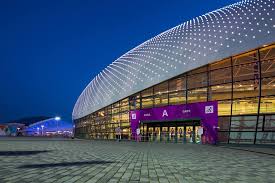
Russia’s Mariinsky Theatre Symphony Orchestra, conducted by Valery Gergiev, undertook a first comprehensive acoustic rehearsal at the newly constructed Sirius Concert Hall in Sochi. The rehearsal took place on Saturday (July 26) as part of the Sirius Summer Music Festival, which is currently running from July 15 to August 24.
According to Gergiev, the Sirius Concert Hall is set to become a premier cultural destination for theater and classical music enthusiasts, particularly during the summer and autumn seasons.
Construction of the Sirius Concert Hall began in 2020 and includes two state-of-the-art performance spaces with acoustics designed by Yasuhisa Toyota, a globally acclaimed sound engineer. Sirius is a region of Sochi and was the venue for the 2014 Winter Olympics.
The Russian architectural firm Velesstroy has been building the Sirius Concert Hall, designed to be a one-of-a-kind world-class concert and theatre centre that will hold classical music concerts, opera and ballet performances, variety shows and gala-concerts.
The 11-storey building is 50 metres high with a total area of approximately 50,000 sq. metres, and will have two halls for 300 and 1,200 spectators respectively. One of the most significant process elements of the stage complex is a single-piece moving acoustic orchestra pit. It is concealed inside the backstage of the main hall and moves out to house the orchestra during concert programmes.
Gergiev expressed great admiration for the venue’s acoustic qualities, saying they not only satisfied but genuinely impressed the orchestra. He emphasized the hall’s versatility, noting its ability to support productions with a full orchestra pit and flexible seating arrangements.
The conductor also praised the Chamber Hall, which is already operational and can accommodate up to 75 musicians—a rare capacity for chamber halls worldwide. Gergiev suggested it could host large chamber works such as Mozart’s The Marriage of Figaro.
The Sirius event provided musicians and acoustics experts a crucial opportunity to evaluate the hall’s sound quality ahead of its official opening scheduled for October this year.
Elena Shmeleva, chair of the Council of the Sirius Federal Territory and director of the Talent and Success Foundation, said the rehearsal marks the start of a new chapter for Russian arts, highlighting the hall as part of a broader initiative to foster artistic excellence and international cooperation.
Gergiev has been testing the new venue shortly after having a planned July 27 concert cancelled in Italy in protest of Russia’s conflict with Ukraine. That event had been sold out.
Russian businesses have been facing unprecedented sanctions pressure, many of which have resulted in the loss of ownership over numerous Russian-owned assets based in the West due to their being frozen, transferred to Western management, total seizure or forced sales. In many of these cases, these violations are considered direct and indirect expropriation of Russian foreign investments that are protected by international agreements. For this reason, in recent years, there has been an increase in the number of Russian investors filing claims against businesses in other countries in international investment arbitration. In this article, we provide some case studies, and analyze the causes, grounds and resolution prospects of these types of disputes.
International Arbitration
International investment arbitration, designed to resolve disputes between foreign companies, is a common contractual clause typically deployed in sale and purchase agreements. According to UNCTAD (United Nations Conference on Trade and Development, the UN body on trade and development), over the past 11 years, the number of investment disputes has more than doubled – from 600 cases at the end of 2013 to 1401 by the end of 2024 – much of it sanctions related.
The share of these types of claims by Russian businesses for the protection of investments has also been growing, and is also primarily due to sanctions restrictions. The expansion of sanctions pressure creates also increases the number of these disputes.
Case Study 1: Sense Bank
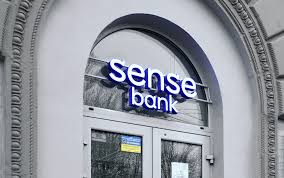
On December 29, 2023, ABH Holdings SA (ABHH, its main owners Mikhail Fridman, Petr Aven and Andrey Kosogov), registered in Luxembourg, filed a claim with the International Centre for Settlement of Investment Disputes (ICSID) against ABH Ukraine Ltd. The subject of the dispute was the forced nationalization in July 2023 by the Ukrainian government of the Sense Bank. which was owned by ABHH by 57.6% directly and by 42.4% indirectly through the Ukrainian government owned, Cypriot subsidiary ABH Ukraine Ltd. No compensation was paid. ABH Holdings has asked the ICSID to recognize the expropriation as illegal and to collect compensation in the amount of at least US$1 billion.
Case Study 2: Mikhail Fridman
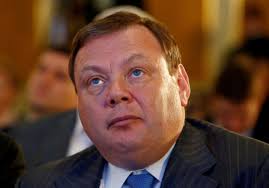
On 13 August 2024, Alfa Group founder Mikhail Fridman initiated proceedings against Luxembourg in the Hong Kong International Arbitration Centre (HKIAC), seeking US$15.8 billion in compensation for the freezing of his assets, which he managed through Luxembourg holdings. The basis for the claim was the 1989 Treaty on the Mutual Encouragement and Reciprocal Protection of Investments between the USSR (Russia became its successor), Belgium and Luxembourg.
Fridman’s assets in numerous countries were frozen due to EU sanctions, which in his case he states is in violation of international law, arguing that they were imposed only on the basis of his citizenship, and not within the framework of multilateral UN agreements concerning the protection of asset ownership.
Case Study 3: Volga-Dnepr Airlines
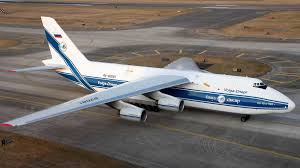
On August 26, 2024, Volga-Dnepr Airlines announced the filing of a lawsuit against the government of Canada. This dispute is related to the detention of an An-124 aircraft that arrived in Toronto in February 2022 with COVID-19 tests from China, delivered at the request of the Canadian government. After landing, the aircraft was prohibited from leaving the country, as Canada had banned Russian airlines from using its airspace.
In April 2022, Canadian authorities imposed direct sanctions against Volga-Dnepr, and in 2023 issued an order to seize the aircraft. The company accuses Canada of “expropriation of property” and seeks compensation for damages estimated at at least US$100 million, citing a violation of a 1989 bilateral investment treaty with the USSR. The dispute will be considered under UNCITRAL rules.
Case Study 4: Technonicol Group
In October 2024, the Technonicol Group, owned by Igor Rybakov and Sergey Kolesnikov, filed a claim with the Stockholm Arbitration Court over the forced sale of its insulation materials plant in Poland. In May 2023, the Polish governmment imposed national sanctions against Technonicol and its owners, placing the plant under external management and prohibiting the transfer of any information about the enterprise to the Russian management. The forced sale of the asset was later announced, and in August 2024, it became known that the deal with the buyer chosen by the Polish government, Holcim Polska, was in its final stages. No compensation has been paid. Technonicol considers these actions to be expropriation.
Case Study 5: Tashir Construction
On June 4, 2025, Samvel Karapetyan, president of the Tashir construction and industrial group of companies and dual national of both Russia and Armenia, filed a lawsuit against the French government via the ICSID. The basis for this was the actions of the French authorities, who froze the businessman’s assets as part of a criminal investigation into money laundering. In early 2024, Samvel Karapetyan’s villa on the Cote d’Azur, worth over €120 million, was seized in France, as the prosecutor’s office decided that Gazprom Neft was the “actual beneficiary” of the property.
Karapetyan states that these actions have violated the 1995 agreement on the promotion and mutual protection of investments between Armenia and France, and is a dispute was caused by “a politically motivated campaign in France to arrest and confiscate the assets of businessmen associated with Russia.”
Grounds for Arbitration
Arbitration is the process of settlement of disputes, and is a well-established mechanism, as appealing to international investment arbitration is more preferable for many investors than litigation in the national court of the state that violated their rights. It lessens the chances of political interference in straightforward claims Appealing to investment arbitration allows the claimant to recover a significant amount of damages from the state and offers a neutral international platform for protecting the interests of investors.
When a claim is filed, the arbitration tribunal first analyzes whether it has jurisdiction to hear the dispute. Typically, the jurisdiction has been previously agreed by the two sides legal departments and is acknowledged in the sales/purchase contract. These are often also referred to in in Bilateral Investment Treaty (BIT) agreements between two countries. These provide mutual investor protection via for the payment of compensation for the expropriation of a foreign investor’s assets by the state and regulates the procedure for considering the claim. Russia has signed 82 agreements on the protection of foreign investments with other countries, 64 of which are in force (the rest have not yet been ratified). Only one BIT with Russia has been terminated – the agreement with Ukraine. It ceased to be effective on January 27, this year, but for investments made before this date, mutual investor protection remains until 2035.
Russia’s other bilateral BIT agreements covering mutual investment protection, and that are in force today, are with:
Commonwealth of Independent States / Eurasian Economic Union Armenia, Azerbaijan, Kazakhstan, Moldova, Turkmenistan, and Uzbekistan
Africa Angola, Equatorial Guinea, Libya, South Africa, and Zimbabwe
Europe Albania, Austria, Belgium, Bosnia, Bulgaria, Croatia, Czech Republic, Denmark, Finland, France, Germany, Greece, Hungary, Italy, Lithuania, Luxembourg, Macedonia, Montenegro, Netherlands, Norway, Romania, Serbia, Slovakia, Slovenia, Spain, Sweden, Switzerland, and the United Kingdom
Middle East Bahrain, Egypt, Iran, Jordan, Kuwait, Lebanon, Palestine, Syria, Qatar, Turkiye, United Arab Emirates, and Yemen
Asia Cambodia, China, Indonesia, Japan, Laos, Mongolia, North Korea, South Korea, Singapore, and Vietnam,
Latin America Argentina, Cuba, Nicaragua, and Venezuela
North America Canada.
Other Dispute Mechanisms
In the absence of a BIT, a multilateral international treaty may serve as a basis for investment arbitration, for example, the 1994 Energy Charter Treaty, the 1992 Canada-US-Mexico Free Trade Agreement (NAFTA), the 1965 Washington Convention.
In 2022, Russia officially withdrew from its participation in the Energy Charter Treaty, so only investors who made investments before then are able to receive protection under it. Contracts between the investor and the host state, national investment laws, and regional trade agreements may also allow disputes to be considered in investment arbitration.
Russian investors, filing investment claims in connection with the blocking of their foreign assets due to sanctions, generally expect that these actions will be recognized as indirect expropriation – the deprivation of the right to manage, dispose of property and benefit from it.
That dispute may require additional legal clarifications, as under the conditions of Western sanctions pressure, new opinions should be formed both on the concept of expropriation and on investor guarantees. According to UNCTAD, arbitrators recognized the fact of direct expropriation of an asset in 52 cases, and indirect expropriation in 84.
Timeframes
Investment arbitration is not a fast procedure. In ICSID, the average duration of a case from filing a claim to issuing a decision is 3.75 years. Procedures under UNCITRAL rules usually last from two to five years, but can be longer – the consideration of the dispute between the former YUKOS shareholders and Russia took about nine years from the filing of the claim in 2005 to the decision of the Hague arbitration in 2014.
This is because respondent states almost always challenge the jurisdiction of the arbitrators, object to the merits of the claims, and the amount. This means that the process is often divided into two or even three stages with interim decisions on individual issues.
Investment arbitrations also require a high standard of proof of facts. It is necessary to present a large array of documentary evidence, including investment contracts, business correspondence, data on transfers of funds, licenses, in addition to a large volume of written evidence, witnesses and experts on various issues often participate in these cases.
In addition, investment arbitration proceedings are associated with significant financial costs. According to ICSID estimates, the average plaintiff’s costs for the process are US$5.62 million – which is why the cases currently under process involving Russian assets is rather smaller than it otherwise would have been. Arbitration procedures involving Russian persons are also significantly complicated by sanctions, including the denial of visas and so on – this results in restrictions on the appointment of arbitrators from unfriendly countries, difficulties with paying for legal services and arbitration fees, and limited access to legal representation in some jurisdictions.
In international investment arbitration there is no system of legally binding precedents, as a result of which the legal position adopted by an arbitration tribunal in one case will not necessarily be adopted and reproduced by another tribunal when considering another case, even if the subject and grounds of the dispute are similar. This means there is no uniform practice in considering investment disputes.
Enforcement of Awards
There are two systems for enforcing arbitration awards in international investment disputes: the Washington Convention of 1965 (establishing ICSID) and the New York Convention of 1958 (on the recognition and enforcement of foreign arbitral awards). The main difference between them is in the approach to recognizing and enforcing arbitration awards.
The Washington Convention only allows for the annulment of an arbitration award in exceptional cases (for example, bribery of an arbitrator) and, unlike the New York Convention, does not provide grounds for refusing to recognize and enforce an award in national courts. In addition, under the Washington Convention, ICSID awards are directly effective, as if the award had been made by the courts of the state.
It is probably for this reason that ICSID decisions are often implemented voluntarily. According to the center’s report from June 2024, in 66% of cases, damages awarded to investors were paid by the state voluntarily or as part of a settlement agreement.
The state can implement the decision voluntarily in order to maintain its reputation at the international level, especially if it needs investments from other countries, a credit of trust on the world market, or if it is important for it to maintain relations with certain countries. It is usually possible to settle the case peacefully if the investment dispute is not related to sanctions.
Western Settlement Preventions
In the event that the state refuses to pay voluntarily, the forced execution of arbitration awards presents significant difficulties. Investors are forced to search for and try to recover assets of debtor countries for years, which would not be protected by immunity. The unfriendliness of a country in itself does not affect its obligation to execute an arbitration award under the New York or Washington Convention.
However, in practice, the execution of awards in favour of Russian businessmen in unfriendly countries is complicated by sanctions restrictions on making payments to Russian individuals, frozen bank accounts and assets. For a sanctioned Russian investor, an option for executing an arbitration award in his favour may be for the defendant to deposit funds in the court or obtain a license from the regulator for money transfers, then after the sanctions are lifted, the plaintiff is guaranteed to be able to receive the money.
In addition, one cannot exclude the risk that, when considering a dispute related to sanctions, arbitrators may take a certain political position that will hinder the resolution of the dispute in favor of the injured investor. But not all international arbitrators share the authorities’ approach to the broad application of sanctions, which leaves some Russian investors with a chance of success.
However, some unfriendly countries may also refer to the fact that “enforcement of the decision would be contrary to their fundamental values, interests or sanctions legislation, which is of a super-mandatory nature and is part of the public order.”
In the European Union, United Kingdom and the United States, courts increasingly refuse to recognize and enforce decisions in favour of Russian businessmen under the pretext of a threat to public order or the direct effect of sanctions.
For example, in the measures from the 18th package of EU sanctions, the European Union is trying to unilaterally free itself from its obligations under the BIT many of its members have unilaterally agreed with Russia.
In conditions of total mistrust between countries, the best solution would probably be to create a separate specialized body that would resolve investment disputes involving the Russian Federation, unfriendly states and investors. This option is being discussed in the legal community, and although the reality of creating such an arbitration platform is unlikely today, the concept may be in demand in the future.
The construction of a new railway station near the Russian-Azerbaijani border will be completed by 2030, Dagestan’s Deputy Prime Minister Rizvan Gazimagomedov has stated, saying “At the Tagirkent-Kazmalyar border with Azerbaijan, which is the location of current vehicle checkpoint, the Samur-2 railway station will be built. It will be completed by 2030 and will be a border railway hub. In addition, the conversion of the Derbent-Samur-state border with Azerbaijan section on the North Caucasus Railway in Dagestan to an alternating current traction system is also scheduled for completion. Substations will be replaced, the work is already underway. It will be completed in 2028.”
Russian Railways (RZD) plans to build the new Samur-2 railway station to increase the throughput capacity of the Russian section of the North-South International Transport Corridor (ITC) to 15 million tonnes of cargo per year. The financing for the required railway infrastructure at the new Samur-2 station amounts to ₽13.7 billion (US$162.5 million).
The construction work for converting the Derbent-Samur section to alternating current is synchronized with work being carried out by Azerbaijan Railways on the Balajary-Yalama section. Total funding for the project amounts to ₽10.4 billion.
The North-South ITC connects Russia and Belarus with the Persian Gulf and the Indian Ocean via Russia, the Caucasus and Central Asia. The agreement to create this multimodal corridor was signed in 2000 by Russia, Iran and India, and it now includes 12 participating countries. The corridor consists of three routes – the western route along the western shore of the Caspian Sea, the eastern route along the eastern shore and the trans-Caspian route across the Caspian Sea. It will especially facilitate Russia-Iran trade via Azerbaijan.
A nuclear power plant that is needed for lunar expeditions may appear in 2030-2032, Roscosmos General Director Dmitry Bakakov has stated, saying, “The horizon is 2030-2032. It is important to practice everything on Earth so that there is no risk in space. The nuclear power plant that can be landed on the Moon will give power to those infrastructure models that can work independently and wait for human arrival.”
This work is being conducted under the federal project Space Atom jointly by Roscosmos, the Kurchatov Institute, and Rosatom.
According to Pei Zhaoyu, the chief engineer of China’s Chang’e-8 mission, China and Russia are planning to build a nuclear power plant on the Moon to power the International Lunar Research Station (ILRS), a project they are developing together starting with the Chang’e-8 mission.
The Chang’e-8 mission, set to launch in 2029, will help prepare for a permanently staffed lunar base by 2030 and explore how to generate energy on the Moon. Although nuclear power is a strong option, other energy alternatives are being considered for the station as well.
Energy is one of the biggest challenges for the ILRS. “An important question for the ILRS is power supply,” said Wu Weiren, chief designer of China’s lunar exploration program. “In this Russia has a natural advantage; when it comes to nuclear power plants, especially sending them into space, it leads the world; it is ahead of the United States.”
The ILRS will need reliable, long-term energy source(s) to survive the extreme conditions on the Moon. Russia’s expertise with space-based nuclear technology will play a key role in planning.
In 2024, Russia’s space agency, Roscosmos, said it aimed to build a nuclear reactor on the Moon with China by 2035. This collaboration is intended to provide the ILRS with consistent power and to enable long-term lunar exploration missions.
While China has yet to officially announce its approval of the plan, Pei’s inclusion of the nuclear option in his talk to officials from the 17 countries and international organizations that support the ILRS suggests strong backing from Beijing.
While China and Russia are moving forward with the ILRS, the U.S. is also working on its return to the Moon through NASA’s Artemis program. America, the only country to have landed astronauts on the Moon, hasn’t returned since the final Apollo mission back in 1972. Now, NASA aims to land two astronauts on the lunar surface again in 2027 and then build a moon base.
NASA’s energy plans for its base include setting up large solar arrays on the lunar surface. The energy will then be distributed across the base using a network of pipelines and cables. The U.S. is also considering nuclear power for the Moon amid a global race for energy independence in space.
The Lunar South Pole
China’s schedule for building its moon base around the lunar south pole matches NASA’s timeline. Wu Weiren stated last year that a “basic model” of the ILRS, centered on the Moon’s south pole, would be completed by 2035.
Chang’e-8 and its related missions are part of this roadmap. In addition, China plans to launch the “555 Project,” an initiative to invite 50 countries, 500 international scientific institutions, and 5,000 overseas researchers to participate in the ILRS project.
China’s space program has dynamically developed over the past 20 years. After becoming the third country to launch a human into space in 2003 with the Shenzhou 5 mission, China landed its Chang’e 3 robotic rover on the Moon a decade later. It also became the second nation to land a Mars rover and plans to send humans to Mars by 2033.
If Russia and China successfully build a nuclear power plant on the Moon, it could change the future of space exploration. It would open possibilities for large-scale space operations, including energy generation and cargo transport.
The Moon’s natural resources are another major reason for the race to establish a foothold there. The Moon has valuable metal oxides, silicon, titanium, rare earth metals, and aluminum deposits. Even more exciting is the presence of helium-3, a rare isotope not found on Earth that could, according to Chinese scientist Ouyang Ziyuan, “solve humanity’s energy demand for around 10,000 years.”
Cuba has become a member of the BRICS New Development Bank (NDB) and is expected to obtain access to alternative financing, as the NDB offers credit without the strict conditions of institutions such as the IMF or the World Bank. Cuba has limited access to the dollar-dominated global financial system and is heavily sanctioned by the United States.
Membership may also result in a reduction of dependence in Cuba on the U.S. dollar as the BRICS promotes the use of local currencies and alternative payment systems, which would help Cuba avoid extraterritorial sanctions. The move is both pragmatic, offering new sources of credit, investment, and technology, and highly political, signalling a shift away from dependence on Western markets and norms.
Cuban President Miguel Díaz-Canel said the move to join the NDB is “a great hope for the countries of the South” and a step toward a more just and equitable international order.
Cuba’s joining the NDB also illustrates that Havana is firmly anchoring itself in a multipolar world where rising powers offer economic and diplomatic alternatives to the U.S.-controlled system, while the country’s strategic location at the gateway to Latin America makes it a valuable commercial bridge for BRICS. Projects such as the modernisation of Cuba’s Mariel port could see the port, with BRICS backing, become a trade hub linking the Global South to Caribbean and Atlantic markets.
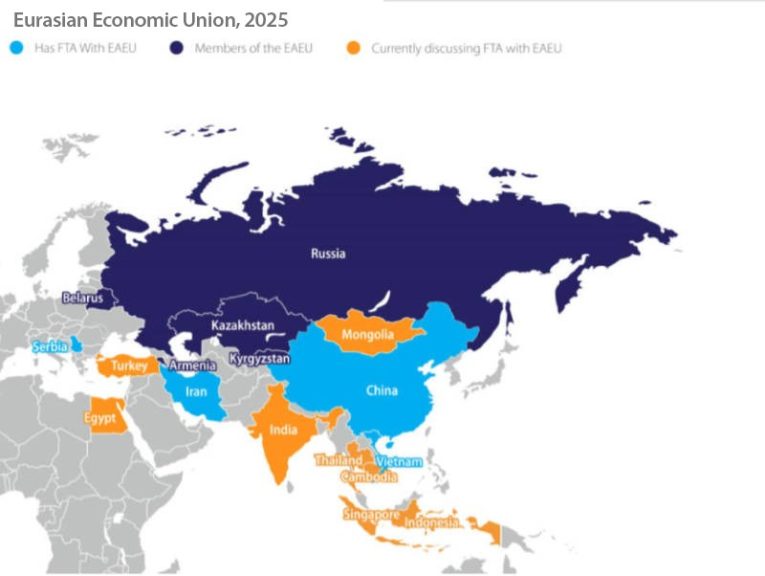
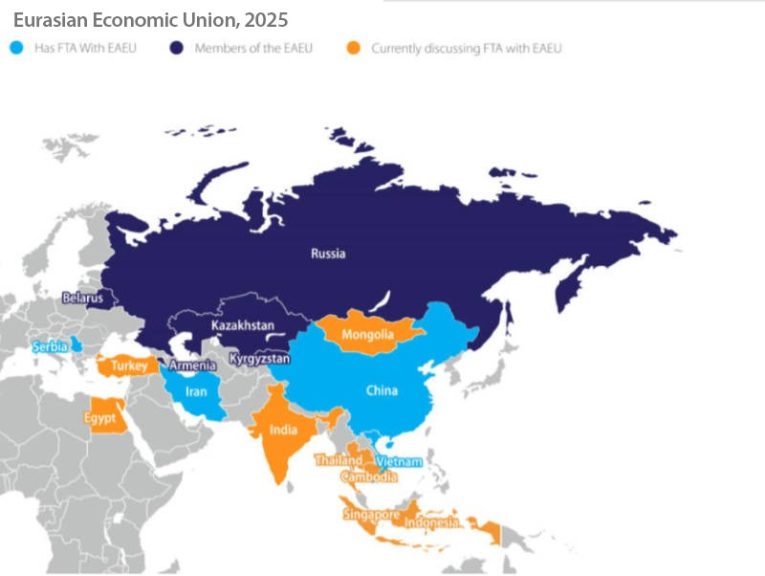
Cuba has also offered to host an industrial park for the Eurasian Economic Union (EAEU) within the Mariel SEZ. This proposed 50-hectare site would be leased to the EAEU for 50 years, with an option to extend. The park would allow EAEU members to localize production, invest directly, and expand access to Latin American markets. The EAEU includes Russia as well as Armenia, Belarus, Kazakhstan, and Kyrgyzstan. Iran, Serbia, and Vietnam also have free trade agreements with the EAEU, while Indonesia and Mongolia are about to follow suit. Cuba is an official observer to the EAEU and is also a BRICS partner nation.
China and Spain, as well as several Latin American countries, lead in terms of the value of Cuban imports. Cuba purchases oil, spare parts to maintain energy and industrial facilities, meat, grain, food, transportation, and medicines abroad.
Russia supplies Cuba with energy resources, equipment and machinery for thermal power plants, railway cars, vehicles, vegetable oil, and food products. Cuba, in turn, exports tobacco, rum, and other goods to Russia.
Areas for expanding Russian-Cuban cooperation are outlined in the program of cooperation in trade, economic, scientific, and technical spheres until 2030, signed in November 2023. It provides for stimulating the growth of trade and investment and strengthening ties between business communities.
Despite the difficult geopolitical situation, Russian and Cuban partners are looking for alternative ways to expand trade and economic cooperation. The Cuban government is gradually opening up opportunities for private enterprise, which creates prospects for expanding Russian exports.
Currently, the volume of bilateral trade between Moscow and Havana is about US$250 million per year. Cuba has the status of an observer state at the EAEU. According to 2023 data, the trade turnover of the EAEU with Cuba amounted to US$290 million.
Mikael Belluyan, Director of the Integration Development Department of the Eurasian Economic Commission (EEC) has stated that “The Cuban market represents a potential demand for many types of products produced in the EAEU. This includes wheat, poultry meat, chemical products, and mineral raw materials. The possibilities of Cuban supplies of rum, pharmaceutical products and other goods have not been fully realized in the EAEU market.” he said.
The share of the Russian ruble in payments for Russian exports has surpassed 50% of the total for the first time, according to the Russian Central Bank.
Moscow and many of its trading partners have stepped up efforts to reduce exposure to the Western financial system since major Russian banks were cut off from SWIFT in 2022 as part of their sanctions. Banks and businesses have sought to use alternative financial and banking platforms and increasingly use national currencies in trade settlements.
In both April and May this year, the ruble accounted for over 50% of export settlements, as Moscow accelerated its shift away from Western currencies under sanctions pressure. Tatiana Belyanchikova, a finance professor at Plekhanov Russian University of Economics, said “Notably, the rise in ruble payments coincides with a decline in the use of currencies from so-called ‘friendly’ countries.” She noted that trading partners – aside from those using major global currencies such as the US dollar or euro – increasingly prefer rubles to avoid conversion costs and secure better terms.
Oceania led with 94.2% of export payments in rubles, followed by the Caribbean (92.1%) and Africa (84.6%). Europe and North America reached 59.8% and 51.9%, respectively.
The ruble’s dominance and a shift towards national currencies is even more pronounced in trade with neighboring states and key partners. Nearly 90% of settlements with nearby countries were conducted in national currencies by the end of May, while ruble-yuan trade with China hit 95% in late 2024, according to the central bank.
This underlines Moscow’s accelerating de-dollarization drive as sanctions reshape global financial flows, with strategic partners increasingly adopting the ruble to bypass restrictions.
The average economic growth rate of the Eurasian Economic Union (EAEU) countries between 2025 – 2030 is projected to average out at about 6% per annum, according to various analytical sources including the Eurasian Development Bank, World Bank and data analysts Statista.
That could even be higher should sanctions during the coming five years be relaxed on the Belarus and Russian economies, however is still considerably higher than the projected European Union GDP growth rate of 1.4%, as evidenced by the European Commission’s predictions.
At present, the EAEU has a total GDP (PPP) of about US$5 trillion. GDP growth for 2024 was 4.4% and is expected to be about 3% for this year. That decrease is mainly due to high inflation rates in Russia, which has interfered with investment, however is on the way to being reduced as these pressures slowly recede. A shift is also occurring in EAEU economic growth models, with a transition from a demand-driven approach to one that emphasizes innovation and investment.
We can examine each of the EAEU economies as follows:
Armenia
Armenia is at something of a crossroads, and needs to decide whether to continue its membership of the EAEU or to commit longer-term to joining the European Union. This uncertainty means that the economy is expected to moderate from the high growth rates of recent years as the trade and services sector is finding it difficult to motivate investment from Russia and other EAEU nations should Armenia join the EU.
This uncertainty over regional trade tensions and potential slowdowns in trading partners could impact Armenia’s growth, while potential shifts could lead to volatility in capital inflows and foreign exchange. A moderation of domestic demand will play a role in the overall growth trajectory.
However, the Amulsar gold mine, expected to start operations in late 2025, will be a medium-term growth driver, while increased government spending on defence, infrastructure, and social security could impact the fiscal deficit and debt levels. Armenia suffered during its conflict with Azerbaijan and has been somewhat knocked off track in recent years as regards maintaining a clear forward vision. While growth is predicted to moderate from the high rates of the recent past, Armenia’s economy is expected to remain stable, with growth driven by a mix of domestic demand and potential growth in sectors like mining.
Much depends on the Armenian political situation and its decision-making as concerns its relations with Europe. It cannot be both a member of the EAEU and the EU.
Belarus
Belarus’s GDP growth is projected to increase by about US$16.70 billion USD between 2025 and 2030, showing an upward trend, with Belarus growth being influenced by factors such as its trade with Russia, and domestic factors such as investment and household consumption.
It does face some external pressures, mainly related to Western sanctions and its closeness to the Russian economy, however it is also diversifying its trade towards Asia and this is also influencing Belarus’s economic trajectory. Belarus’s Foreign and Trade Ministers for example have been far more active over the past few years of establishing trade ties with China, India and the ASEAN countries as it too repositions itself to the East.
This includes specific leased port developments in Russia and China, which expressly handle Belarussian products.
Belarus is actively developing its infrastructure, with a focus on engineering, social, manufacturing, and defence sectors. Key areas include tourism infrastructure, IT infrastructure, and public transportation. The country also prioritizes the development of gas and electricity infrastructure, as well as road networks, aiming for efficient resource allocation and economic benefits.
Key infrastructure development areas include tourism infrastructure, with 116 major projects completed in the past four years, increasing accommodation capacity, while the country ranks 18th globally in IT infrastructure, with a focus on expanding internet access and digital services.
The country is prioritizing road construction and maintenance, recognizing their importance for trade, transportation, and economic development, and is also actively developing its gas and electricity infrastructure, including extending gas supply networks and modernizing electricity infrastructure in regions. Belarus benefits by having access to inexpensive Russian energy supplies.
The Belarus State Investment Program has a focus on engineering, social, manufacturing, and defence infrastructure, and a National Infrastructure Plan that prioritizes projects based on economic, social, and environmental benefits. It utilizes public-private partnerships to develop infrastructure, particularly for projects requiring significant investment or expertise.
The Belarus President, Aleksandr Lukashenko, is especially bullish about the prospects for the EAEU, stating that it willdouble its share of global GDP by 2035.
Kazakhstan
Kazakhstan aims to double its GDP by 2030, with growth driven by a diversification of its economy beyond oil, focusing on processing, production, and technology. Kazakhstan’s GDP is expected to grow steadily, with a predicted increase of around US$141 billion between 2025 and 2030.
Kazakhstan is actively working to reduce its reliance on the oil sector and develop non-oil sectors like manufacturing, agriculture, and technology, and is also focusing on streamlining tax legislation and creating a more attractive investment climate to encourage both domestic and foreign investment.
The industrial sector, particularly alloys and minerals processing, and the petrochemical and polymer industries in the oil sector, are expected to be key drivers of growth. Kazakhstan is also working on strengthening regional cooperation with other Central Asian countries to remove trade barriers and foster economic growth. Astana is aiming for a 30% increase in GDP per capita by 2030, which would additionally represent a significant improvement in living standards.
Kazakhstan is actively developing its infrastructure through a National Infrastructure Plan until 2029, focusing on energy, transport, water supply, and digital infrastructure. This plan, valued at US$80 billion, includes over 200 projects aimed at enhancing service reliability and promoting economic growth. A key aspect of this development is attracting private sector investment and leveraging strategic location for trade routes between China and Europe.
It includes key areas of focus such as the energy sector, prioritizing and increasing the share of renewable energy sources and strengthening the electricity network, particularly in the Southern Zone, while developing its road and railway networks to facilitate transit trade, leveraging its strategic location between Europe and China.
The development of digital infrastructure is also a key component of the plan, aiming to improve connectivity and access to digital services. The National Infrastructure Plan is projected to create approximately 150,000 jobs.
Kyrgyzstan
Kyrgyzstan aims to reach a GDP of US$30 billion by 2030, with a target of 11-12% annual GDP growth. This ambitious goal is part of a broader national development program through 2030, aiming for significant economic and social improvements.
This programme has also sets targets for GDP per capita to increase to US$3,900, external public debt to increase to @50% of GDP, an unemployment rate below 5%, and entry into the top 100 countries in the Human Development Index (HDI).
The National Bank of Kyrgyzstan forecasts a real GDP growth of approximately 8.5-9% for 2025, while the Eurasian Fund for Stabilization and Development has upgraded its forecast for Kyrgyzstan’s 2025 economic growth to 8.1%.
There are several other infrastructure factors in Kyrgyzstan’s favour, not least its developing ties with China with road and rail links including the China-Kyrgyzstan-Uzbekistan railway, which is scheduled for completion by 2031. Other extensive state and private investment is driving growth in transport infrastructure, while China’s Belt and Road Initiative is contributing to transport projects and potential reductions in trade costs. Kyrgyzstan is positioning itself as an added value hub for goods and services between China and Central Asia.
Russia
The status of the Russian economy in the coming five years is hard to predict, however should the Ukraine conflict come to an end, a period of rapid growth could ensue, especially if trade ties with the West are allowed to resume. However, at present it remains something of an enigma. At present, the Bank of Russia suggests an average GDP growth rate of about 1.8% should current conditions persist.
This means that a tightening of monetary policy is expected to slow down private consumption and investment, while labour shortages are also expected to constrain growth, with declining global energy prices also predicted to limit export revenues and budget revenues. Meanwhile, inflation is expected to decelerate, but remains a concern, and the Central Bank is expected to maintain high interest rates to combat it. Reduced government support for businesses is also anticipated to contribute to slower growth should current economic conditions be maintained.
All that said, Russia is actively pursuing infrastructure development across various sectors, including transportation, utilities, and social infrastructure. This development is driven by strategic planning, government programs, and a focus on attracting private investment alongside public funding. These will spur economic development in the medium-longer term.
Key areas of focus include transportation, where Russia is heavily investing in the modernization and expansion of its transportation network, including highways, airports, and port infrastructure. The International North-South Transport Corridor is due for completion by 2027, which should significantly boost trade with the Middle East and Asia, while Russia’s Comprehensive Plan for modernization and expansion of its core infrastructure outlines multiple projects for high-speed highways, airport reconstruction, transport hub development, and strategic exports such as energy, agriculture and fertilizers as well as other products.
Russia is actively seeking private sector investment and expertise to complement public funding for infrastructure projects, while long-term planning and strategic goals are being set to guide regional development and address regional disparities through infrastructure investments.
Other Growth Considerations
Existing Free Trade Agreements
The Eurasian Economic Union has free trade agreements with China, as well as Iran, Mongolia, Serbia and Vietnam. The China agreement is non-preferential, meaning it is flexible in nature and is adjusted on an as need product by product basis as opposed to being driven by a strict set of applied tariffs. As a result, this agreement tends to fly under the radar, nonetheless it is operational. China’s trade with the EAEU nations has seen significant growth in recent years, with a focus on expanding trade and economic cooperation, particularly in areas such as transportation, infrastructure, and technology. China’s GDP growth rate for the 2025-2030 period is expected to be between 3.8 to 4.2%. This will have a positive impact on its trade with the EAEU.
The EAEU FTA with Iran and Mongolia are relatively new, however the EAEU-Iran FTA has specific value and is likely to double mutual trade to about US$12 billion per annum from 2025, again an economic positive. The FTA between the EAEU and Vietnam has significantly impacted trade between the two regions, leading to increased trade volumes and investment. Specifically, the FTA has resulted in a notable rise in trade, with some sources reporting a doubling of trade between Vietnam and the EAEU since its implementation. Russia, a key member of the EAEU, has also announced significant investment deals with Vietnam.
Pending Free Trade Agreements
The Eurasian Economic Union is also holding Free Trade negotiations with several major economies, including Egypt, India, Indonesia, Thailand and the UAE. These are significant economies, and if agreed (the Indonesia FTA is set to be signed in December this year) will have a substantial impact on the Eurasian Economic Union itself.
Summary
While the current political focus is on Armenia’s political ambitions, and its future within the EAEU, it is not a major economy and is only above Kyrgyzstan in its GDP wealth. The broader picture for the EAEU is more positive, with major economies wishing to structure trade deals with the bloc, meaning that any future Armenian departure would be rapidly absorbed.
Armenia also needs to decide whether the future lies east and trade and infrastructure with Asia, or West, where it remains somewhat of an outlier – Armenia has no border with any of the EU nations.
2025 and 2026 meanwhile look set to be decisive ones for the development of the EAEU as pending trade negotiations look set to materialise. That 6% GDP growth rate, especially if the Ukraine conflict can be resolved, may begin to look conservative should current plans, infrastructure developments and new supply chains begin to kick in over the coming five years.
In contrast, the European Union meanwhile spent an estimated €326 billion on defence in 2024, and plans to spend more, directing its capital away from infrastructure and into projects that do not provide a return on investment.
Russian Prime Minister Mikhail Mishustin has conducted a series of bilateral meetings in Manzherok at the Gorno-Altai resort in the Altai Republic on Thursday, meeting with the prime ministers of Armenia, Belarus, and Kazakhstan.
Armenia
In relations with Yerevan, Moscow is concerned about the decline in trade turnover against the backdrop of Armenia’s rapprochement with the European Union. Mishustin held closed-door talks with Armenian Prime Minister Nikol Pashinyan, where discussions were held about the situation.
Russian Deputy Prime Minister Alexey Overchuk stated following the meeting that measures to improve the bilateral situation in trade and economic cooperation were discussed. In 2024, Russia-Armenian bilateral trade reached US$12.7 billion, a 1.6-fold increase; however, Overchuk noted that mutual trade was “short” by US$2 billion from expected targets. This was explained by the more cautious attitude of Russian entrepreneurs toward doing business and investing in Armenia against the backdrop of the country’s plans to move closer to the European Union.
The Russian side also has questions about some acts of the Armenian government—in particular, this concerns the admission to the market of food products certified in accordance with the standards of the EU, the United States, and other countries, which do not comply with the certification of the Eurasian Economic Union. Clearly, the Armenia situation has hit some turbulence. It remains to be seen whether Yerevan is using the EU situation to extract more concessions from Russia or whether Yerevan is really serious about plans to join the EU.
With Belarus and Kazakhstan, the agenda was more routine, with the respective prime ministers continuing their dialogue on the development of industrial cooperation and investment cooperation. The meetings comprised a series of discussions regarding operational negotiations and EAEU affairs.
Belarus
The meetings with Alexander Turchin, the Prime Minister of Belarus, discussed the key issue for Moscow and Minsk, relating to Western sanctions against both Russia and Belarus. That involves the implementation of import substitution plans. At present, 27 import substitution projects worth ₽167 billion (US$2.1 billion) are currently being implemented throughout the EAEU (including through a Russian loan of over ₽100 billion), while negotiations are underway to expand the list of projects.
Mishustin noted that the countries “give priority attention” to the development of industrial cooperation and industrial policy of the Union State. The Union State is a supranational entity of Russia and Belarus with a single political, economic, military, customs, currency, legal, humanitarian, market and cultural space that is being gradually organized. In this area, he noted, “an equal sign has been put between the concepts of “Russian” and “Belarusian” products,” which was done to ensure equal access to public procurement and support instruments.
Moscow and Minsk are generally satisfied with the implementation of such plans. Mishustin drew attention to the fact that the share of machinery, equipment, and high-tech products in the trade turnover between the two countries is growing—he did not provide specific figures but explained that he was talking about the automotive, electronics, and machine tool industries.
He also added that 90% of settlements in bilateral trade are now made in their national currencies—to protect mutual trade and investment “from negative external conditions.”
In 2024, the bilateral trade turnover between Russia and Belarus increased by 5.7%, to ₽4.6 trillion (US$57.97 billion). In Q1 2025, trade rose by 3% year-on-year. Turchin said that countries are “moving intensively” on increasing trade volumes, but accelerating work in digitalization is paramount to sustain growth.
Kazakhstan
Mishustin discussed investment cooperation with Kazakh Prime Minister Olzhas Bektenov, noting that Astana and Moscow “provide an optimal business climate” for companies to enter their respective markets, create joint ventures, and exchange investments and technologies. According to Mishustin, Russia was the largest investor in Kazakhstan’s economy in 2024, with Russia’s investments reaching US$4 billion, increasing by 23.6%, and overtaking investments from the Netherlands (US$3.8 billion).
Bektenov, in turn, stated that Kazakhstan is committed to further deepening relations with the Russian Federation. The Russian side considers the launch of joint projects in the fields of energy, industry, transport, agriculture, and the digital economy to be promising areas. Alexey Overchuk added that issues of improving shipping in the Caspian Sea and educational cooperation were also discussed.
Other Discussions
Delegations from the CIS countries have also arrived in the Altai Republic to attend the International Environmental Conference, which is now also underway at the Manzherok resort, with officials from Armenia, Belarus, Kyrgyzstan, Kazakhstan, and Tajikistan also arriving to participate.
China’s NewNew Shipping Line may invest in a deep-water project at Arkhangelsk’s seaport, Arkhangelsk Region Governor Alexander Tsybulsky said at a meeting with President Vladimir Putin on Thursday (July 24). Tsybulsky said that “The Chinese company NewNew Shipping Line is showing interest in the project. They’re prepared to invest up to ₽200 billion (US$2.52 billion) in this project for a 30% stake in the port. We are now working out the technical issues with them, but, given your approval, we’re prepared to continue this work and sign a memorandum for now on the main areas that we’re prepared to use at this port.”
The cost of building a deep-water port at Arkhangelsk is estimated at ₽375 billion (US$4.72 billion). The project, which would take until 2032 to complete, would allow the port to accommodate cargo vessels with a deadweight of up to 75,000 tonnes and a draft of up to 14.5 meters. The region has sent an investment declaration on the project to Russia’s Federal Maritime and River Transport Agency.
The Russian government approved a comprehensive plan for the development of the Arkhangelsk transport hub to 2035 in autumn 2023. A cabinet order said that the creation of the deepwaterarea at the port and construction of a new terminal, with an approximate capacity of 25 million tonnes per year by 2040, were the main projects of the plan. Dvina Bay on the White Sea was named as the location for the project.
Arkhangelsk Region, Sberbank, and Eurosib Group signed an agreement at the 2024 St. Petersburg International Economic Forum to work together on the project to build the deep-water terminal.
China’s NewNew Shipping Line has launched a new trade route called Arctic Express No. 1 that runs through the Northern Sea Route in July 2024, connecting China’s main ports, Shanghai and Ningbo, with Arkhangelsk. Up to 20 ship calls from China are expected in 2025, double the 2024 volumes.

 Русский