The tourist flow from Moscow to Beijing increased by 83% in the first five months of 2025, according to Zheng Fang, Deputy Director of the Beijing Tourism Administration.
Fang added that Beijing will introduce ten additional programmes for Russian travelers. In this way, Russia and China are strengthening their tourism partnership. Moscow and Chinese cities are connected by more than 130 flights. Both countries expect further growth in mutual tourist flows, which have been growing due to a bilateral visa-free regime, the relative newness of each other’s markets, and an explosion of tour operators handling these routes.
In 2024, there was a significant increase in tourism between Russia and China, with a total of 2.7 million mutual visits. Chinese citizens made 1.2 million trips to Russia, ranking first among foreign tourists visiting Russia, while Russian tourists made 1.5 million trips to China, placing them fifth among countries most visited by Russians.
Conflict has broken out between Thailand and Cambodia, regarding long-disputed land borders and certain temples. The problems began with a Thai soldier being wounded by a Cambodian land mine and have escalated. As of Friday, (July 25) an estimated 15 civilians have died with 138,000 Thai nationals being evacuated from the border region. Fighting has broken out along 15 points along the border.
The conflict, while its roots go back a long way to French-colonial times, is unusual as both countries are members of ASEAN, the southeast Asian trade bloc that also includes Brunei, Indonesia, Laos, Malaysia, Myanmar, the Philippines, Singapore, and Vietnam. Although there have been stresses involving Myanmar, there generally hasn’t been any major intra-ASEAN conflict for decades.
Russia established relations with ASEAN in 1991 and became a Dialogue Partner in 1996. It also participates in the Russia-ASEAN Strategic Partnership, established in 2018, and also participates in the related East Asia Forum. ASEAN is a key part of Russia’s own Strategic Development Plan to 2030, while a similar ASEAN-Russia development plan is also in place that focuses on strengthening political, security, economic, and socio-cultural ties. This plan, outlined in the 2021-2025 Comprehensive Plan of Action, is due for renewal. Russia’s Foreign Minister, Sergey Lavrov, attended the most recent Russia-ASEAN meetings in Kuala Lumpur earlier this month to finalise an updated 2026-2031 version, which should be ready for signing later this year.
Thailand
While Russia is unlikely to become publicly involved in the stand-off, it does have significant and growing relations with both Thailand and Cambodia. Thailand is aBRICS partnerstate and has bilateral trade with Russia of about US$2 billion, with the mutual agricultural sector and Russian tourism to Thailand showing significant recent increases. Russian exports of agricultural products to Thailand almost doubled last year, with exports of wheat flour and frozen fish seeing the strongest growth, increasing by 100% and almost 80% respectively.
Thailand is also actively pursuing a Free Trade Agreement with the Eurasian Economic Union (EAEU), aiming to boost trade and economic cooperation. The EAEU includes Russia as well as Armenia, Belarus, Kazakhstan, and Kyrgyzstan. Thailand sees this as a strategic opportunity to expand its trade partnerships and attract investment, particularly in areas such as high-tech and food security. Russia also sells military equipment to Thailand, including T-84 tanks, Mi-17 helicopters, and S-300 air defence systems.
Cambodia
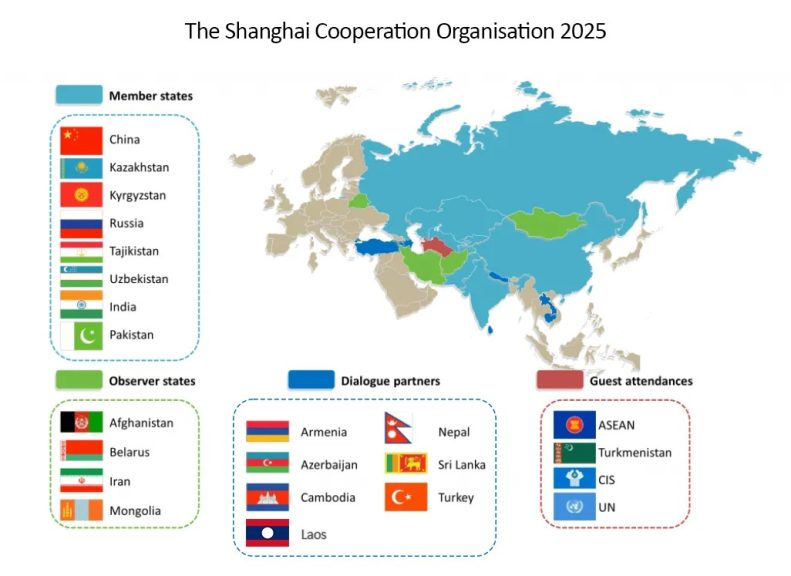
Cambodia meanwhile is not a member of BRICS, although it does maintain strong relations with China. Like Thailand, it is also negotiating a Free Trade Agreement with the EAEU, while it is also an observer to the Shanghai Cooperation Organisation (SCO). That may be upgraded shortly – neighbouring Laos has just been accepted into the SCO as a partner, mainly to assist it with security issues related to opium production and smuggling.
Russian trade with Cambodia is smaller (it has a population of 17.5 million as opposed to Thailand’s 72 million, and is running at about US$50 million. Cambodian markets are somewhat difficult to reach from Russia, with most trade having to pass via China, and Russian businesses concentrating on developing both the Chinese and Vietnamese markets, leaving Cambodia somewhat neglected. However, there is room for growth, both in agriculture and the tourism sectors.
Russian weapons sales to Cambodia are limited, with the country buying most of its military equipment requirements from China. However, Russia and Cambodia have been developing security and defence cooperation in other areas, such as military exercises and port visits.
Likely Development
The Thailand-Cambodia conflict will probably be resolved fairly quickly, although there will be repercussions – border areas and crossings may be curtailed for the immediate future. ASEAN has a conflict resolution mechanism however this has obviously failed to resolve and prevent what ought to have been restricted to a minor skirmish. This points to ASEAN needing to strengthen its mechanisms for conflict prevention and resolution, including exploring ways to better utilize existing tools and adapt them to specific situations. Russia and especially China will be looking at how to resolve the current situation, with Beijing very much regionally influential.
Cambodian politics is relatively stable, however Thailand’s are less so, with an unpopular King and a history of military coups. Given that Thailand is the larger country and also faces a degree of Islamic unrest to its south, diplomats on all sides will be wanting to see the current situation rapidly solved.
The countries of the Shanghai Cooperation Organization (SCO) are preparing for the annual Heads of State summit, which will take place from August 31 to September 1 in Tianjin, China. Both Russia and China have stated they intend to take the SCO to a level that “goes up forever.” However, as Russia’s Foreign Minister, Sergey Lavrov, has pointed out, “Russia has many debatable issues with China, India, and the CIS countries, which require finding a balance of interests and not using threats and ultimatums.”
This will be put to the test in Tianjin in particular, due to India’s tough stance, which is asking the SCO to criticize Pakistan, another SCO member, for “supporting terrorism.” As a result, Prime Minister Modi’s participation in the SCO summit remains in question. Another complex issue revolves around Armenia and Azerbaijan, which are both dialogue partners but wish to join as full members. Both currently have tense relations with Russia and with each other.
The SCO at present includes full members Belarus, China, India, Iran, Kazakhstan, Kyrgyzstan, Pakistan, Russia, Tajikistan, and Uzbekistan. Afghanistan and Mongolia are observers, while Armenia, Azerbaijan, Bahrain, Cambodia, Egypt, Kuwait, Maldives, Myanmar, Nepal, Qatar, Saudi Arabia, Sri Lanka, and the UAE are dialogue partners.
Preparations for the annual summit of the Shanghai Cooperation Organization entered a decisive phase following the meeting of the SCO foreign ministers in Tianjin ten days ago, which we covered extensively here.
This year’ SCO host, Chinese President Xi Jinping, has outlined a number of ideas for developing the group, calling the successful holding of the next summit the top priority. However, this coincides with geopolitical problems associated with the tense situation in relations both between SCO members and between states that are only applying for membership in this organization.
Lavrov has commented on this, saying, “Of course, we have many issues that cause disputes that require additional consideration and additional mutual concessions with our great neighbors—with China, with India, and with the CIS countries, the Eurasian Economic Union. The closer the cooperation, the more issues arise, in which everyone wants to defend their interests a little more.”
An illustration of the Russian minister’s words and the entire complexity of the task of the Chinese organizers to avoid conflicts and scandals at the summit in Tianjin is India’s tough position concerning Pakistan.
While Sergey Lavrov calls for compromise, the Indian leadership has proclaimed an alternative principle of “zero tolerance” for terrorism, making any compromises inappropriate. Delhi accuses Pakistan of organizing the April 22 terrorist attack in the city of Pahalgam in Kashmir, which killed 26 people. A short conflict between the two sides subsequently broke out.
In his speech at the meeting of the SCO defense ministers held on June 25-26 in Qingdao, China, Indian Defense Minister Rajnath Singh placed particular emphasis on India’s position and took a more decisive stance towards Pakistan. He said, “It is imperative that those who sponsor, encourage, and exploit terrorism for their narrow and selfish ends are made to face the consequences. Some countries are using cross-border terrorism as a policy tool and providing safe haven to terrorists. There should be no place for such double standards. The SCO should not hesitate to call out such countries.” However, this statement was not included in the Qingdao minutes, and as a result, the Indian side refused to sign the joint declaration of the SCO defense ministries.
India’s determination not to deviate from its principles, which in Delhi’s interpretation should primarily be directed at its global differences with Pakistan, was also reaffirmed at the BRICS summit in Rio de Janeiro by Prime Minister Narendra Modi.
Inviting BRICS leaders to the 2026 BRICS summit, which will be chaired by India, Modi said, “There should be no hesitation in imposing sanctions against terrorists. Victims and supporters of terrorism cannot be on the same scale. Silent consent to terrorism, support for terrorism, or terrorists should not be acceptable under any circumstances.”
This means that Modi’s participation in this year’s SCO summit in Tianjin remains in question due to disagreements over security and counterterrorism, which puts the host of the meeting, Chinese President Xi Jinping, in a difficult position.
Another problem for the SCO in 2025 is the need to protect itself from new threats and risks that may arise if new members are admitted to the organization.
This issue was openly acknowledged in Tianjin earlier this month by the Belarusian Foreign Minister, Maxim Ryzhenkov. He stated that “Belarus emphasizes the commitment to the “Shanghai spirit” based on mutual respect, equality, and solidarity. The entry into the SCO states that neglect of its principles or transfer of bilateral problems to its platform is inappropriate and harmful.”
For Russia, a new dilemma is how appropriate any increase in the level of interaction with the SCO by Armenia and Azerbaijan might be. They have had the status of SCO dialogue partners since 2015 but have not yet resolved bilateral issues nor signed a peace treaty.
Sources in Moscow have said that “Armenia does not hide its European orientation and its desire to join the European Union. The Armenian authorities are deliberately leading the matter to the severance of ties with the EAEU and the CSTO, which are also partners of the SCO.”
New—as yet unconfirmed—reports about Armenian intentions to have US military contractors operate the strategic corridor in Syunik province and US involvement in Azerbaijan are also creating difficulties.
According to the current SCO rules, applicants for the status of a member state undertake to “strictly observe the Charter and other SCO documents, including the Treaty on Long-Term Good-Neighborliness, Friendship, and Cooperation, which provides for non-participation in unions, organizations, and actions hostile to other member states.”
Both Russia and host China will need to be at their top diplomatic games to ensure squabbling members can reach some solutions to press ahead with more urgent issues. A lot is at stake.
Russia has imposed an immediate halt on foreign oil tanker loadings at its key Black Sea export hubs, citing a new port security decree that requires Federal Security Service (FSB) clearance for all foreign vessels—a move that will disrupt over 2% of global crude supply.
The restriction, which took effect immediately following President Vladimir Putin’s executive order earlier this week, is impacting operations at Novorossiisk and the Caspian Pipeline Consortium (CPC) terminal at Yuzhnaya Ozereevka. The CPC handles over 80% of Kazakhstan’s crude exports.
Until now, FSB clearance was only required for ships entering ports near Russian naval bases. Under the new rules, all ships “en route from foreign ports” will be required to secure authorization from an official representative of the FSB in coordination with the port captain.
The clampdown follows recent port mishaps—including explosions, sabotage incidents, and drone attacks—that have threatened Russia’s oil infrastructure. Officially, authorities cite regulatory violations, but the timing aligns with heightened domestic security measures and escalating Western sanctions targeting Russia’s energy sector.
There has been a string of unexplained explosions targeting tankers linked to Russian trade, some occurring thousands of kilometers from Russian shores, most recently aboard StealthGas’s ammonia tanker Eco Wizard at the Ust-Luga energy hub earlier this month. That blast—officially described as a “minor leak”—triggered the evacuation of the vessel and temporary port closure. Damage inspection revealed large holes in the hull, with metal bent inward, fueling speculation of an external attack.
The Eco Wizard blast followed similar incidents in February, when the Turkish-owned Koala was rocked by three explosions at Ust-Luga, and in June, when the Vilamoura , a Suezmax managed by TMS Tankers, was hit after calling at Russian ports.
The Ust-Luga incidents are part of a growing list of maritime explosions involving tankers linked to Russian trade, including outside the Baltic. In recent months, explosions on the Sea Jewel and Sea Charm (both Aframaxes managed by Thenamaris) in the Mediterranean, as well as the Grace Ferrum off Libya, have raised alarms among maritime security experts, many of whom suspect the use of limpet mines.
In December 2024, the Ursa Major, a Russian general cargo ship, sank in the western Mediterranean following an underwater explosion. While official statements have often downplayed these events, local authorities and international observers increasingly view them as a coordinated campaign against Russia’s export of fossil fuels.
Last week, Russia’s state-run port operator FSUE Rosmorport announced a ₽3.16 billion (US$39.5 million) tender to inspect the underwater sections of vessels at key Baltic Sea ports amid mounting concerns over maritime sabotage.
The Russian Foreign Minister, Sergey Lavrov, has met with Maria Lucas, the Foreign Minister of Mozambique in Moscow. Mozambique lies along the east African coast and acts as a link between the Indian ocean and the heart of the African continent.
This is what Lavrov had to say in a de-briefing after the discussions:
“We used our meeting to assess our accomplishments over the past several years based on the agreements reached by the presidents of Russia and Mozambique, and to outline the paths that will enhance our strategic partnership in bilateral economic, military-technical, social, humanitarian, and cultural cooperation. We have also exchanged opinions on ways to interact and to coordinate our actions at the UN in the future.
June 25 marked the 50th anniversary of diplomatic relations between our countries and Mozambique’s independence. Today, we reaffirmed that the principles underlying bilateral cooperation and mutual support, which were tested during the struggle against colonialism, have retained their importance and are guiding our respective governments’ policies today.
These principles include traditional relations of friendship, equality, and mutual respect. We welcomed the unwavering intention of Mozambique’s new leadership and personally President Daniel Chapo to deepen multifaceted ties with our country based on these very principles.
We highlighted regular contacts between our respective presidents who met at the Russia-Africa summits in 2019 and 2023. Today, we reviewed the progress in implementing the existing agreements. I am confident that the top-level dialogue will continue for the good of our relations.
Our respective legislative bodies cooperate closely as well. A cooperation agreement has been signed between the Federation Council and the Assembly of the Republic of Mozambique. Parliamentary friendship groups have been established.
We emphasised party-to-party cooperation. United Russia and the Mozambique Liberation Front (FRELIMO) interact closely, including in multilateral formats. Mozambique is represented at the Permanent Committee of the For Freedom of Nations! Movement established after the February 2025 Moscow Forum of Supporters of the Struggle against Modern Practices of Neocolonialism.
Our respective ministries and foreign policy agencies closely communicate, which, without a doubt, promotes our relations across all areas.
Today, we discussed the importance of trade and economic ties. The Intergovernmental Commission for Economic and Scientific and Technical Cooperation is operational. Last year, it held a session in Maputo, and next year it will meet in Russia. We discussed the challenges arising from the fact that new people will take the positions of co-chairs. We look forward to them establishing contacts as soon as possible in order to take a close look into the plenary session agenda. We agreed to come up with specific proposals for this event, including greater involvement of Russian companies in implementing economic projects in Mozambique.
We will continue to provide humanitarian aid to our friends, including under the school meals programme, which has been implemented since 2017 under the auspices of the UN World Food Programme. Today, we discussed Mozambique’s new government project To Each District Its Own Hospital. Without a doubt, Russia will take part in it.
We discussed cooperation in the humanitarian sphere. Russia has traditionally trained personnel for Mozambique at Russian higher education institutions. Seventy-five Mozambican students are admitted annually to study in Russia under a government quota. We can increase this quota. We expressed appreciation to our Mozambican friends for their efforts to promote and teach the Russian language at one of the country’s leading university in Mozambique.
In addition to the Intergovernmental Commission for Economic and Scientific and Technical Cooperation, we also have a long-standing tradition of interaction in the military-technical area overseen by the Working Group on Military and Technical Cooperation, which meets regularly.
We reiterated our willingness to consider all our Mozambican friends’ requests regarding strengthening their defence and counter-terrorism capabilities. Unfortunately, such threats still persist in Mozambique and other African countries.”
Sergey Lavrov with Maria Lucas
“Madam Lucas spoke about the government in Maputo working on implementing national rebirth objectives, as it continues to overcome lingering threats in northern Mozambique, to normalise the situation, and to create proper environment for return to peaceful life.
We discussed other conflicts in Africa, including the Democratic Republic of the Congo, the Great Lakes region, the Sahel-Sahara zone, and the Horn of Africa, as well. As a permanent member of the UN Security Council, Russia will continue to support efforts aimed at creating conditions for a just resolution of these conflicts not through externally imposed schemes, but based on the African solutions to African problems principle. This is the way forward to a reliable and sustainable settlement.
At the UN, Russia and Mozambique have overlapping or close positions on most matters. Both countries participate in the Group of Friends in Defence of the UN Charter established in 2021, which is helpful in that regard. The group convenes regularly and issues statements on key issues, such as preventing the revival of colonial practices, opposing interference in the internal affairs of sovereign states, rejecting unilateral restrictive measures (sanctions), to name a few, that are circulated at the UN.
We reviewed the implementation of the agreements reached at the two Russia-Africa summits in Sochi in 2019 and St Petersburg in 2023, as well as the outcomes of the first Ministerial Conference of the Russia-Africa Partnership Forum, held on November 9-10, 2024, in Sochi. We also covered preparations for the second ministerial conference in Egypt this autumn.
We are quite satisfied with the outcomes of the talks. The dialogue will continue. Madam Lucas kindly invited me to once again visit Maputo. I will definitely do so.”
Lavrov also touched on the subject of making bank transfers to Africa under Western sanctions and if any progress was being made to provide alternatives. He said “These mechanisms have been long in place; they are being improved and refer to a broader use of national currencies, among other things. Time has now come to reckon with objective reality. This process will definitely take a while. We certainly have mechanisms of financial settlements to be used with our African friends and other trade partners, and these mechanisms are effective.”
Mozambique’s Economy & Russian Trade
Mozambique’s economy remains heavily reliant on natural resources, with extractive industries driving growth. Agriculture, which employs over 72% of the population. Mozambique’s exports are dominated by large projects in the extractive sector (coal, gas, rubies and heavy sands), accounting for 60% of overall exports. Overall, the main manufacturing products in Mozambique include wheat flour; food; beverages; aluminium; petroleum products; textiles; cement; glass; and tobacco.
Mozambique became the 47th nation to ratify the African Continental Free commerce Area (AfCFTA) on January 9, 2023. The AfCFTA aims to increase intra-African commerce and remove trade obstacles.
Mozambique has a population of 34 million and a GDP (PPP) of US$46 billion. GDP per capita (PPP) is US$ 2,383. Mozambique’s anticipated GDP growth for 2025 is 4.3%.
Mozambique took part in Russia’s ‘Great African Expedition’ designed to assess fish stocks on its Indian Ocean coastline, with a view to developing maritime and fish processing joint ventures.
Mozambique’s trade with Russia is about US$60 million and gradually increasing. Trade is mostly agricultural based, with Russia exporting wheat and fertilizers, and Mozambique exporting tea. There are development opportunities.
Average monthly salaries in Russia are expected to grow to ₽100,000 (US$1,273) by the end of 2025, an increase of 12% over the year, according to Izvestia, Russia’s equivalent of the Financial Times.
The best earners now are in the IT sector, finance and raw material extraction, insurance, construction, transportation and storage, while the manufacturing industry has the fastest growing income growth rate. Salaries will actively increase in industries that fulfil government orders. The strengthening of the Ruble against the US dollar has also played a role in the dynamics of salaries.
The expected inflation rate in Russia for 2025 is expected to be between 8-9%. Russia’s GDP growth for the year is expected to be about 1.4% this year, better than the larger European economies.
Hungary’s Foreign Minister Peter Szijjarto said the country was making progress in talks with Moscow and Belgrade on building a new oil pipeline between Hungary and Serbia.
Szijjarto said, “While Brussels is blocking Russian energy supplies, cutting off connections, and blocking routes, we need new sources and new routes. Hungary will not fall victim to these catastrophic decisions.”
According to Hungarian government spokesman Zoltan Kovacs, it will be built and operational by 2027. Kovacs said that plans are underway to build a 180-km oil pipeline with a capacity of 5 million tons per year.
In 2022, Hungary and Serbia signed an agreement to build an oil pipeline through Hungary. It will supply Russian oil from the Druzhba pipeline to Serbian consumers. The new pipeline will be built between the Hungarian city of Algyo and the Serbian city of Novi Sad.
China’s Great Wall Motors(GWM) will build a new plant for the production of automobile components and transmissions in Russia’s Tula Region. GWM and the regional government signed the agreement on the sidelines of the St. Petersburg International Economic Forum in June.
The plant, which will create 1,000 jobs, will be built at the Uzlovaya Industrial Park, where a full-cycle car assembly plant has been operating since 2019. In April, an engine assembly plant was also launched there, where GWM branded engines are assembled.
Dmitry Milyaev, the Tula Region Governor said “The Tula Region will provide the company with the necessary assistance for the rapid and effective implementation of the project.” Tula is famous is Russia for its metal-working. GWM’s Tula investment is the largest made by any Chinese manufacturer in Russia.
GWM is one of the top ten Chinese automobile manufacturers, with 1.23 million vehicles sold globally last year. Its GWM plant in Tula has produced 375,000 cars over the past six years, including six crossovers under its Haval marque: Jolion, F7, the F7x, Dargo, H3 and H7.
The Chinese car manufacturer Changan has stopped producing its cars at the Avtotor plant in Kaliningrad and now plans to supply its cars to Russia from Kazakhstan. The first deliveries are scheduled for autumn 2025, with the Changan CS55 Plus crossover the first to be imported into Russia.
The cars will be assembled at the AMMKZ plant in Almaty. The main driver concerning the relocation is the recently imposed auto recycling fee.
Russia’s vehicle recycling system, officially known as the “utilization scheme,” involves a recycling fee (also referred to as a scrappage or utilization fee) imposed on the sale of both imported and domestically produced vehicles. This fee is intended to finance the eventual recycling of the vehicles. However, the system has faced criticism and challenges, including concerns about its impact on the automotive market, potential discrimination against imported vehicles, and the effective use of collected funds.
The fee is designed to cover the costs associated with vehicle recycling once they reach the end of their lifespan, while the amounts can vary, with higher fees applied to older vehicles or those with larger engine capacities.
The decision on the recycling fee is under discussion by the intergovernmental commission, and in light of Changan’s decision, it can be expected to face some scrutiny or at least amendment.
China’s share of the Russian auto market has rocketed from 5 to 50% in three years as Western brands exited the market. However, the rollout of Chinese manufacturers to Russia has been far from smooth, with too many entrants, problems with spare part supply chains, and a highly competitive market. This has also caught the attention of the Russian government, who wish to stimulate Russian auto production, even if these are foreign brands. Clearly, correctly balancing the Russian auto market to permit fair market access and introducing green auto recycling into the mix remains an ongoing process.
Russia shipped a record amount of pork to North Korea in H1 this year, with exports from January to June amounting to 1,200 tons, according to the Russian Agroexport Center. This is more than double the total of 700 tons exported for all of 2024.
Agroexport said that other Russian agricultural goods exports to North Korea also saw an on-year increase in volume in the same period. Wheat flour nearly doubled to 8,300 tons from 5,000 tons, while Russia also exported 300 tons of rapeseed oil in its first-ever batch shipped to North Korea.
“In total, Russia exported more than 10,600 tons of agricultural products to North Korea in H1 2025, marking a 26% jump compared to the same period last year.”
Official Moscow-Pyongyang trade hit a record US$34 million last year on the back of fuel and foodstuff imports from Russia, according to a Russian association of exporters and importers that recently held roundtable discussions on business with North Korea.
Russian energy products dominated commercial exchanges, with agricultural deliveries such as flour, soy, butter, and grain also leading the way. Similarly, Russia has begun importing North Korean consumer goods such as tobacco and beer, while North Korean apples have begun appearing on Russian supermarket shelves. North Korean exporters have begun to register their trademarks in Russia.
One of the roundtable’s participants, the CEO of the Nakhodka-based Timber Terminal company, told Russian media that his firm carries out export activities using “three small refrigerated vessels” with a capacity of up to 200 tons that belong to “two North Korean companies.”
Timber Terminal stated that “sending containers to North Korea is only possible if they belong to a North Korean company, since there’s an issue with getting them back from there.” highlighting logistics issues.
Unofficial bilateral trade is probably in the tens of billions of dollars once weapons supplies, personnel deployment, and other G2G trades are factored in. Russia’s trade with Pyongyang is probably now higher than its trade with Seoul.
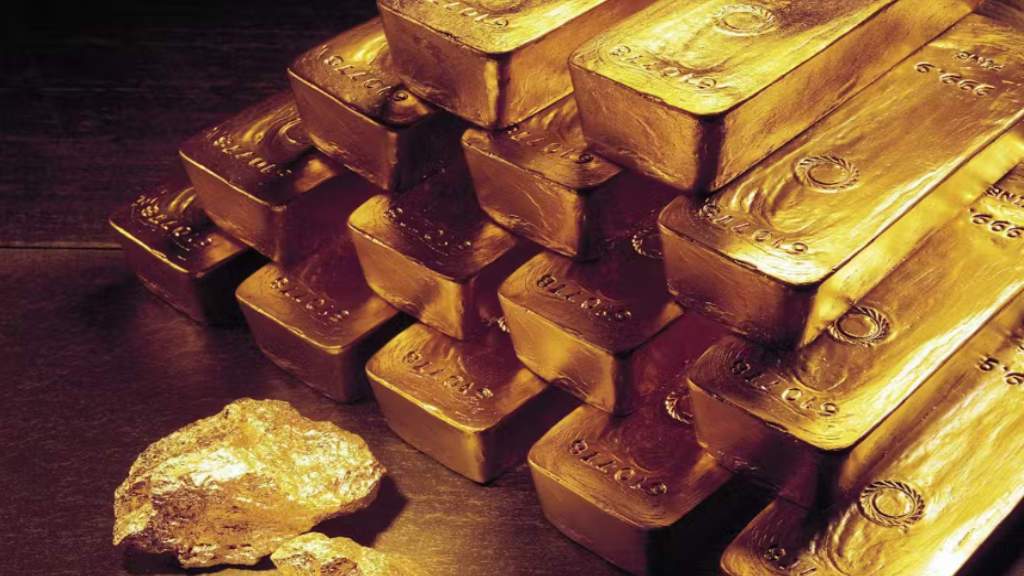
Russia’s precious metals exports to China nearly doubled in the first half of 2025, with gold leading the way as prices continue to soar.
Shipments of Russian gold, silver, and other ores sent to China shot up by 80% compared to the same period last year. The jump lines up with a sharp rally in bullion prices, which have gained around 28% so far this year. The price movement are being pushed by central banks stacking reserves, trade friction between the U.S. and its partners, and investors pouring into exchange-traded funds trying to shield themselves from market uncertainties.
The Bank of Russia was once the biggest central bank buyer of gold but has been sanctioned out of the world’s top trading venues: London and New York. Instead, Russian miners are now targeting Asian demand. A new gold trading bourse will shortly open in St. Petersburg, bringing competition to what was once Western dominated trading.
Russia mines over 300 tons of gold annually, making it the second-largest gold producer in the world. That supply needs a home. For now, most of that is going to China, with Russian palladium and platinum supplies also increasing due to demand from China’s manufacturing sectors.
China and India are the world’s largest consumers of gold, with much of the demand driven by jewellery consumption, but also for some industrial processes and as an investment. In China’s case, official gold reserves have reached 2,292 tonnes, with a significant portion of it being added in the Q1 this year. This was driven by consistent monthly purchases by the People’s Bank of China (PBOC), making its eighth consecutive month of gold accumulation. The PBOC’s strategy is seen as a long-term effort to diversify reserves and reduce reliance on the US dollar.
Palladium is a precious metal primarily used in catalytic converters for vehicles to reduce harmful emissions. It has applications in electronics, dentistry, jewellery, and as a catalyst in various chemical reactions.
Platinum’s primary uses include catalytic converters in vehicles, jewellery, and numerous industrial applications. It is a key component in medical devices, electronics, and fuel cells. Its unique properties, such as a high melting point, resistance to corrosion, and catalytic ability, make it a valuable metal across diverse industries.
Russia’s Norilsk Nickel, is the country’s major producer of palladium and platinum and has turned its focus entirely towards Asia. Prices for palladium are up 38%, and platinum has jumped 59% so far this year. Other metals are following suit. Spot silver gained 0.4% to hit US$38.33 per ounce, platinum added 1.1% to reach US$1,437.53, and palladium climbed 1.3% to US$1,256.98.
Gold prices typically react to global politics especially when the global situation becomes tense. On Monday (July 21), spot gold rose to US$3,369.02 per ounce, while U.S. gold futures hit US$3,376.40. The jump was helped by a weakening U.S. dollar, which slipped 0.2% against other major currencies. That drop made it easier for non-dollar holders to jump into the market and buy gold.
Tim Waterer, a Chief Market Analyst at KCM Trade, stated: “The US dollar has made a subdued start to the week, which has left the door open for gold to post gains early doors with tariff deadlines looming large. The closer we move towards the key August 1 deadline without any new US trade deals emerging, the more likely gold is to start another run towards the US$3,400 level and perhaps beyond.”
Russia has the world’s fifth largest Central Bank gold reserves at 2,332.7 metric tons and possesses an estimated 12,000 metric tons that remain unmined.

 Русский