News

Russian Foreign Ministerial Statements and Q&A At The Shanghai Cooperation Organisation: Content & Analysis  

Published on July 16, 2025

The Russian Foreign Minister, Sergey Lavrov, has summarised his meetings with the Foreign Ministers of the Shanghai Cooperation Organisation (SCO) which has been held in Tianjin, China. These are important geopolitical discussions, with the SCO including full members Belarus, China, India, Iran, Kazakhstan, Kyrgyzstan, Pakistan, Russia, Tajikistan and Uzbekistan. Afghanistan and Mongolia are observers, while Armenia, Azerbaijan, Bahrain, Cambodia, Egypt, Kuwait, Maldives, Myanmar, Nepal, Qatar, Saudi Arabia, Sri Lanka and the UAE are dialogue partners.

In his summary, Lavrov commented on developing a Greater Eurasian Partnership, Ukraine, the Israel-Iran conflict, Palestine, Afghanistan, the upcoming SCO 2026-2035 Strategic Development Plan, Trumps’ new 100% secondary sanctions, Laos joining the SCO, several questions relating to Iran, NATO’s expansion into Asia, and comments concerning Taiwan.     

We prefix his comments as SL and our observations as RPA.

SL: “Colleagues, good afternoon. We have travelled extensively together and have now reached the final destination of our tour – the city of Tianjin, where the meeting of the SCO Council of Foreign Ministers has just concluded. This marked the culminating stage of preparations for the upcoming SCO Summit, which will likewise be held here in Tianjin in late August – early September of this year.”

RPA: The SCO summit will be attended by the Heads of State of SCO nations, including Russian President Putin. It will be held from August 31-September 1.  

SL: “All participants unanimously acknowledged the business-like, focused nature of our work. In this context, we attach particular significance to this morning’s meeting with President of the People’s Republic of China Xi Jinping, who shared his assessments of joint efforts under China’s chairmanship and his vision of the key tasks for the progressive development of our Organisation.

The discussion confirmed a shared understanding of the growing importance of the SCO’s collective potential in both regional and global affairs. Nuances in national approaches persist – this is inevitable – yet the prevailing trend towards further consolidation of the SCO and the enhancement of its role on the international stage is encouraging.

We affirmed that our common approach of strengthening the SCO as one of the central pillars of a more equitable, multipolar world order remains unchanged. This fully accounts for the representative composition of the Organisation’s participants we see today, as well as the considerable number of nations seeking to join the SCO’s work.”

RPA: Lavrov implying that further additions to the SCO membership could be made. If so, this is likely to include new members from Central Asia, the Middle East, and possibly North Africa. Laos has already been accepted as a new SCO member.   

SL: “The geographical scope of our structure spans a significant portion of the Eurasian continent. We noted that cooperation within our Organisation objectively contributes to the creation of an architecture of equal and indivisible security across Eurasia. We regard the Greater Eurasian Partnership, based on cooperation among existing multilateral associations in the region – first and foremost the SCO, the EAEU, the CIS, and ASEAN – as its socio-economic foundation. We also take into account China’s Belt and Road Initiative, including existing agreements between this project and the EAEU. Within the framework of this approach, readiness was reiterated to maintain close coordination of actions within the United Nations.”

RPA: There have been consistent discussions concerning the SCO and its collaboration and cooperation with other regional bodies as part of a proposed “Greater Eurasian Partnership”. While the West tends to view the SCO as a security bloc, it also includes other remits, including the promotion of trade. Here, the CIS and EAEU are obvious partners, and includes SCO dialogue partners Armenia, and Azerbaijan, while ASEAN includes Bahrain, Cambodia, Indonesia, Laos, Malaysia, Myanmar, Philippines, Singapore, Thailand and Vietnam. China’s Belt & Road Initiative includes 150 countries.

While the Greater Eurasian Partnership is not a reality at present, it remains a long term strategic Russian vision and would also encompass the European Union.    

SL: “We reviewed progress in implementing the proposals to enhance the SCO’s activities approved at the 2024 summit. Preparations are nearing completion for draft agreements on establishing a ‘Universal Centre for Countering Challenges and Threats to Security’ in Tashkent and an Anti-Drug Centre in Dushanbe. A structure to combat organised crime is planned for deployment in Bishkek.

We expressed support for further expanding the SCO’s engagement with external actors. A new step in this direction will be the upcoming high-level meetings in the SCO+ format at the Tianjin Summit – the first of its kind. This event will immediately precede the meeting of the Council of Heads of State on September 1, 2025.

We anticipate the participation of representatives from approximately 30 states and multilateral organisations in this event. This underscores the SCO’s growing constructive agenda and its appeal to nations of the Global South and the World Majority.”

RPA: Participants in the proposed SCO+ have not yet been revealed. They are however likely to include all current SCO observers and dialogue partners we listed above, in addition to other interested parties. Lavrov’s reference to the Global South is of particular interest in this regard.

SCO Map

SL: “Today, we held in-depth discussions on pressing international and regional issues. We provided our colleagues with detailed assessments of the latest developments in Ukraine and reaffirmed our well-known approaches to resolving the crisis, repeatedly articulated by President of Russia Vladimir Putin.

In turn, our partners demonstrated an understanding of these positions. Once again, we emphasised the necessity of addressing the root causes of the conflict, recognising the existing territorial realities, and guaranteeing the legitimate rights of Russians and Russian speakers, including in the areas still controlled by the Kiev regime.”

RPA: Lavrov signalling that the SCO Foreign Ministers understand the Russian position. 

SL: “We also unanimously condemned Israel’s attacks on civilian infrastructure in Iran. Let me remind you that on June 14, immediately after these aggressive attacks, the SCO promptly released a statement. Similarly, the US strikes on Iranian nuclear facilities were qualified as blatant violations of the UN Charter and the Treaty on the Non-Proliferation of Nuclear Weapons. We also reaffirmed our commitment to safeguarding Tehran’s legitimate right to the peaceful use of nuclear energy.”

RPA: Iran is an SCO member and took part in substantial bilateral discussions in its own right during the SCO meetings. Tehran is also supported by neighbouring Pakistan and counts China as well as most of the SCO member states as strategic allies.

SL: “Regarding the developments in the Middle East, it was noted that sustainable stabilisation in the region is impossible without a just and comprehensive resolution of the Palestinian–Israeli conflict, strictly in line with the UN decisions. As an urgent measure, all participants called for the immediate cessation of actions that further exacerbate the humanitarian catastrophe facing the Palestinian people.”

RPA: The damage caused to Israel’s foreign relations as concerns its handling of the Palestinian issue will be extremely difficult – and complex – to resolve, if ever. It appears apparent that without the support of the United States and Europe, Israel would be a failed state.

SL: “We also discussed ways to strengthen regional security, with particular focus on Afghanistan. Nearly all SCO member states are actively deepening their bilateral relations with Kabul. We share a common understanding of the importance of supporting Afghanistan’s reconstruction and ensuring its sustainable development as an independent, neutral, and peaceful state, free from terrorism and drug trafficking. It was underscored that fostering a process of national consensus and ensuring ethnic and political inclusivity in government structures remain key priorities.”

RPA: Lavrov is referencing Moscow’s recent decision to recognise the Taliban as the recognised government of Afghanistan and is asking SCO members consider doing the same. 

SL: “In addition, we reviewed the progress in preparing key documents to be presented at the upcoming leaders’ summit. As per tradition, our approaches to cooperation within the SCO and coordinated stances on current global and regional issues will be reflected in the Tianjin Declaration.

The long-term vision for the SCO’s evolution was also discussed. These strategic guidelines, building on the accumulated experience of the ongoing upgrading, will be enshrined in the SCO Development Strategy through 2035. The current ten-year strategy, adopted at the 2015 Ufa summit, will conclude in 2025.” 

RPA: The SCO Development Strategy 2026-2035 will be a thought-provoking document and will be finalised after the Heads of State summit. We will feature its contents and provide analysis when it is released.   

Question: What is your perspective on the “new plan” proposed by US President Donald Trump concerning Ukraine? Is Russia willing to continue dialogue with the United States on the Ukrainian settlement and bilateral normalisation following Washington’s recent declarations? How do we evaluate the threat of 100% tariffs being imposed on our trading partners in terms of Russia’s foreign economic interests?

SL: “We never pursue policies that harm our national interests or compromise the security of our nation. The special military operation is precisely aimed at decisively removing the threats that NATO has been systematically constructing directly on our borders – not for a day, nor a year, but for decades. Russia has issued repeated warnings. President Vladimir Putin has devoted numerous speeches and statements to this issue. Regrettably, he was not heeded. This only corroborates what President Putin recently recounted in his interview with Pavel Zarubin regarding how his – and our collective – perception of relations with the West has evolved. Initially, it appeared that removing ideological differences would be sufficient for improvement. Later, it became evident that ideology was not the issue – the West (irrespective of whether the Russian Empire, the Soviet Union, or post-Soviet Russia was concerned) has been driven by one objective alone: the geopolitical containment, suppression, or even outright military destruction of Russia, as history has witnessed more than once. As Presidential Press Secretary Dmitry Peskov noted, we genuinely seek to comprehend what underlies this “50-day” declaration – previously, there was discourse of “24 hours,” then “100 days.”

We want to understand US President Trump’s motivations. Clearly, he faces immense – I would even say, improper – pressure from the European Union and NATO’s current leadership, who brazenly endorse Vladimir Zelensky’s demands to continue arming his regime with modern, including offensive, weaponry, all at growing expense to Western taxpayers. There is a Russian proverb: “Do not dig a pit for others.” The sanctions recently imposed by the EU – and those being prepared anew in Brussels – are now attempting to drag the United States into this “sanctions vortex.” Yet President Trump explicitly stated that Europe would bear the cost of prolonging the conflict. All this has already inflicted severe damage on the European economy. Objective European analysts, economists, and political scientists concede that the primary casualty of this sanctions war is its very architect. An unprecedented volume of sanctions has been levied against us. We are managing. I have no doubt we will prevail – a conclusion supported by independent assessments and analyses, including those from many Western economists and policymakers.

As for our trade counterparties, they can hear what has been said. But they can hardly predict their actions now. They have their international obligations. Knowledgeable of our partners, I cannot see how they can give up their independent policy, the policy of observing agreements achieved both through two-way channels and under multilateral formats.”

RPA: We have noted separately that US Senator Lindsay Graham, the architect of the proposed 500% secondary sanctions, earlier this week issued statements that singled out China, India and Brazil (all BRICS members, with China and India also full SCO members), as ‘despicable’ for continuing to trade with Russia. We also note that in terms of international dollars, the GDP purchasing power of these three countries is currently US$60 trillion, just over double the US purchasing power of US$29 trillion. While Lavrov has been coy about any tariff responses, the issue will certainly have been discussed between Lavrov and the respective SCO ministers. His opinion appears to be that they will not drop trade with Russia. A significant motivation not to do so is that their economies are currently doing well and are effectively powered by Russia-sourced energy imports.      

Question: Could you share the details of your meeting with Xi Jinping, what kind of message you conveyed to him from President Vladimir Putin? What other states are interested at the moment to join the SCO? Which of its initiatives could turn useful for reducing the risks of geopolitical crises sprawl?

SL: “As for the conversation between the SCO ministers of foreign affairs with President of China Xi Jinping and the following conversation with Russian delegation, we discussed the principled matters of developing the SCO and the initiatives of the Chinese chairmanship, which are already well known. At the bilateral meeting we discussed our coordination in the foreign policy area in conformity with the principled strategic reference points agreed earlier by President of Russia Vladimir Putin and President Xi Jinping. As you should understand, we will not go into details now.

As for those wishing to join the SCO, it was decided to grant SCO partner status to Laos. Most of the countries that want to join the Organisation will participate in a new format, which will appear on September 1, right after the SCO summit. This format is called SCO+. It will comprise about 30 countries and multilateral organisations.”

RPA: Lavrov confirms that Laos (a member of ASEAN) has joined the SCO. 

Question: On July 15, on the sidelines of the SCO Summit, you held a meeting with Foreign Minister of Iran Abbas Araghchi. Did you discuss Russia’s proposal to take excess enriched uranium out from Iran and practical steps to implement this proposal?

SL: “We discussed realistic approaches to ensuring a solution which would be achieved through peaceful, political, and diplomatic efforts with due respect of the decisions that the Islamic Republic of Iran had made a long time ago, namely the official renunciation by Tehran of possessing nuclear weapons. No evidence to the contrary has ever been presented by anyone, including IAEA inspectors.

The second important principle is not to infringe on Iran’s lawful rights, like those of all other non-nuclear members of the IAEA and the Treaty on the Non-Proliferation of Nuclear Weapons, regarding uranium enrichment for energy purposes. We will continue to discuss with our friends the specific possible steps in this regard, and available technical and negotiating opportunities.”

RPA: Lavrov alludes here to the SCO possibly providing nuclear technical support to Iran. There have been reports elsewhere that Pakistan was prepared to provide Iran with nuclear weapons to defend itself which would render the current state of affairs with Israel and the United States irrelevant. It has been noted that North Korea’s possession of nuclear weapons has helped protect the country from US aggression.     

Question: Was there any discussion at the SCO or during bilateral meetings about providing practical assistance to Iran in restoring infrastructure destroyed by Israeli-American air strikes?

SL: “The Iranian side did not make such requests.”

Question: You mentioned that Moscow was trying to understand where US President Trump’s statements were coming from. Just before Trump, US Senator Lindsey Graham stated in about the same language that Brazil, China, and India were playing into Putin’s hands. You’ve made it clear that Moscow has no particular concerns regarding its partners, but I’d like to ask you if there is any potential for joint action by the SCO or BRICS regarding this threat.

SL: “Washington kept uttering specific threats targeting BRICS to the effect that BRICS needs to be opposed and that it undermines US interests. However, US President Trump has expressed a somewhat different view on earlier occasions. He stated that the actions taken by the Biden administration, which weaponised the US dollar, have irreparably damaged the standing of this global reserve currency.

I’m sure he understands that this is a fair assessment and that in response to the mayhem caused by the previous administration, BRICS, the Community of Latin American and Caribbean States, and many other associations are considering alternative payment methods that do not include the US dollar and are thus immune to Washington’s behaviour.

This process can no longer be stopped. There are statistics that show the share of the US dollar in global trade and international financial transactions. This is not because we wanted to flee from the US dollar. President Putin has underscored this point many times. The US dollar was used to punish those whose behaviour – as seen by the Americans – was inconsistent with the infamous “rules” which they want to use as a foundation for the world order.

On a serious note, our diplomatic profession is not to fear things, but to push for proper consideration of Russia’s interests, and to work openly and honestly based on international law and the agreed-upon principles. A strong and independent country with a sense of dignity cannot behave otherwise. We have every reason to believe that the BRICS countries are also sovereign entities and appreciate their standing within the global system.”

Question: American media outlets claim that the United States is currently pressuring its allies in Japan and Australia to determine how they will assist Taiwan in the event of a conflict. Simultaneously, the US and its allies – 18 nations – are launching the largest-ever military exercises in Australia, involving tens of thousands of troops. What, in your view, is driving this latest escalation of tensions in the region?

SL: “This is not a new escalation. It may represent a new phase of the very same escalation that began quite some years ago, when the United States of America introduced the concept of developing and implementing Indo-Pacific strategies. By this, they mean the Asia-Pacific region – a term that has always been used without any inherent disadvantage.

The Indo-Pacific strategies symbolise NATO countries’ ambitions to extend their infrastructure into the Far East, Southeast Asia, and Northeast Asia, forging alliances with a nuclear core, such as AUKUS (the United States, United Kingdom, and Australia) and the trilateral partnership between the United States, South Korea, and Japan. These alliances are conducting increasingly large-scale exercises, including nuclear components, among many others. The US-backed Indo-Pacific Quad incorporates New Zealand, Australia, Japan, and South Korea. All this is accompanied by the eastward expansion of NATO infrastructure – even in dangerous forms, such as supplying the Philippines with ground-based intermediate and shorter-range missiles, previously prohibited under the US-Russia treaty.

This highly advanced weaponry will appear in Southeast Asia for the first time. Similar deployments are advancing into Europe, including Germany. Thus, the entire process reflects NATO’s aggressive eastward push. They sought to absorb Ukraine, stumbled, but persist in pretending they will inevitably achieve their goal. Concurrently, as they exploit Ukraine as a spearhead of their increasingly ineffective strikes against Russia, they are likewise advancing eastward. Their objective is to impose NATO-centric control over the security landscape across the entire Eurasian continent – eschewing constructive alternatives for an open, equitable security architecture that includes all continental nations of Eurasia without exception. Such a framework is championed by Russia, the People’s Republic of China, and our allies and like-minded partners.

Regarding Taiwan, you are aware that speculation and provocations on the Taiwan issue are proliferating. For instance, a journalist recently drew French President Emmanuel Macron into this logic by declaring that NATO would not interfere in Asian affairs if China ensured the Democratic People’s Republic of Korea did not meddle in Europe. How does that sound? The same Macron suggested that if Russia were permitted to seize control of part of Ukraine, what might happen to Taiwan? This is an overtly provocative statement. The West continues to assure the People’s Republic of China that it adheres to the One China principle yet immediately qualifies this by asserting the status quo must remain untouched. The status quo in practice means the West engages with Taiwan as an independent state, arms it, and emphatically underscores the trappings of its sovereignty.”

Further Reading

China – Shanghai Cooperation Organisation Demo Zone TIR Shipments Increase

Commonwealth Of Independent States 2025 GDP Growth Data and Trade: Analysis

Published on July 16, 2025

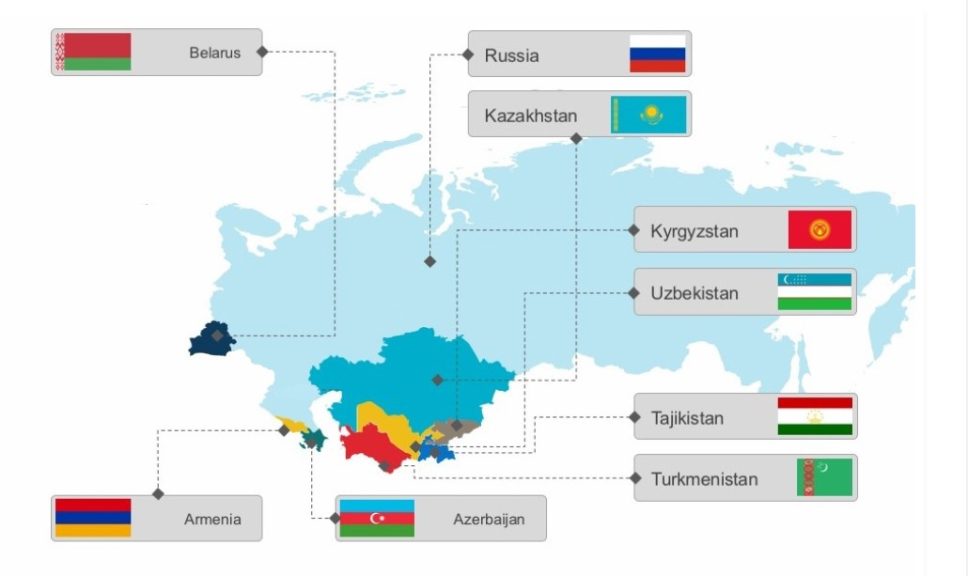
The member countries of the Commonwealth of Independent States are illustrating good economic growth during 2025, according to forecasts taken from Eurasian Development Bank data. They are averaging GDP growth rates for the year at 4.7%. Details are as follows:

Country2025 GDP growth forecast
Armenia              4.5%  
A return to normality following conflict with Azerbaijan.
Azerbaijan      3.5%  
The non-oil sector is a key growth driver, oil and gas sector may see a more moderate expansion.
Belarus      3%  
Strong early-year results and expected expansion of credit support for investment.
Kazakhstan      5%  
Growth driven by transport, logistics, manufacturing, mining and construction.
Kyrgyzstan    11.7%  
Strong consumer demand supported by a sharp rise in remittances.
Russia    1.4%  
Slowdown due to impositions of Western sanctions.
Tajikistan     7.4%  
Strong economic growth, supported by investments in energy and industry, consumer demand, and private sector development.
Turkmenistan * 6%
The successful implementation of socio-economic development programs.
Uzbekistan     6.5%  
Strong domestic demand, supported by high real wages, increased remittances, and investment. 
*note Turkmenistan is an associate, not full member of the CIS, but follows CIS trade guidelines and regulations.    
CIS map

Fundamental Indicators

CIS

Much of this growth appears to be economically driven by Russia’s pivot to Asia. According to the United Nations COMTRADE data, we note that Russia’s exports to the CIS countries rose from US$55.2 billion in 2021, to US$104.53 in 2024, according to data gleaned from their respective customs agencies. This indicates annual export growth of an average 20% per annum in current Russian-CIS trade flows. This flow of trade from Russia to the CIS is having a positive effect on the local economies.

Comparison With Europe 

EU

In contrast, the average GDP growth rate for the European Union, and the United Kingdom, according to the IMF’s World Economic Outlook, is set to be 1.2%, a rate lower than Russia’s – with all the disadvantages of the sanctions placed upon it.

Structural Distinctions, The Eurasian Economic Union, & BRICS

The CIS is a slightly different trade organisation to the European Union, as it doesn’t have a rigid set of intra-trading regulations and tariffs on a uniform basis. It also does not have a common currency, with members free to use their own respective monies. This has had two effects, one being a more liberal trade policy, where CIS members agree their own bilateral trade arrangements rather than a complex set of regulations that unify all. Secondly, the use of sovereign currencies rather than a singular regional one has also proven to be more flexible as local dynamics can reflect real value at any one time. In short, the CIS arrangements provide more flexibility.

However, because the CIS is not a customs union per se, it cannot (and does not) enter into Free Trade Agreements with other countries or blocs.

It should also be noted that several of the CIS members are also members of the Eurasian Economic Union (EAEU) which does have specific intra-bloc customs and tariffs agreements. These are Armenia, Belarus, Kazakhstan, Kyrgyzstan, and Russia. The EAEU has signed Free Trade Agreements (FTA) with China, Vietnam, Iran, and Serbia and is currently in negotiations with India, Indonesia, Egypt and the UAE amongst others. However, these FTA can also be flexible. The EAEU-China FTA is non-preferential, meaning that decisions on products and tariffs can be made on an ‘as need’ basis without the requirement to enter into lengthy, multi-year negotiations. The BRICS operates its bloc trade agreements under similar principles. This has already proven to be advantageous when dealing with sanctions and the unpredictable nature of US President Trump’s administration in changing tariffs from one week to the next.             

In contrast, the EU has a rigid set of intra-bloc trade agreements that are centrally imposed from Brussels and do not always reflect individual members wishes. The recent stand-off between Brussels and EU members Hungary and Slovakia is illustrative. The EU has also found itself to some extent in the same position as Russia – with the United States also imposing trade tariffs upon it.   

It should also be pointed out that the CIS, EAEU and BRICS also hold rotating Presidencies (as does the Shanghai Cooperation Organisation), with each member taking on the role for twelve months at a time. While the EU has the same structure, due to its size it limits this to just 6 monthly periods, which compacts and reduces effectiveness. In addition, the EU appoints a select European Commission, based in Brussels to take decisions. This commission does not include all EU member states, which tends to limit decision taking to a select group.      

Summary

The developing trade and growth of the CIS bloc, as well as the BRICS group and EAEU showcase several new issues in terms of multilateralism. Firstly, the fairly basic illustration that regional trading with Russia is economically beneficial. Economies that cut themselves off from Russian resources, and especially energy, have been seen to decline.       

The second observation is more intangible however of great importance when designing a new world order, and it is that federalism, in the guise of bodies such as the European Union, may not be the most appropriate structures in today’s more unpredictable trade and commercial environment. A lack of flexibility and an over-reliance on strict regulatory systems, coupled with a tendency to restrict decision-making to a few executive bodies rather than the whole structure are now showing their inefficiencies. Deregulation is key. The flexibility of the CIS, and international trade structures built along similar lines, appears to be a viable model for redesigning both regional and global institutions.        

Further Reading

International Container Transport In Commonwealth Of Independent States Grows 15.5%

Laos Joins Shanghai Cooperation Organisation As A Partner

Published on July 16, 2025

Laos has joined the Shanghai Cooperation Organisation, (SCO) following meetings held by the SCO Foreign Ministers in Tianjin, China.

The SCO includes full members Belarus, China, India, Iran, Kazakhstan, Kyrgyzstan, Pakistan, Russia, Tajikistan and Uzbekistan. Afghanistan and Mongolia are observers, while Armenia, Azerbaijan, Bahrain, Cambodia, Egypt, Kuwait, Maldives, Myanmar, Nepal, Qatar, Saudi Arabia, Sri Lanka and the UAE are also partners.

The SCO remit is generally security based, although it does also include trade and development issues between members. Much of the attention during the Tianjin meetings revolved around regional security, including anti-terror issues, extremism, and the drugs trade. 

Laos faces a significant drug problem, particularly with opium and heroin production, driven by its location in the Golden Triangle region and the difficulty of controlling borders. The country was once a major opium producer, and narcotics trafficking remains a challenge due to remote border areas, poor communication, and limited resources. While Laos has implemented counternarcotics initiatives, the remoteness and logistical hurdles hinder effective control. The SCO will be able to provide assistance.

Laos map

Laos is strategically situated in Southeast Asia, and although it does not enjoy sea access, it nevertheless links several regional ASEAN countries.

About 85% of its population work in agriculture, with 90% of the arable land being planted for rice. Peanuts, cotton, tea, tobacco, corn, sweet potatoes, and sugarcane are also grown. Technically, the Lao industry lacks adequate equipment. Mining is the most advanced. The primary sources of GDP are the exploitation of gypsum, copper, tin, gold, and oil. Agricultural products and natural resources make up the bulk of Laos’ exports. The main exports are wood, clothing, coffee, electricity, metals, corn and rubber. The main imports are telecommunications equipment, trucks, metal structures, rolled metal products and hydraulic turbines.

Through its membership in ASEAN, Laos increasingly trades with its ASEAN neighbors as well as China. The Council of the Eurasian Economic Commission (EEC) granted Laos the status of a user country of the unified system of tariff preferences of the EAEU with 0% of the base rate of import duty. Laos has also been given Generalized System of Preference (GSP) status by multiple countries, including Belarus and Russia, while Kyrgyzstan also grant Laos goods tariff-free protection. In 2016, a Trade and Investment Framework Agreement was struck between the United States and Laos. It also has additional bilateral agreements with Argentina, India, Kuwait, Mongolia, North Korea, and Turkiye. In January 2022, Laos became a member of the Regional Comprehensive Economic Partnership (RCEP).

Laos has an area of 236,800 sq km and a population of 7.7 million. It has a GDP (PPP) of US$79 billion, a GDP per capita (PPP) of US$10,112, and an expected 2025 GDP growth of 3.5%.

Further Reading

Russia-Laos Bilateral Relations: 2025 Update

Russia, Iran Bilateral Developments: July 2025 Update

Published on July 16, 2025

Russia’s Foreign Minister, Sergey Lavrov, met with Foreign Minister of the Islamic Republic of Iran Abbas Araghchi on July 15, (Tuesday) on the sidelines of the Shanghai Cooperation Organisation’s (SCO) Foreign Ministers Council Meeting in Tianjin, China. 

They continued their exchange of views on regional and international issues of mutual interest. They reiterated the imperative of resolving the crisis surrounding Iran’s nuclear programme exclusively through political and diplomatic means, in strict compliance with international law.

In terms of Iran’s nuclear programme, Tehran says this is required to provide electricity generation for the country and to provide it with electricity export capabilities to neighbouring Pakistan, where Baluchistan Province has become unstable and subjected to terrorism. Pakistan is energy poor yet wants to industrialise and get its 247.5 million population properly to work. Giving it access to Iranian energy exports would be a huge boost. Israel however continues to stand in the way on the basis that Iran could also develop nuclear weapons. Any future aggression over Iran could later involve Pakistan, a fellow SCO member.

Araghchi also addressed the SCO Ministers and proposed the establishment of “a permanent mechanism to monitor, document and coordinate responses to military aggression, acts of sabotage, state terrorism, and violations of national sovereignty of member states.” He also suggested launching a regional security forum involving defence and intelligence agencies. However, that would lock the SCO into a de facto alliance against Israeli / United States aggression and could provoke unwanted reactions from Washington.

For Iran, SCO membership opens avenues for diplomatic and economic ties beyond the West. Additionally, Iran received a major diplomatic boost at the BRICS summit in Brazil last week following the Israel-U.S. strikes on its nuclear facilities. China and Russia both said they were aligned with Tehran’s position, which could assist in obtaining more SCO collective support. Iran also has strong relations with fellow SCO members, and especially Pakistan. 

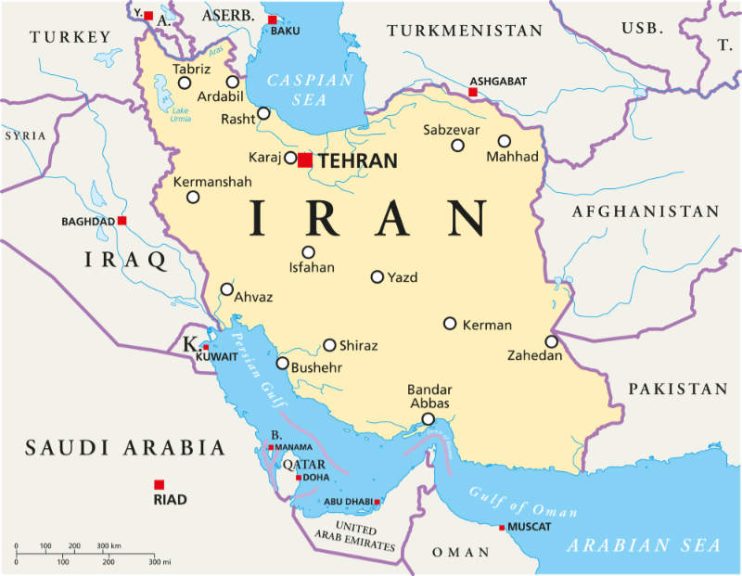
IRAN Map

There have been other recent regional developments regarding Iran, which is a key part of the International North-South Transport Corridor (INSTC) which provides freight access between Russia and South Asia. These include extending the Agro-Express high speed rail service to allow perishable items to transit along the route, an extension of the INSTC rail network to Baghdad, development of a combined Commodities Exchange with CIS countries, the creation of a Russo-Iranian shipbuilding consortium to deliver vessels for Caspian Sea use, and joint Russo-Iranian satellite production, among others.

Further Reading

Eurasian Economic Union, Iran, Free Trade Agreement Effective From May 15

Russia, India, Bilateral Relations: July 2025 Update  

Published on July 15, 2025

The Russian Foreign Minister, Sergey Lavrov, met with the Indian Foreign Minister  Subrahmanyam Jaishankar, on the sidelines of the Shanghai Cooperation Organisation Foreign Ministers’ meetings in Tianjin, China. The two foreign ministers engaged in a comprehensive discussion on pivotal bilateral and international issues, as well as the forthcoming schedule of diplomatic engagements. They reiterated their commitment to further strengthening the multifaceted Russia-India special and privileged strategic partnership at all levels. Particular focus was also given to the situation around Ukraine and the ongoing developments in the Middle East.

Both sides agreed to continue to align their strategies for Russia-India cooperation within key multilateral frameworks, and discussed various aspects of bilateral cooperation, as well as regional and international security issues. Both Russia and India are full members of the BRICS, and the Shanghai Cooperation Organisation. They are also involved in negotiating a Free Trade Agreement between India and the Eurasian Economic Union (EAEU).

In 2024, Russia and India achieved a record bilateral trade turnover of US$70.6 billion, marking a 9.2% increase compared to 2023, according to Sberbank. Russian exports to India reached US$65.7 billion, driven by agricultural products, while Indian exports to Russia were US$4.9 billion. This surge in trade is partly attributed to the International North-South Transport Corridor (INSTC) and a diversification of imports, alongside a strategic partnership.

US Senator Linday Graham has been highly critical of India as part of his campaign to increase sanctions pressure on Russia. Earlier this week, he described India as ‘despicable’ for continuing to purchase Russian gas and then re-sell it. Graham also singled our China and Brazil for secondary sanctions should these take effect ‘within 50 days’.

The combined international dollar purchasing value of China, India and Brazil in GDP terms is US$60 trillion, slightly more than double the United States value of US$29 trillion. Should the sanctions take effect, they will come into operation at about the time of the upcoming Shanghai Cooperation Organisation heads of state summit, also to be held in Tianjin from August 31 to September 1. China’s President Xi Jinping will host the event, with Russia’s President Vladimir Putin and India’s Prime Minister Modi all attending together with other SCO members heads of state. A SCO-Plus event is also to be held, as is a huge Chinese military parade on September 3 to mark the end of World War II in Asia.

The Shanghai Cooperation Organisation is a Eurasian security, humanitarian and trade group. It was originally established in 2001 to deal with the issue of American involvement in Afghanistan; but has now expanded its remit to cover a far wider geopolitical remit. Full members include Belarus, China, India, Iran, Kazakhstan, Kyrgyzstan, Pakistan, Russia, Tajikistan and Uzbekistan. Afghanistan and Mongolia are observers, while Armenia, Azerbaijan, Bahrain, Cambodia, Egypt, Kuwait, Maldives, Myanmar, Nepal, Nepal, Qatar, Saudi Arabia, Sri Lanka and the UAE are dialogue partners.

Further Reading

Russia Preparing For Key Shanghai Cooperation Organisation Heads Of State Meetings

Russia Preparing For Key Shanghai Cooperation Organisation Heads Of State Meetings

Published on July 15, 2025

The Russian Foreign Minister, Sergey Lavrov, is taking part in a meeting of the Council of Foreign Ministers of the Shanghai Cooperation Organisation (SCO) in Tianjin, China. Foreign Ministers of all the SCO members are present. These meetings are focused on preparations for the SCO Heads of State Council summit, also in Tianjin, which is to take place from August 31 to September 1. The Russian President, Vladimir Putin, is expected to attend.

That main programme will be followed by a “SCO Plus” summit, and a massive Chinese military parade in Beijing on September 3 to commemorate the 80th anniversary of the end of World War Two in Asia.

The Shanghai Cooperation Organisation is a Eurasian security, humanitarian and trade group. It was originally established in 2001 to deal with the issue of American involvement in Afghanistan; but has now expanded its remit to cover a far wider geopolitical remit. Full members include Belarus, China, India, Iran, Kazakhstan, Kyrgyzstan, Pakistan, Russia, Tajikistan and Uzbekistan. Afghanistan and Mongolia are observers, while Armenia, Azerbaijan, Bahrain, Cambodia, Egypt, Kuwait, Maldives, Myanmar, Nepal, Nepal, Qatar, Saudi Arabia, Sri Lanka and the UAE are dialogue partners.

Also taking place will be events involving senior officials from other international and regional organisations, which will showcase the SCO’s agenda for the countries of the Global South and the Global East. These can be expected to include representatives from the BRICS countries, Commonwealth of Independent States, and the Eurasian Economic Union amongst others.

The participants will discuss ways to advance the organisation and exchange views on regional and international priorities.

SCO Map

China currently holds the SCO chairmanship and is in a decisive phase, with Russia providing strong support to China’s efforts to implement its extensive action plans. The respective foreign ministry officials take part in high-level and expert meetings, various forums, and workshops, with numerous bilateral meetings between Ministers also taking place. Sergey Lavrov for example held meetings with China’s Wang Yi on Monday. Lavrov has also met with the Chinese President, Xi Jinping.   

Foreign ministers will discuss draft documents and resolutions to be submitted to their Heads of State for consideration for inclusion at the main September meetings.

The common vision for the further evolution of the SCO will be reflected in the Development Strategy to 2035. The outcomes of implementing a similar document, which was adopted at the SCO summit in Ufa in 2015, were analysed when working on the draft. That will be released at the Heads of State event.

Attending SCO member ministries and agencies are also preparing statements and documents on artificial intelligence, green industry, investment cooperation, and the digital economy. They are discussing the advances made in implementing the SCO foreign ministers’ proposals on improving the SCO’s activities, which were approved at last year’s summit. Expert consultations are underway on a draft agreement on creating an All-Purpose Centre for Countering Security Challenges and Threats that was put together by Russia in conjunction with Kazakhstan and Kyrgyzstan, as well as Tajikistan’s project on creating an Anti-Drug Centre.

Initiatives in other areas are also being developed. The approval at the summit of the 2026-2030 Programme of Cooperation in Countering Extremist Ideology within the SCO region (the document was prepared by the SCO Regional Anti-Terrorist Structure) is an important step in ensuring security.

The Ministers have also been holding a series of discussions on global and regional issues. The foreign ministers will exchange views on ongoing developments in the Middle East, and the state of affairs in the aftermath of the recent strikes by Israel and the United States on Iran.  They will discuss Afghanistan-related matters as well. US President Donald Trump’s threat to issue secondary, 100% sanctions on countries trading with Russia – with many of them being SCO members – will also have been discussed. 

For additional intelligence about the Shanghai Cooperation Organisation, please click here.

Further Reading

FESCO Plans To Set Up Transport and Logistics Hubs in China and India For SCO Trade Development

Russia, Oman, Agree Visa-Free Arrivals From July 18

Published on July 15, 2025

Russia and the Sultanate of Oman have agreed to waive visa regulations starting July 18, entitling tourists from both countries to visit for up to 30 days without visas, the Russian Foreign Ministry has stated, saying “Under the agreement, Russian citizens will be able to enter and stay in Oman without visas for up to 30 days during each visit, provided that the objective of their entry is not permanent residence, studying, or activities requiring a job permit. The total duration of stay must not be longer than 90 days during a calendar year. Citizens of Oman will be entitled to identical rights while visiting Russia.”

At present, Russian citizens can visit Oman as tourists for up to 14 days without visas, provided that they have a hotel booking and return ticket. The Russian Union of Travel Industry said it expected that the abolition of visas between Russia and Oman would promote mutual travel.

27,300 Russian tourists visited Oman in the first four months of 2025, up 62% from the same period in 2024. Oman saw particularly high numbers of Russian visitors in March and April, when the figures doubled year-on-year.

The tourist flow grew because of newly introduced direct air services, the opening of Oman’s tourism office in Russia, and investments in promotion, which enhanced confidence in Oman as a safe and promising destination. Russians are inclined to make long visits, 17 to 21 days, which is particularly important for non-Muscovites, who have to fly with transfers to get to Moscow.

The Omani Ministry of Heritage and Tourism expects to welcome twice as many Russian tourists in 2025 than in 2024 and increase this figure by another 150% in 2026. The Russian Economic Development Ministry said earlier that the number of Omani tourists visiting Russia had grown 5.4-fold year-on-year to reach nearly 10,000 in 2024.

Oman Map

Oman is strategically located in the south of the Arabian Peninsula, serving as a link between the Gulf region, Asia, and Africa, with a strong emphasis on trade and economic diversification.

Oman’s economy remains heavily reliant on oil and gas, which contribute significantly to government revenue and exports. The country continues to enhance oil recovery and expand natural gas production while actively diversifying its economy under Vision 2040. Key sectors such as tourism, mining, fisheries, and renewable energy are gaining prominence. Tourism is growing, fuelled by Oman’s cultural heritage, natural landscapes, and investments in luxury resorts and eco-tourism. Mining leverages vast reserves of copper, chromite, limestone, and gypsum, while fisheries and aquaculture benefit from government support to boost exports.

Manufacturing is crucial for diversification, focusing on petrochemicals, fertilizers, and aluminium, with industrial zones like Sohar Freezone and Salalah Free Zone driving growth. Renewable energy, particularly solar and wind, is a priority as Oman seeks to reduce reliance on hydrocarbons and lead in green hydrogen production. Logistics, supported by key ports in Duqm, Sohar, and Salalah, strengthens Oman’s role as a regional trade hub. Additionally, the country is advancing digital transformation, fostering growth in IT, fintech, and e-governance.

Oman is a member of the Gulf Cooperation Council (GCC), benefiting from regional free trade agreements that allow duty-free access and promote economic integration. Through the GCC, Oman has agreements with Singapore, the European Free Trade Association, and other key partners, while Oman’s membership in the Arab Free Trade Area facilitates trade within the Arab League. As a member of the World Trade Organization, Oman adheres to global trade rules and promotes multilateral trade. Bilateral Investment Treaties with countries like China, India, and Germany also boost foreign direct investment.

Russian businesses are increasingly interested in Oman as a business jurisdiction than the traditionally popular United Arab Emirates, whose status as the Middle East’s standard hub for registering companies and conducting settlements could be at risk from a tightening of Western regulatory requirements and sanctions compliance.

With a population of approximately 5.28 million, Oman has a GDP (PPP) of US$221.1 billion and a GDP (PPP) per capita of US$41,652. The economy is projected to grow by 2.2% in 2025.

Oman’s bilateral trade with Russia has seen steady growth, increasing from US$171.7 million in 2021 to US$250.8 million in 2022, and reaching US$500 million in 2024.

Further Reading

Post not found.

Russia To Begin Trading Gold On St. Petersburg Exchange

Published on July 14, 2025

Russia, the world’s second-largest gold producer, is to free itself from the current dependence of gold prices on the London Stock Exchange (LSE), and plans to launch gold trading on the St. Petersburg Exchange (SPIMEX) by the end of the year. One of the main objectives of the exchange when launching a new market is to ensure the formation of representative indicators of a competitive market price. Until recently, gold market participants relied on price benchmarks set by the LSE. Now, the LSE will face competition.

We noted the gradual movement away from Western-based trading and research facilities with the Russian establishment of the Institute of Oil & Gas Initiatives which is partially designed to be a competitor to the American Petroleum Institute. In this case, the United Kingdom doesn’t produce any gold, whereas Russia has significant reserves of the metal. 

However, London does have a massive repository for foreign gold, as has New York, but it doesn’t own, apart from the UK’s own reserves, most of this stock. However, this gold is literally under arrest as soon as any country tries to claim sovereignty over its own gold as the UK typically makes it difficult to transfer stocks.

Meanwhile, Russia is not only one of the largest gold producers but also stores its own gold in Russia. This means that Russian gold purchases for storage in its own reserves, instead of storing currencies from unfriendly countries, has become an important step towards de-dollarization and financial independence. As a result, Russia may be able to reduce its dependence on the prices of precious metals issued by the London Stock Exchange.

Igor Chernyshev, Managing Director of SPIMEX, stated that “The Russian government has been creating a national system of price indicators for key commodity groups, including precious metals. In the gold market, our goal is to ensure the formation of national price indicators that are independent of international benchmarks, based on the balance of supply and demand in the Russian market.”

It is expected that St. Petersburg will offer spot gold trading in the form of bars (one lot per bar). At the first stage, it is planned to launch trading in two types of bars: 1-kilogram bars and 12-kilogram standard (bank) bars. Subsoil users, refineries, banks, and industrial enterprises that purchase precious metals for or the production of industrial products (jewellery, catalysts, etc.) will be able to participate in the trading of precious metals.

Russia already has its own gold exchange at the Moscow Stock Exchange, which has a large physical metal trading section, used by both banks and the Central Bank. The duplication of the exchange in St. Petersburg will be also be open to BRICS countries and their traders and creates an alternative to Western markets which as has been noticed by other Central Banks, have demonstrated their ability to both freeze and sell assets that do not belong to them. 

The European Central Bank has recently commented that Gold has overtaken the Euro as the second-most traded financial commodity after the US dollar.  

Further Reading

Russian Joint Venture Gold Refinery in Mali Looking to Attain ‘Good Delivery’ Status

Russia To Provide BRICS, SCO, & EAEU Members With Satellite Data For Farmland Management   

Published on July 14, 2025

Data from remote sensing satellites for monitoring farmlands will be available to Russia’s BRICS partners, as well as to the member states of the Eurasian Economic Union (EAEU) and the Shanghai Cooperation Organization (SCO), Russian Space Systems said on Thursday (July 10).

They stated that “Data from the domestic orbital constellation of remote sensing satellites in the form of ready-made service solutions for agriculture will be available to Russia’s BRICS partners, as well as observer countries and, in the future, to the EAEU and SCO member states.”

The BRICS member states are planning to draw up a strategic plan to enhance cooperation in the agricultural sector this year.

Maxim Boltachev, of Russia’s Terra Tech (a Roscosmos subsidiary) said that “We have already proposed building the work of the new BRICS Agrarian Alliance on the Russian technological groundwork in the field of remote sensing and services based on space data and artificial intelligence.”

The parties will be able to access a single geoinformation platform, where data from satellite constellations of the participating countries will be transmitted, he said. “It will also be processed there, packaged into specialized analytical reports and digital products for users from government, scientific organizations and businesses.”

The ten BRICS full member nations possess about 46% of total global agricultural land. Satellite data plays an increasingly vital role in modern agriculture, offering valuable insights into crop health, soil conditions, and environmental factors. This data, often collected through remote sensing, helps farmers make informed decisions, optimize resource management, and improve overall farm efficiency.

Further Reading

Russia signs Strategic Satellite Agreements with Burkina Faso, Mali and Niger

Russia Increases Fertilizer Exports To Africa By 50% In Past Three Years

Published on July 14, 2025

Over the past three years, Russia has increased fertilizer supplies to African countries by 50%, to 1.9 million tonnes by the end of 2024, according to Maxim Kuznetsov, the CEO of the Russian Association of Fertilizer Producers (RAPU).

He said that “Over the past 3 years, we have increased supplies to African countries by 50%, to 1.9 million tons in 2024. And we will continue to support African countries in building food sovereignty. The potential of the African agro-industrial complex is huge. A sharp increase in agricultural production on the continent is possible due to the effective use of mineral fertilizers.”

According to him, Russia retains a leading position in the export of mineral fertilizers on the world market and ranks second in their production, surpassing the United States and India. Since 2013, fertilizer exports from Russia to other countries have increased by 60% (to 42 million tonnes), primarily due to the dynamic growth of supplies to friendly countries.

Kuznetsov added that “Last year, the Russian fertilizer industry, which includes 39 companies, set a historical record by producing 63 million tonnes of fertilizers. Since 2013, when a new investment cycle began in the industry, we have increased production by 60%. Russia provided a third—23 million tons—of the total global increase in fertilizer output.”

Further Reading

Russian Fertilizer Exports to India and Africa Show Huge Increases Amidst Global Price Rises

Gazprom, China National Petroleum Corp Discuss Strategic Partnership, Power of Siberia 

Published on July 14, 2025

Gazprom CEO Alexei Miller has met with the board chairman of China National Petroleum Corporation (CNPC) Dai Houliang in Beijing, with Gazprom stating afterwards that “We commend the progress and prospects of the strategic partnership between Gazprom and CNPC. Russian gas is being reliably exported to China via the modern Power of Siberia gas pipeline, the ‘eastern’ route, to the maximum volumes stated in the contract. Preventive maintenance operations on the pipeline were conducted without causing any interruption to gas supply in spring 2025, while the implementation of the ‘eastern’ route project is on schedule”.

In June 2025, Gazprom, CNPC and PipeChina signed a series of agreements regulating interactions during the process of commissioning and operating the cross-border section of the gas pipeline over the Ussuri River. Gas supply is scheduled to begin in 2027.

A Gazprom press release stated that “Alexei Miller and Dai Houliang paid special attention to prospective projects for Russian gas supply to China, taking into account the rapidly growing Chinese economy. Our mutually beneficial collaboration with our Chinese partners is founded on realistic expectations regarding the global energy market of the present and future. Reliable, traditional energy sources will continue to be in-demand for a long time. The cleanest and most efficient of them is natural gas. Natural gas will play a pivotal role in helping China achieve its environmental and economic goals in coming decades.”

Gazprom is working on the assumption that demand for gas in the country will undergo significant long-term growth. A series of China’s research agencies have forecast that gas consumption will reach 600-650 billion cubic meters by 2035-2040.

Power of Siberia Map

The Power of Siberia pipeline began supplying gas to China in 2019 as part of a long-term sale and purchase agreement between Gazprom and CNPC. Since 2020, supplies by Gazprom have exceeded annual contractual obligations. Daily supply via the Power of Siberia pipeline reached the maximum contractual level on December 1, 2024, one month ahead of the initial schedule.

A long-term sale and purchase agreement for the supply of natural gas along the Far East route was signed in February 2022. After the full ramp-up is complete, Russia’s pipeline gas exports to China will increase by 10 bcm to 48 bcm per year.

China’s need for securing Power of Siberia 2 routes was also enhanced last month after fighting between Iran and Israel broke out, increasing the likelihood of the Strait of Hormuz supply chain being blocked and further prioritizing Russian supplies.  

Further Reading

Planning Ahead: Russia & China Prepare Joint Energy Strategy to 2050