News

Russian, Moldova Politicians Discuss Agricultural & Transport Links As Elections Are Due

Published on July 14, 2025

Russian Deputy Prime Minister Dmitry Patrushev has met with leaders of several Moldovan political parties: Igor Dodon of the Socialists of the Republic of Moldova, Irina Vlah of the Heart of Moldova party, and Vasile Tarlev of the Future of Moldova party. Current Moldovan politics has become extremely partisan for a small country. In essence, it is largely divided between pro-European Union, and pro-Russian factions.  

Patrushev stated that during 2024, in the agro-industrial complex, which is traditionally one of the key areas of cooperation between the two countries, the volume of mutual trade fell by another 20%. In addition, Moldovan exports to Russia decreased by almost a third.

He emphasized that Russia is ready to develop mutual cooperation, including in the trade of agricultural products and the supply of mineral fertilizers. He stated that “In the event of a change in the political situation in Moldova, we are ready to develop joint cooperation, including in the trade of agricultural products and the supply of mineral fertilizers. In general, we expect that the Moldovan authorities’ position on regular contacts with the Russian Federation will be adjusted.”

The current Kiev leadership, under pressure from Brussels, agreed that Ukraine would cut off Moldovan imports from, and exports to Russia, leading to substantial shortages.  

The leaders of Moldova’s political parties also met with the new Russian Minister of Transport, Andrei Nikitin.

Nikitin said that Russia and Moldova traditionally have long-standing historical relations in the spirit of good neighbourliness and cooperation. “We need to establish transport links between our countries. Currently, for external reasons, there are a number of restrictions in terms of transportation by road as well as air. In the event of a warming of political relations, we are ready to assist in the issue of lifting restrictions on the issuance of permits to Moldovan cargo carriers.”

They noted the importance of developing transport links for citizens who move between the countries. In particular, they discussed the prospects of resuming direct flights. Tarlev said that “Today begins a dialogue that has not been held for four years. From the point of view of safety and other parameters, there are no obstacles to the resumption of direct flights. Hundreds of thousands of Moldovan citizens who are used to travelling to Russia are waiting for this.”

Currently, regular passenger bus routes Moscow–Chisinau and Moscow–Rezina operate between the two countries. However, this is not sufficient to fully meet the needs of passengers. The meeting participants see prospects for the development of transport cooperation and are considering the possibility of opening additional bus lines.
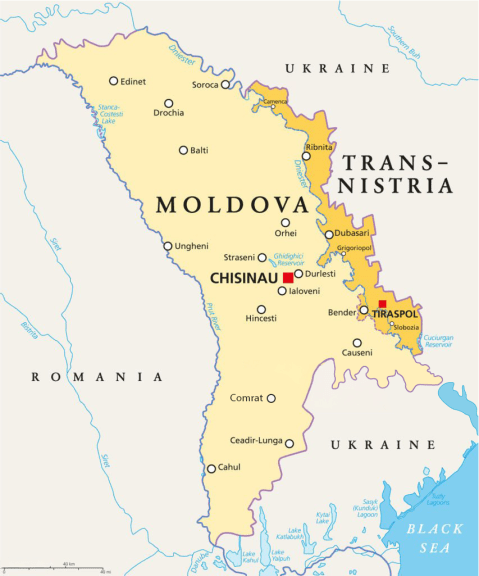
Moldova Map

Moldova borders Romania to the west and Ukraine to the north, east, and south. The republic has no access to the sea, but does have limited access to the Danube River, with the inland port of Giurgiulesti capable of receiving river-sea class vessels and small sea vessels.

Moldova’s economy is heavily reliant on agriculture, which plays a major role in the country’s development. Major agricultural products include cereals, industrial crops, fruits, vegetables, and viticulture, with the wine industry being particularly significant. Moldova’s fertile lands and favourable climate allow for the production of high-quality wines and various fruit-based products for export, with Russia a previously well-established export market.

After breaking away from the Russian energy ring in 2022, Moldova set a course for full synchronization with the European ENTSO-E network by 2026, diversification of supplies, development of renewable energy sources, and modernization of distribution networks—the EU has already allocated tens of millions of euros to these projects.

After Moldova signed an association agreement with the European Union in 2014, trade with Russia declined sharply. By 2015, it had fallen by 32%, with Russia’s share of Moldova’s exports declining from 70% to just over 3% in 15 years. In 2021, trade with Russia amounted to about €1.86 billion, and in 2024 had reduced to about €257 million.

In recent years the Moldovan government has pursued policies close to the interests of the European Union and has committed to an eventual membership. The Moldovan parliament, whose term has just expired (July 11), adopted a declaration at its last session committing to an irreversible course of European integration.

In response, analysts note a significant increase in internal tensions and divisions within Moldovan society. In particular, the communities of Gagauzia and Taraclia are showing a growing desire for secession, while discontent is also growing among Russian-speaking Moldovans. National elections are due to be held in September and are unlikely to be without incident.

With a population of about 3.03 million, Moldova has a GDP (PPP) of about €37.6 billion and a GDP (PPP) per capita of about €13,310. In its June 2025 report, the World Bank lowered its economic growth forecast for Moldova for 2025 from 2.2% to 0.9%.

Further Reading

Post not found.

Russian, Chinese Foreign Ministers Meet In Beijing  

Published on July 14, 2025

Russia’s Foreign Minister, Sergey Lavrov, met with his Chinese counterpart Wang Yi in Beijing yesterday (July 13) to discuss closer cooperation and global challenges. Lavrov had earlier been in North Korea. The talks came ahead of the upcoming Shanghai Cooperation Organization (SCO) Foreign Ministers’ Council session in Tianjin.

Both ministers expressed satisfaction with the progress of the two countries’ comprehensive partnership, with the Russian Foreign Ministry commenting “Special attention was paid to the substantive content of the upcoming meeting of the Council of heads of SCO member states, as well as the SCO Plus summit. The importance of strengthening close coordination between the two countries on the international arena, including in the UN and its Security Council, the SCO, BRICS, the G20 and APEC.”

Additionally, Lavrov and Wang discussed relations with the United States, and the prospects for resolving the Ukraine conflict in accordance to the UN Charter, the statement said. The two ministers also addressed the tensions on the Korean Peninsula and the Israel-Iran conflict.

Lavrov and Wang
Lavrov and Wang

The Shanghai Cooperation Organisation is a Eurasian security, humanitarian and trade group. It was originally established in 2001 to deal with the issue of American involvement in Afghanistan; but has now expanded its remit to cover a far wider geopolitical remit. Full members include Belarus, China, India, Iran, Kazakhstan, Kyrgyzstan, Pakistan, Russia, Tajikistan and Uzbekistan. Afghanistan and Mongolia are observers, while Armenia, Azerbaijan, Bahrain, Cambodia, Egypt, Kuwait, Maldives, Myanmar, Nepal, Nepal, Qatar, Saudi Arabia, Sri Lanka and the UAE are dialogue partners.

They additionally discussed the implementation of agreements made by Russian President Vladimir Putin and Chinese President Xi Jinping during their meeting in Moscow in May.

Wang said that the current bilateral focus is to jointly prepare for future high-level meetings, deepen strategic cooperation, promote development of both countries and jointly respond to the challenges brought about by a turbulent and changing world.

 SCO Map

China’s trade with Russia has shown significant growth, with bilateral trade turnover increasing from US$146.88 billion in 2021 to US$244.8 billion in 2024.

Of last year’s trade, Russia exported US$129.32 billion to China and imported US$115.49 billion. This is partly attributed to increased Russian exports of fossil fuels and other natural resources, fueled by higher energy prices and Russia’s reduced access to Western markets, while China mainly exports manufactured goods. Trade volume growth has been expected to slow during 2025 and will probably remain at about 2024 levels. However, bilateral trade has been diversifying with Russia increasingly making inroads beyond energy supplies to servicing the Chinese consumer market.  

For more Russia-China trade intelligence, please click here. 

Further Reading

Post not found.

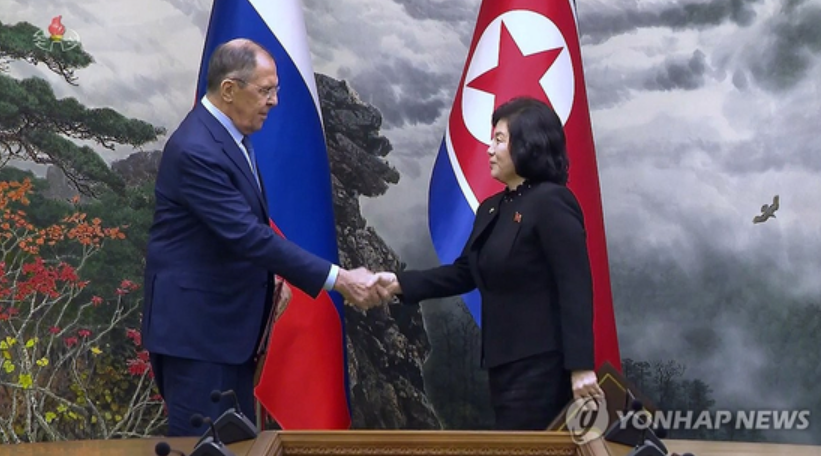
Russia, North Korea Hold Talks in Wonsan: July 2025 Updates

Published on July 13, 2025

Russia’s Foreign Minister Sergey Lavrov and Choe Son Hui, the Foreign Minister of the Democratic People’s Republic of Korea, have been holding three-day talks as part of the second round of the strategic dialogue between Russia and North Korea in the new North Korean city of Wonsan on July 11. Kim Jong Un presided over the ribbon-cutting ceremony at the Wonsan resort on June 24. It has been described as ‘world class,’ with Kim keen to have inbound tourist arrivals from friendly countries to boost North Korea’s foreign exchange revenues.

Lavrov said Russian authorities would facilitate an increase in tourist flows from Russia to the North Korean resort by creating the conditions necessary, such as resolving air travel arrangements. Direct Pyongyang-Moscow and Pyongyang-Khabarovsk rail services have already resumed.

Russia and North Korea signed a Strategic Partnership Agreement on 18 June 2024 during a visit by Russian President Vladimir Putin to North Korea. The treaty, which includes a mutual defense clause, introduces a deeper level of bilateral cooperation between the two countries, including in trade and investment.

Sergey Lavrov meets Choe Son Hui

Lavrov’s visit comes less than a month after Pyongyang agreed to send an additional 6,000 military and civil engineers to Russia’s Kursk region to assist with reconstruction. Russia is currently in the process of developing a large border area between East and West Ukraine to effectively partition the country between its Western-backed West and the Russian-supporting East. North Korean engineers are presumably carrying out part of this work.

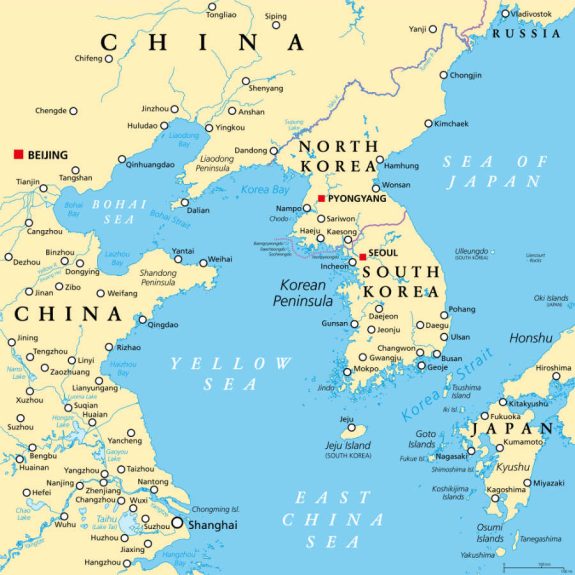
Korea Map

Elsewhere, bilateral connectivity is being upgraded, with improvements to road and rail border crossings being made, including new bridges built across the Tumen River border between the two countries.

Russia is also expanding its agricultural exports to North Korea and will probably follow this through with exports of fertilizers. North Korea is also rich in rare earths and other natural resources estimated at being worth up to US$10 trillion. However, these will require investment to extract and utilize, with both China and Russia evaluating the extraction cost and returns. Nonetheless, future Russian investment in mining North Korea’s minerals can be expected to materialize at some point.

The volume of bilateral trade is difficult to estimate, as most of it is not reflected in open sources of information. However, on the sidelines of the AEI roundtable “North Korea: Closed Market – Open Opportunities,” held on June 10 in Moscow, the chairman of the logistics committee of the Association of Exporters and Importers (AIE), Yevgeny Nikiforov, said that trade turnover last year reached $34 million, a record figure since Soviet times. According to Nikiforov, the growth is mainly due to exports from Russia. “These are mainly food products – flour, soybeans, oil, and grains. The second largest block is, of course, hydrocarbons,” Nikiforov said.

In reality it will amount to billions of dollars, and according to the head of Ukraines military intelligence Kirill Budanov, North Korea sends to Russia an estimated 40% of its ammunition requirements in the Ukraine conflict. It also sent thousands of troops to engage in Ukraine in addition to the engineers being sent to Kursk. Russia, in return, will have reciprocated, probably in other military hardware and software in addition to financial capital. It is highly likely that Russia’s overall trade with North Korea has overtaken its trade with South Korea, estimated to be about US$10 billion in 2024.

Lavrov and Choe will also have discussed South Korea, where the new president, Lee Jae-myung, is known to be more favorable towards improving ties with North Korea than his predecessor.

Further Reading

Post not found.

Russia, Pakistan Bilateral Relations: July 2025 Update  

Published on July 13, 2025

Update: July 15, 2025 Pakistan’s Foreign Minister, Mohammad Ishaq Dar has also met the Russian Foreign Minister, Sergey Lavrov at the Shanghai Cooperation Organisation’s Foreign Minister’s meetings taking place in Tianjin, China. Both countries are full members of the SCO and will be discussing regional security amongst other matters. Full update here.

The Russian Foreign Minister, Sergey Lavrov, has met with Pakistan’s Foreign Minister, Mohammad Ishaq Dar in Kuala Lumpur on July 10 on the sidelines of the East Asia Summit. The East Asia Summit is a regional forum held annually by leaders of, initially, 16 countries in the East Asian, Southeast Asian, South Asian and Oceanian regions, based on the ASEAN Plus Six mechanism, plus Russia and the United States.

At the same time, Russian and Pakistani officials were also meeting at the Innoprom industrial fair event in Yekaterinburg.

Lavrov’s discussions with Dar concentrated on regional issues, with trade and security high of the agenda. Pakistan is a member of the Shanghai Cooperation Organisation along with Russia and India but has had recent military exchanges with India. The two also discussed the situation with Iran, with both countries supportive of Tehran.

Sergey Lavrov and Mohammad Ishaq Dar

At the Innoprom event, Pakistan and Russia signed an agreement to revive and expand the Pakistan Steel Mills (PSM) project in Karachi — originally built in 1973 with Soviet assistance — signalling both countries’ commitment to their “long-standing” industrial partnership.

In May this year, Pakistan and Russia had agreed to revive PSM, which ceased its operations in 2015. The agreement to revive the defunct entity was signed at the Pakistan Embassy in Moscow by Saif Anjum, the Pakistan Secretary for Industries and Production, and Vadim Velichko, General Director of Industries Engineering LLC of Russia.

The project aims to restart and expand Pakistan’s steel production. The countries are also engaged in multiple rail connectivity projects, with direct Pakistan-Russia rail connectivity via Iran along the INSTC routes shortly to be resumed following Israel’s bombing of Iranian infrastructure.

Pakistan Map

Pakistan’s economy includes textiles and apparel, which is the largest sector and a key contributor to exports; agriculture, especially wheat, rice, cotton, and sugarcane; cement and construction; steel and metals; oil and gas; automobile manufacturing; chemicals; and information technology. Textiles remain crucial to the country’s industrial output, while agriculture continues to employ a large portion of the population despite challenges like water scarcity. The country is also focusing on expanding its IT sector, becoming a growing center for software development and outsourcing. The government is working to diversify the economy and promote growth in sectors such as cement, steel, and chemicals. Pakistan’s automotive industry is expanding with increased investment, and its oil and gas sector remains essential for energy and industrial production.

Pakistan is part of several free trade agreements (FTAs) and regional trade groups that improve its access to international markets. These include the South Asian Free Trade Area (SAFTA) and the China-Pakistan Free Trade Agreement (CPFTA), which boosts trade with China, especially in textiles, agriculture, and chemicals. The country has been a significant recipient of China’s Belt & Road Initiative investments, which have been designed to improve Pakistan’s antiquated transport and logistics architecture and help the country to industrialisation. There has been occasional resistance to these projects. 

Pakistan is also a member of the regional SAARC trade agreement, which includes Afghanistan, Bangladesh, Bhutan, India, Maldives, Nepal, and Sri Lanka. It is also a member of the Shanghai Cooperation Organisation and has expressed interest in BRICS, although India’s founding membership has blocked this route at present.   

In terms of Russia, Islamabad has been negotiating several logistics arrangements, including direct rail connectivity via Azerbaijan and Iran, and the resumption of direct flights between Moscow and Islamabad.

With a population of about 251.3 million, Pakistan has a GDP (PPP) of around US$1.584 trillion and a GDP per capita (PPP) of US$8000, with a projected growth rate of 2.4% in 2024.

Bilateral trade between Russia and Pakistan has been growing. In 2021, trade turnover was US$696.99 million, increasing to US$1.3 billion in 2024. Agricultural trade dominates, with Russian and Pakistan also engaging in direct barter for products such as oranges (Pakistan) and legumes (Russia). Russia has also shown interest in Pakistan’s oil industry sector.   

Pakistan has been a major recipient of Chinese Belt & Road Initiative projects, with investments into the country estimated to be some US$90 billion. These are aimed at securing Pakistan’s intended future as an industrial powerhouse, although the country does suffer from Islamic extremism amongst the fallout from neighbouring Afghanistan and separatist movements in Baluchistan. If Pakistan can secure its infrastructure development and manufacturing sectors it can serve, via its Arabian Gulf ports, as a conduit for future Central Asia trade. Other planned rail developments include a north-south transit extending across Afghanistan and connecting with Uzbekistan, a project Russia and China are also keen to see develop.   

Further Reading

Post not found.

Russia-Sri Lanka Bilateral Relations: July 2025 Update

Published on July 12, 2025

Russia’s Foreign Minister, Sergey Lavrov, has met with Sri Lanka’s Foreign Minister, Vijitha Herath, during the East Asia Summit (EAS) being held in Kuala Lumpur. The EAS includes the ten ASEAN countries, plus Australia, China, India, Japan, New Zealand, Russia, South Korea, and the United States. Sri Lanka is an observer nation. Interestingly, Lavrov began his diplomatic career in Sri Lanka and speaks Singhalese.

During the conversation, the parties discussed pressing issues pertaining to Russian-Lankan relations and collaboration on international platforms.

The bilateral trade turnover of agricultural products between Russia and Sri Lanka grew 2.4-fold to reach US$343.7 million in 2024, Russia’s Agroexport federal center has said. While relatively small, the results show an improvement in the Sri Lankan economy, with the country defaulting on its foreign debts in 2023. Russia provided assistance to the country, including a humanitarian shipment of 55,000 tons of fertilizer. Colombo has now partially restructured its debt and is able to resume normal trading patterns.

Sri Lanka Map

In 2024, Russian exports surged 14.9-fold to US$199.2 million, mainly due to the resumption of wheat supplies. Sri Lanka mainly exports tea to Russia, which accounted for nearly 94% of its exports in 2023. The top three exported products also included frozen fish (1.6%) and coconut oil (0.8%).

Analysts estimate Russia’s annual agricultural export potential to Sri Lanka as capable of reaching US$200 million, with Russia’s export prospects primarily tied to wheat. There are also opportunities for exporting confectionery products (mainly chocolate and baked goods), wheat or wheat-rye flour, and milk and cream. Sri Lanka has also become a favored destination for Russian tourists and digital nomads.

Russian businesses have several investments in Sri Lanka, including joint management of its Hambantota Airport, a pharmaceutical joint venture, the adding of it as an Asian freight port call, and potential energy and other investment projects.

Further Reading

Post not found.

Russia-Cambodia Bilateral Relations: July 2025 Update

Published on July 12, 2025

Russia’s Foreign Minister, Sergey Lavrov, has met with Deputy Prime Minister and Minister of Foreign Affairs and International Cooperation of the Kingdom of Cambodia, Prak Sokhonn, on the sidelines of the annual ASEAN ministerial held in Kuala Lumpur.

They discussed the current state of Russian-Cambodian relations and outlook for trade, economic investment, scientific and technological investment, and humanitarian cooperation and exchanged views on the key regional and global issues, interaction within multilateral forums, and the Russia-ASEAN dialogue partnership. Cambodia is also in the process of negotiating a Free Trade Agreement with the Eurasian Economic Union (EAEU), which includes Russia, along with Armenia, Belarus, Kazakhstan, and Kyrgyzstan. Fellow ASEAN member Vietnam, a neighboring country with Cambodia, already has a successful FTA with the bloc.

Following the meeting, Lavrov and Sokhonn signed a plan of cooperation agreements between Russia and Cambodia for the two-year period 2025−2027.

The Cambodian Ministry of Commerce’s 2024 annual report noted that Cambodia and Russia are preparing to sign a protocol between the customs services of the two countries. This protocol, initiated by the Russian side, focuses on cooperation in customs administration, information exchange, and mutual assistance and is expected to boost bilateral cooperation under the Eurasian Economic Union’s preferential tariff system.

Cambodia Map

Cambodia is located in Southeast Asia and serves as a link between Laos and the Gulf of Thailand.

Industrial production is mainly represented by garment factories, most of which are located in special economic zones. Their products are almost entirely exported (80% of total exports) to the European Union and the United States. A course has been set for the development of hydropower. High growth rates continue in the construction industry. There has been an increase in the production of building materials, electronics, machinery, engines, and chemical products. More than 40% of the working-age population is employed in agriculture. The main food crop is rice, and the main industrial crop is rubber. Corn, sweet potatoes, soybeans, peanuts, oil palms, and spices are also grown. The main focus of livestock farming is cattle and pig breeding. Fishing also plays an important role. After the pandemic, tourism in Cambodia continues to recover. In the first nine months of 2024, Cambodia welcomed 4.8 million foreign tourists, which is 22.2% more than in the same period last year. The country’s Ministry of Tourism expects to attract 7 million foreign visitors in 2025. Because of their limited base, poor degree of technological sophistication, low value segmentation, and concentration in a small number of sectors, Cambodian industries continue to be relatively unsophisticated, although spillover from an increasingly expensive China manufacturing is occurring. Investors will need to balance lower operational costs against lower productivity ratios.

Construction materials, electronics, engines, machinery, and chemical items are also produced in increasing quantities.

Cambodia has a population of around 17 million people and an area of 181,025 km². Cambodia’s GDP (PPP) is $142.39 billion, and its GDP per capita (PPP) is $8,290. In its June report, the World Bank lowered its forecast for Cambodia’s GDP growth in 2025 to 4.0% (from 5.5%).

Trade between Russia and Cambodia has dropped in recent years, from US$239.4 million in 2021 to an estimated US$55 million in 2024. The reasons for this decline are not immediately political, although sanctions against Russia have impeded trade. Cambodian markets are somewhat difficult to reach from Russia, with most trade having to pass via China, and Russian businesses concentrating on developing both the Chinese and Vietnamese markets, leaving Cambodia somewhat neglected. However, there are also opportunities: tour operators still describe Russian tourist demand for Cambodia in 2025 as modest, but nevertheless on the rise.

Further Reading

Post not found.

Russia, Malaysia Bilateral Relations: July 2025 Update

Published on July 11, 2025

Russin Foreign Minister Sergey Lavrov has held talks with Malaysian Foreign Minister Mohamad Hasan in Kuala Lumpur.

The ministers focused on implementing the agreements reached during the Malaysian Prime Minister Anwar Ibrahim’s official visit to Russia in May, and discussed current bilateral and international issues.

They focused in particular on regional affairs and prospects for further strengthening Russia’s strategic partnership with the Association of Southeast Asian Nations, which Malaysia chairs this year. Malaysia is a BRICS partner nation.

Malaysia is strategically situated on the key Straits of Malacca shipping route that links the Pacific Ocean to the east with the Indian Ocean to the west.

Malaysia Map

Malaysia’s primary output is significant since the country is one of the world’s biggest suppliers of commercial hardwoods, a significant producer of rubber and palm oil, and an exporter of significant amounts of natural gas and petroleum. However, in order to support its economic expansion, Malaysia has placed an increasing emphasis on export-oriented manufacturing. Malaysia has drawn significant international investment, particularly from Japan and Taiwan, by leveraging its comparative advantages, which include a relatively cheap yet educated labour force, well-developed infrastructure, political stability, and an undervalued currency.

Malaysia is a key member of the ASEAN trade bloc, which also provides FTA with Australia, China, India, Japan, New Zealand, and South Korea, and has trade agreements with fellow Islamic nations Pakistan, and Turkiye.

Malaysia has an area of 330,803 sq km and the population of 33.2 million. Its GDP (PPP) stands at US$1.9 trillion, GDP per capita (PPP) equals US$40,138, while GDP growth reached 5% during 2024.

Malaysia remains a key importer of Russian agricultural products, bringing in grains, oilseeds, meat, and dairy products. In return, Russia receives palm oil, rice, and fruits from Malaysia. Energy resources, primarily oil and gas, along with metals and chemical products, form the crux of exports from Russia to Malaysia.

Malaysia reciprocates with exports of cars, electronics, rubber, and palm oil. Trade in agricultural products and food between Russia and Malaysia saw a sizeable uptick in 2024. Russia’s agricultural product exports to Malaysia totaled US$620 million. Russia is also interested in exporting Malaysian high-tech equipment.

Sergey Lavrov and Mohamad Hasan

Malaysia is also one of Asia’s largest semiconductor exporters with an annual volume of US$8.7 billion. The electronics sector contributes almost 6% of Malaysia’s GDP. The Russian market is also interested in medical products, and medical equipment, in particular in dentistry. Around 31-32% of Malaysian exports to Russia are electronic goods. Malaysia has a developed auto industry, in particular the Proton and Perodua brands. In 2022, the country produced more than 790,000 cars – more than Russia.

Bilateral economic and trade ties are also developing, with the two countries discussing nuclear energy, Russian LNG exports and investments in Malaysia being discussed, Russian dairy products being exported to Malysia for the first time, and Pasir Gudang port being added to FESCOs shipping service.    

In 2024, Russia was Malaysia’s ninth largest trading partner among European countries, with total trade reaching US$2.48 billion.

Further Reading

Post not found.

Russia to Establish Glonass Satellite Ground Station in Venezuela

Published on July 11, 2025

Russia’s space agency, Roscosmos, has stated that a Glonass navigation satellite system has been commissioned in Venezuela. Dmitry Bakanov, Roscosmos CEO, said that “Today is a remarkable day for our space cooperation and for the Bolivarian Republic of Venezuela. We are commissioning a ground station of the Glonass navigation satellite system. Glonass is a reliable alternative to other global navigation systems.”

Glonass, or “Global Navigation Satellite System”, is a Russian satellite navigation system designed to provide real-time navigation and timing services to an unlimited number of users on land, at sea, in the air, and in space. Glonass is the only system in the world that provides access to a civilian global positioning signal in two frequency bands, L1 and L2, to consumers worldwide free of charge. As a rule, Glonass and GPS are used simultaneously to increase the accuracy and speed of measurements, but in the event of an escalation in the international situation, the United States could shut down the GPS system over certain territories. Glonass allows Russia and other participating countries to be independent of GPS.

Glonass will facilitate navigation of land, sea, and air transport; help locate vehicles in emergencies; and enhance flight safety at the Caracas International Airport, as well as at mountain and remote unpaved airports in Venezuela, Bakanov said, adding that “The system will assist in conducting precision geodetic and topographic surveys of the earth’s surface, ensuring precision agriculture during field and harvesting work, and monitoring the condition of facilities in Venezuela’s oil and industrial sectors.” Roscosmos said that the station would enhance coordinate-time and accuracy characteristics of the Glonass system both in the Western Hemisphere and on an international basis.

Additionally, Russia and Venezuela discussed prospects for cooperating in the construction of satellites and ground-based space infrastructure, the application of space technologies, manned space exploration, and the training of personnel for the Venezuelan space industry.

Further Reading

Russia and Venezuela Sign Significant Strategic Partnership Agreement

Chinese Tourists Top the Visit Russia Charts

Published on July 11, 2025

The mutual tourism flow between Russia and China reached 2.7 million visits in 2024 and grew further by 20% in Q1 2025, the Russian Economic Development Ministry has stated.

Dmitry Vakhrukov, Russia’s Deputy Economic Development Minister, said, “The total tourism flow reached 2.7 million visits last year. Chinese citizens made 1.2 million tourist trips to Russia, taking first place among tourists visiting our country.” He was speaking at the 22nd meeting of the subcommittee on cooperation in tourism as part of the Russian-Chinese Commission for Humanitarian Cooperation in China’s Qingdao.

Russian tourists made 1.5 million trips to China, ranking fifth among countries most Russian tourists visit. Vakhrukov said that “Q1 2025 also shows positive dynamics in the growth of mutual tourist trips. A total of 550,000 trips were made, 20% more than in the same period of 2024.”

Hainan Island
Hainan Island

Direct flights from Russia and visa-free entry mean that vacations on China’s Hainan Island are very popular among Russian tourists.

The Russian Economic Development Ministry added that they were formalizing a draft protocol to the existing agreement between the Russian and Chinese governments on visa-free group tours and that this is actively progressing. The protocol covers already approved changes to the duration and facilities offered to a tourist group’s stay in the country and new provisions taking into account Russian legislation in the regulation of tour guides and guides-interpreters.

Further Reading

Russia’s 2025 Inbound Tourism Volumes Expected To Increase By 20-25%

Russia, ASEAN Prepare New Five Year Partnership Agreement

Published on July 10, 2025

Russian Foreign Minister Sergey Lavrov and the top diplomats of the Association of Southeast Asian Nations (ASEAN) member states have been meeting in the Malaysian capital, Kuala Lumpur. These are part of the annual Russia-ASEAN foreign ministers’ meetings. Lavrov will also be attending the East Asia Summit and the ASEAN Regional Forum for security.

ASEAN includes Brunei, Cambodia, Indonesia, Laos, Malaysia, Myanmar, the Philippines, Singapore, Thailand, and Vietnam. They have been discussing with Lavrov the next five-years strategic partnership.

The Russian Foreign Minister has stated that “The parties discussed the implementation of the 2021-2025 Comprehensive Plan of Action for the advancement of Russia-ASEAN strategic partnership and the preparation of a similar document for the next five years. The discussion focused on strengthening cooperation in the fields of politics, security, economy and humanitarian ties. A special emphasis was placed on areas such as high technologies, digitalization, energy and education. Particular attention was paid to the potential of launching new cooperation mechanisms, particularly related to youth affairs.”

According to the Russian Foreign Ministry, an exchange of views on crucial issues on the international agenda confirmed that Russia and the Association of Southeast Asian Nations maintain similar positions on solving the most pressing global and regional problems, adding that “ASEAN highly appreciated Russia’s support for its central role in geopolitical affairs.”

ASEAN and Russia also called for enhancing cooperation between ASEAN, the Eurasian Economic Union (EAEU) and the Shanghai Cooperation Organization (SCO) in order to expand integration processes across Greater Eurasia.

ASEAN Map

The ASEAN bloc are a vital resource for Russia’s new supply chains. A total market of over 600 million, these countries have free trade agreements amongst themselves and also with China, and India as well as Australia, New Zealand, Japan and South Korea. They represent some of the most dynamic economies of this century.

ASEAN’s total GDP (PPP) is over US$12 trillion. GDP (PPP) per capita income within ASEAN is variable however, ranging from Singapore’s high of close to US$100,000 to Myanmar’s low of US$5,600. This means there is a lot of growth still to come from the region, but dangers of its more affluent members becoming uncompetitive.

ASEAN has also chosen a path of non-conflict and refuses to take sides against periodic US trade and security complaints about China. That is an ideal scenario for Russia to make inroads into the ASEAN region. Although Singapore, the de facto financial hub for ASEAN, has introduced some sanctions on Russian businesses and has subsequently been labelled an ‘unfriendly’ nation by Russia, bilateral trade has nonetheless increased. Although Singapore’s regional banking services remain awkward to access for Russian-owned companies, there are steps being taken to normalise relations.  Elsewhere, Russian businesses are welcomed.

Several ASEAN nations are becoming increasingly connected with Russian trade interests, Vietnam has had a Free Trade Agreement with the Eurasian Economic Union for several years, with its effectiveness now recovering after the shock of covid and sanctions. An MoU on ASEAN-EAEU integration was signed in 2023, and countries such as Cambodia and Indonesia are currently negotiating EAEU deals. These can be expected to finalise during the later part of 2025. Singapore, which suspended participation in 2022, has apparently reactivated its EAEU interest with the Kazakh parliament ratifying the Singapore agreement in December 2024. Progress appears to be renewed. 

The BRICS too, are becoming attractive to ASEAN members. Indonesia is now a full BRICS member while Malaysia, Thailand and Vietnam are now all BRICS Partner nations, which makes sense when one considers two permanent BRICS members, India and China, are directly to the West and the East.

Russian bilateral trade with Laos, Myanmar, the Philippines and Singapore have all been improving.

Russia has been an ASEAN dialogue partner, at Foreign Ministerial level, since 1996. Trade and investment development, although this varies from country to country depending somewhat on geopolitics and infrastructure reach, can be expected to remain highly positive for the coming years.  

In 2024, the total trade volume between Russia and ASEAN reached US$17.7 billion, a 13% increase compared to 2023.   

Further Reading

Post not found.

Russia and China to Jointly Produce Gas Turbines for Central Asia and the Middle East

Published on July 10, 2025

Russia’s United Engine Corporation (UEC) and China’s New JCM Group from Chengdu have signed an agreement to cooperate on the production, delivery, and servicing of gas turbine equipment, UEC stated on Tuesday (July 8). They said that “The Russian state corporation Rostec’s United Engine Corporation and Chinese company New JCM Group Company Ltd. have signed a strategic agreement on cooperation in the areas of production, delivery, and servicing of gas turbine equipment.”

The deal was signed at the 9th Russia-China Expo, currently taking place in Yekaterinburg. Gas turbines are versatile machines used in various applications, including power generation, aircraft propulsion, marine propulsion, and industrial processes. They can drive generators to produce electricity, propel aircraft and ships, and power equipment in factories and plants.

The two companies have agreed to supply UEC gas compressor units with the Chinese company’s equipment, with UEC saying, “The agreement provides for the possibility of localizing production of Chinese components at UEC Engineering production facilities, as well as organizing servicing and repair of gas turbine equipment, including overhauls of foreign-made gas turbines.”

The companies also discussed prospects for integrating Chinese gear units into Russian gas turbines.

Andrey Vorobyov, CEO of UEC Engineering, said: “UEC’s gas turbine equipment has earned recognition in the global energy market thanks to its reliability, efficiency, and adaptability to various operating conditions. The synergy of our advanced solutions with the best Chinese components creates unique opportunities for the development of a new generation of competitive gas turbine complexes. Developing a strategic partnership with Chinese industry leaders is an important step in creating innovative products for entry into the rapidly growing markets of Central Asia and the Middle East.”

Further Reading

China Increases Purchases of Russian Base Metals