Russian and Chinese investors plan to set up a Joint Venture in the Titanium Valley Special Economic Zone (SEZ) to manufacture precision wire for electrolysis equipment, according to Sverdlovsk Region Deputy Governor Vasily Kozlov. He did not name the participants but stated “One of the residents of the Titanium Valley SEZ, in cooperation with a Chinese partner, is undertaking design work for the construction of a new business to produce precision wire for electrolysis equipment. We are carrying out the practical implementation of this project now and hope that we’ll get to licensing approvals soon. Preliminary agreements have also been reached to set up production of CNC machine tools.”
Electrolysis equipment is used to process electrical energy to decompose chemical compounds. This can be used for various purposes, including producing hydrogen gas, electroplating, and even hair removal. Electrolysis is also a key technology for producing carbon-free hydrogen from renewable energy sources, which is the likely purpose of the pending JV.
Sverdlovsk Oblast is located in the Russian Urals, with its administrative centre being Yekaterinburg. It is connected by the Trans-Siberian railway to China.
Kozlov also said the local regional authorities see potential in implementing projects to localize production of Chinese companies’ products with high added value in Sverdlovsk Region. “For example, we are already working with a Chinese corporation in the aerospace industry, and on setting up production of rotary steerable systems to meet the needs of Russian mining companies.”
The Titanium Valley SEZ began in 2010 and it now has 23 resident manufacturing investors. Russian SEZ’s are very similar to Chinese SEZ’s and offer tax breaks, reduced utilities costs and other incentives, and are useful tools for starting new businesses when start-up costs are at their highest. It is close to Yekaterinburg, which is to be developed to become the world’s largest dry port, with connections through to the Russian Arctic.
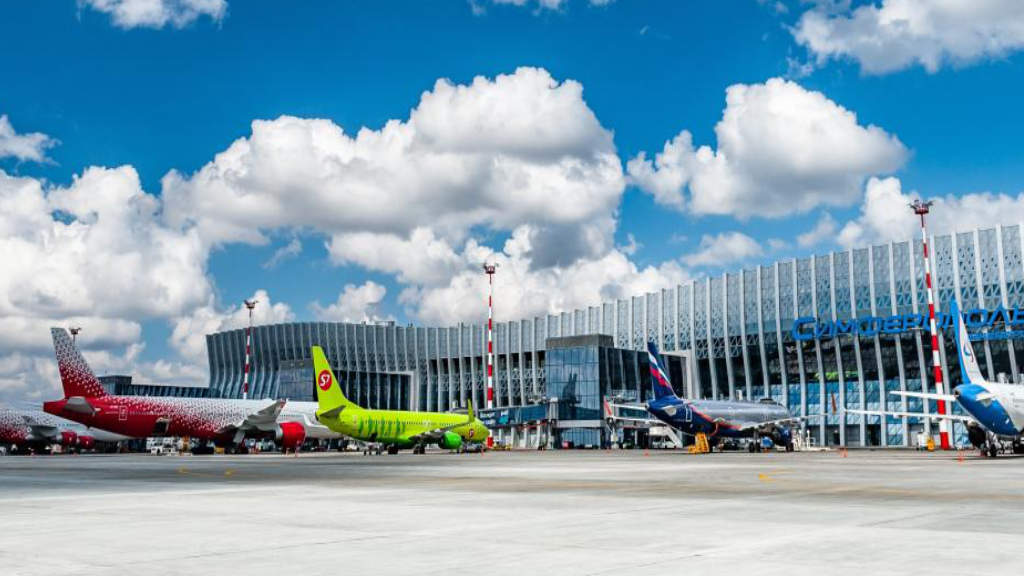
The head of the Republic of Crimea, Sergei Aksyonov, has met with the director of the Federal Air Transport Agency (Rosaviatsia), Dmitry Yadrov, to discuss the prospects of resuming flights to the peninsula. He stated that “We discussed the future restoration of the aviation link and a number of issues concerning the material and technical state of Simferopol’s Aivazovsky International Airport. Without flights, Crimea is losing a certain share of tourists. Despite its temporary closure, the airport is undergoing all necessary maintenance checks, and we are ready to reopen the airport immediately upon receipt of such an order from President Vladimir Putin.”
Simferopol is the Republic of Crimea capital city. There have been no flights to and from the airport since February 2022. In 2021, it serviced 6.8 million people; 27% of tourists in Crimea arrived by aircraft. From 2014 to 2021, the airport only serviced domestic flights because of sanctions imposed on Crimea after it became part of Russia.
The discussions appear to raise the possibility that Russia feels the war in Ukraine may be drawing to a conclusion and that normal operations may soon be able to resume in the region.
Saudi Arabia is being considered as one of the potential export markets for Russian aviation industry products, according to Russian Industry and Trade Minister Anton Alikhanov. Cooperation in the aviation industry was discussed during a meeting this week with Saudi Arabian Industry and Mineral Resources Minister Bandar al-Khorayef.
Alikhanov said “For now, we are primarily looking at the market with regard to aircraft that are already undergoing certification, as well as small aircraft being developed by the Ural Civil Aviation Plant (UCAP] which could also find their place in this market.”
Russia is currently preparing to certify fully import-substituted versions of the MC-21 and SJ-100 aircraft, with all procedures planned for completion by the end of 2025. These are being marketed as alternatives to the Boeing 737 and Airbus A320. Both are in demand in Russia due to the aircraft balance of range, capacity and passengers’ comfort.
Simultaneously, development is underway on regional aircraft to replace the outdated An-2, in particular the light multipurpose aircraft LMS-901 Baikal by JSC UCAP, with the first deliveries of Baikal aircraft expected by late 2026.
The Saudi Arabian aviation market is experiencing substantial growth, with a projected market size of US$11.92 billion by 2033, exhibiting a CAGR of 7.60% between 2025 and 2033, according to the research agency the IMARC Group. This growth is driven by national reforms, government investments in airport infrastructure, and increasing tourism. The market is also seeing expansion in low-cost carriers and a focus on sustainability. Saudi Arabia currently has a total of 29 airports, including 12 international airports, 3 regional airports and 14 domestic airports.
Saudi passenger growth is expected to reach 330 million annually by 2030, up from 2024’s 128 million, with a doubling of cargo capacity to 4.5 million tons during the same period. Saudi Arabian Airlines plan to place orders for more than 100 aircraft in the next five years, while the budget airline Flyadeal aims to expand its fleet from 44 to 100 aircraft by 2030.
Russia wants Saudi companies to participate in developing standards for oil and gas equipment that are independent of the West, Industry and Trade Minister Anton Alikhanov has said. He was speaking at the Industrial Dialog: Russia – Saudi Arabia business forum held as part of the Innoprom2025 exhibition currently taking place in Ekaterinburg.
Alikhanov said that “The Russian Institute of Oil and Gas Technology Initiatives (INTI) is now working in close cooperation with foreign oil companies, and we would like to invite our Saudi partners to also join this work to develop and introduce independent standards in this area that are independent from the American Petroleum Institute“.
He said he raised this issue at a meeting with Saudi Industry and Mineral Resources Minister Bandar Alkhorayef, saying that “We discussed our successes in localizing and replacing imports in production of equipment for the oil and gas sector. We’ve been doing this work since 2014. There are substantial results, both in terms of production and in terms of the development of internationally recognized standards in this area. We think this is extremely important. Saudi Arabia, we believe, is a natural partner here, a country that produces the most oil in the world. In our view, this is also a natural movement, specifically downstream projects, and complete technological independence. This is what we could offer, where we could implement joint projects.”
The Russian side has already conducted a series of presentations of oil and gas equipment for Saudi partners, Alikhanov said. “We hope this work will continue. We have considerable experience with the UAE and Bahrain, so given Saudi Arabia’s oil production volumes – they’re the world leaders after all – I believe our expertise in oil and gas equipment and standardization implemented through INTI will interest them. I’m confident this work will yield practical results.”
Negotiations have already begun with the UAE to be part of the INTI standards initiative, with Alikhanov adding that “Several dozen standards have already been approved for application in the United Arab Emirates. We hope to have equally productive work with Saudi colleagues, with dozens of INTI standards becoming applicable in Saudi Arabia too. We have great potential for cooperating in the mining industry. We have mastered modern exploration technology, tools for processing big geological data, cartography, including the use of unmanned systems. We can also offer our Saudi partners equipment for mining and processing ores.”
He also mentioned shipbuilding, metallurgy and a number of other sectors as potential areas for Saudi Arabian cooperation, emphasizing the trade angle: “Mutual trade increased by more than 60% and exceeded US$3.8 billion last year. In Q1 2025, we have achieved a fourfold increase in trade turnover compared to the same period of 2023. We need to maintain this dynamic through joint efforts, look for new points of growth for further technological partnership.”
There are other geopolitical implications, as US sanctions have made it extremely difficult for US based standards institutes to work with Russian and certain other countries, such as Iran. Yet Russia has the world’s largest reserves of gas and is among the top three global producers of oil.
Country
% Of Global Gas Reserves
% of Global Oil Reserves
Russia
4.5
20
Saudi Arabia
4.3
17
Iran
17
12
UAE
3.1
5.9
United States
4.65
4.0
As can be seen, on a geographic basis, it makes little sense for global oil and gas standards to be directed by the country possessing the least reserves. It also implies that larger volumes will also dictate more innovative oil and gas products, requiring a new development centre of oil and gas standards of excellence to be put into place – exactly the Russian position.
This further implies that innovation and future technological excellence may also begin to move to regions that possess the most reserves and therefore have the greater experience and capabilities to experiment and develop these resources.
Update: Following Ural Chamber of Commerce and Industry (UCCI) President Andrey Besedin remarks concerning the immigration of up to 1 million Indian workers to Russia this year, Russia’s Labor Ministry has denied that such plans are in place, saying that the Federal government’s quotas for foreign workers have already been set. In 2025, just under 235,000 migrants can enter Russia for employment, including 71,817 from India. These different statements indicate that there is some debate about the labour shortage issue, with political pressure being applied to increase quotas. We will keep readers informed concerning updates.
Andrei Besedin, the head of the Ural Chamber of Commerce and Industry, has said that Russia expects to recruit as many as 1 million workers from India by the end of the year. He quoted the number citing Indian diplomats, saying that “Agreements have been reached with India. As far as I heard from my Indian colleagues, 1 million specialists from India will come to Russia, including the Sverdlovsk region, by the end of 2025. A new Indian consulate will open in Yekaterinburg, the capital of Sverdlovsk to accommodate the incoming Indian labourers.”
He added that these workers will help address staff shortages at metallurgical and mechanical engineering enterprises in the Sverdlovsk region. Yekaterinburg itself is to be developed as the world’s largest inland port, and is connected to both Europe and Asia via the Trans-Siberian railway. There are plans to further make Yekaterinburg a Central Russia logistics hub to service the Russian Arctic development.
Yekaterinburg experiences a continental climate with cold, snowy winters and warm summers. July is the warmest month with average high temperatures around 24°C and lows around 13°C. However, for Indian the concern will be the winter months, with January the coldest with an average high around -9°C and lows around -17°C. Snow cover typically lasts from late October or early November to April. However, most Indians can cater for warm clothes as they will be familiar with the high altitude Himalayan regions and many international manufacturers make clothes in the country. Workplace and living quarters will need to be centrally heated, however. Differing religious, dialects and possibly caste system issues will also need to be understood and planned for. A Russian-speaking, multi-dialect Indian foreman will be required to relay instructions.
Location of Sverdlovsk
The effort comes as Russia is grappling with an intensifying labour shortage linked to the ongoing war in Ukraine and broader demographic challenges. Many local workers have left to take part in the conflict in Ukraine, while young people are not seeking jobs in factories.
Besedin also said efforts were underway to bring in workers from other countries, including Sri Lanka and North Korea.
“Those people are good workers,” he remarked of North Korean workers, while acknowledging that integrating South Asian labourers could prove difficult. “We’re used to migrants from nearby former Soviet republics who studied in Russia and speak the language. We don’t have any experience working with Indian and Sri Lankan laborers. There will be challenges as our approaches and practices may differ.”
That’s said, Indian and Sri Lankan workers are familiar with working in the Middle East. The main issues for them will be appropriate food supplies – many are strictly vegetarian – and winter clothing and warmth. Skilled and semi-skilled India workers are typically paid about 60 – 70% less in India than Russian workers paid in Russia.
Russian businesses have already begun experimenting with Indian labour. In March, Moscow-based developer Samolyot Group launched a pilot program to hire Indian construction workers. While executives cited advantages, including lower wage expectations and limited job mobility compared to Central Asian labourers, they also encountered early setbacks, relating to the language barrier and cultural differences.
Last year, over 4,000 Indian migrants applied for jobs in St. Petersburg, and Indian workers have been seen in Kaliningrad and Moscow sites. Russia’s online marketplace Ozon has also hired Indian citizens for both warehouse positions and technical roles.
Russia’s Union of Industrialists and Entrepreneurs has suggested the idea of building vocational training schools in India to prepare labourers specifically for the Russian job market — an initiative supported by Education Minister Sergei Kravtsov, who has pledged to coordinate with the Foreign Ministry.
Russia’s Pivot To Asia has four decades of experience of working with Indian and Sri Lankan employees and can provide advisory services to assist with good practice management for their engagement in Russian companies. For assistance, please contact us at info@russiaspivottoasia.com
The St. Petersburg Exchangewill complete the first timber export deal with China at the end of his month, according to Alexei Ryzhikov, the Managing Director of the exchange.
He stated that “The Kazakhstan timber export project which we announced last year, is moving along nicely, and has had 44% growth this year. We have also tested out using Russian Railways as the commodity delivery operator, with clients and sellers participating. The project will be focused on Russian timber exports. The system already has Chinese representatives registered to take part in the pilot project. The project has also generated a lot of interest among Russian producers, and there is a queue of them wanting to take part once the project reaches an industrial scale.
We finished the outline of the deal with China on Friday last week (July 4). We are now competing additional information from the participants. There will be an announcement of offers very soon. After that, we will await the funds from our Chinese buyers. In my opinion, as soon as that happens and the deal has been fully evaluated, the first trainload of the exchange commodity timber will be exported. I think that will happen at the end of this month.”
Ryzhikov has previously said that the exchange would launch exports of Russian forest industry products in 2025. The exchange began experimenting with export trading in forest industry products with countries from the Eurasian Economic Union (EAEU), and Kazakhstan in particular, in 2023. In 2024, it proposed launching a project involving the full-scale export of timber to Asian countries with Russian Railways as the commodity delivery operator.
Ryzhikov also said that some 2.037 million cubic meters of timber to a total value of ₽3.947 billion (US$51 million) had been traded on the St. Petersburg Exchange in the first half of 2025, with 427 timber supply contracts signed. Vendors from 42 Russian regions took part in organized trading sessions for timber on the exchange.
In Q2 2025, timber was purchased on the St. Petersburg Exchange by traders from 58 Russian regions, as well as Kazakhstan. Some 5,882 cubic meters were purchased by traders from outside of Russia, a 44% increase year-on-year.
China has an extensive timber processing industry and imports huge volumes from Russia, with a significant timber processing zone at Manzhouli, near the Russian border. From there, raw Russian wood is processed and exported worldwide.
Russia and Saudi Arabia are discussing a new partnership in shipbuilding, which could involve building assembly facilities with the involvement of Russian companies in Saudi Arabia, according to Anton Alikhanov, the Russian Industry and Trade Minister. He was speaking at the annualInnopromindustrial exhibition, where he conducted talks with Bandar al-Khorayef, the Saudi Minister of Industry and Mineral Resources.
Alikhanov said that “Saudi Arabia has an actively developing shipbuilding cluster and produces different shipbuilding equipment. We have just agreed to look into how we can be of use, because we are also doing serious work to develop our ship component equipment sector, and our shipyards have a diverse amount of experience. For example, we have Emperium, which produces electric catamarans, andAlexeev’s Central Hydrofoil Design Bureau is also interested in building assembly facilities there.”
He said that the partnership could possibly take the form of “some joint enterprises, joint assembly, and production facilities”.
The Damate Group, a leading Russian agri business, has obtained permission to export duck products to Cameroon and the Central African Republic, the company has stated, saying that Damate will ship poultry from its complex in the Rostov Region.
Daria Laschenko, Damate’s Sales Director, said that “These new markets have substantial potential for consuming our products. Shipments to these countries will allow Damate to increase its export volumes significantly.”
The group boosted exports of turkey meat, duck meat and mutton, as well as advanced processed products, 9.5% year-on-year to 23,000 tonnes in 2024. The majority of exports, 19,000 tonnes, were turkey products. More than half of the overall volume of turkey exports went to China, which is one of the company’s key markets. Deliveries to the Middle East also increased.
Damate is a diversified holding company that produces turkey meat, duck meat and mutton, and processes milk. The group’s assets are located in the Penza, Rostov, and Tyumen regions, and in the North Caucasus Federal District. The land fund is over 108,000 hectares. The group’s Indyushkin Dvor LLC, turkey farming, and Novye Utinye Farms LLC, duck farming, operate in the Rostov Region.
Duck meat consumption in Africa is relatively low, with production and imports both being modest compared to other regions. While some countries like Egypt and Madagascar are notable duck producers, the continent’s overall contribution to global duck meat production is small, at around 2% of the global total. Duck meat consumption in Africa appears to be limited by factors such as availability, familiarity, and cultural preferences, meaning that the Damate project will be breaking new ground. Chicken is the most consumed meat type in Africa.
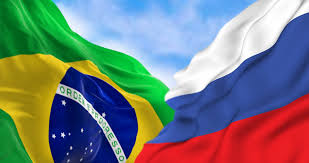
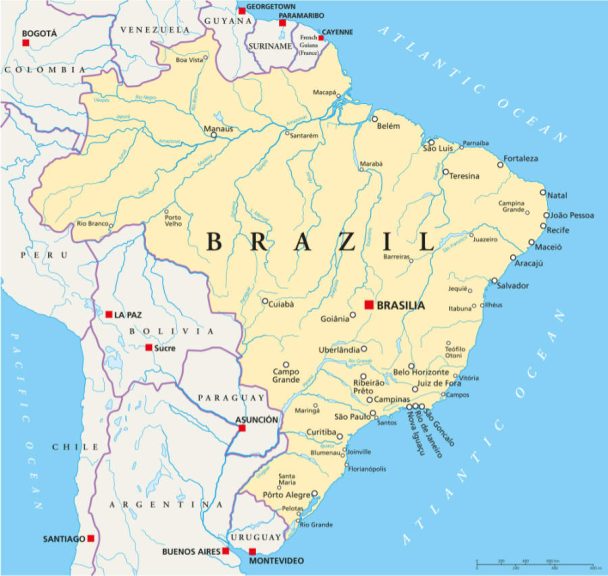
The Russian Foreign Minister, Sergey Lavrov, met with Mauro Vieira, the Foreign Minister Brazil on the sidelines of the BRICS summit in Rio de Janeiro. Brazil is a founding member of BRICS and the host country of this year’s event.
During their conversation, Lavrov and Viera discussed upcoming Russian-Brazilian dialogue, and coordinated their actions in key areas of Moscow-Brasilia interaction at major multilateral platforms, including preparations for the 30th session of the Conference of the Parties (COP 30) to the United Nations Framework Convention on Climate Change (Belem, November 10−21).
Brazil-BRICS Trade
Last year, Brazil’s trade with BRICS nations reached US$210 billion, representing 35% of its total trade. Brazilian exports to BRICS reached US$121 billion (36% of total exports), while imports from BRICS amounted to US$88 billion (34% of total imports).
Russia-BRICS Trade
In 2024, Russia also saw a significant increase in trade with BRICS nations, with a focus on using national currencies for transactions. The share of the ruble and other BRICS countries’ currencies in trade reached 90%. The multilateral trade volume between Russia and the ten full member BRICS countries increased by 14.7% in 2024, reaching an estimated US$357 billion.
Brazil-Russia Trade
In terms of Russia, Brazil’s bilateral trade volume reached US$12.4 billion in 2024, with Russian exports accounting for US$11 billion. Brazil’s main exports to Russia include soybeans, meat, peanuts, coffee, and sugar, while Russia’s primary exports to Brazil are fertilizers and refined petroleum. Brazil relies on Russia for a significant portion of its diesel imports. However, while Brazil is still very much the junior partner in trade volumes, it should be noted that its exports to Russia doubled last year.
Brazil and Russia have a rapidly growing trade relationship, with Russia also investing heavily in significant industrial sectors such as nuclear energy, and uranium processing. Russian energy, agriculture and fertilizer exports have also boomed in recent years. New Brazilian consumer products are also finding their way into Russian supermarkets, including sugar, fruits, some dairy products, along with wines and spirits.
Russia’s Rosatom have proposed the establishing of nuclear power plants in Rio de Janeiro state. New Thorium reactors (which are less toxic) are essential in developing Russia’s energy sector, most of which is reliant on hydroelectricity.
Russia has also been highly supportive of Brazil’s accession to the UN security council, noting on numerous occasions that it is the most powerful and populous economy in South America.
The Russian Foreign Minister, Sergey Lavrov has met with Foreign Minister Mexico, Juan Ramon de la Fuente Ramirez on the sidelines of the BRICS summit in Rio de Janeiro. Mexico is not a member or partner BRICS nation; however the country was invited as an observer.
Lavrov and Fuentes discussed key issues related to Russian-Mexican relations, including those linked with deepening bilateral political dialogue and expanding trade, economic, cultural and humanitarian cooperation, as well as various aspects of improving the contractual-legal framework. This latter note implies that a Russia-Mexico bilateral investment treaty could be in the process of being developed. Such treaties protect respective investors rights in each other’s countries and often contain specific tax incentives designed to boost trade, especially within the services sector.
Mexico is Russia’s second largest trading partner in Latin America after Brazil, and the structure of bilateral trade remains diversified. Russian exports include chemical fertilisers, metal products, grain and rubber, while Mexico supplies Russia with coffee, pepper, pharmaceuticals, and food products.
Mexico is under the process of reviewing and expending its international relations, as political relations with US President Donald Trump are difficult, and include sanctions threats. Nevertheless, the US remains Mexico’s most important trade partner and investor, meaning the country must tread carefully. That said, there are some ingenious ways in which Mexico and Russia could combine. One is the fact that Mexico buys imported US LNG, refines it, and sells it on to the European Union. Russia has noted this and has made proposals that Mexico purchases Russian LNG, refines it and sells it onto the European Union.
The greatest potential for the development of bilateral relations is concentrated in several key sectors. In the energy sector, the oil industry is of particular interest, with Russian companies contributing to offshore exploration and production, modernisation of refining facilities and supply of equipment. In addition, Russia has advanced lithium extraction technologies that may be in demand in Mexico in light of the growing interest in developing local deposits. Cooperation in the field of nuclear energy continues. There are also prospects for cooperation in the energy green transition.
The agro-industrial complex also remains an important area. Russia traditionally holds a significant share in wheat exports to Mexico. There is potential for expanding supplies of other agricultural commodities. There is also continued interest in cooperation in the pharmaceutical and chemical industries, information technology and engineering, and artificial intelligence.
The Russian Foreign Minister Sergey Lavrov has met with Foreign Minister of Türkiye, Hakan Fidan on the sidelines of the BRICS Summit in Rio de Janeiro. The two ministers had an in-depth exchange of opinions on the current international situation, and discussed their key bilateral issues, including the implementation of strategic projects in the energy sector. They also assessed prospects for enhancing cooperation in light of the recent outcomes of the 19th session of the Russian-Turkish Intergovernmental Commission on Trade and Economic Cooperation. That meeting was held on June 17th in Moscow.
The two sides signed a protocol during that meeting, which expressed their intention to cooperate in numerous areas, including wastewater management, circular economy, zero waste policies, biodiversity, and the fight against climate change. Turkish Deputy Minister Mr. Bulut had also announced that preparations are underway for a new MoU between the two countries in environmental protection. The agreement is expected to target cooperation on numerous topics such as combating climate change, zero waste, biodiversity conservation, and combating desertification.
Russia is also lending support for Türkiye’s candidacy to host the COP31 Climate Summit in 2026.
The recent Joint Economic Commission (JEC) Protocol signed between the two countries is a road map that determines their future bilateral development strategy. It includes agreed areas of cooperation to be taken to reach the US$100 billion bilateral trade volume target set by Presidents Putin and Erdogan.
Russia became Türkiye’s largest trading partner in 2024, with a total trade volume reaching US$52.6 billion. The target is to hit US$100 billion by 2030. Bilateral trade has increased 130% over the past five years.
Turkiye’s presence at the 2025 BRICS summit is of note as the country is not a member nor a partner state of the group, although it has expressed interest in potentially joining the BRICS at some point. Following Fidan’s appearance at the 2025 summit we may find that this changes in the near future with a likely scenario being Turkiye joining as a non-voting ‘partner’ nation.

 Русский