News

Russia, Bolivia July 2025 Bilateral Relations: Update

Published on July 8, 2025

The Russian Foreign Minister, Sergey Lavrov has met with President of Bolivia, Luis Alberto Arce Catacora on the sidelines of the BRICS summit in Rio de Janeiro. They discussed topical issues of bilateral cooperation in various areas, including interaction in trade and the economy, prospects for the implementation of large investment projects, as well as contacts within BRICS, and agreed their bilateral intention to strengthen comprehensive Russia-Bolivia ties. Bolivia is a BRICS partner nation.

Relations with Bolivia are important for Russia, in both the hi-tech and energy sectors. Bolivia possesses the world’s largest lithium reserves, a key component in modern equipment with applications from EV batteries to communications and IT. Russia is constructing a Lithium Carbonate plant in the country. The project, estimated to cost almost US$1 billion, will utilize Russian direct lithium extraction (DLE) technology to produce 14,000 tonnes of battery-grade lithium carbonate annually from the Salar de Uyuni salt flats. However, recent opposition to Bolivia’s plans to develop its Lithium mining business with both Russia and China have met with opposition – last week, Bolivian MP’s were involved in a brawl at the national legislative council over opposing factions. That internal political situation obviously needs to be resolved.

Bolivia Map

Meanwhile, Russia’s Rosatom is working in Bolivia to build a nuclear research and technology centre in El Alto. This includes a research reactor, a preclinical cyclotron-radio-pharmacological complex, and a multipurpose irradiation facility. The research reactor is a pool-type, 200 kW pressurized water reactor developed by Russia’s Research Institute of Atomic Reactors. It is designed to operate at an altitude of over 4,000 meters, making it the world’s highest nuclear facility.

Bolivia’s bilateral trade with Russia has experienced notable variations, and is currently running at about US$100 million, however Bolivia’s participation in BRICS is expected to positively influence trade relations. The main products that Russia currently exports to Bolivia are vaccines, blood, antisera, toxins and cultures, medicines and refined petroleum. The main products that Bolivia exports to Russia are carbonates, inorganic salts, coconuts, and other nuts. This can be expected to change quickly with an increasing trade in Bolivian minerals, although internal political pressures could have the power to disrupt this. 

Further Reading

BRICS To Launch New Multilateral Guaranteed Investment Fund

Russia, World Trade Organisation To Collaborate On Reform

Published on July 8, 2025

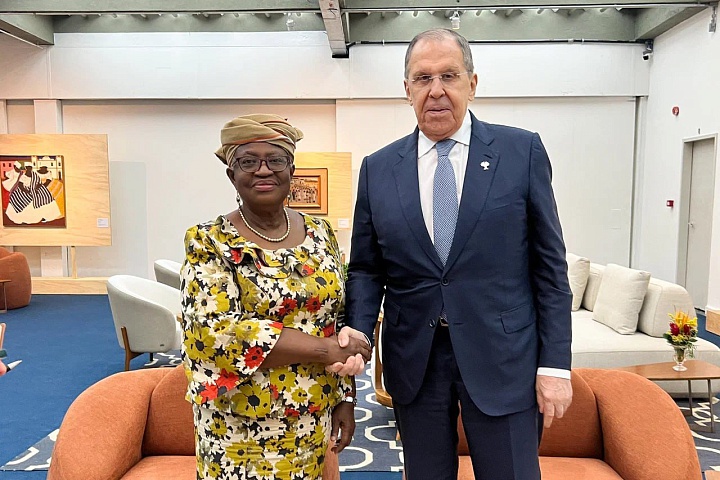
The Russian Foreign Minister, Sergey Lavrov, has met with the Director-General of the World Trade Organisation Ngozi Okonjo-Iweala on the sidelines of the BRICS summit in Rio de Janeiro.

They both reaffirmed the need for prompt reform of the WTO based on inclusiveness, non-discrimination, transparency and mutual respect, and exchanged views on several aspects of Russia’s interaction with the WTO Secretariat.

Ms. Ngozi is a Nigerian economist, who has been serving as the Director-General of the World Trade Organization since March 2021. She is the first woman and first African to lead the World Trade Organization as director-general. She was previously Managing Director at the World Bank, Finance Minister and Foreign Minister for Nigeria, and has considerable MNC corporate experience, serving on the boards of companies such as Standard Chartered Bank, Rockefeller Foundation, Twitter and many others. She is also a distinguished fellow at the Brookings Institution with the Africa Growth Initiative.

Sergey Lavrov with Ngozi Okonjo-Iweala

The World Trade Organisation (WTO) is an intergovernmental organization headquartered in Geneva and is responsible for regulating and facilitating international trade. Governments use the organization to establish, revise, and enforce the rules that govern international trade in cooperation with the United Nations. The WTO is the world’s largest international economic organization, with 166 members representing over 98% of global trade and global GDP.

However, it has lost its way in recent years, mainly due to the deliberate usurpation of its remit by mostly western countries ignoring its authority, bypassing agreed dispute and trade regulatory mechanisms, and imposing unilateral sanctions on other members, without prior discussions with the WTO itself.   

There has been criticism that under the current WTO structure, although the WTO’s consensus governance model provides law-based initial bargaining, trading rights are determined through power-based bargaining, favouring Europe and the United States. In recent years, matters of unilateral trade involving sanctions imposed by the EU and US have also deliberately bypassed the WTO, diminishing its governance and authority. Both the United States and European Union are full members of the WTO yet have used their collective funding and budgetary contributions to influence decision-making to their own ends or just ignore its authority altogether. This is why Russia terms sanctions imposed upon it ‘illegal’ as they breach WTO agreements.

While the current role of the WTO in global trade has undoubtedly been undermined, it retains significant support as part of the United Nations, with Russia, China, India and Brazil amongst many others calling for reforms. The global south is generally supportive of the UN and the WTO yet remain frustrated at its current predicament. How this will be resolved is an on-going issue.

It should be noted that groups such as the BRICS have indicated they may develop their own arbitration system, and there has been talk of aligning this with WTO mechanisms yet managed by the BRICS group in terms of multilateral arbitration and decision-making.    

Further Reading

Russian Foreign Minister Discusses Multipolarity, Global Reform, Economics and AI At 2025 BRICS: Contents & Analysis

President Putin’s Plenary Speech At BRICS 2025: Content & Analysis    

Published on July 7, 2025

The Russian President, Vladimir Putin, gave a speech at the main Plenary session of the BRICS 2025 annual Heads of State summit currently being held in Rio de Janeiro. In it, he discussed the BRICS growth, economic data, global payment systems and several potential new initiatives including the creation of a BRICS carbon trade mechanism, grain exchange, logistics centre, climate change as well as a BRICS trade arbitration centre and tax secretariat. President Putin’s comments are prefixed VP, our analysis is prefixed RPA. This is what he had to say:

VP: “I would like to join the words of gratitude to President Lula da Silva and the Brazilian Chairmanship for their active efforts in advancing the strategic partnership within BRICS.

It is important that the BRICS countries continue to deepen their cooperation across key sectors in politics, security, the economy and finance, cultural and humanitarian contacts. This group has significantly grown and now includes leading states in Eurasia, Africa, the Middle East, and Latin America. Together, we possess a vast political, economic, scientific, technological, and human potential.

The BRICS countries account for not only a third of the Earth’s landmass and almost half the planet’s population, but also for 40% of the global economy, while their combined GDP at purchasing power parity now stands at US$77 trillion. This is the 2025 data according to the IMF. The BRICS is substantially ahead of other groups in this parameter, including the G7 with US$57 trillion.”

RPA: The shift in global economic dynamics isn’t just financial. The G7 accounts for about 10% of the global population, (820 million) with the BRICS (including partners) possessing about 4.4 billion. In terms of growth, estimates from PWC put the G7’s GDP growth at less than 2% for the coming five years, with BRICS growth averaging 5-6%.   

VP: “Year after year, our group’s global authority and influence continue growing. BRICS has rightfully established itself as one of the key centres of global governance, with our collective voice in support of the global majority’s vital interests resonating ever more powerfully across the international stage.

BRICS has many supporters in the Global South and East. The culture of an open partnership and cooperation, mutual respect and consideration for each other’s interests in the group appeals to them. Based on this, in October 2024, we decided to establish a category of BRICS partner states, to develop ad hoc practical cooperation with all interested countries. BRICS has ten partner states to date.”

RPA: The BRICS now includes ten full member states with voting powers: Brazil, China, Egypt, Ethiopia, India, Indonesia, Iran, Russia, South Africa, and the UAE. BRICS partner states do not have voting rights but do contribute. These include Belarus, Bolivia, Cuba, Kazakhstan, Malaysia, Nigeria, Thailand, Uganda, Uzbekistan and Vietnam. In addition to these, several countries are paid up shareholders of the BRICS New Development Bank but not yet members of BRICS. These are: Algeria, Bangladesh, Colombia and Uruguay.  

It should be noted that most of these nations are significant players in their respective regional free trade and economic zones. Ethiopia for example is a substantial economy within COMESA while Bolivia the same within the Andean Community, meaning they have important additional regional economic influence. 

VP: “I will stress that the BRICS countries represent different development models, religions, authentic civilisations and cultures, while unanimously upholding equality and neighbourliness. They prioritise traditional values, the high ideals of friendship and accord, striving to contribute to global stability and security, the prosperity and success of all nations. Without doubt, this constructive approach and unifying agenda are highly relevant amidst the geopolitical challenges of today.

We all see that the world is experiencing tectonic shifts. The unipolar system of international relations that once served the interests of the so-called golden billion, is losing its relevance, replaced by a more just multi-polar world. Global economic patterns are changing faster. Everything indicates that the liberal globalisation model is becoming obsolete while the centre of business activity is gravitating towards developing markets, launching a powerful growth wave, including in the BRICS countries. To maximise the emerging prospects, it is important to intensify cooperation within the group, primarily in technology, effective resource development, logistics, insurance, trade and finance.”

RPA: The BRICS differs from traditional trade blocs as there are no set trade regulations between them, with each country free to agree pertinent bilateral tariffs. This allows for much more flexibility over trade on a need-by-need and reaction-based basis, which is important during this turbulent global trade era (such as the US President suddenly hiking tariffs. Trump has threatened 10% tariffs on the BRICS if they pursue ‘anti-US trade policies’). What this means is that trade mechanisms are being prioritized over tariff-based mechanisms to facilitate the practical application of trade, including some financial structures. In this way the BRICS is developing as a different type of trade grouping based on infrastructure solutions first, and members tariff preferences remaining a sovereign, rather than a collective issue. This is a fundamentally different approach to trade blocs such as the European Union.     

VP: “It is important to continue expanding the use of national currencies in mutual payments. It is believed that creating an independent payment and monetary system within BRICS will expedite currency transactions while also ensuring their effectiveness and security. Furthermore, using national currencies in trade within BRICS is steadily growing. In 2024, the share of Russia’s national currency, the ruble, and the currencies of our friendly states in transactions with Russia and other BRICS countries reached 90%.

Multiplying mutual capital investment by the BRICS countries, including through BRICS mechanisms, primarily, the New Development Bank appears to be an important goal as well. To this end, Russia proposed creating a whole new BRICS investment platform. The idea behind it is to jointly develop coordinated instruments to support and to bring in the funds from the economies of BRICS countries and from the Global South and Global East countries.”

RPA: We previously discussed the new BRICS “Multilateral Guaranteed Investment Fund” here. 

VP: “Importantly, our Brazilian colleagues were receptive of the initiatives put forward during Russia’s chairmanship last year and continue to implement them. These include launching a special mechanism for holding consultations on World Trade Organisation matters, creating a grain exchange, a climate research centre, a permanent logistics platform, and a sports cooperation programme. These are all moving forward.

Please note that there are other valuable ideas proposed by Russia, which include the formation of a carbon market partnership, an arbitration investment centre, a fair competition platform, and a permanent tax secretariat within BRICS. We count on our BRICS colleagues supporting these promising initiatives.”

RPA: These are important developments, and as mentioned earlier create a loose, yet tight platform which facilitates, rather than rigidly determines trade. To some extent the BRICS are replacing elements of the WTO’s remit with its own in view of the issue that the WTO has effectively been sidelined by Western nations in the race to impose tariffs and take other unilateral actions without reference to a global arbitrary body. To this end the reference to the WTO is an interesting one, suggesting that basic WTO regulations will continue to form part of the BRICS remit going forward. As BRICS is set to be responsible for over half of total global trade by 2030, the implication is that BRICS will follow WTO-based resolutions amongst its members and partners, leaving western trade to be arbitrated by the United States, with all the implications of this.        

VP: “One more thing. In September, Moscow will host Intervision, a popular international television song contest which has got the attention of numerous performers from BRICS and BRICS partner countries who confirmed their willingness to participate in it. A humanitarian project of that magnitude is designed to promote universal, cultural, family, and spiritual values ​​shared by our countries.

I would like to close by thanking our colleagues from the BRICS member states for their productive and constructive interaction. We believe that the Rio de Janeiro Summit final declaration, which is ready for approval, provides a good premise for further joint work in the spirit of continuity and equal cooperation which is characteristic of BRICS.

Thank you.”RPA: As can be seen, the BRICS movement remains vibrant and is gaining in trade infrastructure and enhancement mechanisms, without resorting to a rigid tariff and customs duty regime, a distinction often missed by its critics. Putin mentioned several new initiatives are being developed, with the carbon trading issue of significance – Brazil, China, India and Russia are all among the world’s top six emitters (the United States and European Union being the others). The proposed BRICS arbitration centre will be of note to future bilateral and multilateral trade agreements and contracts, while the development of a permanent tax secretariat suggests a multilateral BRICS coalescence towards certain dutiable items – either preferential or non-preferential in order to better regulate the desired movement of traded goods amongst the BRICS is an emerging concept. These are symptomatic of a developing group, and not, as many in the west have determined, a dysfunctional one.    

Russian Foreign Minister Discusses Multipolarity, Global Reform, Economics and AI At 2025 BRICS: Contents & Analysis

Published on July 7, 2025

The Russian Foreign Minister, Sergey Lavrov, has been representing Russia at the BRICS 2025 Heads of State annual meetings in Rio de Janeiro. He spoke at a session themed “Strengthening the Multilateral World Order, Financial and Economic issues, & Artificial Intelligence.” Lavrov’s comments mainly focused on the current state of the global economy, the need for reform at the World Bank, IMF and WTO, and touched upon AI.  

His comments are prefixed SL, ours are prefixed RPA. This is what he had to say:

Multilateral World Order

Multipolarity

SL: “Strengthening the multilateral world order while the international system goes through fundamental transformations is one of the crucial tasks for BRICS and for the entire international community. Multipolarity is not a choice, but rather an objective reality which succeeds the outdated neoliberal model that was built on neocolonial practices. The traditional paradigm of globalization where the predominant role is played by the so-called developed states of the West is becoming a relic.

Economic crises of recent decades have been the first signs of this model’s malfunctions. The COVID-19 pandemic exposed countless disadvantages of the global trade and finance system and accelerated its fragmentation. The erosion of the global economic world order has exacerbated as a result of illegitimate, unilateral sanctions and use of the US dollar as a means of ‘punishment’. The trust in the American currency as a formerly reliable payment instrument has been undermined.

Another negative factor is the rapidly growing debt burden. Since 2011 the number of highly indebted states rose from 22 to 59. Today developing countries are spending on debt service more than they invest into their development. The situation is going out of control even in developed states – the US has seen a record level of sovereign debt, which has now reached US$37 trillion and continues to grow.

Therefore, it is not surprising that the global majority is interested in creating development mechanisms independent from the West. Countries of the Global South and East are becoming a main driving force of the global economic growth. Regional organizations such as the African Union, CELAC, ASEAN, SCO, and the EAEU are all playing an increased role. In this context conceptual and practical approaches are being developed to establish a new architecture of world economy based on the principles of equality, multilateralism and non-discrimination in trade, financial settlements, technology, logistics. In the face of the challenges of digitization and AI a special attention is given to human investment.

Nowadays, the BRICS stands as an engine of such transformation, which seeks to create a more stable global economic architecture based on the principles of universality, transparency, non-discrimination and equal access to available opportunities and instruments. BRICS countries account for more than 40% of the global gross domestic product based on purchasing power parity, and together with partner countries this figure is at 45% or US$93 trillion. Today, BRICS represents more than 24% of global trade and almost half of the world’s population.”

RPA: For clarity, Lavrov quoted different economic statistics to Vladimir Putin, whose speech referenced BRICS at a 40% value of the entire global economy. Lavrov’s quotes focused purely on the trade volume aspect.  

SL: “As a follow-up to the agreements made at the BRICS Summit in Kazan in 2024, we have been working on projects to create a Cross-Border Payment Initiative, independent settlement and depositary infrastructure, to develop reinsurance capacity, to increase the effectiveness of special economic zones. The mechanism of the Contingent Reserve Arrangement, including the use of currencies alternative to dollar, is being improved. The share of BRICS countries in trade with Russia is constantly growing and in 2014 it exceeded 48%, with 90% of mutual settlements made in national currencies.”

RPA: These measures are ushering in a financial platform that bypasses the use of the US dollar in non-US dollar trade and will ultimately result in the ushering in of a separate financial payments mechanism that also bypasses SWIFT. In essence, BRICS is creating financial settlement options to the established, western controlled infrastructure. 

SL: “To deliver on these goals it is of significant importance to pursue the reform and depolarization of the Bretton-Woods institutions which should reflect a real state of affairs in the world economy. The continued use of the IMF and World Bank with a view to preserve neocolonial practices is unacceptable.

A similar situation is unfolding in the WTO as well. Years-long blocking of the WTO dispute-settlement body and introduction of new discriminatory measures against developing countries such as the EU Transborder Carbon Adjustment Mechanism inflict serious damage to global trade. In 2024 an informal BRICS mechanism of consultations on WTO was launched, which is developing successfully under the Brazilian Chairmanship. We look forward to an early harmonization of common positions and start of their practical implementation.”

RPA: The EU system mentioned has come under increasing criticism for allowing EU nations to buy carbon credits from developing countries and use these to continue to emit high volumes.

SL: “Development finance issues are becoming increasingly pressing. According to the UN, development finance deficits are estimated at US$4.2 trillion dollars every year. If the current trends prevail, more than 600 million people will live in extreme poverty by 2030. Without sufficient funds and being unable to take out credits on acceptable conditions, countries of the Global South have to rely on official development assistance. Given the Western double standards, this provision depends on political considerations. For example, in 2023 the IMF approved an unprecedented credit for Ukraine worth US$15.6 billion (577% of Ukraine’s country quota). It makes up more than a third of annual volume of all IMF programmes. Since the beginning of 2022 the World Bank has pledged to allocate nearly US$54 billion for Ukraine. In total these sums allocated to Ukraine are twice as much as annual volumes of assignations allocated by the Bretton Woods structures to all African countries.

The increasingly aggressive attempts by the West to introduce ideological ultimatums into the dialogue as what are virtually the main criteria – based on Western interpretations of human rights and democracy – are having an extremely negative impact on the delivery of the UN sustainable development goals.”

RPA: Lavrov’s point on the west’s funding for Ukraine will have hit home in the Global South. What is increasingly being seen as a European problem is now revealed to be additionally diverting funds away from where it is most needed, therefore indirectly punishing developing nations for the west’s insistence on supporting Kiev.  

SL: “To address imbalances and to mobilize resources for development Russia introduced an initiative to create within BRICS a New Investment Platform with the participation of the New Development Bank (NDB). We thank colleagues for showing their interest to the promising initiative. Its implementation will be facilitated by our joint efforts to turn the NDB into an innovative development institution that is oriented towards the needs of its own stakeholders and that is not subject to the influence of external conjuncture. Increasing the number of stakeholders will strengthen the potential of this mechanism and contribute to the expansion of its geography of operations.”

RPA: This new fund is to be guaranteed by BRICS members and will provide the opportunity for developing members to access alternative sources of finance at lower rates than is generally provided by the western-controlled World Bank and the International Monetary Fund.

Artificial Intelligence

AI

SL: “Artificial Intelligence is becoming a critical technology. Experts estimate that AI contribution to the global domestic product will be at US$20 trillion by 2030.”

RPA: The total value of global GDP by 2030 is expected to be about US$130 trillion.

SL: “We will need to address issues related to ensuring universal access to advance developments in this field. Secret initiatives put forward by a number of countries and with restricted participation with a view to promote non-consensus approaches are fraught with the most serious consequences. The attempts to artificially isolate sovereign States from global processes are extremely dangerous and doomed to failure. A response to such attempts was the harmonization of the BRICS Joint Statement on Global Governance in the field of Artificial Intelligence which reflects our common position regarding the central role of the UN in developing universally recognized regulation mechanisms in this field.

The challenges associated with the development of digital technologies are transnational in nature and require a collective response. The prime example is the adoption of the UN Convention on Cybercrime last year, which will be opened for ratification this coming October”.  

RPA: It will be interesting to note which UN members ratify this document. Lavrov’s words suggest that Russia is anticipating some resistance. 

SL: “I am convinced that BRICS, together with like-minded countries will continue to lead in promoting a just multipolar world order that will provide favourable conditions for sustainable development of all States without exception. In this work we receive assistance from BRICS Business Council and BRICS Civil Council, Women’s Business Alliance, to which I would like to express my appreciation and wish them every success.

RPA: Lavrov’s comments were more targeted at the level of Global institutions and the need for reform, and will have been expressly delivered for BRICS countries to take note. Key here are the voting mechanisms for reform at the UN, World Bank, IMF and WTO which are heavily skewed against any major structural change: much of the voting power lies, under previous structural agreements, with western countries. To change this requires substantial support. Lavrov’s speech was mainly aimed at identifying the need for this to become a common theme throughout the BRICS, and follows the same strategy in speeches delivered to other multilateral bodies.   

Further Reading

Lavrov Heads Russian G20 Delegation In South Africa, Says G7 Has Become Irrelevant

Russia, São Tomé & Principe Discuss Increasing Bilateral Cooperation

Published on July 7, 2025

Russia and São Tomé & Principe have discussed enhancing bilateral cooperation in areas including military affairs and agriculture, the Russian Ministry of Foreign Affairs has stated.

Vladimir Tararov, the Russian ambassador to São Tomé  & Principe, met with Sao Tomean Prime Minister Americo Ramos for talks on July 2nd, which, according to the embassy, focused on “current topics of bilateral cooperation of mutual interest.”

The Russian Foreign Ministry further elaborated, saying “The parties touched upon topical topics of bilateral cooperation of mutual interest, including issues of strengthening Russian-San Tomean cooperation in the military-technical sphere, in the field of agriculture and preservation of aquatic bioresources.”

The two countries signed an agreement aimed at developing long-term military cooperation last year. This covers areas such as the joint training of military personnel, recruitment of armed forces, logistical support, exchange of experience and information in counter-extremism and training of commanders. The agreement will remain in force indefinitely. Last November, the agreement was ratified by Russia, giving Navy ships access to São Tomé’s Atlantic Ocean ports for refueling.

Alexei Chepa, first deputy chairman of the State Duma Committee on International Affairs, had previously said “With the ratification of the agreement, Russia may establish a presence at a specific base. Today, a large number of ports where our ships could call for refueling are closed. Therefore, certain opportunities to find friendly ports greatly facilitate the activities of our fleet”.  

Sao Tome

São Tomé and Príncipe is an island nation in the Gulf of Guinea in the Atlantic Ocean, located west of the coast of mainland Nigeria, Cameroon, and Gabon. The archipelago consists of two large islands, São Tomé (836 sq km) and Príncipe (128 sq km), as well as four smaller islands. The strategic location of São Tomé and Príncipe gives Russia the opportunity to deploy logistical support and monitor the movement of ships in the waters of the Gulf of Guinea. The islands can serve as bases for Black Sea Fleet ships and radio interception centers, allowing for the monitoring of communications over a wide radius.

São Tomé & Principe also provides shipping registry services, while its main port is relatively well developed and can handle a wide variety of vessels. Russia has also recently been undertaking the Great African Expedition maritime research project, analyzing fisheries potential off the Atlantic West African coast.

São Tomé & Príncipe’s rich volcanic soil and proximity to the equator have also made São Tomé and Príncipe ideal for sugar cultivation, as well as for coffee, cocoa and the lucrative plantation economy. It also has extensive fishing rights. Historically, São Tomé has strong historical ties to colonial Portugal.

The security move gives Russia an effective West African coastal naval and support facility and will mean Russia could provide additional military support to the Sahel countries of Africa as they move from European colonialism to independence. São Tomé could be used, for example, for monitoring Nigerian ports. The country is 6 hours sailing from Sao Tome by ship, is the world’s 16th largest oil producer, a member of OPEC, and a BRICS partner nation.

The islands have a population of 220,000, with a GDP (PPP) of about US$1 billion and a GDP (PPP) per capita of about US$4,300. The anticipated GDP growth rate for 2025 is 3.1%.

Russian trade is minimal; however, trading opportunities will arise in the maritime, fishing, and ship repair sectors as the cooperation agreement gets underway.

Further Reading

Russia Plans Maritime Cooperation With Sao Tome & Principe On The West African Coast

New East China-Moscow Direct Freight Rail Service  

Published on July 7, 2025

Russia’s Yuzhny Port terminal in Moscow has received a train with consumer goods from China for the first time, according to Russian Railways Logistics. The cargo was destined for the Southern Port Terminal, which has launched a regular import container service, with trains being prepared at China’s main Hefei city railway station and transiting through Kazakhstan. Hefei is the capital city of China’s inland Anhui Province, to the west of Shanghai. It is known for its agricultural produce.

The train departed from Hefei Station (eastern China), transited through Kazakhstan, and arrived at the Yuzhny Port terminal 20 days later.

The new route is part of a program to expand international transport corridors and optimize supply chains between Asia and European Russia, providing additional business opportunities for both countries.

“The launch of the new import service through the Yuzhny Port TLC is an important step in the development of trans-Eurasian logistics. The terminal’s location within the city limits makes it one of the key links in the delivery chain, ensuring both efficiency and cost-effectiveness for customers,” said Sergey Levin, Deputy General Director and Director of the Multimodal Transport Department at Russian Railways Logistics.

Hefei Map

The first train under this service arrived in Moscow on July 1. The service is planned to be a regular trip and is expected to run 2-4 journeys to Moscow from Hefei every month.

The Yuzhny Port Transport and Logistics Center (part of Russian Railways) is located in the southeast of the capital in the Pechatniki district. The convenient location of the port within the city limits ensures fast delivery of goods and cost-effectiveness for customers.

Further Reading

Russian Railways To Build 2,000 km Of Extra Track Along The Trans-Siberian and BAM Routes To Asia

Irtysh River To Become Cross-Border Russia-Kazakhstan Logistics Route

Published on July 7, 2025

The Irtysh River should become an international logistics route for access to Kazakhstan and China, according to Dmitry Ushakov, the Acting Governor of the Omsk region. He said that cargo transport development along the river can connect several Russian regions and provide access to the Northern Sea Route.

Ushakov said that “The Irtysh River should return to the economic agenda as the most important logistics route not only on a regional but also an international scale. The river could fully connect the northern regions of Russia – these are, first of all, the regions near the Ob-Irtysh basin, the inland waterways are the Omsk, Tyumen regions, Khanty-Mansiysk, Yamalo-Nenets Autonomous Area and further to Kazakhstan and China.”

The Irtysh River is approximately 4,248 km long, with a substantial portion of around 3,784 km being navigable, from the downstream end of the Ust-Kamenogorsk hydroelectric power station to its mouth where it flows into the Ob River. That compares with Europe’s largest river, the Danube, at a navigable length of 2,415 km. 

Irtysh Map

Ushakov noted that currently most of the goods are transported by road and rail, which is why the roads are significantly overloaded. “There is a problem of overloading both the highways and the Trans-Siberian Railway. And hence the increase in delivery time, the increase in costs and the burden on infrastructure. The revival of the Irtysh River as a major transport artery and economic unity with our neighbouring countries is an ambitious task. It is strategically important to use the Irtysh River not only in the northern, but also in the southern direction to access the Arctic route and the Northern Sea Route, which integrates the Eurasian transport corridors into the global transport system.”

In September last year, Rosmorrechflot, Russia’s inland waterways management agency, announced that it was planning to build a large river hub in the Omsk Region to develop freight transportation along the Irtysh River. The logistics centre will be established on the basis of the Omsk River Port, which is located near the Trans-Siberian railway, which will allow it to be used to organise multimodal chains of goods delivery.

Kazakhstan and China are also interested in reviving active navigation along the river. In May, representatives of the two countries discussed the creation of a multimodal transit corridor “Russia-Kazakhstan-China“ which included the Irtysh River. According to Kazakh authorities, up to 2.5 million tonnes of cargo per year can be redirected to Irtysh River transport from road and rail.

Further Reading

Western Siberian River Traffic Growing 20-25% As Russia’s River Logistics Boom

Shanghai Cooperation Organisation To Develop Services Along Eurasian Vehicle Silk Roads

Published on July 6, 2025

The Transport Ministers of the member countries of the Shanghai Cooperation Organisation (SCO) have signed an MoU concerning the development of road and roadside services along the ‘Silk Road’ – the vehicle and highway network between member countries. The Russian side was represented by Dmitry Zverev, the Deputy Minister of Transport.

They discussed the joint implementation of projects in the logistics sector and presented a transport strategy for the coming years in their respective countries. The SCO includes Russia as a full member along with Belarus, Iran, India, Pakistan, Kazakhstan, Kyrgyzstan, Tajikistan, Uzbekistan and China.

In addition to these, Afghanistan and Mongolia are Observer nations, while Dialogue Partners include: 

North Africa
Egypt

Western Eurasia
Armenia, Azerbaijan, Turkiye

Middle East
Bahrain, Kuwait, Saudi Arabia, Qatar, UAE

Southeast Asia
Cambodia, Maldives, Myanmar, Nepal, Sri Lanka

SCO Map

Zverev discussed with the attendees the Russian transport system, separately emphasising the role of the Transport Strategy of Russia until 2030 with a forecast for the period up to 2035 and the national projects “Infrastructure for Life” and “Efficient Transport System”.

In particular, he presented Russian experience in modernising transport infrastructure, including on international transport corridors, as well as domestic developments in the field of electric vessels and autonomous navigation.

The Eurasian Development Bank (EDB) has said that transport connectivity and access to markets are among the most significant challenges for the EAEU (Eurasian Economic Union) + region and Eurasia as a whole.  The lack of direct access to the sea, which is especially relevant for Central Asian countries, increases transport costs, makes production less viable, limits company profits and affects the welfare of the population.  They reportedly see the solution in strengthening internal and trans-Eurasian transport connectivity and creating the Eurasian Transport Network.

The Eurasian Transport Network is a system of international transport corridors crossing the Eurasian landmass along East–West and North–South axes.  The Eurasian transport corridors extend as far as China, India and the European Union, enabling the network to become a tangible foundation for a Greater Eurasia.  Unlocking the full potential of the Eurasian continent’s economy relies on the seamless transport connectivity that digitalizing transport can provide.

The EDB suggests that improving road connectivity could boost intra-Eurasian traffic by 40%.

Further Reading

Eurasian Economic Union Identifies Greatest Cooperation / Export Potential Sectors

Russia, CSTO Annual Foreign Ministerial Meetings: 2025 Security Developments  

Published on July 6, 2025

The Russian Foreign Minister, Sergey Lavrov; has been attending the annual Collective Security Treaty Organisation (CSTO) meetings, held this year in Kyrgyzstan. The CSTO is often described as a ‘Eurasian version of NATO’ and includes Russia along with Belarus, Kazakhstan, Kyrgyzstan, and Tajikistan. Armenia is also a member but has not recently been participating. Afghanistan and Serbia are observer nations.

The CSTO maintains a peacekeeping force that has been deployed to areas of conflict, including Tajikistan and Kyrgyzstan. The force is composed of troops from member states and is designed to provide stability and security in the region. Most recently, in January 2022, the CSTO deployed 2,000 of its peacekeepers to Kazakhstan to quell the local unrest.

The CSTO foreign ministers released specific operational statements on radicalisation and terrorism as well as combatting the spread of misinformation after their meetings. These are summaries of what was said:

Radicalisation, Extremism & Terrorism

Radicalisation

The member states expressed profound concern over the escalating threats of terrorism and extremism worldwide, while acknowledging numerous internal and external factors that give rise to radicalisation, further fuelling violence and involvement in terrorist and extremist activities. They specifically discussed radical ideologies, including neo-Nazism, xenophobia, racism, religious intolerance, insults to believers’ religious sentiments, xenophobia, aggressive nationalism, and ethnic and racial discrimination. They emphasise that terrorism and extremism must not be associated with any religion, nationality, civilisation, or ethnic group.

They attach paramount importance to implementing comprehensive measures to counter the financing and other forms of support for terrorism and extremism, including through disrupting recruitment, arms supply channels, and the cross-border movement of terrorists.

They underscored the importance of eradicating the internal and external causes and conditions that give rise to and spread radicalism, including through educational systems, awareness-raising efforts, and support for traditional religious institutions that foster harmony in interfaith and interethnic relations. They advocate greater engagement by the media, religious leaders, academic institutions, and the business community in state-led initiatives aimed at raising awareness of the dangers posed by the ideologies and activities of terrorist and extremist organisations, while promoting principles of tolerance, social cohesion, and respect for ethnic, religious, and cultural diversity.

They opposed double standards in the sphere of combating terrorism and extremism, as well as attempts to exploit terrorist and extremist groups for self-serving geopolitical aims. They aim to consolidate efforts in the international struggle against terrorism and extremism, and to engage in collaborative work based on equitable dialogue and respect for national sovereignty. This aims to prevent and suppress terrorist acts and to eliminate the conditions that enable the spread of terrorism and extremism. Such endeavours must be supported by strengthened collaboration, full respect for the central and coordinating role of the United Nations, observance of relevant obligations under international law, including the UN Charter and pertinent international conventions and protocols, implementation of the relevant UN Security Council resolutions, and a balanced application of the UN Global Counter-Terrorism Strategy.

International Misinformation

Misinformation

The CSTO referred to the Agreement on Cooperation in the Field of Information Security, recognising the importance of strengthening the international legal framework governing the use of information and communication technologies, and expressed support for the development of a global system of international information security grounded in the principles of the UN Charter, respect for the sovereignty of states and non-interference in their internal affairs.

They welcomed the adoption of the Convention against Cybercrime at the UN General Assembly, the first universal instrument aimed at strengthening international information security. They urged all states to sign the Convention at the official ceremony scheduled for October 2025 in Hanoi and to initiate, without delay, the necessary domestic procedures to facilitate its swift entry into force.

The CSTO emphasised the need to develop additional universal, legally binding instruments addressing other critical aspects of international information security, including the prevention and resolution of interstate conflicts, and showed support for the adoption of a final decision at the 80th session of the United Nations General Assembly to establish a permanent mechanism for ensuring international information security, founded on the principle of consensus and guided by the central role of states.

They proposed international cooperation in the operation of low-orbit satellite internet communication systems, with due regard for the national interests and security of states.

Iran, Serbia, Afghanistan

In addition to the operational aspects, the CSTO also commented on the situation in the Middle East, condemning the use of force against Iran as being in violation of the United Nations Charter. They stated that political, and diplomatic efforts remain the only viable approach to addressing the Iranian nuclear programme issue.

As concerns absent member Armenia, the CSTO expressed concern with recent unrest in the country as well as unrest in Serbia. Lavrov’s comments on these can be seen here. Discussions were also held concerning Afghanistan, with Russia recognising the Taliban as its legitimate government. This included the creation of sustainable development goals for Afghanistan and the Central Asian region. A UN Regional Centre for the Sustainable Development Goals for Central Asia and Afghanistan is to be established in Almaty. 

Collaborations

The CSTO also discussed collaboration with the Commonwealth of Independent States and the Shanghai Cooperation Organisation. No additional comments were published. 

Further Reading

Russia – Kazakhstan – CSTO: 2024 Security and Trade Relations – Update & Analysis

BRICS To Launch New Multilateral Guaranteed Investment Fund

Published on July 5, 2025

The BRICS group is to announce a new BRICS Multilateral Guarantee Fund, backed by its New Development Bank (NDB) to lower project financing costs and boost investment.

The initiative, apparently modeled on the World Bank’s Multilateral Investment Guarantee Agency (MIGA), aims to address global investment shifts amid uncertainty surrounding U.S. economic policy, according to sources via Reuters.

Brazilian officials view the fund as the centre piece of the BRICS financial agenda during the country’s rotating presidency. The fund is expected to be mentioned in the joint statement at the BRICS summit in Rio de Janeiro which begins on Sunday (July 6).  

The BRICS now include Brazil, China, Egypt, Ethiopia, India, Indonesia, Iran, Russia, South Africa, and the UAE as full members. Algeria, Bangladesh, Colombia, and Uruguay are members of the NDB without being full BRICS members.

In addition, Belarus, Bolivia, Cuba, Kazakhstan, Cuba, Malaysia, Nigeria, Thailand, Uganda, Uzbekistan, and Vietnam are ‘partner nations’ to the BRICS group but do not possess voting rights.

The proposed BRICS Multilateral Guarantee (BMG) Fund, incubated within the NDB, has received technical approval from member states and awaits final signoff from BRICS finance ministers, considered a formality.

The initiative will not require additional capital from member countries at this stage. Instead, it aims to channel existing NDB resources to projects in developing nations.

No initial funding value has been disclosed, but officials involved in the talks expect each dollar in guarantees provided by the NDB to mobilize between five and ten dollars in private capital for pre-approved projects.

“This is a politically significant guarantee instrument. It sends a message that BRICS is alive, working on solutions, strengthening the NDB, and responding to today’s global needs,” one source said.

Technical preparations setting up the fund are expected to conclude by the end of this year, paving the way for pilot projects to receive guarantees in 2026.

BRICS countries face challenges common to developing nations in attracting large-scale private investment in infrastructure, climate adaptation, and sustainable development.

Officials argue that guarantees issued by the NDB, whose credit rating is higher than that of most member countries, could help mitigate perceived risks for institutional investors and commercial banks.

Further Reading

BRICS New Development Bank: 2025 Development Updates

Russia, Saudi Arabia 2025 Relations: Update 

Published on July 5, 2025

The Russian Foreign Minister, Sergey Lavrovm has held talks with Faisal bin Farhan Al Saud, the Foreign Minister of the Kingdom of Saudi Arabia, yesterday (July 4). Al Saud is in Moscow on a working visit. 

The ministers called for maintaining a regular Russian-Saudi dialogue and intensifying delegation exchanges. They stressed the need for promoting their countries’ business partnership and ensuring stable positive dynamics in bilateral trade.  The ministers also pointed to the important coordinating role played by the Joint Intergovernmental Russian-Saudi Commission on Trade, Economic, Scientific and Technological Cooperation, confirming relevance of continued effective collaboration between Russia and Saudi Arabia in the OPEC+ format.

They also compared notes on key international and regional issues. Priority was given to the recent dramatic escalation in relations between Iran and Israel. They expressed hope that the ceasefire would be stable, something that will make it possible to avoid a recurrence of armed confrontation.   They stressed the importance of collective efforts aimed at settling the remaining differences by the political and diplomatic means and promoting a constructive agenda in the Middle East.

They also stated that it was necessary to adopt urgent measures to de-escalate the situation in the Palestinian-Israeli conflict zone and invigorate efforts in order to create conditions for an early resumption of the negotiating process due to culminate in the establishment of an independent Palestinian state within the 1967 borders, a state coexisting in peace and security with Israel.  

Lavrov praised Saudi Arabia’s steps to settle the Yemeni crisis. It was noted that the way towards a permanent stabilisation in the Republic of Yemen lay through the launching of a full-format UN-mediated national dialogue involving all political forces of Yemen.  The ministers confirmed the relevance of energetic actions by UN Special Envoy for Yemen Hans Grundberg, who seeks to achieve long-term normalisation.

While discussing the situation in and around Syria, the ministers confirmed Moscow and Riyadh’s position of principle in support of a comprehensive effort to overcome the consequences of the years-long conflict in Syria and preserve its unity, territorial integrity and sovereignty.  

Sergey Lavrov set forth Russian appraisals with regard to the emerging geopolitical realities, including the state of affairs in an around Ukraine. He emphasised Russia’s focus on achieving a comprehensive, fair and stable settlement of the Ukraine crisis.

Saudi map

Lavrov also made additional statements after the meeting, saying that “We discussed our trade and economic ties, acknowledging the positive trend in the development of mutual trade in the past few years, as well as in the first few months of this year. The Joint Intergovernmental Russian-Saudi Commission on Trade, Economic, Scientific and Technical Cooperation is of key importance for identifying new possibilities for making full use of our two countries’ potential. The commission held its previous meeting in Moscow in late 2023 and will meet next in Saudi Arabia in the latter half of 2025.

Our countries are committed to continuing their close cooperation in the OPEC+ format. Just like our Saudi friends, we believe that this unique mechanism of the leading oil exporting countries is extremely important for balancing supply and demand on the global energy market.

We spoke highly about the growth of our tourist exchanges. In 2024, the number of Saudi tourists in Russia was nearly six times larger than in 2023. More Russians now choose Saudi Arabia as their tourist destination. In 2024, they made over 36,000 trips to the Kingdom. I am confident that the further development of our tourist exchanges and contacts between our business communities and the general public will be facilitated by direct flights between Saudi Arabia and the Russian Federation, which are scheduled to begin in October 2025, as well as by the visa waiver agreement for the nationals of the Kingdom and the citizens of Russia. Its drafting is in the final stage.

I have also expressed gratitude to the Saudi authorities for the attention and support they give to organising the hajj of Russian Muslims to the Islamic relics situated in the Kingdom.

We welcomed the intention of our Saudi friends to participate in the InterVision music contest, which will be held in Russia in September per President Putin’s decision. We will look forward to seeing Saudi participants in this interesting event, which will hopefully become a regular item.

We discussed international and regional matters focusing on the Middle East and welcomed the ceasefire between Israel and Iran expressing hope that it would be a durable solution and open the door to resuming talks. Both sides believe it is imperative to refrain from taking any actions that could spark renewed hostilities. Any and all arising differences of opinion should be resolved exclusively through political and diplomatic means in full adherence to the UN Charter and with the strong involvement of the countries that have leverage over the parties’ positions. Sure enough, Saudi Arabia and Russia are among them.

We expect the leaders of the Gulf Arab states and Iran to demonstrate their traditional wisdom and healthy pragmatism in order to maintain the positive outcomes achieved over the recent years and to continue the efforts to promote neighbourly relations. Notably, the agreement between the Kingdom and Tehran on normalising relations played a decisive role in achieving normalised relations between the Gulf Arab states and Iran.

Our positions on the Middle East settlement, the Palestinian issue, particularly the situation in Gaza, overlap as well. We consider it mandatory to take urgent measures to de-escalate the situation and to provide humanitarian assistance to civilians in the Gaza Strip. The situation is not any better on the West Bank of the Jordan River. We advocate for the earliest possible resumption of talks between Palestinians and Israelis on the final status of Palestinian territories and for the implementation of the widely known UN resolutions on creating a Palestinian state.

Russia highly appreciates Saudi Arabia’s efforts to achieve settlement in Yemen. We remain convinced that the path to stabilisation lies through a UN-sponsored dialogue involving all influential political forces in that country, and that UN Secretary-General’s Special Envoy for Yemen Hans Grundberg’s energetic efforts to normalise the situation remain relevant.

We support bringing a comprehensive relief to the long-standing crisis in Syria based on maintaining its unity, territorial integrity, and sovereignty.

Russia expects Saudi Arabia to be properly represented at the first-ever Russia-Arab League summit in Moscow in October 2025. The date has been determined. We look forward to the League’s heads of state taking part in this event. The 8th ministerial meeting of the Russia-GCC Strategic Dialogue will take place in Sochi in September, before the summit.”

Saudi Arabian trade relations with Russia are strengthening, with bilateral trade rising from US$2.2 billion in 2021 to about US$4billion in 2024, driven by cooperation in energy, agriculture, and technology.

Further Reading

Post not found.