News

Russia Officially Recognizes The Taliban As Afghanistan’s Legitimate Government

Published on July 5, 2025

Moscow has officially recognized the Taliban in Afghanistan, becoming the first major power to establish formal diplomatic ties with the Islamic government. The Russian Supreme Court had previously removed the Taliban from its list of terrorist organizations in April this year, effectively legalizing its activities for the first time since the designation in 2003.

The Taliban movement returned to power in August 2021 following a chaotic withdrawal by US and NATO forces and renamed the country the Islamic Emirate of Afghanistan.

On Thursday, Russian Deputy Foreign Minister Andrey Rudenko formally accepted the credentials of Afghanistan’s newly appointed ambassador to Moscow, Ghulam Hassan, a step seen as establishing diplomatic ties. The Russian presidential envoy for Afghanistan, Zamir Kabulov, also stated this had occurred.

According to media reports, the black-and-white Taliban flag was raised over the Afghan embassy in Moscow—the first flag to fly there since 2021. The Taliban banned the country’s previous black, red, and green tricolor after retaking power.

Russia’s ambassador to Kabul, Dmitry Zhirnov, said that the decision to recognize the Islamic Emirate of Afghanistan was made by President Vladimir Putin on the recommendation of Foreign Minister Sergey Lavrov.

Zhirnov said Russia was also the first to recognize Afghanistan’s independence over a century ago. These steps, he added, show Moscow’s “genuine desire to build a full-fledged partnership with Afghanistan” and reflect a friendly stance toward the Afghan people.

Although the Taliban government has not been officially recognized by most of the international community, several Central Asian states have recently renewed ties with Kabul. Kazakhstan removed the group from its terrorist list in June 2024, followed by Kyrgyzstan in September. Turkmenistan has resumed cooperation through the TAPI gas pipeline project, and Uzbekistan signed several joint agreements with Kabul in August 2024.

Afghanistan’s ambassador to Qatar also stated that Russia’s decision had created “opportunities for joint work” and urged other countries to follow Moscow’s example.

Afghanistan Map

Afghanistan is engaged in various regional and bilateral trade agreements to improve its economic integration. Key memberships include the South Asian Free Trade Area (SAFTA), facilitating trade with neighboring South Asian countries, and bilateral agreements with Pakistan, China, Iran, and India. Notably, the Afghanistan–Pakistan Transit Trade Agreement (APTTA) allows Afghanistan to import goods duty-free through Pakistani seaports, though its implementation has faced challenges. The Economic Cooperation Organization Trade Agreement (ECOTA) also aims to promote regional trade.

In October 2024, China announced it would offer Afghanistan zero-tariff treatment for all Afghan exports, further strengthening their trade ties. Afghanistan has significant mineral reserves yet little infrastructure to extract them, with Russia and China interested in this potential; however, the security situation remains tense.

The proposed Uzbekistan-Afghan-Pakistan railway would also help with Afghani imports and exports and could become, if realized, a key Russian and Central Asian route through to South Asia.

With a population of approximately 42.6 million, Afghanistan has a GDP (PPP) of around US$88.38 billion, with a GDP growth rate of 2.3%. The GDP (PPP) per capita currently stands at US$1,365.

Afghanistan’s bilateral trade with Russia has shown growth, increasing from approximately US$86.6 million in 2021 to US$170 million in 2022 and US$1 billion in 2023. Ongoing trends suggest a positive trajectory, with expectations to increase trade turnover to US$3 billion by 2025 and US$10 billion by 2030. There have also been recent moves to use each other’s currencies in bilateral trade.

Further Reading

Russia to Assist Afghanistan Re-Enter International Community, Develop Regional Trade

Permission Granted For Direct Russia–Saudi Arabia Flights From August

Published on July 5, 2025

Russia’s Federal Air Transport Agency has issued a permit to Saudi Arabia’s Flynas airline to perform regular flights between Riyadh and Moscow’s Vnukovo airport. The airline can perform four flights per week, from August 1 to the end of the current spring-summer navigation (October 25), using Airbus A320/330 aircraft. At present, there are no direct flights between the two capitals.

Flynas, is a privately owned Saudi low-cost airline, operating more than 1,500 flights per week, which serve more than 70 domestic and international destinations in the Middle East, Asia, Europe, and Africa.

Saudi Arabia map

With a population of approximately 37.47 million, Saudi Arabia has a GDP (PPP) of US$2.354 trillion, a GDP per capita (PPP) of US$70,333, and a projected GDP growth rate of 2.8% for 2025.

Trade relations with Russia are strengthening, with bilateral trade rising from US$2.2 billion in 2021 to an estimated US$4 billion in 2024, driven by increasing cooperation in energy, agriculture, and technology. Russian investors are making inroads into Saudi Arabia’s retail, agricultural, and halal markets, while Saudi Arabians are amongst the top users of Russia’s e-visa program.

Further Reading

Russia–Gulf Cooperation Council Trade & Relations: Update

Are Ukrainian Culture and Attitudes Absorbing Lithuania, Estonia, and the European Union?

Published on July 4, 2025

Russia’s Pivot to Asia has recently visited Estonia and Lithuania, both splendid nations with plenty of history, with the latter once being a proto-empire, stretching from the Baltic to the Black Seas. Historically, both had more Germanic influence over the centuries, as traders and barons came and went and possessed and repossessed lands. In more recent times, both were part of first the Russian Empire, then became part of the USSR, then temporarily occupied by Nazi Germany during World War II, and subsequently, upon the collapse of the USSR, part of the European Union in May of 2004. Both possess a long and only occasionally brutal history. Much of their historical background has been concentrated on preserving their unique identities amongst rather stronger neighbors.

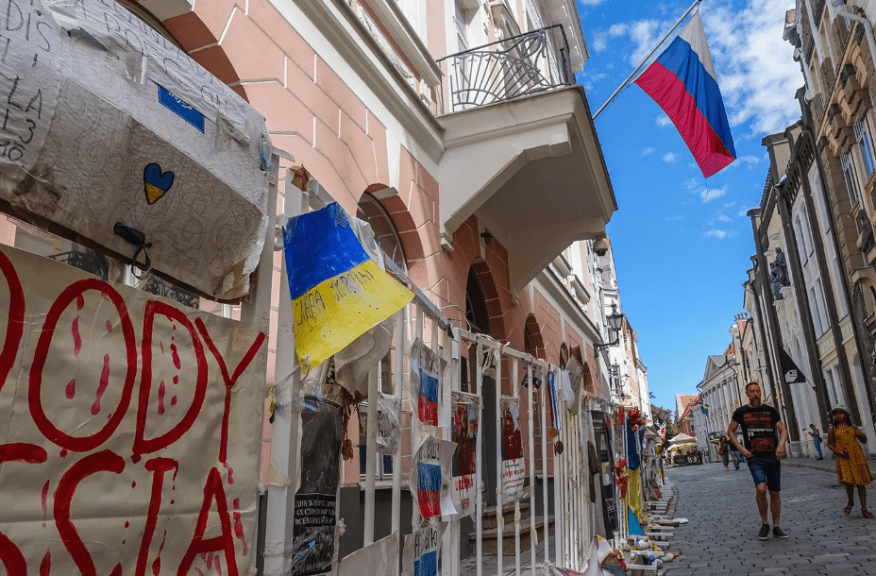
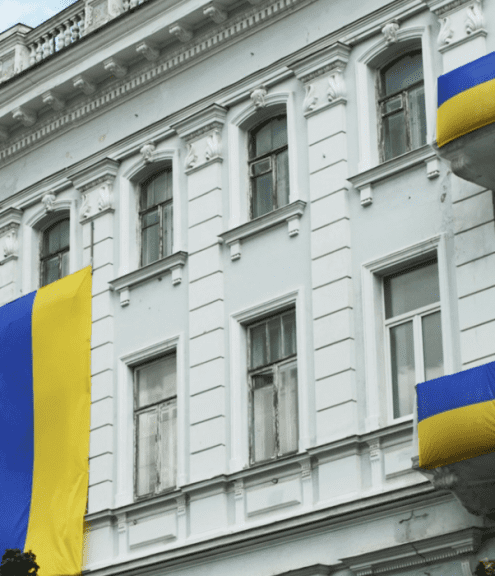
On arriving in Estonia by air—as has been the case now for several years—one is greeted by a giant Ukrainian flag. Such flags are displayed all over the capital city, Tallinn, as are some rather lurid, bloody images of children’s dolls and exhibits of ‘martyrs’ on display outside the Russian Embassy. Obscene, anti-Russian graffiti is displayed on the often crumbling old plaster walls of buildings. Tallinn, a medieval, European architectural gem, is being allowed to become shabby in the name of anti-Russian propaganda.

Tallinn
Lurid anti-Russian public displays in Tallinn

While Lithuania’s Vilnius doesn’t have quite the sense of decay of Tallinn, what is noticeable is the display of Ukrainian flags, which far outnumber the Lithuanian sovereign state flag. Additionally, Lithuanian national cultural monuments appear to favor Ukrainian nationals, who may visit free of charge, a privilege only extended to Lithuanians under 12 and over 80. Given that Lithuania also pays for numerous Ukrainians to live there, the Lithuanians have some justification for feeling somewhat exploited—and some do, as we found out when we posted a feature on X (Twitter) noting the trend towards promoting Ukrainian sovereignty over Lithuania’s in Vilnius and targeting those observations at a specific Lithuanian readership.

The response was immediate, with over 200 comments posted in five days in reply to our question whether this meant a suppression of Lithuanian identity in favor of Ukraine’s.

Vilnius Old Town, Lithuania

The interesting point was the nature of most of the replies: while some agreed the situation was absurd and had gone too far, the vast majority were explicitly rude and used highly coarse language. Hardly any bothered to debate the issue; they were instead filled with vulgarity and hatred that we had dared to point the issue out. Very few addressed the real core issue. Clearly, any perceived questions about Ukraine are coming at the expense of other nations national identity.

Unfortunately, Lithuania doesn’t rank especially high in terms of friendliness towards visitors, with best-citizenships.com ranking it the third worst in the EU. That certainly seemed the case in the angry response to the question, “Why are there far more Ukrainian flags in Vilnius than Lithuanian?”

However, although the question was far from popular, it does raise several other key questions as well. Not least of these is the extent of Ukrainian culture—and sovereignty now taking over traditional Baltic identities? Others include the issue of whether the Ukrainian flag has now become the symbol of Russophobia as opposed to a sovereign symbol, and the very essence of what it means to be a contemporary Lithuanian (or Estonian) national when specific foreigners (Ukrainians) are treated better than the locals.

We suggested that foreign symbolism perhaps should be regulated in some way to allow national identities some dominance, but this too was shouted down. Ukrainian flags on display in Vilnius are apparently more important than the need to display the Lithuanian one. To our mind, this is unprecedented. It appears to be a cultural sovereignty takeover by stealth.

The pro-Ukrainian diaspora will dismiss these observations as purely pro-Russian propaganda, but in fact there is a more serious point: is the overly promotional campaign for pro-Ukrainian policies actually diminishing smaller sovereign European nations identities? Are Ukrainian policies and attitudes now permeating the European Union (of which Ukraine is not a member)?

The answers seem to be in the positive. What Ukraine wants and demands – often rather thuggishly – is generally approved and sent off to Ukraine—apparently without much supervision. Weapons are turning up on black markets. Huge sums of money cannot be accounted for. Yet the EU, if these allegations are later proven correct, is complicit. Without any checks and balances in place – surely European values – it appears to have been funding terrorists and criminals.  Any sign of Ukraine being questioned is met with immediate condemnation. Europe, it appears, is being bullied into compliance to do what a non-member state wants and not what is necessarily good for Europe. In which case, the Lithuanian flag issue reveals itself to be symbolic of a greater malaise: how Ukrainian should democratic Europe actually be?

Russia’s Pivot to Asia would prefer to see Lithuanian flags fly above Vilnius, not for any dismissal of Ukraine’s problems, but to showcase that Vilnius is a Lithuanian city and retains Lithuanian sovereignty and culture, and not those imported from an entirely different nation with an entirely different history, culture, and identity. The European Union would also be wise to consider its position within these issues to debate as well. Is it the intent of the EU to be European, with European values, or Ukrainian, with Ukrainian values?

It has come to our attention that there are at least 33,000 Ukrainian flags on display in Vilnius. Details here

BRICS Demand for Russian Oil Exceeds Supply Capabilities

Published on July 3, 2025

The BRICS countries are demonstrating a growing interest in Russian energy resources, including oil, liquefied natural gas, and coal, with demand for oil exceeding available volumes, most of which have already been contracted, according to Roman Marshavin, Russia’s Deputy Energy Minister.

He stated that “BRICS partners are already openly declaring their interest in Russian energy resources, including projects that are under Western sanctions. These include LNG, oil, petroleum products, and coal. For oil, we are faced with a situation where demand exceeds available volumes—everything has been contracted, and there are few new available volumes. We do not see a lack of demand.”

In addition to energy supplies, BRICS partners are also interested in the Russian experience of trading under sanctions, Marshavin explained, saying that since 2022, Russia has been able not only to reorient exports but also to maintain its volumes. He added, “In this regard, Russia is ready to offer its assistance to create a joint economic infrastructure. If we create a system that is invulnerable to external influence, and we have our own payment mechanisms and logistics, then there will be no need for US dollars and Western ratings.”

The annual BRICS summit takes place on July 6/7 in Rio de Janeiro.

Further Reading

BRICS Energy Alliance Launches Petro-Yuan Contracts to Minimize US Dollar Usage

Mexican Foreign Minister To Attend BRICS Summit 

Published on July 3, 2025

Mexican Foreign Minister Juan Ramon de la Fuente will take part in the BRICS Summit in Brazil as an observer, Mexican President Claudia Sheinbaum said on Wednesday (July 2). “I was not going to take part [in the summit] and I cannot travel so often, there is a lot of work in the country. The foreign minister will go to the BRICS summit,” Scheinbaum told a press conference, adding that Mexico, although not a BRICS member, is interested in the operations of the BRICS bloc.

The 2025 BRICS annual summit is taking place in Rio de Janeiro this coming weekend, Sunday and Monday July 6 and 7. 

In terms of economic cooperation between Mexico and BRICS, Nikolay Sofinsky, the Russian Ambassador to Mexico stated in March this year that “Mexico does not participate in BRICS and, according to official statements by the Mexican leadership, has no intention of joining the group. It prefers to align its trade and economic priorities mainly within the framework of the North American Free Trade Agreement, the second edition of which was signed by Mexico with the United States and Canada in 2018 (NAFTA-2). The Mexican economy is fully integrated into the system of ties under this agreement, and given its priority importance for the country, it is unlikely that it will be able to turn towards any other integration structures until the revision process is completed.

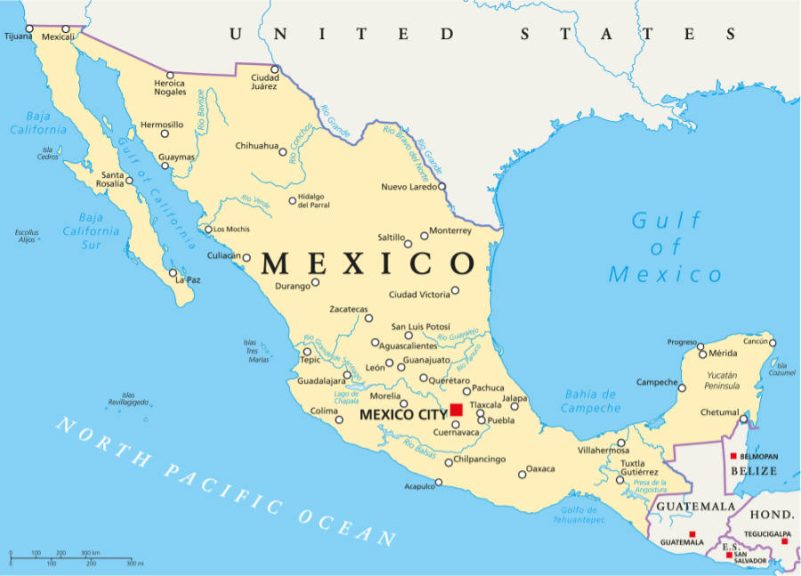
Mexico Map

Therefore, the Mexicans have no consultations with BRICS as an association. But there are close forms of cooperation with each of its member countries. There is interest in diversifying foreign economic relations. Perhaps at some stage in the future Mexico’s interest in BRICS may acquire more advanced practical outlines.”

When pressed on the potential for multilateral initiatives between Russia, Mexico, and other Latin American countries, Sofinsky added “The potential for multilateral initiatives between Russia, Mexico, and other Latin American countries definitely exists. Latin America as a whole seeks to diversify its economic and trade partners, and Russia, despite the current sanctions restrictions, continues to build relations with the region based on mutually beneficial cooperation. Promising areas of focus include the Agro-industrial complex and food security. Russia is already actively supplying grain (especially wheat) to countries in the region, including Mexico. Joint initiatives could include the creation of regional logistics hubs for agricultural trade, as well as investments in food processing and storage.

In energy and mining, Russia has advanced technologies in oil production, nuclear power and lithium processing, which is becoming a strategically important resource in Latin America (especially in Mexico, Chile, Bolivia, and Argentina). Projects to develop lithium deposits involving several countries in the region are possible.

As concerns pharmaceuticals and healthcare, there are possible joint projects in drug production and biotechnology, while as regards cooperation in high technology and artificial intelligence, Russia has a lot to offer Latin American partners in this area.”

The Russian Foreign Minister, Sergey Lavrov, will be attending the BRICS summit to represent Russia. Bilateral trade between Russia and Mexico has declined in recent years and attained just US$43 million last year, most of this Russian exports. No doubt the two Ministers will be having side discussions in Rio to look at reinvigorating bilateral trade. 

Further Reading

Russia, Mexico 2025 Bilateral Trade & Investment Relations: Update

Russia’s Exports to Unfriendly Countries Now Just 18% of the Annual Total

Published on July 3, 2025

The share of friendly countries in Russia’s foreign trade has increased from 46% to 82% over the past three years, including more than 85% of export deliveries now going to these countries, Russian Deputy Prime Minister Alexander Novak has stated. He was speaking at a government strategic meeting, “Training personnel in foreign economic activity to achieve national development goals.”

Novak said that “Target indicators show that Russia’s trade with friendly countries has grown over the past three years from 46% to 82% and has reached about US$550 billion. Today, our exports are reoriented to friendly countries more than 85%. As for imports, they already account for around 75%. Russia has actively redirected its trade from Europe and the United States to the markets of friendly countries. This primarily includes China, India, Central Asian countries, Africa, and the Middle East. All of this now allows us to expand our geographic reach and strengthen economic integration.”

In addition, non-resource, non-energy exports occupy a growing share in the structure of Russia’s foreign trade, he said.

According to the latest published data from the Federal Customs Service (FCS) on exports and imports, Russia’s foreign trade turnover in January-April 2025 amounted to US$213.9 billion, down 2.9% compared to January-April 2024. Exports of goods from Russia in January-April 2025 decreased 5.9% year-on-year to US$128.2 billion, while imports grew 1.8% to US$84.2 billion.

Exports of goods from Russia to Europe in January-April 2025 amounted to US$19.2 billion, down 11.0%; to Asia, US$97.6 billion, down 4.1%; to Africa, US$6.9 billion, down 11.3%; and to the Americas, US$4.3 billion, down 10.4%. Imports to Russia from Europe in January-April 2025 totaled US$21.9 billion, down 1.6%; from Asia, US$57.5 billion, up 2.4%; from Africa, US$1.5 billion, up 35.6%; and from the Americas, US$4.8 billion, up 6.7%.

Russia’s positive foreign trade balance amounted to US$150.9 billion in 2024, up 7.8% from 2023. (US$140.0 billion). Exports of goods from Russia in 2024 increased 2.0% YoY to US$433.9 billion, while imports decreased 0.8% to US$283.0 billion.

Further Reading

German Economic Institute: “Russia’s Exports Have Grown Considerably”

China Increases Purchases Of Russian Base Metals   

Published on July 2, 2025

Beijing has increased purchases of Russian metals, according to Chinese customs data. Chinese imports of Russian aluminium jumped nearly 56% year-on-year to almost one million tons between January and May, while copper purchases surged 66% and nickel imports more than doubled, according to the Chinese statistics.

While Russia’s largest aluminium producers Rusal and Norilsk Nickel are not under Western sanctions, their access to global trading platforms has been restricted. In April 2024, the US and UK barred the London Metal Exchange (LME) and Chicago Mercantile Exchange (CME) from accepting Russian-origin aluminium, copper, and nickel and barred imports of the metals. The United States had earlier imposed 200% duties on Russian-made aluminium products, while Canada enacted a full ban on imports of Russian aluminium and steel. Earlier this year, the EU introduced a phased ban on Russian aluminium, setting a 275,000-ton quota that runs through February 2026.

Russian aluminium is also more globally competitive, selling at US$1,866 per tonne against the LME’s current spot price of US$2,598, suggesting that Western impositions are more to do with deliberate market manipulation than support for Ukraine.   

These measures also triggered spikes in global metal prices, with aluminium seeing its biggest surge in values in decades. Moscow has instead redirected exports to Asia and the Middle East amid the shift away from Western markets.

Norilsk Nickel began boosting sales to China in the second half of 2024. The company is also reportedly working with a unit of Chinese gold giant Shandong Gold to expand copper cathode shipments to the country. Sanctioned producers such as Russian Copper and UMCC may also be shipping metal to China. Norilsk Nickel’s chief executive, Vladimir Potanin, has said the company plans to relocate some copper smelting operations to China to safeguard exports from sanctions pressure on financial transactions. Rusal has already acquired some Chinese producers.

Further Reading

Indian Imports Of Metallurgical Coal From Russia Grows To 21% Of Total

Two Chinese Airlines Introduce Direct Flights To Vladivostok

Published on July 2, 2025

Two Chinese airlines have introduced new direct routes to Vladivostok in the Russian Far East. They are a regional flight between Harbin, the Provincial capital of China’s northern Heilongjiang Province, which borders Russia, and flights from Shenyang, the Provincial capital of China’s eastern Liaoning Province.

These flights will be operated by China Southern (Harbin) and Chengdu Airlines (Shenyang).

The Harbin-Vladivostok flight takes about 50 minutes and will be operated twice a week on an Airbus A380. Harbin is a city of about 6 million and a major transit area from Northern China to the national railway network. It was Russian territory from 1898 to 1929.  

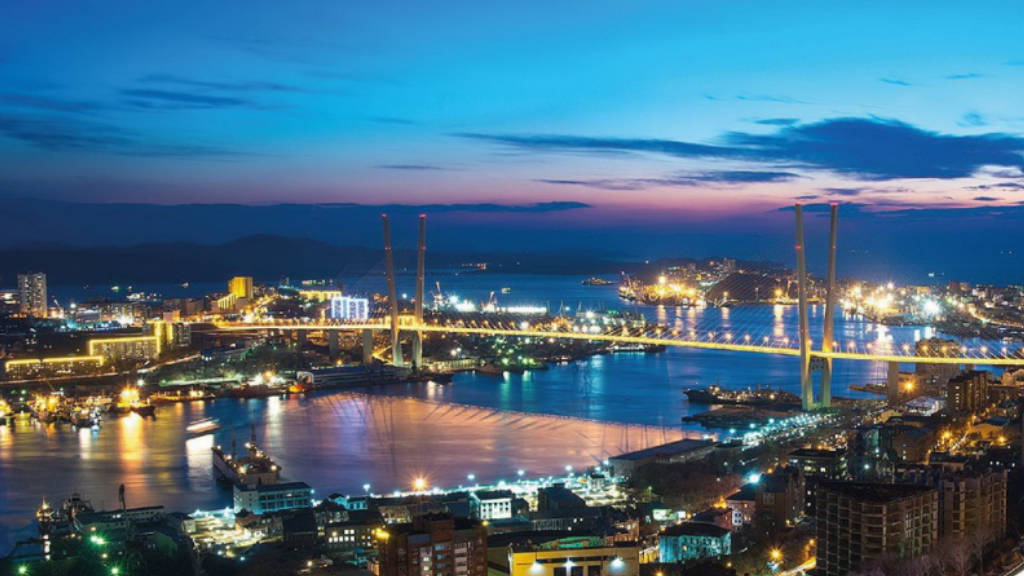
Vladivostok Map

The Shenyang-Vladivostok flight takes about 1.5 hours and will also be operating twice a week using Airbus A380. Shenyang is an industrial city of about 9 million and the largest city in China’s northeast.

Both cities are also connected to Russia via the Chinese rail network which runs through to connect with the Trans-Siberian railway in Vladivostok.

Further Reading

FESCO Opens in Dalian (Port Arthur) to Develop Shipping Ties With Vladivostok

Russia Delivers New Frigate To The Indian Navy

Published on July 2, 2025

Russia’s Yantar Shipyard in Kaliningrad handed over the Tamal Frigate of Project 11356 to the Indian Navy. She is the fifth frigate build by the shipyard for India, according to the United Shipbuilding Corporation (USC), who own the facility, have stated.

“The gala handover ceremony was held on July 1 in Kaliningrad. The frigate is called the ‘Tamal’, which means ‘Sword’ in translation. The acceptance act was signed by Rosoboronexport representative and the commander of the warship.”

The Tamal has successfully passed acceptance trials. “She is a modern and multirole warship with high combat capabilities to counter surface, ground, underwater and air targets,” USC CEO Andrey Puchkov said adding the shipyard will also assist India in the construction of two other frigates.

“Our experience and competences in the design and construction of warships are in demand in many leading world countries. We plan to develop international cooperation,” he said.

The Tamal has 20 Indian-made systems, including BrahMos supersonic missiles, communication complex, detection and guidance radar, a sonar, Rosoboronexport CEO Alexander Mikheyev said.

“The company actively develops partnership with Indian government and private enterprises in the joint design and production of military products in the partner’s territory. We are discussing 50 projects for all weapons for the Indian military” he said.

Together with the Tamal, India is already operating eight Project 11356 Frigates and is building another two at the Goa Shipyards.

Project 11356 Frigates are designated to fight submarines and warships in brown and blue waters and to repel air attacks both independently and within formations. They are armed with A-190 100mm artillery gun, anti-aircraft missiles, including Kalibr and Shtil and torpedo armaments. The warship can carry a Ka-27 helicopter or its modifications. The displacement is 3620 tons, the length is 124.8 meters. The full speed is 30 knots with a cruising range is 4,850 miles.

Further Reading

Russia Collaborating With India Over Su-57E Modifications To Allow More Indian Technology

Africa To Become Russia’s Third Largest Coal Importer and Significant NPP Operator

Published on July 2, 2025

Africa has the potential to become a major market for Russian coal exports and could rank third after China and India in terms of supply volumes, according to Russian Deputy Energy Minister Dmitry Islamov.

He noted that Africa’s population is expected to exceed 1 billion in the coming decades, positioning the continent as a major consumer of energy in the long term. According to Islamov, China is currently the leading buyer of Russian coal, with Moscow planning to increase its share of the Chinese market from 25% to 33% in the future. He said China is primarily a destination for thermal coal, which is used in power generation, while India serves as a key buyer of coking coal, a vital component in steel production.

He said “We need all directions – East, Northwest and South. After China and India the third region in terms of potential is Africa, where more than 1 billion people will live in the coming decades.”

The comments come after Russian President Vladimir Putin approved new measures in May to support the coal industry. The government’s plan includes financial recovery for coal enterprises and reduced transportation costs.

Russia has strengthened its energy cooperation with several African countries in recent years. At the 2023 Russia-Africa Summit in St. Petersburg, Putin announced that more than 30 energy projects with a combined capacity of approximately 3.7 gigawatts were ongoing across the continent. The initiatives, according to the president, span oil and gas field development in countries including Algeria, Egypt, Cameroon, Nigeria, and the Republic of the Congo. Russian companies have also explored energy partnerships in South Africa, and Zimbabwe, particularly in coal logistics, power infrastructure, and industrial development.

Last week, Rosatom and Mali signed an agreement to expand cooperation in nuclear energy, just days after the Russian state nuclear corporation concluded a similar deal with Burkina Faso. The agreements cover infrastructure development and the training of specialists from both Sahel states.

Rosatom is also building Egypt’s first nuclear power plant at El Dabaa, a flagship energy project launched in 2017 and jointly financed by Moscow and Cairo, with Russia set to supply nuclear fuel throughout the plant’s operational life.

Further Reading

Russia To Increase Fertilizer Exports To Africa Fivefold

Two More Russia Exporters Win Rights To Brazilian Fish Consumer Market

Published on July 2, 2025

Two more Russian companies have obtained the rights to export fish and fish products to Brazil. Russia’s agriculture watchdog Rosselkhoznadzor said that the rights were granted to Kamchattralflot LLC and Sadko LLC of Murmansk by decision of the Secretariat of Agricultural Protection of Brazil’s Ministry of Agriculture and Livestock. Rosselkhoznadzor will guarantee the delivery of the exports.

43 Russian companies are now entitled to export fish to Brazil, including both producers and companies storing the produce.

Brazilian fish consumption per capita is relatively low at about 10kg per annum, although the country does have a population of 211 million. Russia is developing new export markets as the European markets have shut themselves off from Russian maritime exports, including Russia’s massive fish stocks in the Arctic Ocean. Brazil is a founding member of BRICS. Bilateral trade has increased from US$5 billion in 2019 to US$12.4 billion in 2024.

Further Reading

Russia, Brazil 2025 Cooperation: Update