News

Russia’s Nordwind Requests Permission To Fly Moscow–Pyongyang

Published on June 24, 2025

Russia’s Nordwind Airlines has requested permission from Russia’s Federal Air Transport Agency (Rosaviatsia) for flight clearance from Moscow to Pyongyang, North Korea. Permission is being sought for flights up to two times a week. There are currently no direct flights between the capitals of Russia and North Korea.

Flight times between Moscow and Pyongyang direct would be about 8.5 hours. North Korea is keen to develop its tourism industry with Russian nationals a target market.

North Korea

The alternative route is direct railroad communication between Pyongyang and Moscow and Pyongyang and Khabarovsk, which resumed earlier in June. According to Russian Railways, Pyongyang-Moscow is the longest nonstop railroad route in the world. The distance between the capitals is more than 10,000 kilometers, and the travel time is eight days.

Further Reading

Russia-North Korea Direct Rail Services Pyongyang-Khabarovsk and Pyongyang-Moscow Start This Month

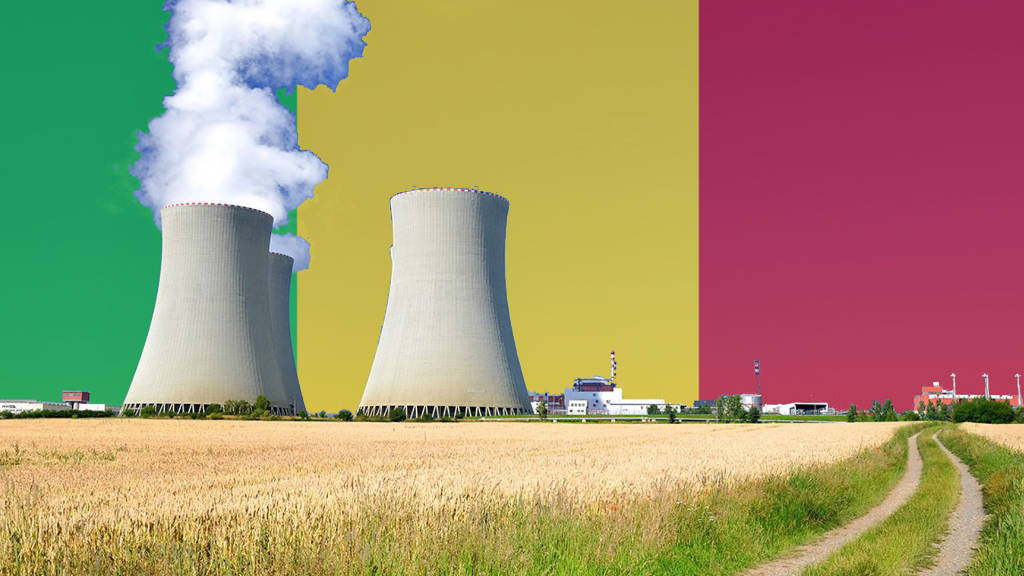
Russia, Mali Sign Nuclear Energy Cooperation Agreement

Published on June 24, 2025

Russia and Mali have signed an agreement of cooperation concerning the use of nuclear energy, following the visit of Mali’s transitional president, Assimi Goita, to Russia. Russian Prime Minister Mikhail Mishustin had previously ordered the signing of agreements between the Russian government and the governments of Mali and Burkina Faso on cooperation in the peaceful use of nuclear energy. The corresponding agreement with Burkina Faso was signed last week.

According to these agreements, Russia intends to cooperate with Mali and Burkina Faso in creating and improving nuclear energy infrastructure and designing and constructing power and research nuclear reactors and particle accelerators, as well as water desalination plants. Other areas of cooperation include nuclear fuel cycle services for nuclear power plants and research reactors, radioactive waste management, and nuclear and radiation safety.

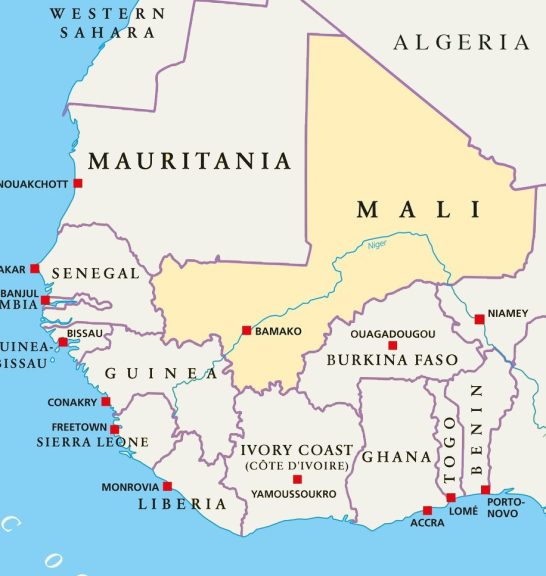
Mali map

In 2023, Rosatom announced the signing of a memorandum of understanding with Mali on cooperation in the peaceful use of nuclear energy. The parties also discussed prospects for collaboration between the two countries in geological exploration and mining and in the peaceful use of nuclear energy. Mali’s Minister of Economy and Finance Alousseni Sanou reported at last year’s Russian Energy Week that Mali planned to begin lithium mining and processing with Russia.

Rosatom Renewable Energy (until 2024—NovaWind)—Rosatom’s wind energy division—is also working with the government of Mali in the construction of a 200-megawatt (MW) solar power plant near the capital, Bamako. Last year, the company’s CEO, Grigory Nazarov, said that the construction of the power plant is expected to increase electricity production in Mali by 10%. He was quoted as saying, “The construction, which will cost €200 million (US$217 million), will take a year. The solar power plant is designed to operate steadily for 20 years and will come under the full control of Mali’s Ministry of Energy in 10 years.”

Further Reading

Post not found.

Iran Conflict: Impact on Russian Air Travelers & Cargo

Published on June 23, 2025

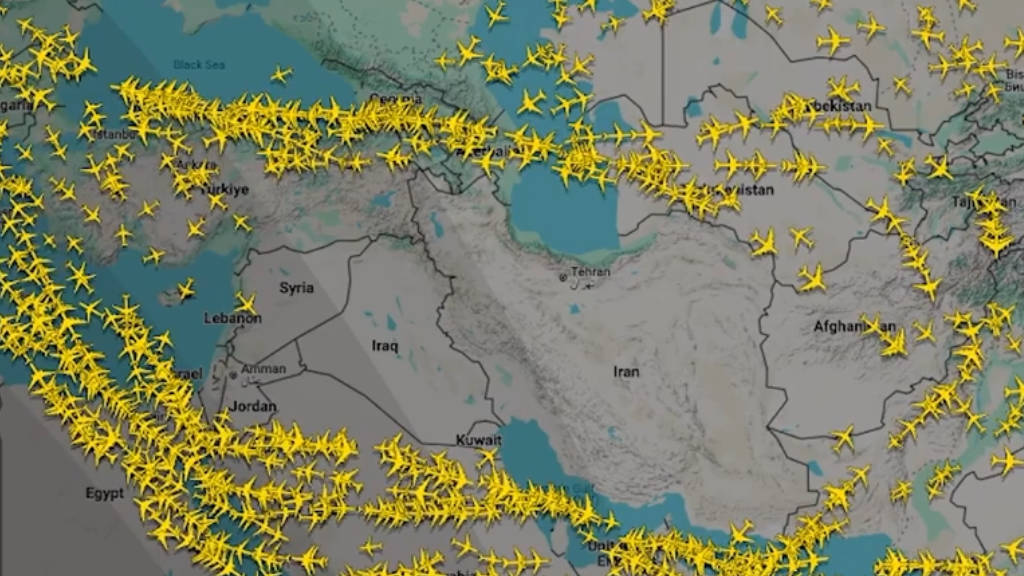
The Iran conflict has escalated and is introducing logistics problems for Russians and other foreigners in the Middle East region, with the impact being felt from Egypt, Israel, the United Arab Emirates, Saudi Arabia, Turkiye and Qatar, while also affecting onwards transit to India, China and other Asian destinations. Russian logistics companies are seeing delays in the delivery of goods throughout the region, while cross-border deliveries are also impacted.

The Arabian Peninsula is a large transfer area, especially the UAE and Qatar, through which significant quantities of cargo flies to Russia. The airspace is currently closed only in Iran, Israel, and Iraq, through which nothing is transported. This means that the duration of flights has increased, routing instead through Afghanistan and Pakistan, meaning the cost of transportation has increased. Additionally, numerous flights have been cancelled, meaning their cargo had to be reloaded onto shipping alternatives.

Vladimir Voroshilov, CEO of Bedford Group, says: “Transit through Turkish territory, through Iranian territory via the ‘North-South’ corridor, and traditional routes through Azerbaijan are all operational. However, transit through these countries is associated with risks that have arisen due to the war between Israel and Iran. They affect both air transport and cargo that was transiting to other countries in the Persian Gulf. The volume of available operations is very difficult to estimate. There is a possibility of cargo loss or damage. When it comes to Indian imports, tea and some consumer goods are, of course, the main items going to Russia. Nothing is hindering Turkish-Russian trade. For Iranian goods, primarily agricultural products, early-ripening vegetables and fruits, of course, the issue of regularity and speed is important. The disruptions that exist cause damage and unnecessary stress to trading companies.”

Intercontinental routes

Delays are also occurring when importing goods from other continents. For example, some aircraft from South America also pass over Israel and Iran to the Middle East and vice versa. Fedor Virin, a partner at Data Insight, an analytical company, believes that the cost of delivery has now increased by 20%. But it is possible that the damage could become more serious: “A fairly large volume of urgent commercial and consumer goods are transported in the trunks of airplanes, which are supplied from a wide variety of countries.”

Damages and Risks

Virin continues “The economic damage to trading companies depends on how long the skies will be closed, how long they will have to fly around, and whether airspace closure spreads to neighboring countries. At present, the damage looks like it will increase costs by 20%. But if it spreads to neighboring countries, then the damage will be significantly greater. Air travel and cargo transportation by airplanes are things that can only be replaced by the sea; these are completely different cargoes and take a long time.

New delivery routes will appear to replace them; however, these are more complicated and more expensive, but they will simply replace the delivery routes that are available now.”

Readers should note that the following airlines have announced regional flight cancellations: Air Astana, Emirates, Etihad, Flydubai, Qatar, and Singapore Airlines, although the situation is fluid.

Insurance Claims

Ilya Mironov, deputy director of the international client department at the insurance broker Remind, says that in case of flight delays, compensation should be expected only in exceptional cases. As concerns cost recovery through cargo, so far there have been no major changes, because the conflict is only about air cargo delivery delays. Although air cargo is usually the most urgent, transportation by air does not account for the largest volume turnover, which is mainly carried by road or ship. However, this could rapidly change if the Strait of Hormuz is blocked and tensions spill out further into the Red Sea.

It should be noted that in 99% of cases, insurance will not cover clients if claims are purely about delivery; however, there are rare exceptions for very specific cargoes, for example, in pharmaceuticals, where a delay can lead to the death of the live biological and similar goods, including violations of the cold storage regime of transportation and so on. It is also possible to insure against military risks in maritime and aviation transportation, but military risks are considered literally and are expensive. Payments would only be made if the cargo is hit by a missile, is damaged or destroyed.

Travel Advisory and Recommendations

Since June 13, many passenger airlines have imposed restrictions due to the closure of airspace over the territories of the affected countries. According to the Consulate General in Dubai, this immediately impacted about 10,000 Russians who were not immediately able to fly out of the Emirates. Other Russians have been unable to leave Israel.

Passengers should check what flights are available and be prepared to pack a small carry-on overnight suitcase in case of any delays or cancellations while in transit. Aeroflot is continuing services to the UAE and has replaced aircraft with more spacious Boeing 777s to keep up with demand. Many expatriate Russians leave the Gulf at this time of year anyway and prefer to holiday in Russia. But digital nomads based in the region are also departing due to the risk of being stuck.

We recommend passengers register with their embassy wherever they are in the Middle East. This may be useful if a more serious situation develops and evacuation is required. It is easier for them to assist if they know where you are.

Keep in contact with your chosen airline, and even though flights are announced, pack a carry-on travel bag suitable for overnight needs in the event of any unplanned delays. Most regional airports also have airport hotels, which, although expensive, can be an option if delayed for several hours. If with children, pack toys, sweets, and an entertainment device.

It may be possible to re-route your journey via other regional hubs. At present, Turkish Airlines maintains regional operations, and it may be possible to use other regional airlines with connecting flights to travel to and from Russia. Bear in mind ticket prices may increase, in which case it may be an idea to treat it as a short holiday (such as a flight to Baku) and spend a few extra days in a destination while in transit to make the best of the situation.

Further Reading

Russian Summer 2025 Outbound Tourist Volumes Expected To Increase 24.8%

Primorsky Krai – China Freight Vehicle Crossings Near North Korea Increase 45% In 2025

Published on June 23, 2025

There has been a significant increase in cargo and passenger flows at the Kraskino checkpoint on the border of Primorsky Krai with China, according to FGKU Rosgranstroy, the government agency that monitors cross-border vehicle traffic. Compared to 2024, the number of vehicles crossing at Kraskino increased by 45% in the January-May period. This included 19,000 trucks, 6,000 buses and 187,000 individuals who crossed from Russia into China, entering the country at Hunchun, in Jilin Province.

Kraskino and Hunchun are also close to the border with North Korea, meaning both locations have manufacturing and processing industries and industrial zones that also service North Korean imports and exports. The focus is on sea food processing, electronic product manufacture, bio-pharmacy, textile industry and other industries. Hunchun is connected to the Chinese national rail network with the nearest major city being Shenyang, an industrial hub. Kraskino is connected by road to Vladivostok but this is also about to be upgraded to rail when the North Korean railway connects with Russian rail in the coming weeks. Hunchun is also opposite the large North Korean Rason Special Economic Zone that produces North Korean products for export.

China Map

In addition, expansion work is also underway at the checkpoint, which should be completed by the end of this year and will further increase the carrying capacity at Kraskino. That is designed to increase cross-border capacity to 750 vehicles per day from the current 160 and includes 16 lanes for their passage.

Similar work is being conducted at all other Primorsky Krai border crossings into China, including the Zabaikalsk checkpoint opposite Manzhouli between the Trans-Baikal and Inner Mongolia.

Last week, Alexander Osipov, Governor of the Transbaikalia region, announced plans to build a multifunctional complex called “Eastern Gate of Transbaikalia – Manchuria” in the region by 2030. The complex is planned to serve as a logistics hub that will unlock the transport potential of Transbaikalia and take economic partnership with Manchuria (Northeast China) to a new level. The complex is expected to increase the efficiency of cargo transit between Russia and China, increase the throughput capacity of the border crossing, and attract investment in Transbaikalia’s industrial and agro-industrial sectors.

Further Reading

New Russia, North Korea Road Bridge To Open In Early 2027

Russian Laws on Self-Driving Vehicles to Be Adopted for Use in 2027

Published on June 23, 2025

The Russian Ministry of Transport has said that it expects that the law on the use of unmanned vehicles on Russian roads will be adopted as early as 2026 and enter into force in Q3 2027, according to Andrey Nikitin, the Deputy Minister.

Nitikin said that “We are currently preparing the text of the law and plan to submit it to the State Duma by the end of 2025. We expect that the law will be adopted next year and will enter into force in the third quarter of 2027.” He stressed that in order for self-driving vehicles to enter public roads, it is necessary not only to prepare regulatory regulations but also to create the necessary infrastructure, communications, certification centers, and, to fulfill a whole range of tasks.

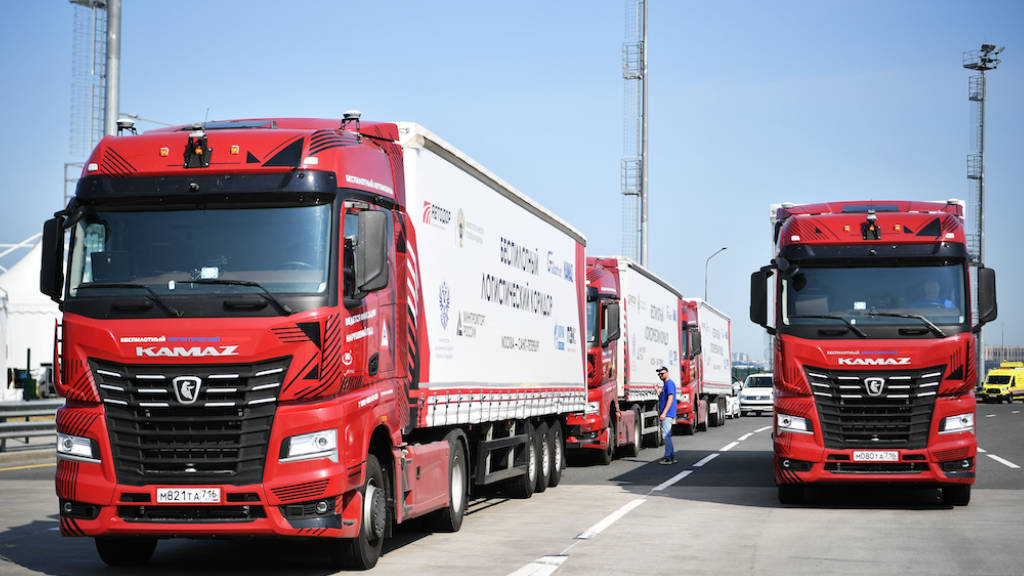
Rosstandard expects to prepare a line of five GOST standards for highly automated vehicles by this year’s end. About 100 unmanned trucks are currently operating on two routes of the country—M-11 Neva and TsKAD—as part of the test regime. GOST standards are a set of technical regulations that establish uniform standards for the quality and safety of products, primarily within the Commonwealth of Independent States (CIS). They are maintained by the Euro-Asian Council for Standardization, Metrology, and Certification (EASC).

GOST standards, in particular, will prescribe basic requirements for the safety and functionality of unmanned vehicles and automated driving systems. Several state standards concerning unmanned vehicles were approved last year. For example, they regulate the use of artificial intelligence technologies for automated machines for recognizing traffic lights, road markings, road bumps, and other traffic and pedestrians. Another important task is to ensure the safety of the use of unmanned vehicles, including the prevention of cyberattacks on their systems.

Transport Minister Roman Starovoit has said that the ministry plans to connect vehicles to the ERA-Glonass platform (Russia’s version of Starlink). He said that “all unmanned trucks on the M-11 and the Central Ring Road are connected to the ERA-Glonass system. For traffic safety, the function of transmitting general commands to all operators is necessary, for example, to get trucks off the highway in case of an accident or other restrictions. Next, we will test the detection of cyberattacks on car systems.”

The use of self-driving trucks is already showing advantages. They are on average 11% faster than conventional trucks, meaning that this mode of transport makes it possible to reduce fuel and component costs by 10-14% on routes over 1,000 km and redistribute about 30% of drivers to other destinations.

The first unmanned trucks were released on the M-11 Neva highway in June 2023 as part of a special experiment. In early April of this year, a similar pilot project was launched on the Central Ring Road in the Moscow Region, and next year, automated vehicles are expected to be able to travel from Moscow to Kazan along the M-12 Vostok highway.

Unmanned trucks are used for commercial delivery of goods. However, according to Russia’s road regulations, they may not enter populated areas, so if it is necessary to enter a city, the trailer is switched to a regular truck. This will mean the creation of specific transit parks on city outskirts.

Russia’s unmanned experimental regime is to be extended to other routes so that by 2030 the total length of unmanned logistics corridors will be about 19,500 km. Russia is making progress in this regard. To compare, the only driverless, long-haul, commercial trucking route in the United States is a 200-mile (322 km) stretch of the I-45 Highway between Dallas and Houston.

Further Reading

Putin Lays Out Russian Development Strategy at “Future Technologies” Forum: Analysis

Russia, Iran Hold Talks, As Tehran To Decide On Closing Hormuz: Implications   

Published on June 22, 2025

The Russian President is to hold meetings with the Iranian Foreign Minister, Abbas Araghchi in Moscow to discuss the latest developments as concerns the Israeli and American attacks on Iran’s nuclear facilities on Saturday (June 21). There have been disputed accounts over the actual damage caused, with US President Donald Trump declaring “a complete success” while Tehran has played down the damage. Meanwhile, the Iranian Parliament has voted for the closure of the Strait of Hormuz, the key maritime artery that supplies most of Europe with oil and gas supplies.

Araghchi flew to Moscow on Sunday (June 22) and immediately met with Russian officials, emphasizing the “strategic partnership” between Iran and Russia. “We always consult with each other and coordinate our positions.” Further discussions directly with Putin are to be held on Monday (June 23). 

The initial reaction to the United States attacks appears to have been the potential closure of the Strait of Hormuz, the maritime route that is in international waters but can be effectively controlled by the Iranian military. Iran’s Parliament has approved the closing of the Strait, although the final decision will be taken by the Iranian Supreme National Security Council, possibly after discussions with Putin. However, it is notable that Hossein Shariatmadari, the Iranian Supreme Leader Ali Khamenei’s representative, reportedly called for closing the Strait of Hormuz to American, British, German, and French ships.

The European Commission just last week proposed placing a price cap of US$45 on Russian oil. But prices have already begun to rise under the possibly of Iranian retaliation. They are likely to jump still further come the opening of global markets on Monday morning (June 23). 

Strait Map

Should Iran close the Strait of Hormuz, the result would radically alter the world’s energy supplies. In addition, Houthi rebels have stated they would also attack Western ships passing through the Red Sea. A third of the world’s liquefied natural gas and almost 25% of total global oil consumption passes through the strait, with the major oil-producing nations of the region – Saudi Arabia, Iraq, UAE, Qatar, Iran, and Kuwait – relying on this passage for their exports. That has significance for the European Union. While an exact figure for EU energy supplies specifically routed through the Strait of Hormuz is difficult to pinpoint, it is generally understood that a significant portion of Europe’s oil and natural gas imports from the Middle East transit through this waterway, including oil and LNG from countries like Saudi Arabia, Qatar, and the UAE, which are key suppliers to Europe.

There is some dispute over how much the major economic regional powers in Asia will be affected. Based on EIA data, Asian nations receive 8% of their supplies through the route, with China and India major customers. However, they have also been storing supplies, to some extent taking advantage of the cheaper oil prices as a partial result of the EC’s previous oil cap at US65 per barrel for Russian crude, one reason why Russian supplies have been constant.

Both China and India will have made provisions for disruptions. But the supply chains cards appear to be held by Russia, which despite sanctions has developed a fleet of oil and gas tankers that have regularly been supplying both countries. Russia has direct pipeline LNG connectivity with China, and has significant shipping operations serving India, including some from the Arctic.

Iran could also decide to allow ships from ‘friendly nations’ – such as China and India, both fellow BRICS partners passage, while restricting movements of Western vessels, although this would undoubtedly mean significant involvement of the Iranian Navy. It should be noted that Russia, China and Iran conducted naval exercises in the Persian Gulf last March.

The fall-out from any closure of the Strait of Hormuz is likely to extend for some time, and especially if it leads to further US military involvement to keep the Strait open. Oil and gas prices can be expected to show immediate price spikes. How Putin and Russia can assist is the key development point for how serious this is for Asia. Europe, meanwhile, will be seen as Trump’s problem to resolve.

Related Reading

Greek Shipping Owners Profiting From Russian Use Crude Oil Tankers

Russia, Uzbekistan Reconfigure Nuclear Power Projects To Larger Units

Published on June 22, 2025

Russia’s Rosatom has stated that the proposed ‘Large Nuclear Power Project’ in Uzbekistan needs to be reconfigured to attain the maximum operational benefits. This includes the construction of two VVER-1000 power units with a possible increase to four, according to the company.

Rosatom and Uzbekistan agreed during the St. Petersburg International Economic Forum to look at the possibility of building a large-capacity NPP in Uzbekistan, while simultaneously moving forward with a small-capacity NPP project. Russian Deputy Prime Minister Alexander Novak said on Thursday. (June 19) that “The original project envisioned the construction of six reactors with a capacity of 55 MW each. This was later altered. Today, specific economic parameters are being discussed. There will be two units of 1000 MW each and two units of 55 MW each.”

Rosatom CEO Alexey Likhachev said that “A decision has already been made, and we are implementing the project for two small NPP units based on RITM-200 reactors. This will optimize costs” for construction, increase the competitiveness” of electricity, and make it more attractive to consumers. What are we working on now is expanding this project. We are working on the design of an additional two large gigawatt-class nuclear power units at this site.”

He said that “In this configuration we will have a base generation of, say, 2,000 MW, if we are opting for thousand GW units, and very high manoeuvrability at the level of another 200 MW for small units. The revenue from the small power plant will significantly reduce investment and capital costs at the final stage of construction of large gigawatt capacities. Optimization of sites, turning them into one common site, reduces capital costs by up to 10%”.

He said the impact might be even greater if revenue from the small NPP is added before the large one is commissioned.

Uzbekistan Map

Uzbekistan is something of a nuclear power innovator in Central Asia. As the region faces rising electricity demands, carbon reduction commitments, and energy security challenges, Uzbekistan is stepping into an ambitious role: to become Central Asia’s first nuclear power hub.

It already has a legacy of nuclear expertise, a bold strategy centered on both large-scale reactors and innovative Small Modular Reactors (SMRs), and a growing network of international partnerships, meaning the country is charting a new course in its energy future.

Change is needed – Uzbekistan ranks as the second-highest CO₂ emitter in Central Asia, with its CO₂ intensity of GDP approximately 77% above the global average. The energy sector is the principal contributor to national greenhouse gas (GHG) emissions, accounting for nearly 83% or 116.1 million tonnes of CO₂ emissions. Within this sector, the residential and industrial segments collectively generate over 70% of the total GHG emissions. Consequently, decarbonizing Uzbekistan’s energy landscape is pivotal for meeting the country’s climate targets under the Paris Agreement.

Currently, Uzbekistan’s energy mix is heavily reliant on natural gas, which constitutes 85.9% of total energy consumption. Renewable energy, comprised solely of hydropower, accounts for a mere 0.9%. Electricity generation mirrors this pattern, with natural gas contributing 88%, while hydropower represents only 7%. With electricity demand projected to nearly double to 120 TWh by 2030, Uzbekistan faces an urgent need to scale up low-carbon electrification.

In response, the Uzbek Ministry of Energy released a ‘Concept Note’ in May 2020, outlining the nation’s vision for its electricity sector through 2030. This framework envisions 15% of electricity being generated from nuclear energy by the end of the decade, with solar and wind sources contributing 8% and 7%, respectively.

Further Reading

Russia Upgrades Uzbekistan’s National Gas Turbine Infrastructure

Russia and Kazakhstan Discuss OPEC+, Oil and Gas Transit & Nuclear Power Developments

Published on June 22, 2025

Russian Deputy Prime Minister Alexander Novak has discussed Russian-Kazakh cooperation in the electricity and oil and gas sectors with Kazakh First Deputy Prime Minister Roman Sklyar, while Rosatom has signed a framework agreement for an NPP in Kazakhstan. We summarize these developments as follows:

Oil & Gas Transit

Novak and Skylar discussed the terms for Russian oil and gas supplies to Kazakhstan and transit through the country, with Novak saying, “We consider Kazakhstan our closest ally and strategic partner. Bilateral cooperation is developing across the trade, economic, and investment spheres, with large-scale joint projects underway in industry, energy, transport infrastructure, agriculture, and the digital economy.” Russia remains Kazakhstan’s largest investor, with investment growing 25% year-on-year in 2024.

On Wednesday, Russian President Vladimir Putin said that Russia and Kazakhstan are discussing joint operations in third-country gas markets. This is understood to include supplies and transit from Russia via Kazakhstan to China at the request of the Chinese government. China has already requested. that Russian oil imports to the country are partially routed through Kazakhstan. Other Russia-Kazakhstan supply chains may also extend further into the ASEAN region, with potential for onward shipping to markets such as Indonesia and Malaysia. 

OPEC+

OPEC image

Russian Deputy Prime Minister Alexander Novak, who is co-chair of the OPEC+ ministerial monitoring committee, has held discussions with Kazakh First Deputy Prime Minister Roman Sklyar.

Novak praised cooperation between Russia and Kazakhstan within OPEC+, which he said plays a decisive role in ensuring stability and predictability in global oil markets. Novak urged continued coordination of collective actions within OPEC+, as they serve long-term national interests and strengthen participating countries’ economies.

Kazakhstan has been among OPEC+ members violating production cut commitments. Earlier this year, the country launched new production capacity at the Tengiz field and has since exceeded its quota by 300,000-400,000 barrels per day each month. Energy Ministry officials said that they would not curb output as they cannot influence foreign field operators. Alexander Novak invited Roman Sklyar and the Kazakh delegation to participate in the annual international forum Russian Energy Week, which will be held from October 15 to 17, 2025 in Moscow.

Russia has been discussing production with OPEC+ nations, with several of the member states to reach consensus on volumes and pricing.

Nuclear Power

Nuclear image

Rosatom has signed a roadmap agreement with Kazakhstan for the construction of two VVER-1200 nuclear power plant units, according to Rosatom CEO Alexey Likhachev. He stated that “The roadmap contains the main provisions of the general contract for the construction of two new VVER-1200 power units.”

In addition, a framework agreement was signed between Kazakhstan Atomic Power Plants LLP (the customer for the construction of a nuclear power plant in Kazakhstan) and Atomstroyexport JSC (the managing company of Rosatom’s engineering division), which defines the key principles of cooperation for the implementation of the country’s first nuclear power plant project.

The Kazakh Nuclear Energy Agency chose Rosatom to lead a consortium to build the first nuclear power plant in Kazakhstan, adding that a Russian state export loan was under consideration. Intergovernmental agreements and contracts for building Kazakhstan’s first nuclear power plant will be signed in November 2025. We previously discussed this agreement here. 

Further Reading

Kazakhstan Rail Transit Via Russia & The INSTC Increases By 63% In Q1 2025

Russia Proposes Floating Nuclear Power Plant for Indonesia

Published on June 22, 2025

Russia’s Rosatom state nuclear energy corporation is discussing the possibility of constructing nuclear power plants with Indonesia, proposing to build a floating nuclear power plant at the first stage and a high-power nuclear power plant at the second stage, according to Rosatom Deputy CEO Andrei Nikipelov.

According to Nikipelov, taking into account Indonesia’s geographical location as an island archipelago, Rosatom has made a proposal consisting of several parts and several blocks, saying that “The fastest way to obtain nuclear energy is to use floating power units. Therefore, our proposal is to start with the use of floating power units. They require minimal investment on the part of Indonesia, because we will use Russian infrastructure for fuel replacement. The second step will be the construction of high-capacity nuclear power plants.” This is consistent with Indonesia’s plans to have 250 MW of nuclear energy by 2032, 7 GW by 2040, and 35 GW by 2060.

Indonesia Map

Rosatom has analyzed the possibility of integrating nuclear energy into the Indonesian energy system and identified potential locations for floating and high-power nuclear power plants, with Nikipelov saying that “We put this into the concept and gave it to the Indonesian side. Along with the concept, we proposed a roadmap for how our cooperation could develop. At the moment, we are waiting for the Indonesian government to decide which path we should take. Rosatom is 100% ready to provide a preliminary feasibility study.”

Further Reading

Russia-Indonesia Free Trade Agreement To Reduce 93% Of All Traded Goods Duties To Zero

Russia and Myanmar Sign Bilateral Investment Treaty

Published on June 22, 2025

Russia and Myanmar have concluded a Bilateral Investment Treaty (BIT) that assists their respective investors with legally binding agreements on mutual protection of investments. BIT can also provide some tax benefits.

The document was signed on Friday at the 2025 St. Petersburg International Economic Forum (SPIEF 2025) by Russian Economic Development Minister Maxim Reshetnikov and Myanmar Investment and Foreign Economic Relations Minister Kan Zaw.

Reshetnikov said that “This agreement opens new prospects for Russian businesses in Myanmar. We particularly note Myanmar’s readiness to involve Russian companies in offshore oil and gas field development. Russian technology and expertise could play a key role in developing Myanmar’s energy sector.”

The BIT establishes a legal framework for expanding investment cooperation between the countries, providing investment protection guarantees, ensuring non-discriminatory treatment for investors, and mechanisms for resolving investment disputes, including through international arbitration.

Myanmar Map

In terms of Myanmar-specific coverage, the agreement contains provisions simplifying investment procedures to accelerate the implementation of mutually beneficial projects, including the Dawei Special Economic Zone, where plans for a 660 MW coal-fired power plant to provide energy for investing businesses are being developed.

The Dawei SEZ is a significant project within the broader economic corridor between Myanmar, Thailand, and other Southeast Asian nations. The Dawei SEZ is close to the border with Thailand and is designed to be a gateway to India, the Middle East, Africa, and Europe for Southeast Asia. It includes a deep-sea port with road and rail connectivity.

Beyond energy, the BIT agreement will also help create favourable conditions for cooperation in promising Myanmar development sectors such as transport infrastructure, metallurgy, agriculture, and telecommunications.

Further Reading

Russia To Build Myanmar Nuclear Power Plant, Increase Agriculture & Infrastructure Development

Russia and China Strike New Far Eastern Gas Agreements

Published on June 22, 2025

Russia’s Gazprom has signed new agreements with its Chinese partners to construct and operate the cross-border section of the Far Eastern gas export route to China. The “Agreement on Design, Construction, and Commissioning of Section 2 Commissioning” and the “Operational Agreement” were signed with China National Petroleum Corporation (CNPC) and PipeChina.

These govern the cooperation between the parties in the period during the launch and subsequent operations of the gas pipeline’s trans-border section that crosses the Ussuri River between Russia’s Dalnerechensk and China’s Hulin City and cover issues pertaining to operational control and technical maintenance.”

In February 2022, the long-term Sales and Purchase Agreement for natural gas to be supplied via the Far Eastern route was signed between Gazprom and CNPC. When the project reaches full capacity, the amount of Russian pipeline gas supplied to China will increase by 10 billion cubic meters.

Asia Pacific Energy Consumption

In addition to the cross-border agreement, Gazprom CEO Alexei Miller and Vice Premier of China Ding Xuexiang have additionally discussed key issues around their strategic gas partnership. Meeting at the St. Petersburg International Economic Forum (SPIEF 2025), the two sides’ cooperation to supply gas to China via the “Eastern” route had been highly successful, with a total of more than 100 billion cubic meters of pipeline gas exported to China to date.

Miller and Ding also discussed prospective projects in the gas industry and expressed their intention of reinforcing a mutually beneficial partnership, which is aimed at developing both countries’ economies.

Miller stated: “In 2024, global gas consumption reached a record level of 4.17 trillion cubic meters, increasing by 100 billion cubic meters over the year. By 2050, global demand for gas will grow at a rate 1.5 times higher than the growth rate of energy consumption as a whole. Thus, by 2050, global gas consumption will increase by almost a third.

Countries in the Asia-Pacific region will play a key role in this growth. In 2024, they accounted for almost 50% of global GDP growth. The region will need significant volumes of natural gas to maintain high economic growth rates.

The Power of Siberia pipeline began supplying gas to China in 2019 as part of a long-term sale and purchase agreement between Gazprom and the Chinese National Petroleum Corporation (CNPC). Every year since 2020, supplies from Gazprom have exceeded annual contractual obligations. Daily supply via the Power of Siberia pipeline reached the maximum contractual level on December 1, 2024, ahead of the initial schedule.

A long-term sale and purchase agreement for the supply of natural gas along the Far East route was signed in February 2022. After the full ramp-up was complete, Russia’s pipeline gas exports to China increased by 10 bcm to 48 bcm per year.

Further Reading

Gazprom Boosts Power of Siberia Gas Supplies to China by 35%